

- Unusual detergents
- Washing modes
- Rules for the use of detergents
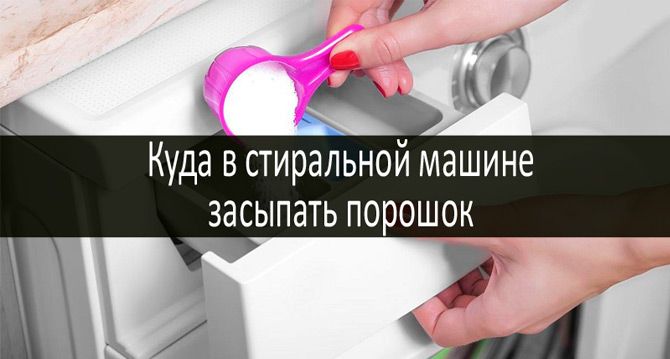
- Where should you put laundry detergent?
- Rules for loading detergent
- Dealing with a powder cuvette
- Features of the powder compartments of different machines - an overview
- Options for loading washing powder into automatic machines from different manufacturers: photo instructions
- Features of the structure of the trays in the washing machine Indesit (Indesit): where to pour the powder into them
- Where to put the powder for the main washing function in the LG washing machine
- Where to fill in washing powder in a Samsung automatic machine (Samsung)
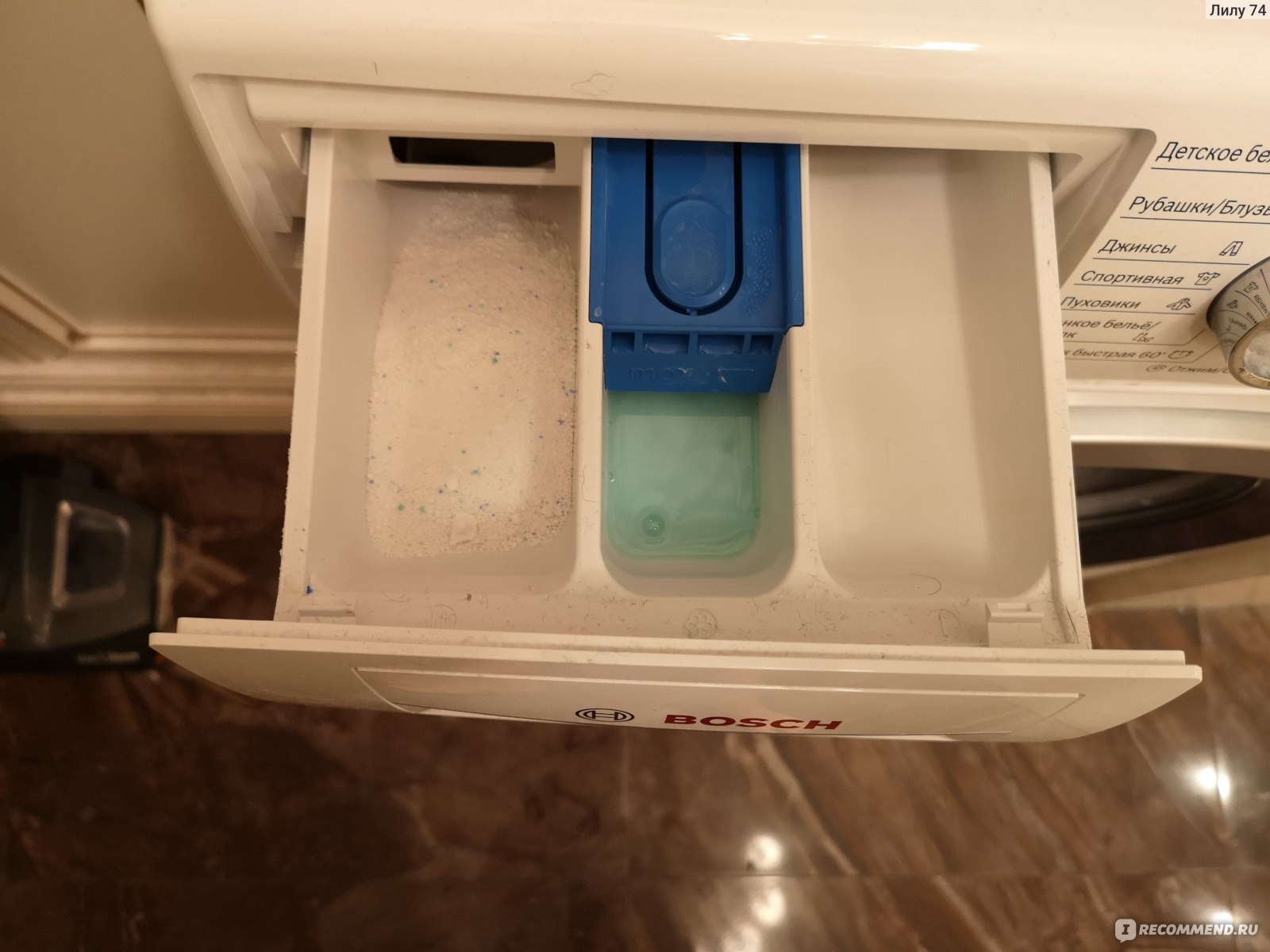
- In which of the compartments of the Bosch washing machine (Bosh) to pour powder for prewash
- Washing with special detergents
- Determination of the optimal amount of funds
- What affects the amount of powder?
- We calculate the proportions of detergent
- What determines the amount of powder per wash cycle in an automatic machine?
- The degree of soiling of things and water hardness
- Water consumption per wash cycle
- Adding agent to the drum
- Pouring detergent into the drum
Unusual detergents
You can pour the powder into any washing machine ("Bosch", "Diamond", etc.) in the drum and tray (at the discretion of the hostess), but some products are strictly forbidden to put with clothes:
- Novelties in the form of cubes. Poorly soluble without washing with water.
- Bleachers for linen, stain removers. By adding them undiluted, you run the risk of forming discolored spots (especially on colored clothes). "Whiteness" thins the fabric, causing holes to appear.
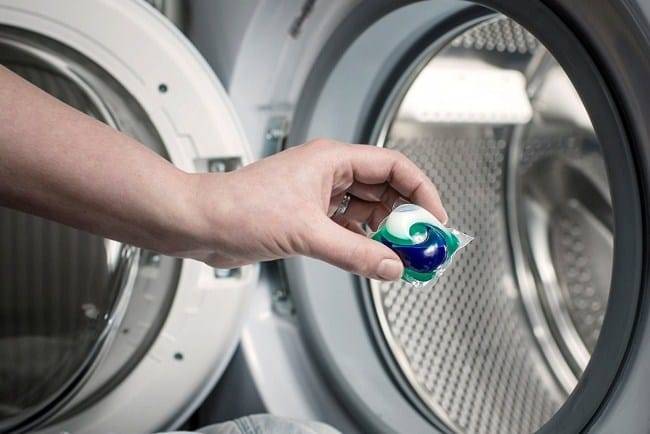
Washing capsules are designed for washing delicate items and are placed directly in the drum.
Laundry capsules
Phosphate-free and vegetable (bio) detergents are not aggressive, therefore they have no contraindications for being placed in the tank along with things.
Proper operation of the tray, compliance with dosages protects not only your belongings, but also extends the operating life of the machine. Do not exceed the amount of powder added to the tray, do not confuse the sections and let the machine dry regularly, because constant moisture causes corrosion, an unpleasant odor and shortens the life of the unit.
Washing modes
Capsules and tablets simplify the washing process even more, since there is no need to fuss about the dosage of the powder - these products are designed for 4-5 kg of laundry. In case of heavy soiling and a larger volume of things, 2 capsules or tablets can be used per wash cycle.
Before starting the machine and loading the laundry, the capsule must be placed on the bottom of the drum. This will ensure its uniform and rapid dissolution. Pour the conditioner into the machine tray and you can start the cycle. The gel, which is contained inside the capsule, will quickly react with water and begin to clean the products literally from the first minutes of washing.
Tablets are used in 2 ways: placed in a powder container (i.e., in a tray) or, like capsules, directly in a drum.There is no fundamental difference in the use of methods, but faster (and therefore more effective) dissolution of the tablets occurs in the drum.
The range of household chemicals stores is wide and varied, and the counters with laundry detergents are full of a huge number of bright boxes and bottles. How to figure it out? We can distinguish the main types of compositions for washing:
- powders (intended for the main wash);
- liquid formulations (washing gel, rinse aid, stain remover and fabric softener);
- tablets and capsules (contain concentrated compressed laundry detergent or gel).
It is also important to choose products marked “automatic” for machine washing and pour or pour the selected composition only into the appropriate compartment of the tray. Not so long ago, laundry detergents in the form of capsules or tablets appeared on the household chemicals market. In the capsule, as a rule, there is a product in the form of a gel, and the tablet is a compressed powder, which gradually, layer by layer, dissolves during the washing process.
In the capsule, as a rule, there is a product in the form of a gel, and the tablet is a compressed powder, which gradually, layer by layer, dissolves during the washing process.
Not so long ago, laundry detergents in the form of capsules or tablets appeared on the household chemicals market. In the capsule, as a rule, there is a product in the form of a gel, while the tablet is a compressed powder, which gradually, layer by layer, dissolves during the washing process.
Washing capsules and tablets are placed in the drum along with the laundry. If you put them in the tray, they will not have time to dissolve completely while the laundry is being washed and the quality of cleaning will decrease significantly.
We managed to figure out what a tray is, as well as what and why there are compartments in it. Now we have to deal with the functionality of a standard washing machine, with its modes.
It is very convenient when manufacturers indicate all the necessary information about the features of the modes directly on the operating panel. In this situation, there will be no question of where to put the powder in the washing machine./p>
The standard washing machine has 15 different modes for washing dirty laundry.
washing modes on the washing machine tray
- Soaking and rinsing. The large and middle compartments are filled with powder, and a certain amount of conditioner is poured into the small compartment.
- Standard mode. Only the middle tray is filled.
- Normal wash and rinse. The middle and small compartments of the tray are filled with the necessary detergents.
Most often, experienced housewives use various special detergents for washing.
Main:
- Powders. Dry products are poured into a tray or drum, have an economical pricing policy.
- liquid funds. Concentrated gels, stain removers, rinses, conditioners.
- Tablets, capsules and compressed cubes. Loaded immediately into the drum of the washing machine, they form the necessary amount of foam, which allows the field to effectively clean things from dirt and kill unpleasant odors.
Rules for the use of detergents
Most often, modern units use powdered products that have a different composition. They can be fully or partially synthetic, concentrated, made from soap or herbal extracts, but their packaging must be marked “for automatic washing”.



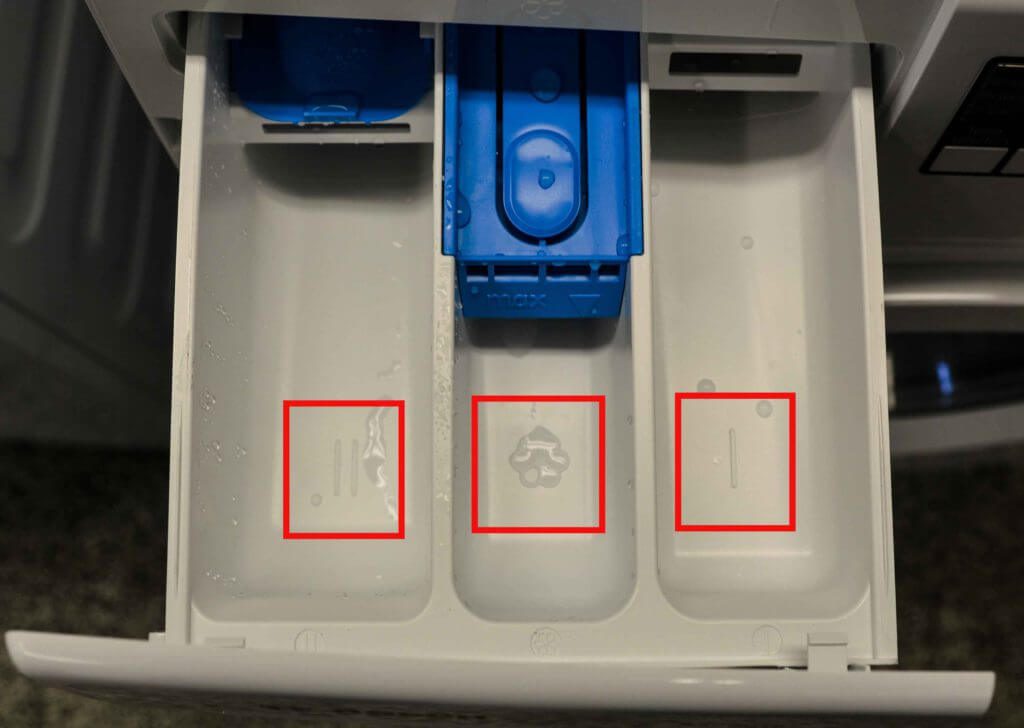
Where should you put laundry detergent?
It is categorically not recommended to use preparations for manual processing of linen: they cause strong foaming, which can lead to clogging of the hose and, as a result, to leaks.
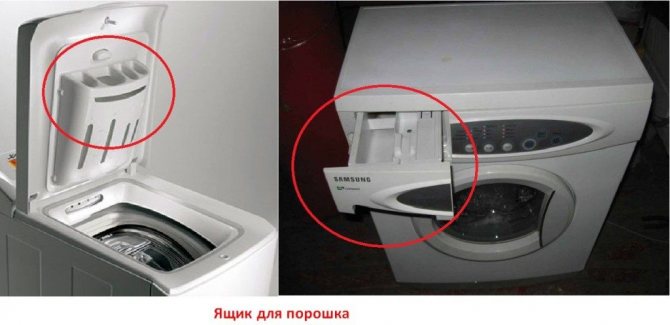
Powder is poured into different types of washing devices in different ways. Semi-automatic machines usually do not have a separate cuvette for detergents; the powder is poured into the tank along with the laundry.
For machines with vertical loading, the cells for washing powder, air conditioner and other products have larger parameters than for front-end machines
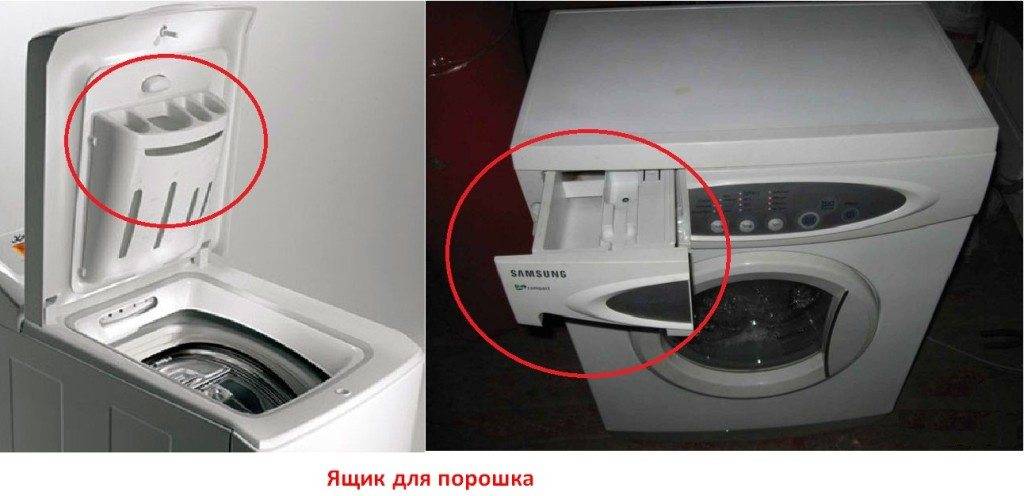
For top-loading machines, cells for powder, conditioner, bleach are placed on the inside of the hatch located at the top.
Image gallery
Photo from
Washing machine Indesit EWD71052CIS
Washing machine Hotpoint AristonAQS1D
Washing machine Bosch WAW32540OE
Washing machine Whirlpool AWE6516/1
For front-facing washers, the detergent compartment is usually located in the upper left corner. Depending on the brand, its design may vary.
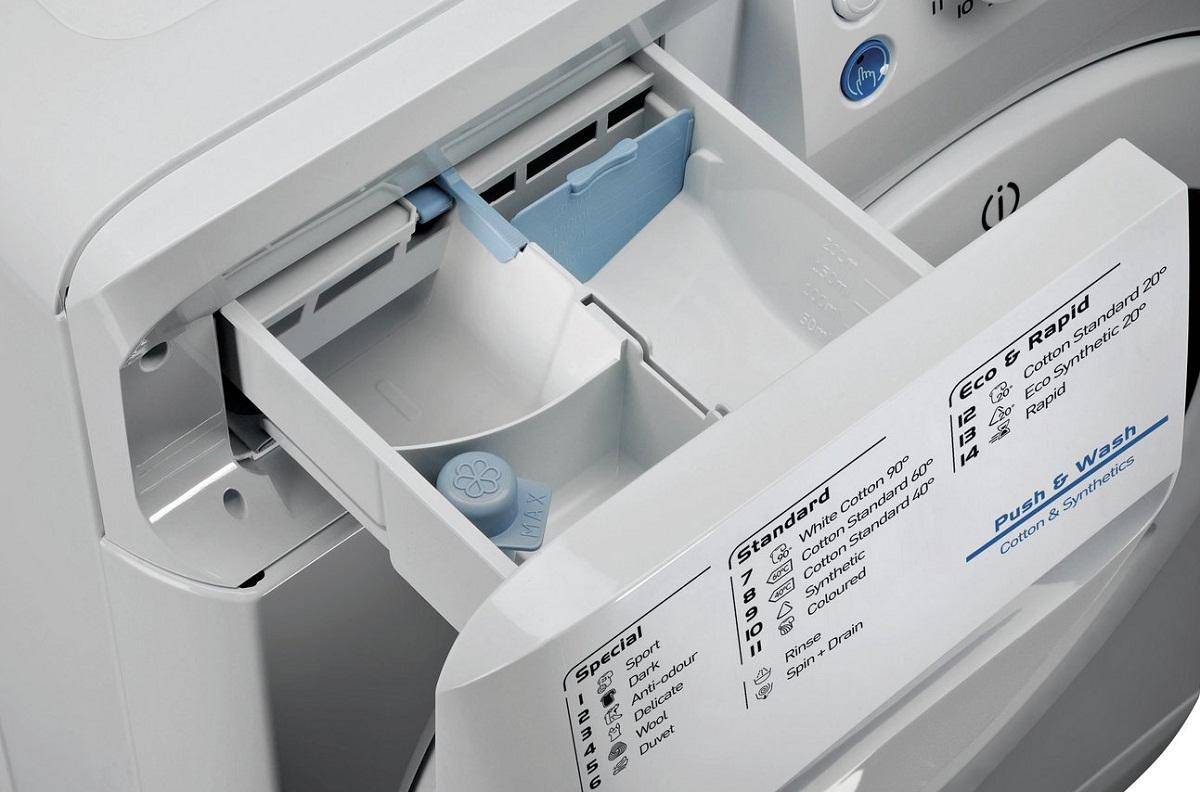
Let us consider in more detail the design of the powder tray. The retractable cuvette, designed to supply detergent to the drum, has a well-thought-out device. As a rule, it is made of plastic: the front panel has the color of the body, and the inner surface is white or gray.
This figure shows a schematic representation of a standard compartment for receiving detergents, consisting of three cells of different sizes
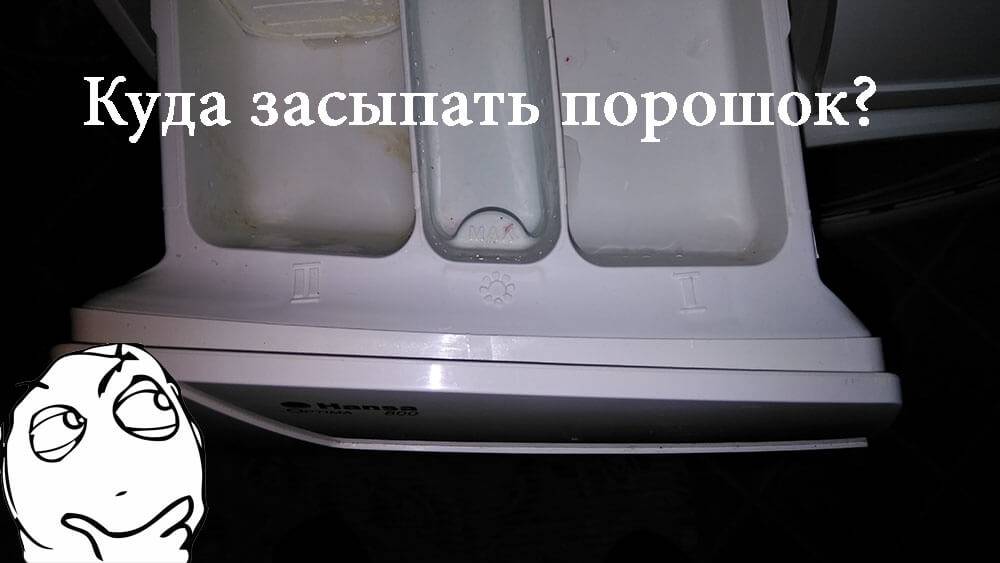
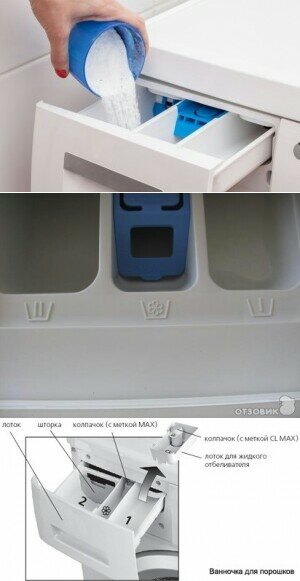
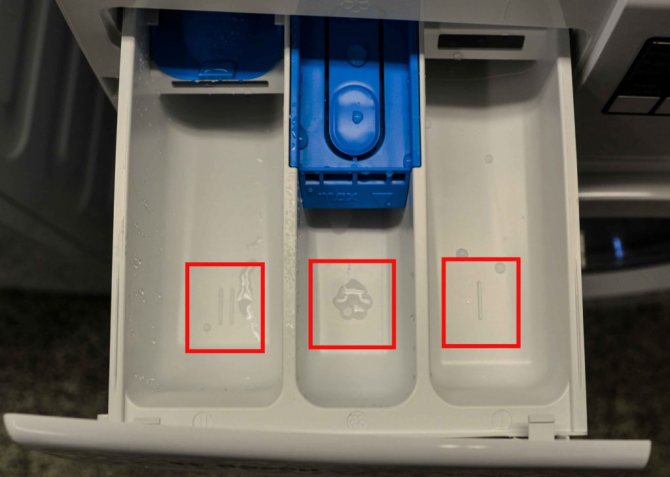
The device is divided into three, less often into four compartments, which are marked with letters, symbols, Roman or Arabic numerals:
- In the largest module, denoted by the numbers II, 2 or the letter B, the agent necessary for the main wash cycle is poured.
- The compartment is medium in size, the numbers I, 1 or the letter A are applied to it, it is designed for filling washing powder, which is used to pre-wash clothes. You can also add bleach or stain remover here.
- The smallest compartment, which is usually located on the left, is intended for pouring flavors and air conditioners. This part can be marked with the numbers III, 3, the word Softener, the image of a flower (star).
To adjust the amount of emollient, a limiting strip labeled max is often applied to the conditioner compartment, indicating the limit limit.
In some models, for example, in Samsung machines, a special dispenser that comes with the kit is used to apply liquid products. It is inserted into the corresponding compartment of the cuvette
In some cases, this compartment is divided into two parts by a partition, and a removable module can also be used. One of them is provided for the air conditioner itself, the second for diluted starch, flavor or other additional substance.
Rules for loading detergent
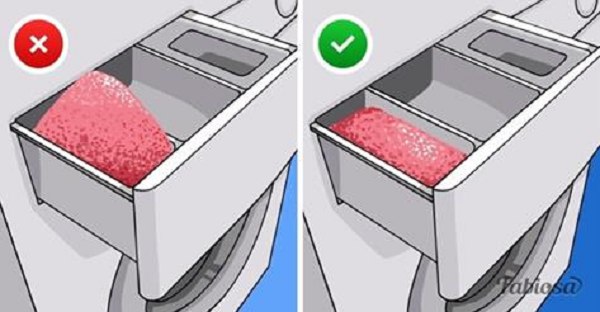
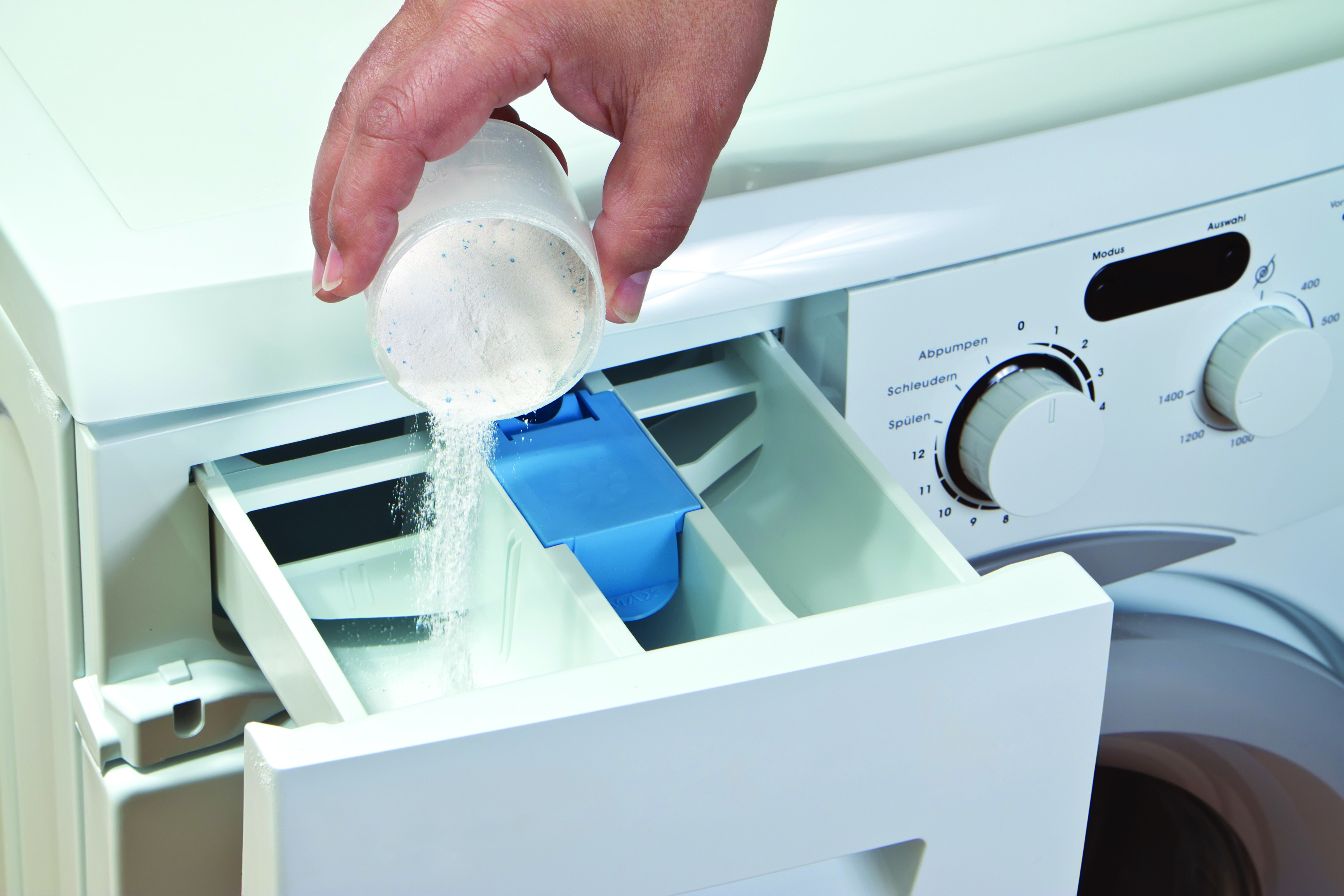
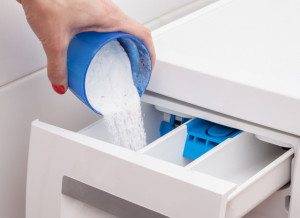
The powder is poured into the cuvette randomly, it is not at all necessary to distribute it evenly over the entire container: the main thing is that it does not spill out over the edges. After the manipulation, the compartment must be tightly closed, and only then start the machine.
When choosing a program that includes pre-wash / main wash and rinse with fragrance and softener, all products can be added to the cuvette at the same time
Some washers have levels in the cells that allow you to control the amount of detergent added. However, often housewives pour the powder over the eye, remembering the amount from previous washes.



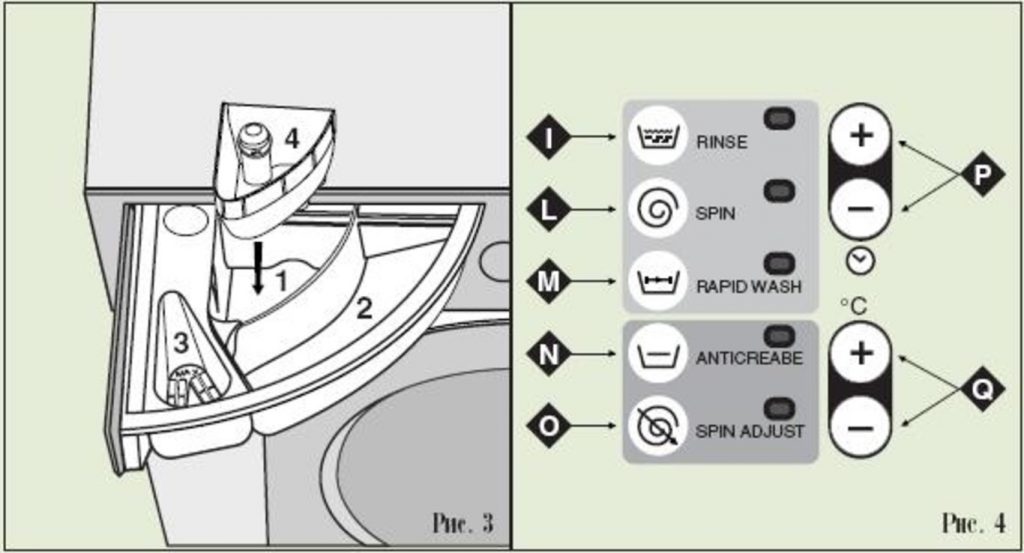


The design features of the machine help ensure that detergents (powder, fabric softener) enter the drum along with the flow of water through the tray. Each compartment has openings that create conditions for the dissolution of these products with a stream of water and their transfer to the tank.
The complete transport of substances is facilitated by both the high pressure under which water is supplied, and the smooth walls of the powder receiving device, which facilitate the release of the dissolved agent.
Dealing with a powder cuvette
If you answer the question formulated in the topic of the article in monosyllables, then the answer is obvious - you should pour the powder into a special dispenser. Also, the dispenser is also called a powder cuvette or a powder receiver. Finding a dispenser in a washing machine is easy. Everything will depend mainly on the type of machine and its type of loading.
In a top-loading washing machine, that is, one in which the laundry hatch is on top. The powder dispenser is a special box that is attached to the inside of the manhole cover. This drawer is quite large, usually even larger than front-loading machines. In rare cases, older models of vertical washing machines had powder dispensers located to the left of the hatch.This turned out to be inconvenient, so the manufacturers later abandoned this option for placing the powder receiver.
The powder dispenser in a front-loading washing machine can be found in the upper left corner of its body. This is a small drawer with several sections inside. What are these sections for? To begin with, we note that in any washing machine in the dispenser, a designation is drawn opposite each of its sections, it would be nice to decipher these designations.
I or "A". Such symbols can be seen opposite the narrow cell of the washing machine dispenser. Both of these symbols mean the same thing, namely the prewash compartment. That is, if you have selected the "Prewash" program, then you pour a small amount of powder into this cell. Only dry powder is suitable for this cell.
* or Softener or flower image. These symbols can be seen in front of a tiny cell, which is often made of plastic of a different color. An air conditioner is poured into this cell; in no case should you pour powder there.
II or "B". They indicate the largest compartment of the dispenser of the washing machine
This compartment is the most important and serves to load the powder during the main wash. This compartment should be used for most washing programs.
This will have to be dealt with in each specific case, depending on the model of the washing machine. For example, in a front-facing washing machine, when choosing a program that involves soaking for 30 minutes and then washing, you must use at least two cells: I and II, as well as, if necessary, a cell for the conditioner.
Features of the powder compartments of different machines - an overview
In washing machines, various powder cuvettes are used. We will review several models of such machines and, using their example, we will talk about the features of the powder compartments.
- Whirlpool AWE 6516/1. The detergent drawer of this top loading machine consists of: prewash drawer, main wash drawer, softener drawer and starch drawer. Moreover, dry matter cannot be poured into the starch container, only a mixture of water and starch.
- Hotpoint Ariston AQS1D Mid-range top-loading washing machine. Its powder drawer has several compartments: a prewash compartment, a main wash container, a softener container, and a bleach compartment. Moreover, the cell for bleach is removable, if you install it, then you will not be able to turn on the “pre-wash” function.
- Bosch WAW32540OE. Excellent German washing machine of an expensive class. It has a relatively simple powder dispenser consisting of: a prewash compartment, a main wash compartment, a liquid starch or softener compartment and a compartment for liquid detergents. The manufacturer warns: for better flushing of a thick detergent from a cuvette, it must be diluted with water./li>
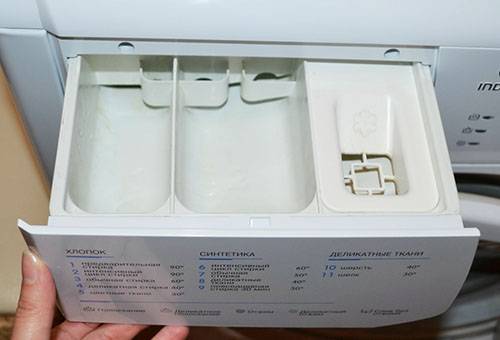
- Indesit EWD 71052 Inexpensive, but pretty good washing machine from a well-known manufacturer. It has a four-section powder dispenser. It has: a cell for prewash, a cell for the main wash (powder or liquid), a cell for liquid softeners and fragrances, a removable bleach compartment. The peculiarity is that the bleach compartment is divided into two more sections - a cell for thick bleach and a cell for gentle bleaching.
As can be seen from this review, in general, powder cuvettes of different washing machines are similar to each other. Nevertheless, there are nuances, ignorance of which can affect the quality of washing, so experts strongly recommend that you carefully read the instructions before starting the program.
Options for loading washing powder into automatic machines from different manufacturers: photo instructions
If you correctly study the design of the trays in modern washing machines, understand the method load of detergents not so difficult. However, to make it easier to find the right compartment, our editors offer a visual instruction with a photo for each individual brand of popular automatic washing machines.
Features of the structure of the trays in the washing machine Indesit (Indesit): where to pour the powder into them
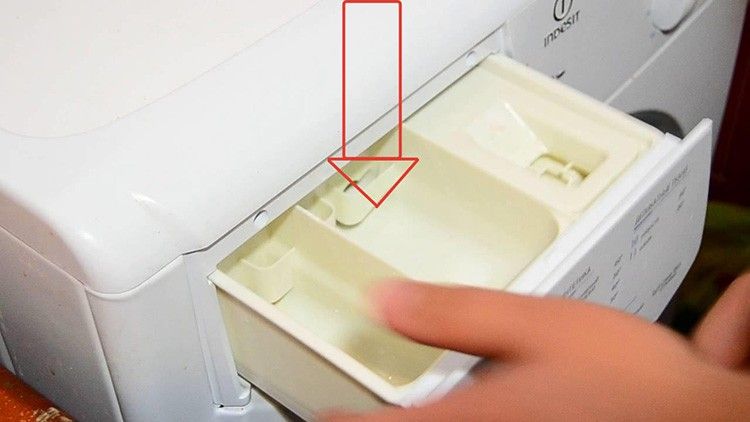
In most modern washing machines from the Indesit brand, there are three compartments for placing detergents. The widest tank, indicated by the arrow, is for dry powder or liquid detergent for the main wash.
Where to put the powder for the main washing function in the LG washing machine

In LG brand washing machines, the placement of the trays is individual, for example, the compartment for placing rinse aids or conditioners is located right in the depth of the prewash tank. But you need to pour the powder for the usual washing of things into the compartment with the II icon, as shown in the photo.
Where to fill in washing powder in a Samsung automatic machine (Samsung)
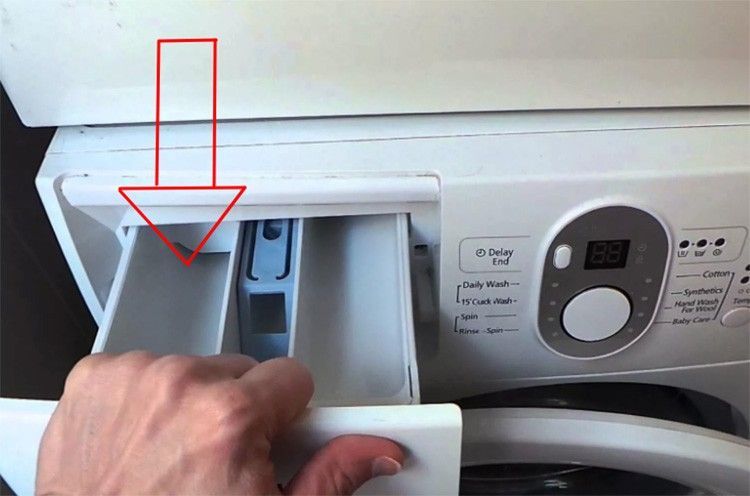
Regardless of the model of Samsung washing machines, the internal structure of the detergent tanks is practically the same. Take a look at the photo, where to send the powder for the main washing mode. If you are using liquid products or capsules, then you need to place them directly into the drum.
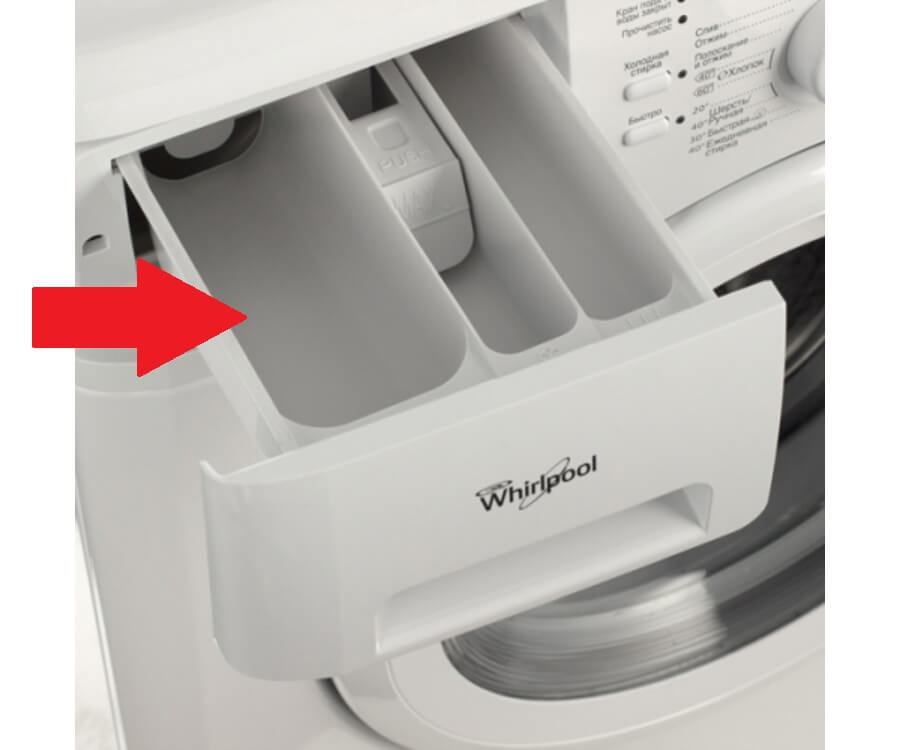



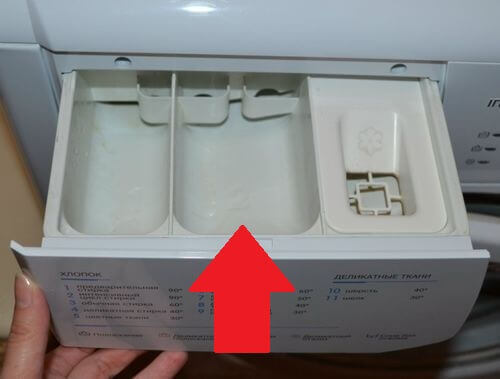
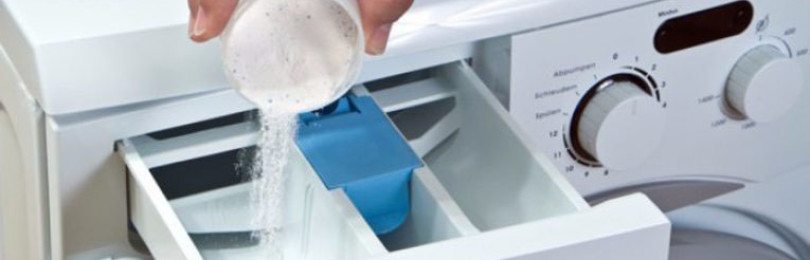
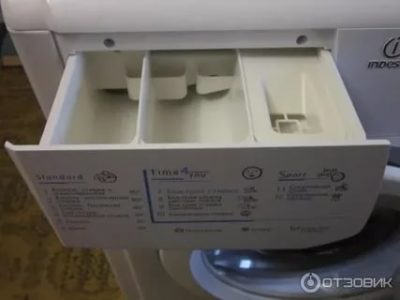
Useful information! If you hold the tray open for several minutes while the wash is running, you will see where the water is drawn first, respectively, you can determine where to send the powder.
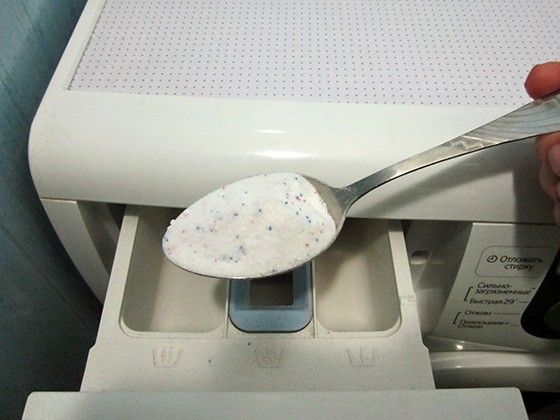
In which of the compartments of the Bosch washing machine (Bosh) to pour powder for prewash
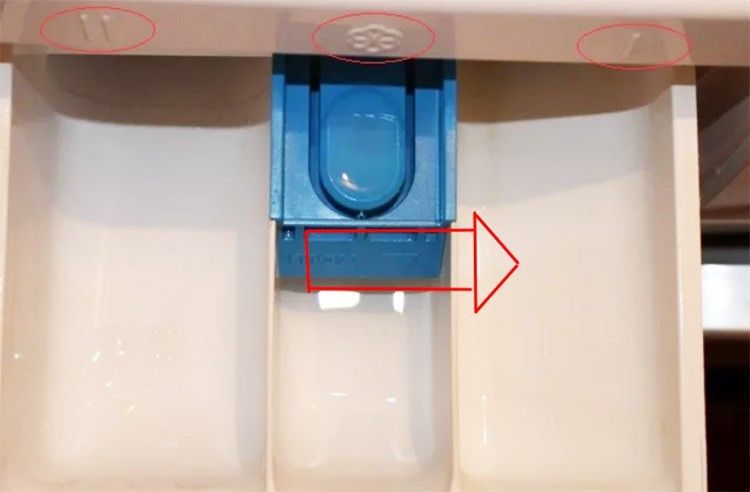
In the previous section, you have already familiarized yourself with the methods of marking detergent trays. If you need to wash clothes thoroughly or remove stains from children's clothes, you need to start the prewash mode, respectively, pour washing powder into the compartment marked (I), see photo.
Washing with special detergents
If bleach or stain removers are used during operation, they must be added to the prewash compartment.
But you need to be very careful when using such products, as they can damage the fabric. Pour such funds immediately before washing. Liquid detergents can be poured into the powder compartments
During operation, the water will quickly take away the special fluid. If the product is more like a gel and too thick, you should add it directly to the drum, and not to the tray. Otherwise, the gel will not get completely into the drum and may be released little by little during rinsing. Such products are suitable for washing at low temperatures.
Liquid detergents can be poured into the powder compartments.During operation, the water will quickly take away the special fluid. If the product is more like a gel and too thick, you should add it directly to the drum, and not to the tray. Otherwise, the gel will not get completely into the drum and may be released little by little during rinsing. Such products are suitable for washing at low temperatures.
Rinses can also be in the form of thick gels. To make them more convenient to use, the gel must be diluted in water before pouring into the machine.
When working with the machine, special capsules and tablets are used. They must be put in the drum, otherwise it will be difficult for them to dissolve. The use of herbal products is popular. These funds are poured into the main compartment before washing.
Determination of the optimal amount of funds
Depending on the selected program, when washing products, you need to add the following products:
- For simple washing, it is enough to fill the cell marked with the letter B or number 2 (II) with powder.
- For a complete soak and rinse cycle with the addition of a softener, powder is loaded into compartments A and B, and conditioner is poured into the tray marked with a 3 or “flower”.
- If the laundry is not heavily soiled, pre-soaking can be dispensed with. In this case, it is sufficient to add detergent to compartment B (II); if desired, rinse aid is also added to the small compartment.
The conditioner (fragrance, rinse aid) can be poured into the tray at any stage of the process up to the start of the final stage (rinsing and spinning).
What affects the amount of powder?
The amount of detergent required for washing depends primarily on the volume of items loaded into the machine.
In addition, factors such as:
- the degree of soiling of linen;
- hardness of water;
- the amount of water required for washing;
- selected program;
- washing technology.
The more stains on the products, the higher the consumption of detergent. If the dirt is difficult, it is better to use a stain remover or bleach.
An alternative to industrial water softeners can be a few tablespoons of baking soda, which is added to the powder compartment. You just need to keep in mind that this product should not be used when washing wool and silk products.
Washing in soft water requires less powder than in hard water. To determine what type of water is in your area, just look at the transparent window while you start washing. If bubbles are visible on it, then soft water flows from the taps.




The liquid can be softened artificially by adding a special agent containing phosphates to the washing powder. A large volume of water for washing implies a high content of detergents.
Different modes provide for the use of a certain amount of washing powder. In some cases, the difference can be striking: for example, when washing 3 kg of laundry in the “Cotton” mode at +60 ° C, 6 tablespoons of detergent will be required, while when choosing the “Synthetics” program at +40 ° C, only three.
It is also necessary to apply liquid gel in a certain amount. An increase in the rate of bookmarking leads only to wasteful spending of funds, while the quality of washing remains unchanged.
Innovative solutions used in modern models of washing machines from the best manufacturers can reduce the consumption of electricity, water, and detergents.
These technologies include:
- "smart bubbles" EcoBubble;
- steam washing.
In the first case, a special foam generator is used, with the help of which the powder is mixed in water before entering the drum. Under the action of bubbles, the agent penetrates the fabric structure better, effectively removing impurities, which contributes to the saving of powder.
Steam washing involves the supply of a heated water jet to items placed in the drum. This technology contributes to the rapid dissolution of detergents and the effective washing of contaminants, including old ones.
In this case, the water temperature is chosen arbitrarily, it does not necessarily need to be heated to high temperatures. Among the important advantages of steam washing include the radical destruction of germs and allergens.
We calculate the proportions of detergent
Do not thoughtlessly pour household chemicals into the tray of the washing machine. Exceeding the norm threatens with increased foaming, which can lead to clogging of the hose and leaks. If you do not calculate the consumption and add little detergent, the laundry may not be washed well.
In some expensive models, the function of automatic dosing of detergents is provided. In this case, the machine is loaded with a large amount of the substance consumed for washing, and then it measures the right amount, focusing on the weight of the laundry.
We will try to determine exactly how much washing powder should be poured into the washing machine.
As a rule, dosage information is printed on the label of any product, and sometimes it produces
What determines the amount of powder per wash cycle in an automatic machine?
A good housewife knows that the amount of powder affects not only the quality of washing.That is why it is worth considering all the factors on which the “norm” of the powder for the washing cycle in the machine will depend.
- The degree of soiling of the laundry and the presence of stains. One powder is not always enough to wash things, no matter how much you pour it, stain removers and other products may still be required.
- The hardness of the water used for washing. Everyone knows that washing efficiency is higher in soft water, therefore, powders containing water softening agents are used to soften.
- The amount of laundry in one wash cycle.
- Water consumption of a washing machine per wash cycle.
- Washing mode and type of fabric. This factor indirectly affects the amount of powder, the volume of water consumed depends on the mode. The washing mode has a greater effect on the quality of the detergent. For delicate items, as well as silk and wool products, you need to use a special powder, you can read about this in the article on how to choose a powder for a washing machine.
The degree of soiling of things and water hardness
The easiest way to figure out how much powder to pour into an automatic machine is to read the instructions on the powder package. On average, on most well-known powders, such as Tide, Ariel, Myth, Persil, Sort, Eared Nanny and others, the manufacturer indicates the following standards:
- with a low degree of contamination, pour 150 g of powder;
- with a strong degree of contamination - 225 g of powder;
 However, do not trust such instructions so much. After all, it is beneficial for the manufacturer to overestimate the rate so that the powder runs out faster, and the consumer is forced to buy a new package of the product.In fact, it was found that 1 tbsp is enough to wash 1 kg of dry, dirty laundry. spoons of powder (25 g). Accordingly, when washing 4 kg of laundry, it is necessary to fill in only 100 g of detergent.
To remove stubborn dirt, you need to pre-treat them or soak them, more powder will not help remove stains. And if at the same time the water for washing is too hard, then a couple of tablespoons of soda can be added to the powder, which will soften the water and allow the powder to dissolve better in the water. Just do not use soda while washing silk and wool.
Water consumption per wash cycle
It is very important to take into account the amount of water consumed by the washing machine in one wash cycle. The quality of washing is affected by the concentration of detergent
But this does not mean that the more the better. Excess powder may remain in the form of streaks on things. We need to find the "golden mean".
In different models of washing machines, the water consumption may vary. It depends on the complexity of the programs and on the volume of the washing machine tank. On average, a standard washing machine with a load of 5-7 kg of laundry consumes about 60 liters of water. Information on water consumption for different washing programs can be found in the instructions for the machine. Consider the water consumption using the Bosch WLK2016EOE washing machine as an example, the maximum load of which is 6 kg.



This table shows that with different washing modes, the amount of water consumed varies from 64 to 40 liters. Suppose we will wash bed linen weighing approximately 3kg in the "Cotton 60C" mode, how much powder is needed? Based on the weight of the laundry, you need to put 3 tablespoons of the product, according to the data from the previous paragraph.
However, pay attention to the amount of water consumed. That when washing 3 kg of laundry, that when washing 6 kg of laundry, the machine will spend 64 liters of water
After all, the machine cannot weigh laundry and draw water depending on the amount of laundry. This means that by pouring 3 tablespoons of powder into such an amount of water, the laundry may not wash well.
Therefore, in such washing machines, you need to fill in the powder, based on the maximum load of laundry. In this case, the "Cotton 60C" mode will require 6 tbsp. (150 g) of the product, and for the "Synthetics 40C" mode - only 3 tbsp. (75 g), regardless of the amount of laundry in the drum.
Adding agent to the drum
Some housewives deliberately refuse to use the tray and prefer to pour the detergent directly into the drum. Others oppose such a scheme, and the controversy has not subsided for several years. The main argument of the “pros” group concerns the economical consumption of the powder, since when “travelling” from the dispenser to the tank, a certain part of the granules remains on the walls and is washed out, and when laying directly to things, this “leakage” is excluded. True, opponents doubt such a benefit, arguing that a significant portion of the concentrate goes down the drain, since the water is updated several times during washing.
The official position remains the same - both manufacturers and specialists urge to use only the dispensary. Exceptions should be one-time and only in extreme cases, if the dispenser broke down or another similar incident occurred. But even in such situations, it is necessary to act according to a certain scheme: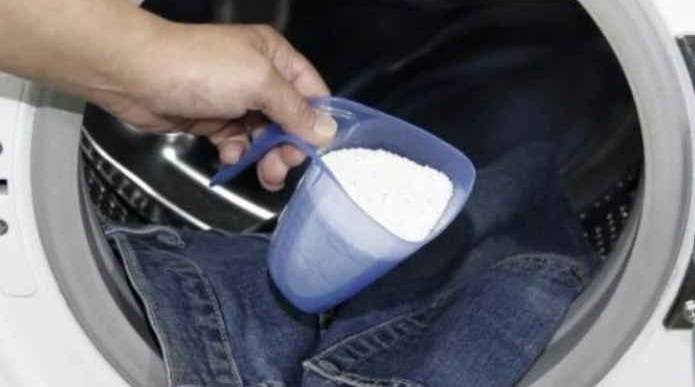
- do not pour granules on things (aggressive bleaching agents will react with the fibers, which will lead to discoloration and damage to the fabric);
- add detergent to an empty drum;
- be sure to wash off the remnants of the granules in the tank with water or cover the slide with a damp cloth or an old handkerchief;
- only then fill the drum with clothes.
The ideal option is to pour the powder or pour the gel into a special container. This is a plastic container with a large number of holes on the surface. Sometimes such a dispenser comes with Candy, but more often you have to buy the device separately in a hardware store. Its cost is small and varies from 30 to 150 rubles.
Pouring detergent into the drum
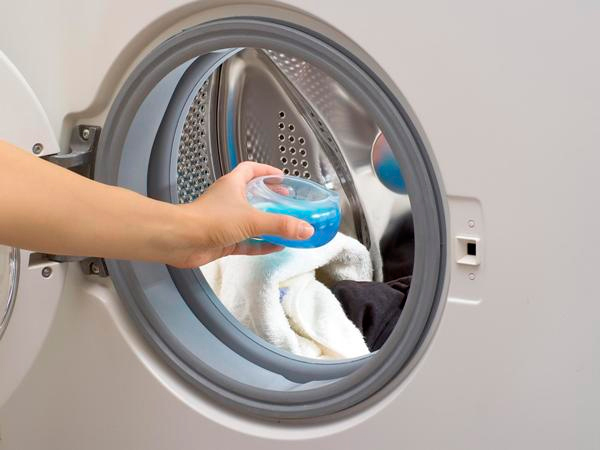
After a long period of use, the washing machine begins to leave some of the unselected powder from the compartment of the loading tray. The problem is related to clogging of the nozzle and the water supply hose to the cells with solid deposits or rust. Unselected all the powder impairs the quality of the wash. The problem is solved by pouring detergent directly into the drum on the laundry before washing.
Manufacturers of household appliances do not recommend direct powder filling in the following cases:
- When washing dark and colored clothes, concentrated granules will dissolve in one place. There will be light spots on the linen that have eaten away the paint. Part of the clothes, in general, will remain dirty. Liquid detergents will immediately be absorbed into the area of dry clothing. Stains are 100% guaranteed, and most of the laundry will remain unwashed.
- To avoid stains, housewives pour the powder into an empty drum, and then load the laundry. Through the holes, the detergent enters the tank, where it dissolves when water is supplied. However, when starting any washing program, the machine first pumps out the remnants of the old liquid with a pump. Together with dirty water, part of the powder goes down the drain.The result of further washing will be negative.
- Do not pour powder into the drum if the washing mode is based on the gradual withdrawal of detergent from the tray cell.
However, with a poor intake of powder from the dispenser, you should not refuse to wash delicate and dark things. The detergent is placed inside the drum, but having previously poured it into a special container.
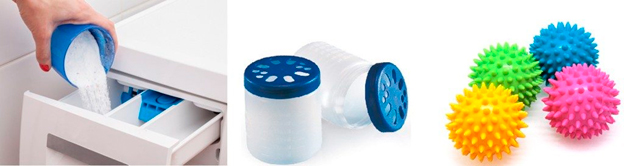
The device resembles an ordinary plastic jar with small holes. The container acts as a dispenser. The plastic container is washed with the laundry. Streams of water gradually wash away the already dissolved powder, which in a small concentration does not harm the linen.
Container prices are low. You can buy several pieces for different types of detergents. Additionally, special rubber balls for washing are thrown inside the drum. Spikes on the surface of the balls help to better get rid of stubborn dirt.


