- Ways to adjust the temperature in the water heater
- Operation Method
- Cumulative
- Flowing
- The principle of operation and features of a heated tap
- Appropriateness of use
- What to look for when buying?
- Varieties of control systems
- Hydraulic water heater control system
- Electronic control system
- Design features and main characteristics
- Technical characteristics of instantaneous water heaters
- Save space and money
- Advantages and disadvantages
- China Hot Water Faucet Test
- Features of a storage boiler
- Advantages and disadvantages of a storage boiler
Ways to adjust the temperature in the water heater
A faucet with an instantaneous water heater can only work if it is properly configured. In this case, the device will be able to fully implement the functionality inherent in its design. A well-tuned valve should move easily in three different directions:
- turn to the left, responsible for turning on the water heating immediately upon completion of this action;
- pressing the lever and moving it down leads to the supply of cold carrier with simultaneous disconnection of the water-heating mixer from the power supply system;
- in the middle position, the mixing device is completely disconnected from electricity and water supply.
Operation Method
The vast majority of appliances used for heating water are of two types.
Cumulative
Apparatuses of this type are a reservoir with a heating element, which makes it possible to provide the consumer (moreover, several points from which water is taken from at the same time) with a sufficiently large volume of hot water. However, its initial heating takes time (as a rule, from a quarter of an hour). In the future, the water is constantly heated to the required value. The volume of the container can be from 5 to 300 liters. It is possible to choose the appropriate unit depending on the version. They can be hung on walls or placed on the floor, they are vertical and horizontal, flat or cylindrical.

Electrolux EWH 30 Formax is an electric storage water heater with an enamelled tank in a rectangular design
When operating this type of equipment, it is necessary to take into account some nuances:
- space is required to accommodate the tank;
- with long-term stagnation of water in the tank, such water cannot be used for cooking, and even more so for drinking, since bacteria can appear there (it is recommended to periodically heat the liquid to maximum temperature values, and also choose models that have a special coating that protects against the growth of bacteria);
- if the device is not used for a long time, the water has to be drained (especially if the owners leave for the winter).
Diagram of a gas storage water heater
It is more expedient to install storage-type equipment where there is no centralized hot water supply.
Flowing
Installation of devices of this type is one of the most effective and simple way to provide consumers with hot water. Their power varies from 2 to 15 kW.
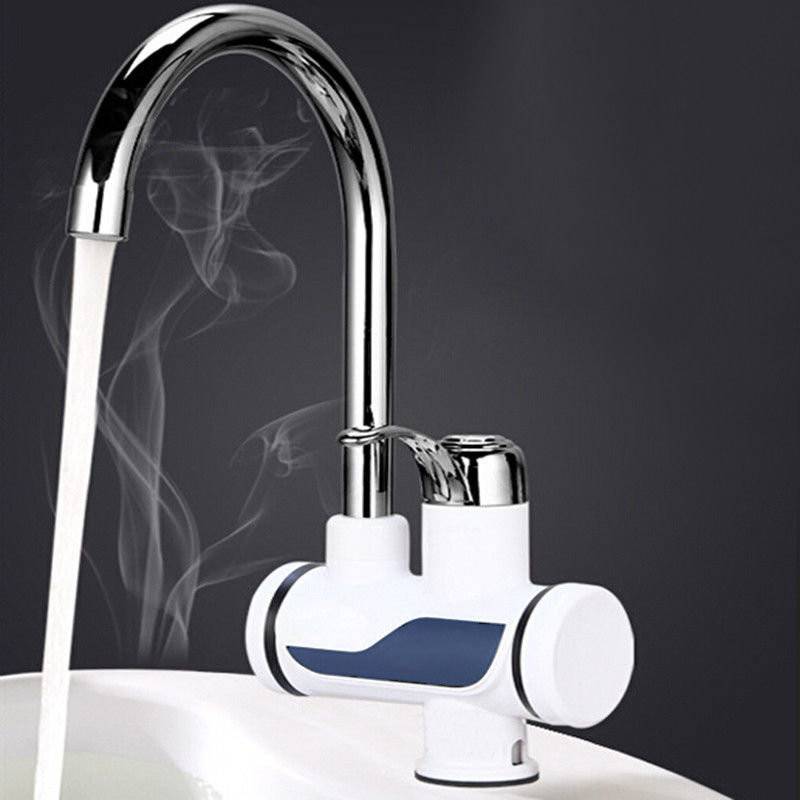
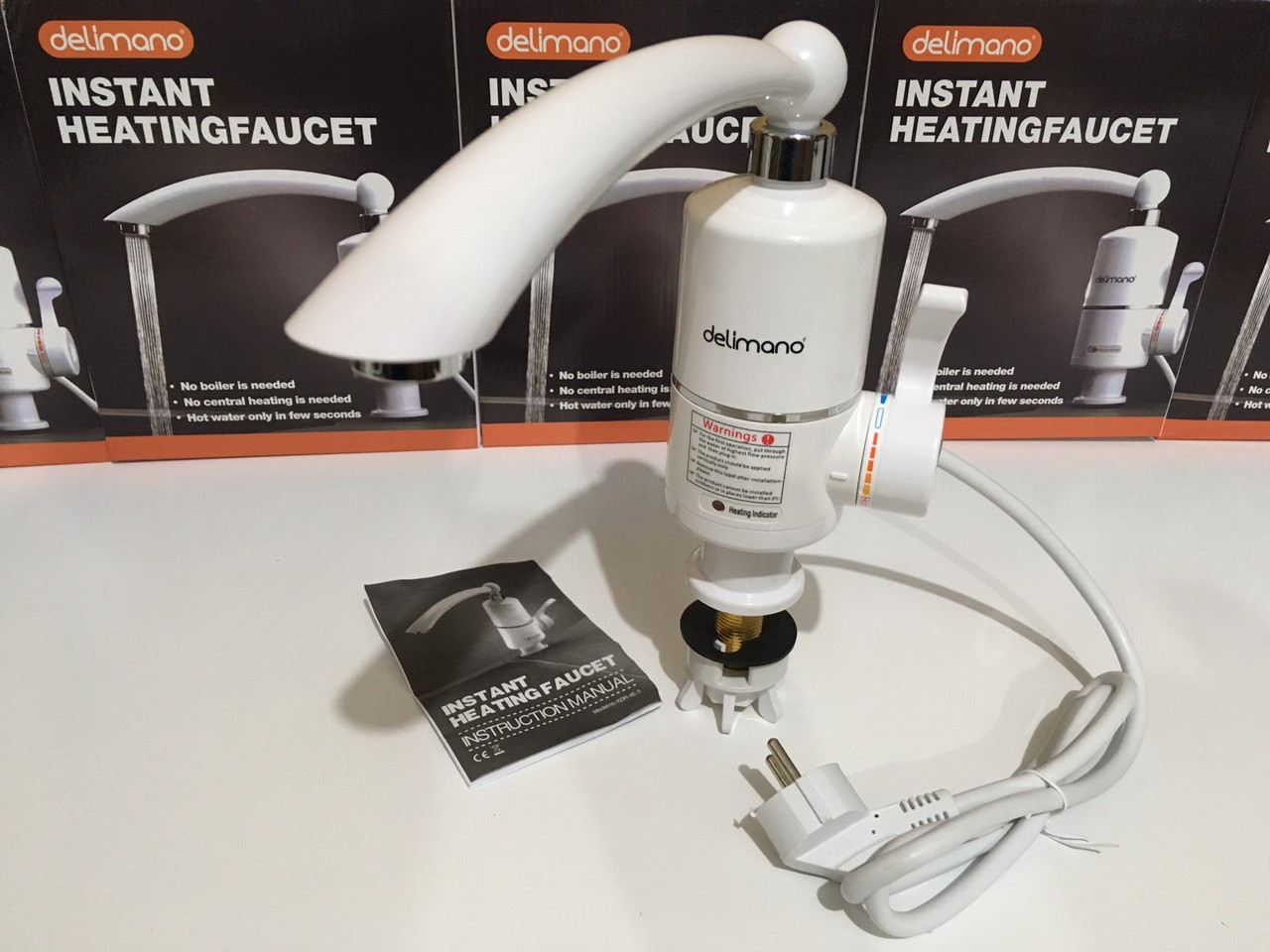
Flowing water heater on the faucet
Pressure models can be installed in a riser, which allows you to provide heated water to all water intake points in the house. Non-pressure devices, which are among the simplest and most popular, are mounted directly on the crane and put into operation after it is opened.
Flow devices consume more energy, moreover, they are dependent on its availability at the time of switching on. However, they are compact, easy to manage and cost less than storage counterparts. Some energy savings are provided by the absence of its consumption at rest.

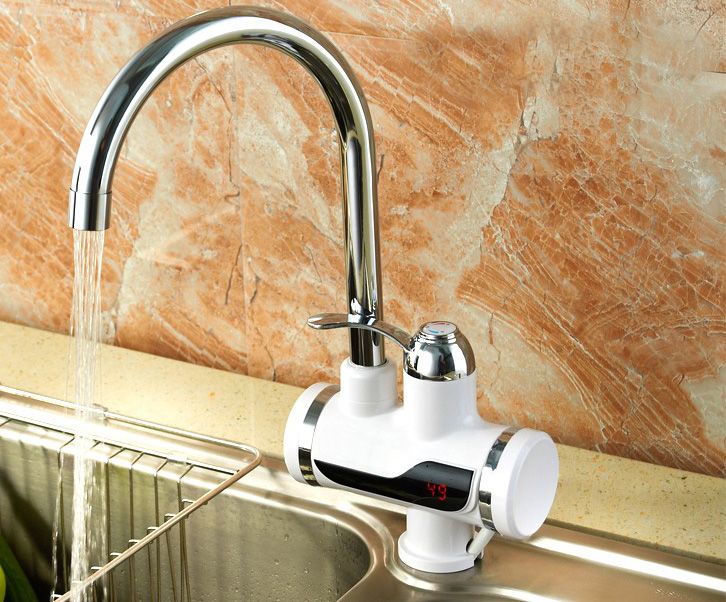
Water heater flow faucet with LCD display screen and temperature sensors
Today, hybrid technology is also being produced - flow-storage water heaters. These units are capable of rapidly heating water (which characterizes flowing varieties) and storing it in a tank. However, devices of this type are not so often found on sale due to low consumer interest. This is due to their high cost and complexity of design.
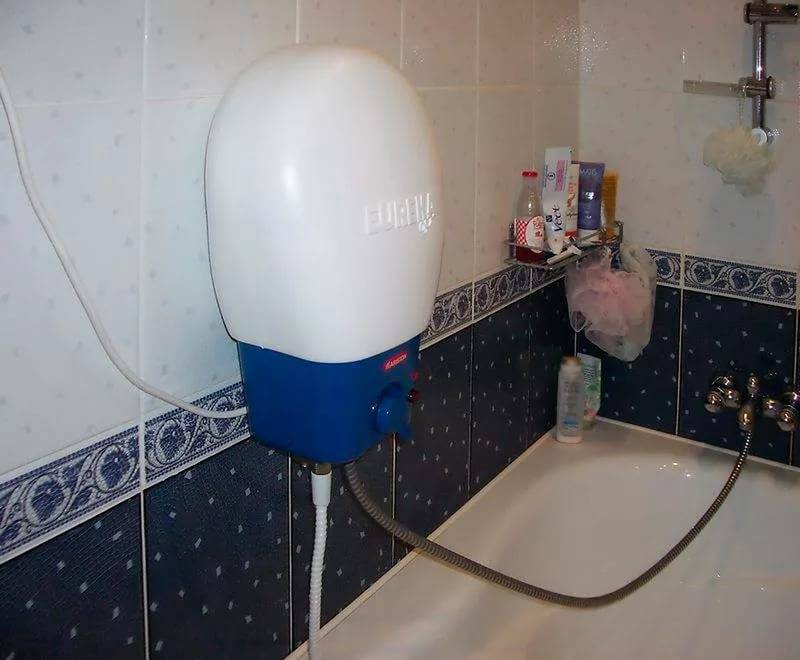
When choosing a water heater in an apartment, as a rule, flow models are installed
A flowing water heater powered by an electrical network and installed on a tap is one of the most popular devices today. It is especially convenient to use a device that instantly heats water during periods of planned shutdowns.This device is the most compact of the range of electric water heaters. The expediency of its installation is determined by the conditions and intensity of use.
The principle of operation and features of a heated tap
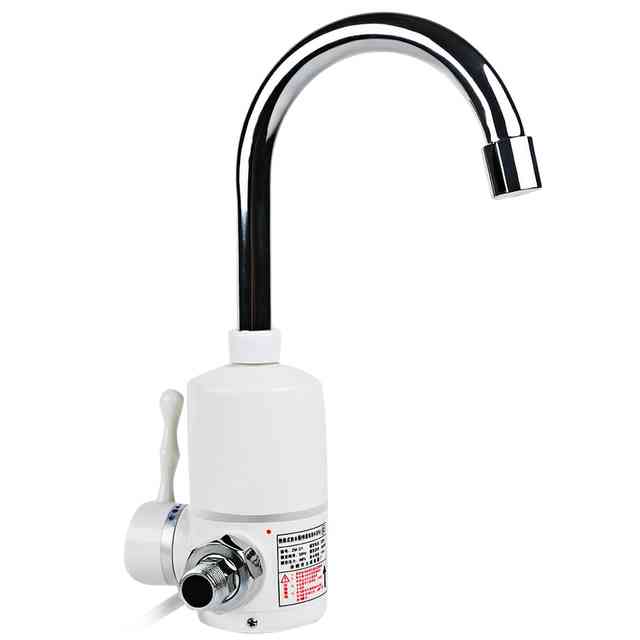
A modern flowing electric water heater for a faucet is a device that does not complement the faucet, but replaces it. Therefore, his definition is considered somewhat erroneous. The device is quickly built into the kitchen sink (or just into the sink), after which it is connected to the electrical network and to the water supply.
Since such water heaters are designed for houses that are not connected to centralized hot water sources, nothing prevents us from building such a water heater instead of the tap itself.
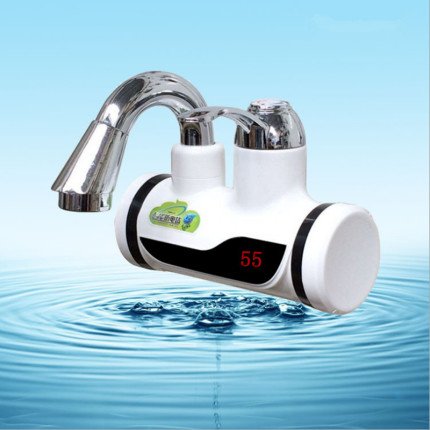
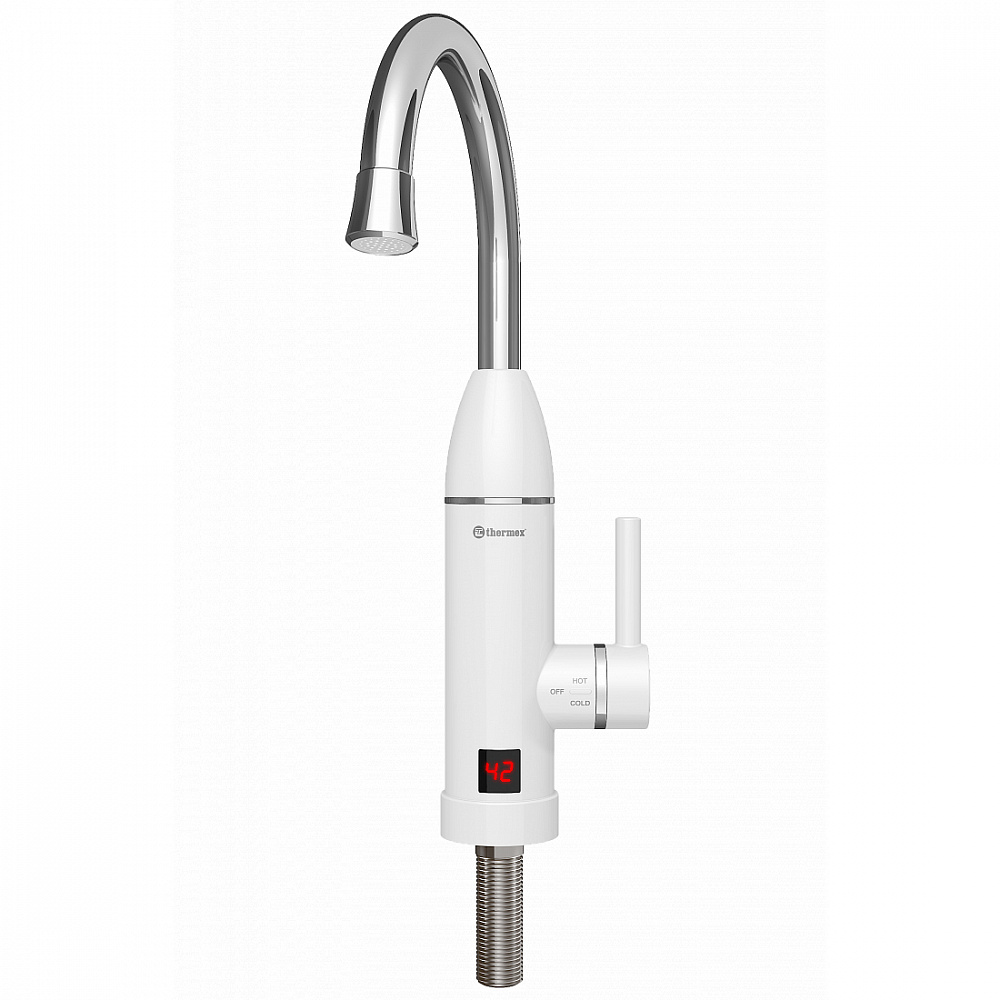
A flow-through water heater with a display for more convenient adjustment of the hot water temperature.
Instantaneous water heaters work very easily - after opening the tap with water, the heating element turns on, and after a few seconds hot water starts flowing from the tap. The heating temperature for most models is 40-60 degrees. If necessary, you can adjust the temperature to your liking. As soon as the tap is closed, the flow of hot water will stop, and the heating element installed inside will be turned off.
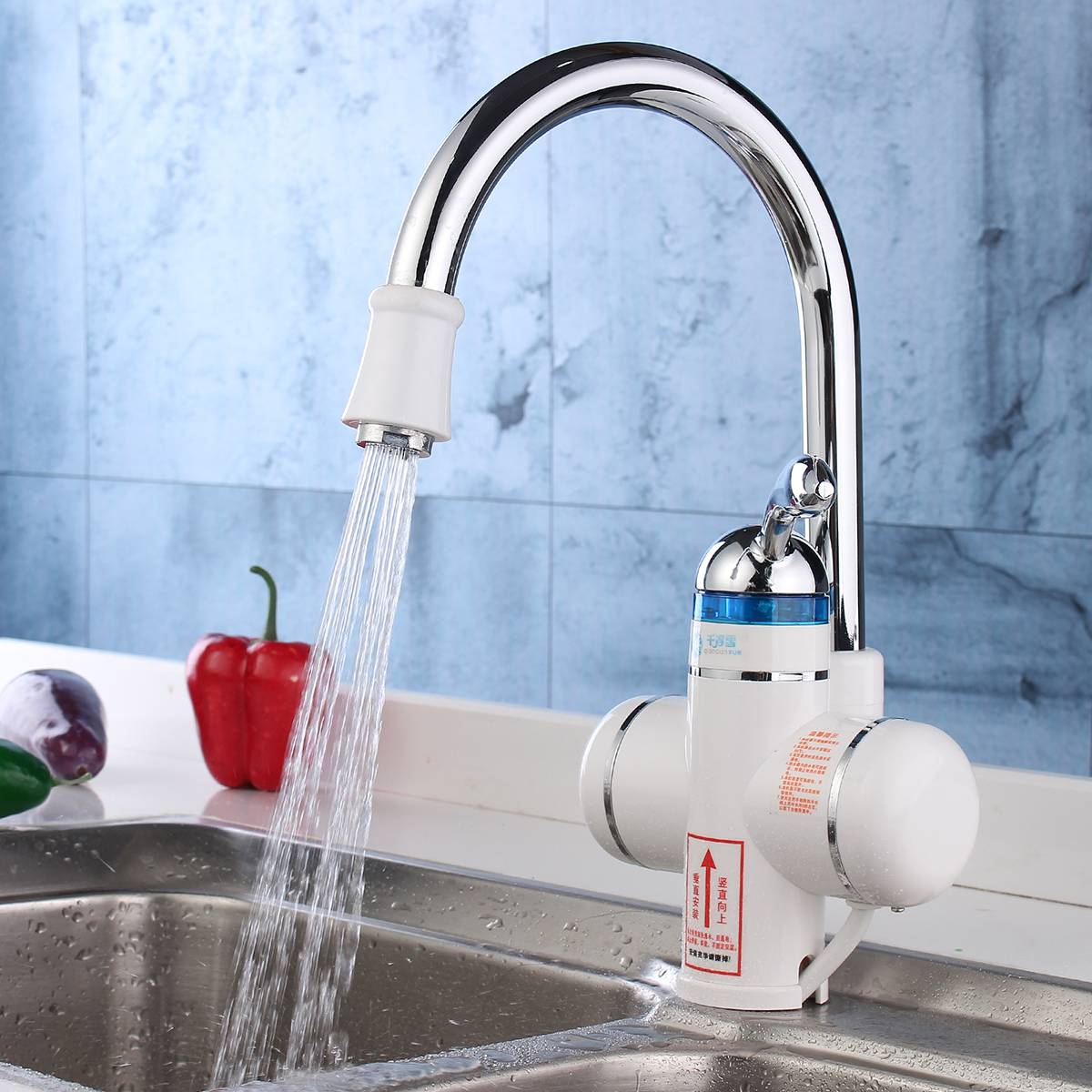
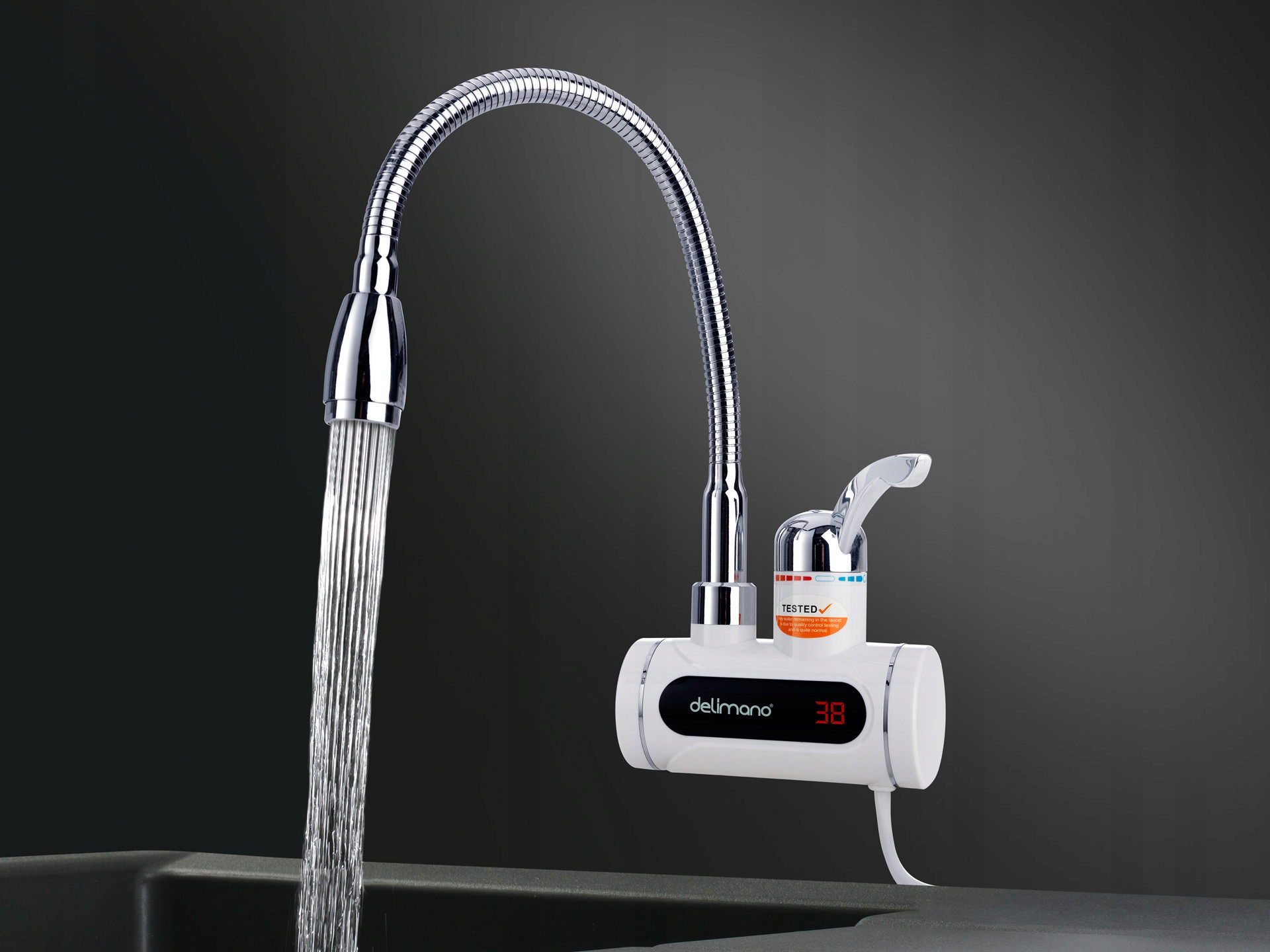

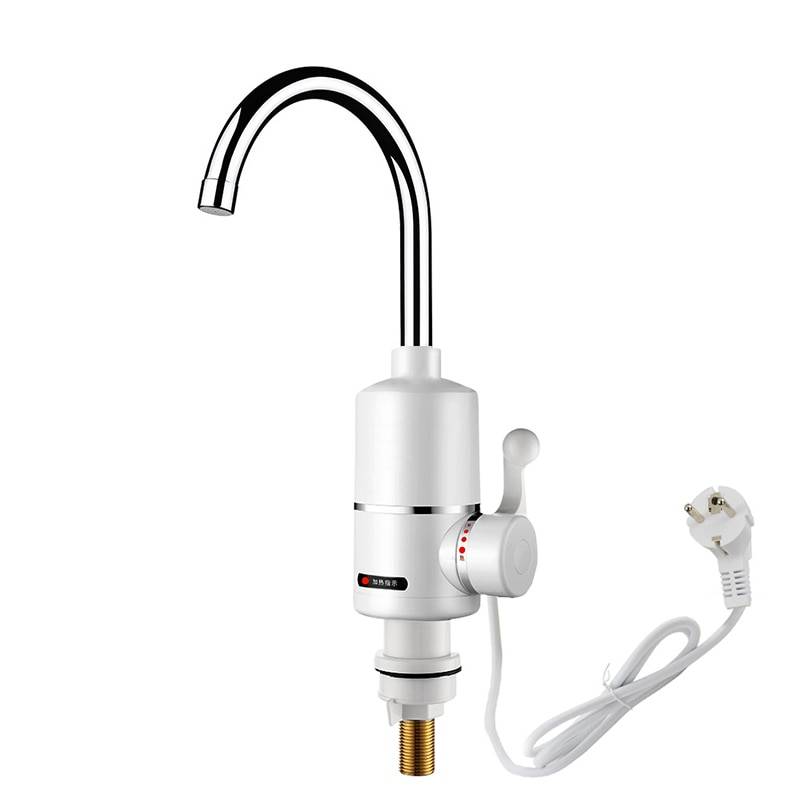

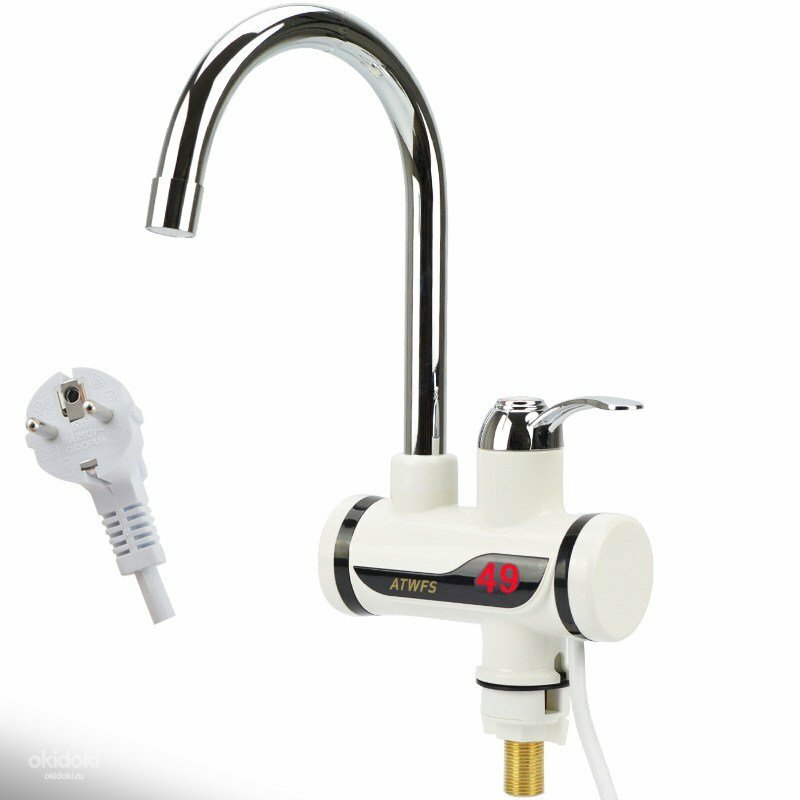

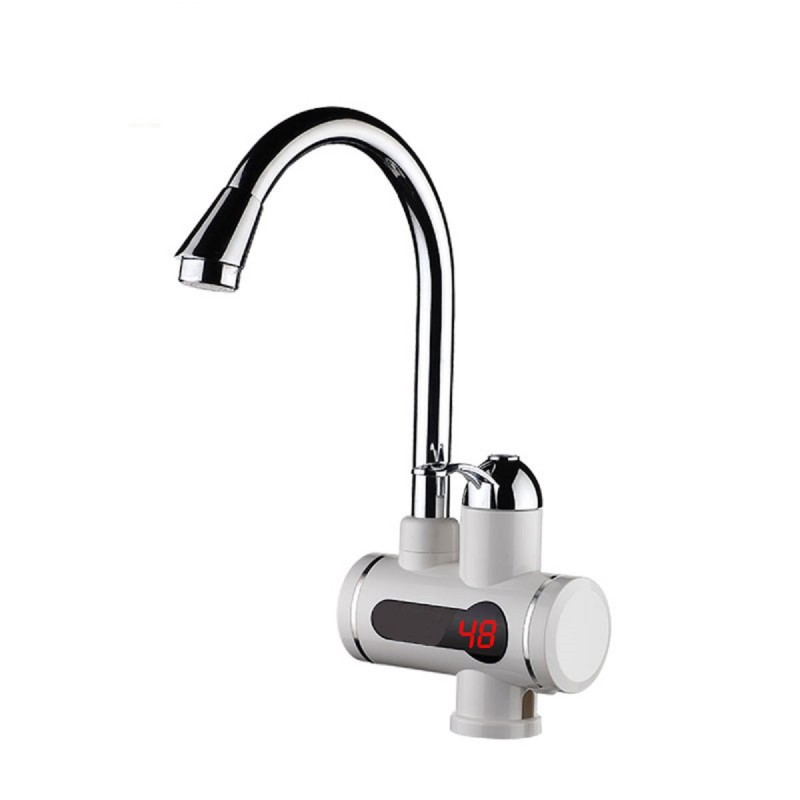
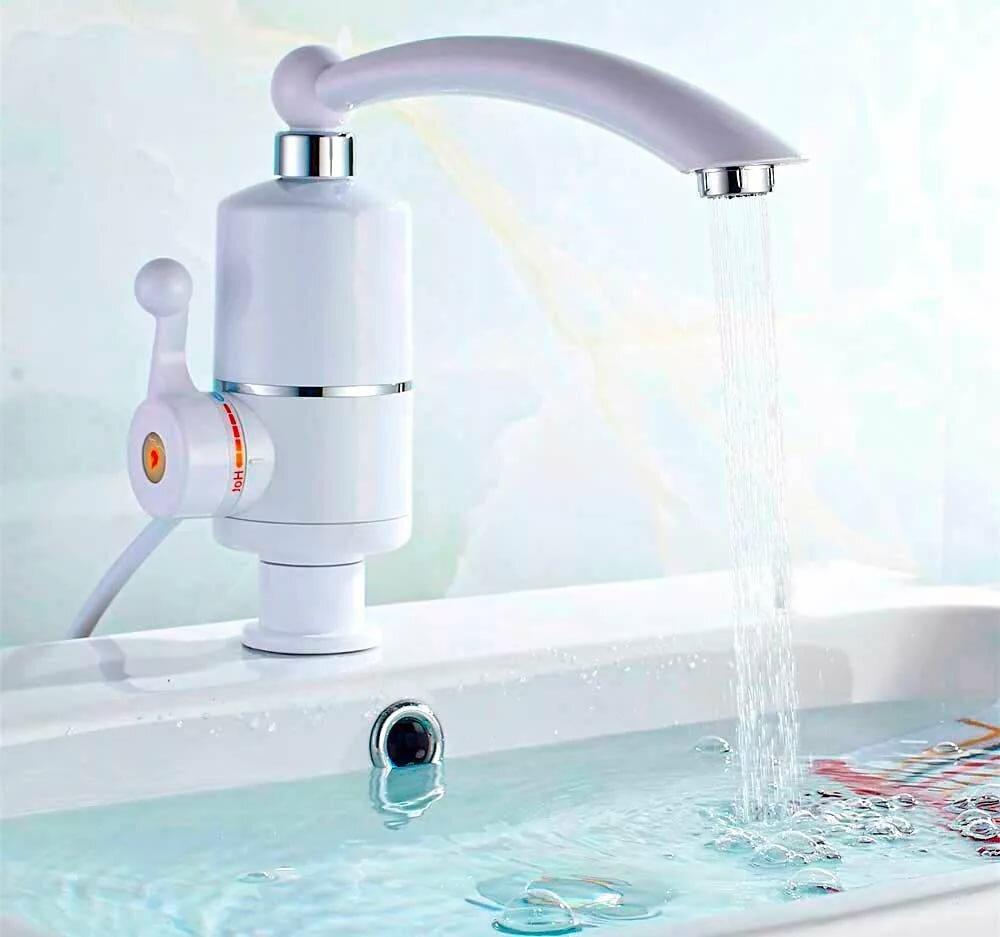
The greatest convenience is provided by advanced heaters equipped with liquid crystal displays and touch controls. But you have to pay for this convenience - the cost of such heaters is somewhat higher. If you want to save money, buy the simplest model, as the temperature can also be adjusted with a knob.
When buying plumbing equipment, please note that it is better to buy a faucet with heated water from the manufacturer.This recommendation is due to the fact that branded devices are maximally adapted by the manufacturer to the operating conditions: poor water quality in the system, power outages, etc.
Fakes don't last long.
All cranes on the market with water heating for cottages and apartments operate in 3 modes:
- The lever is lowered down - the mode of de-energizing the electronic circuits of the mixer. Water does not flow into the tank and the hot water faucet instantaneous water heater does not heat the water.
- The lever is turned to the left of the body - cold substance supply mode. At this point, no voltage is applied to the electronic circuit.
- The lever is turned to the right - the mode of heating and supplying the substance. Whatever you decide to buy an electric water heater faucet for the kitchen or bathroom, it will supply a substance with a temperature of 50 to 700C. All models of faucets for apartments and taps for summer cottages with heated water, which you can also buy in a house where children grow up, are produced with a temperature controller. They are practical and safe to use.
The instantaneous water heater on the faucet is a device that is compact in size. Its use in urban housing solves the problem with the supply of warm water. How appropriate the installation of such a device is determined by the frequency, intensity and conditions of its use.
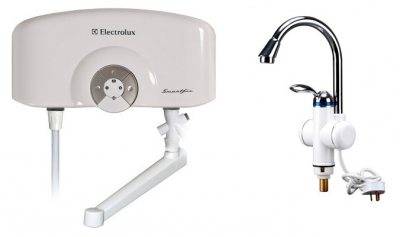
The main difference between the equipment and other water heaters is that it is mounted on a faucet. This makes it possible to quickly solve the problem associated with the lack of hot water. After installing the fixture, warm water appears in the apartment in a matter of minutes.
Modern models of water heaters of this type meet all the requirements for them:
- They have high protection against electric shock.
- Provides the ability to adjust the water temperature.
- Differ in ease of use.
- They have a modern design.
- High power heating element;
- temperature level controller;
- fasteners with which the device is connected to water supply networks;
- faucet for hot water outlet;
- emergency shutdown device;
- temperature sensor;
- water filter;
- safety relay.
We invite you to familiarize yourself with How to install a water heater for a shower cabin
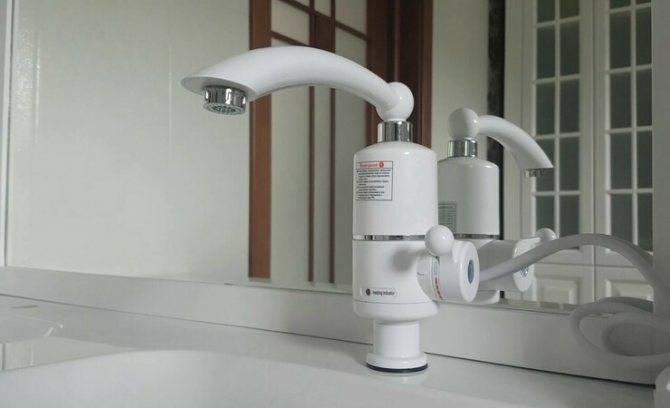
Electric water heaters can help you save money
A flowing electric water heater on a tap differs from a conventional mixer in the presence of an electrical wire that is connected to an alternating current network. When using such a device, it must be remembered that when connecting electric current and running water, there may be a danger to the user.
Therefore, the choice of device must be approached with all seriousness. Preference should be given only to high quality models offered by well-known manufacturers. If inexpensive equipment is purchased for the sake of economy, then its use can be fatal.
Appropriateness of use
To understand whether it is worth installing a compact water heater in your own apartment, evaluate the advantages and disadvantages of the device.
The positive qualities of the considered equipment include:
- Compact dimensions. This advantage becomes the main one for the owner of a typical apartment. The heater takes the place of a standard sink or wall faucet.
- Increased warm-up rate. Regardless of the power of the appliance, hot water starts to flow after 10-30 seconds. Standard boilers are turned on 20-30 minutes before use.
- Maintaining a constant temperature. Modern models are equipped with sensors that regulate the heating of the heating element.
- aesthetic qualities. A variety of models allows you to choose a device that is combined with the design of the kitchen or bathroom.
- Ease of installation. The installation process is no different from that of a simple mixer. Additionally, an electrical cable is connected.
- Increased efficiency. The device only works when in use. After the faucet is closed, energy is no longer consumed.
What to look for when buying?
Instructions for selecting a flow-through heater-mixer involves the most complete study of the characteristics of the selected model
At the same time, it is desirable to pay attention to any trifles.
To make it easier for you to navigate, we have included the main requirements in the table:
| construction detail | Peculiarities |
| Frame | Preference should be given to metal models, as well as structures made of dense polymers. Cheap plastic cases often either crack or warp when exposed to hot water. |
| heating element | The more powerful this part, the more energy the device will consume, but the faster the heating will be. For domestic use, 3 kW is usually enough. |
| Safety system | It should include a temperature sensor that controls the temperature of the water, and a built-in RCD that turns off the heating element when it closes. |
| Heating indicator | A small but very useful element: when a light is on on the device, we see that the heating element is working and hot water will come out of the tap. |
| Filter | Usually it is a steel mesh that captures large contaminants. The presence of a filter in the kit significantly increases the service life of the heating element. |
Product in a stylish metal case
As for the appearance of such appliances, the most common are white models suitable for typical kitchen interiors, as well as high-tech devices. However, if you are willing to overpay, then you can find vintage faucets with bodies made of copper, brass or bronze.
Varieties of control systems
The water heater can be controlled using the following systems:
- hydraulic;
- electronic.
Hydraulic water heater control system
The principle of operation of the hydraulic system is simple. The hydraulic block with a diaphragm and a rod, located inside the device, acts on the switch lever. The switch itself can be in the following positions: turning on the first stage of power, turning off and turning on the second stage of power.
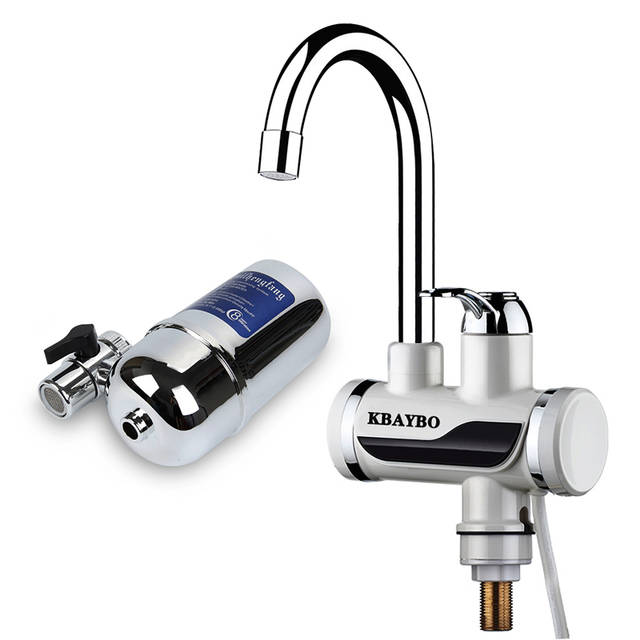


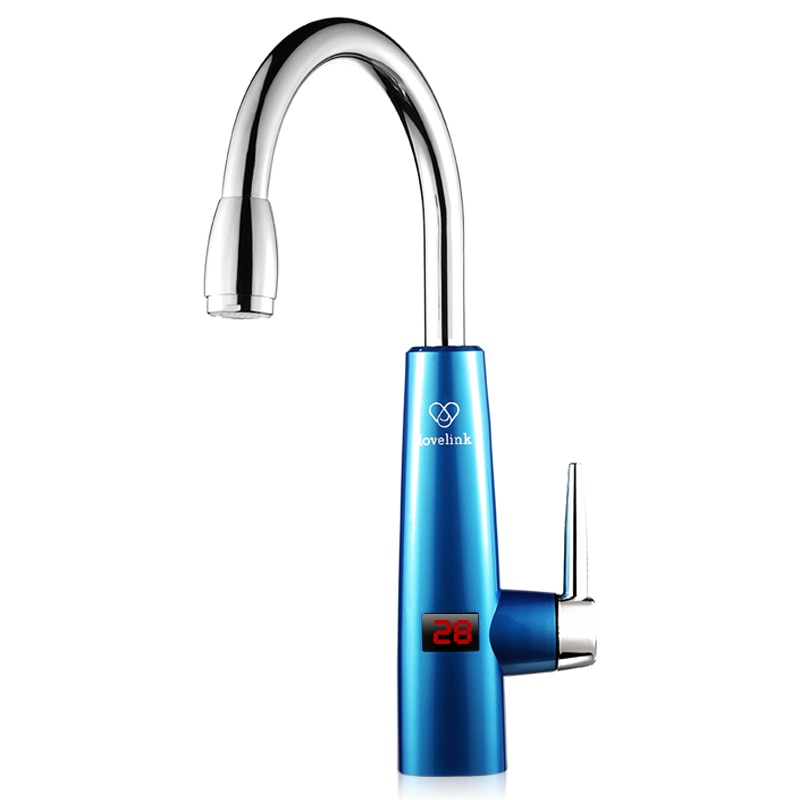


If the valve is opened, the membrane is displaced, as a result of which the stem pushes the switch. With a small pressure, the first stage is turned on, with an increase in flow, the second. Stopping the water supply moves the lever to the off position. There are also models up to 6 kW, in which there is only one power stage.
The control system is not very reliable, because with a low pressure it may not work at all. And what pressure is weak for a particular model can only be found out empirically. Models with such control do not have protection against air ingress, their power changes in jerks and they cannot maintain the desired temperature regime on their own.Experts do not recommend using such systems in the presence of several water intake points.
Electronic control system
Special microprocessors and sensors are responsible for the power and pressure in the heaters under the control of the electronic system. The heater is controlled automatically. The purpose of its work is to ensure that the water leaving the device has an optimal temperature. Particularly pleasant is the fact that the system allows significant energy savings.
There are two types of electronic control systems:
- models that are configured using keys and indicators so that they allow you to set the desired temperature of the consumed water;
- models that can not only maintain a given temperature, but also regulate the water flow itself.
By choosing the right control system, you can organize such a water supply in the house that will provide its owner with true comfort.
Electronically controlled devices can be installed in any type of housing. They cope with several points of water intake. The downside is the price of a device with such a device - of course, it costs more. And if it breaks, which happens very rarely, then the entire expensive unit will have to be changed. However, it still turns out that those who preferred a device with an electronic control system win.
Design features and main characteristics
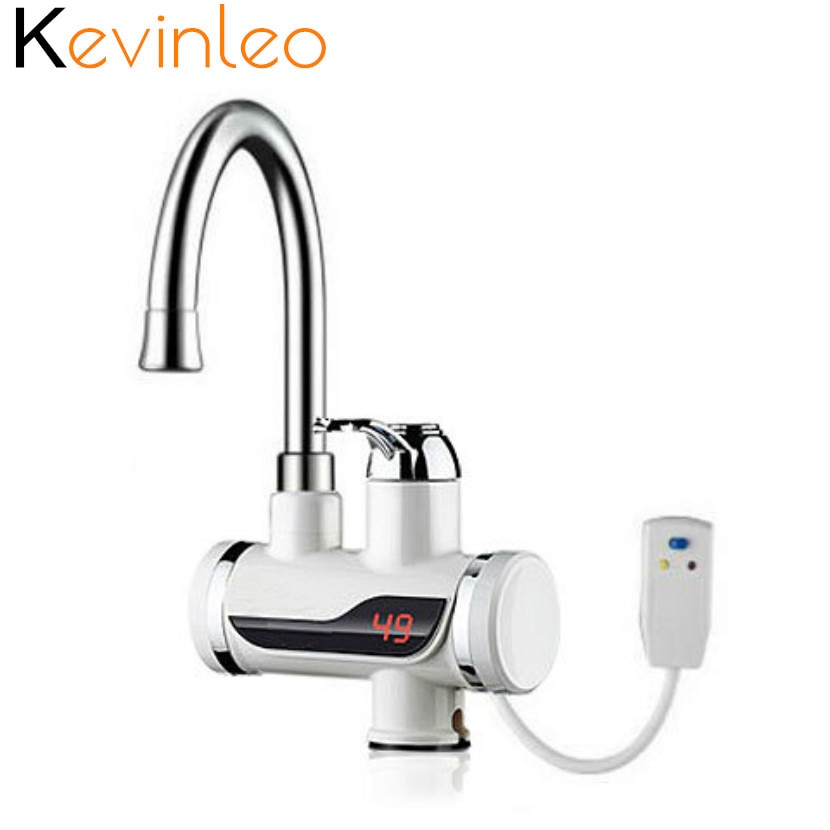
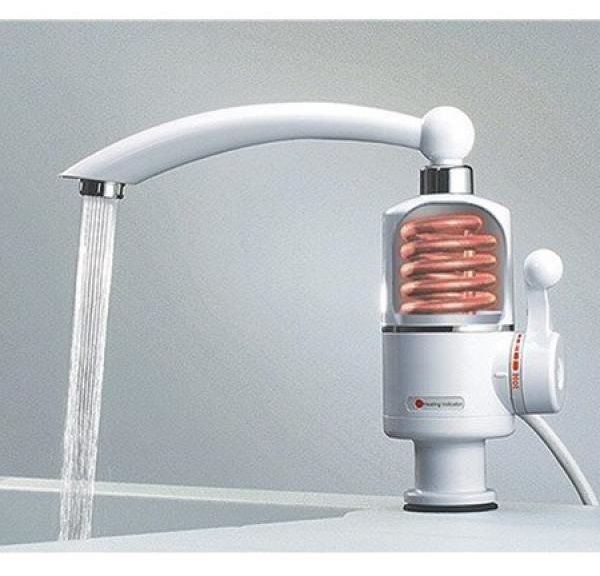
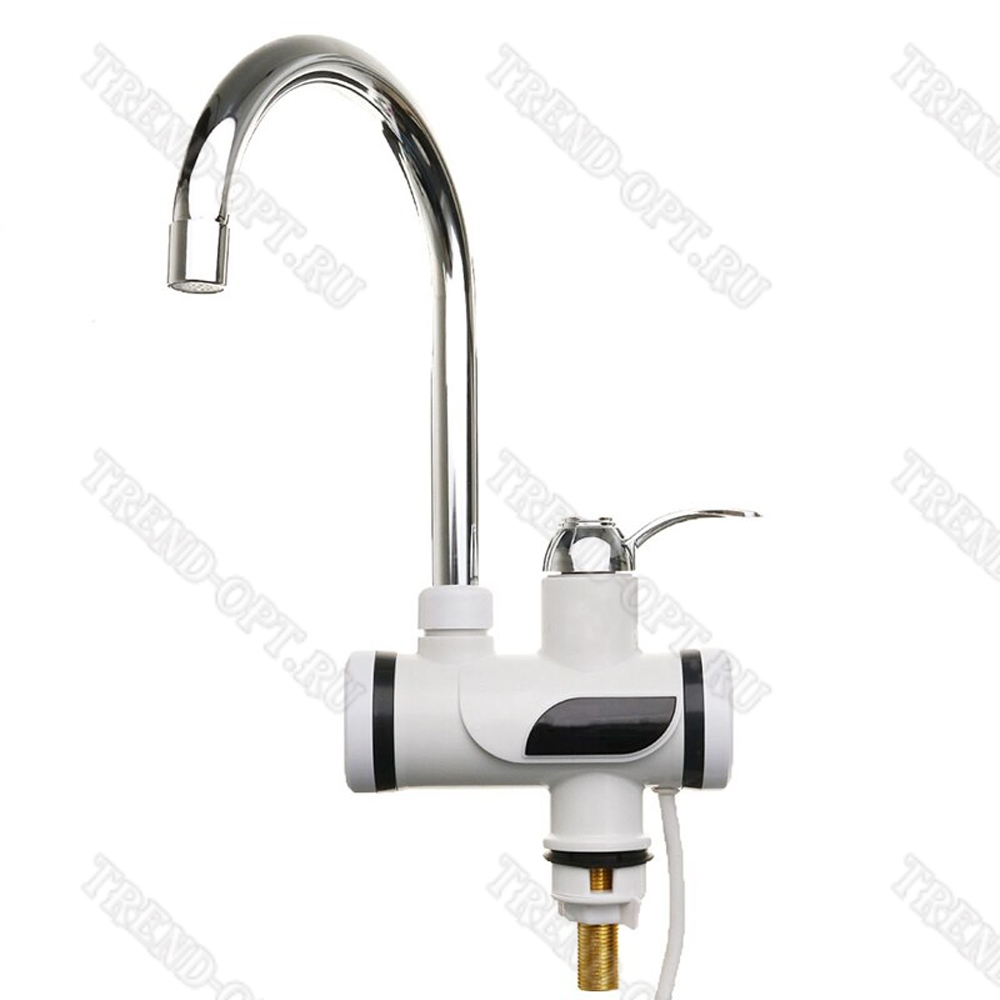
It is quite difficult for a person who is far from plumbing wisdom to distinguish a heating tap from a kitchen faucet, since all the important elements are inside the base, and the external outlines completely coincide with conventional models.Behind the walls of a durable case made of metal or plastic, the heart of the device is hidden - the heating element of the heating element, as well as a set of elements that ensure safety. The main external distinguishing feature is the mains wire for supplying electric current.
In the diagram, the flexible water supply is located below, under the water heater, there is another connection method - from the back side. The connection point must be specified in advance, before installing the device.
On the Russian market, products of domestic and Chinese production have become widespread. There are no fundamental differences in the devices of different brands, except for the “branded” design. You can choose a color that matches your interior. kitchen or bathroom, length and shape of the spout, but you will not find a big difference in design and technical characteristics. This is due to the fact that not all companies are interested in the production of portable household models, and the range of faucet heaters is much smaller than, suppose, the number of similar products in the segment of storage devices.

The electric wire, an integral part of instantaneous water heaters on the tap, is covered with a protective sheath on top, but it is desirable to strengthen it by placing the wire in a box or deepening it into the wall, hiding it under the lining
Consider what instantaneous water heaters on the tap consist of:
- frame;
- heating steel or copper element (tubular heating element);
- temperature sensor with overheat shutdown function;
- water inflow relay, including power supply;
- short or long spout;
- mesh filter;
- power regulator.
One of the main properties of electrical household appliances is safety, so every detail is made taking into account the fact that the user will not suffer from the effects of current, which, as you know, is an excellent conductor of water. For example, a pressure switch prevents the tap from idle operation, that is, it protects against the so-called “dry” switching on. There are frames within which the device operates: from 0.4 atm. (minimum required pressure) up to 7 atm. (allowable maximum).
In addition to pressure, the device also monitors the temperature of the water. If the liquid heats up to +60ºС, the temperature sensor is activated and the heating stops. The cooled water begins to be heated also in automatic mode.
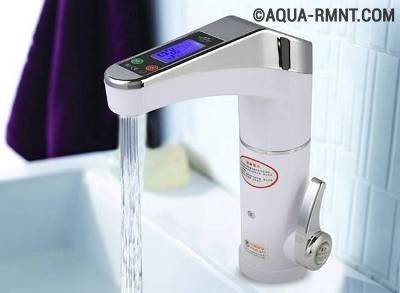
This is how one of the modern compact models of instantaneous water heaters looks like on a faucet: a simple design, nothing more, a backlit display, a disguised wire
Each certified model has an RCD unit that performs two functions - voltage protection and protection against electric shock in the event of a danger, for example, if the integrity of the case is violated or the heating element fails.
Not only the user needs protection, but also the device itself. Water hammer is a common cause of valve failure. To prevent damage to the water heater, the body of the device is reinforced with durable but elastic plastic, and a silicone damper is installed inside to soften vibrations. All parts of the device are covered with shells that do not allow water to pass through.
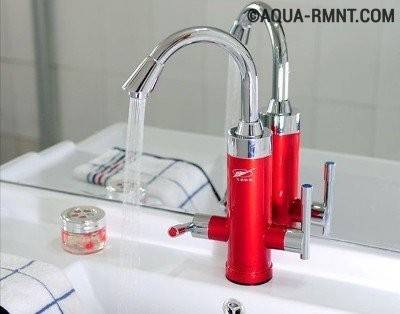
Some water heaters on the tap have not one universal lever, but two: the first regulates the water temperature, the second controls the water pressure in the device
Some manufacturing nuances relate to increasing the efficiency of the device. Suppose that a spout of almost any model has a different cross-sectional diameter at the inlet and outlet, and the hole at the outlet is noticeably smaller. This trick creates additional resistance and thereby increases the performance of the heating element.

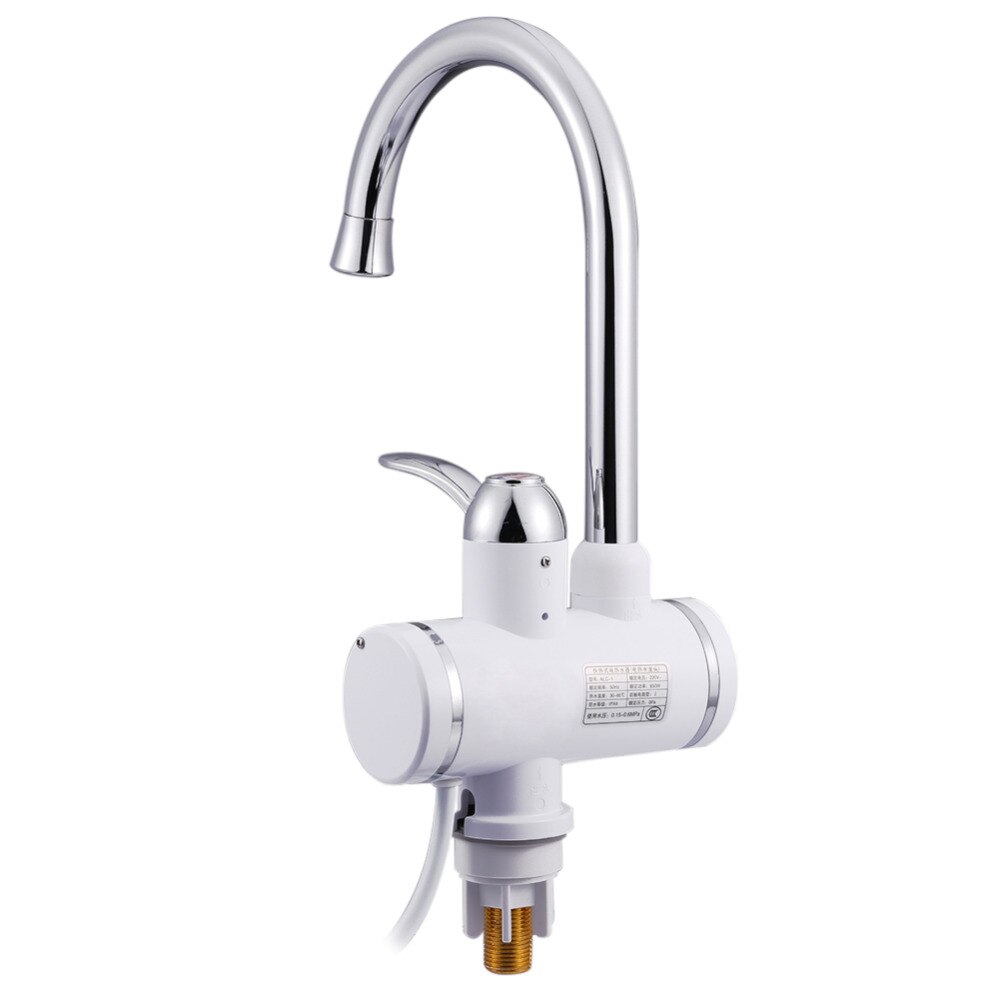
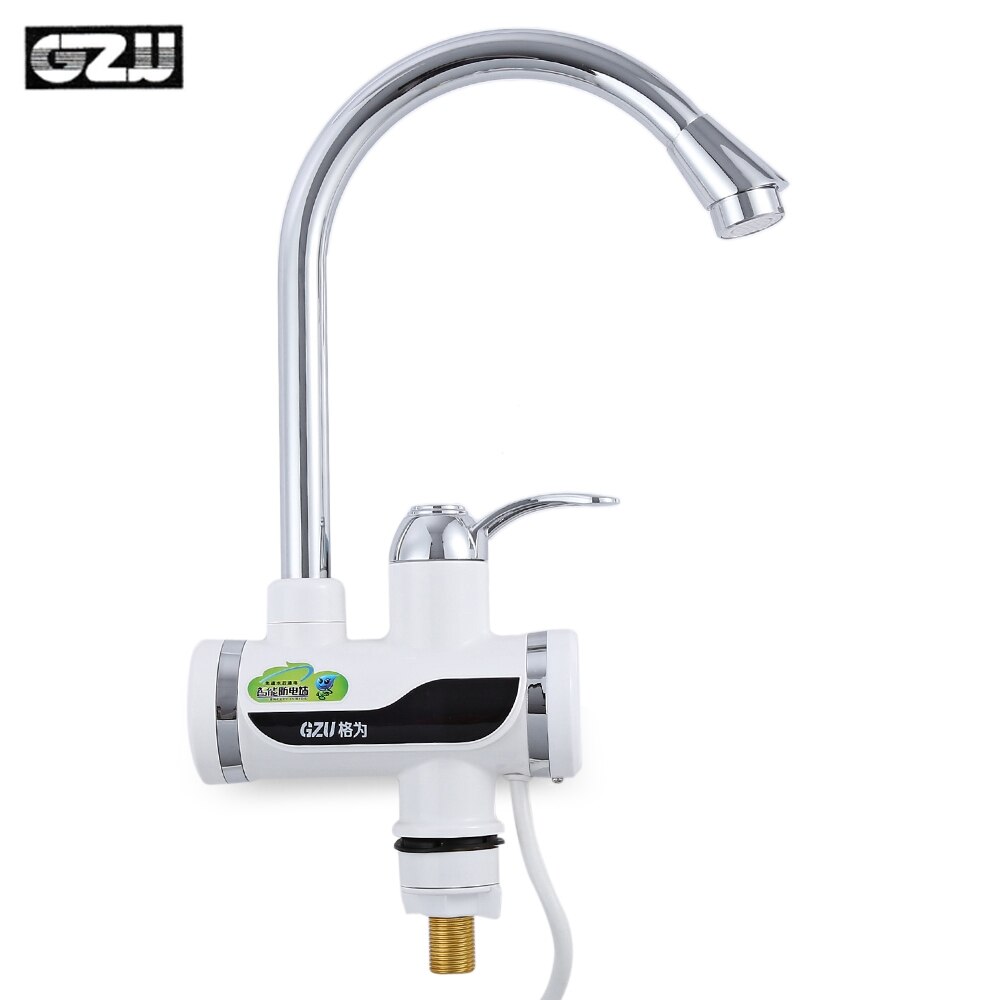




Pay attention to the coarse filter and do not forget to install it during assembly. It protects the device from large particles of dirt and sand, which can damage the heating chamber and disable the mixer.
Technical characteristics of instantaneous water heaters
One of the main characteristics of instantaneous electric water heaters is their throughput. More precisely, performance - this parameter depends on the power of the selected equipment. For example, a simple water heater with a power of 3-3.5 kW provides a performance in the range of 1.5-2 l / min. In this case, the water should heat up to 40-45 degrees.
Please note that such a low-power instantaneous water heater will be practically useless in a cold winter when the temperature of the water in the water supply drops.
How choose a tankless water heater in terms of performance? If you are planning to purchase one appliance exclusively for washing dishes, take a closer look at models with a capacity of 1.5-2 l / min (do not forget to take into account a small power reserve for the winter if you use it in the cold season)
Need a water heater for a comfortable shower? Pay attention to models with a productivity of 4-5 l / min. Are you planning to connect and simultaneously use two points of water intake? Buy a water heater with a capacity of 9-10 l / min
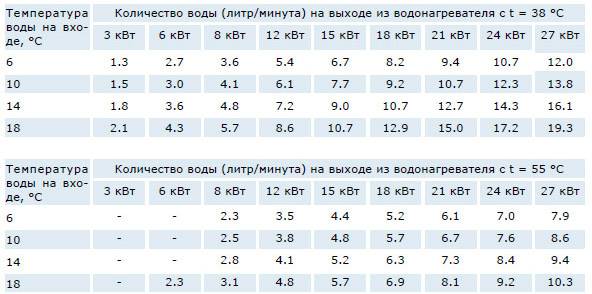
Table for calculating the performance of an instantaneous water heater, depending on its power and the temperature of the incoming water.
What about our power? As we have said, it is best to pay attention to performance, not power. If we talk about the correspondence of power and performance, then it is as follows - heating elements with a power of 8 kW prepare water at a speed of 4.4 l / min, with a power of 3.5 kW - 1.9 l / min, with a power of 4.5 kW - 2.9 l / min, power 18 kW - 10 l / min (ratio slightly less than two to one)
You also need to pay attention to such a characteristic as the type of control - it can be electronic or hydraulic. Electronic control allows to achieve a stable temperature by adjusting the degree of heating and flow rate
Thanks to this, you will not burn yourself in the shower due to an unexpected change in pressure or supply voltage. The simplest electronic regulators work only at a certain pressure - if the pressure goes out of a certain range, the outlet water temperature will change.
To control the temperature, some advanced water heaters are equipped with liquid crystal or LED digital indicators.
With hydraulic control, the situation is worse - it does not react in any way to the force of the water flow. But here there is a step or smooth adjustment. The number of positions depends on the power of the device. As a rule, models with step adjustment and hydraulic control are cheaper than their electronic counterparts.
Another characteristic is the type of power supply. The electrical network for the protochnik can be single-phase or three-phase.Models with power over 9-12 kW operate exclusively from a three-phase network, less powerful models are powered by a single-phase mains. Some models of water heaters, in the power range from 5 to 9-12 kW, can operate from any type of network.
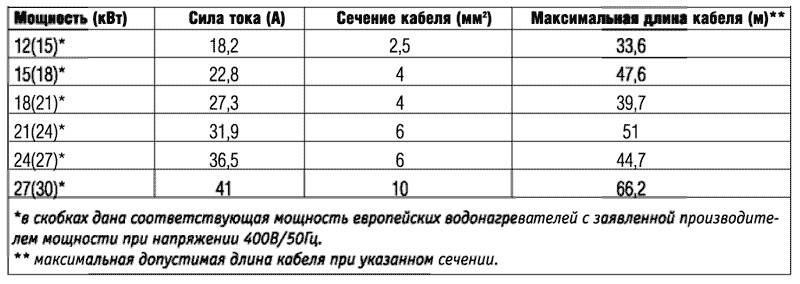
Table for calculating the cable cross-section and its maximum length, depending on the power of the device.
Characteristics and built-in modules:
- working pressure - from 0.1 to 10 atm;
- accelerated heating - allows you to reduce the time from the start of the instantaneous water heater to reaching the set temperature;
- safety valve - will prevent equipment breakdown;
- degree of protection against water - some models have splash protection, and some can withstand direct water ingress;
- eyeliner - can be lower, upper or side;
- type of installation - vertical or horizontal;
- self-diagnosis - present in advanced electronically controlled models;
- backlight - present in models with LCD displays;
- indication - can be lamp, LED, with LCD display;
- restrictions on the heating temperature - will allow you not to burn yourself in the shower;
- remote control - the ability to adjust the temperature from another room;
- overheating protection - will prevent damage to equipment during prolonged intensive work;
- built-in filter - will allow you to clean the prepared water from impurities.
When choosing an electric instantaneous water heater, it is necessary to focus not only on technical specifications, but also on the availability of additional options.
Remember that additional options and modules have a significant impact on the final cost of electric instantaneous water heaters.
Save space and money
The usual, but bulky and not very economical boiler is being replaced by a compact and easy-to-install and operate flow-through water heater on a faucet.
Unlike accumulative models, it works on the principle of automatic supply of hot water without preheating it in the tank.
 Flow heating devices on the tap are installed independently, as they do not require experience or special knowledge
If you need hot water right now, tankless water heaters will have it flowing from your faucet within 2-5 seconds. This is convenient if a large family actively uses water or there are small children in the family.



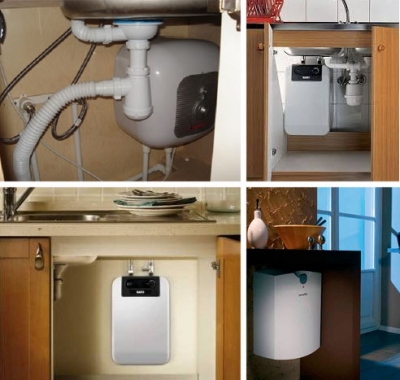
The heating element of the boiler heats only a certain volume of water (60, 80, 120).
When the supply of hot water in the tank runs out to heat dozens of liters of cold water, it will take time.
In a situation where one of the family members urgently needs to take a shower, someone washes the dishes, it is necessary to soak children's things for washing, sooner or later even the largest boiler will not cope with the volume.
Therefore, a more advanced device was invented - a flowing electric water heater.
It is a kind of "endless" source of hot water, heating it as it enters the tap.
Advantages and disadvantages
Like any other equipment, instantaneous water heaters have certain advantages and disadvantages. First, let's look at their positive features:
Due to their compact size, these devices do not require a lot of space for their placement.
- energy savings - if you use hot water very rarely, the savings will be tangible.For example, you consume water only once a day (take an evening shower) - in this case, the protochnik will be the best choice;
- ease of installation - all electric instantaneous water heaters are small in size, since they do not have tanks. Installation of instantaneous water heaters comes down to fixing them on the wall and connecting to a cold water supply;
- a wide range of any power - consumers can choose from models with power from 3 to 36 kW. There are also models with less and more power - the first are not very efficient, and the second are intended for commercial and industrial use;
- the availability of models for temporary use is an excellent solution for residents of apartment buildings, where there are regular interruptions in the supply of hot water to apartments;
- maintenance is not required - this is how such devices compare favorably with their gas counterparts;
- the possibility of preparing large volumes of water - it can be heated in unlimited quantities. The same storage boilers can quickly exhaust their entire volume, after which cold water will flow from the tap;
- fully automatic operation - you only need to set the heating intensity or set the exact temperature (depending on the type of control used);
- extremely compact – the running water heater can be installed anywhere, such as under the sink, in the bathroom or in a separate room. The main thing is to create reliable protection against direct water ingress and observe other operating conditions.
Now let's talk about the negative features:
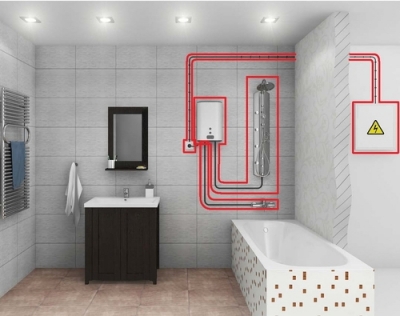
If a more power of your water heater 3 kW, then you need to bring a separate line to it from the electrical panel.
- high power heating elements require good electrical wiring - if you bought a powerful electric water heater, take care of the quality of the wiring. In addition, electrical equipment with a power of more than 3 kW must be powered from a separate electrical line going directly to the switchboard (no bends or twists, only solid wire);
- the need for a three-phase electrical network when using models with a capacity of 9-12 kW and above - a conventional single-phase network is not able to provide the necessary power. It turns out that to install a powerful water heater, you need to connect to a three-phase network - these are additional costs for the connection itself, wires and a three-phase meter;
- the dependence of the temperature of hot water on some factors - on the temperature of the incoming water, on the supply voltage. Flow models with smooth electronic control are deprived of this drawback;
- a large total electricity consumption with an intensive consumption of hot water is another minus for those who need hot water in large quantities;
- during prolonged operation, overheating and automatic shutdown are possible - pouring water around the clock will not work.
Nevertheless, instantaneous water heaters are in a certain demand - you just need to understand what will be the volume and regularity of consumption, is it not more profitable to purchase a storage model.
Low-power instantaneous electric water heaters can only work in summer, as their heating elements are too small to heat ice-cold water from the mains to an acceptable temperature in winter. Therefore, the best choice would be to buy a heater with a power of at least 8-12 kW - be guided by these figures (enough for both showering and washing dishes).
China Hot Water Faucet Test
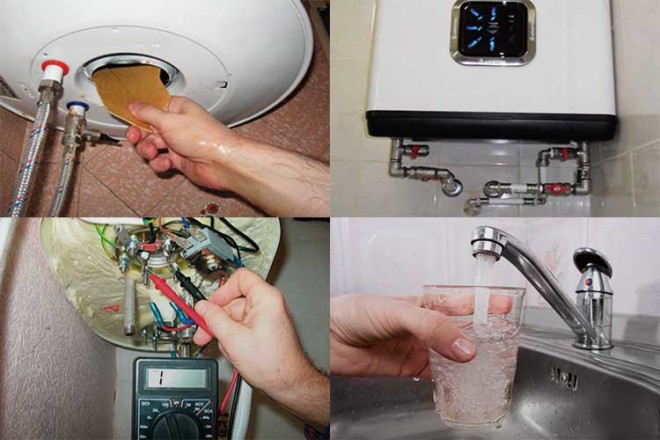
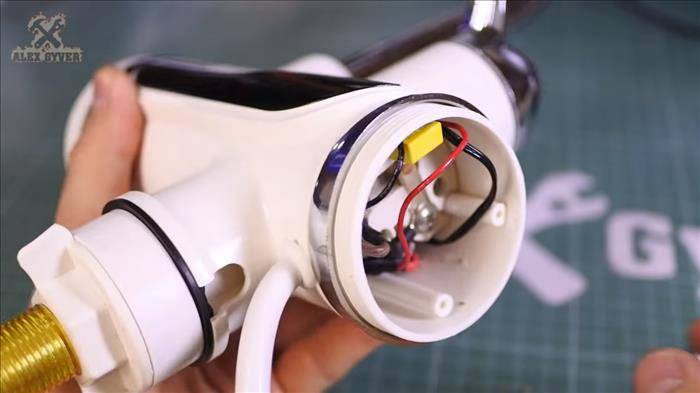
For demonstration, we fix it in the pelvis. Rough but effective. In order not to go to the country, we will connect cold water from the shower. Fortunately, the thread here is the same. We supply water. The nozzle here is multi-jet. We take a Chinese thermometer and measure the temperature of the water.
We turn on the heating. The display on the right lights up and starts showing the temperature. I turned on a small pressure and after 30 seconds the water becomes piping hot. It is no longer possible to hold a hand. Yes, it's really 50-60 degrees. It is logical that if the pressure is increased, the temperature will decrease. Water simply will not have time to heat up. A fairly powerful jet of water heated up to 46 degrees. Under such pressure, you can absolutely comfortably do everything you need with warm tap water.
This heater will increase the water temperature by approximately 40 degrees from the original value. Even if water with a temperature of 5 degrees flows out of your pipe, 40-45 degrees will go out of the tap. Agree, very good.
Continuation
Features of a storage boiler
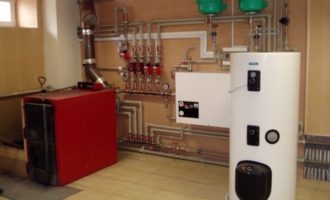
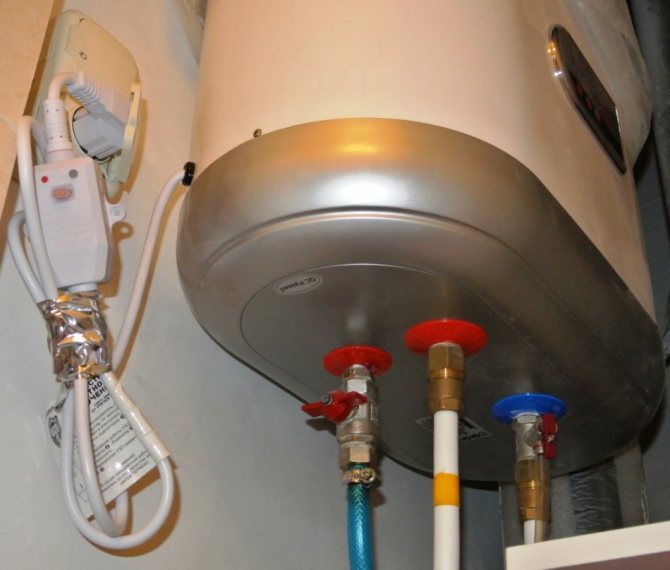
A storage boiler is usually referred to as a more convenient format for heating water than an instantaneous water heater. Its volumes differ significantly from the latter, thanks to the principle of operation. Water enters the tank, with a volume of 30 l to 100 l, depending on the capacity of the tank. Inside the tank is a heating element that increases the temperature of the liquid.
The device is connected to the water supply system. After filling the tank, the liquid is heated to a certain temperature, which can be set on the thermostat. Some time after the heating element is turned on, the liquid in the tank warms up evenly, and the heating element stops working.This feature eliminates the possibility of a system breakdown if the user forgets to turn off the device from the network. The storage water heater option is considered the most common for modern apartments and houses, but in order to evaluate the possibility of installing it, as in the case of a flow device, you will have to take into account the pros and cons of the system.
A storage type boiler can be represented by two heating systems:
Indirect. Water heating is carried out using a heating element or a gas boiler.
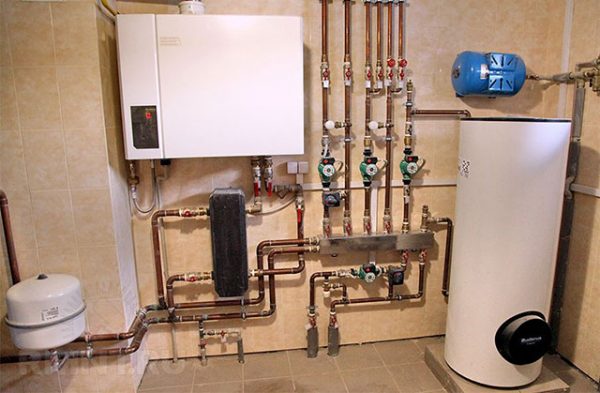
Accumulative water heater of indirect heating
Straight. Such a device works directly from the central water supply system.


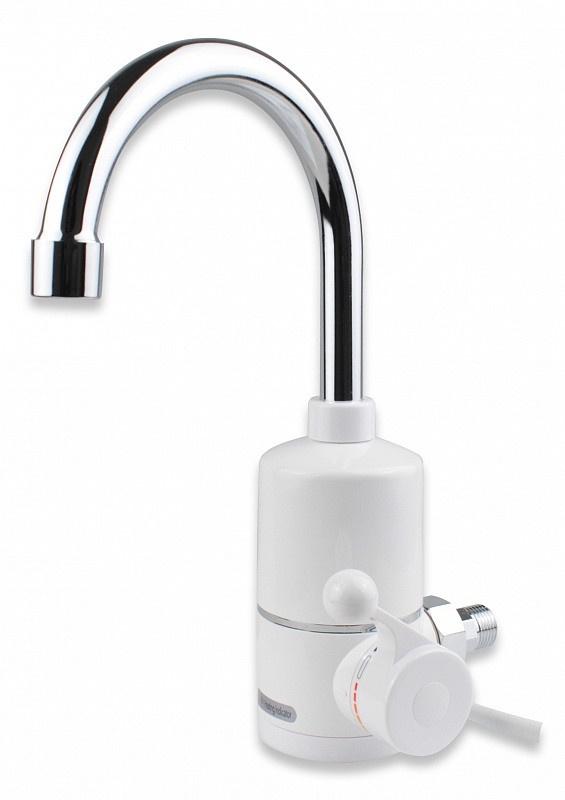



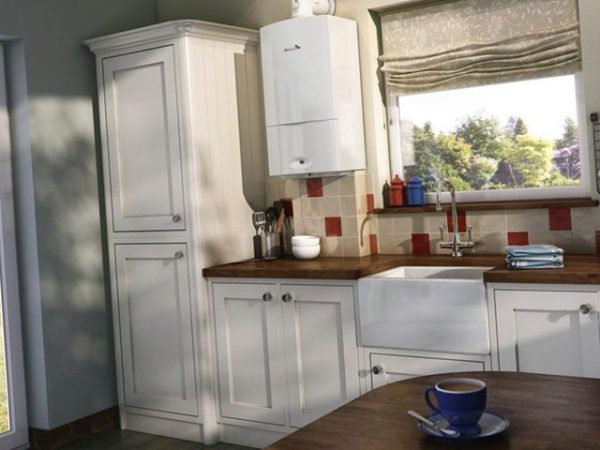
Accumulative water heater of direct heating
The classic shape of the boiler resembles an oval. But recently, stylish options for a rectangle or cube have become popular.
In many boilers, two temperature heating modes are provided at once. Moreover, low degrees are marked by the category of reducing electricity costs. As a rule, the maximum heating temperature is 75–85 degrees, and the minimum parameters are 55. But experts do not recommend using the latter mode often, as it promotes the growth of harmful bacteria and microorganisms.
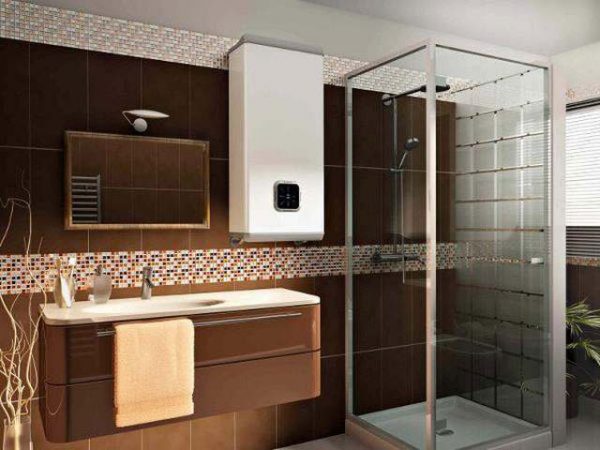
Rectangular water heater on the bathroom wall
Advantages and disadvantages of a storage boiler
The system of heating water in storage tanks is not in vain widely used. Its advantages significantly overlap the disadvantages, so this option for heating the liquid is suitable for many buyers.
The advantages of a storage boiler include:
- a certain amount of water that can be used with a large jet;
- the ability to set any suitable temperature regime;
- in some models, the manufacturer allows you to set a timer to heat water at night before waking up;
- a large selection of models on the market from different manufacturers;
- the possibility of installation with any quality of wiring and water pressure.
Storage boilers have a number of disadvantages, among which stand out:
- long heating period;
- large dimensions and weight, which not all walls can withstand.