- What is convection
- Features of heaters (video)
- Oil Heater Features
- Advantages and disadvantages of heating with an electric boiler
- Electric convectors
- What are infrared heaters?
- According to the type of energy source used for heating
- According to the length of the emitted waves
- According to the method of installation and fastening
- How to calculate the power of the heater?
- Operating tips
What is convection
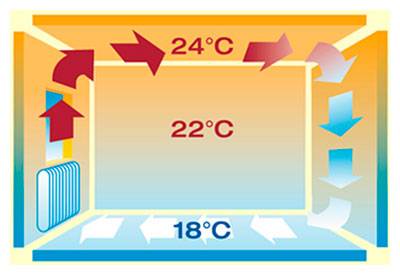
Convection is the circulation of air in a room that occurs as a result of its heating.
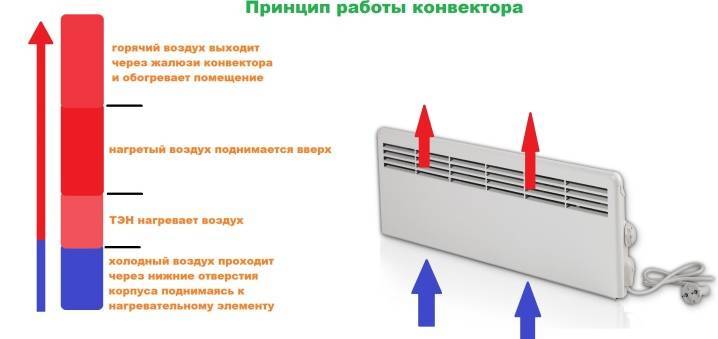
Before we answer the question of what is a convection heater, you need to understand what convection is. It is on it that the principle of operation of convectors is tied. Convection is a process that occurs in a heated substance (in our case, it is air), as a result of which the warm layers of the substance become lighter and rise up. And in their place come colder and heavier layers.
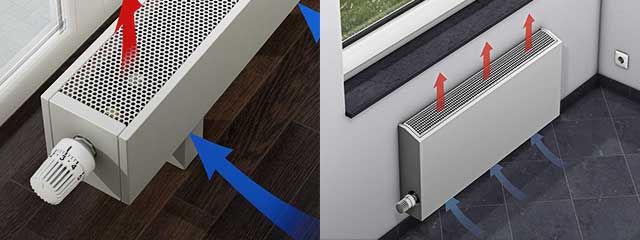
It is these processes that occur in the air, which is located around the heating element. When heated, it becomes lighter and rises, leaving the convection heater. But a vacuum cannot form in its place, so cold air masses are sucked in here (through the lower slotted holes).As a result, a kind of circulation occurs, in which almost all the air in the heated room takes part.
By heating the air masses, convective heaters create a warm and comfortable atmosphere. Gradually, the heat is transferred to the surrounding objects.
Natural convection is characterized by its slowness, it does not allow for rapid heating. Therefore, some convection heaters can work on the principle of forced convection - in this case, efficient fans are responsible for moving air masses. This scheme allows for more intense and powerful heating, which is important for large rooms.
Features of heaters (video)
These devices have a low price, which makes them accessible to a larger number of consumers. Devices of various power are produced, which can fluctuate over a wide range. More powerful units are placed on the floor, devices with less power are very compact and can be installed on various surfaces.
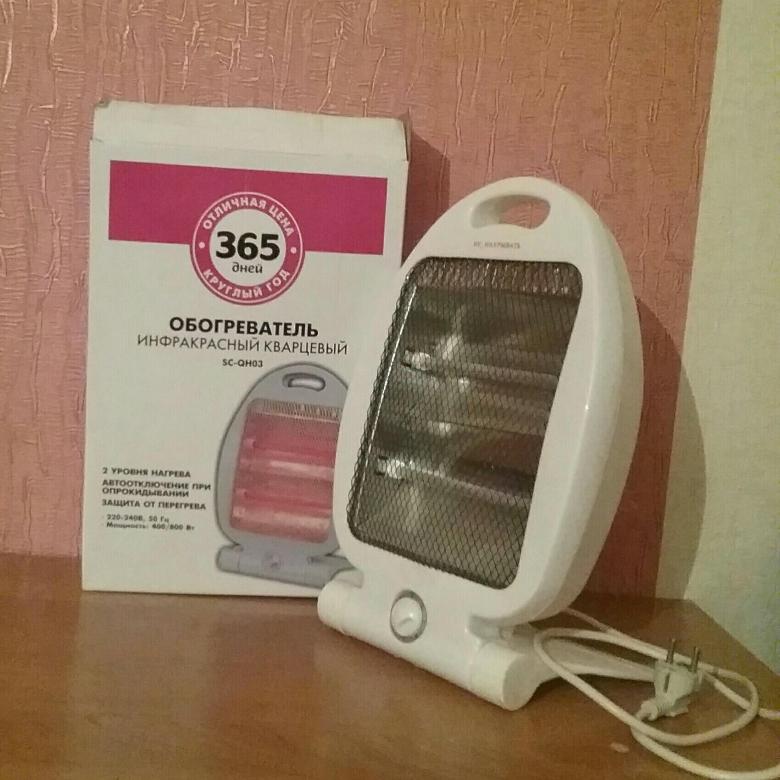
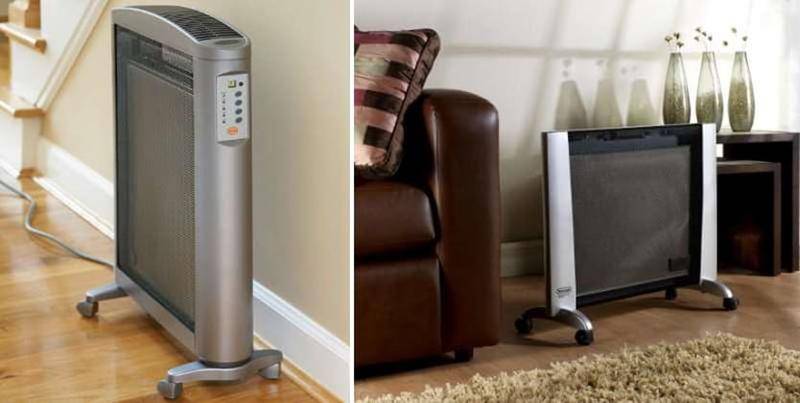
The principle of operation of a fan heater is extremely simple. The device consists of a heating element and a fan that moves a large volume of air.
Tubular fan heater
- Electric coil heated up to 800°C.
- Tubular electric heater having an operating temperature of about 200°C.
- Ceramic tiles with heating temperature up to 200°C.
The cleanest air is provided by devices having a ceramic heating element. Fan heaters of other designs, especially those with an open coil, pollute the air with their combustion products.Also, heaters can cause an unpleasant odor that occurs when debris and dust get on the heating element. This is also most common with open coil devices, especially given their high heating temperatures.




The principle of operation of the fan heater
- Low price.
- Compact dimensions, even for high power devices.
- Fast heating of air and its uniform distribution throughout the room.
- Elegant design that allows you to integrate the device into almost any room.
- Ability to perform additional functions.
Proven manufacturers of fan heaters are such brands: Ballu, Bork, Climate, De'Longhi, General, Electrolux, NeoClima, Polaris, Rolsen, Saturn, Scarlett, Supra, Timberk.
Also, when buying, you can use the following tips:
- Models with ceramic heating elements are better in operation, although they are more expensive.
- Appliances with a coarse sponge filter on the rear panel keep the air clean.
- The optimal power of a household appliance is from 1 to 3 kW; for ease of use, it should be smoothly regulated.
- It is recommended to purchase appliances with a well-thought-out safety system, having protection against overheating and equipped with an automatic shutdown in the event of a rollover.
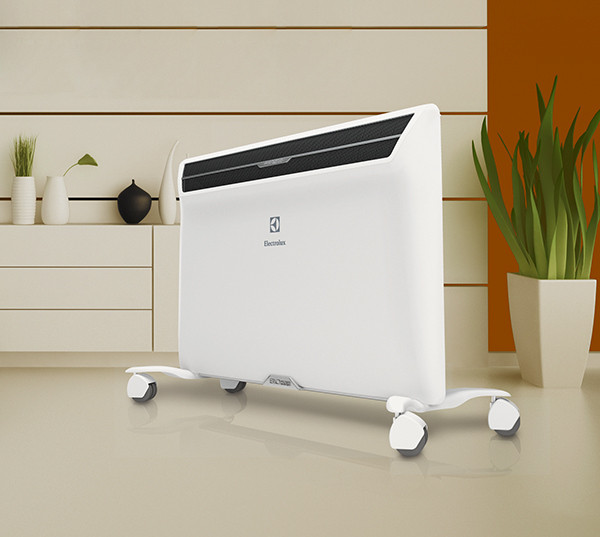
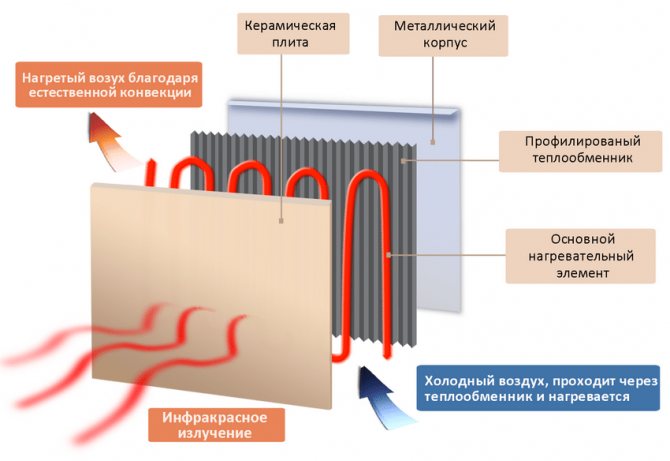
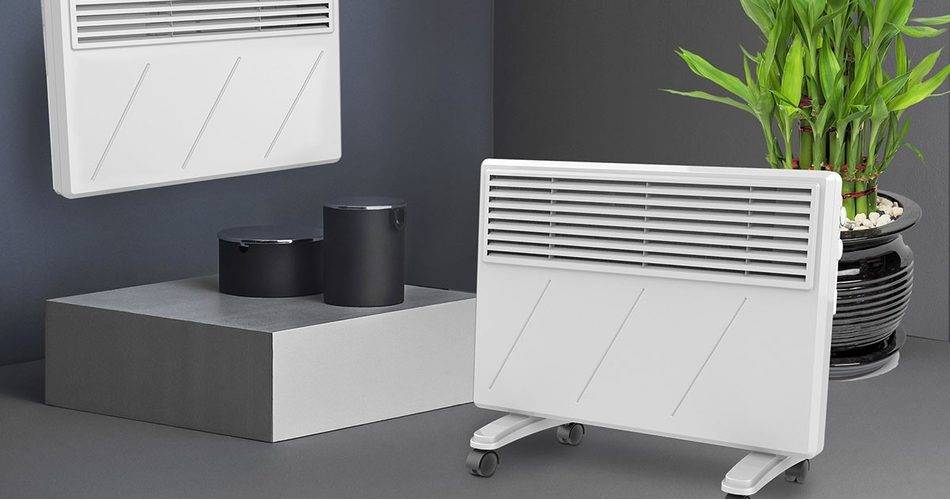
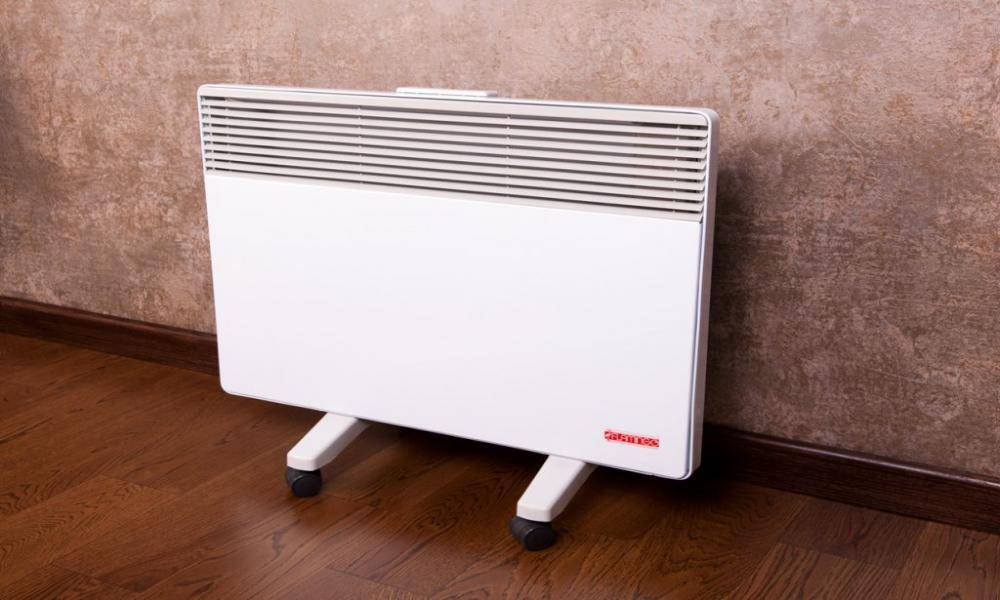
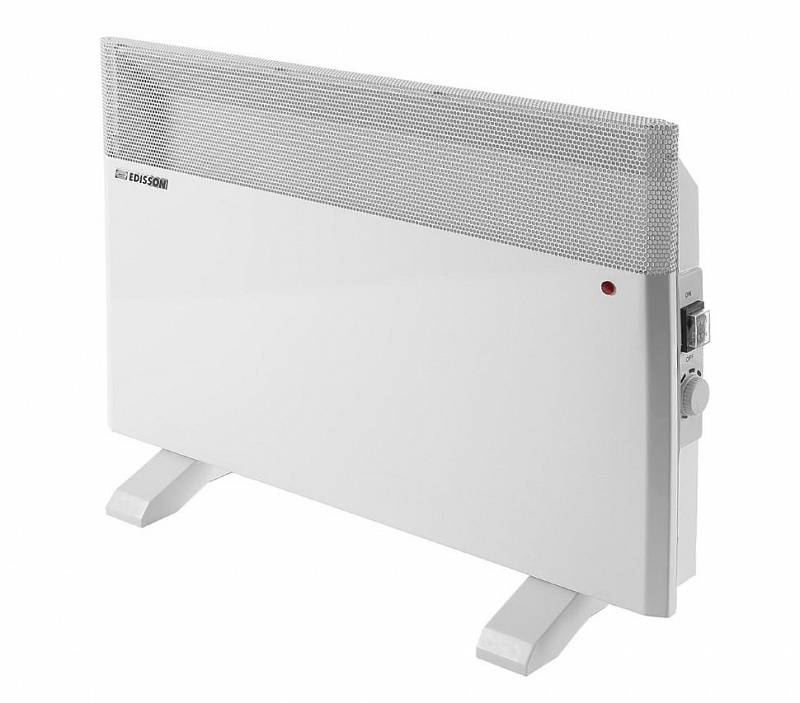
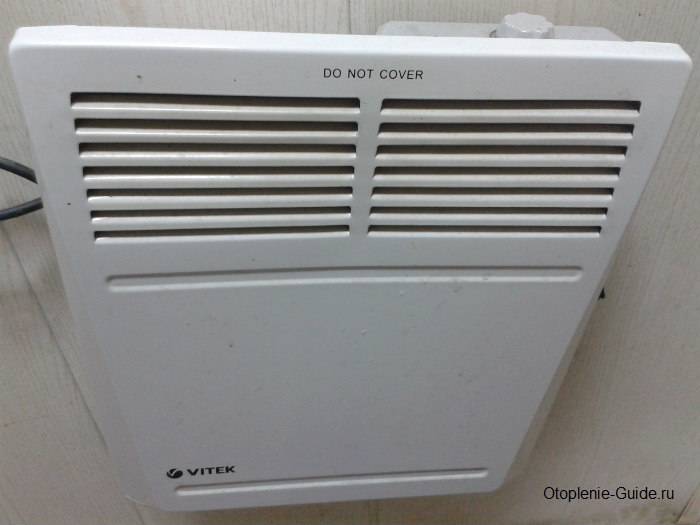
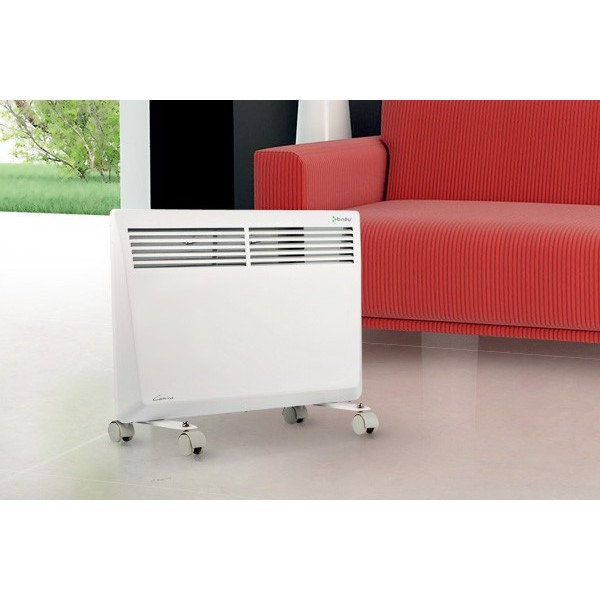
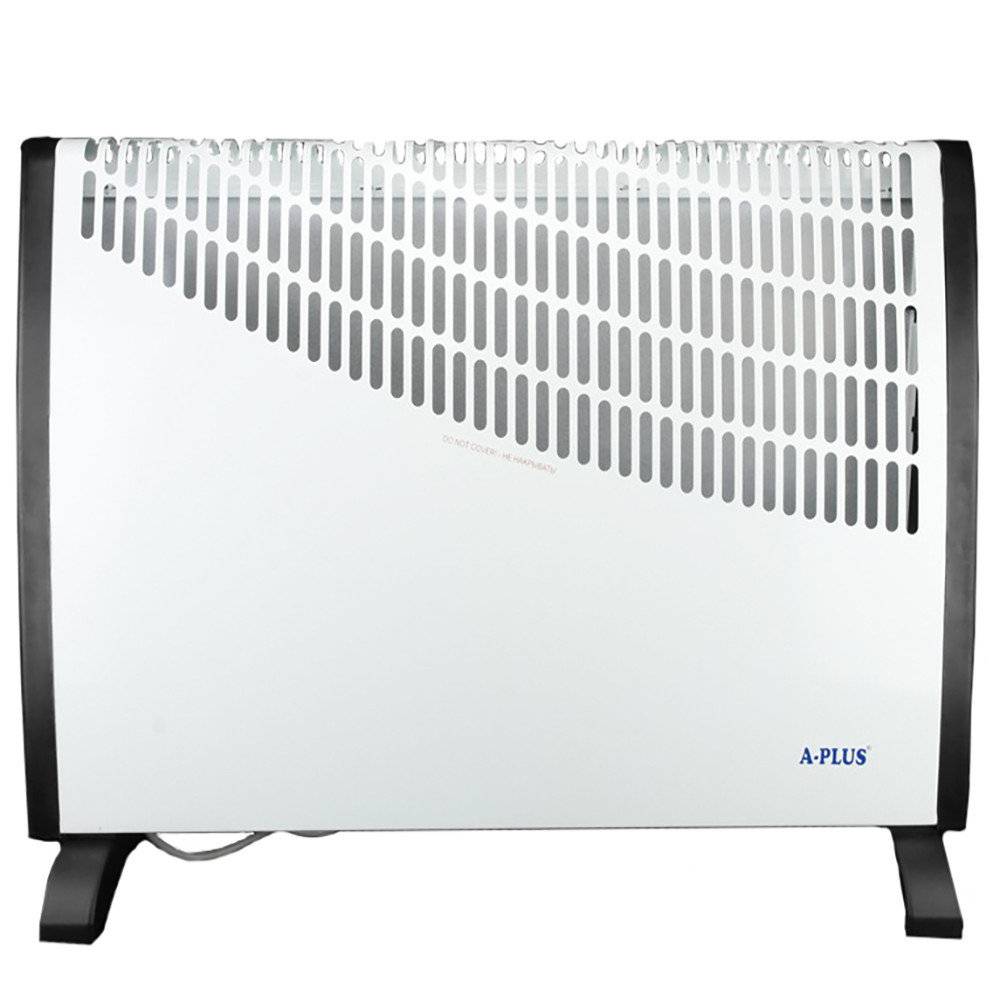
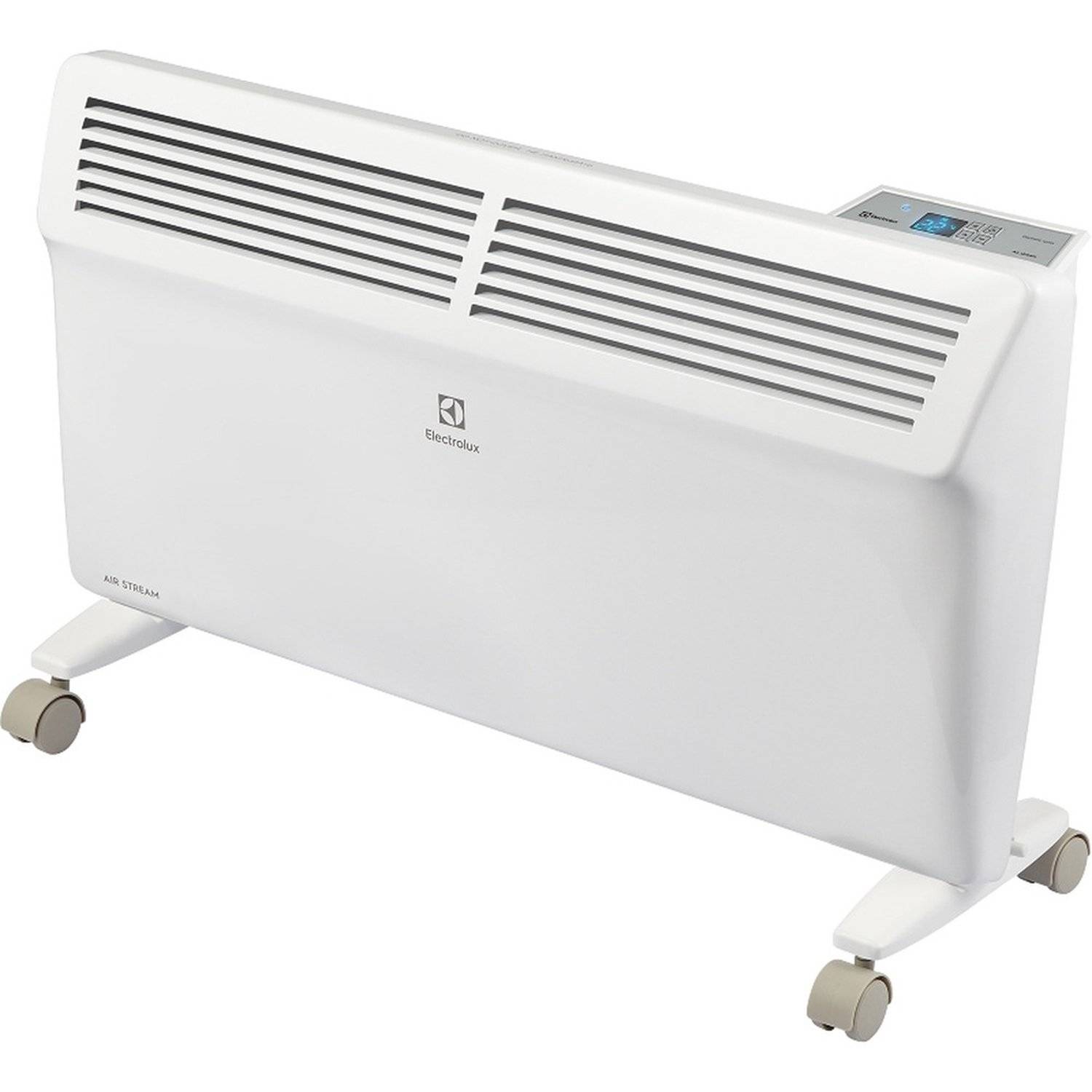
The convection heater also heats the air, but its movement occurs with the help of natural convection, and not forcibly. Cold air enters the unit from below, passes through the heater and exits from above. After that, the air is distributed throughout the room also due to natural processes.
Convection heater device
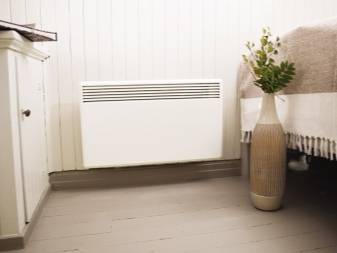
Various types of convectors are produced - floor, wall and combined. Floor units have wheels for easy movement. When placing the convector on the wall, it is recommended to place it a few centimeters above the floor. This will provide the best heating of the room.
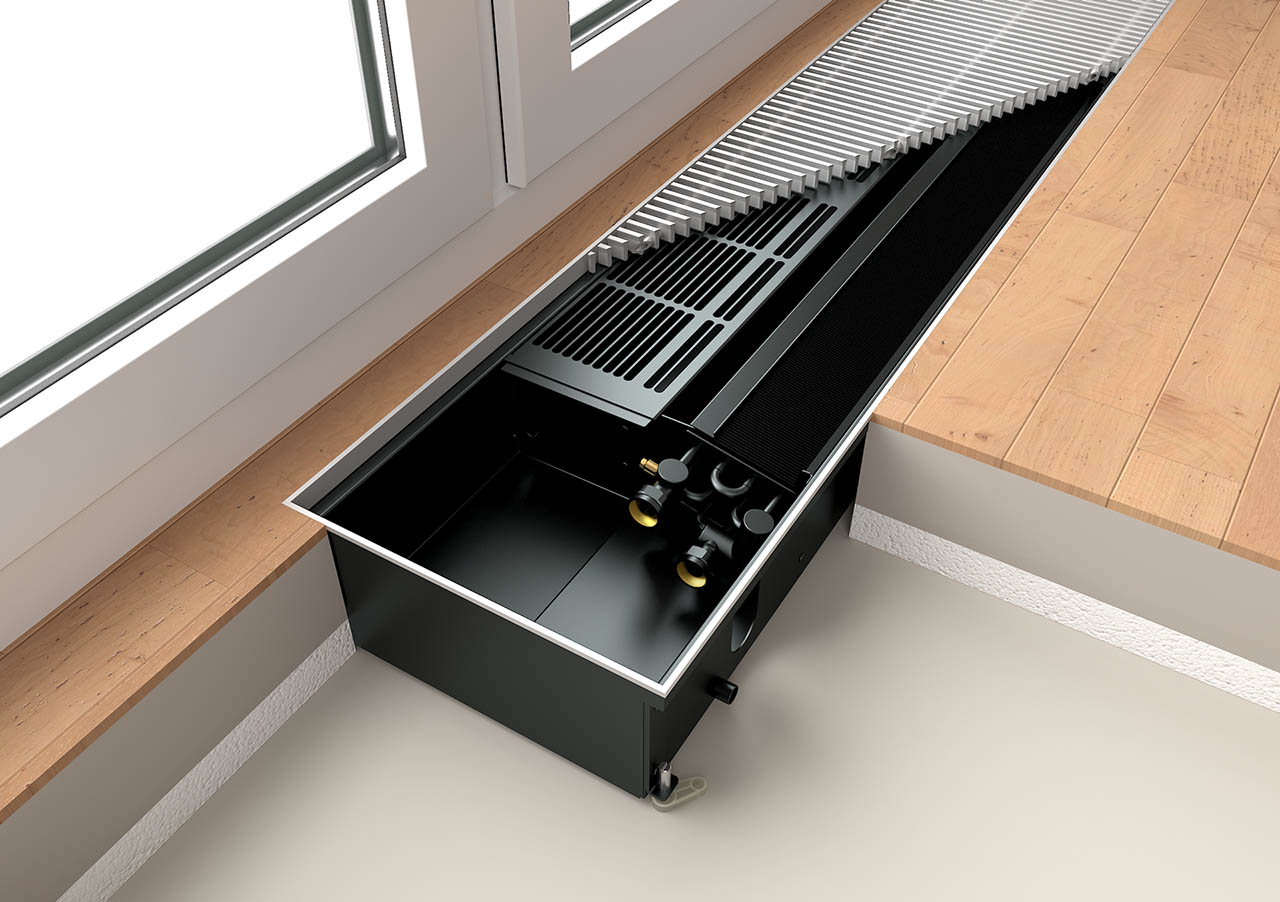
If the device is used in a bathroom or other rooms with high humidity, then you should pay attention to the electrical and moisture protection class. A somewhat special design have devices built into the floor
The advantages of convectors are as follows:
- Ability to work for a long time.
- Multiple placement options in the room.
- The presence of thermostats that allow you to maintain a certain temperature in the room.
- The possibility of combining devices into a heating system;
- Safety of use.
- Quiet operation.
The only significant drawback of converter heaters is the slow heating of the air in the room. This is due to the limited possibilities of natural convection.
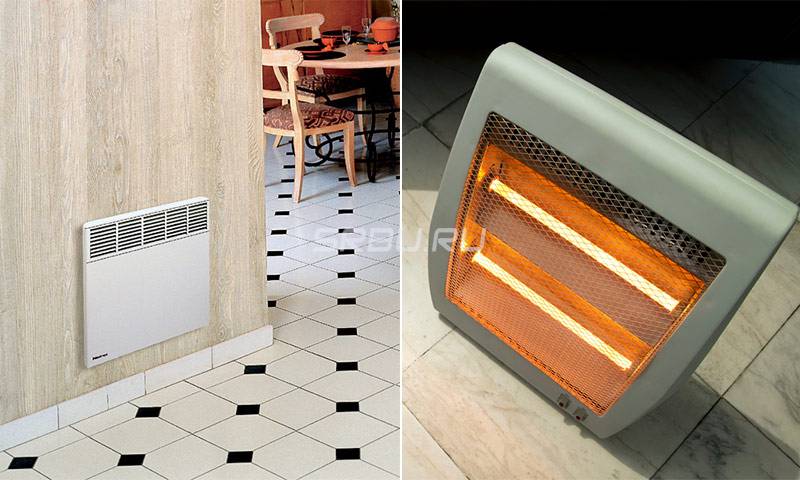


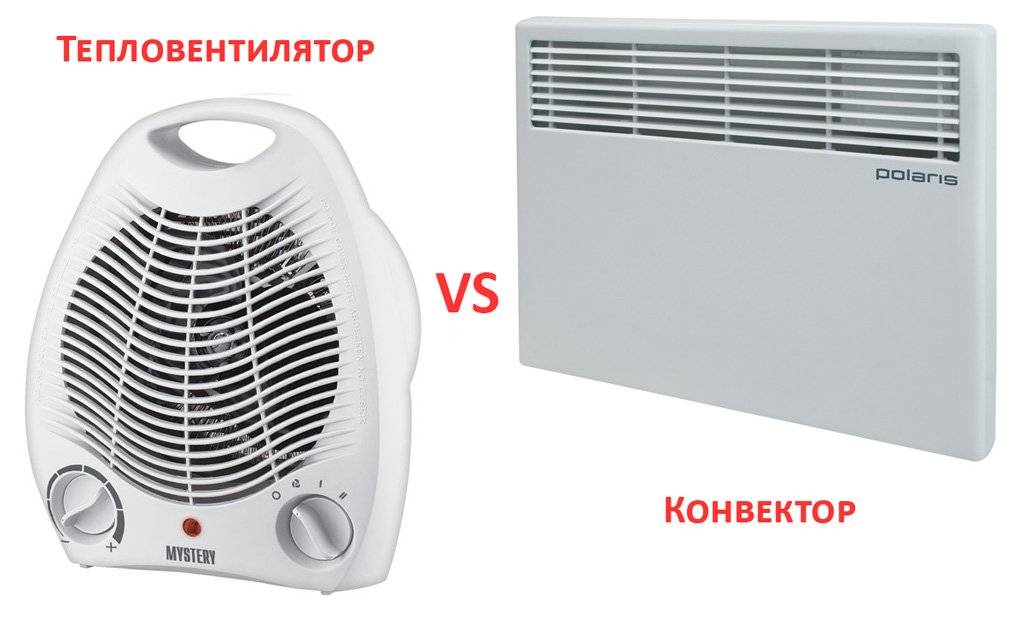

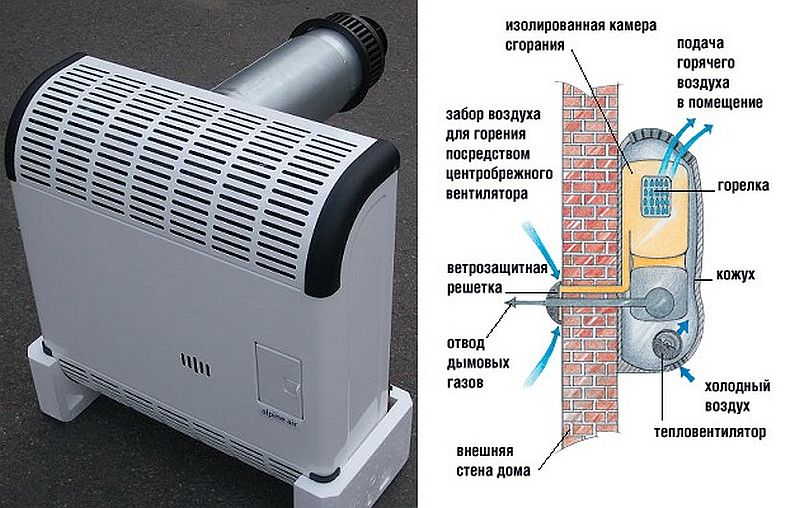
Having familiarized yourself with the types of heating devices and their features, you can make an informed choice. If the device requires quick and short heating, then the fan heater will be optimal. If you need a long-term operation of the device, you should purchase a convector. The choice of model is recommended to be carried out according to the technical characteristics of the product.
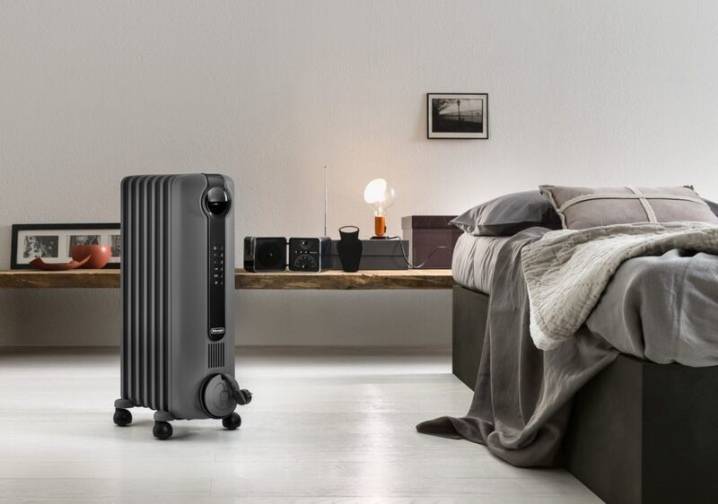
Oil Heater Features
Such an option for additional heating of a room appeared already in the last century, and since that time the device itself, or rather its appearance, has practically not undergone any significant changes.
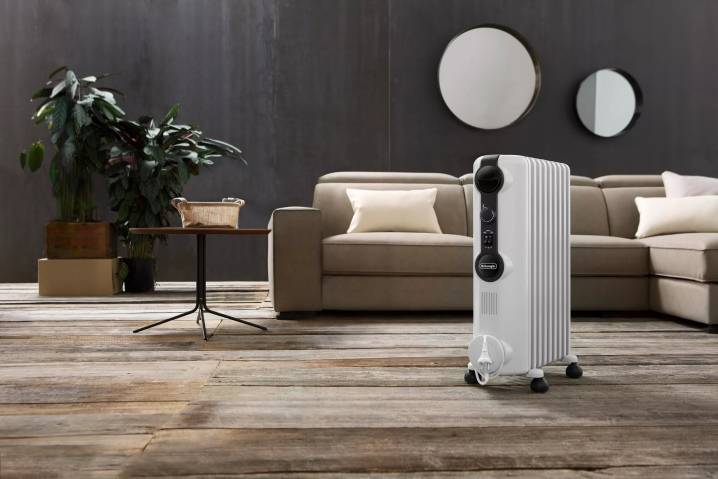
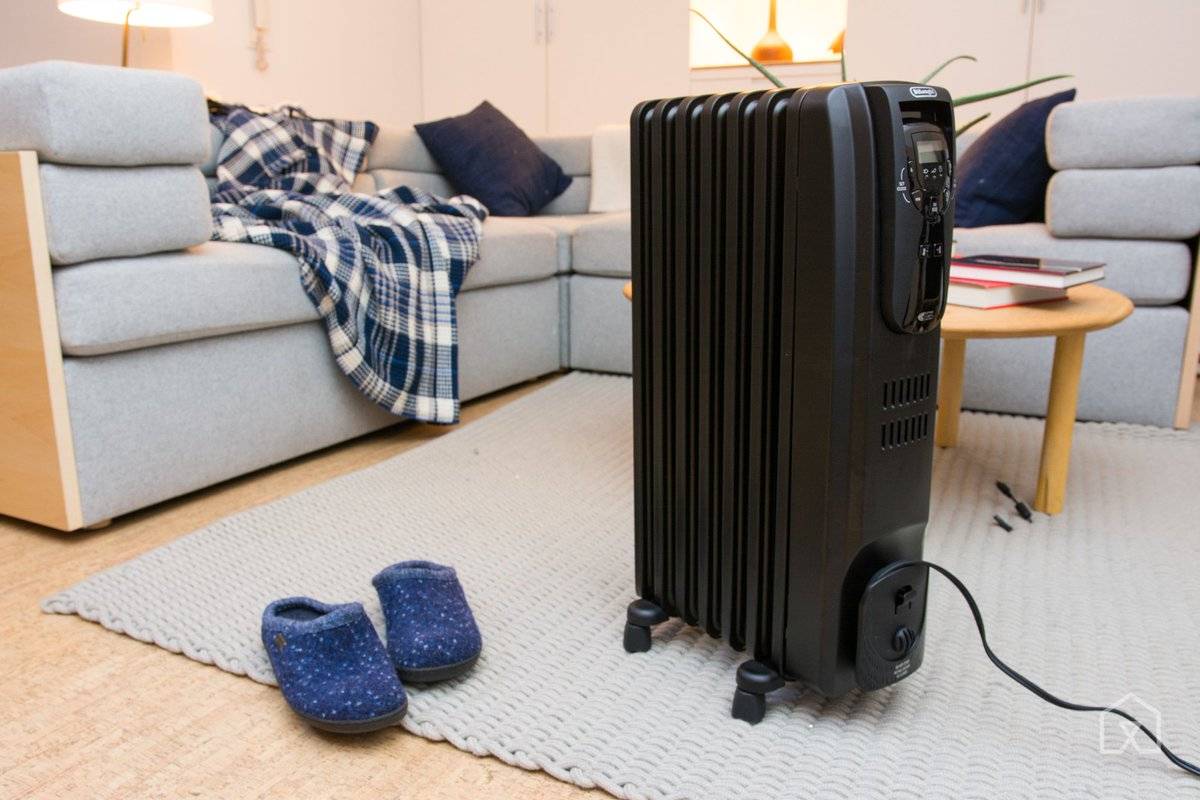
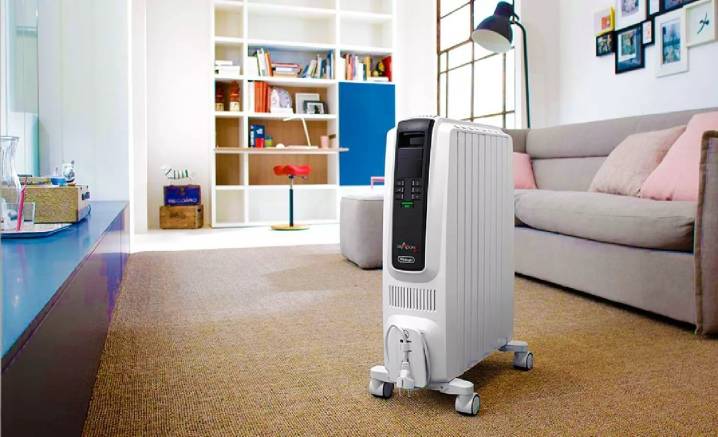
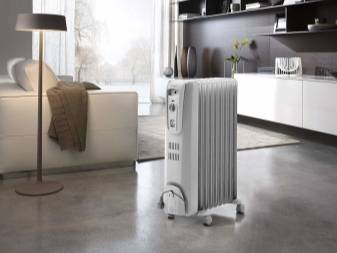
The oil heater consists of the following parts.
- Frame. For most modern models, it is made of metal, although sometimes budget plastic models can be found on sale. The appearance of such a casing is very similar to classic heating radiators.
- Coolant - it is evenly placed inside the entire body. In such heaters, it is a special radiator mineral oil.
- For easier movement of the heater, it is equipped at the bottom with either a special stand or wheels.
- As an additional package, you can select a rather short cord with a plug to plug the unit into a socket.
- Teng - a heating element, located in the lower part of the radiator and separated from the oil by a special collector. It is he who is heated by electricity and transfers his heat to the oil.
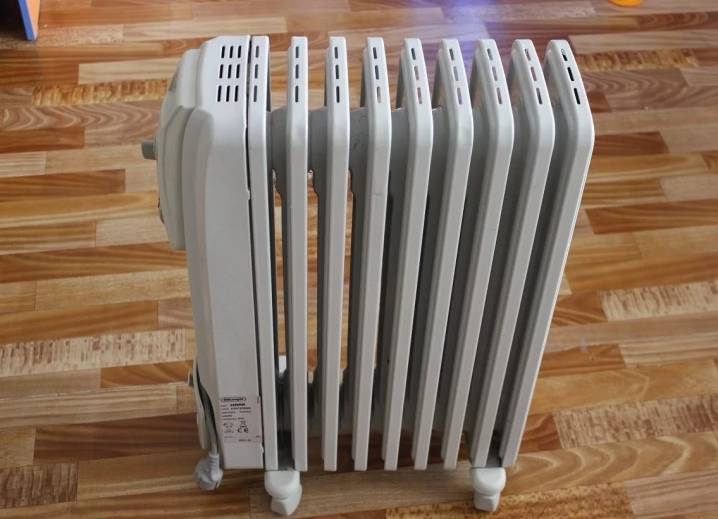
The main advantages of such a heater are the following.
- The simplest design and low cost. On average, an ordinary oil heater costs 2-4 times cheaper than a convector of the simplest type.
- The heat exchange area of such an oil cooler is quite large due to the special design of the housing. This makes it possible to heat quite large rooms with one device.
- The use, installation and operation of such a heater does not require special skills. All that is needed is to plug the device into a power outlet and press the power button. Some models are equipped with a regulator for setting the degree of heating.
- Unlike convector heaters, the oil heater does not cause large volumes of dust to move.
There were some shortcomings here as well.
- The oil inside the heater heats up quite slowly.Therefore, it will take a long time to wait until the cold room warms up to normal temperature. But it is worth remembering that such a radiator also cools down very slowly.
- The heating of the room always occurs unevenly - the closer to the heater, the hotter.
- Electronics, namely the thermostat, does not work as accurately as in converter models. Here it is impossible to set the exact heating temperature up to several degrees.
- The device itself is quite impressive in size and takes up a lot of space. This makes its use inconvenient or even almost impossible in rooms with a small area.
- The body of the oil heater gets very hot. Therefore, there is a high probability of getting a severe burn.
Both types of heaters have their advantages and disadvantages. That is why it is sometimes very difficult for buyers to make the final choice.





Advantages and disadvantages of heating with an electric boiler
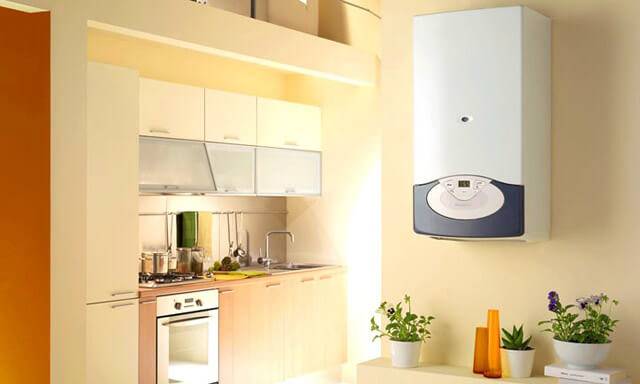
To understand which is better - an electric boiler or convectors, it is worth understanding the scheme of operation of electric water heating. In general, the principle of operation of such a system is that the electric boiler heats up the water, which then diverges through pipes and radiators. Such heating allows you to heat rooms quite quickly.
The most significant advantages of heating with an electric boiler are as follows:
- easy-to-understand and convenient scheme - the device has one regulator of the heat carrier heating level;
- quick start - the boiler does not require preheating to start working;
- fire safety - there is no possibility of an explosion, since electricity is used, not gas;
- the operation of the boiler is provided by electricity, that is, a separate room for fuel is not needed;
- the heating system can be easily converted with a gas boiler instead of an electric one, if a gas main is laid nearby, this will reduce costs.
Among other disadvantages of electric heating with a boiler are:
- The need for a separate electrical line to connect the boiler. In some cases, if a powerful unit is installed, a three-phase meter is required.
- Equipment in which conductive elements are in contact with a liquid heat carrier cannot be called completely safe.
- The formation of scale on the heating elements of the boiler leads to a decrease in its efficiency and an increase in energy consumption.
- A large volume of coolant in the heating circuit leads to an increase in the cost of operating the system.
- In order to be able to regulate the heating temperature of each individual room, you will need a two-pipe wiring or "Leningrad".
- Due to the high cost of electricity, heating a house with such a system will be very expensive.
Choosing what is best to put in your home - boiler or convector, it is worth remembering that in any case, the cost of heating will be quite high.
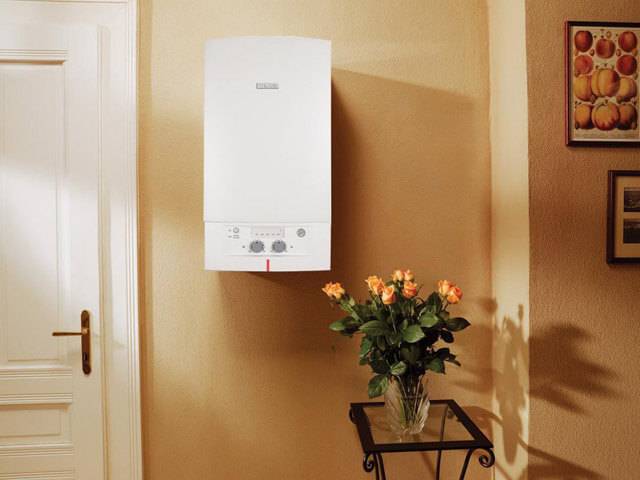
There are several ways to minimize the consumption of electricity during the operation of the electric boiler. For example, to provide high-quality thermal insulation in all areas of the house in order to minimize heat loss. To do this, you can install new triple-glazed windows, mount insulation on the walls and attic.In addition, it is worth purchasing an electric boiler with accurate and sensitive automation that will maintain the set temperature in each room.
Electric convectors
In this case, the use of electrical models based on convection is assumed. The equipment is ready to please with optimized energy consumption, a high level of safety and optimal reliability
The most important thing is to buy an electric convector from a well-known manufacturer who has managed to win a worthy position and earn an ideal reputation.
For electric convectors, the following types of heating elements are traditionally used: nichrome coils, filaments, heating elements (tubular electric heaters). From the very beginning, electric convectors that work on the basis of a heating element are considered the most progressive and safe.
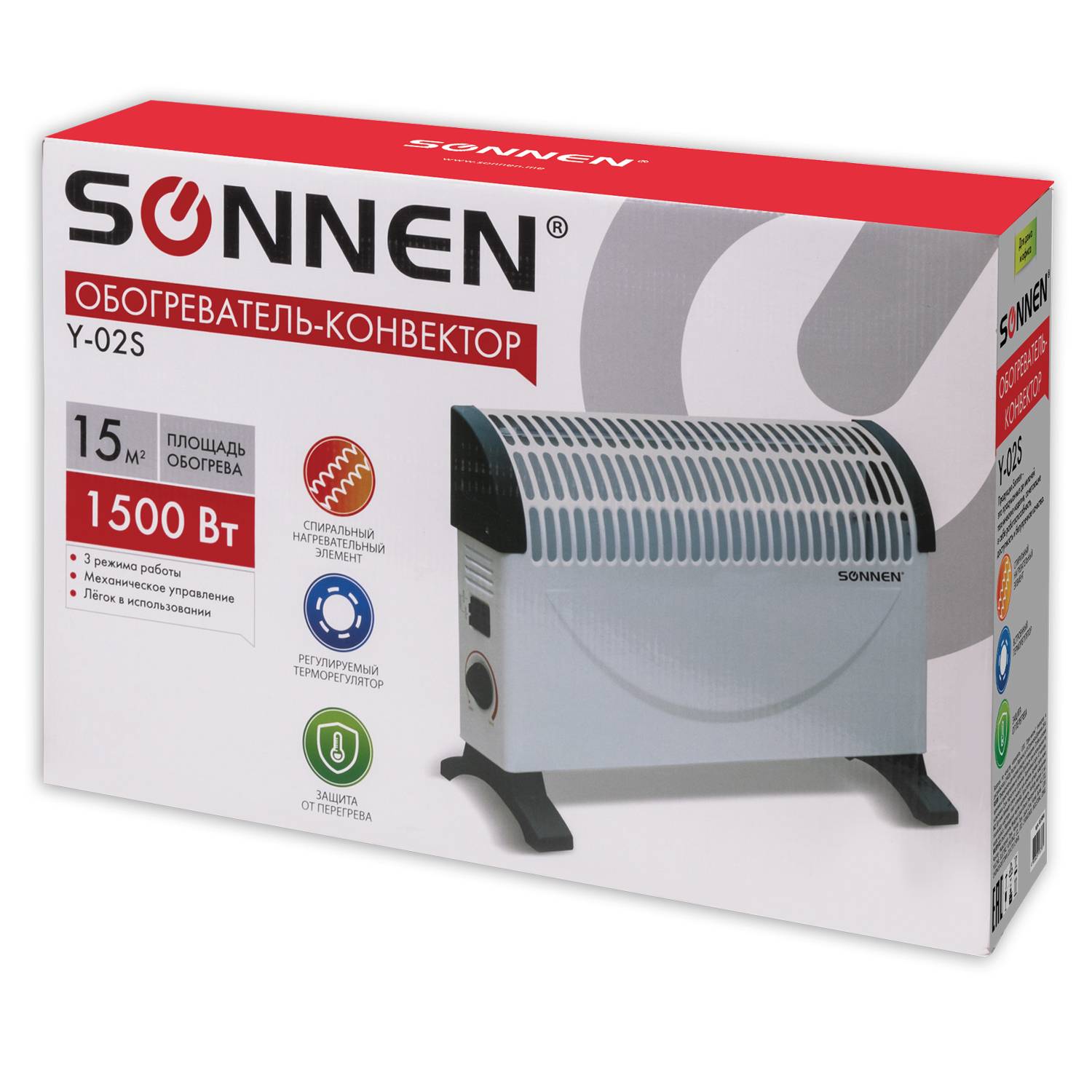


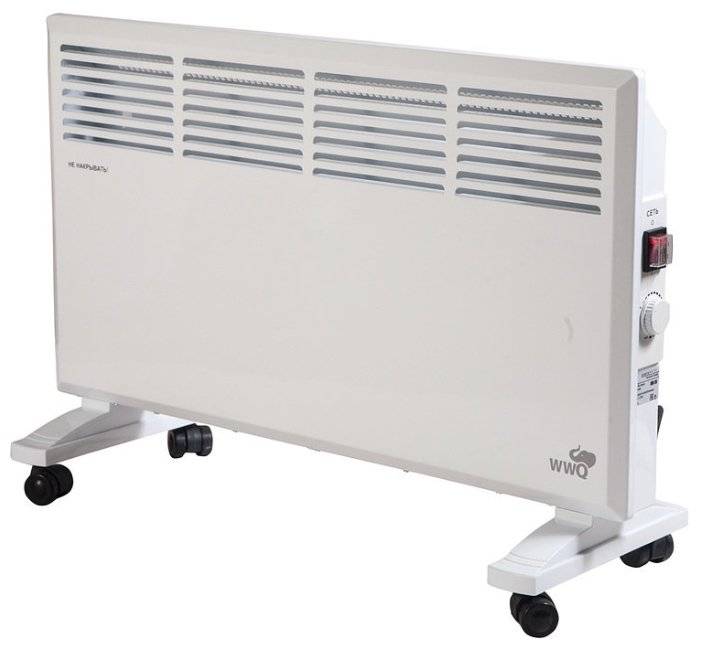
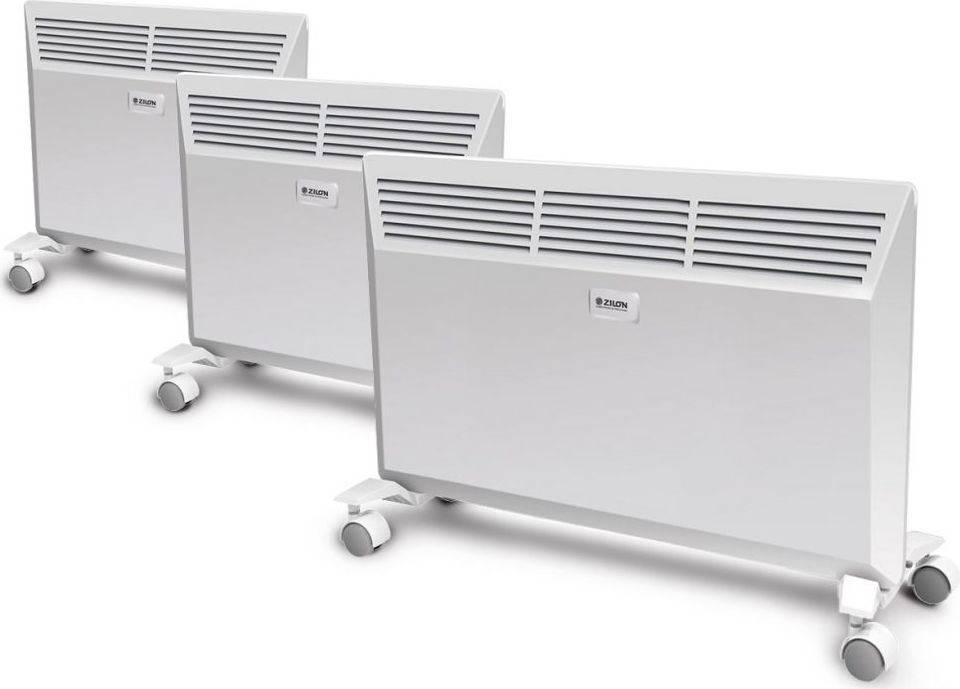
From the very beginning, models that have an incandescent filament were recognized as the cheapest, but among their shortcomings, the risk of dust getting on the heating part, followed by combustion and the release of harmful substances, should be noted. For health safety, you should consider how you can successfully ventilate the room.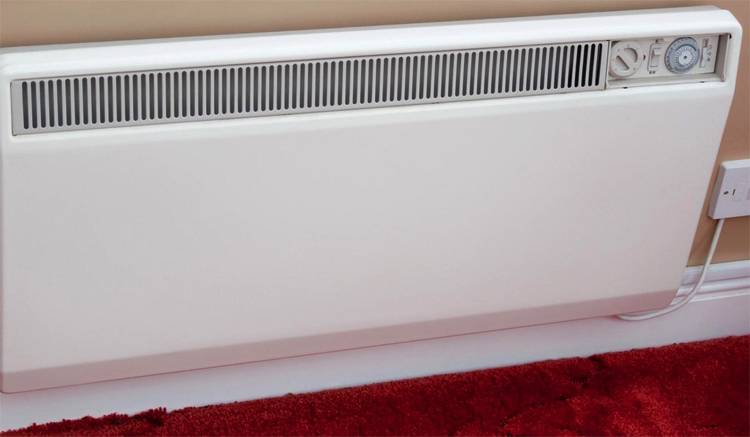 Electric convector
Carefully studying electric convectors, one can note the presence of models with special programmers to establish the optimal temperature regime for each day of the week. This component allows not only to save energy, but also to increase the level of comfort.
Recently, manufacturers are increasingly allowing you to combine several devices into one network for further work, and each type of convector can be set to a specific work schedule.
Among the advantages of the proposed electric convectors, it should be noted compact dimensions, which makes the equipment ideal for almost any type of installation.
Advantages:
- Affordable cost.
- Ease of installation and operation.
- The efficiency is 95%.
- Rapid heating of the heating element.
Flaws:
- With constant use, the efficiency becomes less and less.
- Increased financial expenditure due to significant consumption of electrical energy.
- Low level of equipment efficiency for large rooms.
- Risk of burning oxygen with further dust formation.
What are infrared heaters?
According to the type of energy source used for heating
- Diesel. For heating, an air-diesel mixture is used, which is fed through nozzles to heated electrodes and ignites upon contact with air. When the mixture burns, infrared rays are produced. This type is designed for large areas with good ventilation.
- Gas. They consist of a device for supplying a gas mixture, a piezo element, a ceramic heating element, a housing and a protective grille.
The gas mixture, ignited by means of a piezo ignition, is fed onto a ceramic grate consisting of many small cells. The grating, warming up, begins to emit infrared rays. It is noteworthy that such devices can be used for cooking or in order to melt ice, or warm up the engine. - Electrical. Electricity is used to heat the elements of the device. This type of heat emitters is most often used as a heater for home and summer cottages.
According to the length of the emitted waves
The spectrum of infrared waves is usually divided into short-wave (0.7 - 2.0 microns), medium-wave (2.0 - 3.5 microns) and long-wave (more than 3.5 microns) parts. The higher the temperature of the source of infrared waves in the device, the more short-wavelength is its radiation.
- Shortwave. They emit IR waves with a length of 0.74 - 2.5 microns. This is the visible spectrum of radiation. Halogen lamps are used as a heating element. At this wavelength, burns can occur in the immediate vicinity of the device, and objects and surfaces can heat up to the ignition temperature, keep this in mind when installing heaters.
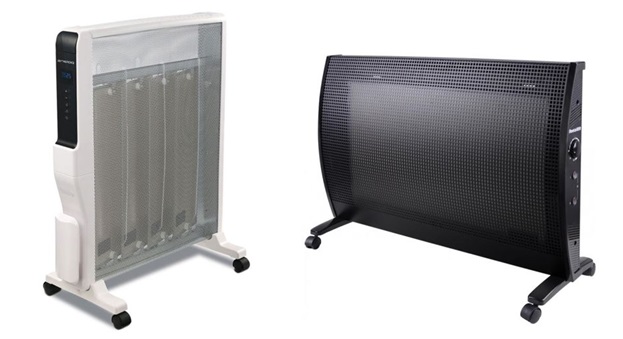
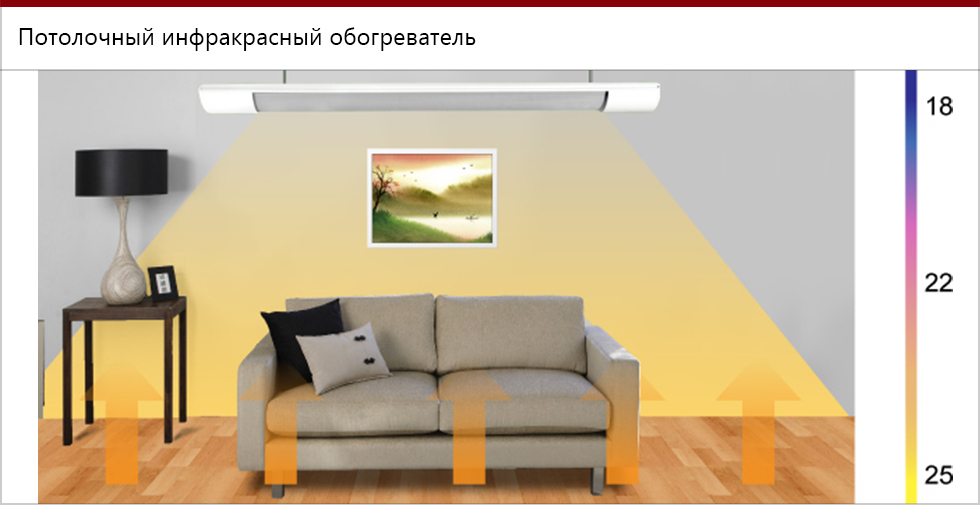
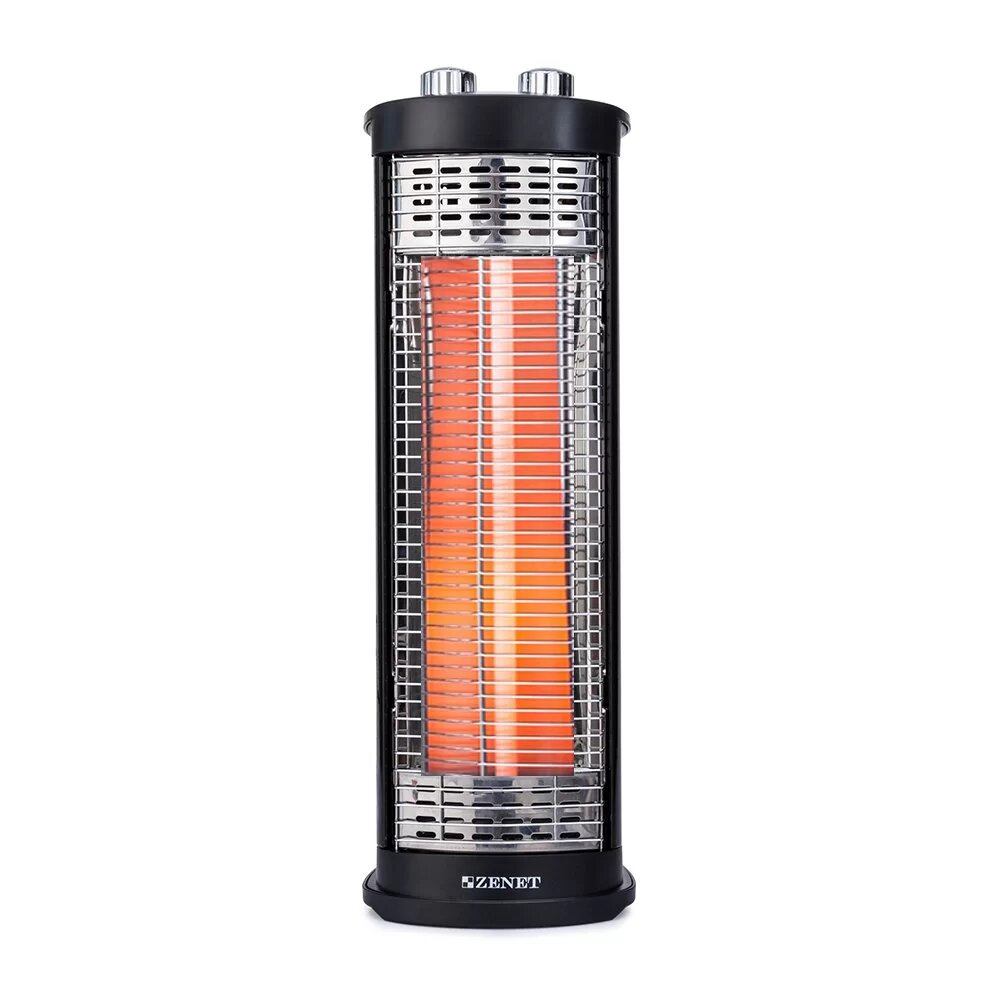
- Medium wave. The temperature of the emitters of the middle spectrum reaches 700 ° C. At the same time, the glow passes into the visible part of the spectrum and has a color from red to orange. Quartz tubes with a tungsten filament inside are used as a radiator in such units. Instead of quartz, ceramic or perforated aluminum can be used. Devices of this type are recommended to be installed on the ceiling at a height of at least 3 meters. Mobile designs of medium-wave heaters are equipped with a rotating mechanism that rotates the reflector to avoid overheating of surfaces. Medium-wave heaters are suitable for heating and heating industrial premises, open spaces and houses with high ceilings of a large area.
- Long-wave heaters consist of a radiator heated by a heating element, other design solutions can also be used, for example, a sealed container with quartz sand, heated by a spiral located inside it.The temperature of the emitters of short-wave devices is lower than that of the first two categories; they are most often used for use at home and in the country.
According to the method of installation and fastening
- Ceiling;
- Wall mounted;
- Floor and mobile;
- Plinth - a new direction in installation. Long-wave heaters are mounted along the perimeter of the room at the level of the plinth or in a plinth of a special design. As a rule, they are used in addition to ceiling medium waves.
How to calculate the power of the heater?
In order for the room to heat up evenly and enough for a comfortable stay, you need to calculate how many and what power of heating devices you need. As a rule, power is calculated at the rate of 100 watts per square meter. But in practice, it is also worth considering the material of the walls of the house, the number and area of glazing, the height of the ceilings, drafts, the number and material of furniture in the room, and other factors. The best solution would be to use a combination of heaters, ceiling and wall, with a power budget 10-15% higher than required, and with temperature control. So, in case of abnormal cold or failure of one of the devices, you will be sure that you will not freeze.
Operating tips
Proper operation will extend the life of the convector and make its operation as safe as possible. In general, convection equipment does not require special conditions, but elementary rules should still be observed.
- Periodically, dust must be removed from the body of the switched off device.
- During installation, make sure that the lower part of the convector rises above the floor by at least 15 cm, and is 25 cm from the wall.
- Do not cover the top of the convector with any objects, hang laundry or place it in a niche that is too low. There must be a distance of about half a meter from above, otherwise the convector will overheat. This will lead to breakage (if the device is not equipped with a special overheating sensor).
- If there are children in the house, try to choose a stationary type convector model and without wheels.

The following video provides a detailed overview of floor convectors.