- Convector device
- Features of a gas heating convector: pros and cons
- Gas convectors
- The principle of operation of the unit
- Equipment selection
- Choosing convector heaters
- Which convector heating system to choose for a private house?
- Advantages and disadvantages of convector heating for a private house
- Varieties of convectors
- pros
- Types of convectors
- Gas equipment
- Calculation of the power of such a heating device
- Manufacturers
- Ballu
- NeoClima
- Electrolux
- Hyundai
- Calculation of the power of an electric convector
Convector device
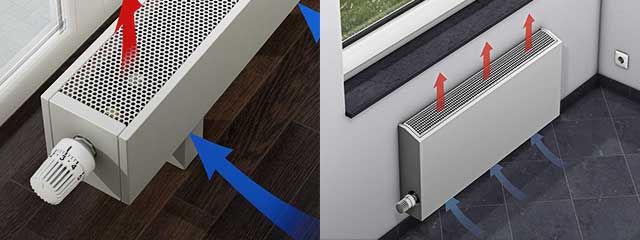
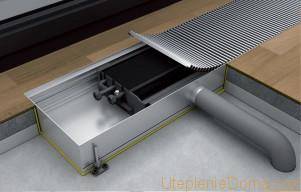
To organize convective exchange, it is necessary to use a convector. This device can work with both natural and forced circulation. Modern convectors for heating a house can be of various designs, but there are three main elements at the core:
- a heat exchanger or heating element that acts as a heat source;
- casing;
- a convection chamber with shutters or valves (it is designed to direct air flows).
Convector device
As additional elements, there may be devices for adjusting the direction of warm and cold air flows, as well as an automated control system.
Features of a gas heating convector: pros and cons
How convenient and profitable is heating with a gas battery? Does she have any downsides? Let's take a look at their benefits first:
- The cheapest way to heat both apartments and houses. However, if gas convectors are used on bottled gas, heating costs are almost equal to those of an electric boiler. And less profitable than a solid fuel boiler or heat pump. Gas convector on reduced gas
- The efficiency of such heating devices can reach up to 97%, i.е. they are economical.
- They can work at any temperature, even at -50°C.
- There is no combustion of oxygen in the air of the room. Since air is used for combustion, which enters from outside the house.
- Service life - not less than 20 years.
- The installation of a gas convector is simple and can be done by hand. See below for more on this. Modern gas heating battery
- Autonomy: you can easily heat several rooms of the house or just one room.
- Low cost - from 3 thousand rubles. (see the article "Where to buy a gas convector").
As with the operation of any gas equipment, batteries (convectors) must be used in compliance with strict safety measures, since the gas is explosive!
When applied gas convectors on a balloon gas, the savings effect from the use of such heating batteries is reduced to zero. Gas batteries are useful only when there is no electricity. At the same time, the process of replacing the cylinder with an interval of 1 to 4 days can seem rather tedious.
More cons:
- Heating with gas batteries cannot be used to heat water.
- Rather limited thermal conductivity - 2-7 kW (for most models). Gas convectors are quite overall
- Despite the rather beautiful appearance, they are quite large, so it is not easy to disguise them.
- Since this technique runs on gas, its installation and connection requires obtaining permission from a special gas service.
If you are interested in built-in heating radiators, you will also find about them on our website.
Gas convectors
The principle of operation of the unit
The scheme of operation of the gas convector is as follows. Liquefied gas burns in a special chamber, giving up its energy to the heat exchanger. The latter heats the air space entering through the lower vents.
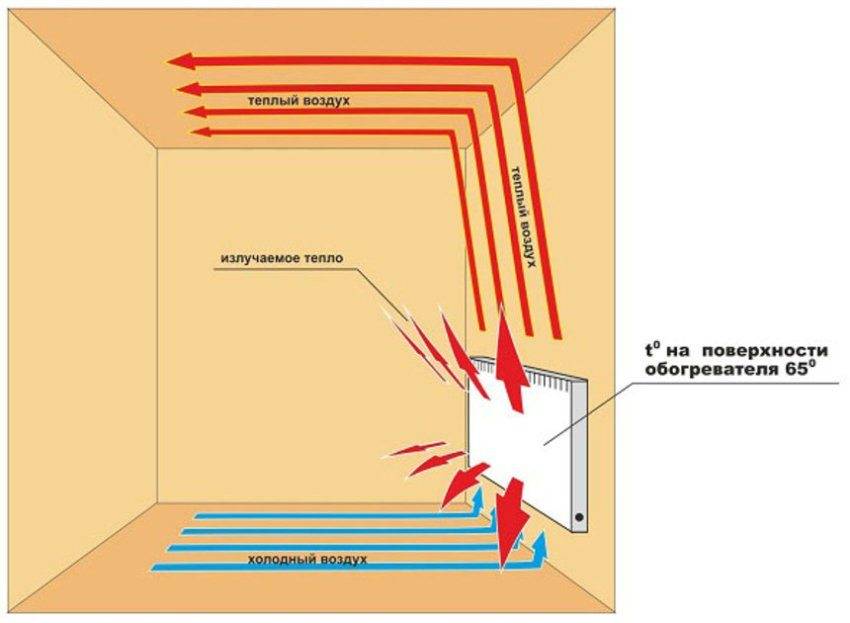
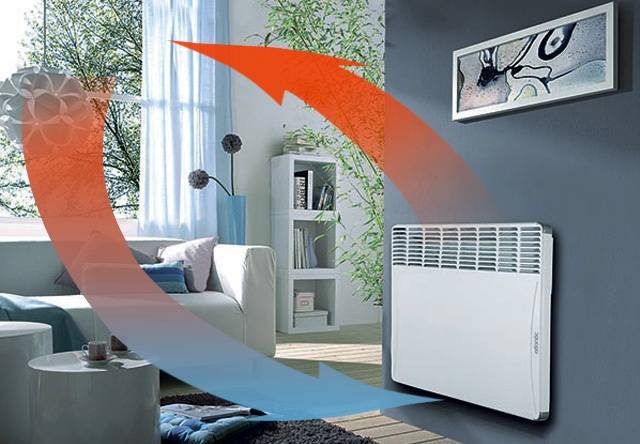
The density of the heated air weights is significantly reduced, due to which they rise up. This is how it gradually heats up and replaces the air, due to which the rooms are heated.
Some models have a fan that activates the circulation. Its use is not always justified, since the noise generated by the electric motor is often made a cause of discomfort.
The design of the gas convector requires a channel that must go outside. It is needed to remove from the premises the products of the intake and combustion of fresh air, which is used in the work. A coaxial pipeline acts as a chimney, laid in the thickness of the wall specifically near the installation site of the convector.
Equipment selection
A gas convector is a direct rival to a boiler running on the same type of fuel. The use of the latter is justified in the case when it is necessary to invariably heat a large house or building with more than 3-4 rooms.
Only in this case, the capital costs for the installation of heating radiators, the boiler itself and pipelines can be taken into account as justified
In another case, it is advisable to opt for a convector. Especially effective is the use of this equipment in the country, where people do not live permanently.




When choosing one or another model of a gas convector, pay attention to the following design highlights:
- heat exchanger material. There are varieties made of steel and cast iron. The first option has a higher efficiency, but also greater inertia. In other words, this device will heat the room for a longer time, and the heat generated by it will remain for a longer period of time from the moment the gas is turned off.
The disadvantages of cast iron convectors include their enormous weight and rather high price. But the period of their operation far exceeds the period of operation of metal devices.
- design and availability of pipes. Many modern gas convectors are equipped with telescopic coaxial channels that allow you to adjust the length depending on external conditions. In addition, these chimneys differ in diameter, which depends on the power of the convector. Choose models with pipes, the end of which is protected by a decorative cap. It will give the cut a more attractive appearance and protect it from debris, foreign objects and precipitation.
- The combustion chamber. Possibly closed and open. A closed combustion chamber is used as a rule. A convector with an open flame may have been used to replace an obsolete stove available in the country. In this case, the combustion products are brought out through the chimney.
Choosing convector heaters
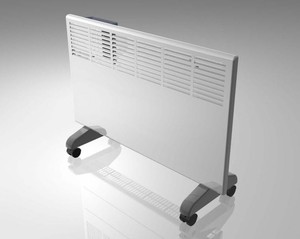 We will tell you in more detail how to choose a convector heater that will consume a minimum of electricity. When purchasing such heating equipment, it is necessary first of all to take into account the mode of use of convectors, as well as the available fuel that will be used by such installations. Such convectors can be installed both in cottages and in private houses and apartments. In each case, the choice of a particular model will depend on the power, installation method, and fuel used. On the Internet, you can find reviews on specific models, which will simplify the choice.
The most important parameter is the power of such heating equipment. In the event that the room has excellent thermal insulation, one kilowatt of power per 10 square meters of room area will be enough. This ratio applies if the height of the ceilings does not exceed three meters. In the event that the ceilings are 10 centimeters lower or higher, then about 10% of the power should be subtracted or added to the original figure.
The most popular in the domestic market are economical convector heaters from Western European manufacturers. This technique is highly technological, it uses the latest developments, which can significantly increase the efficiency of heaters, which, in turn, improves fuel efficiency.
Such models of equipment, depending on their type of installation, are divided into:
- Plinth.
- Floor.
- Wall.
In recent years, floor models have become most widespread, which are used with floor-to-ceiling panoramic windows.
Also, when choosing, you should pay attention to the availability of additional functions for the equipment. This can be a remote control, timers, additional thermal temperature sensors, the ability to connect to a smart home system
Such additional functions make it possible to make the use of such heaters in the country more comfortable, but at the same time the cost of specific models increases significantly.
Which convector heating system to choose for a private house?
Water convector heating is ideal for heating a house with several rooms or floors. Thanks to several radiators connected to the same wiring, it is possible to maintain the same temperature in all rooms at once, while when installing gas or electric convectors, only the room where the appliance is located is heated.
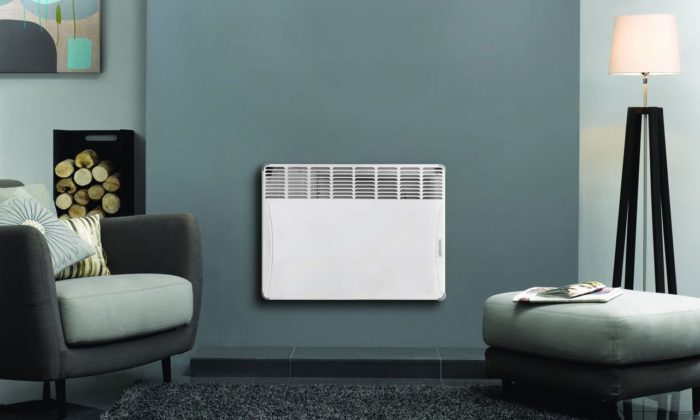
Convector electric heating can be chosen for heating one separate residential or utility room. Such devices are suitable for installation in a garage, greenhouse or on a balcony. As for the use of such units in a house with several rooms, it is not profitable from a financial point of view, because it is necessary to buy appliances in each room. In addition, electricity costs will be significant.
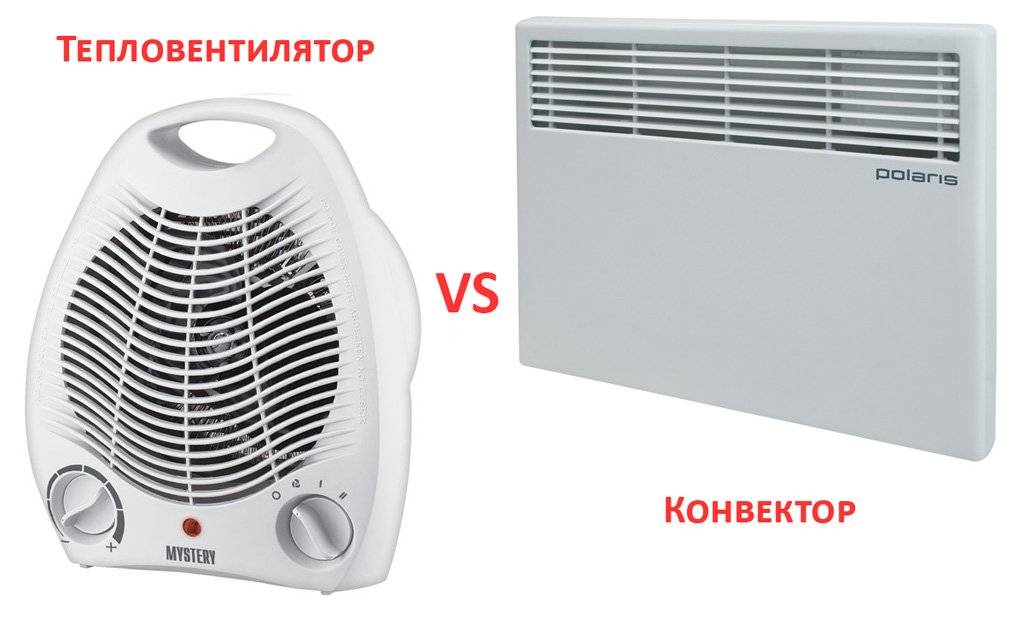

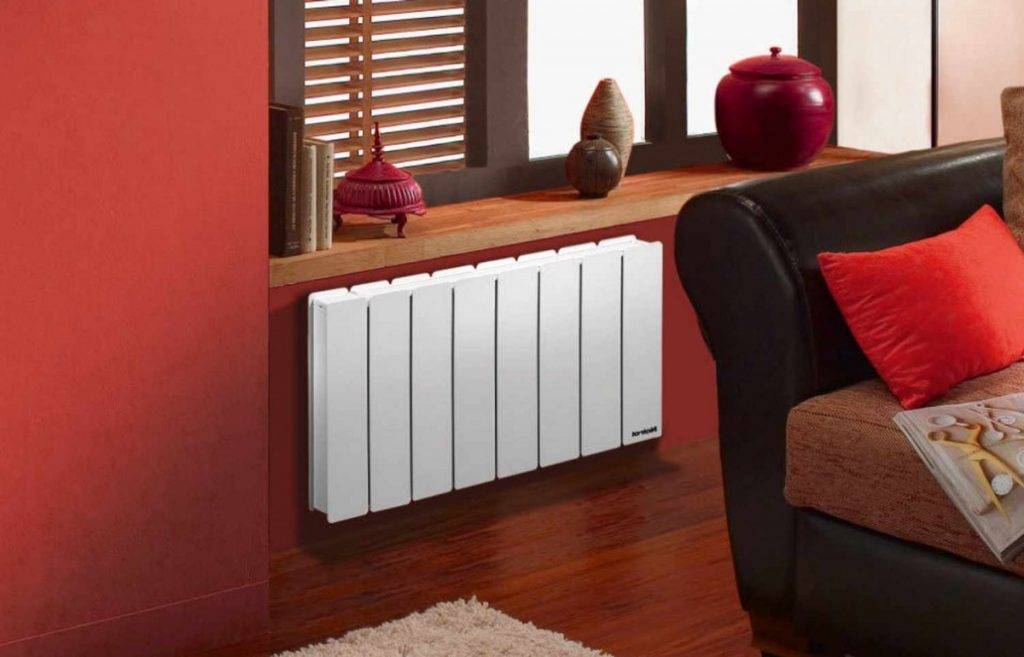
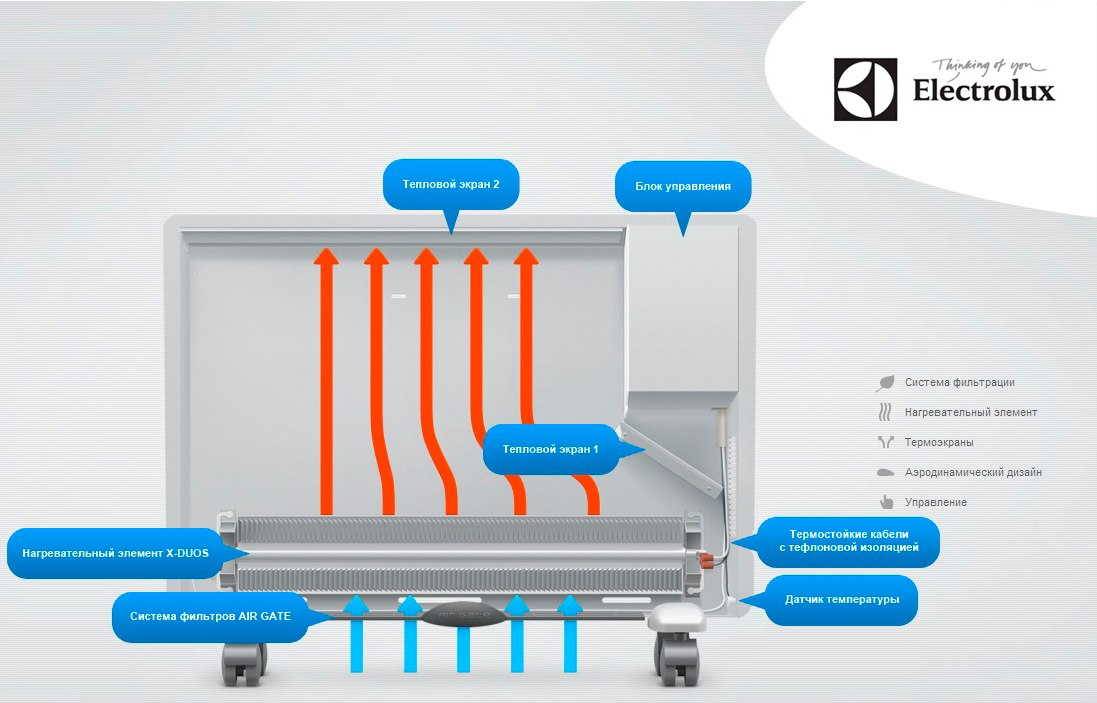


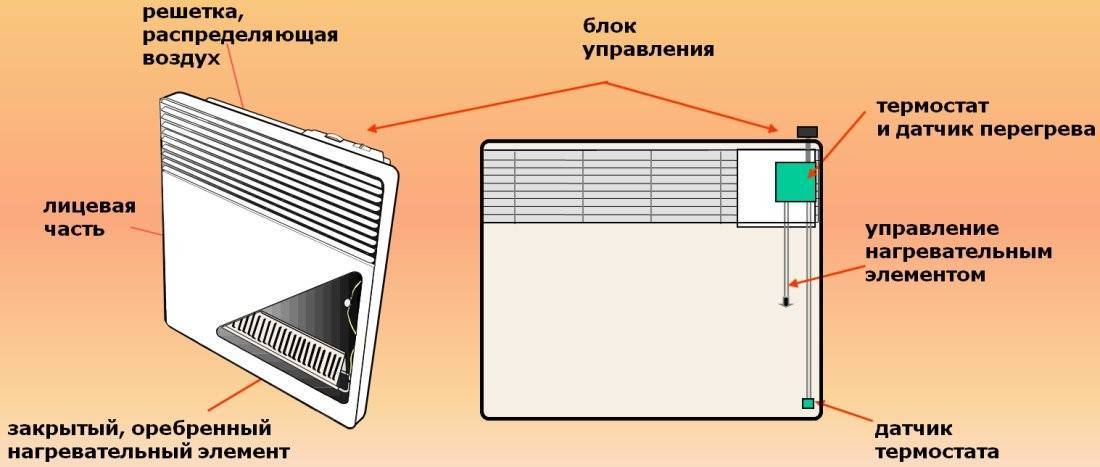

Electric convectors are suitable for heating a seasonal country house, because they do not have a liquid coolant that can freeze. Gas and electric convectors are used to heat a small house, but they are not suitable for buildings with an impressive area.A significant disadvantage of gas appliances is that each of them needs a separate chimney, so installing several units at once is impractical. Easier to organize water heating.
Advantages and disadvantages of convector heating for a private house
Among the advantages of convector heating are the following:
- With the help of such devices, it is possible to heat premises for various purposes, both residential and commercial. Water convectors are more suitable for housing with several rooms, while electric and gas units are suitable for small seasonal buildings or utility rooms (greenhouses, poultry farms, balconies, loggias, garages).
- Electric and water convector devices do not burn oxygen in the room. With regard to gas units, this is true only when using appliances with a closed combustion chamber.
- The devices create a comfortable microclimate in the room and do not cause deterioration of well-being in people.
- A large selection of options for execution and dimensions of such devices allows you to choose the right unit.
- External attractiveness is one of the important advantages. Such heating radiators fit well into the interior of the living space.
- Fast and efficient heating of the room.
- With the help of convector-type units, you can create a thermal curtain in front of windows and doors in the room, reducing heat loss.
- On sale there are mobile appliances and convectors that can be hung on the walls.
- Water unit environments have radiators that can be installed in the floor, inside skirting boards or walls.
The disadvantages of any convector heating are that with this method of heating, the air in the room dries up very much.In addition, due to the constant movement of air masses in the room, dust actively circulates, which is not very good for allergy sufferers and young children.
Convector heating is not suitable for rooms with high ceilings, because the warm air masses will be high under the ceiling, and the air in the area where the person is located will be cold. Another disadvantage of these heating systems is the significant difference in the temperatures of the air masses in the upper and lower parts of the room.
Varieties of convectors
To date, the following types of convector heaters have gained popularity:
- Electrical.
- Water.
- Gas.
- Film.
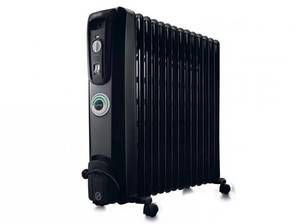 Electric convector heaters, reviews of which you will find in this article, are easy to use and easy to install. Of the advantages, we also note the affordable cost, so such convectors are available to every homeowner. If we talk about the shortcomings, then we note the high consumption of electricity, which somewhat limits their use in large areas.
Today, powerful energy-saving models have appeared on the market, which are distinguished by improved efficiency and consume a minimum of electricity. Reviews of such electric heaters are extremely positive.
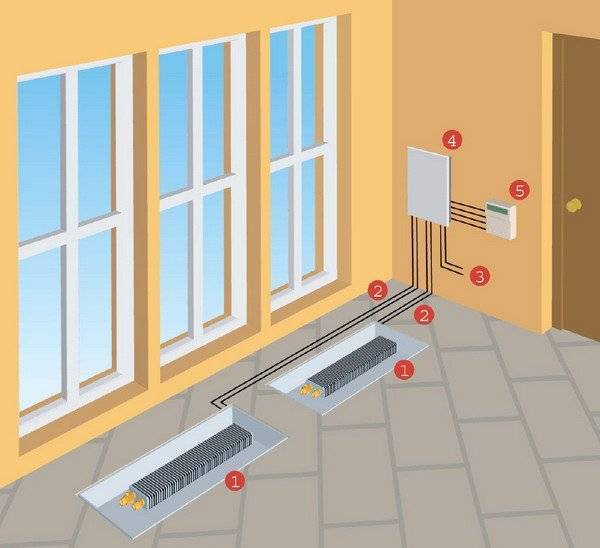
Water installations use heated water as a heat carrier. Such convectors can be divided into floor and wall convectors. Wall-mounted options are made in the form of a conventional radiator and are connected to the general heating system in the house. Intra-floor are located in the screed and take up a minimum of space.
Gas models of convector heaters have gained popularity due to the affordable cost of the fuel used.It is possible to use this equipment as the main source of heat in the house, and as an additional method of space heating. It is possible to connect such convectors both to the central gas supply system and work from a gas cylinder. Remember that the installation of such gas convector heaters requires a high-quality chimney, and maintenance and installation should be carried out exclusively by professional specialists who have access to such work.
Film convector heaters, the principle of operation of which is extremely simple, appeared relatively recently and, due to their efficiency and high manufacturability, are widely used on the market. Such equipment is a thin two-layer electrically insulating film, inside of which there is a heating element. Such a film is mounted on walls or ceilings, which can significantly save space in the house, while ensuring the maximum possible efficiency of using such heating equipment.
pros
Units can have a different size (depending on power) and shape. The equipment of various sensors and functions for different models also differs.
But in general, convector heaters have the following positive qualities:
- Quiet work. The device does not have a fan, so it does not hum.
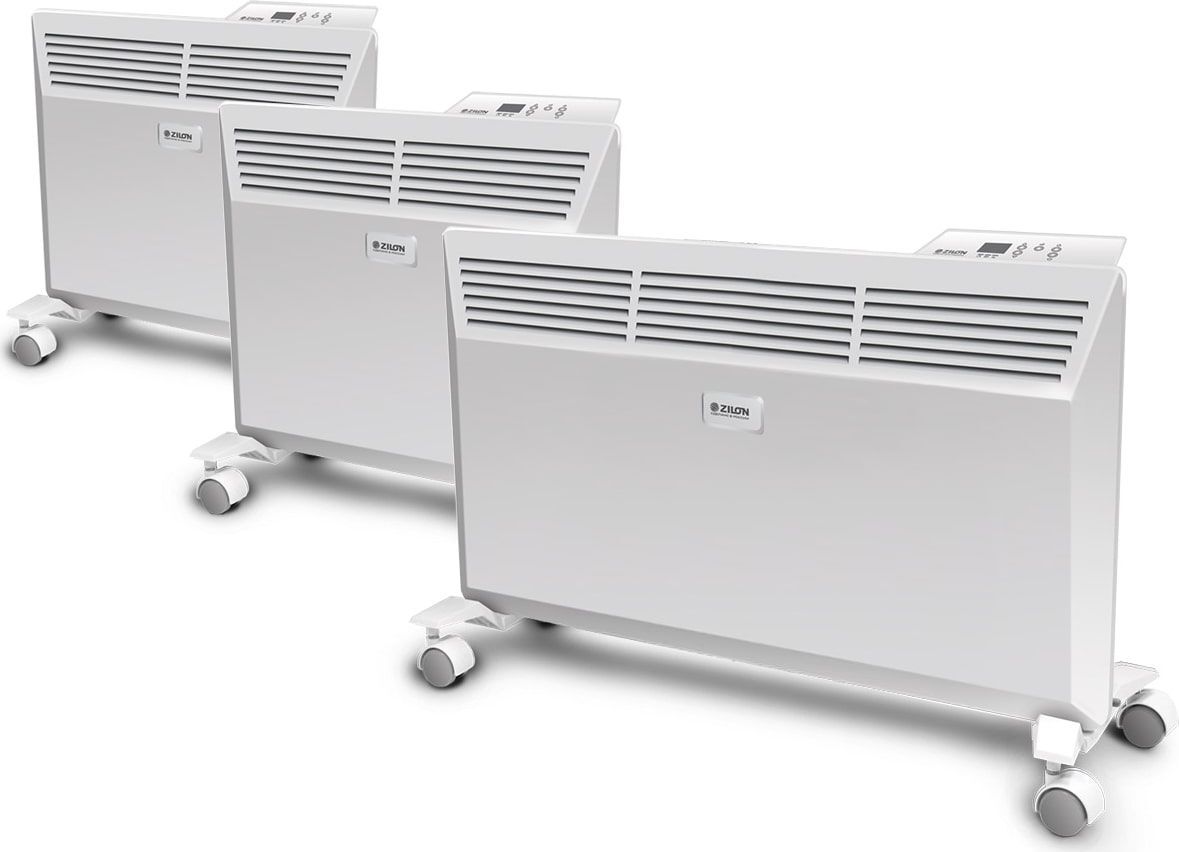
- A wide range of placement options: there are models for floor, hanging, narrow and long for window sills…
- Attractive appearance. This allows you to fit the device into the interior, use them in offices.
- Good energy efficiency.
- Unlike other heaters that can heat up to more than 150 C, the convector body does not heat up above 90 C (and some models - only 60 C), which makes its use much safer.
- Portable models are equipped with wheels, wall models are easily attached to the walls and do not clutter up the room. Such convector heaters can be used for giving.
- They don't burn oxygen.
- Durability. Warranty up to 10 years. And the theoretical service life is even longer.
- Can work without human supervision.
- Easy to manage.
- It turns off when something other than air gets inside.
- And all this for little money.
Types of convectors
There are several divisions of convector devices according to the following characteristics.
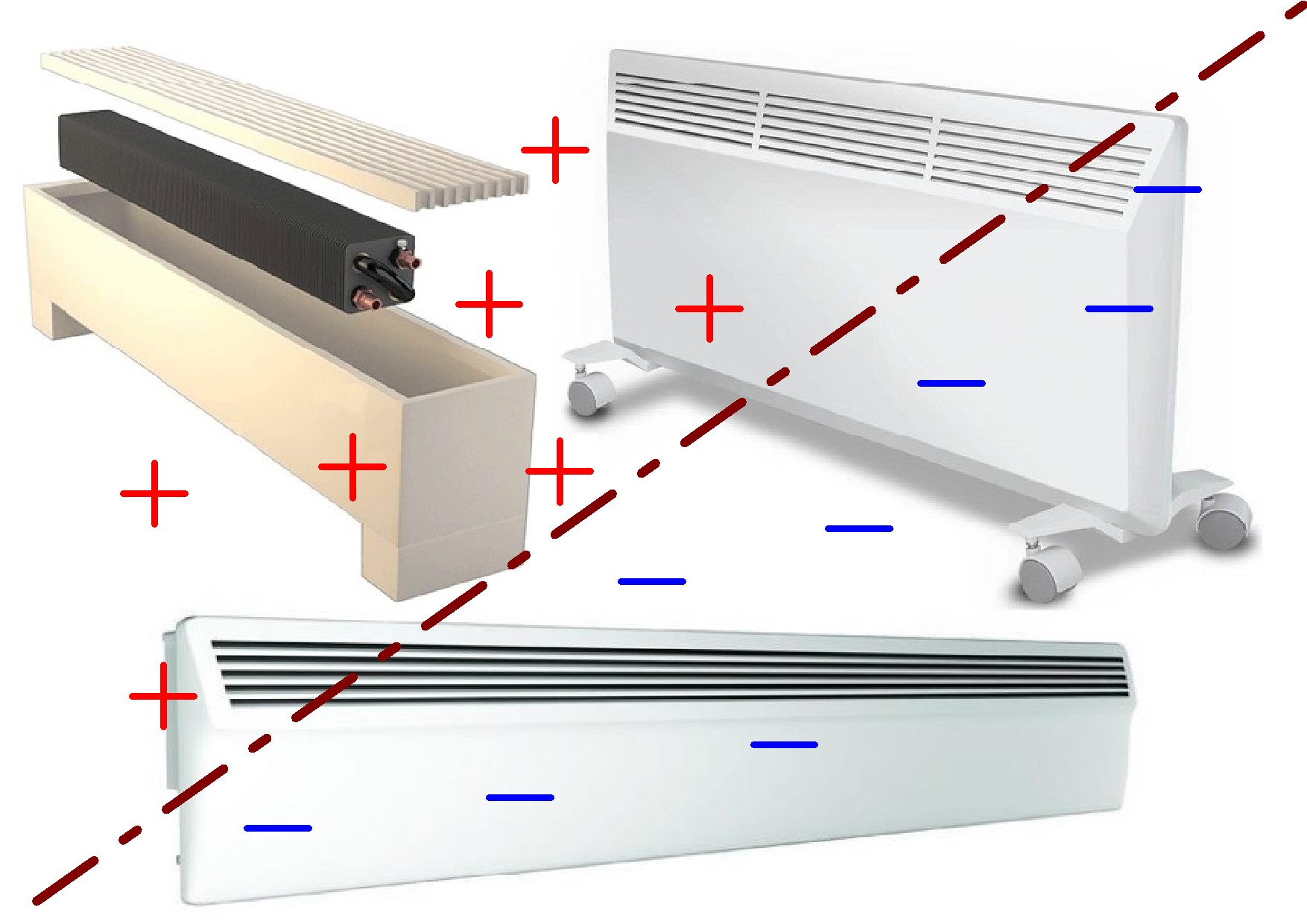
- According to the type of power source used, they are divided into 3 types: electric, water and gas. It is worth noting that electric models are the most common, due to their lower cost compared to analogues. But at the same time, gas appliances are most practical in operation.
-
According to the type of installation, the following types are distinguished: floor, wall, plinth and built-in. Highlighting the features of each type, the following should be noted. Wall convectors are more convenient to use. Built-in and plinth appliances are suitable for lovers of design solutions. Floor electric models are convenient in terms of mobility.
- By type of convection are: with natural or forced convection. The difference between these types is the presence of a fan that provides air flow and, accordingly, its faster heating. The main disadvantage is the presence of additional noise during operation.
- Depending on how the temperature is adjusted, mechanical and electronic control are distinguished. The second type is more convenient, but also more expensive.
Gas equipment
The difference between a gas convector and an electric heater lies not in the operation of the unit, but in its installation and the cost of consumables (gas / electricity). In the case when the house is connected to central heating, you only need to connect the device with a special hose. Only professionals should be trusted with this kind of work. Among other things, you may need permission from the city authorities for an individual connection + installation of a meter.
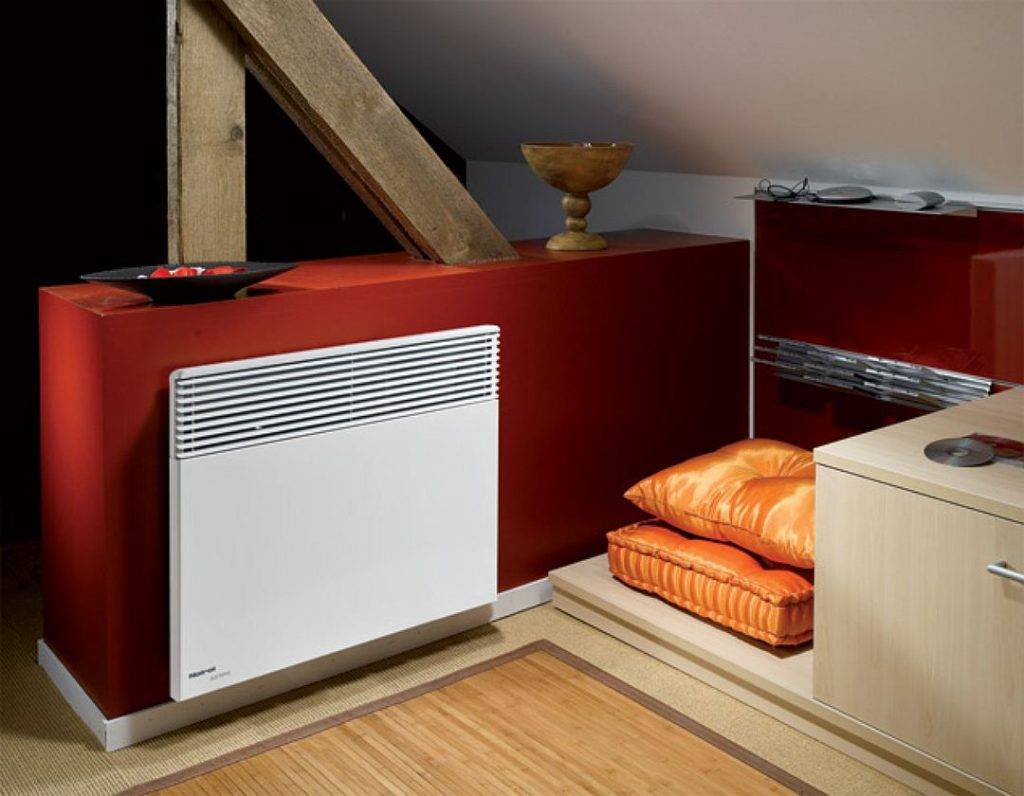




Problems arise where there is no gas pipeline. For example, outside the city - in private houses or holiday villages.
Then two options:
- Connect to the highway.
- Use liquefied gas.
The first is not cheap, but over time it will pay off. The second option is to add fixed costs. So I advise, if there is no real opportunity to connect to the gas main, switch to electric heating.
Another caveat - gas convectors require an additional air supply and a pipe to remove combustion products. In apartments, the price of installing such a heating system will undoubtedly increase, since a project approved by the utility company is required.
Calculation of the power of such a heating device
Table for calculating the power of such a heating device.
To select the average power of devices for heating residential and office premises, you should use the formula: 1 kW of heat per 10-12 m² of the area of \u200b\u200bthe room (if the height of the walls is 2.7 m). If there is a high wall height, it is recommended to add 10% power for every 10 cm above the specified one.Each window opening must be covered with heat flow. A convector should be installed under it, while it is recommended to choose a design of the same length as the width of the window. For practical use, the most optimal is a device that is capable of completely covering the window opening in length. A wide heat flow at an optimal speed will act as a curtain and effectively maintain a uniform temperature balance in the room.
In order to more accurately determine the power of the convector, which is necessary for heating the room, the calculation should be made according to the volume of the room, based on the calculation of 35-40 W / m³. It will also be necessary to take into account the additional heat losses that exist in connection with the outer walls. If there is a corner room with a cold attic, basement, or if it has a large glass area, it is recommended to select equipment with some power reserve. This will greatly affect the rate of heating the space to the required temperature. If you take a model that has low power, it may happen that the device simply cannot reach the required temperature and will work continuously.
Modern convectors in most cases consume only 30-40% of their total rated power.
In general, each model of the convector has its advantages and disadvantages. However, the advantages include the following characteristics:
- You should choose those devices that do not burn oxygen.
- You need to give preference to designs that can be used in absolutely any room.
- It is best to choose batteries that are easy to install and operate.
- Batteries that have the highest level of safety are valued more than others.
It is worth noting that each owner of an apartment or house chooses the best convector for himself.
The choice must be made based on your own capabilities and needs, as well as the place where you plan to install it.
Which company is best to choose such a device for heating?
Diagram of the Bessemer converter.
In order to understand which company produces the best convectors, you need to listen to customer reviews. For example, Delonghi most often produces cheap convector equipment that runs on electricity.
In general, people's reviews about this manufacturer are quite good, especially if you take into account their democratic cost.
The well-known organization Gorenje produces various types of convectors. However, consumers are most in demand for a gas-type heating device of this well-known brand. Reviews about the products they produce are in most cases good, but their units have a considerable cost, which must be taken into account when choosing a heating device for an apartment or a country house.




There are also convector manufacturers who have a fairly large number of bad reviews. Such manufacturers include Ballu, Selena, Timberk and others. All company data is Chinese.
What should you know about the cost of electric convectors? In general, such devices for heating an apartment or house are quite convenient and have a large number of advantages in comparison with other heating units.For many consumers, the main advantage is the cost of these designs, because they believe that even the best devices can be cheap. To some extent, people who want to save money are right. Not always expensive equipment will justify its price.
Often there are situations when a low cost hides a large number of positive aspects. You should be aware that the price is not the main criterion for choosing such heating equipment.
Manufacturers
Among the convectors that are most popular with owners of country houses and country houses, models of well-known European and Asian brands attract the most attention. Consider which manufacturers deserve the most trust
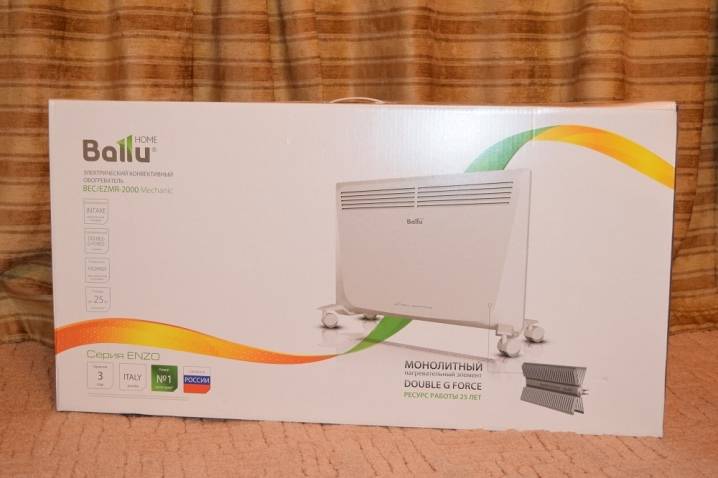
Ballu
The well-known Asian brand is based in China, Japan and Korea, has its own factories in Russia and EU countries. The company produces a wide range of products in the budget and medium price segments. The company's products are dominated by simple and reliable models equipped with an electronic or mechanical thermostat. Of particular interest is the Transformer System series produced in the Russian Federation, installed in floor and wall versions, equipped with one of three types of control unit.
Among the popular models are the Enzo Bec / EZMR-2000 convector on comfortable wheels, with a mechanical thermostat, Ettore BEC / ETER-2000 with an electronic thermostat and a built-in air ionizer, an Auto Restart system in case of a power outage. In total, there are several dozen models in the product line, differing in power and technical equipment.
NeoClima
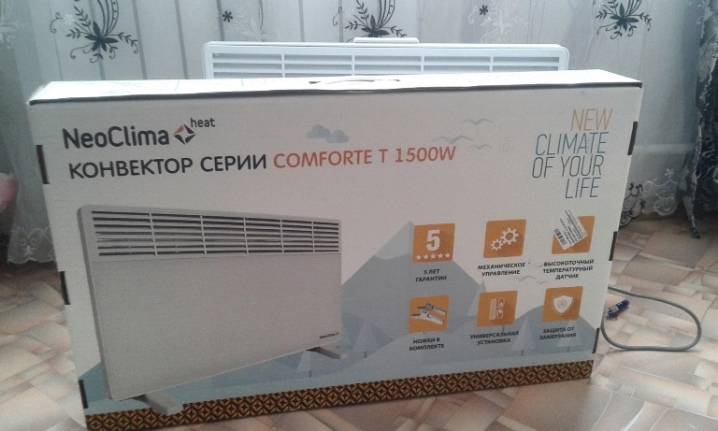
A well-known Greek brand that produces suspended and floor convectors in an affordable price range. Among the popular models, Comforte 1.5 can be distinguished with two heating modes - by 0.75 and 1.5 kW. The equipment is equipped with a mechanical thermostat, mounted on the wall, equipped with automatic protection against freezing, overheating.
Electrolux
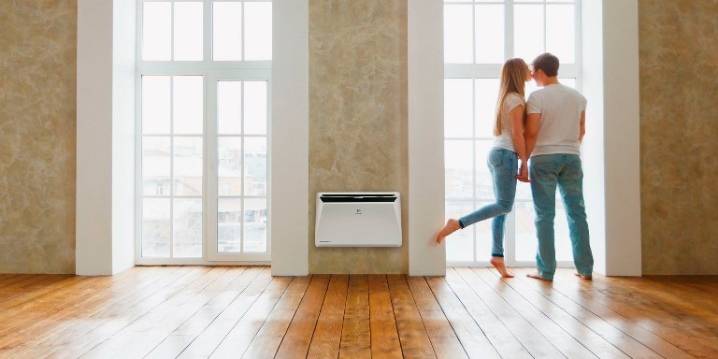
A well-known European manufacturer offers electric convectors that are excellent in terms of performance and design. The company's products belong to the premium class, allow you to heat country houses of various sizes, providing full automation of all processes. Among the popular models, one can single out the suspended version ECH / AG2-1500 T, designed for space heating up to 20 m2 and equipped with an electronic control unit.
Hyundai
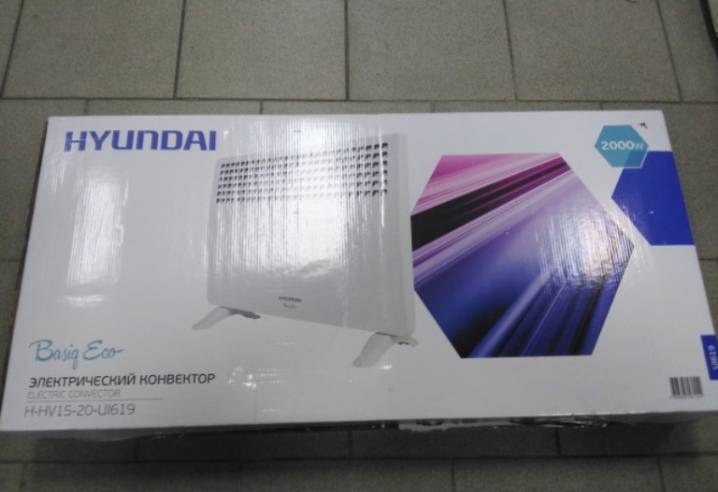
A well-known Korean brand produces mainly outdoor models of equipment. For a country house, the manufacturer offers the H-HV15-10-UI617 model, designed for an area of 10-15 m2. The device has a power of 1 kW, does not create a large load on the network, is equipped with a simple mechanical thermostat and stable legs.


Calculation of the power of an electric convector
When calculating the required power of the convector, you should adhere to the following rule. For every 10 sq. meters need 1 kW of heat. Provided that the ceiling is about 2.7 m high. Ideally, each window should be equipped with a device of the same length as the width of the window opening. The second option for calculating power is the following ratio: per 1 cu. meter of the room should be from 35 to 40 W of heat, taking into account the heat losses that occur in the corner rooms, rooms near the basement and attic. For such rooms, you need to take appliances with a power reserve.Otherwise, the heater will not provide the required temperature and, as a result, will work continuously.