
- What are air conditioners?
- Types of split systems
- The device and principle of operation of the split system
- What is a split system?
- What to look for when choosing?
- Comparison of other parameters
- Power
- Noise level
- Requirements for operating conditions and functionality
- Design
- What is a split system
- Kinds
- Which air conditioner is better: floor or wall?
- Mobile floor air conditioners
- Floor air conditioner with 1 duct
- Mobile system with 2 air ducts
- Floor evaporator air conditioners
- The main types of household air conditioners
- Mobile air conditioners
- The main advantages of the device
- Cassette type air conditioner
- Wall split systems
- Split system functions
- Conventional and inverter air conditioner: differences
- Operation of a conventional air conditioner
- The principle of operation of the inverter system
- Differences are known in comparison
- inverter air conditioner
- Conventional split system
- As a result
What are air conditioners?
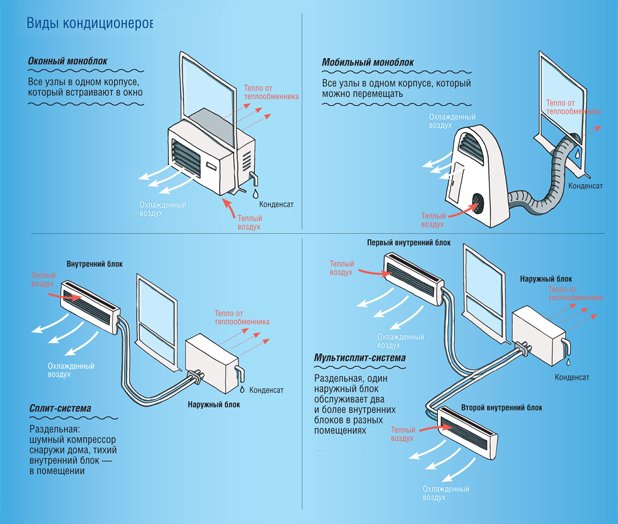
In addition to split systems, there are air conditioners of the following types:
- monoblock;
- mobile;
- window.
Monoblock air conditioners
As the name implies, in a monoblock air conditioner, all the "" stuffing is contained in one housing, a block. This is a simple type of air conditioner, relatively new on the market and quite expensive due to its advantages:
- refrigerant leakage is excluded due to the design features;
- The efficiency is higher than other air conditioners;
- small sizes;
- low noise level during operation;
- very simple installation (2 holes in the wall are enough for installation) and subsequent maintenance;
- long service life.
Mobile air conditioners
These are portable air conditioners that do not need to be mounted and installed in a specific place. They consist of a block and a tube that must be brought outside - for example, through a window or door. They are used where the installation of a stationary air conditioner is impossible or inconvenient, and air cooling is indispensable. They work quite noisily, which is their main drawback.
Window air conditioners
A popular type of air conditioner for rooms with a small area. The air conditioner unit itself is quite compact, which allows it to be mounted in a window opening, but still part of the light outside the room is lost. This and a fairly high level of noise during operation are the main disadvantages of window air conditioners. Every year the popularity of this type of air conditioners is falling, and now they can often be found not in residential buildings, but in administrative and commercial buildings. However, it is worth noting that they are easy to install and maintain and have a low cost compared to split systems.
Types of split systems
According to the design of the indoor unit, this type of cooling devices differs in the following types:
- traditional, with wall mounting of the unit indoors;
- floor, here the inner part is installed on the wall near the floor;
- cassette-type split system, where the unit is suspended from the ceiling;
- column units. They are placed on the floor, because they have large dimensions and weight.
In addition to the listed types, a hybrid version is offered on the market, which is a cross between monoblock and multiblock cooling systems. This is a mobile split system, where the division into 2 parts is preserved, but both of them are movable. Instead of traditional copper tubes for the freon line, flexible hoses are used here, enclosed together with the cable in a protective sheath.
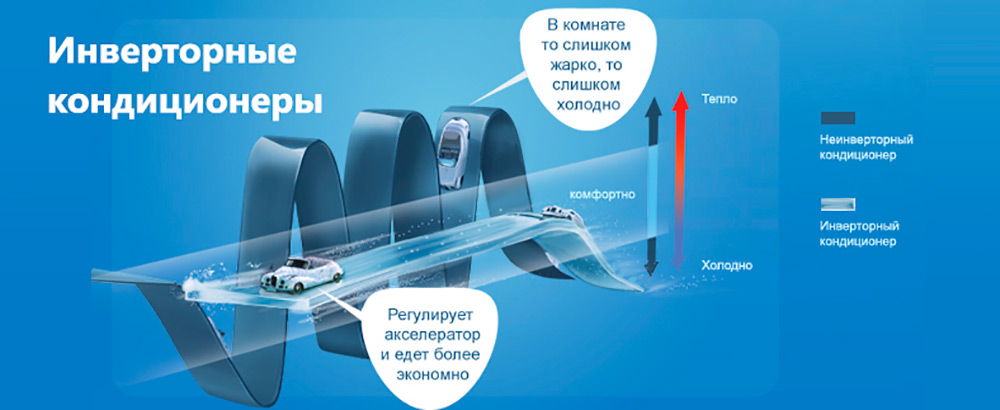
It is impossible not to say about the new control unit installed on multi-block models. This device is an inverter, its task is to regulate the microclimate in the room so that the unit does not turn off at the set air temperature. As you approach it, the cooling capacity of the air conditioner gradually decreases, and when the temperature is reached, the device operates at a minimum. As a result, the air begins to heat up again, which leads to an increase in cooling capacity, then the cycle repeats.
It turns out, what is an inverter split system differs from the usual one by another, more economical operation algorithm. There are no starting currents of electric motors, no excess energy is consumed after switching on, there are no temperature drops in the room.
The device and principle of operation of the split system
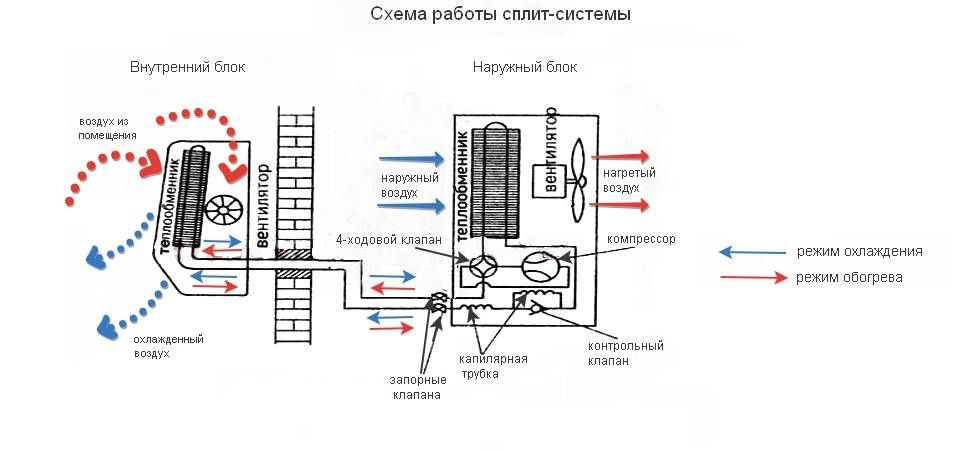
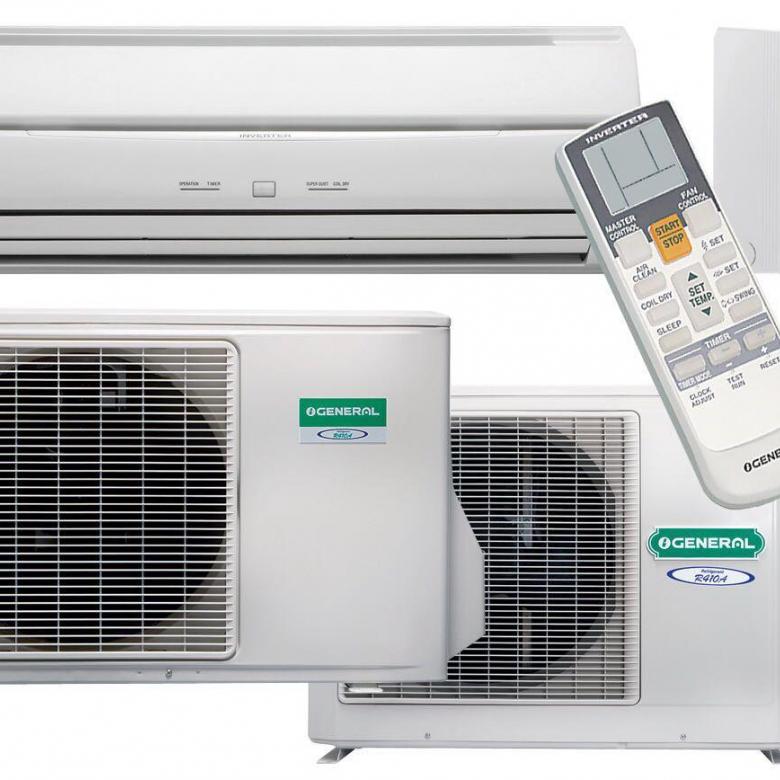
Split system consists of indoor and outdoor units, electronic panel, remote control. Outdoor unit units:
- fan, condenser, compressor;
- control board (available in inverter models);
- four-way valve (in models with heating);
- filters;
- protective cover.
The indoor unit consists of the following components:
- front panel - through it the system takes air;
- coarse filter;
- a system of several fine filters;
- fan;
- blinds (vertical and horizontal) - help control air flow;
- indicator panel;
- control board;
- fitting connections.
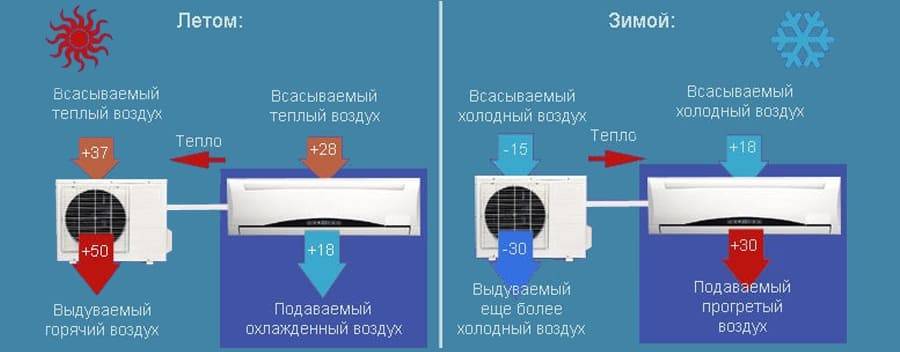
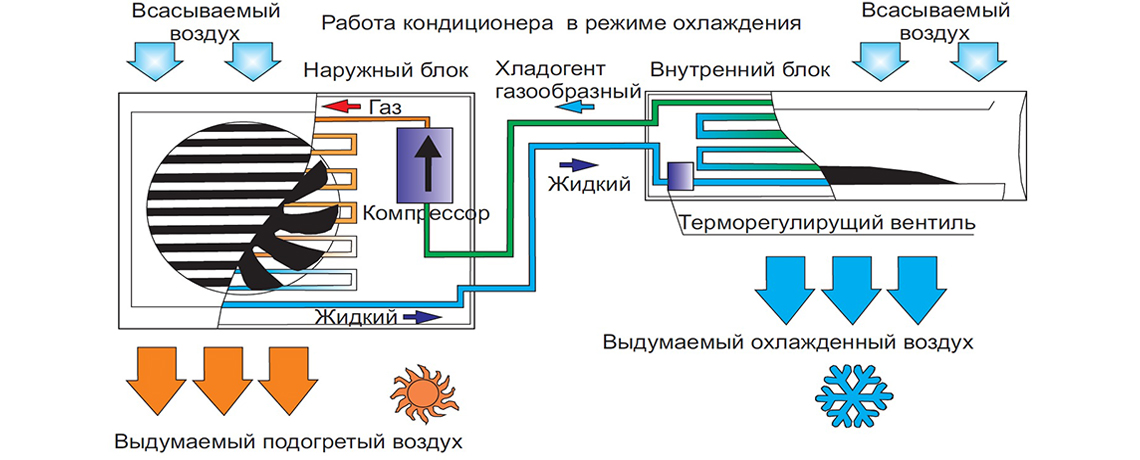
The split system does not generate cold on its own, but transfers heat from the room to the street (or vice versa if the heating is on).
To cool the room, you need to remove the warm air obtained during operation. Heat is energy, and it cannot evaporate into nowhere. The carrier, as in the refrigerator, is a special substance - the refrigerant. Freon is commonly used in air conditioners.
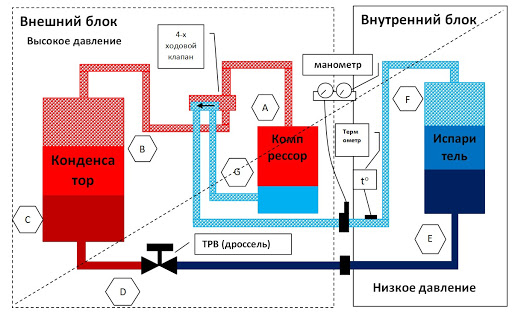 Split system device
After evaporation, the refrigerant takes heat. To understand this process, you can pour alcohol on your hands. You will feel colder as the solution draws energy from the surface of your skin. The refrigerant, if condensed, on the contrary, gives off heat.
When split-the system is set to cooling mode, then the substance evaporates in the indoor unit and is transferred to the outdoor unit, where it settles. For heating - everything is exactly the same, but in reverse order.


What is a split system?
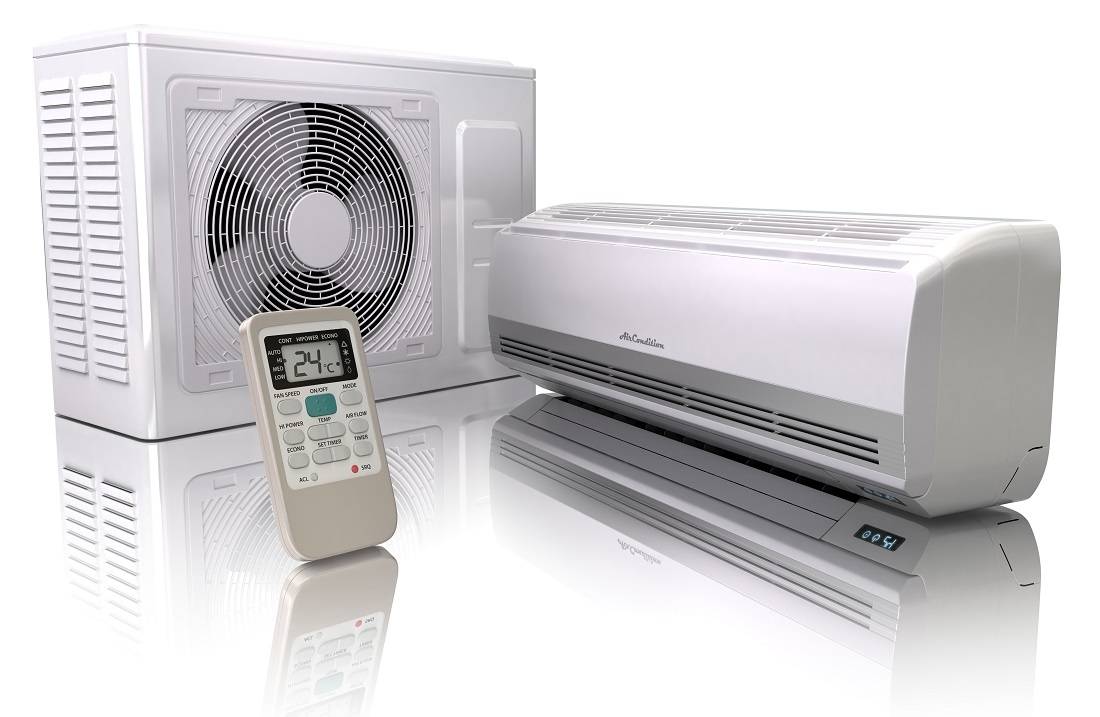
The name of this climate device comes from the word split, which means separation, splitting in English. It emphasizes the essence of the device, consisting of a separate outdoor unit containing a condensing unit, and an indoor unit with an evaporator.
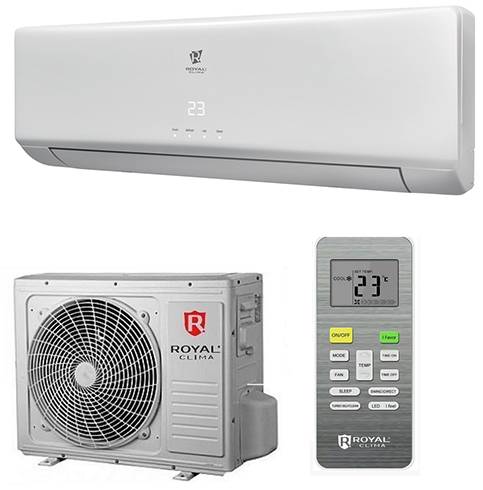
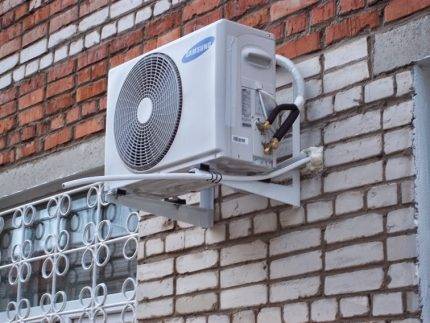
They are connected to each other by means of copper tubes covered with insulating material and an electric cable. The condensing unit is installed on the outer wall of the building. The indoor unit is located indoors and can be made in different versions:
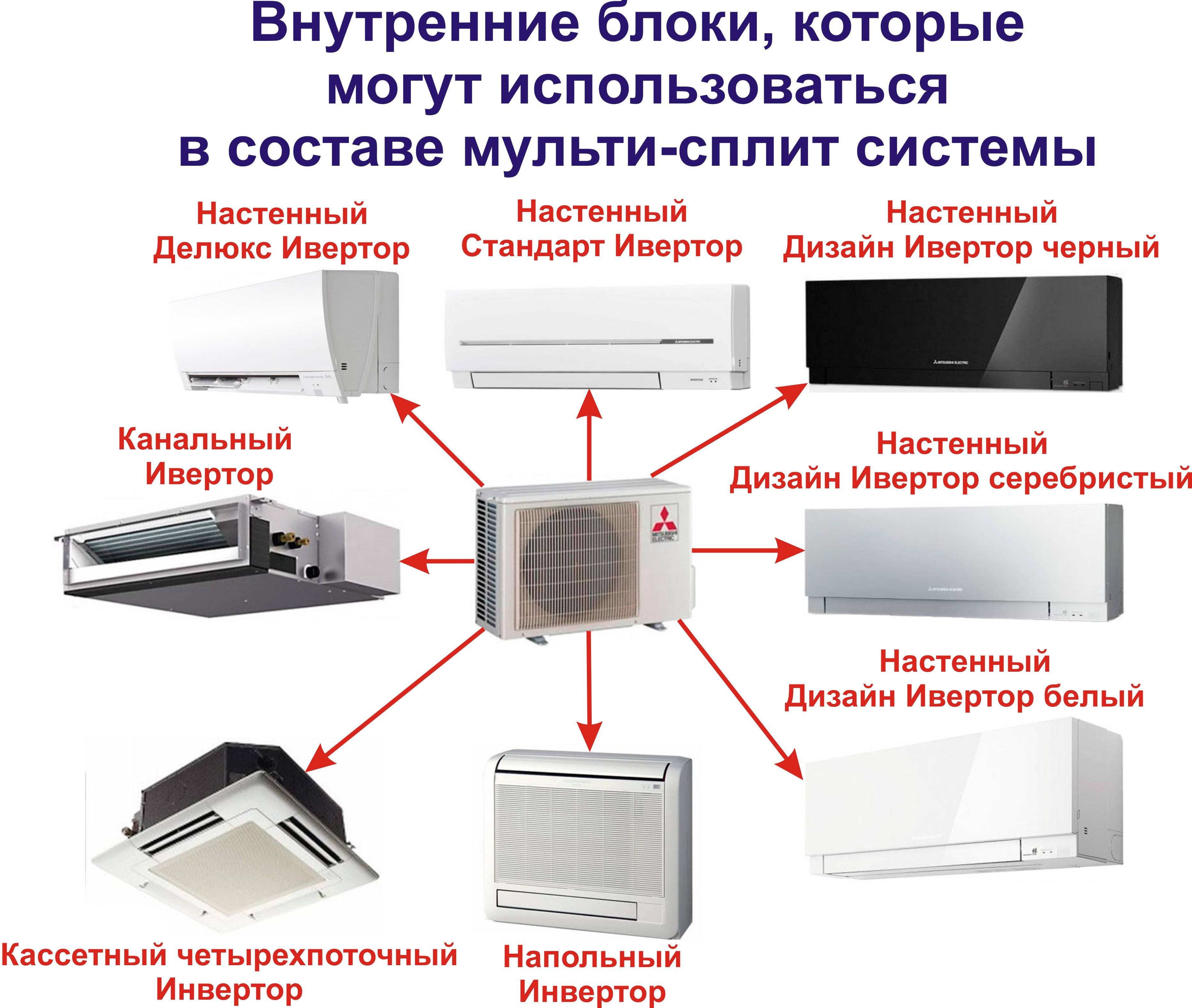
- Wall-mounted - mounted on the wall of the room.
- Column - installed on the floor and looking like a refrigerator.
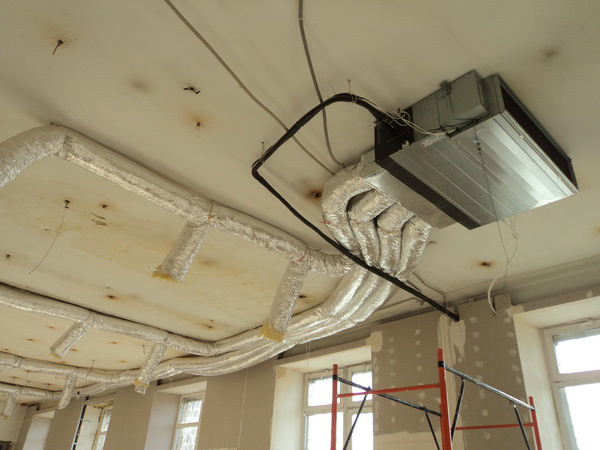
- Channel - mounted behind a false ceiling and with the help of air ducts cooling several rooms.
- Cassette - placed in a suspended ceiling and supplying cold air through the lower surface with a decorative grille.
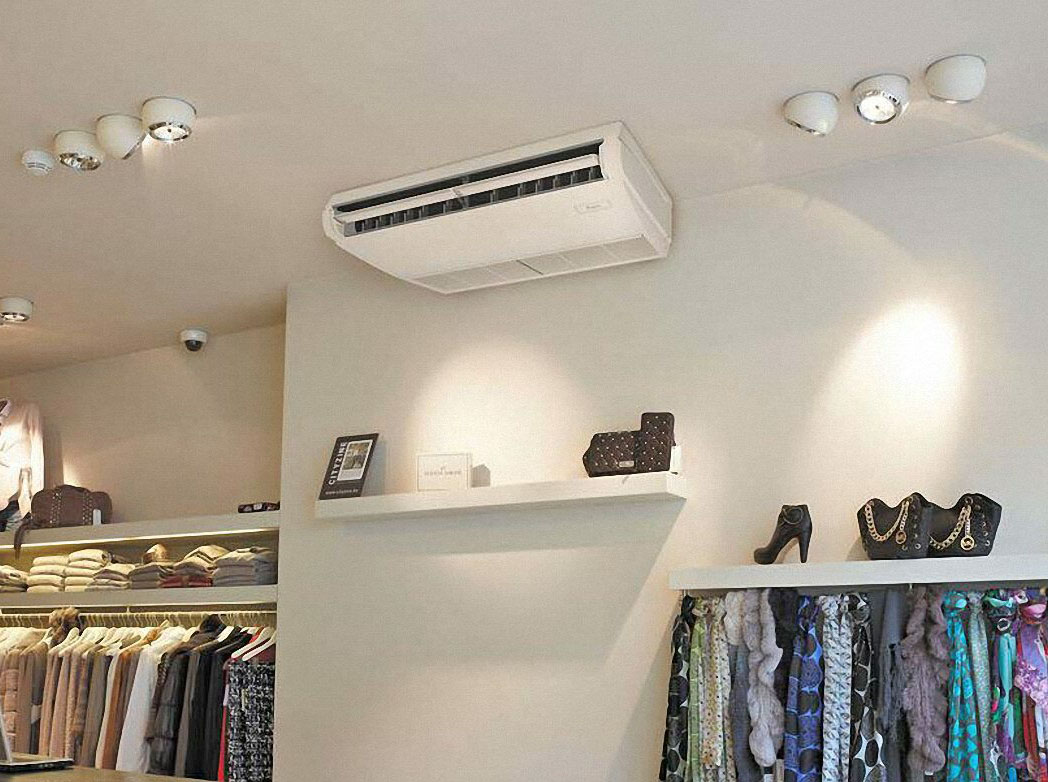
- Floor-ceiling - small thickness, fixed at the bottom of the wall or on the ceiling, distributing chilled air in four directions.
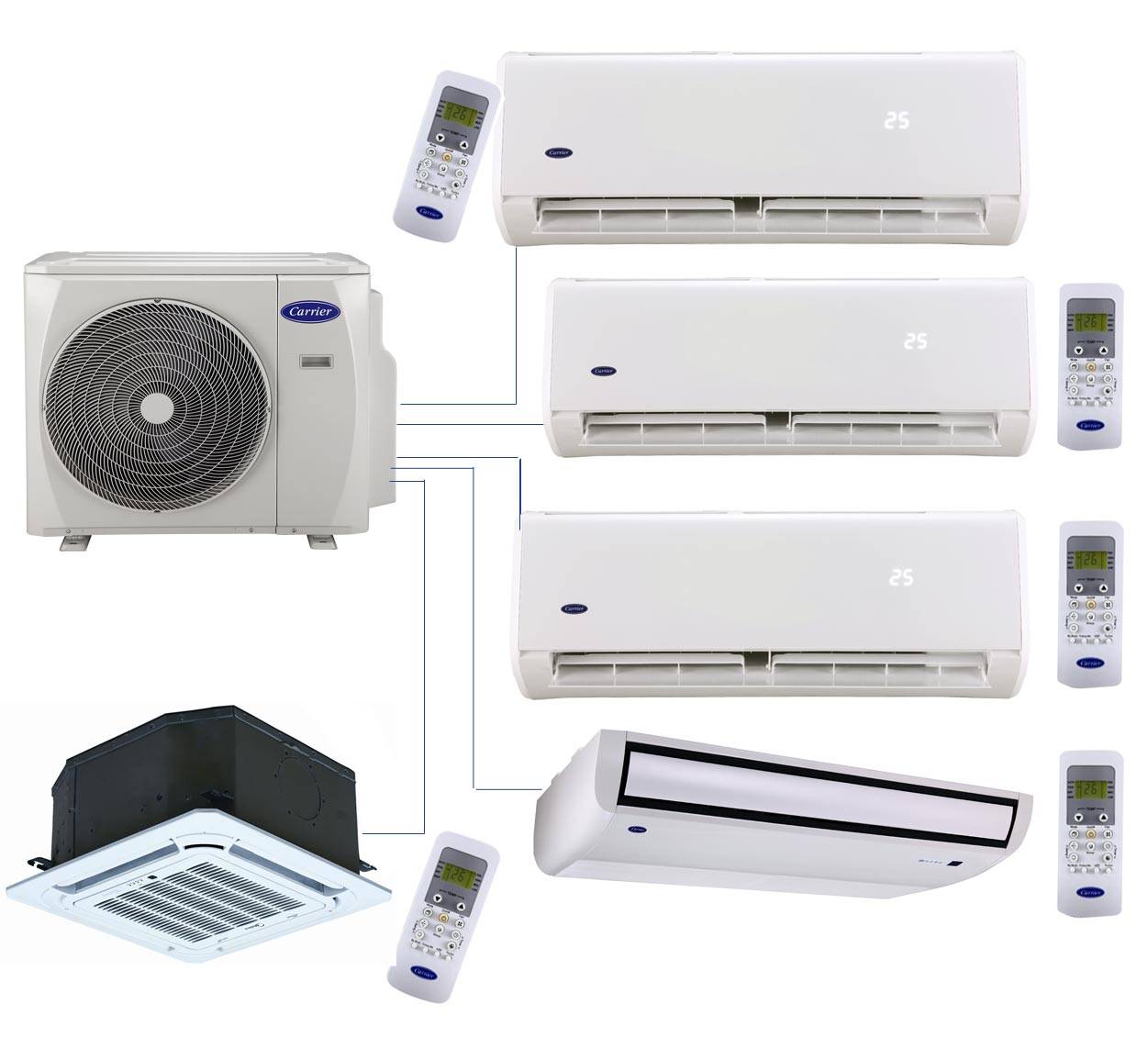
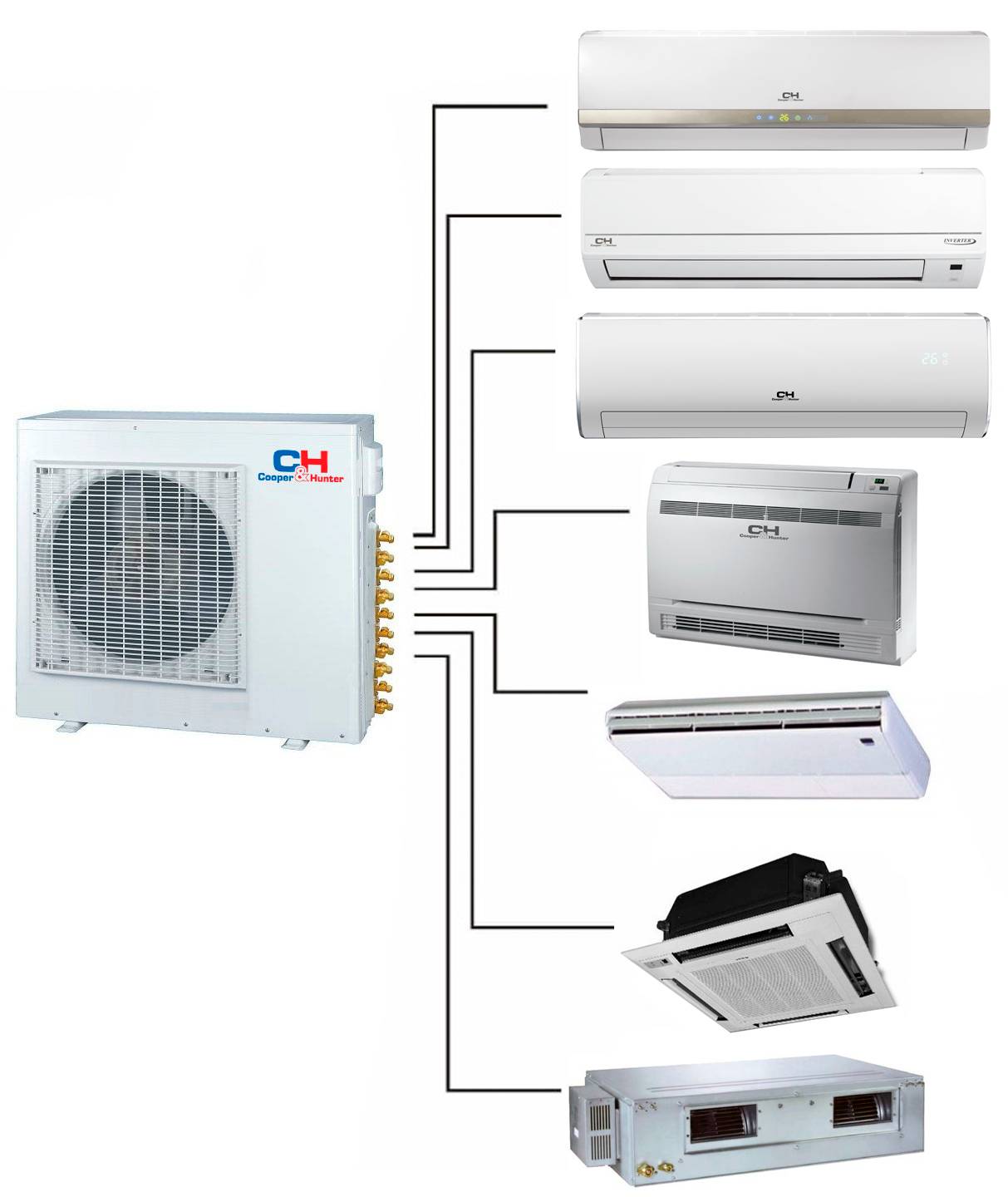
The most popular in modern homes is the wall-mounted option for placing the indoor unit of the device. In addition, there are multi-split systems, which differ in that several indoor units are installed inside the premises. Finally, there are systems with variable refrigerant flow that can adjust the capacity of the compressor unit depending on the number of indoor units turned on.
What to look for when choosing?
Despite the fact that inverter climate equipment is more technically advanced, it does not have obvious advantages in operation, and in some cases the available performance characteristics are lower than those of analogues. As a result, buyers will have to evaluate many nuances.
An important feature is that, due to smooth thermal control, inverter air conditioners may not show the expected results. This often happens in walk-through premises - shopping, office halls.
But conventional systems in such situations will be as effective as possible.
For the same reason, you should not place inverter equipment in kitchens, any other rooms where temperature changes occur abruptly. After all, for them, even boiling water in the kettle will be a big problem.
For economic reasons, conventional air conditioners will be the best choice where the need for air cooling rarely occurs, for example, in the country. And they will also be more effective in situations where the use is one-time. So, in conference rooms it is better to install traditional equipment.
But their inverter counterparts with greater efficiency will be able to provide comfort in apartments and hotels.
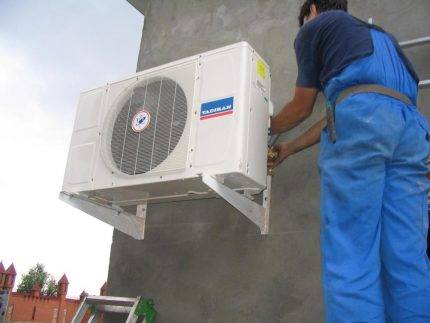 Both types of split systems are equally difficult to install. For example, the cost of installation can reach 20-50% of the price of equipment, and saving here is to your detriment.
Maintainability is an important feature, but not everything is in favor of inverter systems. The reason is that the components are as expensive as the products themselves.
In addition, they are not yet very common with us, as a result, the craftsmen may not have the necessary part at hand, so you will have to wait until it is delivered.
This creates significant inconvenience, especially given that these models are more sensitive to voltage drops than their conventional counterparts. And such a shortcoming in the supply of electricity is often found even in large cities.
In any case, it is necessary to correctly determine the power of the unit or the air cooling will be inefficient. That is, when it is insufficient, then the desired level of comfort is unlikely to be achieved. And if it does, it will only be at the cost of overloading the equipment. For excess power, you will have to overpay.
 An important advantage of inverter systems is the ability to work for heating up to temperatures reaching significant -25 ° C, and conventional analogues can compete with them in efficiency only up to -5 ° C
In the case of inverter systems, attention should be paid to such a parameter as the adjustment range of the operating frequency of the electric motor. This is an important indicator, since the principle of operation of this type of climate control equipment allows you to achieve the maximum combination of efficiency, economy and durability only at a certain value.
This is an important indicator, since the principle of operation of this type of climate control equipment allows you to achieve the maximum combination of efficiency, economy and durability only at a certain value.
So, the depth of adjustment should not be less than 25-80%. If the characteristics of the model you like do not reach these indicators, then this product is outdated or simply cheap, and therefore not functional enough.




For example, the adjustment range of modern inverter systems reaches 5-90%. This allows you to quickly respond to temperature changes and remain economical.
Comparison of other parameters
Before choosing the right air conditioner, pay attention to the key parameters: functionality, cooling capacity, background noise. Before buying, the question of the price of the product is not the last place.

Power
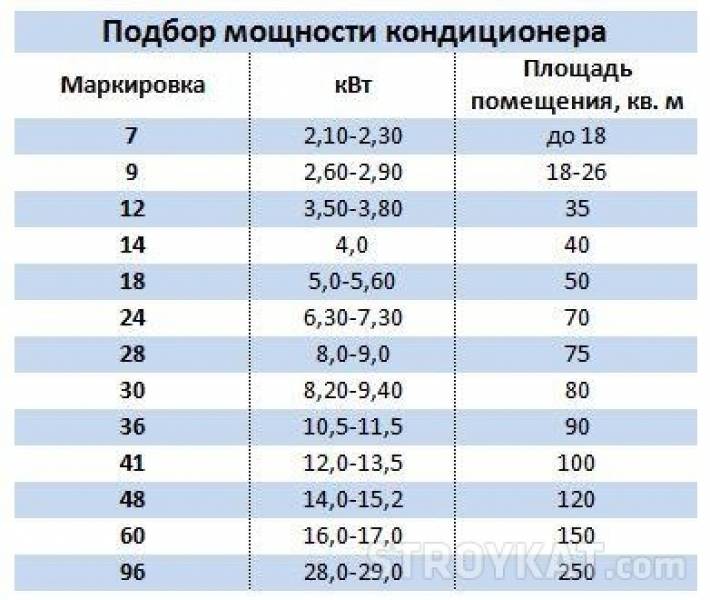
The power consumption is about 20-30% more than the cold output.
- For home (wall-mounted) split systems, the electrical power taken in is from 3 to 9 kilowatts.This is enough to effectively (from +30 outside to +20 indoors) cool the air in a house or apartment with an area of 100 m2.
- The mobile air conditioner has a power spread of 1-3.8 kW. In terms of power consumption, it is already possible to estimate that it will “pull” only a room up to 20 m2 - taking into account losses for heat coming from overheated air ducts, through which hot air is discharged into the street.
- Window air conditioners take 1.5-3.5 kW. Over the past 20 years, this figure has remained virtually unchanged.
- Column air conditioners are taken from the network 7.5-50 kW hourly. They need a powerful power line that enters the building. About the same amount of electricity is taken by channel and multi-split systems.
- For floor-ceiling models, the power varies between 4-15 kW. They will cool the kitchen-living room of 40-50 m2 by 6-10 degrees in 5-20 minutes.
People are different: someone needs only a slight drop in temperature in summer from +30 to +25, and someone likes to sit all day at +20. Everyone will choose for himself the power that is enough for him to be completely comfortable throughout the house or apartment.
Noise level
All modern systems using an external unit are distinguished by a reduced noise level. It varies within 20-30 dB for home wall-mounted split systems, floor-to-ceiling, duct and column air conditioners - the outdoor unit is not located inside the room, floor, building or private housing construction, but outside them.
Window and mobile systems give out 45-65 dB, which is comparable to urban noise. Such a noise background seriously affects the nerves of people engaged in responsible work or during their night's sleep. The compressor and main fan make the lion's share of the noise.

Requirements for operating conditions and functionality
Almost any air conditioner is designed to operate at temperatures from 0 to +58 degrees. In more expensive models, there is an additional heating of freon - in the conditions of the northern winter, when it is -50 outside the window, freon is not made gaseous for the normal operation of the device, but you still need to turn on the air conditioner in heating mode. Many air conditioners also work as fan heaters. A special valve is responsible for this function, which changes the direction of freon movement when switching from “cold” to “heat” and vice versa.
Additional features include:
- ozonation (in rare models);
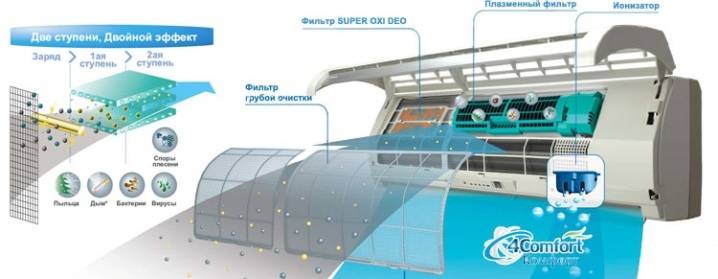
- air ionization.
Design
Each component of the split system has individual structural elements. The outer block contains:
- A compressor is a device that compresses freon and keeps it moving through the refrigeration circuit. It happens spiral or piston. Spiral products are more reliable, but they are more expensive than their piston "brothers".
- 4 way valve. This part is mounted in reversible type air conditioners. The task of the device is to change the direction of freon movement through the system, which leads to a change in the function of the blocks. The outdoor unit is for heating, while the indoor unit is for cooling.
- The control board is an element characteristic of converter-type split systems. In other types of devices, the electronics are placed on the indoor unit due to the risk of damage due to high humidity and temperature.
- A condenser is a unit in which freon is cooled and condensed. The air that passes through the air conditioner is warmed up.
- A fan is a device that provides air flow.In cheaper models, only one speed is provided, which is why the air conditioner can operate in a small temperature range. In more expensive devices, fans have 2-3 speeds, which greatly expands the functionality of the split system.
- Freon unit filter - a device that is placed in front of the compressor inlet and protects it from foreign elements. If the installation was carried out in violation of the rules, no filter will help out.
- The quick-release cover is designed to close the terminal block and fitting connections.
The indoor unit has a number of elements:
- The front panel consists of a plastic grill through which air enters the unit. The panel can be dismantled if it is necessary to maintain the split system (for example, to clean the filters).
- Evaporator - a radiator designed to heat freon and evaporate it. Thanks to this device, the temperature of the passing air is reduced.
- The coarse filter is a plastic mesh that filters out coarse dust and animal hair. For full operation of the system, cleaning should be done every 14 days.
- Indicator panel - a section of the indoor unit where a group of LEDs is mounted, reflecting the operating mode of the split system and signaling the presence of breakdowns.
- Horizontal louvers are an element that adjusts the direction of the air flow. The peculiarity of the devices is the presence of an electric drive, as well as the possibility of regulation from the remote control.
- Fine filter. The purpose of this node is to remove fine dust and odors from the air entering the room. The device can be of various types - coal (eliminates unpleasant odors), electrostatic (retains dust) and others.Even in the absence of such a filter, the air conditioner will work normally.
- The fan is a device for supplying air into the room, it has 3-4 speeds.
- The condensate tray is located above the evaporator and is required to collect water that has formed on the outside of the evaporator. Further, the accumulated water is discharged through the drainage tube.
- Blinds of vertical type are necessary for regulation of a direction of a stream of air across. In conventional air conditioners, only manual adjustment is provided, while in more expensive devices, control is provided using a remote control.
- The control board is usually located on the right side of the indoor unit. An electronic unit with a central microprocessor is also located here.
- Fittings are special connections that are located at the back, at the bottom of the block. Tubes are connected to them, connecting the blocks from the outside and from the inside of the room.
READ ALSO: How to do prevention split system air conditioner.
What is a split system
Let us consider in more detail what this climate device is. The word split (from English split) - can be translated as separation. This name indicates the division of one system into two parts (block). The first is an indoor unit with an evaporator that is installed indoors. The second is an outdoor compressor and condenser unit.
Kinds
All models have the same purpose, they are divided only by the type of installation:
1. Wall mounted; 2. Ceiling; 3. Floor.



For apartments and private houses, it is most convenient to use split systems with a wall-mounted indoor unit.In large retail spaces and offices, it is best to use ceiling and even floor, as the most powerful.
Which air conditioner is better: floor or wall?
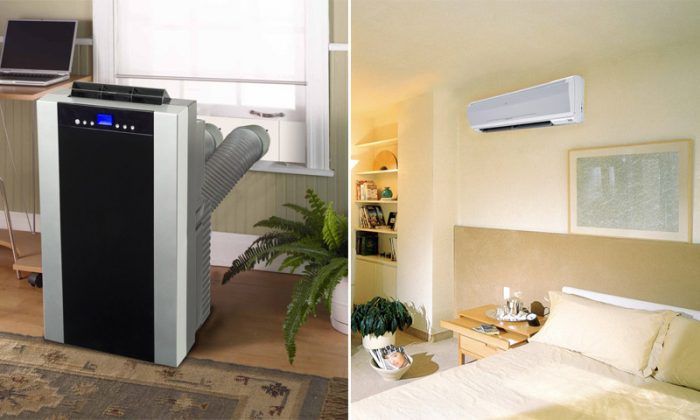
No one will give an exact answer, since a lot depends on where the system is purchased. For private houses and apartments, high-quality models are purchased; for summer cottages, which are visited only in the warm season, serious equipment is not required. Much depends not only on the budget, but also on the needs of the family. Some people turn on air conditioners only a few times a year, while others use them almost daily.
What air conditioner is best? If we talk about permanent working equipment, then a full-fledged system would be ideal, and not a “marching”, outdoor version.
When it comes to choosing the best equipment, it is better to immediately pay attention to inverter models if the owners are ready to put up with their higher price, which guarantees maximum comfort.
If the main requirement is to obtain a device for a small room for an acceptable amount, then in this case a mobile floor structure can be considered. In a large room, you will have to buy either a real split system, or several compact portable models. However, the first option is still preferable.
You can hear the opinion about which air conditioner is better if you take a little time to this video:
Mobile floor air conditioners
These units produce several varieties, so it is necessary to consider all types, separately talk about their strengths and weaknesses. Such designs are also called monoblocks, since both parts of the system are located in the same housing, and not separated, as in split equipment.
Floor air conditioner with 1 duct

This is the simplest version, in which there is only one air duct located at the rear of the device. Warm air is drawn in, then discharged outside, and its place is taken by fresh air coming from other rooms or from the outside. The power of floor standing appliances is 5 kW or more. However, with large values, the weight of mobile units also increases.
Since the removed mass is replaced by the same warm air, the cooling efficiency of this equipment is reduced. Their efficiency is lower than that of separated systems. The reason is the compressor, which is in adverse conditions (in the room). Models that are characterized by relatively good efficiency “sin” with others - more noisy operation.
Another disadvantage of floor models relates to the design of the room. It is not always possible to find a model that fits perfectly into the interior.
Mobile system with 2 air ducts

The principle of operation of these units is the same, but there is a difference: the air intake here is correct: it takes place outside, and not from the room. For this reason, their efficiency is already higher than that of previous models.
The advantages of both types of such air conditioners are the same. It:
- no need for complex installation;
- lack of an outdoor unit, low cost of monoblocks;
- mobility, allowing you to move devices at any time.
The last advantage is relative: in order to be able to move "mobile phones" over long distances, it will be necessary to build up the air duct, and it will definitely not become a decoration of the house. Other cons:
- the need for periodic draining of condensate;
- lack of powerful models of air conditioners;
- the area occupied by the device;
- high noise level;
- low efficiency.
The last point is more relevant to air conditioners with one air duct. A common minus is the hoses, which can rarely be hidden out of sight.
Floor evaporator air conditioners
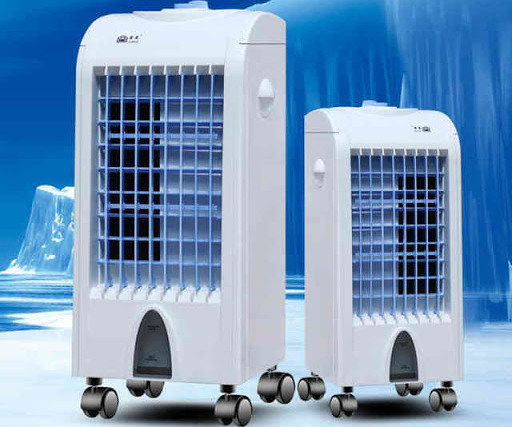
This type is very different from the previous units. It does not have a refrigerant and a compressor, and there are no complex components either. A feature of evaporators is quiet operation. In such an air conditioner, a lattice-membrane is installed, which is regularly wetted with water. Warm air is circulated through it with the help of a fan.




Evaporating water from the surface of the grate, the air simultaneously lowers the temperature in the room and increases the humidity. This process is called evaporative cooling. Since this equipment is still considered a novelty, it is difficult to judge its effectiveness. But it doesn't hurt to know the pros and cons. The advantages of unusual air conditioners include:
- low price;
- simple maintenance;
- almost silent operation;
- low energy consumption;
- long service life of devices;
- ease of movement of equipment due to the lack of air ducts.
There are also disadvantages. This is the lack of efficiency of evaporative air conditioners, the area occupied by the floor structure, the need to constantly add water to the tank.
The main types of household air conditioners
At first, window air conditioners were popular, which can be easily installed in the window opening of the room. The price of such equipment was relatively acceptable. The main disadvantage of such a device is the high noise level that comes from the compressor of the cooling system. Another flaw is that during the operation of the window air conditioner, the percentage of illumination in the room decreases.For these and other reasons, such devices left the market in a short time, giving an advantage to split systems, which have a lot of possibilities. But before making a choice split systems for apartments, you need to explore another type of air conditioning system - mobile air conditioners.
Mobile air conditioners
In recent years, mobile air conditioners have become quite famous. Installation of such a device does not require certain skills and materials. You can install such an air conditioner yourself - for this you just need to pull out a specially designed air outlet corrugation into the window opening and set the device for cooling. The principle of operation of a mobile air conditioner is simple - hot air from the room is distributed by means of a blower fan, and then it is cooled to a certain temperature, the hot air is discharged through the air vent to the external environment.
The main advantages of the device
- Acceptable cost;
- simple installation method;
- compact dimensions;
- high rate of maneuverability;
- ease of use.
Each model of mobile air conditioners has wheels for moving around the apartment. Complete with the device there is a control panel, which makes it possible to control the conditioning processes at a distance. Many air-cooling devices are equipped with filters and air ionizers, which are able to purify it efficiently. A special condensate collector is designed to collect liquid during the operation of the air conditioner.The percentage of its capacity shows the period of time after which you will need to drain the water, otherwise the overfilled tank sensor will work and the device will automatically stop working. The disadvantages of a mobile air conditioner include the low power of the compressor and the high level of noise during its operation. It will not be possible to use such air conditioners in large rooms, because the compressor power is designed for small rooms.
Cassette type air conditioner
A cassette type of air conditioner is also known. It is installed behind a false ceiling, and only decorative grilles are visible in the room, located in the cells of the ceiling. The cassette is able to evenly distribute the air flow in four directions, which makes it possible to use one air conditioner in order to cool a room with a large area.
Wall split systems
Currently, the highest quality and most popular are wall-mounted split systems. These devices are equipped with several blocks: internal - it is installed in a refrigerated room and external, located directly on the street.
The blocks are interconnected by a route, which includes:
- two copper pipes through which freon circulates in various states (gas, liquid)
- condensate drain pipe
- power and control wires
The outdoor unit, located outside, consists of noisy components of the air conditioner, in particular the refrigeration compressor (the most noisy device). How to choose a split system correctly, we will tell further.
Split system functions
Almost all split systems perform the following functions:
- Control the temperature in the room;
- Clean the air with carbon filters and antibacterial barriers;
- Special night mode;
- Distributes air throughout the room;
Medium-cost models have various devices with which the air conditioner can operate during unstable power supply, as well as in sub-zero temperatures outside the window.
There is one external unit, and several internal ones - this is a multi-split system
In the case when you need to install air conditioners in different rooms of your apartment, it is more convenient to opt for a multi split air conditioning. This system is equipped with a high-capacity outdoor unit, so you can serve multiple rooms at the same time by placing the indoor units in the right rooms. By purchasing such a system, you not only save on the costly installation of several air conditioners, you also do not have to buy additional external units.
Conventional and inverter air conditioner: differences
Before deciding for yourself which air conditioner is better, you need to get acquainted with the “different varieties” of wall systems.
Operation of a conventional air conditioner
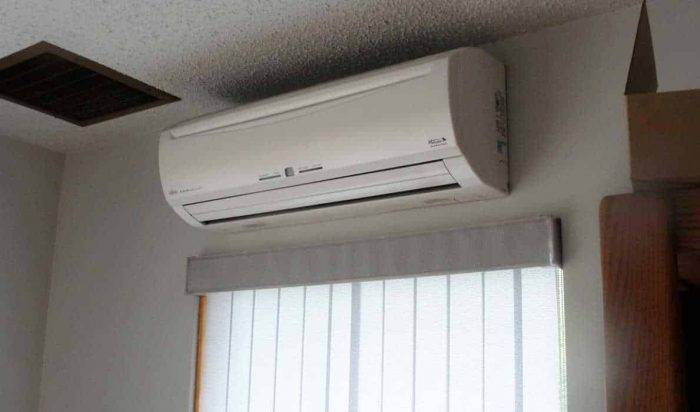
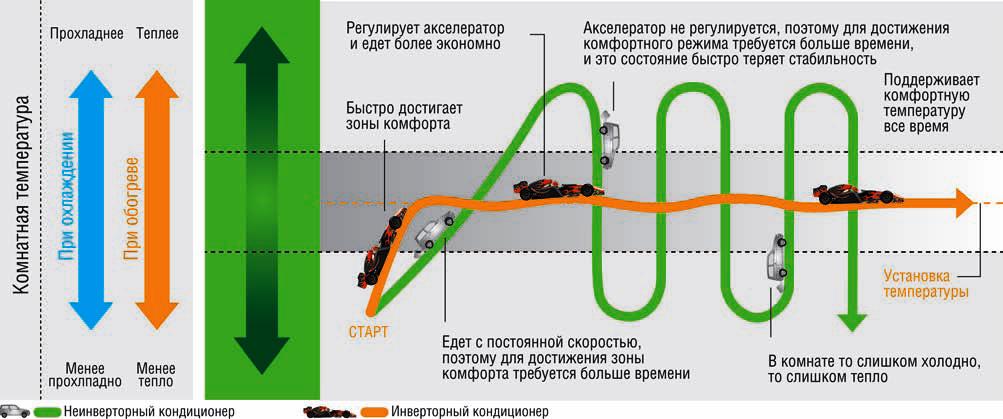
This equipment either works or it doesn't. When the required temperature is reached in the room, the system switches off. Freon "rests", and only the fan continues to work, so the air conditioner still provides the movement of air masses. If the optimum temperature changes (decreases or rises), then the compressor starts up again, forcing the refrigerant to move along the line. When the ideal is reached again, the compressor "calms down" again.
The principle of operation of the inverter system
Such a split system, unlike the usual one, “works” tirelessly.After starting, the equipment does not gain power immediately, but gradually. When the set temperature is reached in the room, the air conditioner only slows down, but the refrigerant continues to move through the pipes, cooling slightly. The fan also does not stop, helping to maintain the temperature at the right level. When operating an inverter system, compared to a conventional system, the cost of electricity is “maximally minimal”.
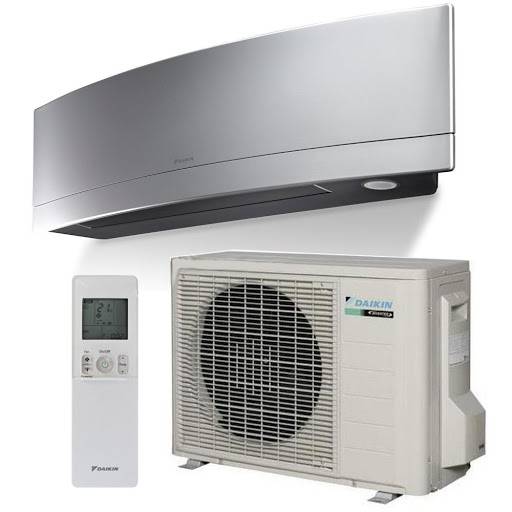
Differences are known in comparison
To find out and understand which air conditioner is better, you need to compare the characteristics of both models.
Noise. Everyone (sellers, manufacturers) convince potential buyers that inverter air conditioners are quieter than conventional ones. They are right, but this difference is difficult to catch by ear: it is 5 dB, no more. In both cases, the indoor unit does not make too much noise (18-25 dB). More noise level depends on the brand, operating mode, model power, etc.
Saving electricity. In this case, the difference is noticeable. To maintain the desired temperature, an inverter air conditioner needs 10% of the power, when compared with working at maximum. A conventional split system is constantly turned on, so the device has to spend additional resources to “accelerate” the refrigerant, to overcome the resistance of the cooled oil. The difference is significant: it is 20-25%. In some cases, up to 30%.
Lifetime. Any equipment will work longer if it does not experience maximum loads when starting at full power.



To a greater extent, this applies to the most important (and therefore expensive) device - the compressor. If it fails, then it is more logical, more profitable to buy new equipment
The compressor of a conventional air conditioner turns on several times a day, which accelerates its wear. Devices in inverter systems, as a rule, last three times longer (by 30-40%).
Temperature fluctuations. Here the competition is also won by inverter air conditioners. In this case, the difference in maximum oscillations is 1.5°. The reason is the constant control by the compressor, which, when changed, instantly changes the speed of freon. Conventional equipment is switched on if the difference is 1°, but the temperature of the blown air rises by 3-5°. The reason is the inability to start working at minimum power. This difference is noticeable if the person is close to the indoor unit.
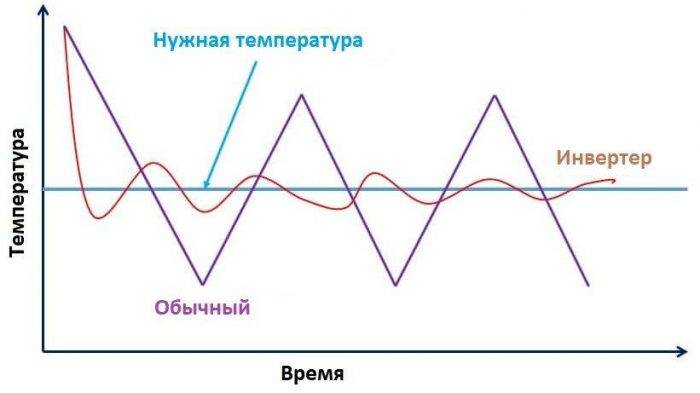
Inverter equipment "puts on the blades" of a competitor in other categories as well. Due to the work without constant and serious loads, these air conditioners fail less often, their energy efficiency is 20-30% higher. The only advantage of conventional split systems is their price. However, high-quality inverter models are now being produced, the cost of which is quite acceptable.
inverter air conditioner
Its advantages:
- quieter operation of the outdoor unit;
- no temperature fluctuations;
- long service life;
- economy.
Minuses:
- expensive repair / replacement of the compressor;
- higher price.
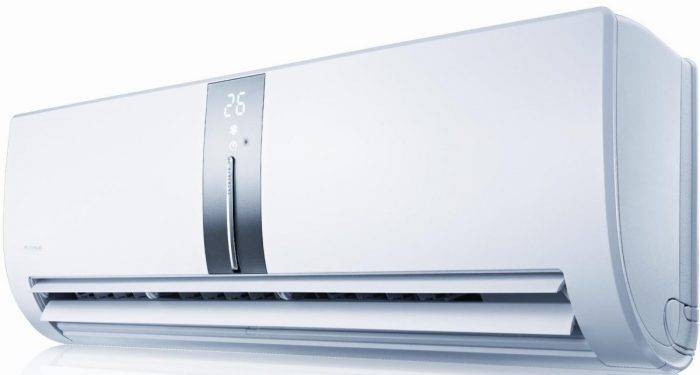
Conventional split system
Her virtues:
- low price;
- cheaper compressor replacement/repair.
Flaws:
- temperature fluctuations;
- greater consumption of electricity;
- more noise during operation of the external unit;
- risk of malfunction due to increased loads.
As a result
Based on the review of the concepts of “air conditioning” and “split system”, we can safely say that this is practically the same concept, if we do not take into account monoblocks and multi-split. The classic split is a kind of air conditioner and performs the function of ensuring optimal climatic conditions in the apartment
Which is better is an individual choice.
Such a simple truth allows you to cast aside doubts about how devices differ, and pay attention to modern devices that differ in their functionality. Fortunately, today the equipment is presented to customers not only as devices for adjusting the temperature in the house, but also as stylish, convenient and autonomous items that are pleasant to use.



