
- Arrangement stages
- Specifics of pumping
- Where is the best place to build a well?
- Cleaning work in the well
- Video description
- Cleaning work with a bailer
- Cleaning work with a vibration pump
- Cleaning work with two pumps
- Preparing for a long downtime and pumping after it
- Negative aspects of drilling in winter
- Drilling depth: how to determine
- Types of wells
- The depth of the well for water: what depends on
- What to do if the well is frozen?
- Method number 1
- Method number 2
- Advantages of winter drilling
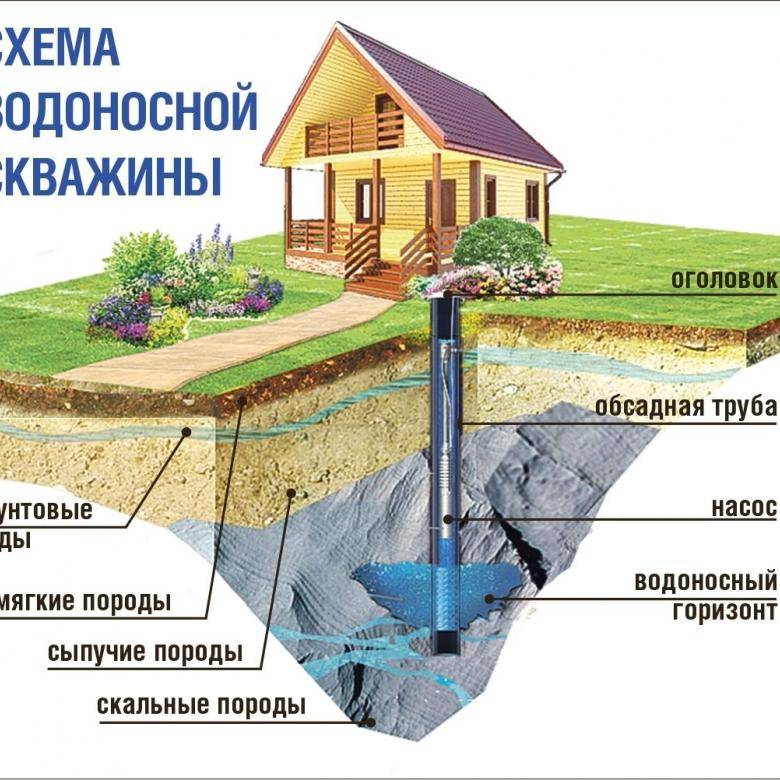
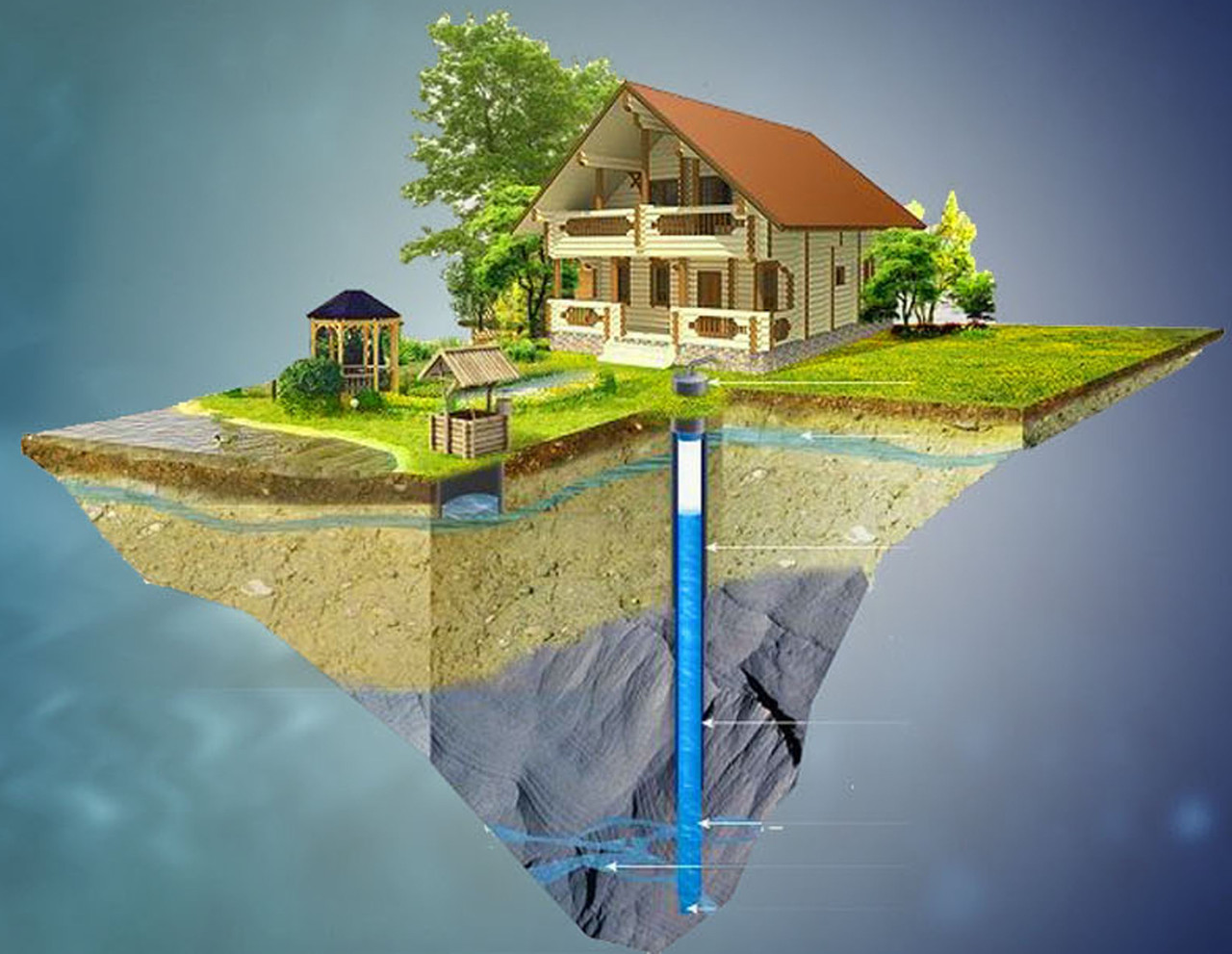
- aquifers
- Professional work - a guarantee of perfect results
- A couple of tips for the customer about well repair
Arrangement stages
Building a well on your own in a summer cottage is quite simple if you adhere to the following technology:
- Determine the characteristics of the soil.
- Select the type (method) of work.
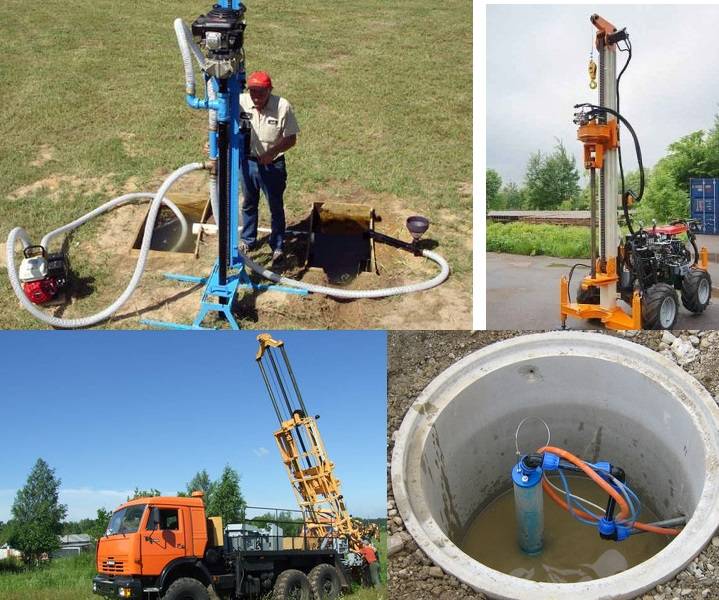
- Prepare special equipment and make a choice of equipment for drilling wells.
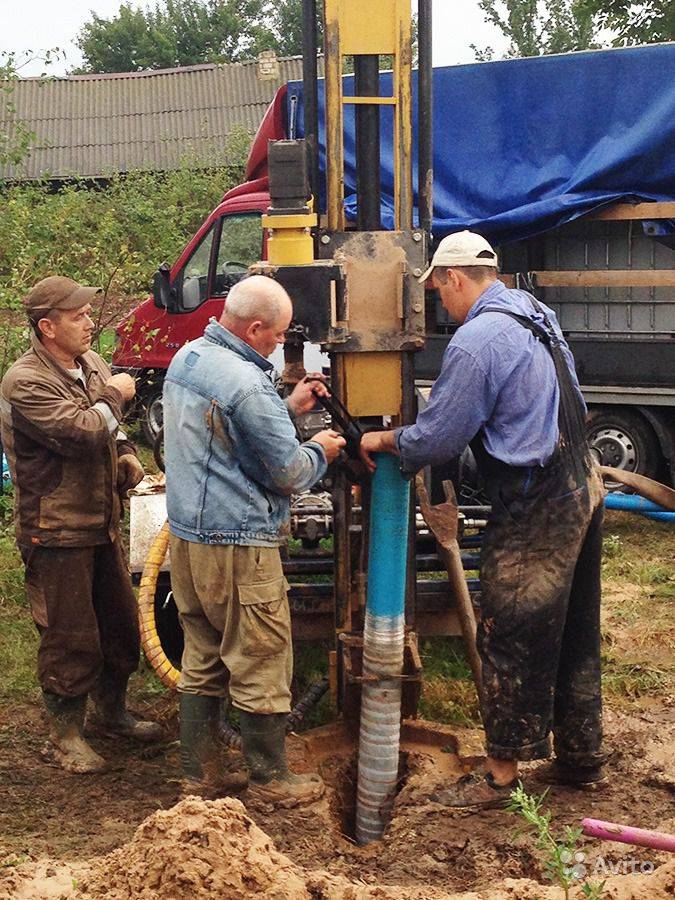
- Drill the first section and install the casing string. The strength of the column must be such that it can withstand the pressure of the earth.
- Drill a second section and also secure it with pipes.
- Upon reaching the aquifer, take a water analysis for examination. If the obtained indicators meet the requirements, then you can proceed to the installation of bottom filters.Otherwise, it is recommended to continue the process until the next aquifer (about 2-4 m lower).
- When the drilling work is completed, fix the casing pipe, check its tightness and mount the cover.
- Establish pipeline tie-in points and lay the water supply system from the source to the consumer.
When a clayey or sandy layer is reached, drilling can be stopped and pumping and cleaning of the filled well can be arranged.
When constructing a caisson, it is required to dig a pit according to the developed project. The height of the chamber will depend on the dimensions of the pumping equipment, and the depth will depend on its purpose and period of operation: drinking or for technical needs, seasonal or year-round.
Specifics of pumping
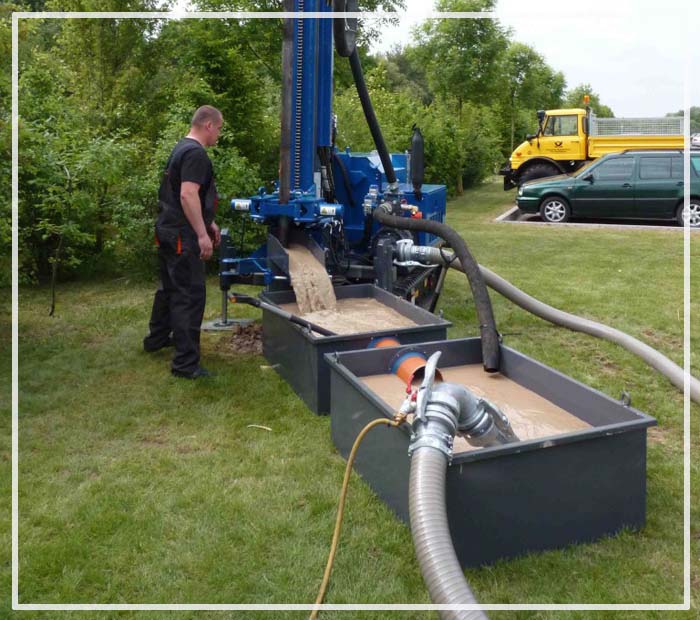
The result of the buildup will be the washing out of particles from both the duct and the outer layer. Properly carried out procedure will lead to the presence of an absolutely clean reservoir around the source.
In fact, buildup is the process of pumping out water, at the same time as all impurities are removed. Such a procedure is impossible without answers to a number of questions:
- How much to pump a well after drilling.
- Required type of pump.
- How to properly pump a well to clean water.
The best option for pumping will be the choice of a vibration pump. It should be centrifugal, submersible in type and inexpensive. Upon completion of the pumping process, this pump will not work. Therefore, it is categorically not recommended to use the main pump used for water injection for buildup.
Continue pumping out the liquid until the drain pipe gives out a stream of clean water.
The time of continuous buildup can be different.The throughput of pipe products, the depth of the well and the type of soil should be taken into account.

The option of cleaning the well from sand using a compressor
Where is the best place to build a well?
Among lovers of comfort, there is an opinion that the best location of the well is the basement of the house. The decision is highly controversial. The most basic problems start at the drilling site. After all, access to it is possible only at the initial stage of construction, or at most, with the foundation already built. It is necessary to take into account the fact that in the future repair work will be quite difficult. This is due to the fact that some of them require the participation of heavy equipment.
The most advantageous option with this arrangement is a well of shallow depth, which can be equipped with a pump that is located on the surface. The benefit is obvious. No need to lay a pipeline from the place of water intake to the house.

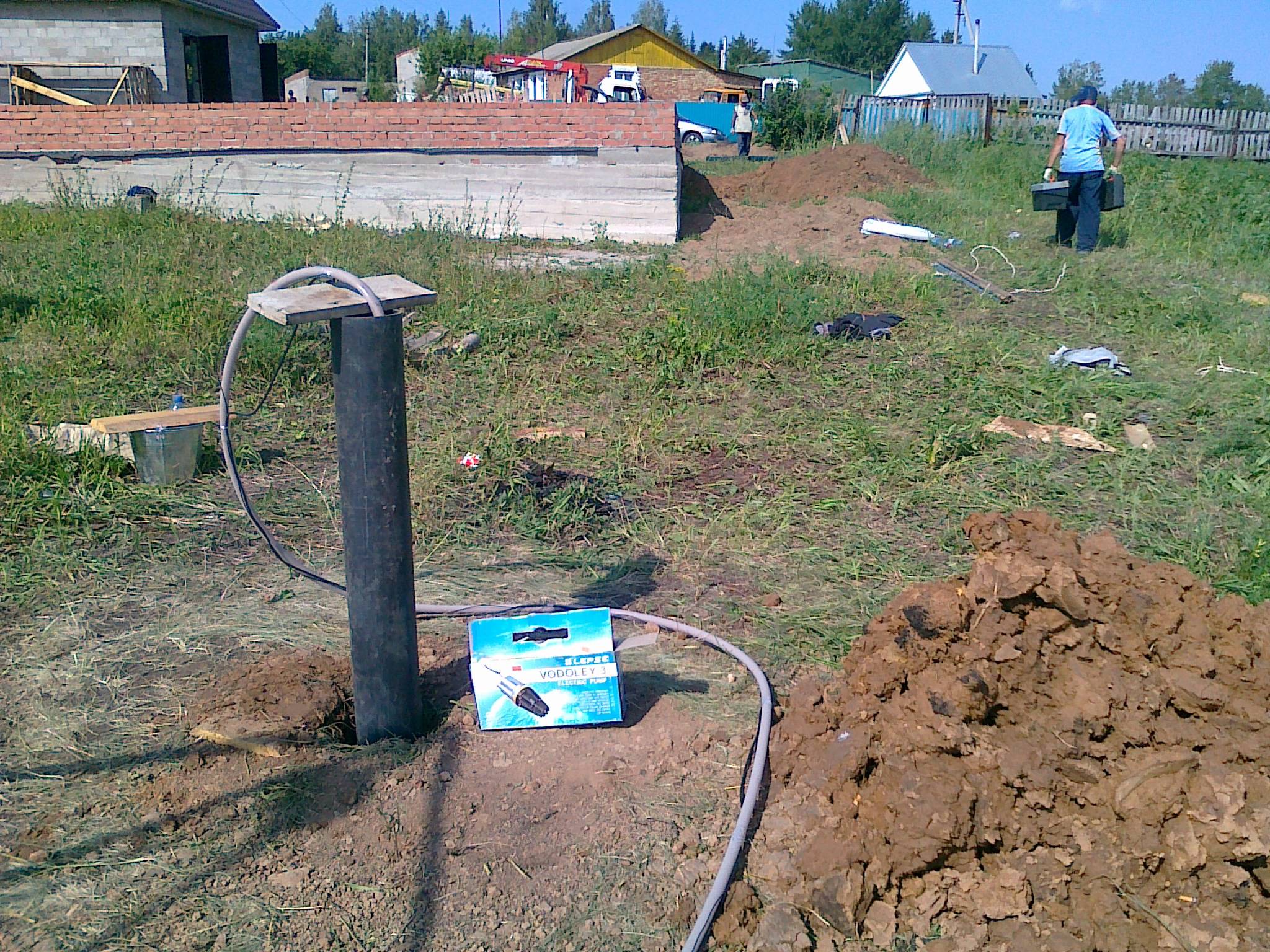
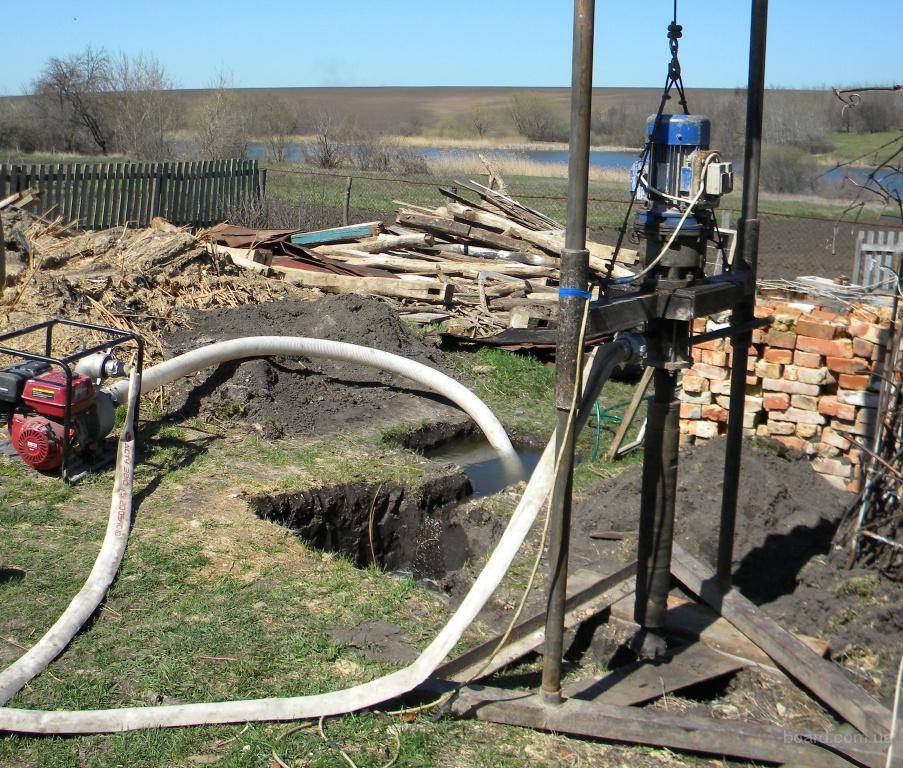
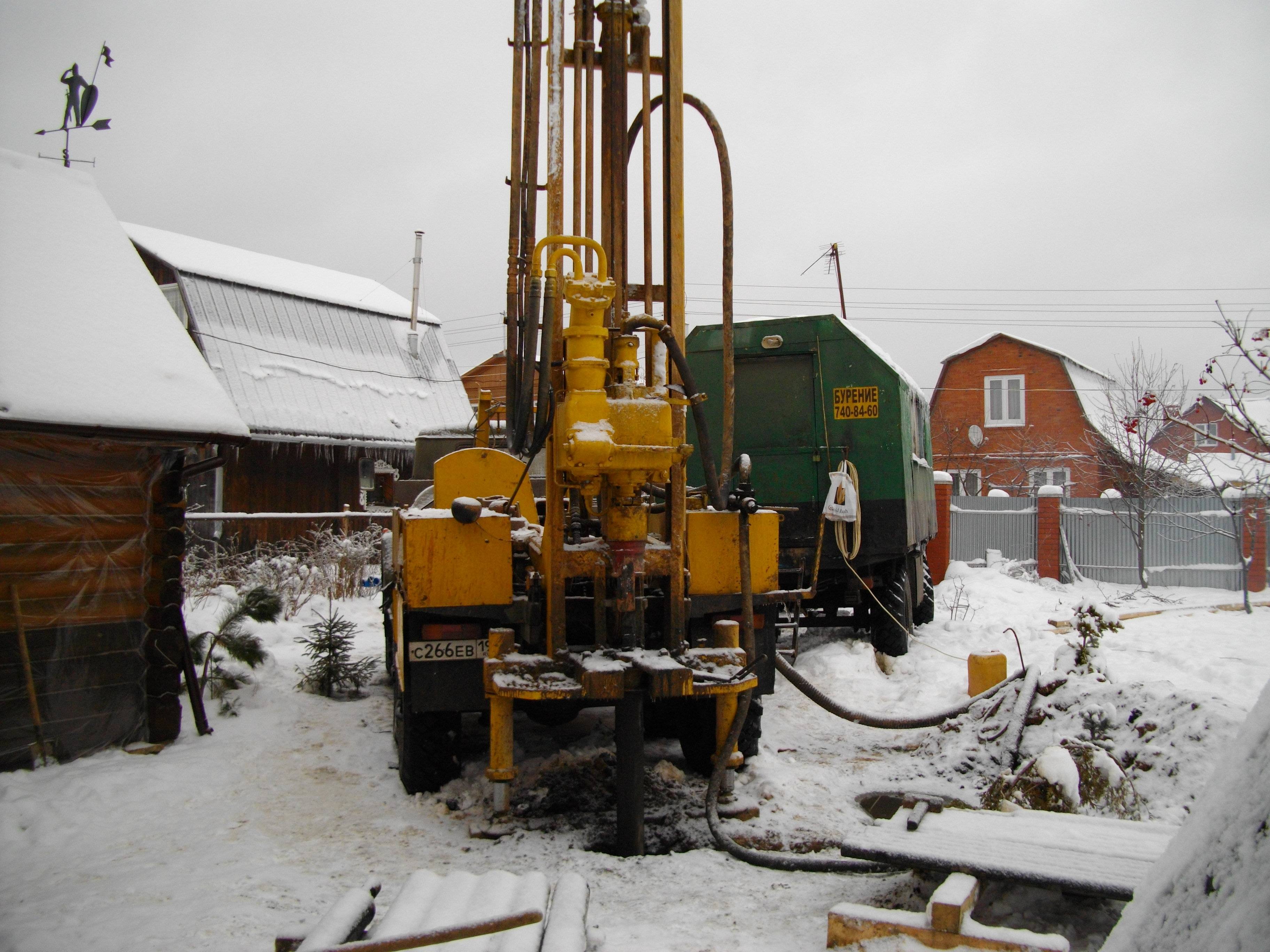


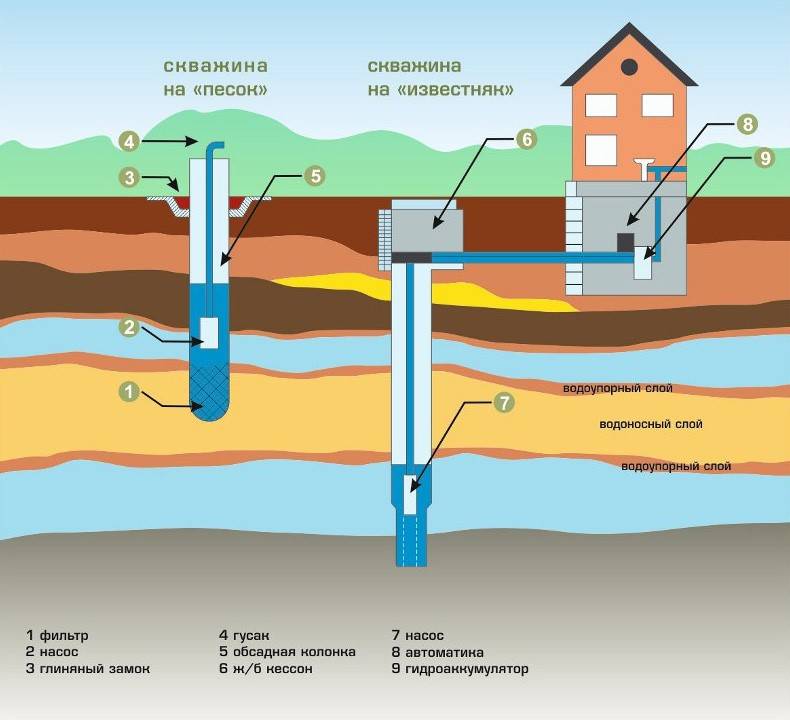

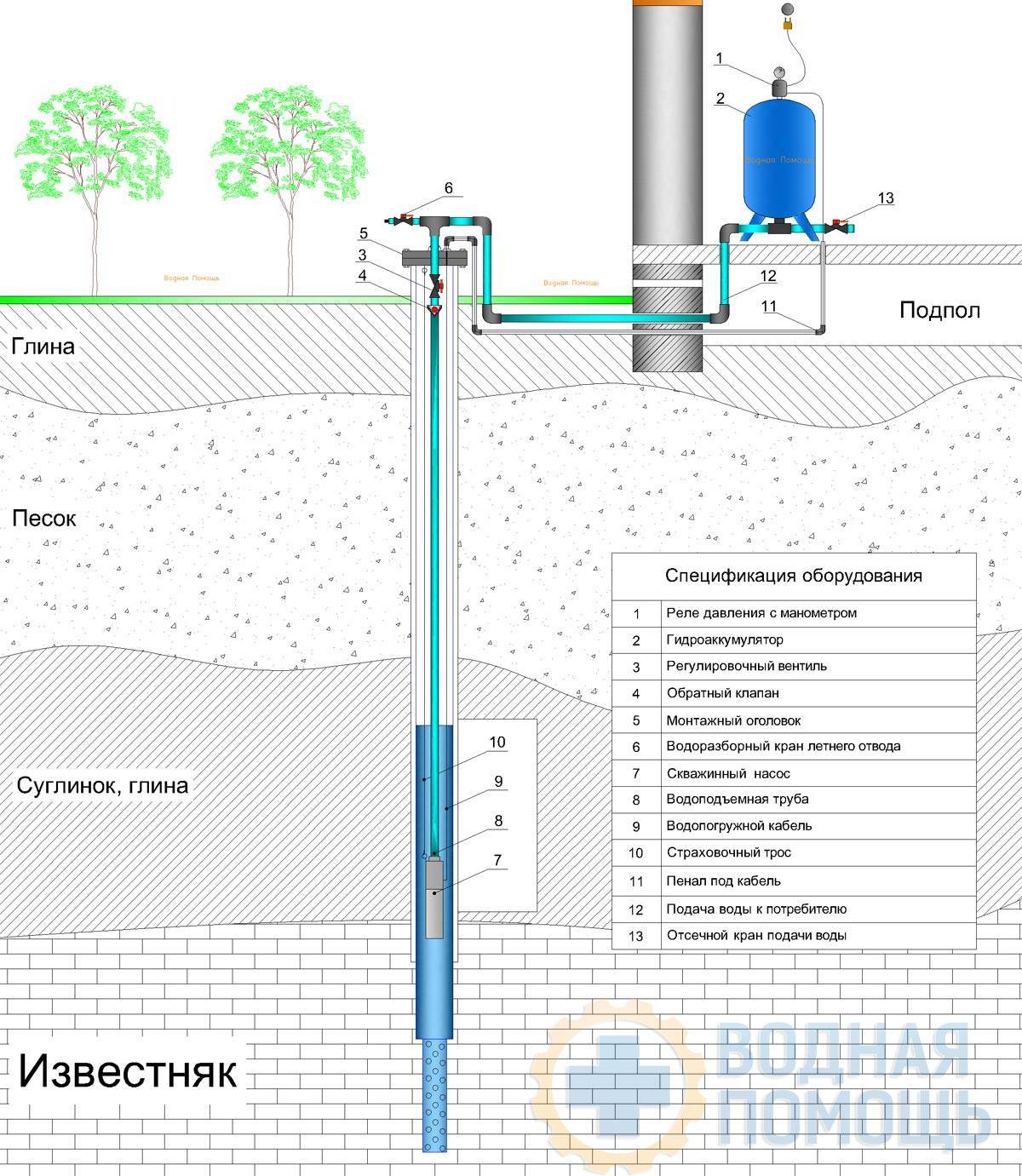
There are many important factors to consider when choosing a location to drill a well. To save on the pipeline, it is necessary to locate the future well at a small distance from the house
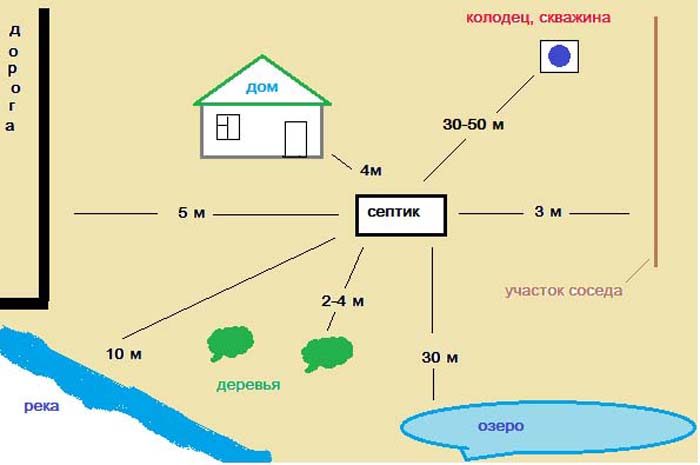
However, it must not be within 3 meters of the nearest wall. You should also make sure that there are no cesspools, landfills and manure heaps nearby. A well cannot be drilled in a lowland, otherwise during a flood there is a high probability of contaminated water entering the well.
Cleaning work in the well
If the location of the well is supposed to be in a summer cottage, used only for weekends in the summer, then it is not worth it. Too laborious and costly. It will be quite enough to have imported (brought) water for a couple of days.
It is quite another matter if agricultural work on growing vegetables is carried out on the site, there is an orchard or a flower garden. Or it is used for long-term residence. In this case, the presence of a constant source of fresh water is simply necessary, because. it is supposed to water the beds, cook food and use it for hygienic purposes.
Own well allows the owner to:
- do not depend on the central water supply;
- always have an uninterrupted supply of water in the required volume;
- use clean water that has passed through natural filters and is saturated with essential trace elements.
Video description
Which option of a well for water to choose can be found here:
However, the presence of these advantages will require the owner of the site to carry out periodic preventive maintenance to clean the clogged device. As a rule, this cleaning is carried out in several ways:
- with the help of a bailer;
- pumping the well with a vibration pump;
- using two pumps (deep and rotary).
The use of these methods presupposes both their separate use and their joint use in turn. It all depends on the weediness and depth of the well.
Cleaning work with a bailer
The bailer (metal pipe) is fixed with a strong iron cable or rope and smoothly lowers to the bottom. When it reaches the bottom, it rises (up to half a meter) and drops sharply. The blow of the bailer under the influence of its weight is able to lift up to half a kilogram of clay rock. Such a well cleaning technique is quite laborious and long-term, but inexpensive and effective.
Cleaning the well with a bailer
Cleaning work with a vibration pump
This option for cleaning the well will be the simplest and fastest. That is why it is considered the most common and has found application even in mines with a narrowed receiver, which is why the use of a conventional deep pump is not possible.
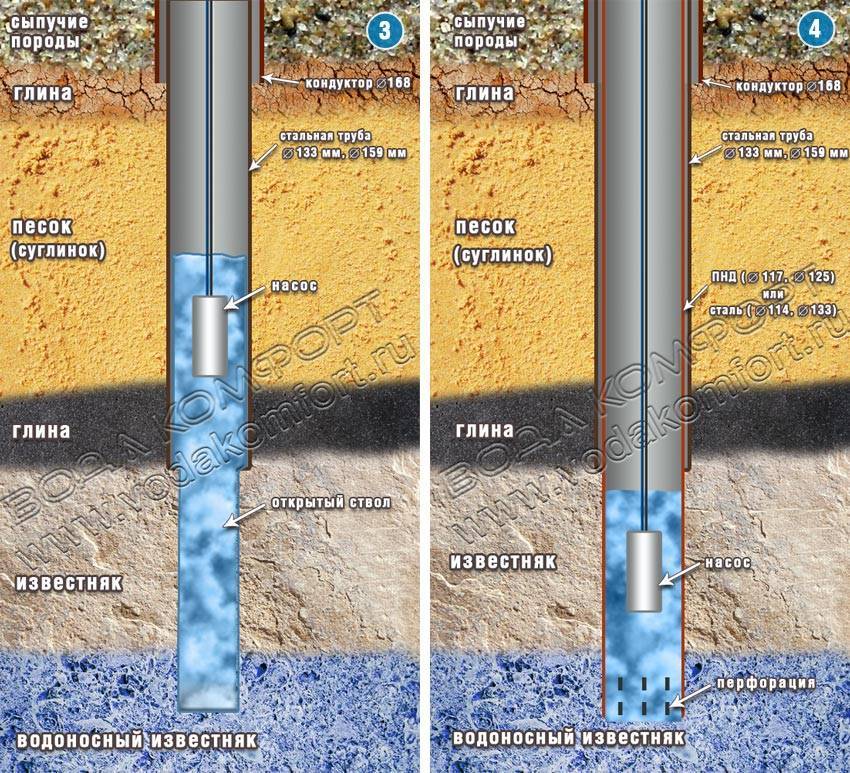
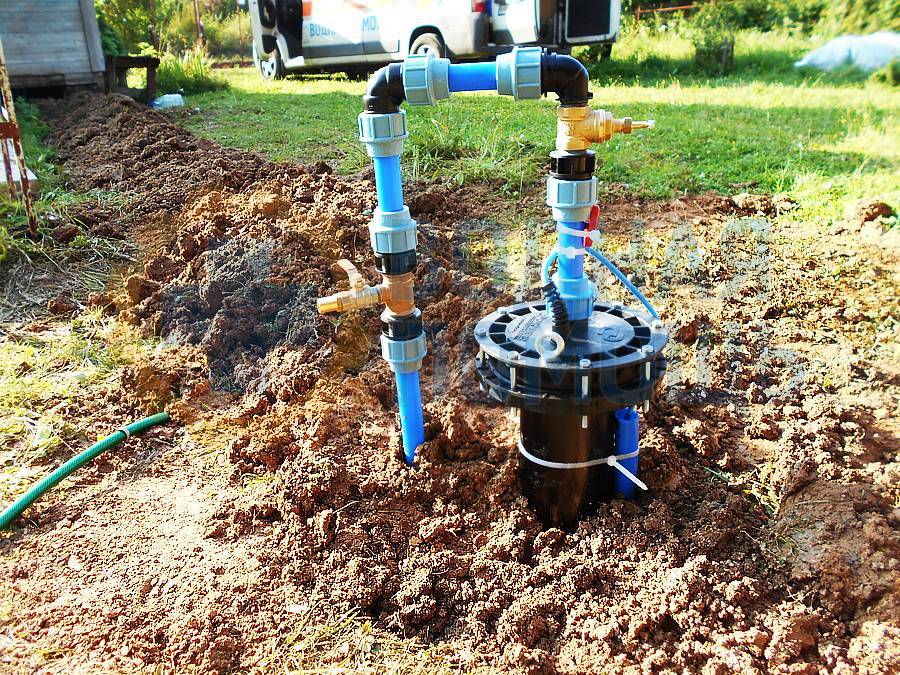
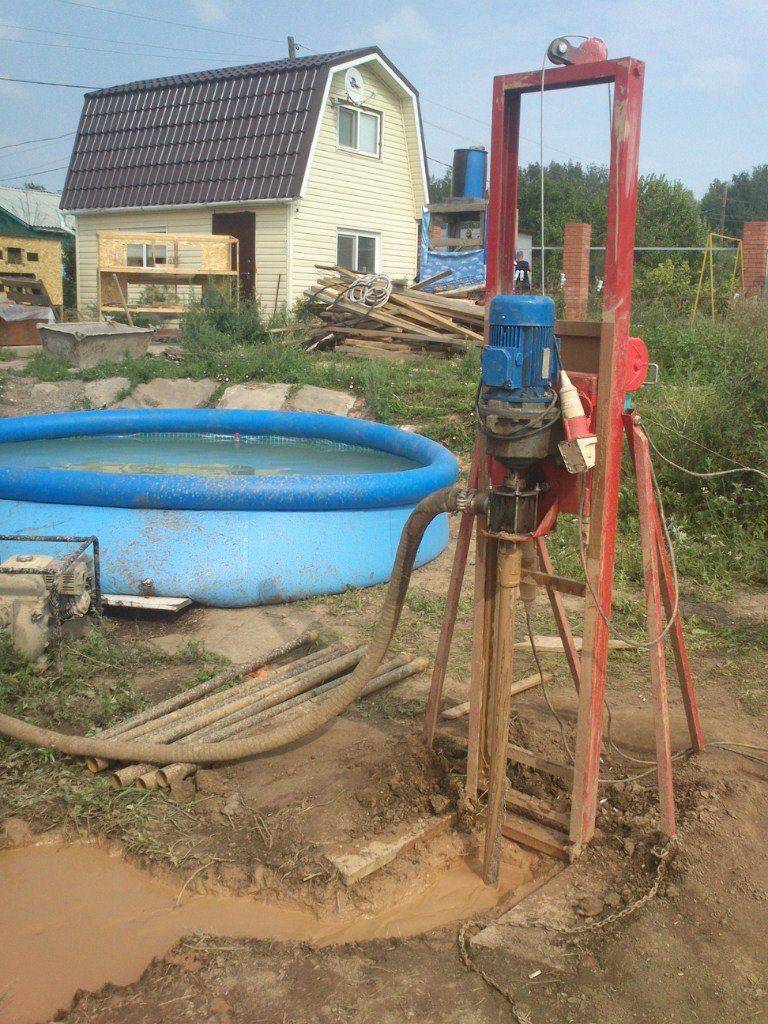

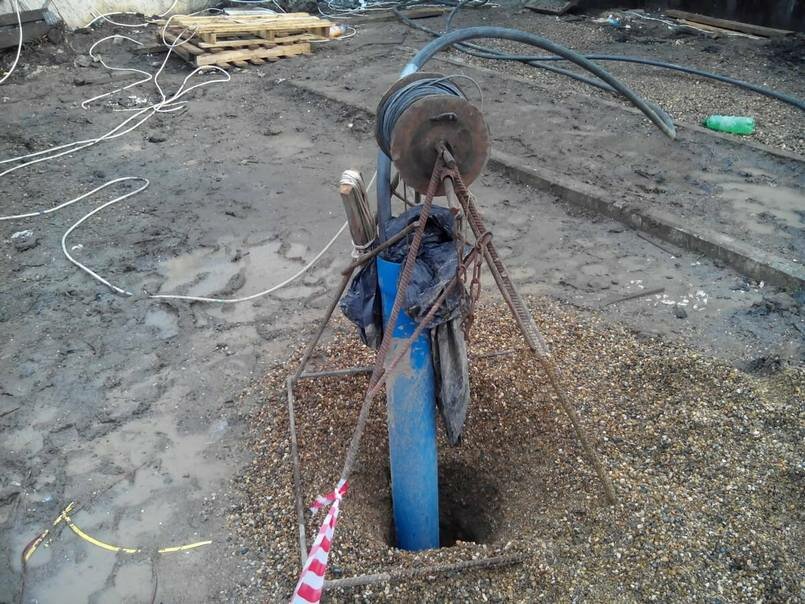
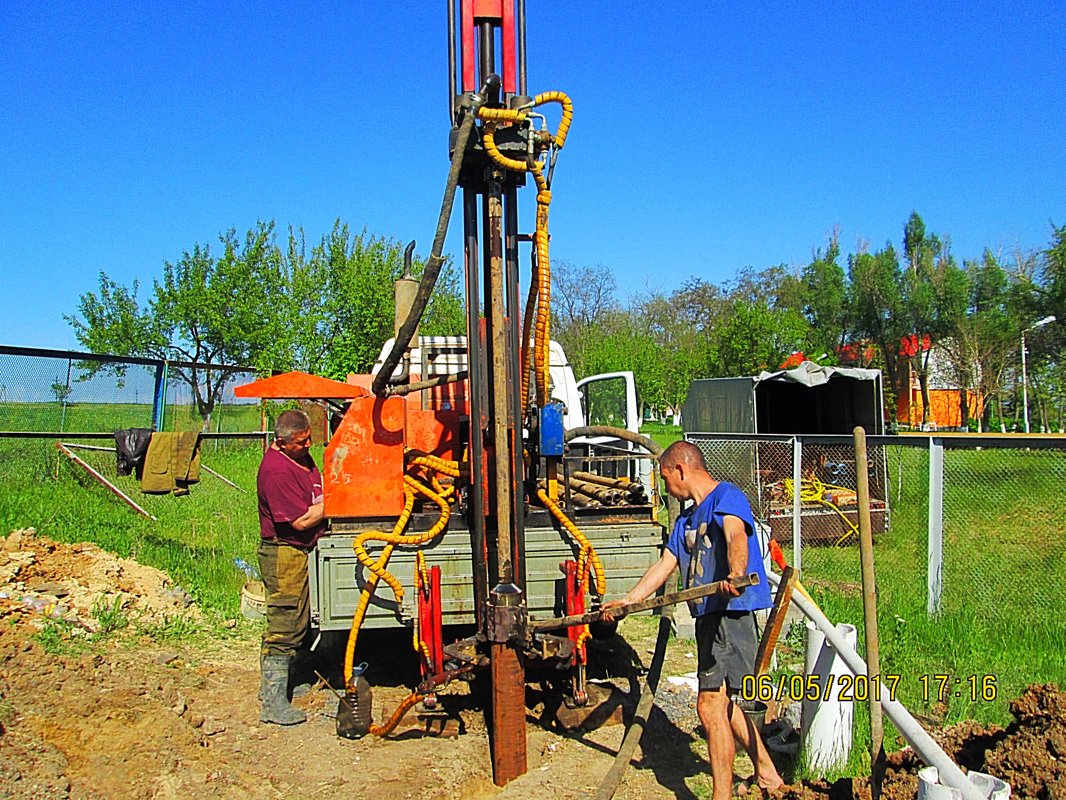
Vibration pump cleaning
Cleaning work with two pumps
This method is characterized by the fact that it does not actually require human participation in the process. The flushing of the well takes place using two pumps that do all the work themselves, but the time spent on this is simply enormous.
Preparing for a long downtime and pumping after it
If a visit to the summer cottage in the winter (or for another long period) is not expected, and the well will not be used either, then you should take care of this in advance. Consideration should be given to preparing the device for inactivity and how to drill a well after winter or long periods of inactivity.
Preparation comes down to installing a heating cable inside or using any materials at hand to insulate the device.
Well pumping after winter is carried out by standard methods, which are described above, and are used only if necessary.
Example well insulation for winter
A private well on your own site is a useful and absolutely necessary thing. However, it will require some periodic maintenance work on cleaning and buildup. The above describes what buildup is, why it is used, which pump to pump the well after drilling, how to do it correctly and in what way, and what are the features of using one or another option.The issues of preparing the device for a long downtime (wintering) and restoring performance after this period are also mentioned.
Negative aspects of drilling in winter
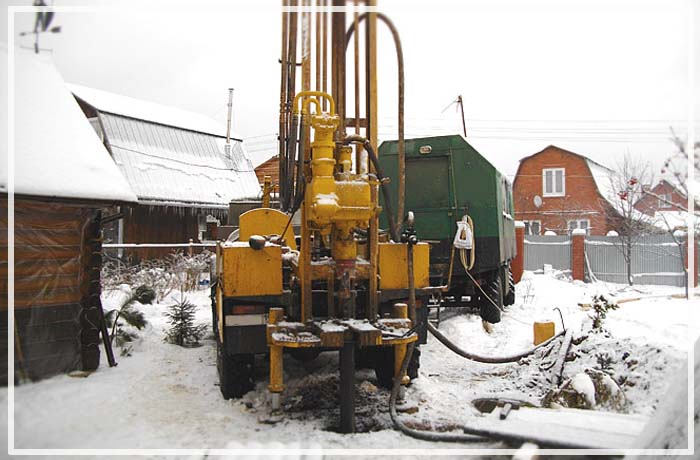
Although modern equipment and technologies make it possible to drill wells in all weather conditions, there are still some nuances.
- The first is the depth to which the soil freezes. Overcoming this layer will require considerable physical costs and will take much more time.
- The second problem is the difference in the level of the water horizon. In winter, the level in the aquifers of the soil can rise. And finding good quality water is extremely difficult.
- The third nuance - in the cold, measures will be required to ensure that the water does not freeze during operation. Of course, you can allow the use of more expensive materials, but this will inevitably affect the cost.
- And lastly, it is not very comfortable for workers to carry out installation in such conditions.
Drilling depth: how to determine
This value is determined after clarifying the structure of the aquifer. Since groundwater depth characteristics may vary in the same area, several test drillings are necessary.
Another option for determining the depth of the aquifer is the analysis of vegetation - the roots of plants allow us to judge the layout of the soil layers.
In order to start drilling, you need to know the structure of the water layer.
Trial work can be core and one of the proven methods in determining the depth of the liquid.In this case, when a moistened sandy layer appears, the process can be stopped: the channel is filled with water, then it is pumped out and thus the flow rate of the future well is determined.
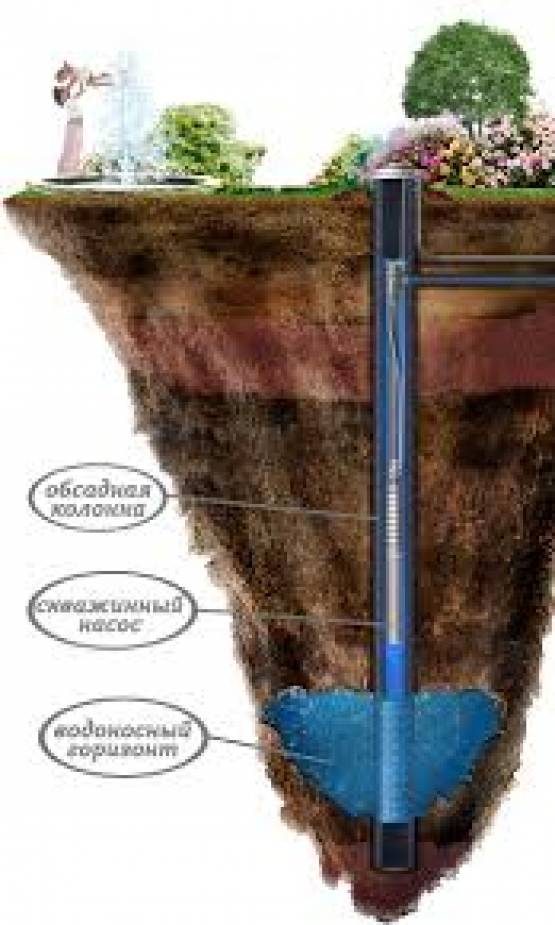


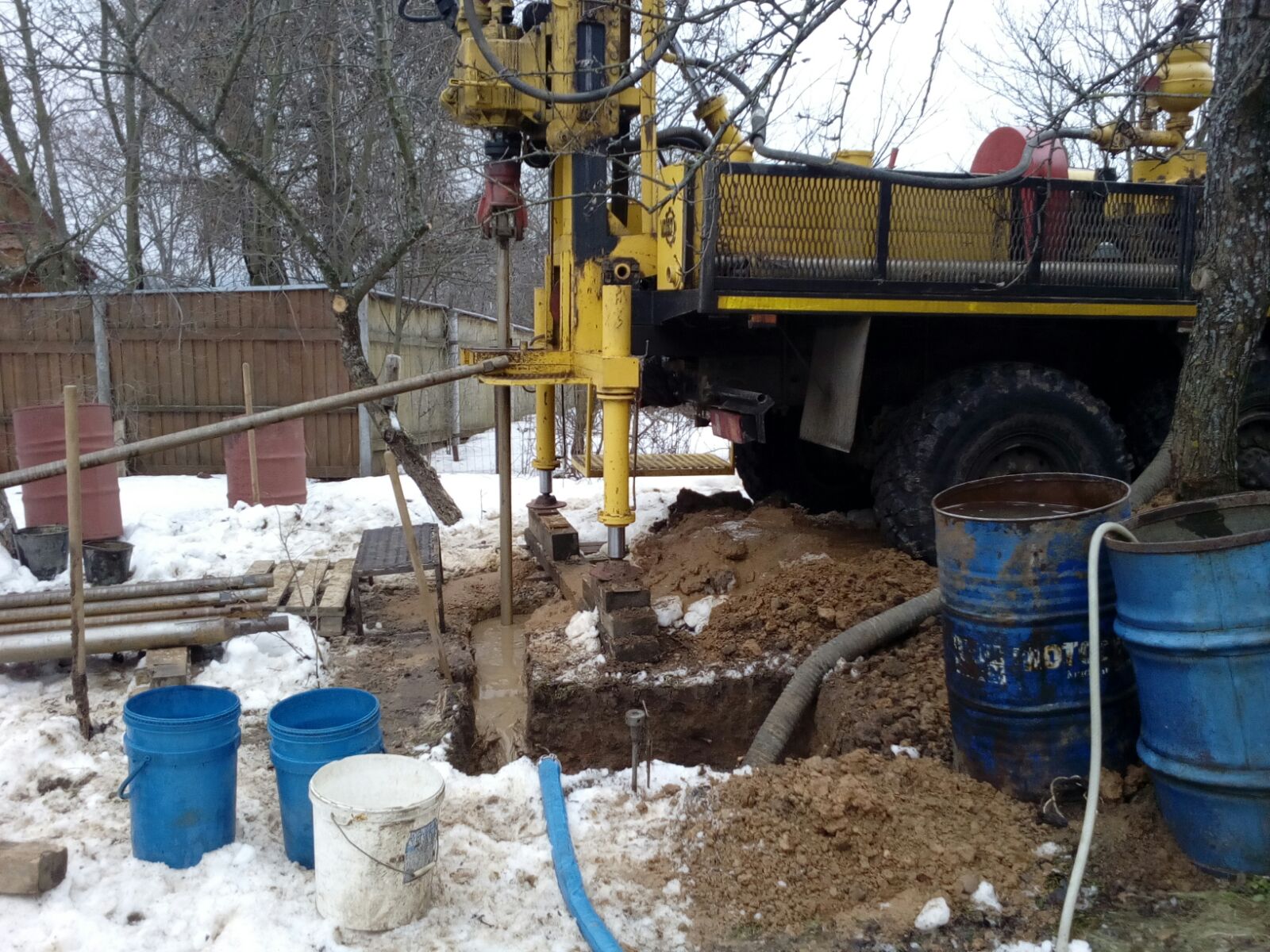

If the obtained indicators meet the requirements of the owner of the site, then drilling stops and a well is arranged. Otherwise, the well is developed further - until the next aquifer is reached. When water is received, it must be collected for analysis to determine if the source is potable.
Types of wells
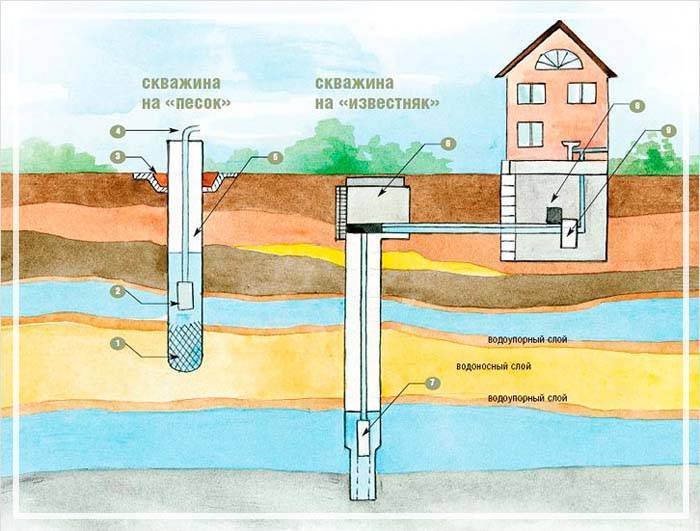
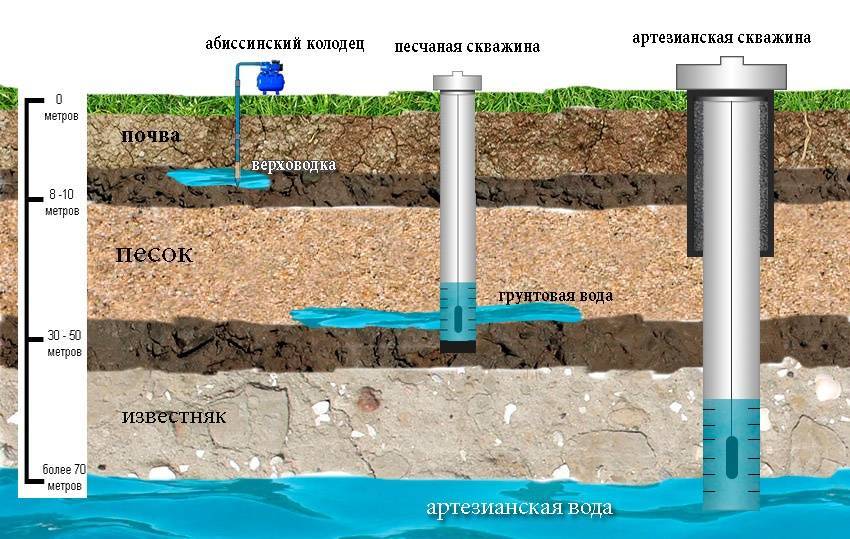
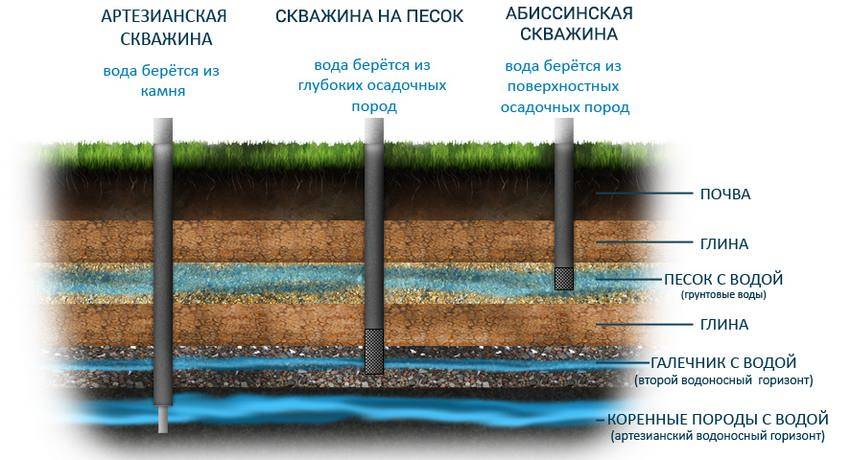
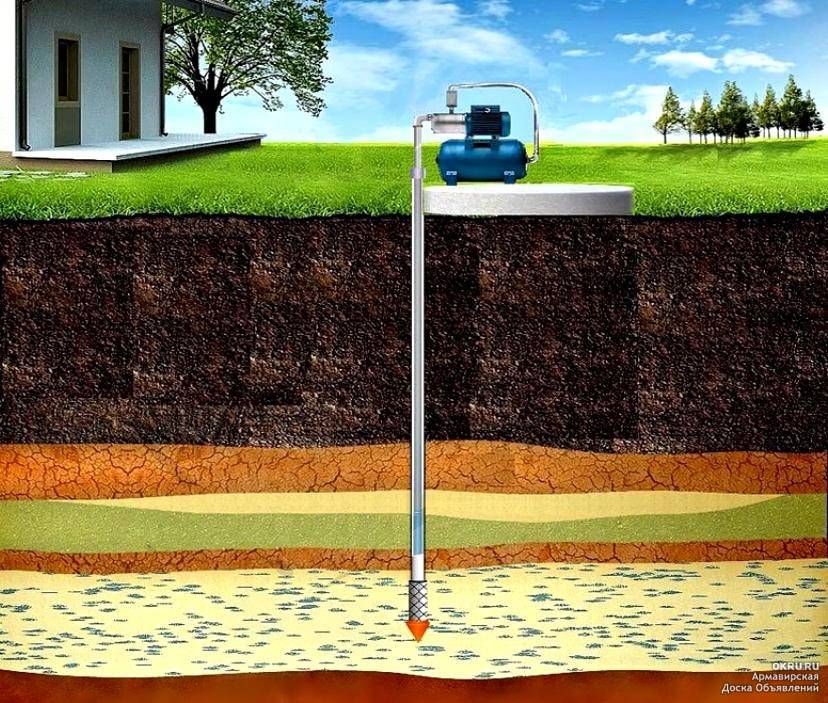
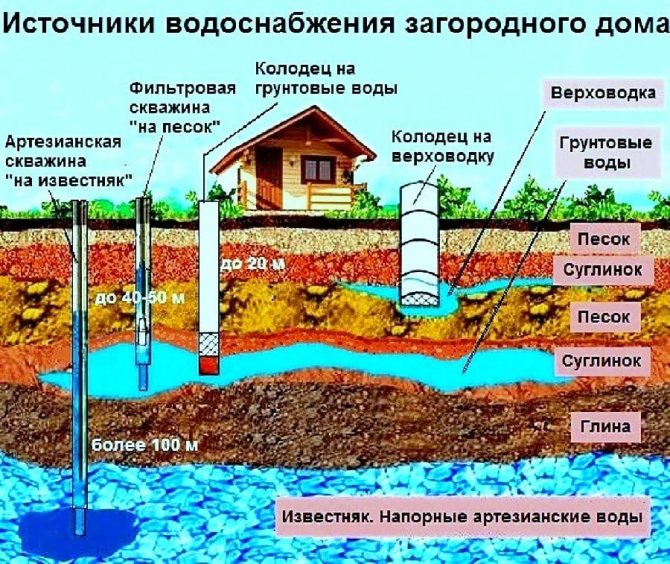
This autonomous water supply can be presented in three types: upper, middle and lower.
| Type (name) of the well | Depth, m | Application area |
| Verkhovodka, or Abyssinian well | 8-13 | Household and technical needs (cooking, watering the site) |
| Well on the sand | 15-30 | household needs |
| Artesian | 15-50 | Drinking water |
The features of the Abyssinian structure include preventing the ingress of liquid from the upper layer into the source.
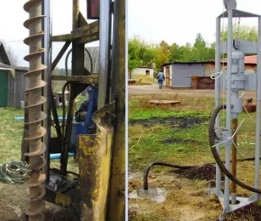
The second type of well is constructed by auger drilling, suitable for year-round operation. The passage of liquid through the sand layer is considered to be filtration.
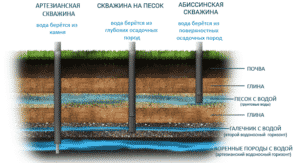
What are the types of wells.
An artesian well is considered the cleanest and most useful for drinking, since the liquid there is saturated with iodine. If it is serviced on time, then the operational period will be over 50 years.
In addition to the above, there are also water sources for gravel and limestone. Both require the installation of additional filters to purify the liquid, however, the water produced from them will be cleaner than from a well to sand: natural filters remove impurities of gases, metals and sand.
The depth of the well for water: what depends on
Before proceeding with the development of a water supply system project, it is necessary to know what criteria affect the drilling of a well and what should be its optimal depth.
For this you need to consider:
- The depth of the aquifer. This value can be determined by test drilling or after geodetic work on the analysis of the area.
- Appointment. For simple irrigation, it is not necessary to reach the lower aquifers, arranging an Abyssinian well, and for drinking water, you will have to look for such water, the quality of which will meet regulatory requirements.
- Terrain relief. The earth profile also belongs to the features: in flat areas, water can be found not so deep, while hilly terrain will require drilling at the lowest point - a depression.
- The required volume of water, or debit. This is the amount of water pumped per unit of time, called the productivity of the well. For example, for irrigation, it is enough to take into account the water flow rate of 0.5 m³/h, and for sandy layers, the flow rate increases to 1.5 m³/h.
For artesian wells, the volume can reach 4 m³ / h.
What to do if the well is frozen?
If the insulation of the water intake is not done at the proper level, the water may freeze. To prevent a rupture of the pipeline, it is necessary to insulate or heat the entire structure. To fix the problem, you need to have the following tools:



- Powerful compressor;
- Sufficient amount of hot water;
- A small piece of copper (preferably large-section) wire;
- Pliers or wire cutters;
- Dielectric gloves;
- Sharp knife;
- Wire hook;
- Regular fork.
Method number 1

If the well freezes, seek professional help.But in an emergency, you can warm it up yourself. The principle is simple. Copper wire is stripped with a sharp knife. Next, it needs to be wrapped around a frozen well. A fork with a hook is attached to one end. When everything is ready, you need to put on rubber gloves and put the wire on the positive terminal. After an hour and a half, you can remove the cable and, turning on the pump, pump water from the tap.
Method number 2
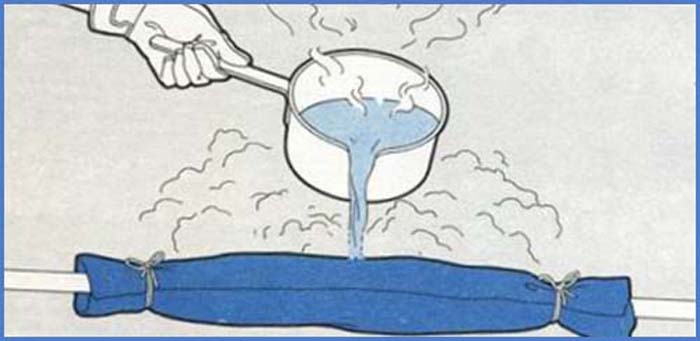
In this case, hot water and a compressor are used to defrost the well. It is fed into a frozen pipe under high pressure. First, you should warm the pipe, which is above ground level, methodically pouring it with plenty of hot water. If the well freezes, you can try to blow the pipe with a pressure of 2 atm using a compressor. The principle of this method is to warm the system both inside and outside at the same time.
If the pipes coming from the pump are frozen, then they should be changed, because cracks and breaks can form as a result of freezing. But the easiest thing is to take care of the timely insulation of the entire highway in advance. One option is to make a crate of wood and stuff it with heat-insulating materials.
Advantages of winter drilling
- In winter, the level of standing groundwater is low;
- Minimal damage to the soil by wheels and caterpillars of equipment;
- The ability to get close to hard-to-reach or swampy areas;
- Lack of melt and rain water;
- The inconvenience to neighbors due to noise and temporary trenches is minimized, as the number of people living outside the city decreases;
- Reasonable price due to winter discounts;
- Significant reduction in operating time.
Summarizing the above, we can conclude that drilling a well in winter is the most cost-effective and expedient solution than in summer. This facilitates the implementation of various technological processes, and by the beginning of the season you will have your own well on the site. Moreover, there will be no trace on the ground where the equipment worked. In place of the well, you can install a small decorative stone that will hide the hatch into the caisson with equipment.
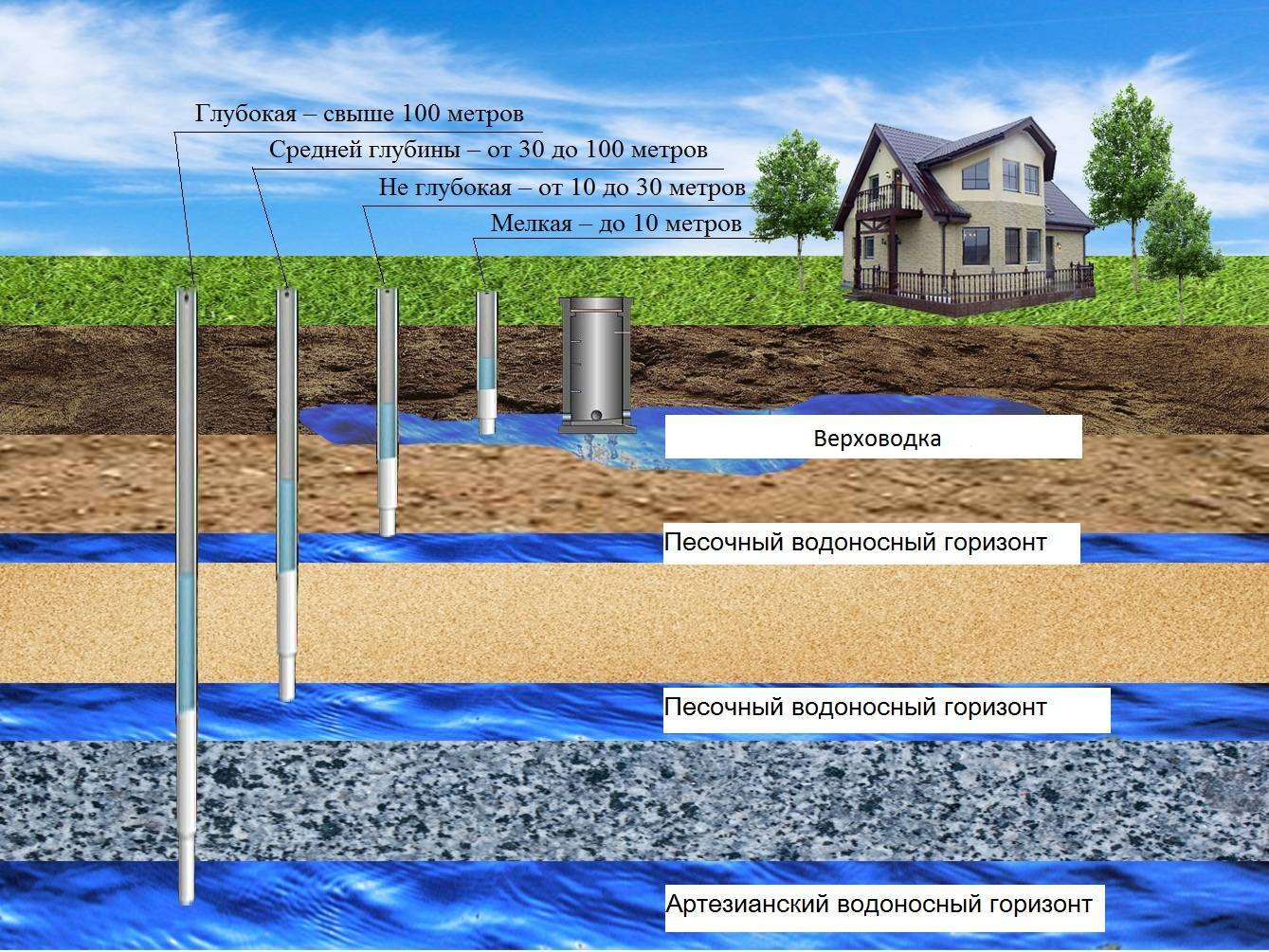
aquifers
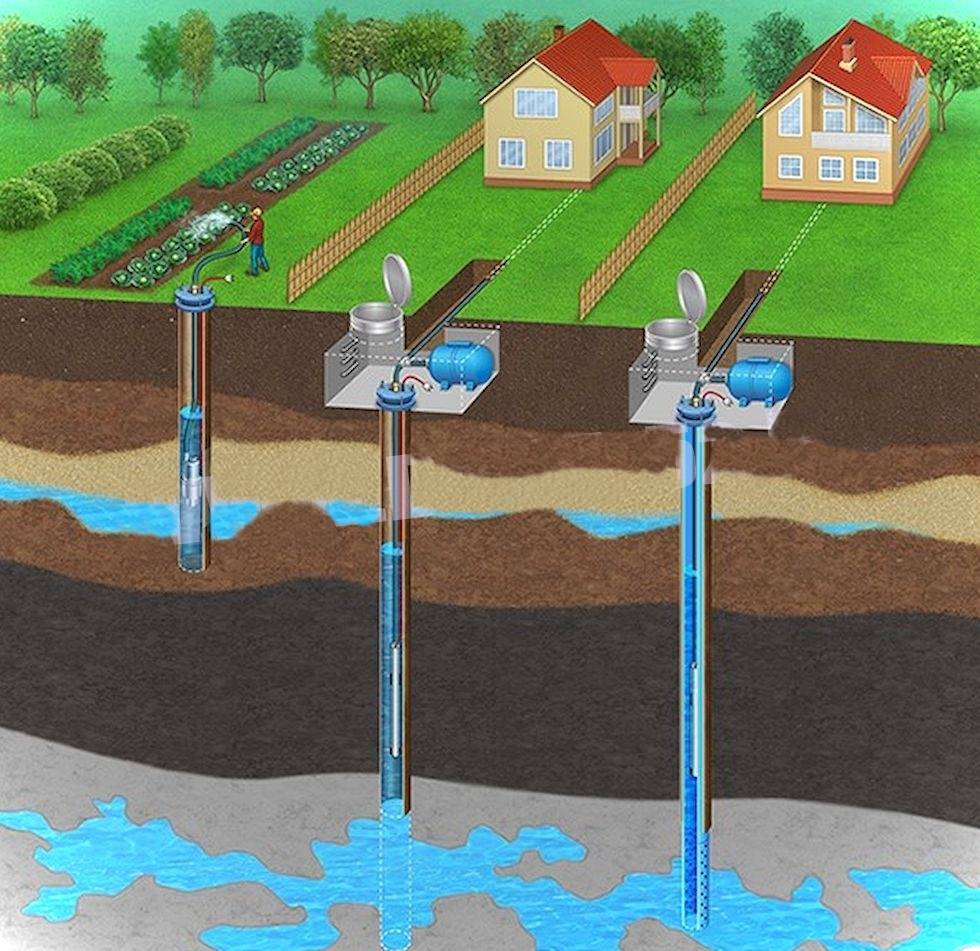
They can be different depending on the depth and type of liquid. Therefore, before drilling, it is necessary to clarify for what needs the water will be used.
There are 4 groups of aquifers:
- Verkhovodka. The depth of the passage is 3-7 meters. Such a source can only be used for technical needs, since the produced liquid is turbid due to impurities and sand.
- The middle layer, or groundwater. They lie at a depth of 10-20 m. They may be suitable for drinking due to their natural filtration, but it is still necessary to install purification filters to rid the water used of harmful impurities that are dangerous to health.
- The lower layer, or interlayer, is considered the cleanest among the rest. The depth of this layer is 25-50 m. In some cases, depending on the terrain, the third aquifer can pass at a depth of up to 60 m and be used to construct a well for drinking.
- Artesian layer. Passes at a depth of 50-70 m and below, is a source of healthy drinking water.
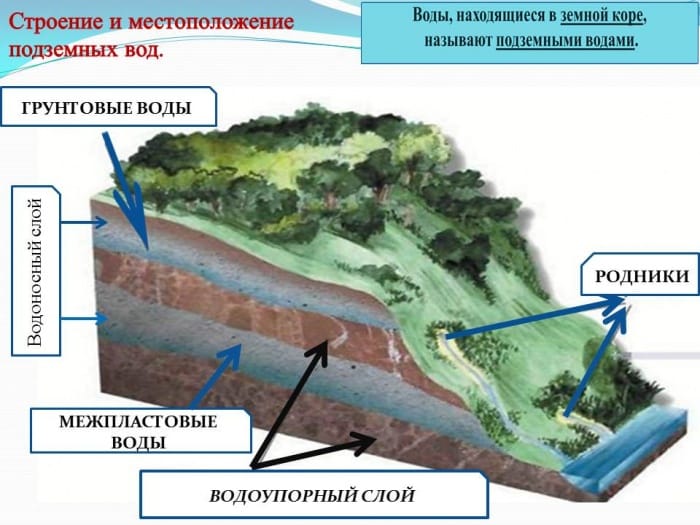
An illustrative example of the types of aquifers.
The risk of water pollution is always present and increases during the spring flood.Therefore, it is necessary to take an analysis of the received water in order to protect the body from poisoning.
Professional work - a guarantee of perfect results
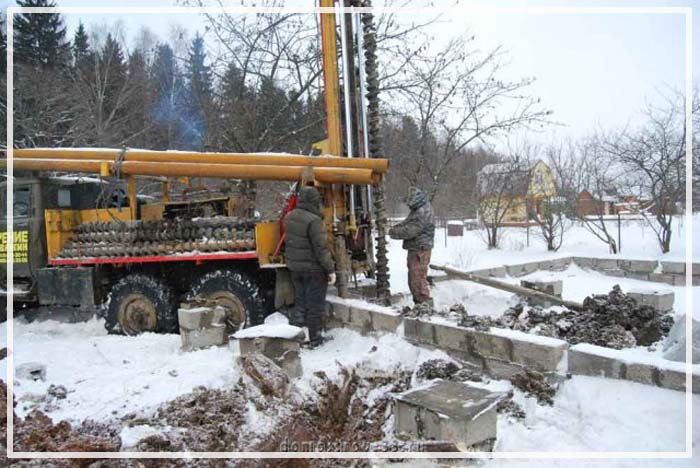
Many companies carry out drilling not only in summer, but also in winter, by using high-quality and reliable materials. Modern technological developments of water intakes involve the production of work at any time and in different climatic zones.
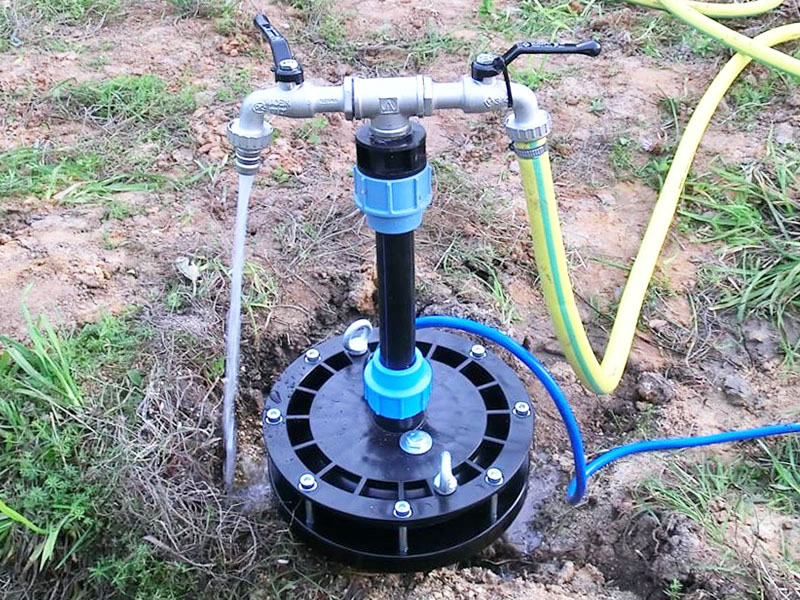


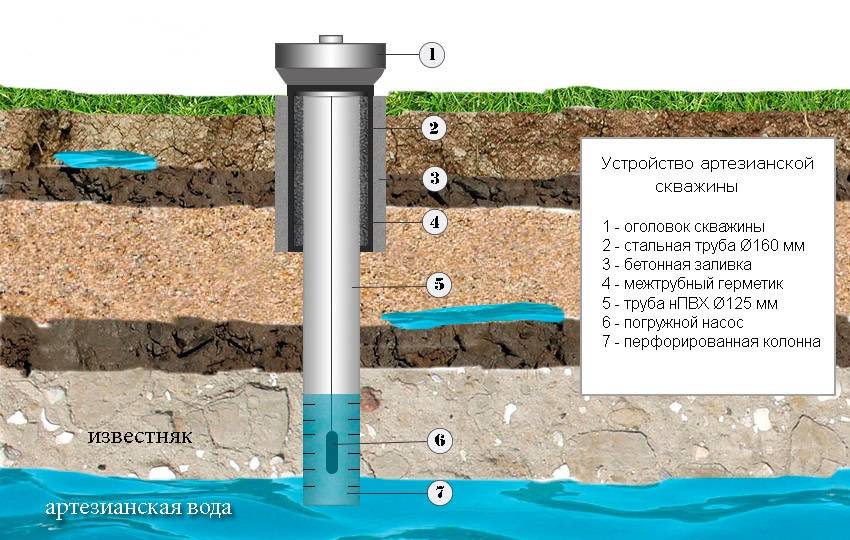
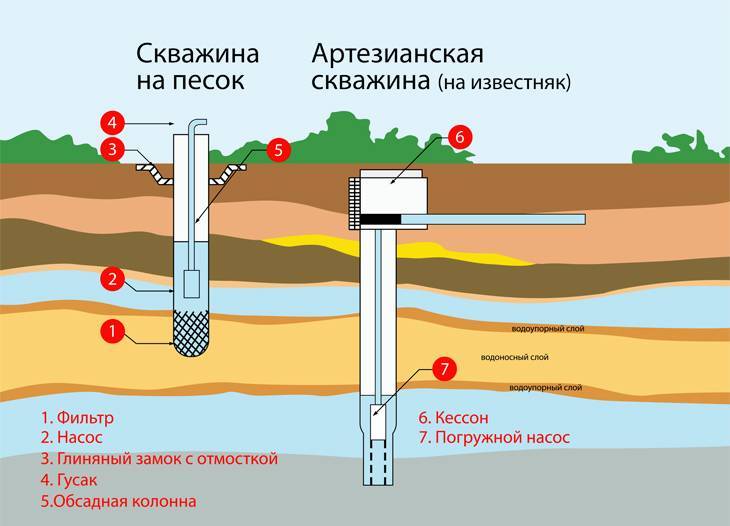


In addition to the fact that this service will cost you much less due to the small number of orders, specialists will carry out all the necessary work efficiently and reliably. Based on this, if you want to wisely and rationally invest in the construction of a well, contact the professionals. You can immediately provide for an autonomous sewage system and a multi-level water treatment system.
A couple of tips for the customer about well repair
In all cases related to the repair of any water wells, the access of the drilling rig to the place of work must be provided.
In most cases, malfunctions and the need for maintenance and overhaul wells occur due to improper drilling of a well, improper installation of equipment. At the same time, drilling a well is simpler and easier than repairing water wells, so you should initially choose professionals who can drill a well in accordance with all quality and safety requirements. But if problems still arise, contact the experts.
Regardless of the type of well limestone well or on sand, the problem that led to the need to repair water wells is first identified. It is from a competent diagnosis that the final result will depend.
Diagnostics and repair work themselves require care, experience and skill. Before carrying out a major overhaul of water wells, the problem is diagnosed using special equipment. Only after that, you can start repairing water wells.
First of all, a type of water-lifting equipment is installed, and the compliance of the submersible pump with its passport data, that is, with its characteristics, is also checked. After that, you need to analyze the condition of the water pipes.



