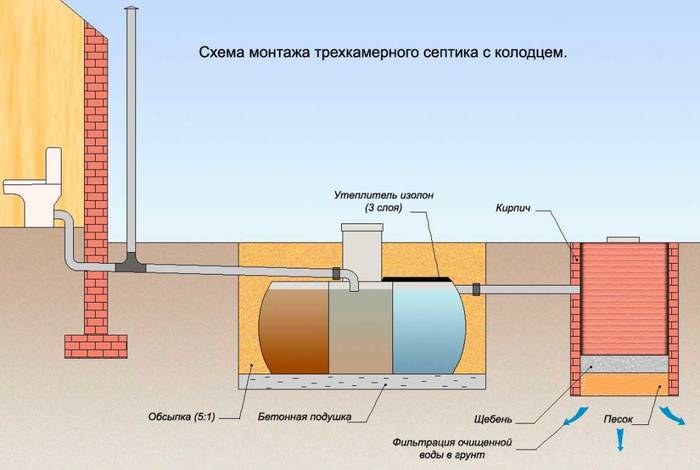
- stone wells
- Features of the device of the Abyssinian well
- The importance of reinforced concrete sewer wells in the domestic wastewater disposal system
- Classification of wells for sewerage
- Detailed classification of concrete wells
- Reinforced concrete rings of sewer wells
- Basic sanitary requirements for the arrangement of differential sewer wells
- Classification of sewer wells
- Sewer wells are distinguished by several parameters:
- Manholes are also divided into types.
- Inspection drainage well - types and methods of installation
- Design of manholes for drainage
- Types of inspection drainage wells
- Materials for the manufacture of manholes
- Features of the installation of a drainage well
- Classification of wells by purpose
- Borehole water supply of a suburban area
- Small well (on sand)
- deep well
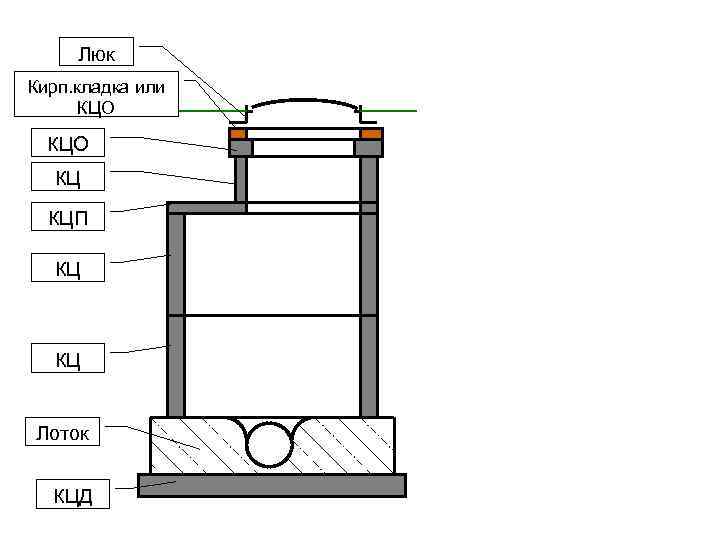
stone wells
Insulation of pipes in a well with bitumen After that, the following work is performed for a concrete or reinforced concrete well:
- Foundation preparation. Laying a slab or placing a concrete pad 100 mm thick from concrete M-50
- Arrangement of a tray of the desired shape made of M-100 concrete with steel mesh reinforcement
- Concrete and bitumen sealing of pipe ends
- Bitumen insulation of the inner surface of concrete rings
- Rings of sewer wells are installed (carried out after the curing of the concrete of the tray, 2-3 days after laying) and the floor slab on the M-50 mortar
- Grouting with cement mortar the joints between the prefabricated parts of the well
- Waterproofing joints with bitumen
- Finishing the tray with cement plaster, followed by ironing
- Arrangement at the entry points of pipes of a clay lock with a width of 300 mm and a height of 600 mm more than the outer diameter of the pipes
- Well testing (carried out during the day by filling with water to the upper edge, with the installation of temporary plugs on the pipes). Considered successful if no visible leaks are found
- External backfilling of the walls of the well, followed by tamping
- The device of a concrete blind area 1.5 m wide around the neck of the well
- Insulation of all remaining joints with hot bitumen
Similarly, brick sewer wells are installed, but here, instead of installing prefabricated elements, masonry is made.
Waterproofing is done in exactly the same way.
Thus, the installation of wells made of stone materials is carried out for all types of sewerage: domestic, storm or drainage.
However, in the case of a storm well, lattice hatches can be installed on the well, which simultaneously perform the function of a catchment area.
For drainage - the well itself can be an element of drainage, through special holes in the walls, but this design requires a special calculation.
At the same time, there are slight differences in the components that the series defines: sewer wells KFK and KDK - for domestic wastewater, KLV and KLK - for storm water, KDV and KDN - for drainage.
The table of sewer wells by standard sizes is as follows:
Table of sewer wells
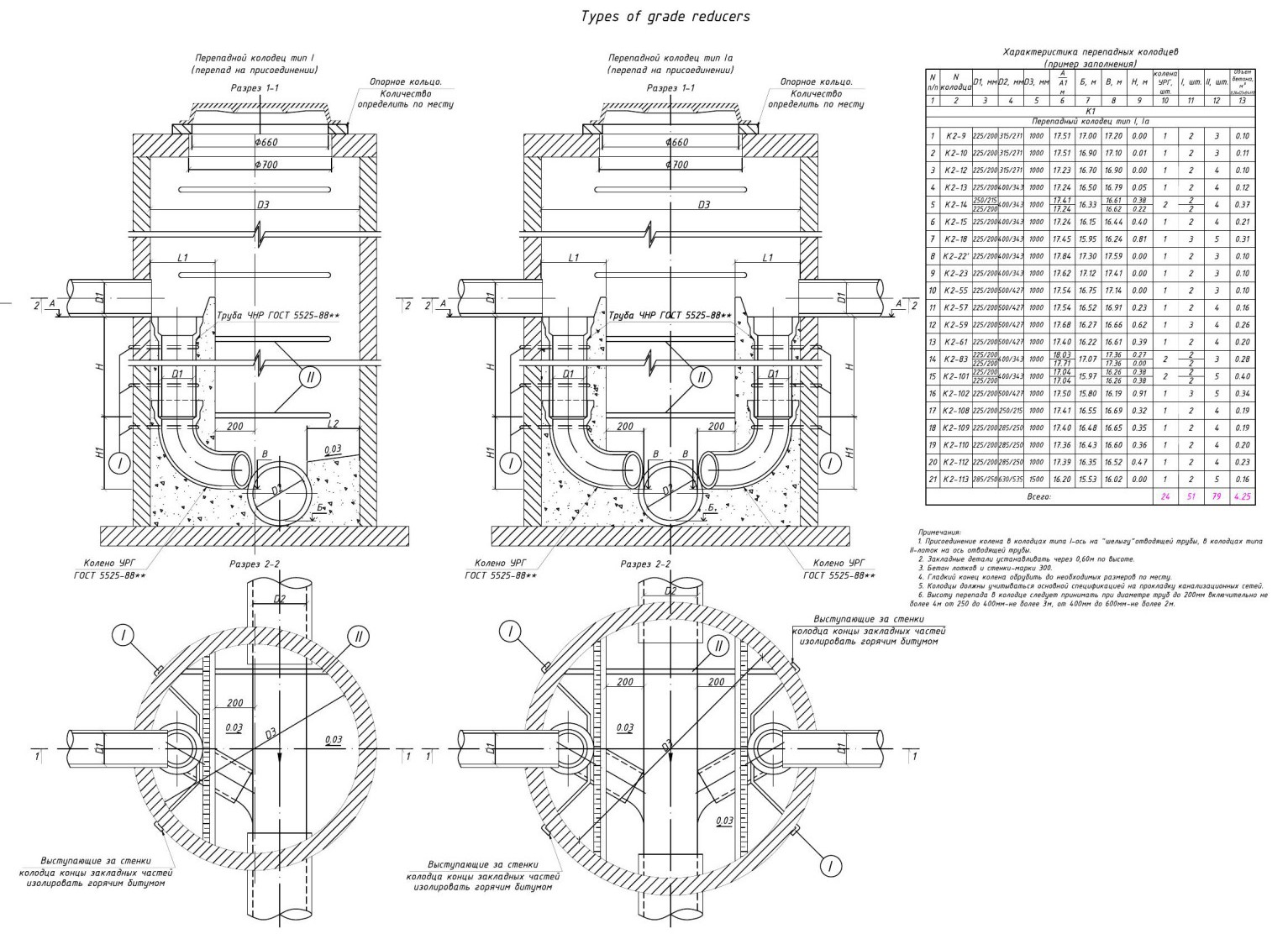
The process for differential wells looks a little more complicated due to their more complex configuration.
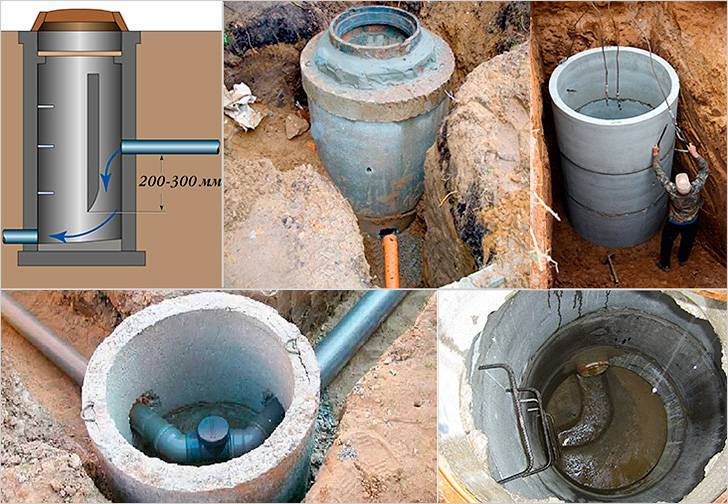
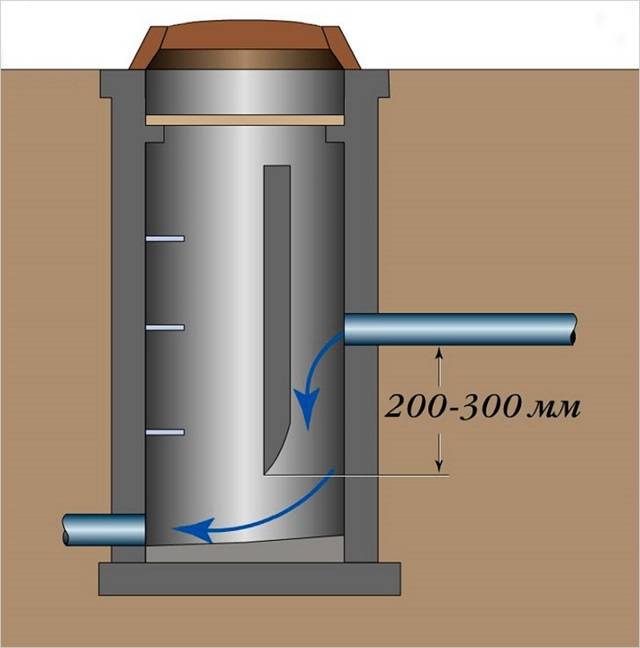
drop well
Here, depending on the specific design, in addition to the tray device, in some cases it is necessary:
- Riser installation
- Water breaking equipment
- Installation of a water barrier wall
- Create a practice profile
- Pit device
The very installation of the body of the mine, base and ceiling is carried out according to the same rules.
The only exception concerns a drop well with a riser - at its base it is supposed to lay a metal plate that prevents the destruction of the concrete part of the structure.
It looks like this:
- Riser
- water cushion
- Metal plate at the base of the pillow
- Riser intake funnel
Design of a well with a riser The intake funnel is designed to compensate for the rarefaction that can be created in the riser due to the rapid movement of wastewater.
It is necessary to create differential sewer wells with your own hands using a practical profile only in exceptional cases - a similar design is provided for pipelines with a diameter of 600 mm and a drop height of up to 3 m.
Similar pipe diameters are not used in individual drainage systems. But other types of wells can be used in local sewage with success.




In accordance with the requirements of SNiP, sewer overflow wells are installed:
- If necessary, reduce the depth of the pipeline
- At intersections with other underground utilities
- For flow control
- In the last flooded well before the discharge of waste into the reservoir
Typical cases when the installation of a drop well in a suburban area is advisable:
- High-speed flow scheme If there is a big difference between the estimated depth of the intra-yard sewerage and the level of effluent discharge into the septic tank or central collector (laying the pipeline at a shallower depth will seriously reduce the amount of excavation)
- If there is a need to bypass other engineering networks underground
- If there is doubt about the consistency of the flow rate in the system with the volume of effluents. With a small volume, too high a speed can prevent self-cleaning (washing out of sediment) of the pipe walls. Equally, if the speed is too low - the sediment may form too intensively, then it makes sense to arrange a fast current for acceleration.
The meaning of such a drop is that due to the creation of a large slope in a short section of the system, the drains begin to move much faster, not having time to cling to the inner walls of the pipe.
Features of the device of the Abyssinian well
When there is no need to equip a powerful well, you can make an autonomous Abyssinian well. Its device does not require long digging or heavy equipment. The technology consists in installing a pipe of minimum diameter (up to 4 cm) to the depth of the upper aquifer. The lower part of the pipe is equipped with a filter that protects it from contamination. The water supply to the top is provided by a self-priming pump. To make the pipe easier to sink into the ground, it is equipped with a conical tip, the diameter of which is 4-5 cm wider than the diameter of the pipe.

Comparative diagram of a tubular and Abyssinian well
The above-ground part is decorated or ennobled with a small structure, such as a gazebo.Any convenient place for installation is suitable, however, areas close to septic tanks, drainage collectors, and gutters should be avoided.
The importance of reinforced concrete sewer wells in the domestic wastewater disposal system
The project of any modern house involves dividing the sewer into several parts:
- Sewer wiring laid throughout the house - it goes to the conclusions of sinks, toilets and bathtubs, as well as other plumbing fixtures;
- Sewer pipe running in the direction from the house to the storage tank;
- Actually, the storage sewer facility itself.
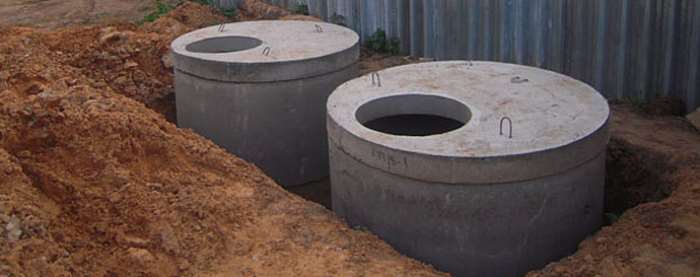
It is important to note that in addition to the storage well, there are other types of sewer typical objects. The most requested of them are:
- Viewing - their purpose is to monitor the current state of the sewer, and, if necessary, clean it.
- Variable - applicable in systems where a structurally significant height difference is provided.
- Swivel - needed when the design of the system involves sharp turns. In addition, they are used as viewing.
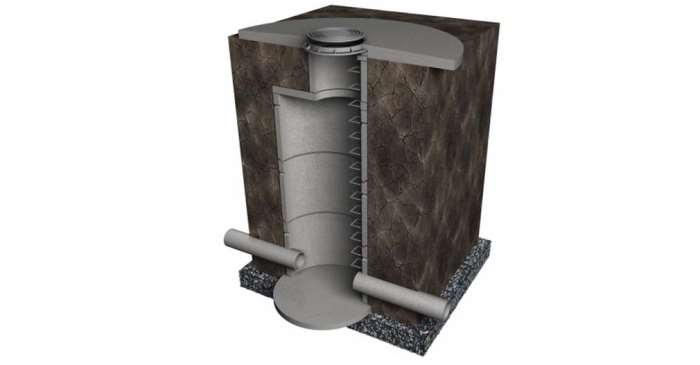
The fundamental difference between the varieties mentioned above and the storage well is that they are used so that the effluent can be transported efficiently. The purpose of the storage well is reduced, respectively, to the accumulation of effluents intended for subsequent pumping.






Classification of wells for sewerage
Structures related according to technical terminology to sewer wells are divided into several varieties.
The division is made depending on what classifying features we will use. For example, wells can be divided according to the material of manufacture, according to their purpose, or according to the method of their construction.
There are the following classifying features and their corresponding types of modern sewer wells. The first is carried out according to the environment, the transportation of which is carried out by the sewer system.
Drainage networks on which sewer wells are installed are designed to move effluents of various composition and degree of aggressiveness, these are:
- Household. These include waters that have changed their composition as a result of mixing with waste and garbage. Depending on the contaminants included in the composition, they are divided into household and fecal.
- Industrial. These include waters that have changed their mechanical and chemical composition as a result of pollution by industrial waste.
- Atmospheric. These include waters formed as a result of the active melting of winter precipitation, flood and rain water.
In addition to the listed types of wastewater, the sewerage system receives flows collected by the drainage system, the task of which is to drain the territory or drain groundwater from underground building structures.
Wells of sewer systems are divided according to the material of manufacture into:
- Brick. Once upon a time, brick was a commonly used material for the manufacture of wells, but over time, brick structures are becoming less and less.
- Concrete. Concrete structures are today the traditional material for a sewer well.
- Plastic.Obviously, polymer-based compounds are the material of the future, it is he who will someday replace both brick and concrete.
Plastic or composite prefabricated well structures attract with lightness, easy to install. Pleased with resistance to chemical influences during prolonged contact with aggressive environments. They are well tolerated by sharp and smooth temperature fluctuations, they do not pass or absorb water at all.
Sewer systems are divided into floating and export. The former move effluents to treatment plants, facilities or discharge fields. The latter only collect wastewater for subsequent pumping and removal. The wells included in both types of systems perform both the same and different functions.
According to their functional responsibilities, they are divided into:
- Cumulative. Used to accumulate wastewater for subsequent extraction and removal. Naturally, they are built in the export sewer networks.
- Collector. Designed to collect wastewater from several sewer branches and direct it to a storage tank, treatment plant or unloading fields. They are arranged both in floating and export branched networks.
- Filtering. Are applied to utilization of liquid fraction of drains in the natural way. They play the role of compact treatment facilities that transport the environment freed from pollution into the ground or into water bodies. Accompany exclusively alloyed varieties of sewage.
- Lookouts. They are built on collector sections longer than 50 m, as well as at all turning points and nodal connection of highways. Necessary for monitoring the operation of the sewer system, for periodic cleaning and repair activities.They are satisfied in both types of sewers.
- Variable. They are arranged in areas with sharp elevation changes. The reasons for the construction include the provision of a buried outlet into the reservoir and the need to slow down the drains on the sections of the pipeline with a large slope. They can be present both in the export and in the floating sewer.
The classification of manholes is much more complex. We will talk about this a little lower, and now we will consider different types of wells in more detail.
Detailed classification of concrete wells
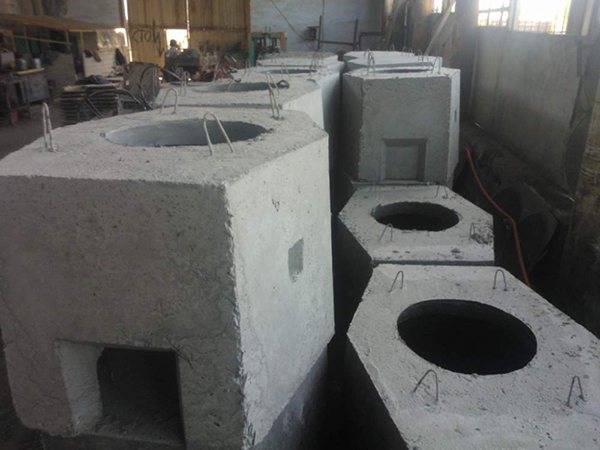
Concrete wells are used in various industries. Their design and composition imply use in the area where it will create all the conditions for long-term and high-quality operation.
Classification of concrete wells:
- Operating conditions of a certain network:
- In sewage disposal structures. Wells can be of both domestic and industrial importance.
- in drainage systems. They have a special design, a distinctive feature of which is a cushion of sand and gravel.
- Storm systems. They are easy to install and use less building material.
- What function are they for:
- Variable. It may consist of several levels and have great depth.
- Lookout. It is purely observational. Such a well may be small.
- Changing the direction of the flow. They have the most complex design, since access to the structure from all sides is necessary.
- Turning. Installed where the system has a turn. Serve for ease of maintenance of the turning point.
- Linear. Installed in a place where the system is straight.Serves for quicker access for the purpose of cleaning or troubleshooting.
Each type of well has certain features during installation and installation. It is necessary to know how the environment for which a concrete well is installed is used in order to maximize its durability.
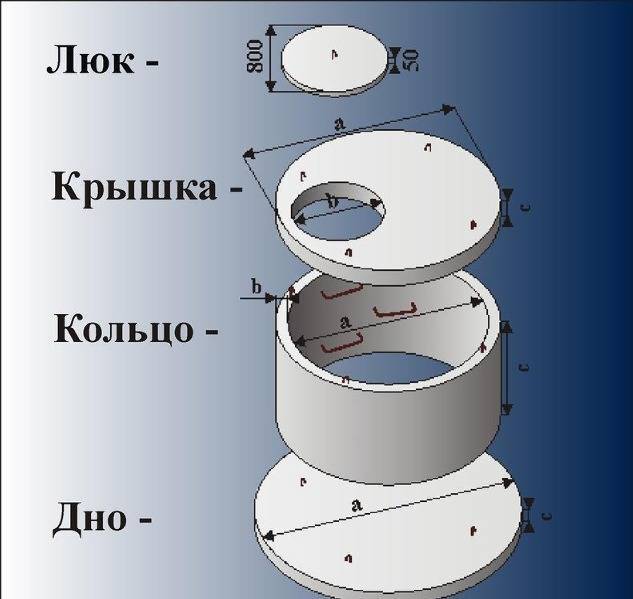

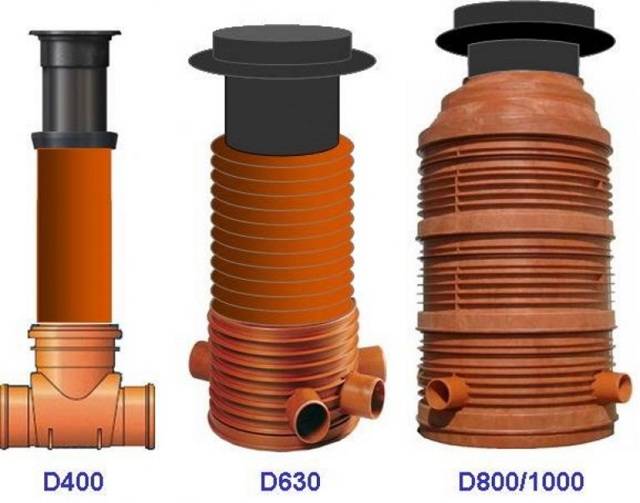


Reinforced concrete rings of sewer wells
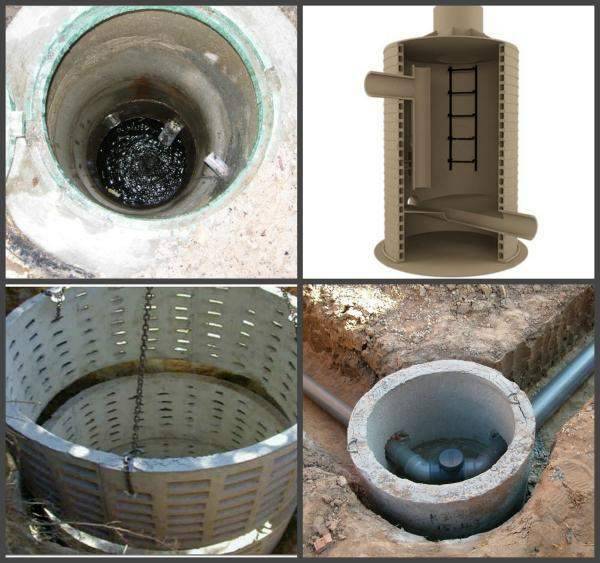
They have been in use for a very long time. According to experts, concrete sewer wells are the most durable and most efficient. Any type of wells can be installed from this material, but most often these are inspection and overflow wells.

Typical sewer wells have the following advantages:
- A small price even taking into account the labeling and purpose.
- Can be installed on any ground.
- Convenience and ease of installation. Although this requires the involvement of large equipment.
- Long service life.
Disadvantages of a reinforced concrete sewer well:
- Concrete rings are made as standard as possible. Accordingly, the installation site is not taken into account, and this causes some inconvenience - holes for pipes are drilled directly at the installation site.
- Since the well is prefabricated, there is an opinion about poor sealing. Water is exchanged through the holes: groundwater enters the well and overflows it, and sewage enters the soil, which poisons it.
- Inconvenient cleaning. This can only be done by two people and only by hand.
Basic sanitary requirements for the arrangement of differential sewer wells
According to the conditions of sanitary requirements, when installing a sewer system using pipes with a diameter of not more than 600 millimeters, it is not necessary to install a drop well.
When a sewer system is being implemented, the height of which is up to 3 meters, it is necessary to install tubular drops.
You can install a regular manhole, which will play the role of a flushing well. Sometimes they use special designs that are equipped with a water supply.
In gravity systems, chambers and wells are recommended to be carried out according to standard designs.
It is necessary to know all the design features of the well, as well as its elements that are part of the well. The well must be marked. Do not neglect labeling.
Classification of sewer wells
Sewer wells are distinguished by several parameters:
- by type of network - storm, sewage, drainage, industrial;
- according to the material of manufacture - concrete, plastic, brick;
- by appointment - viewing, differential.
The main task of any well is to control the state of the sewer system. In addition, it allows you to overcome the difference in height between the inlet and outlet pipes, clean the pipes in case of blockages and collect the pollution accumulated in the drains.
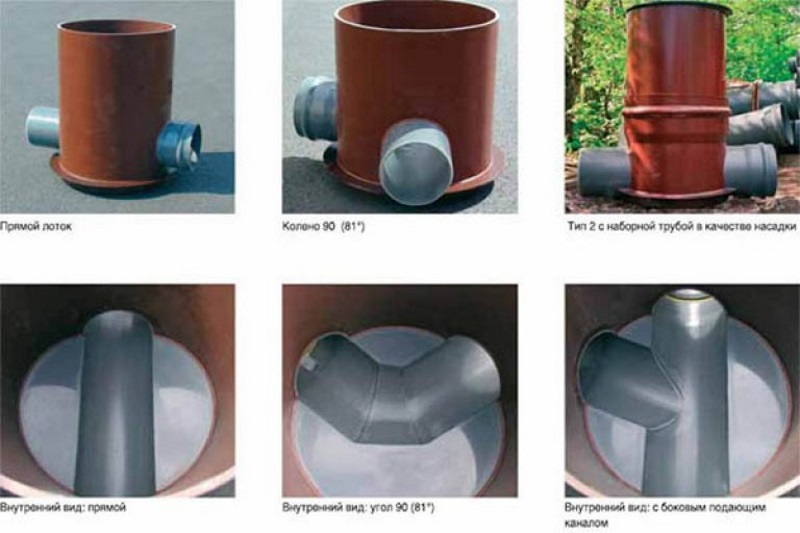
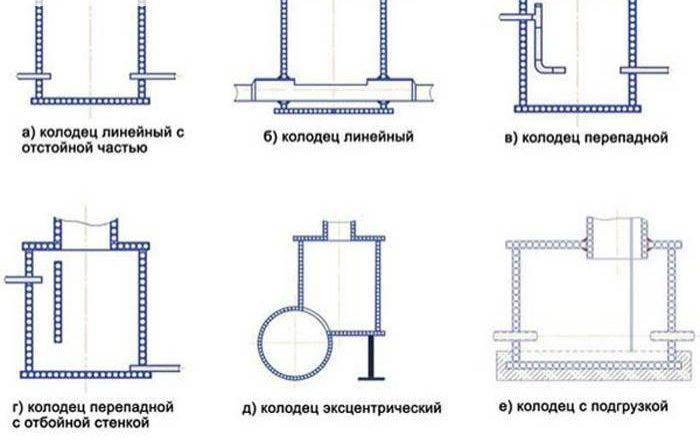
Manholes are also divided into types.
- Linear - the simplest structures installed on straight sections of pipelines every 35-300 m.
- Rotary - to change the direction of flow. They are installed on all bends of the sewer pipe.
- Nodal - connecting branches of pipes at the points of connection to sewer systems.
- Control - in places where the sewerage of a house, quarter, street is connected to the central system.
Inspection drainage well - types and methods of installation
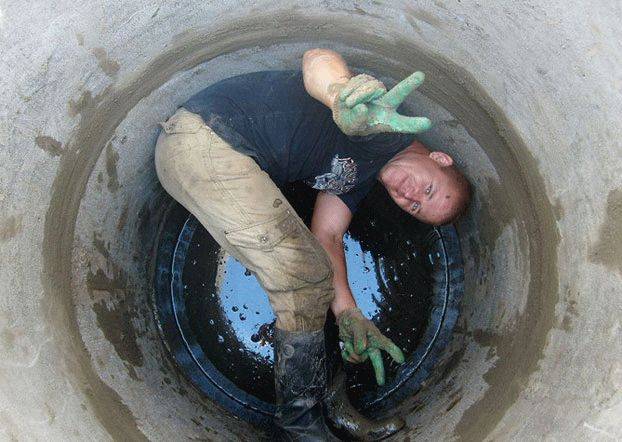
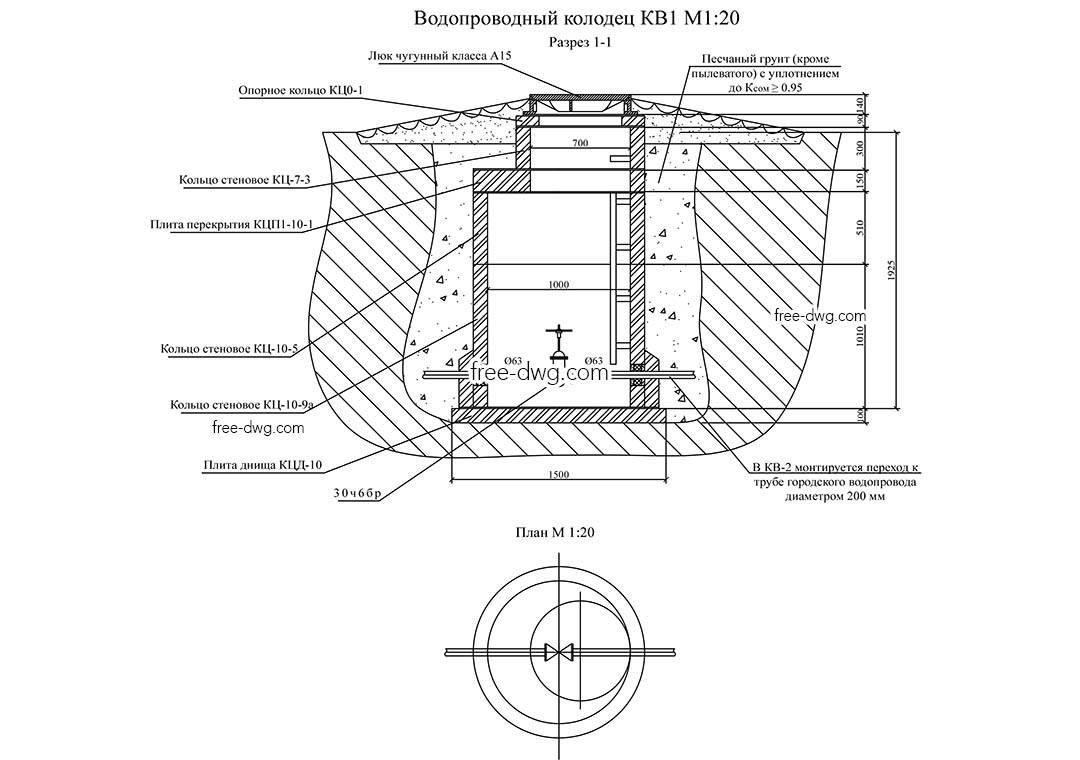
Design of manholes for drainage
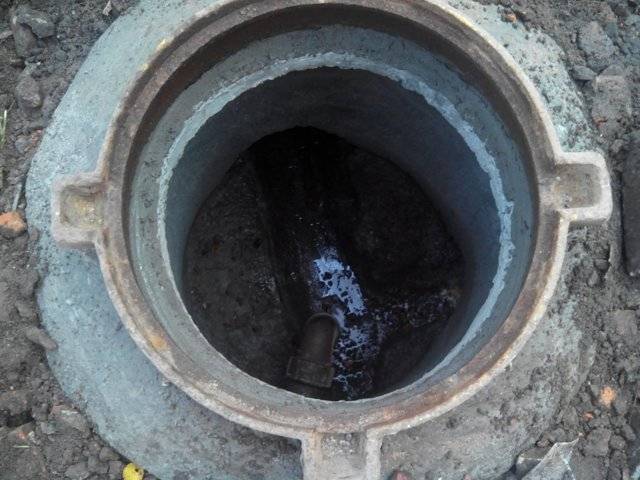
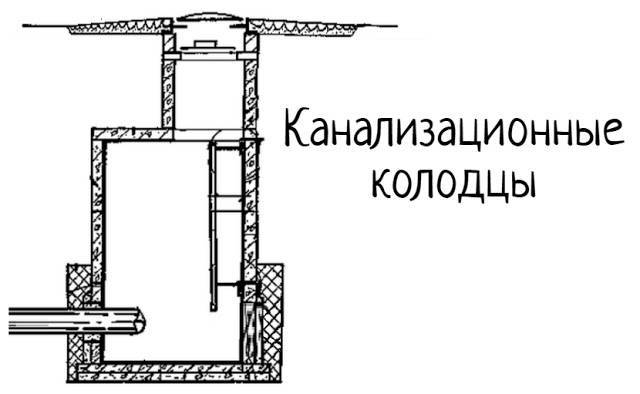
In the photo you can see that all manholes have a similar design.
- the foundation;
- tray part;
- working chamber;
- neck;
- Luke.
Drainage manholes can be round or square. Reinforced concrete slabs are usually laid at the base of the structure, placing them on crushed stone. Their design solution is a tray - a pipeline passes into it at the inlet.


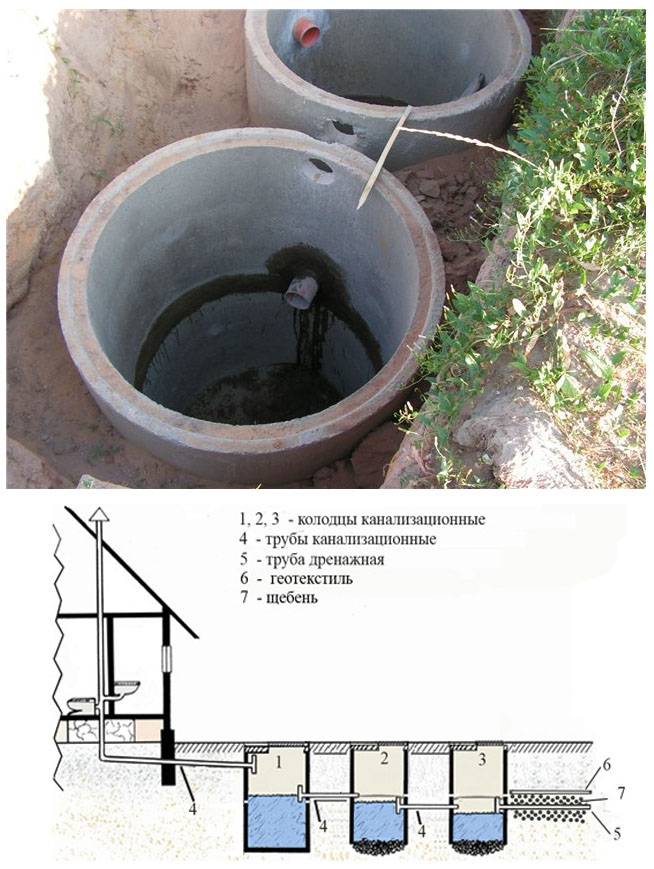
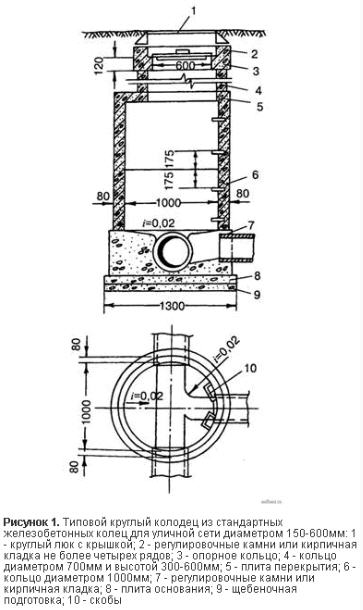


In its lower part, the tray takes the form of a pipe. This element is made of concrete, and its surface is rubbed. In some cases, ironing is still performed. Shelves are made on both sides of the tray - craftsmen are located on them during operational activities.
Its neck is closed with a hatch made of cast iron or polymeric material, which rises 7-20 centimeters above the ground surface. The scheme of the device of a traditional manhole provides that the upper part with a cover should be available at any time to monitor the liquid level.
Types of inspection drainage wells
Depending on the design solutions, manholes are:
- control - they are equipped at the junction of the yard network with the street, but only beyond the red line of the building;
- rotary - they are installed where the direction of pipelines changes. The tray in such designs should have a shape in the form of a smooth curve and exactly repeat the bends of the turn;
- differential - they are mounted in those areas where the levels of the inlet and outlet pipes do not match;
- flushing - such structures are placed at the starting sites, where the liquid, as a result of a low speed of movement, can be converted into a precipitate. It can be eliminated by flushing the pipe;
- linear - equip them on straight sections of the pipeline. Between such manholes, it is necessary to calculate the distance, taking into account the diameter of the pipes;
- nodal - they are installed in the place where the branches of the pipeline intersect. Usually 3 inlet pipes and 1 outlet pipe converge in the node.
Materials for the manufacture of manholes
The material from which the well shaft will be built is determined when designing the drainage system.
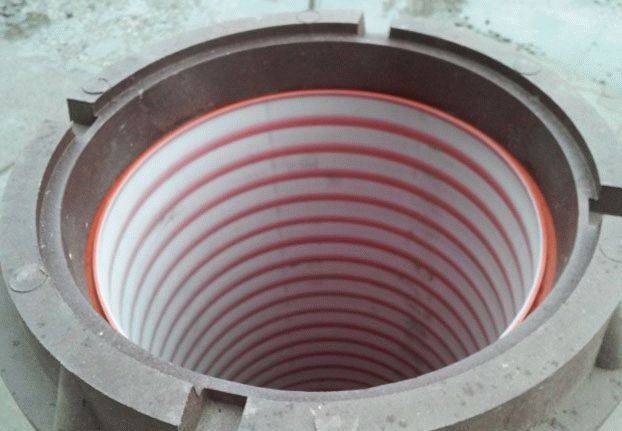
Usually one of two options is used:
Features of the installation of a drainage well
On each land plot where there is a need for the removal of waste and soil water, the arrangement of a drainage system is required. Its constituent elements are without fail inspection drainage wells. Installation of such structures is not a whim. The fact is that underground waters are not clean and after a while a silty sediment forms at the bottom of the collectors, which must be removed.
- corrugated pipe;
- plastic bottom;
- rubber seals.
For the device of a simple viewing structure, a pipe with a diameter of 46 centimeters is most often chosen. It is enough to flush the structure with water using a hose. When in the future it is planned to descend into the well, then its diameter cannot be less than 92.5 centimeters.
Classification of wells by purpose
Different wells and by appointment:
- Cumulative.These are, as a rule, tanks with a capacity of 3 cubic meters. m and more, intended for direct collection and short-term storage of wastewater with subsequent removal. Pumping is carried out both by special equipment and independently. Most of the storage wells are domestic and atmospheric.
- Collector. They are designed to collect wastewater from several sewer systems and distribute them to a common collector or to municipal wastewater treatment plants. Usually they include floating and storage systems of a microdistrict or a residential complex.
- Filtering. The design of the bottom of the well provides for the release of gray water (not contaminated with toxic waste) directly into the ground in a natural way. These small treatment facilities can be cleaned of accumulated dense fractions once or twice a year. They are arranged mainly in sandy and sandy loamy soils, in the absence or low location of groundwater. This type of well of a floating type of sewerage is quite economical and does not require frequent maintenance and cleaning.
- Lookouts. They are built on sections with a length of more than 50 m, as well as at turning points and junctions of highways. Necessary for the revision of the sewer system, for cleaning and possible repairs. Arrange in both types of sewerage.
- Variable. They are arranged in areas with large elevation changes, when it is necessary to reduce the natural slope of the pipe. Such wells are arranged in the export and floating sewers.
Separately from all are the so-called septic wells. They have a filtering and storage element of the system. Modern septic tanks are able to process organic waste. They are reluctant to use because of the high cost.
Borehole water supply of a suburban area
Mines with a depth of more than 20 m are called pipe (tubular) or artesian. If underground aquifers lie very deep, wells up to 200 m have to be drilled, but most often this happens for industrial purposes. The quality of the liquid in artesian sources is much higher than that of the well: it practically does not contain nitrates, salts of harmful metals, pathogenic bacteria that enter the wells from the perch. The only disadvantage of well equipment is the high cost.
Small well (on sand)
Sand wells are the most acceptable way to provide a country house with better quality water. Their depth is from 15 m to 35 m (rarely 45 m), and the water flow is on average 0.8-2.2 m³/h. Drilling should be carried out by specialists, since it is necessary to detect underground horizons of water-bearing sand and properly install the filter. The drilling process lasts 2-3 days, then it is necessary to plant the shaft with pipes made of steel or propylene. The lower part of the equipment is equipped with a sand filter or a more powerful filter column.
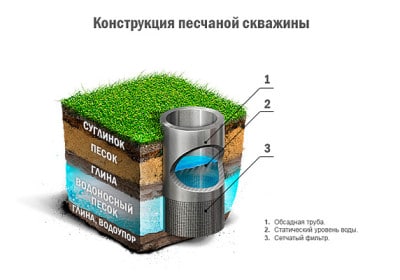
Scheme of a sand well device
The capacity of the facility is enough to provide water for a family of 3-4 people. The quality of the liquid is not as ideal as that of an artesian, but much higher than that of a well, since surface water is excluded. If you install a centrifugal pump and automatic equipment, the sand well will function smoothly throughout the year. Drilling is possible when using a compact drilling rig, a license and a package of permits are not required.

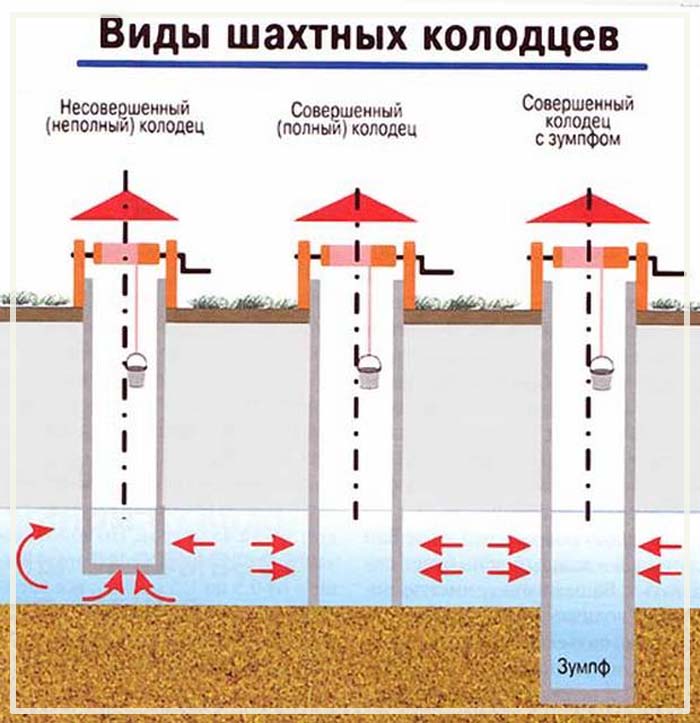


deep well
The depth of an artesian well is from 30 m or more, in suburban areas the maximum does not exceed 200 m. A package of permits is required for its installation. Drilling should be carried out by specialists, as heavy construction equipment (ZIL, KamAZ) and a powerful rotary unit will be required. The drilling process consists in the destruction of hard rocks, their removal from the mine and the installation of casing pipes. The maximum number of casing pipes for one structure is 3 pieces, such a prefabricated structure is called telescopic. Welding has recently been used extremely rarely, the main method of connecting elements is threaded. Lower water layers are isolated from the upper using a special material - compactonite, granular dry clay.
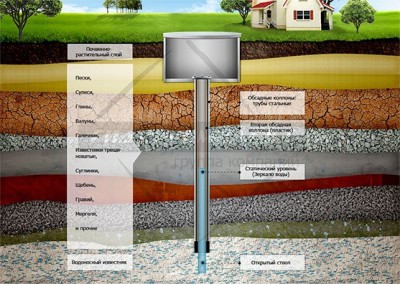
Artesian well with double casing
After installation of pipes, experimental flushing is required until clean water is obtained. Samples are taken for analysis in order to give permission for the use of water as drinking water. The owner is issued a passport, which indicates the technical data of the structure and the terms of use.