Where is the best place to install a pumping station
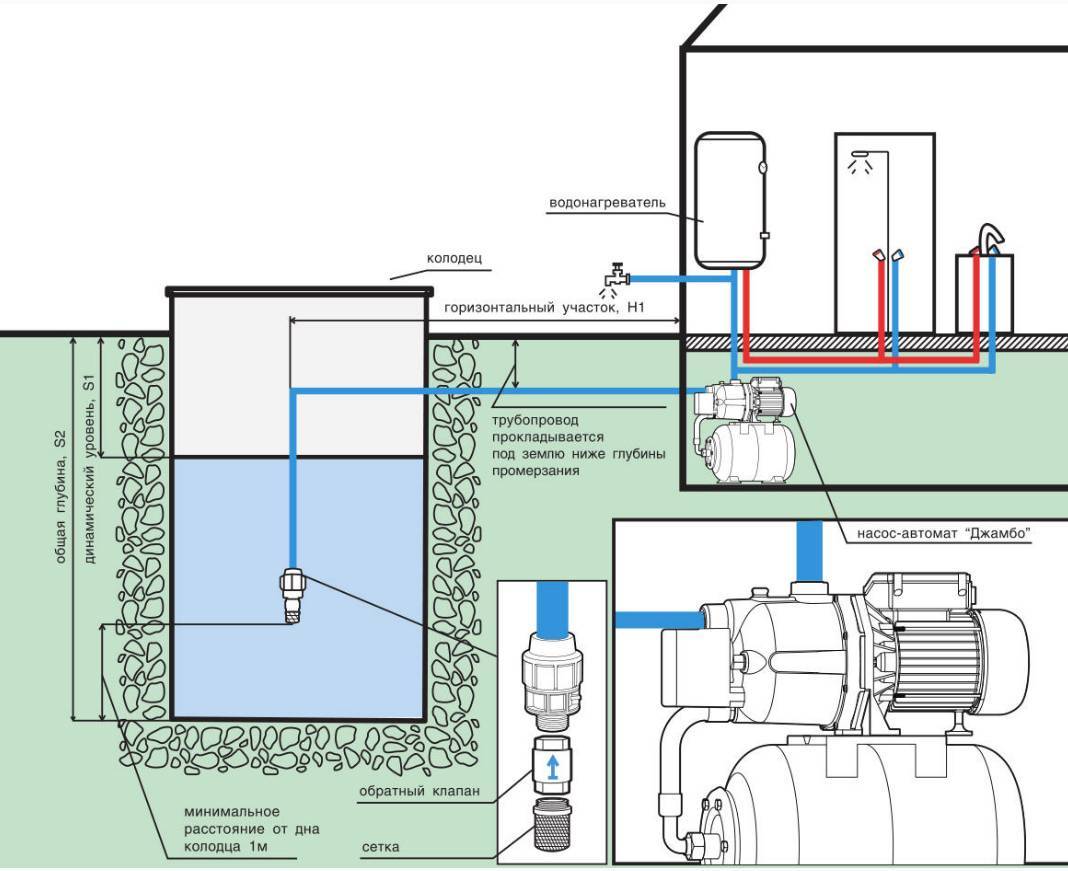
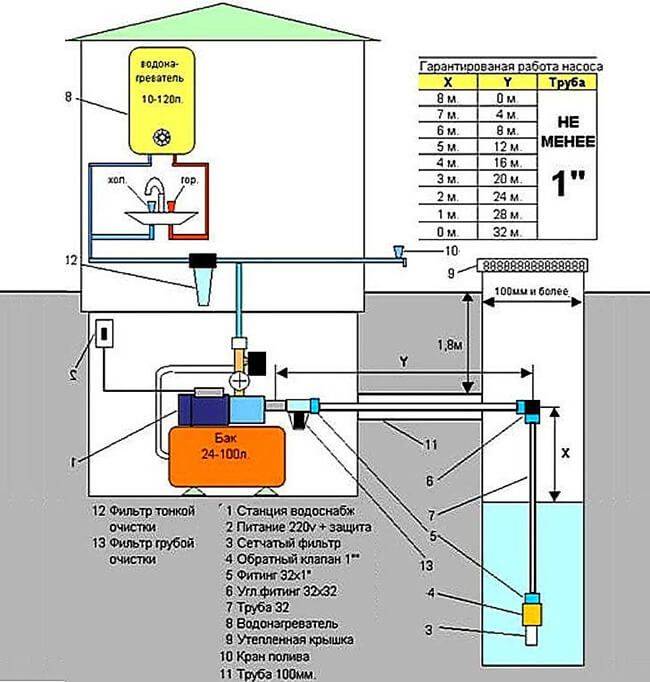
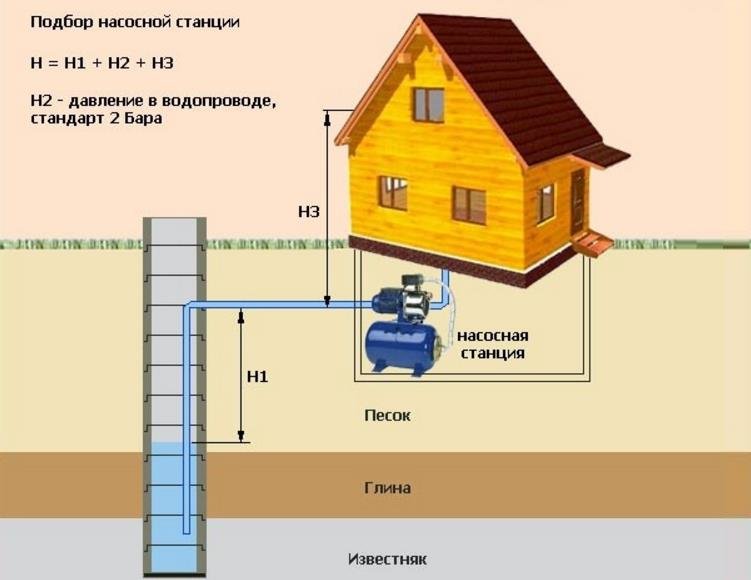
The equipment must be installed near the water intake point. This will reduce the level of inertia of the system. That is, it will be able to quickly respond to water consumption and replenish it if necessary. In a word, it guarantees the stability of the entire system. Many people prefer to install a pumping station directly into the well, but this is not always possible.
installation of equipment in the well. This option is considered effective, as the system can quickly respond to a lack of water. At the same time, the noise of operation is leveled, because the pump is located outside the residential area. The method has some negative qualities - a high level of humidity and even the waterproofing of the nodes does not save, as condensation forms.
There are two ways to mount the station in the well: removable (attached to the upper surface of the well) and in the shaft using a bracket. The first option is distinguished by its simplicity, and the second - compactness.It must be understood that both types of installation will adversely affect alternative methods of water intake, for example, with a bucket. In addition, it will be necessary to insulate the ground part of the well.
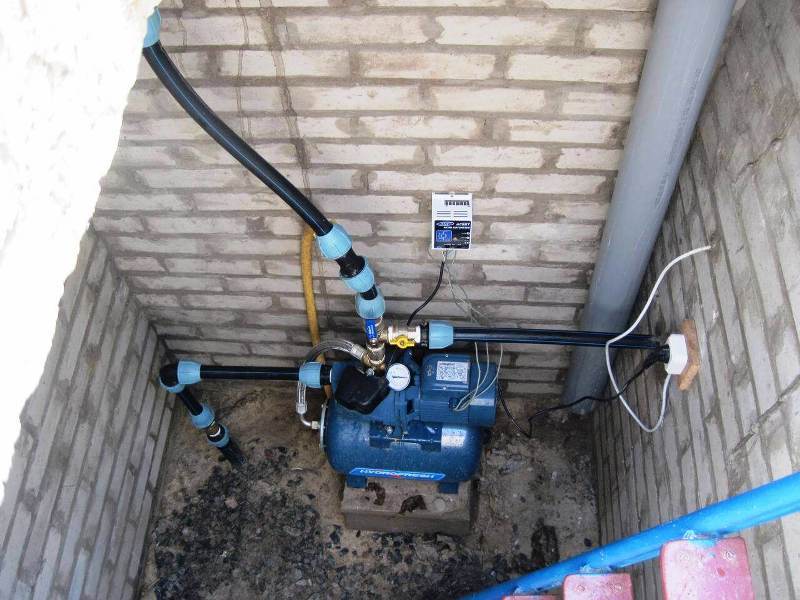
installation in a caisson or a separate room. Installation in a caisson is when an auxiliary, service well is dug near the main well. An alternative option is to place the pumping station in a room specially designated for it.
The caisson has the same advantages as installation in a well - low noise level, proximity to the water intake point, convenience. However, such installation will not save the equipment from condensate, so reliable insulation is required. In addition, care should be taken that rainwater does not enter the caisson. In this regard, you will need to make a sealed hatch.
The simplest technology is the construction of a special building for the station. It also needs insulation. Since the equipment will be installed on the ground, it will also have to be heated, since the cold adversely affects functionality.
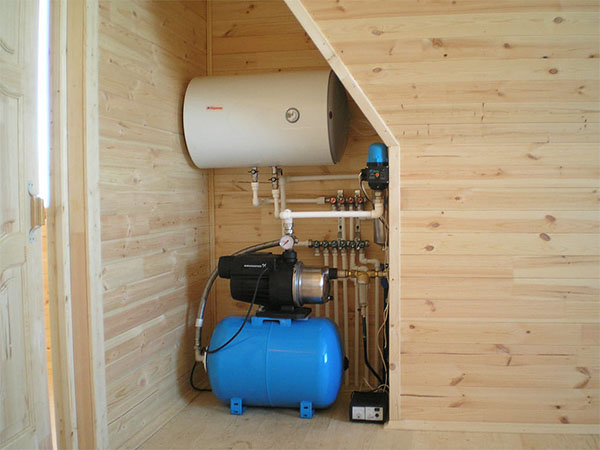
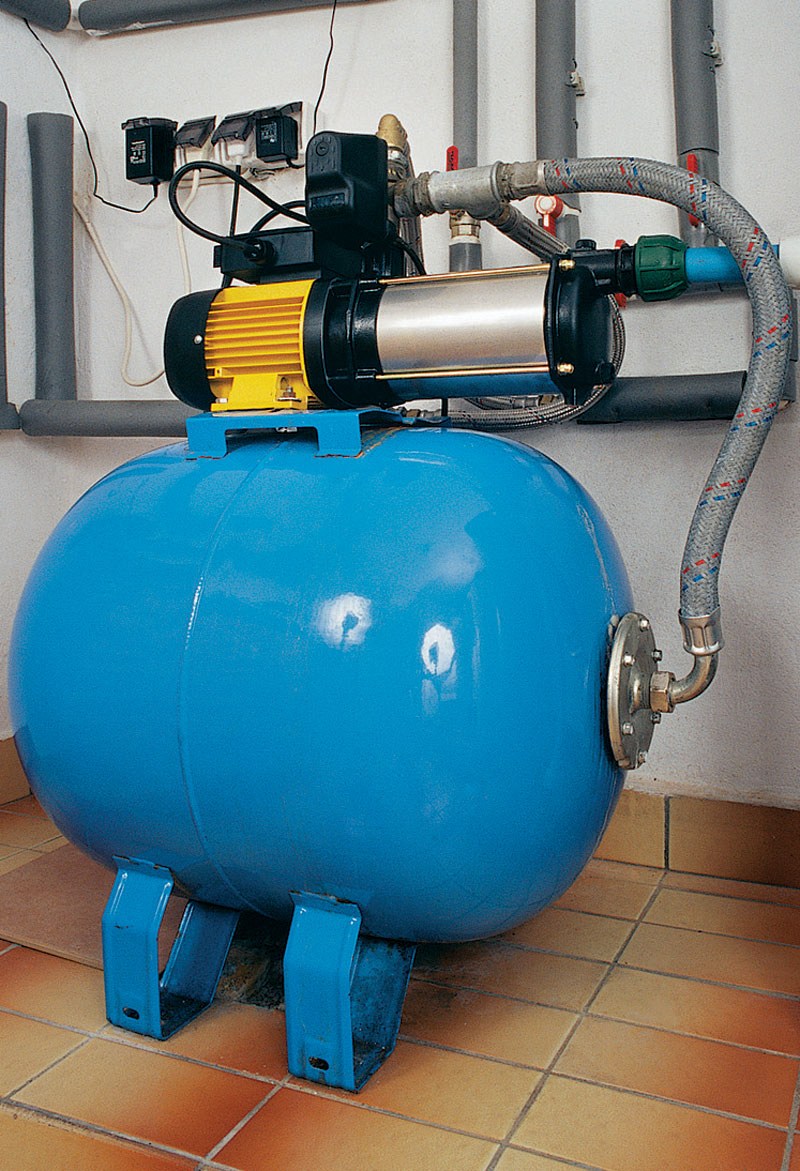
in the back room or basement. Here it should immediately be noted that the unit is quite noisy, so it is best to install it in a boiler room or basement. If there is not much free space in the room, the equipment can be installed under the stairs or in the bathroom.
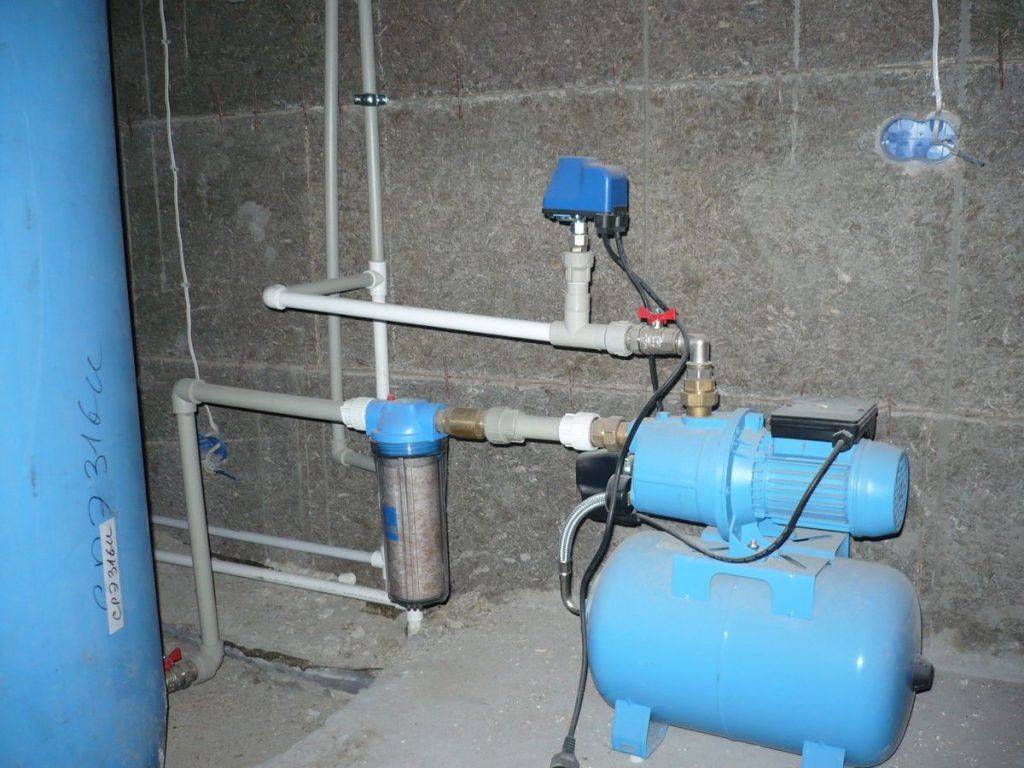



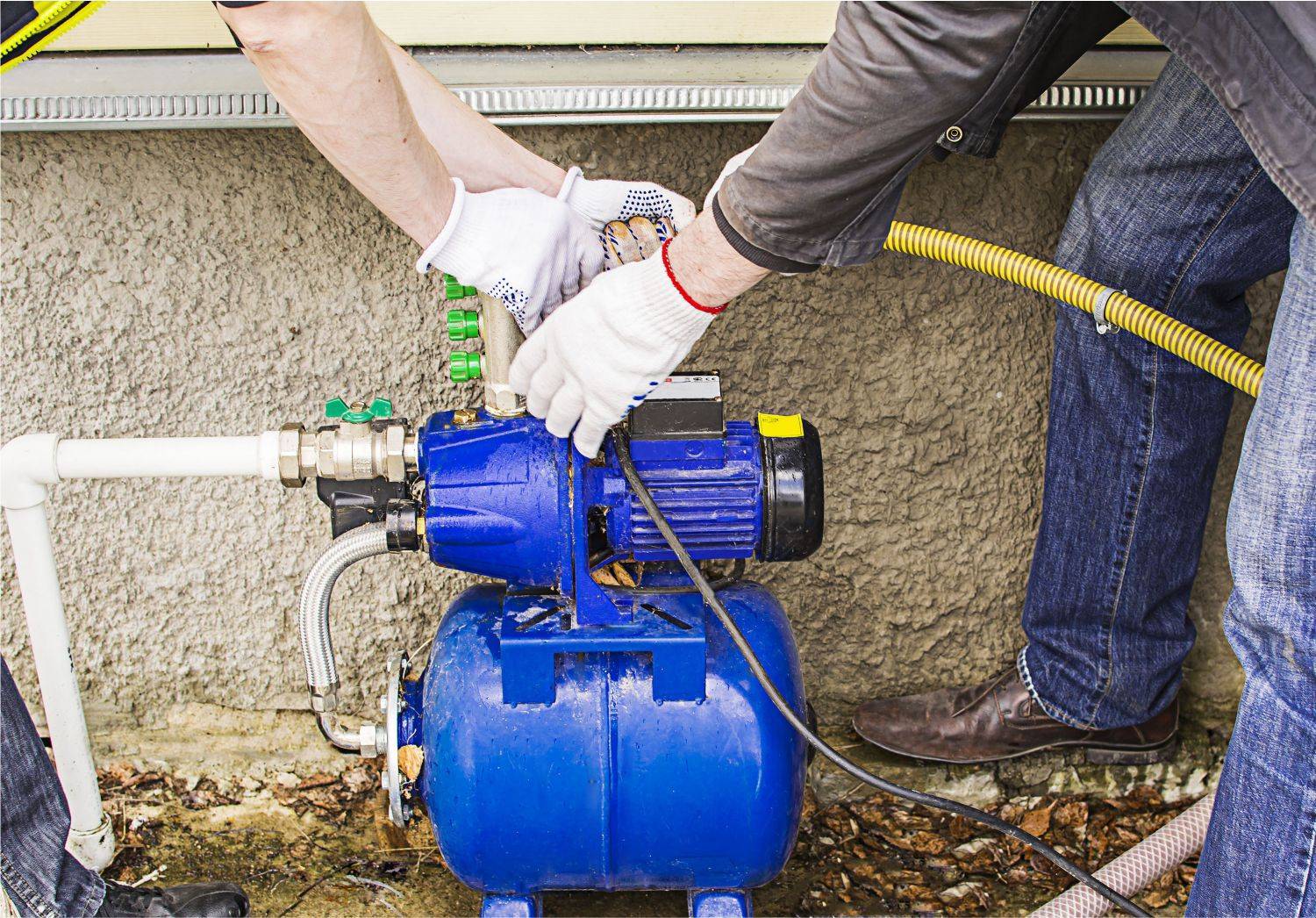
Whichever option is chosen, reliable sound insulation will be required, otherwise the stay will not be particularly comfortable. If you decide to allocate a basement for a pumping station, then you should take care of its waterproofing, of course, if it has a high level of humidity.
If the equipment is installed on the territory of the house, it must be understood that it is most effective if it is located near the water intake point.
Device
From time to time there are interruptions in the operation of the pumping station. This does not mean that an unscrupulous manufacturer sells faulty equipment. The reasons, as a rule, are that water from natural reservoirs is actively filtered. Garbage of different "caliber" clogs the filter and clogs into the functional elements of the device. Here are just some of the common problems: the pump works jerkily, does not supply water, does not turn on or off, buzzes, but does not work
To quickly eliminate the cause, it is important to understand what elements the system consists of and what its principle of operation is.
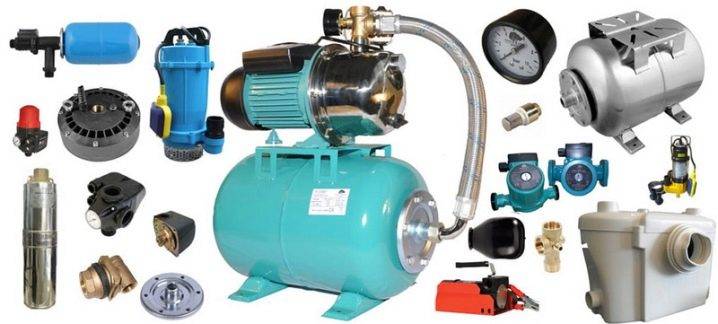
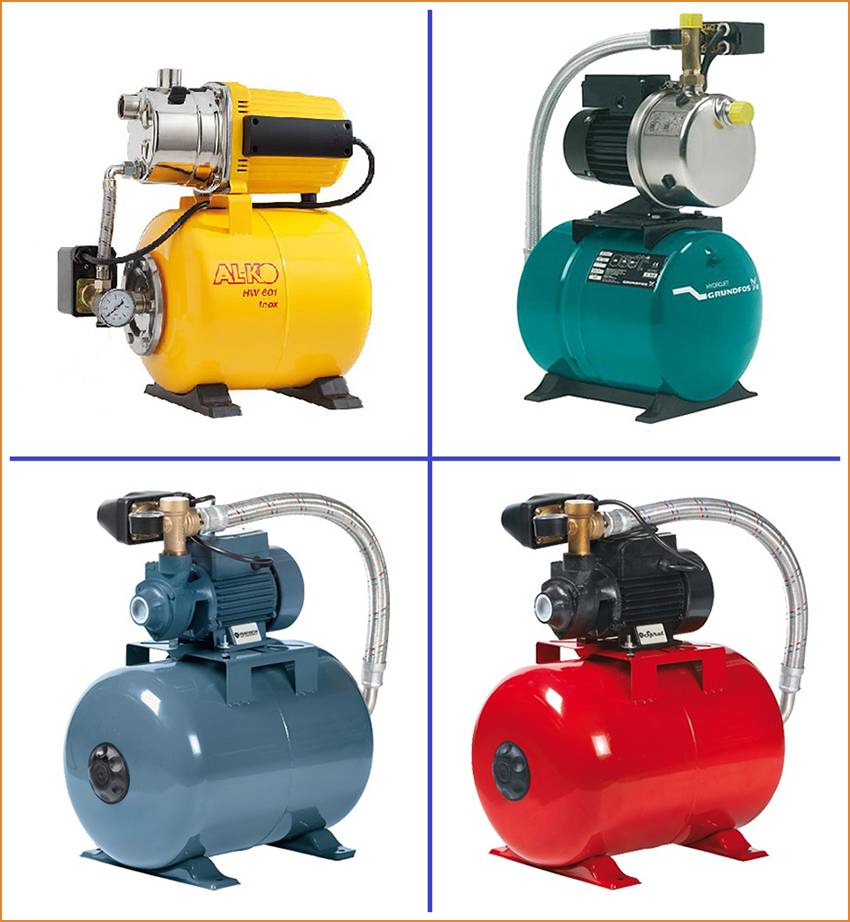
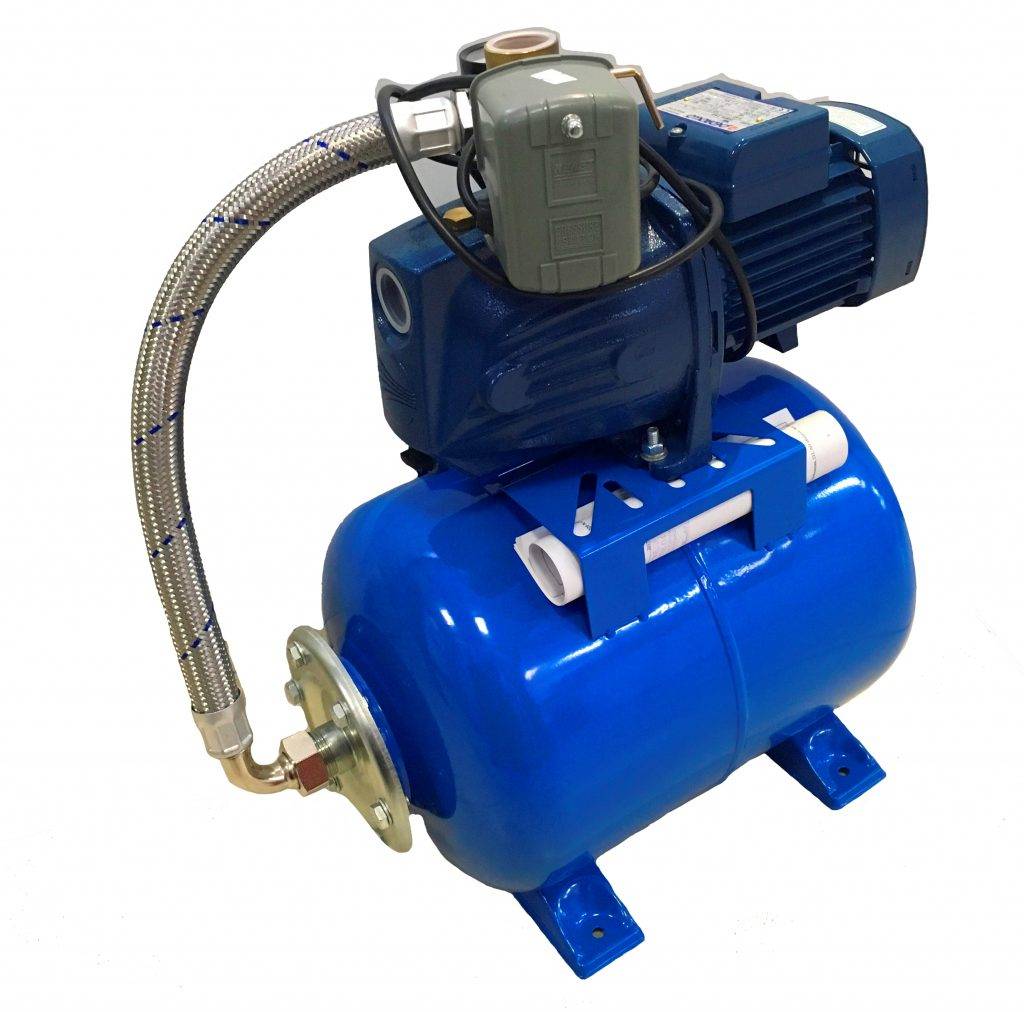
Station device:
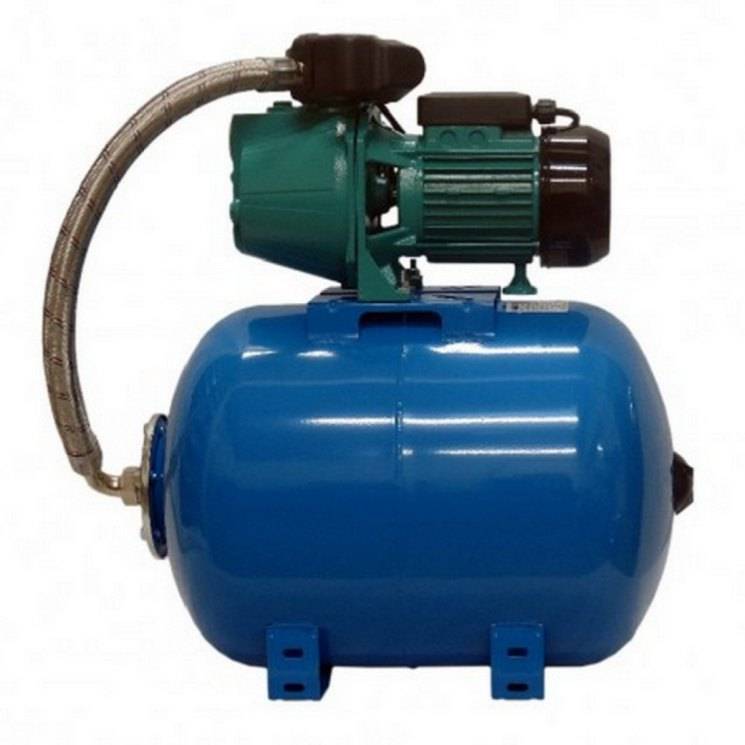
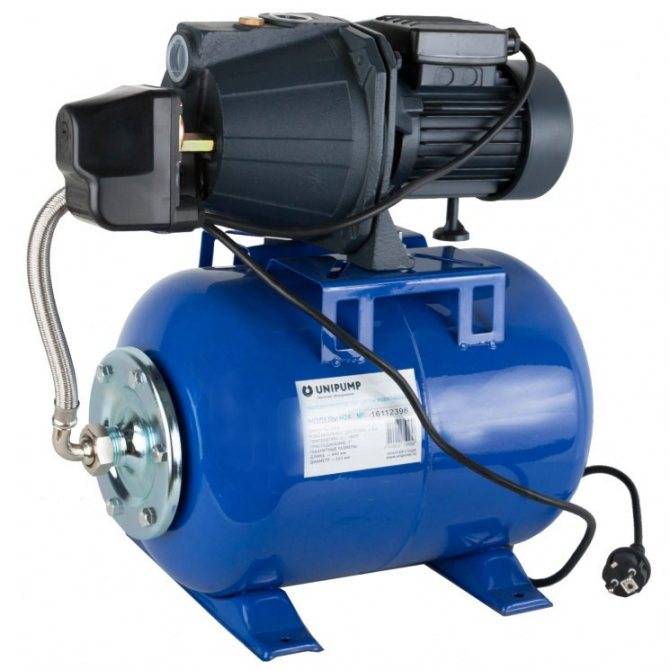
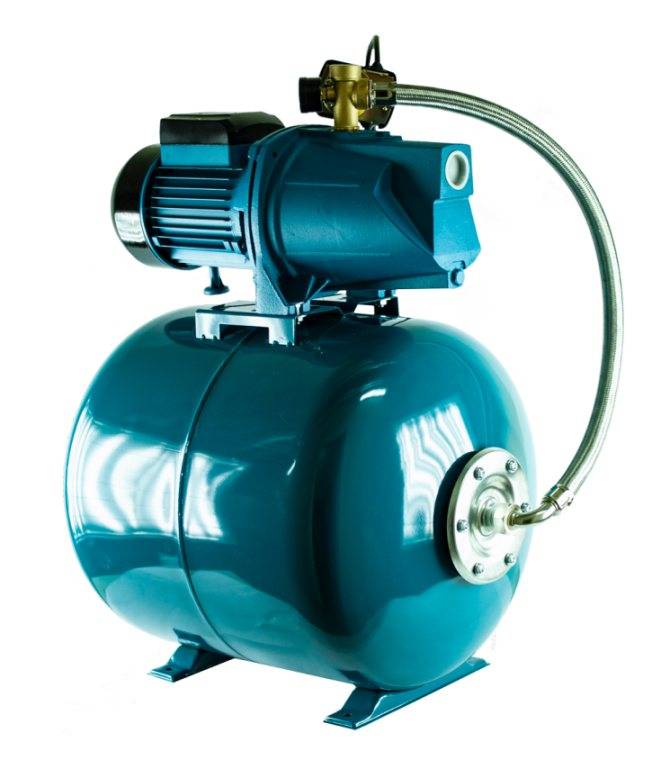
- The pump is the heart of the system. It is formed by an electric motor and a pumping part. An electric cord with a plug departs from the motor, connects to the power cord or directly to the outlet.
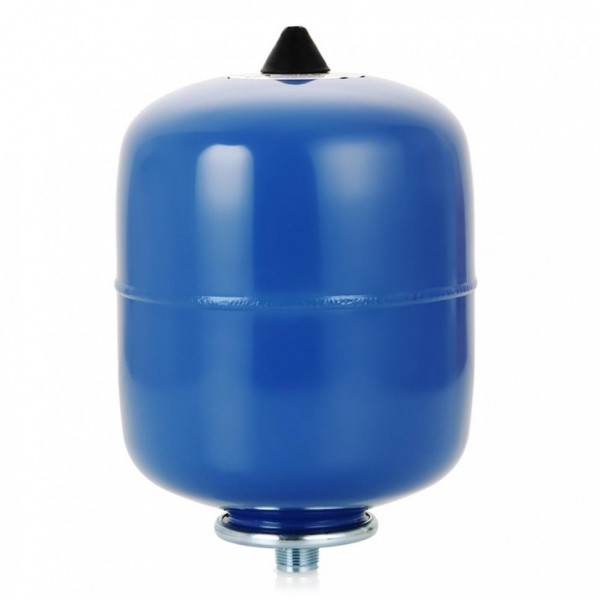
- Hydraulic accumulator. The minimum volume is 18 liters, the maximum exceeds 100 liters. For a summer residence, a minimum is enough. For a residential building - the more the better. Since it works as a reserve, a large volume will allow you to use water longer until the problem is fixed. Inside the battery is the so-called rubber "pear". It has the ability to narrow and expand under the pressure of water, so it prevents water hammer. Pears are made from several types of rubber: butyl, ethylene propylene, butadiene rubber. All of them are suitable for drinking water and withstand high temperatures. But not the entire volume of the accumulator is filled with water. This tank is divided into two parts: for water and air.It is due to this combination that the pumping station is able to work for some time after a power outage or a water supply interruption.
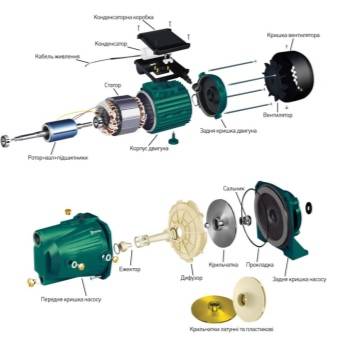
- Connecting hose. This is the link between the first and second element.
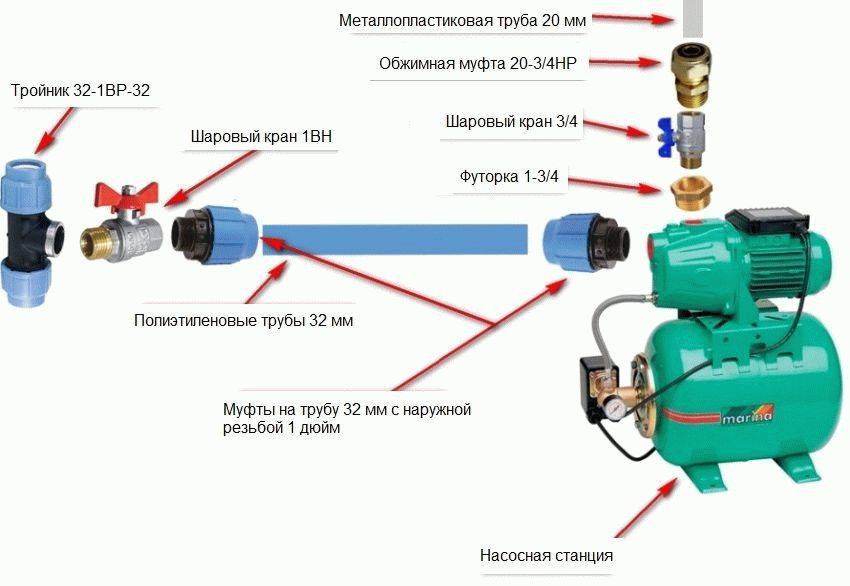
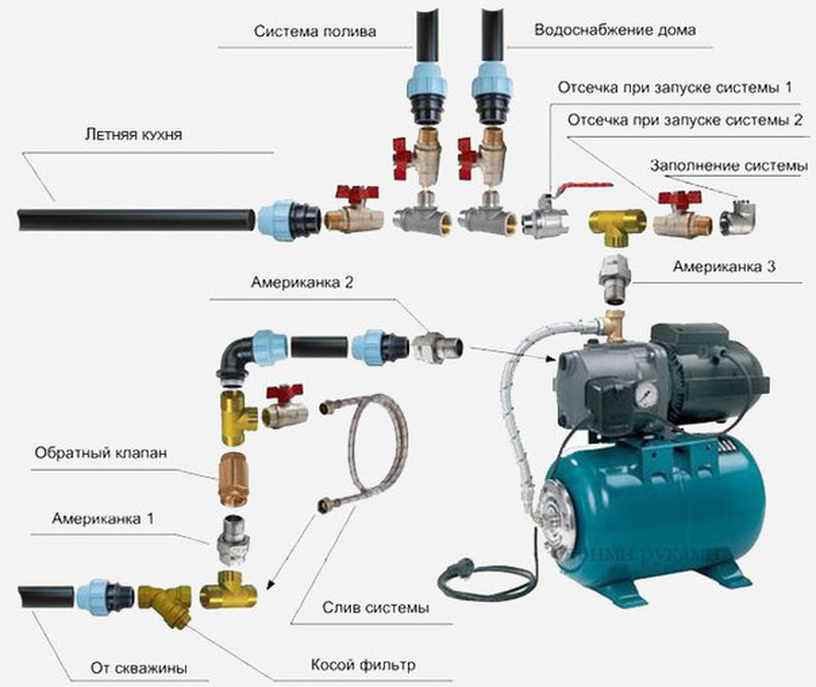
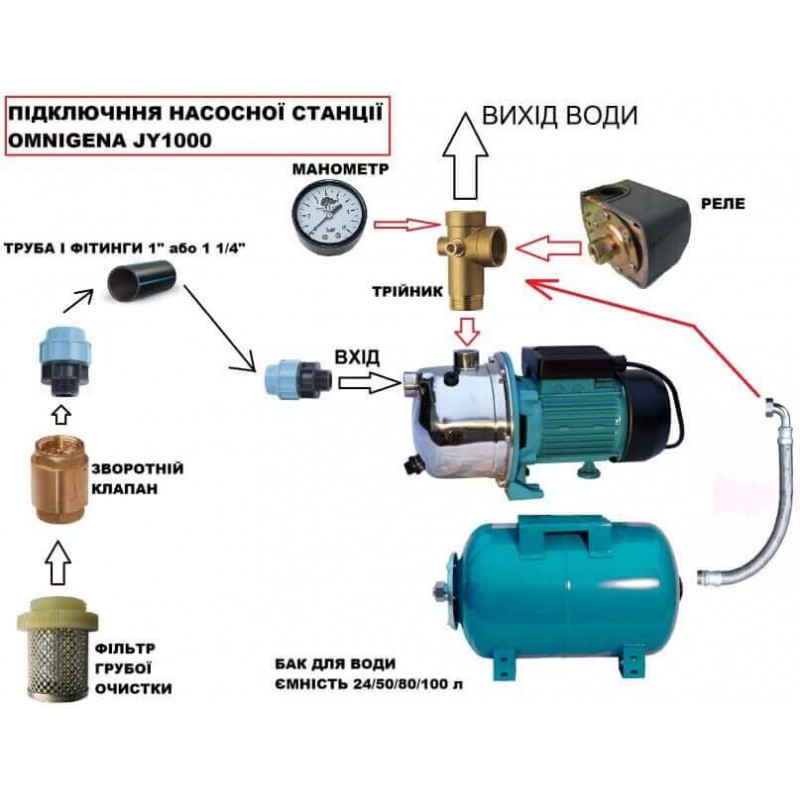
- Automation kit or control unit. Regulates and maintains stable pressure in the system. At low pressure, it starts the system, at high pressure it turns it off. The kit includes a fiver, a monometer, a pressure switch. Mandatory items that are purchased separately: check valve and filter. The purpose of the check valve is to keep water in the tank so that the motor does not run idle. A filter is necessary to purify water from debris and impurities. The filter is removable and easy to clean. This prevents many problems from occurring.
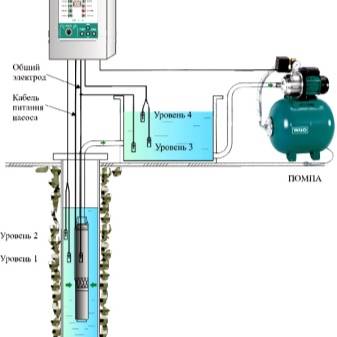
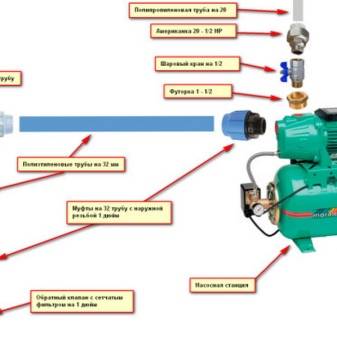
For the system to start working, the pumping station is not enough. It needs to interact with all the elements. These include:
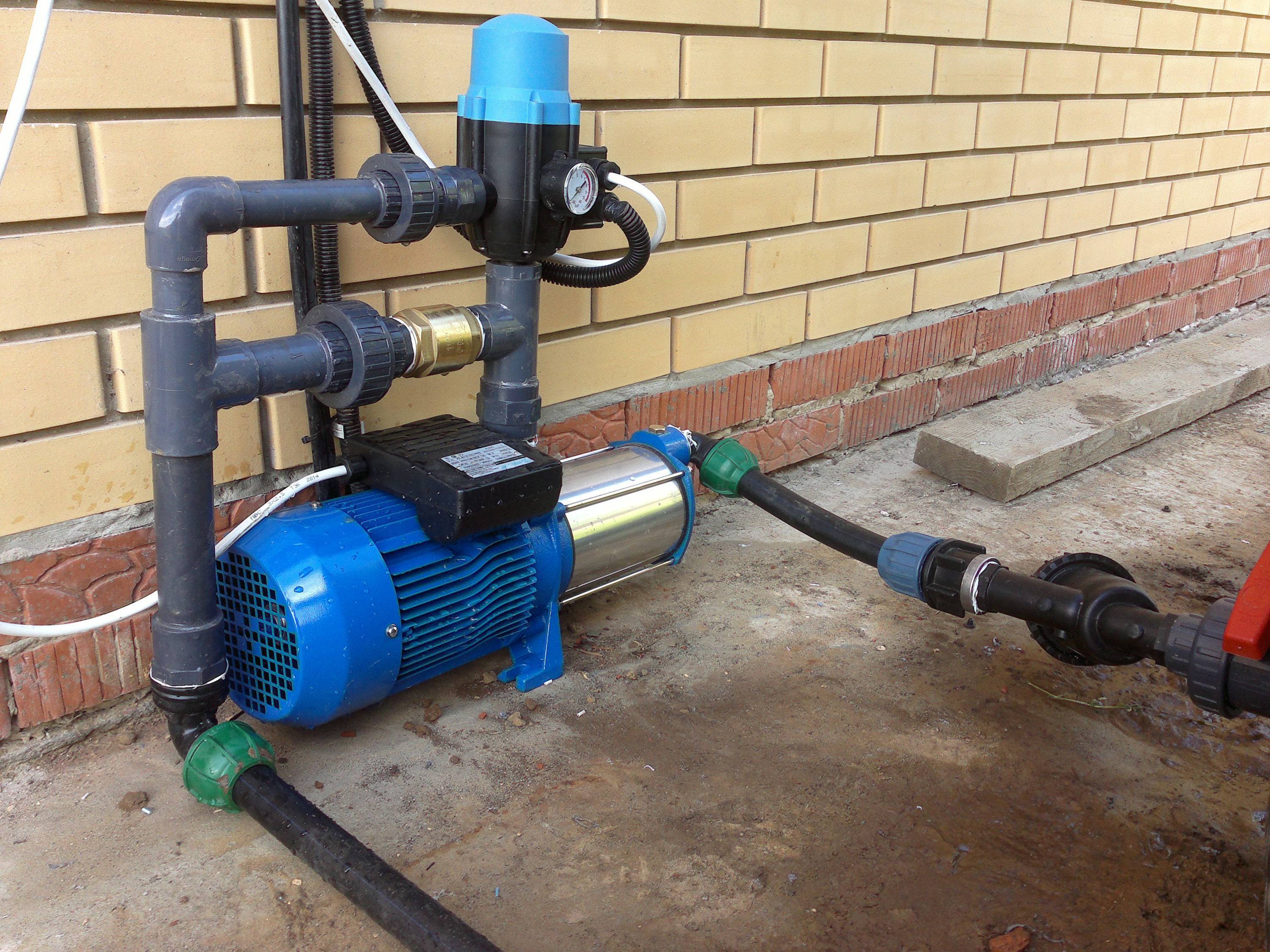


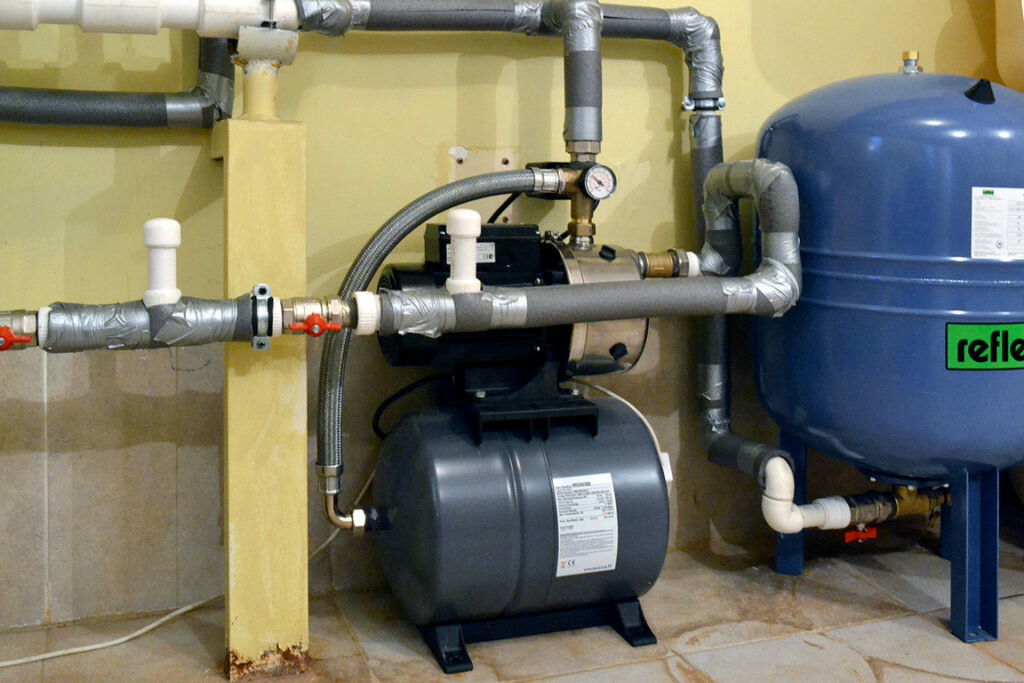
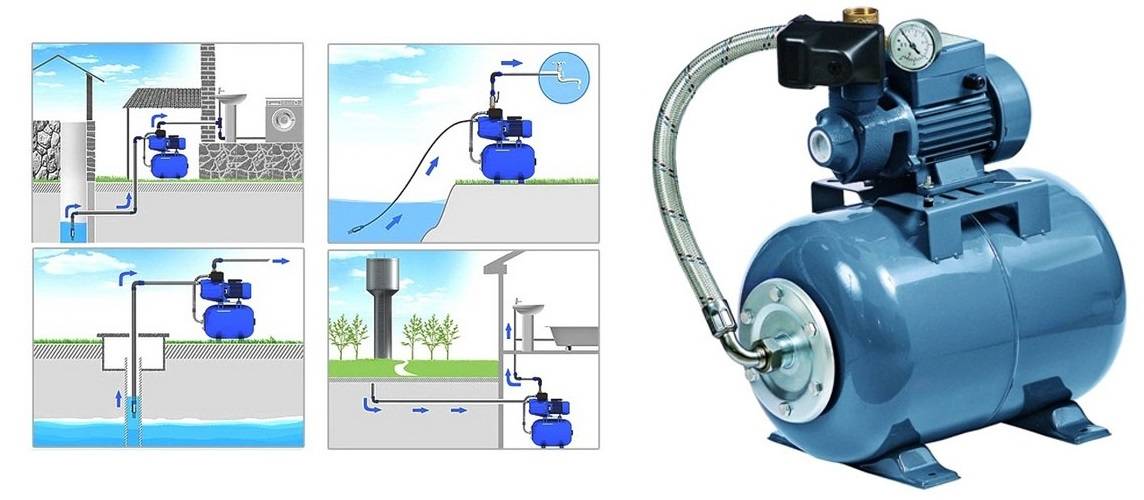

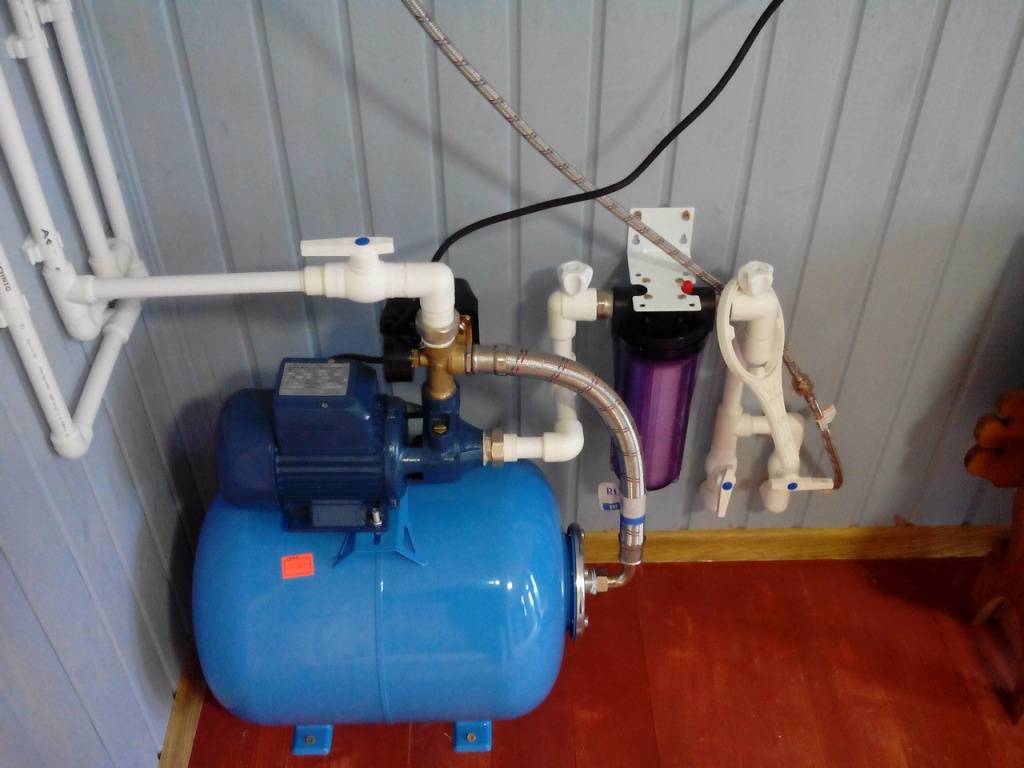

- water source;
- suction pipeline (filter and valve are located at the end of the pipeline, directly in the water);
- injection pipeline;
- nipple;
- cross;
- transitional nipple;
- flexible hose or hose;
- pipeline to water consumers (washing machine, dishwasher, shower, taps, toilet, boiler).
Submersible pump or pumping station - which is better
Submersible pump - deep equipment. Its engine is not subject to overheating due to constant cooling by groundwater. It is distinguished by silent operation and an excellent indicator of the dynamic level at a depth of more than 8 m. Unlike the station, the mechanism needs additional equipment (pressure gauge, hydraulic accumulator, etc.) to further distribute the liquid.
The pumping station operates on the surface and consists of a pump, a pressure switch and a hydraulic accumulator. It is noisier than a submersible and only provides stable pressure when working to depths of 9 m.
| View | Advantages | Flaws |
| Submersible pump | Silent operation | High price |
| Lifting water from great depths | Difficulty in maintenance and parts replacement | |
| Long service life | ||
| Descends into narrow wells | ||
| Pumping station | Relatively low cost | Less service life |
| Compact dimensions | Dependence on water purity | |
| Easy assembly and dismantling | Noisy work | |
| Availability of maintenance | Dynamic operation at water levels up to 8 m |
For the operation of equipment at a water level of up to 9 m, it is better to choose a pumping station. It has a membrane tank that will protect against water hammer and keep a reserve supply of fluid in the event of a power outage. In the case of a lower depth indicator, a submersible device would be a good solution. It will provide great performance.
Price for the installation of the station
It is possible to assemble the station without the help of anyone. But, if you decide to invite a specialist, be prepared to pay a tidy sum. The price for installation is high and is determined by the calculation. It is more profitable to put the assembly in the assembly, with a pre-installed pump on the hydraulic tank. For this, you can often pay up to 5,000 rubles, but the water should already be connected to the house. The cost varies by the complexity of the work, the number of connected consumables.
Regarding installation, when the pump is lowered underground, this service is the most expensive.It involves lowering to a depth, and the subsequent installation of a casing cover, connecting a hose to a pump, laying a cable, and using a hydraulic tank. Hiring a specialist will cost up to 7,000 rubles, inclusive.
Installation will cost a pretty penny, using a soldering iron for HDPE pipes. Threaded connections are cheaper, but less reliable. The connections are easy to disassemble, repair and service. The risk of paying more includes the construction of a pit.
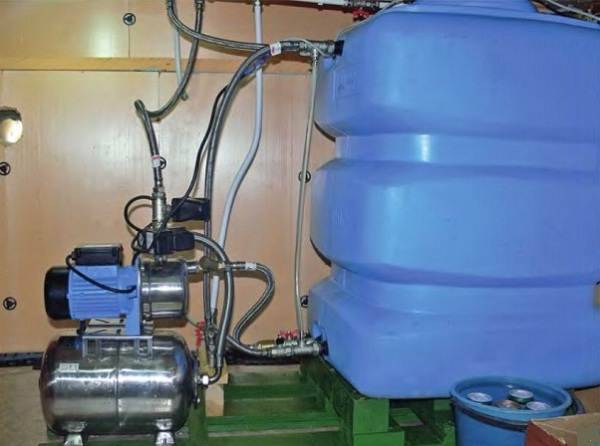
These are earthworks, including the work of special equipment to lift the rings. To save money and do the work yourself, it is recommended to equip a pit of red ordinary brick. In any case, the location of the station on the street requires insulation, otherwise it will freeze.


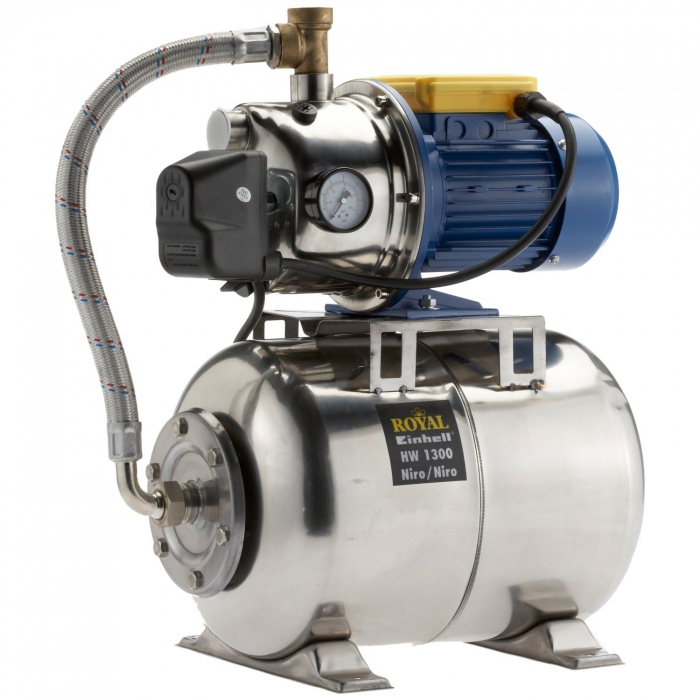


How to choose water supply pumping stations for a private house
Not everyone knows how to choose a pumping station for a private house or for a summer residence.
There are several main parameters that you should pay attention to when choosing a particular model.
Table
What to look for when buying a pumping station?
| Parameter | Short Description |
|---|---|
| Power | An average model with a power of 1,200 W can provide water injection from a depth of 4 meters. Therefore, it is recommended to choose models of 1000 W when diving up to 10 meters and more than 1000 if the water is deep enough. |
| Performance | If the power is up to 1000 W, and the water is at a depth of up to 10 meters, then the productivity is about 3.7 cubic meters per hour. The deeper the water is, the lower the performance at the same power. |
| The volume of the accumulator tank | It is necessary to maintain a stable pressure in the system.The minimum devices have a capacity of 10 liters. 20 - 25 liters is the optimal value for a country house and for a summer residence. |
| Water pressure | A pressure from 25 to 400 meters is what you need to focus on when buying a device for domestic use. |
| Housing material | It is an alloy of steel and aluminum, brass, plastic, steel or aluminum. |
Thus, when choosing which pumping station to choose for a summer residence and for a home, all these factors must be taken into account. Choosing a device from this rating, you can be sure that it fully meets the declared characteristics.
Video - How to choose a pumping station


popular vote
Which pumping station would you choose or recommend?
CALIBER SVD-770Ch+E
Save the voting results so you don't forget!
You must vote to see the results
Conclusion
Have you already bought a pumping station for your dacha?
Of course!
To choose a pumping station that can solve all the existing problems and not overpay at the same time, you should be guided by the following plan:
- Make an approximate calculation of the required performance. It is better to increase the resulting figure by a third in order to avoid errors. This will allow you to weed out insufficiently, or vice versa, overly productive expensive systems.
- Determine the required infeed depth and select suitable models accordingly.
- Measure the distance from the water source to the station and from the station to the points of analysis, which will allow you to roughly navigate the required power.
In addition, do not skimp on the body material. Expensive steel products pay off with greater reliability. Otherwise, you should be guided by the opinion of experts and consumer reviews.