- No. 1. Types of electric floor heating
- The best heating mats
- Electric floor heating DEVI DEVImat 200T (DTIF-200) 2070W
- Electric floor heating Electrolux EEFM 2-150-11
- Electric floor heating Caleo SUPERMAT 200-0.5 2000W
- Battery types
- Cast iron
- Aluminum and bimetallic
- Steel
- Types of warm floors
- What is an electrically heated floor?
- Advantages and disadvantages of the considered systems
- What is more profitable
- mats
- How to choose underfloor heating for tiles
- Water heated floor
- Copper
- metal-plastic
- Polypropylene
- Cross-linked polyethylene (REX)
- Conclusions and useful video on the topic
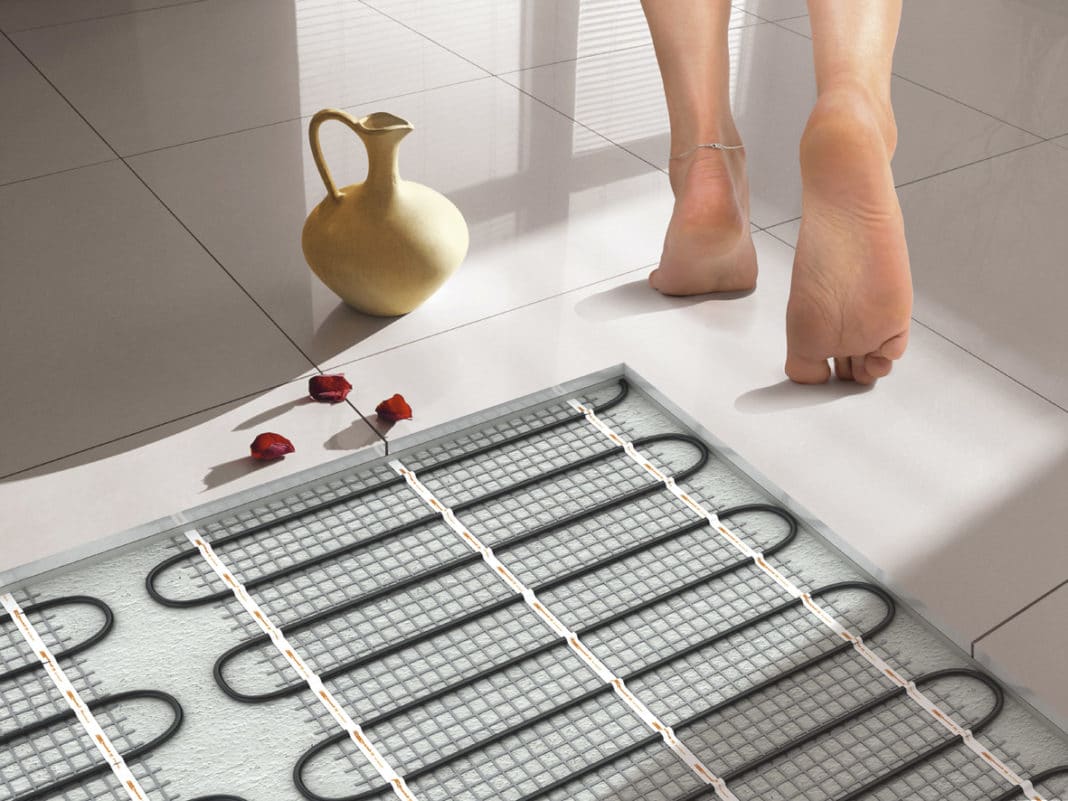
No. 1. Types of electric floor heating
Electric underfloor heating can be used in any room, even on the balcony. With him, you definitely can not be afraid that you will flood your neighbors, and you won’t have to agree on any documentation. Moreover, electric underfloor heating is more durable than water and easier to install. Underfloor heating systems allow for a more even and efficient distribution of heat in a room when compared to conventional radiator heating. Moreover, you can turn on the heating even when the heating season has not yet begun, and the apartment is already quite cool.Usually, a warm floor is used as an additional source of heat, but in some cases it can take on a major role and become an independent heating method.
The choice of a particular underfloor heating system will depend on many factors. This is the type of flooring, type of room, heating requirements, budget, and the role that is assigned to the underfloor heating (main or additional heat source). Fortunately, there are plenty to choose from.
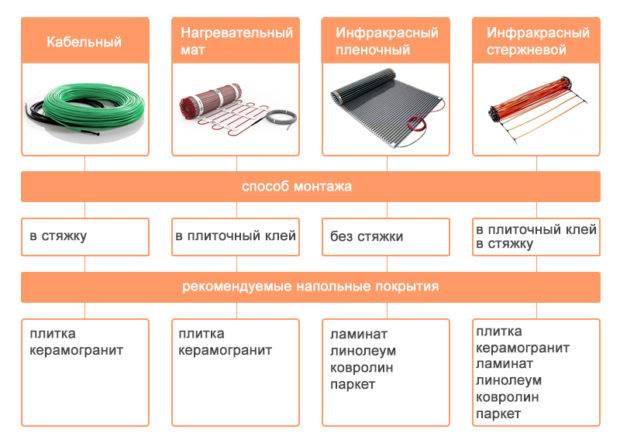
According to the type of system, electric underfloor heating is divided into the following types:
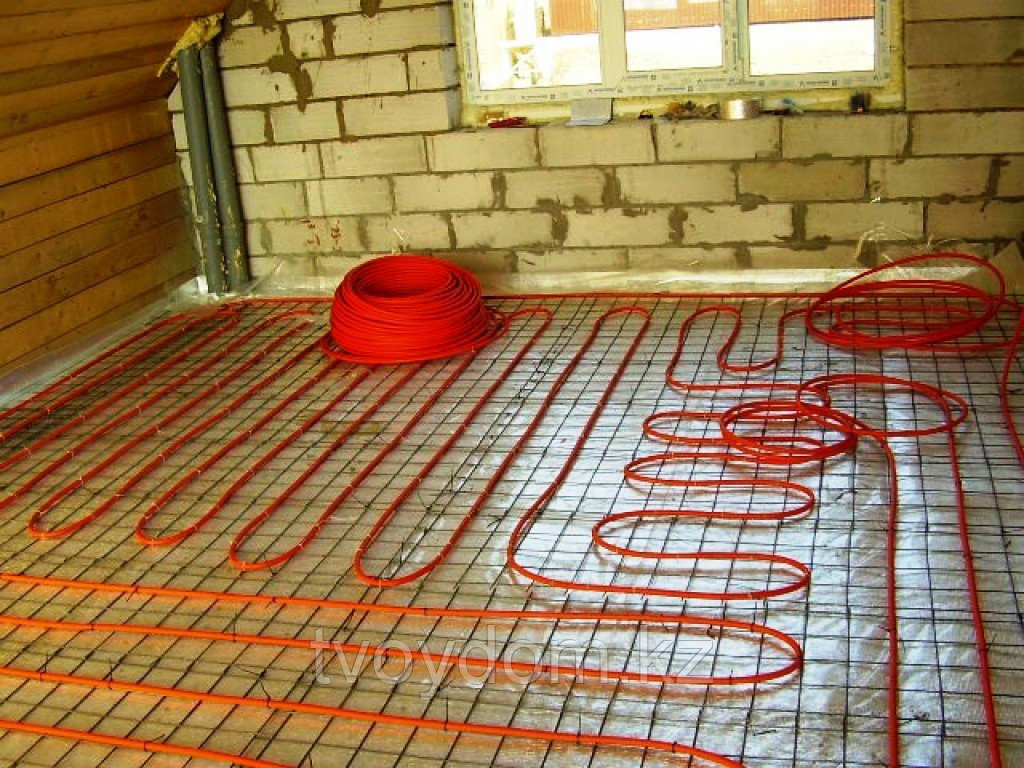
- cable. Its basis is a heating cable, which converts electrical energy into thermal energy. Such an electric warm floor can be both an additional and a main source of heat. It is laid under tiles, porcelain tiles and stone floors. Heating cables from Rehau have become widespread;
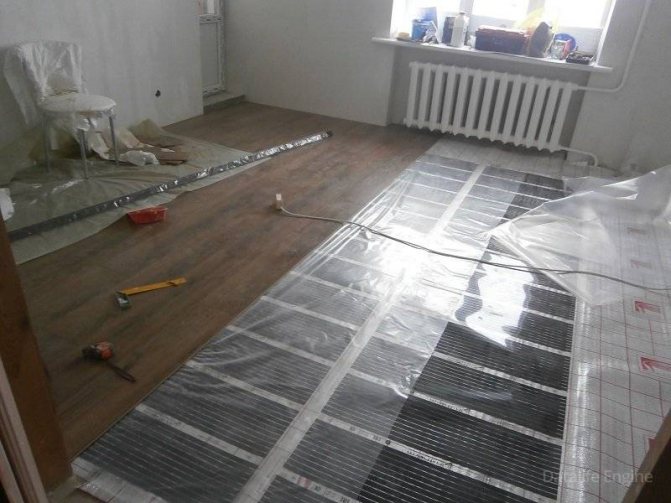
- film. Its basis is a film that heats according to the infrared principle, i.e. objects are heated first, and then air. It is easier to install the film, it takes a minimum of the height of the room, it can be laid under a laminate, carpet, linoleum, parquet board;
- the rod floor works in the same way as the film one, according to the infrared principle, but it has a more reliable structure. The basis here is more or less rigid emitters-rods, which are connected by two parallel conductors. So far, it has not been widely used.
According to the principle of heating, electric heated floors are:
- convection. These are cable floors (heating cable and heating mat). Heating of the room is carried out according to the principle of convection, i.e. the cable first heats the screed and flooring, the latter heats the air in the room.Warm air rises, cools, and returns to the bottom. The cycle is repeated. The room warms up evenly, and the floor temperature will always be slightly higher than the air temperature;
- infrared. These are films and carbon rods that heat the flooring, interior items and people. Already then from the heated objects the air warms up. In this case, the heating rate is higher, and the loss of valuable energy is lower. Savings on electricity can reach 60% (when compared with convection systems).
Type mounting electric warm floors are:
- installation in screed or tile adhesive. This is how cable and rod floors are mounted. Installation is possible during the overhaul;
- installation without a coupler, under a floor covering. This is how film infrared floors are equipped. Installation is possible during cosmetic repairs.
The best heating mats
| Electric floor heating DEVI DEVImat 200T (DTIF-200) 2070W 27 915 In this section of the rating, the Danes win a convincing victory - DEVI, of course, cannot be attributed to cheap brands, but their “heat mat” is effective, reliable and safe. Electricity consumption - a little more than 2 kilowatts. This series specifically has increased power: the manufacturer indicates that such mats can be laid even on insulated loggias and in other conditions when increased heat loss is inevitable. Therefore, under normal conditions, it is enough to cut the "appetite" of the mat with a thermostat - but in case of a sharp cold snap or a drop in the temperature of the heating batteries, this reserve will help maintain a comfortable temperature at home. As for the quality and reliability of this electric floor heating, traditionally we have no complaints against DEVI. Main advantages:
Minuses: High price | 9.9 Rating Reviews A good mat, even in February it copes normally. |
| Read more |
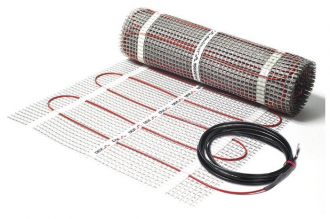
| Electric floor heating Electrolux EEFM 2-150-11 13 400 The Swedish by name (albeit, again produced in Israel) mat costs almost 10 thousand cheaper than the Danish one, but it is more "heat-loving" - whatever one may say, its power is 420 watts less. And this despite the fact that it is designed not for 10, but for 11 square meters of area (by the way, it can also be stretched to a greater length than originally calculated). Therefore, it is not suitable for every room - where Devi will work normally, Electrolux will already underheat even at maximum power. So immediately find out in what conditions the mat will work - perhaps the savings will not pay off. In general, an Electrolux correctly selected for the room will only please you, let it be assembled in a country where instead of a “warm floor”, “cold” is more relevant. The quality, safety of use and reliability are at an excellent level. Main advantages:
Minuses: The mat is a bit cold for rooms with high heat losses | 9.8 Rating Reviews Electrolux appliances suit me with everything, I decided to buy the floor of the same brand - it is easy to install (I saved on the masters), it heats as intended. |
| Read more |
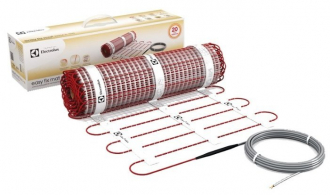
| Electric floor heating Caleo SUPERMAT 200-0.5 2000W 22 271 In this section of the rating, the "Korean-Russian" mat got up with the "Swedish-Israeli" almost head to head, it was difficult to choose a clear winner.The advantages of Caleo are increased power (2 kW), which allows it to work in rooms with increased heat loss, three-layer Teflon insulation and a smaller thickness, which simplifies installation. But the same smaller thickness also affects strength: for example, in a children's room, we would “just in case a fireman”, pah-pah, prefer Electrolux. Therefore, of the two mats, which are essentially the same, we nevertheless gave our vote to the safer and more durable. But, if you plan to lay the mat under a solid surface, and the room is cold enough, then Caleo will have its advantages. Main advantages:
Minuses: The cable is thin | 9.7 Rating Reviews High-quality electric underfloor heating from the series "laid, turned on, forgot." |
| Read more |


Battery types
Radiators are made from different materials. They are:
- cast iron;
- steel;
- aluminum.
Each metal has its pros and cons, which must be considered when replacing.
Cast iron
They have a working pressure of 9 bar. As for other characteristics, they are:
- height - 350-1500 mm;
- depth - 50-140 mm.
Such batteries, although they began to be used a very long time ago, are still very popular. Their main advantages:
- relatively low price;
- the ability to add sections;
- durability;
- the ability to use with any coolant;
- high efficiency.
If we talk about the shortcomings, which must be taken into account when comparing what is better than a warm floor or cast iron batteries, then they are also very significant:
- The room heats up for a long time after the batteries are turned on.
- The heat transfer of cast iron batteries is 110 W per section, which is quite small.
- You need a lot of coolant.
- These batteries are heavy.
- As a rule, the design does not differ in variety.
Aluminum and bimetallic
They appeared later than cast iron, but quickly gained popularity. Users appreciate:
- high heat transfer;
- ease of installation
- profitability;
- little weight.
In bimetallic batteries, most of these shortcomings are eliminated.
Steel
These batteries are of two types:
- panel;
- tubular.
The working pressure can be 5 to 16 bar. Steel radiators give temperatures up to 120°C. They may have the following dimensions:
- height - 200-900 mm;
- depth - up to 225 mm.
Steel batteries are much more durable than others. They also have other advantages:
- high heat transfer;
- reliability;
- strength;
- low cost;
- simple installation;
- different connection options.
Types of warm floors
Due to the fact that the use of a warm floor with water heating in an apartment is not allowed, the use and installation of a warm floor - how to choose and what to prefer - is best studied using the example of using electric floor heating.
What is an electrically heated floor?
To date, two independent options for creating electric floor heating are used:
- Heating cable;
- Heating mat.
In order to correctly decide which warm floor to choose, you need to familiarize yourself with the features of each of them.
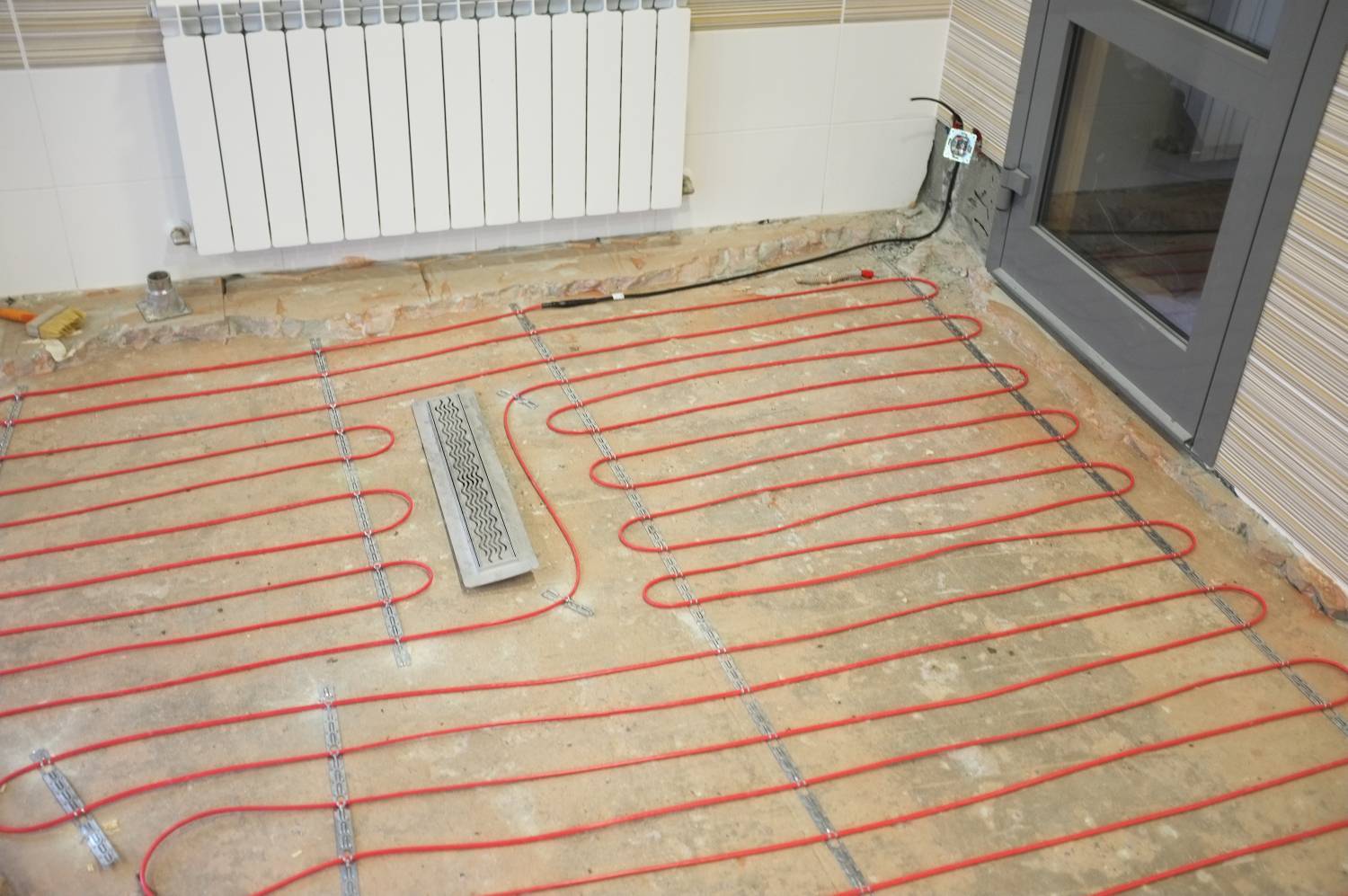
In the first of the indicated options, heating is carried out through the use of a special heating cable. In a conventional cable, the main task is to pass current without loss and heat the cable itself.In a heating cable, on the contrary, the task is to release heat during the flow of current, and it is normalized per unit length of the cable, thanks to which it is possible to calculate the amount of heat production. A feature of the use of such a cable is its location in the volume of a special screed, performed on top of the existing floor, as a result of which the floor level will rise by at least three centimeters.





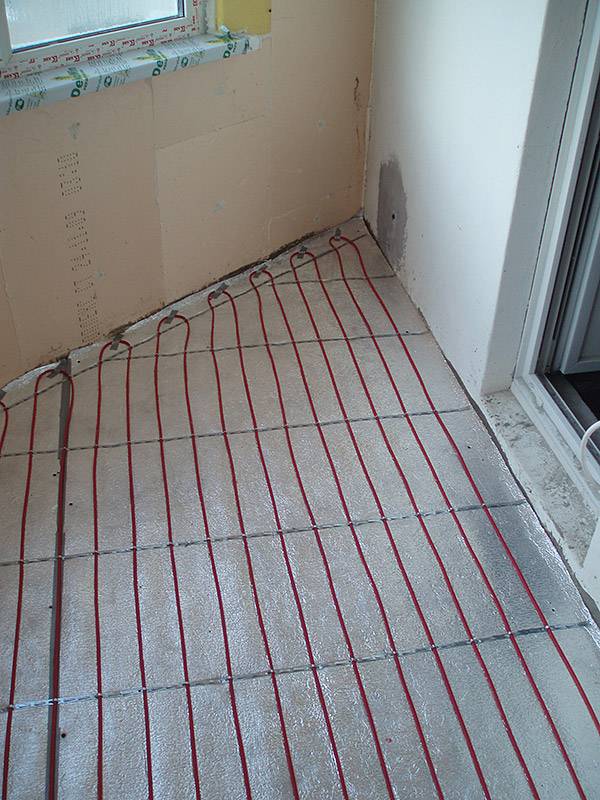 Cable electric floor heating
In the event that it is impossible to lay out the screed, there is no other way to get a warm floor, how to choose a heating mat.
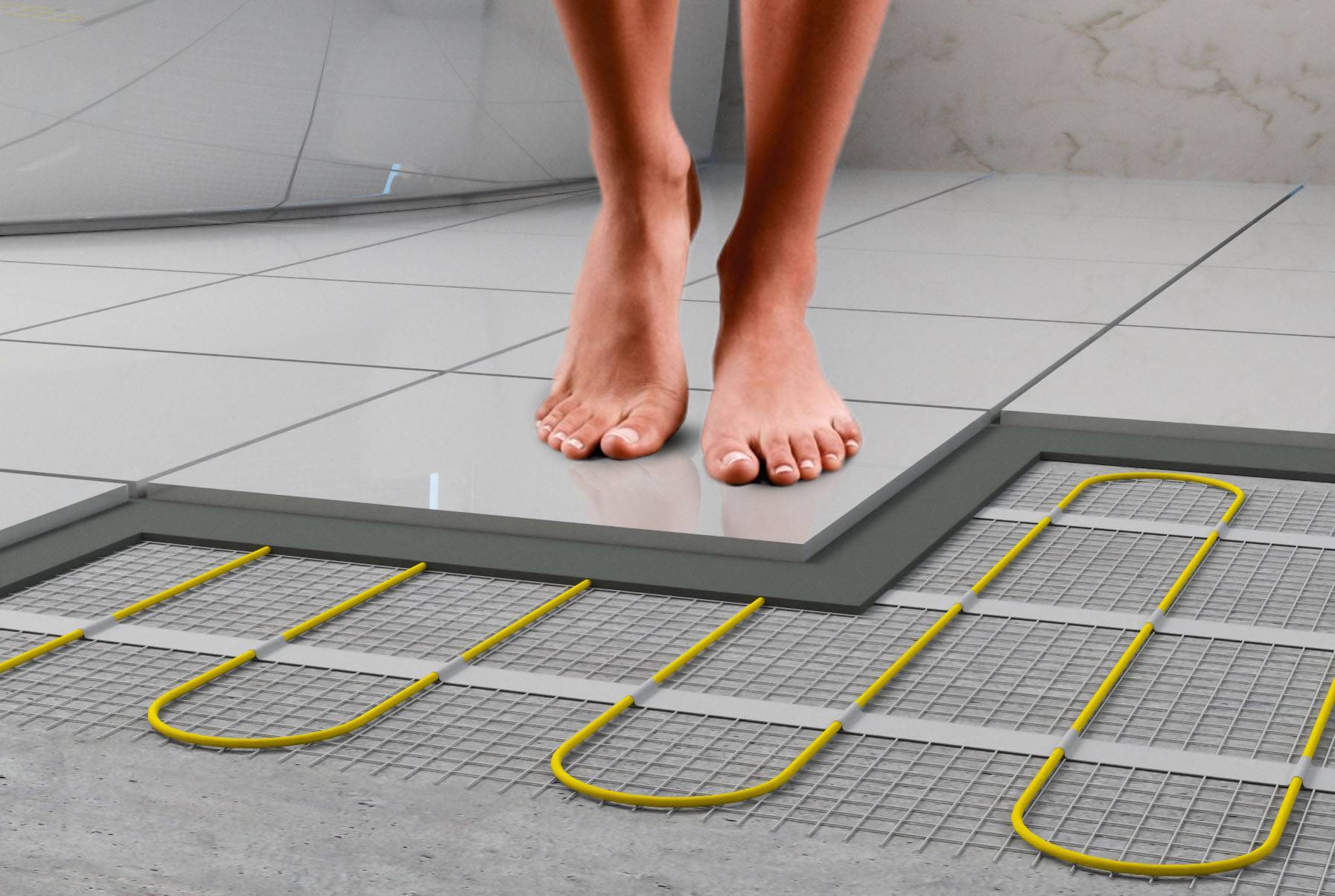
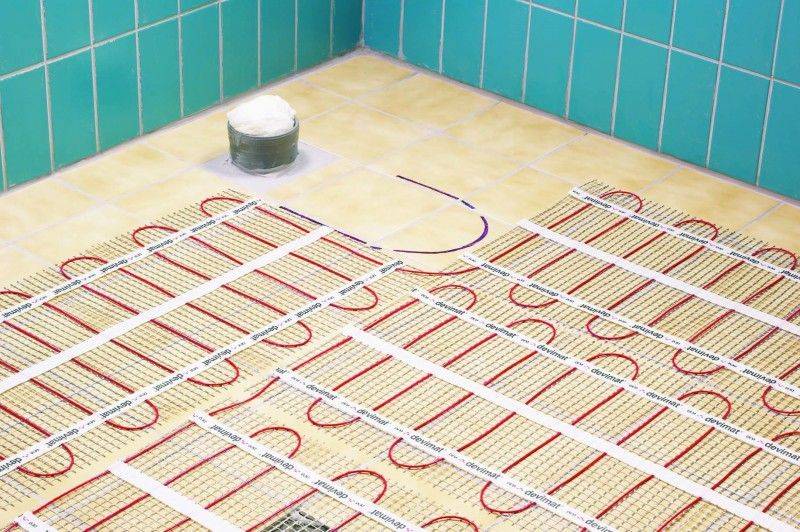
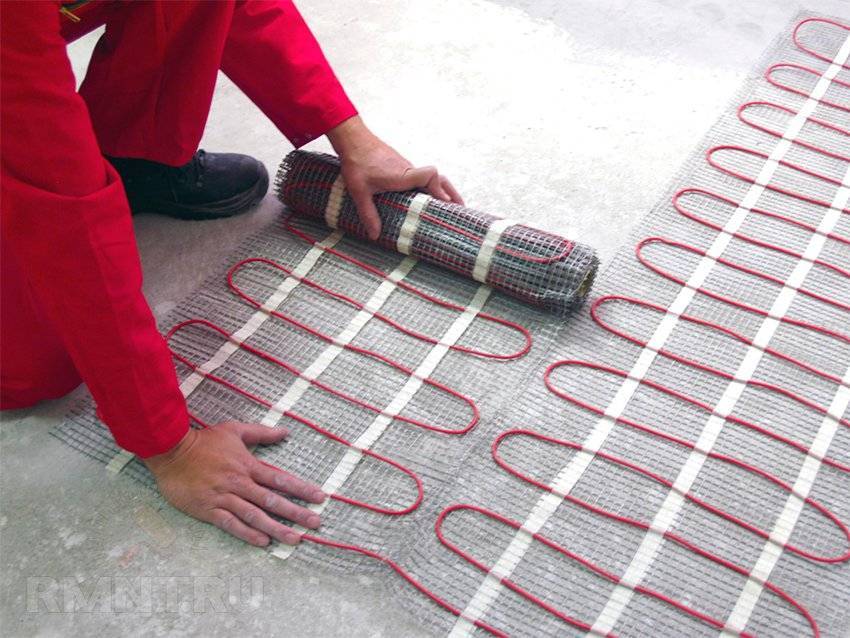
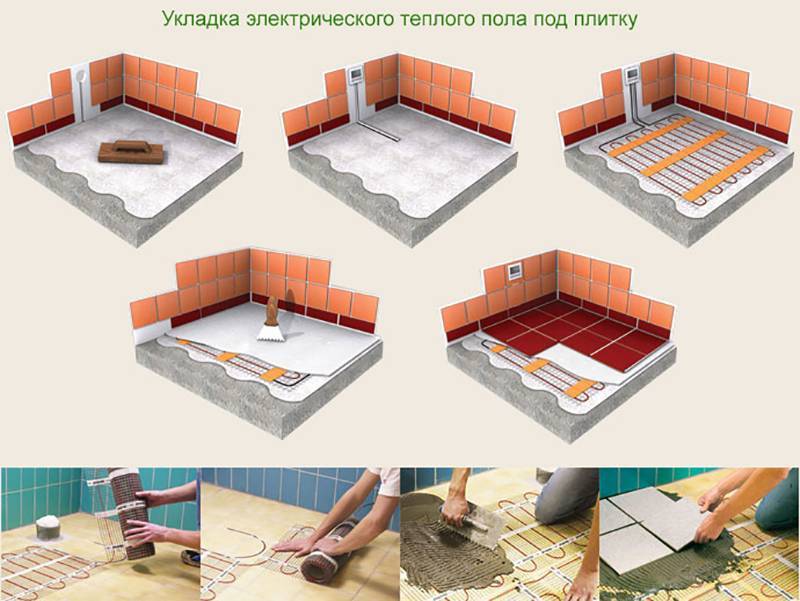
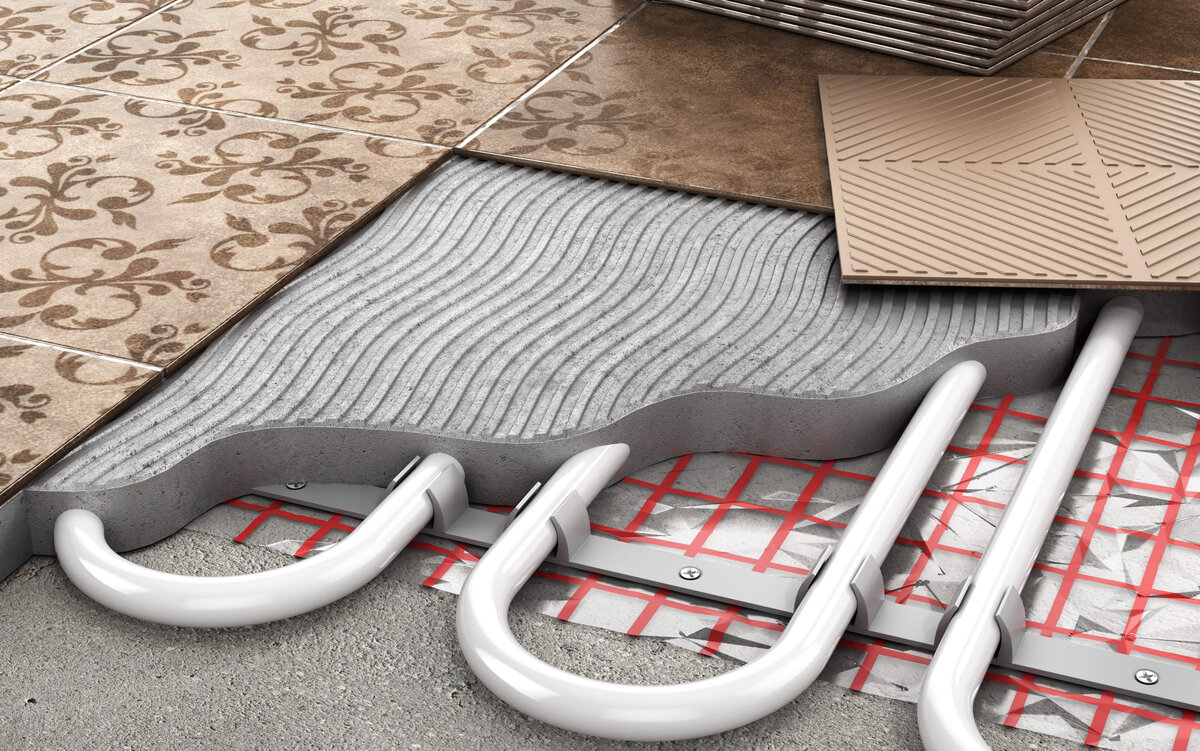
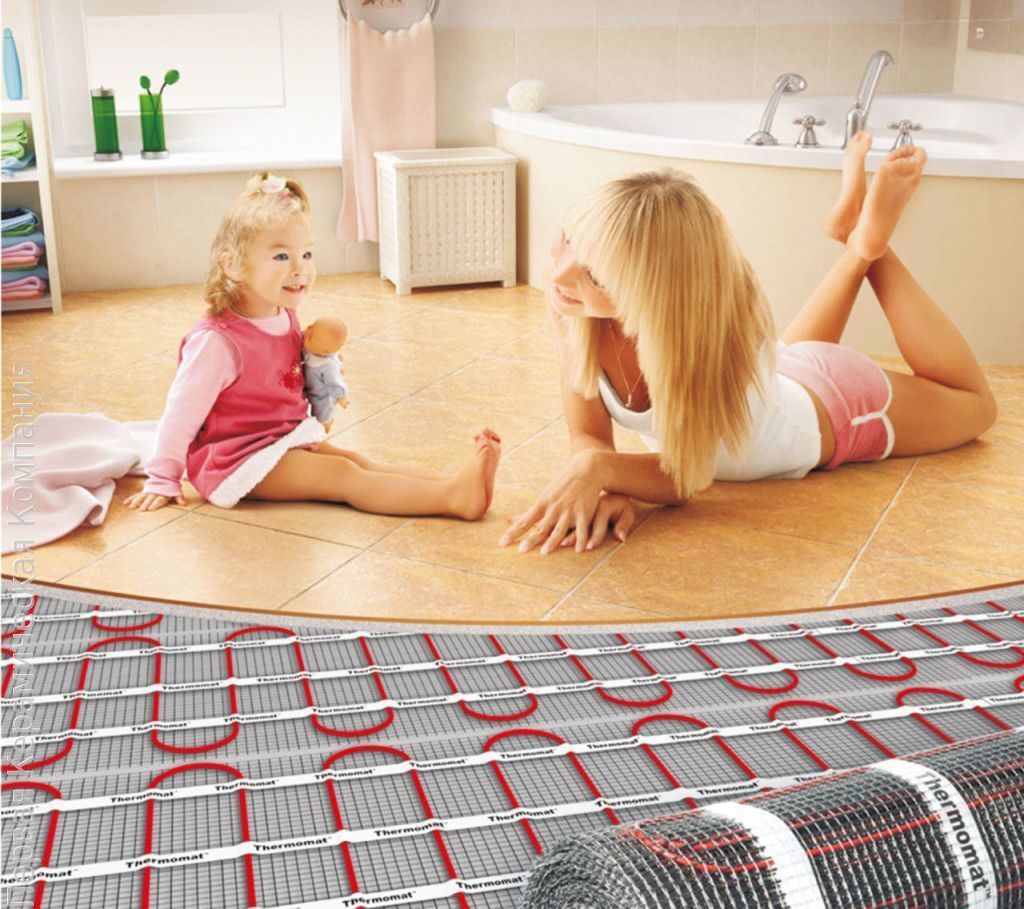
To use it, you do not need to perform a special screed, it is completely placed under the floor covering, which can be tile, porcelain stoneware, etc., in the adhesive layer. For its installation, it is enough to roll out the grid and connect it to the outlet.
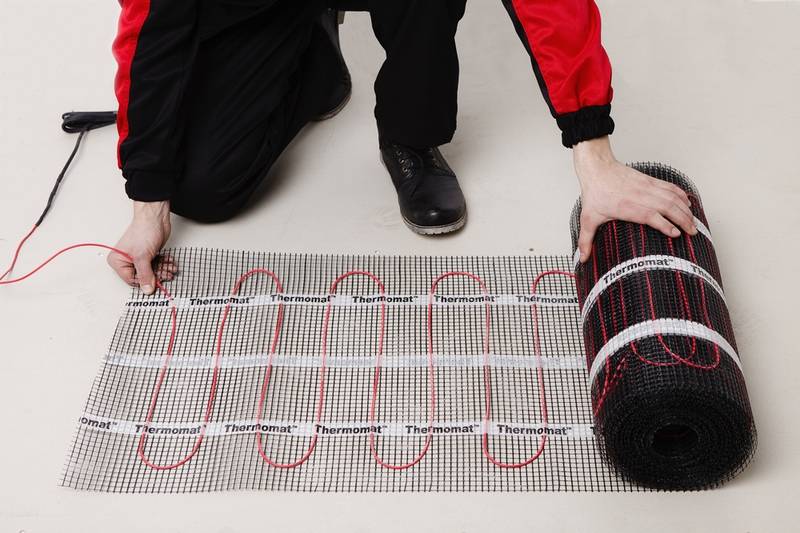 Thermomat
Advantages and disadvantages of the considered systems
Each of the presented heating systems has certain advantages and disadvantages. It is necessary to decide, having determined that you need a warm electric floor, - how to choose the best way to create such a floor. As already noted, to accommodate the heating cable the creation of a special screed is required, which quite significantly limits the use of such heating. However, the advantage of this method will be, ceteris paribus, less power consumed for heating compared to a heating mat.
For reference, some data on power consumption can be given. In a dry room, heating with a cable requires a power of one hundred to one hundred and twenty watts per square meter, while a mat requires one hundred and sixty to one hundred and eighty watts per square meter.The above figures allow us to draw some conclusions about which electric floor heating to choose. Moreover, the noted difference in power consumption will be even greater if the heating is used in a humid room (bath, kitchen) or even more so on a loggia.
In addition to the above, there is another positive effect of an additional screed. It acts as a kind of heat accumulator. When heated, the screed distributes heat over the entire surface of the floor. The consequence of this will be a long cooling of the floor and a shorter operating time of the heating system, which will lead to a decrease in electricity consumption.
When performing an additional screed, a layer of thermal insulation is laid between it and the floor. This prevents heat from escaping through the floor to neighbors, which increases the efficiency of the heating system. Such a reduction in heat loss should serve as an additional argument in understanding which choice of electric underfloor heating will be the best.
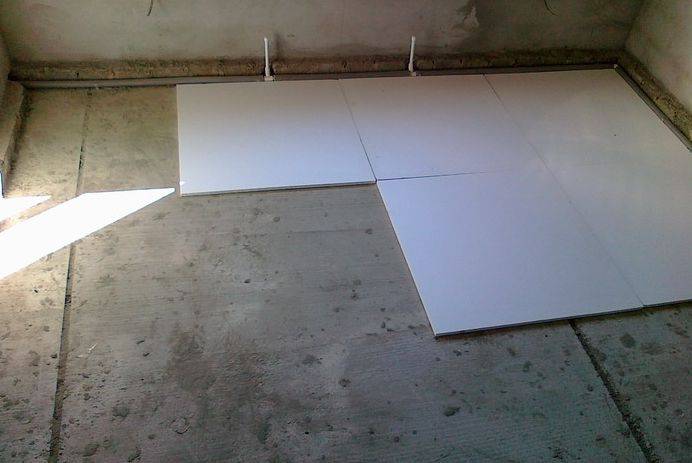 Laying thermal insulation
This allows you to use such heating in any apartment without carrying out additional work related to the alteration of the floors. What will be decisive for you, which underfloor heating is better to choose, will be determined by your capabilities and specific circumstances (willingness to carry out repairs, use additional electricity, etc.).
What is more profitable
Choosing which underfloor heating is best, water or electric, the cost of heating systems, as well as the costs associated with operation, should be taken into account.
- Cost price - the heating cable is more expensive. During installation, it is necessary to install a temperature sensor and a regulator.A complete set of electric floor heating costs approximately 2 times more. Installation of a water heating system requires the purchase of a plastic pipe and special laying mats. If you plan to use the heating system as an additional source of heating, you will need to additionally install a mixing unit.
- Operating cost - if you compare underfloor heating according to this criterion, the advantage of a water heating heating system becomes obvious. The cost of heating the coolant is significantly lower, especially if a gas boiler is used for heating.
- Repair cost - a comparison of electric and water underfloor heating, especially taking into account consumer feedback, shows that repair work associated with cable damage is cheaper. Consideration should also be given to the consequences of a water pipe leak. If a leak occurs in an apartment in a multi-storey building, you will have to compensate for the repair of neighbors living below.
- The cost of paperwork - in order to calculate the economic efficiency of underfloor heating, it is necessary to take into account how much it will cost to obtain a permit to operate the heating system. Electric floor heating does not require additional paperwork. To connect a water circuit, you will need to issue a large number of papers, pay a state fee, etc. As a result, the cost of water floors (with paperwork) will be approximately equal to the price of a heating cable or mats.
What is more economical, electric or water heated floor?
It all depends on where the installation of the heating system is planned. If in your home, then installing a water circuit is more profitable.For an apartment, taking into account the paperwork and the installation of a thermostat, it is better to use a heating cable or mats.
mats
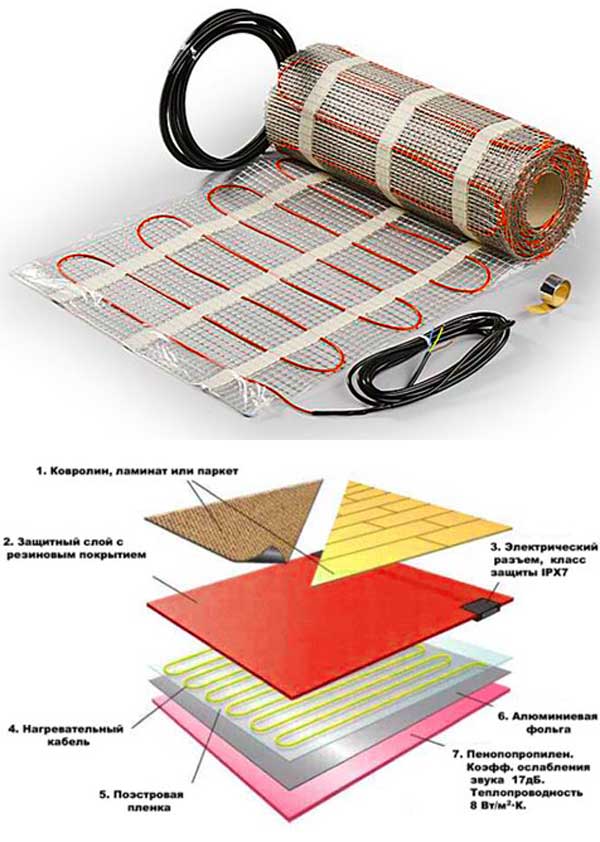
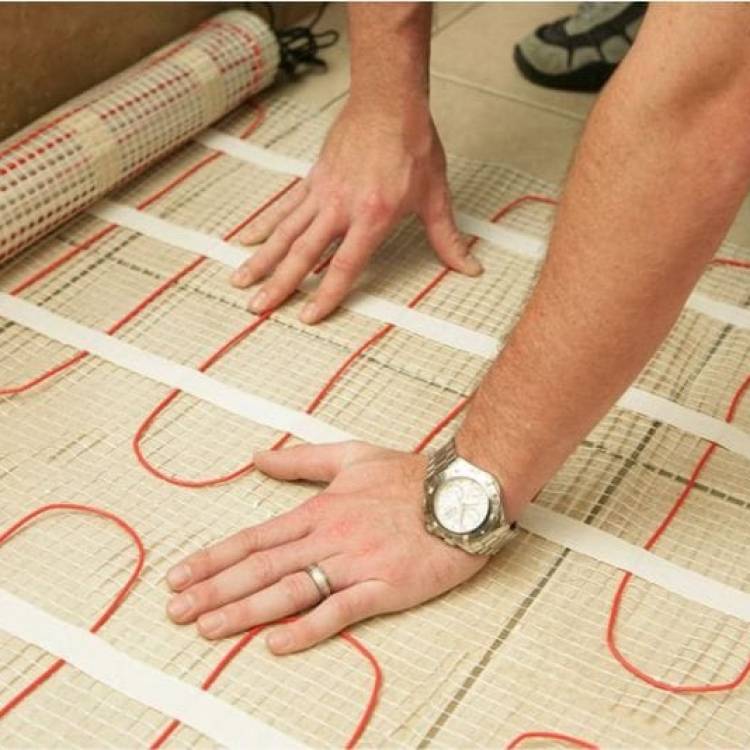
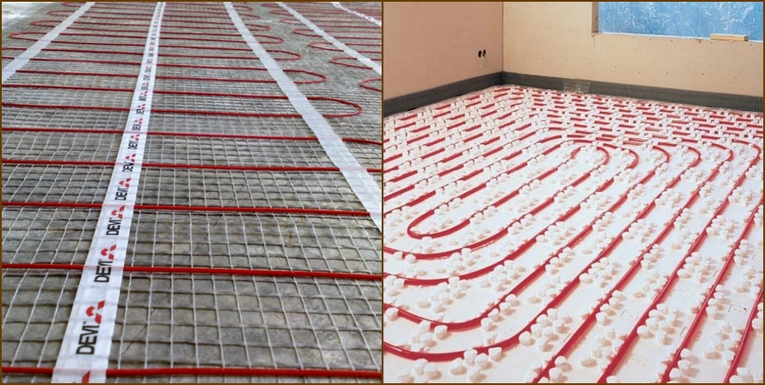
Electric mats - a modified warm floor, with which you can facilitate the installation process. They are a dense mesh base on which the cable is fixed. In this case, the step width does not need to be calculated. It is enough to roll out the mats in the desired direction, fix the mesh and carry out a minimum screed. Why is this option good?
-
The power of the mats is higher than that of the classic electric heating. It ranges from 160 to 180 W/sq. meter. Therefore, it is a more energy-consuming option. However, most of the modifications produced are equipped with thermostats with overheat control, which significantly increases the service life.
- Installation with a substrate made of thermally insulating material will reduce energy consumption during the operation of thermomats.
- A small layer of screed (up to 3 cm) will increase heat transfer, in this sense, the thermomat is the most effective version of the cable floor.
- Installation can be done independently, as the system is equipped with all the necessary temperature controllers and sensors.
Modern companies specializing in such equipment produce a large number of varieties of electric mats with various additional characteristics: with one- and two-core cables, in the form of a sandwich with a thermally insulating substrate that does not require a tie, and so on.
Electrolux underfloor heating installation
Significant disadvantages include the high cost and energy consumption of such heating. Which option is better choose - depends on your financial capabilities.



How to choose underfloor heating for tiles
The main property of ceramic tiles is their high thermal conductivity, which is why such floor coverings have traditionally been considered "cold". The situation has completely changed with the advent of underfloor heating, with the help of which the floor covering can be heated to any set temperature.
The choice of underfloor heating for ceramics depends on many factors. First of all, you need to decide whether they will be used as heating - main or additional. In the first case, the system occupies at least 70% of the entire area, and the heating elements are located as close as possible to each other. The second option is used without any restrictions, in various configurations, on any area.
Generally, supplemental heating is used more often, especially in hallways, bathrooms, kitchens, and other areas with tiled floors. This combination, consisting of traditional radiators and underfloor heating, is used not only in private houses, but also in apartments, as an addition to heating in the winter.
When deciding which is better warm floor under tiles to choose, it should be noted that the main options are represented by water, electric, as well as infrared or film systems. In turn, electric floors can be cable or in the form of heating mats.
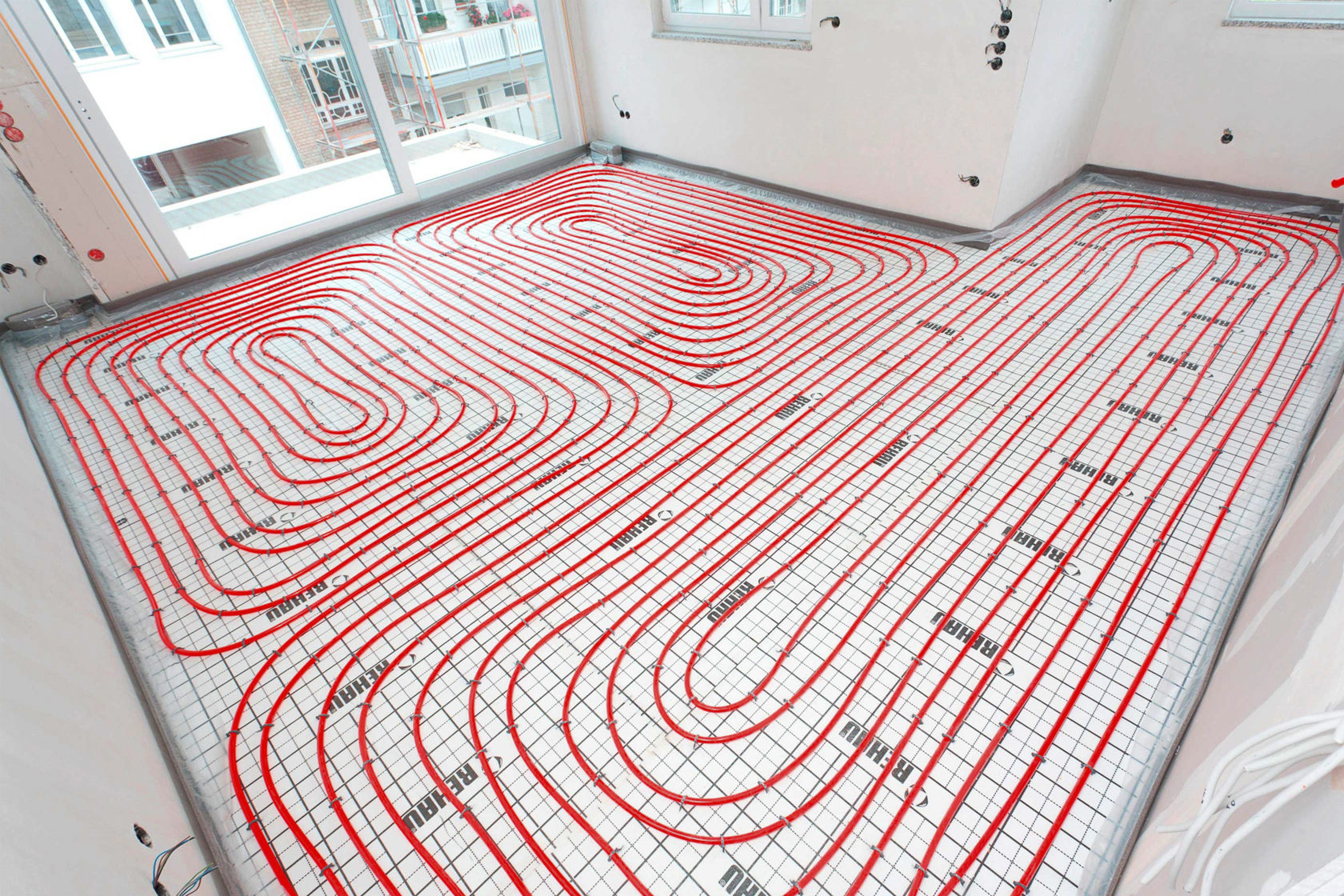
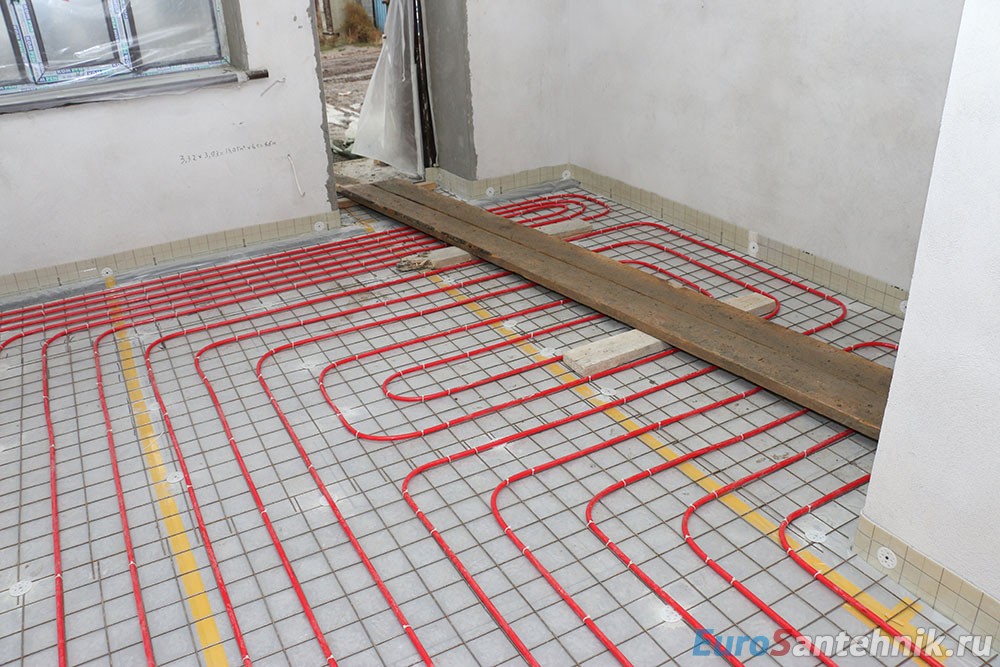
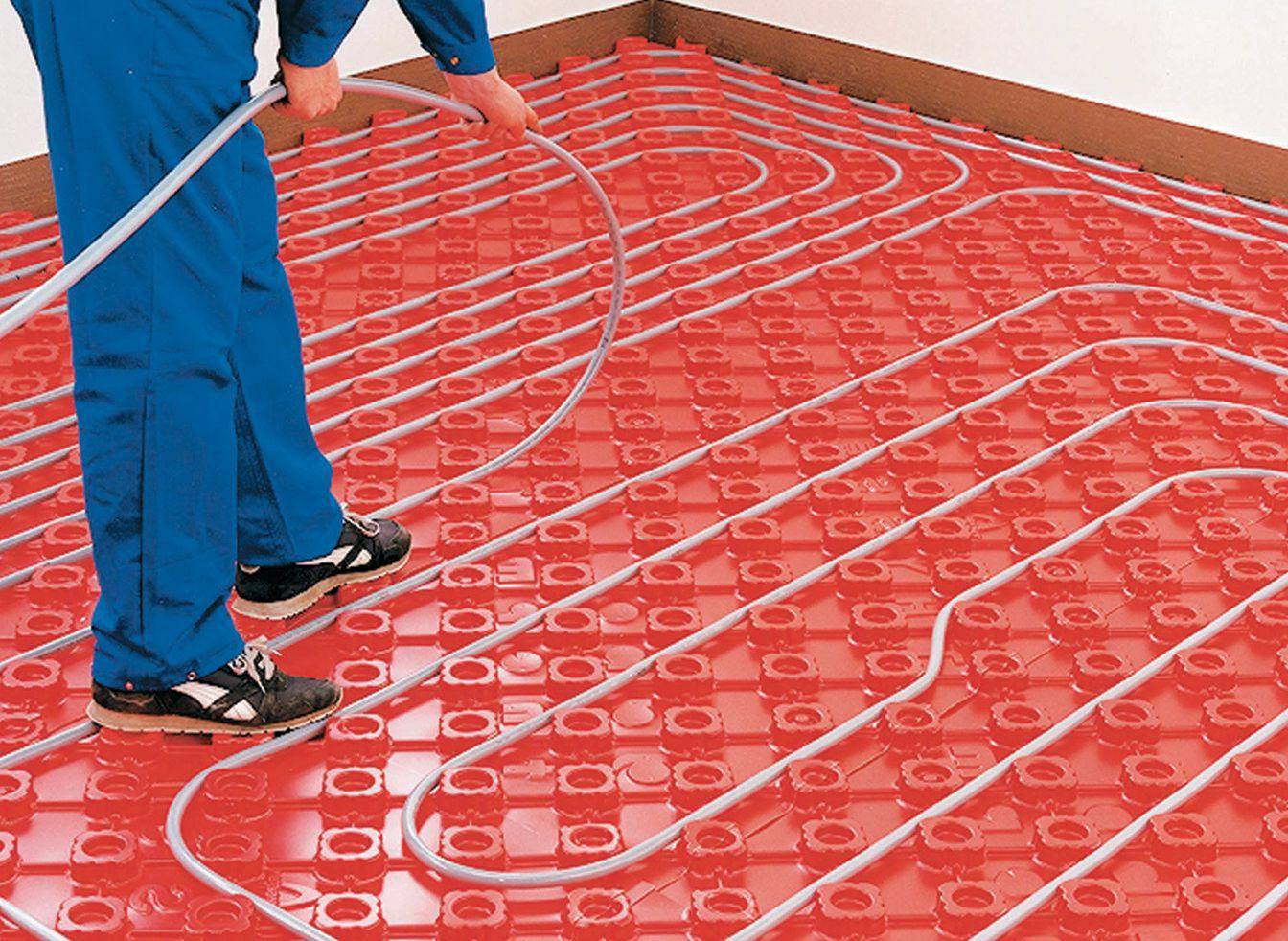
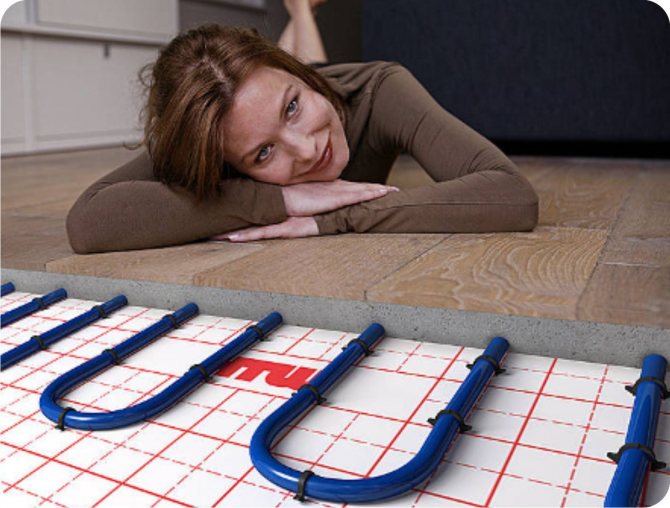
The most widespread are traditional water heated floors. Their main structural element is polypropylene pipes with a heat carrier, laid on a screed. Heating occurs through a centralized or individual heating system. The movement of the heated liquid is provided by a connected circulation pump.
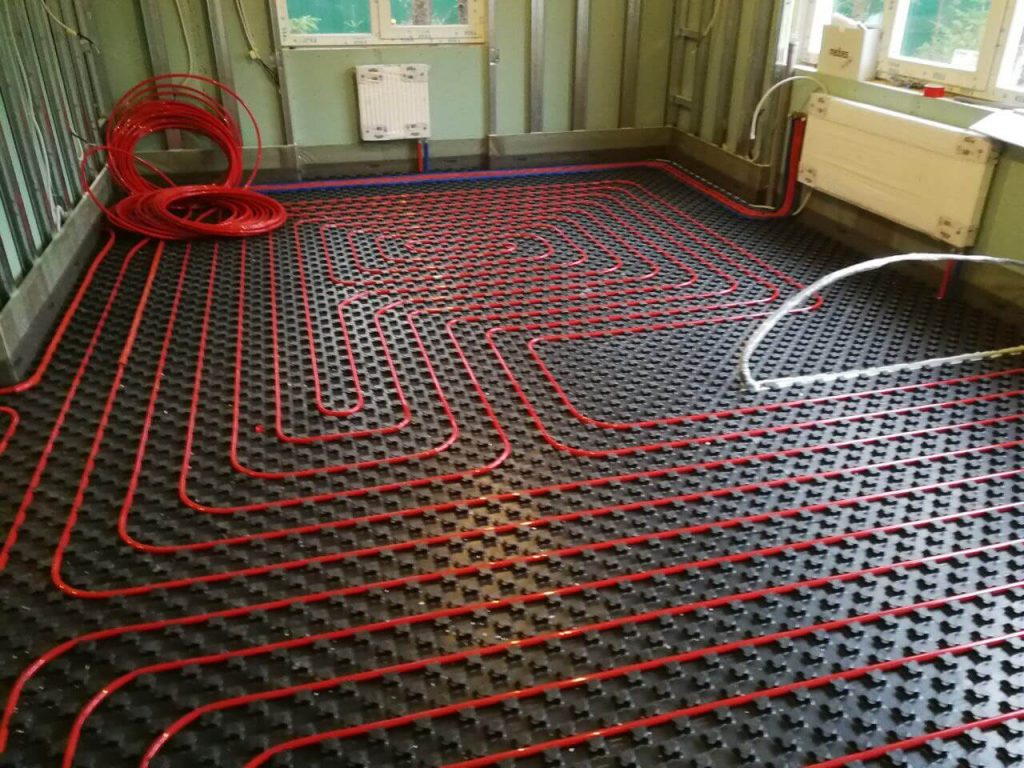
The main advantages of water floors are their relatively inexpensive installation and low cost of energy carriers involved in the heating process. Thanks to modern technologies, such systems can be installed without the use of a screed. Instead, a polystyrene base with grooves or special heat-distributing plates is used.
The disadvantages include the possibility of mechanical damage during installation. In addition, water systems are not recommended to be used in apartments and connected to central heating.
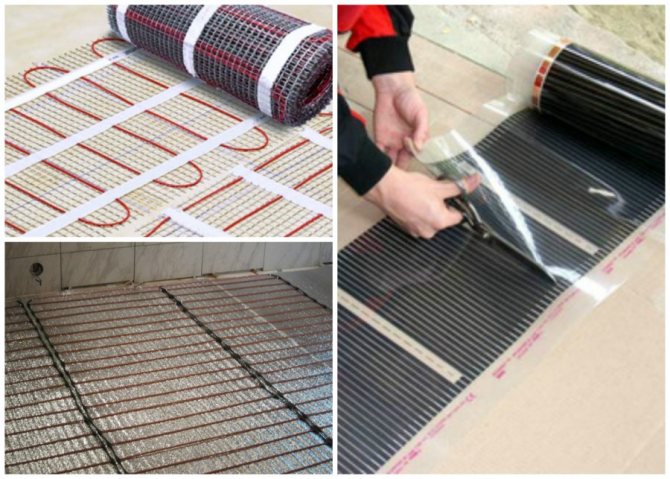
No less popular are electric underfloor heating, shown in the figures:
- Cable systems. Their work is based on the use of a heating cable that converts electrical energy. The operating mode is set using a thermostat. The cable can be single or double stranded. These systems are more durable than water floors and require a minimum amount of electricity. The downside is expensive installation and a significant thickness of the floors, which reduces the overall height of the room.
- Heating mats. They are used much more often when you need to make a choice of underfloor heating for tiles. The design consists of a thin cable sealed in a reinforced mesh. The main advantage is considered to be an insignificant thickness, up to 3 mm, which does not affect the height of the room. Due to its low weight, there is no pressure on the base of the floor and ceiling. In the event of a breakdown, it is not necessary to change the entire coating, it is enough to replace the defective element. Installation of the system is very easy, even a non-specialist can do it. The downside is the high cost.
- Infrared underfloor heating systems. They are among the most modern types of heating and give the maximum effect.The production of infrared rays occurs due to the carbon or carbon paste contained in the film. This system is suitable for all types of floor coverings, easy and quick to install. When used in conjunction with tiles, it is required to lay a mounting fiberglass mesh between the adhesive and the film for better adhesion. It should be noted that the infrared film itself has a rather high cost.
Water heated floor
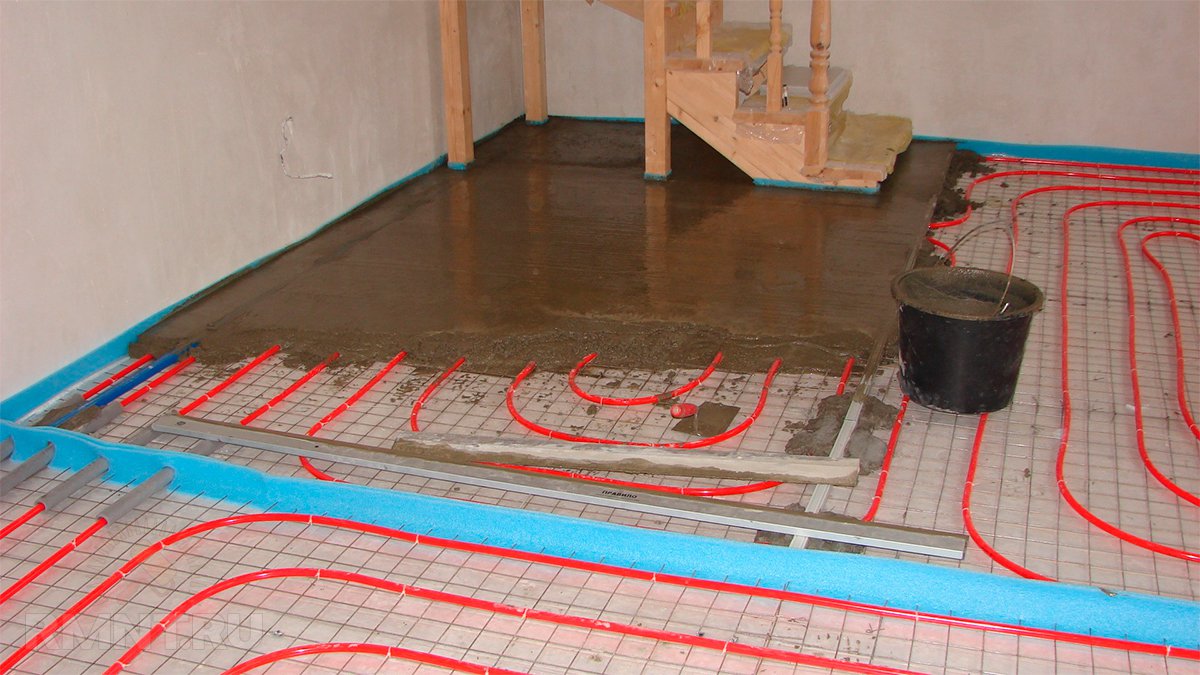
A water heated floor is a pipeline through which a heated coolant moves. The flooring is heated by hot water coming from the heating system or boiler. The coolant is regulated by means of a collector unit equipped with a pump. The temperature supplied to the pipes should not exceed 45 degrees.
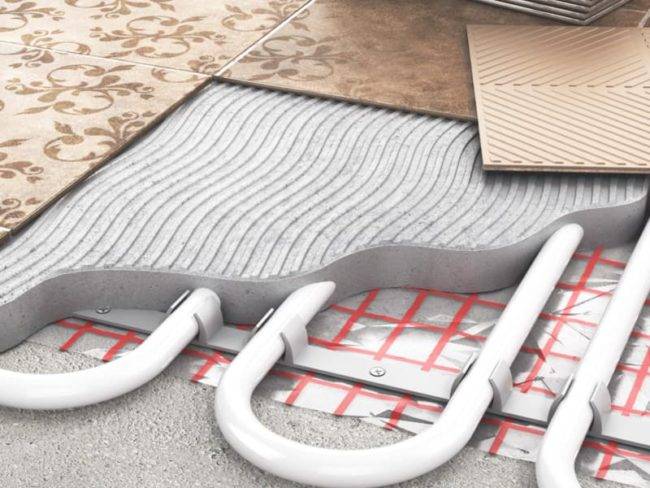
The water system has many advantages:
- heats up the room evenly
- economical - the operating costs are not significant;
- laying over the entire area is permissible - there is no risk of overheating of the surface under heavy furniture.
The disadvantages of this type include:
- complex installation process and long in time;
- the design reduces the height of the ceilings, because more often it is poured with a concrete screed;
- the complexity of repair work in case of leakage, since the dismantling of the entire “pie” will be required.
It's important to know! In high-rise buildings, such devices are rarely installed, because permission is required to connect to a common heating system. In addition, there is a risk of flooding neighbors from below
As for the material from which pipes for warm water floors are made, there are several varieties.
Copper
Copper is the most suitable option for water floor heating pipes. It is not subject to corrosion, well tolerates mechanical loads and pressure that is exerted on the material inside the pipe. Withstands temperatures from -100 to +250 degrees. In cases where the coolant inside the circuit is frozen, the pipes do not crack.


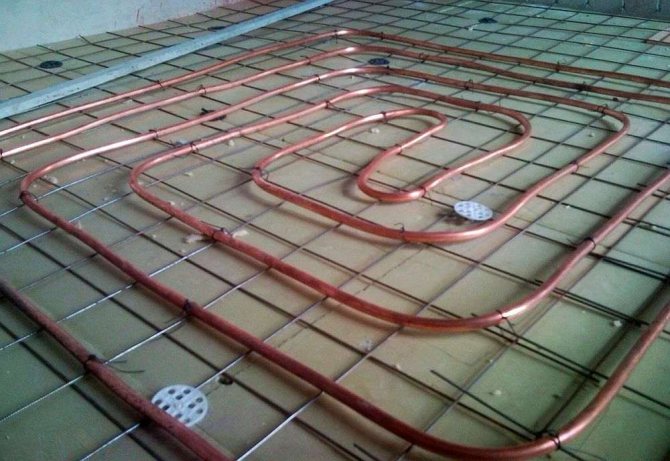


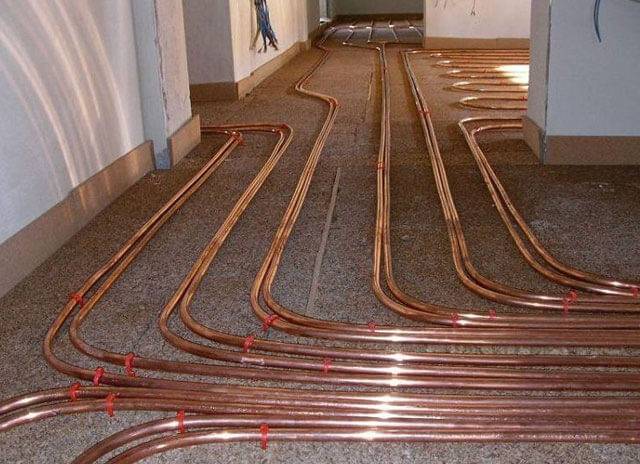
When using a copper pipeline, there are a number of restrictions:
- it is not permissible to lay pipes made of steel and copper in the same circuit;
- it is not recommended to do the installation yourself, as the work is complex, requiring professional equipment;
- it is impossible to use a coolant with an acidic and alkaline environment so that the line lasts longer.
The cost of copper pipes is high, but it will pay off due to a long service life - more than 50 years.
Warm water floors with copper pipes are recommended to be installed in houses with a non-permanent residence, where there is a danger that the main line may freeze.
metal-plastic
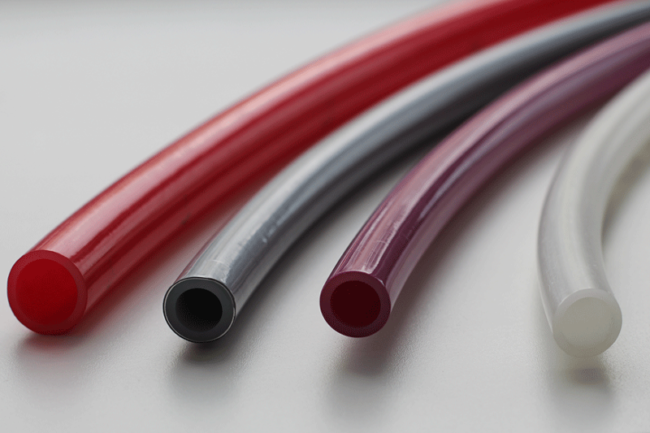
Metal-plastic is a relatively new material consisting of an outer and inner layer, as well as a reinforcing layer with aluminum foil.
Pipes made of this material have high performance characteristics. They are:
- durable - up to 50 years;
- resistant to corrosion;
- immune to deposits of mineral formations;
- biologically inert - do not release harmful substances;
- resistant to chemicals - it is possible to fill in water with various additives or antifreeze;
- lightweight - so it is easy to install on your own, without special equipment;
- have good soundproofing properties.
Note! Despite the ease of installation of metal-plastic pipes, it is desirable to have at least a little experience in this work.Since incorrect installation can lead to loose fittings during operation. Therefore, it is better that the part of the contour filled with a screed is solid. In addition, a pipeline made of such material has temperature limits, from -10 to +95 degrees.
Polypropylene
Polypropylene contours have an acceptable price, despite this, the performance is high, but they are not recommended for underfloor heating. The reason lies in the rigidity of the material, which complicates the process of bending the contour. Therefore, experts advise to lay them in the TP in an exceptional case, and in rooms not subject to sub-zero temperatures.
Cross-linked polyethylene (REX)
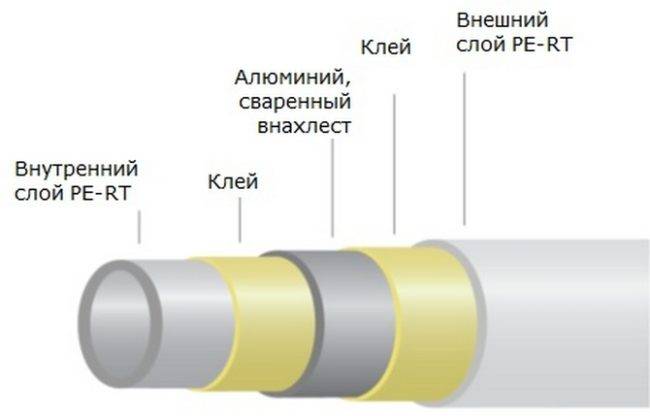
This material is relatively new, but nevertheless it has already proven itself well. It has good properties:
- temperature aisle from 0 to +95 degrees, although for a short time it can withstand -50 and +150;
- the presence of deformation memory, that is, with a crease, it is enough to direct hot air to restore the shape;
- has pressure resistance;
- REX pipes are easy to bend;
- he is not afraid of corrosion;
- no release of toxic substances during operation.
Conclusions and useful video on the topic
Which of the electric varieties of floors to prefer:
Water floor system - how it works:
Compare water and electric floors:


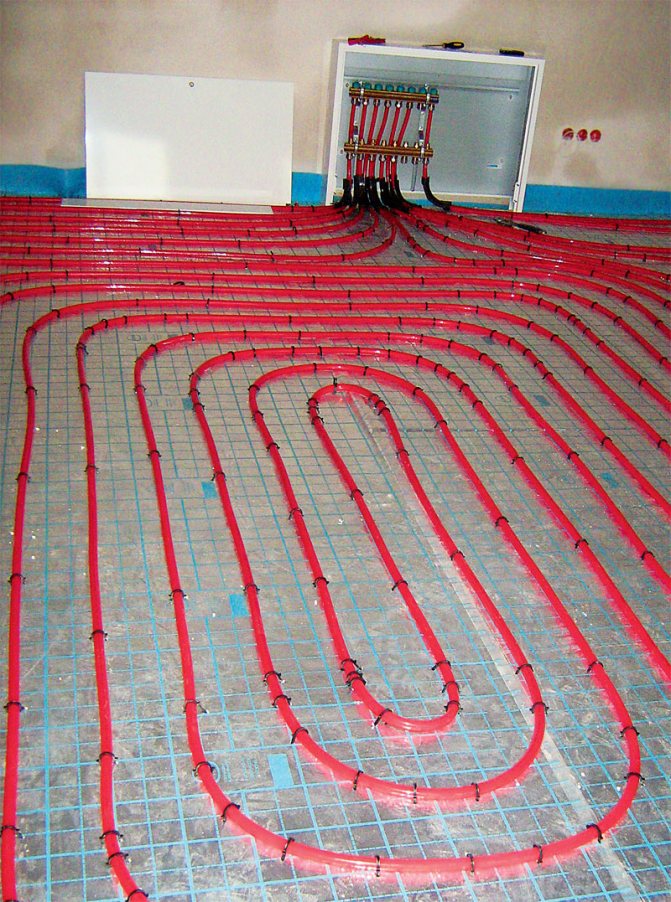
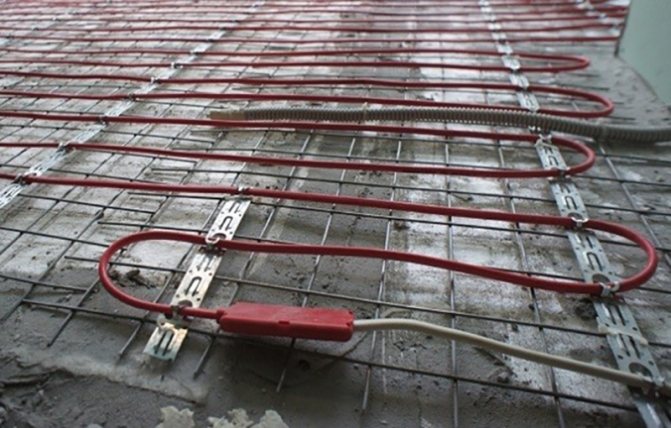

Warm floors of both electric and water type equally well heat the premises. The question of choice is most often purely economic, which one is cheaper.
For apartment buildings, it is easier and cheaper to install one of the electrical varieties. True, the operation will cost more. For private, the best option is a water floor.Installation will result in a large amount, but subsequent operation will quickly pay off these investments.
Do you have experience with underfloor heating? Please tell readers which system option you chose and why. Comment on the post, participate in discussions and ask questions. The feedback block is located below.