
- Making a choice
- Room characteristics
- What kind of flooring does it have?
- Technical indicators of the electrical supply of the home
- Benefits of infrared floor heating
- Thermo
- Types of electric underfloor heating
- Cable
- Film
- Rod
- The best cable electric underfloor heating
- Devi 330 W, 16.5 m - ideal for the kitchen
- Teplolux Eco 850 W, 60 m - for a bedroom or a garage
- Two types of underfloor heating: how they work, what are the characteristics
- Water heated floor - conveniently not allowed everywhere
- Heated floors powered by electricity
- Selection Guide
- Which electric underfloor heating is better to choose?
- Criterias of choice
- Myths about underfloor heating
- Film use
- So what to choose anyway?
- Rating of film underfloor heating
- PNK - 220 - 440 / 0.5 - 2m2 film floor heating "National Comfort"
- Caleo Platinum 50-230W
- Caleo Grid 220 W 3 m2
- The best underfloor heating in the form of heating mats
- Devimat DTIR-150, 450 W, 3 m2 - for the loggia
- Equation 1260 W, 9 m2 - in the nursery
- Which electric floor is better - comparison table
- Which mat for underfloor heating is better to buy
- Summing up
Making a choice
When choosing a floor heating system, it is necessary, in addition to its cost, to take into account the following factors:
Factors that lie on the surface and are known even before the purchase are:
Room characteristics
It is known in advance where the room is located: in a closed space, for example, a bathroom, where humidity must be taken into account, or is it a room with windows that acts as a kitchen.
What kind of flooring does it have?
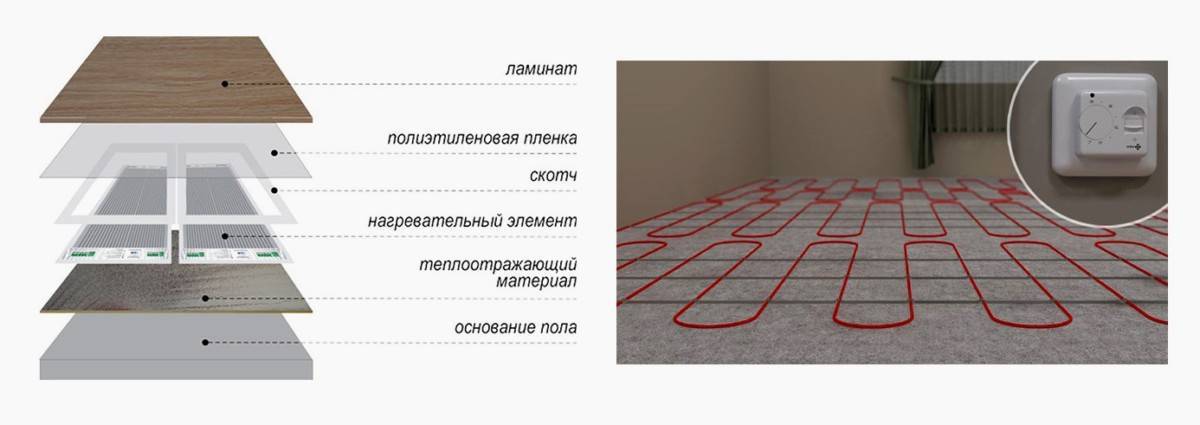
In rooms where the surface is covered with tiles, both heating mats and infrared films can be used. It should only be borne in mind that heat-insulating material should be laid on the floor surface, and the infrared film should be protected from the adhesive solution with a polyethylene film on top.
Linoleum that is suitable for electrical systems should not have a thick insulating underlay. The parquet board is not suitable for placing electric heating under it; in case of emergency, a material made from well-dried wood should be used.
Cork and carpets are not suitable for heating, they are good heat insulators.
To better navigate, you need to pay attention to the marking of the coating, which indicates the possibility of using heating
Technical indicators of the electrical supply of the home
In the house where the electric heating system will be installed, there must be an uninterrupted power supply of 220 volts.
It is worth paying attention to the power consumed by the heating device in the area of its placement. When calculating, they are based on the average indicator of the required power, calculated taking into account the thermal characteristics of the room (the quality of thermal insulation and the presence of other heat sources). The average power interval is in the range from 110 to 130 W / m2
If the cable heating system will cover about 70% of the floor surface, it should consume power from 120 to 150 W / m2
The average power interval is in the range from 110 to 130 W/m2. If the cable heating system will cover about 70% of the floor surface, it should consume power from 120 to 150 W/m2.
Benefits of infrared floor heating
Compared with water or electric floor heating, experts note the following advantages of IR heating systems:
- Thin thickness and light weight;
- Installation in any premises (water is prohibited in apartment buildings);
- Installation under all types of floor coverings;
- Saving space and height (cables raise the floor by about 5 cm, water structures up to 20 cm);
- Shortened heating time, fast temperature control - in seconds;
- Homogeneous heat distribution, as the heating elements are placed close to each other;
- Flexible, durable and reliable design;
- Sectional work of elements, if one group fails, the rest continue to heat;
- Easy installation, disassembly and reinstallation to another location;
- No maintenance, tools and installation are cheaper, easy to figure out how to install yourself;
- Possibility of complete replacement of central heating in warm countries;
- Durability. The best manufacturers guarantee a long service life, up to 50 years;
- Heating the floor surface, not the air, the room is easy to breathe;
- IR radiation does not form dust, condensation and mold, does not generate static electricity;
- Infrared waves, like the sun's rays, do not harm the body, but benefit health.
The last point is of interest to many. It is known that the sun in excessive doses is dangerous, causing heat stroke with severe symptoms. So short-wave rays act on a person.
In an infrared heating system, the wavelength is long, uniform and constant. Such an impact on the body is softer, it has a positive effect on the psycho-emotional state. Air ionization, lack of condensation and dust, improve the "climate" at home, make it more pleasant. It is more comfortable for people with breathing problems to breathe, but one must understand that diseases will not disappear. This is just a warm floor, it is a mistake to consider it a source of health.
Thermo
Production: Sweden.
Manufacturer Features:
Thermo underfloor heating is manufactured in Sweden by Thermo Industri AB. This company has been successfully developing and implementing the most modern technologies in the field of space heating and various equipment for more than 25 years. Superiority in this area is confirmed by a number of patents.
All products are initially focused on the harsh realities of the Scandinavian climate, distinguished by environmental friendliness and economical use of energy resources.
The company pays special attention to the quality of the materials used and careful observance of the subtleties of the technological process, which allows us to claim a lifetime warranty for the entire product range.
Available types of underfloor heating:
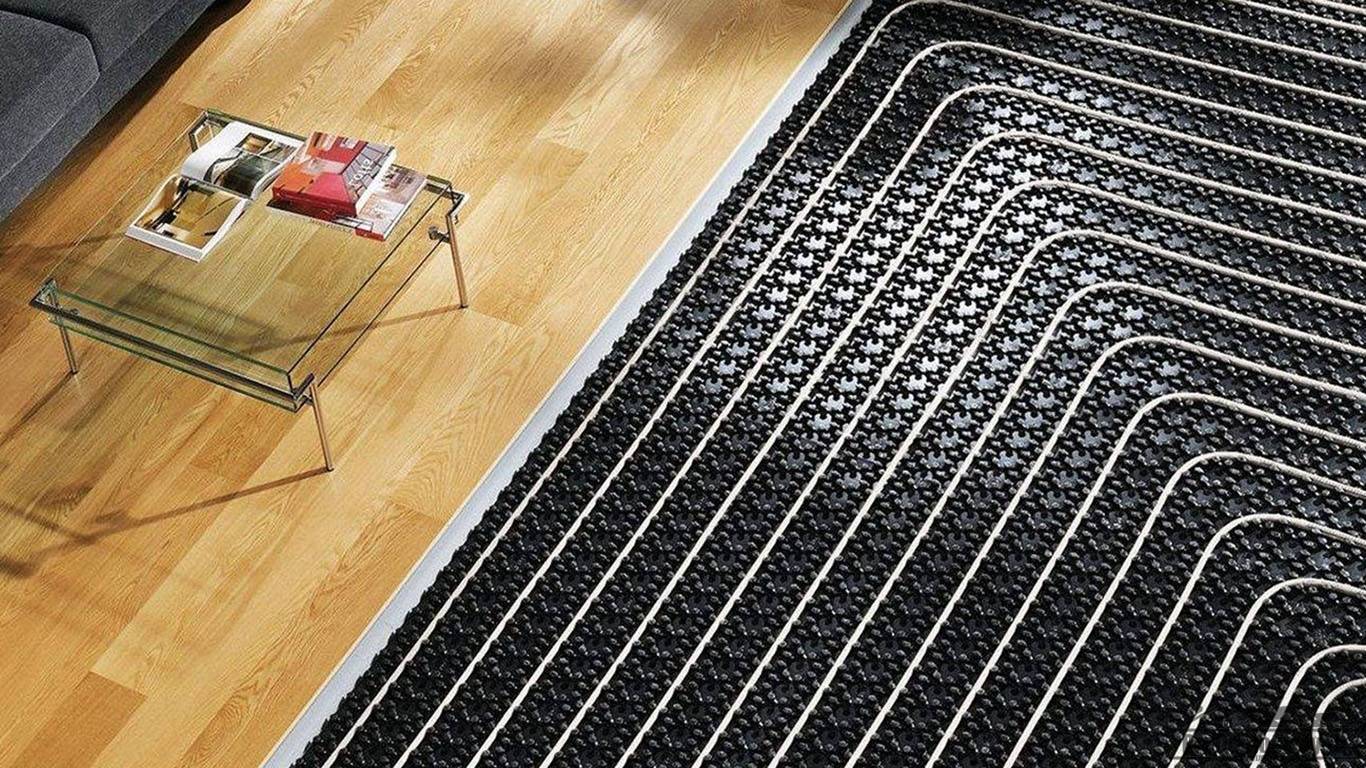
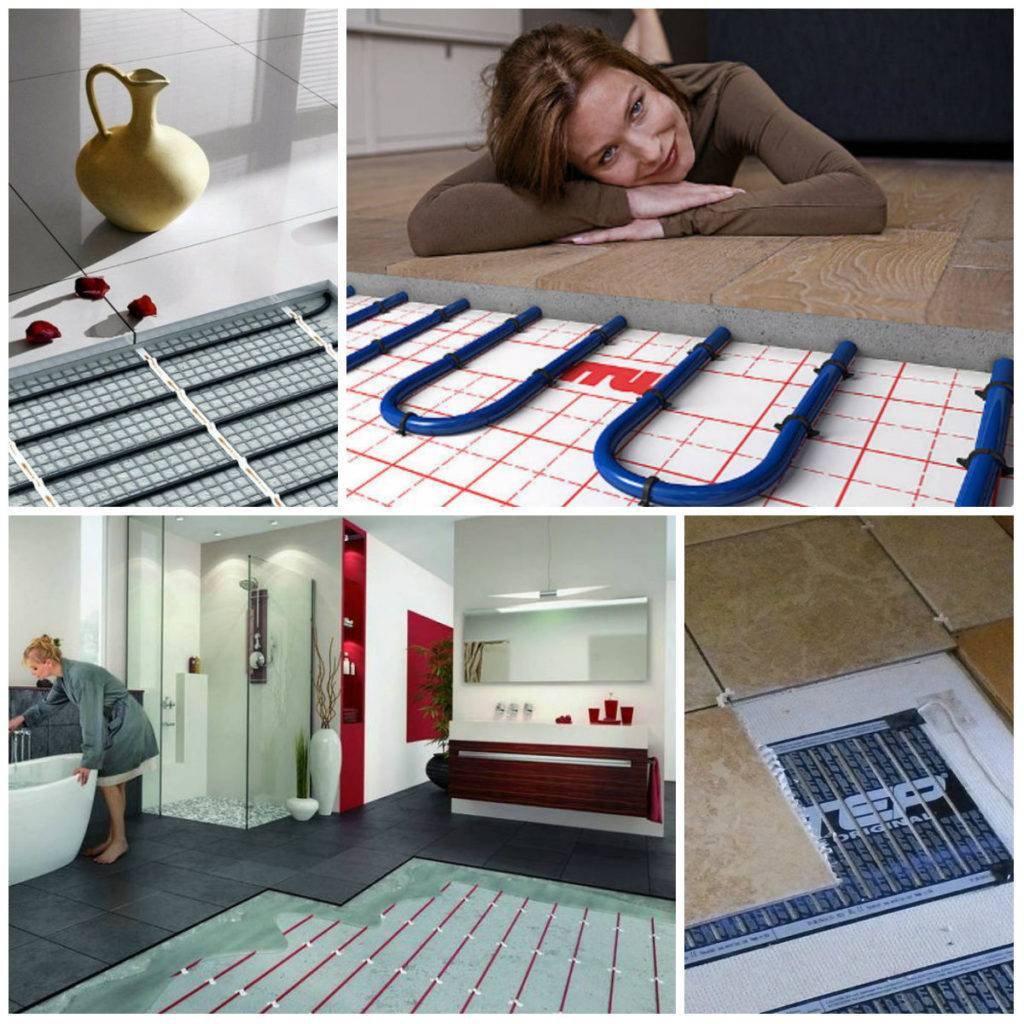
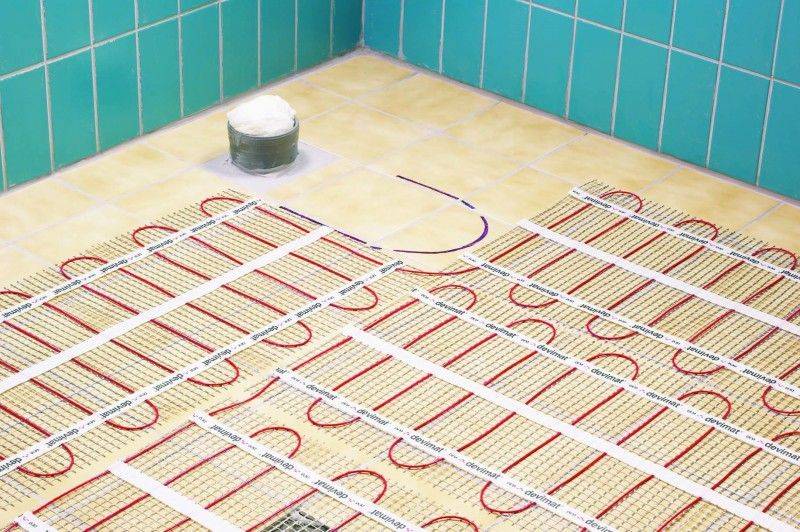
1. Heating mats. The most popular among the consumer are heating mats of the Thermomat TVK series with a power of 130 to 210 W / m2 on a reinforcing mesh for laying under tiles.





Thermomat TVK-180.
2. Thermomat foil. Thermomat LP on aluminum foil for dry installation under laminate or parquet boards.
Thermomat LP-1.
3. Heating cable. For installation in a concrete screed, the manufacturer produces resistive cables of the Thermocable SVK series with a specific heat release of 11 and 20 W/m.
Heating cable SVK-20.
four.Thermostats and accessories. In addition to ready-made sets of underfloor heating, the company offers numerous accessories for them, including heat-insulating materials, temperature sensors and thermostats.
Types of electric underfloor heating
Types of warm electric floors are distinguished by the main heating element.
Cable
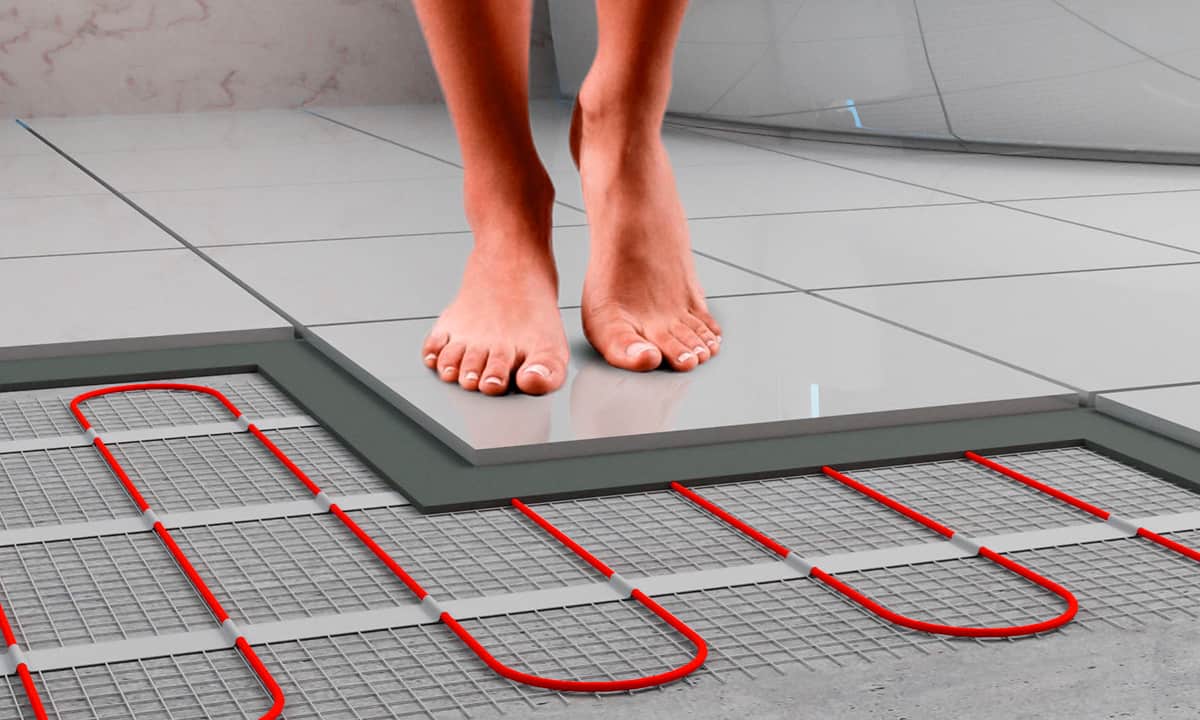
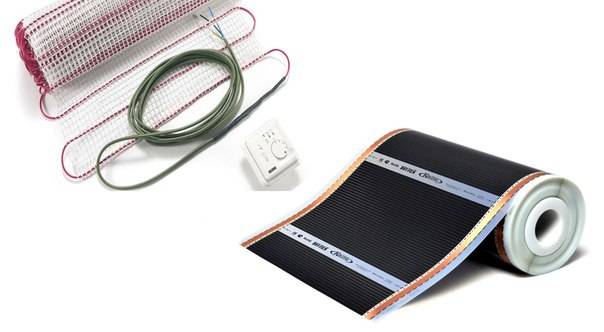
The basic heating element of such a floor is an electric cable that is laid under the floor covering. The principle of operation of the heating element is similar to a standard heating element: when connected to the network, the cable generates thermal energy, which seeps through the finished floor coverings and heats the room.
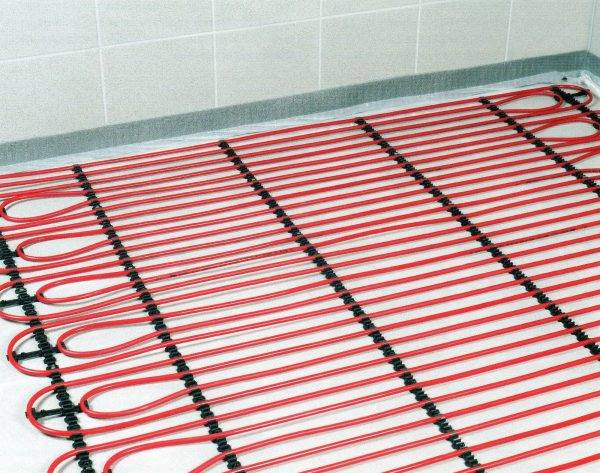 The cable floor is most often installed under various floor coverings.
Depending on the cable used, the floors are divided into:
- Single core. They consist of one wire, which simultaneously performs the function of a conductor and a heating element. The disadvantage of this option is high radiation, so it is not recommended to use it in living rooms.
- Two-core. The design consists of two wires: heating and closing. The two-core cable creates minimal electromagnetic radiation, and it can even be used in children's rooms. The disadvantage of the option is the high price.
- Self-adjusting. They use heating cores, and between them is a semiconductor matrix, consisting of independent elements. Semiconductors respond to changes in ambient temperature and independently change resistance. The advantage of the system is the automatic prevention of overheating during operation. The systems work without thermostats and temperature sensors, so they are more convenient to use.
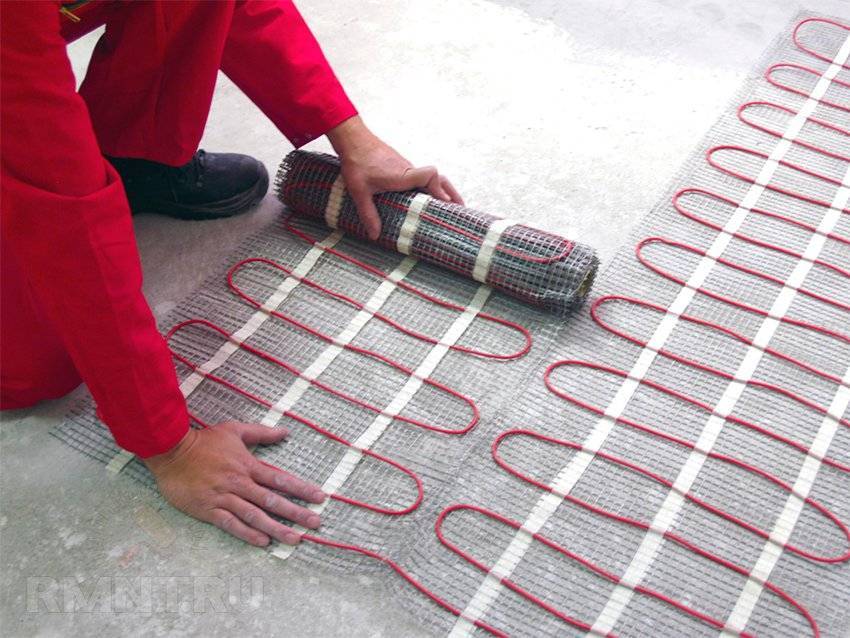
At present, simple cable systems have been replaced by electric mats, in which the wire is already woven into a soft dielectric mesh. To install such a system, it is enough to roll the mesh on the floor and fix it with a solution. The mesh, without violating the integrity of the cable, can be cut, giving the desired configuration. This is useful in case of cable floor installation in hard-to-reach places.
Film
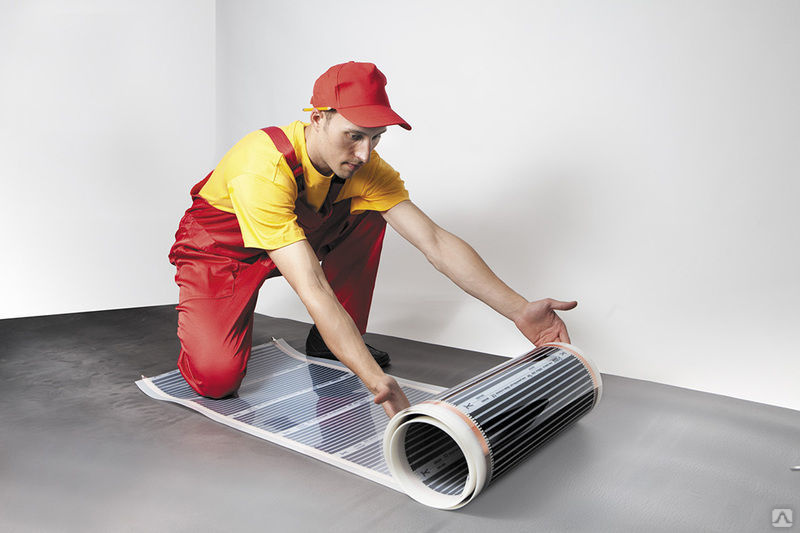
The film floor (IR film) is based on the principle of infrared radiation. As a heating element in this version, strips of carbon material are used, interconnected by a copper bus. The entire structure is sealed in a polypropylene film to protect against fire and moisture ingress.
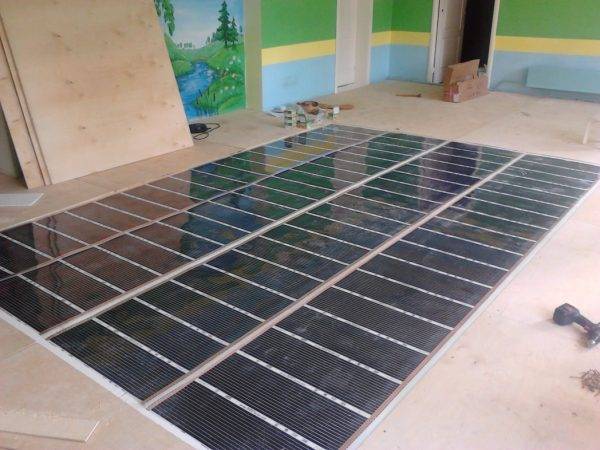 Film flooring - an economical and safe system in operation
The principle of operation of the IR film is simple: a voltage is transmitted through the copper tires, from which the operation of the heating elements is activated. Under the coating, infrared rays are produced and accumulated, which give off heat to the surface. At the same time, the IR film itself does not heat up.
Thermal film is an economical and safe system in operation. It can be used as a primary and secondary heat source. The film floor has proven itself well in heating balconies and loggias. The advantages of this option are not only in practical, but also in legal terms: heating the balcony with thermal film does not require approval of the apartment project in the controlling organizations.
Rod
Rod floor - a type of infrared heater, consisting of rods connected in parallel by flexible wires. The rods are filled with carbon, silver and copper.Applying current to the carbon filler causes the rod to heat up.
The core floor independently regulates the heating temperature of the system, but additionally needs to install a thermostat. Self-regulation helps prevent overheating, while the thermostat helps save energy and prolong the life of the system.
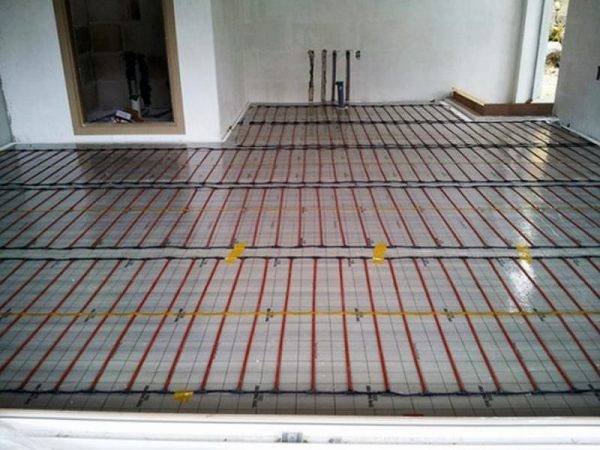 With all its advantages, the core floor has a significant drawback - it is the most expensive electric heating system.
Despite the advantages, rod floors have some disadvantages:
- High price. Rod flooring is the most expensive of all electric heating options.
- Difficult network connection. It is only necessary for a specialist to trust the procedure for connecting to the floor of the power supply.
- Installation exclusively in screed or tile adhesive. If any element fails, you will have to break the concrete screed
The best cable electric underfloor heating
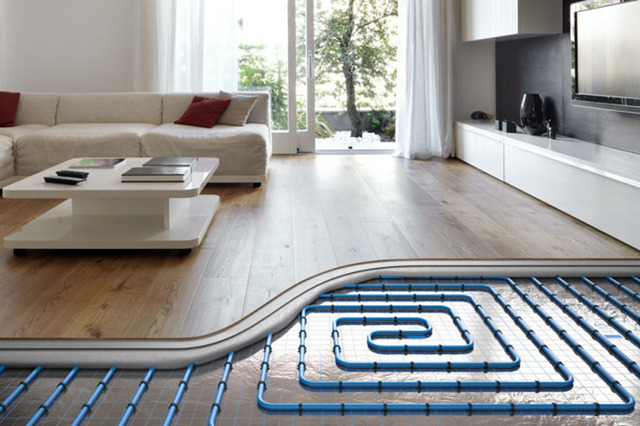
One of the most effective laying methods is cable, which can be laid in a spiral or snake, depending on the shape of the room.
The flexible structure makes it easy to get around corners and places to place furniture so as not to heat the area under the wardrobe. The power and thickness of the cable is important here.
Devi 330 W, 16.5 m - ideal for the kitchen
It is the best cable underfloor heating due to its long service life from the proven Devi brand and the optimal length of 16.5 m, which allows you to cover an area of 2.6 m2. This is well suited for a 4-6 m2 kitchen, given the long row of worktops, sink, stove and washing machine, under which floor heating is not required.
The cable is practical in the kitchen and due to the high power of 330 W, which contributes to the release of a large amount of heat, so the fresh air from the open window during cooking will not chill your legs.
Pros:
- flexible structure is convenient for creating any turns and roundings;
- complete freedom in the form of laying (stripe, square, L-shaped);
- increased power of 330 W allows you to use the element as the main heating in the room;
- simple installation in a concrete screed;
- weight of only 1.7 kg is convenient for transportation;
- two cables in the structure give more heat;
- interact with both electronic and mechanical thermostats.
Minuses:
- cost from 4200 rubles;
- the thermostat is bought separately;
- suitable only for tiles.
Teplolux Eco 850 W, 60 m - for a bedroom or a garage
This is the best underfloor heating cable for a large room, which has a length of 60 meters and allows you to heat 7 m2, which is effective in front of the bed and TV or other frequently used place.
The product is delivered in a coil, and the heating element is endowed with a gray insulating coating. Additionally, a tape is attached to fix the cable in a certain shape. A power of 850 W allows the use of underfloor heating as the main source of heating.




Pros:
- a large cable reel costs only 5200 rubles;
- can be put in a screed or tile adhesive;
- it is allowed to use the cable under parquet, stone, tile, carpet;
- interacts with various thermostats;
- light weight of 2.5 kg will not make shipping difficult;
- two cores inside provide increased heat transfer;
- a thick layer of insulation protects against electric current.
Minuses:
- can not be laid under linoleum;
- the connection cable has a large cross section and is more difficult to hide inconspicuously next to the socket.
Two types of underfloor heating: how they work, what are the characteristics
What both systems have in common is that they are hidden under the flooring without direct contact with the room air. So no convection accompanied by the rise of dust can occur. Thanks to this, the air does not dry out, as is the case with the use of floor heaters.
Water heated floor - conveniently not allowed everywhere
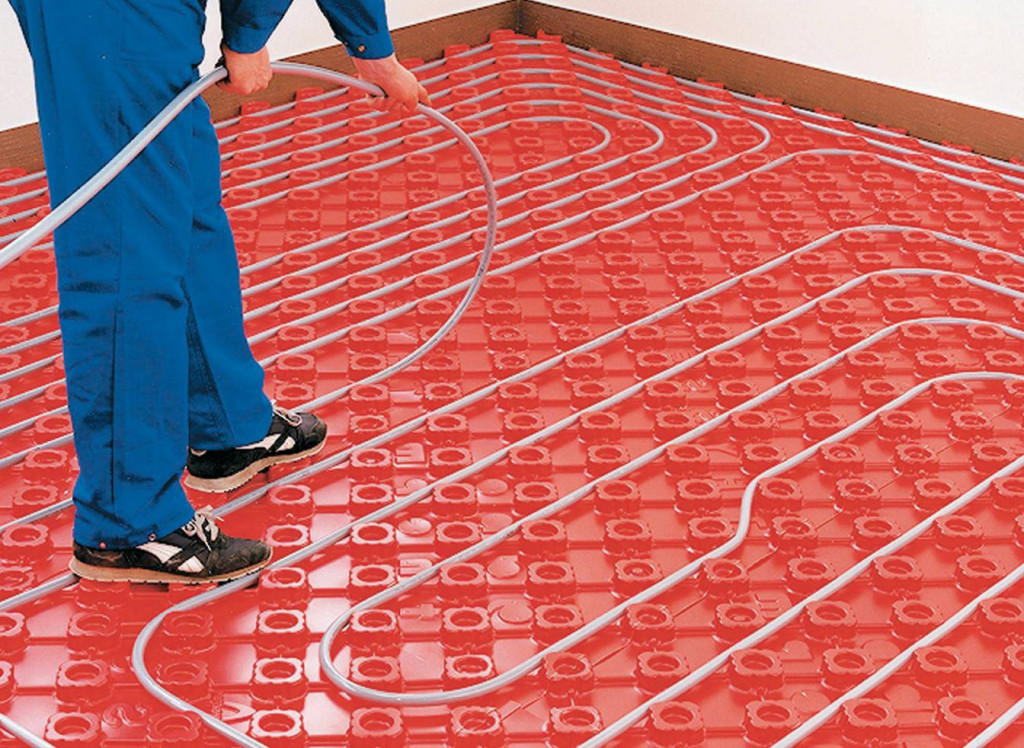
Water-type warm floors are chosen by many because of their low operating cost. After all, they do not consume electricity, but are connected to the general heating system of the house. That's how it is, but when they work, the energy consumption increases (usually it is gas), and a low-power boiler may not be able to cope with the load, moreover, the boiler must be automatic.
We have to change this boiler, buying a more powerful modern model. We also take into account the cost of gas, so saving (compared to the floor of the electric type) is obtained only when heating large rooms.
Naturally, it occurred to many that it is easier and more profitable to connect a water-heated floor in a city apartment with central heating. As a result, no extra expenses will appear - beauty! It was not there - such naive people who installed such systems in themselves were very mistaken. It turned out that money was thrown to the wind. And all because it is strictly forbidden in houses with central heating to connect a warm floor to them. They also charge a hefty fine for this.
Water heat-insulated floor from a metallayer.
Heated floors powered by electricity
To make the final decision which warm floor is better - electric or water, you need to take a closer look at the structures that run on electricity. There are several varieties here: a cable system, an infrared floor and a mini-mat system.
#one. Cable warm floor.
This type of "underfloor" heating is a cable system. They consist of separate sections, each of which, in turn, is represented by a shielded cable (with one or two cores) in two-layer insulation. Cables are interconnected by reliable hermetic couplings
All these precautions make the heating system absolutely safe even in those rooms where it is very damp.
Such a system is economical - for different rooms you can choose different power of the cable used. Indeed, in the kitchen or in the corridor, a floor with a power of 150 to 180 watts per square meter is not needed at all, as for rooms that are not heated (for example, loggias, balconies). The kitchen floor is quite enough power of 120 watts per square meter, and for the bathroom - 140 watts per square meter. "Cable" floors are the cheapest of all those that run on electricity. But they need a screed - this is a prerequisite. Because of it, the height of the floor increases.
Installation of cable underfloor heating.
#2. What are heating mats.
This is also the name of the cable system, only very thin (3 millimeters or less). They are fixed on a fiberglass mesh, sold in rolls, which look very similar to mats or rugs. Therefore, they began to be called minimats. They are extremely quickly mounted - just roll out such a roll on the base, and then connect the cable to the socket equipped with a temperature controller.It is this type that is considered the best underfloor heating for tiles. After all, the tile coating can be glued directly onto the minimats.
#3. Infrared warm floor.
If we use a special infrared film instead of cables, we get an infrared floor. It also works on electric current, it can even be installed under a carpet or under a laminate, it does not need a concrete screed. Moreover, it is quite possible to mount it almost instantly - in just a couple of hours. And then you can immediately turn it on and use it, since there is no need to wait until the glue hardens or the cement sets.
This type of "heating" floors is good in the sense that there is absolutely no dirt or dust during installation. Therefore, it is quite possible to mount it when the apartment shines with a brand new renovation - nothing will deteriorate or get dirty. Moreover, infrared film can be laid not only on the floor, but also on the walls. If you want, you can even heat the ceiling in the country house with it. Unless, of course, the price will scare you off - carbon film is not cheap.
Film infrared heat-insulated floor.
Selection Guide
To make the right choice of heating system, you will have to follow certain rules.
It is important to take into account the characteristics of the premises - is it an apartment or a house, how the heating is equipped here, whether the premises have already been finished, what kind of flooring will be laid. The number of storeys of the house, the materials from which it is built, the size of the heated rooms are taken into account
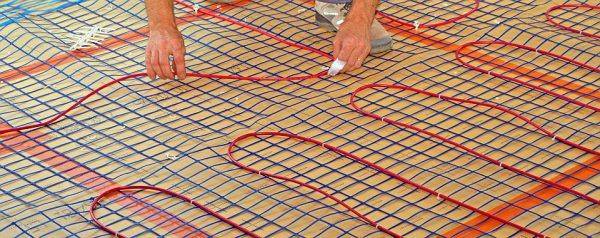
Installation of electric floor heating
If it is planned to equip a screed in housing, then a water floor system can be equipped in a private house.In large rooms, it will be quite economical. Also, in the case of mounting a screed, you can use an electric cable to heat the base.


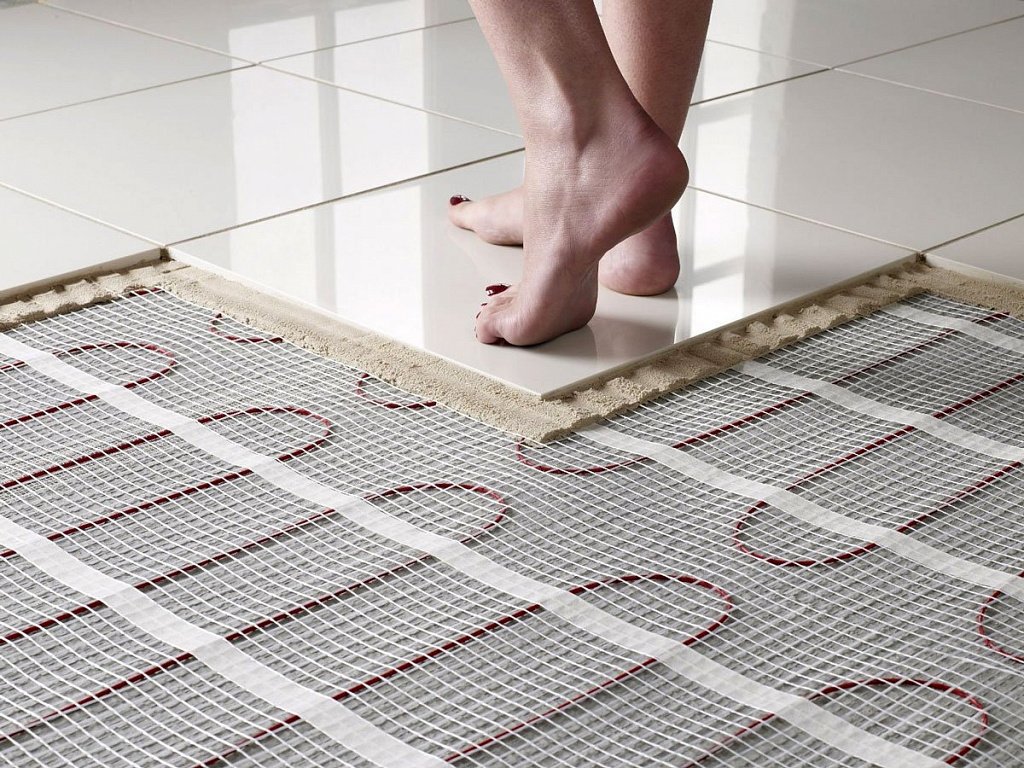


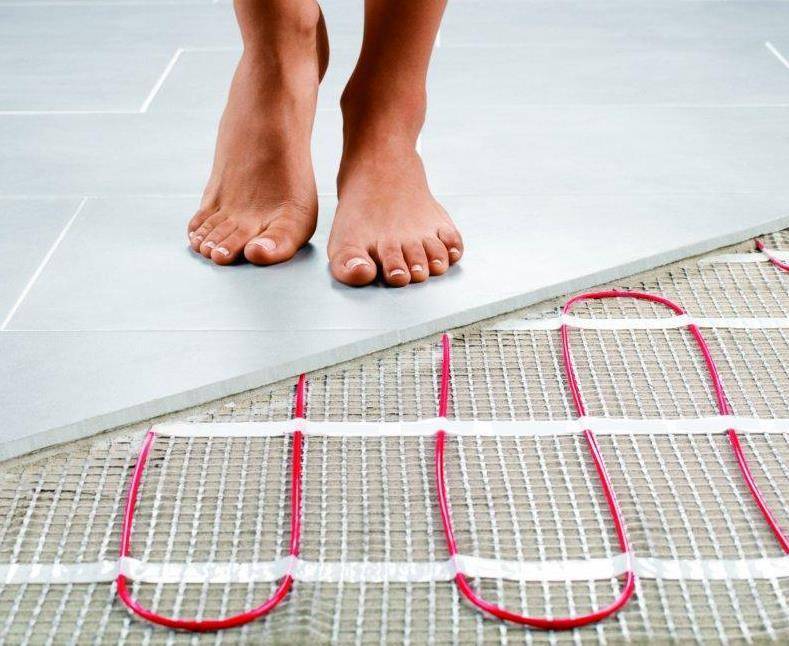

If the screed is already filled, then a system of minimats or infrared floors is used. The latter are especially relevant if it remains only to lay the floor finish. In this case, additional and special materials are not required. Infrared floors also make it possible to cover the base with such popular materials as carpet or laminate.
Which electric underfloor heating is better to choose?
The "classic" of electric underfloor heating for more than half a century is, of course, a heat cable, which is a conventional flexible heating element. Such a cable does not have to be poured into the floor screed - they, for example, are laid in the gutters of drains so that they do not freeze, they are carried out through water supply pipes.
The thermal mat is a modern development of the idea of heat cables, which has made laying more convenient: the same cable is fixed on a grid that is laid on the floor before pouring and often itself is attached to the base with an adhesive layer. Installation is simplified at times, which is definitely a plus.
But what if you want to get by with "little blood"? Let's say you can't just lay a cable or a mat under the linoleum - it will push through, and you will have the entire floor in zigzags from the cable. The solution in this case is an infrared film: they are thin, easy to install, especially durable, they even allow furniture to be placed on top of them, despite the thin floor covering.
As for power, take into account the features of the room: if the floor itself is cold (for example, the first floor without a basement), then the heater's power should be greater than in a warm room on the second floor, where heat loss is much lower.In such rooms, underfloor heating is usually used, positioned by manufacturers as designed “for loggias”.
Considering that you will literally walk along current-carrying wires, do not save on the quality of a warm floor: reliable multi-layer insulation, ideally “self-extinguishing” (shrinking on an overheated conductor, preventing air from reaching the inner layers of insulation), must be mandatory, as well as non-combustible reinforcement inside. Well, do not forget about grounding and RCD, of course.
Criterias of choice
The following technical data are important factors.
Working voltage. Optimal values are 220-240 V.
Power consumption. Shows how much electricity is needed. The minimum value is within 150 W per square meter, the maximum is 230 W.
Heating temperature for heating systems and floor surfaces above the system. Most electric floors are designed to heat the surface up to 30-35 degrees. The recommendations of professionals boil down to the fact that this is enough to feel the environment comfortable. In addition, if the numbers are higher, more power consumption, you will not be able to save.
heating speed. On average 15-20 minutes.
Dimensions (length and width). The minimum strip width of 38 cm is presented on the market, the maximum is 1 meter. The length of the rolls reaches 150 meters. If you need to process non-standard areas, make bends, then you should ask what is the cutting step. There are pieces measured by square meters, which are enough for a whole room without cutting.
Material thickness. Modern specimens are limited to a few millimeters.
IR wavelength. Perhaps the most important indicator, since short waves are harmful to health. Optimal parameters are from 5 to 20 microns.
Heating element. Carbon or graphite.
Security Features
What to look for: additional insulation, overheating protection, self-regulation, fire resistance, grounding.
Set of accessories for installation. Customer experience shows that a complete set always facilitates the purchase and installation process.

Myths about underfloor heating
Myth one: miraculous infrared radiation comes from only some types of underfloor heating.
Any warm or heated object in your home emits infrared radiation, a warm floor is no exception, but radiation from a cable cannot pass through solid objects (such as a floor, tile or laminate), so real infrared radiation does not depend on the type of underfloor heatingbut only from the floor surface. in other words, the radiation from a warm floor under a tile will be exactly the same regardless of the source (cable or mat, or film, or water heating).
Myth two: self-regulating cables reduce power consumption.
The efficiency of the cable heating system is well over 90% (with a maximum of 100%). The total electricity consumption depends solely on the amount of heat that must be transferred to the system to heat the surface to the desired temperature. At the same time, the total heat consumed to heat the underfloor heating to a given temperature practically does not depend even on the power of the heating cable used. At the same time, a self-regulating cable will even more likely increase energy consumption in the event of a cold zone, in which there will be an increased consumption of electricity.
Myth three: only a core warm floor is good for health and creates a favorable microclimate in the room.
Rod warm floor in terms of radiation type does not differ in any way from a conventional two-core cable, the microclimate in the room does not greatly depend on the warm floor, the floor simply transfers its heat to the room, which does not have any special characteristics depending on the type used for the warm floor materials.
Myth four: underfloor heating is an economical way to heat a room.
Film use
Its work is based on the functioning of a carbon material - a film. During its operation, anions are emitted, which do not harm human health due to the length of their rays. The paste acts as a radiator and is applied in the form of strips on the surface of the material used, which are located at the same distance from each other. In more expensive models, the paste is applied completely to the entire surface of the film. Silver and copper conductors are used to supply electricity.
All active elements are soldered with several layers of polyester. They are connected to the network not directly, but through a thermostat. There are many manufacturers of underfloor heating, so making the right choice is not difficult. If we are talking about buying individual elements, then you should check with a specialist about their compatibility. It is also worth noting that the most expensive material does not at all indicate its high quality.
So what to choose anyway?
The answer to this question depends on many parameters and conditions. For example, the area of the room, as well as its location, is of great importance. If this is a private house or cottage, then in principle any system can be used, of course, after evaluating the economic feasibility from various aspects.While in an apartment located in a high-rise building, the choice will have certain limitations.
In addition, it is important to understand the intended purpose of the "warm floor" system. If we are talking about additional heating, created to maintain comfort and a favorable microclimate in the house, then mats or a film warm floor are quite suitable.
In the case when it is understood that it will perform the function of the main heating, then it would be quite logical to prefer a high power heating cable or a water system.
And, of course, the priority criterion in any case should be the high quality of products. You should not succumb to the persuasion of sellers and buy systems from unknown manufacturers, but certified products with proper operation will serve you for many years.
Rating of film underfloor heating
The film coating is always used as a supplement to the main heating, when it is necessary to enhance it. Structurally, the models are made in the form of a pair of copper tires, which are connected using carbon paste. With its help, an electric current is conducted, which serves as a source for heating. The heat itself is released as IR rays. The film is very thin and one of the safest on the market.
PNK - 220 - 440 / 0.5 - 2m2 film floor heating "National Comfort"
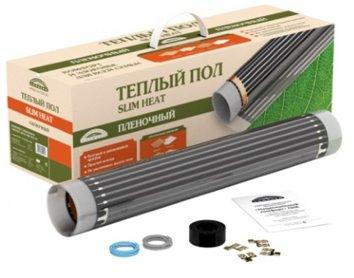
Domestic product from the manufacturer Teplolux "with an affordable cost. The main part of the entire canvas is an IR film, which was created by a South Korean company and its specialists. Masters of the construction industry positively assessed the quality of the product; with the help of such a film, you can heat the floor and its coating. It is recommended to use under linoleum, wood, carpets.


Installation work can be done on its own, the main thing is to carefully follow the steps in the instructions. It is completed with a film, wiring, adhesive tape for fixing and special clips. Specialists and ordinary consumers highlight the high efficiency of the coating, the quality of production, the long operating period, and all this for an affordable price.
Pros:
- Acceptable cost.
- High quality goods.
- Easy do-it-yourself installation.
Among the shortcomings, insufficient power of the device is distinguished.
Caleo Platinum 50-230W

South Korean product, which occupies a leading position and the kit can warm up 3.5 sq.m. premises. Peak power is 230W. Experts highlight the possibility of sex to self-regulation. This option helps to reduce electricity costs up to 6 times.
The film is suitable for laying under any coating. The use of the material is completely safe thanks to the protection against overheating and the anti-spark grid. The installation itself does not cause difficulties and is simplified by the video material that comes with the kit.
Pros:
- Wide functionality.
- There is self regulation.
- Small consumption of electricity.
Among the minuses, customers and experts note the high cost with a small heating of the area.
Caleo Grid 220 W 3 m2
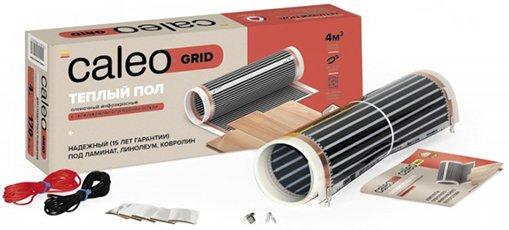
It is the best underfloor heating for laminate, tile or linoleum and is well suited for bathrooms as the technology is completely safe and fire resistant. With the help of a film, it is possible to cover up to 3 sq.m., a 2.5 mm step is used for cutting, so there are no problems with shortening.
The design and heating elements lie on an anti-spark grid, which eliminates the possibility of arson. The total power is 660 W per 1 sq.m. and this is quite enough for warming up and saving electricity.
Pros:
- The share of infrared rays is up to 90%.
- A rich package that includes clamps for connecting contacts, insulation, wiring for installation and detailed instructions.
- All parts of the device are not subject to overheating, as they can withstand up to 130 degrees.
- Installation is very fast with glue.
- Suitable for laminate, linoleum or tile.
Minuses:
- Quite a high acquisition cost, which starts at 6,000 rubles.
- Low efficiency if used as main heating.
- The width of the strips is 50 cm, which is inconvenient and requires the connection of the strips if the room is large.
The best underfloor heating in the form of heating mats
Such equipment has a similar principle of operation with cable, but here the heating element is already laid on a lattice base, which greatly simplifies installation.
It remains for the master to spread the mat in the right place and cover it with a floor covering that is allowed according to the instructions.
Devimat DTIR-150, 450 W, 3 m2 - for the loggia
This is the best warm floor of loggia mats, because its width allows you to lay a long area up to 6 m with a width of 500 mm. The cable is laid on a foil base and attached to the grid, which simplifies unfolding.
The power of 450 W is optimal for maintaining a comfortable temperature on the balcony. The kit includes a wire for connection, a coupling and corrugated protection. The thickness of 5 mm does not require a large layer of mounting adhesive.
Pros:
- cold lead 4 m long for connection;
- Teflon internal insulation;
- aluminum foil for screening;
- heating to a temperature of 90 degrees;
- certified by all GOST, CE standards;
- installation in tile adhesive is simpler;
- inside two cores for greater efficiency;
- suitable for tiles, porcelain stoneware, parquet, carpet.
Minuses:
- cost from 7000 rubles;
- it is more difficult to cut the mat for separate placement over the area.
Equation 1260 W, 9 m2 - in the nursery
It is the best underfloor heating for children's room due to its 1260W power, which allows you to use the mat as the main heating and prevent children from catching cold from playing on the floor.
The cable is supplied in a green insulating sheath on a white mesh with a cold tap for connection and corrugated protection. They can heat up to 9 m2, which corresponds to most children's bedrooms.
Pros:
- two cores for increased heat transfer;
- weight 3 kg;
- food from a household network of 220 V;
- laying without screed in tile adhesive;
- closes immediately 9 m2;
- suitable for interaction with programmable thermostats;
- can be laid under a parquet board, laminate, linoleum, porcelain stoneware.
Minuses:
- cost from 10500 rubles;
- a good thermostat is needed that accurately monitors the duration of the inclusion so that the increased heating power does not lead to a fire.
Which electric floor is better - comparison table
| Options | Cable underfloor heating | Heating mats | Infrared warm floor |
|---|---|---|---|
| Mounting method | Mounted under a concrete screed with a thickness of at least 3 cm. | Mounted in a layer of tile adhesive or screed, depending on the type of flooring. | The film is laid directly under the coating. |
| Types of flooring | Since the use of a screed is mandatory, it is suitable for any coating. | Tiles, porcelain stoneware, wooden floor.Installation under a laminate, parquet board, carpet is possible, but a screed layer of at least 20 mm is required. | Any floor covering, but if glue or screed is required to fix the covering, then it is necessary to lay a layer of drywall on the film. |
| Possibility of use as the main source of heating | maybe | Only as an additional source | maybe |
| Maximum possible power | 110 W/m2 | 160W/m2 | 220 W/m2 |
| Possibility of laying on various surfaces | Floor, walls | Floor, walls | Any surface |
| Possibility of shaping | There is | There is | The film can be cut in increments of 25 cm. |
| Energy efficiency compared to convection heaters | Medium | Medium | high |
| Security level | High | High | High |
| Warm-up method | uniform convection | uniform convection | Warms up everything |
| Ability to reuse in another room | Not | Not | There is |
| Electromagnetic field | 0.25 μT | 0.25 μT | Hardly ever |
| Life time | Over 30 years | Over 30 years | Over 30 years |
| Guarantee | 15 years | 20 years | 20 years |
To better understand the features of each type of electric underfloor heating, we suggest watching the following video.
Which mat for underfloor heating is better to buy
When choosing a heating mat, you should pay attention to the number of conductive wires. It affects not only the ease of installation, but also the safety of using the system.
- Mats with single-core cables are used for heating non-residential premises.
- Two-core models do not create electromagnetic radiation dangerous to humans and are easier to install.
It is important to consider the maximum area covered.The required value is individual and depends on the characteristics of the room in which the system is planned to be installed.
In order not to make a mistake with the choice, we recommend drawing up a room plan indicating the locations of the furniture and measuring the area free from heavy objects.
When installing underfloor heating, the electrical resistance should be measured before and after the tile adhesive is spread over the surface of the tape. Saving indicators guarantees the correct operation of the heating element in all areas.


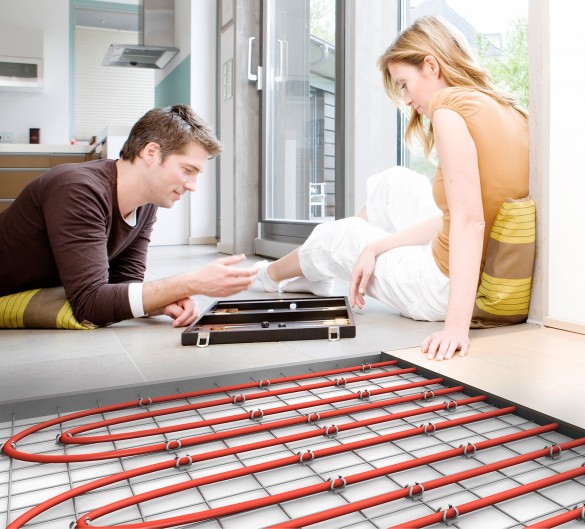
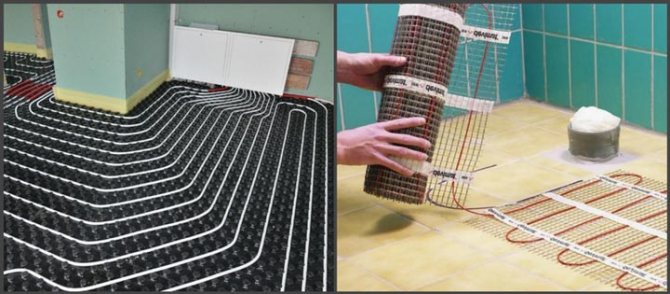


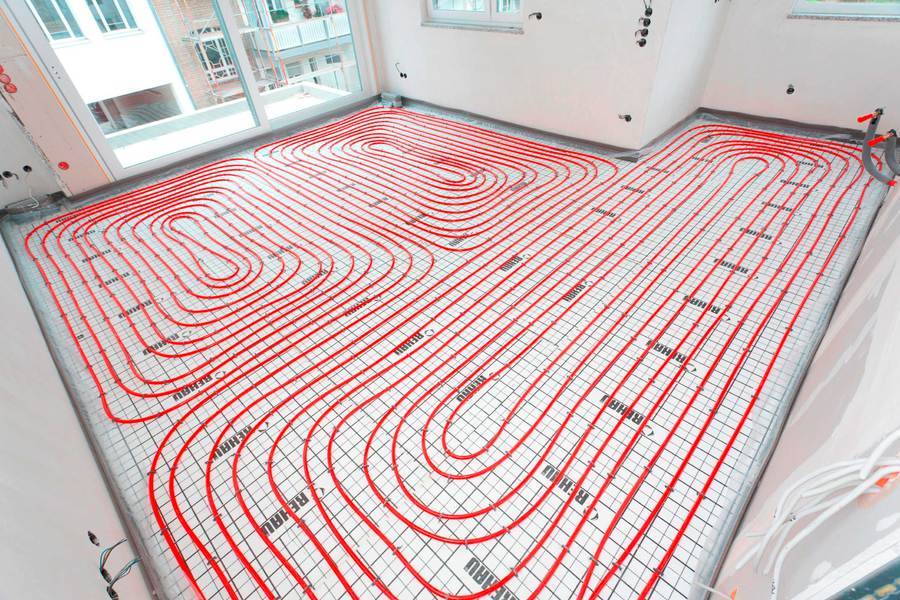
One of the main parameters is the maximum heating temperature. To ensure a comfortable microclimate in the living room, it will be enough to maintain a temperature of about 25 ° C. Keep in mind that a floor covering that is too thick can prevent heat from spreading.
Do not forget about the protective properties of the cable, which are largely determined by the characteristics of insulating materials. The most popular are rubber, fluoroplastic, polyethylene. To ensure the safety of use in difficult conditions, it is better to buy a mat with multi-layer insulation and a sealed protective shell.
Summing up
So, we have provided you with the most important information on how to choose an electric underfloor heating for laminate, tile, parquet. As you can see, the criteria are very diverse and in order to purchase the most suitable product, something will have to be sacrificed. We recommend that you, if possible, give preference to the film version, because. it is the most modern, economical and easy to install.
We advise you to watch the seminar, which discusses in detail the features of using each of the options:
Video selection guide electric underfloor heating for home
Finally, I would like to pay attention to which electric underfloor heating is better to choose according to the company. To date, the leaders in the production of these heaters are AEG, Rehau, Valtec and Green Box. If you do not understand at all which manufacturer is better to trust, these 4 companies have a lot of positive feedback from customers and a good reputation in the world market
If you do not understand at all which manufacturer is better to trust, you should know that these 4 companies have a lot of positive feedback from customers and a good reputation in the world market.
We advise you to read:
- Comparison of fan heaters and electric convectors
- Advantages and disadvantages of electric underfloor heating
- Wiring diagram for underfloor heating cable



