
- Types of heating systems
- Which electric floor is better to choose under the tile?
- Cable
- mats
- Film floor heating
- Rod
- Classification of heating elements
- Cable heating systems
- Thermomats for heating
- Film heating
- Types of infrared floors
- Types of underfloor heating under tiles
- We install water heating
- How to install?
- Surface preparation
- Installing underfloor heating on a wooden base
- Thermal device concreting
- Connecting a collector device
- Laying of thermal elements
- Best Answers
- Pros and cons of different types of tile underfloor heating systems
- Water heated floor
- Electrical cable
- Heating mats
- Film system
- Electric water heating
- Electric underfloor heating for a balcony
- Conclusion
Types of heating systems
Depending on the configuration, laying methods and design features, heating systems are divided into cable, infrared, which, in turn, include types - film, rod, as well as special mats. Each type of underfloor heating has its own advantages and disadvantages.
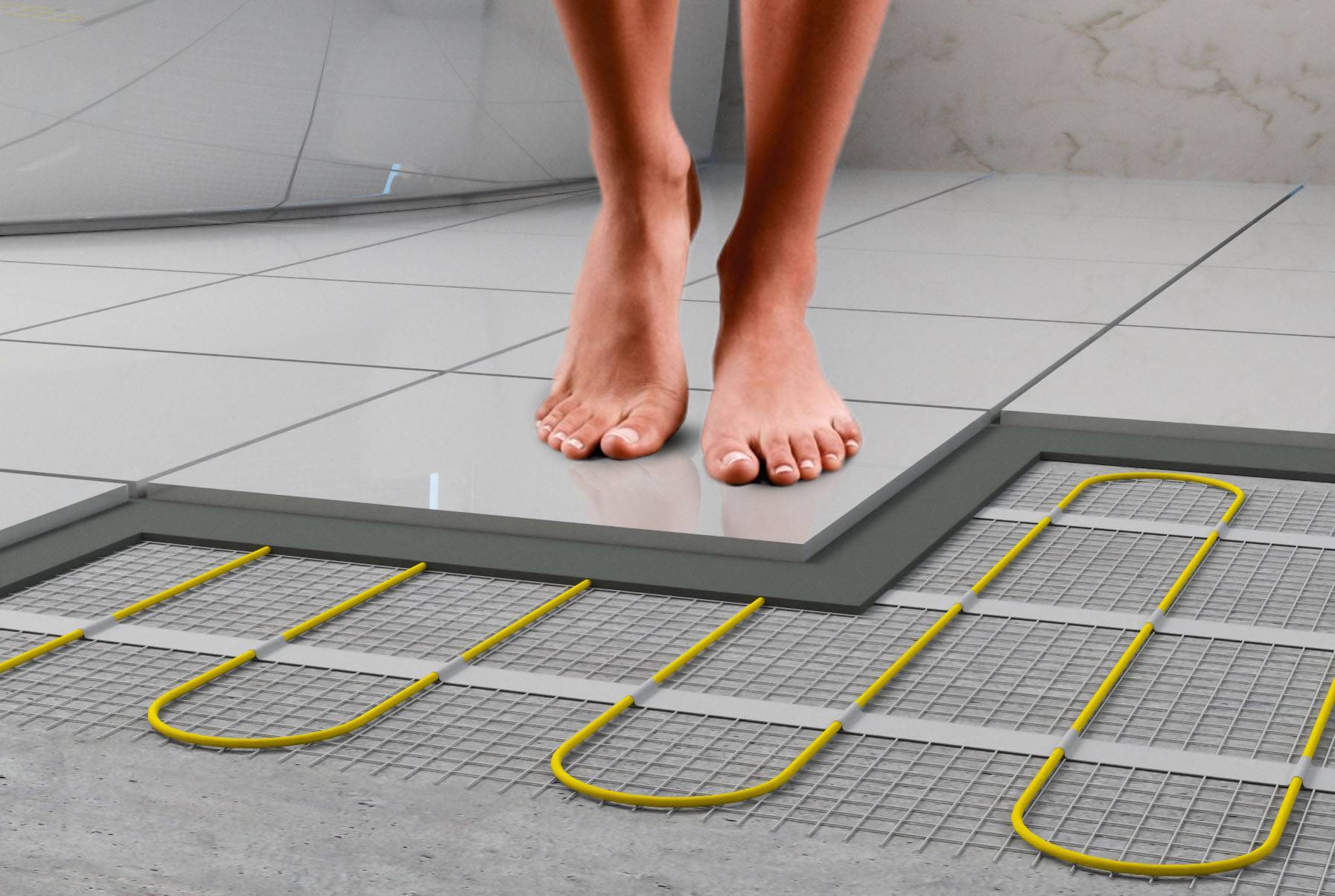
The defining feature of the cable type is the use of a resistive or self-regulating conductor. The resistive conductor is made in two versions - single-core and two-core.
Its features are:
Can be equipped with a thermostat. A self-regulating cable provides for temperature control in place in the room, for example, in the area where furniture is located, the heating will be less than in the area of \u200b\u200bwindows or doors;
Able to heat up to 70 degrees;
Its laying takes place in a concrete screed about 4 cm thick. Therefore, the floors, for example, in the bathroom are raised by 5-6 cm, which additionally loads the floors
This is important to consider when it comes to multi-storey buildings.
In this case, the cable option has the following advantages:
- uniform distribution of heat over the entire area;
- high heating rate after turning on the system;
- the use of software or conventional thermostats;
- the ability to adjust the laying step, while maintaining the optimal level of heat transfer. So, in cooler places (near the window), the cable is laid tighter than near the furniture.
Flaws:
- significant energy costs;
- the complexity of self-assembly;
- installation of this system in multi-storey buildings is not recommended.
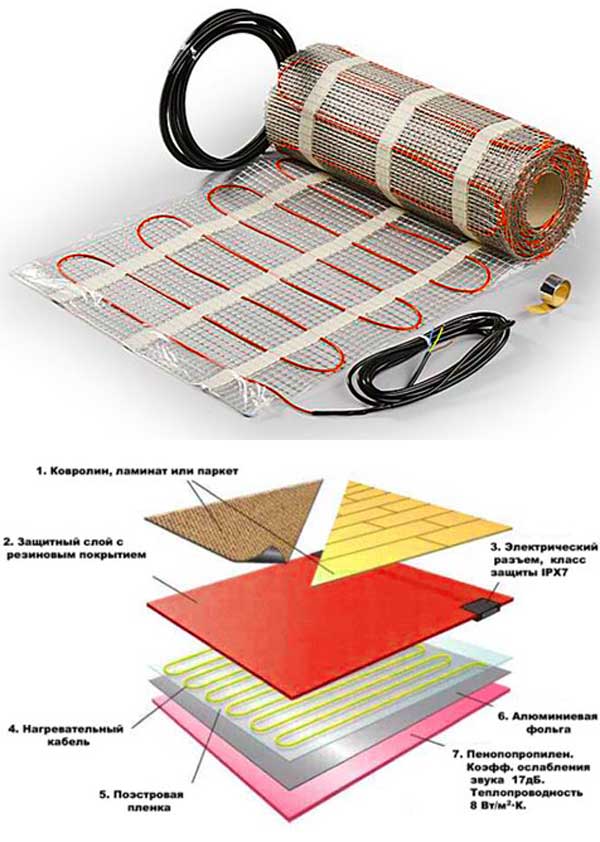
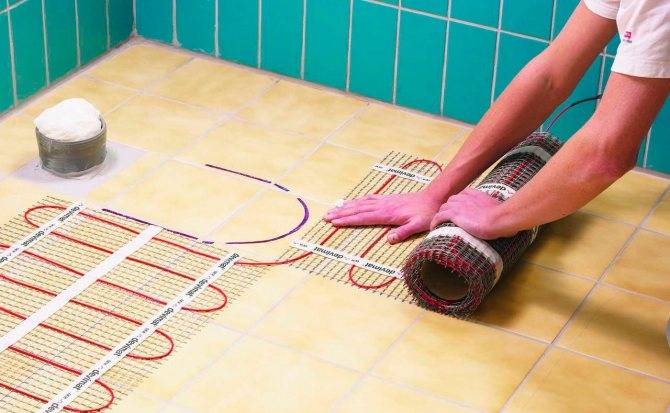
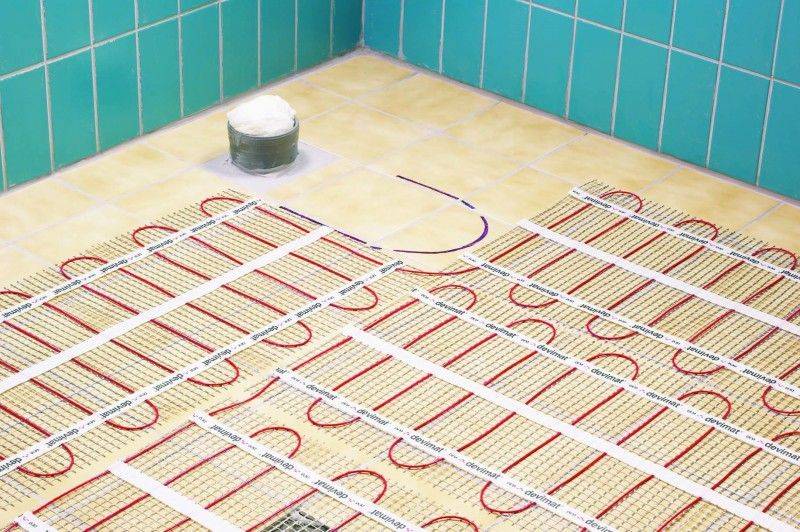
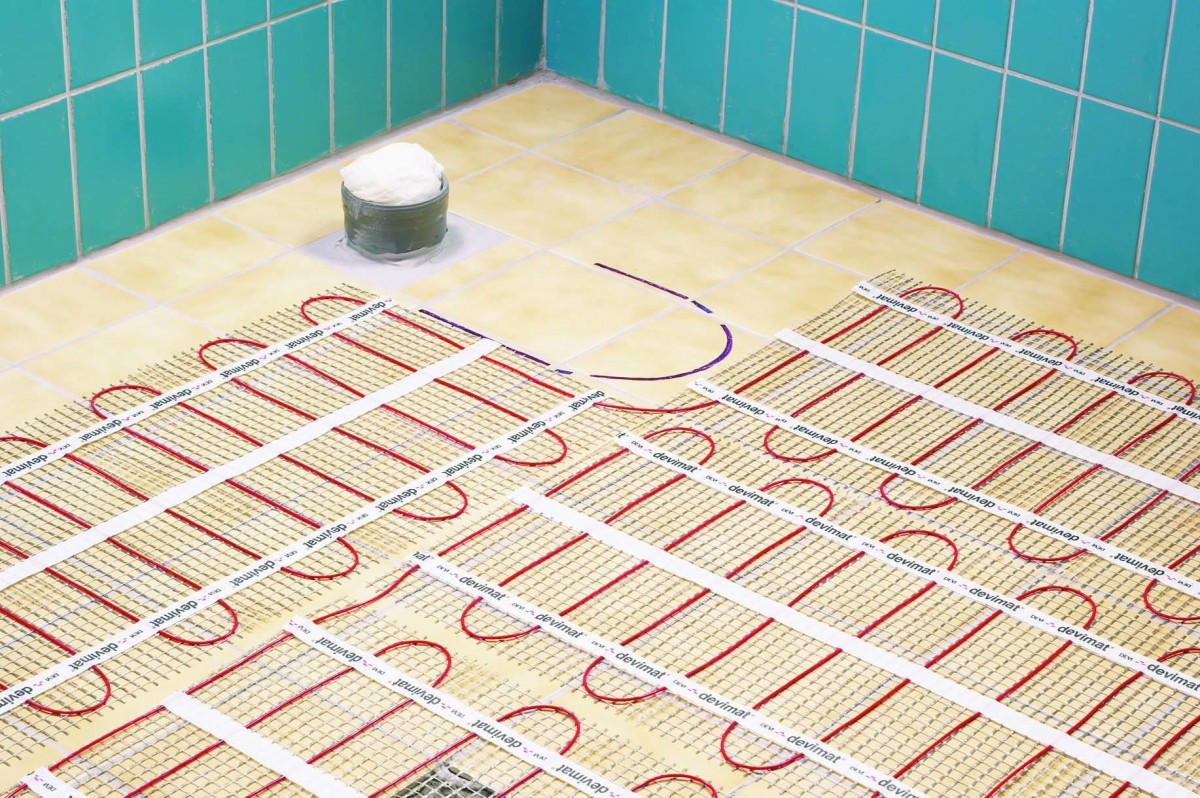
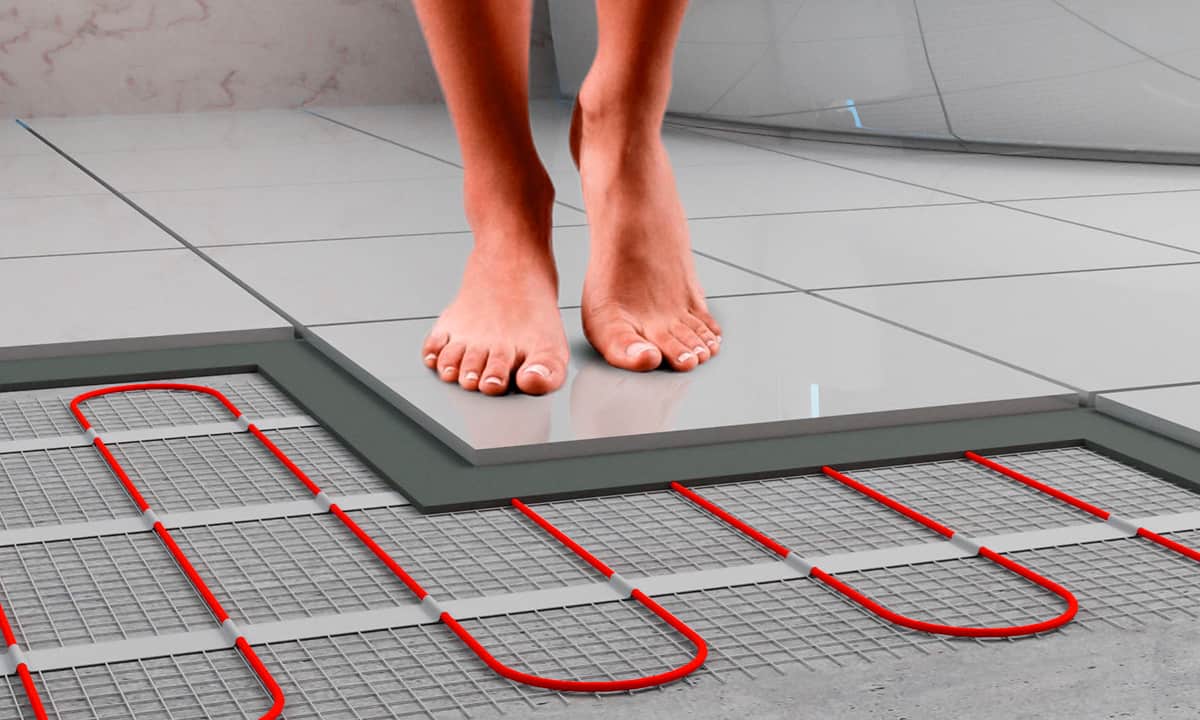
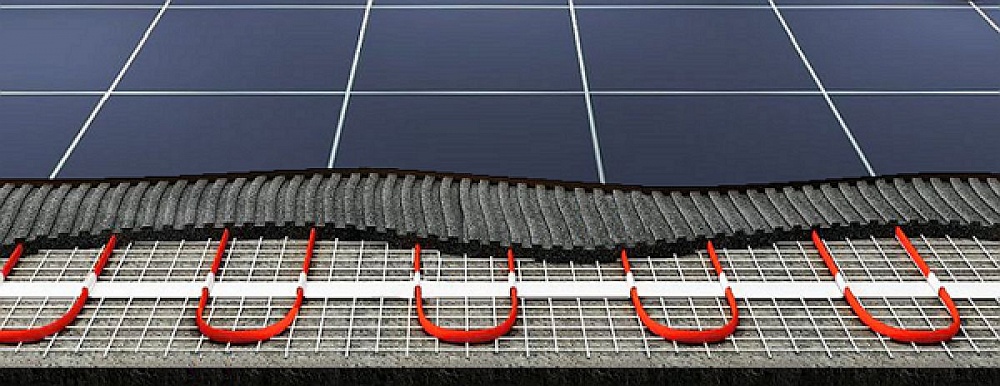
Heating mats are a special reinforced mesh equipped with a thin thermal cable.
Peculiarities:
- as a rule, mats are made with a thickness of no more than 3 mm and low weight;
- durable shell is able to withstand significant temperatures;
- the need for installation in the preliminary laying of the heat-insulating layer;
- a variety of heating mats provides for the availability of simple and cheap options (for example, fiberglass);
- the presence of a thermostat.
Advantages:
- ease of installation allows you to lay your own;
- rapid heating of the room;
- possibility of use in multi-storey buildings;
- the possibility of adjusting the thermal regime.
Flaws:
- higher cost than classic cable systems;
- not recommended for use as a main heating system.
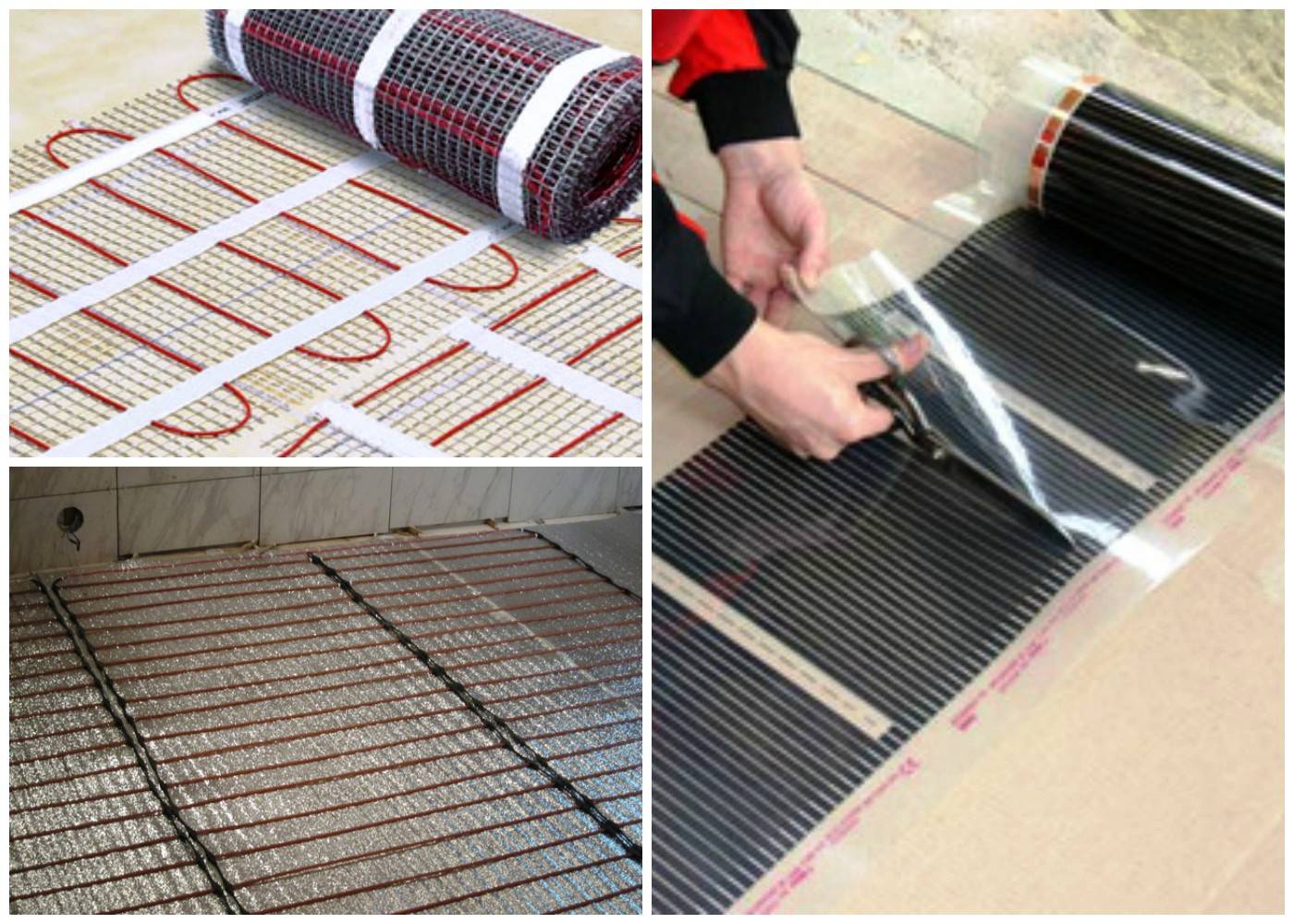
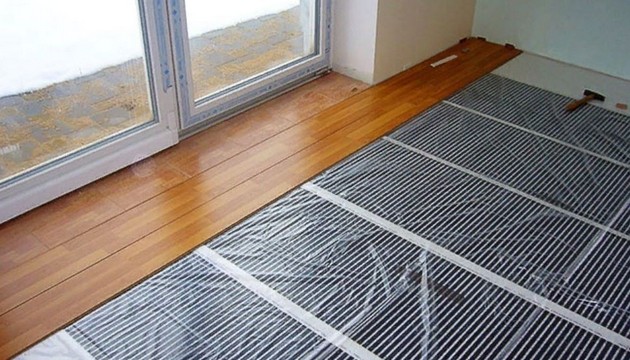
The main element of the film floor is an infrared film with carbon plates built into it. This is perhaps one of the most heat-saving and efficient domestic heating systems.
Peculiarities:
- small material thickness;
- during installation, an additional mounting mesh made of fiberglass with a cell of up to 3 cm is required;
- the heating process occurs due to the heating of a person and objects around him, which then give off heat to space. Thus, a comfortable microclimate is created in the apartment, without air drying;
- the infrared cloth has great strength and is able to withstand significant thermal and mechanical overloads;
- if a separate heating thread is damaged, the product does not lose its working qualities due to the parallel connection of the elements.
Advantages:
- simple installation process;
- rapid heating of the room;
- reliability;
- versatility of application;
- low level of electromagnetic radiation.
Flaws:
- high price tag;
- film material incompatibility with ceramic tile adhesive. That is why fiberglass is additionally used;
- when laying, a solid base of plywood or drywall is required, which reduces the level of heat transfer of the system.
Rod underfloor heating as one of the types of infrared systems includes carbon rods embedded in a polymer film. The operating scheme is identical.



Peculiarities:
- higher parameters of the mechanical strength of the material;
- suitable for all types of floor coverings. Additional underlay is not required.
Advantages:
- high strength - the product is able to withstand the most massive furniture, without fear of overheating or deformation of the base;
- compatibility with various materials and compositions for gluing;
- continuous and independent operation cycle of each section due to their parallel connection.
Flaws:
high cost.
Which electric floor is better to choose under the tile?
Electric underfloor heating in stores is offered in four variations:
- cables;
- mats;
- films;
- rods.
Each of these options has its own advantages and nuances of installation. The choice of the most suitable modification for a particular room and the flooring to be laid should be approached wisely and without haste.
Electric floor options
Cable
Warm floors made of heating cables are designed for laying under ceramic tiles and porcelain stoneware. They are mounted in a concrete screed 4–5 cm thick. They are not laid without concrete. If the floors in the house are old and additional overloads are contraindicated for them, then it is better to refuse the cable system.
The heating cable of a similar warm floor under a tile consists of one or two heating cores, which are packed in several layers of heat-resistant plastic. Plus, for strength, such a cord usually has a copper wire braid inside. At the same time, the plastic sheath and electric cores are designed for heating up to 70 0C.
The heating cable is:
- resistive;
- self-regulating.
The first is cheaper, but less efficient. It heats up the same throughout. And in the version with self-regulation, the heat transfer of a particular area depends on the ambient temperature. If there is enough heat in some place, then the veins at such a point begin to warm up less by themselves.This eliminates the appearance of tiles on the floor with local overheating and reduces the overall energy consumption.
Heating mats and cable floor
mats
Mats will cost one and a half to two times more expensive than cable when calculated per square meter of heated surface. However, this type of electric underfloor heating is the most optimal for tiles, it is difficult to find a more correct and better option for tiles.
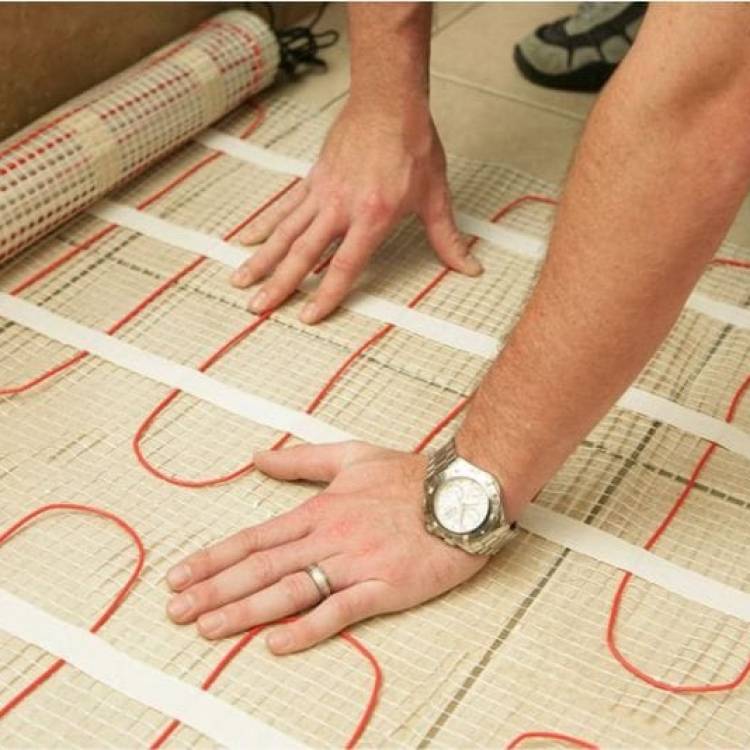
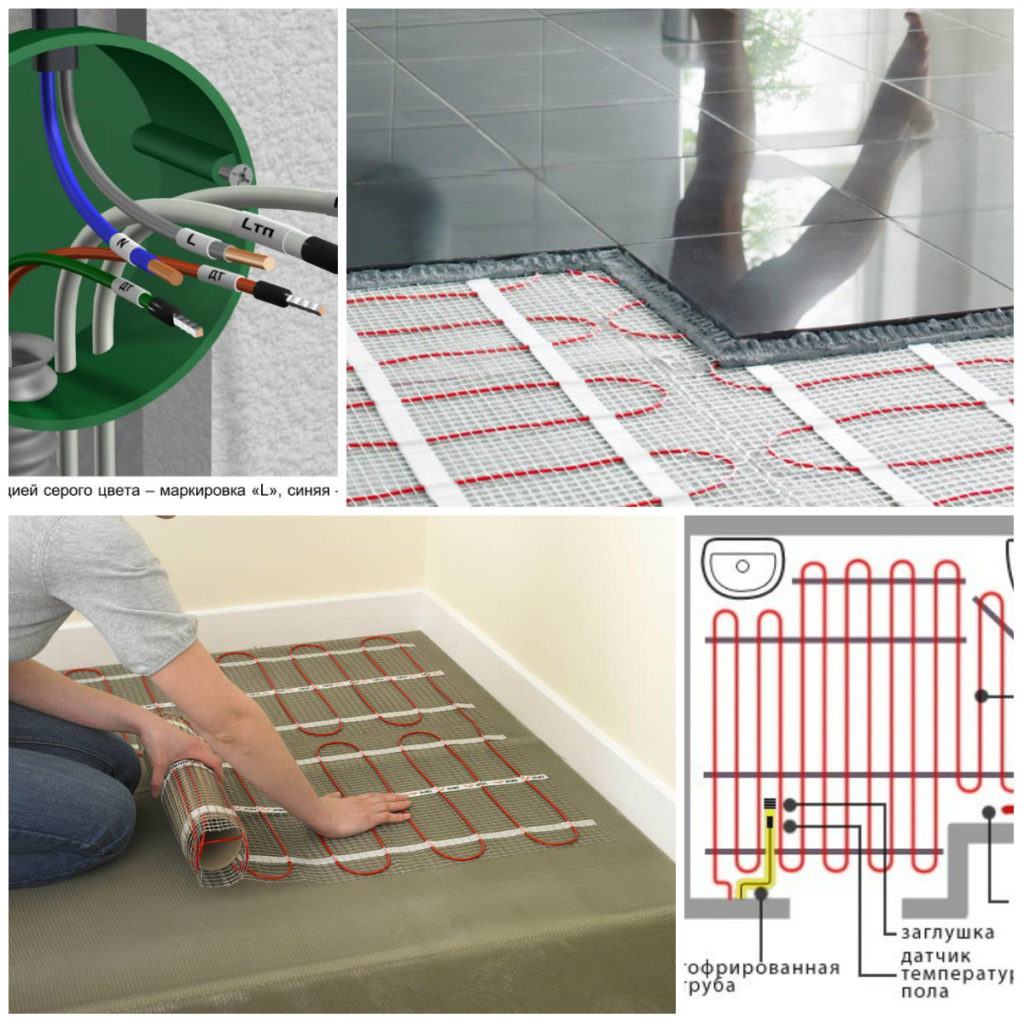
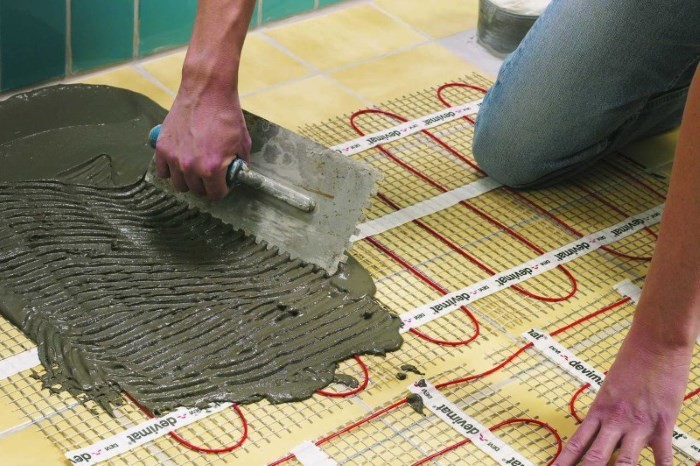
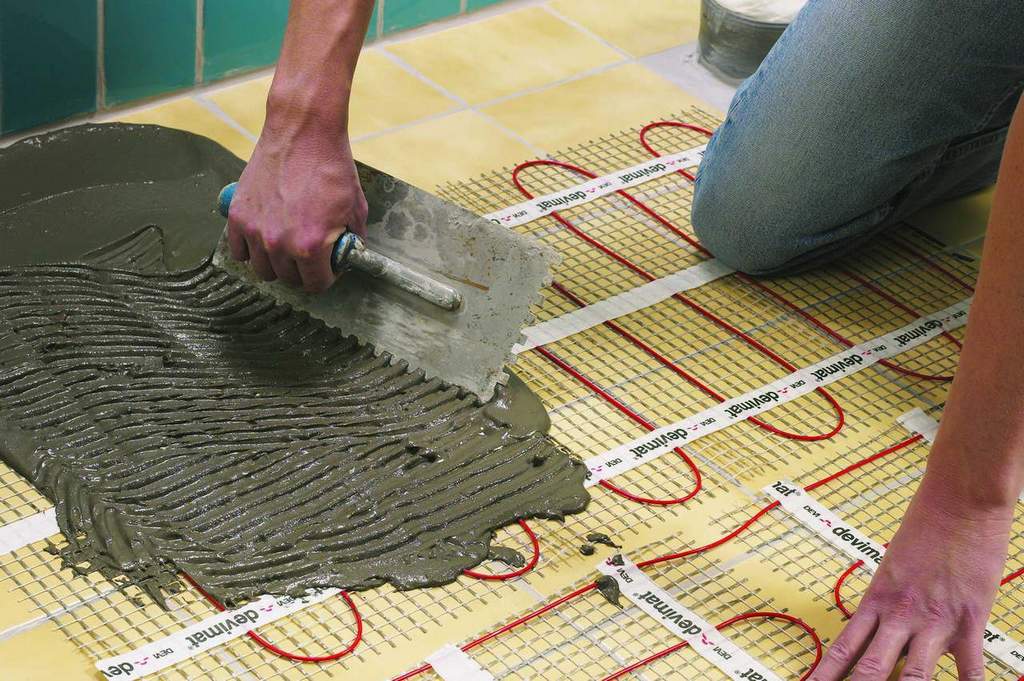
A thermomat is a reinforcing fiberglass mesh on which the heating cable is already fixed with a snake with an ideal pitch. It is enough to roll out such a heating system on a prepared rough base and simply connect it to the power supply. The tile is then glued on top in the usual way without a screed.
How to lay tiles on heating mats
Film floor heating
If in the first two versions a cable with metal cores acts as a heating element, then the films are arranged completely differently. In the film floor heat, carbon-containing materials are heated, which generate infrared radiation when an electric current is applied. Between themselves, these thermoelements are connected by a copper bus, and from above and below they are closed with a sheath made of polyethylene terephthalate.
The thickness of the thermal film for the floor is only 3–4 mm. And it consumes 20–25% less electricity with identical heat transfer than the cable counterpart. However, it is difficult to call such films an ideal choice for tiling. Not every tile adhesive is suitable for them. There are compounds that can dissolve the film shell.
Manufacturers recommend installing this electric underfloor heating under tiles only with moisture and fire-resistant LSU between them. And this is an additional expense. Plus, the thermal film itself is expensive.The result is a fairly impressive amount per square meter.
Film and rod
Rod
The core heat-insulated floor heats also at the expense of infrared radiation. Carbon rod-tubes connected on both sides with conductive tires act as heating elements in it. Such a system is mounted under ceramic tiles in a thin 2–3 cm screed or in a centimeter layer of tile adhesive.





The main advantage of a rod thermofloor is several times lower power consumption compared to a cable. However, the lucky ones who bought this option, in the reviews, point to its excessive high cost and the gradual failure of the rods. As a result, you pay a lot of money, and after a few months, cold spots begin to appear on the floor.
Instructions for laying and connecting underfloor heating systems
Classification of heating elements
How to choose underfloor heating for tiles? There are several types of electric heating systems, which fall into three main categories:
- cable;
- thermomats;
- infrared.
All types of underfloor heating under tiles with electric heating elements are safe to use and can last at least 15-20 years. Such systems can function as the main or additional heating.
Cable heating systems
 Electric cable as a heating element
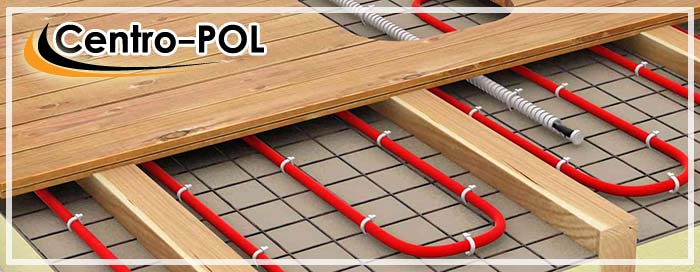
When installing an electric cable as a heating system, you need to make a sufficiently thick concrete screed.In this case, the thickness of the heated floor under the tiles should vary from 4 to 8 cm, which is a lot for apartments with low ceilings. Moreover, such a design creates a rather large static load on the floor, so the cable system is best used in cottages and private houses.
This design of a warm floor under a tile is beneficial if you are making repairs in a room where internal work has not yet been completed. Indeed, in such a situation, pouring a screed with a large thickness is much easier. To strengthen the base, reinforcing meshes are used, after which the solution is poured. Ultimately, a thermal cable is attached to the prepared base.
There are two options for the device of the electrical cable:
- Single core. Floor heating under the tiles is carried out by a single-core cable operating on a resistive principle. The disadvantage of the system is the need to loop the conductor, which requires a special wire installation scheme;
- Two-core. In this situation, two cables are already used, one of them closes the electrical circuit, and the second acts as a spiral. Thanks to such a device, the installation of equipment is greatly simplified, but the heating occurs equally along the entire length of the electrical cables. From the point of view of economy, this is not very profitable.
Thermomats for heating
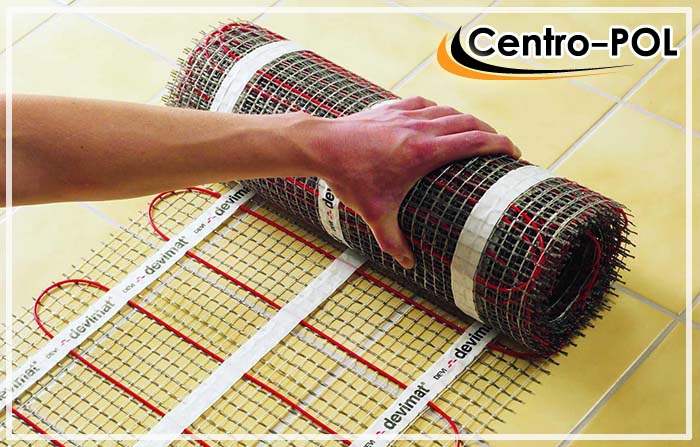 Installation of thermomats is as simple as possible, does not require any specific skills
Thermomats are a popular choice for underfloor heating under tiles, which many consumers resort to. In fact, this system is similar to the device of a two-core thermal cable. The only difference is that the conductors are already fixed in a special fiberglass frame.
Such electric heating has a number of advantages:
- Installation is extremely simple;
- A small thickness of the heating mat that does not affect the height of the ceilings (no more than 3-4 mm);
- There is a possibility of thermal regulation;
- Heating elements have high efficiency;
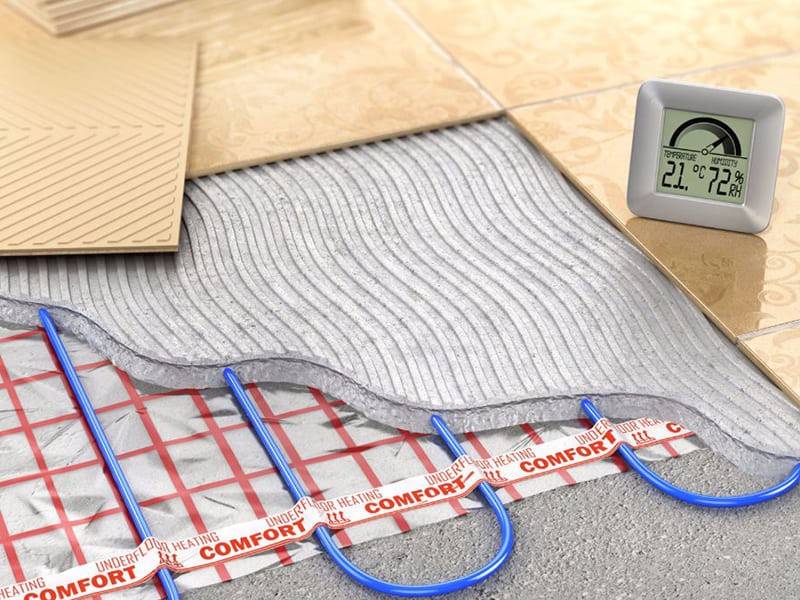
- Laying of heating mats is carried out without screed in the adhesive composition.
The disadvantages of equipment include only a large consumption of electricity. For this reason, I usually use thermomats as an additional, rather than the main heating system.
Film heating
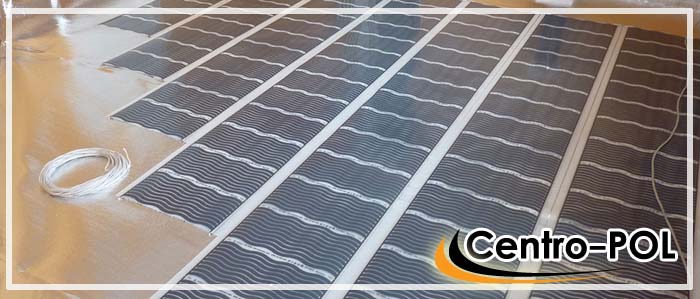 Example of infrared heating installation
Electric floor heating using film structures is one of the most energy-saving. A special film consists of special cells in which heating elements are mounted. They, in turn, are powered from the network when the equipment is connected.
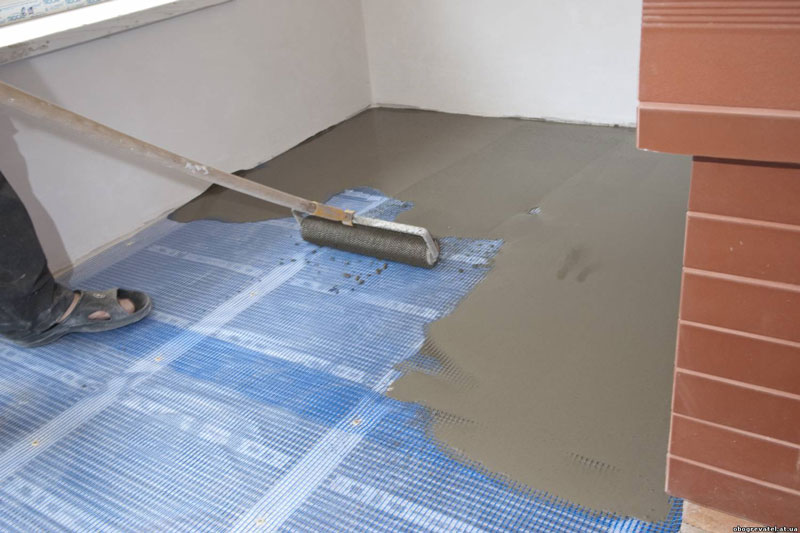
However, a set of underfloor heating under tiles with infrared films is not recommended for use when laying ceramics. The fact is that the polymeric materials that make up the heating nets do not interact very well with tile adhesive. And in order to eliminate this drawback, it is additionally necessary to mount a fiberglass mesh, which will lie between the adhesive solution and the infrared film.
Types of infrared floors
Warm floors are divided into types: water and electric.
In the first, heating occurs through water pipes, the principle of operation is the continuous circulation of hot water.
The latter are divided into subspecies: convection and infrared. In convection systems, the heating element is an electric cable. Unlike convection heating, which recirculates cold air to heat it up, infrared heating acts directly on bodies using radiation.It takes a lot of energy to heat the air.
With infrared exposure, the amount of energy needed to provide comfort is reduced to 50-60%. Thus, a 500W infrared emitter achieves the same performance as a 1000W convective emitter in the same time period. Based on these differences, infrared floors should be singled out in a special group, the most progressive and modern, but so far they are classified as electric.
Varieties of infrared floors - thermal films or rod floors, carbon and graphite. It is these new items that are included in the rating. Reviews on the Internet show that films are more practical and easier to handle.
Types of underfloor heating under tiles
There are several types of electric heating on the market that are allowed to be covered with ceramics by regulatory literature. The question of choosing the ideal design is not extremely important, but it is still worth considering. The only correct opinion about which manufacturer to choose heating does not exist (and it is unlikely that the answer will appear soon). For specific situations, you need to know certain operating conditions, the possibilities for laying.
What type of underfloor heating to choose under the tile? Today, consumers can buy only 2 types of systems:
- Water. It implies the use of an emulsion or water as a heat carrier. It circulates in heating pipes. Water can be supplied from central heating or directly from the riser in the apartment. During the operation of the system, the use of a pump is inevitable, which will set the coolant in motion through the pipes.Sometimes it is allowed to install a warm floor without a pump, but in this case, the law of gravity must be perfectly observed. In addition, it is not possible to call such a heating method highly efficient.
- Electric. The system is powered by the mains, from which it got its name. There are several types of underfloor heating that work on this principle. Among them, it is worth highlighting those that can (and even need to!) be placed under a tile or concrete screed: cable underfloor heating under a tile is the choice of those who are looking for a budget option for installation; differs in rather low energy consumption, duration of operation; among the shortcomings - the presence of electromagnetic radiation, a long laying process;
- infrared film - works due to the heating of the carbon film, during operation it emits anions and long infrared rays that do not harm living organisms (as the manufacturers say); the system can be placed under heavy decor items, it is mobile, therefore it is not always the best option to hide it under the tile;
- rod carbon floor - a system offered to customers in the form of mats; differs in ecological safety, carbon rods connected among themselves by terminals serve as heating elements; it is not always possible to find a genuine model of such heating.
Of course, the differences between each type of underfloor heating for tiles are significant. But there are a large number of properties, because of which they prefer one or another heating. Most often, preference is given to less energy-intensive heating or one with less hassle during installation.
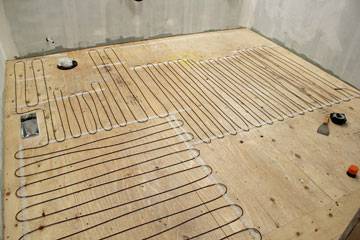
We install water heating
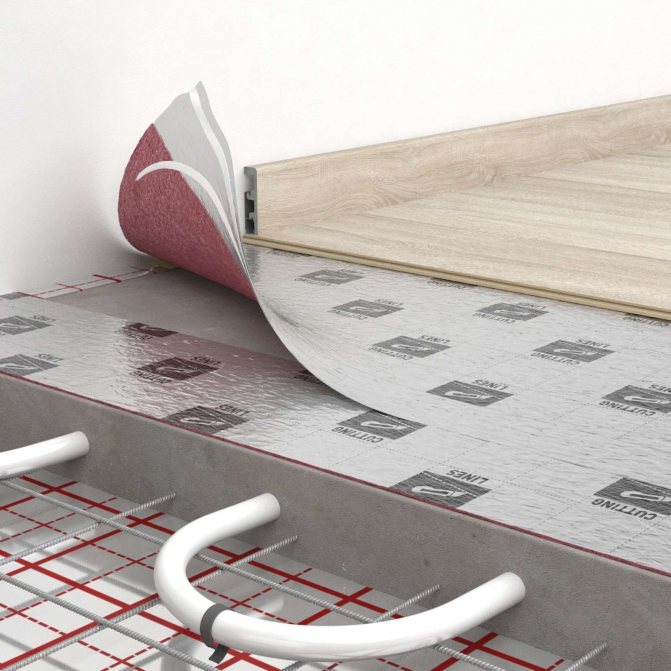
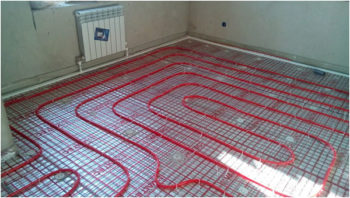
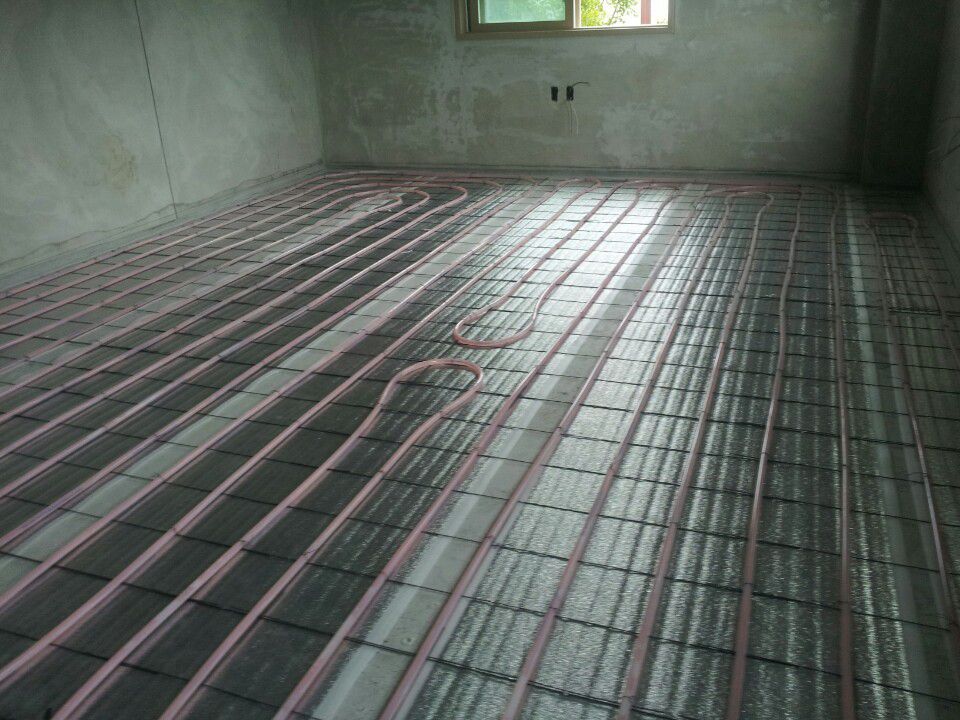
Water pipes with coolant are mounted with long loops. The maximum length of the circuit is no more than 100 m. The geometry of the pipe laying may vary. Usually it is a snake or a spiral.




The pipes are connected to a common manifold, which is placed in a separate cabinet.
From above, the pipes are poured with a screed, if they are not already equipped with special mats. Instead of a screed, when the installation is completed, the system can be covered with sheets of fibrous gypsum - this is an insulator for pipes and top decorative trim.
How to install?
There are two ways to lay a water-heated floor with your own hands: using concrete or flooring. In the first version, the tubes are dressed in a screed, in the other case, in a wooden or polystyrene base.
Surface preparation
First, it is better to make a high-quality cleaning of the base layer, if necessary, level the surface with a cement screed, determine the evenness of the bathroom or kitchen floor, lay a layer of thermal insulation (mainly foam). For waterproofing, you need ordinary cellophane. Then, along the entire perimeter of the apartment, in the bathroom or kitchen, a damper tape is laid, which does not allow the expansion of the screed.
Installing underfloor heating on a wooden base
Underfloor heating in the kitchen can be done using rails and modules. Such a device is laid in a rough way on the floor or wooden logs. The first option involves the use of particle boards equipped with special channels for pipes. Another installation method involves the use of wood flooring and insulation - mineral wool and polystyrene. Their smallest thickness provides high-quality thermal insulation.
Thermal device concreting
In the bathroom or in the kitchen, it is better to make a warm floor in the form of heating tubes laid in a concrete screed. Before laying, the room is divided into equal, small sections. Such crushing will further ensure the uniformity of heat supply to the apartment and protect against possible floor deformations.
Work procedure:
- Checking the base base of the bathroom or kitchen for height differences. If necessary - leveling the floor surface in the apartment.
- Laying out a waterproofing film on the prepared coating.
- To isolate the edge, it is better to use a damper tape.
- Installation of insulation in the bathroom or kitchen with a mirror surface.
- Organization of the vapor barrier layer.
- In the bathroom, it is advisable to lay a reinforced mesh, between the cells of which pipes of the water device are laid.
- Laying underfloor heating in the bathroom. First, the supply manifold is connected to the pipes. The heating elements are fixed with clips, it is not recommended to place them too close: an acceptable distance will be 20-30 cm. Having divided the floor into contours, you need to correctly distribute the length of the pipes for each of them. So, an acceptable length will be 70-80 m. As all the pipes are laid, they are connected to the receiving manifold at the outlet.
- After installing the underfloor heating under the tiles in the bathroom or kitchen, you need to check its performance. The thermostat sets the desired temperature.
- Pour the screed, the height of which will be 3 cm higher than the installed pipes. As it dries out (after about 30 days), soundproofing is organized.
Connecting a collector device
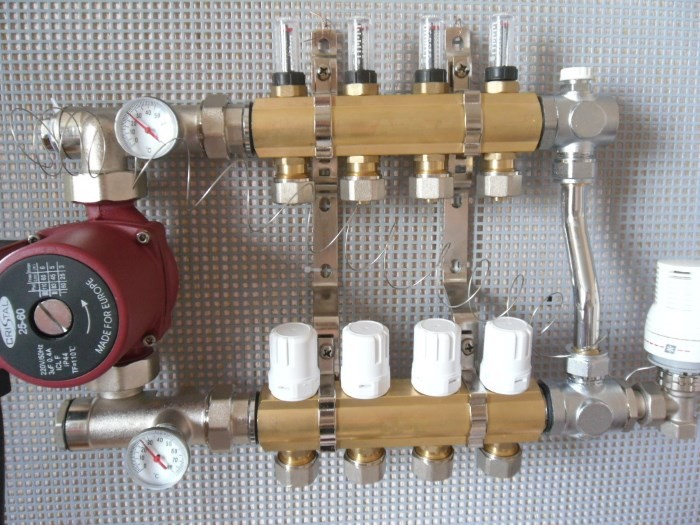
The collector is considered a mandatory component of underfloor heating, it is represented by a technological unit of equipment that regulates the movement of heat flows in the circuit of the device. So, the boiler can heat water up to a temperature of 95 degrees, however, these indicators are not applicable for normal operation. The collector aligns these numbers to the desired marks, helps to evenly distribute the water moving through the pipes, and controls any system processes.
For the full operation of the underfloor heating in the kitchen, it is necessary to correctly connect all the elements of the circuit. First, the manifold cabinet is installed as close to the wall as possible or mounted in its base. A collector, supply (with hot water) and return (cold water) pipes are placed here. Between these mounted parts, a locking device in the form of a faucet is attached. On the other hand, a drain device is placed from the collector.
The most accurate temperature control can be achieved by installing control valves and mixers. It is best to purchase a complex manifold, in which everything you need will come in the assembly. Such devices can serve several rooms or piping schemes at once. The more such models will be, the more, in proportion to the progression, the number of collectors.
Connecting the device to heating equipment should not be used for booster pump. An exception would be an independent water supply system.
Laying of thermal elements
There are a wide variety of floor coverings. For each of them, a method of laying a warm floor is provided. We will not divide the electrical part into a separate cable, mats, or infrared film. The principle of building installation is not fundamentally different.
Laying in a coupler. Not only a hydrobarrier is placed on the subfloor, but also thermal insulation. Otherwise, you will be a sponsor of good weather from the neighbors below. Then the mounting grid (when working with a linear cable), on which the heater "snake" is laid. Infrared sheets or heating mats are mounted in the same way. A screed with a thickness of at least 30 mm is poured on top.
How to lay an electric underfloor heating on a screed? The technology is similar, only instead of the second screed, the adhesive composition of the building mixture is applied. The thickness can be 10mm over the heating elements, this is not a power coating.
Installation under tiles is the same as on a screed. Do not forget to provide a minimum thickness over the wires.
Laying under laminate or carpet. If you lay the top coat on the screed, see the options above in the text. And for cases when there is already a screed, and you need to mount a warm pier, a variety of mounting substrates are provided.
The cable is mounted in regular grooves, and sound insulation and laminate are placed on top. For linoleum and carpet you will need a thin rigid base.
Wooden house, floors on logs. Do you think laying a warm floor is impossible? On the contrary, it is easier to do this than in a concrete panel house. Thermal insulation is laid between the lags (reflector up), and a heating cable is attached to it. The only limitation is more stringent fire-fighting requirements
When buying a cable, you should pay attention to this.
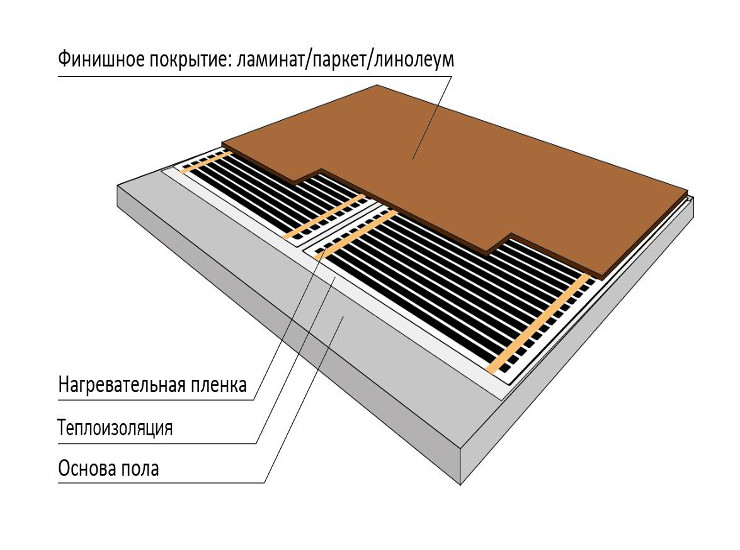
Separately, infrared plates can be noted. Their installation requires virtually no preparation. Just a flat floor, thermal insulation, and laying directly under the finish coat.
Best Answers
Stas Shabanov:
Lots of nuances! You need to know where you are going to lay the mats, the thickness of the screed, the very information about the mats, power, quadrature
ip:
In my opinion, an electric heated floor is a waste of money. The degree of reliability of such a system is much lower than water floors, and they cannot be repaired (((Moreover, local overheating from moved furniture can already cause a reduction in resource, which does not happen in water systems ... And thermal physics for any floor is the same.If this is the second floor of a residential building, then let the ceiling on the first floor receive some of the heat, it’s not a problem at all.And if there is a cold basement below or, in general, a ventilated underground, then you need to insulate the floors even without heating)))


Uncle from the Future...
Mats, in contrast to the molded heating cable, have a much smaller thickness ... And due to their small thickness, their use is relevant when it is not possible to make a screed of considerable thickness .. That is, by their very design they do not imply a certain significant screed layer on top. Because of this, the mats are used directly on the surface of the base, and the finishing coating, for example, tiles, is glued directly onto the mats. Because of this, even without insulation on the substrate, the mats heat the floor surface well. (due to almost direct contact with the finishing material of the floor) ... Otherwise, about the insulation on the floor, as such, it is said in the answer above ...
Network of branded stores TEPLY POL:
Thin mats are not laid on heat-reflecting insulation, as the adhesive will not adhere to the concrete. Cable and mats are different systems and the installation scheme is different, despite the fact that both systems are cable.
As for the cracking of the screed under the tiles, I'm not sure, I've never heard of such a thing.
Those who say that concrete will not warm through so much are right. Due to the design features and laws of physics, heating mats in a layer of tile adhesive will heat both the concrete from below and the tile from above. And if the cable in the screed needs to warm up the screed itself first, and the screed will already heat the flooring (tiles and others), then the mats need to heat only the tile + glue. It should be noted that the floor temperature sensor is installed in the tile and the degree of heating is regulated by the tile. And since the tile heats up much faster than the screed under the mats, and even more so the concrete slab, it will not work to heat the neighbors from below.
booster boosters:
a
anon unknown:
try this liquid thermal insulation. Excellent quality nano34
artem TULISOV:
I have thermal insulation. When I wanted to make it for a long time I was looking for a good company, this company nano34 did it for me.
Alex59:
You know a lot of different little things in this matter! When I was going to make a warm floor last year, I was advised to contact s.caleo guys, they all came and measured the next day, the floors were already ready, so there’s nothing to rack your brains for help. GOOD LUCK
Pros and cons of different types of tile underfloor heating systems
There are several types of underfloor heating systems, each with its own advantages and disadvantages.
Water heated floor
The structure of this system consists of polymer pipes placed in a floor covering made of concrete or wood. His job is to heat these pipes from a common heating system or individual heating, as a result of which heat is created.
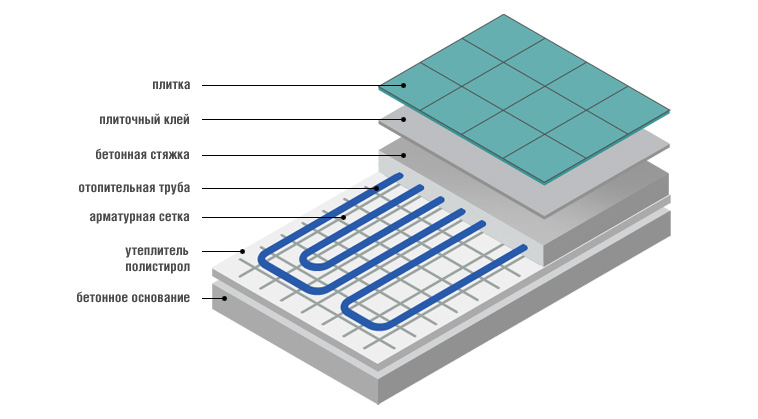
When installing, you must follow the basic rules:
- in your own house, you can use any heating system to install a warm water floor, but in an apartment it is better to connect it to a gas boiler, since the general heating may not withstand such a load;
- installation is better to entrust to professionals, if you are not confident in your abilities;
- the whole structure requires a sufficiently thick screed;
- water floor heating is recommended to be installed in rooms with a large area;
- when choosing a system, you should not save on it, since with the slightest breakdown you will have to break the screed completely;
- the power of the gas boiler must withstand the load of all systems.
This type is durable and economical to use, but is suitable for those premises in which he lives permanently. To prevent the water in the pipes from freezing during low temperatures, antifreeze is poured into them.
Electrical cable
This type of insulation is very easy to assemble - on a thermally insulated surface with a reflector, an electric cable is laid in the form of a snake and fixed.

Then everything is covered with tiles, which are laid on the glue. This type is very convenient during installation, as you can bypass all obstacles: pipes, toilets, etc.
Heating mats
Heating mats are an electrical system that, unlike the previous version, speeds up the installation process. The electric wire is already fixed to the grid and does not need to be mounted manually.
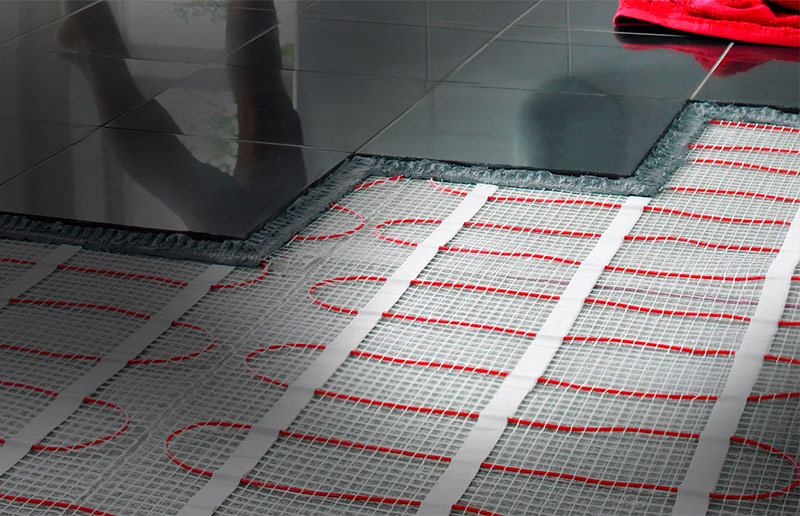
The advantage of this system is that this grid can cover the entire area of the room or partially. It is also very easy to install on your own, without having any skills.



Film system
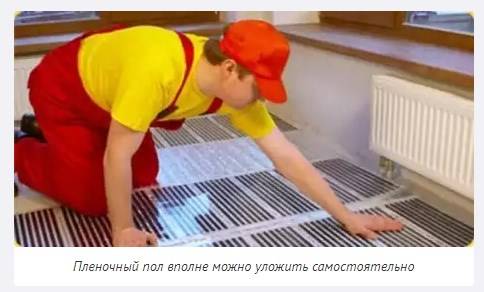
This type of heating system works using the infrared spectrum and can be laid simply under a carpet, linoleum or any other floor covering.Heat transfer is uniform.
Its structure consists of a polymer heating film (0.4 mm high), a temperature device, and a thermostat. The advantage of such a heating system is that during its operation, you can set a certain mode of operation using the temperature controller
Also, during heating, it forms a magnetic field, which does not affect human health in any way, which is very important.
Installation is simple. Difficulties can arise only with the quality of adhesion of glue and underfloor heating, but this problem can be solved by first laying a fiberglass mesh or gypsum fiber sheet under the tile.
Electric water heating
The electric water system is a structure made of polyethylene pipes, the diameter of each of which is about 20 mm, laid in a concrete screed. It also has anti-freeze liquid and heating cable made of nickel-chromium alloy with Teflon coating. If the piping is out of order, then the anti-freeze liquid will appear on the floor covering at the point of damage. This is one of the advantages of this heating.
As practice has shown, electric water floors consume little electricity. You can set the desired temperature using the temperature controller. Thanks to the anti-freeze liquid, the energy consumption is negligible.
When heat reaches the non-freezing liquid, within a short period of time it begins to boil. Then the floor heats up very quickly, the heat lasts for a very long time. This type of heating allows you to spend a minimum of electricity with maximum efficiency.
Electric underfloor heating for a balcony
When choosing a warm floor for a balcony, it is best to focus on the electric variety. This is facilitated by the following advantages of such systems:
- Electric mats do not require pouring a high screed, which will not require changing balcony doors, reducing them in height.
- No collector needed. It is enough to bring electrical wiring to the balcony, connect the mats to the power consumption system and you can enjoy comfort by adjusting the system up to 1 degree of surface heating.
- The work can be done with your own hands, using laminate, parquet and other surfaces as a finishing material.
Conclusion
After calculating and viewing all the nuances, the owner must remember that when using different types of flooring, the flow and heating of the warm floor changes. All these features are related to the thermal conductivity of the material.
Also, if the temperature of the floor heating increases and goes beyond the permissible limits, this disadvantage is removed by increasing the laying step or by reducing the temperature of the coolant. The second option will help save money.
Which coating is better to choose is up to the owner of the premises. Linoleum and tiles are good conductors of heat, so they help save money by turning on heating at low power. Before buying, always consider all the features of the material, so that later you will not be disappointed in the choice.
Another opinion on the coating for a water-heated floor
Read also:



