- How to choose?
- Organization of heating
- stones
- Do-it-yourself gas heater for a tent
- Types of stoves for tents
- gas stove for tent
- Heating by fire
- Heating the tent with a fuel-fired heater
- Heating the tent through a pipe
- Clothes and sleeping bag
- Types of tourist gas heaters for tents
- Gas-burners
- Gas heaters
- Infrared ceramic gas heater for tent
- metal tent heater
- catalytic heater
- gas oven for tent
- What can be heated?
- Heaters
- Mini ovens
- Primuses
- gas stoves
- Dry fuel
- spirit lamps
- Paraffin candles
- Lamps
- Heating the tent with gas
- Gas heaters for tents
- heat exchanger for tent
- Gas and electricity consumption
- The most popular models of heat exchangers for tents:
- Complex gas heaters
- Overview of popular models
- Heater “Pathfinder ION”: the perfect choice for hiking
- Infrared gas heater “Pathfinder OCHAG”: universal for hiking and fishing
- Features of travel heaters
- Top 5 Best Tent Heaters
- Simple ways to heat a tent
- Candles as a source of heat
- Heating the tent with hot water
- Using heat from hot stone or sand
- Bonfire and fireplace for heating
How to choose?
The growing demand for portable camping heaters is pushing manufacturers to saturate the market with a variety of models. On sale there is equipment of any level of complexity and efficiency. The choice of model can be dictated by a number of factors:
- degree of heating;
- fuel availability;
- safety;
- compactness;
- profitability;
- durability;
- price.
To heat the tent during winter fishing, you can use an efficient heater with a gas cylinder. As a rule, there are no problems with the delivery of equipment in this case. Everything you need can be brought by car. Another thing is a winter hiking (skiing) trip, when you have to carry all the equipment and equipment in backpacks. In this case, the choice of heater is largely limited by its dimensions and weight.
The use of the same unit for a tourist tent as for a fishing tent is actually justified, but in reality, less efficient, but lighter models often have to be dispensed with. Safety is one of the most important selection criteria.
If the device is placed in a tent where people will sleep, you will need to pay attention not only to it, but also to the tent itself.
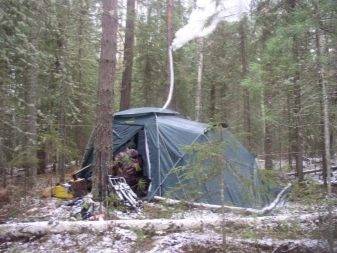
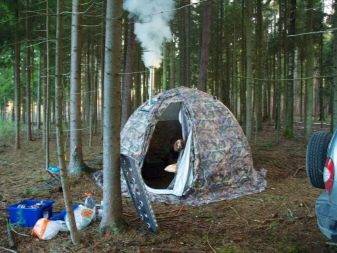
Ventilation of the tent is important. Most heaters in one way or another affect the composition of the air in the room, burning out oxygen and simultaneously releasing carbon dioxide, carbon monoxide and other gases during operation. In the case of large heat exchangers, the problem is solved with the help of a gas outlet pipe, but the operation of compact devices, as a rule, forces the tent to be ventilated periodically.
A fully autonomous hike will require special camping equipment. Buying a portable, for example, gas heater is not difficult.There is also a light gas cylinder for him. But if there are several overnight stays ahead, and even cooking, the main problem will again be the need to allocate enough space in backpacks even for compact gas cylinders.
Organization of heating
Heating the tent at night is one of the conditions for a successful trip. This is especially true in winter, but even in the so-called off-season, a comfortable overnight stay in a tent without heating is very rare. Sometimes it is necessary to organize heating only at the beginning of the night in order to warm up the tent. An acceptable temperature will be able to hold out in it for quite a long time, and then again it will be necessary to carry out controlled heating.
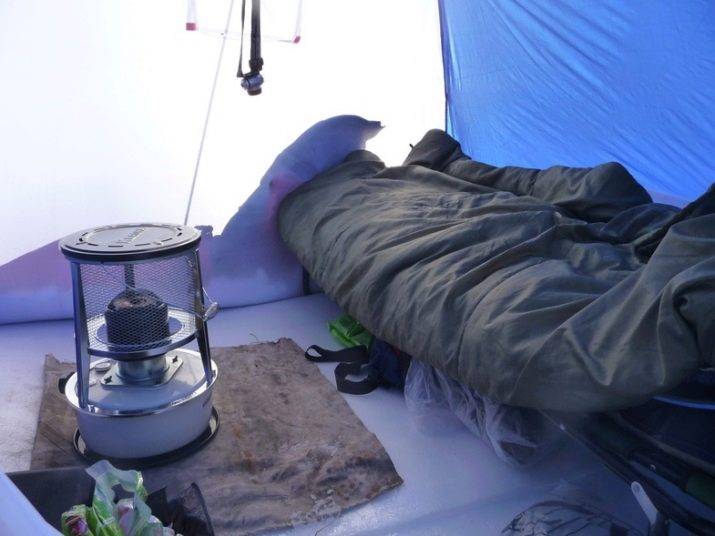
This method saves fuel and, thanks to the observation of the device, is quite safe. But, of course, it will not provide a good rest, and in the winter cold it will be absolutely ineffective. In this case, you will have to resort to heaters that can work for a long time in a completely autonomous mode, and then it should be a truly reliable unit.
One of the mandatory conditions for the operation of heating equipment is compliance with basic safety requirements.
This is especially important when using open flame heaters. Models that run on burning fuel are very effective, however, when operating them, you need to take seriously their location in the confined space of the tent
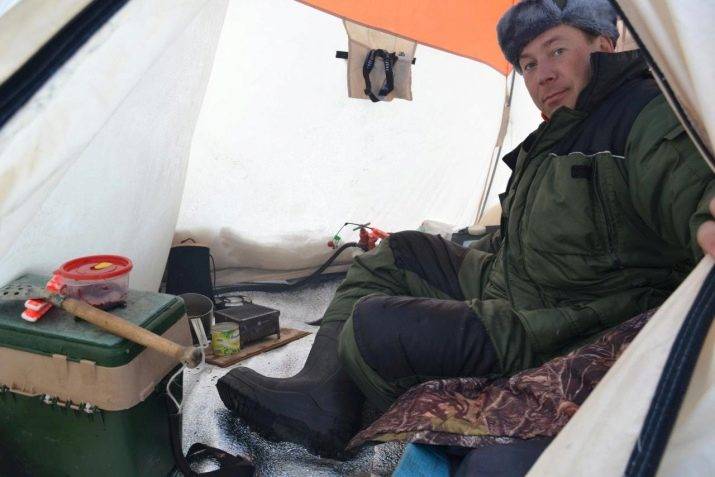
If a heat exchanger is placed in the tent, you will have to think about the removal of the gases formed during the combustion of the fuel. This requires a pipe, or rather, a set of pipes, the diameter of which must ensure an exact articulation with the heat exchanger nozzle.
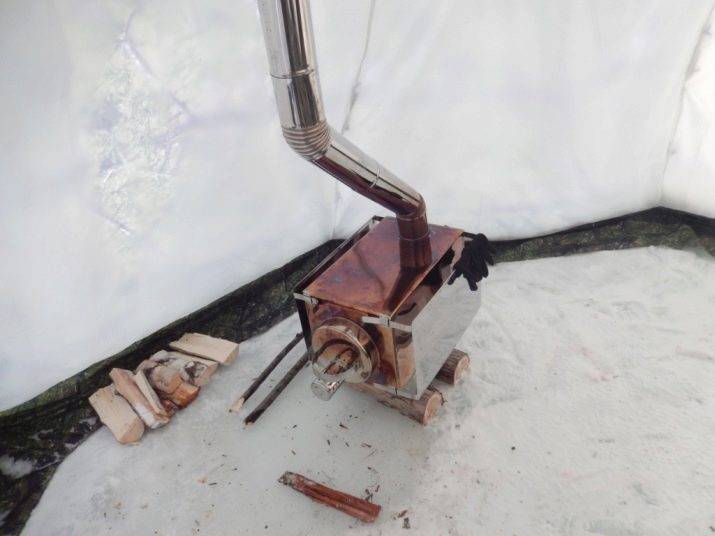
During the operation of the heat exchanger, the pipe can also heat up significantly
It is important that it does not come into contact with the walls of the tent or combustible materials. Not all tents have devices for bringing the heat exchanger tube out, so when planning winter trips, you need to carefully select not only heating equipment, but also take the selection of a tent seriously
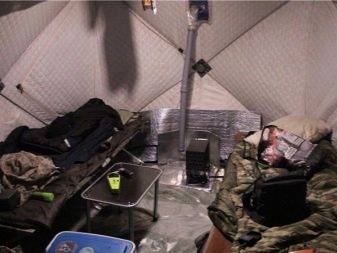
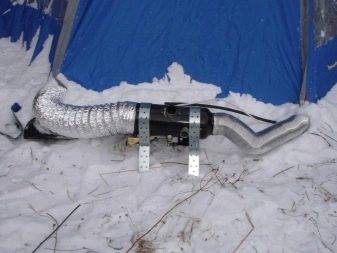
In order to avoid the use of burning fuel and the removal of its combustion products, some craftsmen offer handicraft developments of battery-powered heating devices that do not require the use of any fuel. However, without recharging, such elements quickly lose their effectiveness. If you take with you a generator that will maintain a voltage of, for example, 12 volts, a reasonable question arises, why not do it easier and just take a heater that uses the same fuel.
How to choose a heat exchanger for heating a winter tent, see the following video.
stones
Heating the tent with stone / stones is an old method, distinguished by its simplicity and reliability. It is suitable for more severe cold weather than the previous two. But here, as in everything, there are nuances.
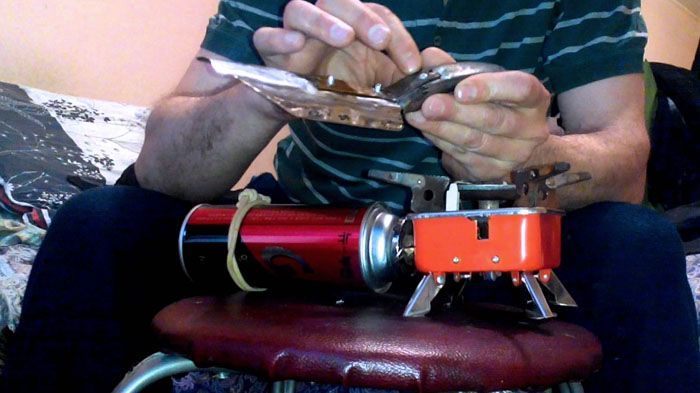
If you just take a heated stone and bring it into the tent, it will be hot, but not for long. Literally in an hour the stone will cool down and the cold will come again. The first way to increase the cooling time of the stone is to place it in a pot and close the lid. Such a simple manipulation will provide heating of the tent for three hours, but this is not enough for a comfortable sleep. It is necessary to slow down the heat transfer of the stone so that it remains hot for at least 6-8 hours. For this purpose, simple aluminum foil is used.It is non-flammable, lightweight and very compact. If you wrap the stone in several layers of foil, it will cool down much more slowly and will not create stuffiness in the first hours of cooling. Heat will be retained due to the air gap between the layers. If you feel that the tent has become cold, just remove one layer of foil.



A red-hot stone can burn through the bottom of the tent, so it is placed in a pot or pan. It is good if the stone gets stuck in the socket of the container and does not heat up its bottom. Otherwise, a wooden plank should be placed under the pan. Another important nuance: do not heat the stone too intensely in the fire. Due to a sharp temperature drop on the surface and inside, it may crack.
A canister of hot water also works like a stone. Only heat transfer occurs much faster.
Do-it-yourself gas heater for a tent
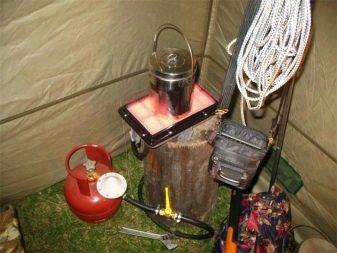
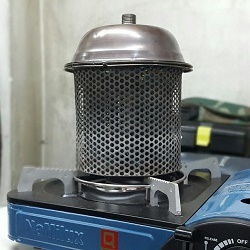
To make a simple heater, you will need a cheap Chinese burner (usually it is almost impossible to boil a kettle on such a device) and a square aluminum can of cereals. This can be found in any kitchen. Instead, you can pick up a tin can of a diameter suitable for the burner.
We take out everything that interferes with the burner. There remains only a burner with an outgoing hose. Turning the jar upside down and aligning it with the burner, we fasten one edge of the burner and the can with a hinge loop using self-tapping screws. It should look like a chest. We make holes on the sides of the aluminum can. Now, by attaching the balloon, you can check the performance. We open the gas supply, light the burner, close the “lid” and enjoy the heat.
Such a Chinese tile makes a good heating device.
In fact, there are many ways to heat a tent in nature. Here everything is limited only by the imagination of the master and the directness of his hands.
Types of stoves for tents
There are several ways to heat a bed with stove heating. The easiest of them is to buy a tent with a built-in stove. This design will cost the traveler more, but it has its advantages. Firstly, the tent is already designed for stove heating, it has the necessary holes, as well as an additional layer of fabric to keep warm. Secondly, in some tents, the built-in stove can be used for cooking. The disadvantages include the high cost of the tent, as well as its bulkiness.
Tourist oven
The stove can also be bought separately from the tent. In this case, you need to make sure that the fabric of the tent can withstand high temperatures. It is also necessary to measure the length and width of the tent, the distance to the chimney.
The stove for heating the tent should be selected based on several design features.
There are three types of ovens:
- Round
- oval
- Rectangular
Round and oval stoves warm the room faster. But most often the design of such a furnace is one-piece, so it is inconvenient to carry it. A rectangular oven can be easily folded.
Mounted stove for heating the tent
Types of furnaces by design:
- Mounted
- Housekeeper
- Articulated
- Scraper
- collapsible
The assembled and economy oven do not require any special assembly knowledge of the traveler, as they are already ready for use. The disadvantage of such stoves is the bulkiness of the design, which makes it inconvenient to carry it with you on a hike.
Stove housekeeper for heating the tent
The oven called the drag has an oval shape; when transferring, you can put things necessary for the tourist into it. Hinged and collapsible furnaces are easy to carry, as they have a fully collapsible design. But they also require knowledge in field assembly.
gas stove for tent
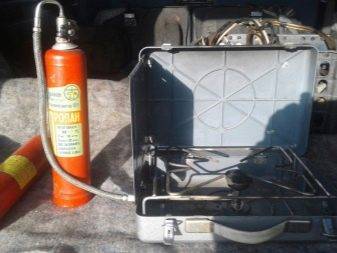
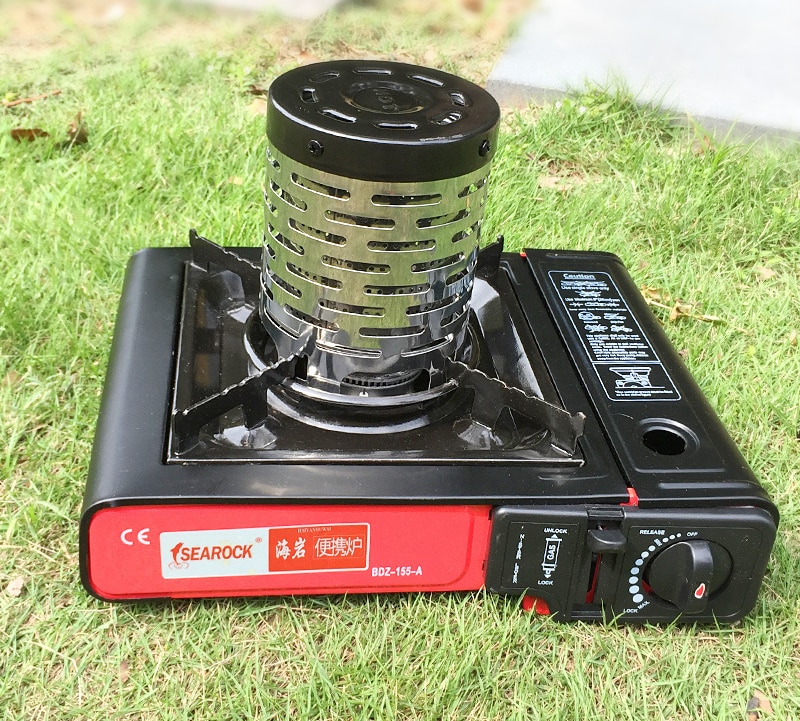
Another convenient way of heating is a gas heater. It works with a gas burner. The cylinder and the gas stove itself are easy to carry. Such a tent heater is relatively cheap and safe to use, it can be installed in a tent for winter fishing. The gas heater can be metal or ceramic, depending on the special nozzle.
The disadvantage of this method of heating is the low level of heat supply. Compared to the heat from a fire, a gas burner takes much longer to heat a tent.
Homemade gas stove for heating the tent
Heating by fire
If you don't have a tent with a pipe outlet, you can warm yourself with coals. For this method, only a fire, large stones and a cast-iron cauldron are needed. The boiler can be replaced with a steel bucket with a lid.
To create a stove for heating a tent, you need to make a small pyramid out of stones. It should be overlaid with sticks and brushwood in the form of a hut or house. The fire should burn out completely, during which time the travelers will have time to cook dinner on it. When the fire burns out, you should carefully rake the red-hot stones into the cauldron and cover them with earth. The boiler should be hung at a distance of half a meter or a meter from the floor, or placed on several stones. Such a mini stove is enough to heat the tent for 4 hours.
Heating the tent with a fire
Heating the tent with a fuel-fired heater
If you went out into the countryside by car, there is an easy way to make a tent stove. To do this, you will need a double-circuit fuel-powered camping heater. Suitable for both gasoline and kerosene or diesel. The principle of operation of the heater is quite simple: the heat exchanger is heated by the burner and passes air from the tent through itself. The heater itself is located outside a small room, so this camping stove for tents is considered one of the safest to use.
In this way, you can heat the tent for several days. Of course, the design is quite heavy and takes up a lot of space, but it is convenient for transportation by car. So the most significant disadvantage of this heating method is the cost of fuel.
Heating the tent through a pipe
This method of how to make a tent stove is considered one of the best. It allows you to sleep in warmth even in severe frost. But it is suitable only for a tent camp, since it is quite difficult to make such a stove for one night.
For heating, it is imperative to place a tent on a hill, preferably 700 m higher than the fire will be located. The fire should be made only from solid and even logs, as they will smolder for a long time. A thin stainless steel pipe, 2 m long, is brought to the fire. To the reverse side it is necessary to draw a hose through which warm air will flow into the tent.



![Heating a tent in winter - 5 effective ways [2019]](https://fix.housecope.com/wp-content/uploads/a/6/3/a63368995da4701be357fd727c77f88d.jpeg)


Clothes and sleeping bag
An important role in the issue of heating is played by the tourist's clothing, his sleeping bag and mattress. If all these attributes are chosen correctly and performed with high quality, then they will be enough to comfortably spend the night in the autumn forest.However, with the advent of real cold weather, such heat will not be enough. There will also be little of it for children, and there are two reasons for this. First, children get colder. And secondly, in their sleep they like to toss and turn and open up.
Therefore, when camping with children, it is important to heat the entire tent.
By the way, if you spend the night in a sleeping bag, and in principle, in any other case, try to make sure that the parts of your body are in contact with each other as much as possible. At the very least, take your hands out of your sleeves. The principle of mittens works here, which, as you know, warms (or it would be more correct to say, retains body heat) much more efficiently than a glove. To keep your sleeping bag warmer before the bitter cold sets in, a simple bottle of hot water to carry in your bag will help. Get a kind of heating pad.
Types of tourist gas heaters for tents
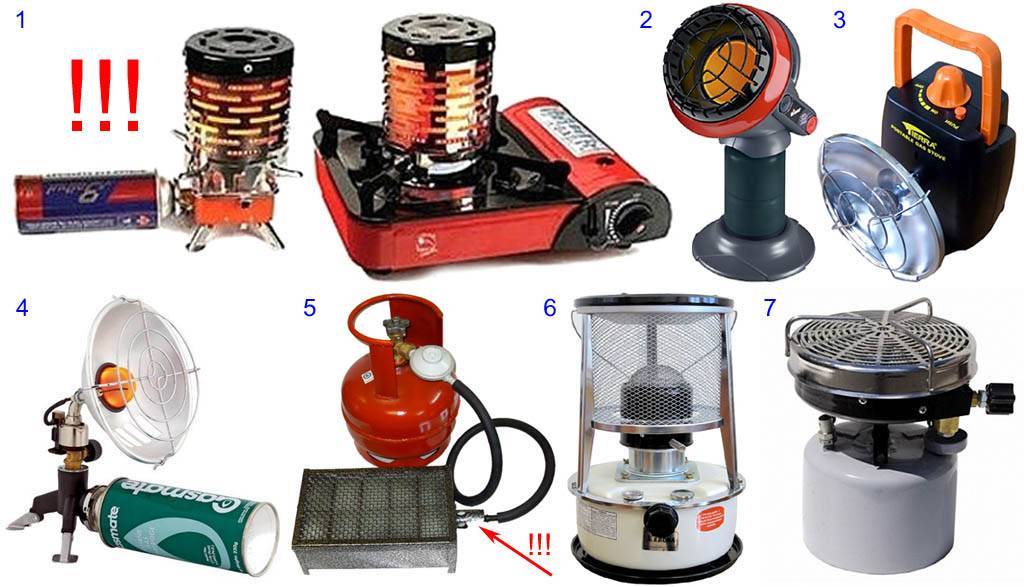
Varieties gas heaters for a lot of tents. First of all, the devices differ in the design of the burner. They are infrared ceramic, metal and catalytic.
Devices can be connected to a fuel source in several ways:
- to a large gas cylinder through a hose;
- through the built-in compartment for a portable cylinder;
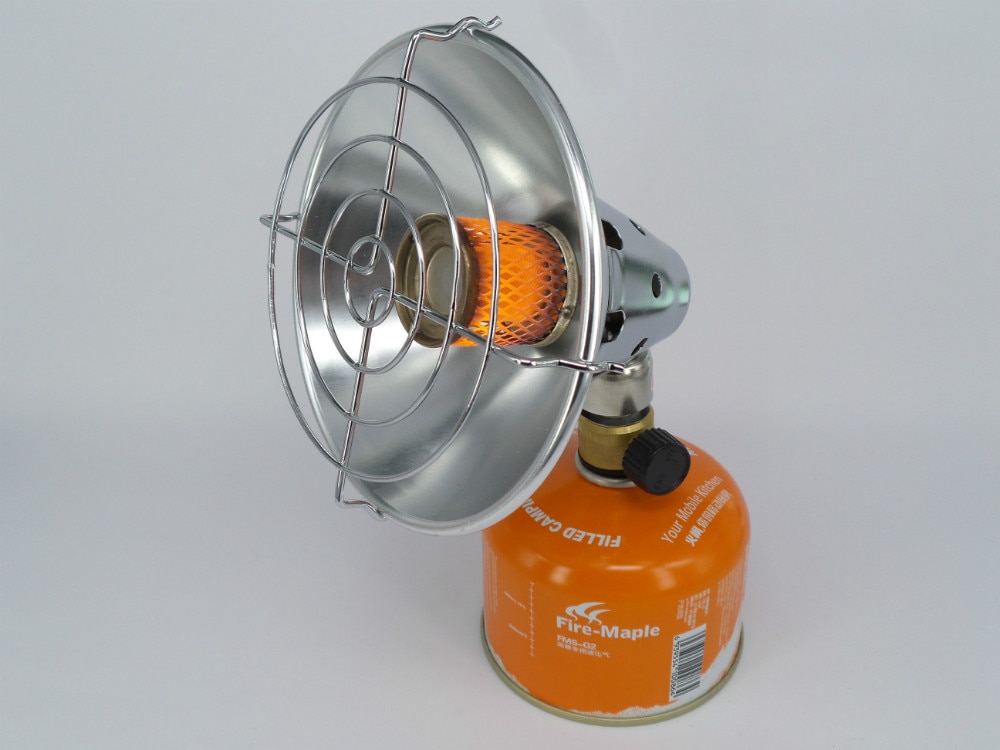
- be installed directly on the cylinder, like a nozzle.
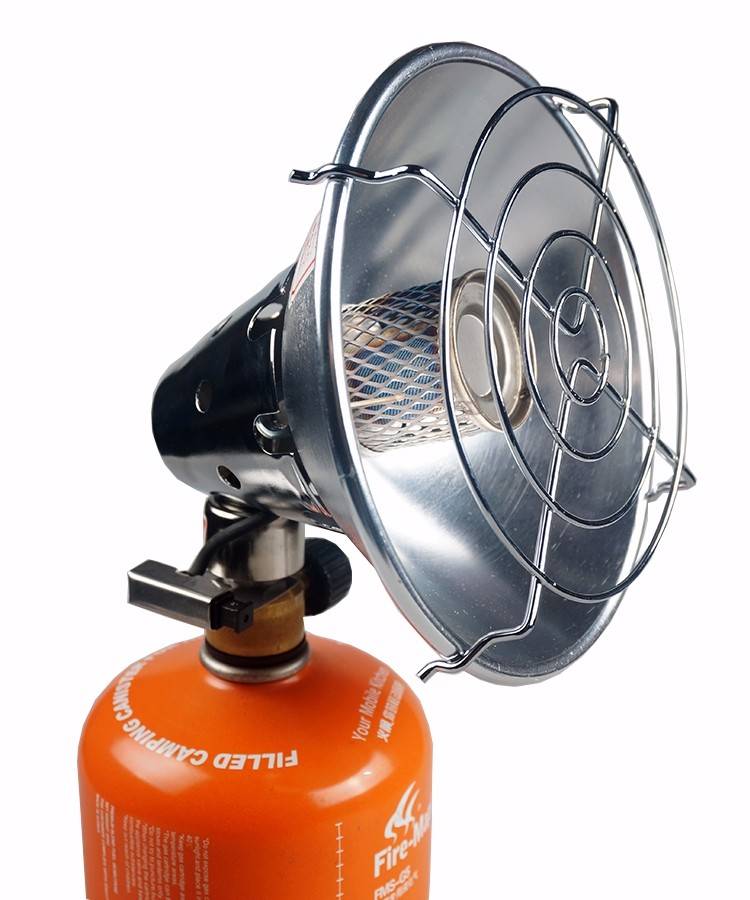
For hiking, it is better to buy a device with a built-in cylinder or a heater nozzle, as they are the lightest and most compact. The option with a separate cylinder is suitable for camping or fishing, when it is possible to transport equipment by car.
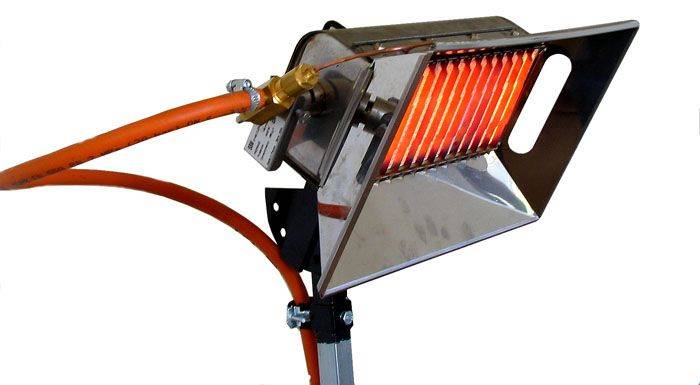
Device with hose connection
Some devices are equipped with piezo ignition - this facilitates operation and does not require an open flame source (matches or lighters). According to the complexity of the mechanism, the method and intensity of heating, the devices are divided into burners, heaters and furnaces.
Gas-burners
The simplest device in design is a gas burner. It serves as a heater in the tent and a stove for cooking. Can be connected to the cylinder through a hose or installed on it.
Its significant disadvantage is the presence of an open flame, which requires constant monitoring of the burner. Since there is no additional heat emitter, the efficiency of the device is the lowest. It should be used for short hikes, day fishing or when traveling by car.
The burner may fail already at a temperature of -5 degrees. Therefore, it is of little use for winter hiking.
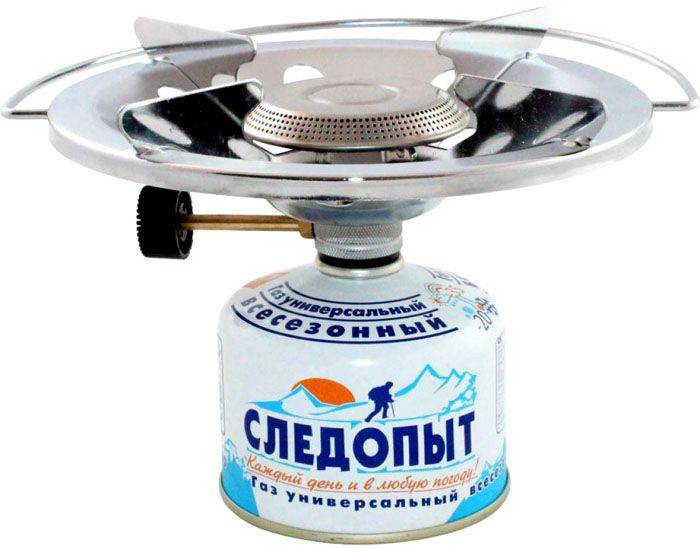
The burner is a simple and miniature device
Gas heaters
Heaters are the most common devices for maintaining the optimum temperature in a tent. They are produced using various heating elements: ceramic, metal and catalytic.
Differ in the small sizes, high efficiency, safety and functionality. It is worth buying a tourist gas heater for a tent for all lovers of hiking over short distances.
| A photo | Heat emitter type | Efficiency, % | The material from which the heat emitter is made |
|---|---|---|---|
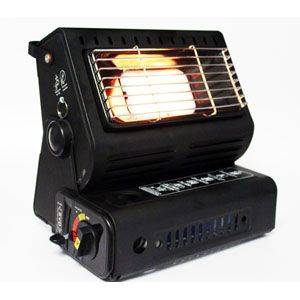 | infrared ceramic | 50 | Ceramic plate that converts the thermal energy of the burner into infrared radiation |
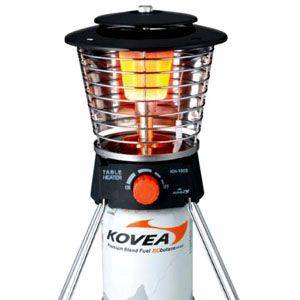 | Metal | 30 | steel bars |
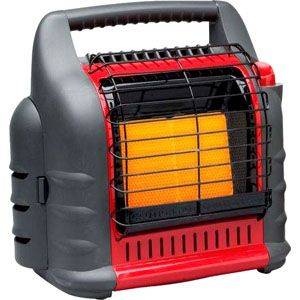 | Catalytic | 100 | Fiberglass panel coated with a layer of platinum. |
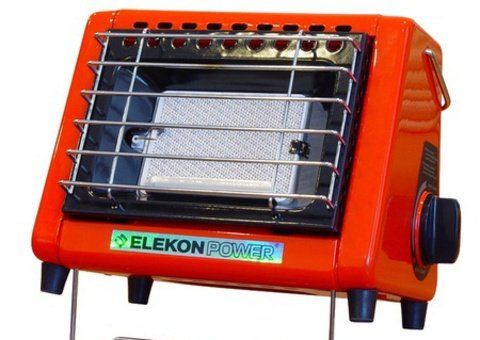
Infrared ceramic gas heater for tent
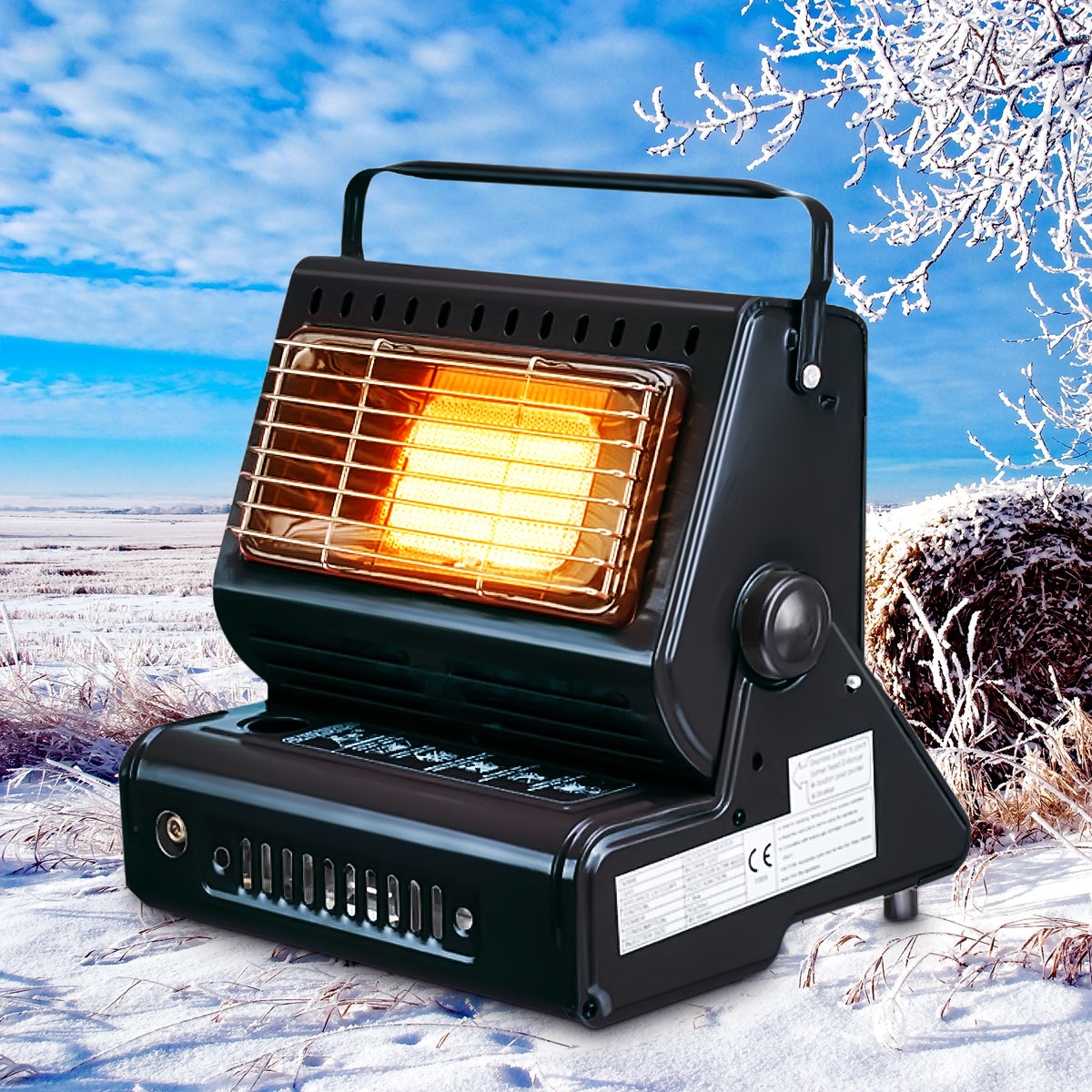
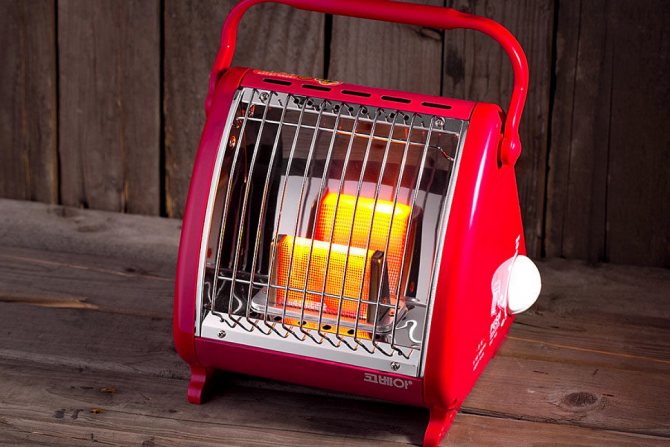
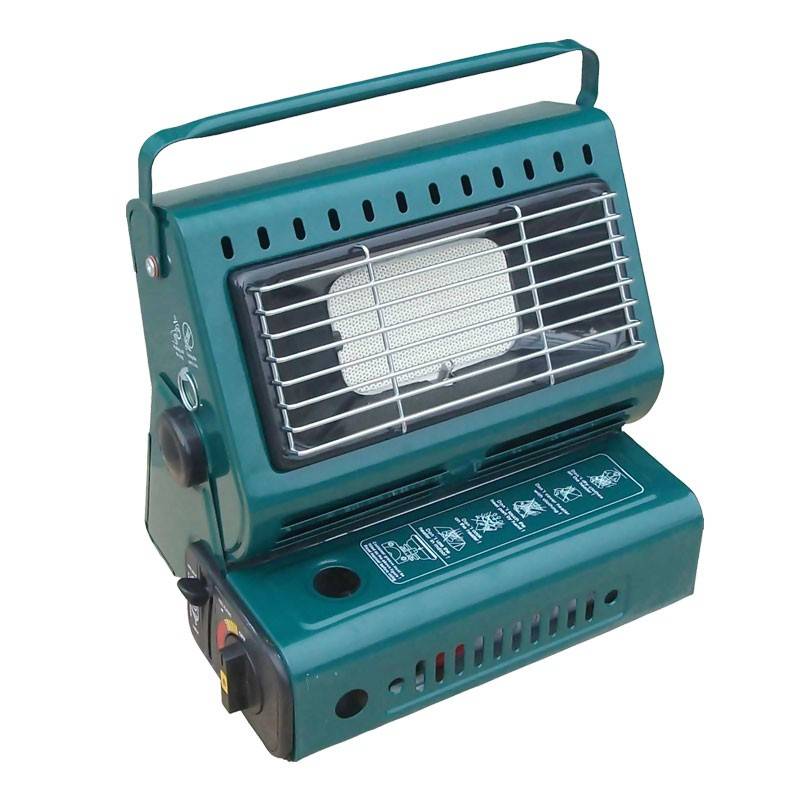
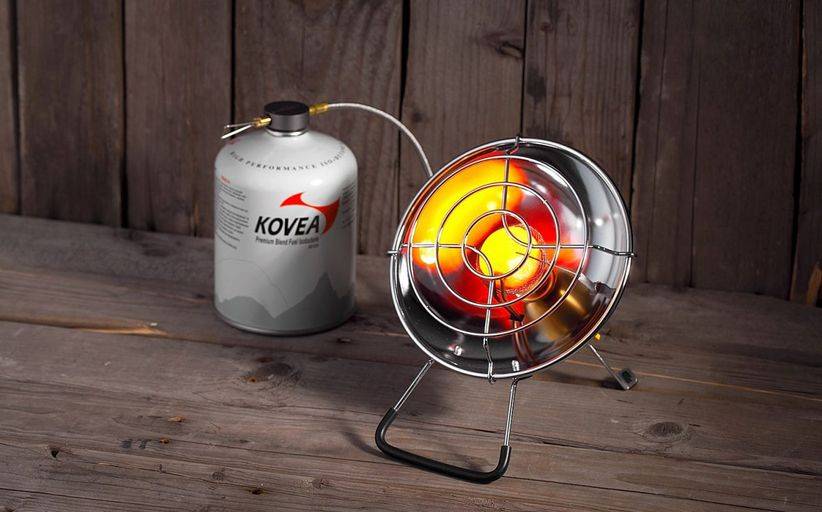
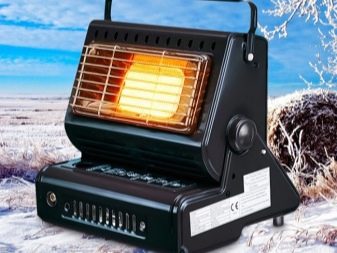
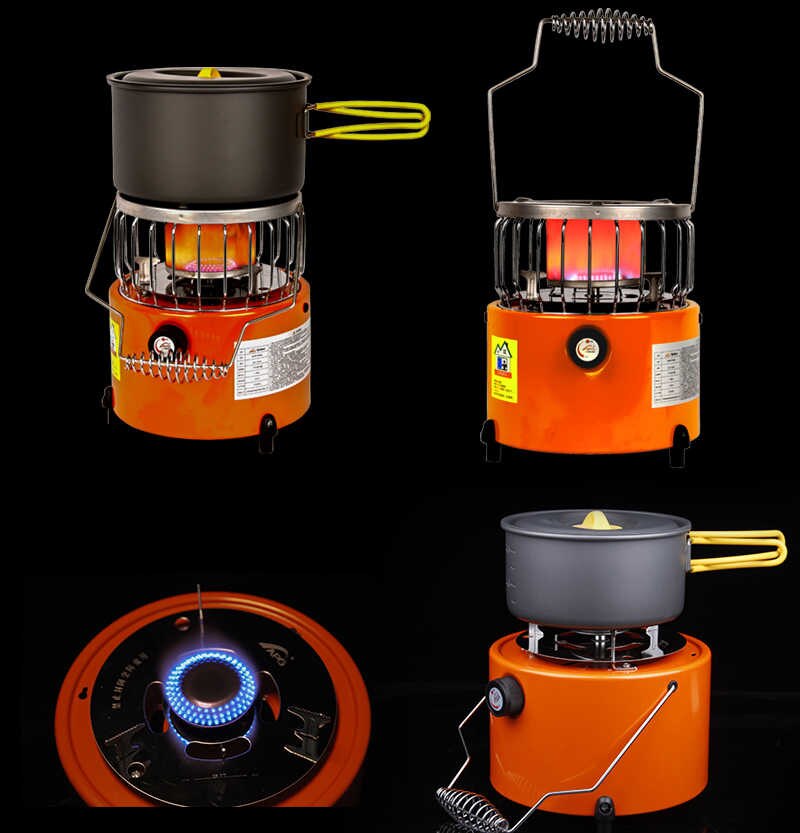
This gas tent heater is the most common. It is equipped with a carrying handle. It is connected through the built-in cylinder or a hose. Suitable for heating and cooking. The part of the structure with the heating element can be easily rotated to a horizontal and vertical position.
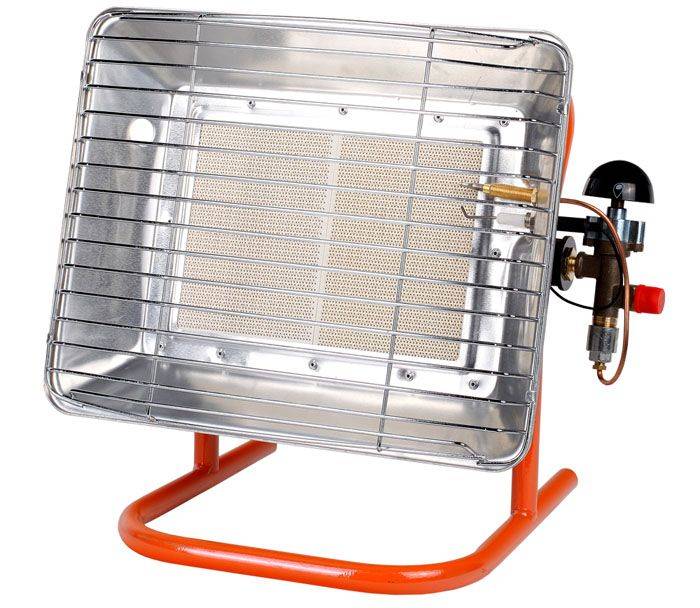
Device with ceramic emitter and piezo ignition
metal tent heater
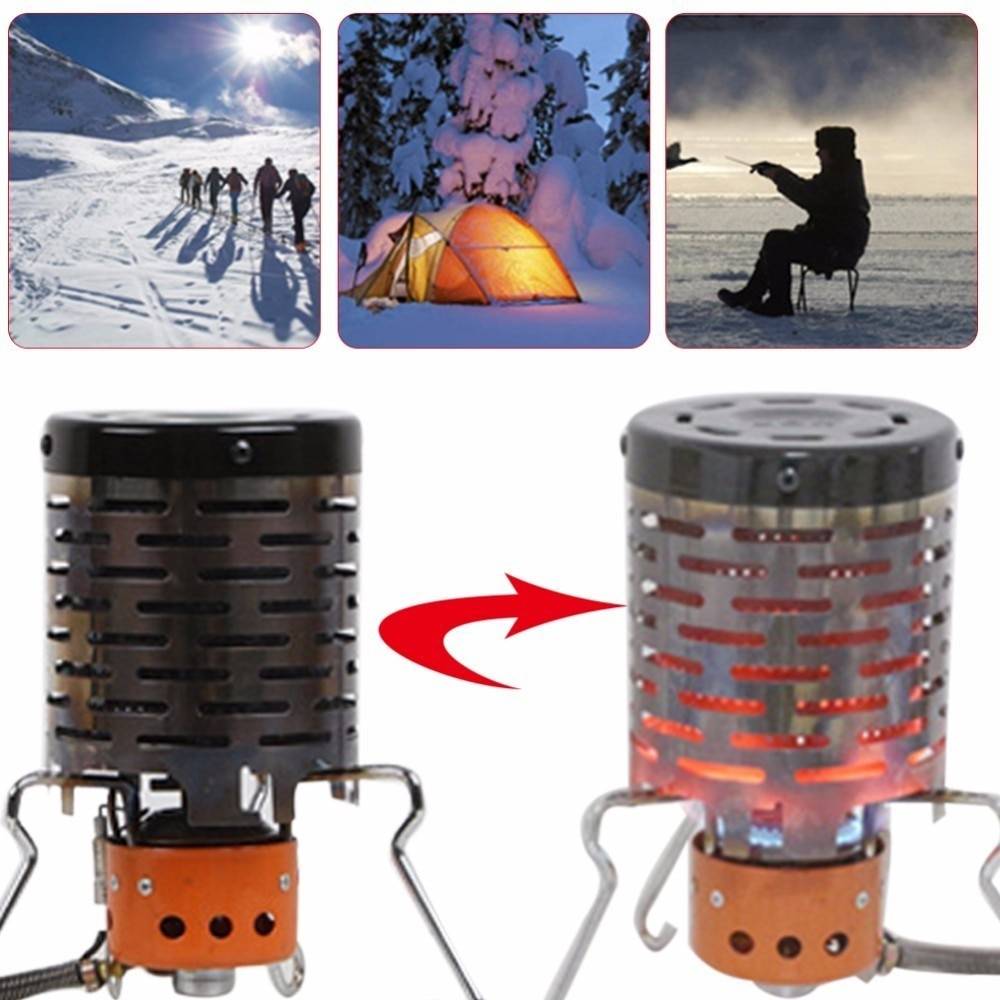
These devices have a simple device. Metal rods are heated by the burner and give off heat. The design features of the heater do not always allow it to be used for cooking and heating food. The burner is mounted on a portable cylinder or connected with a hose.
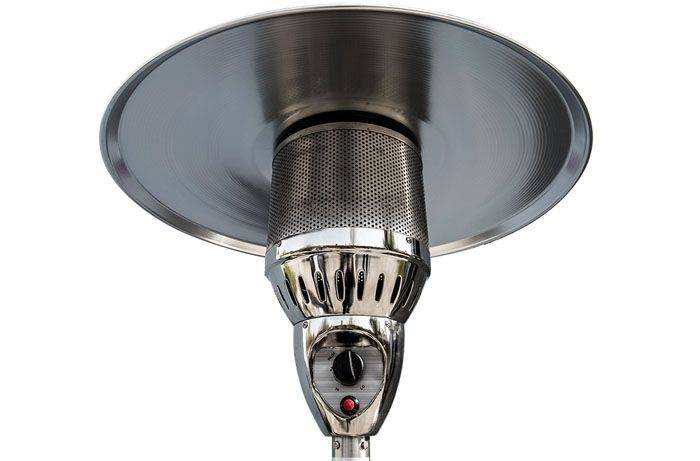
Metal parts become very hot during operation of the appliance
catalytic heater
A catalytic heater for a tent differs from a ceramic heater only in the type of heat emitter. In design and appearance, these devices are similar. The device has a high efficiency. In them, the fuel burns without the formation of a flame due to the platinum coating of the emitter. Catalytic heaters are the safest in terms of the risk of ignition of surrounding objects and durable.
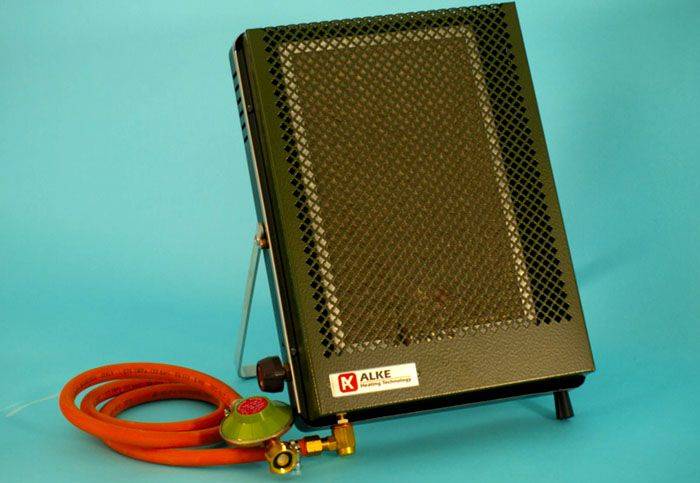
Catalytic emitter with hose connection
gas oven for tent
These devices are called gas heat exchangers. Unlike everyone else, a stove is a device for heating a very large area in the winter. The device works from a cylinder, is connected through a hose.





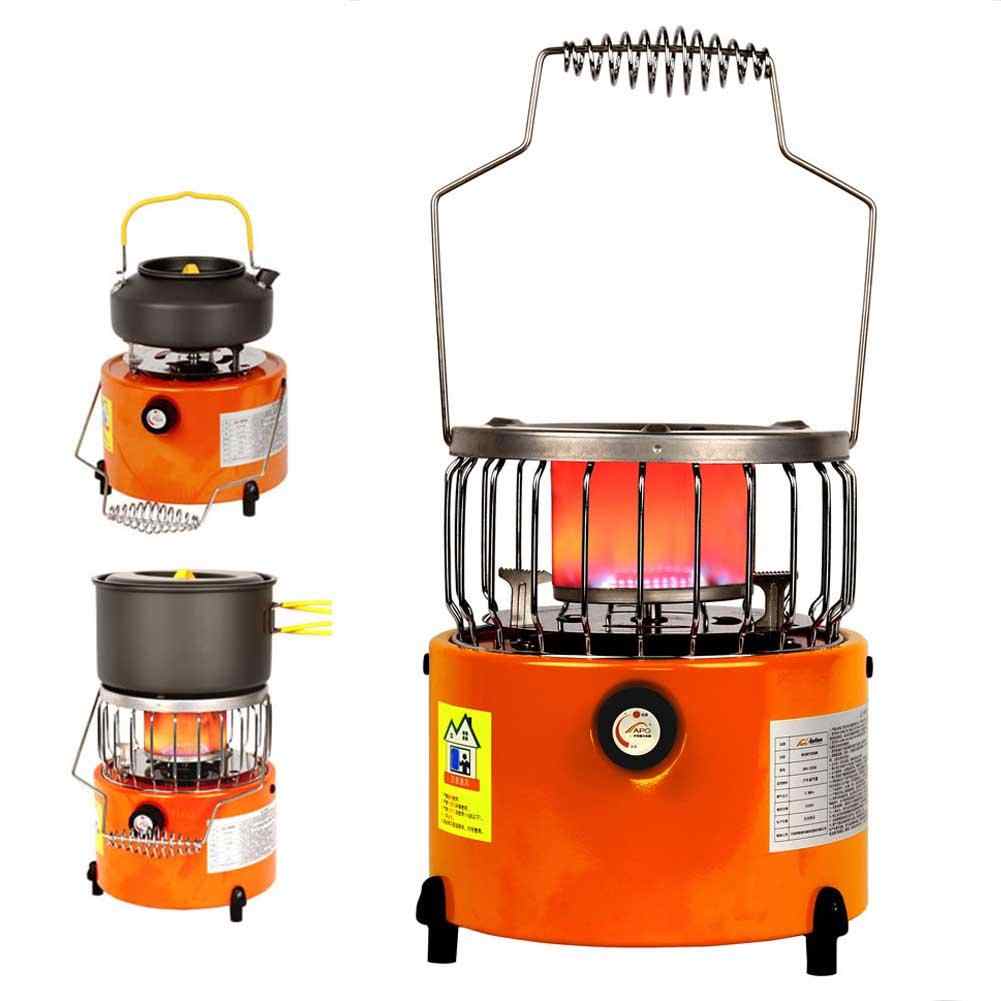
It consists of a conventional gas burner and a metal case with internal chambers and a fan.Combustion products pass through all chambers, heating the body and are brought out through the pipe.
Such a gas heater for a tent is often used for winter fishing. Since the products of combustion come out, it can work for a long time without causing harm and inconvenience to people.
The disadvantage of the design is the large size of the cylinder and the device itself, transport is required for transportation.
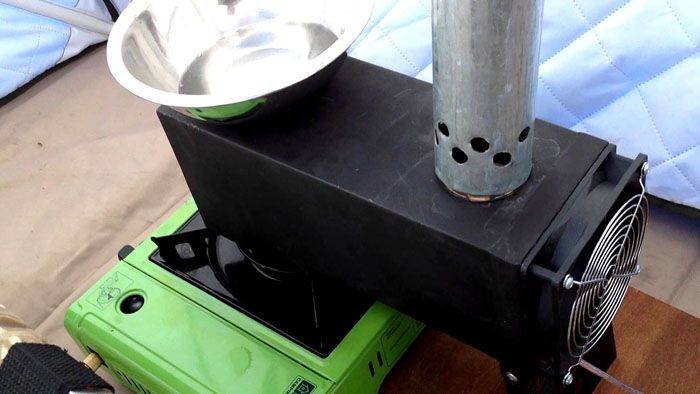
Heat exchangers - devices for heating a large area
What can be heated?
Most often, small heaters or stoves are used to heat temporary housing.
Heaters
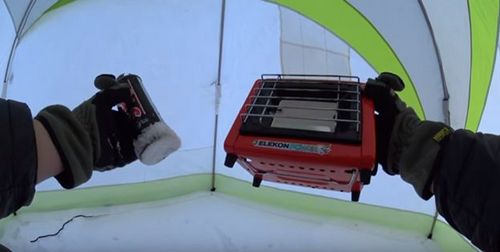
All tent heaters fall into two categories. The first are infrared. The principle of their work is based on the fact that they convert thermal energy into infrared radiation. A big plus is that even if such a heater operates at minimum power, the temperature in the room still rises. You can use such devices to heat small or medium tents. The second category is heaters with a fan. They perfectly warm the air in the tent and protect the fishermen from wind, dampness and frost.
Mini ovens
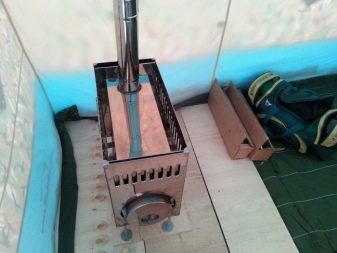
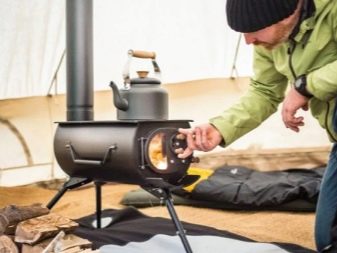
You can also use small stoves to heat the tent in winter. There are a huge number of different designs of this type. They work on solid fuel, which is placed in a special combustion chamber. The main disadvantage of such a device is that it is quite dangerous. Therefore, the stove must be constantly monitored. The advantage of this device is that it can be used not only to heat your temporary shelter, but also for cooking.
In addition, a Good mini-oven can be bought both separately and together with a tent.You can choose an oval, round or rectangular model.
Primuses
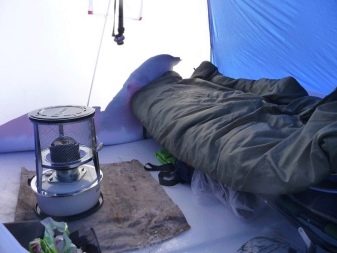
Many fishermen choose stoves to heat their tents. They are compact, comfortable and heat the room very well. The tent warms up very quickly. But primuses also have their drawbacks. Since they run on liquid fuel, this option for heating the tent costs the fishermen more than the previous one. In addition, fishermen always need to have a supply of kerosene or gasoline on hand. The downside can be called the fact that if the hands or fishing tackle are saturated with the smell of fuel, the persistent smell will scare away the fish.

gas stoves
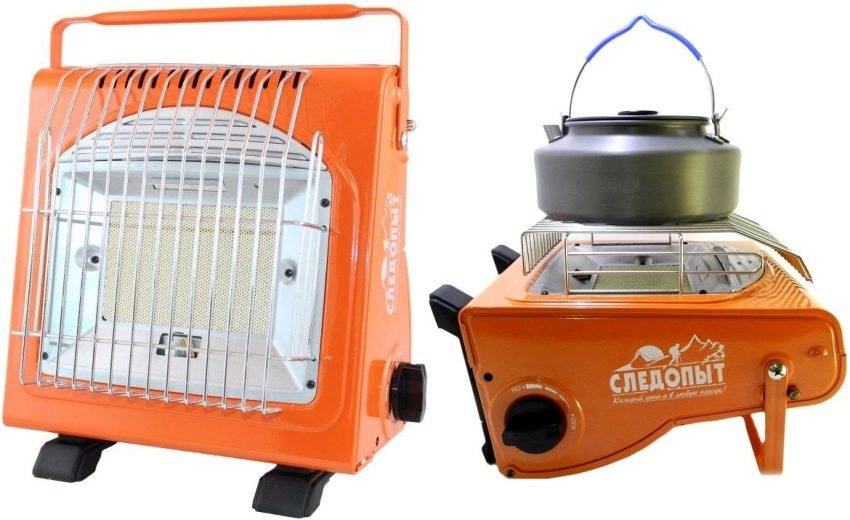
A simple gas burner is similar in principle to a conventional stove. It is convenient to use and suitable for heating the tent throughout the night. It can also be used for cooking small amounts of food. Many manufacturers sell gas stoves with a protective cover. This is very convenient, because it is much more convenient to carry the heater.
The disadvantage of a gas stove is that it burns out oxygen very quickly. Therefore, the tent needs to be aired from time to time. Sleeping with the burner on is not recommended.
It is also very important that there are no flammable objects near the tiles.
Dry fuel
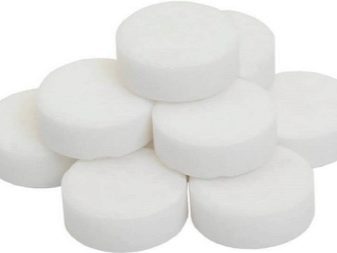
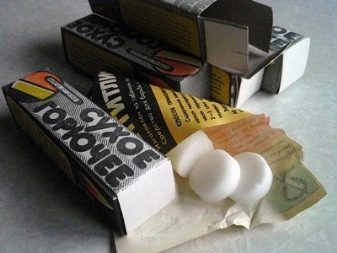
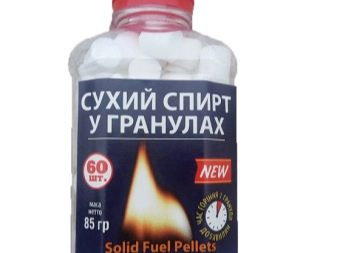
Often, ordinary dry fuel is also used to heat tents. This product is sold in the form of tablets that burn with a colorless flame and do not spread in the process. In addition, dry fuel does not smoke or leave ash.
The downside of this product is that the tablets are consumed very quickly. Therefore, if you plan a long winter fishing trip, you will have to purchase a large supply of fuel.Another disadvantage is that in the process of using this product, the flame must be constantly monitored. You can buy dry fuel not only in specialized stores, but also in ordinary supermarkets.
spirit lamps
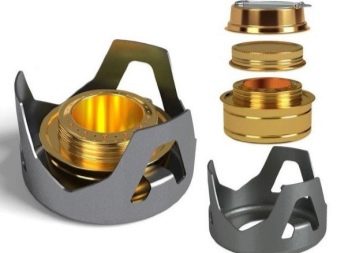
Another proven option for heating a tent is a spirit stove. Very often, fishermen make it with their own hands. All you need is two tin cans. Their upper part is cut off, then one can is inserted into another. It turns out a dense closed structure. After that, the bottom of the upper jar is pierced with a needle or a small drill, thus creating holes for the release of alcohol vapor.
Next, using a syringe, alcohol is carefully poured into this design. After a while, the top of the jar can be set on fire. The main advantage of such a simple heater is its availability.
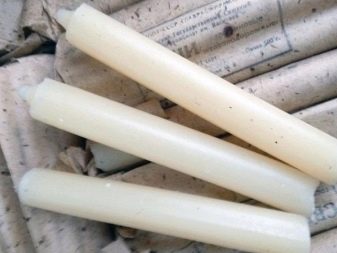
Paraffin candles
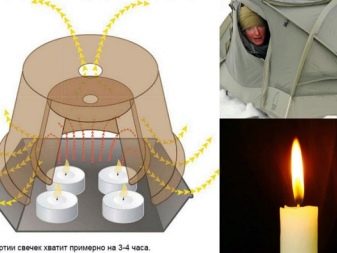
Another budget option for heating a tent is a set of small candles. This method is only suitable if the winter is not too cold. Also, keep in mind that they run out very quickly.
When choosing this method of heating, it is important to ensure a constant supply of fresh air into the room so as not to burn out.
Lamps
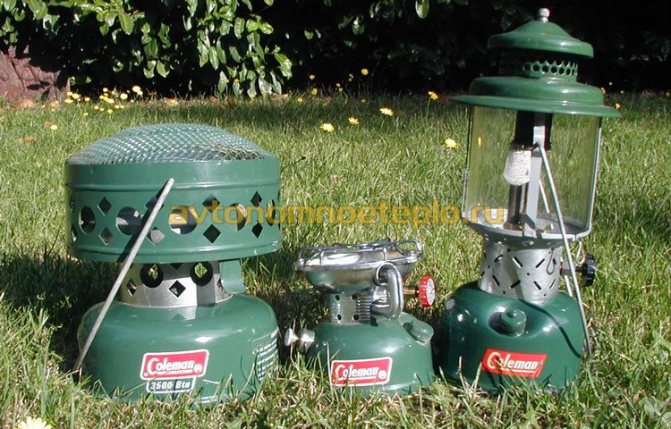
To keep warm, you can also use gas or wick lamps. Their main advantage is that they both illuminate the room and give heat. The device is also good because it works on a small amount of fuel. In addition, it is extremely safe. Lamps are suitable only for heating small rooms.




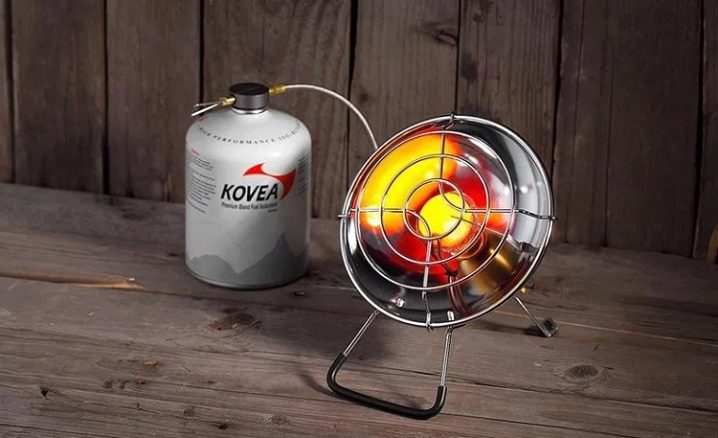
Heating the tent with gas
In turn, heating a tent with gas can also be divided into several fundamentally different ways: heating with gas stoves (heaters) or heating the tent with a heat exchanger.
Gas heaters for tents
Heating with gas heaters is the most affordable way, they began to use it a long time ago. There are many infrared gas stoves of different capacities on the market. This is the most dangerous way to heat a tent, it can also be called obsolete, so it makes no sense to dwell on it.
To use these heaters, it should be clearly understood that the products of combustion are not forced out, the inflow of fresh air and the outflow of carbon monoxide are regulated only by hoods in the tent. Of the advantages of this method, only cheapness, compactness and weight of the equipment, since only a gas cylinder and the stove itself are needed.
heat exchanger for tent
It was precisely in solving the issue of the forced removal of carbon monoxide outside the tent that manufacturers came up with heat exchangers that began to be massively used for winter tents.
The principle of operation of the tent heat exchanger is to heat the structure with a gas burner, the heat exchanger tubes heat the air, which is blown through the tent with a fan, and carbon monoxide is drawn out through the chimney pipe.
As a heat source, burners such as Hephaestus Tourist or infrared ceramic burners are used. However, according to many fishermen, it is the open burning tiles that will be safer, since the infrared burner is more demanding on the quality of the gas, its pressure, on the reducers used and on the integrity of the ceramic panel itself.
Gas and electricity consumption
Since this equipment has a fan, you will additionally need a power source in the form of a battery. In order to select the battery capacity for the heat exchanger, it is necessary to multiply the passport value of the current consumption of the heat exchanger by the number of hours spent on fishing and by a correction factor of 1.2. On average, the consumption of one heat exchanger fan is 0.4 - 0.5 Amperes.
Gas consumption depends directly on the type of the tile itself, for example, a Hephaestus tourist, “unscented” by a reducer, consumes about 120 grams per hour at the maximum.
The most popular models of heat exchangers for tents:
- Compressi-Ripus
- Desna BM
- Sukhovey
- Sibtermo
- Compression Beaver
The last heat exchanger can be distinguished due to the fact that it itself generates electricity for the fan; for this, built-in Peltier elements are used.
Complex gas heaters
For added safety, users of gas hobs have a gas control built into them, which shuts off the gas supply in the event of a fading of the tile. But ready-made solutions appeared on the market, which are heat exchangers with a built-in burner and automation - gas air heaters Copressi OGP.
The series of air heaters includes several models with power from 1 to 3 kW, as well as models with forced (with a fan) and natural (without a fan, potbelly stove principle) convection. All devices are equipped with non-volatile automatic control of the flame and sound and light signaling of automatic operation.
Overview of popular models
In Russia, tourist heaters of the domestic Pathfinder brand are popular.They produce compact portable devices for heating single or double tents. Suitable for fishing, hiking and traveling by car.
Various modifications of devices are produced. They differ in the type of emitter, dimensions and technical characteristics.
Heater “Pathfinder ION”: the perfect choice for hiking
The device is a nozzle on a cylinder with a threaded connection. It is possible to connect to a collet or household one, but when using a special adapter. Radiator type - metal. Designed for heating only.
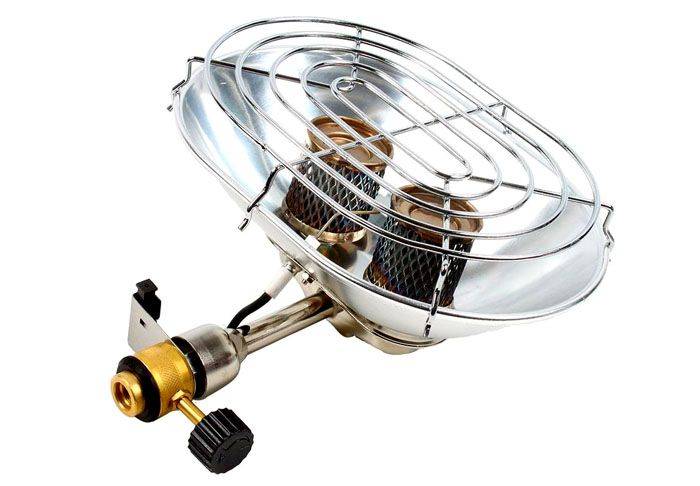
Appearance of the ION model
Technical parameters of the device:
- The maximum heating area is 20 sq.m.
- Fuel consumption - depending on the power from 50 to 110 g / h.
- The weight of the device without a cylinder is 370 g.
- Dimensions - 120 × 200 × 215 mm.
- Power - 1.1 ÷ 2.0 kW.
The heater is equipped with a piezo ignition. A standard cylinder is enough for 10÷12 hours of continuous operation. About the practical experience of using the device of this model, see the form below:
Infrared gas heater “Pathfinder OCHAG”: universal for hiking and fishing
A device with an infrared ceramic emitter and a built-in balloon. Used for heating and cooking. The direction of heat can be adjusted. Equipped with a carrying handle and piezo ignition.
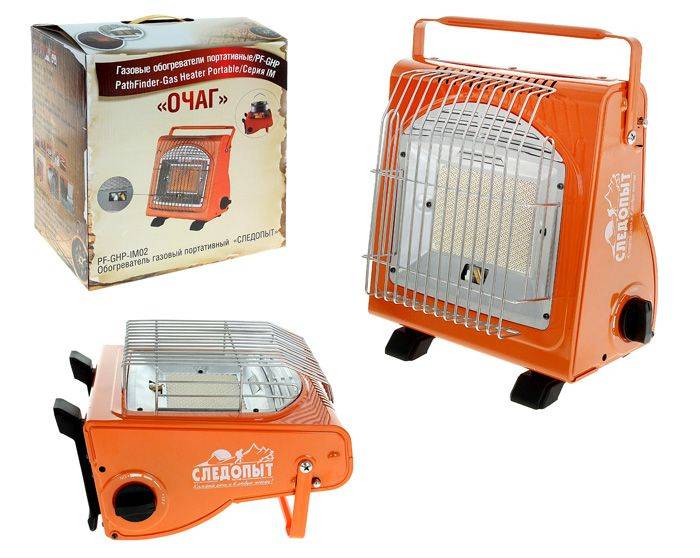
Compact and efficient heater OCHACH
Device Specifications:
- The maximum heating area is 15 sq.m.
- The weight of the device without a cylinder is 1800 g.
- Fuel consumption - up to 108 g / h.
- Power - 1.5 kW.
- Overall dimensions - 275 × 275 × 180 mm.
It has a plate for heating the installed cylinder, which allows the device to be used at sub-zero temperatures.For an overview of the technical parameters of the device, see the video.
Features of travel heaters
The key point is that if we go hiking, then, as a rule, in nature. Consequently, the outlet in the rocks or on the lake cannot be found. Therefore, the only normal solution would be to acquire a gas heater. In this case, you will have to carry a fuel tank with you, but it's worth it. Moreover, the heater itself is very compact and easily transported. True, it depends on its power and manufacturer, but more on that later. However, you need to understand that, whether it is a winter or tourist tent, it requires compliance with a number of requirements. It is not very pleasant to set it on fire at night, but this is not the saddest thing. Let's look at the main types of heaters. There are quite a few of them, but not all of them are good and suitable for us.

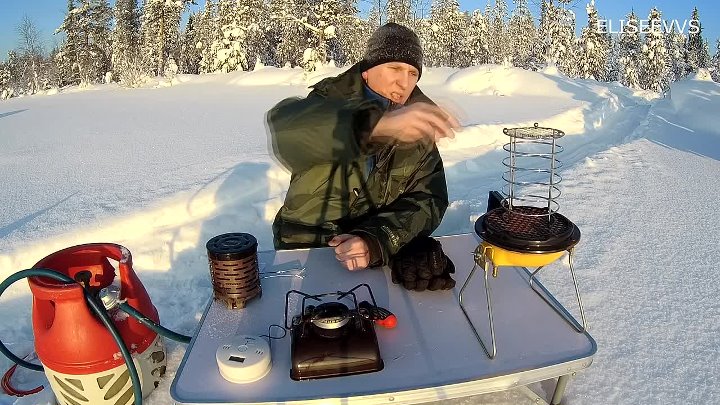
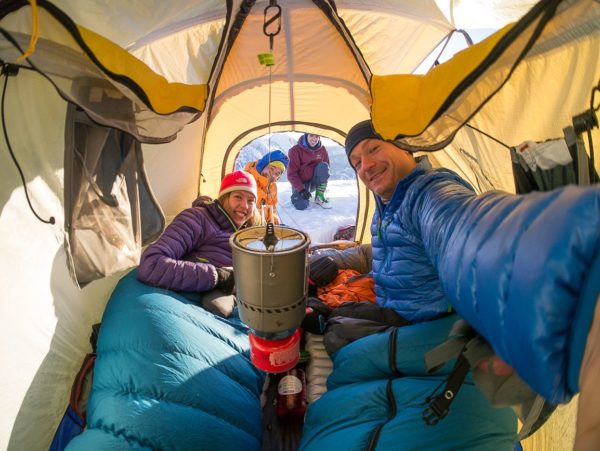


Top 5 Best Tent Heaters
In winter, a short stay in a tent or an overnight stay implies certain conditions, which only the best heater can organize. With the right choice, the device will create an atmosphere of warmth and comfort in the tent, contributing to a more comfortable stay. In addition, the heater is indispensable for winter fishing.
Now there are several types of tourist heaters on the market, they can be conditionally divided into groups:
- Gas - according to user reviews, these are the most popular models that will save even in severe frost. They are multifunctional and compact. When camping, a gas heater serves as both a heating element and a place where food is prepared. However, it should be borne in mind that the fuel in the burner is enough for a short hike.
- Gasoline heaters are much cheaper than gas heaters, but you can’t cook on them, their function is exclusively heating. A significant advantage is the quick and affordable refueling of the device, thanks to which it will work exactly as much as it needs in time.
- Ceramic infrared heaters are the smallest and lightest heaters, which is optimal for winter fishing or hiking. The room is heated by heating the built-in ceramic plate by the action of an infrared emitter - the latter is driven by the combustion of gas in the burner.
When using heaters, it is very important to remember the fire safety rules. To find out what equipment is best to take with you on a fishing or camping trip, just look at the rating of the best tourist heaters for tents.
Simple ways to heat a tent
Candles as a source of heat
These items can be found in almost any backpack; they are not heavy, do not take up much space, but at the same time they allow you to heat up food in emergency cases, get some light and heat.
Of course, their effectiveness is low, but even one burning candle can raise the temperature by several degrees.
Obviously, the use of such a "heater" requires compliance with fire safety measures. For example, candles can be placed in a glass or tin jar, a bowler hat, or you can even make a lamp with your own hands.
In the video below you can see one of the ways to make such a device.
One of the variations of the considered method can be called the use of oil and other non-volatile liquids.To do this, you will need to purchase a wick and make the base of the lamp from improvised materials, for example, a tin can.
Heating the tent with hot water
This option is quite simple and effective. To do this, you need to boil water, which can be taken from the nearest reservoir or melted snow, pour it into a canister or leave it in the same container where it was heated, and put it inside the tent on some kind of stand.
The heat from such a “heater” will last for several hours, and in order to prolong its action, it is recommended to cover the bucket (pot, etc.) with a dense cloth.
Using heat from hot stone or sand
This method of heating has been known since ancient times. A heated stone is able to give off heat into space for a long time.
To ensure the heating of the tent, it is desirable to find a rock of such a size that it can be placed on top of the pot (bucket). If you don't have it, you can use smaller stones or sand, because. the principle of operation will remain the same.
Natural material should be heated on fire, wrapped in foil to enhance and extend the heat-reflecting properties, and placed on a container. In order to avoid melting the bottom of the tent, the resulting structure must be installed on some kind of base (for example, a plank or a stand made of branches).
An example of how this can be done is shown in the video below.
Bonfire and fireplace for heating
The use of fire energy for heating is also an old and proven way. In field conditions, this can be done by building a kind of heater that will supply the heat of the fire directly to the tent, or by using a fire pit.
In the first case, you will need several additional items that you will have to take with you on a hike or fishing: asbestos fabric and aluminum, as the lightest, a pipe with a diameter of about 50 mm, which, when assembled, should have a length of about 400-500 mm (for these purposes You can use a tube from an old vacuum cleaner).
After making a fire, which should be located not far from the tent, but at a safe distance, the pipe is led into the sleeping area at one end, and the other, pre-wrapped with a cloth, is placed in the fire. The air heated from the metal will enter the interior of the temporary dwelling and heat it.
The second method involves the direct use of heat from a fire. It should be noted that such heating requires preliminary preparation of the site and a long burning time. This option requires:
- Remove a layer of turf from an area equal to the dimensions of the tent;
- Make a fire in the resulting recess and maintain it for several hours;
- After complete burning of the fuel, remove coals and ash;
- Lay spruce branches in place of the fire pit and set up a tent.
The resulting warm base will provide warmth throughout the night.
It must be said that the methods discussed above are universal, since with their help it is possible to provide heating of the tent in winter (subject to mild frosts) and in summer. However, in conditions of extreme cold or on winter fishing, due to low thermal efficiency, such options are rarely used. For these situations, more powerful devices and devices, as a rule, of industrial production are used.