- The best pumps for a well from 70 meters
- BELAMOS TF-100 (1300 W)
- Grundfos SQ 3-105 (2540 W)
- BELAMOS TF3-40 (550 W)
- Aquarius BTsPE 0.5-100U
- UNIPUMP ECO MIDI-2 (550W)
- What are the pumps
- Surface
- Submersible (deep)
- Deep well submersible pumps
- Borehole pump vortex for clean water VORTEX CH-50
- Borehole pump with a head of 75 m Aquarius BTsPE 0.5-50U
- Selection Options
- Water flow and pump performance
- Lifting height (pressure)
- Immersion depth
- Well diameter
- Prices for deep pumps
- Whirlwind CH-50
- Belamos TF3
- Grundfos
- Popular well pump models
- Which brand of submersible pump is better to choose
- What to look for when choosing a pump?
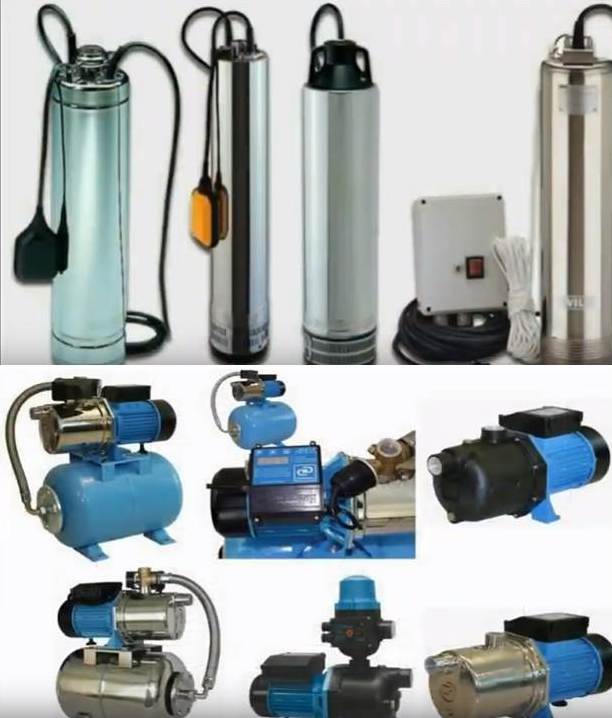
- Surface and submersible well pumps
The best pumps for a well from 70 meters
BELAMOS TF-100 (1300 W)
Borehole pump BELAMOS TF-100 (1300 W) is used to organize autonomous water supply in private 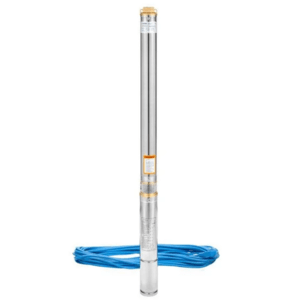 houses and watering plants, as well as in agriculture to create irrigation systems.
The 1300 W electric motor is designed for intensive work with increased loads and provides a capacity of 4500 liters per hour.
The thermal relay protects the device from overheating.
The pump part is made of high quality stainless steel.
Main functional characteristics:
- submersible well;
- maximum productivity - 5 m³ / h;
- maximum pressure - 100 m;
- immersion depth - 80 m;
- vertical installation;
- weight - 22.1 kg.
Advantages:
- performance;
- water pressure;
- build quality.
Flaws:
not specified by buyers.
Grundfos SQ 3-105 (2540 W)
The borehole pump Grundfos SQ 3-105 (2540 W) is designed for water supply to private houses, pumping water 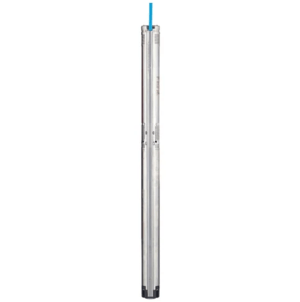 from tanks, irrigation hydraulic systems and small waterworks.
The single-phase permanent magnet electric motor is capable of high efficiency over a wide power range.
The electric motor is completed with a removable cable connector.
Main functional characteristics:
- submersible well;
- maximum productivity - 4.2 m³ / h;
- maximum pressure - 147 m;
- installation horizontal and vertical;
- weight - 6.5 kg.
Advantages:
- performance;
- water pressure;
- low noise level.
Flaws:
not marked by buyers.
BELAMOS TF3-40 (550 W)
Submersible pump BELAMOS TF3-40 (550 W) is used for pumping clean water from a great depth into a house or 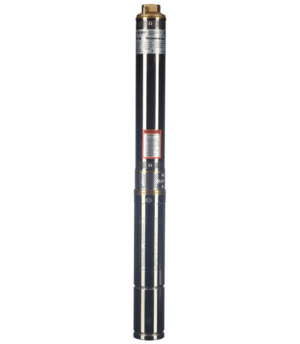 for watering plants.
The design of the pump part provides the possibility of independent maintenance (cleaning) of the pump part, without going to the workshop.
To disassemble the pumping part, it is enough to unscrew the top cover or the lower flange of the pumping part.
The device is completed with a cable, a plug with a grounding contact.
Main functional characteristics:
- submersible well;
- maximum productivity - 2.7 m³ / h;
- maximum pressure - 42 m;
- immersion depth - 80 m;
- vertical installation;
- weight - 9.4 kg.
Advantages:
- performance;
- build quality;
- water pressure.
Flaws:
not identified by users.
Aquarius BTsPE 0.5-100U
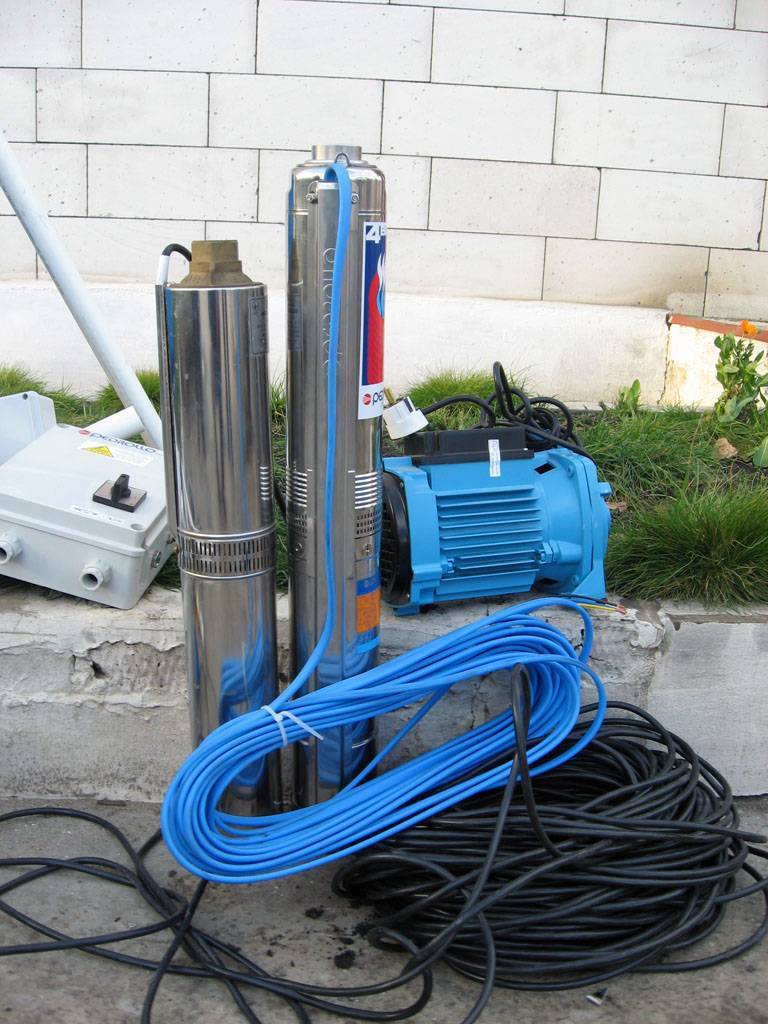
Submersible pump Aquarius BTsPE 0.5-100U consists of a single-phase electric motor and a multi-stage 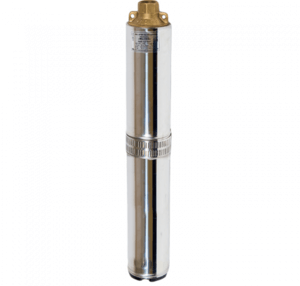 pump part, created in the form of a monoblock, as well as a remote condensate box, which is attached to the power cord with a plug.
The electric pump has a thermal relay, which effectively protects it during emergency operation.
The volumetric flow of a submersible pump depends on many factors - the depth of the water, the length and diameter of the operated hose, etc.
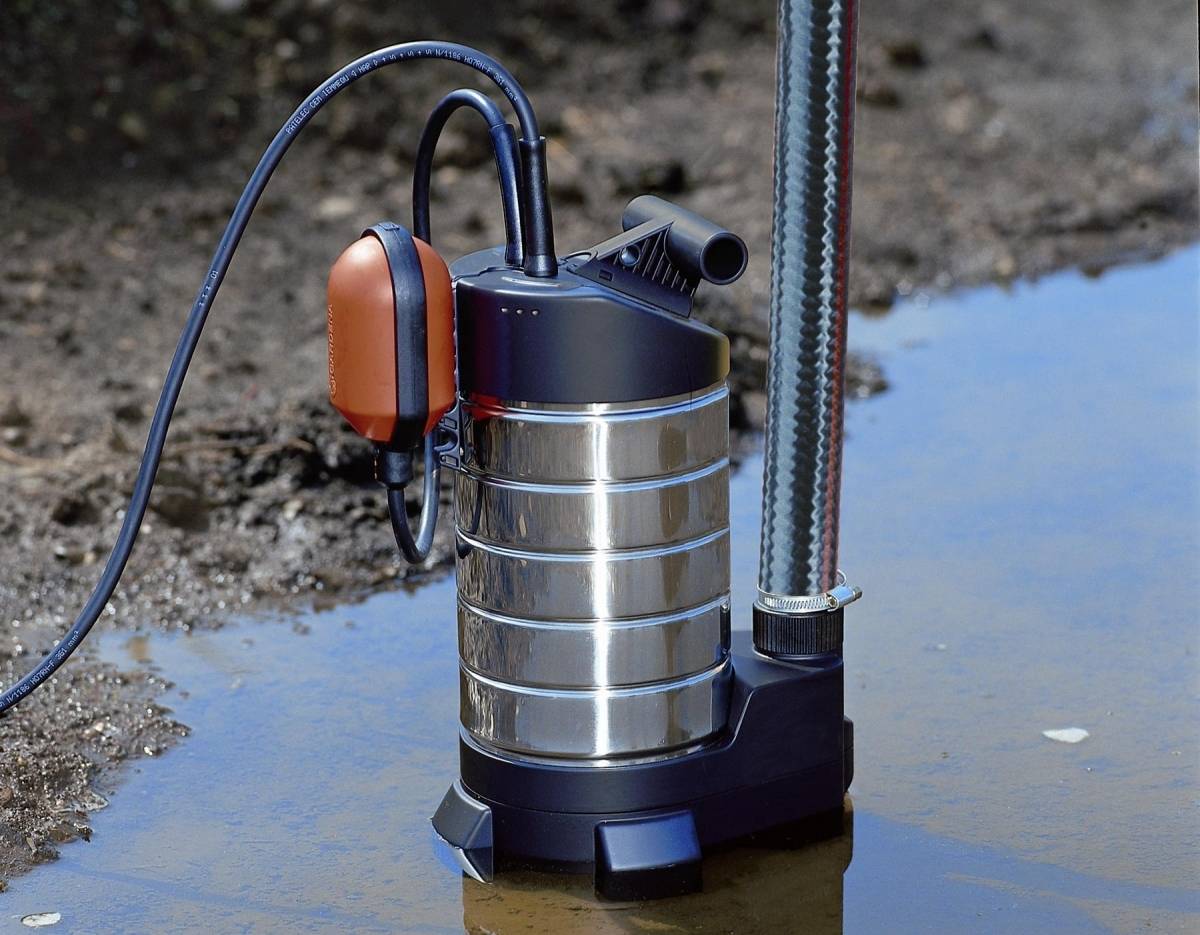





Main functional characteristics:
- submersible well;
- maximum productivity - 3.6 m³ / h;
- maximum pressure - 150 m;
- immersion depth - 100 m;
- vertical installation;
- weight - 25 kg.
Advantages:
- performance;
- water pressure;
- build quality.
Flaws:
not specified by users.
UNIPUMP ECO MIDI-2 (550W)
The UNIPUMP ECO MIDI-2 borehole pump (550 W) is used to supply water from sources with a diameter of at least 98 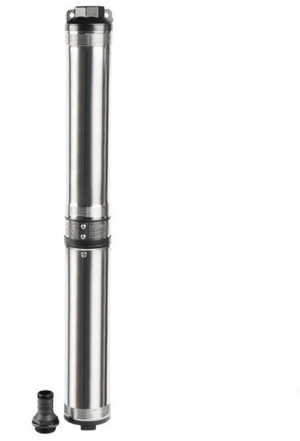 mm.
mm.
By means of a deep pump, an automated water supply system can be organized in a summer cottage, in a country house, in production, etc.
"Floating" wheels are made of wear-resistant carbonate.
They minimize the risk that the pump will seize when pumping solids.
A special filter prevents the penetration of large abrasive particles into the pump section.
Main functional characteristics:
- submersible well;
- maximum productivity - 3 m³ / h;
- maximum pressure - 73 m;
- immersion depth - 100 m;
- vertical installation.
Advantages:
- water pressure;
- low noise level;
- performance.
Flaws:
not found by users.
What are the pumps
The downhole pump differs significantly from the usual one, both in terms of the purposes of application and narrow specific issues. The industry produces several types of pump designs for wells, with their own operating characteristics. The difference in species is quite large, which makes it difficult to choose the right pump for specific conditions.
Surface
Scheme of a centrifugal borehole pump.
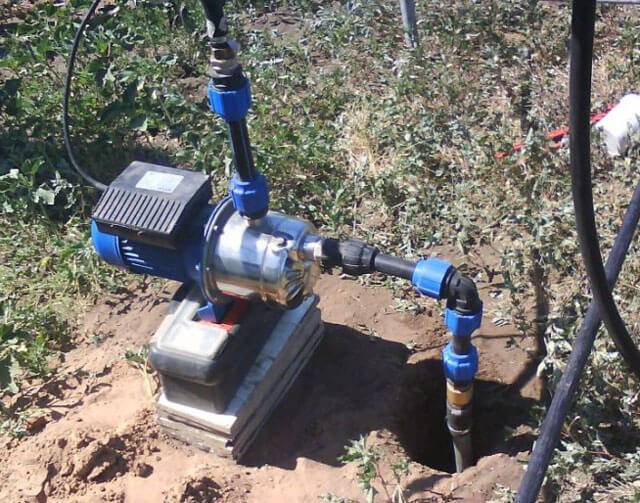
Such pumps are usually located on the surface of the earth and removed from the point of liquid flow (not submerged in the well). However, there are float models that are small in size, and the mechanism itself is placed in a float, which is placed on the surface of the water.
Float pumps are usually used to automatically supply water from wells, however, such models will not be able to supply water from a well.
Therefore, surface pumps are used for wells, in which the mechanism itself is located on the surface of the earth. They are more economical than the deep type, and are also easy to maintain (oil change or cleaning when dirty).
However, the main disadvantage of such devices is the shallow depth from which it can raise water. The permissible depth is from 8 to 10 m for different models. For such and less deep wells, it is recommended to install this type of pump.
Submersible (deep)
Such models are usually completely (and sometimes partially) below the water level, which they are supposed to raise. They are less preferable than surface ones, however, with increasing depth of wells, only they can provide a continuous rise in water. The depth of their immersion can reach 15 meters. For deeper sources, special borehole pumps are used.
This is interesting: Do-it-yourself cleaning and repair of the well: work technology
Deep well submersible pumps
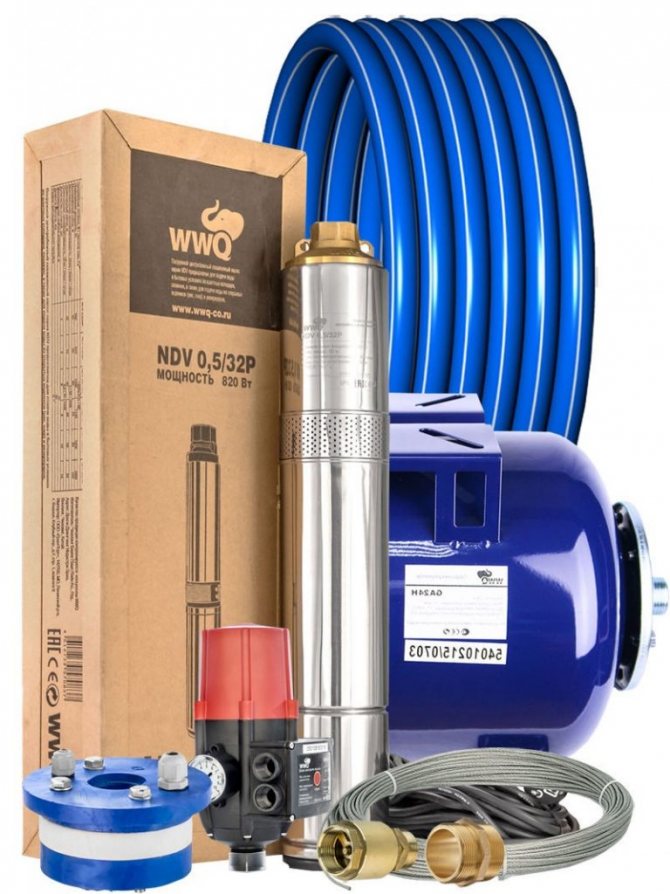
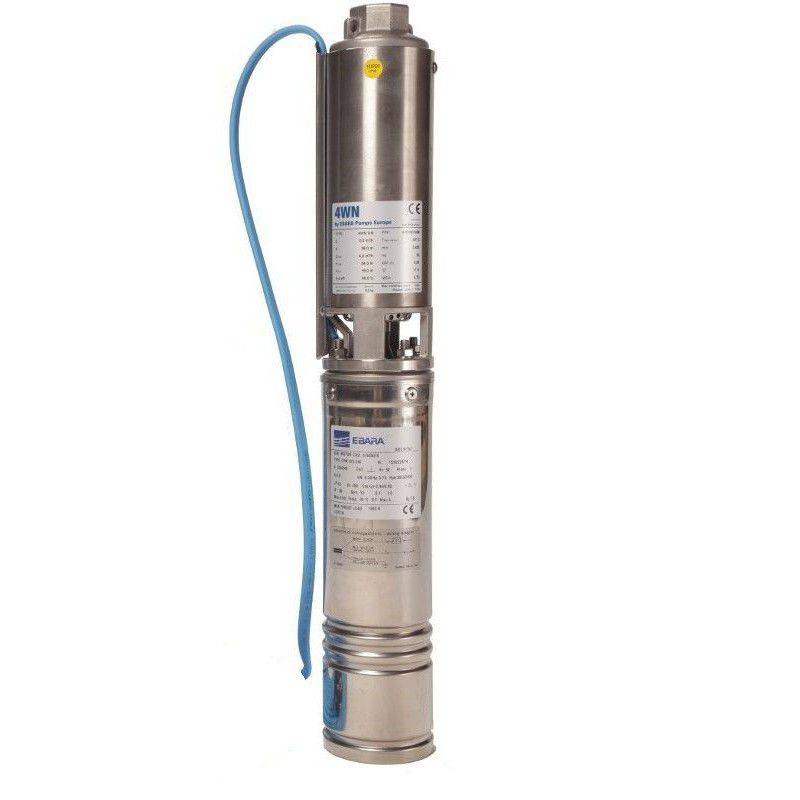
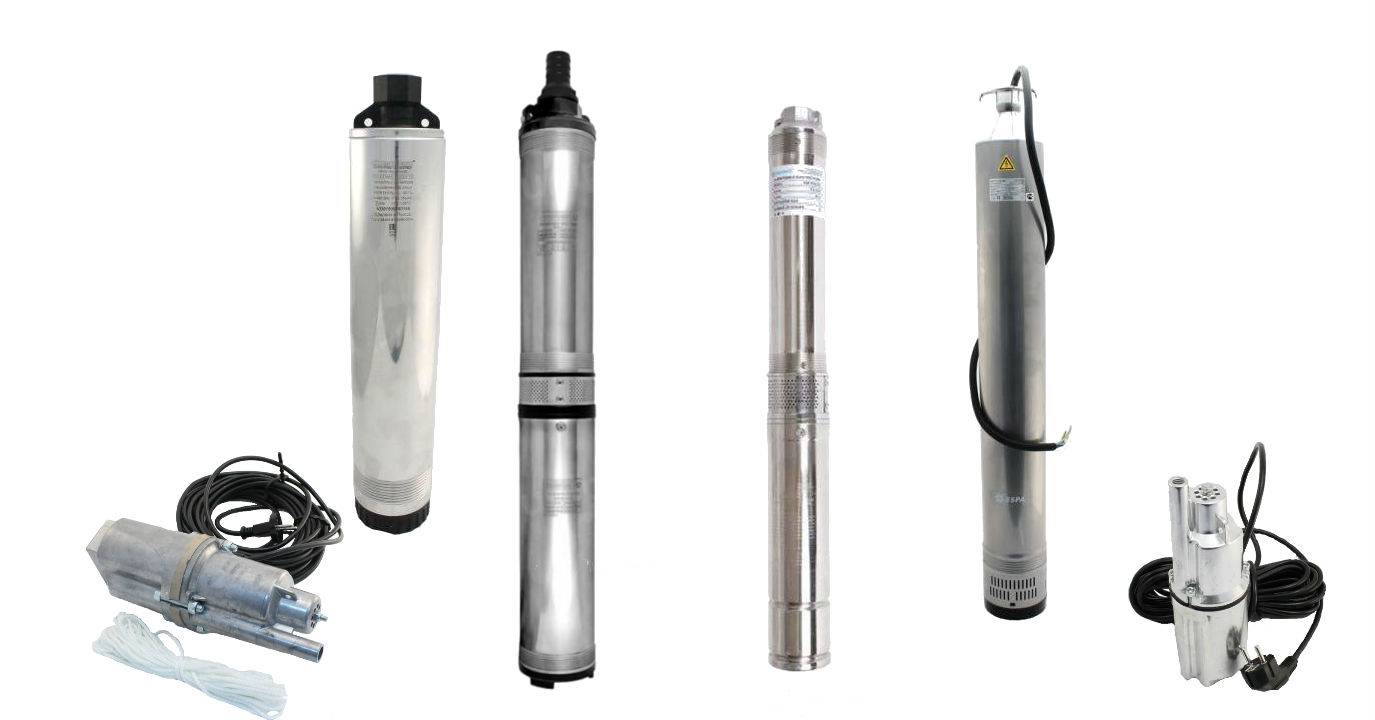
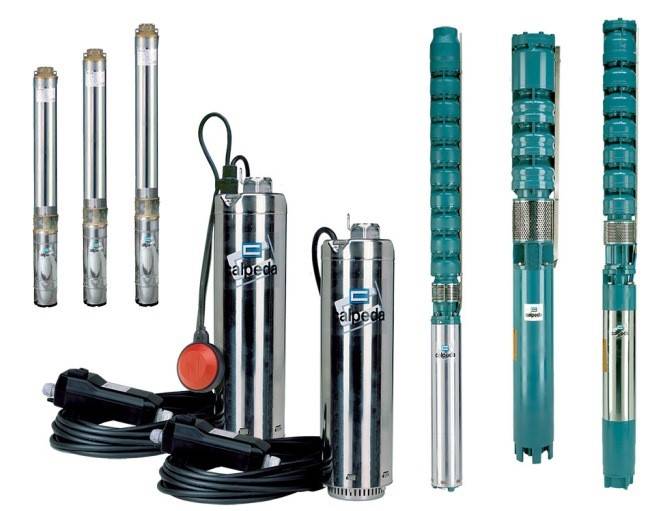
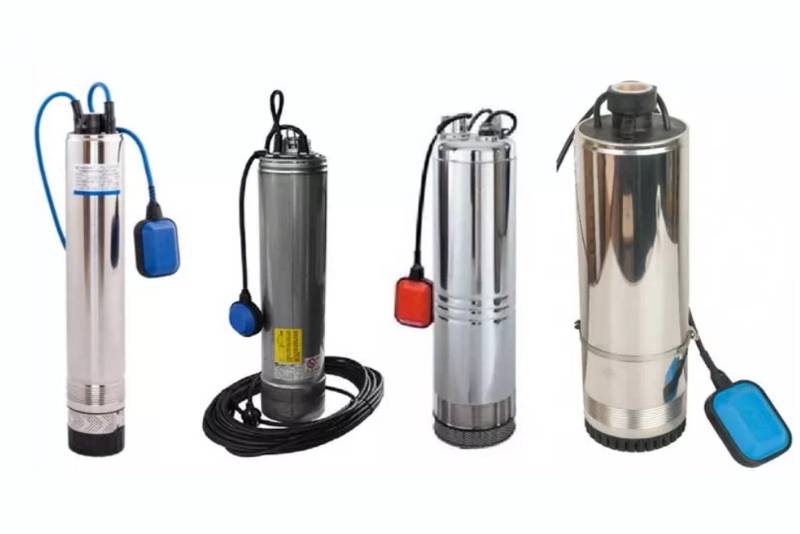
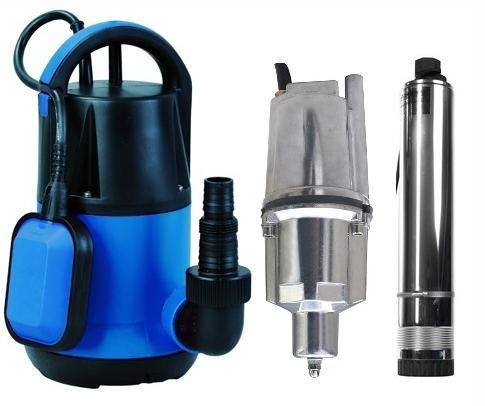
Borehole pump vortex for clean water VORTEX CH-50
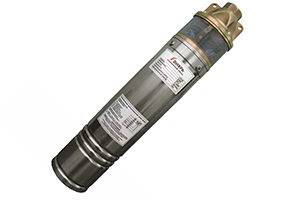 Whirlwind is a borehole pump with an upper water intake. The model works on wells and wells up to 50 m deep. Water can be supplied to the water supply system or to the irrigation system. The design is distinguished by a narrow body, the base is quite reliable - stainless steel. The whirlwind is quite small and can pump water from wells with a diameter of 10 cm or more.
The engine is not very powerful - at 750 watts, but it is quite effective for domestic needs. The design includes a thermal relay that protects the motor from overheating. You can safely immerse the unit to a depth of 60 m. It will give a performance of 60 l / min. Designed for clean water only and only allows vertical installation. In general, the Whirlwind can be attributed to typical country options. Price - from 6.2 tr.





Pros:
- impact-resistant housing, insensitive to corrosion;
- there are fastenings for a cable, a long cord;
- narrow body;
- quiet;
- the pump can raise water to a height of up to 50 m;
- overheat protection;
- ease of operation.
Minuses:
- there is no protection against dry running;
- Chinese assembly.
Borehole pump with a head of 75 m Aquarius BTsPE 0.5-50U
 Aquarius is a multistage centrifugal submersible pump. This thing is able to pump water from wells and wells with clean water (diameter over 110 mm). The model works for water supply of the enterprises, dachas, cottages, for filling of capacities and watering. The pump part contains eight stages, which gives a high pressure. The level of occurrence of groundwater is 15-30 m.
The unit only works in a vertical position.It is completely submerged in water. There is one feature - under the water mirror, the model descends no more than 10 m. However, about 40 cm should remain to the bottom of the well or well. The engine is stainless steel, the speed is 2900 rpm. Price - from 9.4 tr.
Pros:
- affordable price (competitors with similar characteristics are noticeably more expensive), plus the cable is included;
- quality assembly;
- the pump keeps voltage drops, but if there are problems with this issue, it is better to install a stabilizer;
- overheating protection (German relay);
- centrifugal pump does not vibrate, does not make noise;
- there is a steel filter to protect against suction of large particles.
Minuses:
- when the pump is installed in the well, it is necessary to cut the cable to bring it out of the head. This does not affect the warranty, but gives unnecessary trouble;
- there is no check valve, and it is necessary for automatic water supply.
Selection Options
Well pumps are easy to distinguish even by their appearance. They are an elongated cylinder made of stainless steel or plastic. Naturally, stainless steel models are more expensive - the steel must be of high quality (usually food grade AISI304). Pumps in a plastic case are much cheaper. Although they are made of a special impact-resistant plastic, they must be handled with care - it still does not tolerate shock loads very well. All other parameters will have to be selected.
Brief technical characteristics of the pump for the well
Water flow and pump performance
In order for the water in the house or in the country to be with sufficient pressure, equipment is needed that can deliver the required volume of liquid. This parameter is called pump performance, measured in liters or milliliters (grams) per unit of time:
- ml/s - milliliters per second;
- l / min - liters per minute;
- l / h or cubic / h (m³ / h) - liters or cubic meters per hour (one cubic meter is equal to 1000 liters).
Borehole pumps can lift from 20 liters/min to 200 liters/min. The more productive the unit, the greater the power consumption and the higher the price. Therefore, we choose this parameter with a reasonable margin.
One of the key parameters for selecting a well pump is performance
The required amount of water is calculated by two methods. The first takes into account the number of people living and the total expense. If four people live in the house, then the water consumption per day will be at the rate of 800 liters (200 l / person). If there is not only water supply from the well, but also irrigation, then some more moisture must be added. We divide the total amount by 12 (not by 24 hours, because at night we use water supply to a minimum). We get how much we will spend on average per hour. Dividing it by 60, we get the required pump performance.
For example, for a family of four and watering a small garden, it takes 1,500 liters per day. Divide by 12, we get 125 liters / hour. In a minute it will be 2.08 l / min. If you often have guests, you may need a little more water, so we can increase the consumption by about 20%. Then you will need to look for a pump with a capacity of about 2.2-2.3 liters per minute.
Lifting height (pressure)
When choosing a pump for a well, you will inevitably study the technical specifications. There are parameters such as lifting height and immersion depth. Lifting height - also called pressure - is a calculated value. It takes into account the depth from which the pump will pump water, the height to which it must be raised in the house, the length of the horizontal section and the resistance of the pipes.Calculated according to the formula:
The formula for calculating the pump head
An example of calculating the required pressure. Let it be necessary to raise water from a depth (pump installation site) of 35 meters. The horizontal section is 25 meters, which equates to 2.5 meters of elevation. The house is two-story, the highest point is a shower on the second floor at a height of 4.5 m. Now we consider: 35 m + 2.5 m + 4.5 m = 42 m. We multiply this figure by the correction factor: 42 * 1.1 5 = 48.3 m. That is, the minimum pressure or lifting height is 50 meters.
If there is a hydraulic accumulator in the water supply system of the house, it is not the distance to the highest point that is taken into account, but its resistance. It depends on the pressure in the tank. One atmosphere is equal to 10 meters of pressure. That is, if the pressure in the GA is 2 atm, when calculating, instead of the height of the house, substitute 20 m.
Immersion depth
Another important parameter in the technical specifications is the immersion depth. This is the amount with which the pump can pump out water. It varies from 8-10 m for very low-power models to 200 m and more. That is, when choosing a pump for a well, you need to look at both characteristics at once.
For different wells, the depth of immersion is different
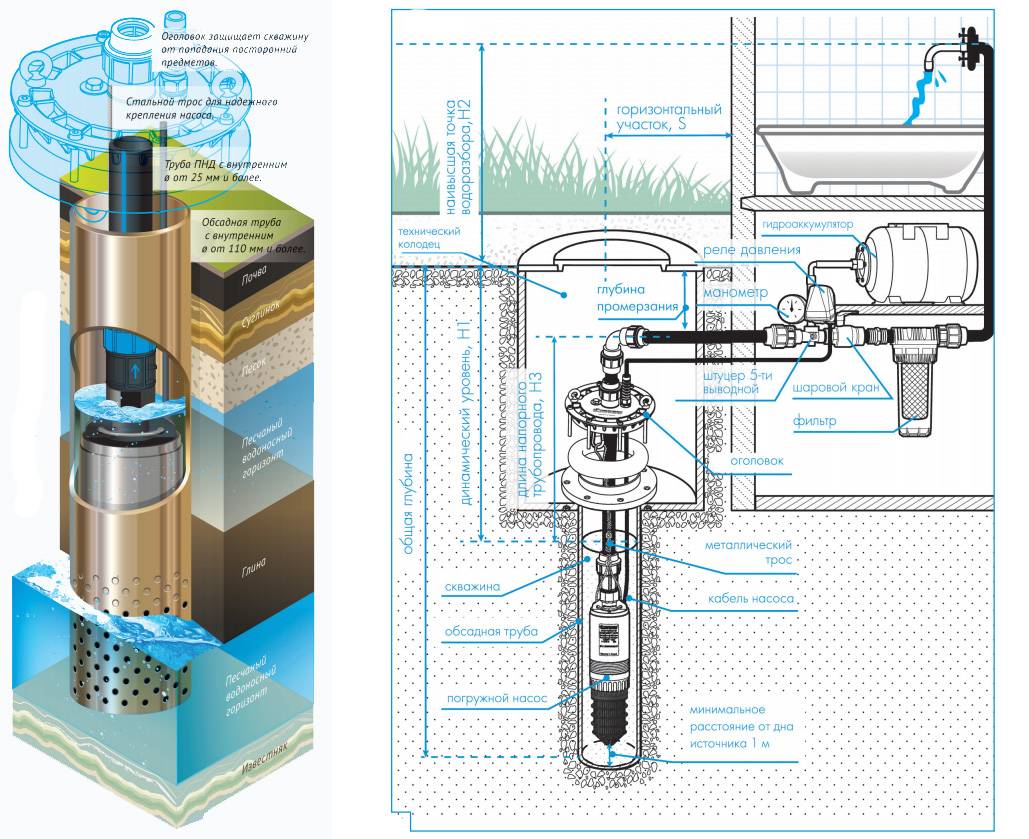
How to determine how deep to lower the pump? This figure should be in the passport for the well. It depends on the total depth of the well, its size (diameter) and flow rate (the rate at which water arrives). In general, the recommendations are as follows: the pump should be at least 15-20 meters below the water surface, but even lower is better. When the pump is turned on, the liquid level drops by 3-8 meters. The amount remaining above it is pumped out.If the pump is very productive, it pumps quickly, it must be lowered lower, otherwise it will often turn off due to lack of water.
Well diameter
An important role in the selection of equipment is played by the diameter of the well. Most domestic well pumps have sizes from 70 mm to 102 mm. In general, this parameter is usually measured in inches. If so, then the easiest way to find three and four inch specimens. The rest are made to order.
The well pump must fit in the casing
Prices for deep pumps
Modern industry produces over 300 brands of deep-well pumps. In the price range, they are divided into budget and expensive. In the cheap segment, I want to highlight the following options:




Whirlwind CH-50
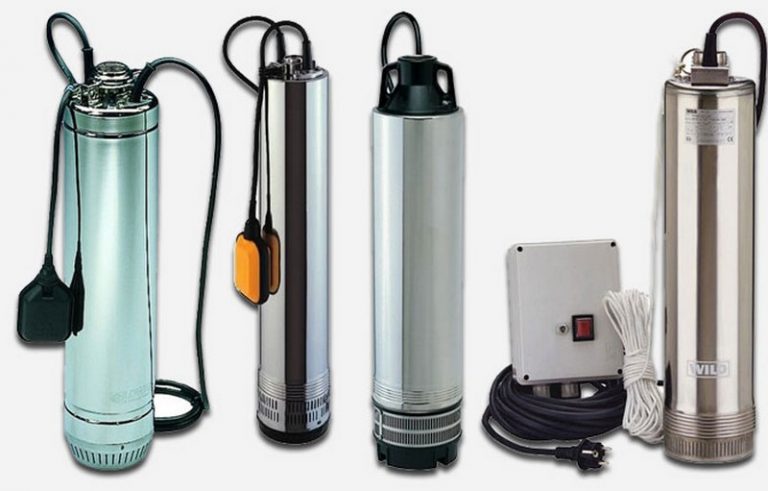
The Vortex CH-50 deep-well pump is produced in Russia, so its price does not depend on the dollar and euro exchange rates. The price range is pleasantly surprising - it is 5000 - 6000 rubles. Designed for a pipe diameter of 11 cm or more. The pump body is made of stainless steel, the working units are made of brass.
A real Russian car - reliable, unpretentious, designed for year-round use, can be connected to automatic control systems.
Belamos TF3
The submersible pump "Belamos TF3" is made in China and it already costs from 7,000 to 9,000 rubles. Can be used to raise water with sand and silt. Productivity up to 3.3 m3 per hour, immersion depth up to 30 meters. It is characterized by a high level of tightness, ease of operation, versatility.
Grundfos
Danish deep pump "Grundfos" belongs to the category of expensive powerful devices. Produced and improved since 1945.Its productivity reaches 7.5 m3 per hour, and the head is 155 meters. You can buy such power for 26,000-70,000 rubles.
It has a small diameter, so it is suitable for pipes with a small cross section. Equipped with an automatic protection system with a variety of functions. However, it has an increased sensitivity to the state of water.
Popular well pump models
Among the most common models of the vibrational type of action, one can distinguish "Baby" and "Brook". They are characterized by good performance, reliability and reasonable cost. For simple maintenance and repairs, a general knowledge of plumbing is sufficient. As permanent pumps inside the well, these units are not suitable, the sooner they are replaced, the better.
In the line of submersible centrifugal pumps, the brands "Vodoley" and "Vodomet" have good reviews. Although visually these units are almost indistinguishable, the performance of Aquarius is noticeably higher. This is due to the use of higher quality and durable components. The prices for equipment of this brand are also higher. As for the "Vodomet", this budget model can be successfully used in wells with a small load.
There is a separate subspecies of special pumps for wells on the market. For a pump of this type, you will have to pay a decent amount, but all the invested finances will fully pay off during operation. Among professionals, the 3STM2 and 4STM2 models from TAIFU are especially popular. They are able to work in difficult conditions, pumping large volumes of water.
Which brand of submersible pump is better to choose
There is a wide variety of submersible pumps on the market.However, not every manufacturer can offer customers guaranteed quality. Specialized service, a company guarantee can only be provided by reputable companies with a good reputation. Focusing on the numerous reviews of ordinary consumers and the opinion of experts, a review was compiled, which included the TOP-10 manufacturing companies, professionals in their field.
Gilex LLC. The Russian campaign is the leader among domestic manufacturers. Market launch date 1993. It produces a wide range of high-level pumping equipment. The company's specialists carefully analyze market demand, which helps to create equipment that is most adapted to the specific needs of people. A wide network of company branches successfully operates on the territory of the Russian Federation and neighboring countries.
OJSC Technopribor. Belarusian manufacturing company. Founded in 1974. Production facilities are located in Mogilev. High-quality, affordable, inexpensive products have been leaving the assembly line of the enterprise for decades.
Most of all, the company paid attention to the development and production of pumping equipment. Reliable, affordable household models, such as the well-known "Brook" series, are very popular among the population.
Grundfos
A large manufacturer of pumping equipment from Denmark. Founded in 1945. Literally after 5 years, the company has already launched its first 5000 pumps on the market, which made a splash among consumers. Since 1952, a mass production line has been launched. Grundfos borehole models in stainless steel and ceramics are world market leaders.
OOO Promelectro. Kharkov enterprise, founded in 1995.Engaged in the development, manufacture of household submersible pumps "Aquarius", the BTsPE line. The brand has earned a good reputation in the Russian market. Each unit of production is quality, reliability, long service life. Provides high performance when working in an autonomous water supply system.
Hammer. Well-known German company. Date of foundation 1980. The main activity is the production of power, measuring equipment, garden power tools. Pumping stations, submersible pumps of various modifications of the company have a high reputation among Russian consumers. The introduction of new developments, the modernization of lines, the high German quality of components are the three pillars on which the company's popularity invariably rests.
Karcher. An authoritative German brand that specializes in the production of cleaning and cleaning equipment. Founded in 1935. The trading company has been successfully maintaining high German quality throughout the years, quickly introducing new developments. Successfully engaged in the sale of household and professional appliances, with more than 120 subsidiaries in 70 countries.
Bison. Russian manufacturer-supplier. Date of foundation 2005. It supplies the market with a wide range of inexpensive hand and mechanized tools, materials and electrical equipment. The brand is known for innovative developments, a wide area of service and warranty customer service. The products are characterized by stable characteristics, high reliability, long service life.
ALKO. The German manufacturer is one of the leading European brands of garden equipment and machinery. Founded in 1931. Over the years, the company has expanded, introduced and developed its range of products.Today the brand has a huge production volume products: climate and ventilation components, garden equipment, elements for cars. The priority direction is occupied by garden equipment and tools.
Vortex. Russian manufacturer, a recognized leader among pumping equipment and power tools. The priority direction of production is pumping stations, borehole and drainage models. The first batch of equipment under the brand name Whirlwind rolled off the assembly line in 1974 at a plant in Kuibyshev. Today, the manufacturer has its own facilities in China, where almost all equipment is produced.
Belamos. Russian trademark that produces pumping equipment for heating and water supply systems. Date of foundation 1993. In a short period of time, the exporter of foreign equipment has become the largest manufacturer of pumping equipment for various purposes: for heating systems, water supply, borehole, drainage, fecal, etc.
What to look for when choosing a pump?
Before the final choice, you should pay attention to several key technical characteristics of pumping equipment. One of these characteristics is performance.
It is measured in l / min or in cubic meters. m / h and means the volume of pumped water per minute or hour. For a family of 2-3 people, this figure should reach 45 l / min or 2.5 cubic meters. m/h minimum
One of these characteristics is performance. It is measured in l / min or in cubic meters. m / h and means the volume of pumped water per minute or hour. For a family of 2-3 people, this figure should reach 45 l / min or 2.5 cubic meters. m/h minimum.
This indicator can be calculated independently.Sum the water consumption of all points of intake (consumers) in the house and multiply by a factor of 0.6. The number 0.6 means that no more than 60% of all water intake points are used at the same time.
The coefficients for calculating the performance are presented in l / min and in cubic meters. m/hour. For calculations, select only the values of those fence points that are in the house
The maximum pressure is an important indicator. It depends on the pressure force whether the pump will pump enough water for your needs. To calculate it, it is necessary to sum up the dynamic and static water levels. Then add 10% of the amount received.
There are more complex formulas that take into account the distance to the house and the number of water intake points. If you do not want to carry out complex calculations yourself, then seek the advice of a specialist.
The statistical water level or depth to the mirror is the distance between the actual water level and the top of the well. If this distance does not exceed 10 meters, then a surface pump should be selected.


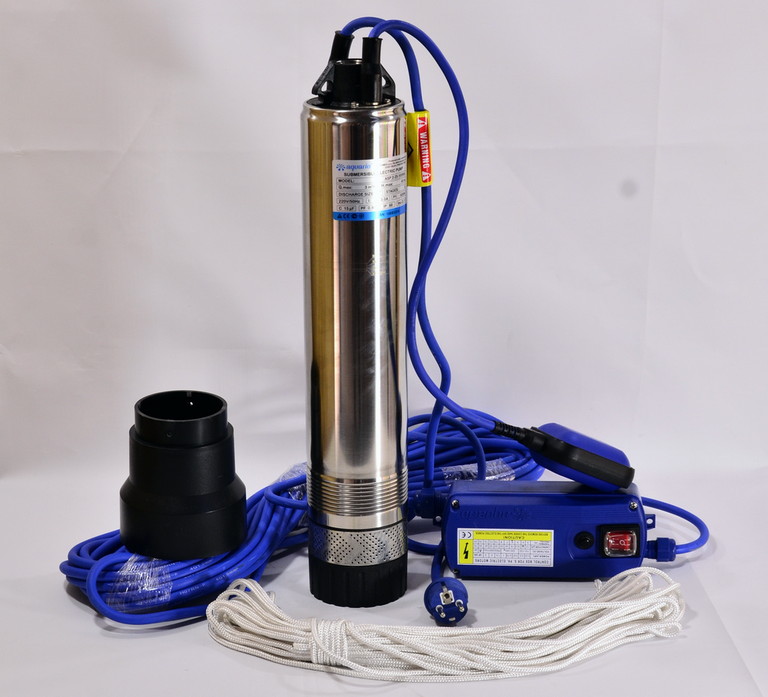
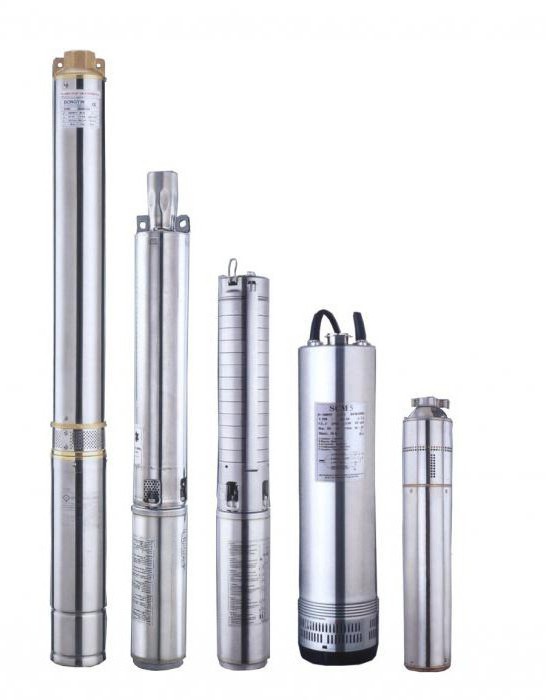


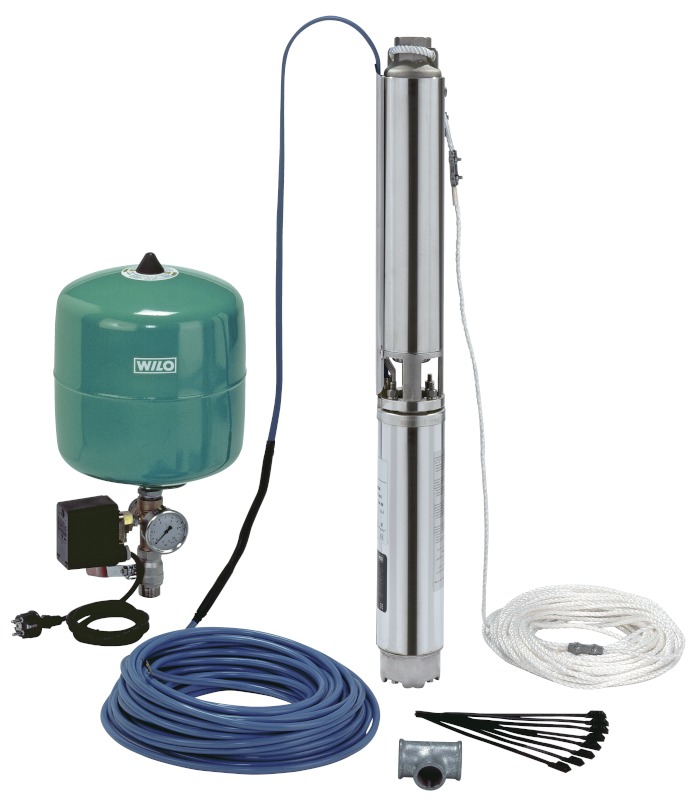

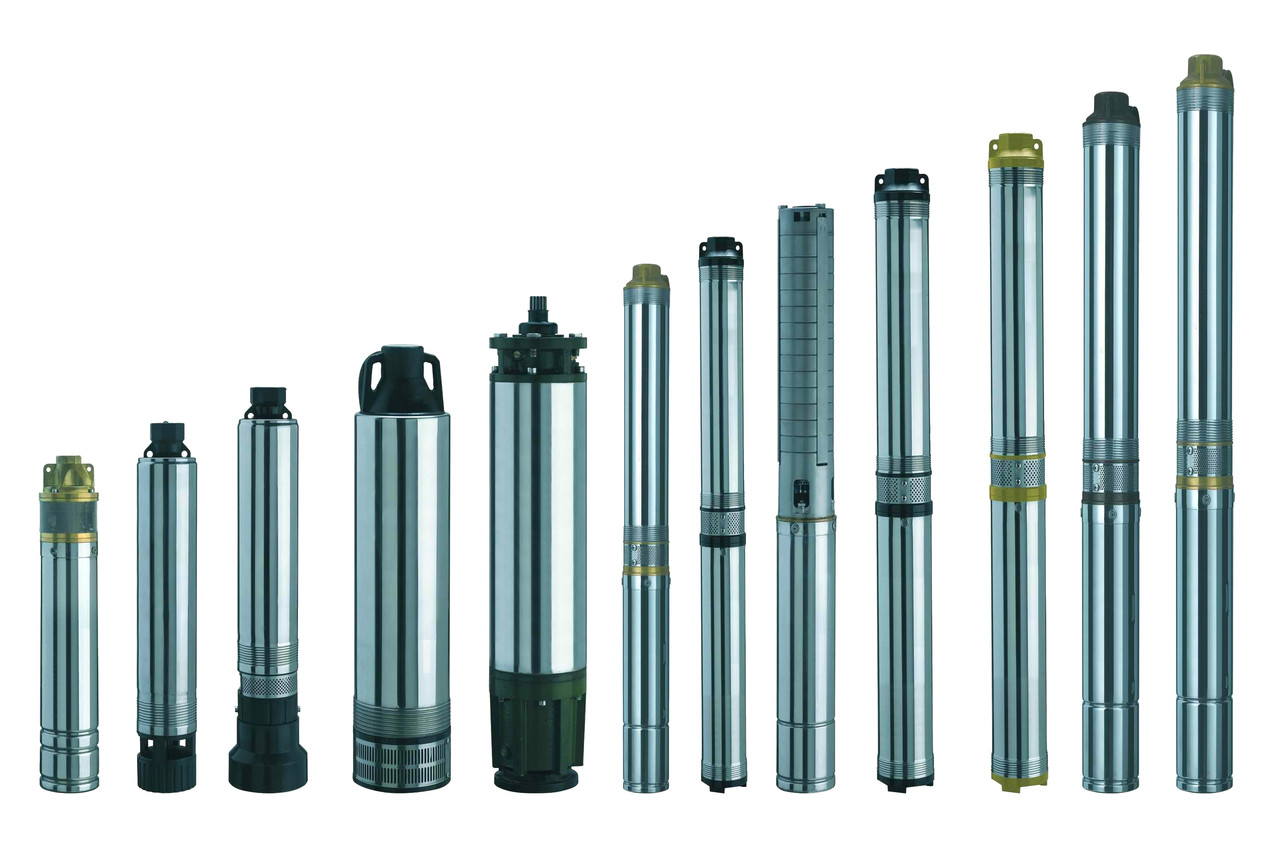
Some experts believe that this figure should be in the range of 2-7 meters. In other cases, focus on the submersible. Note that the latter is more durable, almost silent, and also powerful.
Surface pumps are quite heavy and noisy. They are ideal if a well or well up to 10 meters deep
Also important is the height of the water column or the dynamic level - this is the distance from the water's edge to the bottom of the well. It is necessary to take into account the depth of the well or well, since this parameter is also prescribed in the passport for the pump. These indicators should ideally match
It is worth taking into account the height of the pump itself in relation to the well
The power of the equipment is fixed in W and means how much electricity the pump will “pull”. Do not purchase a pump with a power reserve, otherwise you will simply overpay for electricity.
Pay attention to the body material, it must have corrosion protection. Details are also important.
Check, at least visually, the quality of the assembly, the wheels. It is best if they are "floating" and made of durable technical plastic.
The key working tool of a centrifugal hydraulic pump is the wheel. Most often it is made of an alloy of non-ferrous metals, stainless steel or cast iron.
More tips for choosing the right model pump for the well, we cited in the next article.
In the case of a centrifugal pump there is an impeller with blades that pump water. In powerful devices, there may be several such wheels.
The wheel is powered by an electric motor. Centrifugal force displaces water to the edge of the wheel from its center. Thus, a zone of high pressure is formed and the liquid flows through the pipes to the points of water intake (kitchen, bath, watering). Then the pressure is reduced and the process starts again.
Some centrifugal pumps have a hydraulic accumulator. This is a tank with a membrane element. It is used to maintain the necessary pressure in the pipes through which water, with the help of a pump, flows from the well and into the house. It is indispensable for wells and wells with a depth of 10 to 30 meters.
Another important element is the check valve. The principle of its operation is that the water does not have the opportunity to move in the opposite direction, that is, from the house through pipes to the well.
It is also worth considering what kind of water the pump can pump. If the water in the well is mixed with lime, clay or sand, then this must be announced before purchase. Otherwise, the pump will clog and fail prematurely.
Before buying, find out the location of service centers and the availability of parts (at least key ones) for the selected pump model.
If you want to install the pump yourself, then be sure to carefully read the instructions for the device and consult with specialists.
Given these characteristics, you can easily select the right pump model.
Surface and submersible well pumps
To understand which downhole pump to choose for a well, you need to understand the classification of pump equipment.
What are the pumps for wells at the installation site:
- Submersible. They are installed inside the mine, in close proximity to its bottom.
- Surface. The location of these models is the surface of the earth, in the immediate vicinity of the water intake point. There is also an option with installation on special floats, when the pumping device floats on the surface of the water. To understand which surface pump is best for a well, it is necessary to measure the depth of the mine. Surface pumps use suction in their work, so their efficiency largely depends on the height of the rise of the water taken from the source.
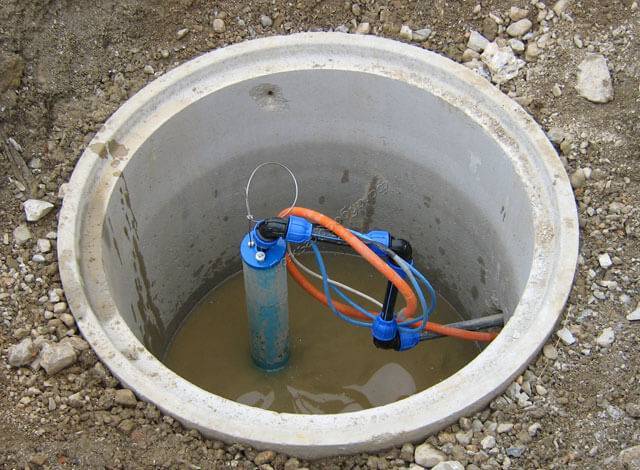
To understand for which well is a surface pump better, you need to take into account the distance from the water to the surface of the earth. Ideally, it should not exceed 8 m. Popular Abyssinian wells have similar parameters, for which a surface pump is an ideal option. The fact is that the shaft of such a well is very narrow and shallow.
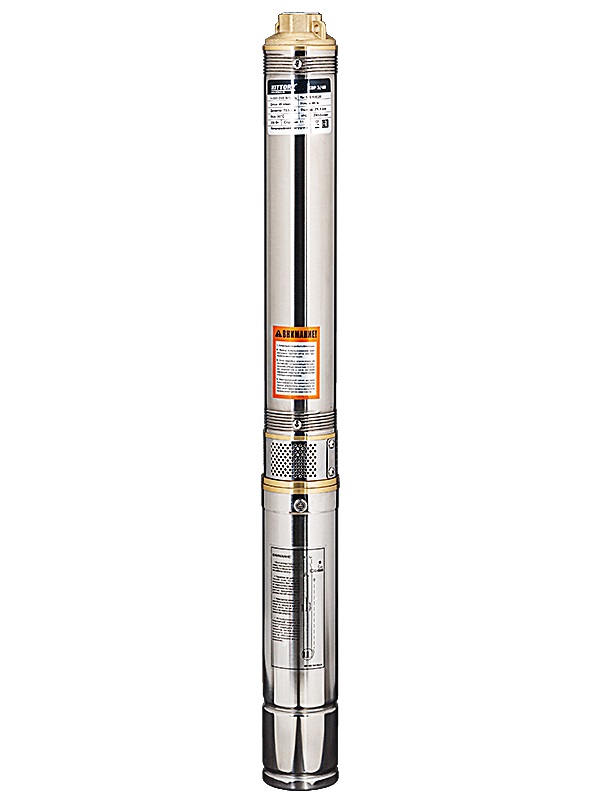
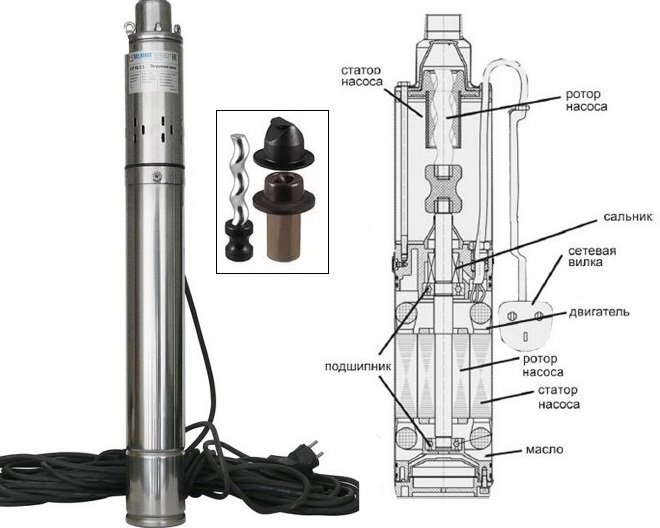


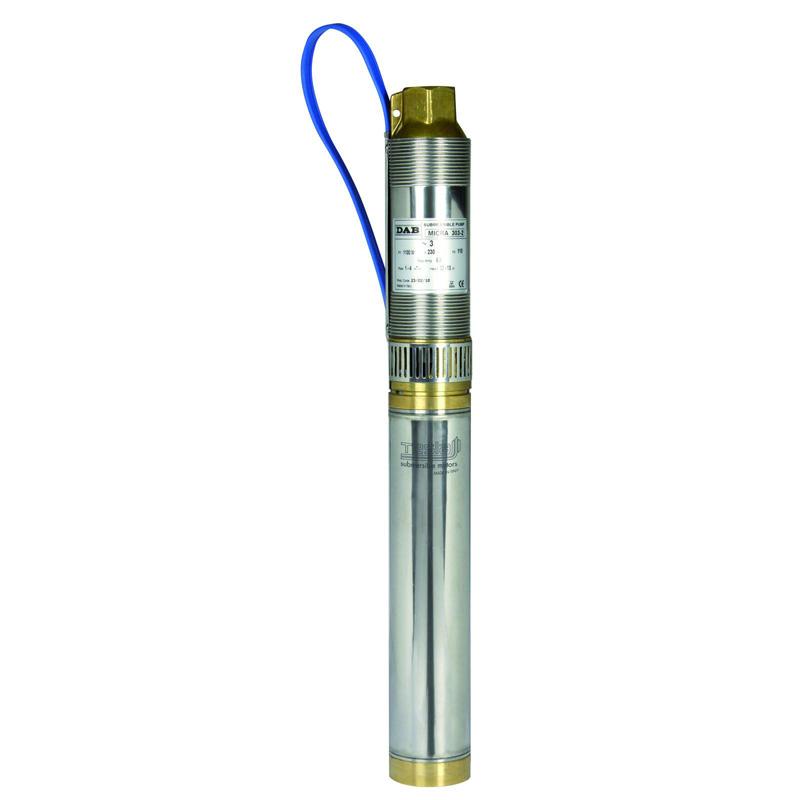

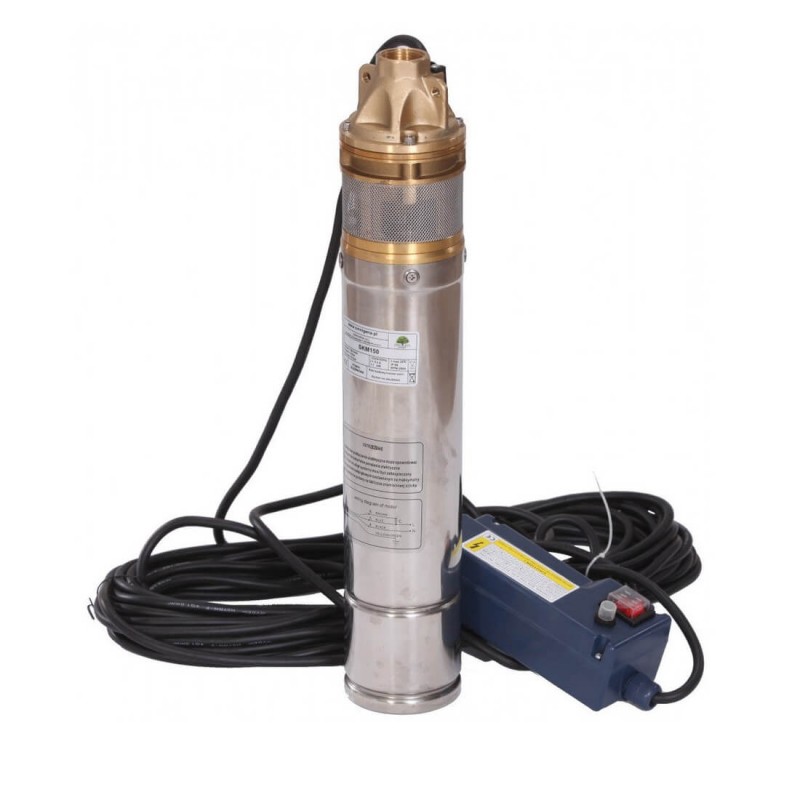


As for filtration or artesian wells, a positive result will not be achieved when using surface models. There is only one way out - to buy a submersible deep-sea pump for a well
Considering both types of pump, it must be taken into account that surface pumps make more noise during operation. For this reason, equipment is usually installed inside a special enclosure or in a separate room. Unlike surface devices that suck in water, submersible devices push it out
Unlike surface devices that suck in water, submersible devices push it out.
When deciding which submersible pump to choose for a well, special attention is paid to the distance from the point where the equipment is located to the surface of the earth. To get it, add 2 m to the dynamic level. Most of the models on sale are capable of supplying water to a height of up to 40 m
To equip a well with a greater depth, it is necessary to use a pump of increased power. The accompanying documentation contains an indication of the power of the pump for the well and the maximum height to which the device can pump water. Some people, the old fashioned way, install a manual water pump, which is very economical and practical in some cases.
Most of the models on sale are capable of supplying water to a height of up to 40 m. To equip a well with a greater depth, it is necessary to use an increased power pump. The accompanying documentation contains an indication of the power of the pump for the well and the maximum height to which the device can pump water. Some people, the old fashioned way, install a manual water pump, which is very economical and practical in some cases.
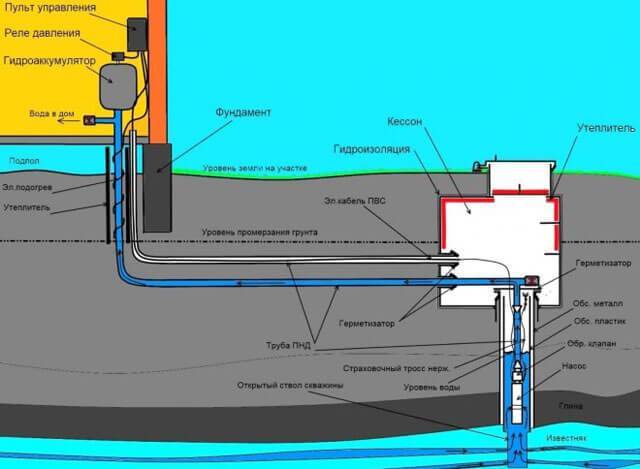
The approximate power of the pump can be found by the appearance of the equipment. Equipment of high productivity is placed in a large housing. Such devices weigh much more than standard pumps with an immersion depth of up to 40 meters.
Taking into account these considerations, it is desirable to purchase devices with a certain margin of performance. For example, for a mine with a depth of 50 m, a unit designed for installation at a depth of 60 m is well suited. At maximum depth, the device will operate in constant overload mode
This will negatively affect the duration of its service due to the rapid wear of internal parts. Wells with a depth of immersion of 60 m must be equipped with pumps for operation at a depth of 70 meters. It is desirable that the pump equipment has automatic protection against "dry running". Sometimes it happens that the water supply to the unit is interrupted for one reason or another.
At the maximum depth, the device will operate in the mode of constant overloads. This will negatively affect the duration of its service due to the rapid wear of internal parts. Wells with a depth of immersion of 60 m must be equipped with pumps for operation at a depth of 70 meters. It is desirable that the pump equipment has automatic protection against "dry running". Sometimes it happens that the water supply to the unit is interrupted for one reason or another.