
- Preparation for work
- Procedure
- Overview of materials
- Drywall
- Plastic panels
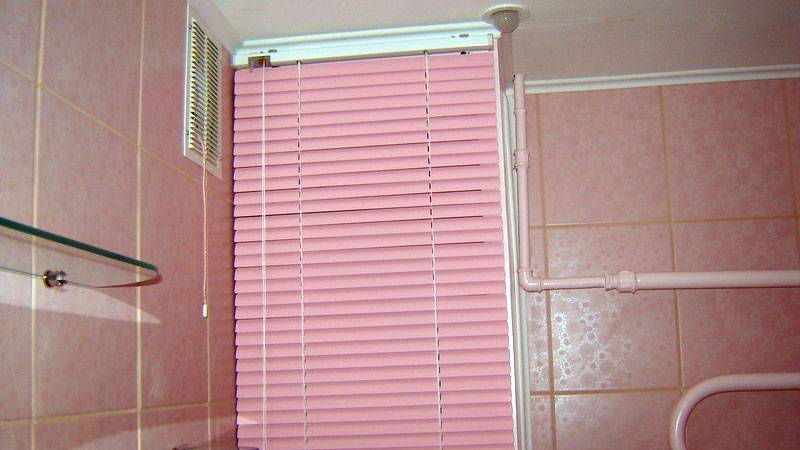
- Blinds
- Homemade or ready-made box
- A variety of pipes and options for their masking
- How to hide pipes with your own hands
- PVC panel box
- Drywall box
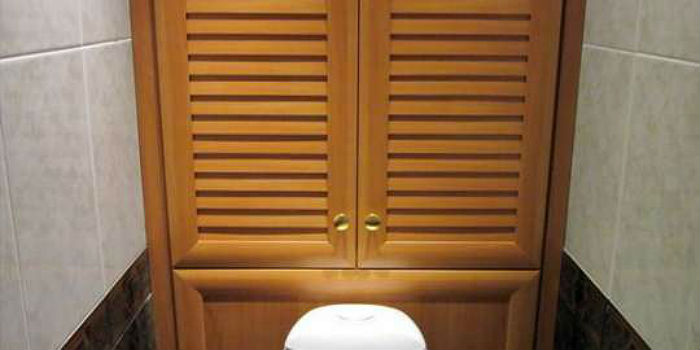
- Built-in sanitary cabinet
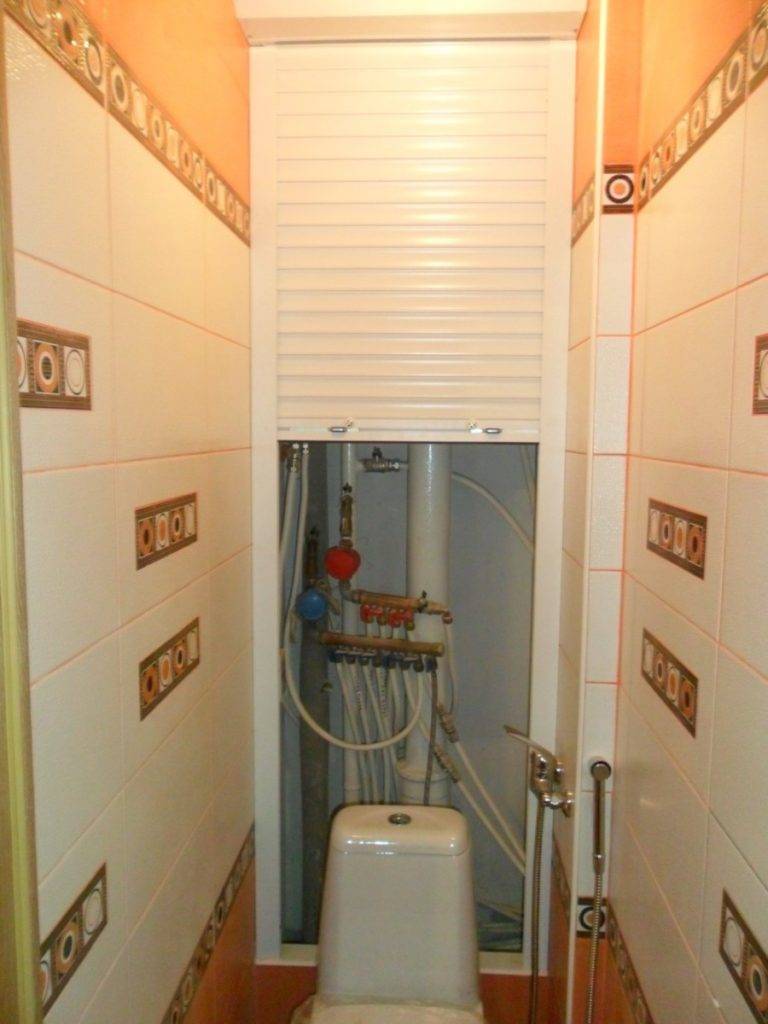
- roller shutters
- Plumbing shutters in the toilet and bathroom for closing the riser and pipes
- Outdoor placement of communications
- How to make a drywall box
- Peculiarities
- Work order
- What else can you make a box for pipes in the toilet
- Gating procedure
- Which is better to choose: horizontal or vertical
- Decoration materials
- Drywall
- PVC panels
- box
- Plumbing cabinet
- roller shutters
- Blinds
- improvised materials
Preparation for work
Consider, using the example of an ordinary apartment in a block house, how to close plumbing pipes. First of all, let's select the tools:
- level;
- screwdriver;
- roulette;
- pencil;
- drill;
- hammer, hacksaw.
What will we close? Nowadays, there are many materials to hide pipes or a sewer riser in a toilet. The following are suitable for this:
- Drywall.
- Plastic panels.
- Blinds for the bathroom.
- Roller shutters.
- Waterproof plywood.
And you will also need dowel-nails, self-tapping screws.
Procedure
The most popular way to disguise pipes in a toilet is to build a box or cabinet and hide them inside. If the communications are old, then it is better to replace everything. Otherwise, in case of leakage, you will have to disassemble the entire wall.
Be sure to leave access to valves or meters. The frame is made of a metal profile or wooden bars. Even if the pipes go on one side of the toilet, it is advisable to sew up completely.
We measure 10 cm from the communications, set it vertically and drill holes for the dowel in increments of 50 cm. A supporting profile is attached to the walls. Top and bottom guide rails. For the rigidity of the frame, jumpers are screwed. Usually self-tapping screws are used for this.
A significant drawback of such fastening is that the screw heads protrude above the surface. When put on such a frame, for example, drywall, then the material is skewed. To prevent this from happening, you need to fasten the strips together with a special tool called a cutter.
Overview of materials
Many materials can be used to hide sewer pipes or water mains. For example, blinds that cover a niche in the wall. Plastic panels or drywall can be used to sew up a box in which engineering communications will pass. On the network you can find photos of various options for using these materials.
Drywall
The most commonly used method is sewing pipes into a drywall box. Detailed video installation instructions for the box can be found at the end of the article. This material has many advantages:
- If necessary, the structure can be dismantled.
- It is quite easy to carry out installation work. First you need to build a frame of timber or profiles.Then sheathe everything with drywall.
- It is an environmentally friendly material that is harmless to humans and animals. It does not emit harmful substances even when heated.
- With the help of drywall, you can get a flat and smooth surface, which is suitable not only for laying ceramic tiles, but also for wallpapering, as well as painting.
The only downside to using drywall is that if the pipes are replaced or repaired, you will have to completely dismantle it and then rebuild it.
Plastic panels
Sheathing the same box as under drywall can be done with plastic panels. This material has its advantages:
Methods for hiding pipes in the bathroom
- These products are very easily and quickly mounted on a frame made of timber or guide profiles.
- The material is safe for humans.
- If the box is sealed with plastic panels, then they are much easier and faster to dismantle in the event of an accident than drywall. In this case, after the repair work, the product can be installed in the old place.
- Impressive service life with preservation of original appearance.
- Such material is not afraid of moisture. It is easy to clean and is resistant to mold and insect damage.
- On sale there are many options for colors and textures of this material, so you can easily choose a product that matches the style and color of your interior. There are also covers with photo printing and various geometric prints.
- After you sheathe the box with plastic panels, you do not need to do any finishing, because the panels have a decorative coating.
The only drawback is that this material may not harmonize well with tiled wall cladding.
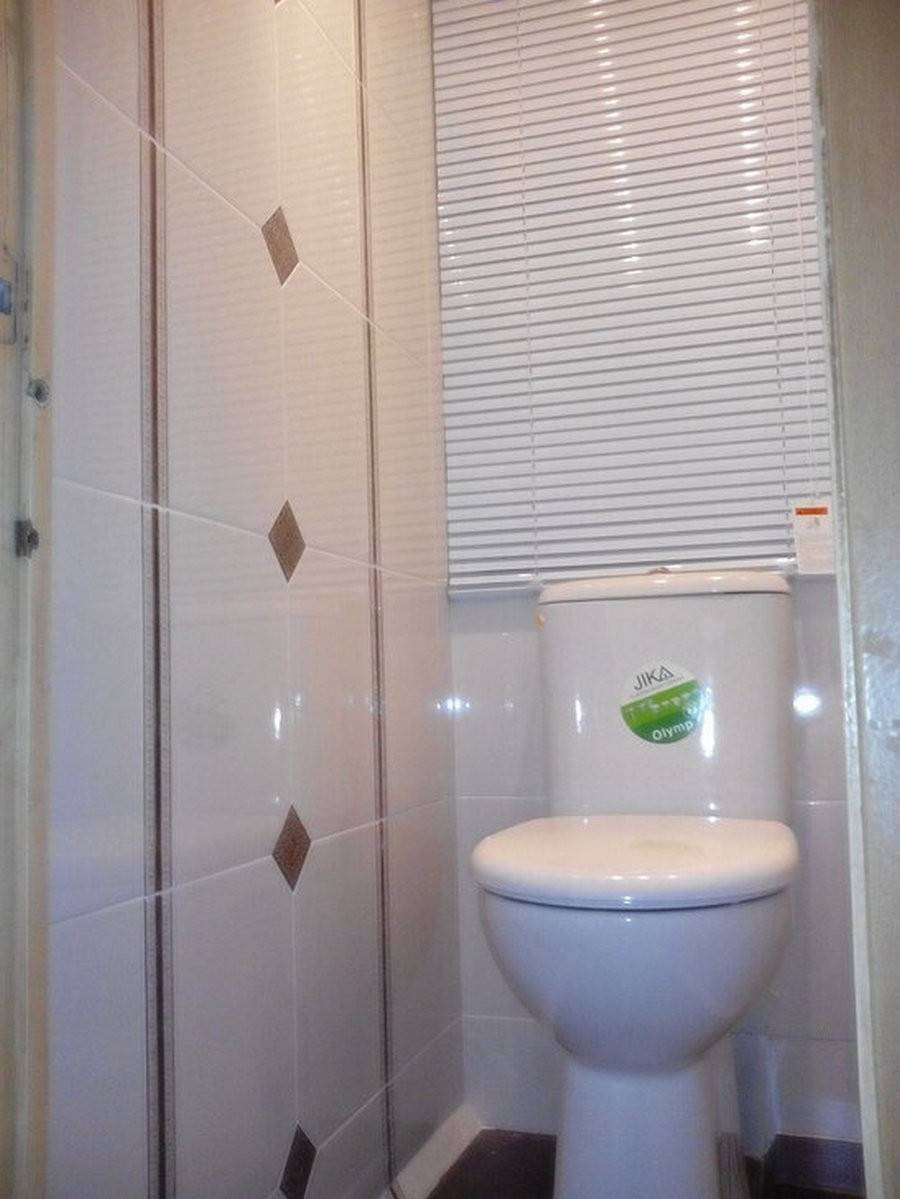
Blinds
The easiest and most affordable option for hiding pipes in a toilet is to use blinds. It is suitable for bathrooms of small dimensions, in which all pipes are on the same wall or in a separate niche. Blinds provide the following benefits:
- They do not require difficult installation - no need to make a box or frame, just fix the fasteners on the ceiling. Thus, you can quickly and easily close the wall where sewer pipes and water communications pass.
- This product allows you to save free space in the room.
- Depending on the size of the blinds, you can close the wall partially or completely.
- To gain access to pipes or water meters, you just need to lift the blinds.
- A wide range of colors and textures, as well as blinds with photo printing will make it easier to choose the right product for the color and style of the interior.
- Due to the fact that an impressive section of the wall will be closed, shelves for storing household chemicals and various household equipment can be installed behind the blinds.
There are almost no drawbacks to blinds, it is important to choose products from high-quality material that will not change its color during operation. It is also important to consider that the product should be easy to wash and not absorb odors.
Homemade or ready-made box
To close the pipes in the toilet, you can use a ready-made or home-made removable box. This option also has its advantages:
- The finished product remains only to be installed (see photo below).
- If the finished design is not suitable due to the characteristics of the room, then you can make such a box yourself. Its manufacture and installation will also not cause problems.
- Due to the fact that the design is removable, at any time there is access to engineering networks.
The main disadvantage is that this is a rather large product, which may not be suitable for your small space. Also, the price of the structure will be slightly more than the manufacture of a non-removable drywall box in the manner described above. There may also be problems with connecting the toilet if using a ready-made box. Types of sewer pipes for internal use


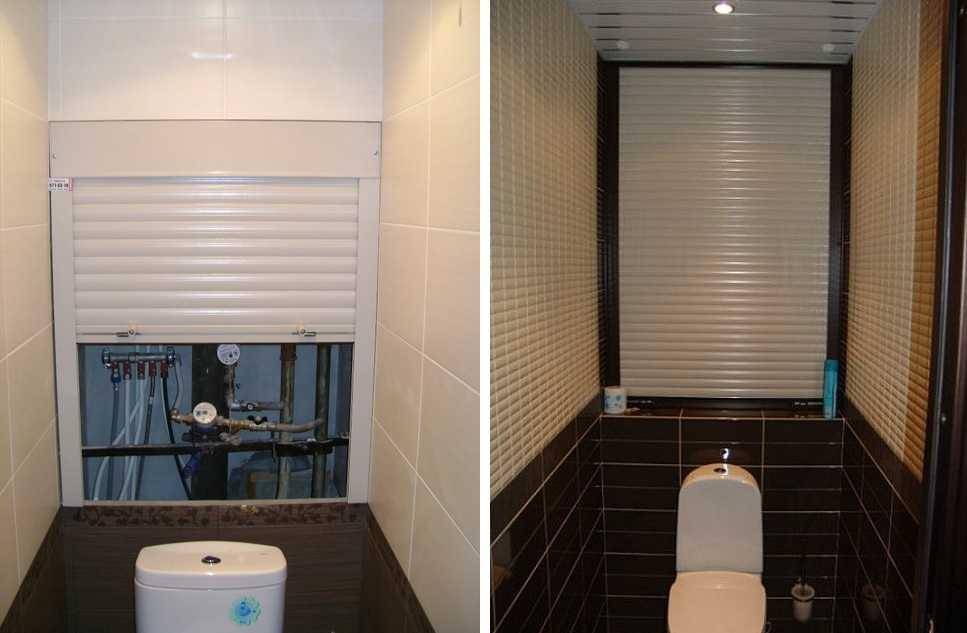


A variety of pipes and options for their masking
In the toilet of an apartment building, a vertical sewer pipe with a diameter of 100 mm is mandatory. In old-style buildings, cast iron was used as the main material for sewer systems, and water lines were made of steel pipes. Communications were highly durable, reliable and designed for long-term operation. Their maintenance was reduced to periodic painting with oil paint.

How hide the pipes in the bathroom without mounting it into the wall under the tiles so that there is access No matter how original the design of the bathroom is, open pipes spoil the whole look. However, it is realistic to correct this shortcoming by hiding engineering communications. At the same time, not at all…
However, after long-term operation, the internal cavities of the pipe were covered with corrosion and overgrown with calcareous accumulations of hard water. Due to their massive construction, the cast-iron riser and 50mm horizontal drainpipe took up too much meth in the tiny toilet.To close the cast-iron central riser, you can use the following methods:
- Lined with plastic panels.
- Close with drywall in the form of a box.
- Cover with moisture resistant plywood.
In all cases, these ways to hide the sewer riser are pre-installed with a support frame made of galvanized steel profiles or wooden slats of small cross section. I fix the supporting structures directly to the wall, stepping back a few centimeters from the riser.
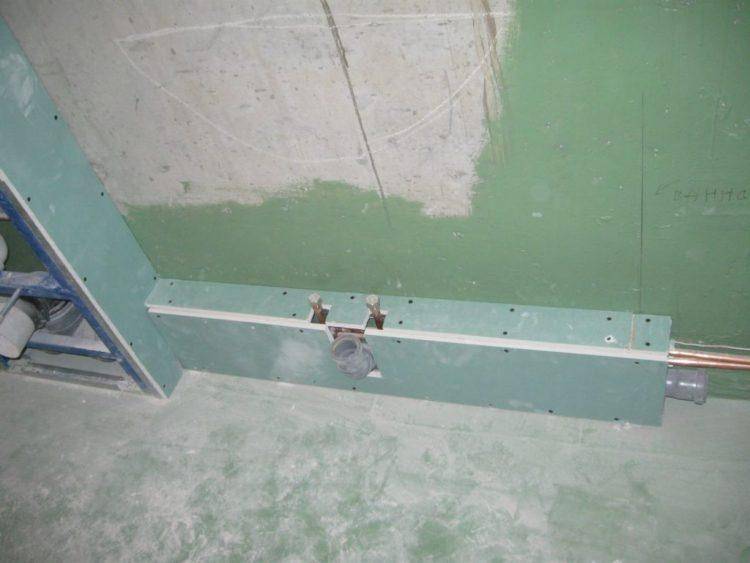
The horizontal section of the sewer, to which the toilet outlet is connected, can be closed in a similar way. Often, the drainage pipe is lined on the side and top with ceramic bricks laid “on edge” and lined with ceramic tiles. It turns out durable and beautiful, however, when changing cast iron to plastic, you will have to completely disassemble this structure. Due to the fact that the service life of cast-iron communications leaves up to 50 years, this method of hiding pipes is fully justified.
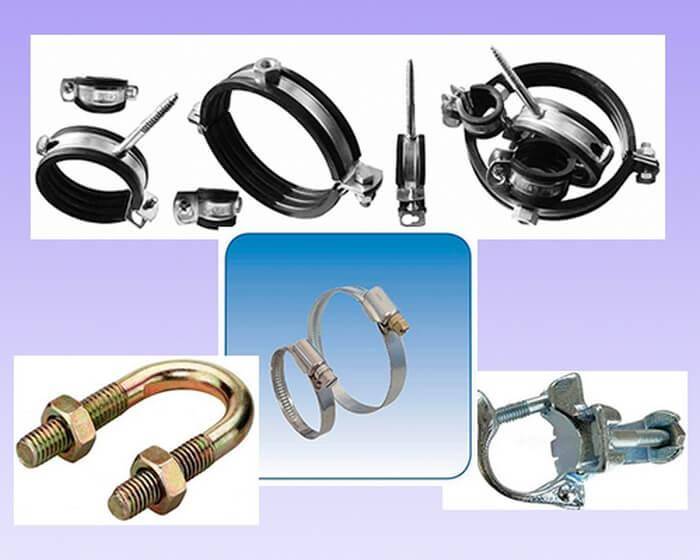
Pipe clamps: metal for fastening pipelines, dimensions and diameters The main limitation in the operation of pipelines and hoses of any diameter is their low longitudinal rigidity. When sagging, any long pipelines under the influence of their own weight lose their ...
Steel water pipes responsible for supplying water to the flush tank are more difficult to close. In residential apartments, the water supply network is equipped with water supply metering devices - water meters, regulating water taps, cleaning filters. To hide all this equipment, you will have to mount an attached box or, which is much more convenient, install roller shutters that provide convenient access to control plumbing fixtures and a water meter.A plastic sanitary cabinet with opening doors is perfect.
How to hide pipes with your own hands
Considering in stages how and with what to close the pipes so that they have access, one should dwell on the methods of masking.
PVC panel box
The box can be made of both plastic and drywall. However, in the first case, a finished design is immediately obtained. This option is especially relevant if PVC panels are used as finishing for the bathroom.
Mount the box as follows:
- Check the pipes for the quality of the connections.
- The walls and ceiling are treated with antiseptics at the place of installation of the structure.
- Attach the crate.
- Install plastic panels.
In order to be able to access pipes, meters or locking mechanisms, a ready-made plumbing hatch is installed.
You can learn more about the manufacture of the box from the video.
Drywall box
For work you will need such tools and materials:
- wood saw;
- jigsaw;
- electric drill and drills;
- metal scissors;
- self-tapping screws;
- drywall.
The tool is selected based on the material that will be used for the frame. If wooden elements are involved in the design, they are pre-treated with protective agents against moisture. The rest of the frame installation process consists of the following steps:
- Using a laser level, a pencil and a square, markings are made on the floor and walls for attaching guides.
- Prepare guides and connecting strips. To do this, cut the metal profile into segments of the desired length.
- The guides are fastened along the riser using dowels and self-tapping screws.
- Mount embedded elements in the profile.This is done in order to be able to fix the hatch, drywall and plywood.
- Install a sunroof. To do this, crossbars with mortgages are fixed on vertical racks. Then the hatch itself is mounted on self-tapping screws to the mortgages.
- Attach plywood. It is used to increase the rigidity of drywall in the event that it is planned to hang shelves on the box.
- Sheathe the box from the end side with plasterboard.
- GCR is attached from the front of the box.
Further work is aimed at preparing the drywall surface for finishing, i.e. padding. Moreover, soil treatment is necessary regardless of the type of finish - for tiles or painting. If all the work is done with high quality, then the design will turn out to be reliable, and the hatch will be almost invisible.
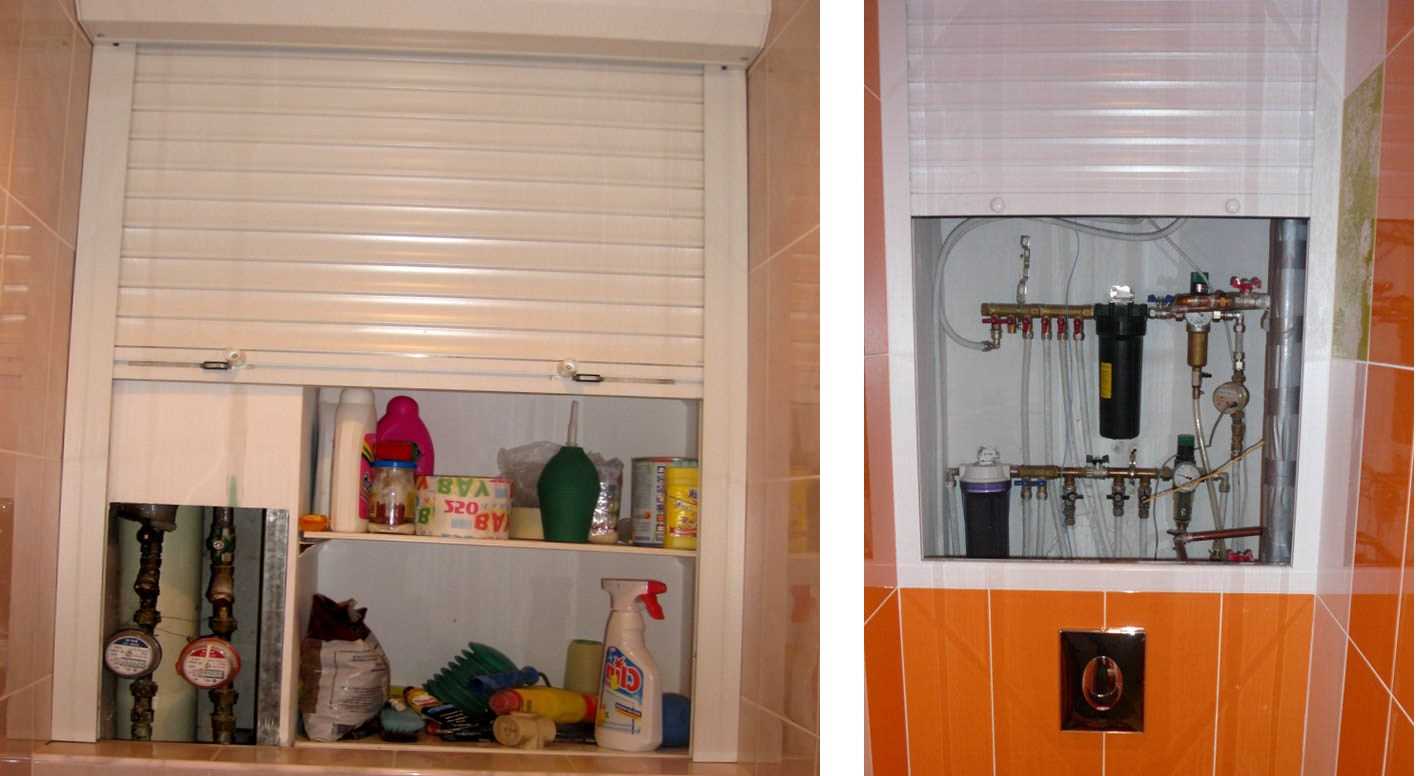


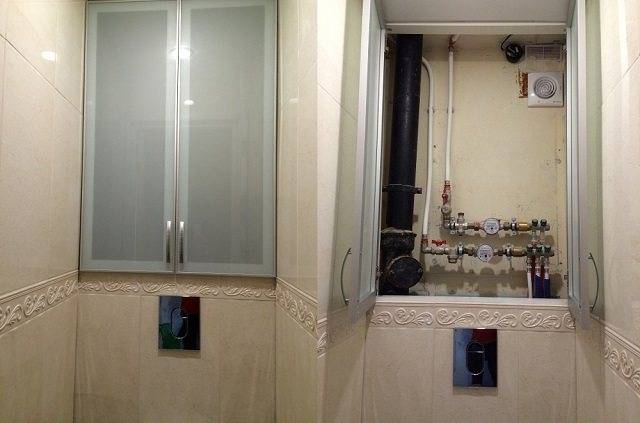
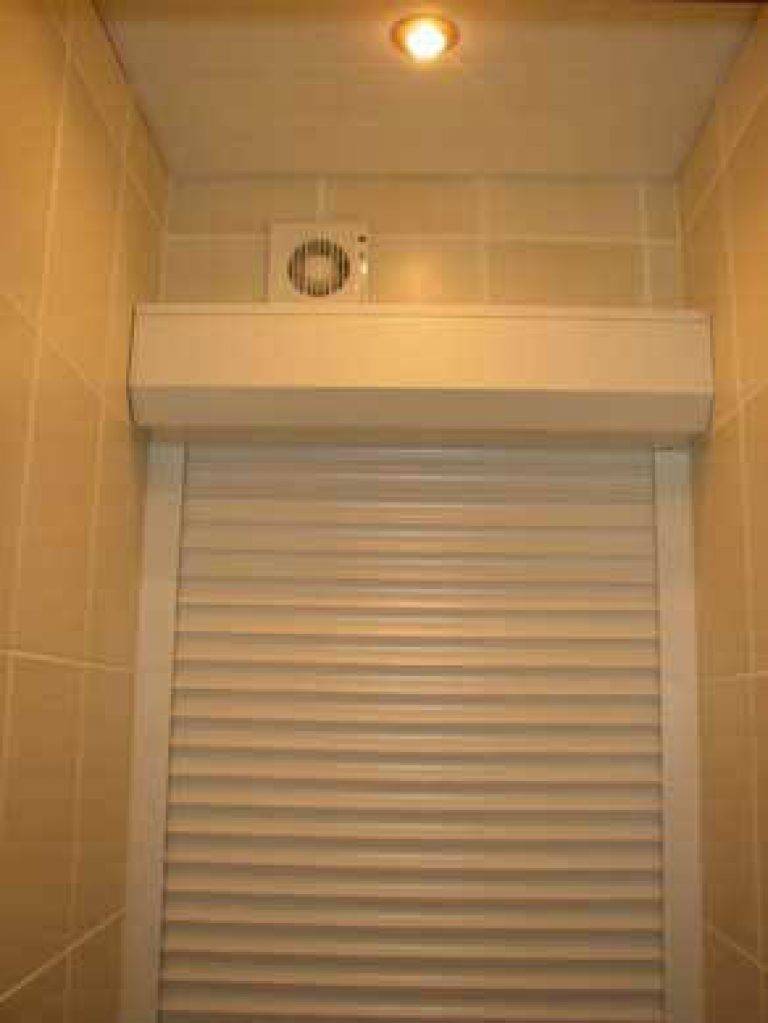


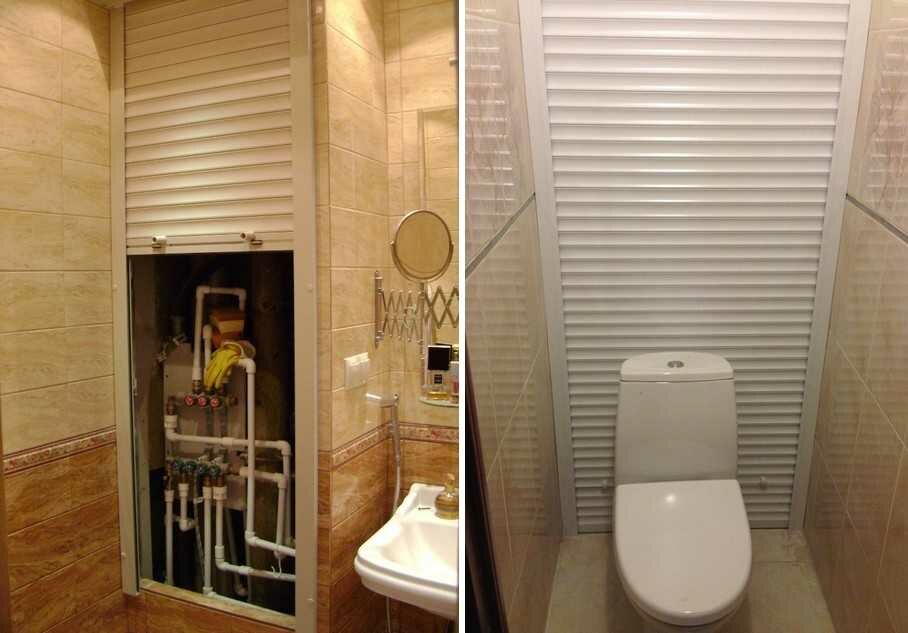
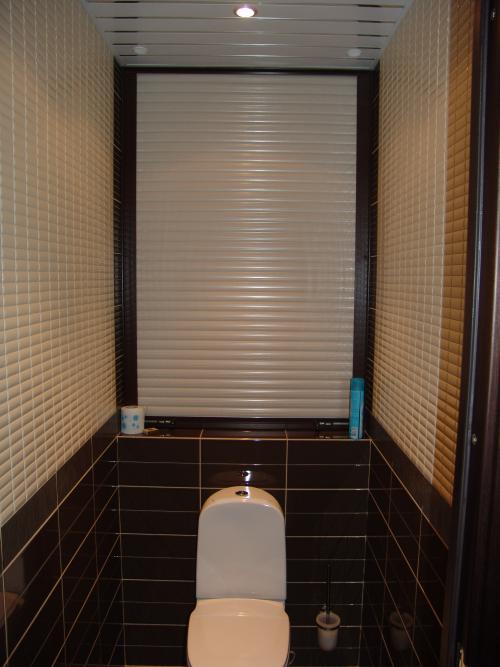
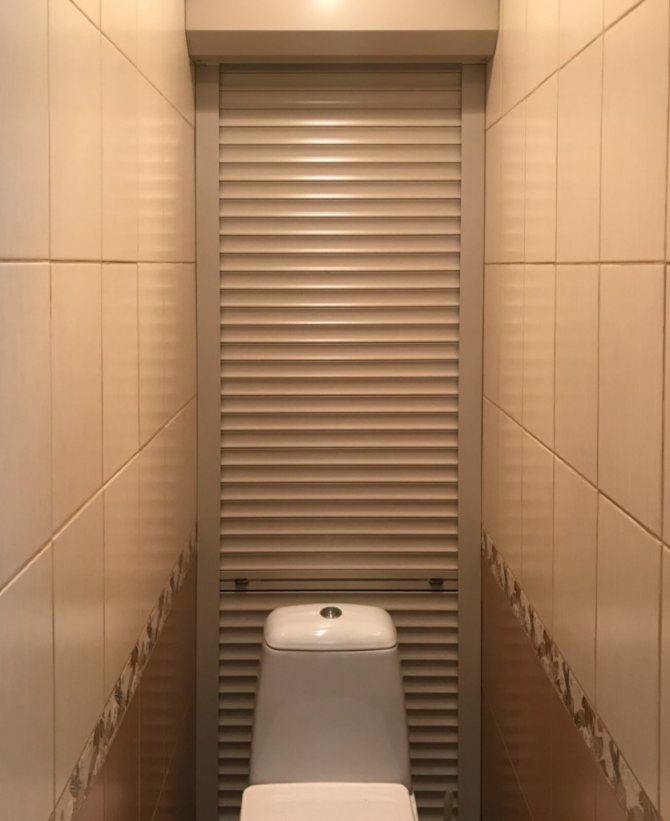
Pipes in the bathroom or toilet can be sewn up with drywall, but at the same time leave access to them by making one of the sections removable on magnets or on hinges.
Built-in sanitary cabinet
The installation of the doors of the sanitary cabinet is carried out by analogy with any doors: hinges are hung on the base (frame). Ordinary sashes can be used for a spacious bathroom. For a small room, compact accordion doors are suitable.
roller shutters
Unlike inspection hatches, roller shutters are more practical. Thanks to this design, you can quickly access the hidden space. To install roller shutters you will need:
- electric drill;
- roulette and level;
- fasteners;
- roller shutter kit.
The surface of the walls is pre-prepared so that the distance between them in height is the same. Then the roller shutters are mounted in a frame made of metal profiles, which is similar to the design for plastic panels. In general, the installation is performed in the following sequence:
- Install guides and top box.
- Attach the lamellas to the drum shaft.
- When the last lamella is installed, the structure is checked for closing / opening.
Having considered the most common ways to hide pipes in a toilet with access to them with your own hands with photo examples and step-by-step instructions, it will be possible to significantly transform the interior of the bathroom, making it modern and attractive. When choosing a pipe masking method, you should proceed from the overall design, budget and personal preferences.
Plumbing shutters in the toilet and bathroom for closing the riser and pipes
Plumbing are different from conventional roller shutters. Previously, they were used in underground passages or to block windows / doors in retail outlets (kiosks). But the simplicity of the mechanism led manufacturers to the idea that such shutters could also be made for the toilet.
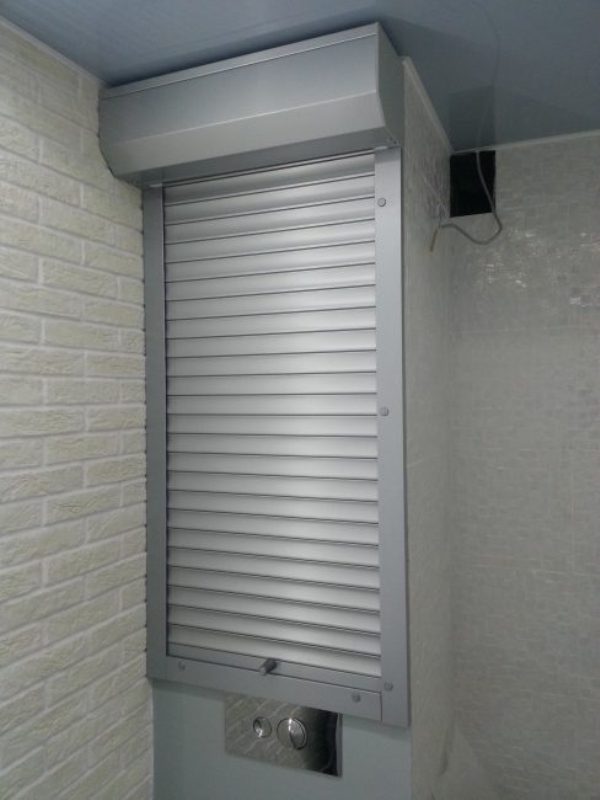
The main function of the canvases is the isolation of wall communications, water meters and other unsightly plumbing components.
Roller shutters in the bathroom are a great idea to ennoble the room and prevent the spread of unpleasant odors. When choosing, take into account such factors.
- The system by which the shutters are raised.
- Filler inside the profile.
- What material is the profile made of?
- Which control system - mechanical or remote.
- Is there a locking system.
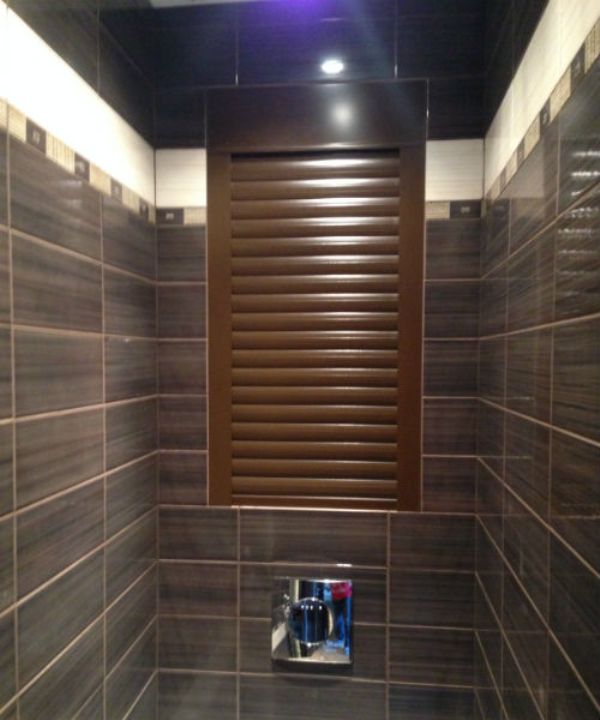
They provide unhindered access to plumbing elements.
If the design is equipped with additional features, then this will affect its cost.For example, you can find and buy blinds for a sanitary cabinet in a toilet with a remote control system, only the cost will “bite”. But an automatic control system in the bathroom is not needed, a simple, mechanical one is enough.
Important! A huge plus of the blinds in the bathroom is the ability to use a locking system. Then you don’t have to worry that a small child or pet will accidentally open the shutters and get into trouble
Outdoor placement of communications
Is pipe masking always required? They are left in sight in the only case: if they are outwardly attractive and themselves carry some kind of aesthetic load. For example, copper pipes, along with plumbing fixtures made of similar material, are often an element of decor.
External pipelines made of copper (less commonly, steel or cast iron) decorate the interiors of bathrooms decorated in modern industrial styles - loft, techno, high-tech
Installation of an external pipeline, as well as repair, does not cause difficulties. All parts and connections are visible, so they can be easily replaced or strengthened if necessary. As part of the decor, they require constant care.


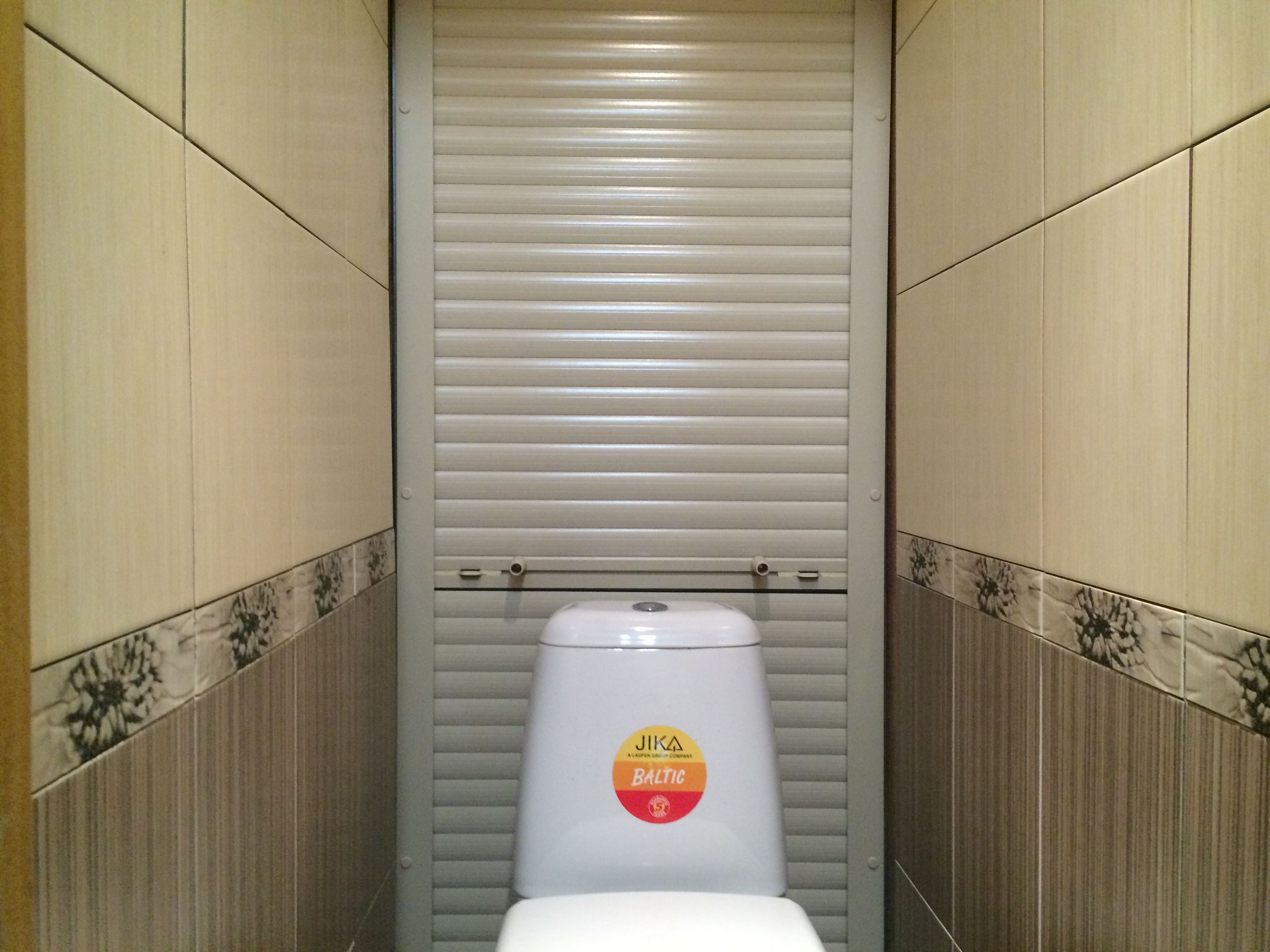


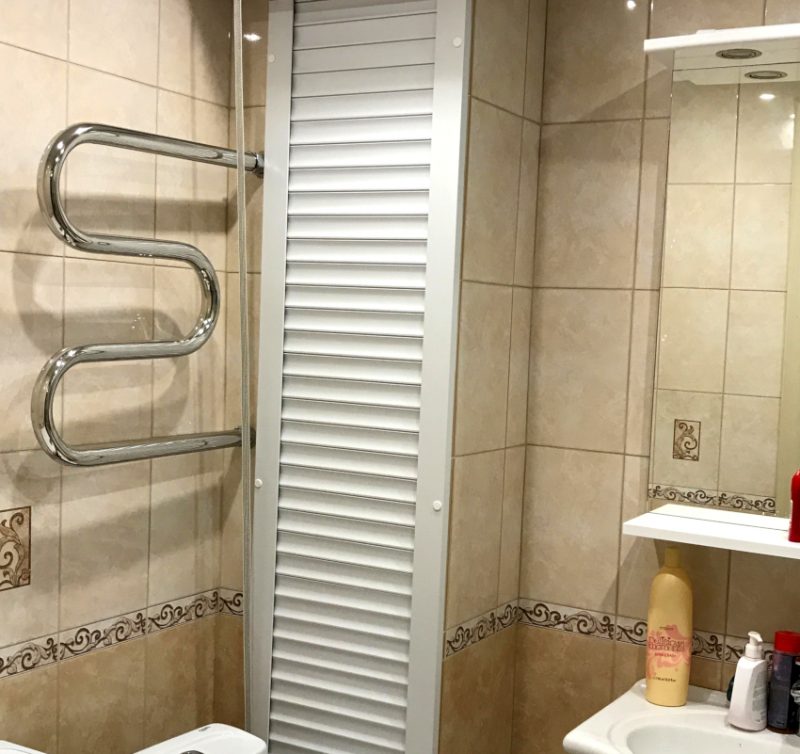

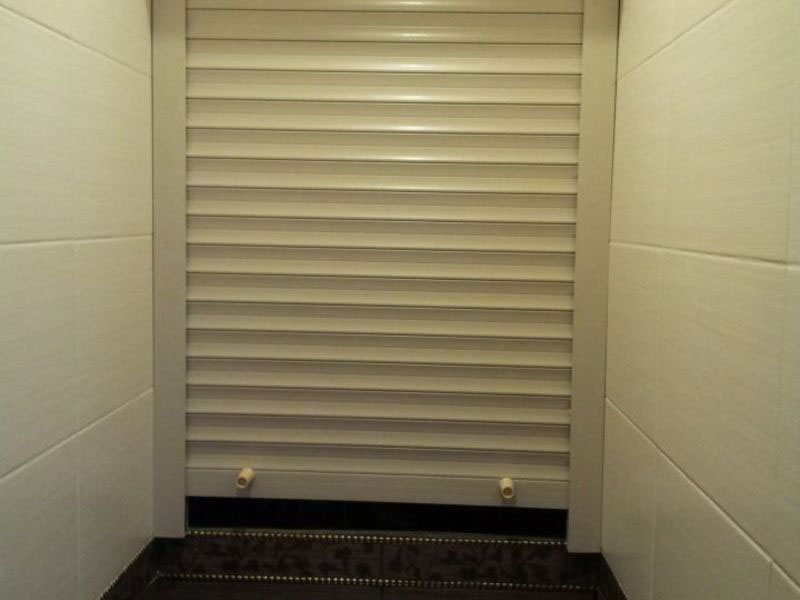


A big minus of metal external pipelines is the high cost. Another inconvenience is the risk of getting burned from a hot pipe.
How to make a drywall box
You can close the pipes in the toilet by making a drywall box. This is perhaps the most popular solution. This is because the technology is very plastic, you can hide pipes of any configuration. Another nice bonus is multiple finishing options: lay tiles on glue, level the surface with putty, then paint or paste wallpaper.
The pipe box in the toilet can be vertical or horizontal - this does not change the essence
Peculiarities
If you have chosen to close the pipes in the toilet, there are several points that you need to consider. The first - to all key nodes - counters, filters, etc. you need to have access. It is desirable that access to stopcocks be quick. There are several options:
- make one panel folding or turning (hinged);
- part of the panel can be removable, fastening with a pair of self-tapping screws and / or magnets;
- put a hatch (plastic or invisible hatch for tiling.
You can, of course, make the structure non-separable, but if necessary, you will have to break everything, then restore it, and problems happen even with new pipes.
Special hatch for tiles
The second - the tile, if you finish it, it is better to glue it on a special glue, and not put it on a mixture of cement and sand. A thinner layer of glue is required; its mass is less. Under such conditions, it will be easier to remove / lift the cover.
Work order
First, decide what your box will look like. It is advisable to plan everything so that it not only closes the pipes, but, if possible, also carries a functional load. For example, if the pipes run down along the wall on the right or left, which happens if a hygienic shower is installed in the toilet, the box can be made a little higher, and various necessary little things can be placed on its upper part.
How to close the pipes in the toilet: make a drywall box
If you close the risers that run in one of the corners behind the toilet (the layout of standard Khrushchev toilets), it makes sense to close not only that corner, but to sew up the entire wall, making a locker out of it.Shelves can be open or closed (with or without doors), but in small apartments this is very convenient.
If the pipes are on the back wall, and the toilet is narrow and long, it makes sense to sew up the back wall completely
Having decided on how your box will look like, markings are applied to the walls and floor. Then take galvanized drywall profiles. Down and on the sides there is a bearing profile - PN (UW) - without curved sidewalls. Since the structures are small, a profile of 50 * 40 mm is sufficient. A rack-mount profile goes to the jumpers - PS (CW) - its width is also 50 mm, and the depth, if desired, can be small.
Jumper connection
Jumpers are cut to size (with scissors for metal) and fastened with self-tapping screws. With a small distance - up to 50 cm - one from each end is enough, with a larger beam, put two. The installation step of the racks is about 60 cm, the jumpers are approximately the same step. In the place where the door is attached (if provided), a reinforced double profile is placed.
The assembled frame is sheathed with drywall, cut to size. They are fixed with small self-tapping screws with a screw at the end (TEX 3.5 * 9.5 mm). Fasteners are installed around the perimeter and in places where jumpers / racks go, the step is 20 cm. When twisting, you need to make sure that the hat is a little buried in the drywall, but does not break through the cardboard.

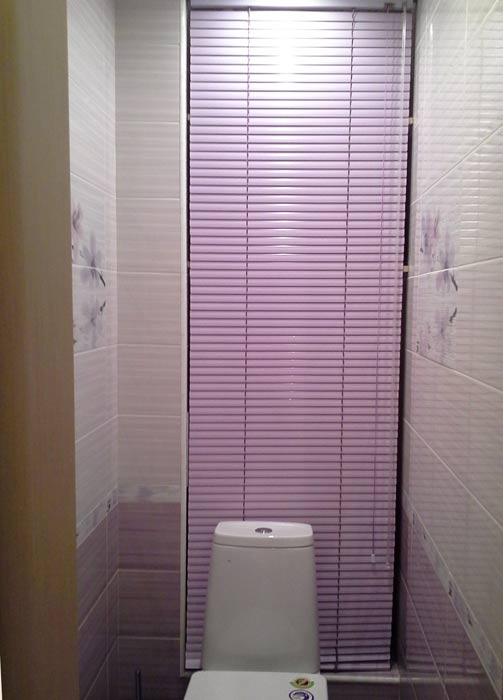

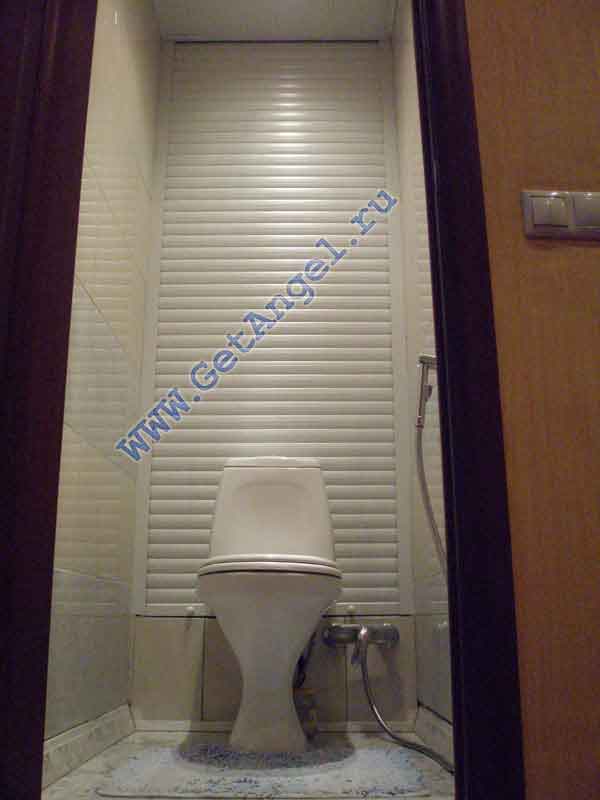


After sheathing, finishing work comes, and they depend on the chosen finish. For painting and wallpapering, the box is completely puttied, for laying tiles only screw heads are covered with putty.
What else can you make a box for pipes in the toilet
Not everyone likes to work with drywall and profiles for them.In this case, the frame can be assembled from dry wooden bars. If desired, they can (and in principle should) be treated with antibacterial compounds - so as not to rot.
Instead of drywall, you can use OSB, moisture-resistant plywood or flat asbestos-cement sheets. All these materials can hardly be called 100% environmentally friendly, but many people are more accustomed to working with them. All of them are moisture resistant, easy to process, so a good option. By the way, tiles fit perfectly on asbestos, better than on all other materials, including drywall.
Gating procedure
Suitable only for country houses. In high-rise buildings they will not give permission for such a procedure. All wiring is hidden under the wall, through punched strobes.
Chasing can only be carried out by a plumber. To do this, use either a wall chaser or a puncher. Special furrows are carefully made in the walls, where all plumbing units are hidden. It is recommended to use the described method for direct wiring.
This procedure has a lot of advantages, but there are certain rules that every employee must follow.
- It is forbidden to use chasing in load-bearing walls;
- To hide pipes behind walls, it is necessary to use only solid or soldered options. Joints, connections and important parts of the pipeline require mandatory access;
- It is forbidden to carry out gating in those places where the wiring passes;
- When forming the groove size, it is necessary to take into account the peculiarity of the expansion of the material to be laid;
- Charmingly use clamps to ensure the soundproofing of the system;
- If necessary, the pipes are wrapped with heat-insulating material.
- Don't forget about the odor pipes.
Keep a wiring diagram under the walls so that you know where the wiring system goes during repairs.
Which is better to choose: horizontal or vertical
Blinds with horizontal slats are used more often to mask pipelines behind the toilet in the bathroom. This option provides free access to communications and metering units, valves and taps. When repairing, a roller blind or accordion assembled up does not interfere with the locksmith's work and will not get dirty, will not be damaged in case of erroneous actions of the master.
Horizontal curtains are often controlled by a tape or cord mechanism. It is more reliable and durable than PIM in high humidity conditions. A new development is the folding of the rails at the touch of a button, followed by fixation. It is more demanding to maintain and operate, but data on its use in the toilet is not yet enough to make a decision on its installation.
Decoration materials
You can close plumbing connections in the toilet using various building and finishing materials, as well as special equipment. Read more about each option below.
Drywall
Drywall is considered one of the most affordable and convenient materials that are used in construction and repair. It is used for a variety of needs, including sewing up pipes in the bathroom. The advantages of drywall are:
- health safety;
- convenience in work and operation;
- the possibility of quick dismantling;
- relatively low price;
- the possibility of installing doors and other structural elements;
- availability of various finishes.
PVC panels
PVC panels
Plastic panels (it would be more correct to say from polyvinyl chloride) solve two problems at the same time: they block pipes and make the resulting structure more aesthetic. On sale you can easily find PVC panels that look no less aesthetically pleasing than ceramic tiles. Other advantages of plastic panels include:
- quick and easy installation;
- low cost;
- the ability to make a design that, if necessary, can be disassembled;
- a large selection of colors and textures;
- no need for decorative trim;
- resistance to moisture and temperature changes.
box
Drywall and PVC panels are used to mask pipes in the toilet in the same way - they make a box into which communications are hidden. Drywall sheets or plastic panels are mounted on the frame. The frame for these materials needs a different one, but the principles for installing the box are very similar. It should be possible to access the most important structural elements - for repair and maintenance work.
Plumbing cabinet
Another type of structure that allows you to seal pipes in the toilet is a plumbing cabinet. It differs from the box by the obligatory presence of large doors and built-in shelves that can be used to store household items. You can make a sanitary cabinet yourself from ordinary furniture facades, purchase a ready-made one, or order an individual project from a company that manufactures furniture for bathrooms.


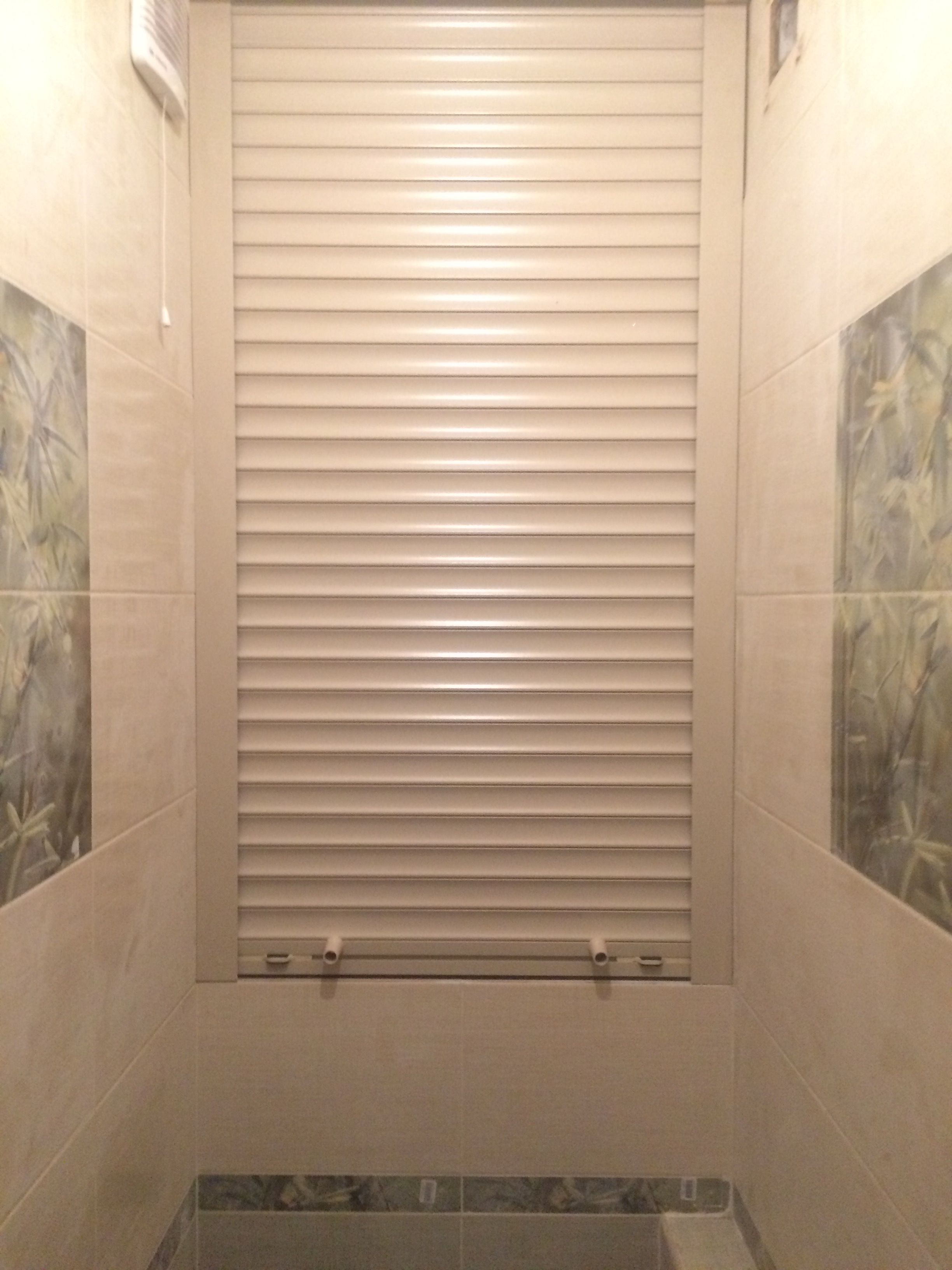
roller shutters
Plumbing shutters have become widespread relatively recently.They are a mobile structure consisting of a base frame and dozens of narrow panels, which, if necessary, are assembled into a roll, providing access to the pipes. Roller shutters for the toilet are made of materials that are not afraid of moisture. You can control this device using buttons or remotely using the remote control.
Blinds
An option for masking pipes in a bathroom, very similar to the previous one, is plumbing blinds. Roller shutters, in essence, are a later, modified type of blinds. The latter are much simpler - the design does not provide for a frame, and only mechanical control is possible. Blinds are made mainly of plastic, so they are moisture resistant, but not very durable.
improvised materials
You can also decorate unsightly plumbing and sewer pipes with the help of improvised means. What materials to use - depends only on your imagination. Here are some of the most interesting and easily implemented ideas:
- paint the pipes in a bright color or draw patterns on them;
- disguise pipes as trees, turning the toilet into a forest or jungle;
- wrap the pipes with twine or braid;
- use artificial plants for decoration;
- paste over the pipes with decorative stones;
- Decorate pipes with special stickers and stickers for home decor.



