- Selection, installation, connection of floor convectors
- Installation of floor convectors
- Selection Guide
- Types of water convectors
- Floor convectors
- Wall convectors
- Skirting convectors
- Floor convectors
- Ground convectors
- Manufacturers of floor convectors, prices
- The best underfloor heating convectors for 2020
- Water heating convectors
- Underfloor water heating convectors from Technoheat have:
- Control the weather at home
- Rating of the best floor convectors by operational and technical parameters
- Water radiator with natural circulation
- Floor radiator with forced convection
- Instrument selection rules
- The main characteristics of the convector
- Heating system pressure
- Choice of coolant option
Selection, installation, connection of floor convectors
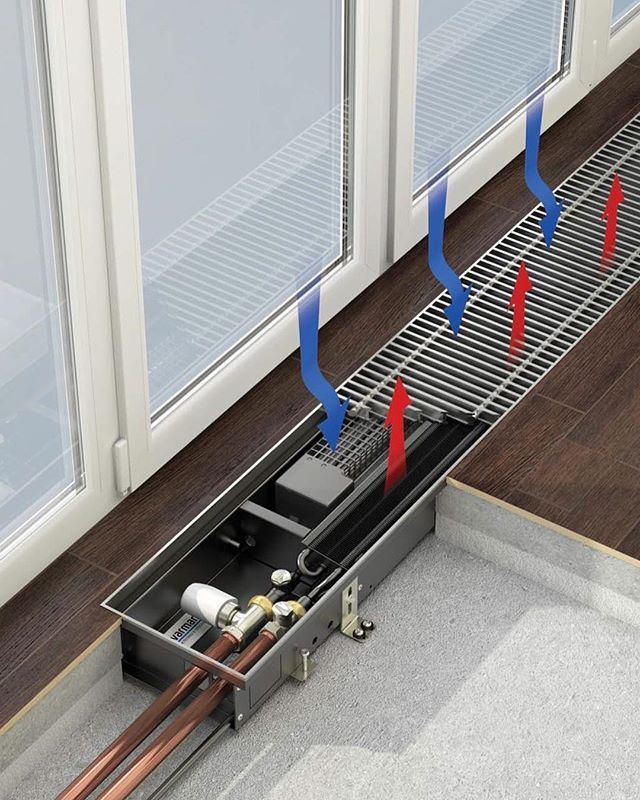
High window heating issue
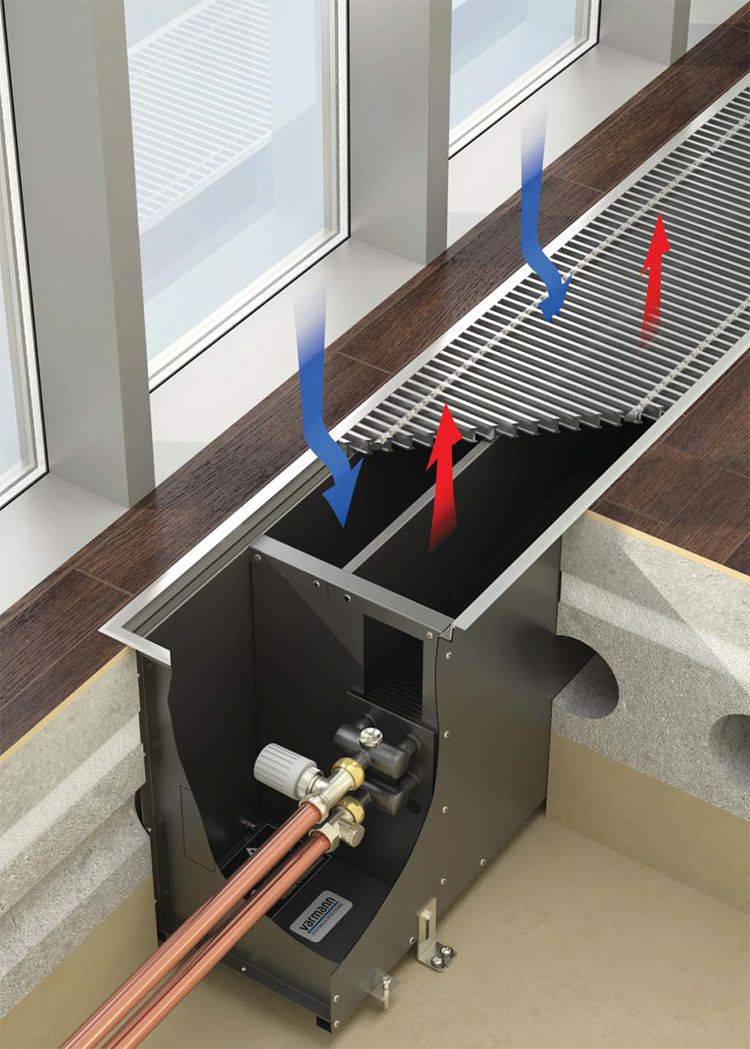
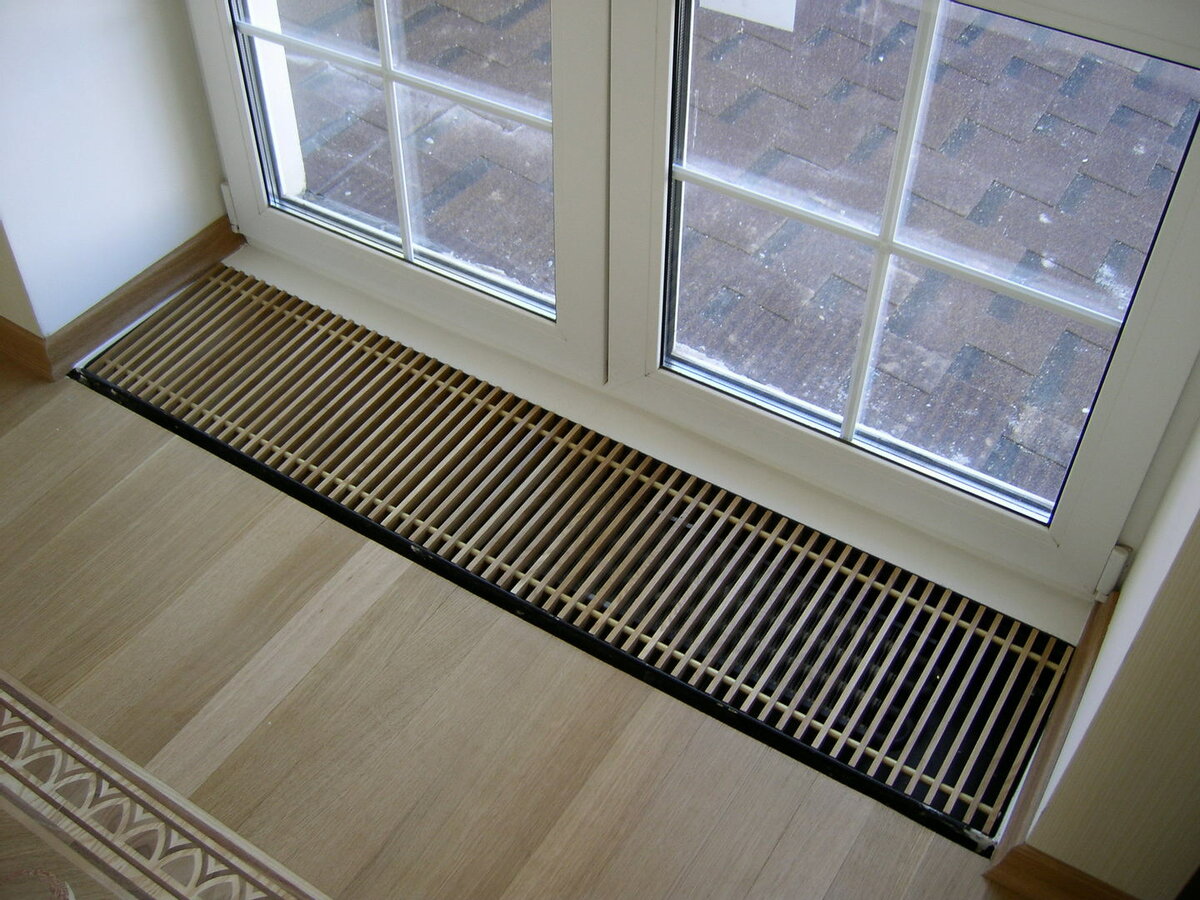
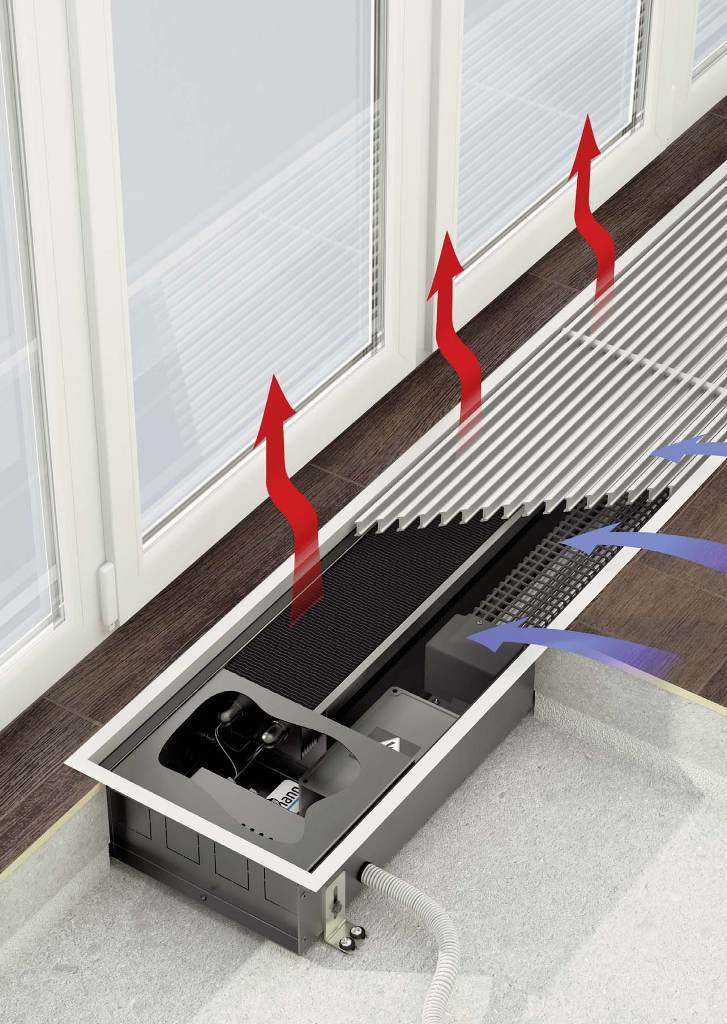
The problem of heating rooms with high windows, as well as rooms with external doors (near the door, the radiator is also not very happy) is solved with the help of floor convectors.
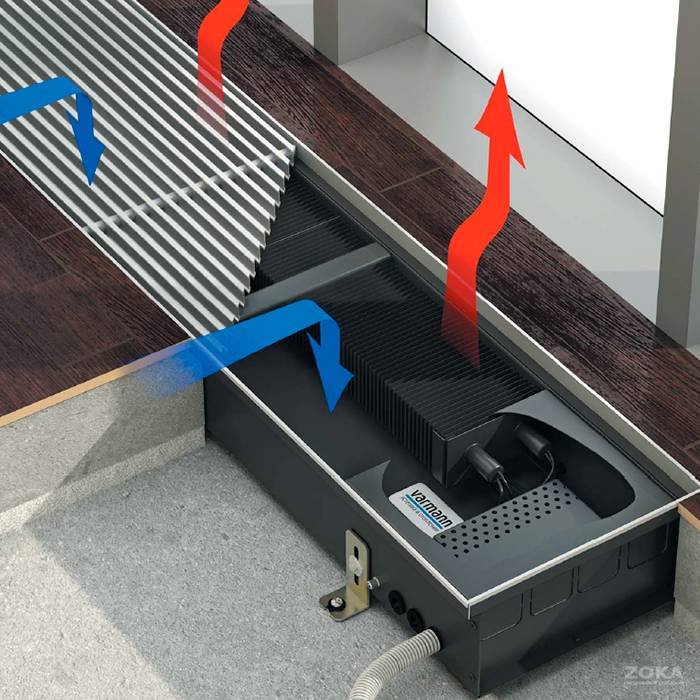
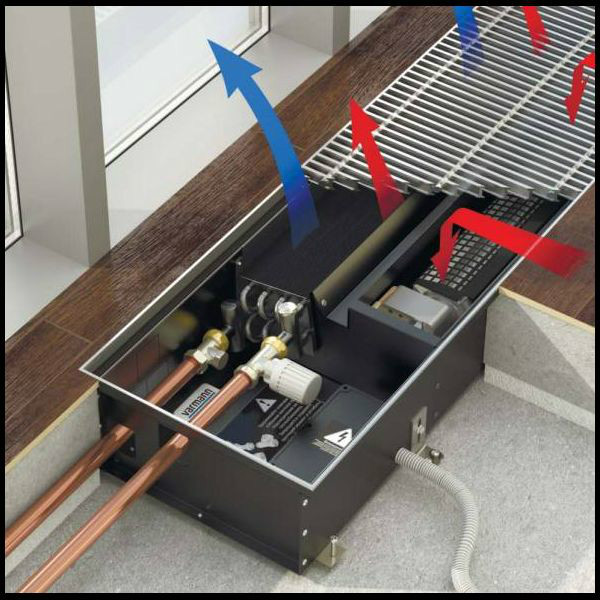
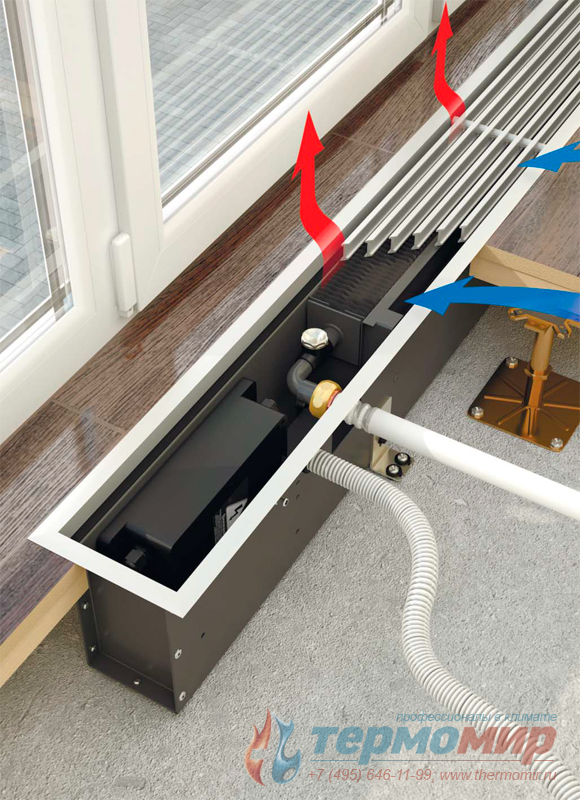
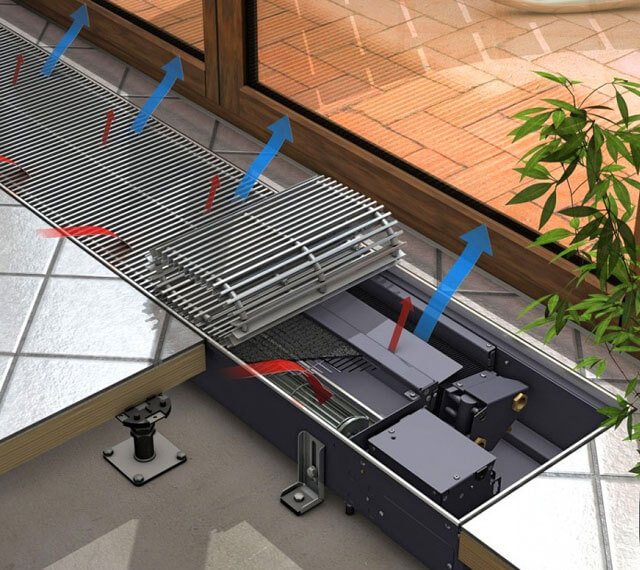
Therefore, near a high window, or at a door, a thermal curtain is formed.
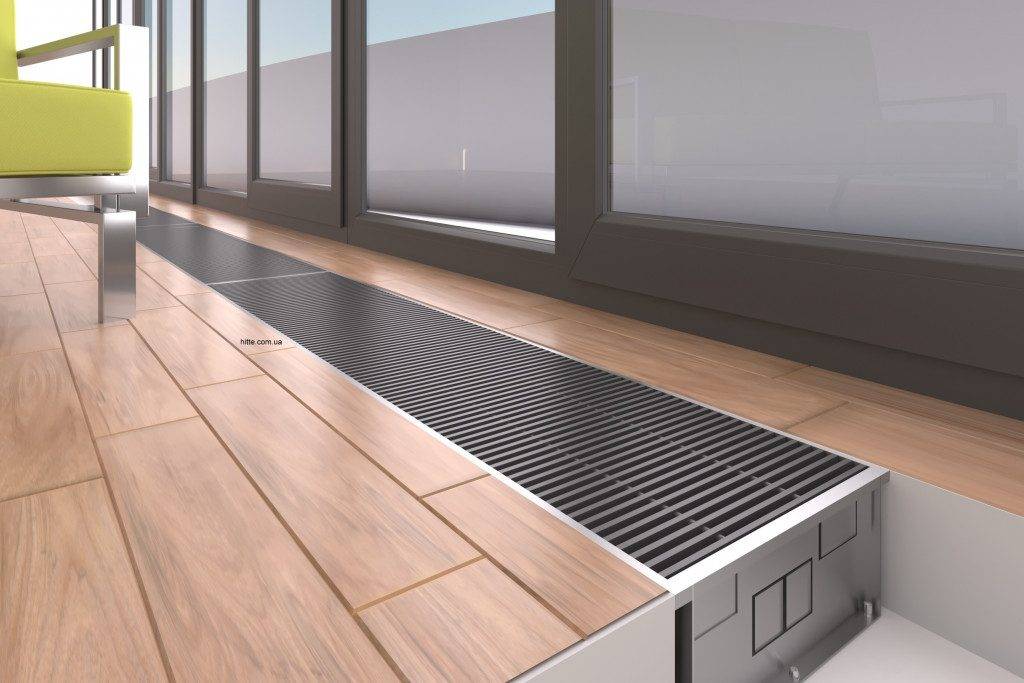
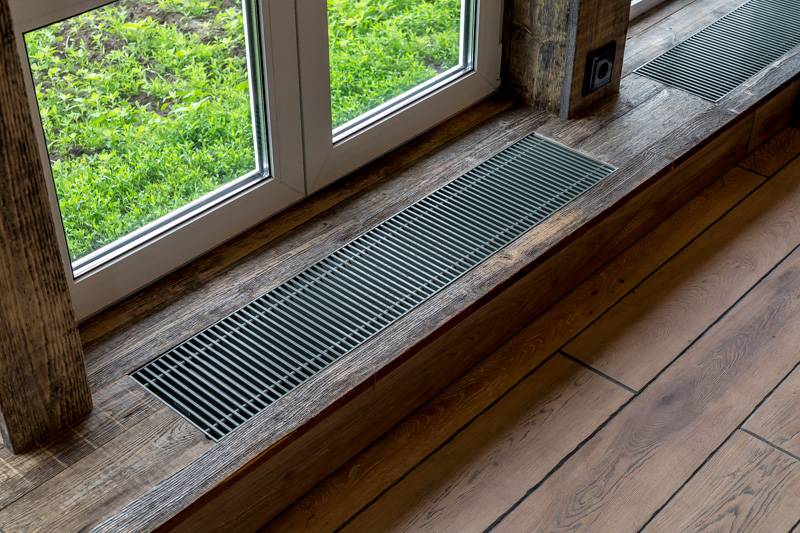
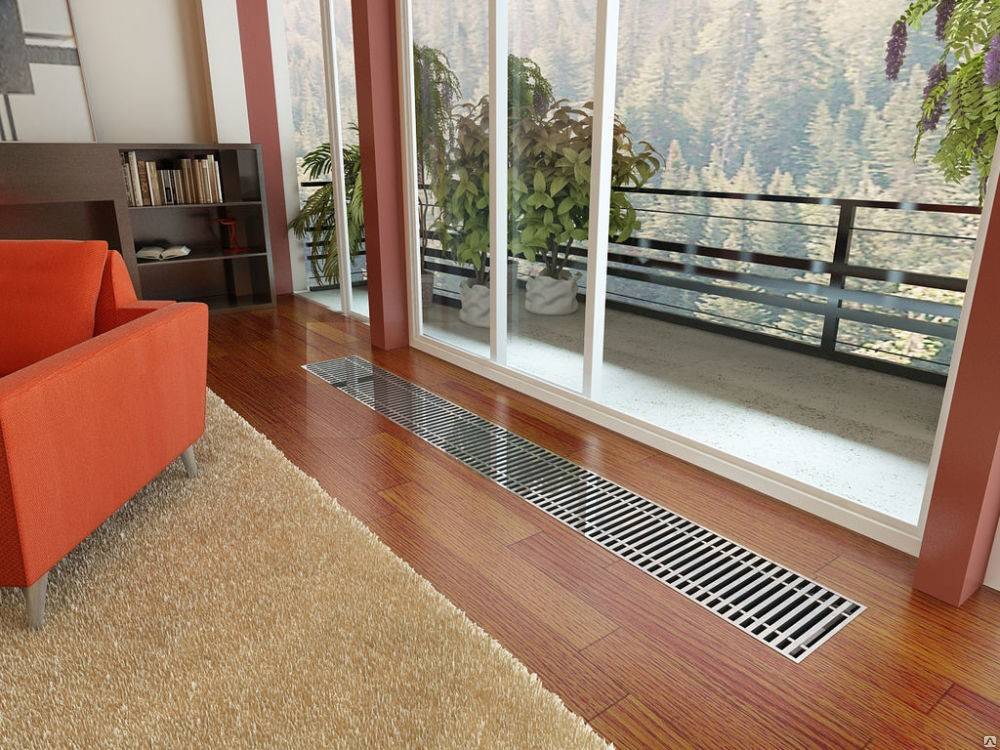
This solves the problem of the cold zone. And also the issue of design is removed (many people think that this is the main thing), - instead of pipes and radiators, an elegant narrow strip of grating appears on the walls in the floor under the window opening.
Features of heating with convectors
A conventional heating radiator directly heats the air in the room, and also transfers significant energy by thermal radiation. At the same time, the direction of air flow is rather multidirectional - up and to the side, the flow is reflected from the window sill deep into the room ...
Uneven heating of the room.
This is especially important for large rooms where powerful underfloor heaters are installed in accordance with the heat loss calculation. It can be especially cold in the opposite lower corner, where there is practically no air circulation. The main circulation flow is located in the immediate vicinity of the convectors.
The hottest air is concentrated at large windows, with thermal insulation qualities many times less than at the wall. As a result, increased heat leakage from the room. Also, the concentration of hot air near the ceiling leads to higher heat leakage through the ceiling.
A directed air jet is accompanied by a large dust flow. The sanitary condition and ecology are deteriorating.
The devices themselves are subject to rapid contamination, not practical - they require cleaning. Garbage falls through the grate. The often-finned heat exchanger becomes clogged with dust and requires special cleaning. Some operators talk about the need for annual dismantling and cleaning with a jet of water and detergent.
Installation is carried out during the arrangement of floors, it requires increased thermal insulation (as well as a warm floor). Installation in an already renovated room is often simply not possible - for example, there is not enough height of the subfloor. Or fraught with great difficulties.
But these shortcomings can be almost completely minimized - how ? - read on.
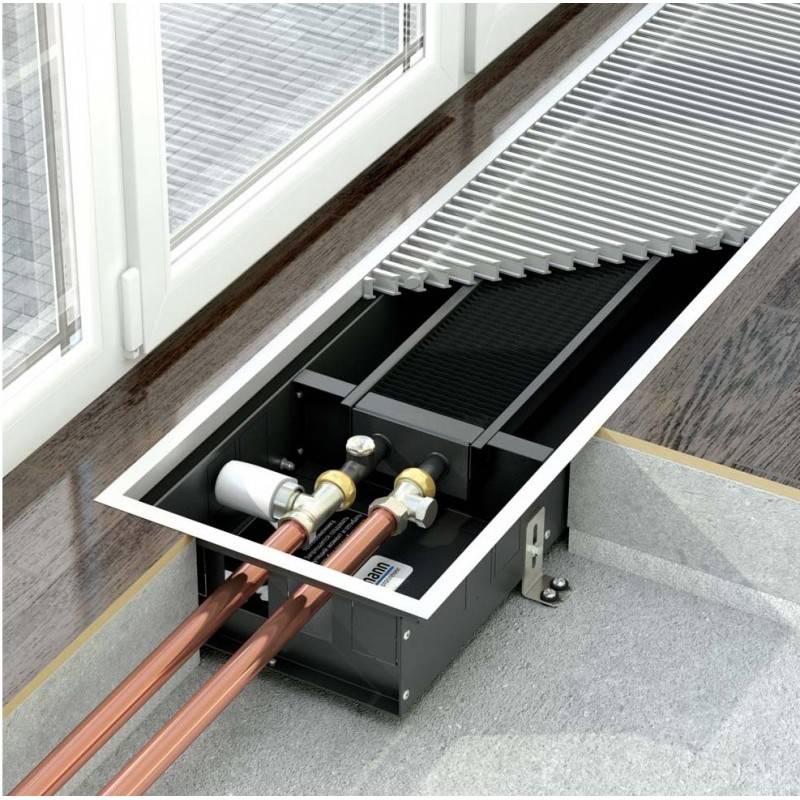
Construction of floor convectors
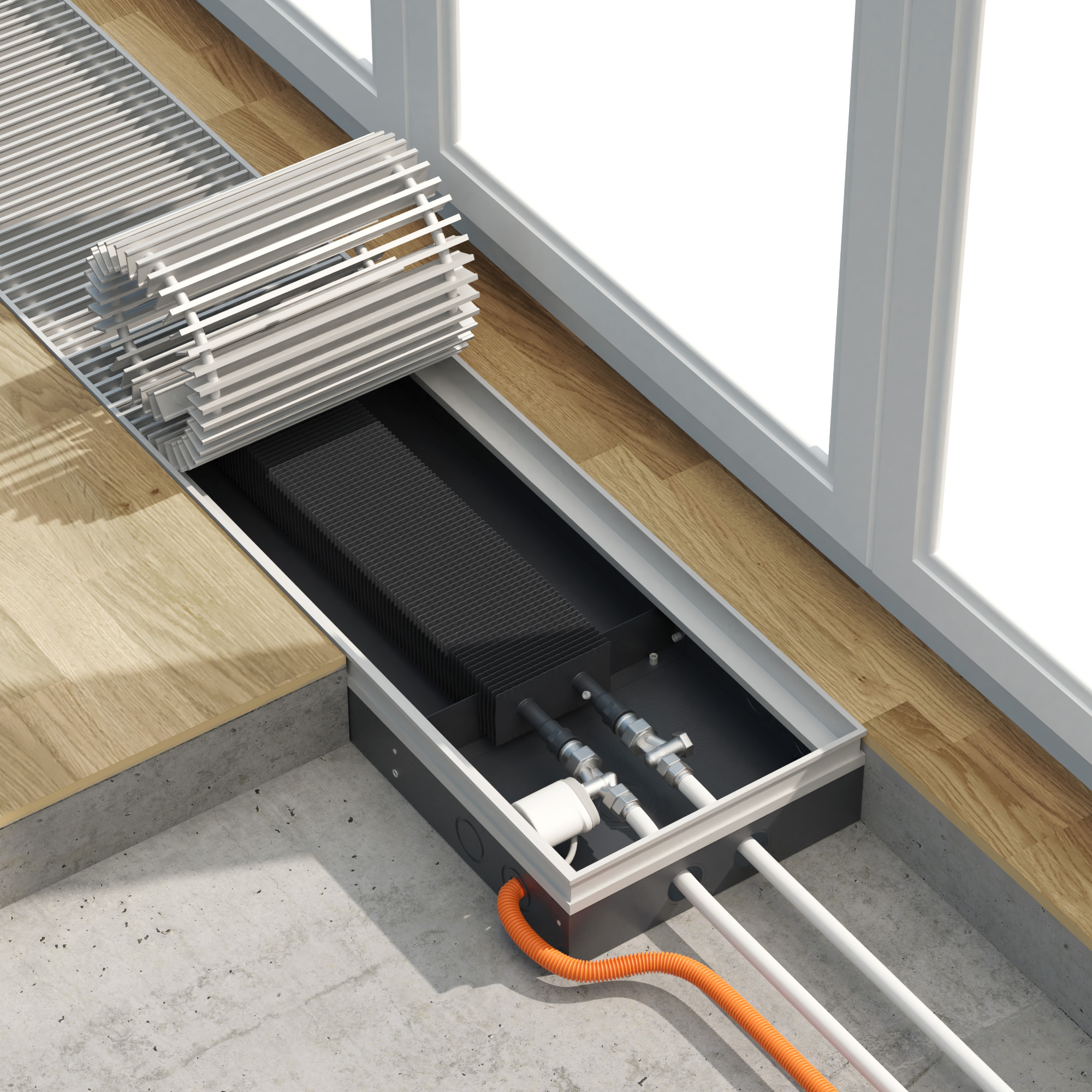
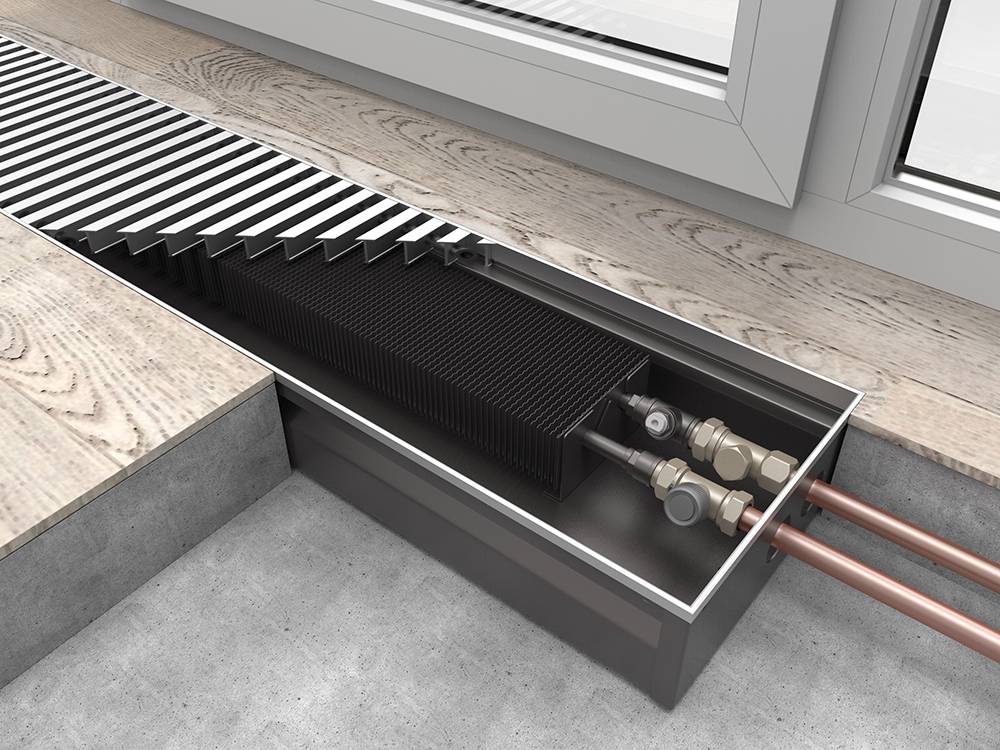
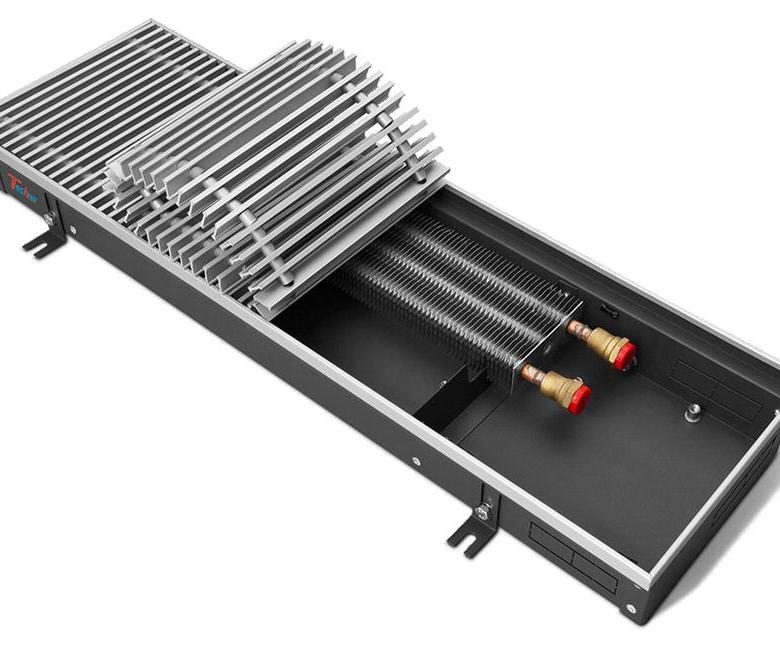
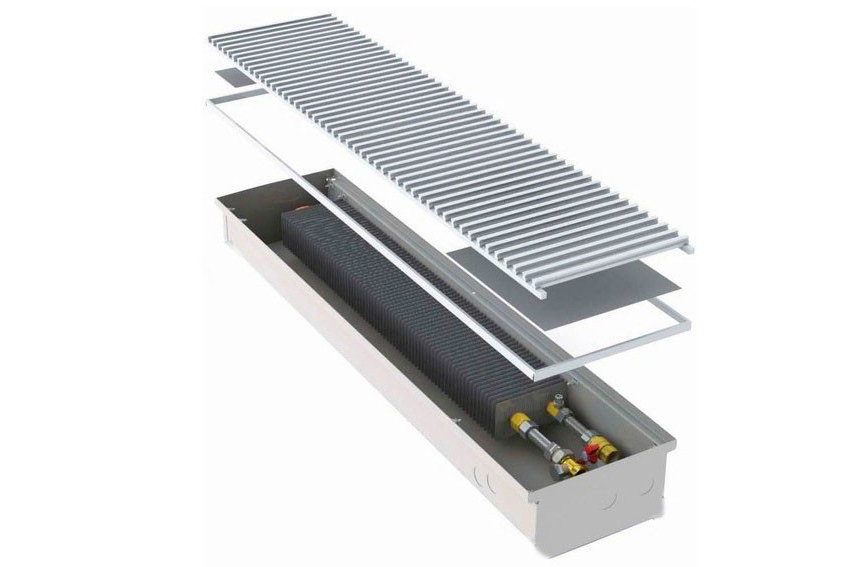
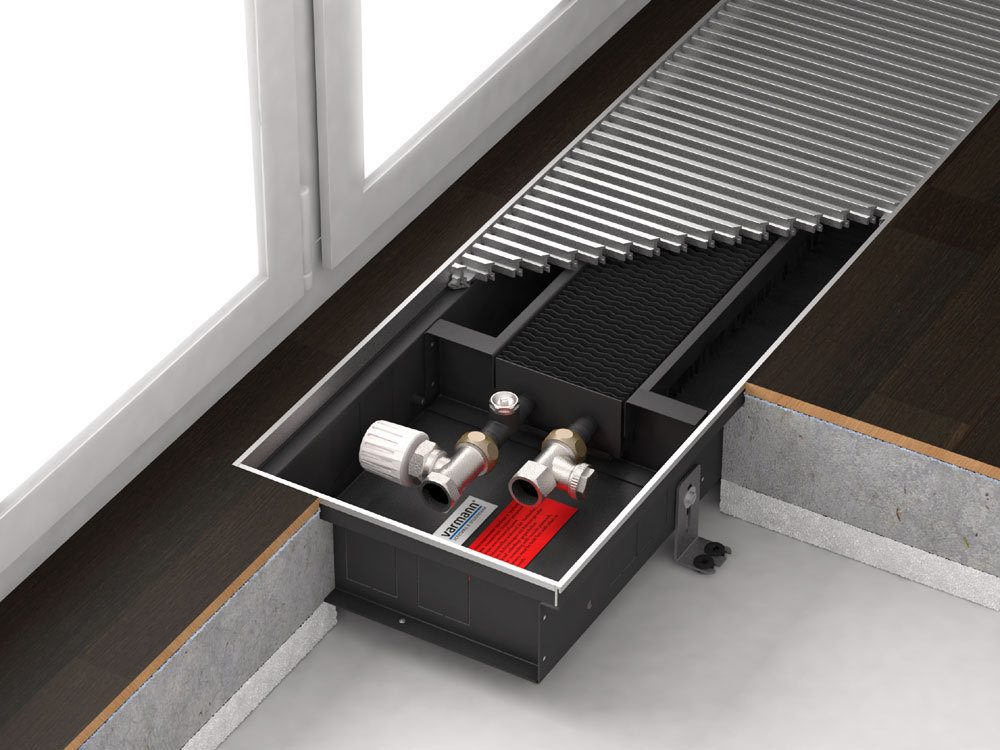
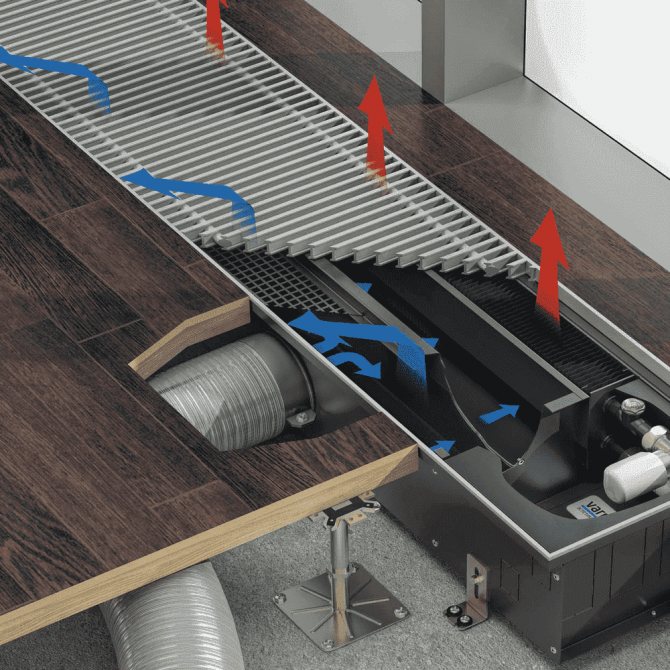
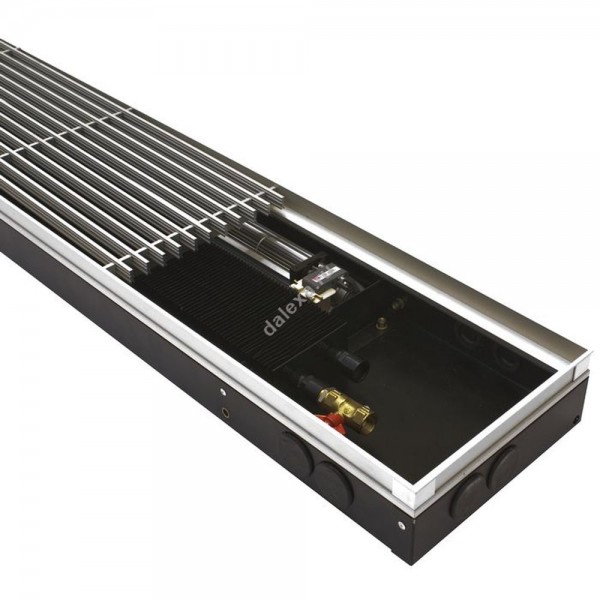
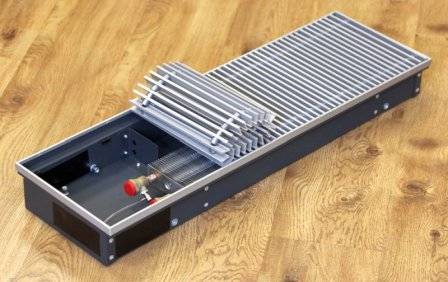
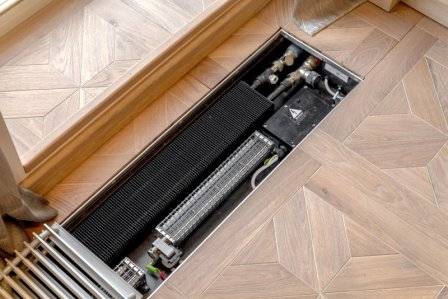
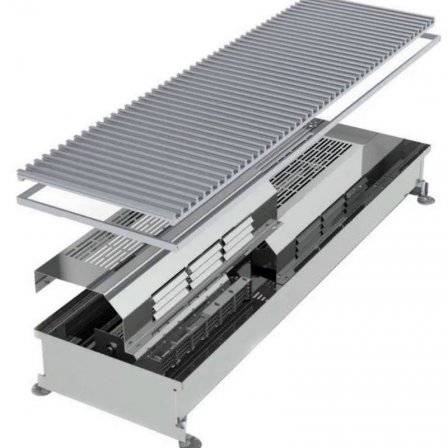
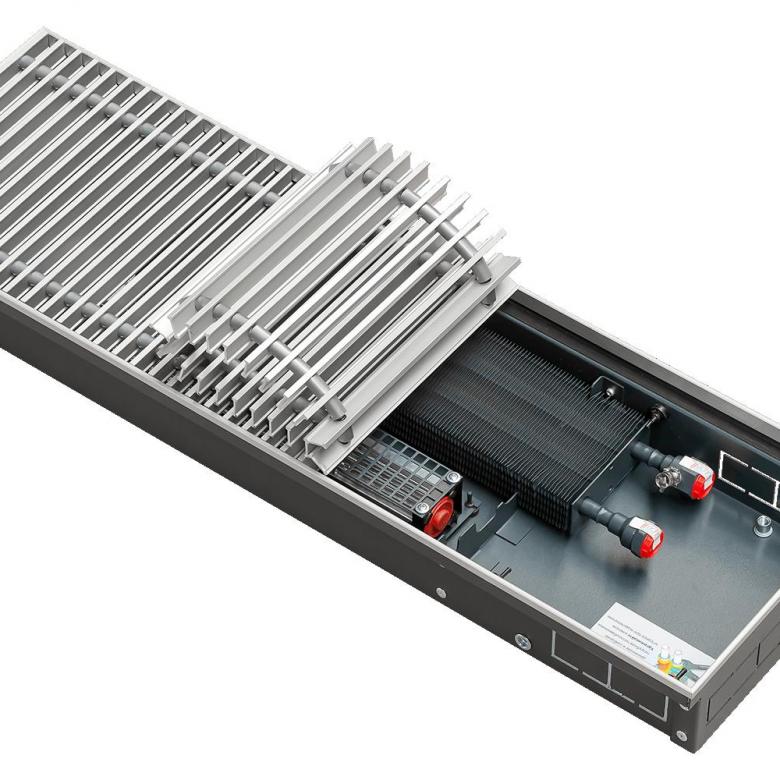
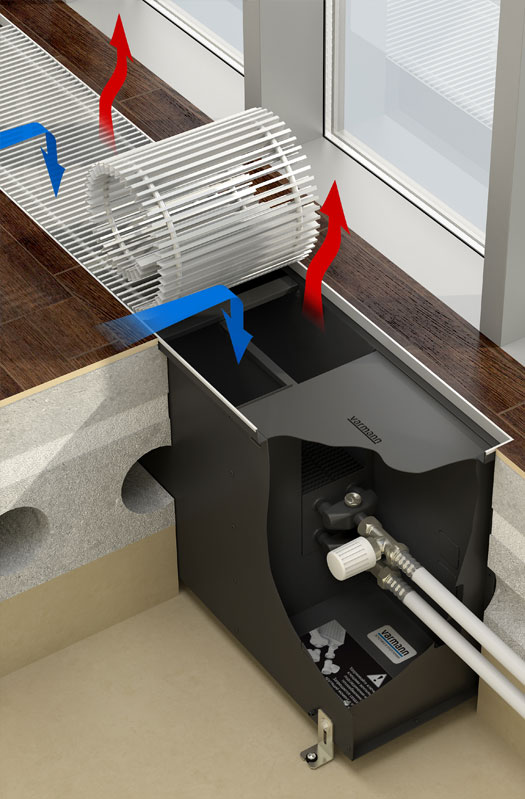
The basis of the floor convector is a heat exchanger. It is made in the form of a set of closely spaced metal plates fixed on a metal pipeline, from which heat is supplied.
At the ends of the pipeline - adapters for connecting shut-off and control valves.
How to install
The convector is installed on the base of the floor: rough screed, floor slab, logs, and hides inside the rough floor to its full height.
General installation scheme of a floor convector with floors on the ground.
The distance from the window to the body of the device is no more than 300 mm.
Connection
It is better if the convectors are connected by a pipeline with a reliable oxygen barrier made of aluminum foil, i.e. from metal-plastic.


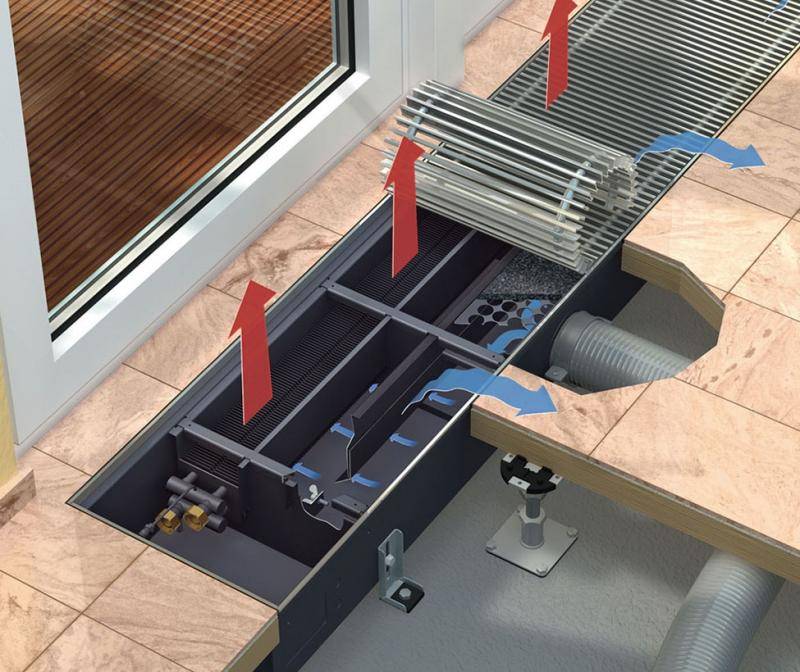
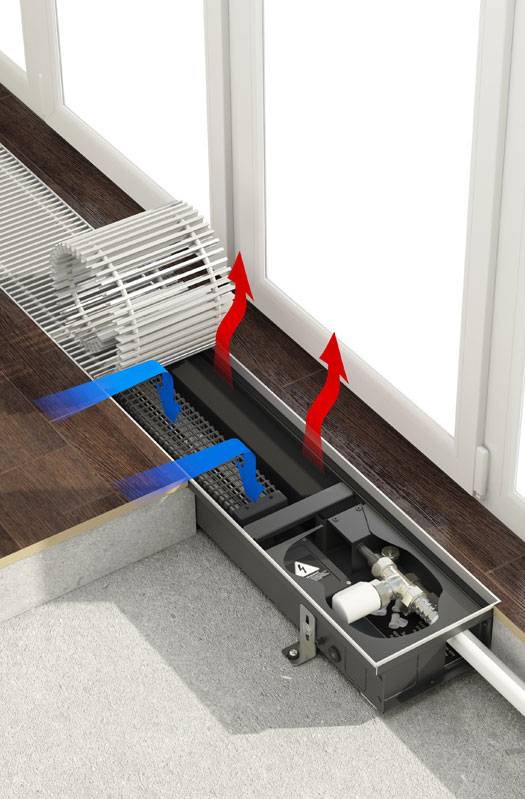
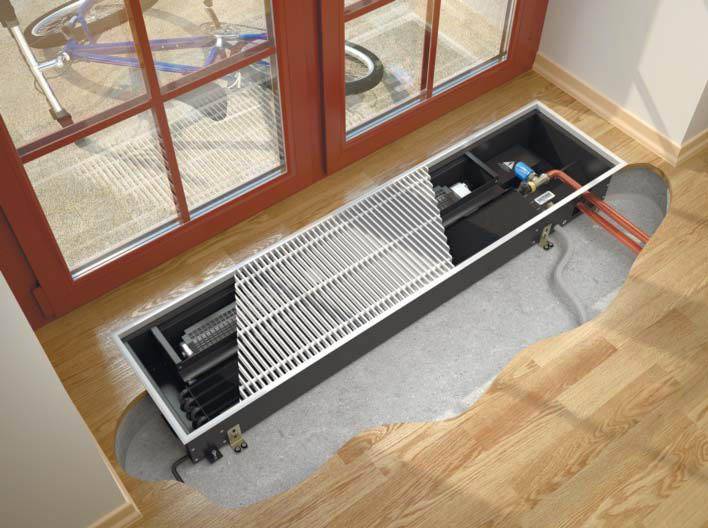

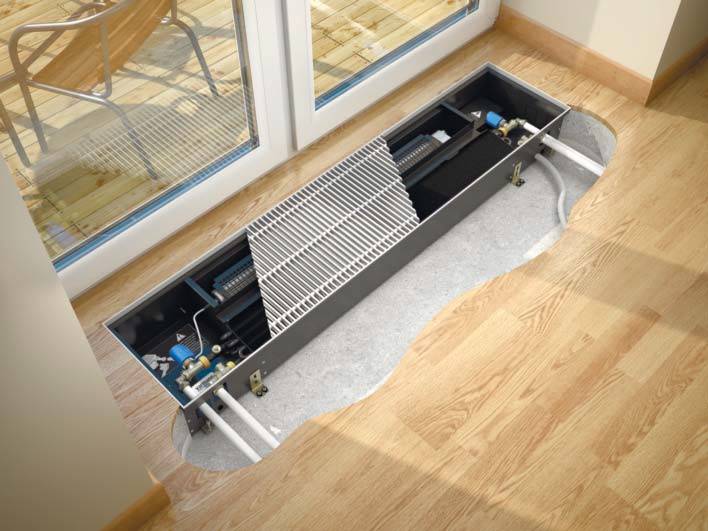

It is recommended to lay the pipeline for floor devices in a heat-insulating sheath in the form of felt, corrugated tube.
The pipeline diameter is 16 mm.
A pair - a thermostat - a servo drive is selected as a complete set.
Which water convector to choose and how to apply
In order to level the disadvantages of heating with convectors, it is advisable to install another heater in the room. Experts recommend using underfloor heating.
It is also useful to provide sufficient power with a lower temperature of the heater itself, in order to reduce the air flow rate while increasing its volume. Those. use wider and more powerful convectors that will provide the required energy with a lower coolant temperature.
Calculation of heating power “which never makes a mistake” - the total power of heating appliances at home - from 100 W per m2. area, with “decent” insulation (Moscow region).But then the amount is unevenly distributed over the rooms, depending on the length of the outer walls, the area of glazing.
In modern houses under construction, panoramic windows with heated floors and underfloor convectors are increasingly gaining popularity.
Installation of floor convectors
Whatever type of built-in convector you choose, its efficiency and durability will directly depend on the quality of installation. The installation process of floor models is quite complex and has a lot of features that should not be overlooked.
Installation includes the following steps:
- Arrangement of a niche for a convector. Its width and depth should exceed the similar parameters of the box by 10-15 mm - the gaps are necessary for the correct fit of the device. But at the same time, the convector should not be lower or higher than the level of the finished floor - an error of no more than 1 cm is allowed.
- Fixing the device in the finished niche with the help of screws and corners that are included with the model.
- Connecting the convector to the piping system using flexible hoses and stopcocks.
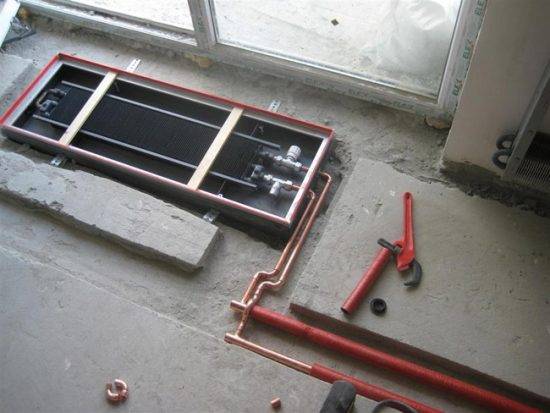 Installation of floor convector
- Laying insulation - in most cases, traditional polystyrene foam is used.
- Reinforcing and pouring screed.
- Finishing coat.
- Installation of a decorative lattice.
After installing the floor convector, it is important to ensure that it is properly maintained. A complete internal cleaning of the case is recommended to be carried out once or twice a month.
This procedure is not troublesome - you need to remove the grate and wipe the device from the inside with a damp cloth.
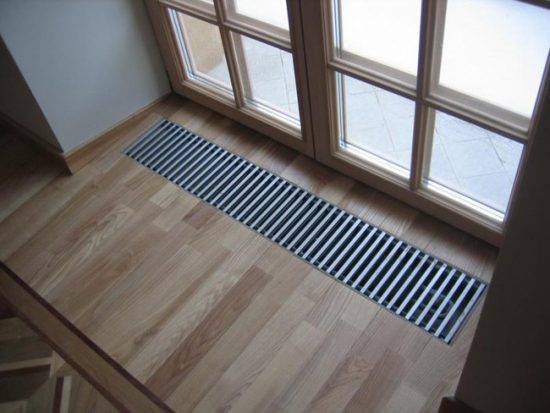 Decorative grille can be easily removed
As you can see, the underfloor water convector is an innovative version of the heating device, which in many ways surpasses conventional batteries and has a lot of advantages. But remember that this device will delight you with functionality only if you choose the right model for your needs and install it correctly. So do not neglect the above simple recommendations and rules - their observance is a guarantee of the comfort and coziness of your home.
Selection Guide
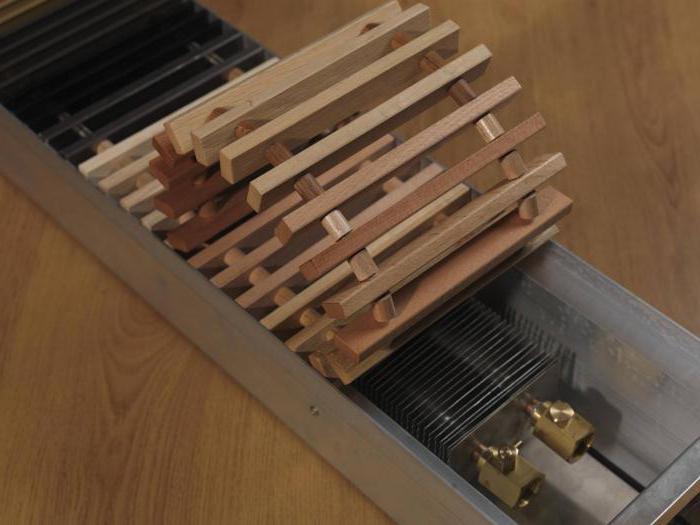
If you decide to purchase a floor convector, then you need to pay attention to the presence of a quality certificate. Such devices must be manufactured in accordance with GOST 20849-94
Among other things, it is important to pay attention to the appearance of the case, which should not have damage and dents, as well as scratches. These characteristics will indicate the low quality of the product.
Such designs must have non-ferrous metal in the device. It is able to provide high heat transfer, which is the main advantage of this equipment built into the floor. Otherwise, the desired effect will not be achieved.




Types of water convectors
Now we will talk about the most interesting - about the types of convector heaters on the water. On sale are:
- floor models - they are mounted on the floors;
- wall models - the most popular and common variety;
- plinth models - an innovation in the modern heating market;
- floor - devices for hidden installation in floors;
- plinth models - devices for embedding in walls, niches and even stairs.
Consider all types in more detail.
Floor convectors
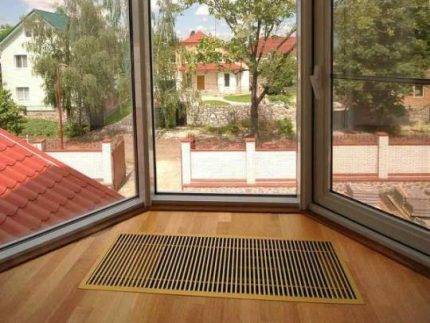
Floor convectors are often used in rooms with panoramic windows. In this case, pipes for supplying hot coolant are laid in the floor. Installation of heaters is reduced to their fixing and connection to the heating system. Using the lowest and most compact models, you can achieve an ideal view from the window and high-quality space heating.
Underfloor water heating convectors are considered as an ideal solution for cinemas, exhibition pavilions and other buildings with high floor-to-ceiling panoramic windows.
Wall convectors
Wall-mounted convector heaters on water are characterized by minimal thickness and compactness. In size, they resemble electric convectors or conventional batteries. High models are installed under ordinary window sills, and miniature varieties of small height are suitable for windows with low window sills. Due to their design, they provide efficient heating. In addition, they can be installed along blank walls.
Wall-mounted water convectors are used to heat premises for various purposes - these are ordinary living rooms, offices, industrial buildings, shopping malls, warehouses and much more. They do not clutter up the space and provide a soft and almost imperceptible circulation of heated air. For designer interiors, devices with decorative trim are produced.
Skirting convectors
Skirting heating convectors are a comparative innovation. They are miniature and designed for installation of baseboard heating. Their advantages:
- uniform heating of the air over the entire height of the room;
- extremely compact dimensions;
- high heating efficiency.
Despite their diminutiveness, floor heating devices warm up living spaces well, creating a comfortable atmosphere.
Floor convectors
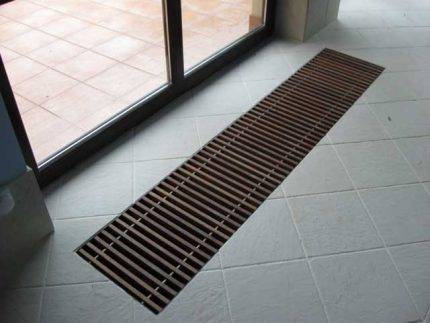
Underfloor water heating convectors will be a godsend for those who want to create the most hidden heating system. As their name implies, they are recessed directly into the floors, where special niches are created for them. Pipes are laid there, through which the coolant circulates. One floor water convector of a large width will provide high-quality heating and will not spoil the interior with its appearance - you can only guess about the presence of such a heater by a masking grate in the floor.
Where are floor water convectors used? They are indispensable for installation in rooms with panoramic windows - unlike low floor devices, they do not block the view from the windows, even partially. Being completely recessed into the floor, convector heaters do not interfere with the movement of people, so they can even be installed in doorways, creating a barrier to cold air flows.
Underfloor heating convectors are indispensable in interiors that are subject to increased requirements for finishing. These can be exhibition halls, concert halls, museums and other places where heaters sticking out of the floors or their wall-mounted counterparts would be inappropriate. They are also used to heat private houses - the absence of visible elements of heating systems allows you to create interesting interiors.
Ground convectors
Another novelty in the world of heating equipment is basement water convectors. They are relatives of floor devices, as they are designed for flush mounting.Their installation is carried out in small niches, in walls, in stair steps, in partitions between rooms. Basement convectors allow you to create an invisible heating system that is highly efficient. They will be an excellent choice for those who want to create an exclusive interior in which heating devices will not be found.
Basement heating convectors require connection to the electrical network. Electricity is needed here to rotate fans that create forced convection. In order to make them less noisy, manufacturers use low-noise fans. Thanks to this, they can work even at night without creating discomfort for the household.
Manufacturers of floor convectors, prices
On the Russian market there is a fairly wide selection of floor convectors. According to reviews, the following models of radiators are especially popular:
You can find the rules for replacing heating pipes in an apartment building here.
The price difference is very significant. You can find heat exchangers for 6 thousand rubles. Prices for branded products reach 60 thousand rubles. Naturally, the quality of materials also depends on the cost. The grille can be anodized with a coating that does not wear off over time. In expensive models, a more rigid trough. This extends the service life and simplifies installation of floor convectors.
The cost of the heat exchanger should also include additional costs for fittings for piping. It is likely that fasteners will also be required - in cheap models, fasteners are not feminine enough.We wrote about how to choose fittings for piping a radiator in a water heating system here.
The best underfloor heating convectors for 2020
When choosing a heater equipped with natural convection, it is preferable to pay attention to devices of domestic, Russian production. This is due to the fact that domestic manufacturers produce products of good build quality.
In addition, domestic heat exchangers are much cheaper than imported counterparts.
If you need a convector with a forced convention system, then it is best to opt for one of the European manufacturers. This is due to the fact that the technical characteristics of European devices with forced convention are much better compared to domestic counterparts. In addition, most European products have a good power reserve, they practically do not make noise during operation.


Water heating convectors
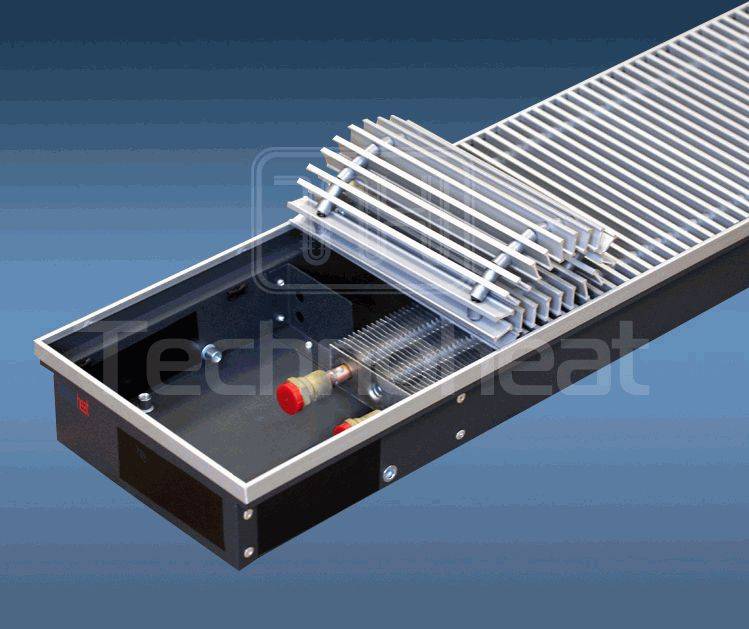
Width 200mm, 250mm, 350mm, 420mm.
Length 800 - 10000 mm.
Today, traditional heating devices are being replaced by new developments designed to provide a person with maximum comfort for minimal money. What is a water convector and what is their advantage over conventional radiator systems?
Water convectors are modern heating devices with high efficiency and ergonomic design. Can be used in autonomous and central heating systems.
Prices for floor heating water convectors from Technoheat
*Prices for water heating convectors built into the floor are indicated without a grate.
Water heating convector, built into the floor - one of the most popular today and the only one of its kind: it does not take up extra space in the room, it will look as intended by the designer, and you can install a water floor convector in a way that is convenient for the customer, and not "as you have to" .
Today, models from a domestic manufacturer are available. Technoheat is one of the industry leaders with a range of products designed and manufactured in-house. Our samples of floor water convectors are not inferior in quality to European counterparts, and in a number of technical characteristics they surpass Western specimens.
Underfloor water heating convectors from Technoheat have:
- universal housing, which allows you to embed the fan in the finished system;
- a wide range of models (various characteristics of heat transfer, options for overall dimensions, corner models of underfloor water heating convectors).
Advantages of water heating convectors built into the floor by Technoheat:
- Profitability. Significantly less energy is spent on space heating.
- Speed. The water convector in the floor heats up a large volume of air, which occurs in a short time due to the effect of forced convection.
- Aesthetics. A water heating convector built into the floor will perfectly fit into any interior.
Control the weather at home
A water convector in the floor is ideal for creating your own microclimate. Our design department has created unique temperature control schemes that allow you to set the automatic mode (there is a line of convectors with fans), or manually adjust the optimal heat transfer.
Trust the professionals
We carry out warranty service and replacement of parts as soon as possible and carry out qualified repairs of underfloor water convectors at a low price. Such conditions are possible due to the fact that the company produces everything necessary on its own equipment, and does not purchase from foreign manufacturers.
Convectors can be installed both in dry and wet rooms. To regulate the amount of heat, convectors can be equipped with manual or automatic control devices and integrated into the smart home automation system.
Price and quality
The quality of Technoheat floor convectors and their price are the pride of the company. The indicators are in the optimal ratio and are much more advantageous than the prices for underfloor water heating convectors of European production, taking into account their technical characteristics.
The entire model range and prices for water heating convectors built into the floor can be viewed in the catalog on our website or by making a request to send the price list to your mail.
Rating of the best floor convectors by operational and technical parameters
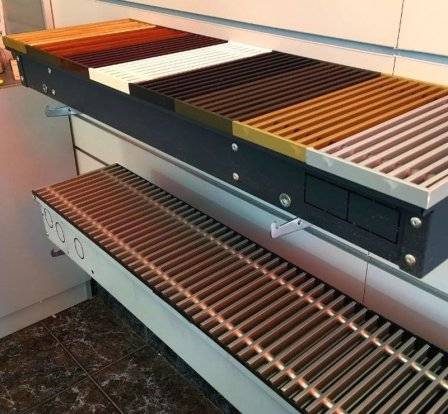
As already noted, water floor convectors are the most popular today. They are divided into two large groups - with forced and natural ventilation.
The difference between them is the presence of a special fan designed to increase the level of air convection in the room. Obviously, it is advisable to determine the best floor convectors for each of the types separately.
Water radiator with natural circulation
The heating system with natural circulation has a simpler design and, as a result, a slightly lower cost.
Among the large number of models of such equipment on the market, the products of four manufacturers stand out, producing the best floor convectors with natural circulation.
These include:
1. Techno heat. Deservedly considered one of the most popular brands of heating equipment in Russia. Among the main advantages of products manufactured under the Technoheat trademark is a combination of a high level of reliability and quality with an affordable cost and a variety of models. The most popular are water convectors KVZ, which are manufactured in several standard sizes.




2. Eva. A popular domestic manufacturer that has been successfully operating on the Russian market for a long time. It produces various types of convectors, including wall, floor and floor. Among the main advantages of the manufactured equipment is a reasonable price, which is complemented by good performance properties.
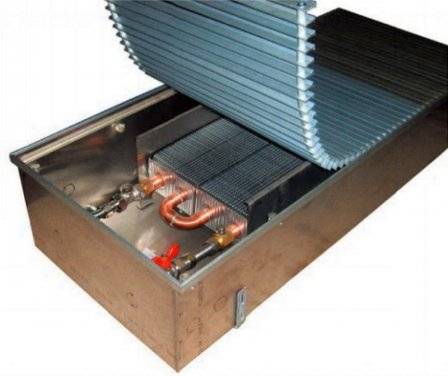
3. Kermi. The manufacturer from the Czech Republic is one of the most prominent participants in the Russian heating equipment market, producing a wide range of various radiators and other types of heating appliances. Floor convectors from Kermi are also in great demand, slightly yielding in some indicators to the products of the manufacturers listed above in this list.
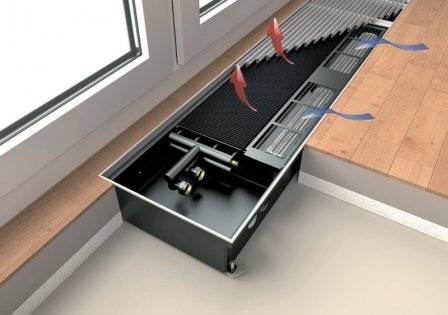
4. Mohlenhoff.The traditional and well-known German quality did not allow this brand to take a higher place in the ranking of the best floor convectors for one simple and quite logical reason - higher cost compared to competitors
At the same time, it is important to note that in most other parameters, Mohlenhoff products are not inferior to products from other manufacturers listed in the rating.
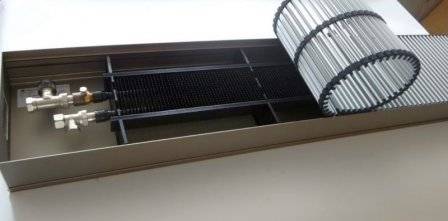
Floor radiator with forced convection
A heating system using floor-mounted forced convection radiators provides for the presence of one or more fans. Their number is determined by the size of the convector and the requirements for the performance of the system.
Such heating devices cost the owner of the building much more expensive, but they have increased heating efficiency parameters.
Among the most popular floor radiators with forced convection, it is necessary to highlight the products of the following companies:
1. Technoheat and Mohlenhoff. It is extremely difficult to single out the undisputed leader in this category of heating equipment. The fact is that the manufacturer from Germany occupies a leading position in the premium segment of floor convectors, while Technoheat dominates among relatively inexpensive and budget models. Among the latter, it is necessary to single out KVZV and KVZV-TX, which are in high demand in the domestic market.
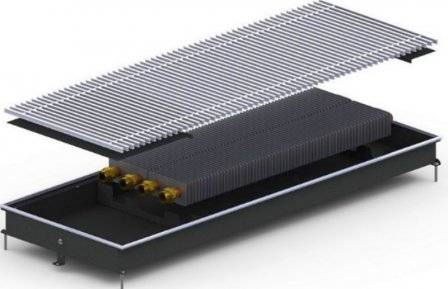
2. Breeze. A well-known Russian manufacturer whose products directly compete with the currently more popular Technoheat brand. Among the advantages of heating equipment from the Breeze company are variety, affordable cost and excellent product design.
3. Minib.Another manufacturer from the Czech Republic, whose trademark, along with Kermi, is one of the most recognizable floor convectors on the Russian market. The main advantages of Minib radiators include European quality and excellent performance parameters.
Instrument selection rules
When choosing an electric floor convector, the main thing is to evaluate the power and dimensions of the device. It is also desirable to determine the type of convection, which can be natural and forced.
The choice of water heaters built into the floor requires taking into account many parameters of the functional features of the device.
The main characteristics of the convector
Initially, you need to choose the size of the product, the presence of a fan, the material of the case, fins, pipes
In addition, special attention should be paid to other characteristics
Considering a built-in water-type convector as a device for home heating, you should decide on the manufacturer.
Domestic and foreign manufacturers offer heaters with a wide power range. By choosing this parameter correctly, you will ensure a comfortable room temperature.
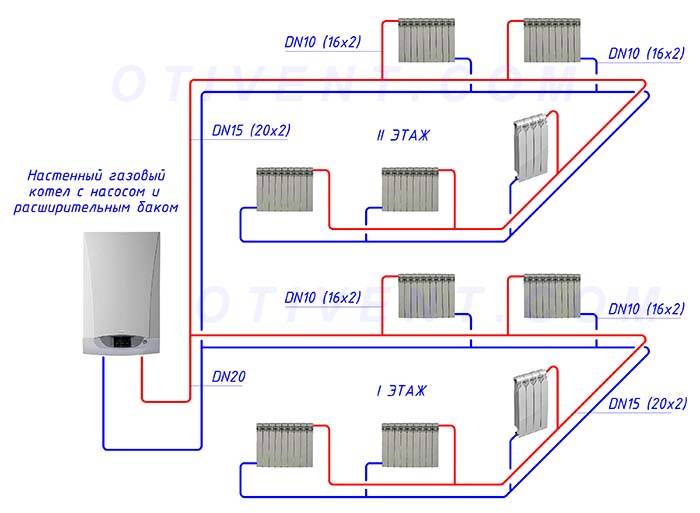
One of the most important characteristics of a convector is the type of heating system - one-pipe or two-pipe. Connection diameters are not among the primary selection criteria, as adapters are available.



Heating system pressure
This is one of the most important indicators of a water device. Any model is suitable for heating a private house, two-story and three-story cottage, since the pressure in the general heating system is usually not higher than 3 bar.
Usually, for installation in multi-storey buildings, it is recommended to install convectors built into the floor, the operating pressure of which is up to 15 bar
For apartments of high-rise buildings, it is necessary to take into account the pressing and working pressure. The operating organization should find out these indicators for your home, comparing them with the characteristics of the selected model.
Choice of coolant option
When choosing the optimal model of a floor convector, it is necessary to take into account the type and parameters of the device. Any model is suitable for individual heating, since the owner of the premises can independently set and control the temperature and characteristics of the coolant.
Residents of high-rise buildings will have to adapt to the conditions and indicators of water that flows in sewer pipes. In this case, the following factors should be taken into account: temperature, amount of suspensions, Ph, oxygen content, optimal type of device connection.