- Our recommendations
- Overview of brands and models of fan heaters
- Advantages and disadvantages
- How to choose the right fan heater
- Required power
- Heating element
- Operating modes
- Material
- Protection class
- Noise level
- Design, dimensions
- Additional functions
- How to choose a fan heater
- Fan heater selection criteria
- Power consumption of the device
- Heating element type
- Fan and heater modes
- Feature Comparison
- Product comparison: choose which model to choose and buy
- Heating element
- Spiral
- heating element
- Ceramic heater
- Water heat exchanger
- Table of technical characteristics and main criteria for choosing fan heaters
- Popular Models
- Hyundai H-FH9-05-UI9207 (400 W)
- Timberk TFH T15NTK (1400W)
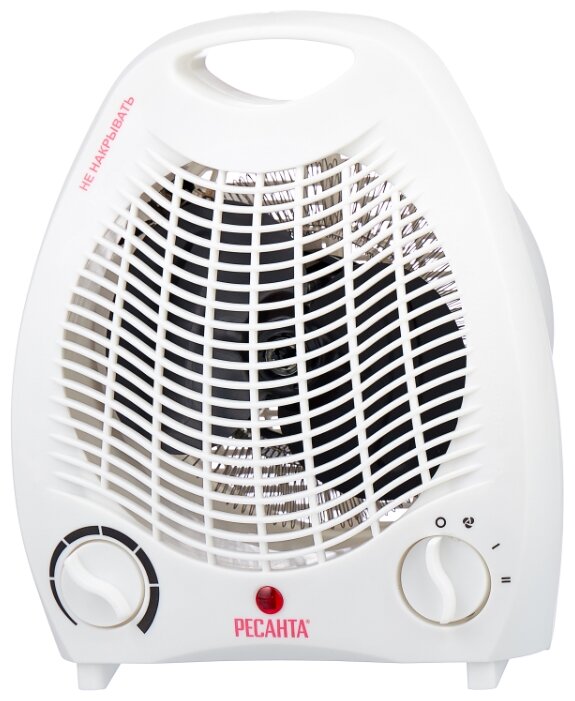
- RESANTA TVC-1 (2000 W)
- Timberk TFH S20SMX (2000 W)
- Polaris PCWH 2074D (2000 W)
- Types of fan heaters
- We determine the required power of the device
- How does a fan heater work
- How does a fan heater work and what is inside it
- What is a fan heater
- Conclusions and useful video on the topic
Our recommendations
As a result of this publication, we will try to briefly formulate the main criteria for choosing a good domestic fan heater.
As an additional source of heat, it is better to choose compact and low-power heaters with adjustable fan speed.
For the organization of the main heating system, choose a fan heater with a tangential fan that creates a minimum sound pressure. The power of the device must correspond to the area of \u200b\u200bthe heated room.
To maintain the optimal temperature in the children's room, a device with a power of 1 kW is enough
Pay attention to the equipment: plastic impact-resistant housing, thermostat, ceramic heating element; rollover protection.
To heat rooms with a high level of humidity, it is enough to purchase a fan heater in a moisture-proof housing. The power of the device is up to 1 kW.
To maintain the optimum temperature in a country house, pay attention to powerful floor models with frost protection and a thermostat.
Watch a video on how to choose a fan heater
Overview of brands and models of fan heaters
The Russian market offers a huge number of similar devices from different price categories. The best brands, by right, are considered
- Timberk - costing from 900 rubles, with spiral heating elements, floor or wall type,
- Ballu - the price of models from 650 rubles, in a plastic case, with 2 operating modes, a thermostat and an overheating protection element,
- Stadler fan heaters - with a ceramic heating element, two power levels - 2 and 1.2 V, with the option to turn off when dropped,
- Vitek or Rolsen, costing from 4,000 rubles, equipped with a control panel, an air flow rotation mechanism,
- wall fan heaters AEG, Timberk, Elektrolux, costing from 4,000 to 12,000 rubles, with ceramic heating elements, air flow heating control, overheating sensors and other useful options.
If preference is given to fan heaters with heating elements, then you should pay attention to models from the Russian manufacturer Teplomash, for example, fan heaters for heating large areas - from garage boxes to private houses with several floors. Their cost ranges from 4 to 6 thousand rubles, they serve for a long time, have high performance and differ from analogues in a low level of electricity consumption.
A fan heater is a device that should be in every house and in every apartment. In the conditions of the Russian climate, it can be useful not only in winter, but also in the off-season, when central heating is not yet turned on, and it is already frosty outside. And, if you choose its model correctly, the device will delight the owners for many years, and will not cause an increase in electricity costs.
Advantages and disadvantages
Like any household appliance, fan heaters have their pros and cons.
| Advantages | Flaws |
| Fast heating | Relatively high fan noise |
| High heat dissipation | Low power for normal room ventilation without heating, comparable to a low-power desktop fan |
| Small dimensions and weight | Models with wire nichrome burn oxygen |
| Easy to operate | An unpleasant odor may appear at the first application after a long period of inactivity - the dust burns off |
| Mobility (excluding stationary models) | |
| Can be installed in any room |
The power consumption of such devices is difficult to attribute to any category. if you take a separate fan heater and use it around the clock, it will “burn” a lot of electricity. There is no such heating device that would consume little electricity. All devices, whether it be a convector, an electric battery, a conventional heater or a split system, are very “gluttonous”.
How to choose the right fan heater
The criteria for choosing the best fan heater is simple:
- Manufacturer. An important role is played by the quality of the materials used and assembly.
- Heating power. It depends on it: what size room can the fan heater be able to heat? The most primitive calculation of the required value is 1 kW per 10 m² of the area of the serviced premises.
- Heater type. The main options are an electric spiral, heating elements and ceramic plates. Fan heaters with a nichrome spiral are cheaper, but less safe (depending on the version). Tubular heaters (TEH) can develop high power and are more relevant for heat guns used in unheated rooms, and not in everyday life. Ceramic heating elements are considered more reliable, safe and efficient, but they are also more expensive.
- Availability of additional features. There are many options: timer, thermostat, remote control, rotary housing, display, ionization mode and others. Which of them are really needed, and which are not especially, everyone determines for himself.
Required power
If the ceiling in the apartment has a height of up to 270 centimeters, then the power of the device is determined as follows: for every 10 meters of square area, 1 kilowatt is needed. However, you should not take it back to back - it is better to take a device with a power margin of 1.3, or even 1.5 times. This is especially useful in frosty winters.
Heating element
Of course, it is best to choose a fan heater that uses a glass-ceramic heating element. It will not burn dust either, exuding an unpleasant odor, and is much safer than other types of devices - with a spiral and with a heating element.
Operating modes
The number of operating modes of the heater should ideally be as large as possible. This is convenient - without using a thermostat, you can immediately set the desired temperature, necessary for a feeling of warmth and comfort. However, the maximum possible number of modes is three, in modern models more is not given.
Material
Materials for the manufacture of heat heaters are:
plastic
It is important to choose high-quality, heat-resistant, parts from which will not melt during the heating process.
metal. The most durable type of material that can withstand high temperatures.
The metal prevents the part from melting. It is less flammable. Budget options made of plastic can be prone to deformation and melting. There may be combined options that combine both materials.
Fans in devices are also made of metal or plastic.
Protection class
For electrical appliances, there is an international system that classifies them according to the degree of safety for humans during operation.
The IP rating consists of two numbers, one of which determines the degree of protection of the housing against dust and electric current. Where 0 indicates no protection, and 6 indicates complete protection.



The second digit of IP includes the protection against ingress of moisture, where 0 is not protected, and 8 is protected from exposure when completely immersed in water.
Noise level
Quiet operation is important for an electrical appliance, because. it is possible to work at night, during daytime rest, during the baby’s sleep hour, etc.
For comparison, human speech reaches a level of 45 - 50 dB.
To the sanitary norms of the permissible noise level for household appliances intended for round-the-clock operation, which do not have a negative effect on the body, this is 40 - 55 dB.
Design, dimensions
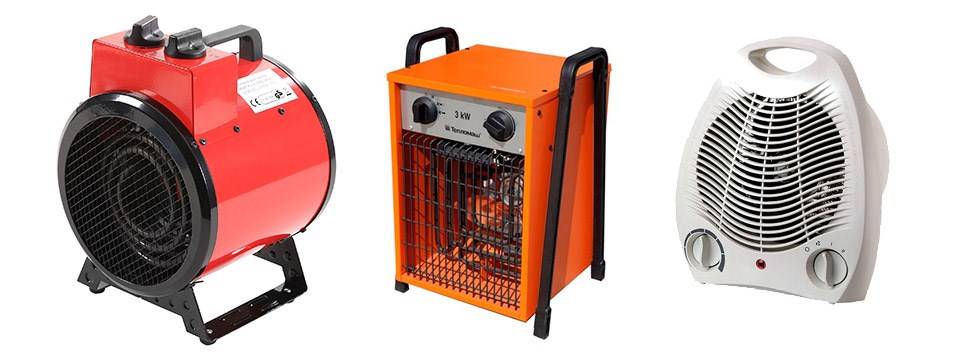
In appearance, "wind blowers" can be:
- rectangular - the most stable, safe.
- cylindrical - used in gun models, production version, convenient for changing the angle of air flow.
- design - various forms.
The dimensions of the heaters are different, depending on the required heating area:
- larger models are placed on production areas;
- in everyday life, devices with smaller sizes and a pleasant design are used.
Additional functions
It is very good if the fan heater has the following functions and devices:
- The rotating base will allow warm air to reach all the far corners of the room;
- A fan that makes little noise - ideally - tangential;
- Shutdown sensors that are triggered by tipping over and overheating of the device;
- Thermostat;
- The ability to maintain a temperature of plus 5 degrees, almost without consuming energy (antifreeze or antifreeze function);
- Splash-proof housing (useful in the bathroom);
- Humidifier and filter to maintain a healthy microclimate;
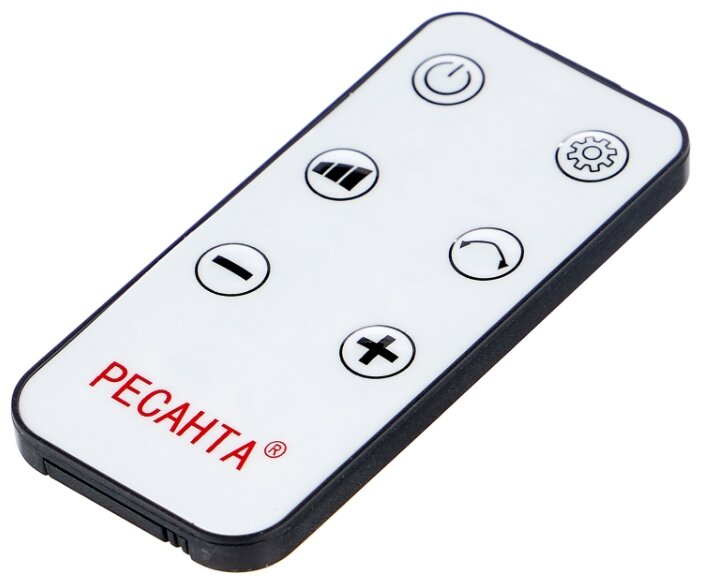
- Remote Control.
How to choose a fan heater
When choosing a fan heater, you need to pay attention to a number of key parameters:
Type of heating element. The cheapest is a nichrome spiral. It heats up to 1000 degrees, but dries the air and burns the dust that has settled on it.A tube with a graphite rod and quartz sand as a filler heats up to 500 degrees and lasts longer due to the even distribution of heat. The most expensive type is ceramic panel. It heats up to only 150 degrees, but quickly gives off heat to the room due to the increased area. Does not burn dust and is much safer than other types.
Power. Varies from 1 to 10 kW depending on the purpose (domestic or industrial). When choosing, you need to take into account the area of \u200b\u200bthe heated room - with ceilings 250-270 cm will require 1 kW per every 10 m2. But it is better to take with a small margin, because there will be heat loss on windows, doors, as well as other factors that affect the initial temperature in the room.
Fan type and material
This is the second most important element in the design of the heater. Models made of plastic are cheaper, and those made of metal are more expensive, but they better tolerate being near the heater and do not deform
Axial fans are compact but noisier. Tangential ones are quieter, but take up more space, which leads to an increase in the dimensions of the case.
Control method. The simplest is mechanical. There is a thermal relay that limits the heating of the heating element and an adjustable fan speed. The electronic type of control works with increased accuracy, maintaining the set temperature and storing the entered settings in memory.
Additional functions. Depending on the configuration, the air conditioning equipment is equipped with additional functions that increase comfort and safety. Among them there is the possibility of self-rotation of the body, contributing to a better distribution of hot air, anti-freeze, humidifier, inlet filter, remote control, shutdown when falling and overheating, etc.
Fan heater selection criteria
Choosing a fan heater is not an easy task. The product range is large, and prices for similar models may vary significantly
Next, we will consider what characteristics of the heater to pay attention to when buying, in order to choose the most useful model and not overpay for unnecessary functions.
The main factors that determine the choice of a fan heater are:
- power consumption;
- type of heating element;
- availability of additional functions;
- operating modes.
The influence of each of these factors on the choice of a heater should be considered in more detail.
Power consumption of the device
Only 10-12% of fan heaters offered on the market have a power of less than 2 kW, but they also have their customers. Heaters with a power of 1-1.5 kW are recommended to be purchased in such cases:
- The house has old aluminum wiring that can catch fire from high loads.
- Simultaneous switching on of 2-3 fan heaters in one room or apartment is required.
- The size of the heated room does not exceed 10 sq.m.
- The appliance will be used for supplementary heating to the existing heating system.
The minimum power of the fan heater is calculated based on the norm of 1 kW per 25 cubic meters. premises. It must be remembered that ordinary sockets are designed for a maximum current of 16A, which corresponds to an equipment power of 3.5 kW. Therefore, heaters with a consumption of more than 3 kW cannot be used for a long time at home.
Heating element type
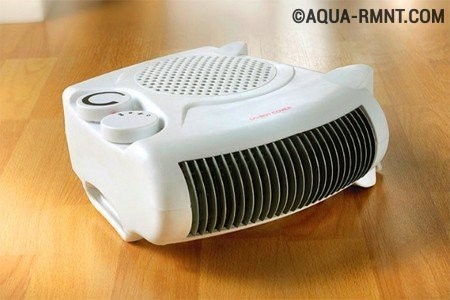
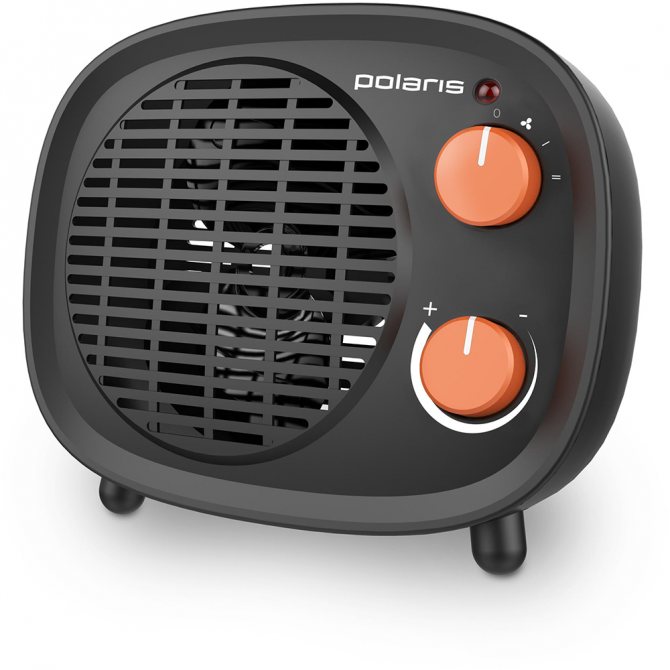
The most common are fan heaters with heating elements in the form of a heating element, a spiral and a ceramic grid.
Budget models of heaters are equipped with a nichrome spiral. You can choose such a heater in such cases:
- There is no financial opportunity to buy a more expensive model.
- The device will always be in the field of view.
- The use of the heater will not be around the clock.
- Fan noise is not critical.
Cheap fan heaters with a nichrome spiral are quite flammable, so you need to buy them only under the listed conditions.
The best option for a heater is a device with a ceramic heating element. They are 20-50% more expensive than spiral ones, but they have a number of advantages:
- They have high fire safety.
- Can be operated around the clock.
- Durable.
- Do not burn airborne dust.
Fan heaters with a heating element heater are in practicality between spiral and ceramic ones. You can choose them if you have good additional functionality and an acceptable price.





Fan and heater modes
The number of modes of operation of the fan heater directly affects its resource and efficiency. Typically, heaters have three schemes for regulating their work:
- changing the fan speed;
- temperature control of the heating element;
- automatic maintenance of the set temperature in the room, by periodically turning the device on and off.
These parameters can be changed by discrete or smooth movement of the adjusting knob. A more precise setting allows you to create the desired temperature in the room without spending extra electricity. Some models have a built-in timer that allows you to heat the room just before the person arrives.
The power regulation mechanism on budget fan heaters is identical, so if it breaks down, you can replace the part at any service center
The presence of additional functions in a fan heater is an undeniable advantage, therefore, within the existing budget, it is recommended to buy a heater with the maximum number of them. But first you need to assess the real need for additional equipment.
Feature Comparison
You can compare the types of heaters in several ways at once:
- Ergonomics. On this basis, ceramic fan heaters definitely win. To date, a wide variety of models are presented on the market, so it is possible to purchase a device to your taste. At the same time, spiral devices do not differ in a rich assortment and, most importantly, in convenient compact dimensions.
- The maximum temperature of the heating element. The wire heats up faster and several times stronger than ceramics. This fact indicates the possible fire hazard of spiral fan heaters and the relative safety of ceramic ones. If the device is accidentally dropped (in the absence of shutdown sensors), the latter are less likely to cause a fire. Also, do not forget that the porous structure of the ceramic plate allows you to retain heat longer, which contributes to its soft distribution throughout the room.
- Ease of use. Metal at a high temperature literally attracts dust and other small particles suspended in the air. Because of this, during the operation of the spiral device, the room is quickly filled with unpleasant odors. Ceramics does not create such problems.
- Price. All the above advantages cause the high cost of ceramic thermal fans. Against their background, spiral ones look like a more budget option.
Product comparison: choose which model to choose and buy
| Product Name | |||||||||||
 |  | 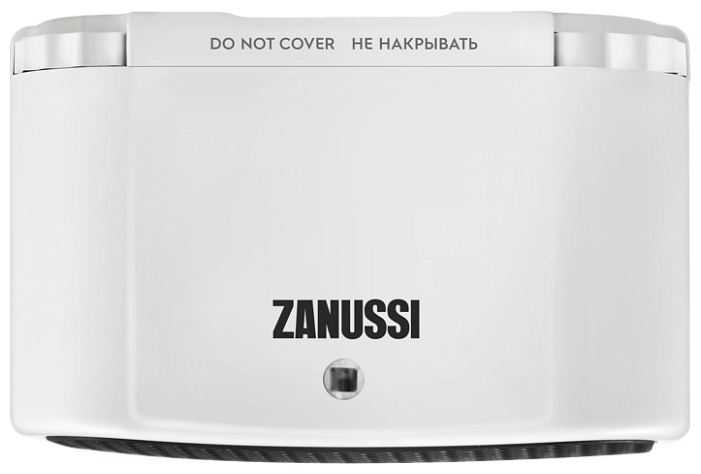 | 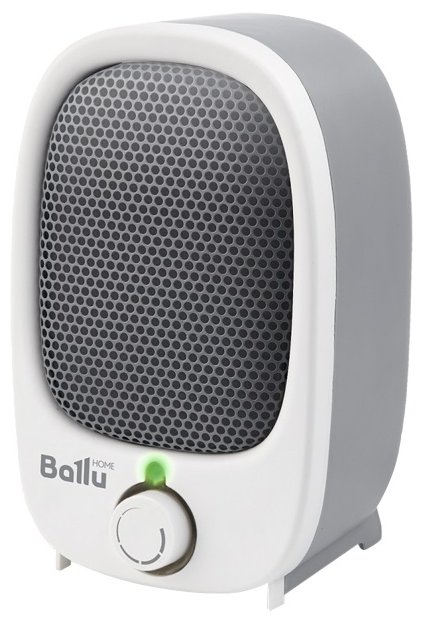 | 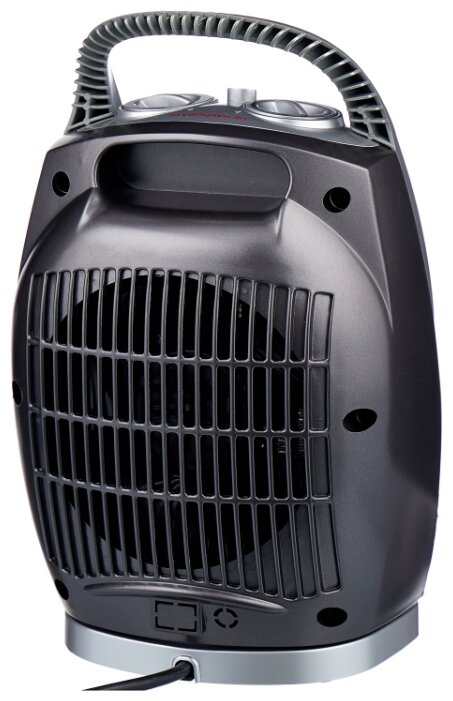 | 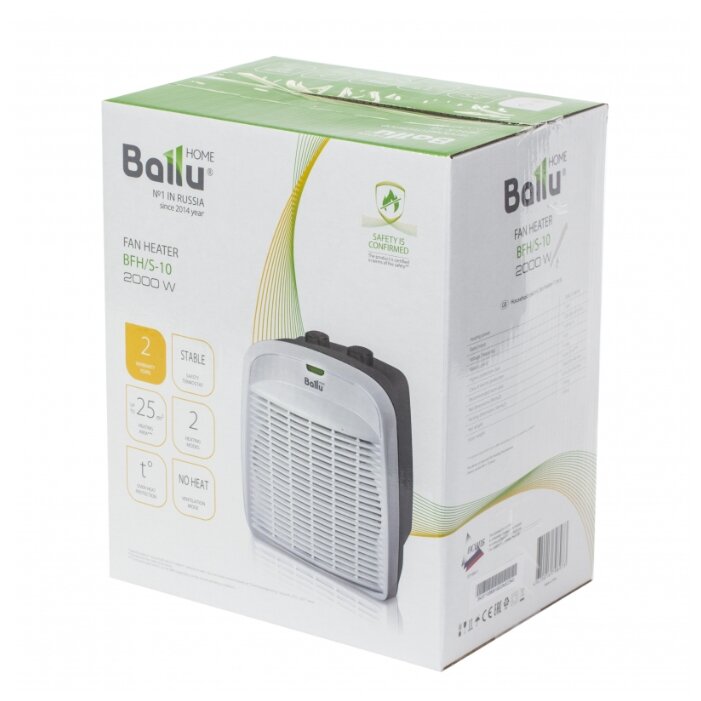 | 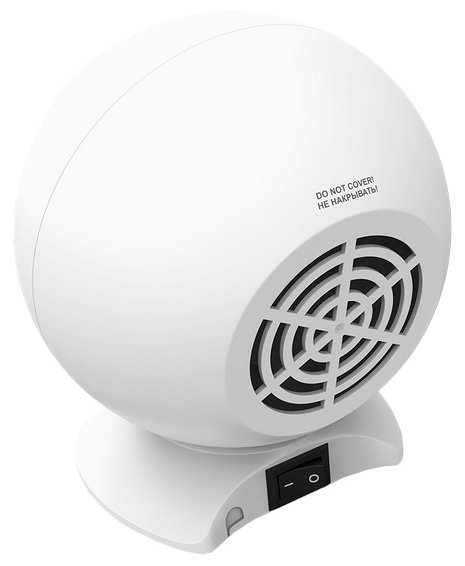 |  | 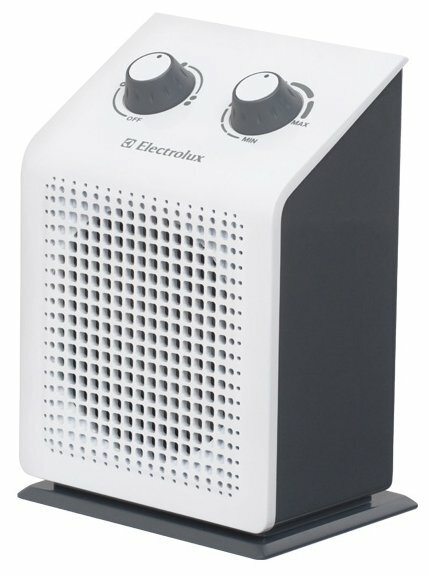 | 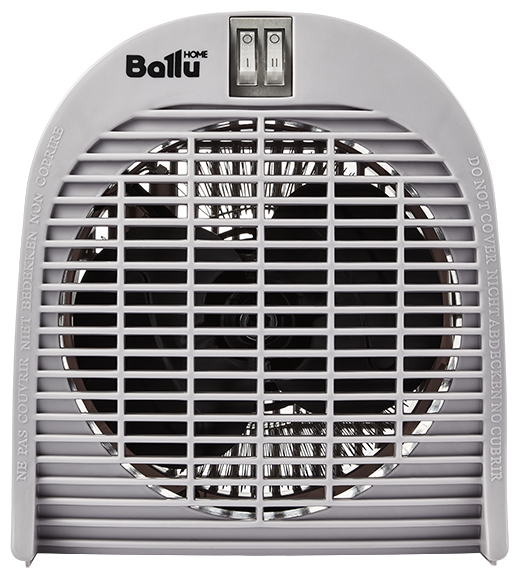 |  | |
| average price | 740 rub. | 1588 rub. | 1590 rub. | 650 rub. | 1445 rub. | 949 rub. | 751 rub. | 1426 rub. | 1341 rub. | 750 rub. | 4200 rub. |
| Rating | |||||||||||
| Type of | fan heater | fan heater | fan heater | fan heater | fan heater | fan heater | fan heater | fan heater | fan heater | fan heater | fan heater |
| Power regulation | there is | there is | there is | there is | there is | there is | there is | there is | there is | ||
| Maximum heating area | 20 sq.m | 15 sq.m | 20 sq.m | 14 sq.m | 18 sq.m | 25 sq.m | 8 sq.m | 16 sq.m | 20 sq.m | 20 sq.m | |
| Voltage | 220/230 V | 220/230 V | 220/230 V | 220/230 V | 220/230 V | 220/240 V | 220/230 V | 220/230 V | 220/230 V | 220/240V | 220/230 V |
| Number of operating modes | 2 | 2 | 1 | 2 | 2 | 1 | 2 | 2 | 1 | 1 | |
| Thermostat | there is | there is | there is | there is | there is | there is | there is | there is | there is | there is | |
| Control | mechanical, temperature control, switch with indicator light | mechanical, switch with light indicator | mechanical, temperature control | mechanical, switch with light indicator | mechanical, temperature control, switch with indicator light | mechanical, temperature control | mechanical | mechanical, temperature control, switch with indicator light | mechanical, temperature control | mechanical, switch with light indicator | electronic, display, remote control, temperature control, switch with light indicator |
| Mounting options | floor | floor | floor | floor | floor | floor | floor | floor | floor | floor | floor |
| Protective functions | overheat shutdown | overheat shutdown, rollover shutdown | overheat shutdown | overheat shutdown, rollover shutdown | overheat shutdown, rollover shutdown | overheat shutdown | overheat shutdown, rollover shutdown | overheat shutdown | overheat shutdown | overheat shutdown | overheat shutdown, rollover shutdown |
| Dimensions (WxHxD) | 23.50x27x14.50 cm | 12x16x10.50 cm | 17x17x11.50 cm | 11.50×19.50×10.50 cm | 20×25.20×14 cm | 13×14.50×9.50 cm | 17.30×25.10×13.50 cm | 20.30x22x11.50 cm | |||
| The weight | 1 kg | 1 kg | 0.48 kg | 1.03 kg | 0.5 kg | 1 kg | 0.85 kg | ||||
| Power levels | 2000/1000W | 1500/750W | 1800/900W | 2000/1000W | 1800/900W | 1500/750W | 2000/1000W | 2000/1200W | |||
| Ease of use | a pen | a pen | a pen | a pen | a pen | a pen | a pen | a pen | |||
| Heating element type | spiral | ceramic | ceramic | spiral | ceramic | spiral | ceramic | ceramic | spiral | spiral | ceramic |
| Fan | there is | there is | there is | there is | there is | there is | there is | there is | there is | there is | there is |
| Ventilation without heating | there is | there is | there is | there is | there is | there is | |||||
| Heating power | 750 W | 900 W | 500 W | ||||||||
| Consumed energy | 900 W | ||||||||||
| Case rotation | there is | there is | |||||||||
| Noise level | 45 dB | ||||||||||
| Timer | there is | ||||||||||
| Number | Product photo | Product Name | Rating |
|---|---|---|---|
| 20 sq.m | |||
| 1 | Average price: 740 rub. | ||
| 2 | Average price: 1590 rub. | ||
| 3 | Average price: 1341 rub. | ||
| 4 | Average price: 4200 rub. | ||
| 15 sq.m | |||
| 1 | Average price: 1588 rub. | ||
| 14 sq.m | |||
| 1 | Average price: 650 rub. | ||
| 18 sq.m | |||
| 1 | Average price: 1445 rub. | ||
| 25 sq.m | |||
| 1 | Average price: 949 rub. | ||
| 8 sq.m | |||
| 1 | Average price: 751 rub. | ||
| 16 sq.m | |||
| 1 | Average price: 1426 rub. | ||
| Rest | |||
| 1 | Average price: 750 rub. |
Heating element
The central link of the whole mechanism is the heating element. It is he who largely determines the capabilities of a particular model. Even before the purchase, you will have to figure out which is better - to purchase a spiral or ceramic heater. Or maybe a water heat exchanger is right for you? Therefore, I urge you not to ignore such an important characteristic. There are three main types of parts.
Spiral
It is a thin nichrome wire wound in the form of a spiral on a heat-resistant base. The heating temperature sometimes reaches 1000 degrees.
Such products are cheap and quite fit for a summer residence. That's all, that's where the advantages ended, then the continuous disadvantages.
- Due to the high temperature, there is always a risk of fire. This is possible if a piece of paper gets inside or a large ball of dust flies in.
- An electric current with a voltage of 220 V flows through the curl, which is life-threatening. Through the bars of the grate, you can touch the dangerous part with a thin child's finger or an oblong object.
- Dust and even small insects get inside. They emit unpleasant odors when burned.
- Service life is short.
Such an object should not work around the clock. You should give him a break. You can't leave him unattended yet. Although, having learned about the potential dangers, I think no one will think of leaving for a long time.
heating element
This is the same spiral, but it is enclosed in a shell. Inside is a bulk substance - quartz sand or manganese oxide. The heating at the flask is two times less than that of the open part: about 500 degrees. In some cases, special plates are installed on the heating element to improve heat transfer.
This option is characterized by much more pleasant characteristics:
- the problem of fire hazard is solved;
- the live link is insulated;
- less smell of burnt dust.
In fairness, I’ll say that such equipment is produced mainly with solid performance indicators. Therefore, there are few household appliances, an impressive part of goods with heating elements is industrial equipment.
Ceramic heater
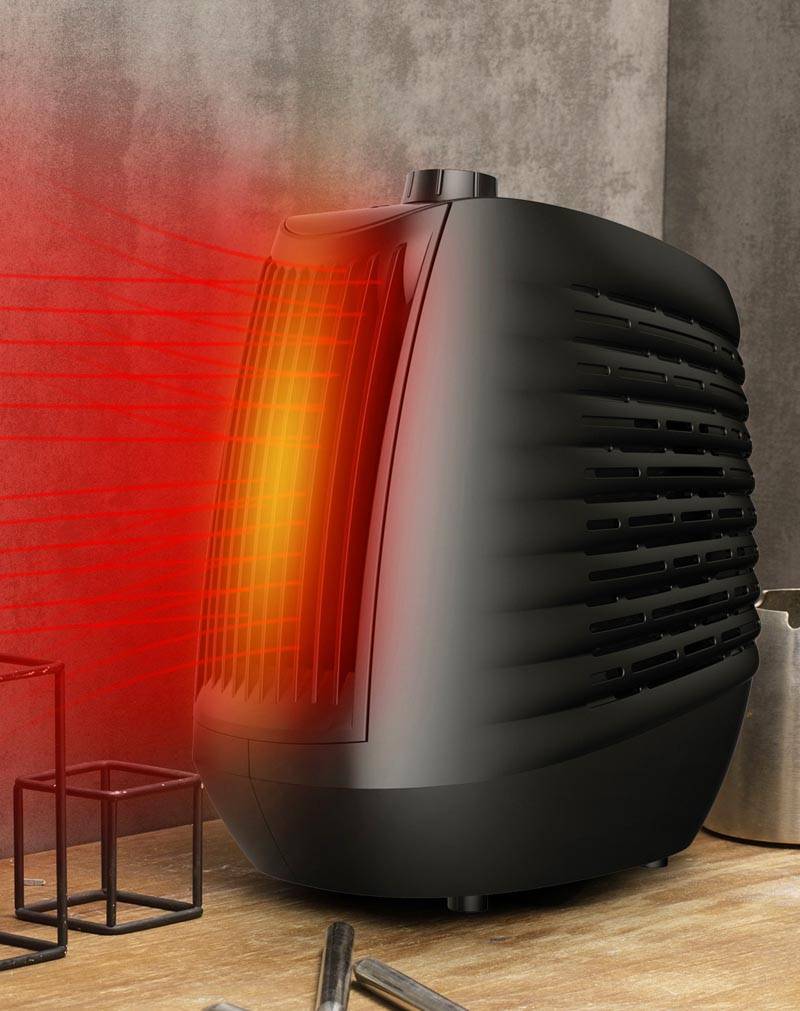
Ceramic element is the most successful choice for the home. It is made in the form of ceramic plates, and the heat exchange grate is made of corrugated aluminum. Features of the design and materials used give their benefits:
- the device does not heat up above 150 degrees, which means it is not capable of causing a fire;
- consumes the least electricity;
- lasts longer.
But I think you have already guessed that this is an expensive group of devices. Although due to energy savings, they pay for themselves pretty soon.
Water heat exchanger
Such objects are integrated into the heating system. They help to evenly heat even production workshops and offices in a short time. They cannot be operated during the off-season or when emergency shutdowns of heat supply occur.
The power of such heaters is directly related to the temperature of the water. If it is 80 or 90 degrees, then the maximum effect is achieved.
Table of technical characteristics and main criteria for choosing fan heaters
Options
Values
Selection Guide
Mobile powerStationary power
400 to 2000 watts 1800 to 2500 watts
For 10 m2 - 1 Kilowatt, but it is better to take with a margin - 1.3 - 1.5 Kilowatts.
Execution
Mobile; Stationary.
+ Easy to carry and place anywhere. + Uses silent fans, built-in swivel base.
Heating element type
Spiral;Ceramic:Glass-ceramic, Sintered-metal heating element.
It is better to give preference to glass ceramic.
Number of operating modes
Mostly found - 3 modes
The bigger, the better.
Fan type
Axial; Tangential.
Tangential - more silent.
Tipping and overheating sensors
Availability varies by model
It is best if these sensors are available.
Thermostat
Availability varies by model
Useful if there is a need to maintain a constant temperature.
Antifreeze function
Availability varies by model
It may come in handy if you need to maintain the room temperature + 5 C and prevent freezing.
Splash protection
Availability varies by model
If you are going to use the device in the bathroom or kitchen, availability is important.
Humidifier and filter
Availability varies by model
Availability is not critical, but desirable.
Remote Control
Availability varies by model
If available, it is more convenient to control the heater.
Popular Models
Models are selected based on customer reviews, i.e. The fan heaters below are in high demand.
Hyundai H-FH9-05-UI9207 (400 W)
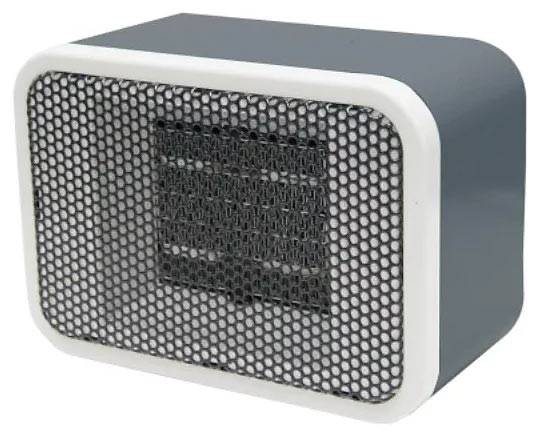
Fan heater Hyundai H-FH9-05-UI9207 - power 0.4 kW
Specifications:
- Heating power - 400 W
- Type of heating element - ceramic heater
- Heating area - 2 sq.m
- Voltage - 220/230 V
- Fan - yes
- Management - mechanical
- Timer - no
- WiFi - no
- Bluetooth - no
- Mounting options - floor
- Dimensions (WxHxT) - 15.5×11.2×8.6 cm
- Weight - 0.4 kg
Timberk TFH T15NTK (1400W)
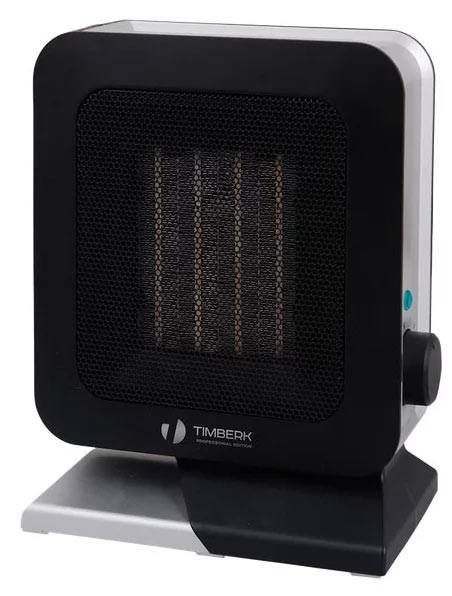
Fan heater Timberk TFH T15NTK (2017) - power 1400 W
Specifications:
- Power control - yes
- Power Levels - 1400/700W
- Type of heating element - ceramic heater
- Heating area - 16 sq.m
- Voltage - 220/230 V
- Fan - yes
- Ventilation without heating - yes
- Management - mechanical
- Timer - no
- WiFi - no
- Bluetooth - no
- Mounting options - floor
- Protective Functions - Thermal Shutdown
- Ease of use - handle
- Dimensions (WxHxT) - 20.8×25.3×12 cm
- Weight - 1.1 kg
RESANTA TVC-1 (2000 W)
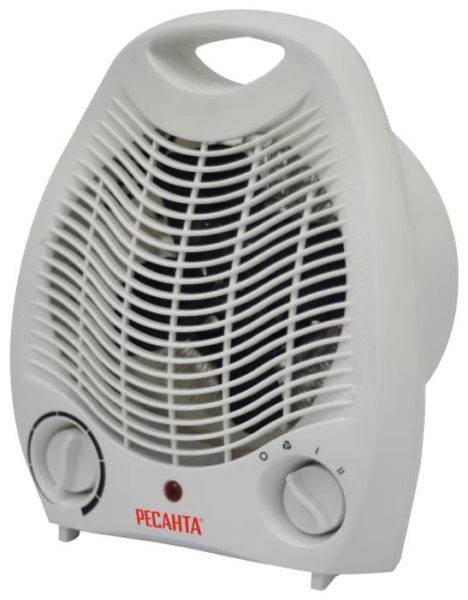
Fan heater RESANTA TVC-1 - maximum power 2 kW
Specifications:
- Power control - yes
- Power Levels - 2000/1000W
- Heating area - 20 sq.m
- Voltage - 220/230 V
- Fan - yes
- Ventilation without heating - yes
- thermostat - yes
- Management - mechanical, temperature control, switch with light indicator
- Timer - no
- Mounting options - floor
- Protective Functions - Thermal Shutdown
- Ease of use - handle
Timberk TFH S20SMX (2000 W)
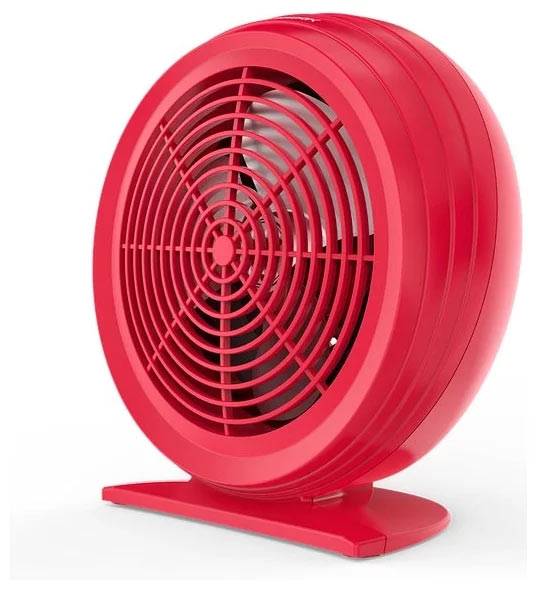
Fan heater Timberk TFH S20SMX (G/B/R) – power 2 kW
Available body colors: white, brown, red, grey, black.
Specifications:
- Power control - yes
- Power Levels - 2000/1200W
- Voltage - 220/230 V
- Fan - yes
- Management - mechanical
- Timer - no
- WiFi - no
- Bluetooth - no
- Mounting options - floor
- Protective Functions - Thermal Shutdown
- Ease of use - handle
- Dimensions (WxHxT) - 23x24x12.5 cm
- Weight - 0.85 kg





Polaris PCWH 2074D (2000 W)
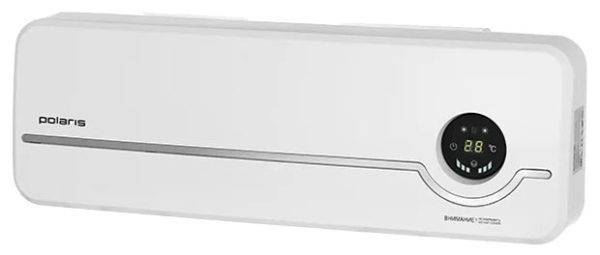
Fan heater Polaris PCWH 2074D - power 2 kW
Specifications:
- Power control - yes
- Power Levels - 2000/1000W
- Type of heating element - ceramic heater
- Fan - yes
- Control - electronic, display, remote control, switch with indicator light
- Timer - yes, for 7.5 hours
- WiFi - no
- Bluetooth - no
- Noise level - 50 dB
- Mounting Options - Wall Mounted
- Dimensions (WxHxT) — 56×18.5×11.5 cm
- Weight - 2.56 kg
Types of fan heaters
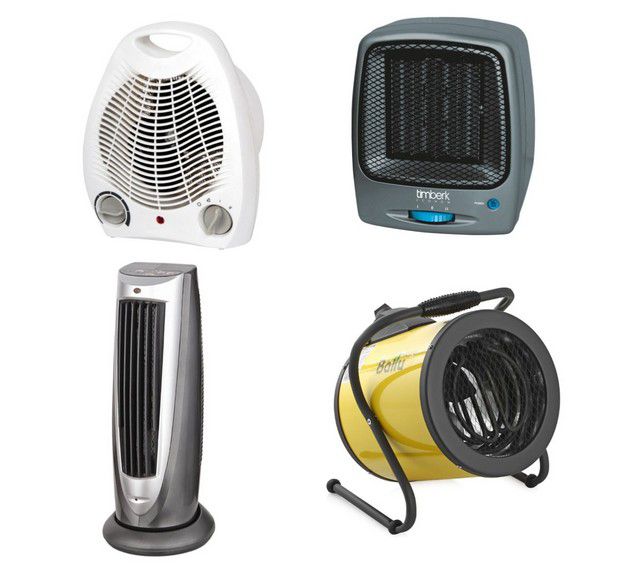
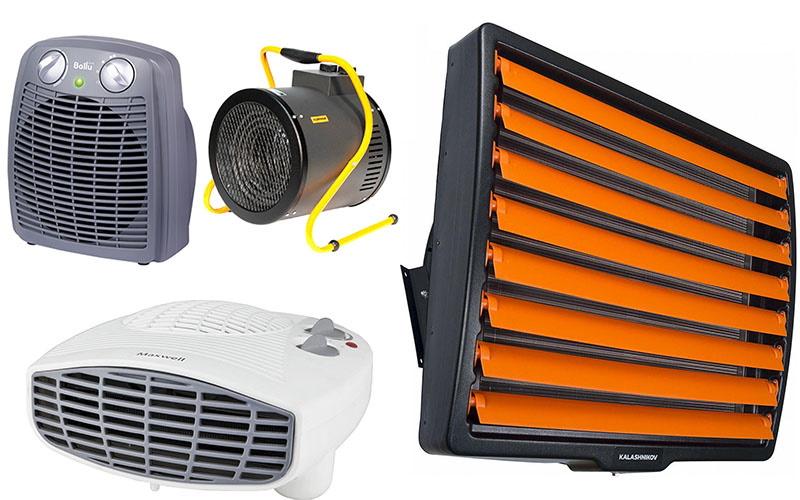
In any home appliance store, fan heaters are represented by a wide range of models. In order not to “get lost” in all this diversity, it should be borne in mind that devices are divided into three main types:
- Ceramic
- Spiral
- Tubular
Models with ceramic plates installed as a heating element are considered the most expensive. However, the undeniable advantages are their safety and durability. Manufacturers declare with confidence that dust and small debris that can settle on the heating plates will never catch fire during operation. The energy efficiency class of this type of device is much higher than that of the others. Despite the fact that the maximum heating temperature is only 150 degrees, during the operation of such a fan heater, the air warms up very quickly, due to the large area of the heating element.
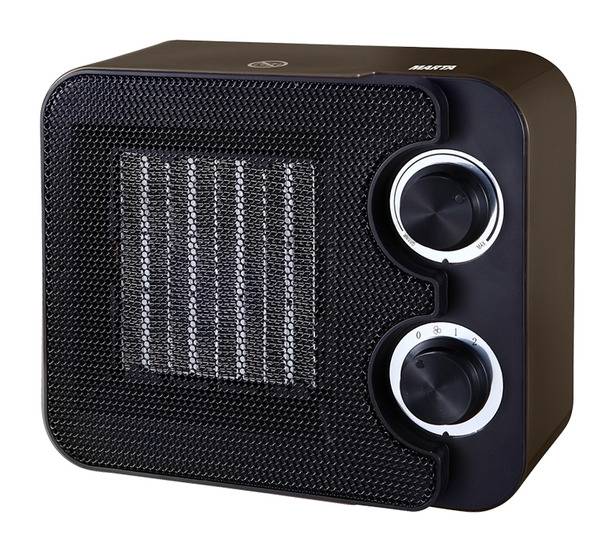
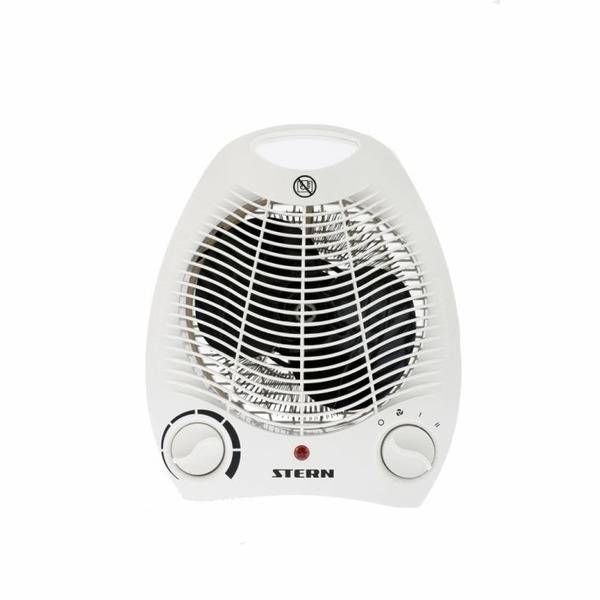
Devices equipped with a nichrome spiral, in turn, are considered the most fire hazardous. During operation of this fan heater, the coil heats up to 1000 degrees, as a result of which careless handling can lead to fire. It will also not be possible to avoid an unpleasant odor, because the dust that has fallen on the spiral will burn out.Such models fail faster than others, although they are sold at very attractive prices. This advantage often plays a decisive role if there is no need for constant use of the device.
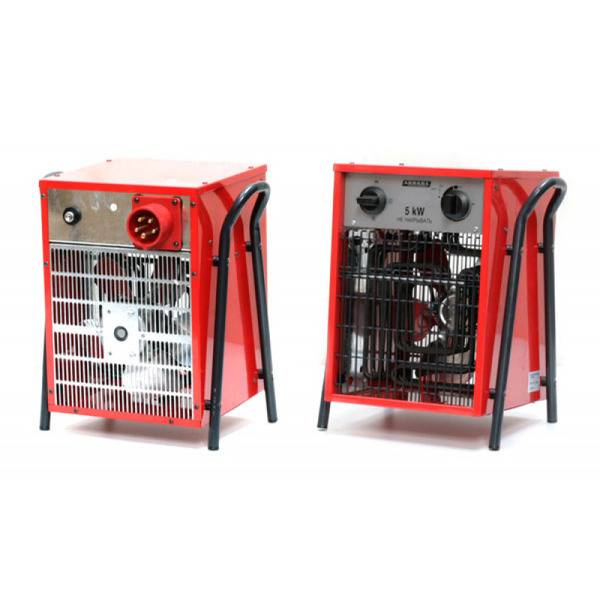
Fan heaters with a tubular heating element are unlikely to find application in a residential area due to their high power. It is advisable to install such a unit in a garage or at work. A heating element is a directly metal tube filled with quartz sand mixed with manganese oxide and includes a nichrome wire rod. The highest heating temperature of such a tube is 500 degrees, and the heating is uniform, which increases the service life. The price of a tubular fan heater is very high, however, it cannot be replaced as a heat gun.
Having decided on the type of heating element, it is necessary to decide whether the device will be installed permanently or there is a need for its mobility.
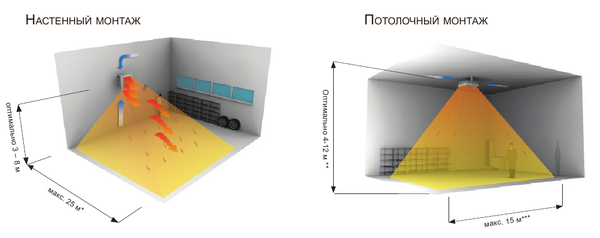
In the first case, the fan heater can be installed on the floor or mounted on the wall and even on the ceiling. Such models are equipped with a cone-shaped fan, with a couple of tens of blades located perpendicular to the axis of rotation. Due to this feature, productivity is significantly increased.
The advantage of wall-mounted devices is space saving. The design of these models is such that it allows you to direct a stream of warm air in the required direction. Due to this feature, they are often used as a thermal curtain, installed above the front door.
Ceiling fan heaters are useful for uniform heating of rooms with high ceilings.
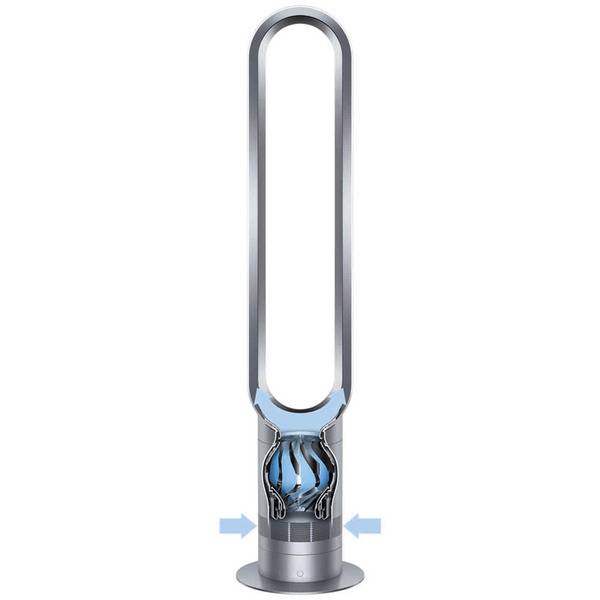
Floor-standing appliances are usually made in the form of a column and often have a rotating base, thanks to which warm air is distributed in all directions from the fan.
Almost all stationary models can be used not only to generate heat, but also as a fan during the hot season.
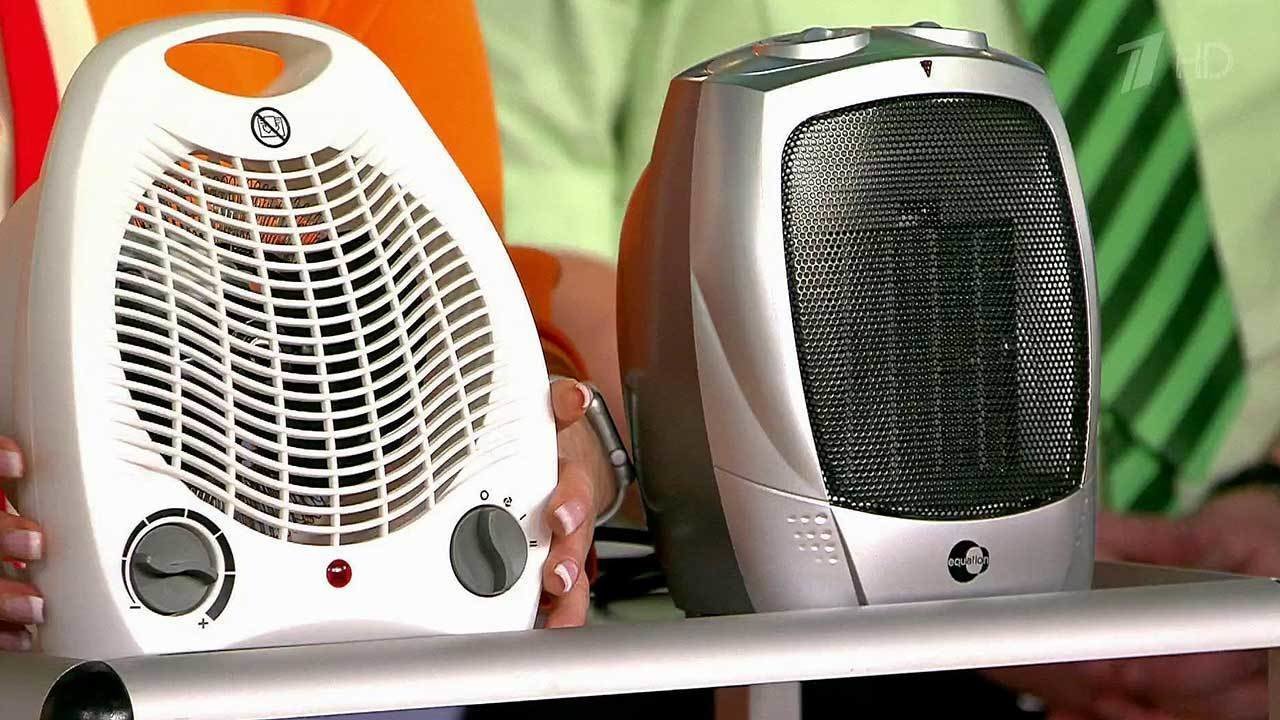
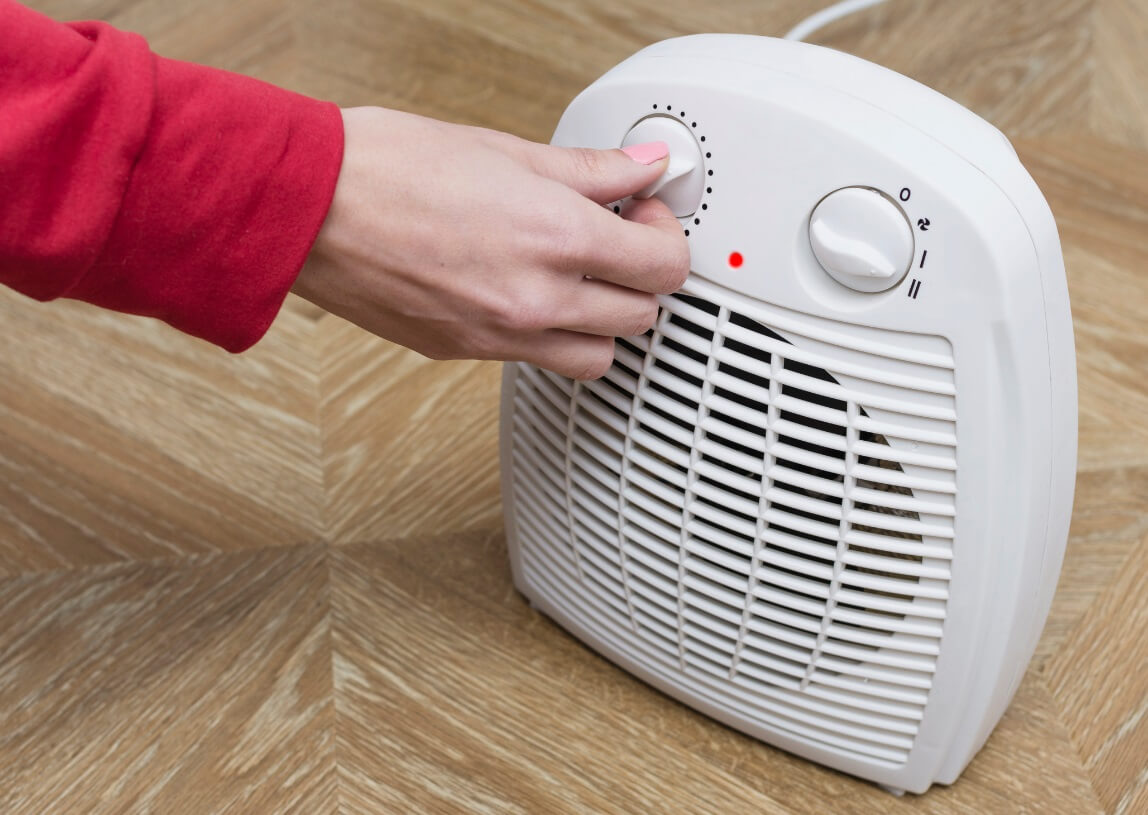
Portable devices also have a number of advantages. They are compact, lightweight, easy to install and transport. It should be noted that these fan heaters are very budgetary in comparison with stationary models. Such a unit can be safely installed to heat a small room, in the workplace, and even use for heating greenhouses in the spring-autumn period.
However, due to the design features, namely the use of an axial type of fan, the operation of such an electrical appliance is always accompanied by unpleasant noise.
We determine the required power of the device
The power of the device is one of the key characteristics when choosing a heater. The area of the room to which heat is supposed to be supplied is another decisive factor.



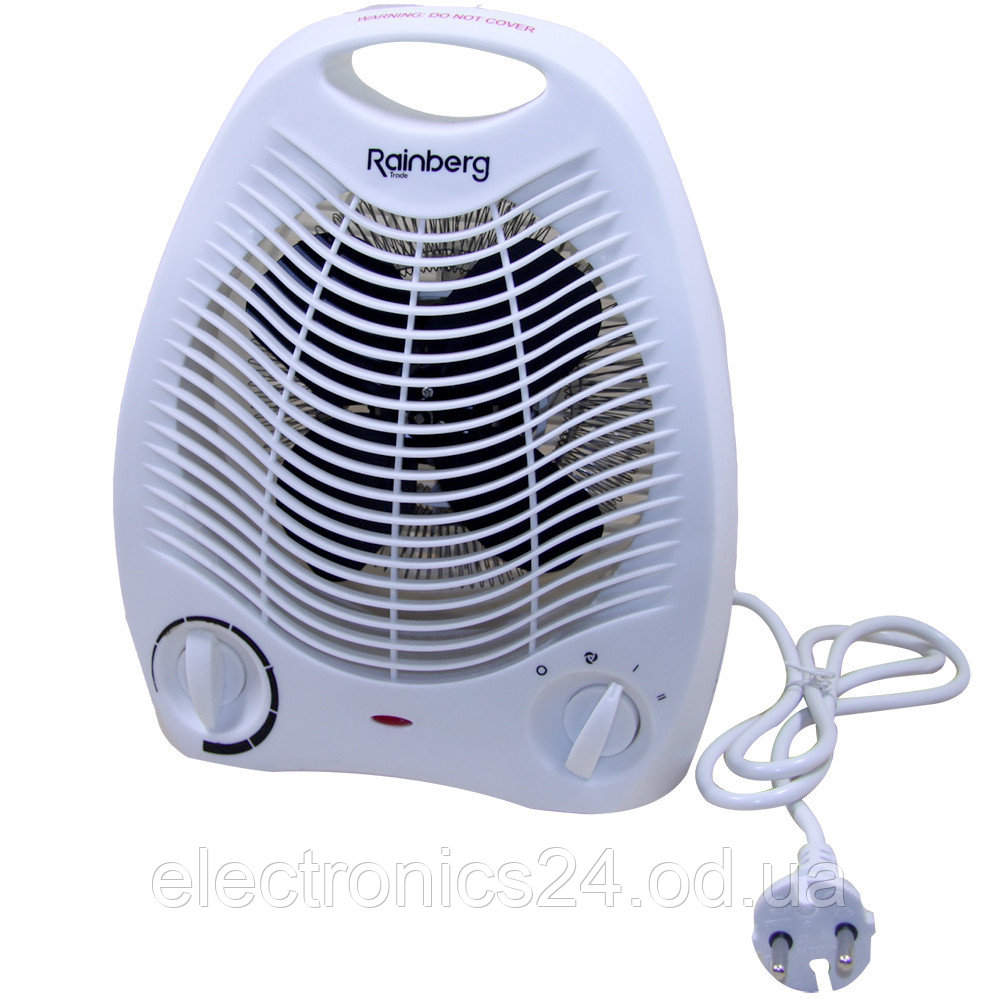

If the area of the room is not heated, but has good thermal insulation, then 1.5 kW of unit power per 27 m² will be enough. If the room has a heating system, then a heater with a power of 1 kW is ideal for additional heating of an average room of 25 m².
What else needs to be considered for a more accurate calculation:
- temperature difference inside and outside the room;
- the level of thermal insulation of windows and their number;
- on which side the apartment or house is located - sunny, shady;
- the number of people living;
- the age of the building;
- the number of equipment with heat transfer (refrigerators, televisions, computers);
- ceiling height - the lower they are, the lower the heater power.
Basically, for a typical apartment with ceilings of 2.5 meters and an area of 24-27 m², a device with a power of 2500 watts is suitable. For a smaller area (20-22 m²) a 2000 W device is required, etc.
Modern heating equipment is mainly equipped with thermostats that are able to maintain the desired temperature in automatic mode.
Thermostats do not always have a scale with the designation of degrees, working according to the principle - more - less.
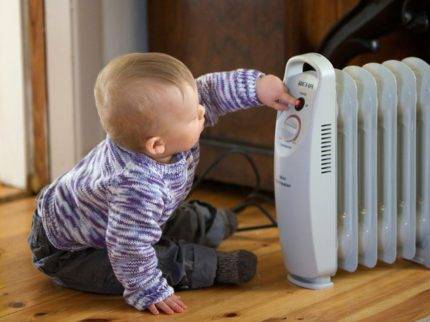
Household heaters presented for sale are reliable equipment, thought out in terms of safety aspects
How does a fan heater work
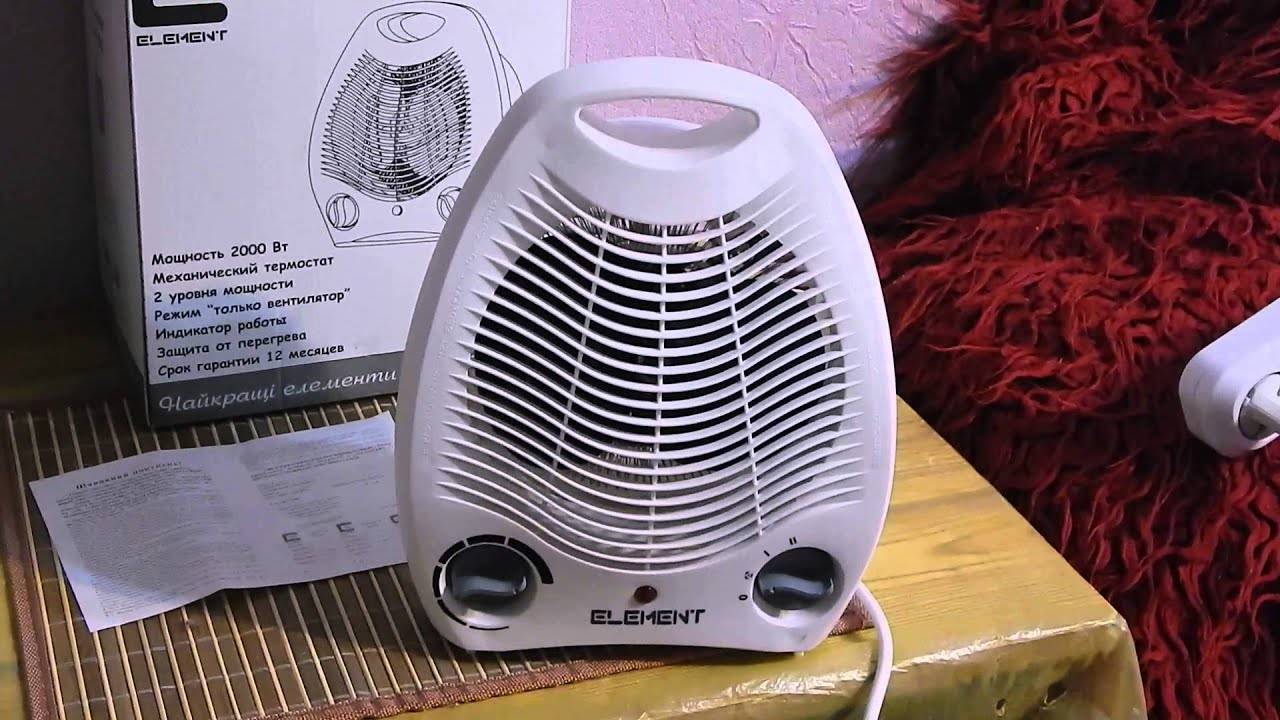
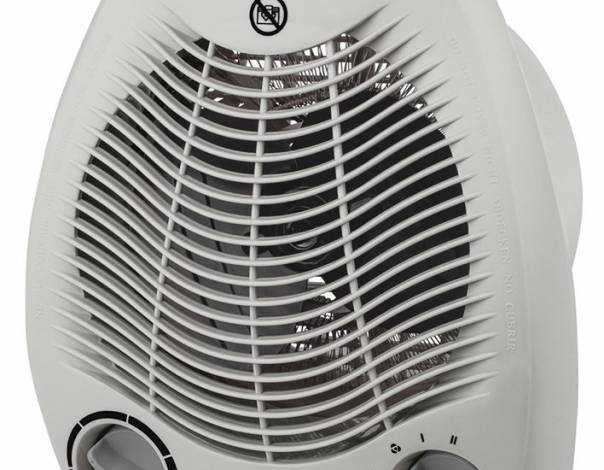
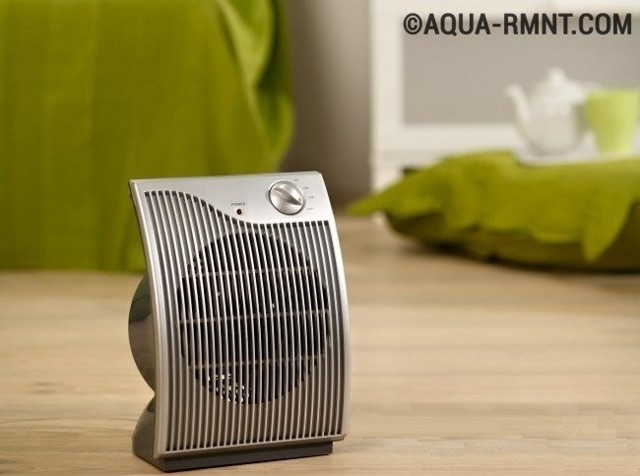
Any fan heater consists of three main parts: housing, heating element and fan.
The principle of operation is extremely simple. The fan captures cold air and sends it to the heating element, where it warms up. With the help of the same fan, the air is blown back into the space already warm.
Because of this mechanism, the devices were nicknamed "wind blowers" or "heaters with a fan."
All of the above elements can have a different structure, the reliability and functionality of the equipment depend on this. So we will talk about every detail in detail.
The main disadvantage of all heating devices is the noise produced, which is explained by the rotation of the blades. In terms of loudness, they are classified as follows (from the quietest to the noisiest):
- infrared;
- oil and convector;
- fan heaters and heat guns.
So be prepared for a monotonous hum. Moreover, the more powerful the unit, the louder it works.
But this minus does not detract from the main advantage - the rapid heating of the room. This happens precisely because of the presence of a fan.It enhances the circulation of air masses, and a comfortable microclimate is achieved in a short time.
How does a fan heater work and what is inside it
Each device of this type has an ordinary fan that moves cold air, fitting it to the heating element. Heated air masses rush into the room. In those models that are stationary, the fan can rotate during operation. As a result, the room heats up more evenly and efficiently.
The fan heater is good because it can create a comfortable temperature in the room quickly enough. If the air flow created by the fan has a narrow directionality, then it is possible to heat the air almost instantly only where it is needed. And in the summer, these heaters easily turn into ordinary fans - this feature allows you to save both space in the apartment and money in your pocket.
The design of any fan is quite simple and includes only three parts:
- frame;
- heating element;
- fan.
The case must be strong enough, it is made of plastic that can withstand some shock and shock. Also in the case there are metal parts. Next, we will talk about what types of heating elements are used in heaters of this type, as well as about the design features of the fans used in them.
What is a fan heater
A fan heater is a device for converting cold air into warm air. This happens due to the regulated activity of several elements. Among the components of the fan heater, the main ones can be distinguished, these are:
- fan;
- heating element;
- frame.
How does a fan heater heat an apartment or other room? The essence of the operation of the device lies in the fact that the fan located inside it contributes to the entry of cold room air onto a hot metal grate. Passing through it, it warms up and is pushed back into the room.
Of course, such a unit is quite self-sufficient. What is a fan heater for, and in what cases will it be appropriate to use it?
Conclusions and useful video on the topic
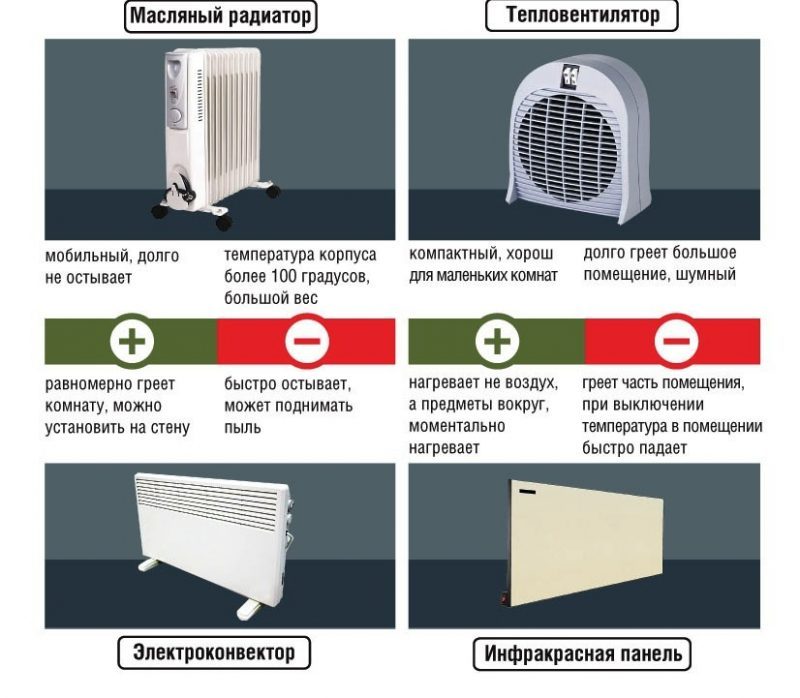
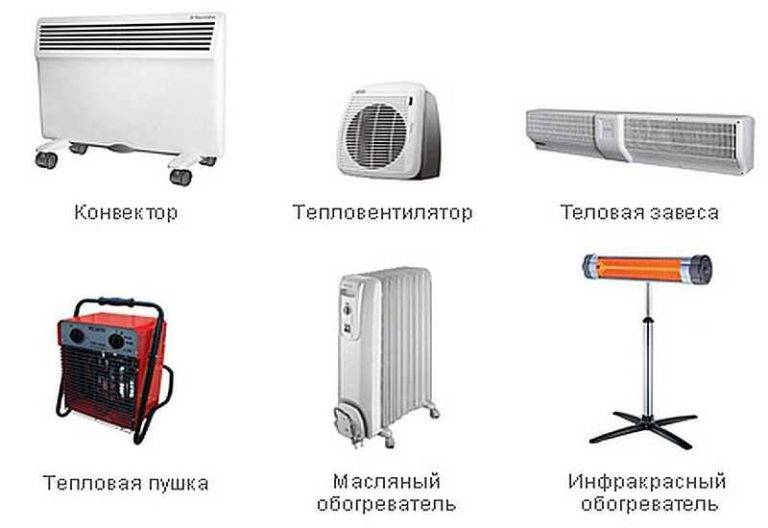
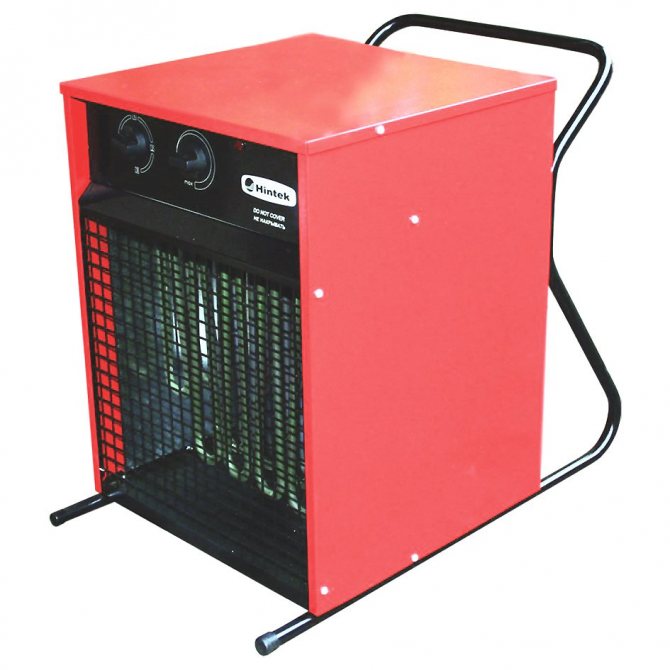
Comparative overview of options heating:



Details about the selection rules and features of convectors:
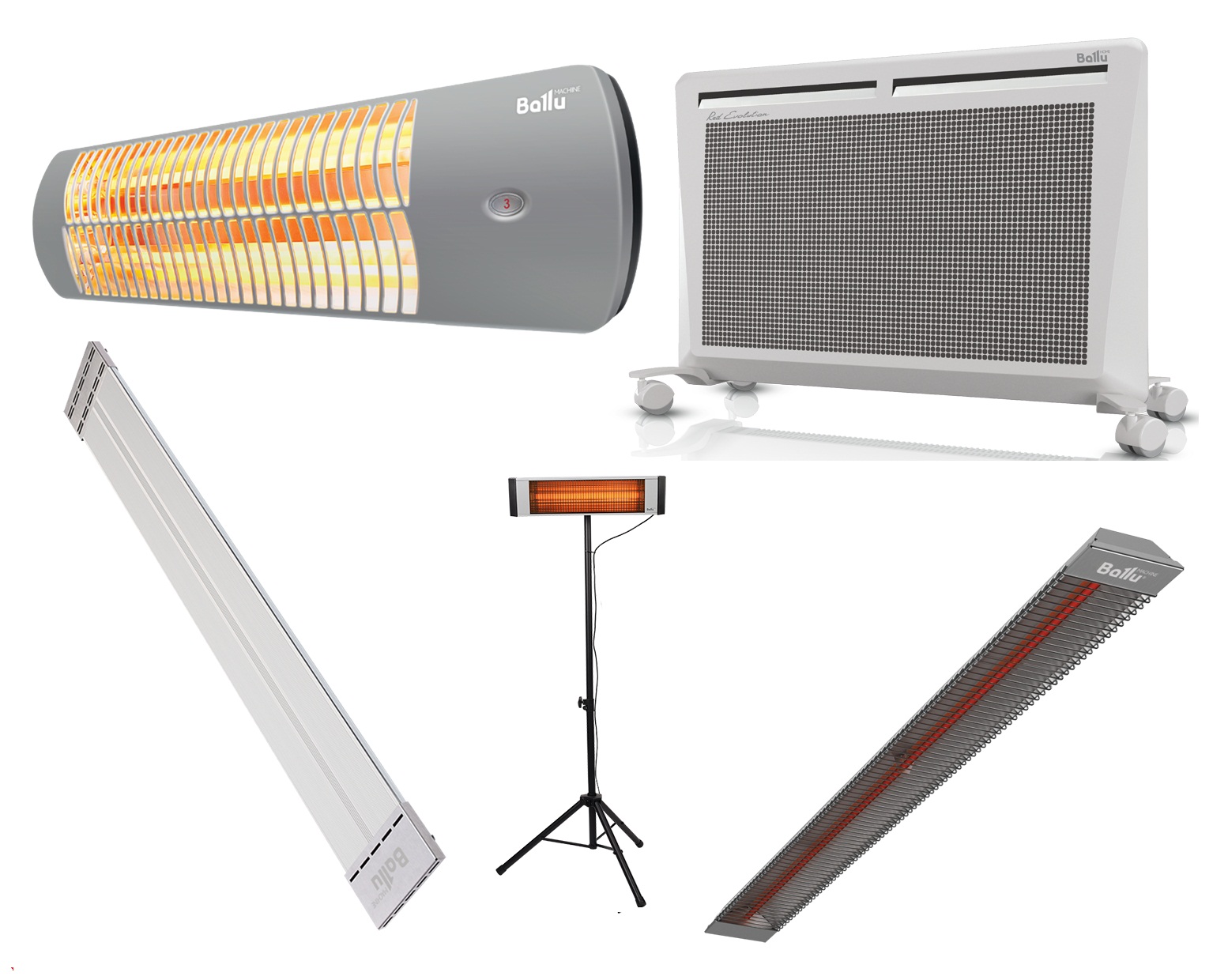
The specifics of the work of infrared heaters
Knowing how to choose a heater for an apartment or house, you can save yourself the inconvenience associated with the unsuccessful selection of heat generating devices - high electricity consumption, excessive noise or light, the inability to warm the room completely.
Are you still unable to decide on the right type of heater for your house or apartment? Perhaps you still have questions after reading our article? Ask them in the comment block - we will figure it out together.
Or are you already a proud owner of a heater? Tell us what type of heating device you prefer and are you satisfied with its performance? Did our reviews and tips help you? Leave your comments and add a photo of your heater under this article.