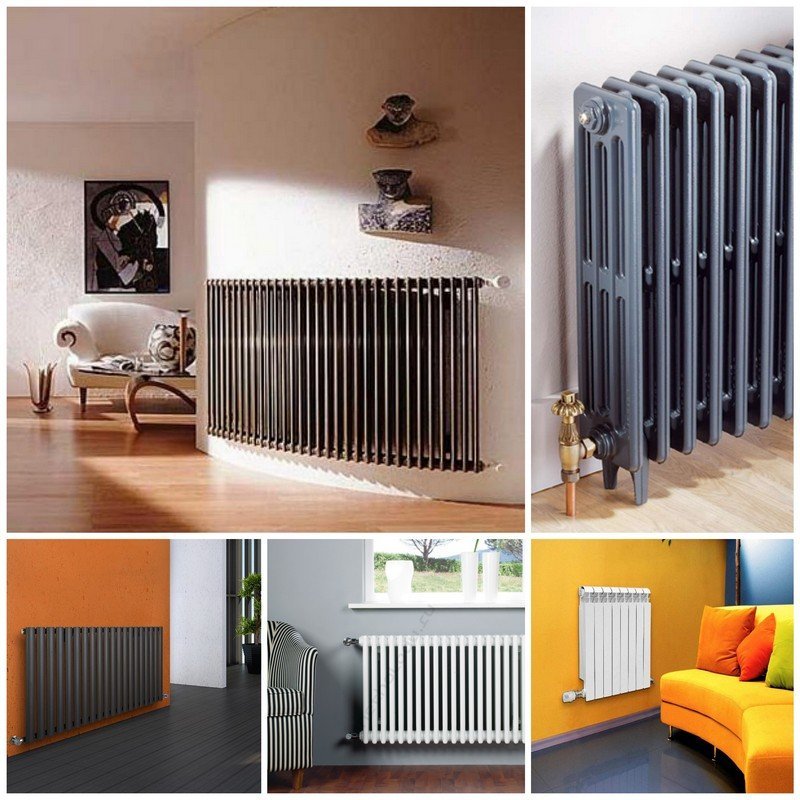
- TOP-4 steel heating radiators
- Axis Classic 22 500×1000
- Buderus Logatrend K-Profil 22 500×1000
- Kermi FKO 22 500×1000
- Arbonia 2180 1800 270
- Where to use steel convectors
- Aluminum Models
- Radiator power
- Copper radiators
- Calculation of the power of heating radiators for an apartment
- 5 best heating radiators
- Bimetal radiators
- Lamellar convectors
- Design features
- Tubular
- Sectional
- Panel
- Convector
- General selection guidelines that everyone should know
- Popular electric heating batteries and their functionality
- Cast iron radiators
TOP-4 steel heating radiators
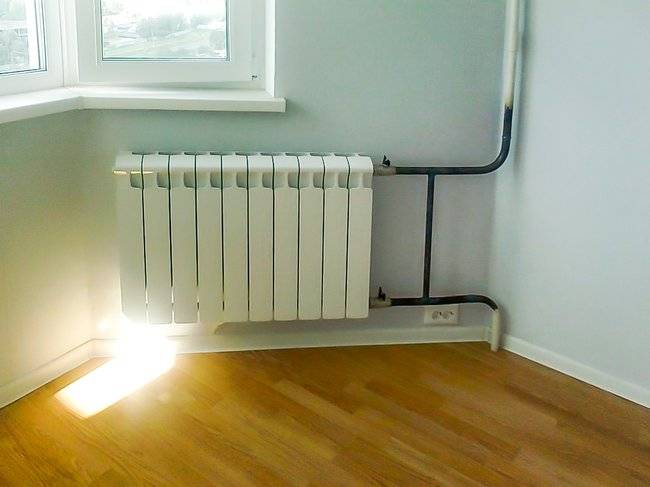
Steel radiators are distinguished by reliability, high heat transfer. Of the minuses, it is worth highlighting the instability to water hammer, susceptibility to corrosion. Some manufacturers use special coatings to protect against it. Most steel radiators have a panel view, i.e. it is impossible to dial the required number of sections, as in aluminum and bimetallic ones. The exception is tubular steel radiators.
Axis Classic 22 500×1000
The steel radiator consists of two water-conducting panels and two convection rows. The outer grille is removable: you can clean the internal parts.It differs from the standard dimensions characteristic of all models of the rating (50 × 100 × 10 cm) by a slightly larger thickness - 11 cm. Almost all radiators weigh about 28 kg. The capacity of water is 5.63 liters. Steel radiators differ from bimetallic radiators with a lower working pressure - 9 bar (13.5 - during pressure testing). Side connection ½ inch. The center distance is non-standard - 449 mm. Designed for coolant temperatures up to 120 °C. The model has increased power - 2188 watts.
Advantages:
- Nice view. Simple design.
- Quality build. Russian production on Italian equipment.
- The kit includes everything you need for installation.
- Heats well.
- Inexpensive.
Flaw
- Non-standard center connection. There are no problems if the eyeliner is made of polypropylene pipes.
Axis Classic 22 500 1000 costs 3700 rubles. The model surpasses all types of steel radiators included in the rating in terms of power. Provides rapid heating of the room. The quality of the metal, reliability satisfied demanding users, so the vast majority of them recommend the product for purchase.
Buderus Logatrend K-Profil 22 500×1000
It features a large volume of water - 6.3 liters. The working pressure in the system is higher - up to 10 bar, but less power - 1826 watts. According to the manufacturer's calculations, one radiator is enough to heat a room of about 18 square meters. m. The model undergoes anti-corrosion treatment by phosphating and hot powder spraying. Center distance - 450 mm.
Advantages:
- Laconic design.
- Good painted. Does not turn yellow over time.
- They heat well.
- Build quality is ok.
Flaw:
- One radiator is not enough for the declared area (but it depends on the coolant temperature).
Price Buderus Logatrend K-Profil 22 500 1000 - 4270 rubles. The model is somewhat inferior to Axis Classic 22 in terms of power, but it has a better anti-corrosion coating. Customers are satisfied with the quality of workmanship and the operation of the radiator.
Kermi FKO 22 500×1000
Differs in the smallest volume - 5.4 liters. But it loses in power to the first two models - 1808 watts. Designed for system pressure up to 10 bar (13 bar - pressure test). Provides operation at a coolant temperature up to 110 °C. Center distance - 446 mm. The manufacturer has applied Therm X2 technology, which increases the energy efficiency of the equipment. The outer coating is made of two layers of powder paint, which increases the resistance to mechanical damage.
Advantages:
- Beautiful view.
- Quality made.
- Ease of care.
- Good heat dissipation.
Flaw:
There are cases of leakage after several years of use (in an apartment building where the system is drained for the summer).
Kermi FKO 22 500 1000 for 6200 rubles provide a normal level of heat. Due to the small volume of coolant, the heating of the radiator and the room is faster. Recommended for installation in a closed system without draining the coolant for a long period.
Arbonia 2180 1800 270
The only representative of tubular steel radiators in the review. It differs from panel models in non-standard dimensions. This is a narrow model (65 mm) with a very high height (1800 mm). The width of one section (tube) is 45 mm. Center distance - 1730 mm. One section weighs 2.61 kg, but it includes a much larger volume than aluminum and bimetallic radiators - 1.56 liters. In terms of heat transfer, the six-section Arbonia is expectedly inferior to other models in the rating - 1730 W. Power - 990 watts.
Advantages:
- Interesting view.
- Normal heat dissipation. Heats up well.
- Quality build.
Flaw:
- It is necessary to take into account the place for installation, the possibility of piping. If there are windows in the room, they will blow (you cannot place such a radiator under them).
The price of Arbonia 2180 1800 270 is 9950 rubles. You can choose the number of sections, unlike other steel samples. Non-standard sizes significantly increase heat transfer due to the larger radiator area. Can become part of the interior. Customers have no complaints about the quality.
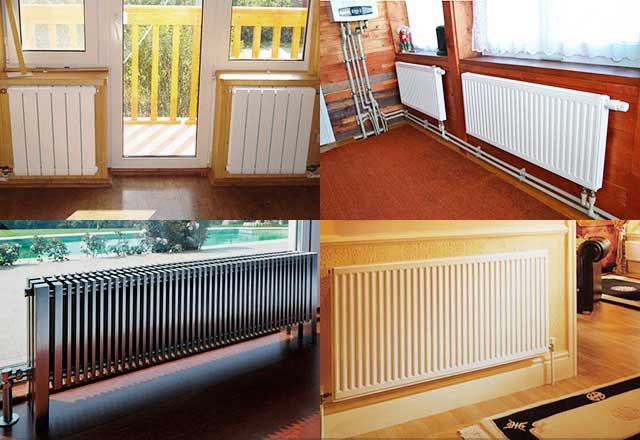
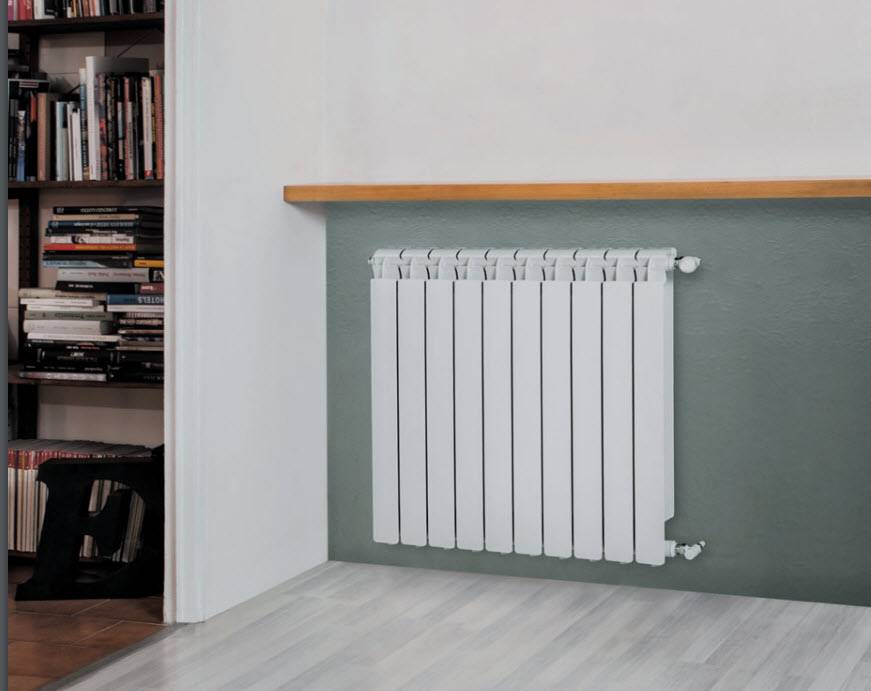

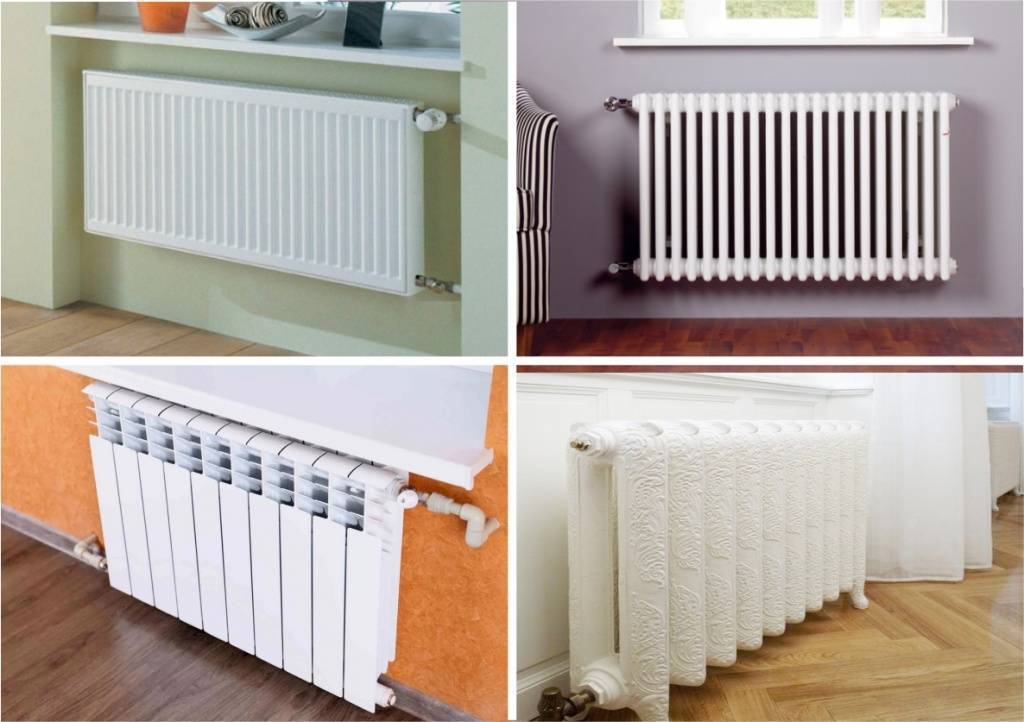


Where to use steel convectors
The diocese of these heating devices are individual low pressure heating systems. A feature of steel convectors is a small amount of coolant required for the operation of such a system.
Hence all the advantages - a minimum of natural resources for heating such a system and a maximum of heat transfer, which is carried out by convection. The air, heated up between the fins of the convector, creates some kind of jet draft, which sucks cold air into the convector from below and pushes out the already heated air from above. Air circulation is carried out very quickly, and already after 10–15 minutes of operation of these heaters, the air in the room warms up in full.
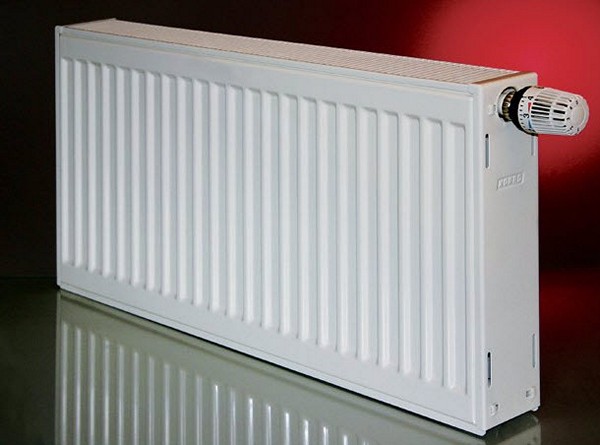
Steel heating convectors a photo
But, despite such an effective operation of steel convectors, they still have a number of limitations in use:
- They are contraindicated for use in central heating systems. The reason for this is the abundance of debris, which clogs the narrow channels of the coolant in the shortest possible time.
- Batteries must not be left without water.Moisture and oxygen from the air start the process of corrosion, which eats thin steel within one or two heating seasons.
Otherwise, steel convectors are in no way inferior to other heating devices. Answering the question which heating radiators are better, they can be called the best option for individual heating systems of any size.
But in general, in search of an answer to the question of how choose heating batteries, you need to choose the following line of behavior - namely, to clarify the operating conditions, the technical characteristics of the batteries, among which their heat transfer is of no small importance and only last but not least the appearance. With such a list of requirements, you can go to the store and choose heating appliances that are worthy of your premises and conditions of use.
Author of the article Alexander Kulikov
Aluminum Models
The main advantage of such radiators is their attractive appearance. Aluminum batteries look very modern and easily fit into almost any interior. They are inexpensive, but, like cast iron, they are rarely used in private homes. It's all about their increased demands on the quality of the coolant. In an acidic environment, aluminum reacts very quickly with the release of a rather large amount of gas. And this, in turn, leads to airing of the system and its failure.
Aluminum heating radiators for a private house, therefore, are well suited only when a sufficiently clean coolant is used in the mains. As for pressure, such models can easily withstand loads up to 15 atm.
Radiator power
The calculation of the heating of a private house should begin with the definition of this particular indicator. The selection of radiators for a large cottage, of course, should be entrusted to specialists. If the system is assembled in a small one-story private house, this procedure can be done independently, according to a simplified scheme.
In order to calculate the battery power, you first need to know such parameters as:
the total area of the premises;
necessary compensation for heat loss.
The latter indicator, when using a simplified calculation scheme, is usually defined as 1 kW of power per 10 m2 of the room (or 100 W per 1 m2). That is, in order to find out what kind of battery performance is needed in a particular case, you just need to substitute the desired value in the formula N = S * 100 * 1.45, where S is the area of \u200b\u200bthe room, 1.45 is the coefficient of possible heat leaks.
Next, let's see how to calculate heating radiators for a private house using a specific example. This procedure is actually quite easy to do. For example, for a room 4 m wide and 5 m long, the calculation would look like this:
-
5*4=20 m2;
-
20*100=2000W;
-
2000*1.45=2900W.
Heating radiators are installed most often under the windows. Accordingly, their required number is also selected. In houses with an area of 20 m2, 2 windows are usually equipped. Therefore, in our example, we need two 1450 W radiators. This indicator can be adjusted primarily by changing the number of sections in the battery. But, of course, in any case, there should be just enough of them so that the radiator is freely placed in a niche under the window.


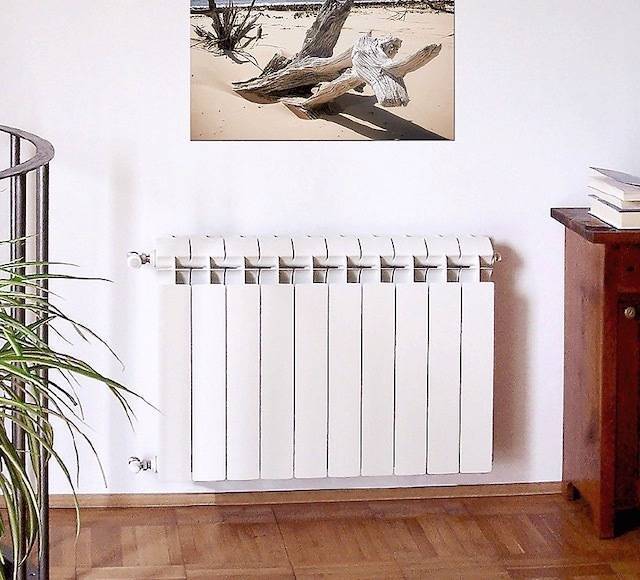

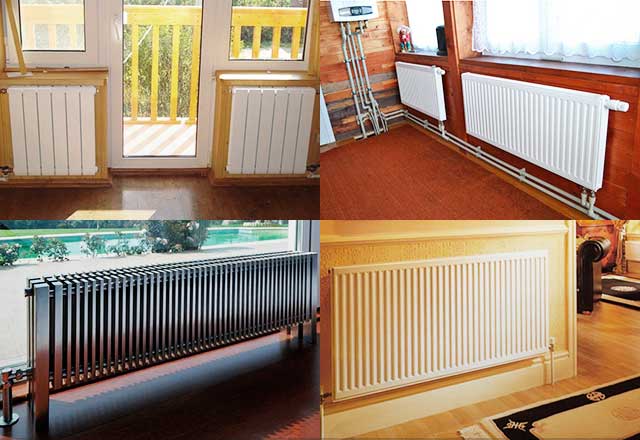


The power of one section in batteries of different types may vary.So, for bimetallic radiators with a height of 500 mm, this figure is usually 180 W, and for cast iron - 160 W.
Copper radiators
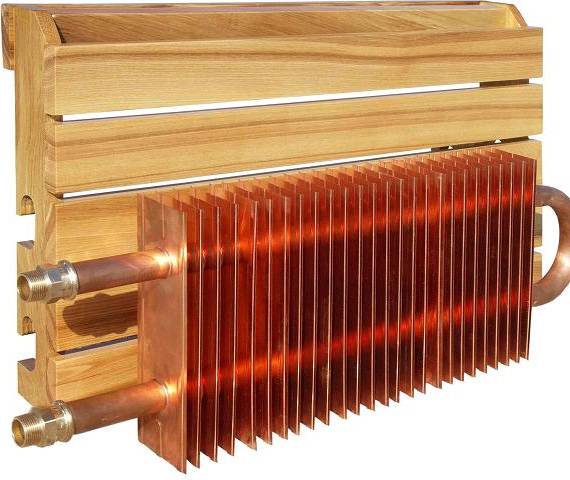
Copper radiators compare favorably with other heating devices in that their contours are made of a seamless copper pipe without the use of other metals.
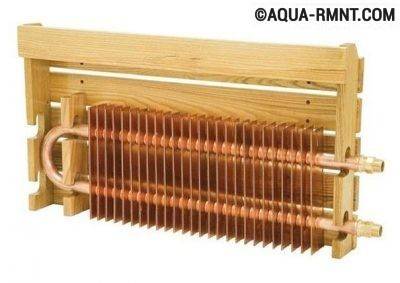
The appearance of copper radiators is suitable only for fans of industrial design, so manufacturers complete thermal appliances with decorative screens made of wood and other materials.
A pipe with a diameter of up to 28 mm is complemented by copper or aluminum fins and decorative protection made of solid wood, thermoplastics or composite materials. This option provides efficient heating of the room due to the unique heat transfer of non-ferrous metals. By the way, in terms of thermal conductivity, copper is more than 2 times ahead of aluminum, and steel and cast iron - 5-6 times. Having a low inertia, a copper battery provides rapid heating of the room and allows the use of temperature control equipment.
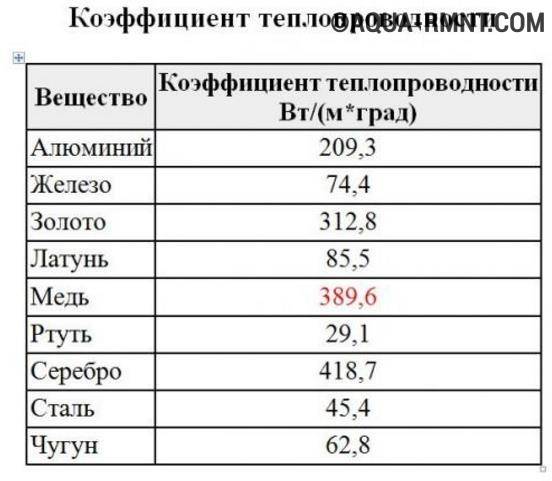
In terms of its thermal conductivity, copper is second only to silver, with a significant margin ahead of other metals.
The plasticity inherent in copper, corrosion resistance and the ability to contact polluted coolant without harm make it possible to use copper batteries in apartments in high-rise buildings. It is noteworthy that after 90 hours of operation, the inner surface of the copper radiator is covered with an oxide film, which further protects the heater from interaction with aggressive substances. The disadvantage of copper radiators is only one - too high a cost.
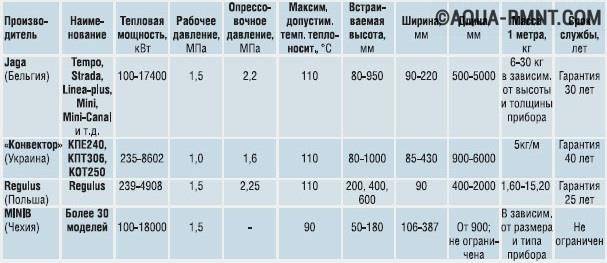
Comparative table of technical characteristics of copper and copper-aluminum radiators
Calculation of the power of heating radiators for an apartment
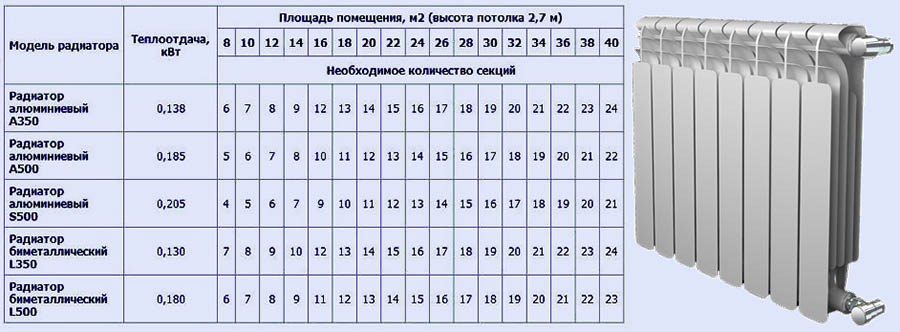
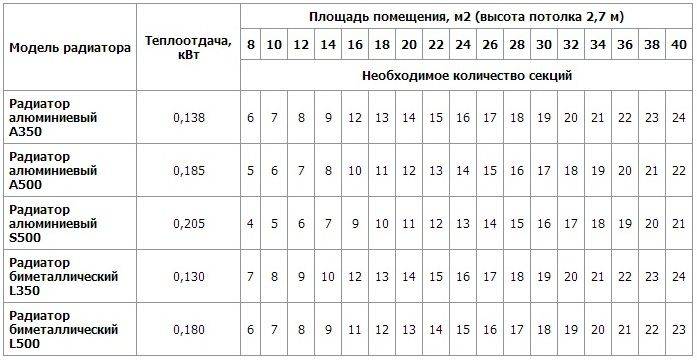 Power calculation table for aluminum and bimetallic batteries
For a normal microclimate in a living room, the heating radiator should not overlap 70-75% of the width of the window opening. Then the cold air from the window and the warm air from the battery mix freely and move around the room, without fogging the windows. Therefore, instead of 5-6 powerful sections, it is better to put 8-10 sections with less power, but occupying the required area under the window.
To find out the required power of the radiator, it is necessary to multiply the area of \u200b\u200bthe room by 100 watts. If a:
- If the room has 1 window or outside door and 2 outside walls, then the battery power is increased by 20%;
- 2 windows and 2 external walls - by 30%;
- The window faces north or northeast - by 10%;
- Battery in a niche - by 5%;
- The radiator is closed by a panel with slots - by 15%.
5 best heating radiators
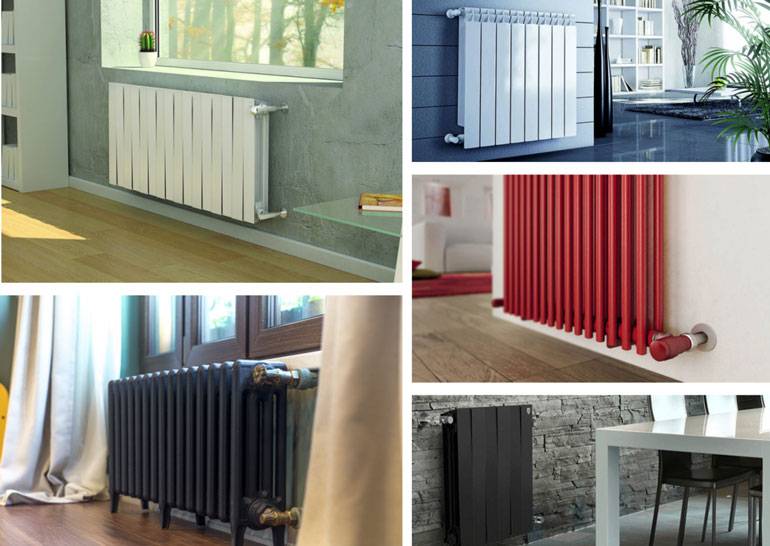
Modern radiators can have a very interesting design. To learn more about diversity, consider five models from different materials as examples.
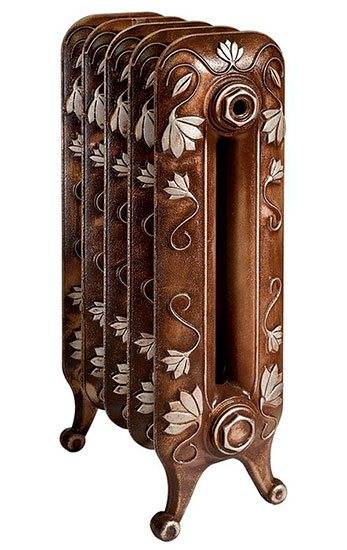
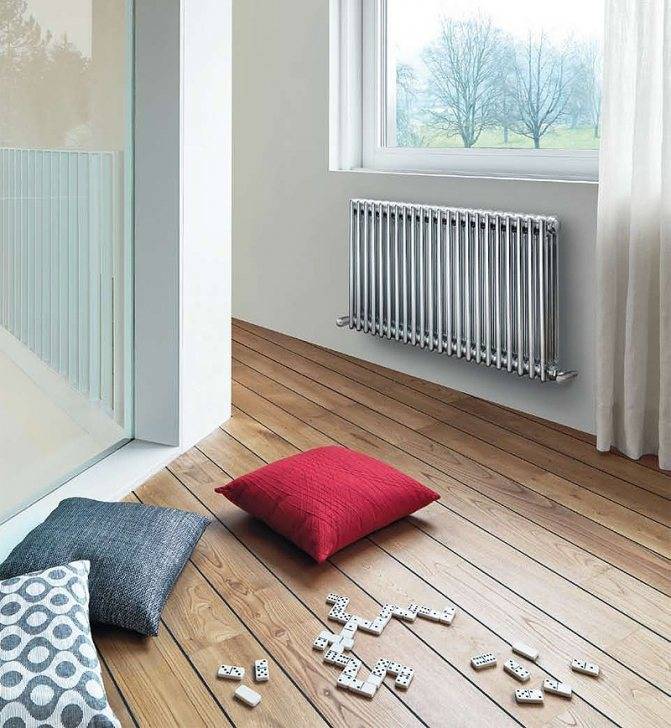
RETROstyle Atena 400 - cast iron battery for 5,000 rubles (1 section). The design immediately catches the eye: ornate patterns and legs. The color can be chosen at your discretion, since all items are primed and ready for painting.
Such an object can withstand pressure up to 8 atm and temperatures up to 110 degrees. The maximum possible dimensions are 15 segments. Suitable for any kind of connection.
Pros:
- unusual design;
- choice of colors;
- strength and durability;
- 5 year warranty.
Minuses:
- expensive pleasure;
- heavy.



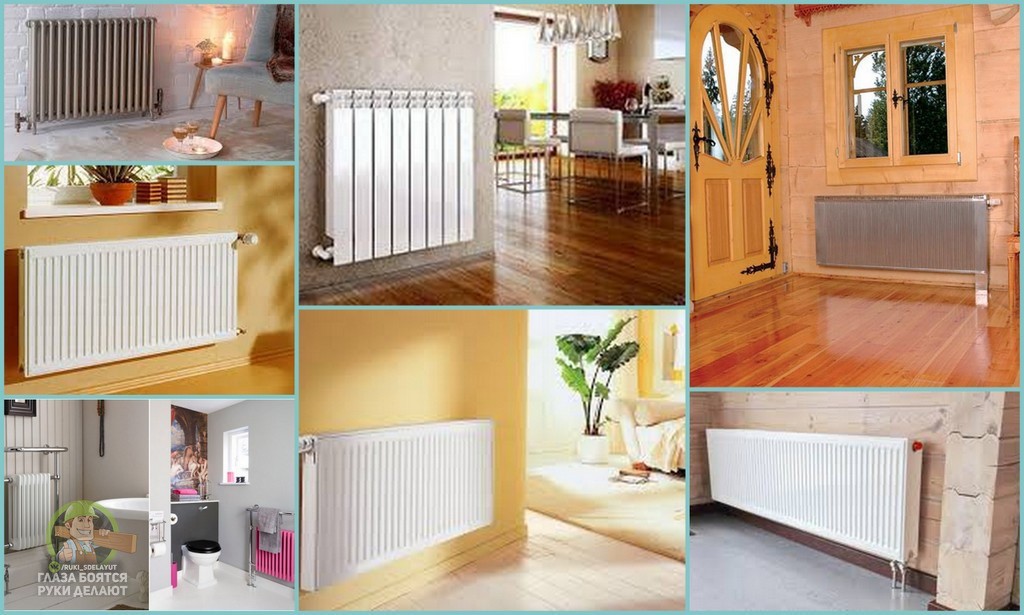

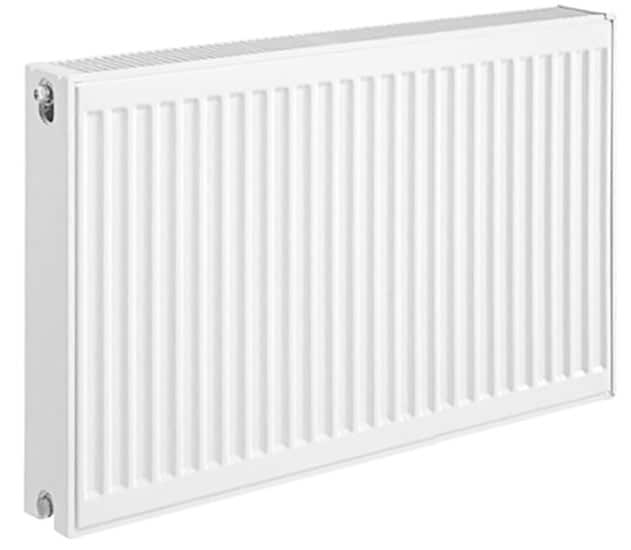
Buderus Logatrend K Profil 22 0404 - a steel two-panel sample for 3,600 rubles (400 x 400 mm). Side mounting to the heating system is provided. It is characterized by working pressure up to 8 atm and temperature up to 120 degrees. Two rows of convective fins are provided to improve performance.
The white product will harmoniously fit into the interior. The surface is treated with an anti-corrosion coating and a top layer that is resistant to scratches and damage.
Pros:
- neutral appearance;
- good heat dissipation;
- bilateral;
- warranty period for 5 years.
Minuses:
- you need to buy fasteners;
- a lot of weight.
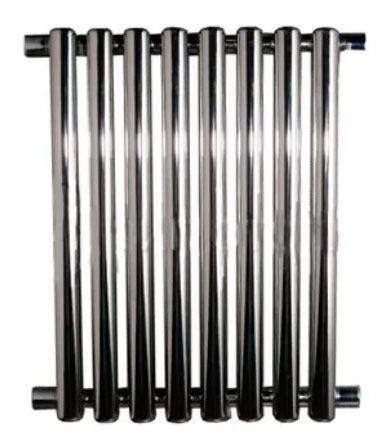
KZTO Harmony A40 is a tubular stainless steel specimen, consisting of 20 parts worth 59,200 rubles. It has a side installation system and is distinguished by improved operational parameters: 130 degrees and 15 atm. This is achieved due to the greater wall thickness. It is possible to order the device with the number of tubes from 3 to 21. The bracket is included in the kit.
This product belongs to the category of designer, because it combines beauty and quality.
Pros:
- withstands heavy loads;
- stylish look;
- a wide range of sizes.
Minuses:
- high price;
- the actual service life, judging by the reviews, is 5-6 years.
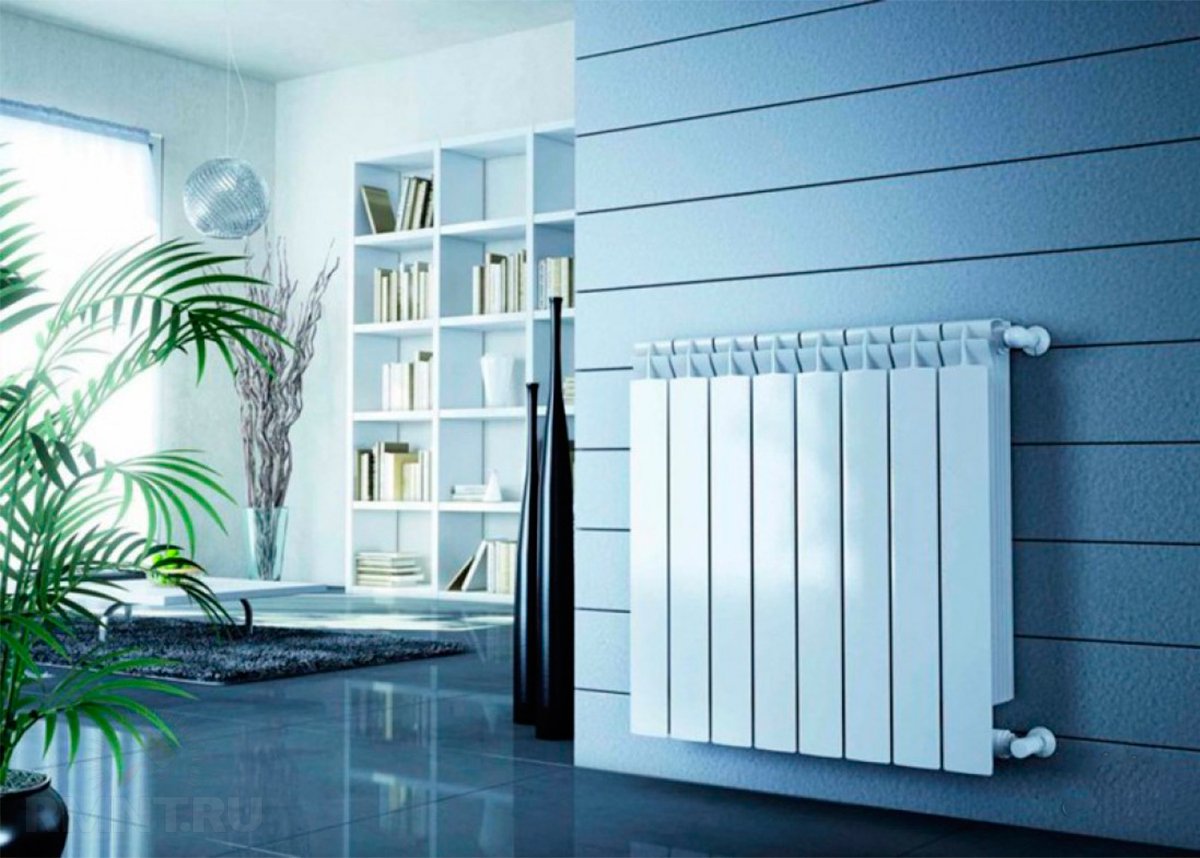
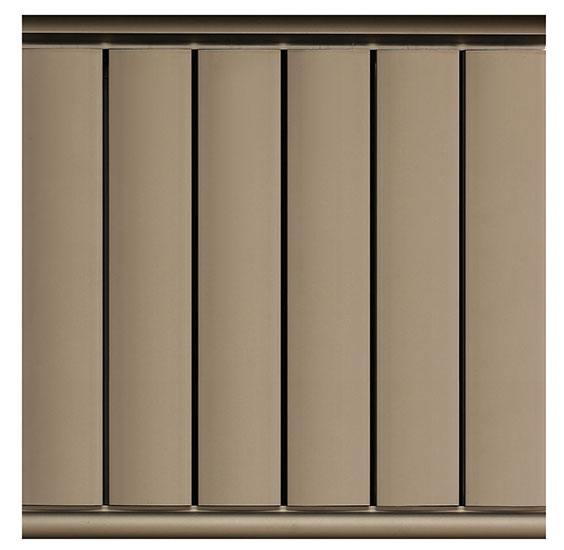
Mandarin 500 - an aluminum radiator from a Russian manufacturer for 6 sections will cost 5,900 rubles. Made from 98% high purity aluminium. It is distinguished by increased heat transfer, the magnitude of which surpasses even bimetallic specimens. Anti-corrosion alloy and surface anodizing give it increased strength and reliability. According to the manufacturer, it is able to withstand loads of at least 25 atm.
There are several color options.In the photo you see the shade "champagne". The design will please thoughtfulness and decorate the room.
Pros:
- modern design;
- thermal efficiency;
- reliability and durability;
- comply with GOST;
- The warranty period from the manufacturer is 25 years.
Minuses:
- only two standard sizes: height 340 or 540 mm;
- cheap pleasure.
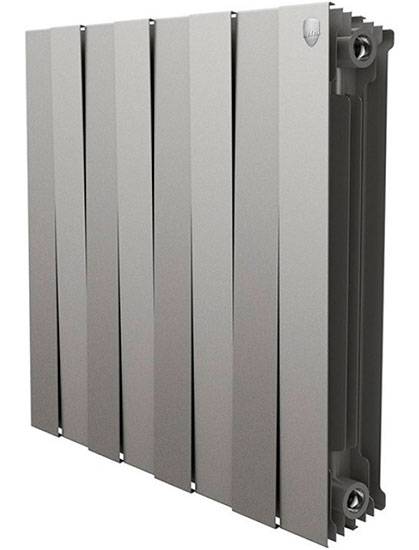
Royal Thermo PIANOFORTE Silver Satin is a bimetallic object with a very non-trivial look for 6,000 rubles (8 sections). It has an asymmetrical arrangement of plates, reminiscent of a piano. This, and the additional finning, not only looks unusual, but also allows you to significantly increase heat transfer. The color "silver satin" looks very impressive. Thanks to seven layers of paint, the surface is resistant to damage.



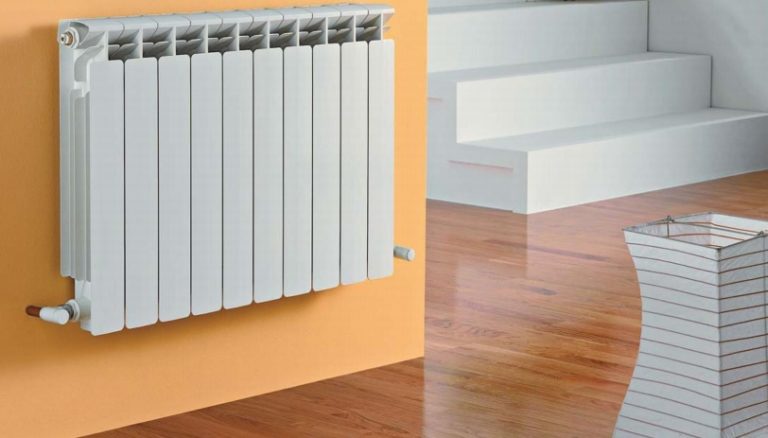

As for the quality characteristics, they are also on the level. Inside there is a steel collector, and a special gasket between the segments eliminates the appearance of leaks at the joints. The working pressure is 30 bar (29.61 atm), so no water hammer is terrible for such objects.
Pros:
- there are options in white, black and silver color;
- increased heat transfer;
- 25 year warranty and insurance.
Minuses:
- accessories will have to be purchased separately;
- it may be difficult to find elements of a suitable shade.
Bimetal radiators
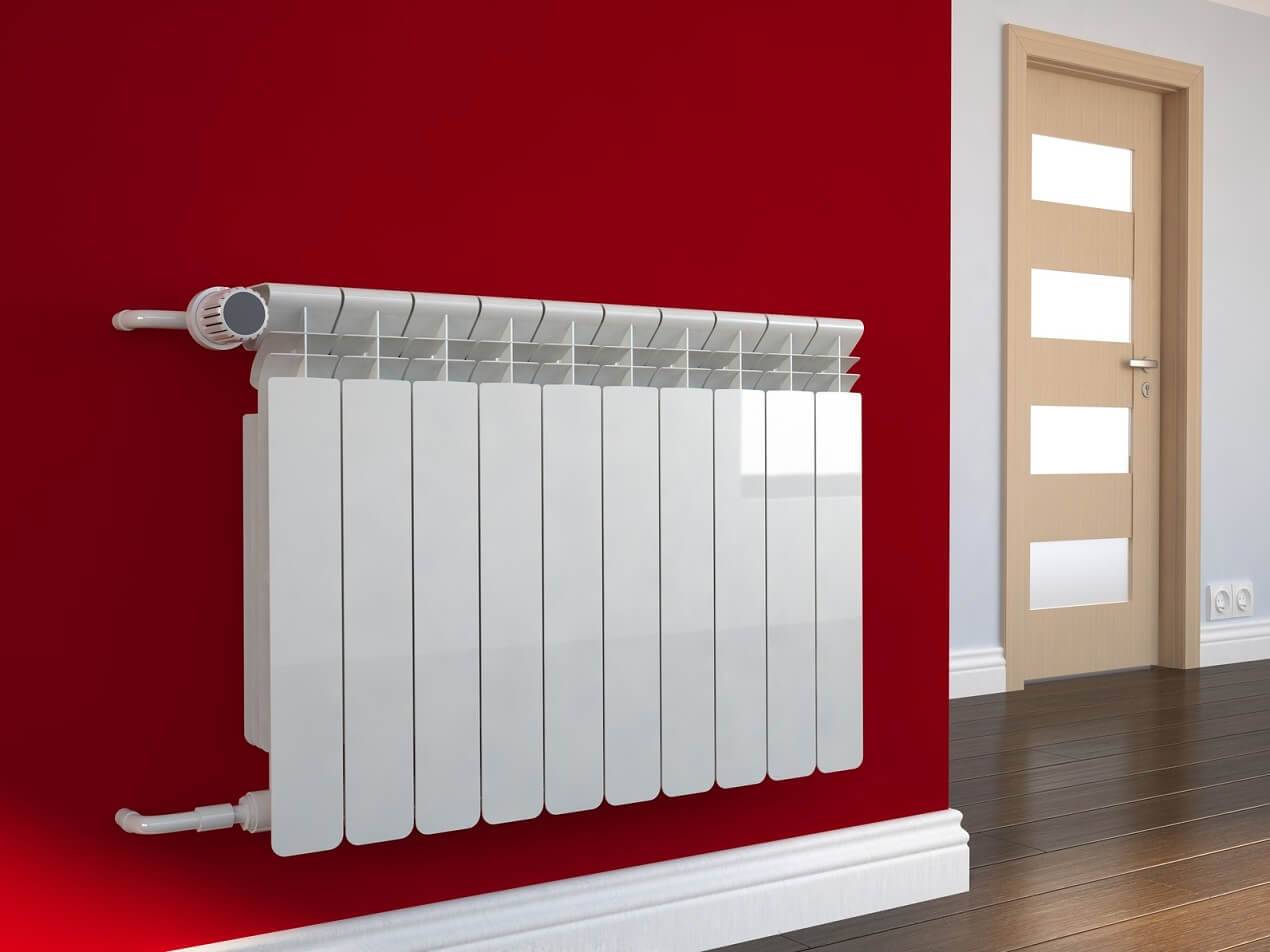
As the name implies, these radiators consist of two metals - steel and aluminum, while using the advantages of both of these metals. The internal circuit that conducts the coolant in bimetallic radiators is made of steel, which allows them to be used in systems with any pressure and with various types of pipes and fittings.The outer plates, which transfer heat into the space of the room, are made of aluminum and, due to its high thermal conductivity, perfectly heat the room.
Bimetal radiators in the apartment
Advantages of bimetallic radiators:
- High working pressure - up to 35 atm.;
- Resistance to corrosion at any quality of the heat carrier;
- Low inertia - radiators heat up quickly, cool down just as quickly, and by controlling the supply of coolant, you can quickly reduce or increase the temperature in the room;
- Attractive appearance;
- Light weight, easy installation;
- Sectioned design, allowing you to select the desired number of ribs.
The disadvantages include, perhaps, the higher price of bimetallic radiators. What is soon compensated by their reliability and long service life. It should also be noted that when installing bimetallic radiators, it is imperative to observe the distances to the wall, floor and window sill - it must be at least 4 cm.
Summing up, we can say: for installation in an apartment with central heating, it is better to choose cast-iron or bimetallic radiators, and for low-rise buildings - also steel. Aluminum radiators are best used in closed systems connected to a heating boiler, that is, where it is possible to check the quality of the coolant.
Lamellar convectors
There are different types of convectors. the most popular of them are accordions. Structurally, they consist of many plates mounted on pipes through which the coolant circulates. Some models have a protective casing so that a person cannot get to the heating elements and get burned.There are models with a heating element that run on electricity.
- Strength (leaks or breaks are rare);
- High heat dissipation;
- Possibility of regulation of heat transfer by automatic equipment;
- Ease of installation;
- Automatic setting of operating modes for efficient use of the heating device (for electric models);
- Reducing the peak load in the power grid due to automatic regulation (for electric models);
- Possibility of installation on the floor, ceiling.
- Uneven heating of the air in the room;
- Difficulty removing dust
- Electric models raise dust, allergy sufferers may have problems.
Design features
To create comfortable living conditions in a private house, it is necessary to choose the design of heating radiators.
It depends on the shape of the living quarters, the design of a private house.
Radiators consist of vertical or horizontal tubes, solid plates that create good convection.
They quickly and thoroughly warm up the room.
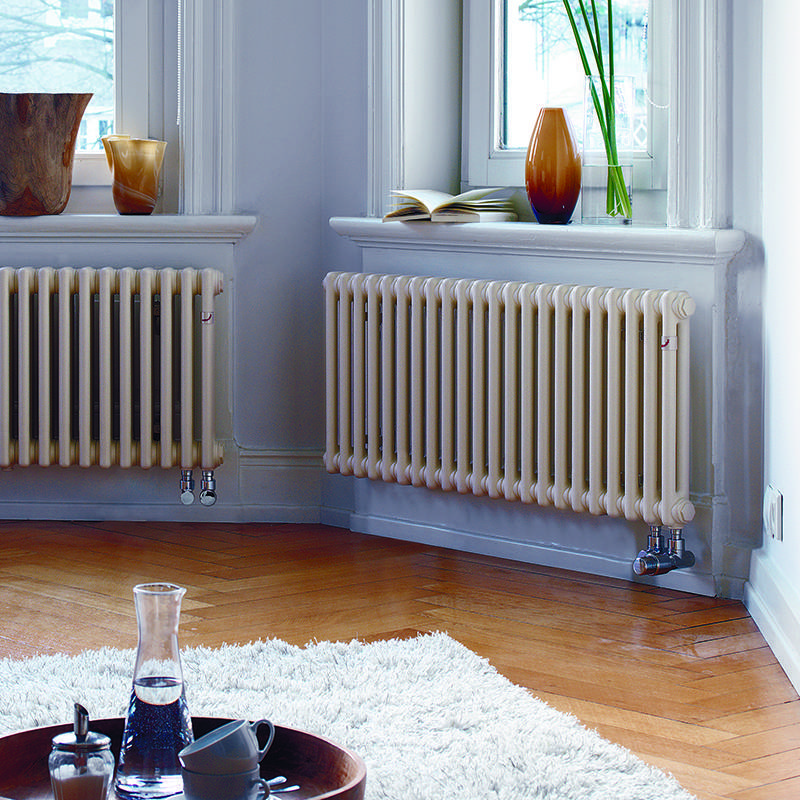
Tubular
This type of radiator belongs to the premium segment in terms of service life, up to a quarter of a century, design and price. The thickness of the tubes is selected depending on the size of the room. Can be installed in rooms with floor-to-ceiling panoramic windows.
European manufacturers supply the market with low tubular heaters with a height of 15 centimeters or more. There are angled and curved heat exchangers. The most expensive and durable design are tubular stainless steel batteries. They have only one drawback - the high price.
Sectional
Sections of the same type in such radiators are assembled for a certain power.You can choose any shape and length.

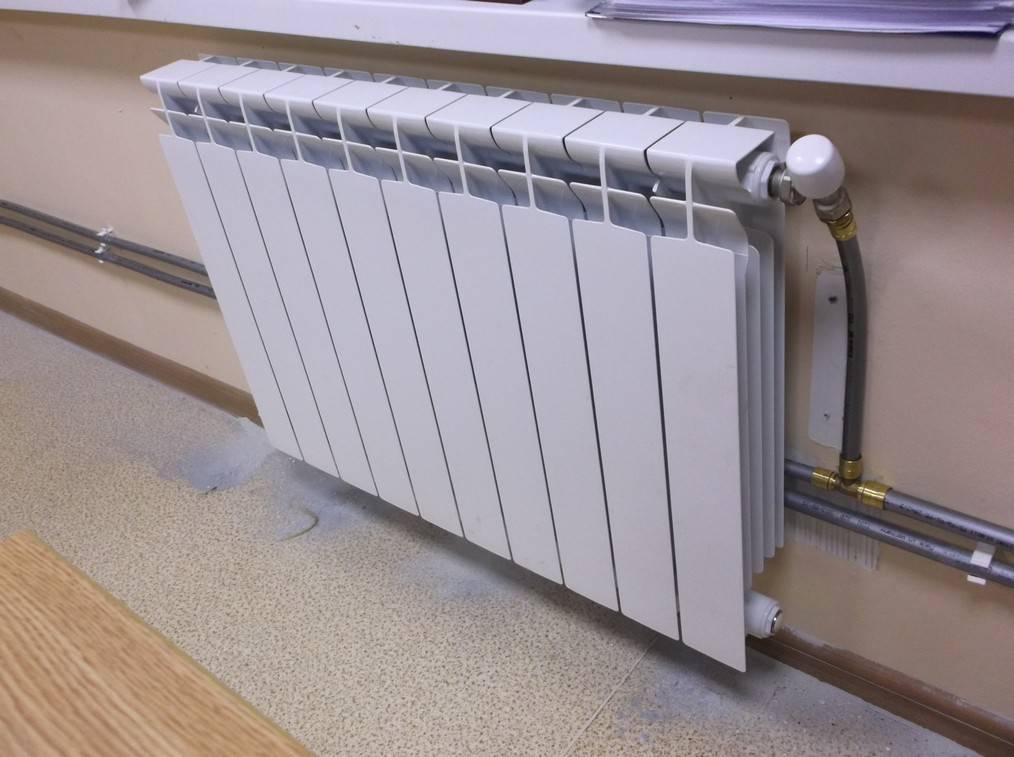


Sections are made of any type of metal used in radiators. This is an economical low cost option that allows you to vary the number of elements and regulate the temperature.
The worst thing that awaits the owners is leakage between sections and difficulty in cleaning.
Panel
Radiators are two metal shields connected by welding. They are made only of steel, they have the advantages and disadvantages of this type of metal in contact with water. The solid surface has a high heat dissipation, it is easy to mount on any walls, including hard-to-reach places. Unlike sectional devices in one-piece designs it is impossible to change the size.
Convector
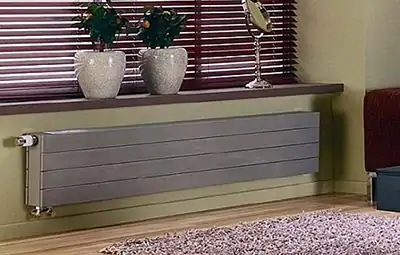
The design of the pipe with plates in the convector radiator ensures constant air circulation in the room.
A copper or steel pipe is used as the body, to which low-carbon steel plates are welded. The main advantage of convector radiators is the rapid heating of the room.
Air circulation can raise dust, so experts do not recommend equipping water heating with such devices where allergy sufferers live. Convectors are inefficient in rooms with a high ceiling - more than three meters.
General selection guidelines that everyone should know
Summing up the comparative characteristics of various types of heating devices, we can distinguish the following main points:
- For a centralized open heating network, present in high-rise buildings, as many years ago, a cast-iron radiator remains the best option.It is resistant to the poor quality water circulating through our pipelines and will last for many years. "Accordion" will withstand pressure drops and water hammer, while effectively heating the air in the room. The low price of this type of heater makes it quite affordable for everyone. However, the high inertness of cast iron will not allow such a radiator to be combined with a thermostat.
- A good alternative to a cast-iron battery in an apartment building is a bimetallic steel-based battery with aluminum or copper. Steel has sufficient rigidity and corrosion resistance to withstand water hammer and unfavorable chemical composition of water in the central system, while aluminum or copper compensates for steel's less than outstanding heat transfer. However, the high cost does not allow us to say that this will be the best option.
- For closed heating systems present in private homes, it is usually easier to choose batteries - there is no overpressure in the heating system, and water is being prepared before it enters the pipeline. Therefore, the optimal type of heater for the home is aluminum. Its price is affordable, the design is good, and the heat dissipation is high. The low inertness of this will allow it to be used in conjunction with a thermoregulation system.
- A good alternative to aluminum batteries in conditions of autonomous heat supply is steel radiators. Having a lower heat transfer than aluminum, steel heating appliances have many advantages - light weight, low inertia, nice design, attractive price.
- Steel and aluminum batteries are produced primed on the inner plane of the heating element to prevent corrosion from the aggressive environment of the coolant. Scale and rust particles present in the coolant of open heating systems lead to mechanical destruction of the primer layer inside the devices, so manufacturers recommend that they be used in closed heating systems of private houses. A good option for open centralized systems can be a copper radiator, but not everyone will be pleased with its cost.
Popular electric heating batteries and their functionality
Throughout its development, man has sought to improve the heating of the home. Primitive fires were replaced by stoves and fireplaces that heated the house locally or centrally, and later heat was supplied through specially designed systems.
Today, private houses are heated with water or steam heating batteries, which are heated by gas. But this type of heating is acceptable for areas where connection to the central highway is possible. What should consumers who are unable to connect to gas do? Electric radiators for heating rooms - a worthy replacement for water radiators heated by gas or solid fuel.
Cast iron radiators
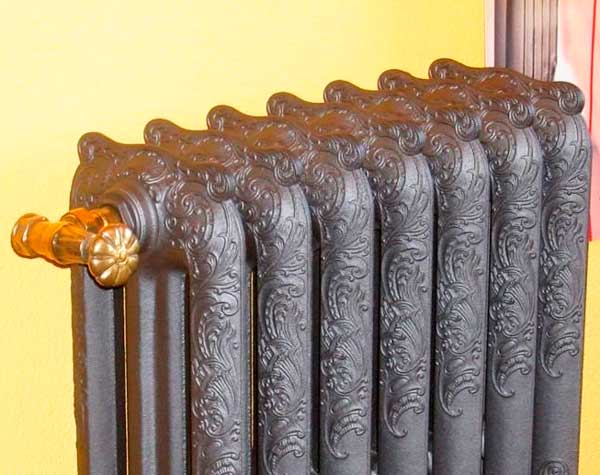 This type of radiator was used in Russia even under the tsar. In houses that were built in Soviet times, they still serve faithfully.
Cast iron batteries heat up for a long time, but cool down for a long time. The residual heat retention number is twice that of other types and is 30%.
This makes it possible to reduce the cost of gas for home heating.
Advantages of cast iron radiators:
- Very high resistance to corrosion;
- Durability and reliability that have been tested over the years;
- Low heat transfer;
- Cast iron is not afraid of exposure to chemicals;
- The radiator can be assembled from a different number of sections.
Cast iron radiators have only one drawback - they are very heavy.
The modern market offers cast-iron radiators with decorative design.