
- Manufacturers overview
- Karcher
- gardena
- bison
- Hammer
- Calpeda
- Vortex
- Design types and installation features, advantages and disadvantages
- Which to choose?
- Submersible or outdoor
- What to look for when choosing equipment
- Water intake from a reservoir for an automatic irrigation system
- Water supply methods:
- Methods for filtering water before entering pumping equipment
- Varieties of automatic irrigation systems
- Sprinkling
- Aerosol irrigation system in the greenhouse (drencher)
- Subsoil irrigation system
- drip irrigation system
- Best Drainage Pumps for Clean Water
- Metabo TDP 7501 S
- Karcher SPB 3800 Set
- Marina Speroni SXG 600
- Gardena 4000/2 Classic
- Parameters for the selection of technical characteristics
- Performance calculation
- How to calculate the recommended pressure?
- FAQ
Manufacturers overview
Domestic and foreign manufacturers sell a wide range of pumps at different prices. Among the "foreigners" the German Hammer and Karcher, the American Patriot, the Italian companies Calpeda and Quattro Elementi are deservedly popular. Among the growing and developing manufacturers are Makita and Gardena, as well as the Chinese Sterwins.
Karcher
Products of the Karcher brand come from Germany, they are of high quality and are distinguished by reliability.In addition, they do not create noise, which means they can be used at any time of the day without causing inconvenience to neighbors. Due to the high pressure, several main lines can be connected to the product.
This technique is not only high-tech and efficient, but also environmentally friendly. During irrigation, there is no energy consumption while waiting. In addition, the company confirms the possibility of obtaining water from alternative sources, managing water consumption and carrying out irrigation without losses.
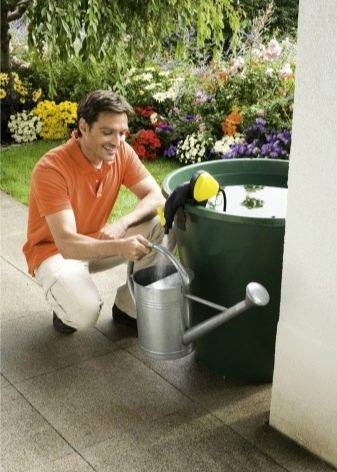
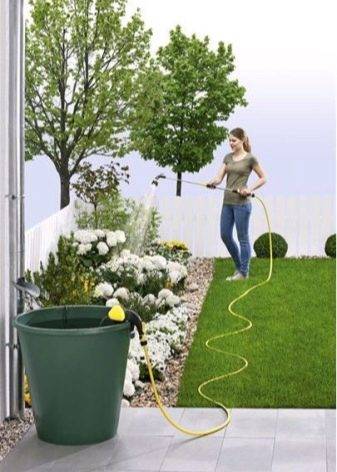
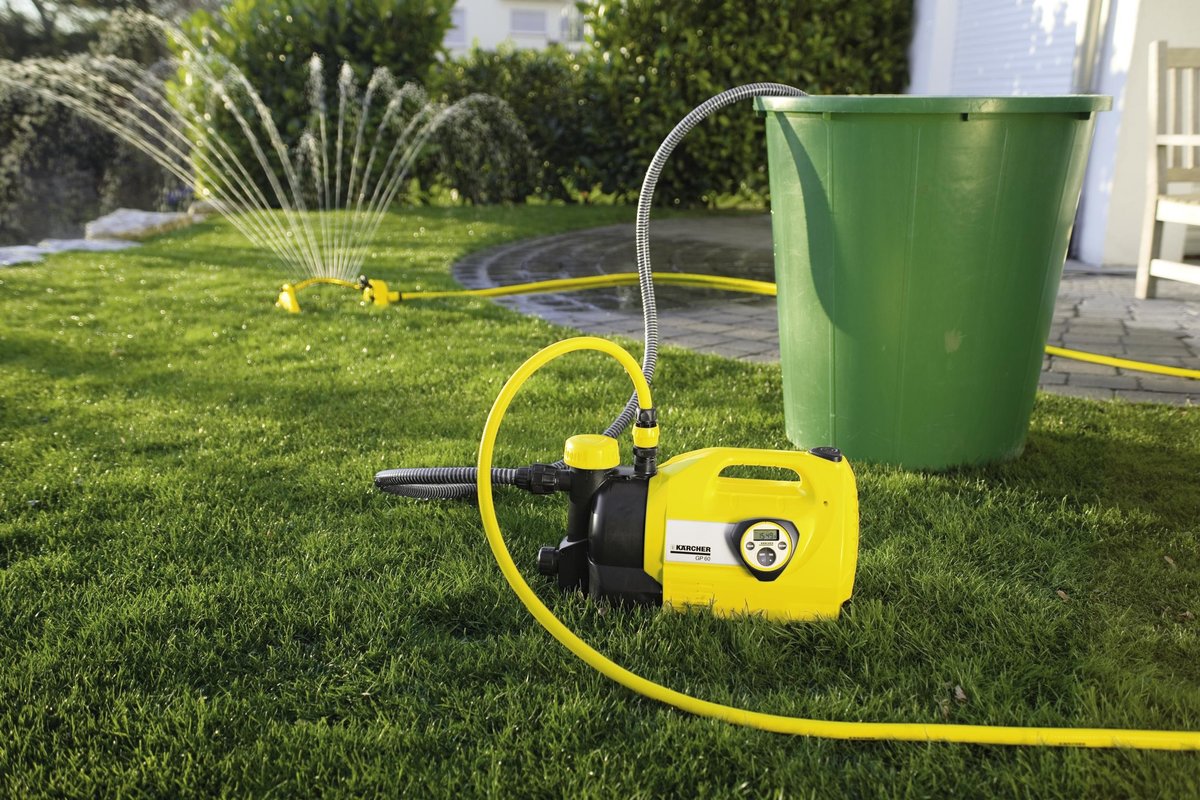
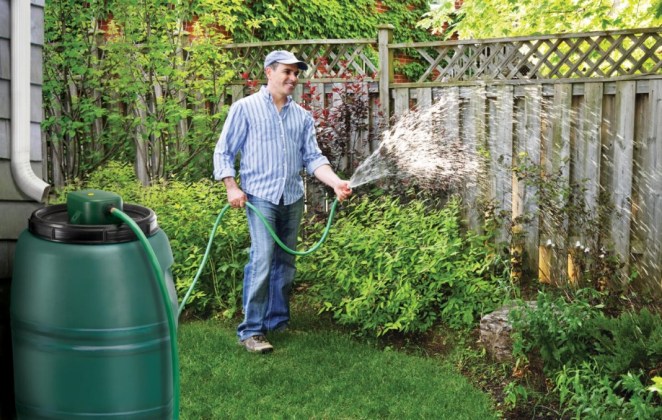
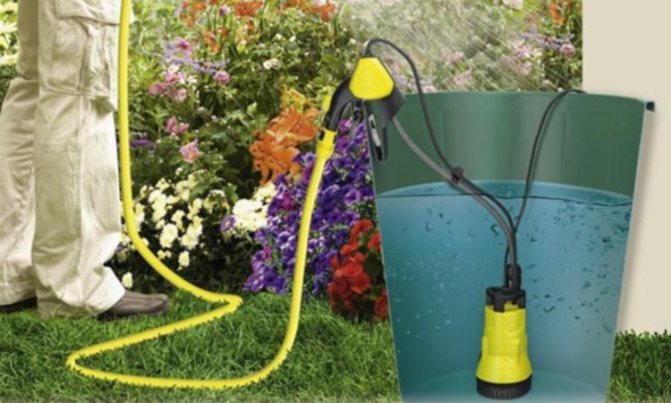
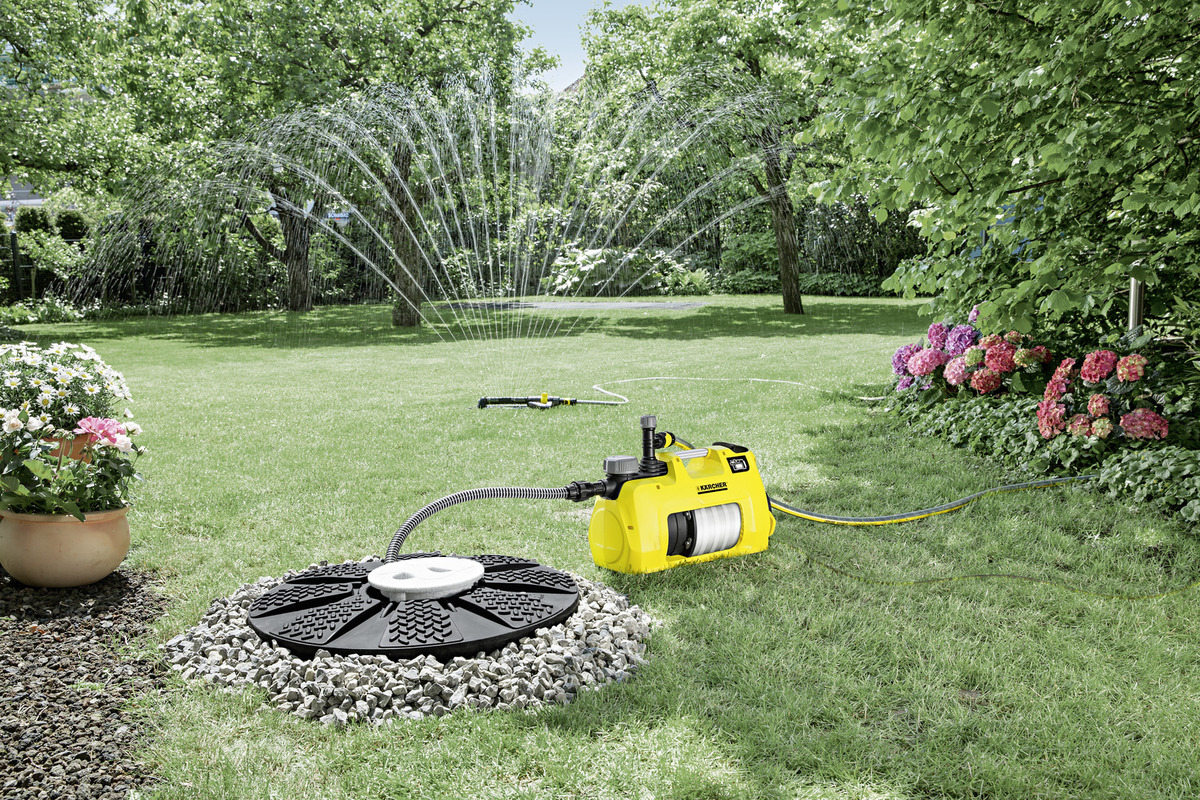
Karcher for barrel irrigation is considered one of the most popular pumps of this company. The design has a filter for water purification, a special float that prevents "dry running", and a hose 20 meters long. If the container is empty, the device will turn off. The valve allows you to adjust the pressure, and the gun allows you to spray a liquid improved with fertilizers.
gardena
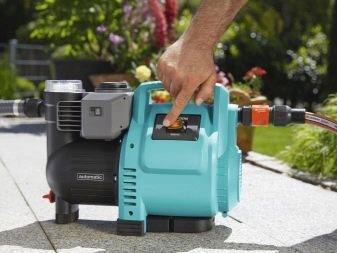
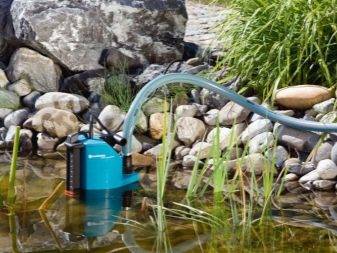
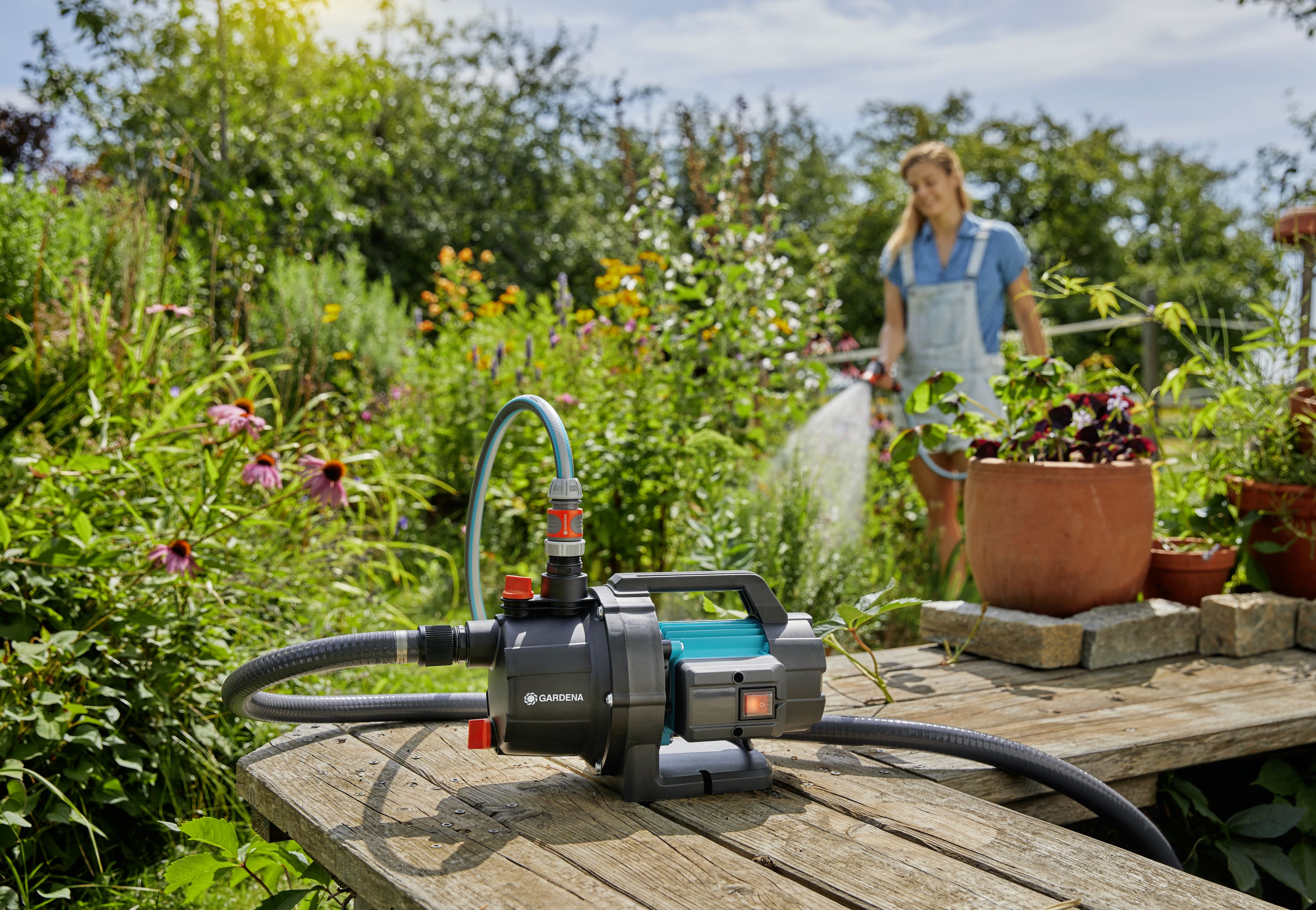
Gardena brand features low energy consumption, but high performance. Almost all models are protected by floats and equipped with a water filter. The pump has a sealed housing, so the possibility of water inside the engine is excluded.
bison
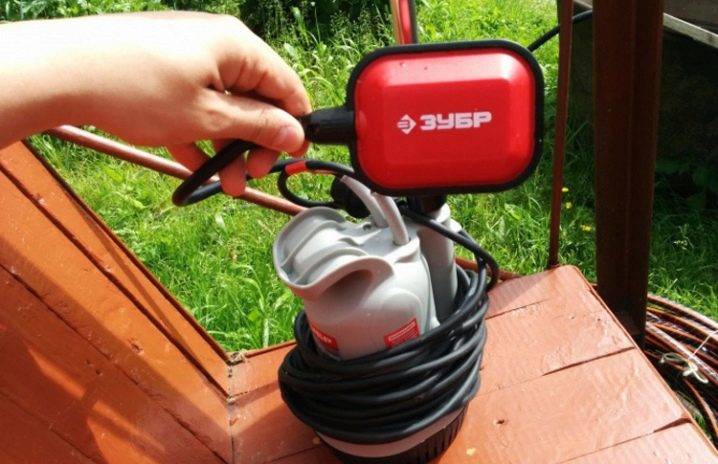
The Russian brand "Zubr" demonstrates additional protection of the windings from heating. The impact-resistant plastic of which the housing is made can withstand heavy loads, and, in addition, during the operation of the pump, the pressure can be adjusted.
Hammer
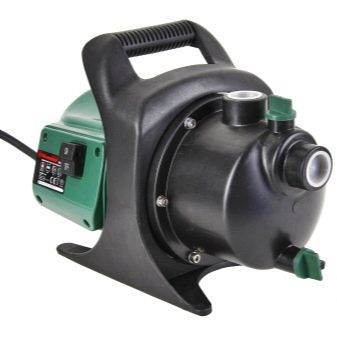
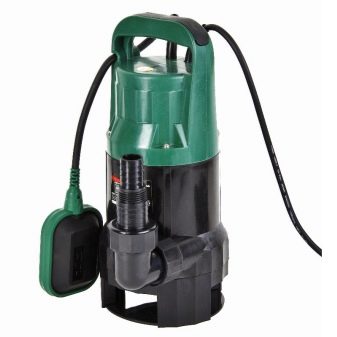
Hammer pumps are used to pump clean water from reservoirs, wells and wells, which is then used for irrigation or supplied to the house. The body is made of aluminum, resistant to impacts and mechanical damage, it does not deteriorate, being constantly in the water.The maximum water intake depth is 10 meters.
Calpeda
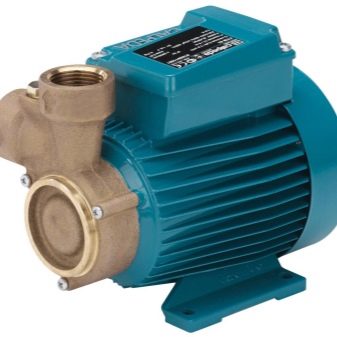
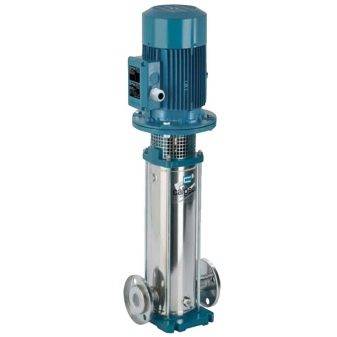
The Italian brand Calpeda is also among the leaders in pump production. The product quality control department ensures that the products have the best properties and characteristics. In addition, Calpeda products meet the requirements in pumping equipment. It produces industrial models, domestic applications, options for heating and air conditioning, irrigation and irrigation, and lowering the groundwater level.
Vortex
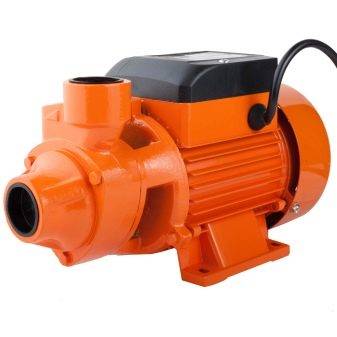
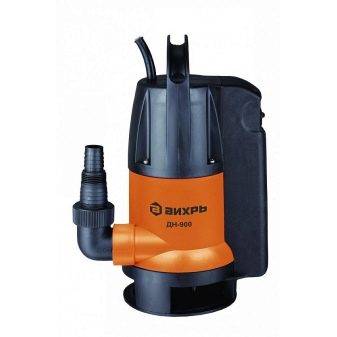
The surface pump of the brand "Vikhr" of domestic production is considered one of the leaders in this segment. Despite the low cost, its operational characteristics are in many respects superior to foreign analogues. The highest productivity has a surface pump "Whirlwind PN-1100N", which is capable of delivering 4.2 cubic meters per hour, which guarantees the efficiency of water supply for irrigation in the country under any conditions.
Design types and installation features, advantages and disadvantages
When choosing a design, you need to consider what placement of the model will be most successful in this area. To do this, take into account the methods of placement by type of equipment:
- Ground (surface),
- Submersible.
Each type has its own design features:
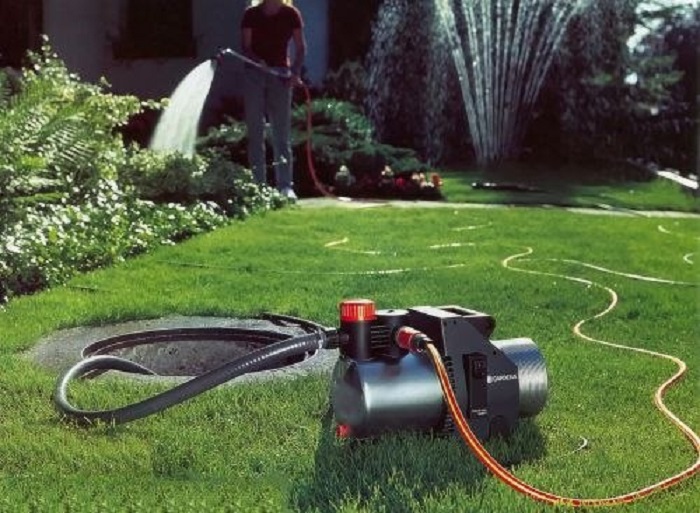 The unit is placed on the ground, the water intake hose is lowered into the water source. The minimum depth of water supply from five meters depth, with ejector equipment, increases to 40 m, which allows the pump to be used in artesian wells
Ground types of pumps according to the principle of operation are divided into the following modifications:
| Name | Peculiarities | Advantages | Flaws |
| Self-priming | They work on the principle of supplying clean water under air pressure. | Inexpensive | Used for clean water only. |
| Vortex | Pump clean water under high pressure (vortex). | It is not allowed to get litter, even small. | |
| Centrifugal | Models are powered by the rotation of one or more wheels. | More productive and reliable than vortex | High cost due to the complexity of the equipment. |
| liquid-annular | The principle of operation of the ring movement ensures a continuous injection of air, which pushes the water. | They pump not only water, but also viscous liquids, such as fuel | Large size and weight compared to other types of pumps. |
| Portable - portable | Compact, convenient, do not require stationary installation. | Popular in cottages where the owners do not live permanently. | Limited in power. |
Submersible pumps are divided into four subtypes:
- Downhole models pump water with small impurities of sand and small debris.
- Wells operate both with full and partial immersion in water. The advantage of the design is that the pumps are equipped with a level sensor that controls the flow of water. As soon as the water supply becomes insufficient, the unit switches off automatically.
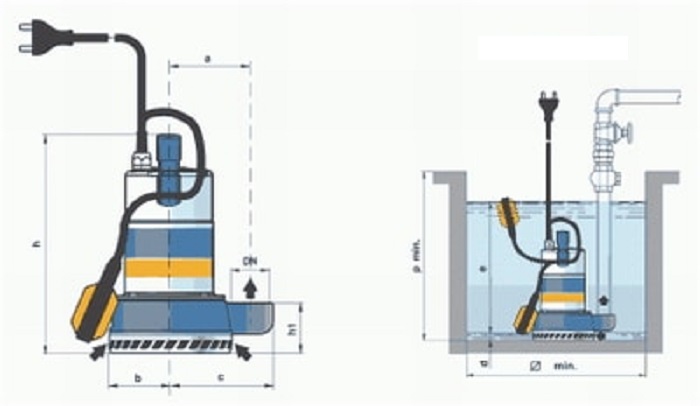 Submersible pumps operate with full or partial immersion in water, respectively, the dimensions of the device must be commensurate with the water container
Which to choose?
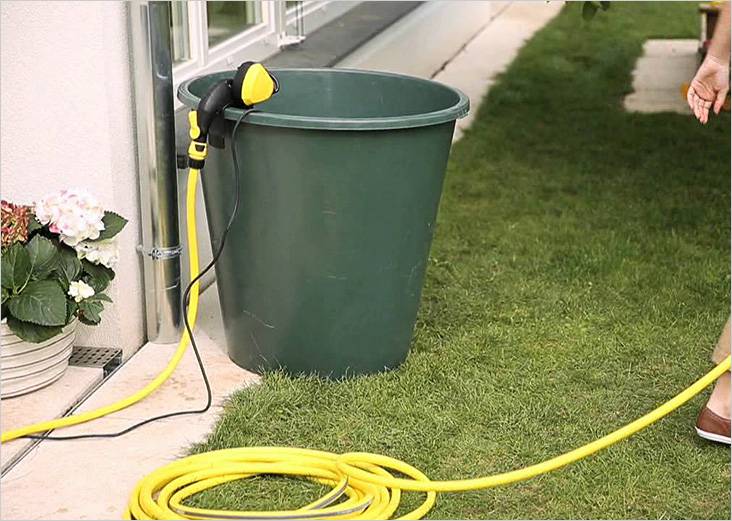 The pump should be compact simple and convenient
Submersible or outdoor
The desire to save money is quite natural, especially when the salary resembles change at the supermarket checkout. Even if this is the case in your case, then the principle “what is cheaper is better” does not apply to choosing the right unit.Which pump is better - submersible or external? Each of them has its own advantages and disadvantages, but, most importantly, each has its own characteristics.
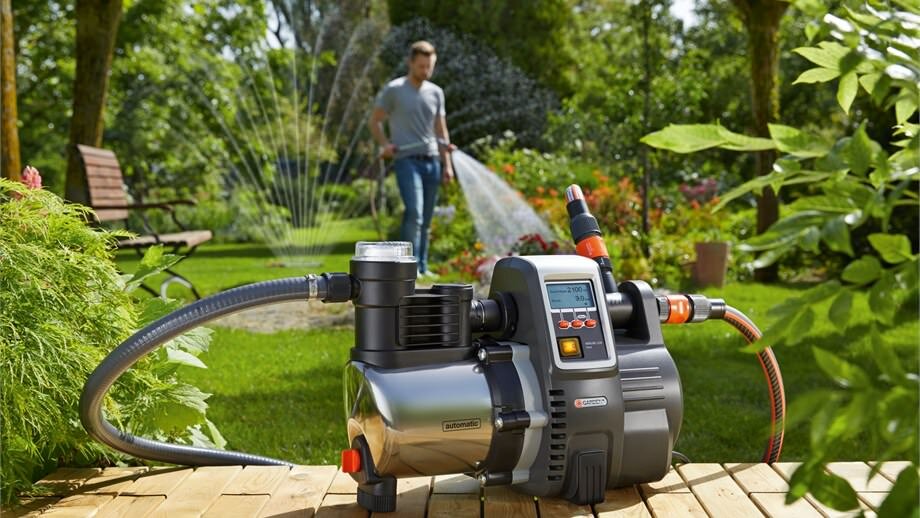
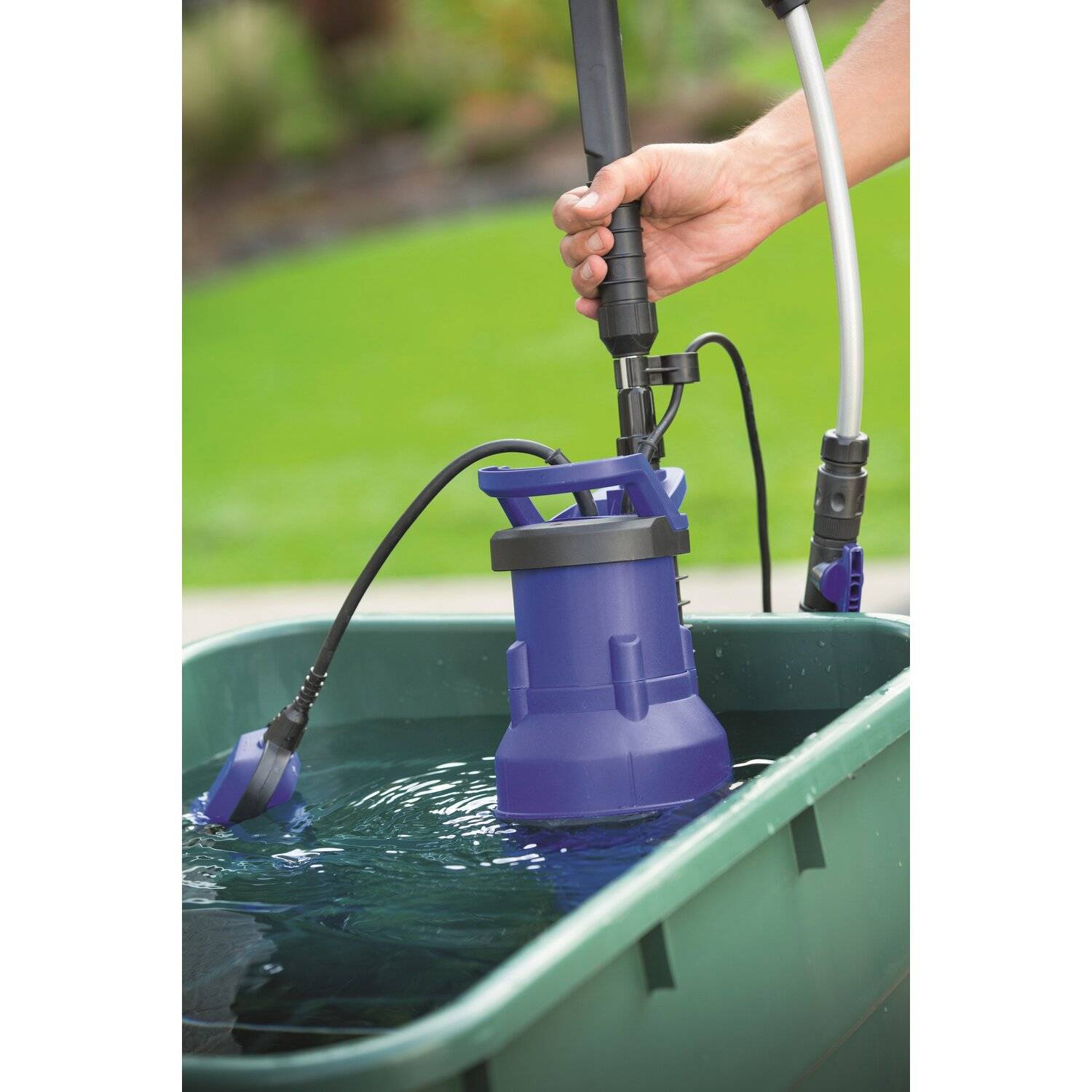

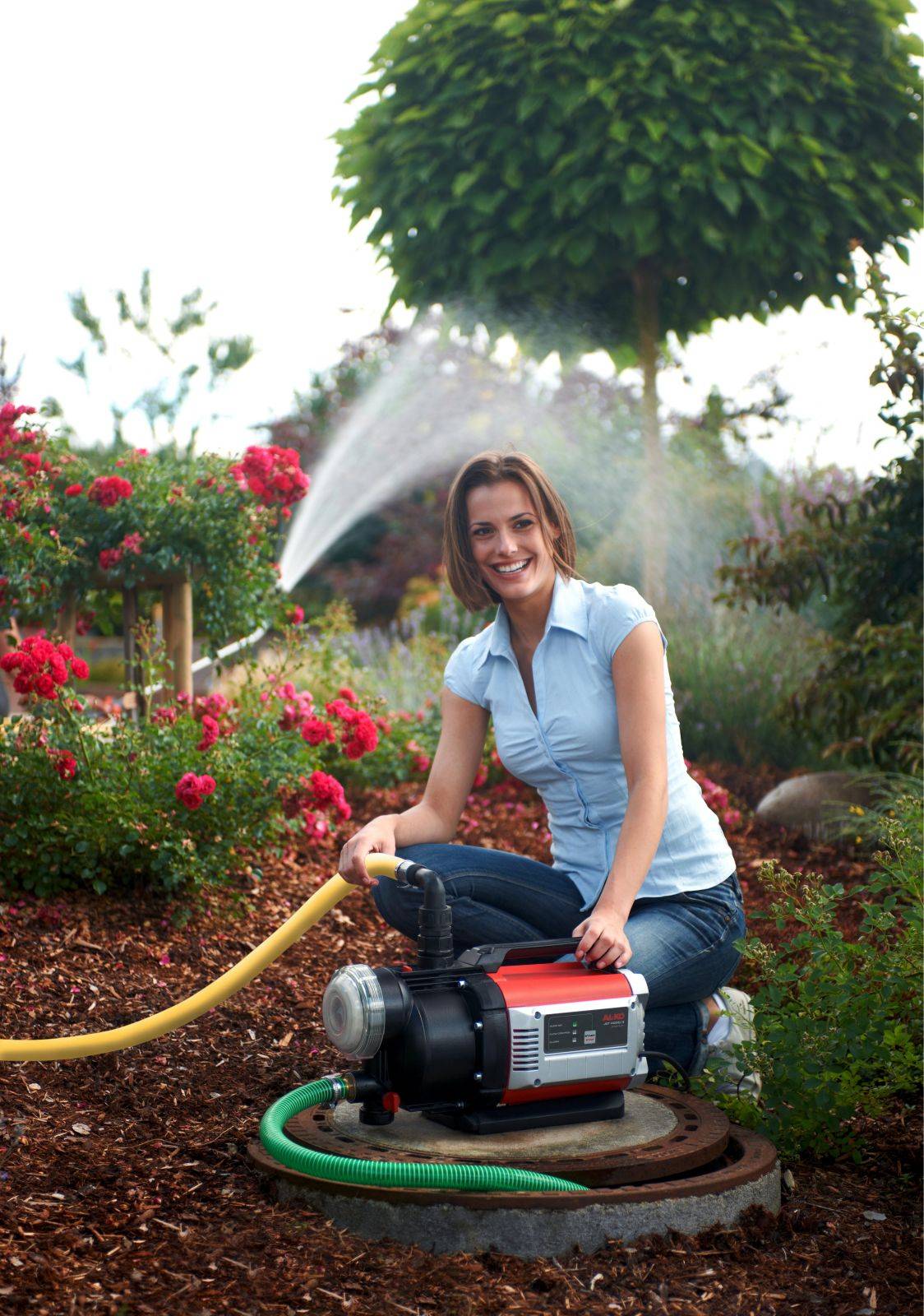
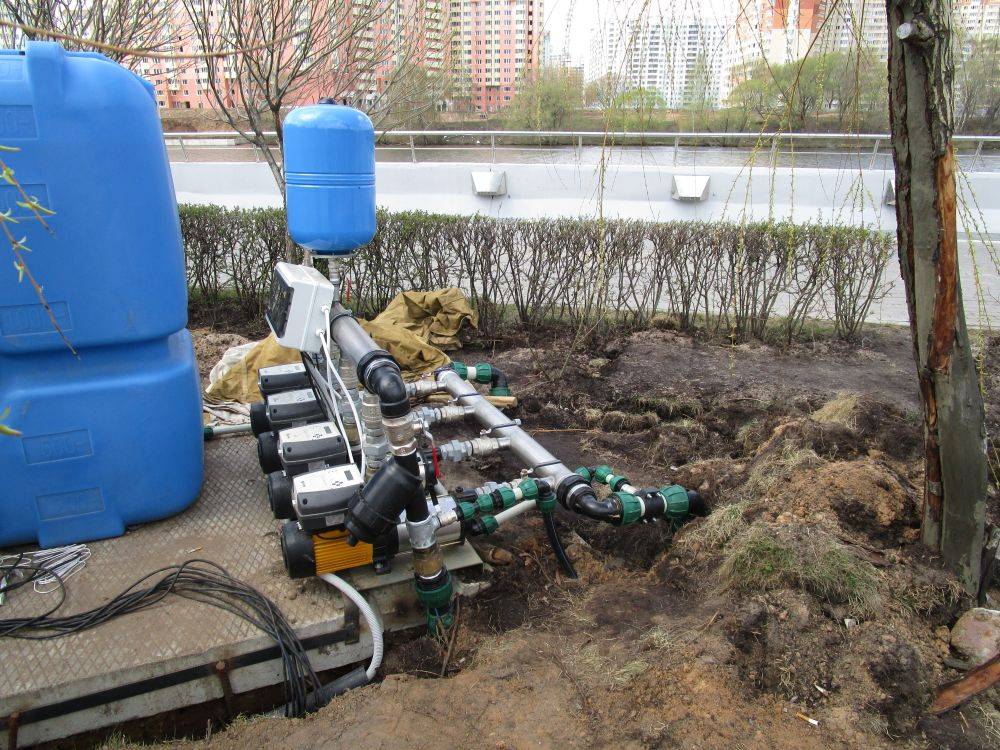
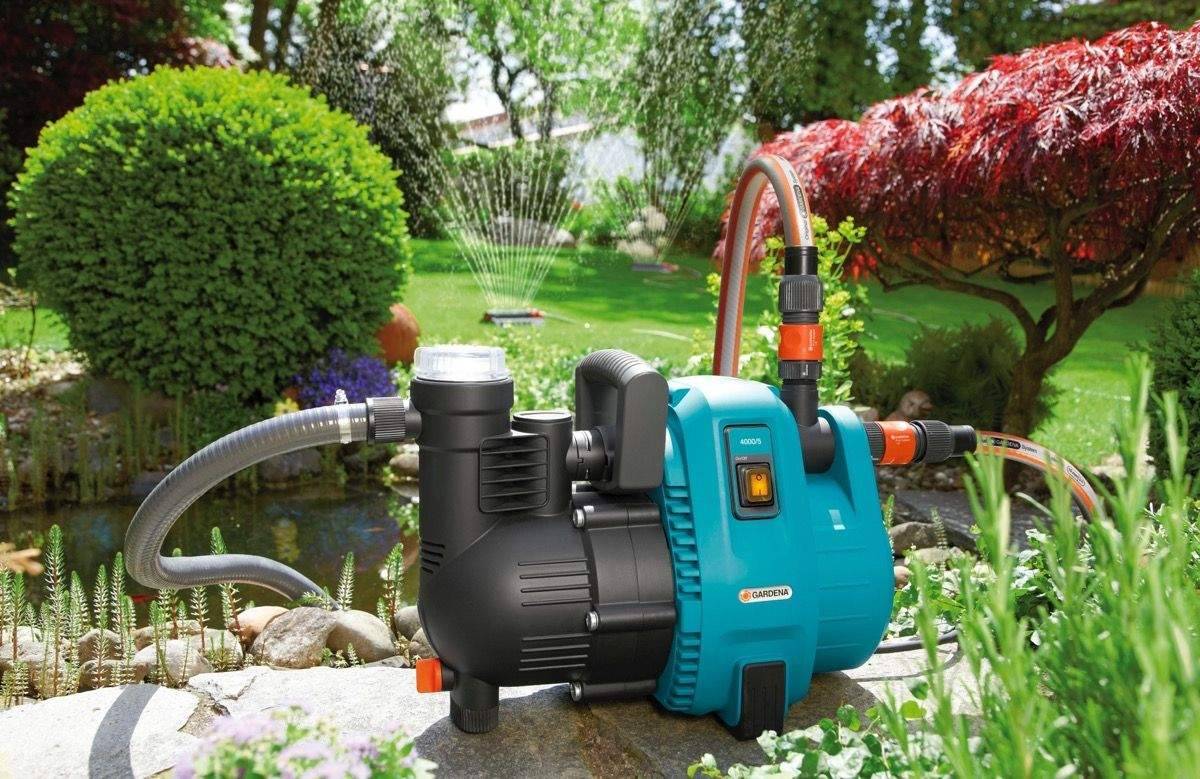
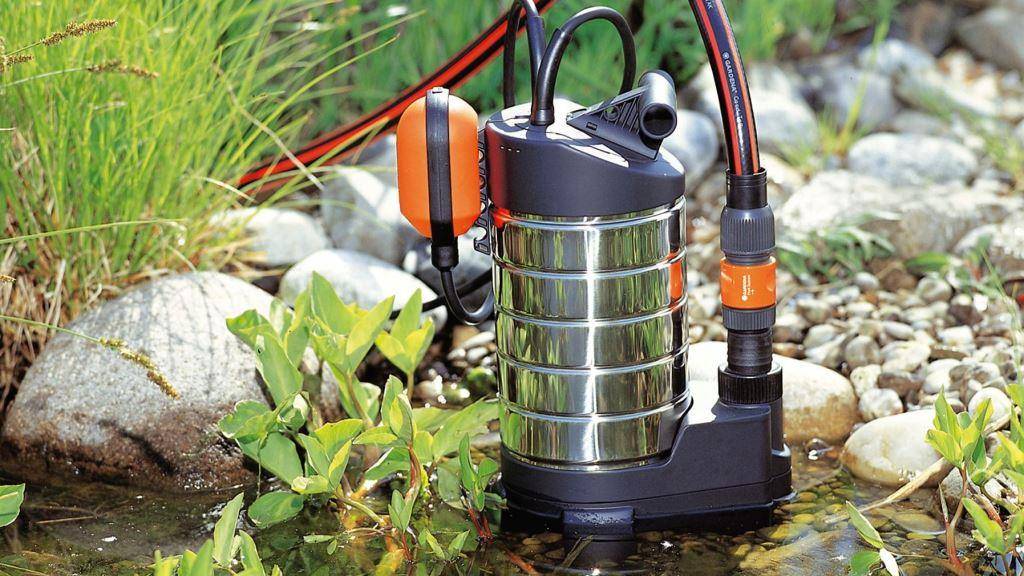

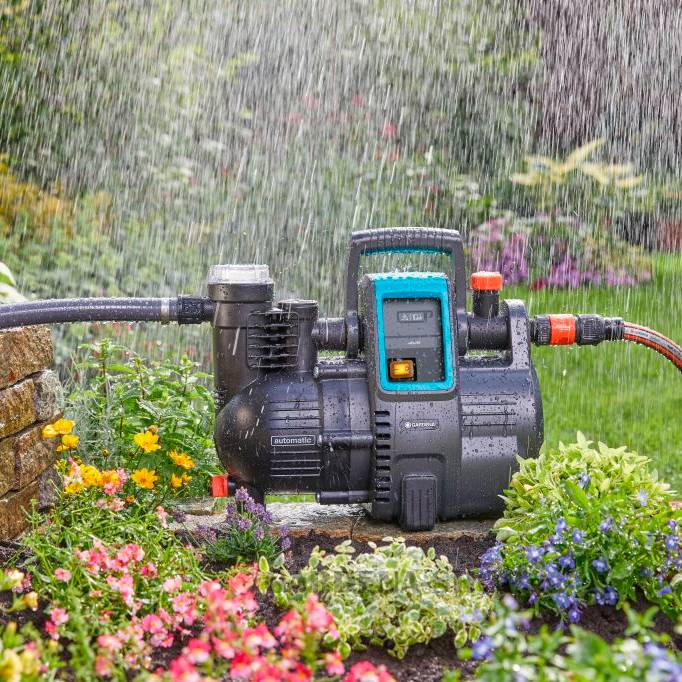
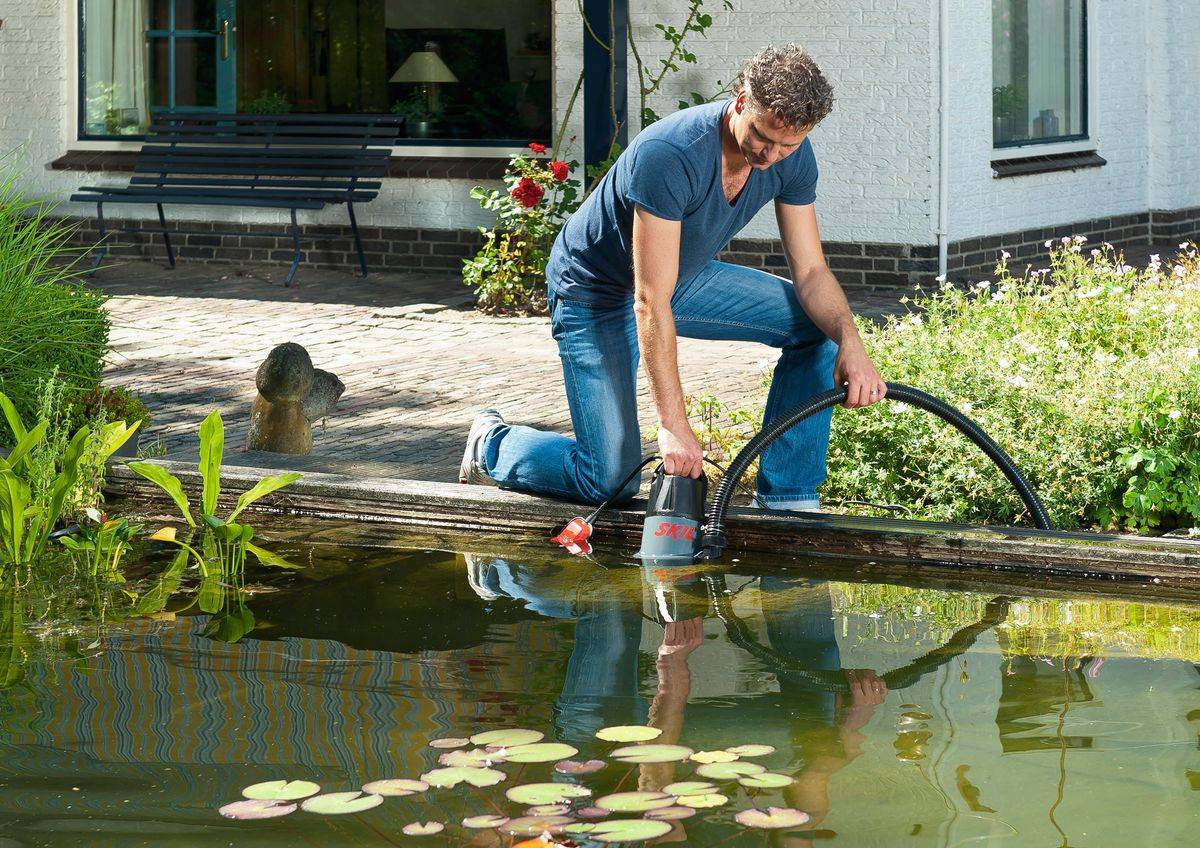
Let's define the area first. There are important questions that need to be answered, where the table will help.
Conditions in which the pump will be used
Surface
Submersible/drainage
With the help of the pump, only watering will be carried out, or it will also be used in order to gain capacity.
It can be used both for pumping containers and for watering the garden.
Same.
How many meters from the water source to the tank.
Depending on the power, it is capable of pumping water for tens of meters, only it must be located close to the water source. This is due to the fact that the length of the suction hose should be no more than 9 m. If it was planned to install it on your site, and stretch several tens of meters of the hose to the water source, then this will not work.
The distance that the pump can pump water depends on its power and design features. Drainage can be with a grinder, so it will grind small debris. The unit must be immersed in water, at least at the bottom. For submersible operation, a depth of about 1 m is needed.
What is the distance from the source of water intake to the farthest point on your site, and what is its volume.
Usually the manufacturer indicates how far the pump is able to supply water.
You need to have some power reserve, because it may happen that you will water the far section of the garden longer than the scheduled time, since the pressure will be very weak.
Same.
If the site is hilly, then where will the water be supplied - up or down.
If the site is hilly, it is important to consider that a 1 m rise in the water column will reduce the delivery distance by 10 m with a 1 inch hose diameter. When the liquid is fed down, it can flow by gravity
In this case, a powerful pump is not needed.
Same.
The type of irrigation selected (drip, under the root, sprinkler, etc.).
When watering at the root, you don’t need to stand above the hose - it can be shifted to a new place from time to time, so a large pressure that can erode the roots of the plant is not needed. The sprinkler will not work effectively with low pressure, so the equipment must be powerful enough. For drip irrigation systems, an automated system is used to maintain the required pressure in the system.
Same.
Noise level.
The noise level is very high, but it can be reduced by a rubber lining or if installed in a shed, but this is not always possible due to the limitation of the length of the suction hose.
The pump itself is not noisy, when it works in water, it is almost inaudible.
The need for a filter.
A filter is needed in all cases where there is a possibility of debris getting into the pump impeller. In addition, a check valve is required.
The drain pump does not need a filter - the lower grate can act as a limiter, preventing large particles of debris from passing through. When using a submersible pump (rotary or vibratory) good filtration is required.
Having decided on the type, we will figure out how to choose the right device for power.
What to look for when choosing equipment
When choosing a pump for an automatic irrigation system, attention should be paid to the following points:
1. Pump power and pressure. It must create sufficient pressure in the system, which should be enough to irrigate the entire planned area.
2. The presence of the function of automatic start and shutdown.
3. The possibility of quick dismantling and re-installation in case the unit will be located in an unheated room or even outside it during the winter season.
4. The presence of a soft start system can significantly extend the life of the equipment.
5
If the pump for automatic irrigation is installed indoors, pay attention to such a parameter as the noise level. Some models pump water so noisily that it is unpleasant to be near them.
6. When choosing a submersible pump, high-quality anti-water protection must be provided.
7. The presence of filters capable of retaining mud inclusions in the supplied water.
8. The internal parts of quality models should be made of stainless steel or quality plastic. This will ensure their resistance to any environment and durability. And the maintenance of such pumps is practically not needed.
9. Give preference to pumps made by well-known manufacturers who specialize in the manufacture of just such units.
Water intake from a reservoir for an automatic irrigation system
Water supply methods:
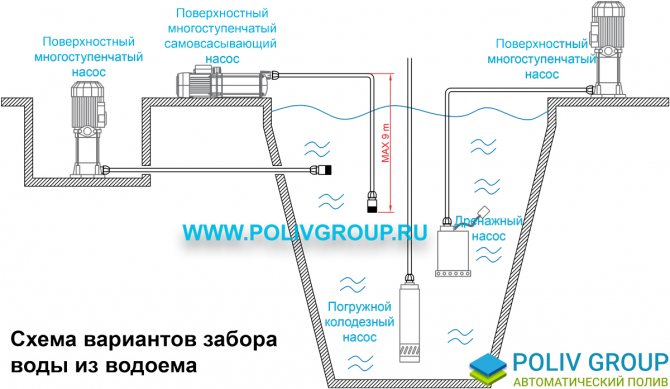
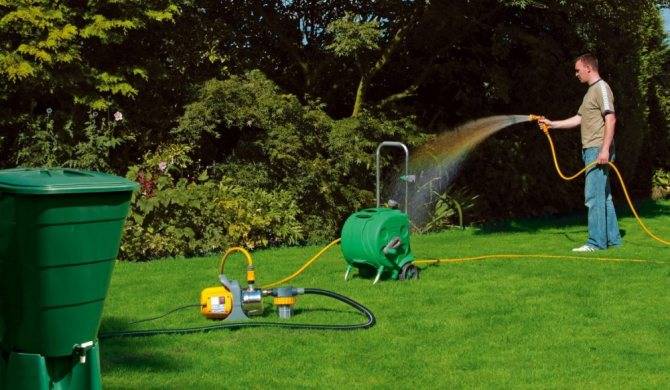
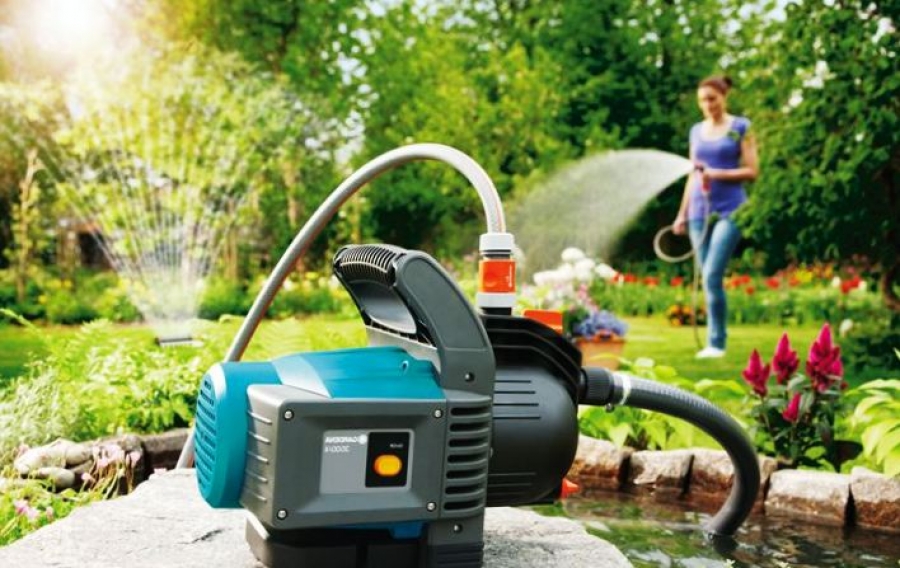
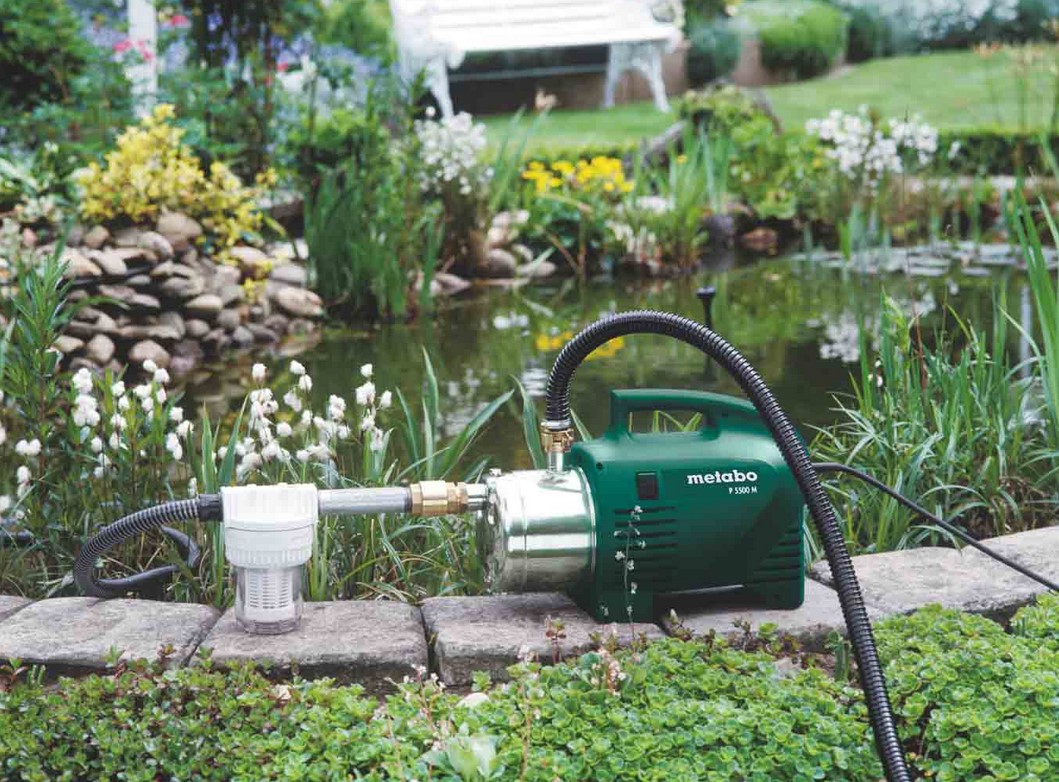
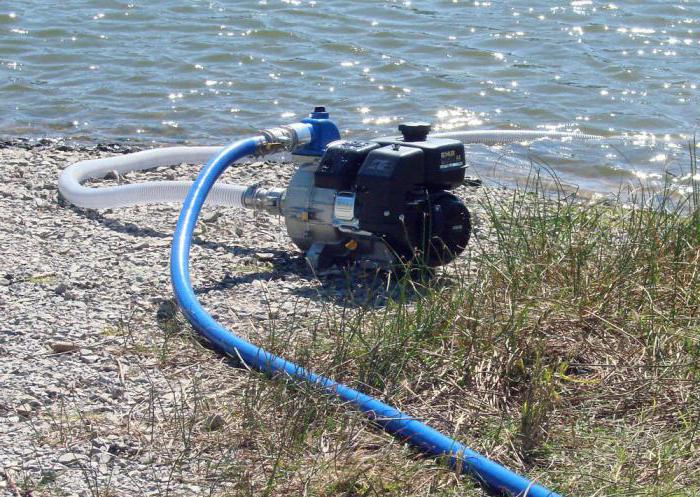
- Surface pump During operation, surface pumps are not immersed in the pumped liquid medium - they are located on the surface of the earth, in close proximity to the water supply source. They are easy to operate.To carry out maintenance of such devices, it is not necessary to remove them from the pumped medium. They are also distinguished by their versatility: they are equally successfully equipped with water supply and sanitation systems, as well as drainage systems and systems that are used to irrigate green spaces in the garden. Water is supplied to this pump by gravity.
- Surface self-priming pump Self-priming surface pumps are used to provide water to the consumer from shallow wells and open water sources. For such pumps, the water lift is limited and its height is usually no more than 8 meters (theoretical lift height is 9 m, the actual lift height is no more than 7-8 m.). Self-priming surface pumps are equipped with an ejector system, which allows the suction effect to be made larger. In this case, a zone with reduced pressure is created inside the ejector. Outside the ejector, the pressure is much higher, and water arrives in the area where it is lower. Due to the movement of water, a pressure difference is created: water rises from the rotation of the pump blades and from the suction effect, which increases the efficiency of the unit.
- Submersible pump A submersible pump is a pump that is submerged below the level of the pumped liquid. This ensures the rise of liquid from great depths and good cooling of the pump components. Submersible pumps in open reservoirs and wells are used with a cooling jacket ("jacket"), which allows the pump housing to be cooled by the pumped liquid.
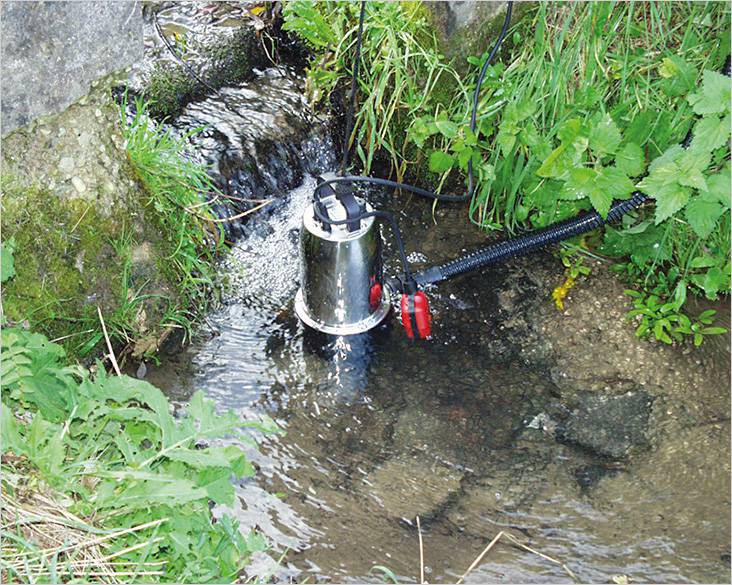
- Drainage pump paired with surface Drainage pump is a type of submersible pumping equipment designed for pumping and pumping liquids with impurities.Drainage pumps usually cannot produce a large output pressure, but they are able to deliver a very large amount of water. For this reason, for the irrigation system, it is necessary to use this type of pump in tandem with a pump to increase pressure.
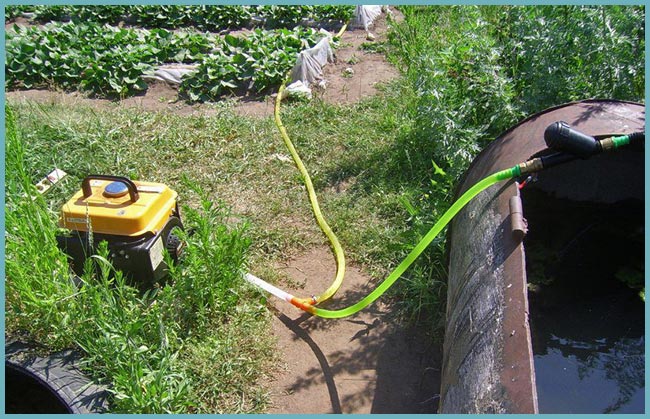
Below is a picture depicting the main three types of pumping equipment used to draw water in automatic irrigation systems.
Methods for filtering water before entering pumping equipment
- Check bottom valve with filter. Bottom varieties of check valves are installed at the inlet of the water pumping line. They are used to equip surface pumping systems in order to protect against pressure drops. A screen mounted on the non-return valve prevents large particles and algae from entering the pump. The main disadvantage of this method of water intake is the constant clogging of the mesh, which can only be cleaned manually.
- Pump protection filter with automatic flushing. These filters are specifically designed to prevent organic and inorganic contaminants, particulates and debris from entering pumping stations. The filter is connected to the suction pipe of the pump and immersed in the water source: river, lake, pond, tank, sea, etc. A stainless steel mesh around the perimeter of the filter housing prevents organic matter, debris and solid contaminants from entering. A small part of the incoming water flow to the pumping station is fed back to the filter housing under high pressure into rotating sprinklers, which wash the screen from the dirt deposited on it. Thus, the filter does not require constant human maintenance.
- Well This type of water intake is the most expensive in terms of volume and cost of work. The well is located on the shore of the reservoir and communicates with it through a large diameter pipeline. At the end of the pipeline is a filter mesh. The well in depth is made 1 - 2 meters deeper than the inlet pipe for sedimentation of organic matter and solid litter. The pumping station draws water directly from the well.
Varieties of automatic irrigation systems
At the moment, three types of automatic irrigation are most widely practiced in private and commercial greenhouses:
- Rain;
- Intrasoil;
- Drip.
Each of these types has its own technical and operational features. The advantages and disadvantages of these systems need to be considered in more detail.
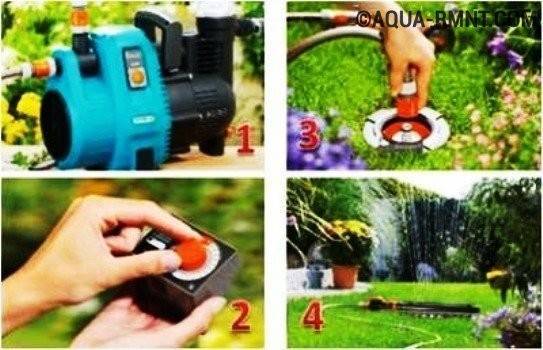



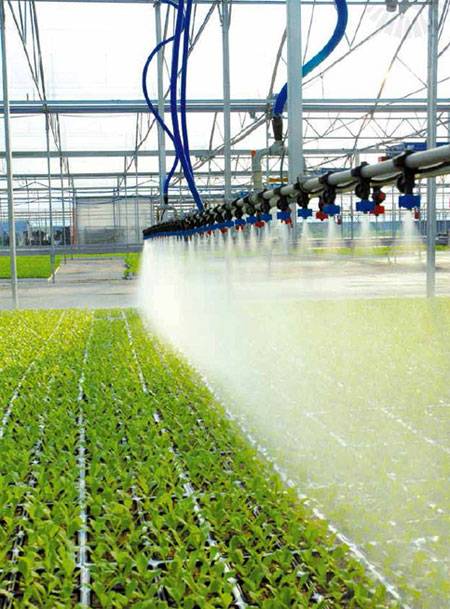
Automatic irrigation in the greenhouse with a moving irrigation ramp
Sprinkling
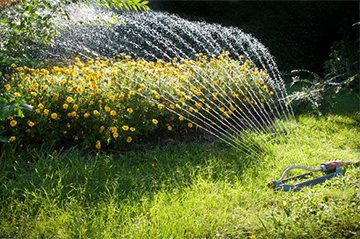
Irrigation by sprinkling can occur both from above and from below. However, for greenhouses, the top positioning of the piping system is the most optimal. This type of irrigation is characterized by a small number of pipes, which require a fairly strong pressure. The atomizers themselves can be stationary or rotating, which, despite the complexity of the device, provide a more uniform distribution of moisture over the area of the greenhouse. In the latter case, fewer watering points are needed, but this method can damage young shoots of plants.
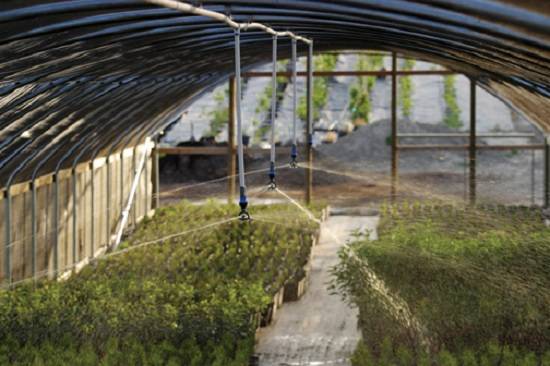
Do-it-yourself automatic sprinkler irrigation device in a greenhouse, pictured is a system with rotary rotating nozzles
- Sprinkler irrigation has certain disadvantages:
- Moisture that has fallen on the leaves on a clear sunny day can cause burns;
- The laboriousness of the process increases significantly; after the end of irrigation, it is necessary to shake off moisture from each plant;
- For branched systems, a very large water pressure is needed, which leads to the need to purchase expensive high-quality pipes and carry out careful installation;
- Inefficient use of water, some of which evaporates and does not reach the root system of plants;
- It becomes impossible to use the irrigation system to apply fertilizer to the soil.
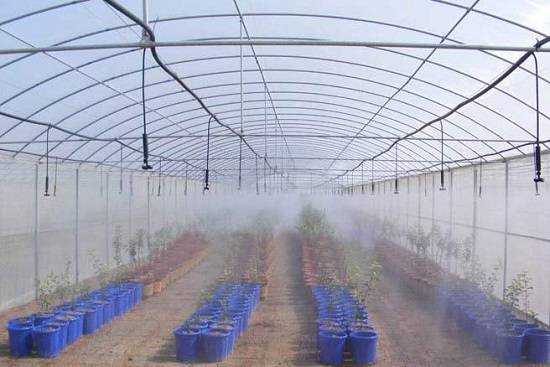
Stationary sprinkler system for automatic watering in polycarbonate greenhouse
Aerosol irrigation system in the greenhouse (drencher)
Such an irrigation system belongs to a variety of sprinkling. It requires an even more powerful engine, since the water delivered through the pipes is pushed through nozzles of small diameter, equipped with atomizers. The pressure in the pipeline in this case can be from 30 to 50 bar.
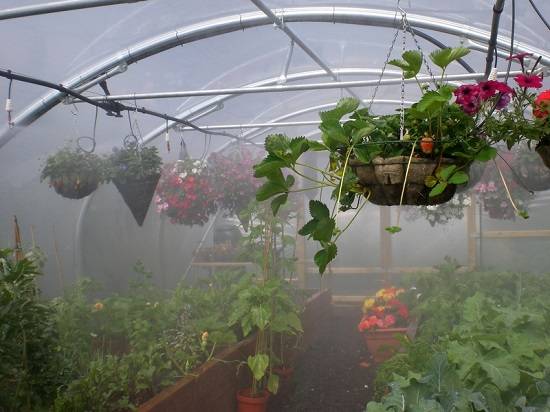
Aerosol (fog) irrigation of the greenhouse
For do-it-yourself aerosol automatic watering in a greenhouse, deluge sprayers are often used, which are used in automatic fire extinguishing systems.
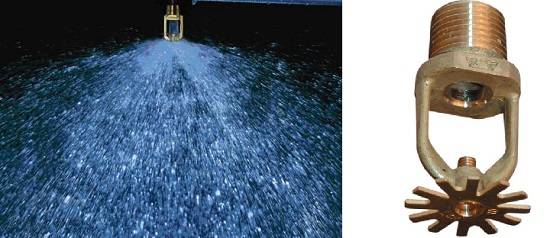
Drencher nozzle and the result of its operation
An aerosol irrigation system for a greenhouse is quite specialized. It is used primarily in the cultivation of orchids and other tropical plants that grow in moist rainforests. It can be used when breeding seedlings in the ground. Its main advantages are:
- Cooling the greenhouse - reducing the heat load on seedlings;
- Significant water savings;
- Prevention of the formation of a hard “crust” on the soil surface that prevents soil aeration;
- More uniform distribution of moisture throughout the greenhouse;
- Possibility of quick and complete disinfection of the greenhouse and plants.
Subsoil irrigation system
Such an irrigation system is the most time-consuming in its construction; in addition, it requires constant monitoring and significant knowledge in land reclamation.
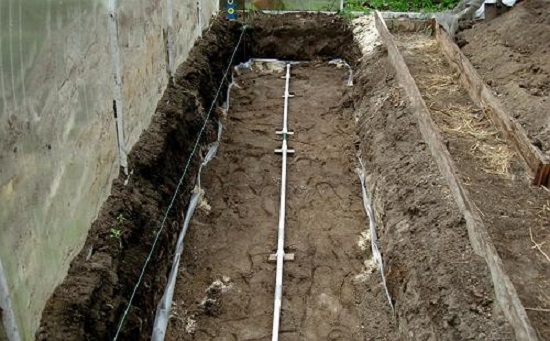
Do-it-yourself subsoil automatic irrigation device in a greenhouse, photo placement of a perforated pipe on a geotextile lining
However, this method has many advantages:
- Low water consumption;
- The soil is aerated - it is saturated with air microbubbles;
- The atmospheric humidity in the greenhouse remains stable and at a fairly low level. This has a positive effect on the prevention of diseases associated with rot.
There are less labor-intensive hybrid methods for subsurface irrigation using plastic bottles.

Simple schemes for underground irrigation
drip irrigation system
At the moment, it is considered the most progressive. The main advantages are:
- No need for strong water pressure;
- Ease of fertilization;
- Water is delivered “addressally” to the root system of cultivated plants, which reduces the number of weeds on the site;
- A crust does not form on the soil, there is no need for frequent loosening.
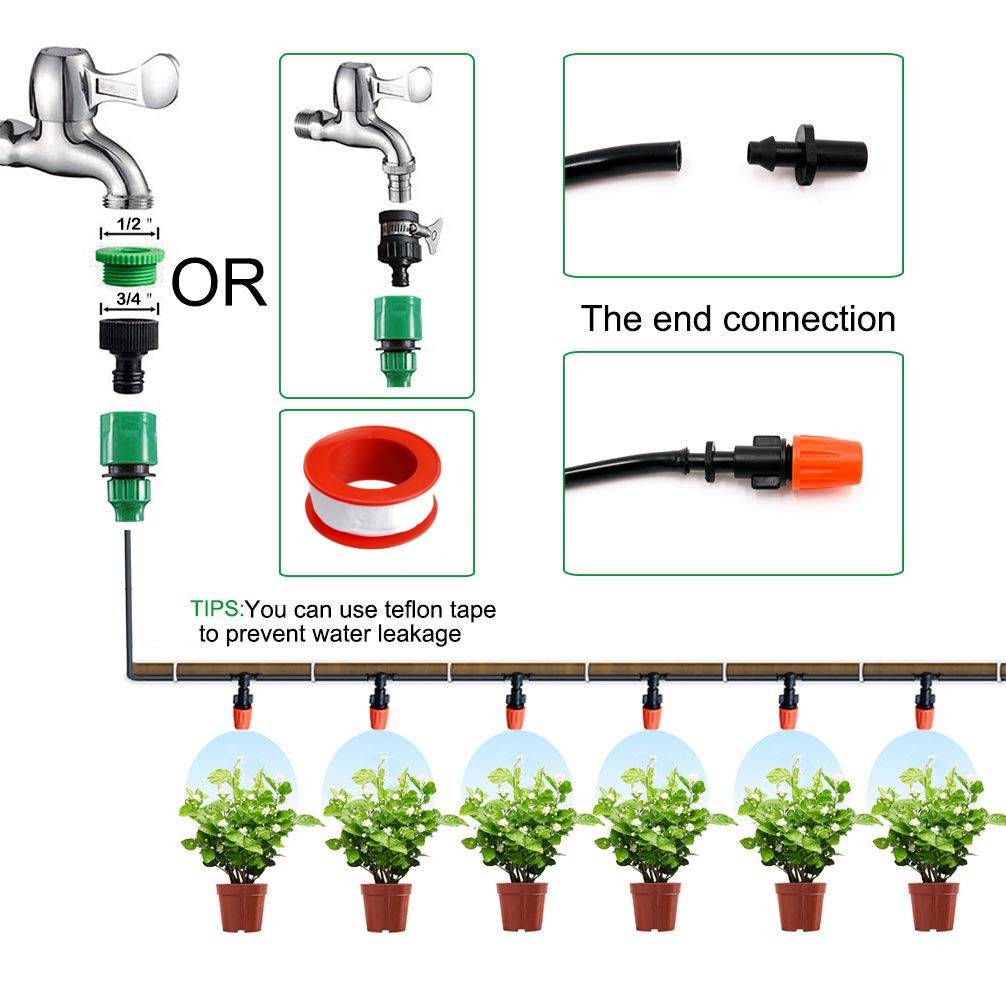
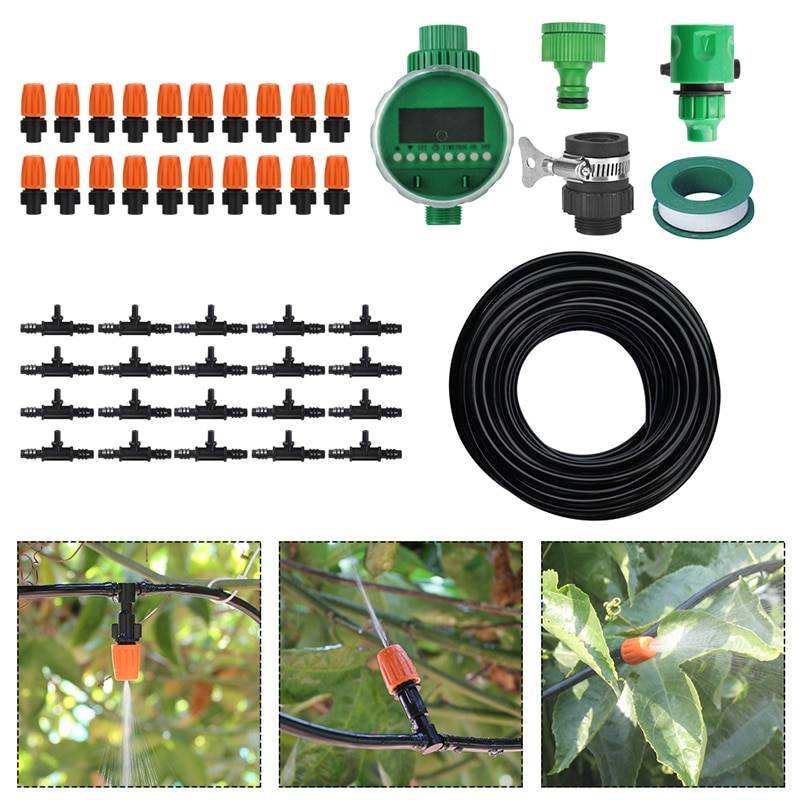
Do-it-yourself drip irrigation device in a greenhouse, on the video the installation process from improvised means:




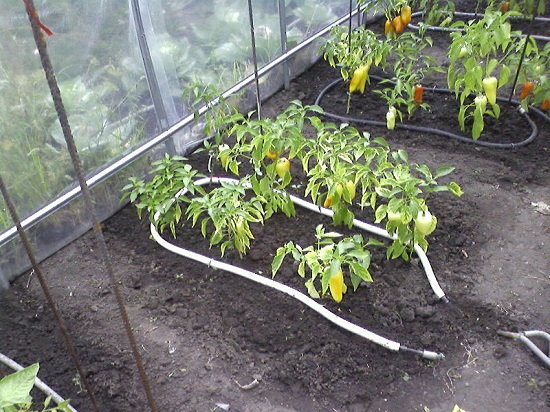
The device of a drip irrigation system in a greenhouse with their own hands, in the photo the use of corrugated pipes
Best Drainage Pumps for Clean Water
Such models are used if it is necessary to pump water containing solid particles with a diameter of not more than 5 mm. They are used in irrigation systems, installed near pools, rain barrels and other reservoirs.
Metabo TDP 7501 S
4.9
★★★★★
editorial score
97%
buyers recommend this product
See review
built-in pump check valve prevents draining excess fluid back through the pipe, which allows you to start the engine less often and increases its working life. The case made of impact-resistant plastic reliably protects the main elements of the device from damage and contributes to stable operation.
The rated power consumption of the pump is 1000 W, the maximum capacity is 7500 liters per hour. The float switch level adjustment guarantees the flexibility of setting the unit operating modes depending on the needs of the owner.
Advantages:
- ergonomic handle;
- check valve;
- connector multi-adapter;
- powerful engine;
- high performance.
Flaws:
great weight.
Metabo TDP 7501 S is designed for watering gardens or pumping water with a low content of impurities. The ability to connect up to three sprinklers makes the pump an excellent solution for irrigating the site.
Karcher SPB 3800 Set
4.9
★★★★★
editorial score
95%
buyers recommend this product
See review
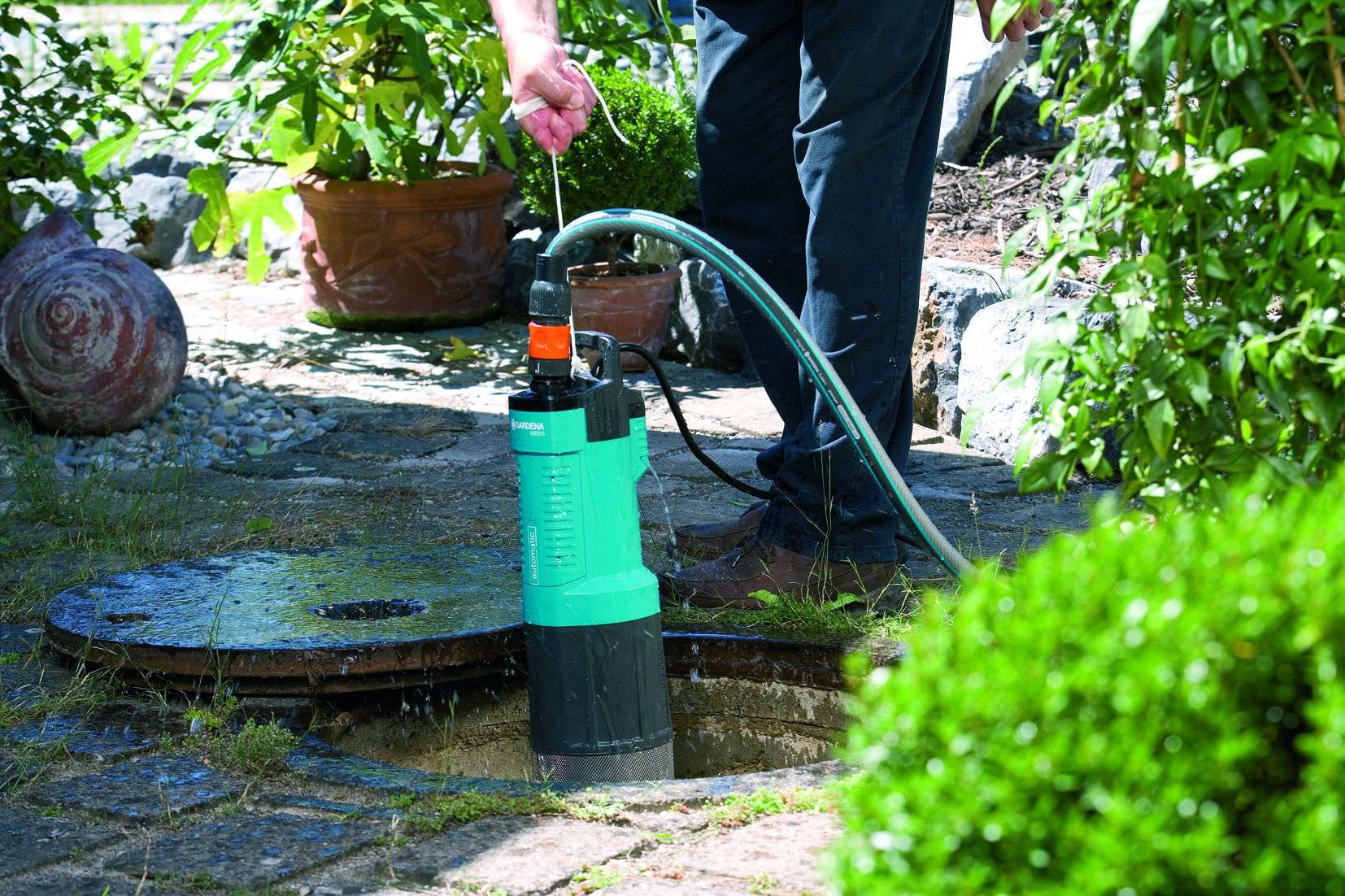
The main feature of the model is the ease of installation. The pump is lightweight, has a special circular handle and bracket. This allows you to quickly lower it into a well or well with a cord, or fasten it to the edge of the container without the risk of tipping over.
The immersion depth is 8 meters, the engine power is 400 watts. An auto shut-off mechanism prevents the device from running dry, and a 10-meter cable guarantees connection to a remote outlet.
Advantages:
- reliable fastening;
- long cable;
- durability;
- light weight;
- extended set.
Flaws:
noisy work.
Karcher SPB 3800 Set should be purchased for installation on irrigation barrels or well sides. It will provide a stable supply of clean water for various consumer needs.
Marina Speroni SXG 600
4.8
★★★★★
editorial score
91%
buyers recommend this product
See review
The model does not require preventive maintenance and is easy to install, which allows you to quickly put the pump into operation and use it for a long time. It is able to work both in tanks with a high liquid content and in small tanks where the minimum water level is 20 mm.
Engine power - 550 W, productivity - 200 liters per minute. The body and shaft of the device are made of stainless steel, the impeller is made of corrosion-resistant polymer materials. This guarantees the reliability and durability of the unit during many years of operation.




Advantages:
- high class of protection;
- long service life;
- overload protection;
- ergonomic handle;
- powerful engine.
Flaws:
high price.
Marina-Speroni SXG 600 is recommended for pumping clean water with a minimum solids content. The pump is designed for use in a personal plot or cottage, draining pools or flooded basements.
Gardena 4000/2 Classic
4.7
★★★★★
editorial score
86%
buyers recommend this product
See review
Ease of storage and transportation of the model is ensured by the presence of a telescopic handle and the possibility of wrapping the cable around the body. The pump does not take up much space and can be used both on a regular basis and periodically - in case of emergency.
The liquid lifting height is 20 meters, the engine power is 500 watts.The low noise level during operation allows you to install the device in close proximity to the living quarters and operate not only during the day, but also at night.
Advantages:
- two-stage impeller;
- quiet work;
- protection against "dry" running;
- ease of maintenance;
- long service life.
Flaws:
low performance.
Gardena Classic allows you to use rainwater or well water for domestic use. The pump is suitable for installation in low-rise buildings and private homes.
Parameters for the selection of technical characteristics
Characteristics that are defining for pumps are:
- Head.
- Performance.
Let's consider them in more detail.
Those figures that are indicated in the documentation are the maximum indicators for this pump.
Performance calculation
Productivity characterizes the volume of water that the pump pumps over a given period of time. For pumps used in the country, this figure should not be too high, and there are several reasons for this:
Rapid supply of large volumes of water to the beds is useless, and can harm the crop.
The performance indicator is inversely proportional to the pressure. And the pressure may need to be rather big (see
Further).
This is especially important if the volume of the source is not large (small well, tank). A very efficient pump drains the source too quickly
A person may simply not have time to orient himself in the garden, as it will already be necessary to turn off the device!
Productivity is indicated in l / h or m3 / h. To calculate the performance, you need to divide the desired volume of water by the time for which it needs to be pumped.
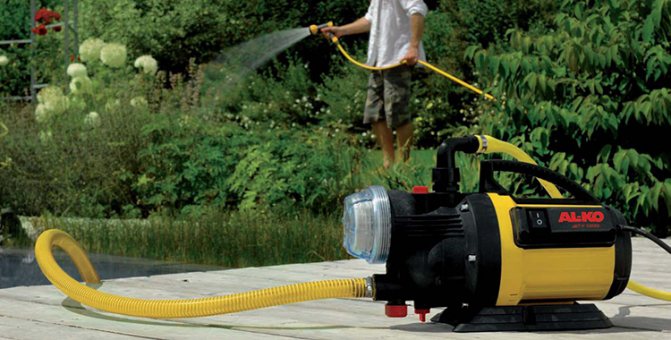
Surface pump for watering ALKO
According to the norms of irrigation, watering 1 m2 requires from 3 to 6 liters of water per day. This means that for 1 weave you will need from 300 to 600 liters of water / day (depending on how moisture-loving the plants are and how much natural moisture they get).





We multiply the norm we have chosen by the number of acres on the site.
For example, let's take a garden of 5 acres, in an arid area, which requires 600 l / day per hundred square meters.
600 x 5 = 3000 liters.
Pumps with a capacity of 3000 l / h (or 50 l / min) are suitable for us. There are such pumps, there are many of them, but it is better to let the device work a little longer, and the productivity will be less - 1500 l / h (or 25 l / min).
How to calculate the recommended pressure?
To calculate the head of the pump (that is, the distance it can deliver water), you need to add the depth of the water source and the horizontal distance to the plants.
The coefficient of head loss due to pipe resistance is also taken into account.
A loss of 1 meter of pressure is taken for 10 meters of pipe or hose.
It is believed that 1 meter of water uplift is equal to 10 meters of its horizontal transportation.
FAQ
How much water does the irrigation system consume? Each irrigation system consumes a certain amount of water, which you can see in the accompanying instructions. In this respect, subsoil systems are considered the most economical.
How long to turn on the automatic watering system? The automatic watering system is adjusted in time based on specific factors: soil type, plant species, soil shading, greenhouse or open ground. The optimal time for watering is the time before sunset and before sunrise. The remaining parameters are selected empirically. For example, cucumbers require a lot of water, while peppers need less. At low temperatures, you need to water less.Therefore, automation needs to be programmed only on the basis of specific conditions. The appearance of the plants will show if the watering is adjusted correctly.



