
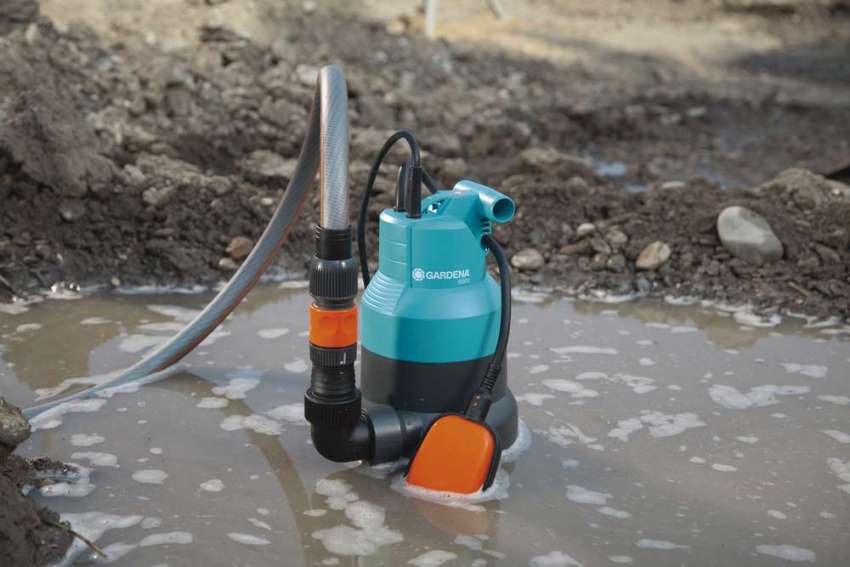
- Main types
- Surface pump
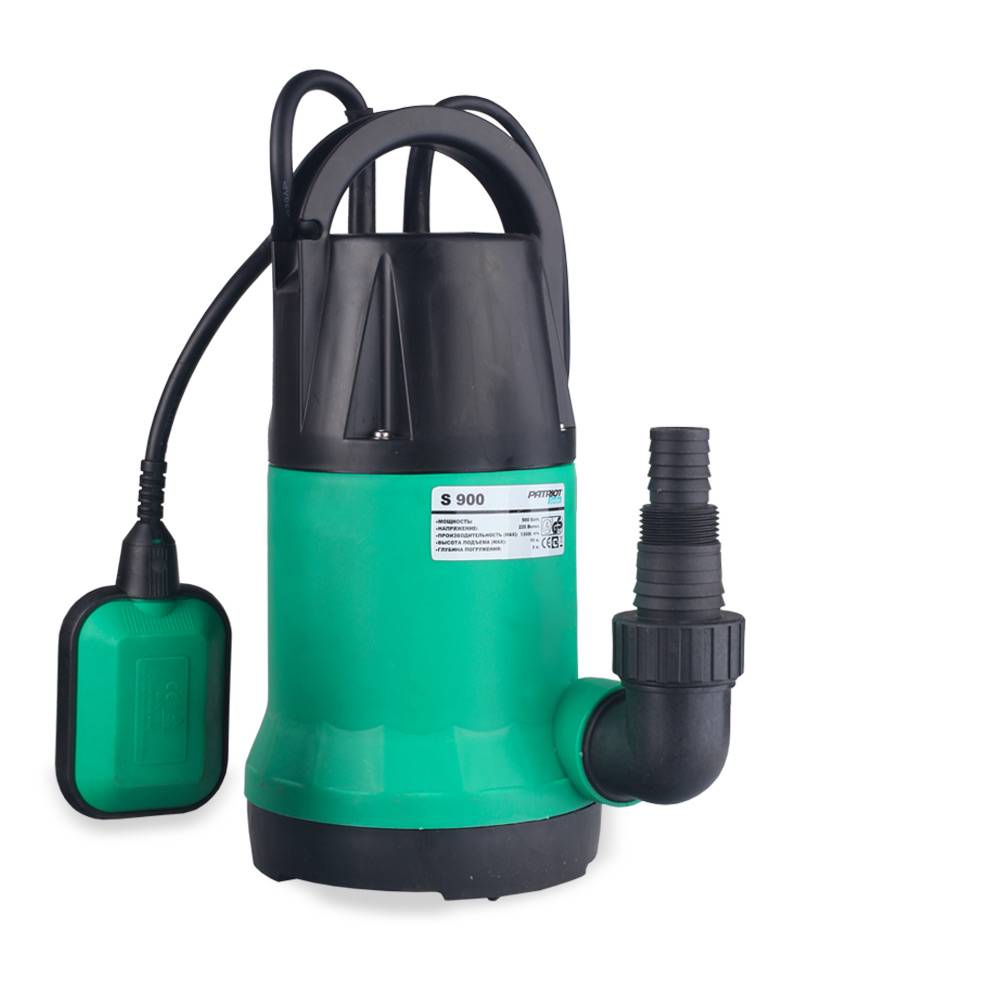
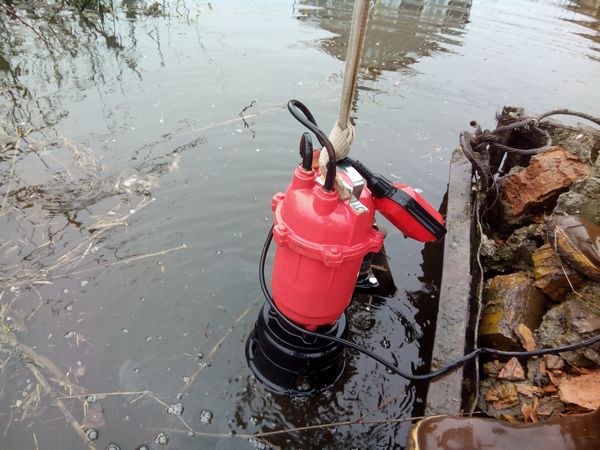
- Submersible pump
- Universal pump
- Which drainage pump is better to buy
- General characteristics of pumps
- Drainage pumps for irrigation
- Zubr NPG-M1-400
- Gileks Drainage 110/8
- Karcher BP 1 Barrel Set
- Where is the pump located?
- The main criteria - how to make the right choice?
- Purpose of the pump
- Required performance and head
- Internal mechanism
- The presence of an automatic float and electronic switch
- The presence of an automatic relay and a built-in float
- Performance
- Maximum water pressure
- Maximum allowable particle size of contaminants
- Which submersible pump is better to choose for clean water
Main types
- on wells - used to cleanse the bottom of silt deposits;
- fecal - equipped with special filters capable of retaining fibrous contents such as hair or threads;
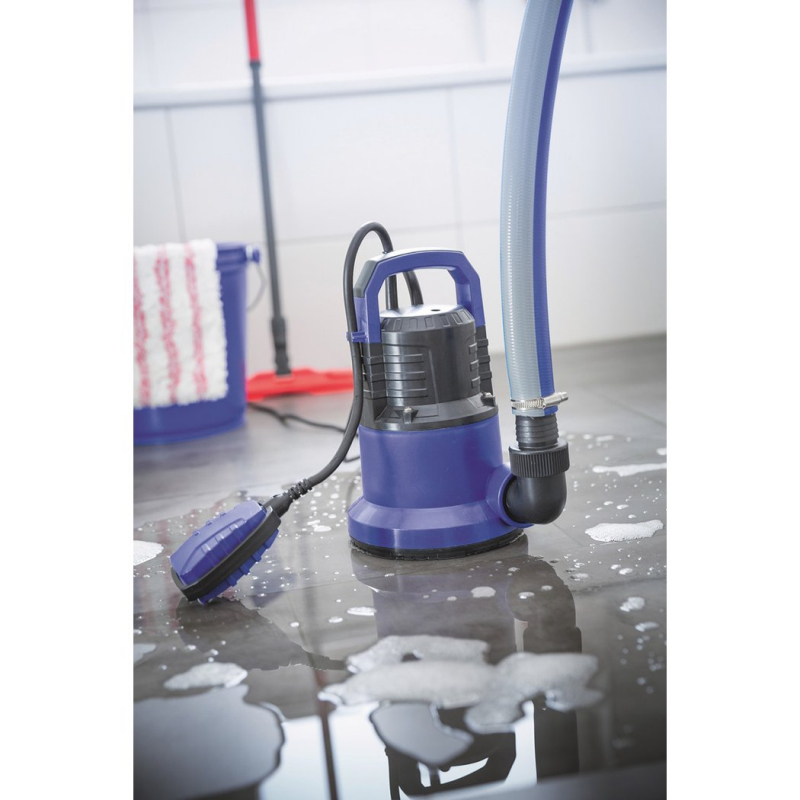
- proper drainage - used to pump out not very dirty water from basements and pools;
- borehole - designed to clean drinking and technical wells from silting and sand.
Also, the equipment is divided into two large groups:
- surface pumps;
- descending into the water, that is, submersible.
Surface pump
Surface-type units are often called garden units, as they are designed for very little water pollution.Particles of dirt and impurities must not exceed one centimeter!
For operation, the pump is attached to a special platform (platform), and the liquid intake hose is lowered into the working volume filled with water. For example, in a home pool.
Pumps of this type do not have a long service life. They are designed for occasional use. Daily pumping of water, for example, from a public reservoir for the purpose of irrigation, is guaranteed to disable the device.
Advantages:
- ease of maintenance and installation;
- can be used anywhere where there is an opportunity to connect to the electrical network.
Flaws:
- it is impossible to use for work with great depth (maximum five meters);
- short service life;
- increased noise in metal models;
- short service life of plastic cases.
For the cold season, it is recommended to drain the water from it, dry it in the sun and send it to storage in the utility room.
Submersible pump
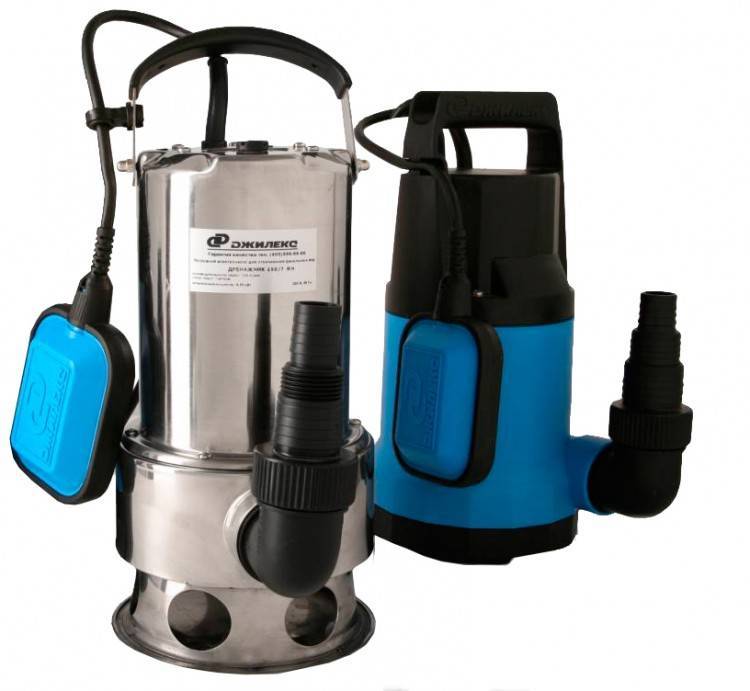
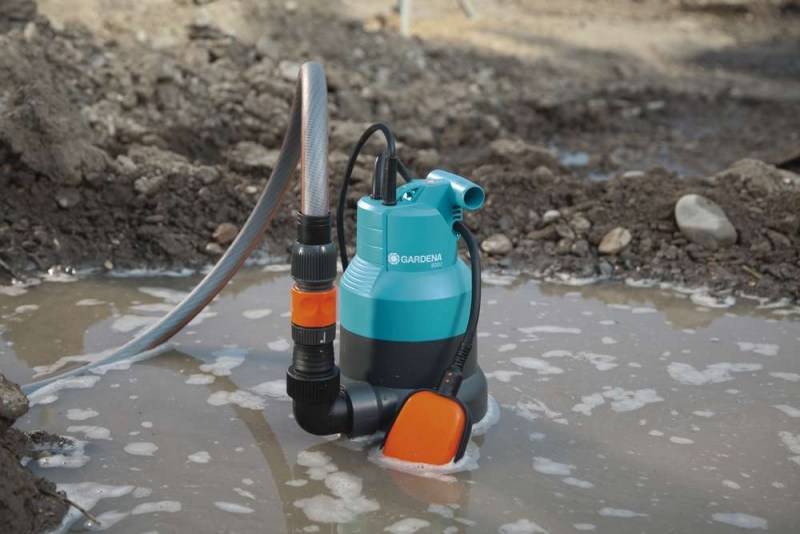
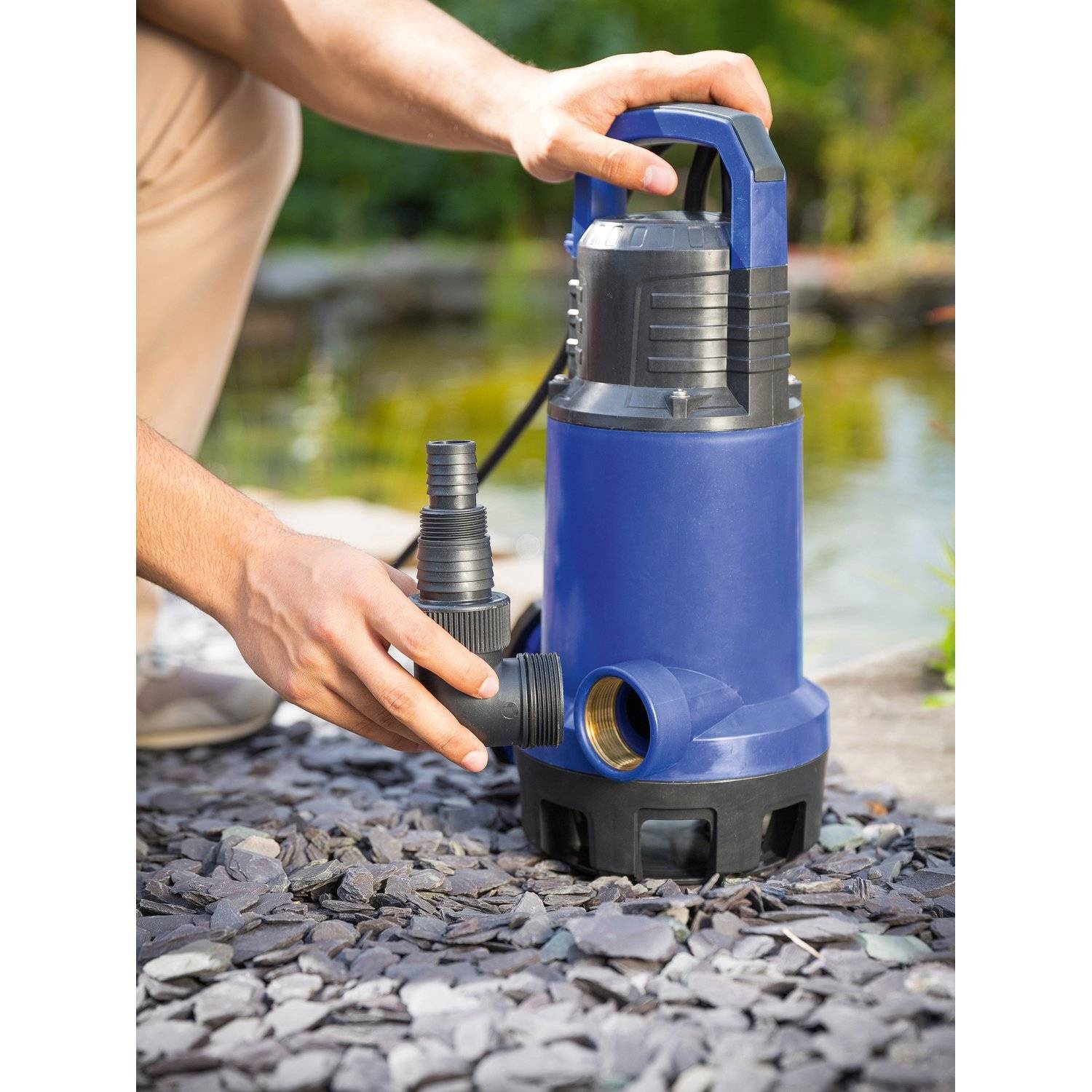
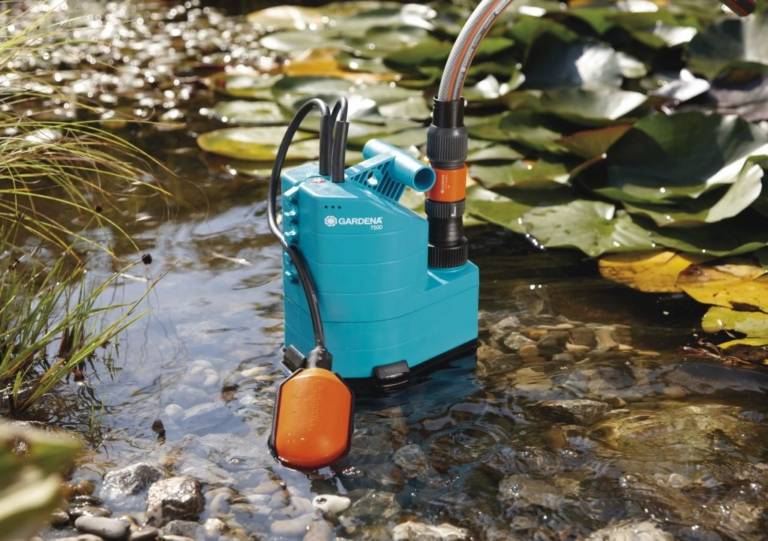
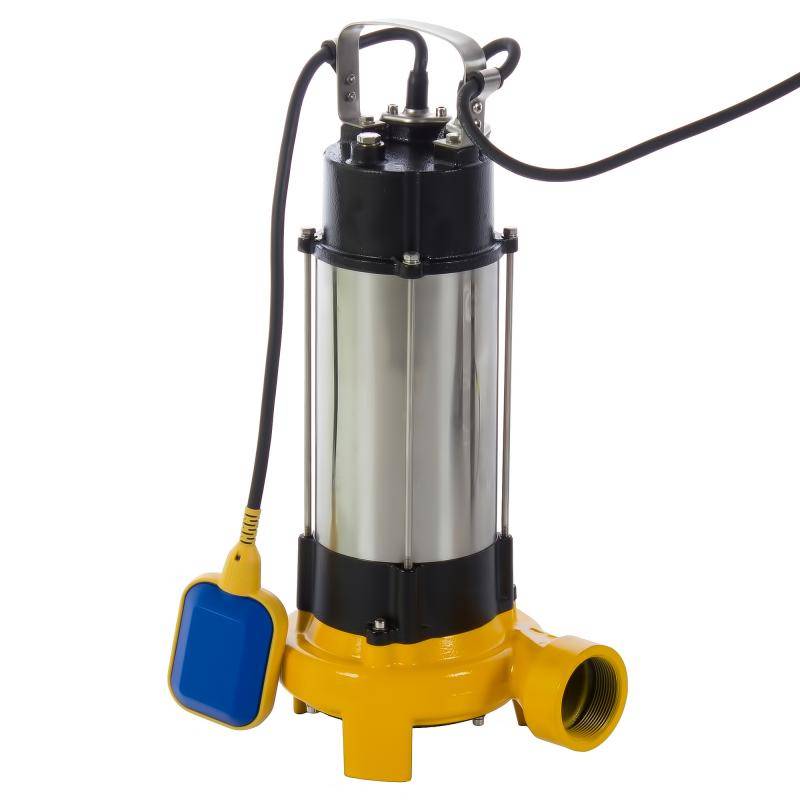
Dirt passes freely through the wide chamber of the housing without harming the pump. Such devices are household and industrial. The former will fully satisfy the needs of the owners of country houses and plots - they are quite economical in terms of electricity consumption and have good technical characteristics. Industrial designs are massive and powerful units with high energy consumption that will not reveal their potential when used for domestic needs.
Advantages:
- reliability;
- versatility.
Flaws:
- high price;
- the need to take into account all the technical parameters (an error when buying is not ruled out).
Submersible pumps will work efficiently if the owners paid attention to the following when buying them
- The location of the suction hole - the lower it is, the more thoroughly dirt and water will be removed from the bottom or floor. In reservoirs with a muddy bottom, as well as in very polluted wells and wells, the unit must not be lowered to the bottom. A strong stream of dirt will not allow the pump to work. It must be raised above the bottom or placed on a stand. There are also models with a water intake in the upper part of the body. For them, placement in the bottom mud is not critical.
- Automatic shutdown is an expensive but practical option. The owners do not need to stand near the switched on unit. As soon as the water runs out, the alarm float will automatically turn off the pump and protect it from overheating when running dry.
- Performance is a parameter that affects the scope of the device. It is believed that a capacity of 120 liters per minute is sufficient for irrigation. But for pumping you need a more powerful unit.
Such a pump will also be an invaluable assistant during construction work. With it, you can easily and quickly pump out moisture from construction pits.
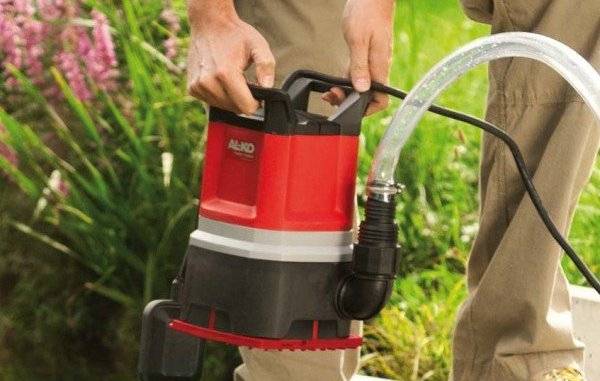

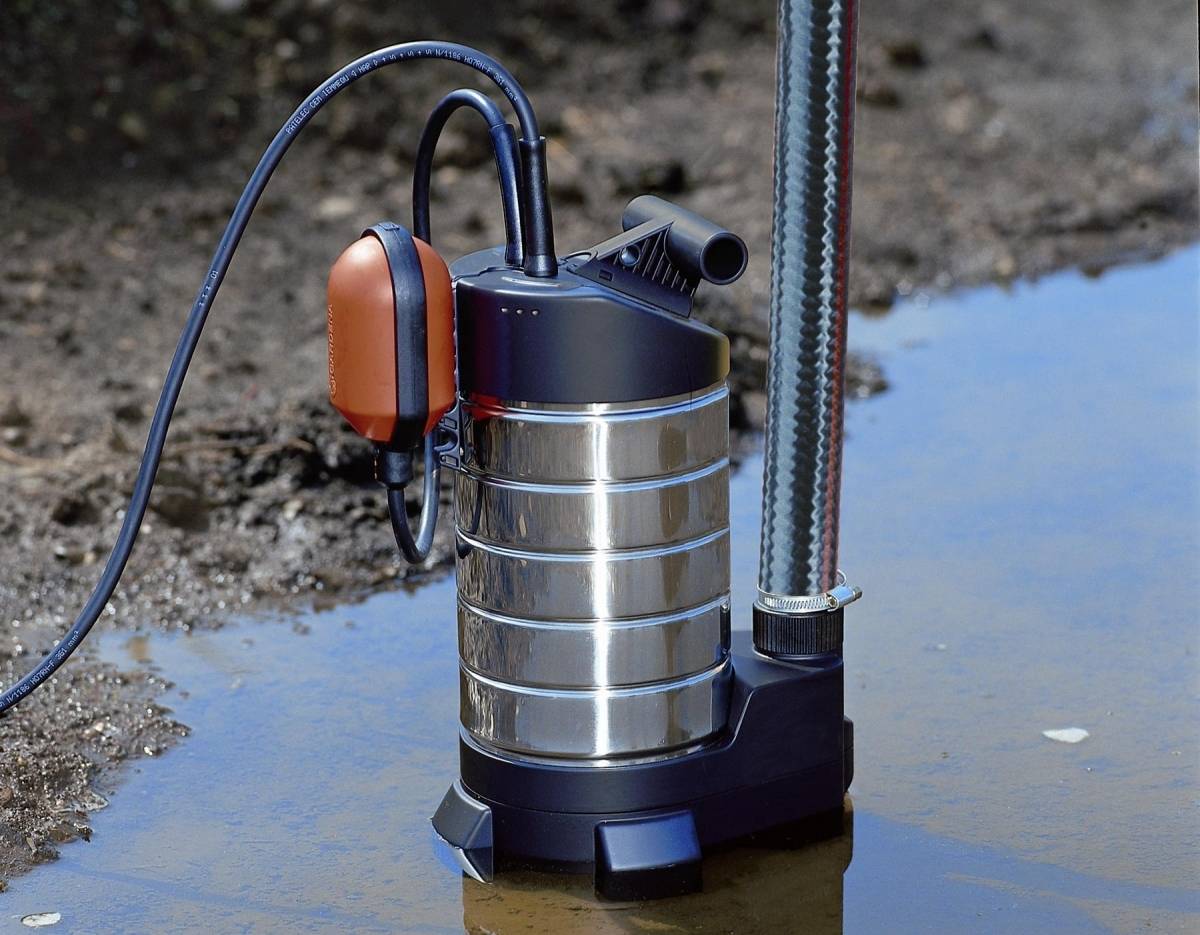
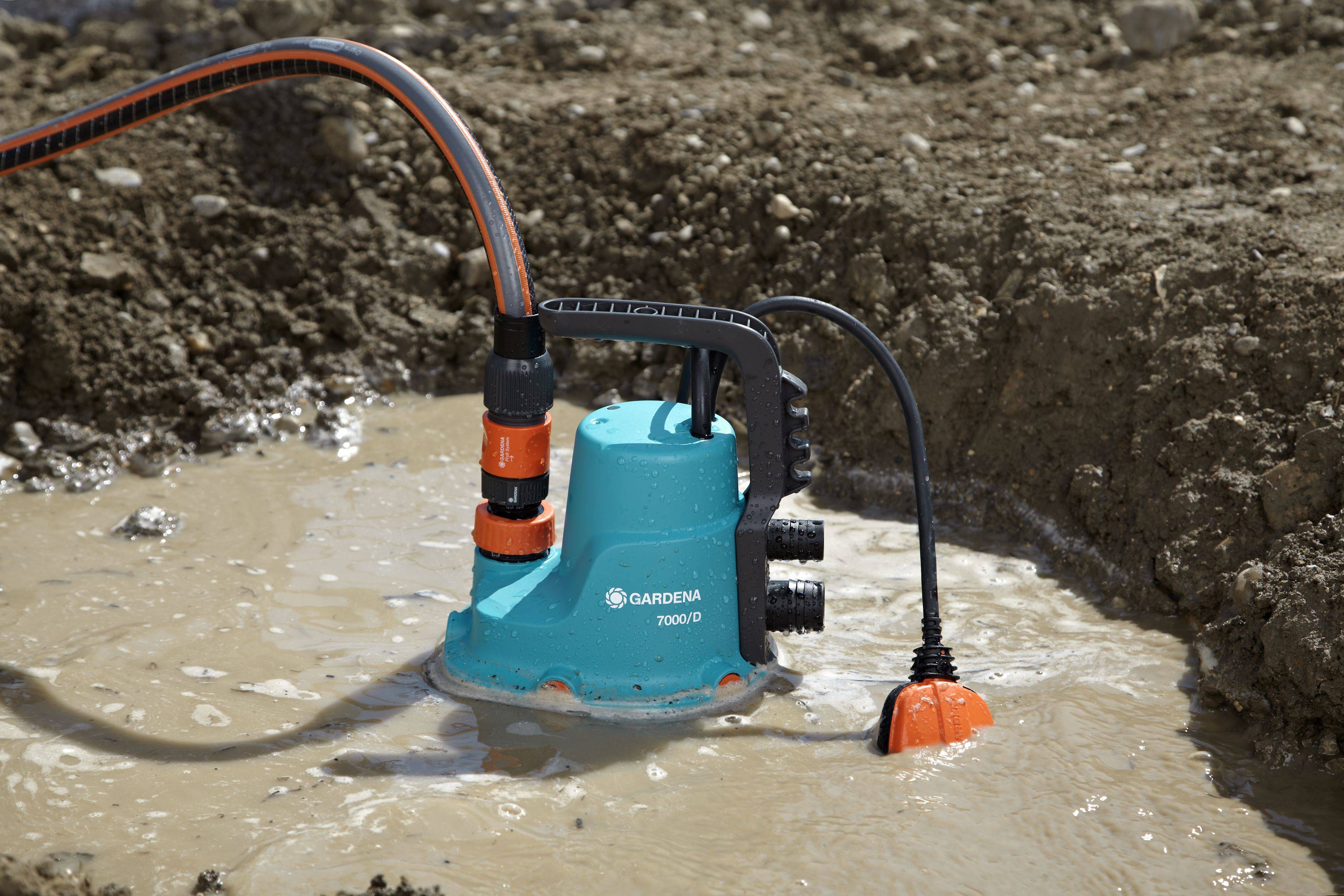

Universal pump
Universal models. This type can be safely attributed to pumps designed for feces. They work completely immersed in liquid.
Advantages:
- power;
- strength and reliability;
- long service life;
- the presence of a grinder inside the body (designed for solid impurities);
- can be used to work in very dirty water.
Flaws:
high price.
With such a reliable unit, you can clean any sewage pit, as well as water the garden using a dirty pond.
Which drainage pump is better to buy
If the equipment is needed primarily for pumping fluid in wells and wells, for changing the level of groundwater, then it is better to stop at submersible models. For those who plan to water the garden with it to a greater extent, then the best choice would be a surface-type device.
To work with contaminated liquids, it is important that the product has special cutting elements, and the allowable size of impurities is no more than 35 mm.
Here are some models to choose from for different situations:
- To reduce the volume of liquid in the wells, the Zubr NPG-M1-550 or Caliber NBTs-380 will be relevant.
- In order to clean the pools, you can use the Gnome 40-25T with r / o.
- On construction sites, if it is necessary to remove excess water in pits, the Quattro Elementi Drenaggio 1100 F Inox or Belamos DWP 2200 is suitable.
- With putting things in order in the basements, Gileks Drainage 220/12 will do just fine.
- Watering the garden will be well provided by Patriot QB60, Stavr NP-800 and Unipump JET 80.
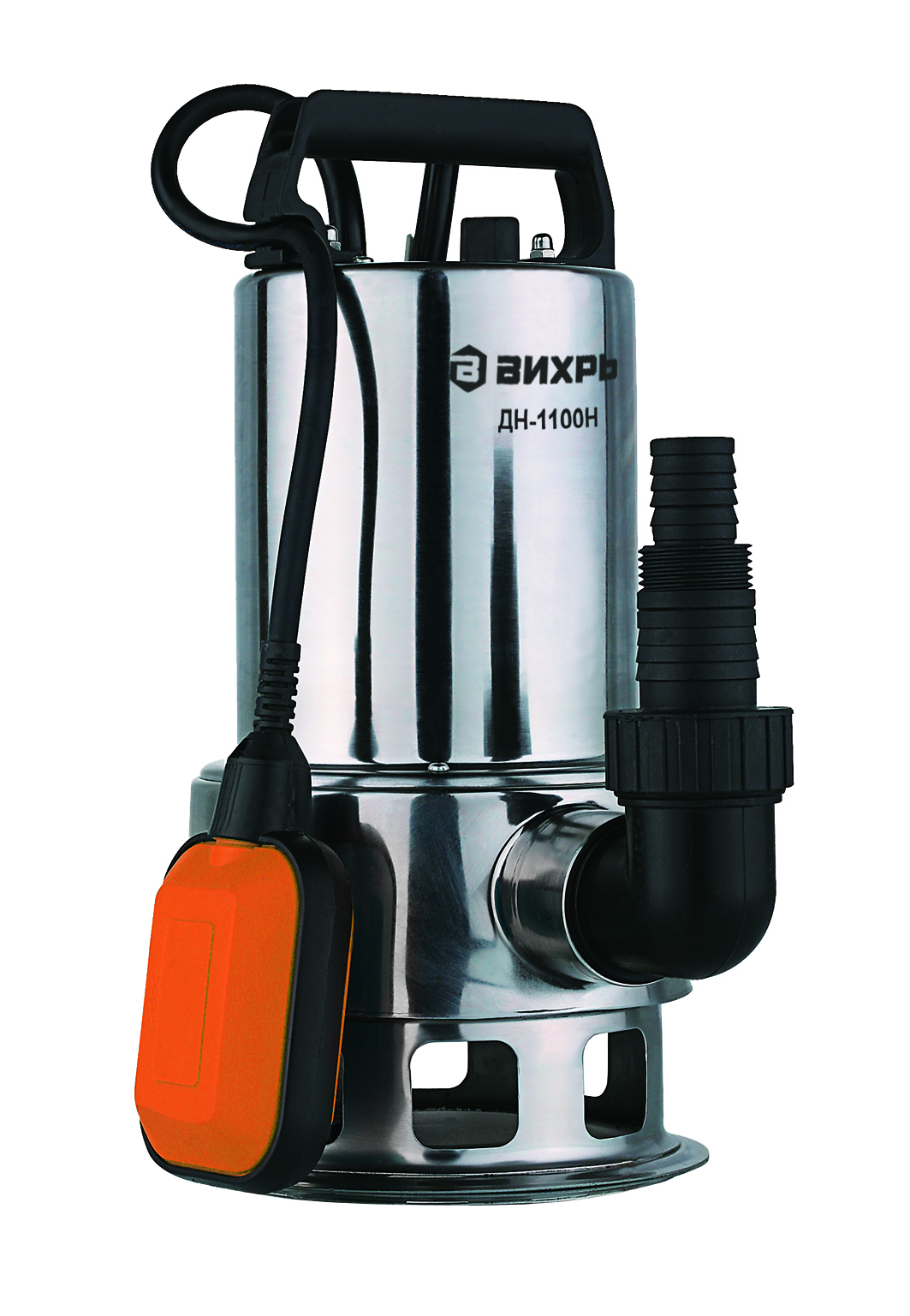
- Whirlwind PN-900 can be useful for draining small reservoirs.
When choosing a drainage pump, it is better not to save money, since very cheap equipment may not be powerful enough to work properly with water. The main parameter for their evaluation, as it turned out in the process of selecting goods, is the power of the devices.
General characteristics of pumps
Although pumps for the home have a lot of structural differences, different functionality and differ in location, they all have a number of common characteristics. These are power, performance and pressure. The power of the pump is important for evaluating its efficiency and calculating the cost of electricity.Power can vary over a wide range and, with the same performance and head, differ almost twice.
Under the performance of the pump, we take the volume of water that the device can move per unit of time. This indicator must be taken into account when the pump is used to supply water for specific needs. For example, a toilet flush system requires a flow rate of 6 l/min, while a watering system requires up to 18 l/min.
Knowing the head characteristic allows you to estimate how far and high a single pump can move the required volume of liquid without loss of performance. Usually, for the needs of a garden and a private house, pressure in the range from 1.5 to 3 bar is enough. At the same time, the use of automatic water supply control schemes or the use of special equipment (for example, jacuzzi bathtubs) requires a pressure of 3 bar or more.
Drainage pumps for irrigation
These models do an excellent job of pumping contaminated water from pools, basements, ponds, cesspools and swamps. Their advantage is a filter or grinder mounted on the rotor. Unlike a barrel watering garden pump, this type allows you to supply water with branches, leaves, silt and other debris, which subsequently becomes a liquid organic fertilizer for beds. Drainage units are economical to use and inexpensive. Initially, 10 applicants participated in the testing. After a detailed study and comparison of their characteristics, 3 best models were selected.
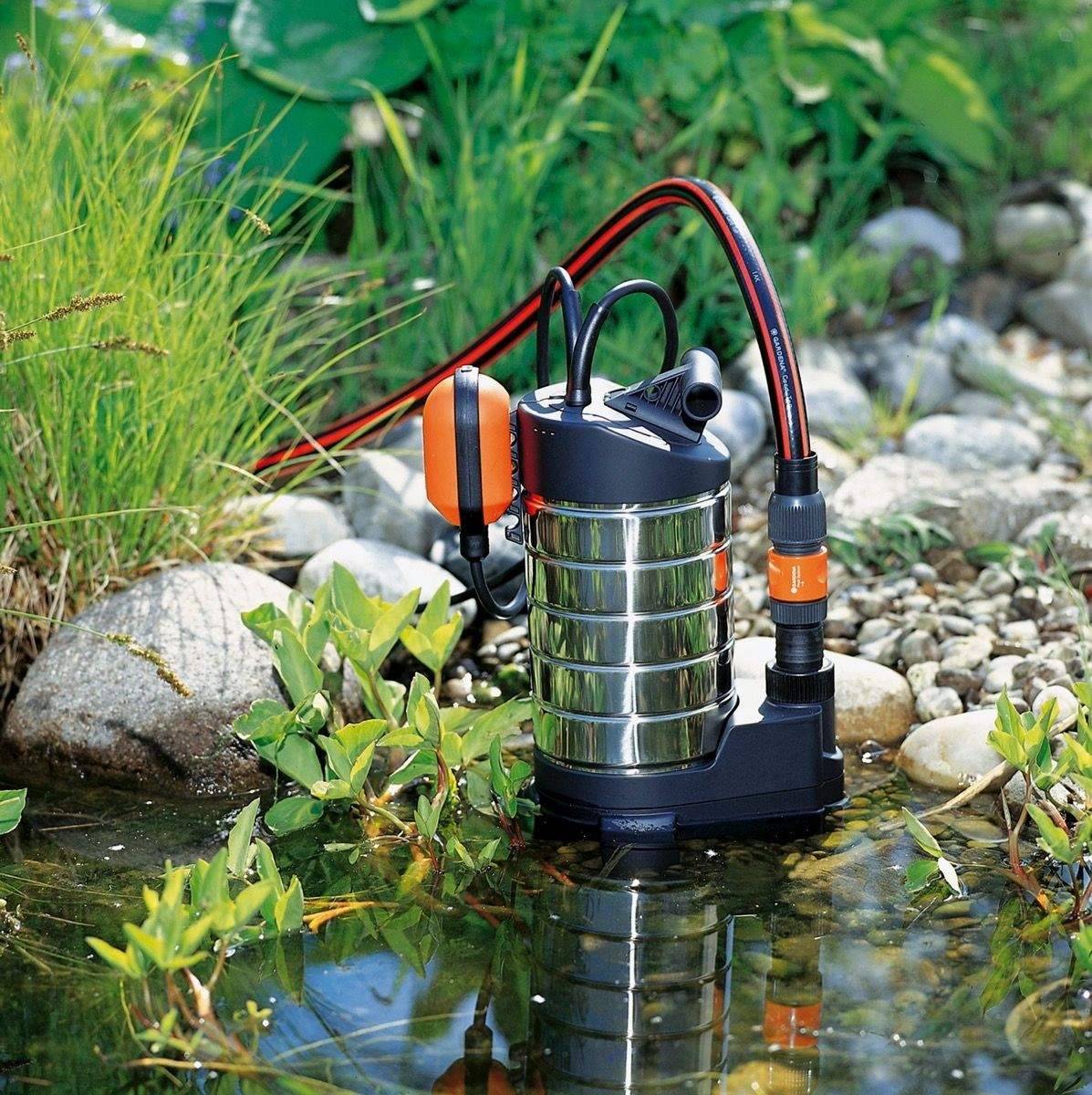
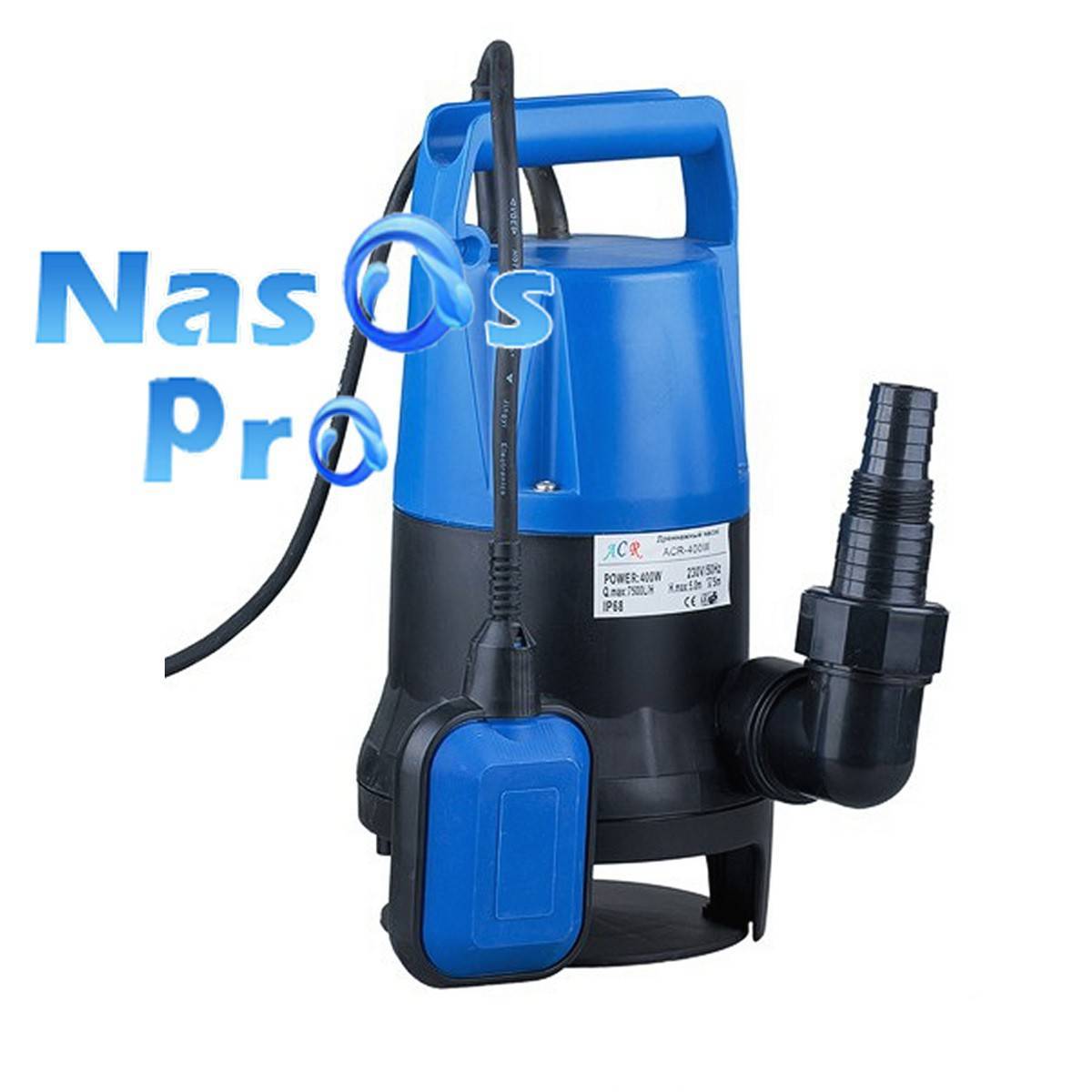
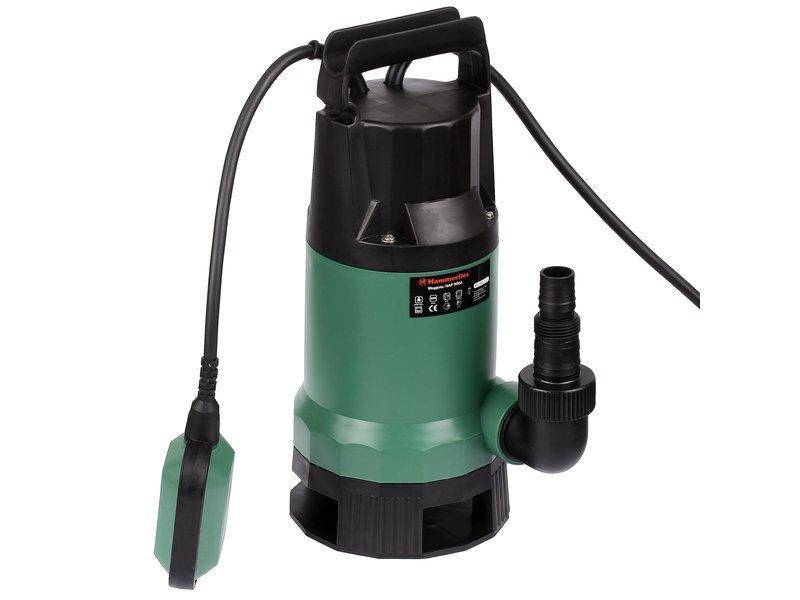
Zubr NPG-M1-400
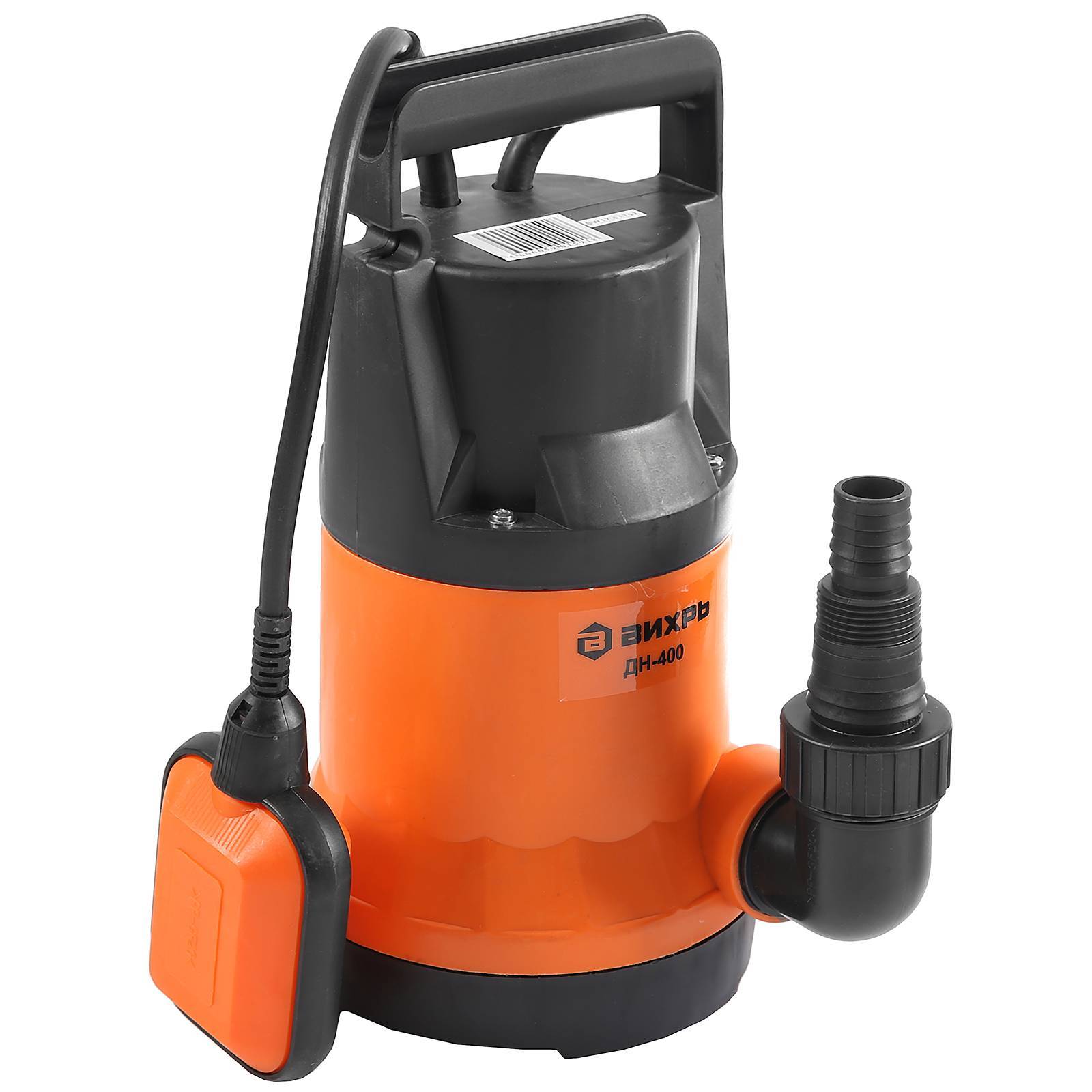
The submersible drainage unit "Zubr NPG-M1-400" is equipped with electric motors with a power of 400 W, powered by a 220 V network.With a low head of 5 m, it provides a high performance of 7.5 cubic meters. m/h and the optimum immersion depth is 7 m. The device is suitable for draining flooded premises, cleaning wells and filling containers from ponds. Thanks to the installed filter, it is possible to pump both clean and dirty water with a particle size of up to 3.5 cm.
The model provides automatic switching on and off using a float that controls the water level. It is equipped with a thermal fuse to prevent overheating of the motor and is protected against dust, solid objects and moisture class IP 68. The body of the device is highly durable. For its manufacture, hygienic plastic reinforced with fiberglass was used. The kit includes a universal fitting for connecting hoses.




Advantages:
- Small weight - 3 kg;
- Compact dimensions - 19 x 9 x 16 cm;
- Power cord length - 7 m;
- Warranty period - 5 years;
- Low price.
Flaws:
¾ hose connection not provided.
Owners of the Zubr NPG-M1-400 drainage unit note the benefits of a built-in plastic handle. With its help, it is convenient to carry and immerse the device.
Gileks Drainage 110/8
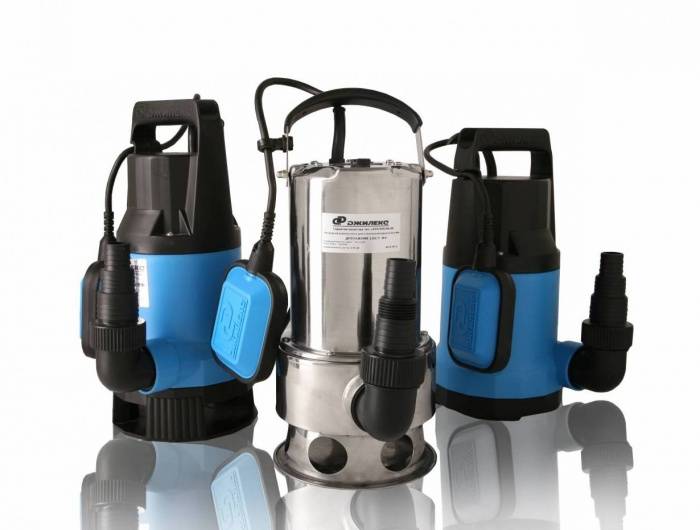
This submersible pump pumps out groundwater, rainwater and waste water with temperatures ranging from 1 to 35°C. The size of the passed particles should not exceed 5 mm. It is suitable for supplying clean liquid from ponds, wells and storage tanks. It uses a centrifugal impeller. With a power consumption of 210 W, the unit provides a performance of 6.6 cubic meters. m/h, as well as head and depth of 8 m.
The Dzhileks Drainager 110/8 model has dry-running protection and an automatic water level control system using a float.The single-phase electric motor of the device is not subject to external damage due to the hermetically sealed housing. Its stator has a working and starting winding with a thermal protector that turns off the engine when it overheats. The included universal outlet fitting accepts 1.0", 1.25" and 1.75" hoses.
Advantages:
- Electrical protection class IP 68;
- Optimal weight - 4.8 kg;
- The optimal dimensions for installation are 17 x 37.7 x 22 cm;
- Versatility;
- Ease of maintenance.
Flaws:
Shelf life - 12 months.
Karcher BP 1 Barrel Set
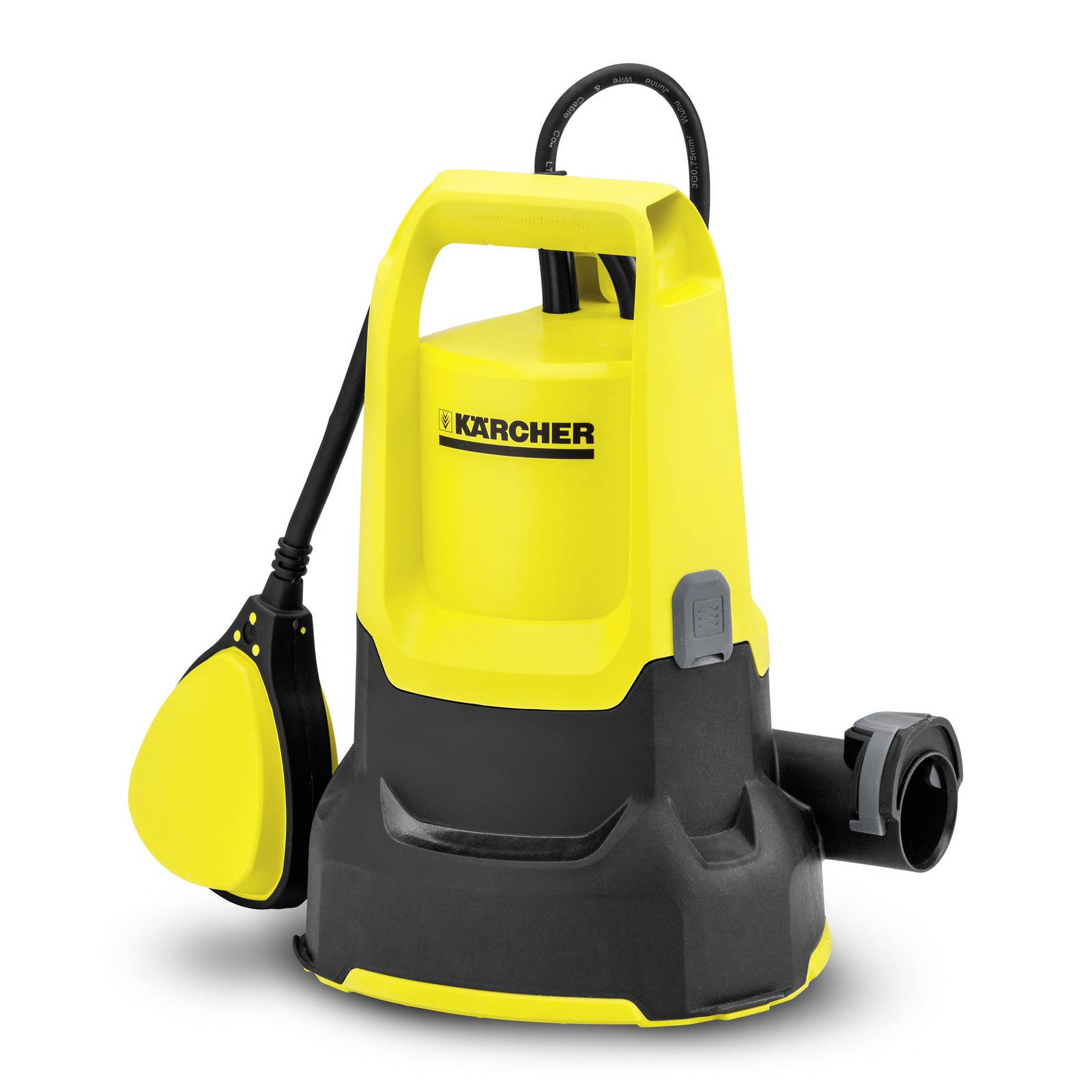
This watering pump should be bought by those who wish to pump water from tanks of almost any configuration. The Karcher BP 1 Barrel Set is equipped with a 400W electric motor. It provides a vertical water lift of 11 m (1.1 bar) with a maximum immersion depth of 7 m and a capacity of 3800 l/h. A pre-filter is installed here, which protects the system from dirt and small particles up to 1 mm. The design provides for a flexible mount on the handle, adjustable in height.
The advantage of the device is the complete set. There is a 15 meter long adjustable hose, 2 universal connectors and a sprinkler gun. The pump is equipped with a float switch for automatic water level adjustment. Its light weight (4.6 kg) and compact dimensions (17 x 52 x 13.5 cm) make it easy to transport. The maximum temperature of pumped liquid is allowed up to 35°C.
Advantages:
- Built-in protection against inclusion without liquid;
- The optimal cord length is 10 m;
- Convenient carrying handle;
- Economical energy consumption;
- Reliable build quality.
Flaws:
The bottom filter is not installed very securely.
The owners of the device praise it for its low power consumption and quiet noise during the workflow (44 dB).
Where is the pump located?
The location of the pump, of course, matters and largely depends on its purpose. According to the location relative to the reservoir with liquid, pumps are divided into surface and submersible.
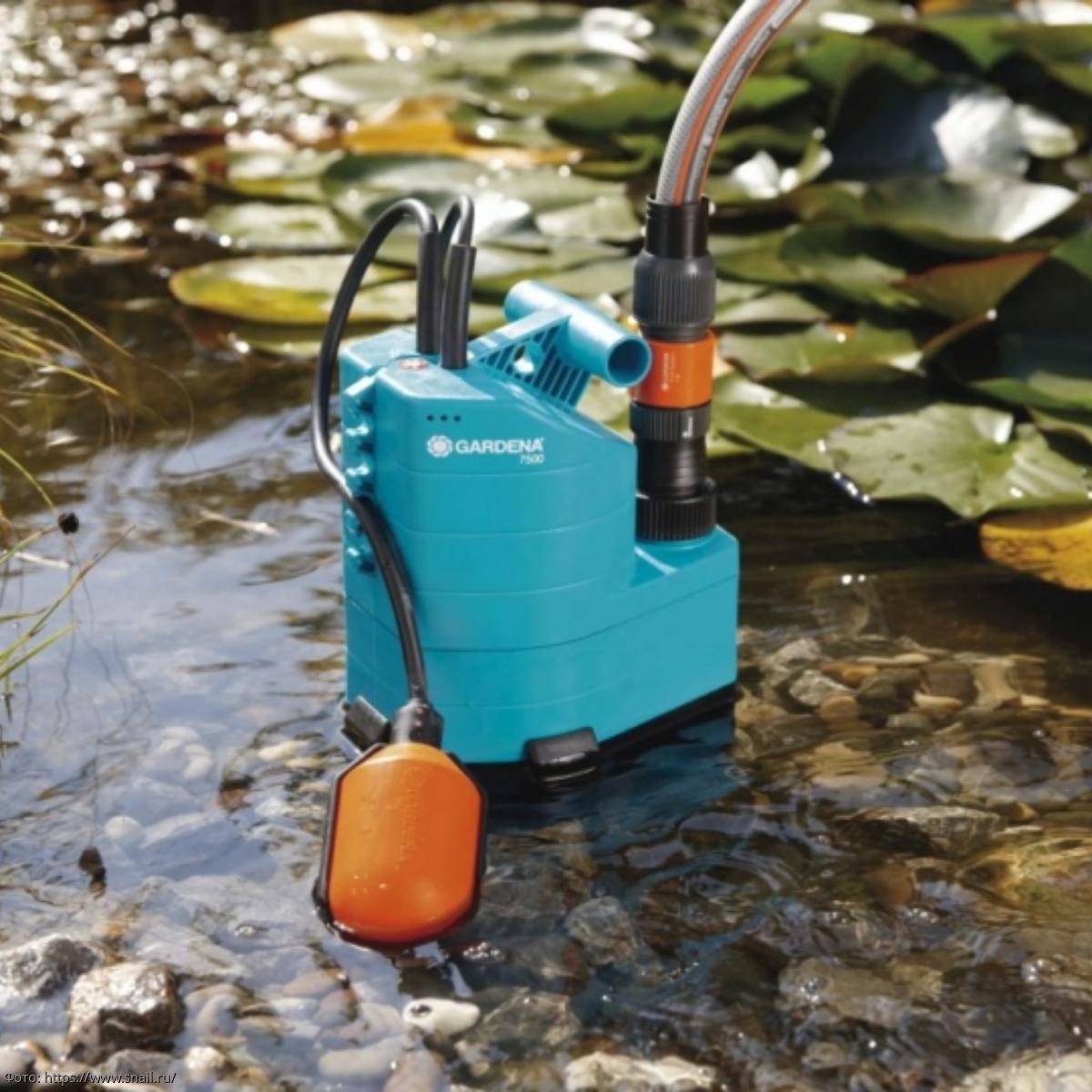




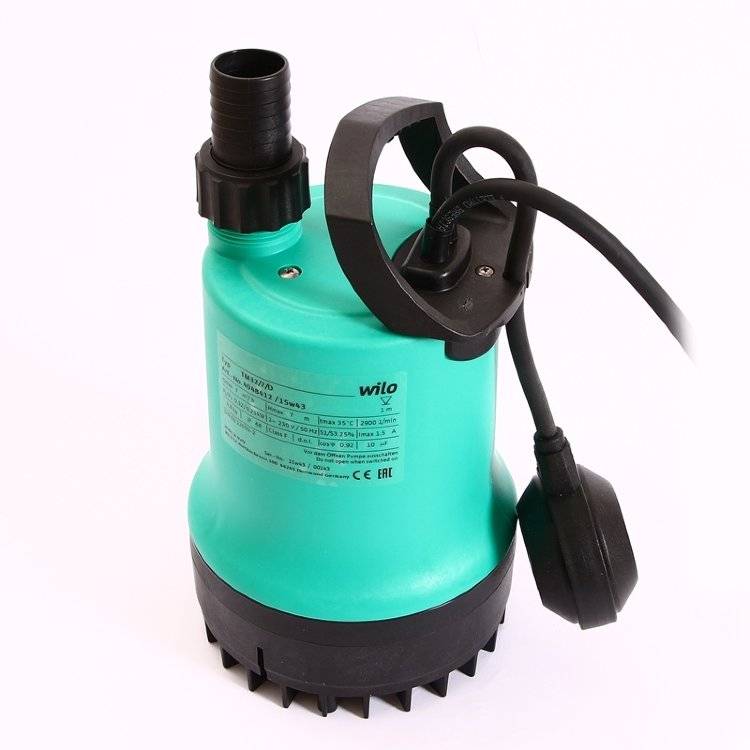
Surface pumps are installed next to the liquid reservoir. They are quick and easy to install, easy to service and can be dismantled (eg for the winter) and relocated. The liquid reservoir for a surface pump should be between 1 and 9 meters deep, although there are ejector pumps that can lift liquid from depths of up to 40 meters.
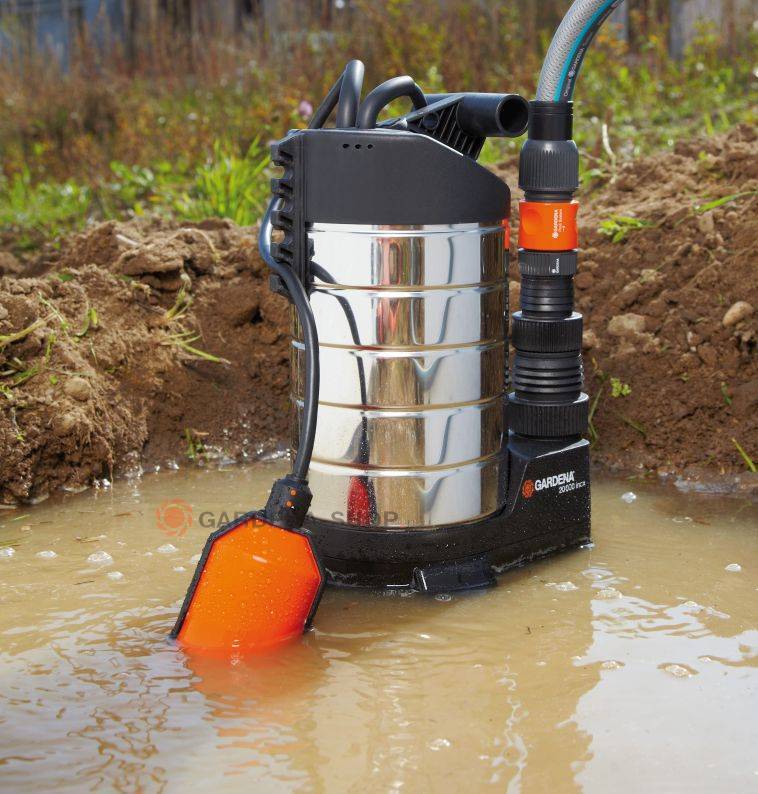
Submersible pumps are installed directly into the tank - which requires a lot of effort during installation and dismantling, and also complicates the procedure for their regular or emergency maintenance.
The main criteria - how to make the right choice?
Among the many characteristics, it is worth highlighting a few main ones that you should pay attention to first of all when choosing a pump:
Purpose of the pump
Watering from a polluted reservoir, drainage of basements and wells, sewerage drainage, cleaning of a reservoir and so on. Each possible application has different optimal options, differing in design and allowable size of solids. It should also be taken into account that surface pumps cannot be used if the depth of the water surface exceeds 5 meters from the installation point of the device.
Required performance and head
Performance is selected based on the volume of tasks that will be assigned to the pump.
When choosing a surface pump, it is necessary to take into account its inability to work for a long time without interruption. The required pressure is calculated by summing the height of the drain above the water surface and 1/10 of the length of the horizontal pipes to the drain.
For example, having a well with a water surface depth of 5 meters, and a distance to the sewerage system of 50 meters, we obtain the required minimum head of 10 meters. For greater reliability of the drainage system, it is advised to take pumps with a pressure of 30% more than the calculated one.
Internal mechanism
Electric pumps for contaminated water are strongly recommended to be taken with a centrifugal type suction device. The centrifugal force inside such pumps not only ensures the movement of water in the right direction, but also throws solid particles from the blades to the body, preventing their rapid wear.
The presence of an automatic float and electronic switch
Float switches are designed to maintain a given water level in the tank. This allows you to automate the process of replenishing a water tower or draining excess sewage levels.
However, a float switch is not always enough, if it is necessary to pump out the water completely, electronic switches are used that are triggered by a few centimeters of water and turn off the pump when the water runs out. It is desirable to have at least one of the indicated types of switches in order to prevent the pump from running without water.
Surface pumps must be equipped with overheating protection.
The presence of an automatic relay and a built-in float
High-quality drainage pumps are equipped with an automatic relay to protect against engine overheating and dry running.Such a constructive element is necessary if the owner of the equipment does not have the opportunity to constantly monitor the work, and if the amount of work is too large to be carried out without interruptions.
The presence of a float switch will help the submersible pump automatically maintain the water level in the tank within the established limits.
Performance
Pump performance is measured in liters per minute or cubic meters per hour, before buying a pump, you must calculate the maximum required speed for pumping water.
You also need to remember that the excess performance of the pump is achieved by reducing the pressure or increasing the power consumption, so for domestic needs it will be much more practical to take a medium-capacity device than an expensive and uneconomical industrial device.
Maximum water pressure
Dirty water pumps are not normally used to deliver water at high pressure, but to pump water that is well below the level of the drain, or the drain is at a considerable distance from the reservoir, you will need a pump with the appropriate pressure.
For example, a submersible device with a head of 10 m can lift water 10 meters and pump it 100 meters horizontally. The abundance of solid particles reduces the output pressure of the device, therefore, when buying, it is recommended to choose models that are 30% more powerful than necessary.



Maximum allowable particle size of contaminants
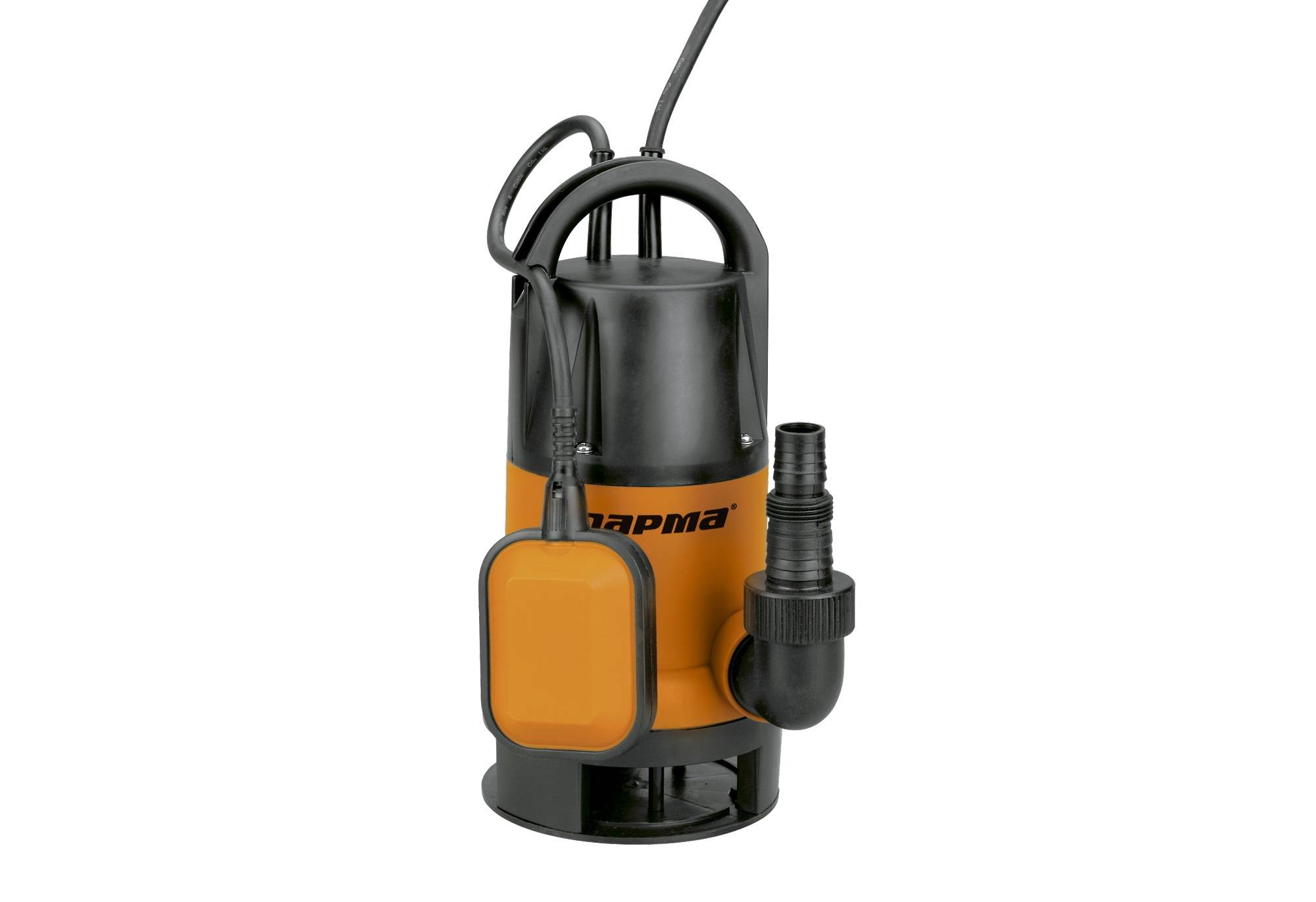
Each pump specifications list the maximum solids size it can handle, from 5mm to 50mm.Too large particles are retained by the grid at the inlet.
A larger particle size is usually associated with an increase in power consumption, weight and cost of the apparatus, so this issue must be approached based on the tasks assigned to the pump. For irrigation, 5 - 10 mm will be enough, for pumping out a cellar, reservoir or well - 20 - 30 mm.
It must be remembered that conventional drainage pumps are not capable of pumping liquids with fibrous impurities, a fecal pump will be necessary for this.
Which submersible pump is better to choose for clean water
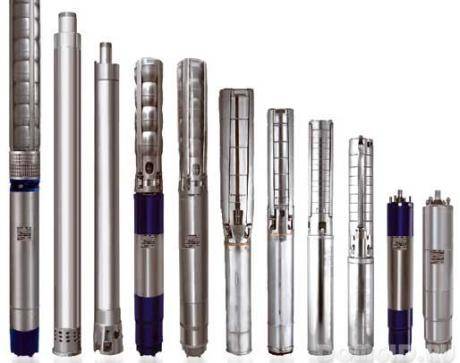
The source of drinking water in the country, as a rule, is a well or a well. Accordingly, pumps for clean water are divided into two categories: well and borehole (or deep).
They are distinguished by a large case diameter (from 8 to 15 cm) and an affordable price - 40-50 USD. They are capable of pumping out up to 150 liters of water per minute, although most models are designed for 50-60 liters. per minute. Used in wells with a depth of 10 to 30 meters or in shallow wells (no more than 50 meters).
Most well pumps are vibratory. Their principle of operation is based on vibrations of a rubber membrane located in a housing inside the cylinder. Its reciprocating movements change the internal volume of the working chamber and, accordingly, the pressure. When the pressure drops, water enters the chamber through the inlet valve, when it rises, it is pushed out through the outlet valve.
During operation, the pump housing vibrates noticeably, so the distance from the device to the bottom must be at least 1 meter. Otherwise, vibrations will raise small particles from the bottom, which will reduce the quality of the water, although it will not damage the filter.
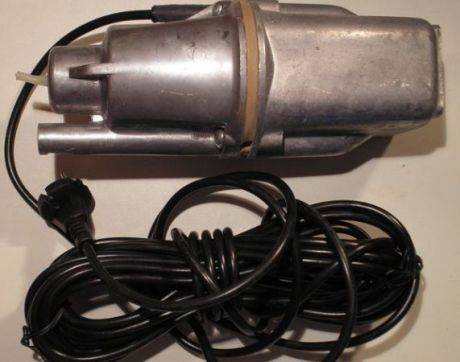
But for wells, vibration pumps are not the best option, since during operation they "sand" the source, i.e. destroy the casing filter. They should pump the well for the first or second time, until the water quality returns to normal, small suspensions will not spoil the pump (which cannot be said about sensitive deep models!).
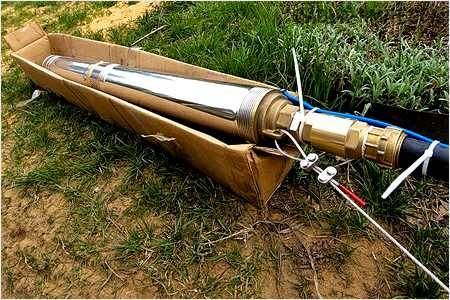
The selection of submersible pumps for wells depends on the technical characteristics of the drilled source. Before drilling, it is impossible to accurately guess with the equipment, since you will not have the necessary data, namely: well diameter, flow rate, static and dynamic water level, distance to the house, etc. Let's dwell on each parameter in more detail.
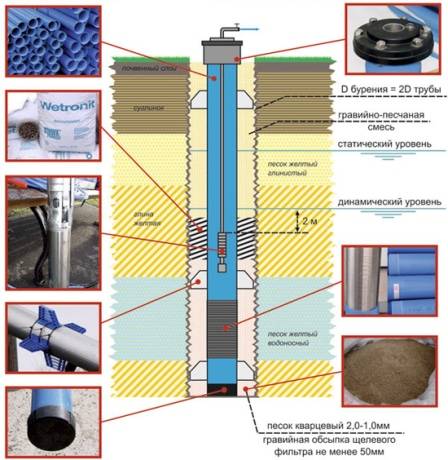
Well diameter. It is always indicated by drillers in the well's passport. The pump is selected so that a couple of centimeters remain between the walls of the well and the body. They mainly produce three-inch (74 mm) and four-inch (100 mm) devices, but you can also find models for 105 mm.
source performance. Also indicated in the well passport. This is the volume of fluid that the well can produce in a certain time without lowering the dynamic level. The performance of the pump should be slightly less than the flow rate (by 5-10%), so that with an active intake, the water column does not fall below the suction part of the device, otherwise the motor will burn out instantly. If the well was drilled by local craftsmen, then it is worth calculating the productivity at the first pumping using a cheaper vibration pump.
Static water level. If not indicated in the passport, they are determined using a weight suspended on a rope. Lowered into the well until a splash of water. Measure the dry part of the rope. It will show the static (maximum) water level.
dynamic level.This is the minimum threshold of the water column, below which the liquid does not fall when it is pumped out by the pump. Specified in the passport. Needed to know how deep to lower the pump.
Estimated water consumption. It will help you choose the right pump performance. If people live in the house all the time, and there are no large losses of water (baths, pools, etc.), then about 180 liters are consumed per person per hour. Multiply this number by the number of all residents. Multiply the resulting figure by 2 if you use several water intake points at the same time (for example, shower + toilet). This will be the minimum water flow that your borehole pump should provide.




These are the main parameters by which the choice of a submersible pump for water in the house is carried out. In addition to them, they calculate the distance from the well to the house, the vertical rise of water, the number of storeys of the building, etc.



