- Oil heater design
- Device and principle of operation
- Oil heater - advantages and disadvantages
- Infrared heater
- Room area and device power
- Infrared heater - advantages and disadvantages
- Calculation of the power requirement of the device
- Convector control units - which one is better
- The efficiency of the main types of heaters for the home
- Which heaters are best for home and apartment
- Convectors and fan heaters
- Infrared heater
- Oil coolers
- UNIT UOR-123
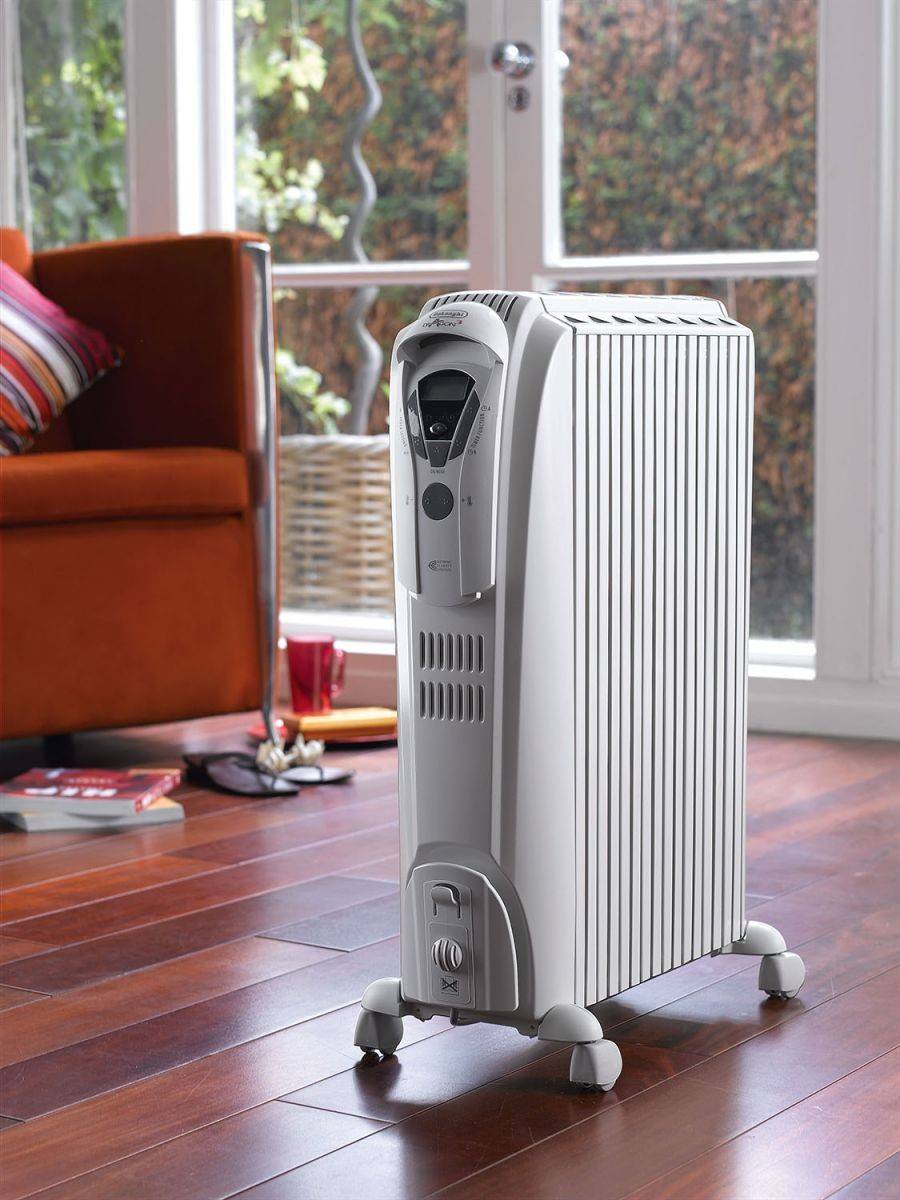
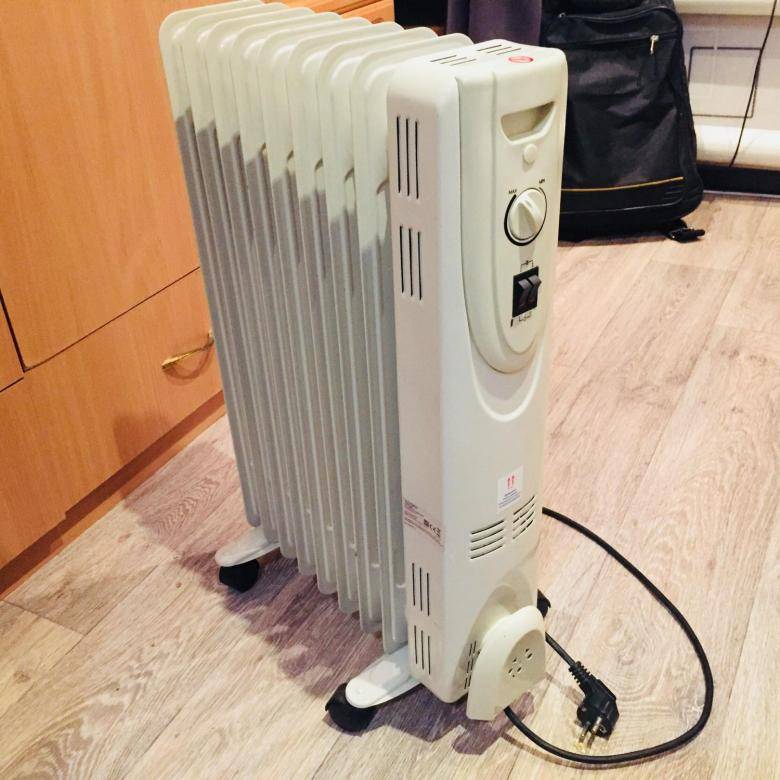
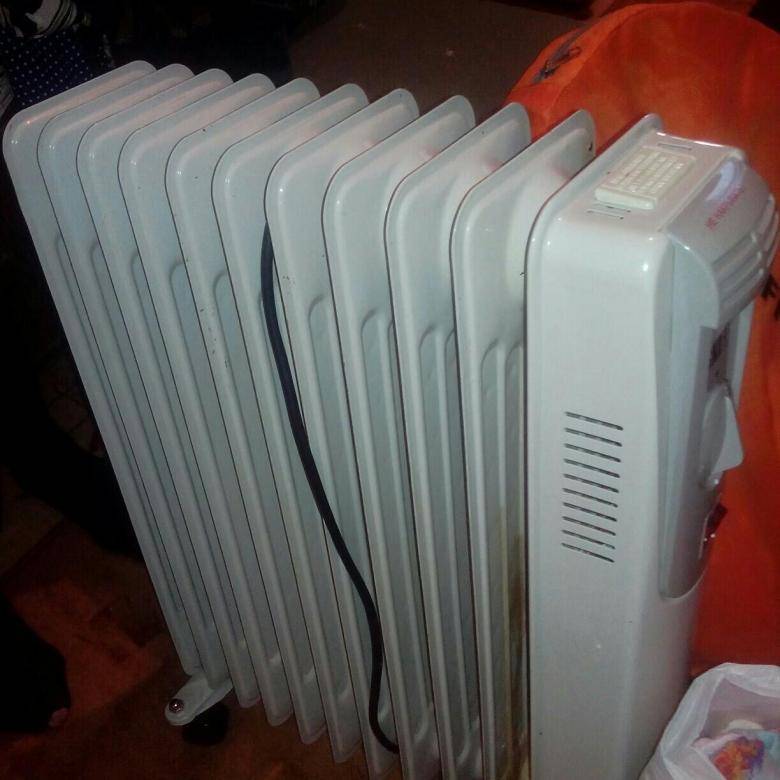
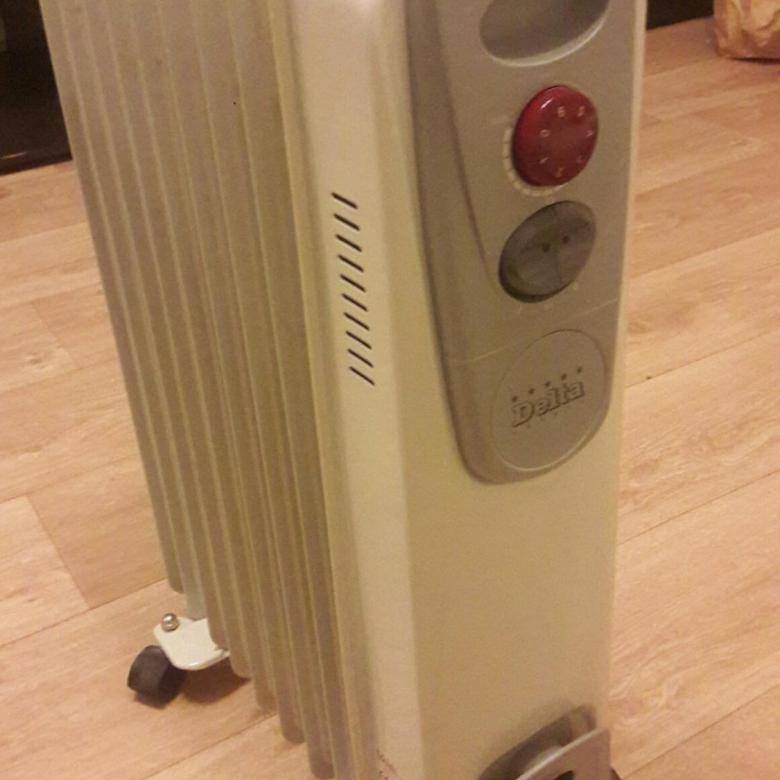
Oil heater design
The most important part of an oil-type heater is, of course, the radiator. The material of its manufacture is ferrous metal, and the thickness is from 0.8 to 1 millimeter
Since the dimensions of all elements of this product must be very accurate, laser cutting of metal is used for their manufacture, leaving behind a smooth edge and a smooth surface. To create right angles, sheet bending equipment is used, and the smallest parts are stamped.
Each section of the radiator must be sealed, so the parts of which it consists are welded together (by spot welding) and pressed in.Before that, holes are made in them, allowing you to assemble the radiator from separate sections, using a nipple connection, which is impenetrable and reliable.
The paint applied to the radiator is very durable - after all, it is applied using powder technology and polymerized by heating in a special oven.
When the radiator is fully assembled, mineral-type transformer oil is poured into it. In older models, there was a special valve for this, but now the oil is filled directly during the assembly of the heater. At the same time, an electric heater is installed inside the device, observing tightness, and outside - panels made of plastic and metal, equipped with a thermostat, a power regulator and an overheating protection device. Also at this point, the power cable is connected.
For ease of use, the wheels are fastened with a bracket with nuts after the oil heater has taken its permanent place in the room.
Device and principle of operation
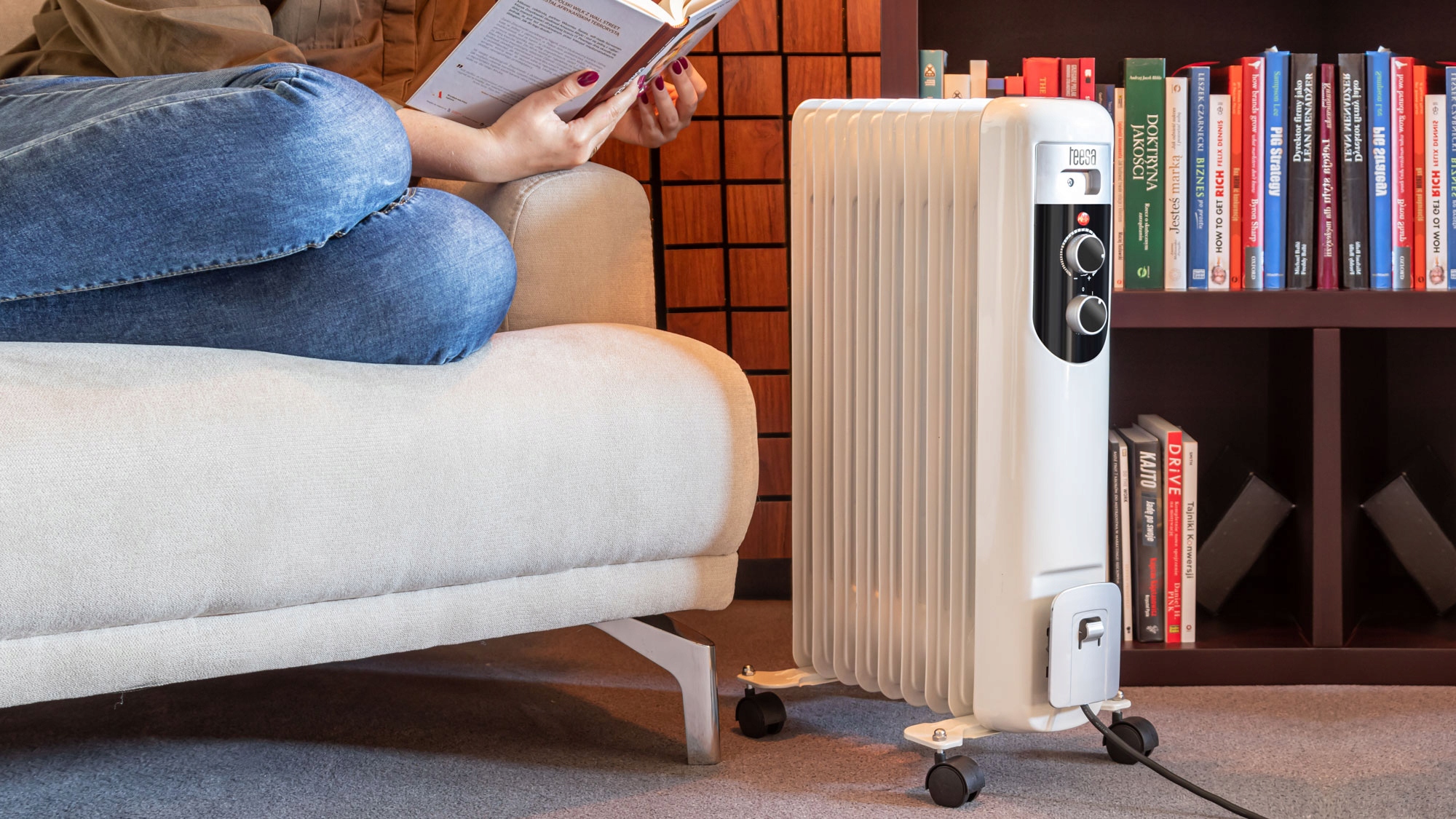
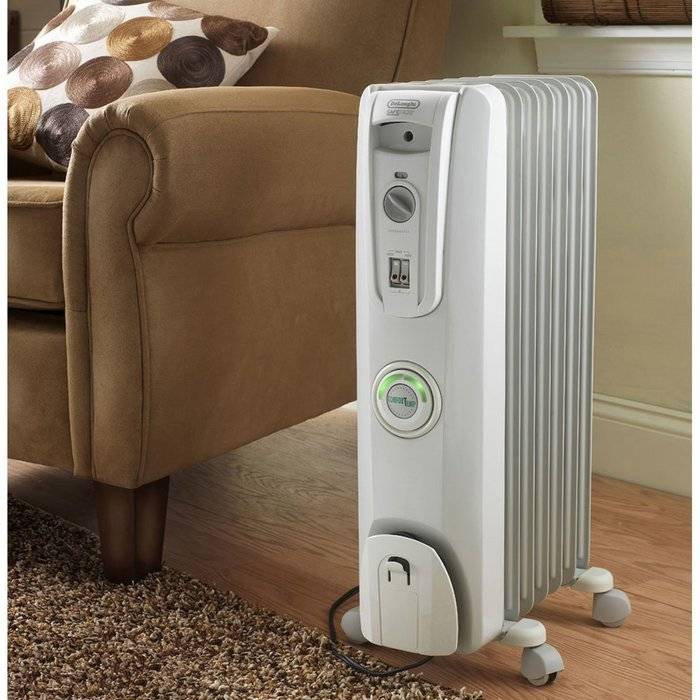
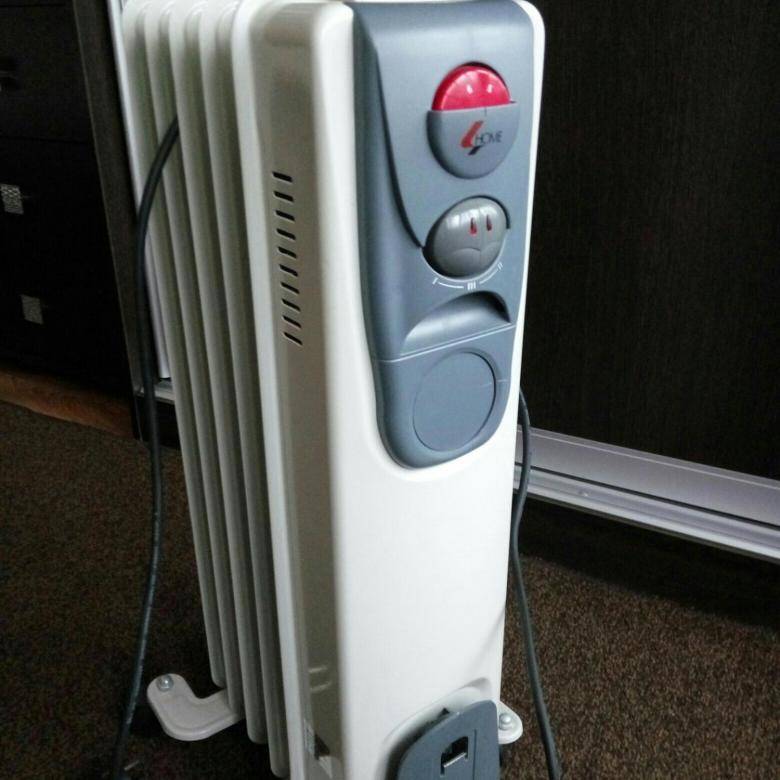
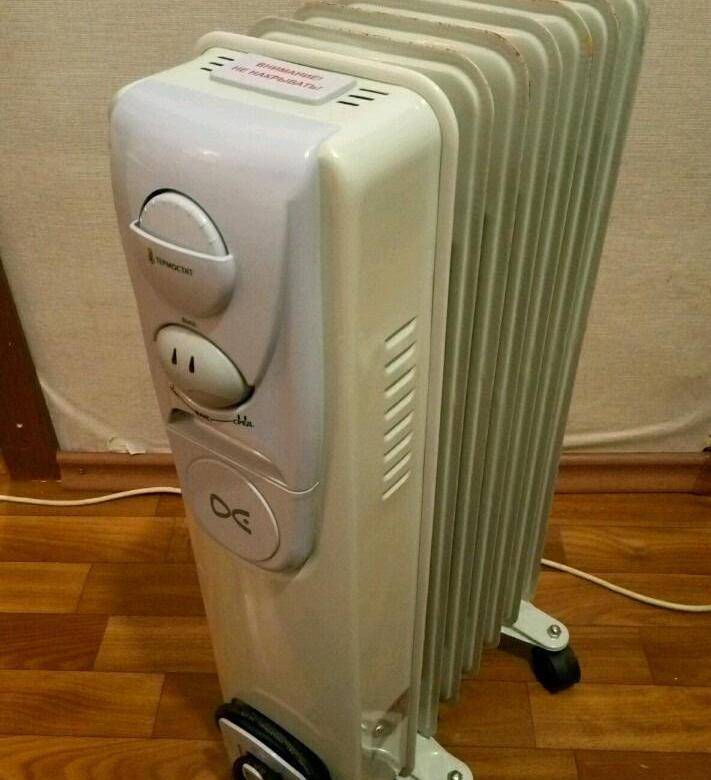
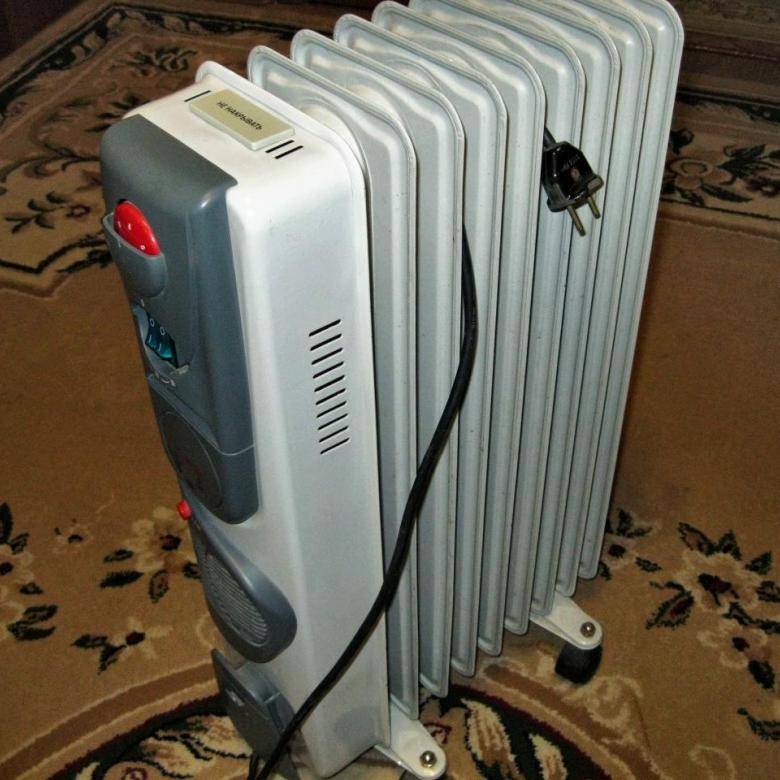
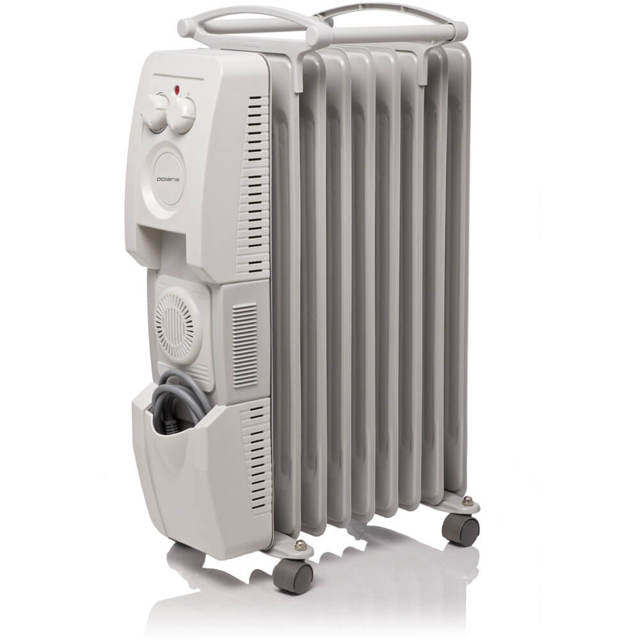
The design of this device is as simple as possible. There is a hermetically sealed metal shell inside which is a mineral-type transformer oil (hence the name). Another mandatory element is the heating element.
There is also a power cord with a plug and a control box.
Additionally, almost all units are equipped with wheels for easy transportation, since the object itself is quite heavy.
A protective cover is often present to prevent contact with a hot surface. This is especially appropriate in families with small children. In some cases, there is a clothes dryer.
To achieve optimal indoor humidity levels, some products are equipped with a humidifier.Water is poured into it, which gradually evaporates and saturates the air with moisture. But it is still advisable to use a separate humidifier.
The principle of operation of the device is as follows: after connecting to the network and setting the mode, the heating element begins to heat up and heat the oil. Gradually, it heats up and gives off its heat to the body, which transmits it into space.
The advantages of such solutions include:
- noiselessness;
- safety - the body does not heat up above 60 degrees;
- long service life - the elements almost do not wear out, and such a device is able to operate continuously for up to three days;
- do not affect the environment - that is, they do not dry the air and do not burn dust.
But there are also features that you need to consider if you choose which is better: a fan heater, infrared or oil heater.
The mechanism of action explains the main drawback of the equipment: a long warm-up. From other devices, such as convectors, heat begins to be felt immediately. But the oil object takes at least 20 minutes to prepare. But after it “heats up”, the product will give off heat even after disconnecting from the network.
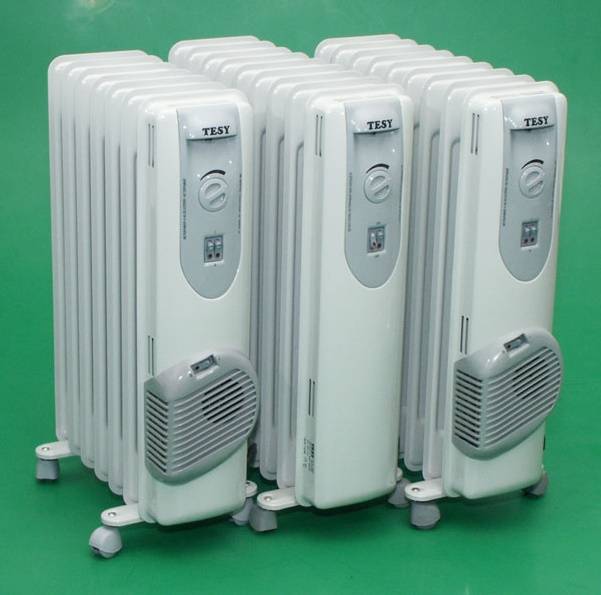
Still, such a technique cannot ensure the rapid distribution of heat throughout the room. To correct this feature, models with fans are produced. They make the air circulate more intensively around the room and provide uniform heating. Although you have to put up with the noise at work.
Now it is fashionable to mention the possibility create a fireplace effect". It is formed due to the special structure of the radiator, namely, the presence of thermal gaps. They create traction, and so the air masses mix.Otherwise, there is a great risk that all the heat will be concentrated under the ceiling, and it will still be cold on the floor.




Oil heater - advantages and disadvantages
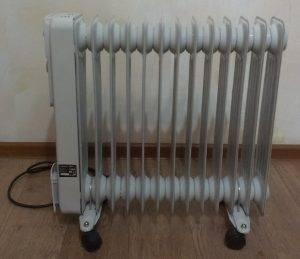 Recently, heating residential premises with oil heaters has become quite popular among our compatriots. And this is not surprising, since these devices are safe, reliable, ready to work at any time of the day, plus they have a lot of their own advantages.
- High fire and operational safety, ensured by the tightness of the structure and relatively low (60°C) surface heating temperature.
- Sufficiently high efficiency, which varies in the range of 80 - 85%.
- Efficiency ensured by the high heat capacity of the coolant. Even after turning off, the device will give off heat to the heated room for a long time.
- Silent operation, due to the absence of moving elements and mechanisms.
- Operation in automatic mode. The owner needs to connect the device to a power source and set the desired value on the thermostat. Further, the oil cooler will work independently within the specified temperature range.
- Duration of operation. The simplicity of design and the absence of the need for maintenance ensure a fairly long service life of the device.
- Mobility. The wheels make it easy to move the device from room to room.
- No unpleasant odors.
- Low cost and availability.
In addition, the installation of such devices does not require permits. All you need to do is correctly install the device in the right place and connect it to a household power outlet.
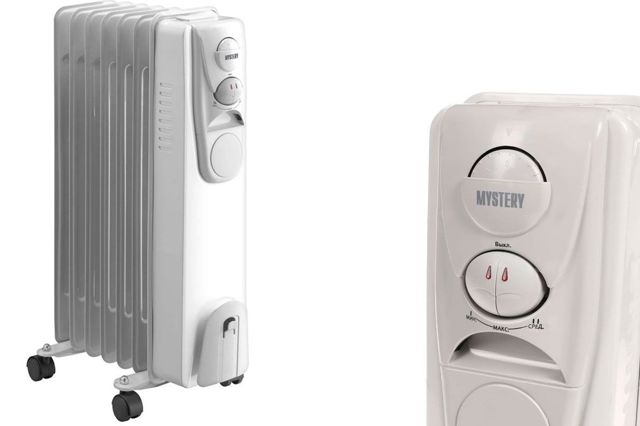
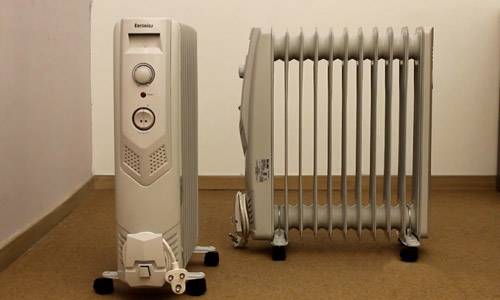 oil heater
Now, a few words about the shortcomings.
- Oil heaters-radiators heat up for a long time. To be more precise, it takes from 20 minutes to half an hour to fully heat up the device. The problem is solved by purchasing a model with a built-in fan, which allows warm air to quickly spread throughout the room.
- These devices are quite heavy, which is easily explained by their design.
- Oil radiator heaters are very wasteful in terms of electricity consumption.
Conclusion: oil radiators are rather heavy and long-heating heating devices, the features of which are simplicity of design and operation, mobility, safety in use, efficiency, fairly low cost and low maintenance requirements.
Infrared heater
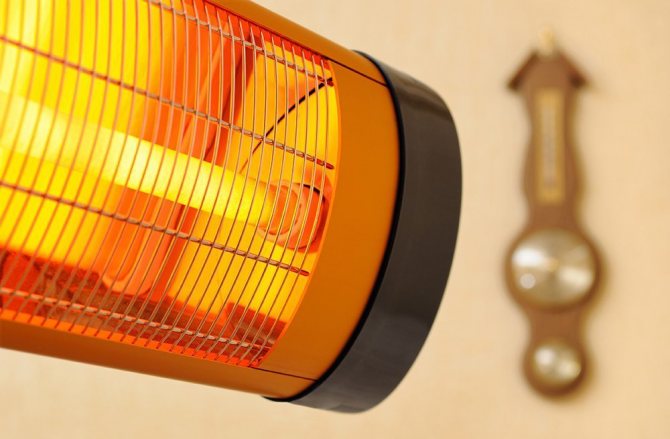
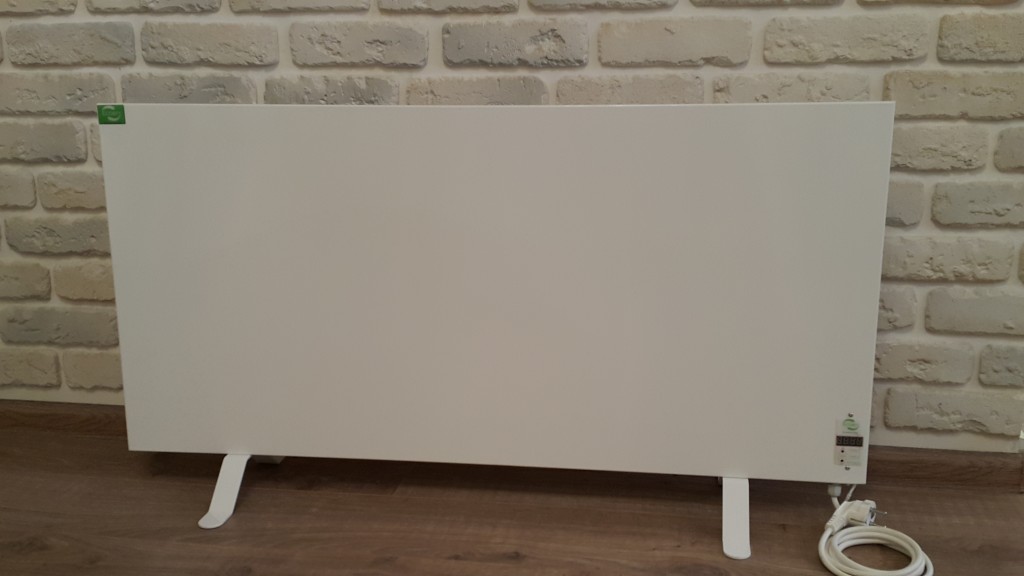
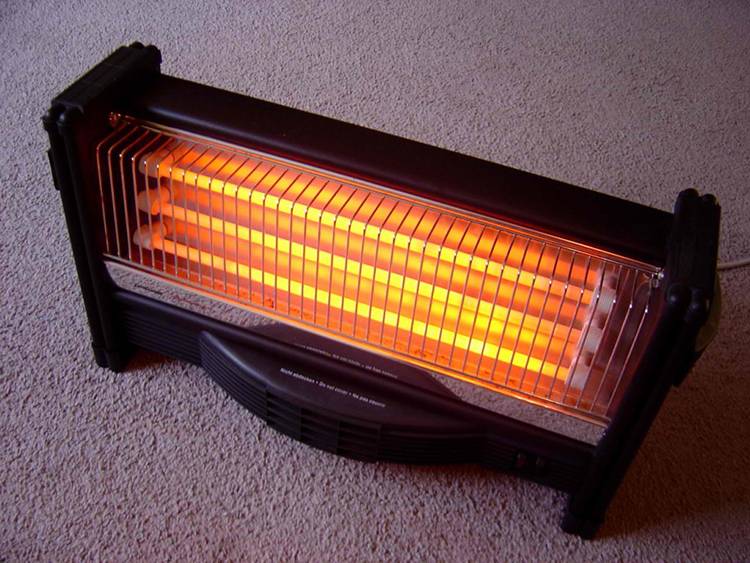
The heating element of such a heater is an infrared emitter. It is tubular, quartz, halogen or ceramic. The infrared rays generated by it are absorbed by the surrounding surfaces in the radiation zone - walls, floors, furniture, as well as people. It's time to remember that a person feels the heat of the sun also due to its infrared component. Unlike harmful ultraviolet radiation, infrared does not harm health. It is only necessary to avoid too powerful and directed radiation.
Infrared heaters do not heat the air of the room, but the surfaces and objects in it - the floor, walls, cold bed. Already from them the air in the room is heated.
Room area and device power
First of all, you need to decide what area you want to heat. It depends on what power you need. How to calculate this power?
There is a simple and reliable formula that is suitable for all types of heaters except infrared.
For every square meter of a room with a standard ceiling height, it is desirable to have at least 100W of power.
For an infrared heater, there is an unspoken rule that 100W per 1m2 of area is its maximum power, and not its minimum.
To the value obtained, you need to add 200W for each window.
From this it follows that, for example, one room with an area of 13m2, a model of 1.3kW + 0.2kW = 1.5kW will quite effectively heat up.
And if you have a ceiling height of 3m or more? Then use a slightly different calculation. Multiply the total area of the room by the actual height of the ceiling and divide this value by an average coefficient equal to 30. Then you also add 0.2 kW per window.
Of course, according to the calculation, you can choose a less powerful device, especially for apartments where there is already a main heating (central or boiler).
But given the constant heat loss and the fact that it will warm up the room longer, it’s better to play it safe. Devices with several stages of heating are ideal. The more of them, the better.


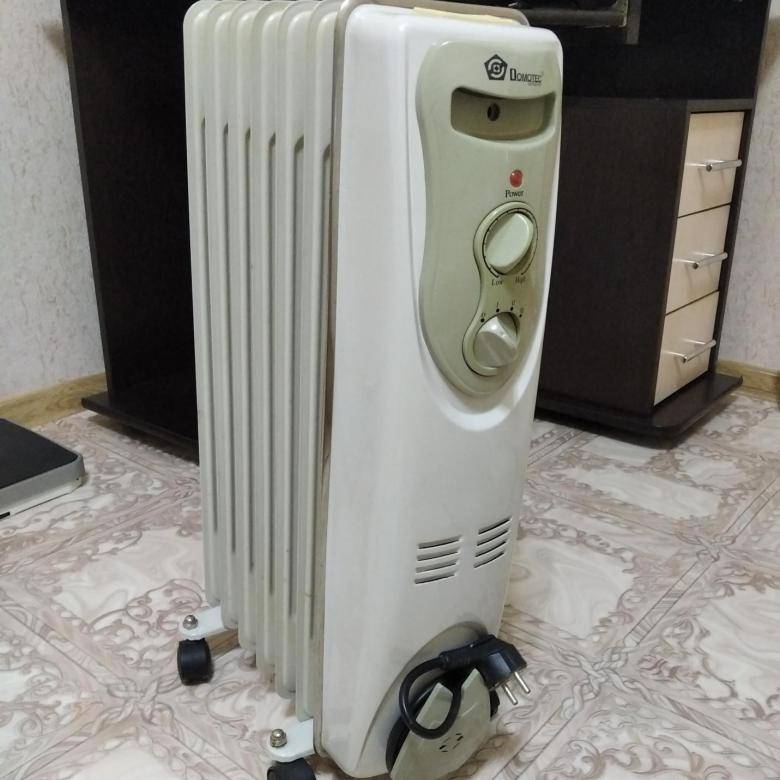

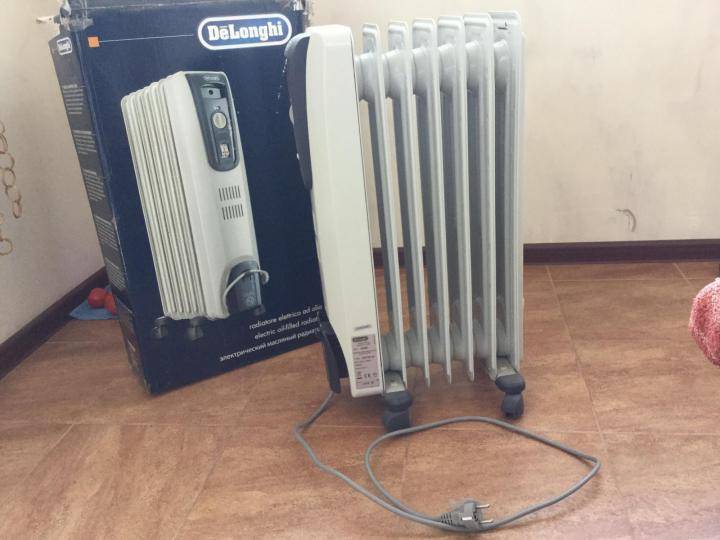



Moreover, when the set temperature is reached, the built-in thermostat must turn off the device, no matter what stage it is at. And when it is lowered, turn it on again. Thereby essentially saving el.energiyu.
And yet, a more powerful heater, when operated in the “half” mode, will serve you much longer than its counterparts matched back to back.
Infrared heater - advantages and disadvantages
In the last decade, infrared heating systems have become increasingly used by our compatriots for home heating.The reason for this was the availability and a fairly wide range of devices. Unlike oil radiators that heat the air, IR emitters heat objects in the room, which, in turn, give off the accumulated heat to the air.
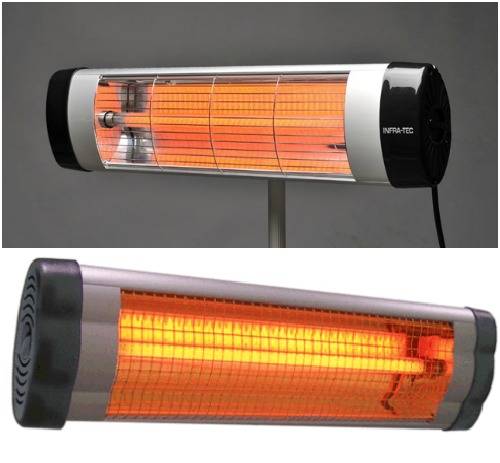 Infrared heater
To deal with the question of which heater to choose, an oil cooler or an infrared emitter, it is necessary to consider all the advantages and disadvantages of these devices. In addition to affordability, IR heating technology has many other advantages:
- Rapid heating of the room due to the large heat transfer area, which is the building envelope and interior items.
- The possibility of heating a certain area of the room, located in the zone of radiation.
- Silent operation, as the technology does not imply the presence of moving elements and mechanisms.
- Easy to install and operate.
- Small weight and dimensions.
- Profitability.
- High efficiency (on average - 90%).
Infrared heaters are widely used for heating apartments, cottages, private and country houses, warehouses and industrial premises. Not without a "fly in the ointment". Infrared heaters have one, but a very important drawback - high cost.
Conclusion: IR heaters are very expensive, but durable, easy to operate and economical heating electrical equipment used as the main or auxiliary source of heat in residential, warehouse and industrial premises.
Calculation of the power requirement of the device
If we do not want to overpay for the excess power of the device, we must know our own actual need for this radiator parameter. This characteristic directly depends on the volume of the room to be heated.
There is a rule that should be used when calculating the power of any type of heater. It consists in the following: to heat every ten square meters of a room, you need only 1 kW of energy emitted by your radiator.
Although we called this condition universal, it should be mentioned that we are talking about apartments in which the ceilings have a standard height of 2.75 meters. How to calculate the power requirement of the device if the ceilings in your apartment are located at a different distance from the floor?
We offer you the following algorithm that can be used in this case:
- multiply the length of the room by its width, while calculating the area of \u200b\u200bthe room;
- multiply the result by the actual height of the room, determining the volume of the room;
- we divide the calculated volume by 25, while obtaining a value corresponding to the number of kW that will be required to heat our premises.
The division is made precisely by 25, since it is believed that heating 25 m3 will require 1 kW of energy.
Summing up the calculations and reasoning, let's say that for a standard room, the area of \u200b\u200bwhich approaches 20 square meters. meters, a 1.5 kW radiator will be enough. If the room is larger, you need to choose a more powerful model.
In modern stores, oil heaters, the power of which does not exceed 2.5 kW, are widely presented so that you can choose the device that suits you best.
Convector control units - which one is better
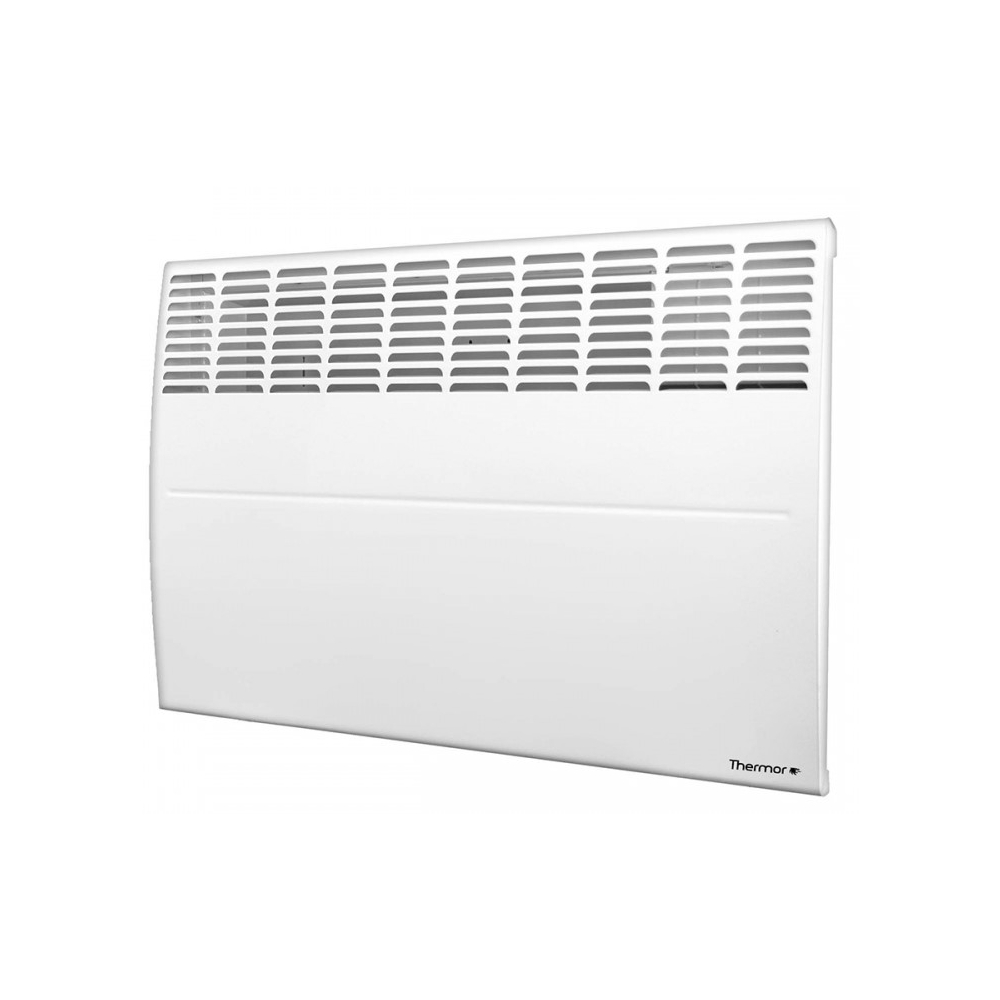
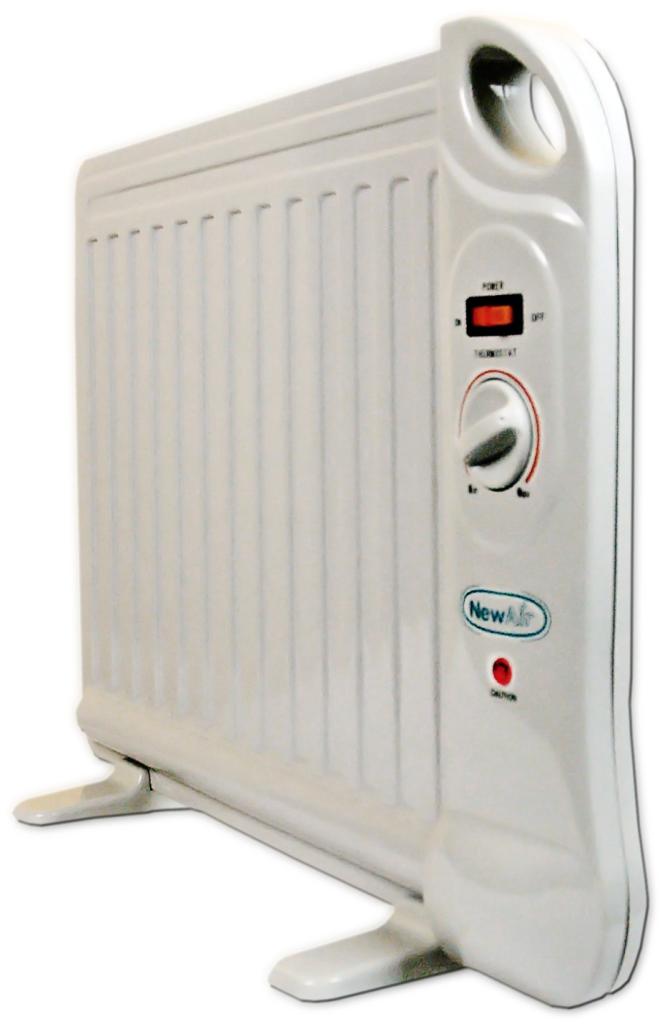
And convectors for greater efficiency can be equipped with:
electronic control unit
With it, the heater becomes up to 40% more economical than oil.
or inverter
Profitability reaches 70%. For greater clarity, imagine a car that travels uniformly along the highway at the same speed. This is an inverter.



Without it, the heater will resemble a car moving through traffic jams in the city. Who do you think will have more fuel consumption for the same mileage? The same is true for convectors.
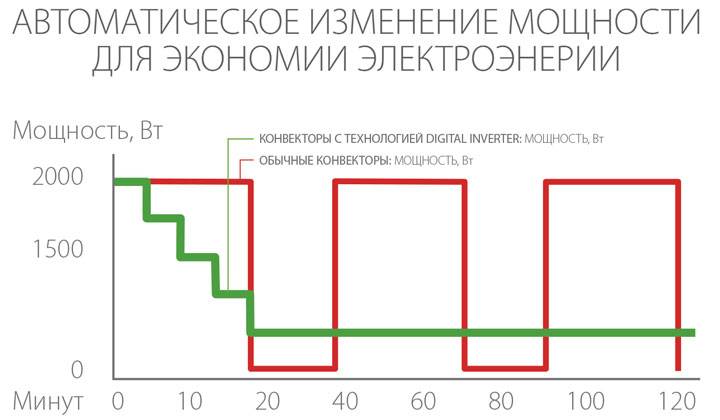
That is, the device does not work all the time with maximum power, as is the case with the classic mechanical version. Here, at first, heating to the set temperature takes place, and then to maintain it, the maximum power is not used at all.
This is precisely the inverter technology, due to which the efficiency of such models is achieved.
Here are the supporting documents and real test data for all of the above claims. All with signatures, seals, etc.
With such blocks, you can control the temperature in the room with an accuracy of tenths of a degree.
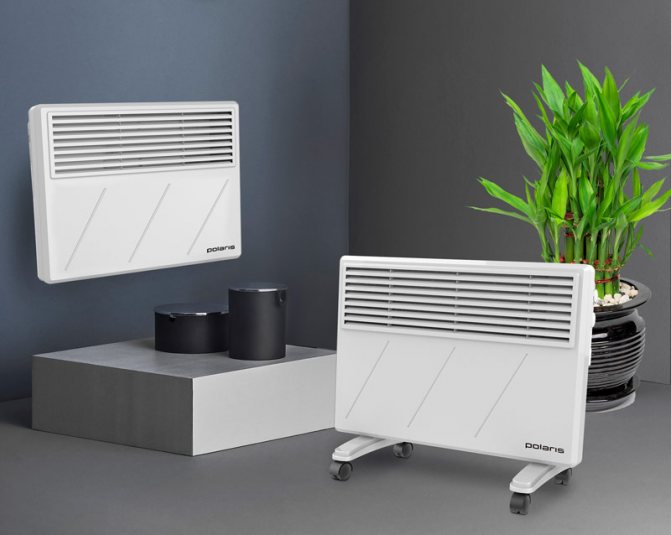
Another advantage of convectors is the versatility of their placement. Most of them have both wheels to move around. different rooms of the apartment.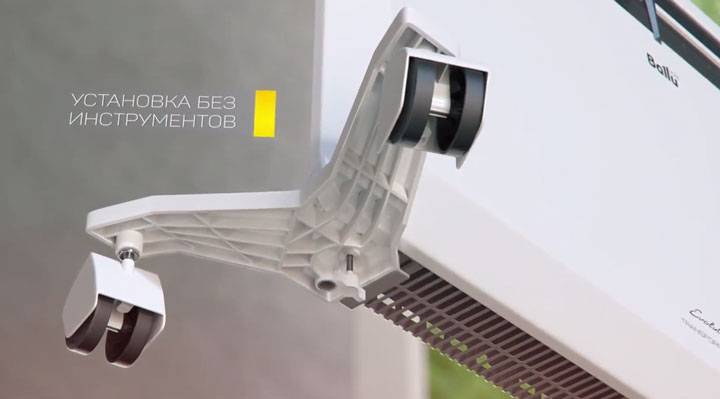
So is the stationary type of attachment. With its help, the convector is placed on any wall in the form of a battery.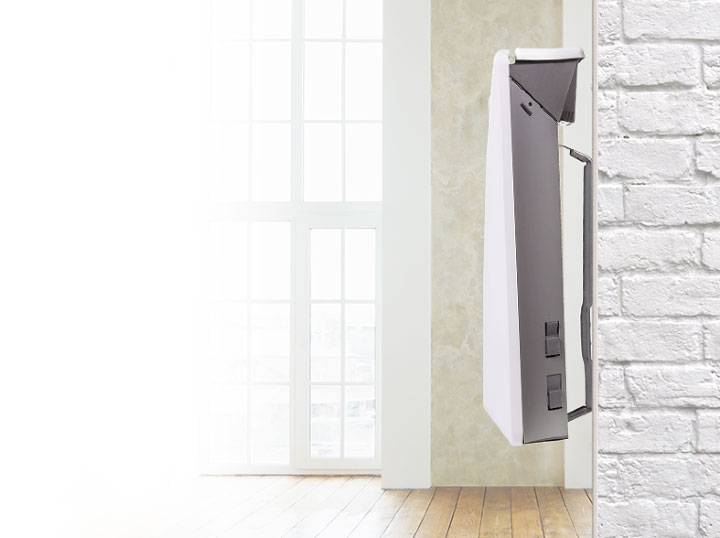
At the same time, be careful at one point. Some cling to the wall behind the heater case with foil or other shiny reflective material. This supposedly should help reflect heat and improve heating.
However, if your model has a temperature sensor at the top, then this foil will cause it to overheat. Accordingly, the convector will not work correctly and will not warm up the room a little.
For devices with a lower sensor location, such a reflective surface has little effect on its operation.
But oil batteries, no one hangs on the wall at all. In the summer, they constantly get in the way underfoot, or take up extra space on the balcony or in the pantry.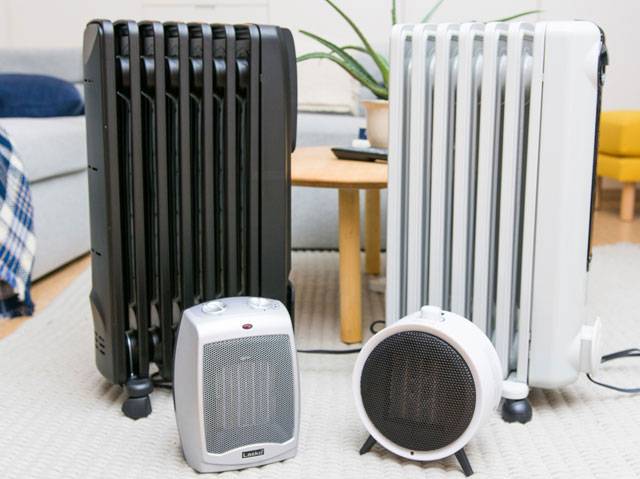
So it turns out that if placed in the same conditions - one area of \u200b\u200bthe room, one initial temperature, the same operating time, two heaters, then the convector in the total will bypass the oil battery in all respects.
The efficiency of the main types of heaters for the home
Everyone knows what efficiency is, it is the difference between the energy expended and the energy produced. When calculating the coefficient, we tried to provide the most detailed answer in tabular form. Since, in addition to the energy component, there are also financial costs for the purchase of the device itself, the cost of electricity, the calculation is made taking into account these factors.

The table shows the average values obtained as a result of testing various types of heaters (thanks to one well-known store for providing testing equipment). The cost for 1 kW of energy is 4 rubles. The heating took place within 1 hour in a furnished room 18 sq.m. with an initial temperature of 22°C. The power of the heaters is 1500 W. Control type - electronic.
| View | Average price, p | Declared maximum power, W | Temperature change during 1 hour, gr. FROM | Spent kW by meter | The cost of electricity consumed, p |
| fan heater | 1250 | 1500 | +3,9 | 1,69 | 6,76 |
| Oil | 3200 | 1500 | +5,1 | 1,74 | 6,96 |
| Convector | 3540 | 1500 | +6,2 | 1,52 | 6,08 |
| Infrared | 3580 | 1500 | +6,1 | 1,22 | 4,88 |
| Mycathermic | 7800 | 1500 | +7,0 | 1,24 | 4,96 |
The figures obtained are approximate, since many important factors affecting the result are not taken into account, such as: a single brand of the manufacturer, humidity in the room, model of the heater itself, directivity, voltage in the electrical circuit, etc.
But nevertheless, the figures turned out to be the following, the highest efficiency was obtained for convectors, infrared, mikathermic heaters. The fan heater barely managed to heat the room by 4 degrees.
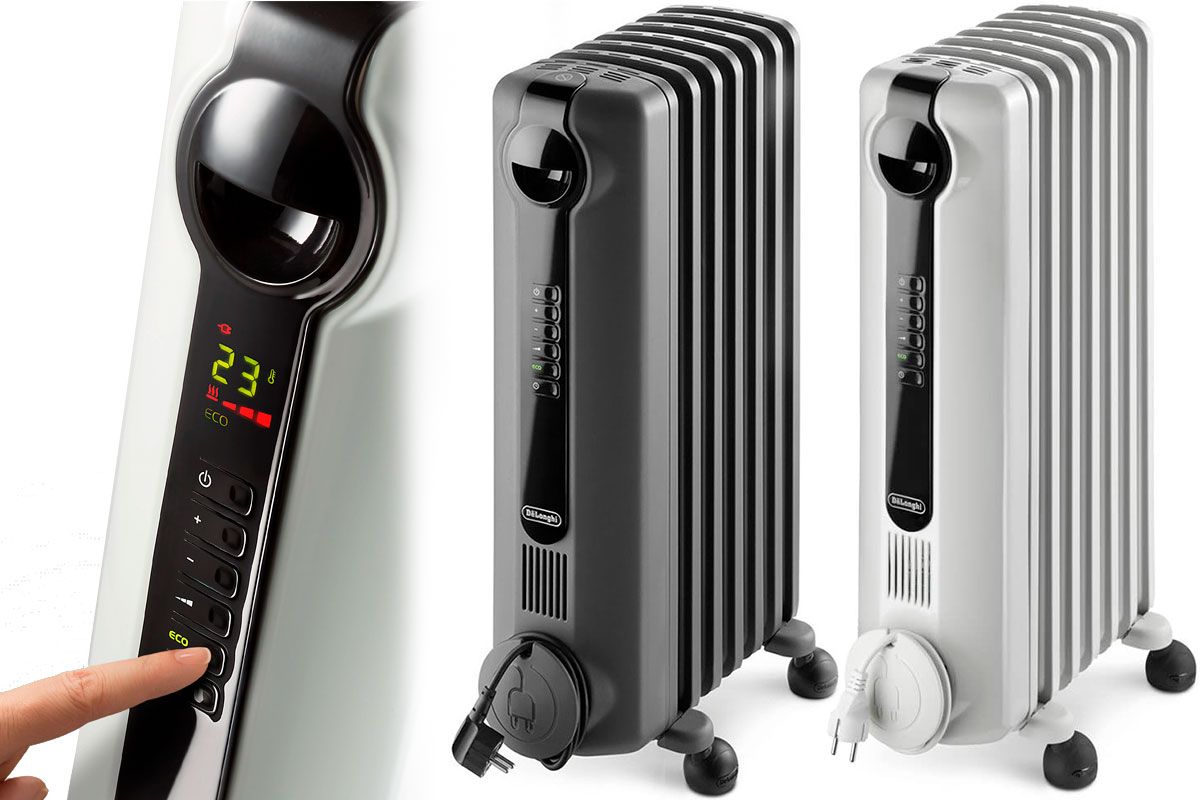

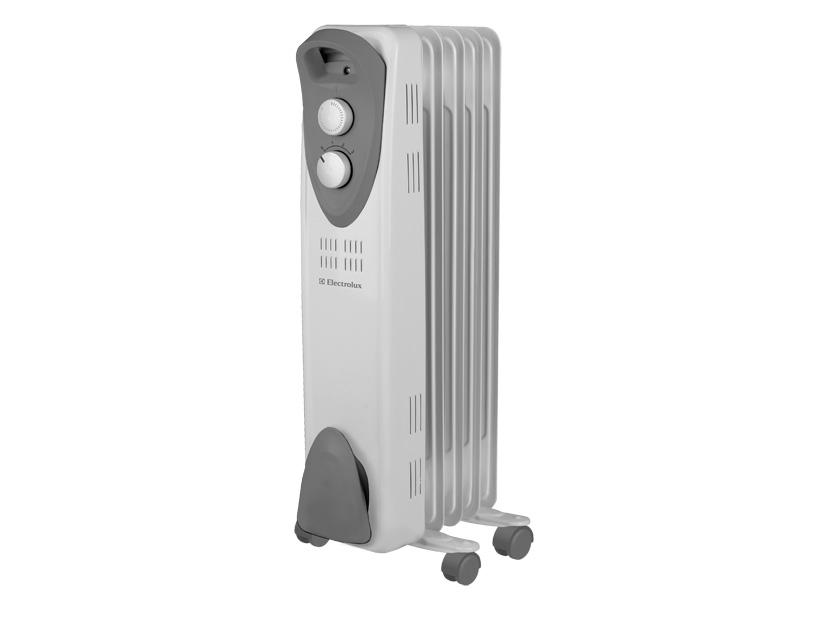
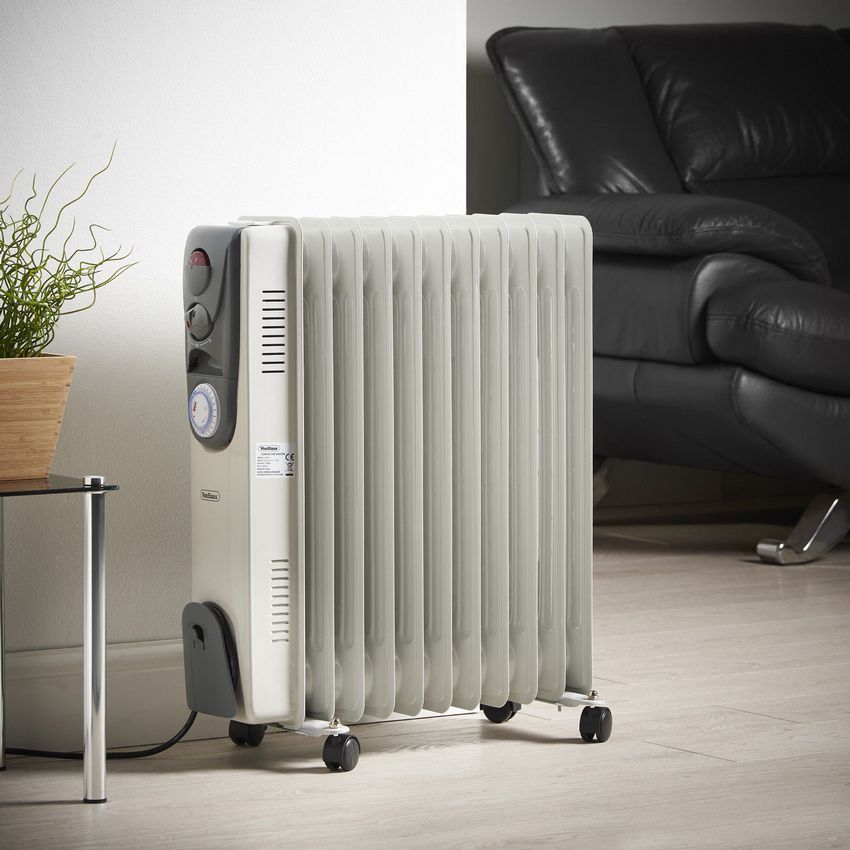


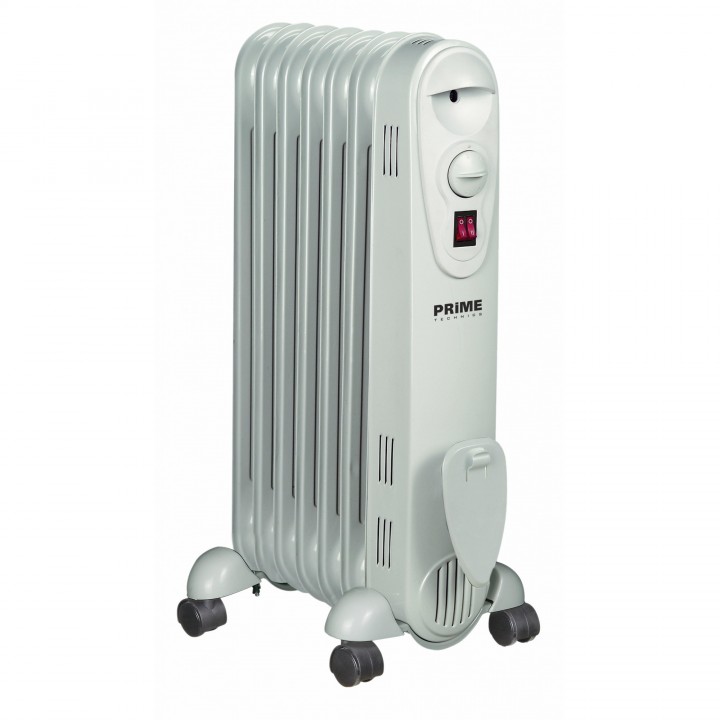
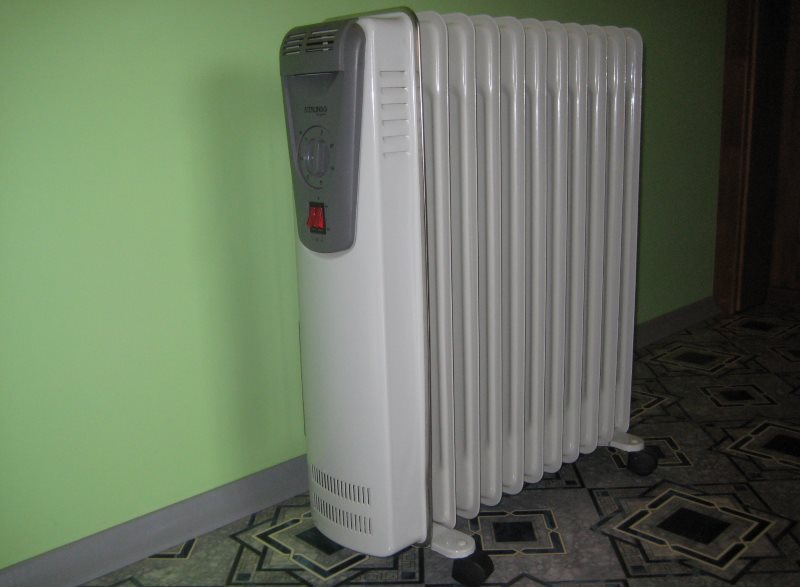
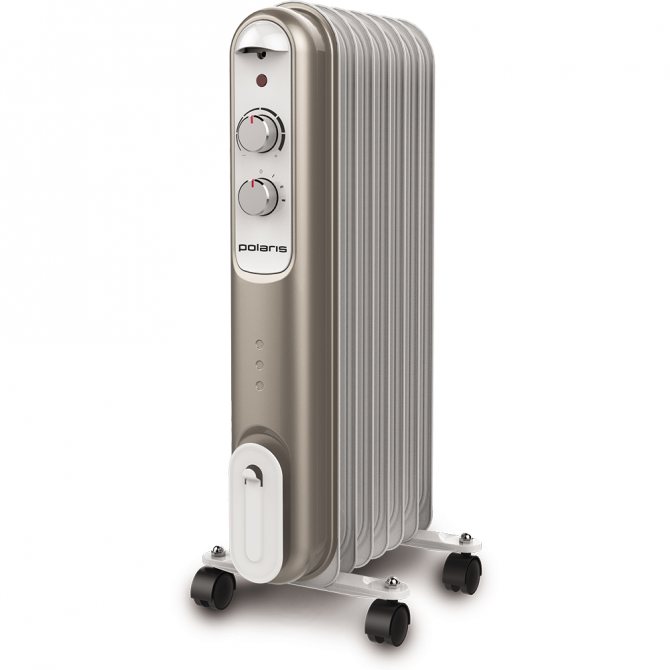

The oil radiator heated the room quite well, after the stop of the experiment, the room continued to heat up and stay warm longer than others, so you should not write it off due to high power consumption.
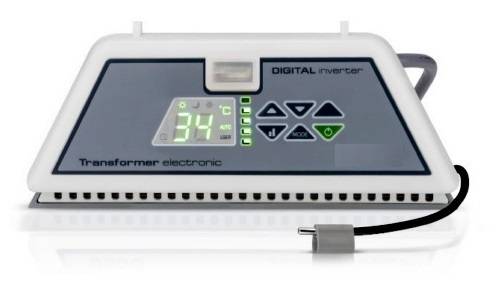 Inverter thermostat
The cost of heaters with inverter units can vary from 8,000 to 30,000 rubles. In the long run, as a rule, such costs pay off. More in the video:
Which heaters are best for home and apartment
The choice usually comes down to four main options:
- Oil.
- Convector.
- Infrared.
- Fan heater.
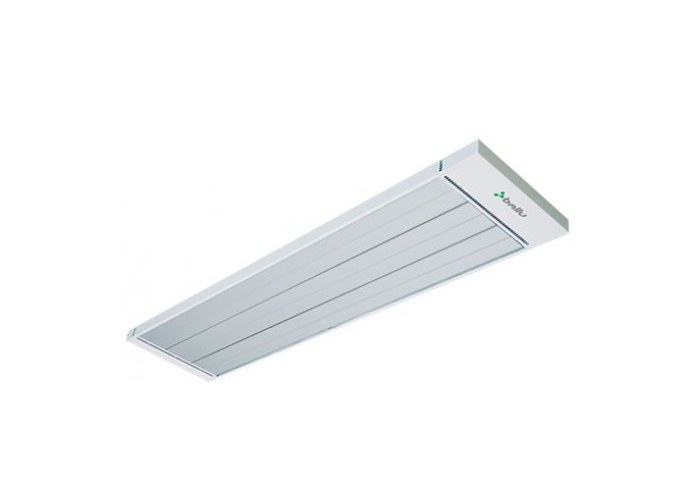
Sometimes a heater is simply necessary, but it is not always possible to find a place for this device. In this case, the ceiling infrared heater saves. See our website for an overview of models and prices.
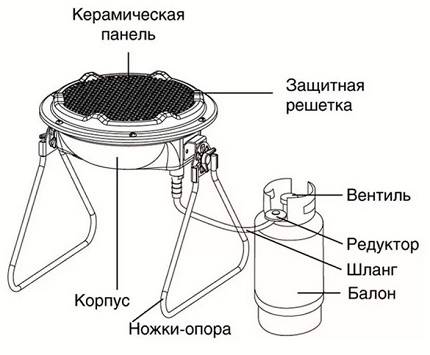
Choose a gas heater for a tent, these recommendations will help you.
Perhaps the following article will be of interest to you:. Ceramic heaters - features of choice, pros and cons.
Convectors and fan heaters
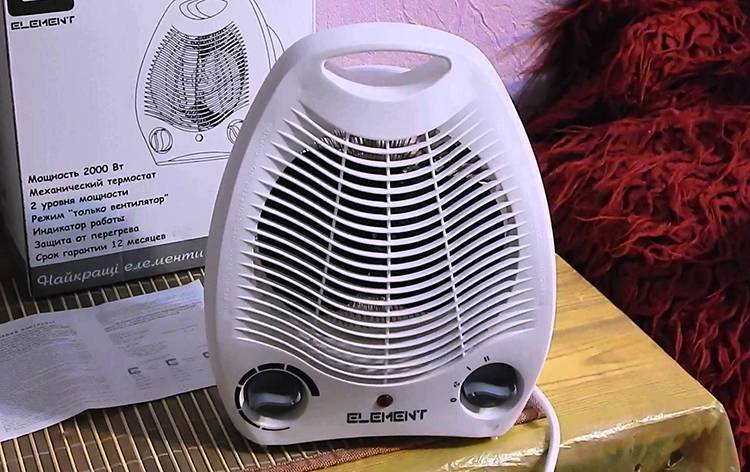
They quickly heat the air, mix the flows, evenly warming the room.They are safe and durable, the case is not hot, can be attached to the wall and placed on the floor, compact and lightweight.
Fan heaters buzz especially strongly, but they are the smallest, they are easy to carry, rearrange from place to place.
However, some may not like the constant fan noise and strong air movement. In addition, in order for the room to be warm, the device must be constantly on. It does not accumulate heat by the case and when it is turned off, the heat transfer immediately stops.
Infrared heater
"Home sun", as it is sometimes called, instantly heats people and objects located in the zone of infrared rays. However, this action is local, therefore, as a device for heating the entire room, IKO is not very suitable.
In addition, users note that after sleeping in a room where the IR heater was turned on all night, a headache and lethargy appear.
Many owners have found the most successful use by placing a heater near the table to keep warm during work, above the bed (turned on briefly before going to bed to warm the bed), in the kitchen, etc.
Oil coolers
Remain in demand among those for whom the movement of air around the apartment is a decisive undesirable factor
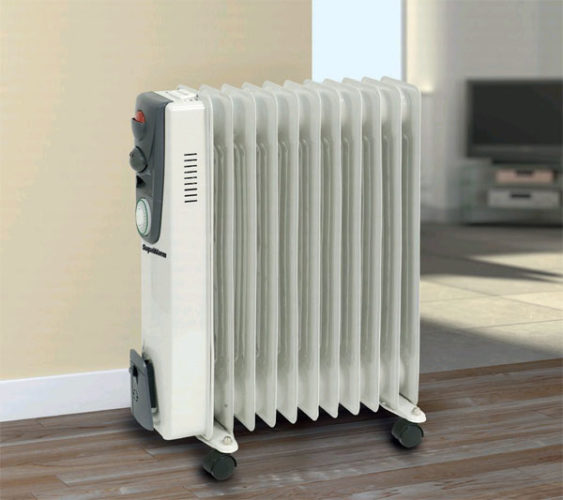
They are heavy, cannot be repaired, have a certain expiration date, after which, if used incorrectly, there is a possibility of an explosion (it is important that the thermal switch is in good condition, since most accidents are due to overheating)
But subject to all norms and rules, it will be able to give heat, instead of a battery. The device heats up for a long time, but also cools down for a long time. No dust, quiet operation.



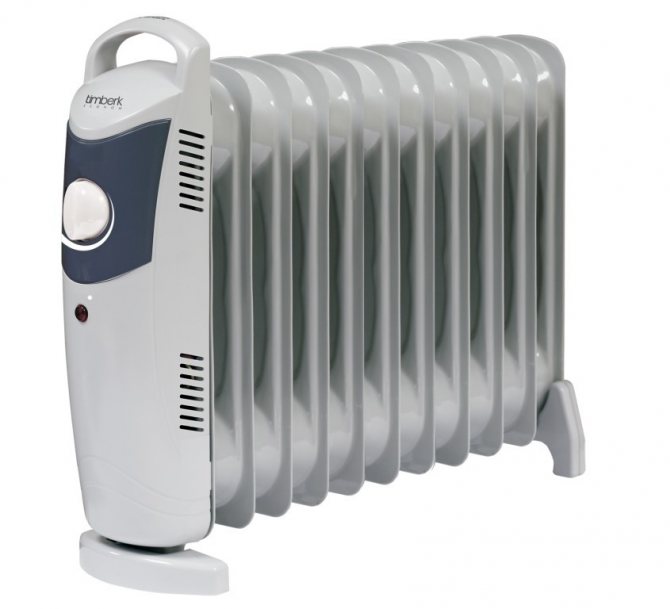
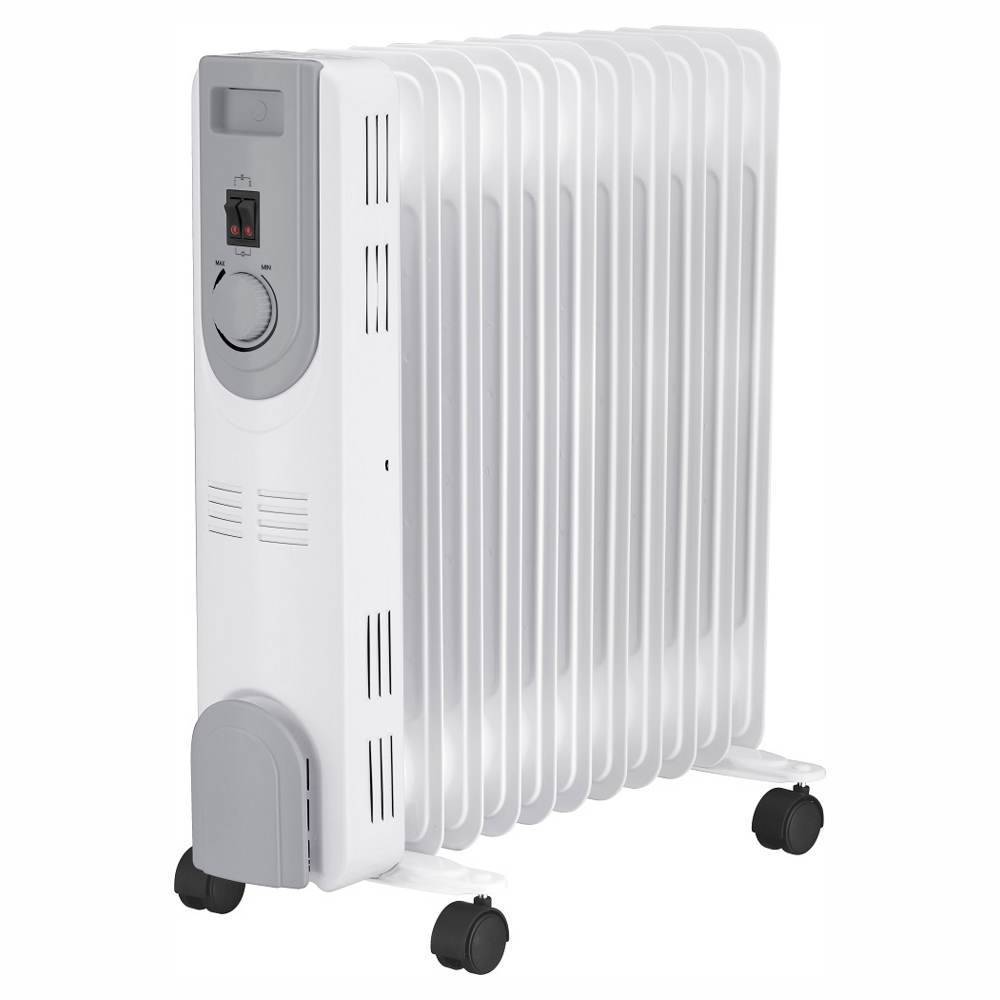


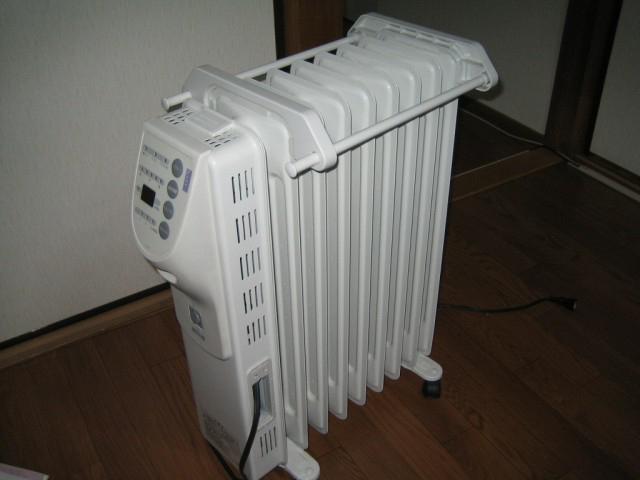
The body of the oil heater is heated to dangerous temperatures.Also, it cannot be dropped. Therefore, it is better not to put it in the children's room.
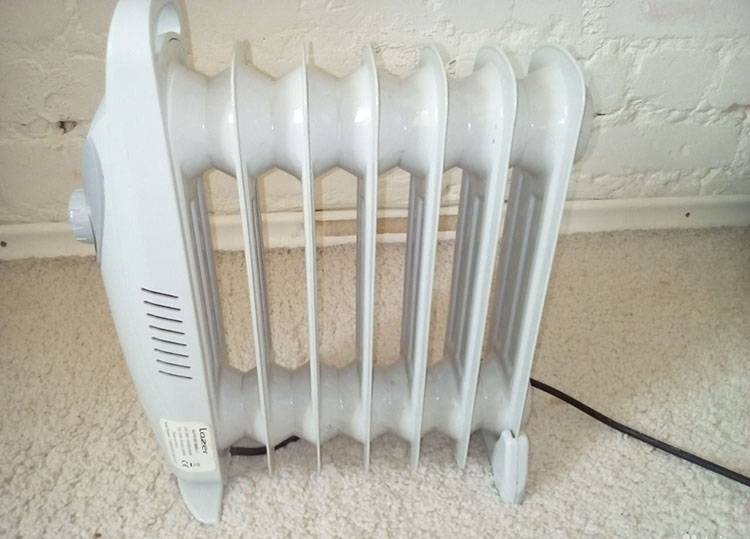
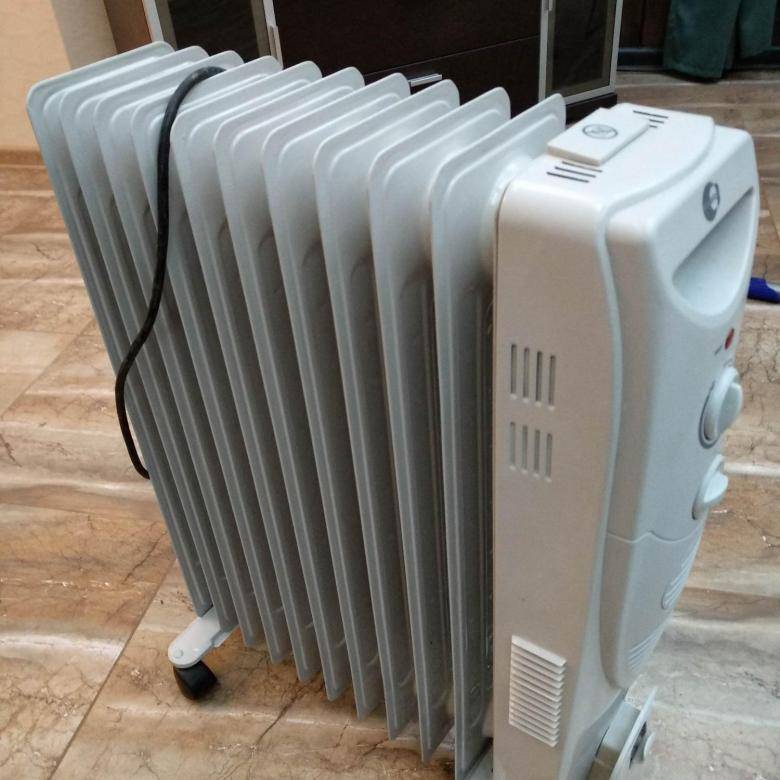
Oil type heater
UNIT UOR-123
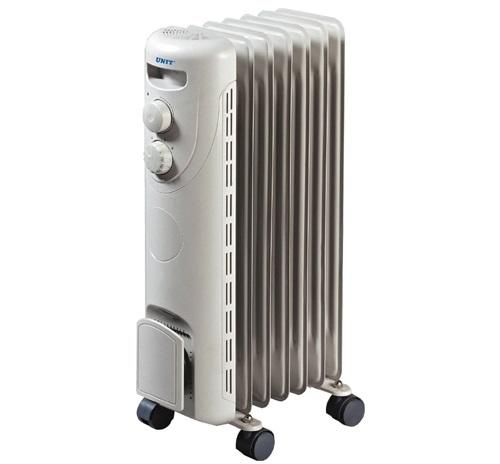
The fifth position in the TOP 10 best oil heaters according to user reviews is UNIT UOR-123. The main advantage of the products of this brand lies in the ideal reliability of each released device. Therefore, after purchasing the UOR-123 model, you can count on many years of trouble-free service for this radiator. Thanks to the maximum power of 2.3 kW of this high-quality and inexpensive electric heater, it is possible to provide heat to a room with an area of up to 23 square meters. m. If necessary, the user can also set a lower temperature for which the device is equipped with convenient mechanical-type regulators. Of the protection systems in UNIT UOR-123, there is only a shutdown in case of overheating, but at a price of 3000 rubles one should not expect great opportunities from such a powerful device.
Advantages:
- power reserve
- reliable assembly
- affordable price
- convenient control
- switch indicator light
Flaws:
not found