- Heated area
- Why some heaters are more economical than others, pros and cons
- fan heaters
- Oily
- Convectors
- Mycathermic
- Inverter heaters for home
- Convectors - silent heating for apartments
- Advantages and disadvantages of convectors
- What are infrared heaters?
- According to the type of energy source used for heating
- According to the length of the emitted waves
- According to the method of installation and fastening
- How to calculate the power of the heater?
- The best gas heaters for summer cottages
- BIGH–55
- Timberk TGH 4200 M1
- temperature difference
- Low heating rate
- Poor efficiency at high ceilings
- Convectors are gathering dust
- Other cons
- Convector heater device
- Varieties of convectors
- Additional functionality
- What to look for when choosing
- Choosing a convector
- Device power
- Installation
- Control principle
- Safety
- The size
- fan heater
Heated area
Of course, one of the first tasks that you have to solve is what area you plan to heat.
If you have a large room, then the most logical solution would be to pay attention to powerful heaters like gas or diesel.However, if you need to heat a small enclosed space, whether it be a bathroom or a bedroom, almost any electric heater will do the job easily and efficiently, especially if you use it for a long time.
It is often stated that one or another type of heater can be more or less effective than others. However, in reality, the type of heater is not necessarily the most determining factor in this regard. Of course, any portable electric heater will be much more efficient when it comes to heating small enclosed spaces like rooms and offices. And yet, the larger the area of \u200b\u200bthe room that you have to heat, the more powerful the model you will need.
Why some heaters are more economical than others, pros and cons
The fact is that various heaters use different methods of heating the room, some use heating elements, others use infrared radiation, oil coolants.

The primary most important factor affecting the economy is the correct selection of a heater of the required power for a given area of \u200b\u200bthe room. For example, if you try to heat 400m2 with a fan heater for 900 rubles, you can not only heat nothing, but also get a good electricity bill at the end of the month, see the table below.
| Room area, sq.m | Power (Watts, W) |
| 5,0-6,0 | 500-750 |
| 7,0-9,0 | 750-1000 |
| 10,0-12,0 | 1000-1250 |
| 12,0-15,0 | 1250-1500 |
| 15,0-18,0 | 1500-1750 |
| 18,0-25,0 | 1750-2000 |
| 25,0-30,0 | 2000-2500 |
| 30,0-35,0 | 2500-2900 |
Important! If you choose a heater as a non-main source of heat, for example, for the spring-autumn period. It is enough to choose one order less
For example, 30sqm-2000W.Another situation, if the main source of heating is not enough for you, for this you need to make simple calculations and get a suitable energy-saving heater designed for a smaller area.
Also, do not forget that not all heating systems distribute heat evenly around themselves, there are directional, comprehensive, there are floor, wall, ceiling, they all have their pluses and minuses. Let's analyze the advantages and disadvantages of the most popular of them:
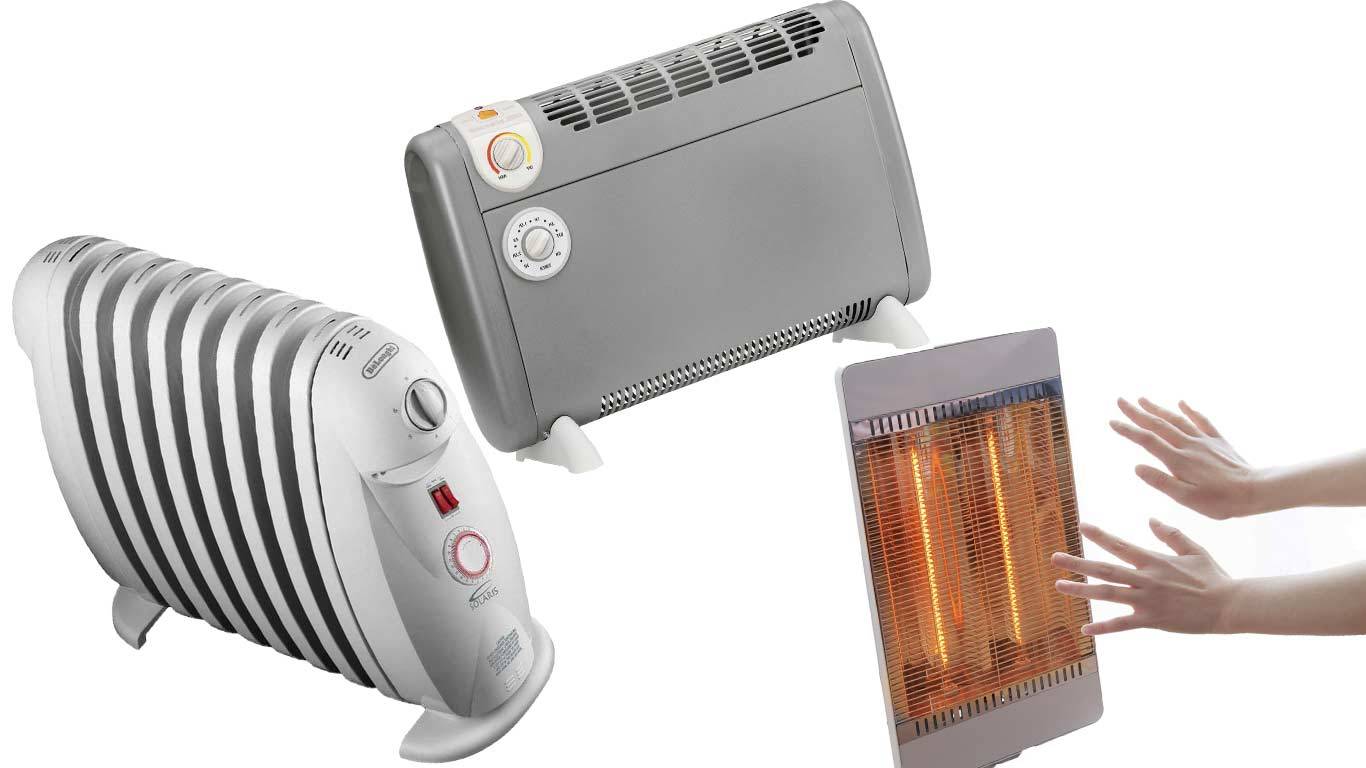
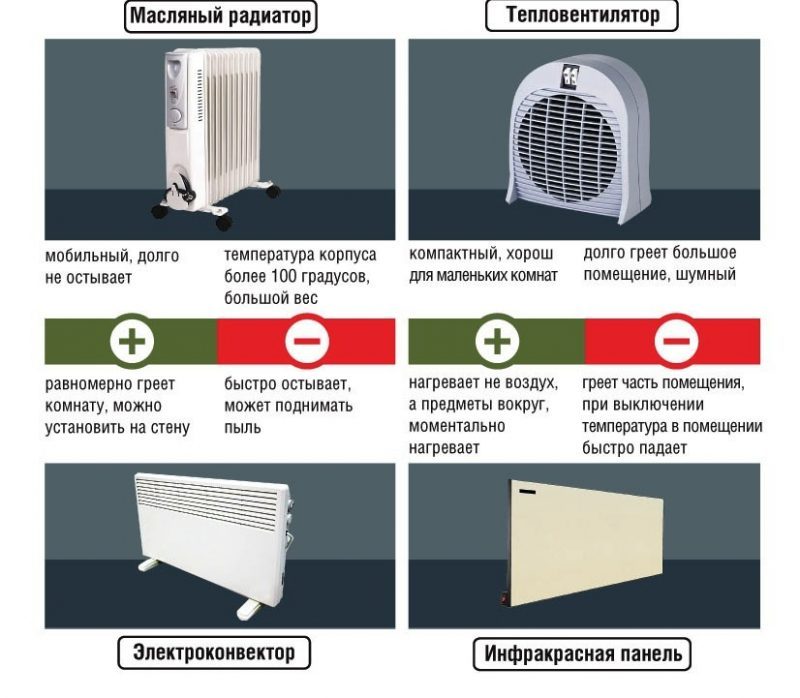
fan heaters
pros
Mobility, democracy, fairly fast heating of the room
minuses
Noisy, dry the air, raise dust, burn out oxygen, cannot be left unattended, average efficiency
Oily
pros
Slow cooling, silent, thermostat, overheating protection
minuses
Slow heating, low efficiency, case heating
Convectors
pros
Noiselessness, safe case heating, thermostat, high efficiency
minuses
Dry the air, burn out oxygen, clog with dust
pros
Quiet, economical, do not dry and do not burn out oxygen, fast heating
minuses
high cost
Mycathermic
pros
High efficiency, maintaining a uniform microclimate
minuses
Increased sensitivity to overloads in the electrical network, price
This list only shows the main advantages and disadvantages.
When choosing a heater, it is also necessary to pay attention to the manufacturer's brand, warranty period, its own unique properties, energy efficiency class, ease of transportation, safety for people, sensitivity to temperature changes, cord length, appearance
Inverter heaters for home
Today, air conditioners are no longer perceived by many as devices that can only cool the house in the summer heat. They can also easily cope with the task of heating the room in the cold season.



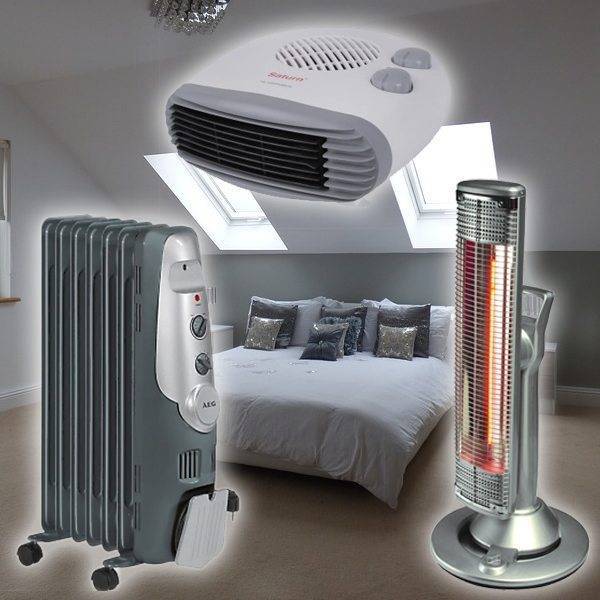
Many consumers wall-mounted heating systems that use inverter air conditioning are attracted primarily by their environmental friendliness. The fact is that during the operation of inverter devices there is no combustion of fuel, which means the absence of harmful emissions into the atmosphere. These devices are also highly economical and easy to use.
They have another important advantage - they can be used to heat rooms much larger than other types of electric heaters are capable of.
Convectors - silent heating for apartments
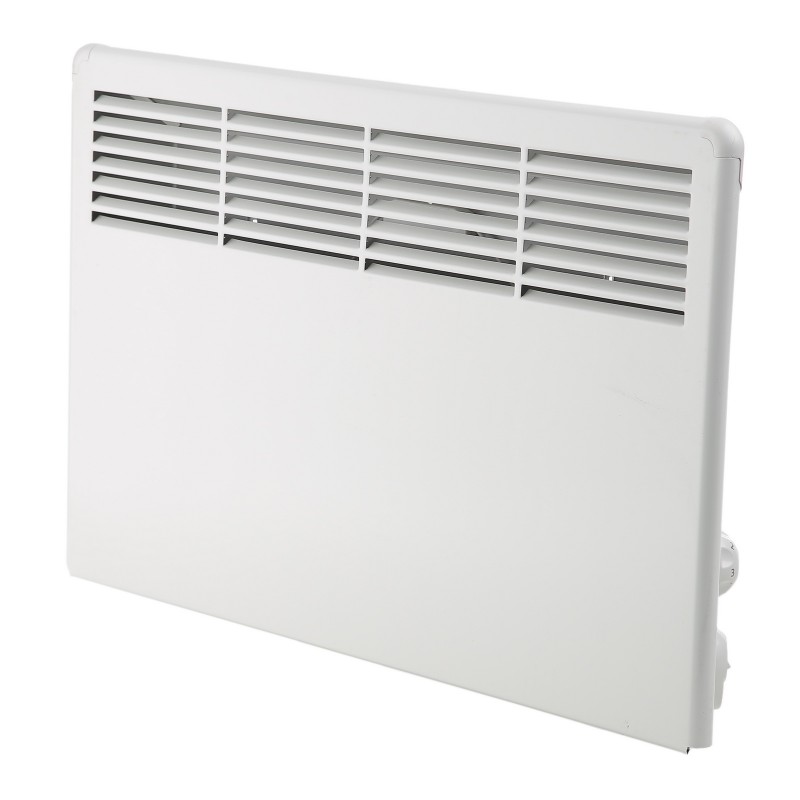
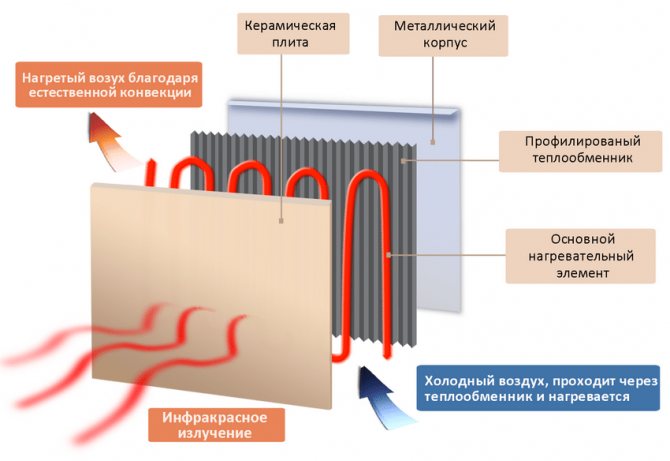
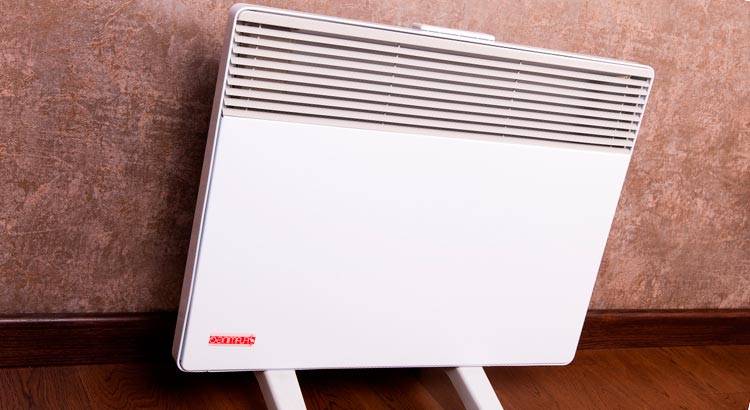
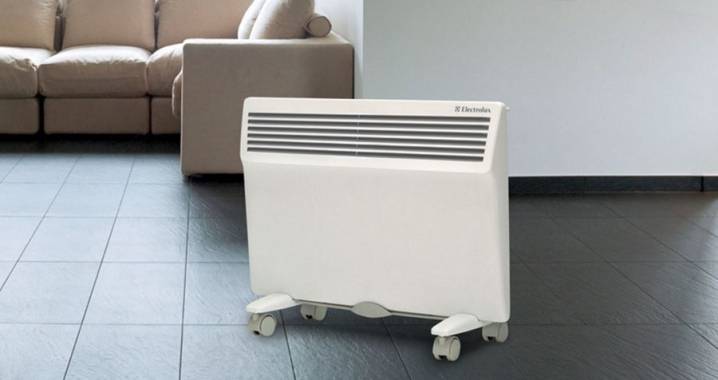
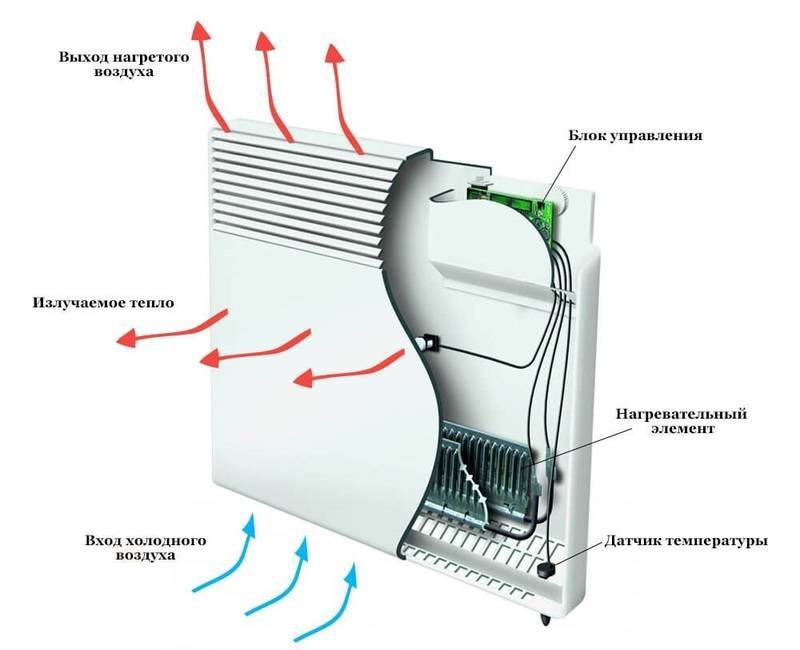
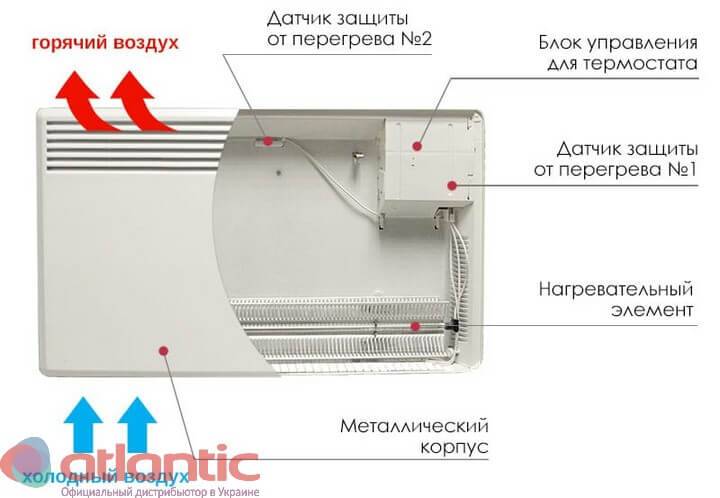
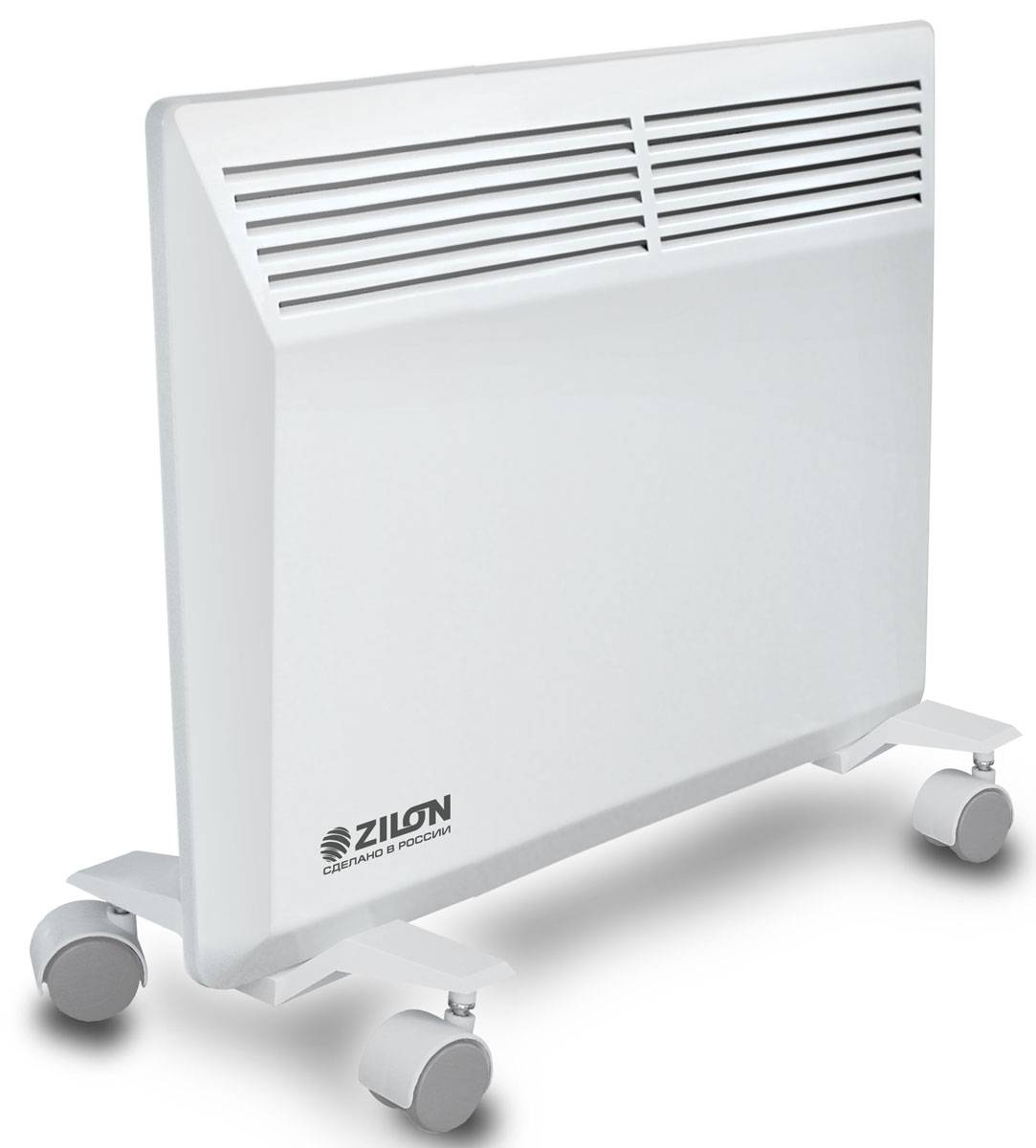
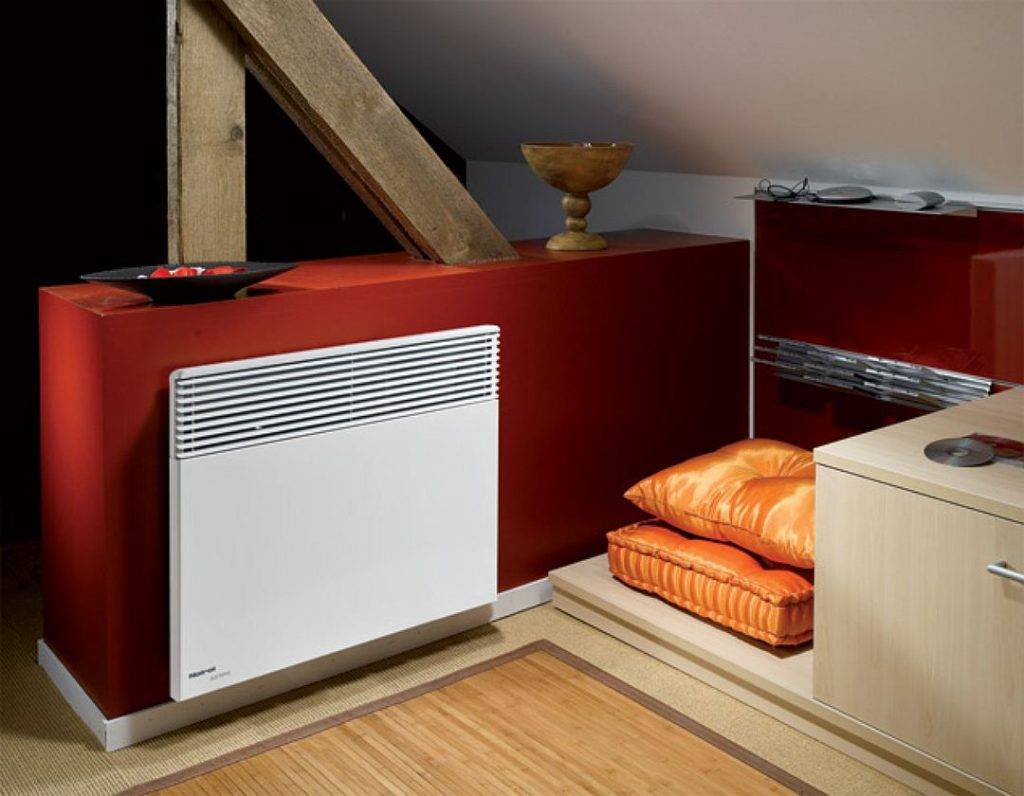
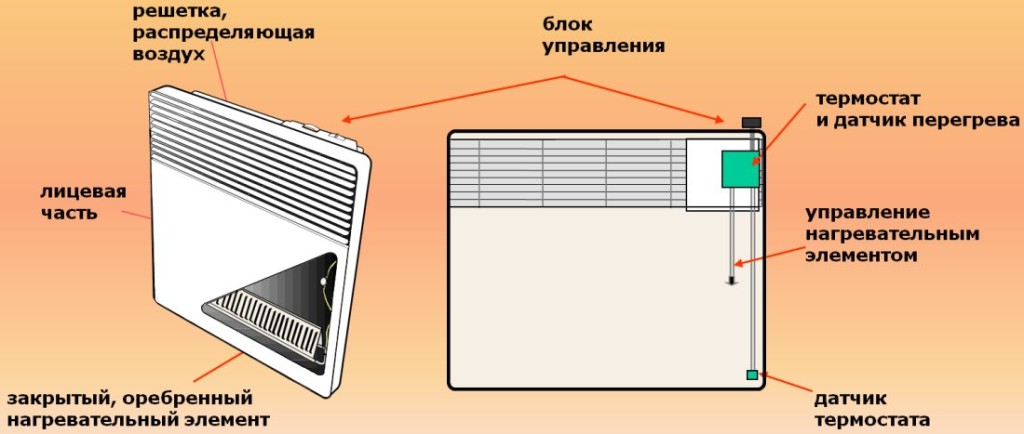
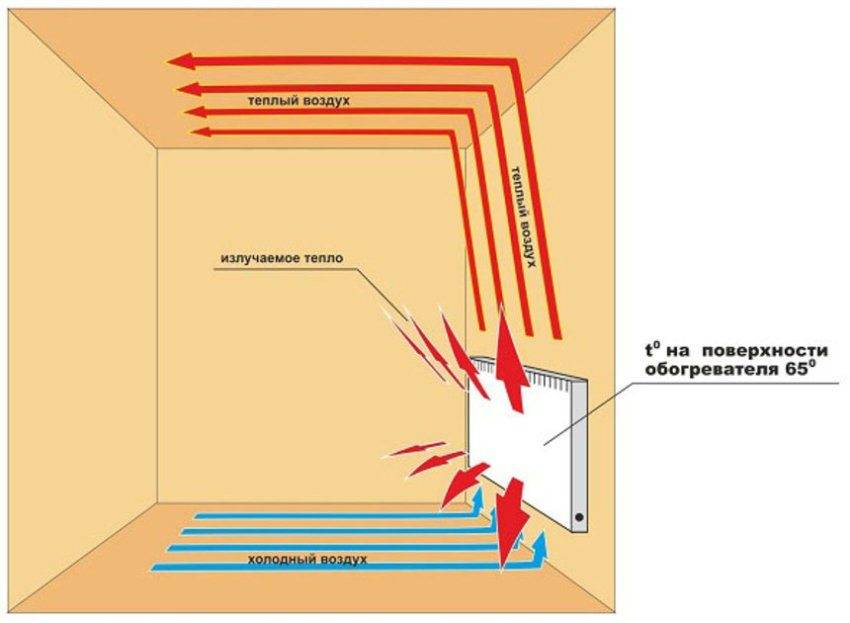
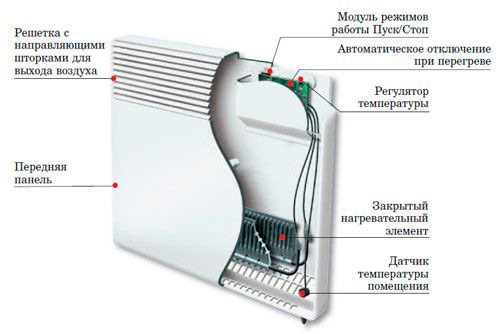
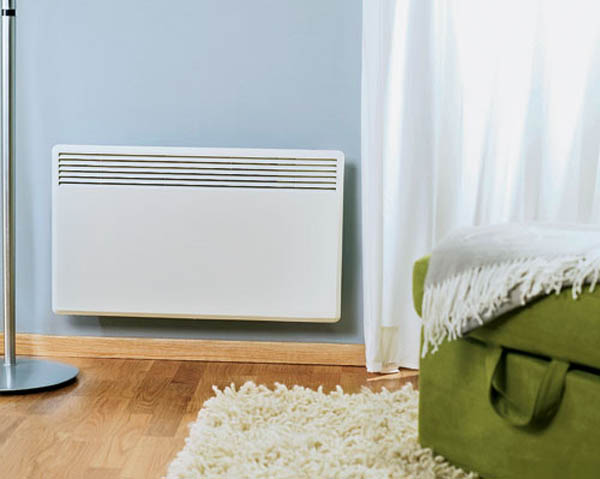
The device of a convector heater or convector is not so difficult. All models have, as a rule, a rectangular metal case, inside of which there is a heating element. In modern appliances, a ceramic heater is installed that does not burn oxygen and dust. In the lower part of the case there are holes through which air enters and, heating up, rises, spreading around the room. Convectors are absolutely silent devices, except for models with built-in fans. However, if necessary, the fans can be turned off, thereby ensuring silence in the room.
These heaters also have a temperature control function. Models can be equipped with an electronic or bimetallic thermostat that allows you to maintain heat in the room at a given temperature level.It is clear that the best heater for an apartment is one that is equipped with an electronic thermostat that is graduated in degrees Celsius. After all, this allows you to set the exact value of the air temperature. In bimetallic thermostats, graduation is presented in conventional units.
The appliances are protected from overheating by an automatic switch-off, which is also triggered if the floor convector is accidentally knocked over and hit by a foreign object. Heating also takes place in slow mode, but then a comfortable temperature is maintained in the room for a long period of time.
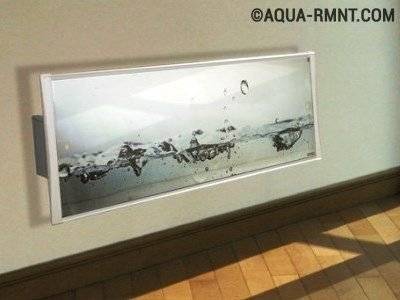
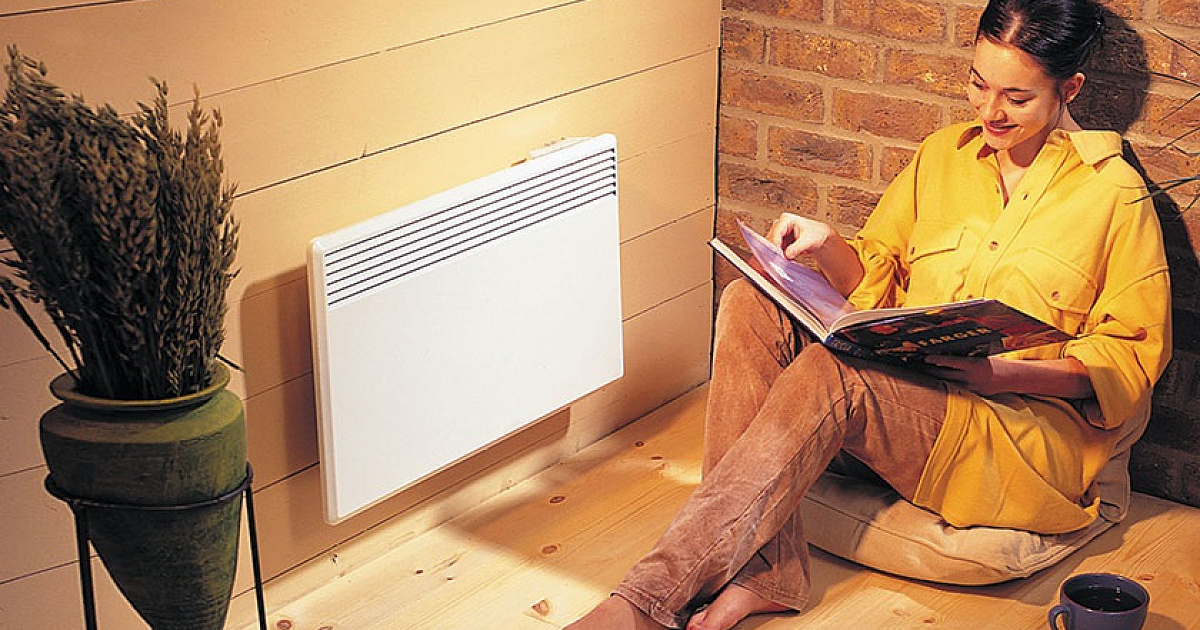
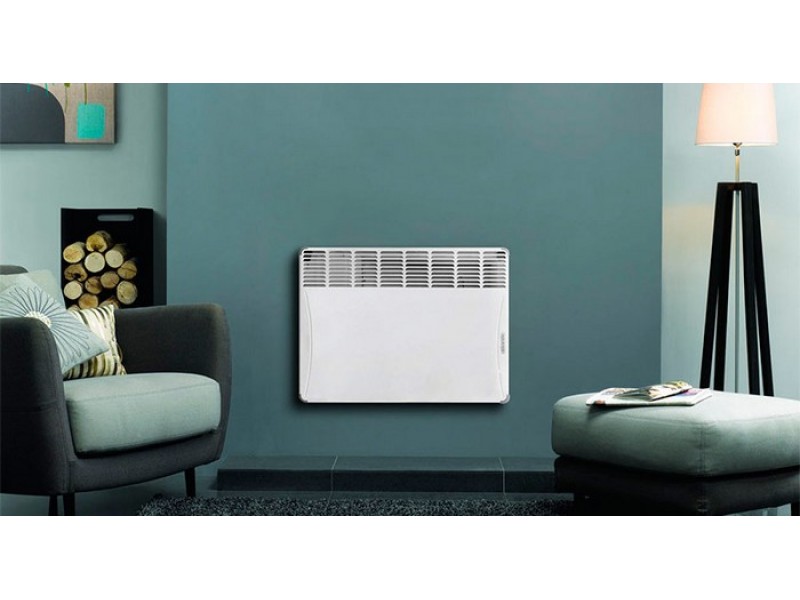
Wall convectors to provide better heating are placed at the level of heating radiators fit into the interior
Undoubted advantage convectors before oil heaters is the safety of touching their surface, because it does not heat up above 90 degrees. This equipment also wins in the consumption of electricity, which is minimal, and the effect is maximum.
Of particular interest to consumers are film convector heaters, placed on the wall and taking up very little space. It is convenient to store such heating devices by rolling them up after the season and putting them in the pantry on the far shelf. For local heating of a specific place, film convectors are placed in close proximity to it. To heat the entire room, the device is suspended near the door or windows, blocking the flow of cold air into the room.
Advantages and disadvantages of convectors
Before choosing and purchasing suitable convection heaters, you should familiarize yourself with their pros and cons.
Advantages:
Compactness is a rather important quality for modern technology (gas convectors do not count, they can hardly be called compact);
Relatively fast heating - in some models it is accelerated by forced convection;
Ecological cleanliness - convection heaters do not burn oxygen and have little effect on air humidity;
Fire safety - to a greater extent, this plus applies to water units, to a lesser extent - to gas units.
Flaws:
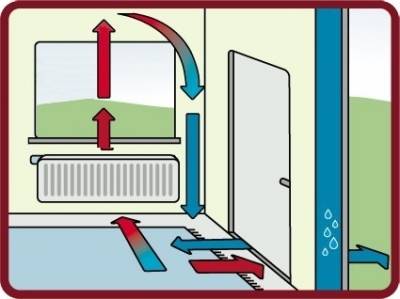
A convector can cause drafts in your home.
- Low efficiency in rooms with high ceilings - the maximum allowable ceiling height is 3 meters;
- Convection heaters often create drafts - they are felt by the most sensitive people;
- A large temperature difference between the upper and lower parts of the room - this causes some people to get cold feet.
Despite certain disadvantages, convection heaters remain popular heating equipment.
What are infrared heaters?
According to the type of energy source used for heating
- Diesel. For heating, an air-diesel mixture is used, which is fed through nozzles to heated electrodes and ignites upon contact with air. When the mixture burns, infrared rays are produced. This type is designed for large areas with good ventilation.
- Gas. They consist of a device for supplying a gas mixture, a piezo element, a ceramic heating element, a housing and a protective grille.
The gas mixture, ignited by means of a piezo ignition, is fed onto a ceramic grate consisting of many small cells. The grating, warming up, begins to emit infrared rays. It is noteworthy that such devices can be used for cooking or in order to melt ice, or warm up the engine. - Electrical. Electricity is used to heat the elements of the device. This type of heat emitters is most often used as a heater for home and summer cottages.
According to the length of the emitted waves
The spectrum of infrared waves is usually divided into short-wave (0.7 - 2.0 microns), medium-wave (2.0 - 3.5 microns) and long-wave (more than 3.5 microns) parts. The higher the temperature of the source of infrared waves in the device, the more short-wavelength is its radiation.
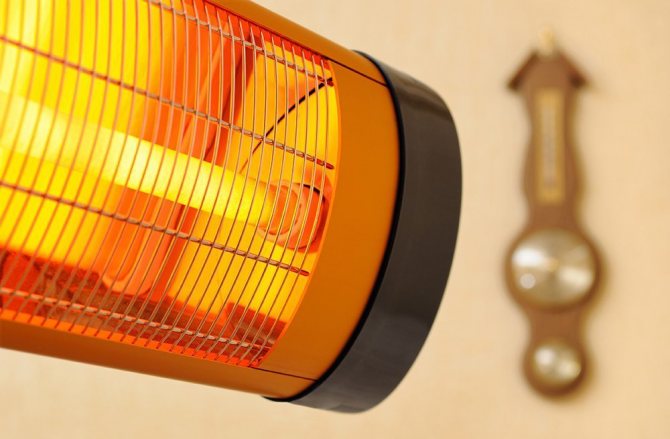
- Shortwave. They emit IR waves with a length of 0.74 - 2.5 microns. This is the visible spectrum of radiation. Halogen lamps are used as a heating element. At this wavelength, burns can occur in the immediate vicinity of the device, and objects and surfaces can heat up to the ignition temperature, keep this in mind when installing heaters.
- Medium wave. The temperature of the emitters of the middle spectrum reaches 700 ° C. At the same time, the glow passes into the visible part of the spectrum and has a color from red to orange. Quartz tubes with a tungsten filament inside are used as a radiator in such units. Instead of quartz, ceramic or perforated aluminum can be used. Devices of this type are recommended to be installed on the ceiling at a height of at least 3 meters.Mobile designs of medium-wave heaters are equipped with a rotating mechanism that rotates the reflector to avoid overheating of surfaces. Medium-wave heaters are suitable for heating and heating industrial premises, open spaces and houses with high ceilings of a large area.
- Long-wave heaters consist of a radiator heated by a heating element, other design solutions can also be used, for example, a sealed container with quartz sand, heated by a spiral located inside it. The temperature of the emitters of short-wave devices is lower than that of the first two categories; they are most often used for use at home and in the country.
According to the method of installation and fastening
- Ceiling;
- Wall mounted;
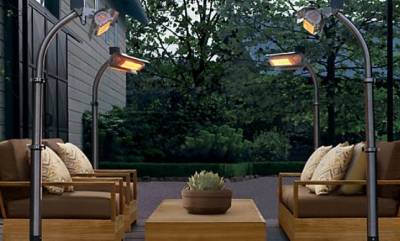
- Floor and mobile;
- Plinth - a new direction in installation. Long-wave heaters are mounted along the perimeter of the room at the level of the plinth or in a plinth of a special design. As a rule, they are used in addition to ceiling medium waves.
How to calculate the power of the heater?
In order for the room to heat up evenly and enough for a comfortable stay, you need to calculate how many and what power of heating devices you need. As a rule, power is calculated at the rate of 100 watts per square meter. But in practice, it is also worth considering the material of the walls of the house, the number and area of glazing, the height of the ceilings, drafts, the number and material of furniture in the room, and other factors. The best solution would be to use a combination of heaters, ceiling and wall, with a power budget 10-15% higher than required, and with temperature control.So, in case of abnormal cold or failure of one of the devices, you will be sure that you will not freeze.
The best gas heaters for summer cottages
BIGH–55

The domestic gas-type balloon heater has no analogues. Provides fully autonomous heating. It does not require electricity. Therefore, it can be installed almost anywhere. It is used for heating private houses, installed in open areas of cafes, maintains heat during off-site outdoor events. Able to heat country housing, up to 60 m2. Each device is tested for gas leakage in the company's laboratories.



When creating this model, the Fast Heat technology was applied. It provides immediately 2 types of heat transfer: infrared and convector. The gas cylinder is hidden inside the case. External ceramic gratings serve as a source of heat radiation.
Several degrees of protection ensure the safety of operation:
- emergency shutdown in the event of a fall;
- protection against an excess of carbon dioxide;
- thermocouple for flame control.
In addition, the gas cylinder is protected from falling out of the housing. For this, a special clamp is provided. For mobility, the body is equipped with a chassis. The movement of the heater through the rooms of the house becomes not only safe, but also comfortable. The volume of the cylinder is standard - 27 liters, pumped with propane or propane-butane.
Pros:
- use without electricity;
- volume heated area;
- reliable system of protection against emergencies;
- 3-stage power adjustment;
- high heat transfer;
- low gas consumption - 0.3 kg / h;
- compactness, durability and mobility.
Cons: none.
Timberk TGH 4200 M1

The gas heater is designed for volumetric areas, it will heat the air in a residential area with a footage of up to 60 m2. It can be used for interior rooms of a summer house, heating a veranda, terrace, garage or greenhouse. The body is made in a classic design, in black. The piezoelectric element is responsible for ignition of the furnace. For safe operation, all the necessary levels of protection are provided:
- shutting off the gas supply in the absence of a flame;
- fall sensor and automatic shutdown in case of rollover;
- ODS is a safety device that provides control of insufficient oxygen levels.
The kit comes with a gas reducer and a hose. Thanks to the mechanical control, 3 power levels can be set. Features of the model: 3-section ceramic burner with a sequential start, the ability to work in the most powerful mode for 51 hours. For ease of movement, the design is equipped with a wheelbase.
Pros:
- universal use both inside and outside the country house;
- quickly heats up to a maximum and gives off heat;
- solid build, strong power;
- several power settings;
- security sensors.
Minuses:
bottle sold separately.
temperature difference
If you do not perceive the feeling of air temperature well, then this minus will not be the most critical for you. But if you feel temperature changes literally by a degree, then you will not like the scheme with convector heaters - there will be a large temperature difference between the upper and lower parts of the room, which is a clear minus. The feeling of the difference is the simplest - people's feet get cold.
We advise you to purchase convector heaters, the outlets of which are located on the front wall, and not in the upper end - they provide more uniform heating.
Low heating rate
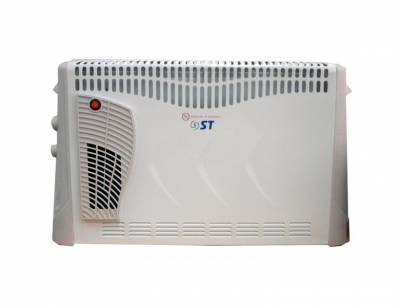
Electric convectors with a fan warm up the room much faster.
A noticeable minus, but it will be noticeable only during start-up periods and when the temperature changes on the regulators - convector heaters provide slow warm-up. But you can fight this disadvantage - for this it is enough to purchase convectors with built-in forced convection fans. The fans are switchable, so there will be no discomfort at night.
Poor efficiency at high ceilings
Not the brightest minus, since in most houses the ceiling height is up to three meters, and less often - 3 meters. At higher ceilings, convectors lose their effectiveness - the temperature difference between the top and bottom is too high, there is difficult convection. In such rooms, it is best to use high-power infrared devices. As for convectors, their purchase will be a waste of money.
Convectors are gathering dust
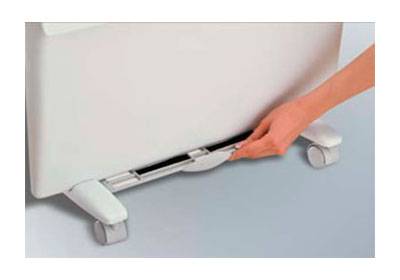
Models with a built-in filter generate less dust, but they also need to be cleaned periodically.
If you install convector heaters in your home, be prepared for dust moving around the premises. For healthy people, this is not critical, but it is better to get rid of dust. As for allergy sufferers and young children, the dusty atmosphere is harmful for them. If you decide to heat with convectors, do not neglect regular wet cleaning and dust removal from the equipment
You can also pay attention to models with built-in dust filters.
Other cons
In conclusion, consider a few more small cons:
- During the operation of convector heaters, weak drafts are formed - they are noticed by some sensitive people;
- Convectors may crackle - this is the effect of thermal expansion of materials, but it is not noticeable in all appliances;
- There may be an unpleasant odor - most often it is noticeable when you first turn it on. If the smell is constantly heard, the problem lies in the cheapness of the materials from which the equipment is assembled - do not save on heating.
Convector heater device
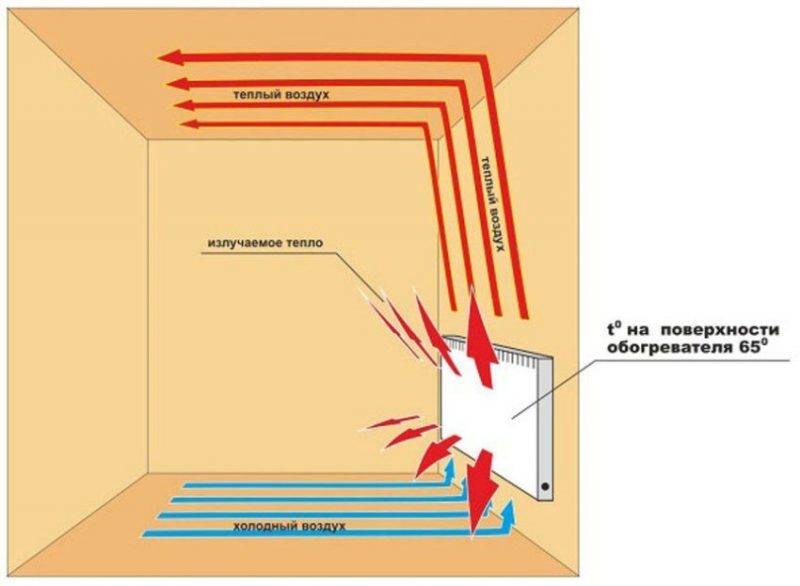
Everything is simple here: there is a tubular or tile heat exchanger in the case, through which air is pumped, taken directly from the room or the ventilation system. In contact with the heat exchanger, the air heats up, and after mixing the heated and room “atmosphere”, the overall temperature in the room rises.
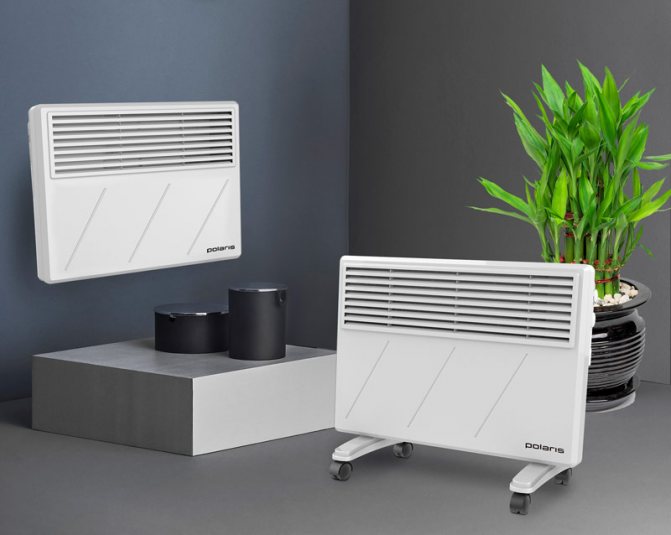


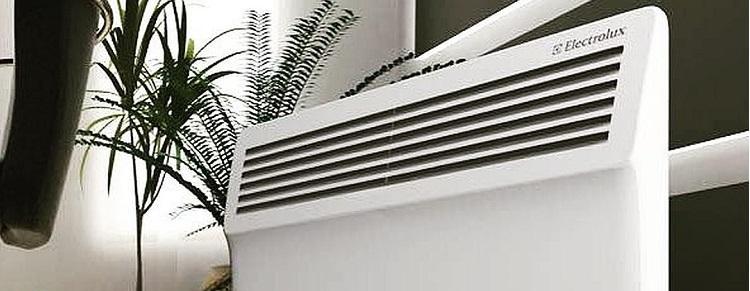
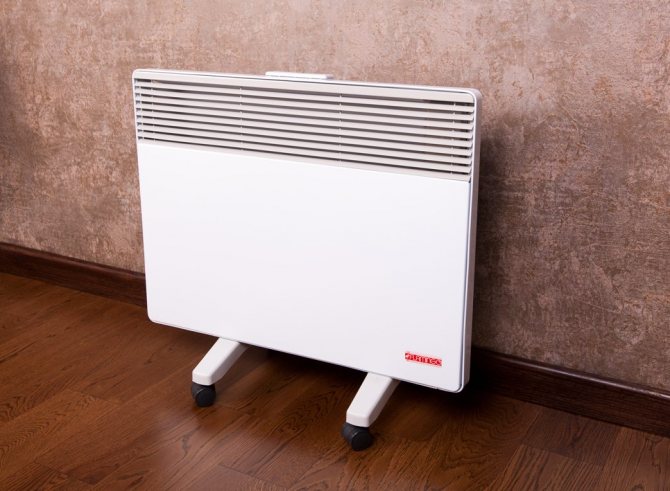
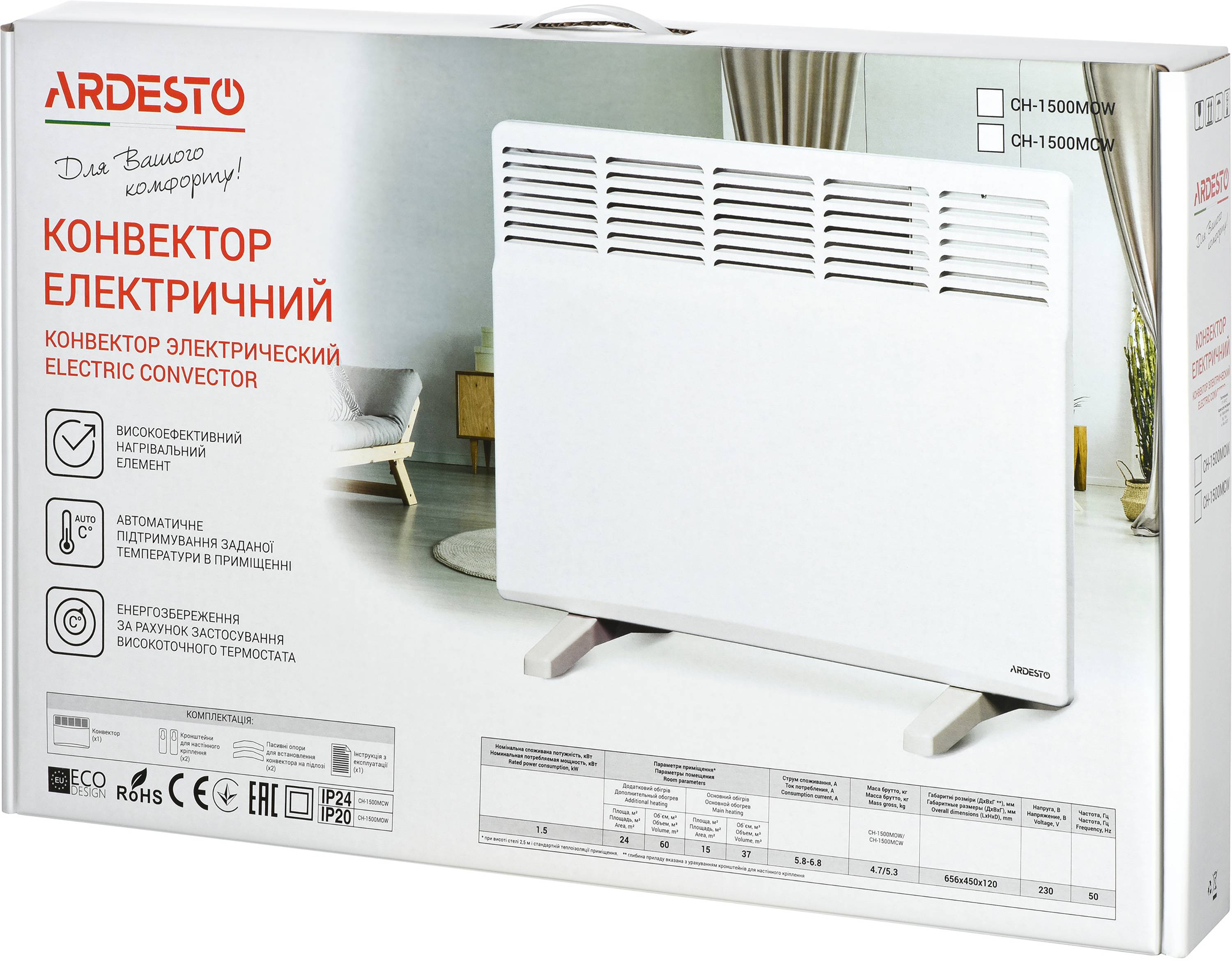
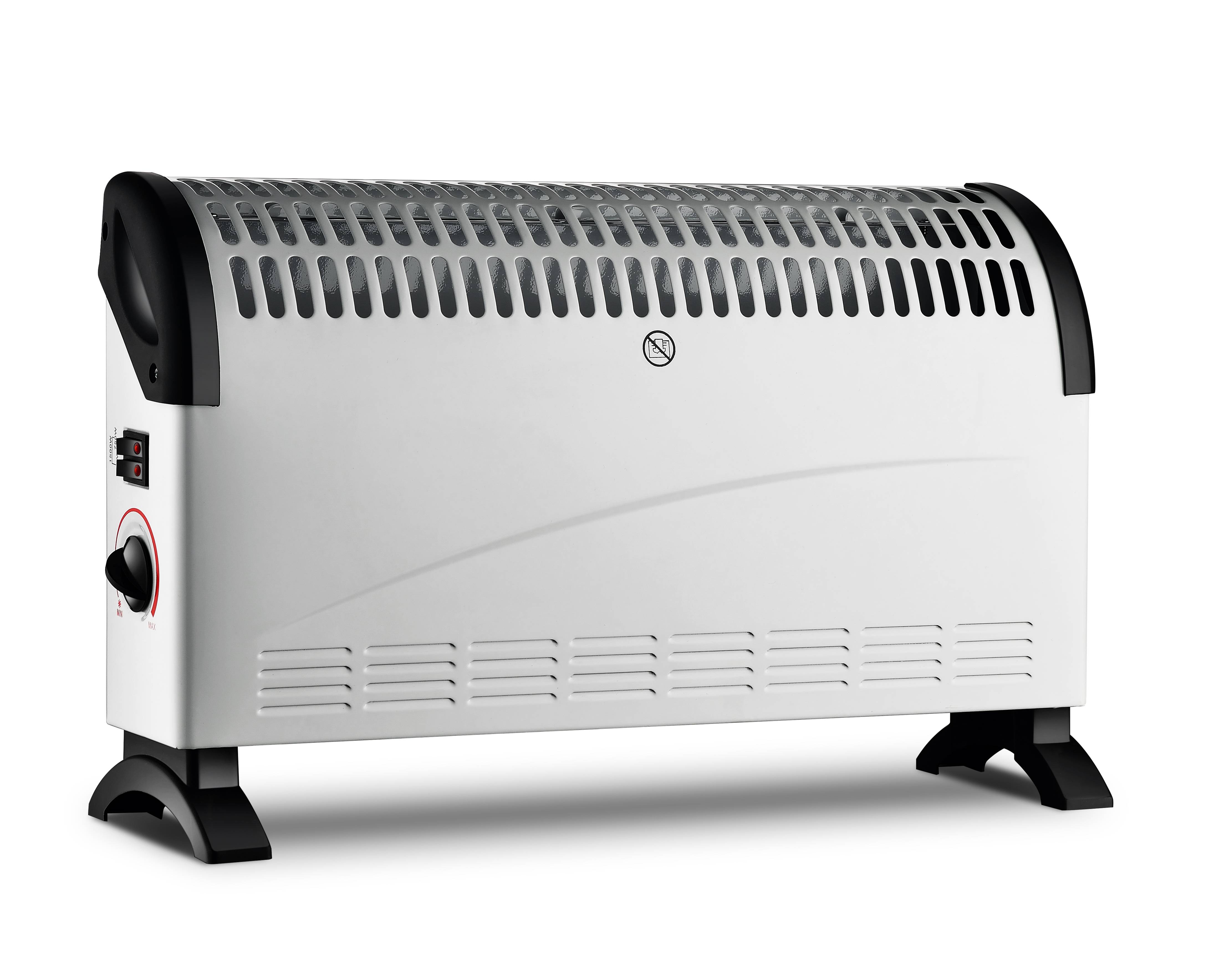
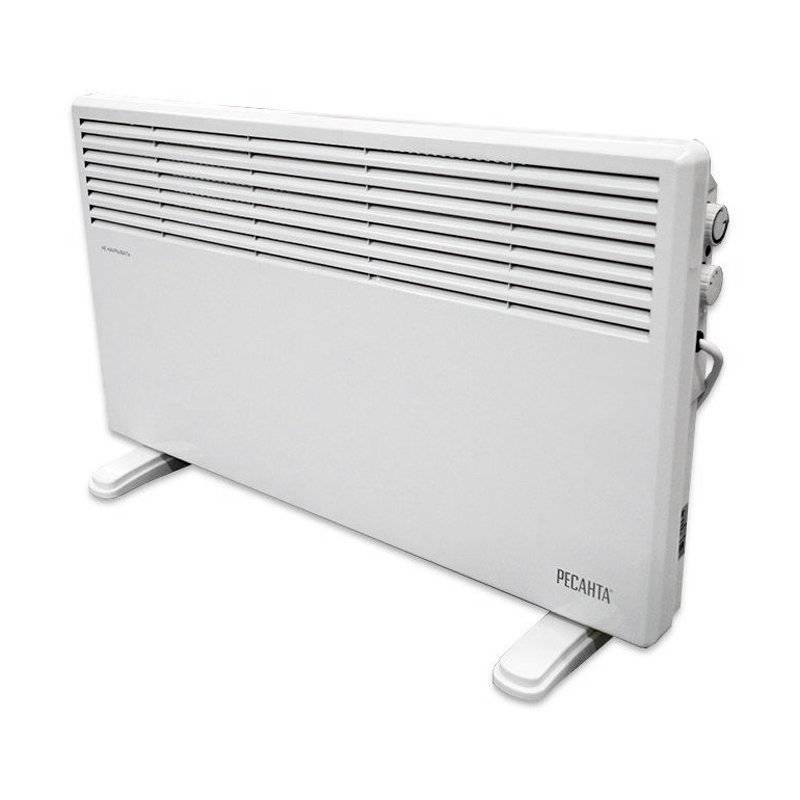


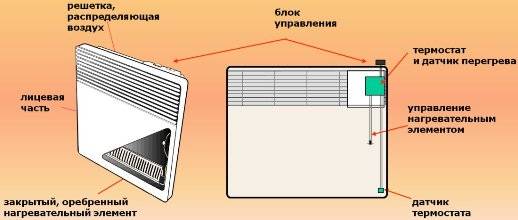
Convector heater device
Heat exchangers are heated by electricity, gas or secondary coolant (water, steam, antifreeze) taken from a traditional heating system.
The pumping of air through the housing and, accordingly, the heat exchanger, is induced natural or mechanical way. In the first case, after contact with the heating element, warm air goes up, generating a vacuum that sucks in a cold environment. In the second case, there is a fan in the case, which directs the flow to the heat exchanger and sucks in cold air, the “reserves” of which are concentrated at the floor level.
Varieties of convectors
The range of convectors can be sorted by the type of energy supplying the heat exchanger. This classification method assumes the presence of only three types of convectors, namely:
Electric heaters with plate or tube heat exchangers.
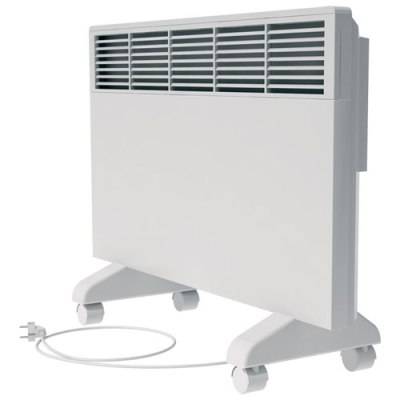
Electric convector Noirot CNX-2 2000
Such convector heaters work mainly on the mechanical stimulation of the coolant flow - the heating elements (heater or plates) are blown by a fan, which increases both the efficiency and the rate of heating the room. However, natural impulse in an electric convector is still possible. True, in this case, the heat exchanger of the heating device must have a special shape and impressive dimensions. However, both natural and mechanical convectors with an electric heat exchanger, in most cases, are used as an auxiliary heater, plugged into the outlet only from time to time. At the same time, the main advantage of such convectors is the cheapness of the device itself, and the main disadvantage is the high energy consumption.
Gas heaters with panel heat exchangers heated by a burner.
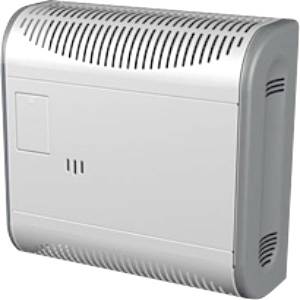
Gas convector Ferrad ACE2
Such a convector is used as a permanent heating device. It can work for days without turning off all winter. At the same time, gas convectors are able to heat both a small apartment and a large house. The circulation of the coolant in this case is built on natural convection, although there are also options with an electric fan on the open market. The strength of such convectors is high efficiency and reliability. The gas appliance operates in the "24 hours a day" mode, heating rooms up to 100-120 square meters. The weak side is the difficult installation of the heating device.To install the convector, we need a through channel in the wall (for the exhaust pipe) and permission from the gas service.
Radiator convectors
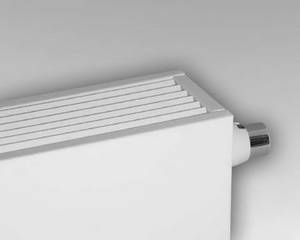
Radiator convector Hidria
Radiator convectors, the heat exchanger of which heats up the secondary coolant - water, steam, antifreeze, oil, refrigerant taken from the main heating system. That is, heating the air in this case will cost almost free. Moreover, such convectors are mounted mainly in ventilation systems. Therefore, the fan of the supply branch or supply ventilation valve. That is, the owner of the radiator convector pays only for the heater itself, using the energy and pressure force of existing units.
As a result, the most efficient convector heater is gas, the cheapest (when buying) is electric, the most energy efficient (cheap to operate) is radiator.
Additional functionality
Now you know how to choose a convector heater for a house or apartment. The main guidelines are the capacity of the equipment and the type of control system used. The following factors must also be taken into account:
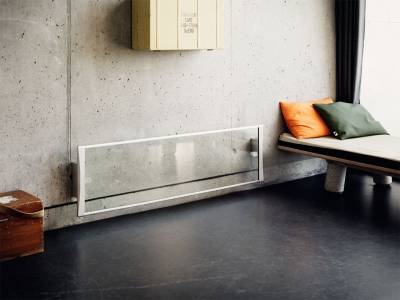
Glass convectors will perfectly fit into almost any design interior.
- Design of heaters - if your apartment or house has been well renovated, it makes sense to choose and purchase designer models of convectors. For example, these can be quite nice models from the manufacturer Ballu - they are decorated with tempered glass;
- Having a remote control is another convenience that you have to pay for.Convectors can be controlled both from conventional remote controls and via Bluetooth;
- The presence of built-in dust filters - we advise you to choose such convector heaters for those who are allergic to dust.
It also takes into account the presence of additional functions:
- Antifreeze - devices with this function will become a reliable protection against complete freezing of the home in those moments when no one lives in it (relevant for country houses and summer cottages);
- Air ionization is a rather rare module, but if you choose a model with an ionizer, indoor air will be more beneficial to human health;
- Work according to the program - this function will be able to control the air temperature according to the data stored in the memory. For example, at night, you can set a lower temperature regime, and during the day you can raise the temperature to a more comfortable level;
- Protection - we recommend choosing equipment that has overheating protection and rollover protection. The presence of these functions will help make the operation of convector heaters safer.
What to look for when choosing
Most often, a heating device is selected specifically for an apartment, since private houses have their own heating system, but there are buildings that exclude this possibility. For example, a cottage or an unfinished house. In such cases, you should opt for a heating device designed for the room. Such differences in area are determined by the technological characteristics and capabilities of the intended product. Therefore, when purchasing equipment, it is necessary to give a special role to this.


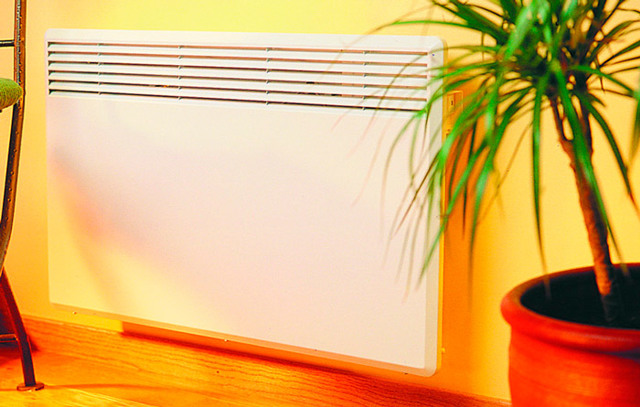

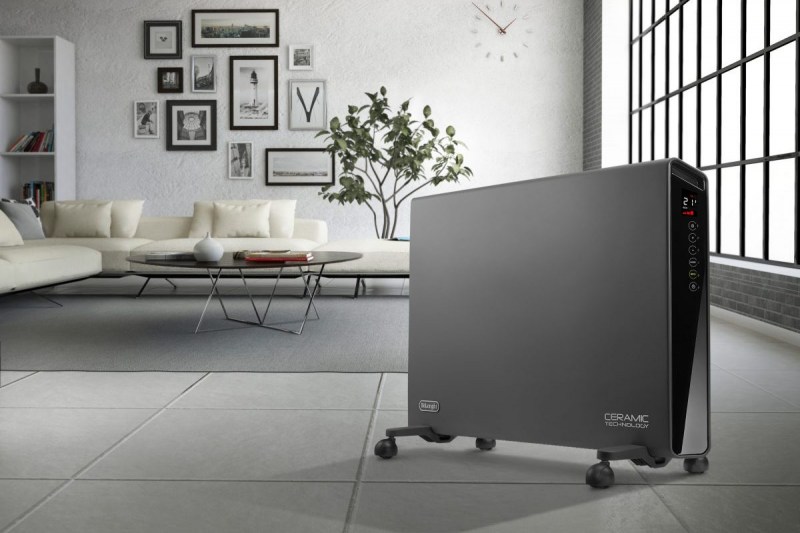

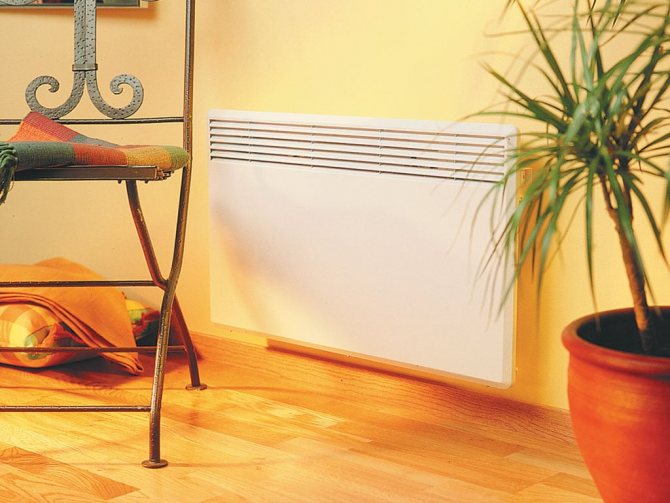
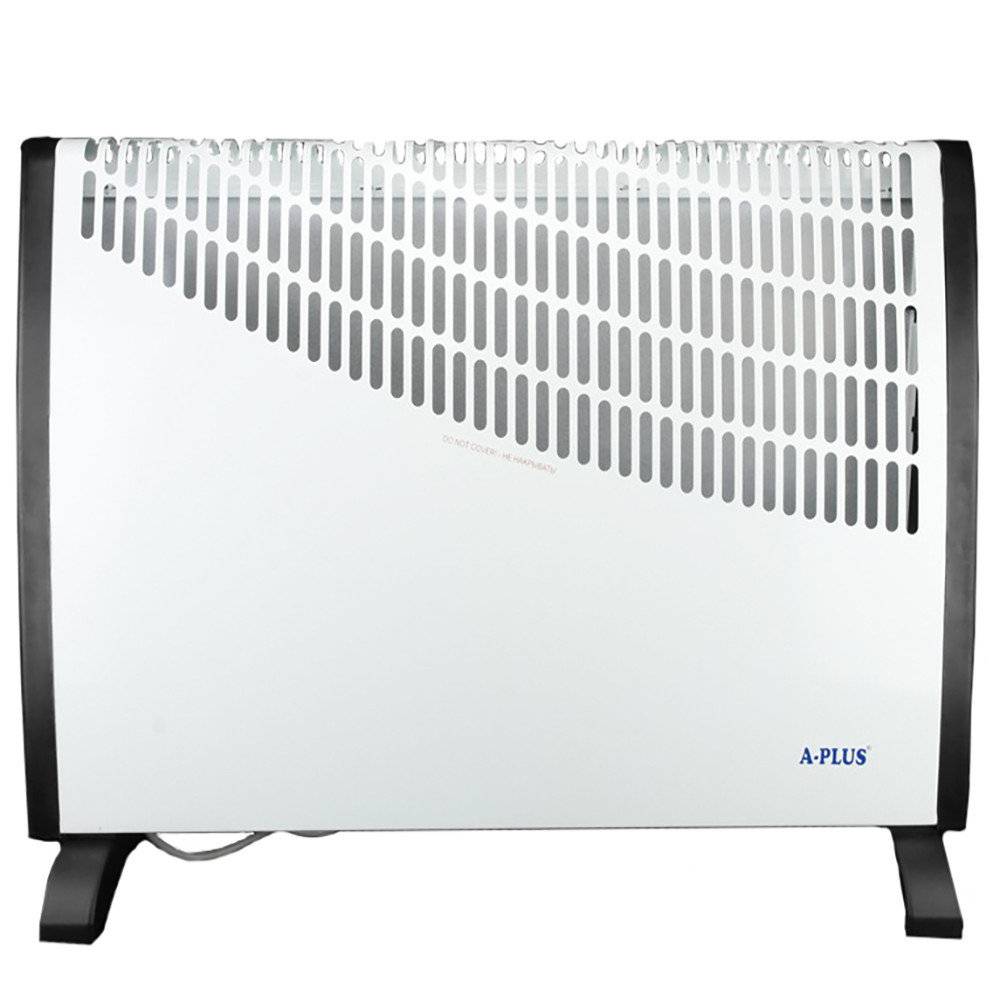
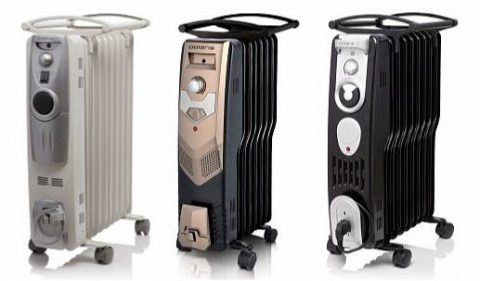
It is very important that it has the ability to heat the required area size.Different types of heating devices are provided for different sizes of areas. Before choosing, you should calculate the area and, based on the parameters, determine the type of heater
On average, 25-27 square meters need 1 kW of power. For apartments with a total size of 10 square meters, the device must have a power of 1000 watts. The table shows the data regarding the area and the required power level for the required heating.
| Room area (square meters) | Power, W) |
| 10-12 | 1000 |
| 12-14 | 1250 |
| 15-17 | 1500 |
| 18-19 | 1750 |
| 20-23 | 2000 |
| 24-27 | 2500 |
Choosing a convector
There are a wide variety of convectors on the market today. In some cases, their characteristics vary quite a lot, and an uninitiated user may simply be confused - how to choose electric heating convectors? There are a few simple guidelines to help you make the right choice.
Device power
The heat in your home depends on the power of the convector used. At the same time, choosing the most suitable device is quite simple. Approximately 1 kW of power is enough for high-quality heating of a room with an area of 10-12 m2, provided that there is no centralized heating in this room. If it is (and works), then this convector power is enough for a room twice as much. That is, an area of 20-24 m2.
Technical characteristics of electric convectors
However, when choosing electric heating convectors for a particular room, in addition to the area, its purpose should also be taken into account. For example, a living room and bedroom that are equal in size may require a more powerful appliance than a kitchen of the same size.
Installation
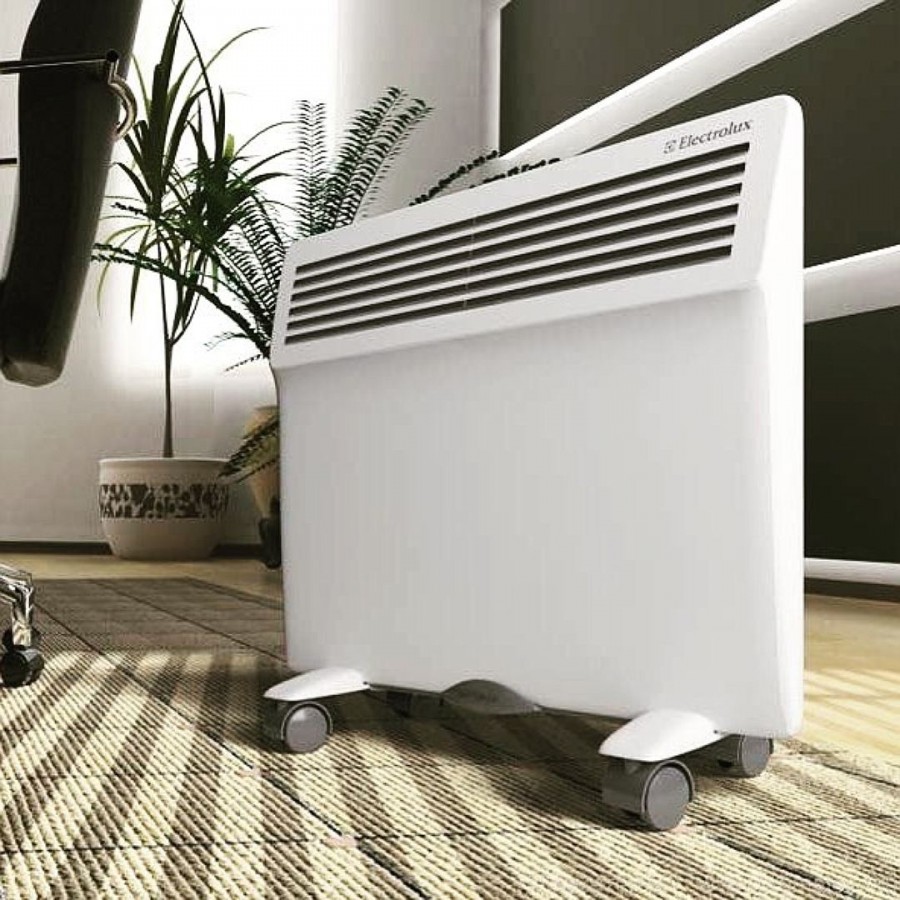
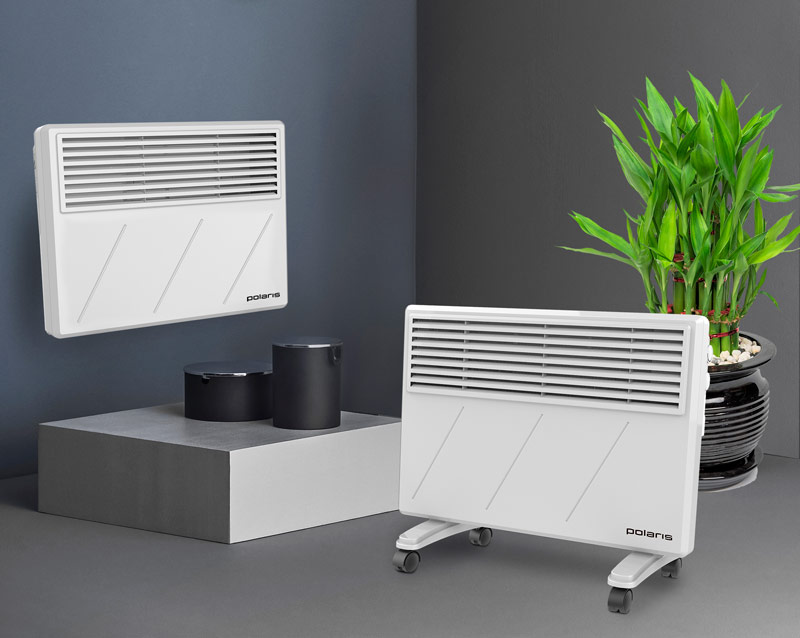
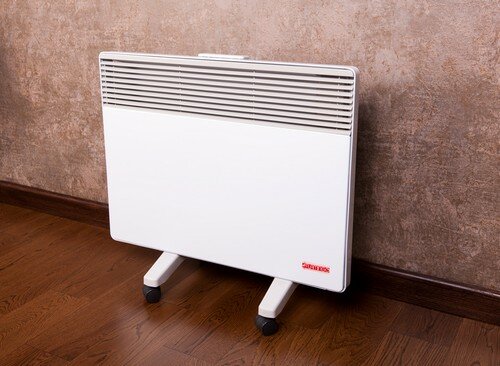
Heating convectors 220v are of two types - mobile and stationary. In the first case, you can move the device anywhere in the room - as long as the cord reaches out. But stationary electric convectors should be mounted on the wall.
Control principle
Even the simplest electric ceramic heating convectors have a special power regulator, with which you can always adjust the degree of heating of the room.
Of course, such convectors are somewhat more expensive, but with their help you can ensure the most comfortable temperature. In this case, you will only need to set the program once - and not periodically control the heating of the device.
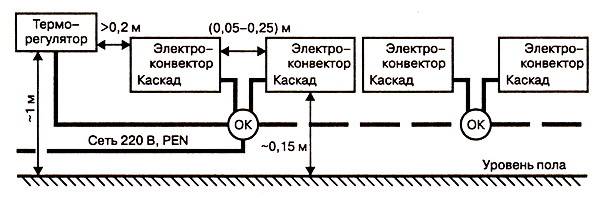 The principle of controlling a group of electric convectors
Modern best electric heating convectors amenable to some modernization. In particular, you can purchase an additional unit - and then you can control the convector from a distance - using a special remote control. This is quite convenient if the convector is located, say, in a children's room. You can adjust the temperature without entering the room.
Safety
Today, there are waterproof models of convectors - they are perfect for rooms with a high level of humidity. You can install such a convector in the bathroom and not be afraid that something unexpected will happen.
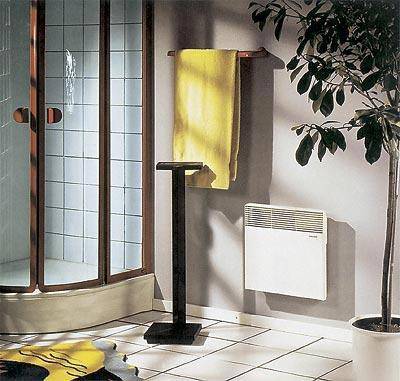 Convector in the bathroom
In addition, almost all convector models are equipped with special overheating sensors. That is, if the device is heated to the maximum temperature, it automatically turns off. Depending on the model, switching on can also be automatic or manual.
The size
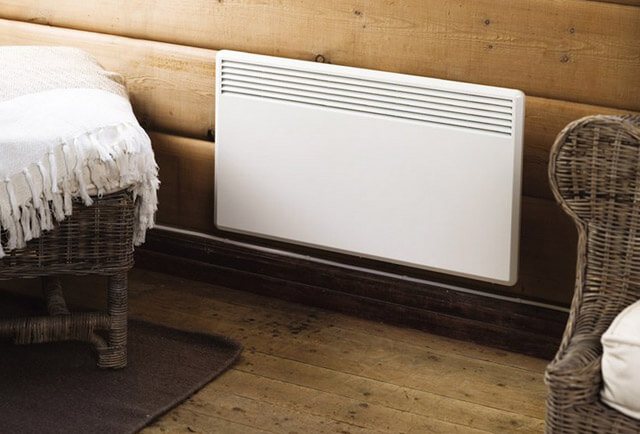
There are a wide variety of convectors on the market. They can be of various shapes (square, rectangular), differ in thickness and even color, as shown in the photo. You can choose the device that you need the most.
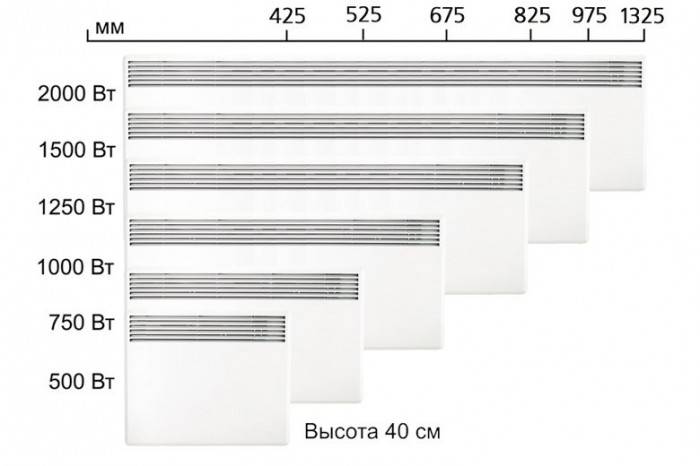 Dimensions of electric convectors and their power
fan heater
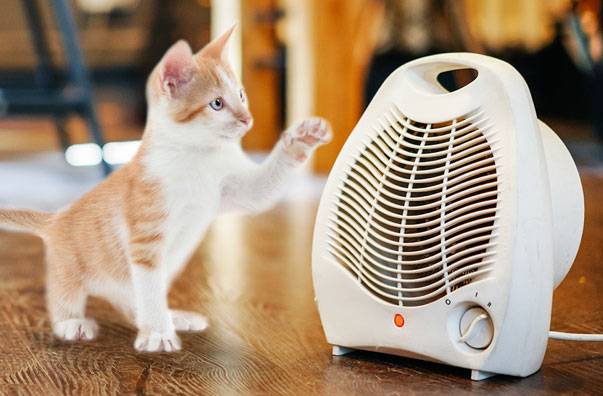 In fan heaters, air is heated by a hot electric coil and a fan that drives air through it.
The heat in the room becomes quite fast, but when it is turned off, it also quickly cools down.
Since the spiral is very hot, this type of heater dries the air and burns house dust.
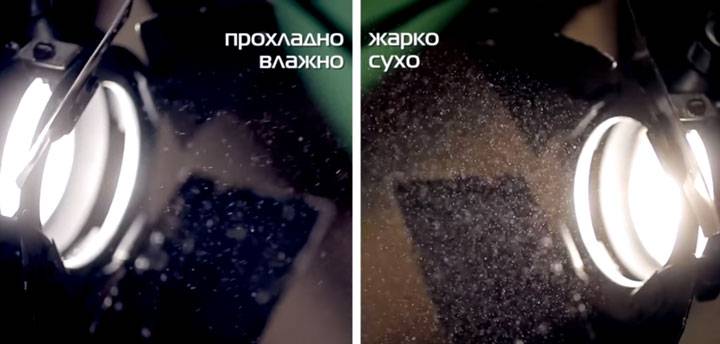
As a result, specific odors appear. Therefore, in recent years, models with a ceramic heating element, which are devoid of these shortcomings, have become widespread.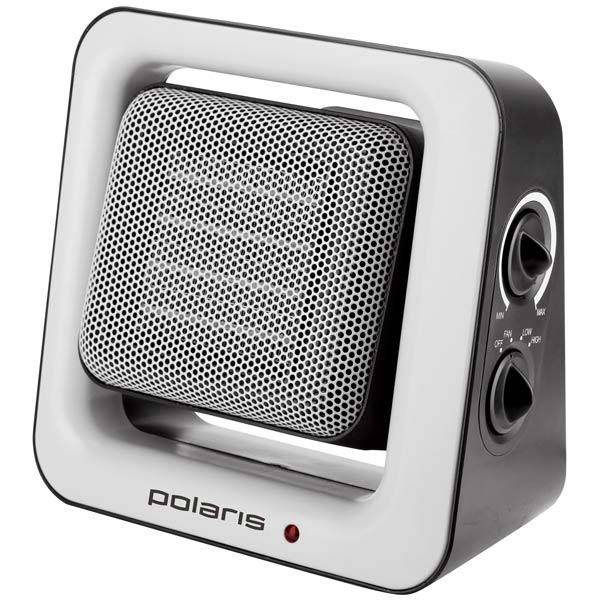

In addition, during operation, the fan heater is quite noticeably noisy. So you won't get much sleep with him at night.