- What to do if there are signs of blockage?
- Causes of blockage
- Prevention of blockages
- How can you clean the toilet if it is clogged
- Features of home sewage
- Causes of clogged toilet
- It's time to wash
- When you can do without a tool
- How to break through the blockage with a cable?
- Mechanical methods
- plunger
- Plastic bottle
- Cable
- Folk remedies to combat blockage
- Plastic bottle
- soda + vinegar
- "Doll"
- caustic soda
- Advantages and disadvantages of cleaning the toilet with a cable
- Prevention of plumbing blockage
- Clogged toilet with toilet paper or swab
- Folk remedies for blockage in the toilet
- Hot water
- Baking soda
- Acetic acid
- Salt for cleaning the toilet
- Mustard Involvement
- What means are better not to use?
- How to determine the location of the blockage
- Cleaning methods
- How to clear a clog in a toilet
- We connect the mechanics
- plunger
- Plastic bottle
- Steel rope
- Dismantling the toilet
- Chemicals for cleaning the plumbing system
What to do if there are signs of blockage?
Every property owner should know what to do if the toilet is clogged in the bathroom. The first step is to warn the neighbors living on the floor above and ask them not to temporarily use the toilet, bathroom and washbasin.Then it is recommended to make a chop or kwach, which should be plugged into the drain hole.
How to make the simplest chop:
- It is necessary to take a wooden block about 0.5 m in length, the cross section of which is 1 cm smaller than the toilet drain.
- The bar should be wrapped with sheet foam rubber (1 cm thick) in several layers.
- On the "balda" you need to put on several plastic bags, tying them with twine.
- "Bald" chop must be firmly installed in the drain hole.
After that, with the help of neighbors, you can find out the cause of the clogging of the plumbing device and determine the location of the blockage.
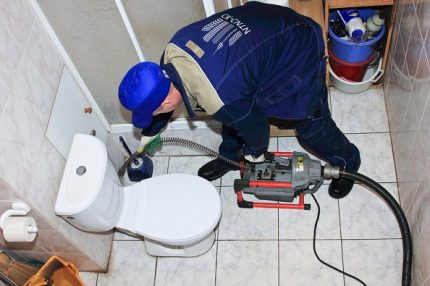
The most correct solution for a clogged toilet is to call a housing office plumber who will make an accurate “diagnosis” and fix the problem on his own or call an emergency service
If the water from the toilet is slowly leaving, and everything is in order with your neighbors, then the blockage occurred before the line exited the sewer pipe. With a local blockage, you can call a plumber to your house, or you can try to eliminate the cause of its appearance yourself.
If the water in your toilet rises with the taps closed and without draining the tank, then the clog is located down the common riser.
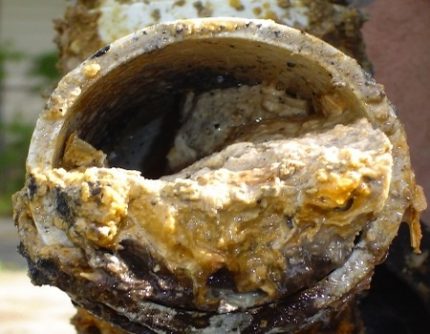
A common cause of a clogged toilet is the “overgrowth” of sewer pipes. In this case, a rag or other object thrown into the toilet will lead to unpleasant consequences.
In most cases, clearing a clogged toilet or cleaning a sewer pipe can be successfully done on your own. Chemical and mechanical methods are used to clean pipes. The methods for removing blockages in an apartment building or in a private house do not have fundamental differences.
Causes of blockage
The cause of a blockage in the toilet can be natural organic waste, but most often objects that are insoluble in water.This can be construction waste, rags, plastic bags, pieces of thick paper, the contents of the pet toilet, small children's toys and other items that could be there through your fault or through the fault of your household.
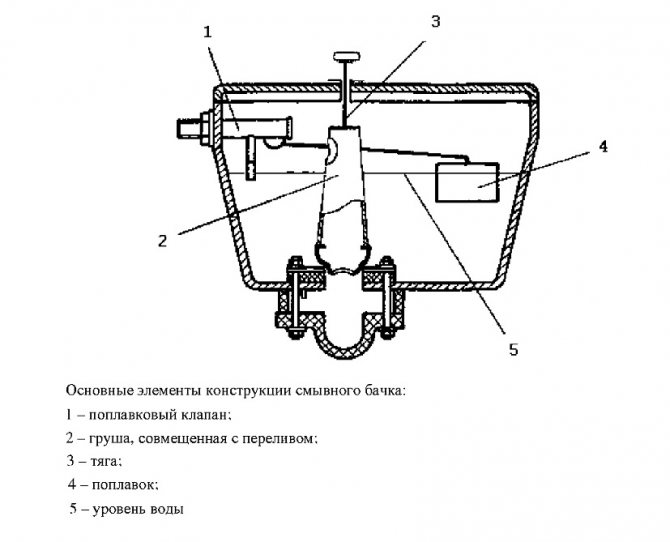
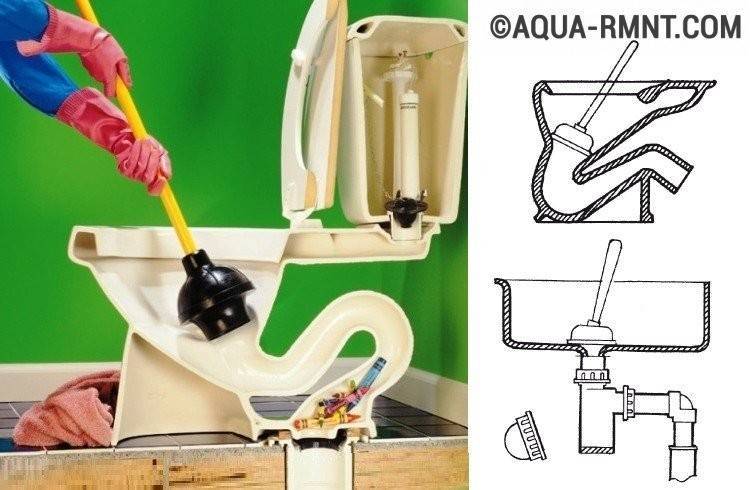
To better understand the cause of the blockage, let's look at the design of the toilet drain.
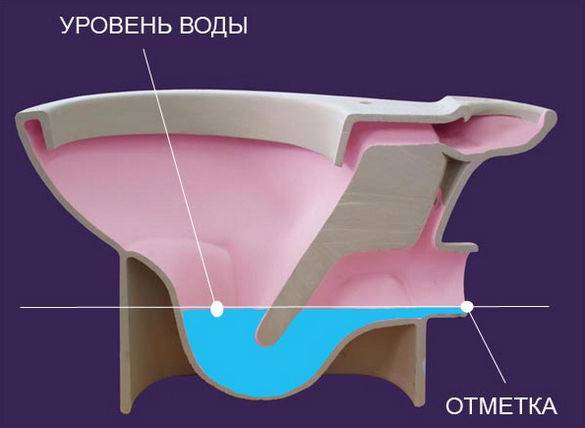
The toilet drain is made in the form of a knee, which serves as a hydraulic seal - it does not let unpleasant odors from the sewer into the room. Just in this knee, due to its design features, various objects get stuck.
Depending on what "stands" in the knee of the toilet, different cleaning methods are used. Below we consider the cases from the simplest to the most complex.
Prevention of blockages
It is better to prevent the occurrence of any problem than to make a lot of efforts to overcome it later. This statement fully applies to the rules for using plumbing fixtures:
- Do not allow foreign objects to enter the drain hole of the device. Even a small rag flushed down the toilet can delay the passage of smaller objects and form a solid plug;
- do not pour out the remains of liquid food, since when they come into contact with cold water, a coating of fat will be deposited on the walls of the sewer pipes, which over time can completely clog the passage;
- regularly clean the surface of the toilet bowl with special cleaning products;
- when carrying out construction work in the toilet, the bowl of the device should be covered with a rag or plastic wrap to prevent pieces of mortar or other construction debris from getting into it;
- replace old cast-iron pipes with new plastic ones, as corks and blockages form faster on rusty walls.
Timely measures to prevent blockages will help to eliminate their occurrence altogether.
How can you clean the toilet if it is clogged
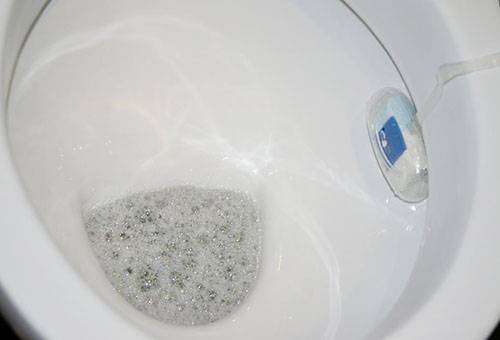
Hard water and salt deposits, food debris, various garbage - all this leads to the formation of a blockage in the toilet. The preventive use of household chemicals for pipe cleaning helps to avoid problems. It is useful to know how to clean the equipment yourself if the toilet is clogged.
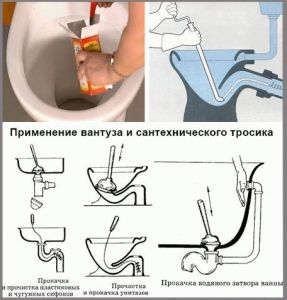
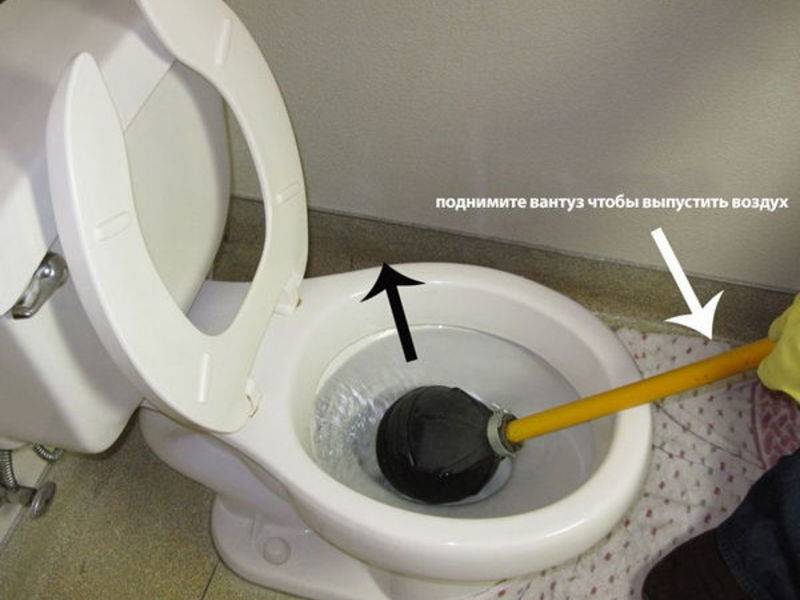
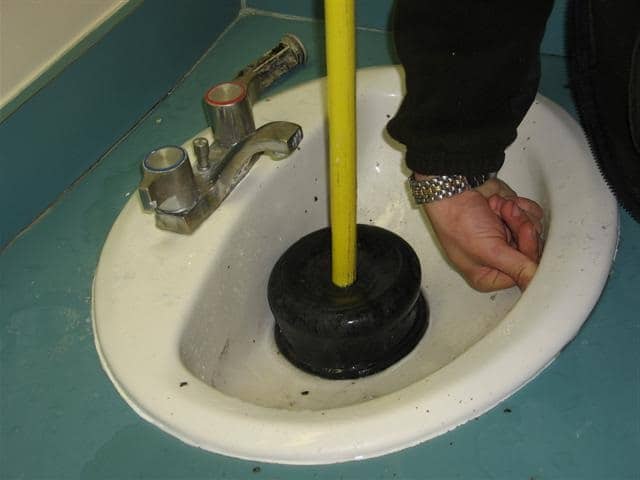
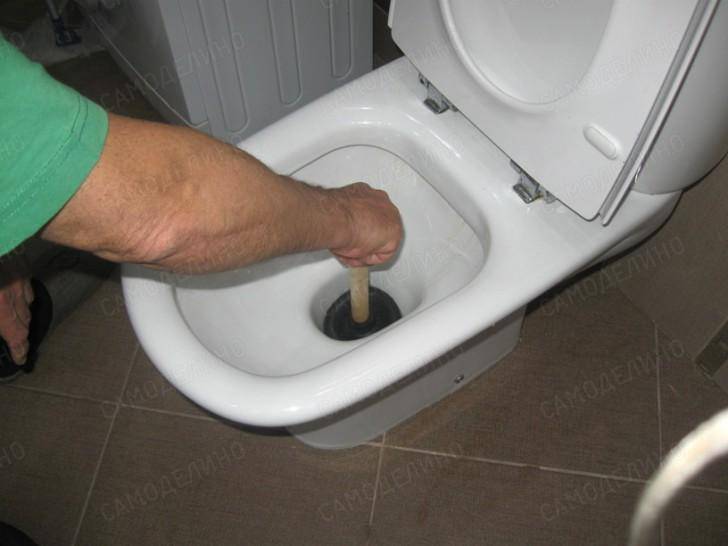
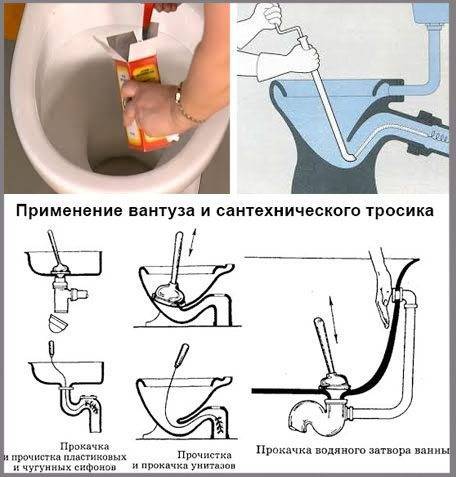
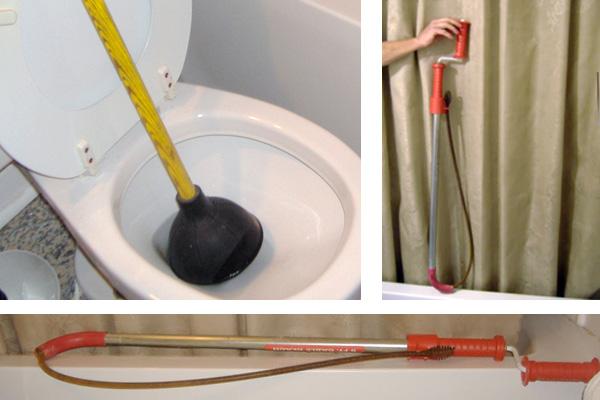
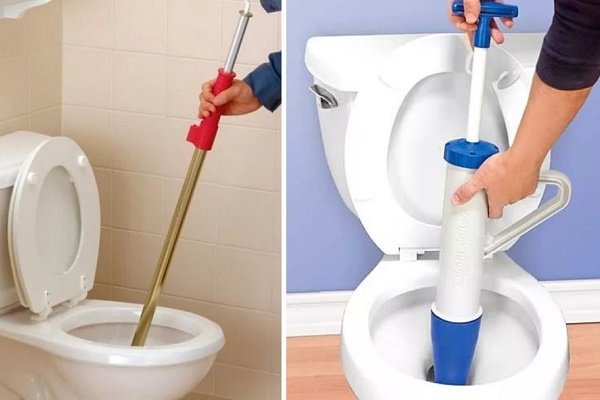
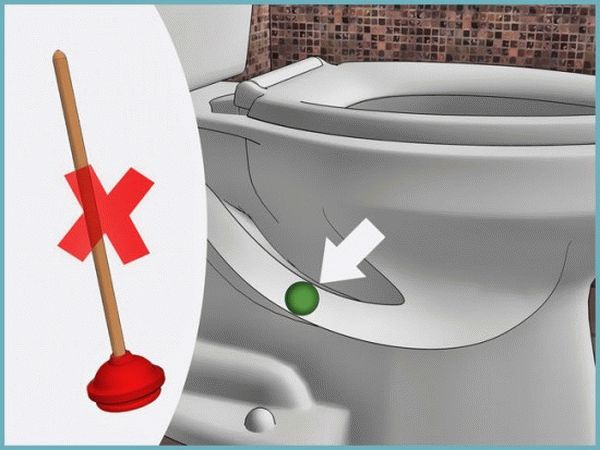
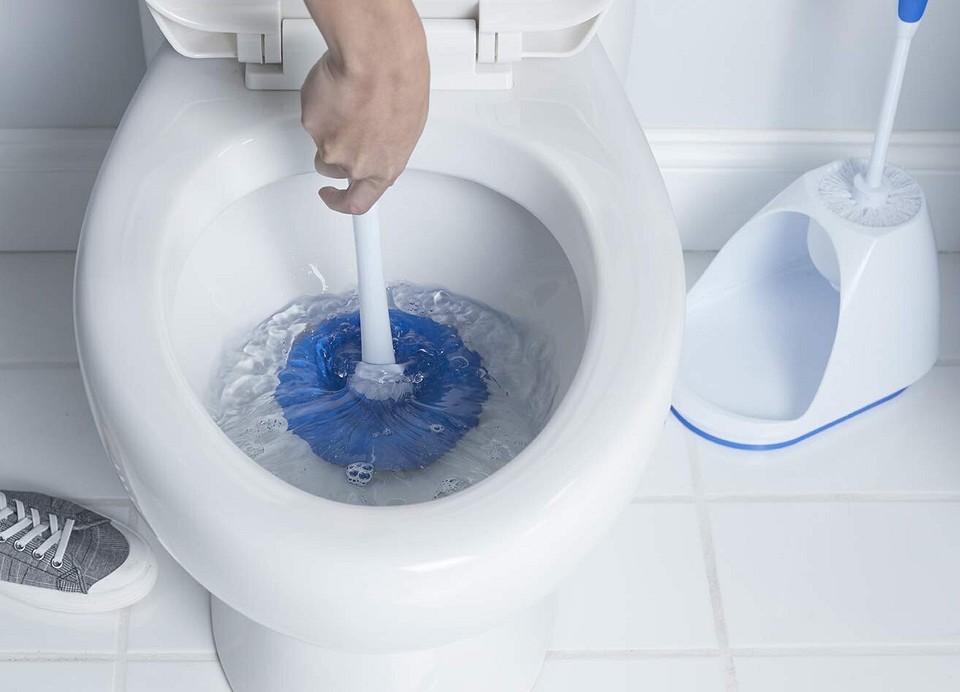
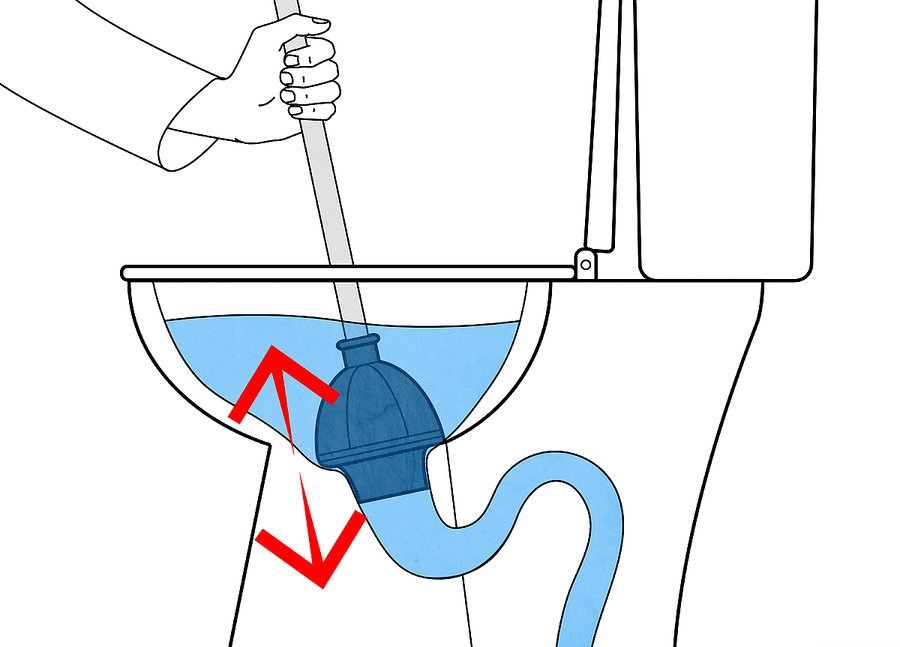
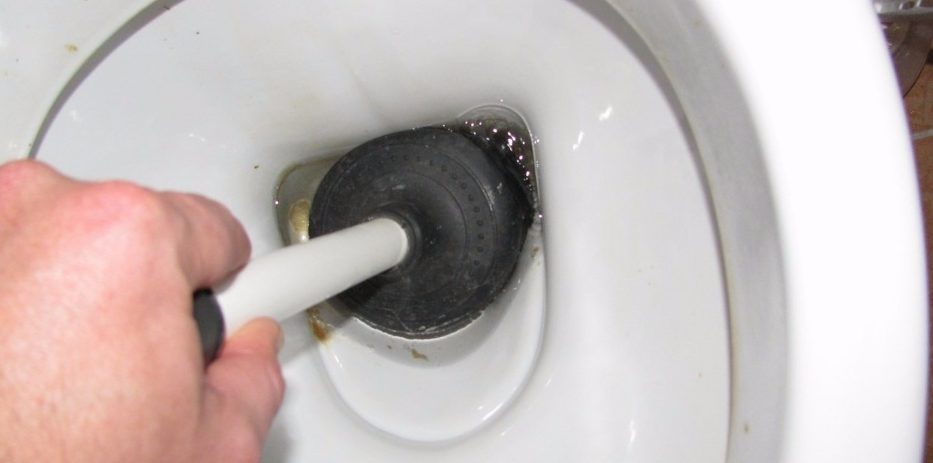
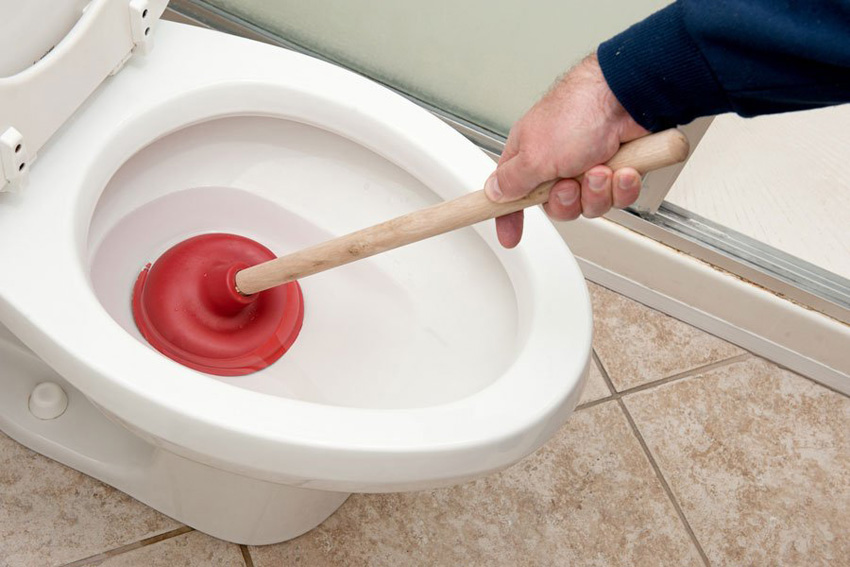
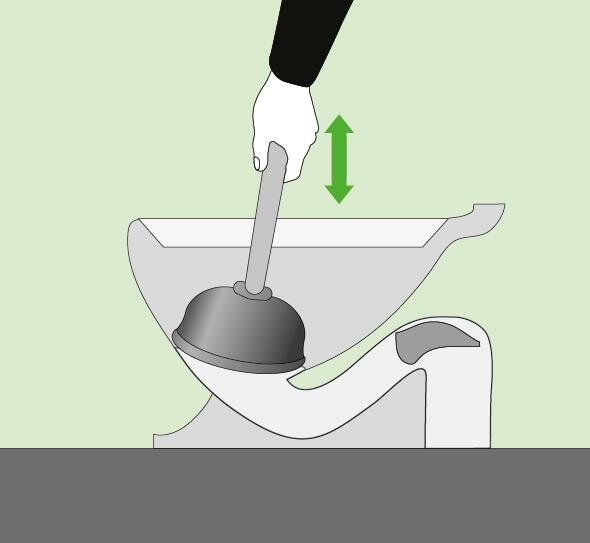
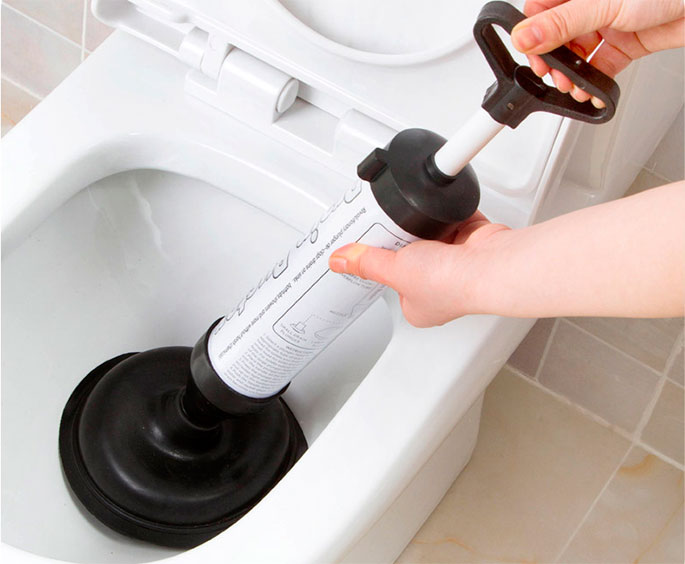
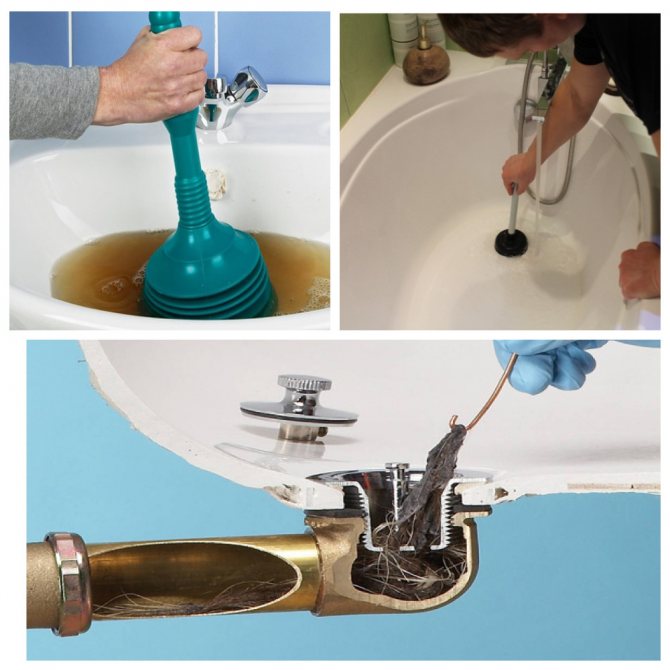
Professional plumbers can remove excess debris. But they will have to wait a long time, it’s easier to clean the toilet yourself. A plunger is suitable for this, the rubber blotch of which will be a little more than a plumbing drain. The patch should be pressed as tightly as possible to the edges of the drain hole and pressed. The forward movements are repeated several times. Hydraulic pressure breaks through the debris plug.
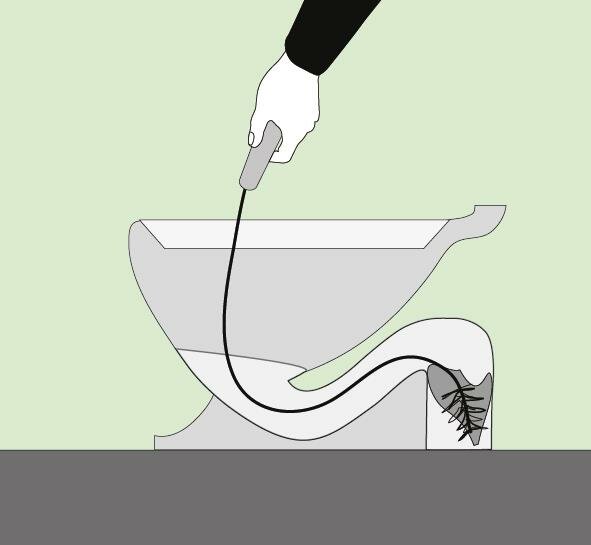
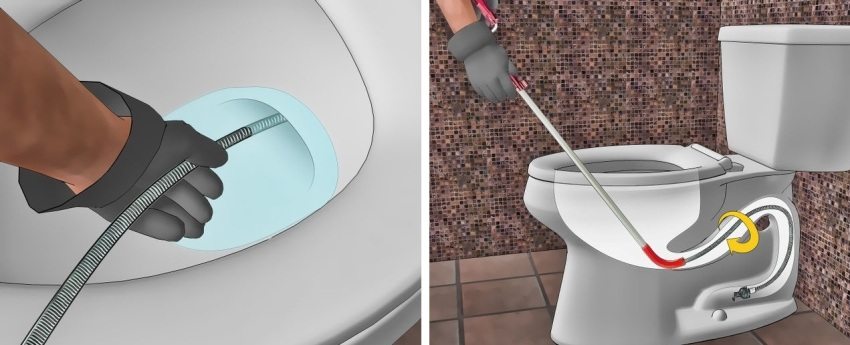
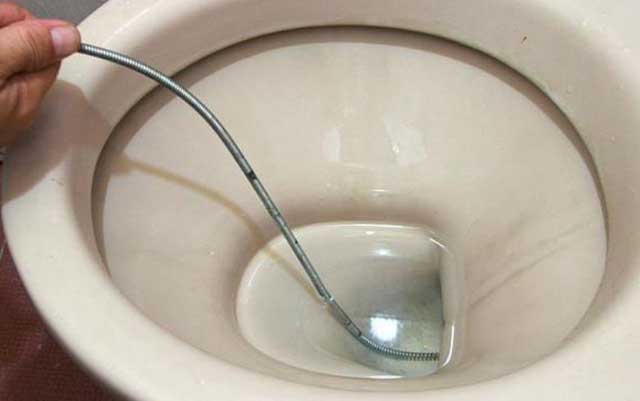
But how to clear the blockage without a plunger if the toilet is clogged? In such cases, use a plumbing cable that has a spiral at the end. Its length should be enough to the sewer riser. Such a device is effective in the event that a blockage has formed due to rags or napkins getting into the drain.
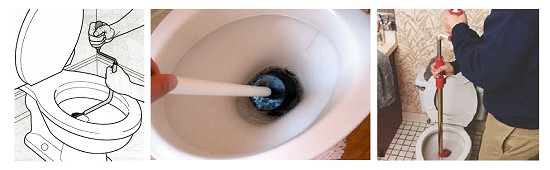
Insert the cable into the drain hole and push it in until the spiral hits the blockage
The handle of the device should be rotated a little, and then carefully remove the cable from the toilet. So you can pull the problematic garbage out, freeing the drain
If that doesn't work, the "plug" is pushed to the riser. After removing the blockage, flush the pipes with plenty of water.
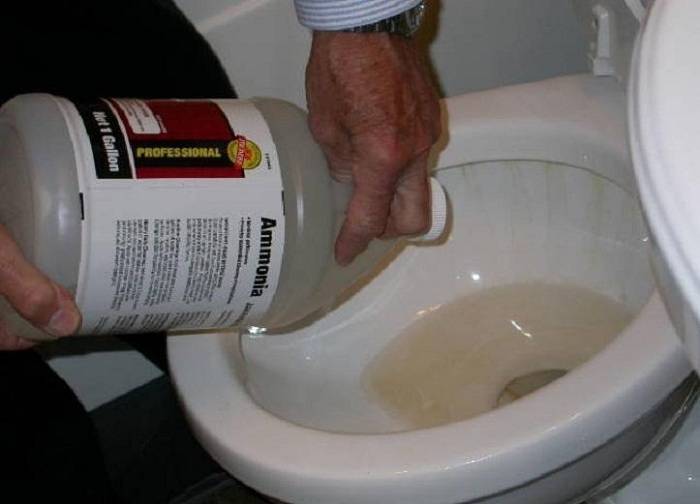
If mechanical actions do not work, chemical agents are used.Cleansing gels, powders or liquids should contain acids and alkalis. With their help, all foreign objects that led to the blockage of the toilet are dissolved.
Before using household chemicals, carefully read the instructions on the package. It tells you how much to pour into the toilet. After 30-60 min. water descends to evaluate the results. To eliminate a strong blockage, the procedure will have to be carried out several times.
If there are no household chemicals for cleaning, improvised components are used: vinegar and baking soda. Scoop out all the water from the toilet, pour in about 200 g of soda and a glass of vinegar (90% is suitable). After 20-30 min. everything is filled with 2 liters of hot water.
To avoid clogging the toilet, do not throw garbage and household waste into it. It is advisable to arrange preventive cleanings: this will help to avoid salt deposits.
How can you clean the toilet if it is clogged You can fix the blockage in the plumbing yourself, without the help of a locksmith. What to do if the toilet is clogged?
Features of home sewage
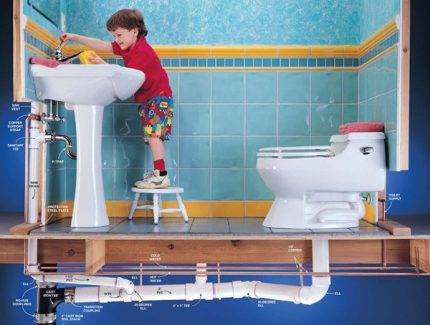
Sewerage is an integral part of the water disposal and water supply system. It is designed to remove liquid and solid products of human vital activity, to purify household water from pollution and return them for further use or to a reservoir. The sewerage system is necessary for comfortable living in a house or apartment.
Residents of apartment buildings are responsible for the condition of the sewer pipes in the apartment, and the owners of private properties must independently arrange local treatment facilities, remove sewage and maintain pipelines and equipment.
In order to avoid unpleasant problems in the future, the requirements of the SNiP regulatory documents for water disposal and sewerage should be observed. Then the system will work normally, without requiring constant monitoring or adjustment.

Having a properly designed and installed sewerage system will make life more comfortable, help maintain the ecological balance on the site and extend the life of buildings.
The structure of internal sewer networks includes:
- plumbing fixtures with water drainage;
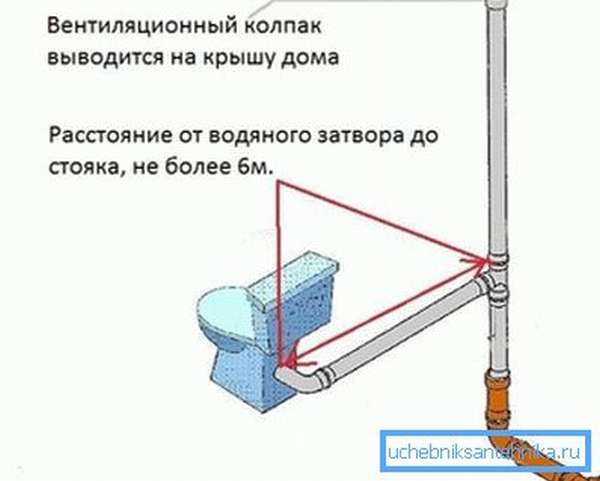
- a common riser to which sewer pipes are connected;
- piping, which ensures the process of transporting wastewater from the drain to the riser.
Requirements for internal networks are specified in SNiP “Internal Sewerage”, in GOST and SNiP “Sewerage”. The systems are mounted inside the building and ensure the transportation of all drains from the place of their formation to the outlet of the pipe from the building.
Basic requirements for internal networks:
- When installing plumbing on drains, a water seal is required.
- For laying networks, cast-iron or plastic pipes are used.
- The diameter of the outlet of the sewer system from the house is at least 110 mm.
- When laying pipes, a slope of 2 to 2.5% must be maintained.
The internal networks of the sewer system must be equipped with ventilation. The process of ventilation of networks is carried out through common sewer risers - an exhaust part is installed, which is displayed on the roof.
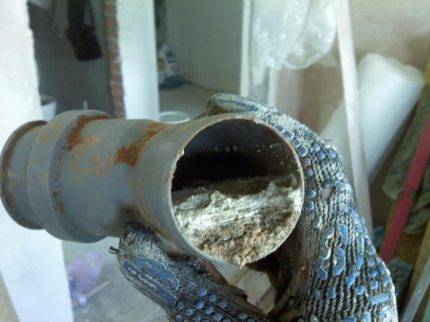
The main reason for clogging of sewer pipes in the bathroom is a significant accumulation of fat and other deposits on the inner surface of the pipe.
Due to the resulting blockages, the normal drainage of wastewater becomes impossible, therefore, it is necessary to immediately resume the full functioning of the sewer system. In order to avoid unpleasant consequences due to a blockage in the pipeline, you need to call specialists or clean the sewer yourself.
Causes of clogged toilet
Contaminants do not dissolve, accumulate inside, do not pass, the water gradually begins to rise in the drain of the bathroom bowl, an unpleasant smell is felt - clear signs of pipe blockage, distinguished by type:
- Mechanical, when toilet paper, hygiene items enter the drain.
- Technical, related to the life of the pipes, their wear.
To eliminate a strong blockage in the toilet, you need to pay attention to the “vulnerable” places - folds, curved joints, the frequent causes of clogging of which are:
- pieces of newspapers and paper scraps;
- food, waste, fat frozen on dishes;
- textiles (sponge, cosmetic sponges, rags);
- can clog animal hair;
- film, polyethylene bags;
- wood fillers for pet toilet.
Things "reinforce" the water supply, affect the obstruction of wastewater when flushed. To fix blockages, throw away used paper in a bucket.
The drain hole may not function correctly due to a poor handicraft model of the toilet bowl, the wrong angle of inclination with respect to the riser, and the lack of elements that equalize the pressure when draining.
It's time to wash
March to clean the toilet! - this command sounds like a harsh sentence for a rookie soldier. But what is there for a recruit who wants to clean this office and in a city apartment is not very easy to find.However, in a lifetime, we spend an average of 2.5 years in this place for reflection! I want to make the most of this time! Today we will talk about plumbing in the apartment, and let's start with the bathroom.
What to do? - put on rubber gloves and scrub! Salt deposits from the toilet bowl are removed with modern cleaning products. Their advertising has long been heard and seen. Of course, if the toilet is old or neglected, you should not hope for a quick victory. If you are not allergic to bleach, you can use the legendary Whiteness for especially difficult cases. For cleaning relatively new toilet bowls and cisterns, you can take not only newfangled imported Vanich or Comet. There are domestic, time-tested cleaning products: Surge, Vostochnaya, Sanita pastes, Sanitary and Shine powder.
The method of using the cleaner is simple and quick: apply to a damp surface toilet bowl a little drug and leave on 15-20 minutes. Then wipe the surface with a toilet brush or sponge, and then rinse with water from the tank.
Rusty plaque lends itself to Surge, Sanitary-1 and Sanitary-II preparations due to their acid base. Some craftsmen risk getting rid of rust with hydrochloric acid or vinegar essence: pour a small amount of acid onto the dry surface of the toilet bowl, wipe and flush from the tank
Keep in mind: these products are poisonous and dangerous, you should work with them with extreme caution. In addition, the smell of vinegar can linger for a long time.
When you can do without a tool
First, a few general concepts.
The causes of clogged toilets can vary. It's funny, but the use of plumbing for its intended purpose does not cause problems: in fact, this is what it was created for.Only those objects and substances are to blame, which, in general, have nothing to do in the sewer.
If the toilet is still clogged, first you should localize the cause of the blockage. It depends on her whether it is worth trying to eliminate the blockage yourself.
There are four options.
- A floor rag dropped into the toilet or the contents of the cat's tray that clogged the neck is removed only using a plumbing cable. Any attempt to solve the problem without a tool would be a waste of time. If this is your case, you can call a plumber or go to the store for a cable.
- Large fractional construction debris and large food waste (cucumbers, boiled and raw potatoes, meat, fish) can only be removed manually. The only chance to solve the problem is to arm yourself with rubber gloves, scoop out excess water with a ladle and pull out all foreign objects with your hands.
In the most severe cases, for this you have to dismantle the toilet: if pieces of plaster or broken glass are jammed near the outlet, they simply cannot be reached through the neck.

In the most advanced cases, it happens that dismantling is necessary.
- Building mixtures frozen below the water level are the most unpleasant case. If this happens, you can safely go for a new compact.
- Finally, paper and soft food waste (thick sour borscht, porridge, etc.) are those blockages that can be removed on their own.
How to break through the blockage with a cable?
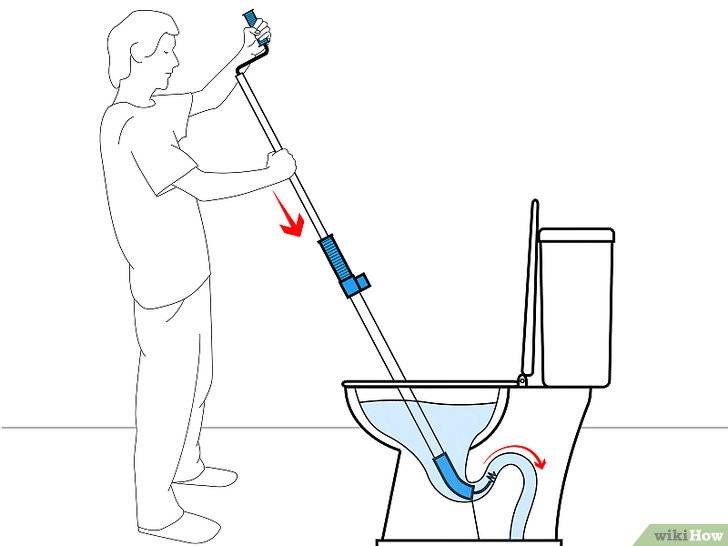
Plumbing cable - a twisted spring of several layers of steel wire, equipped with a Z-shaped handle. Each layer is wound in the opposite direction of the previous one, which allows the transfer of torque and provides the necessary flexibility.The maximum length of such a tool can be 100 meters. For domestic needs - to break through the blockage at home - they buy a cable from 2.5 to 5 meters long.
How to clean a blockage in the toilet with a cable?
- The end of the cable is lowered into the toilet and pushed all the way.
- The handle rotates in one direction until the cable turns to go through the bend. When the handle is rotated, the cable is held with the other hand.
- After the cable hits the plug of dirt, you need to continue to scroll the handle.
- If there are doubts about what the end of the cable rested on - another bend in the pipe or a blockage, you need to get it out by scrolling the handle in the opposite direction to the original one. If there are lumps of debris at the end of the steel wire, remove them and repeat the procedure.
- Feeling that the plug has moved, do not stop, you need to move on, pushing the plug into a wide drain pipe.
Mechanical methods
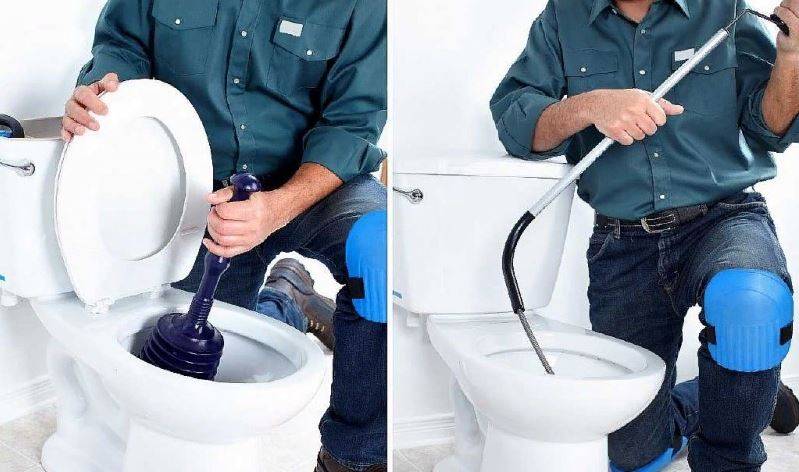
Not a single chemical agent will take sand, construction waste or glass, therefore, in such cases, experts advise immediately using “heavy artillery”: a plunger, a plastic bottle or a cable.
plunger
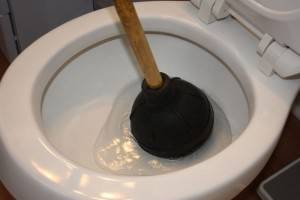
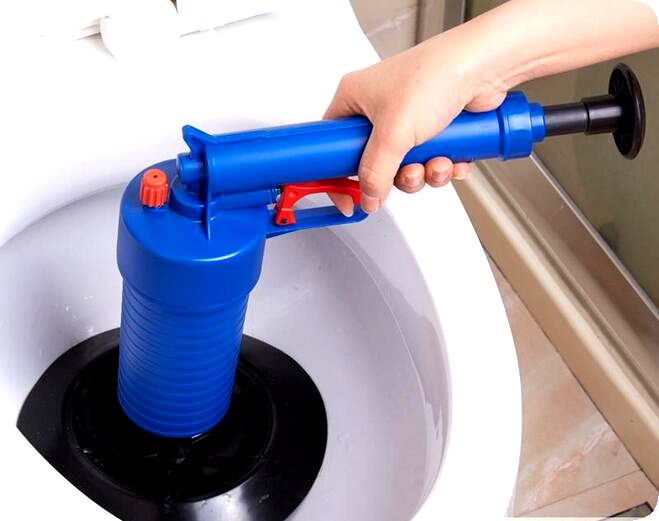
A dark rubber suction cup with a handle is familiar to many from Soviet life. With this tool, you can try to push the blockage further into the sewer. In the general system, the diameter of the pipe is larger, so the debris floats freely further.
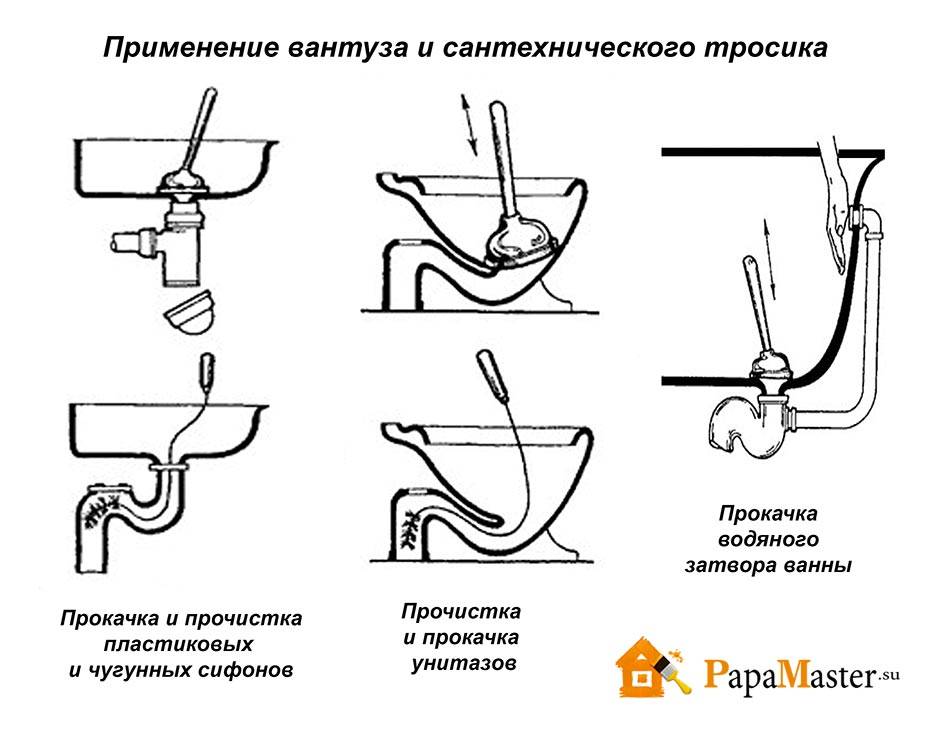
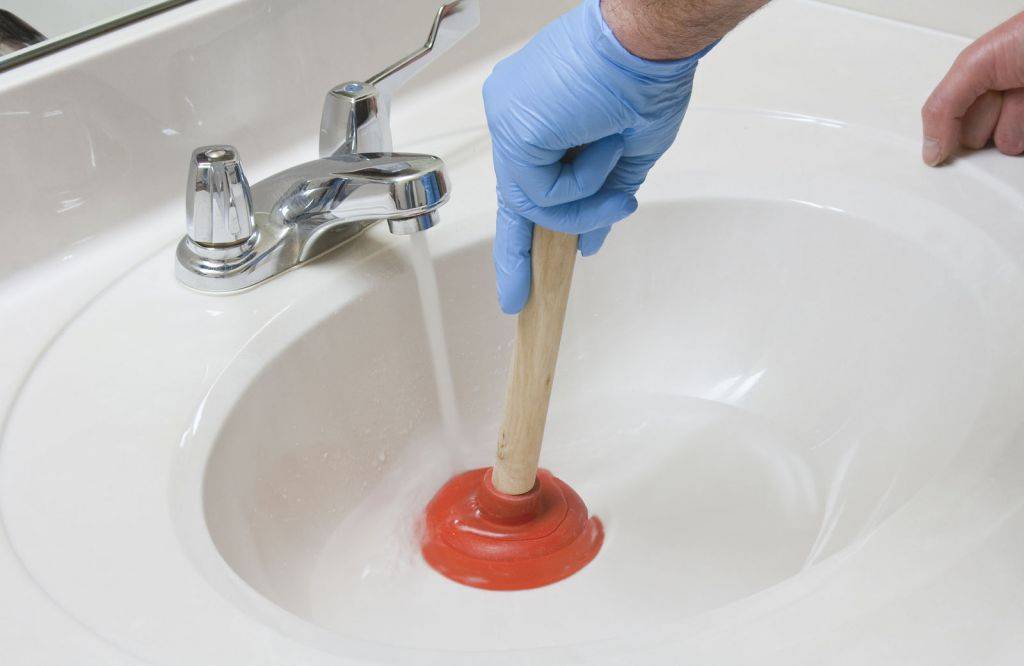
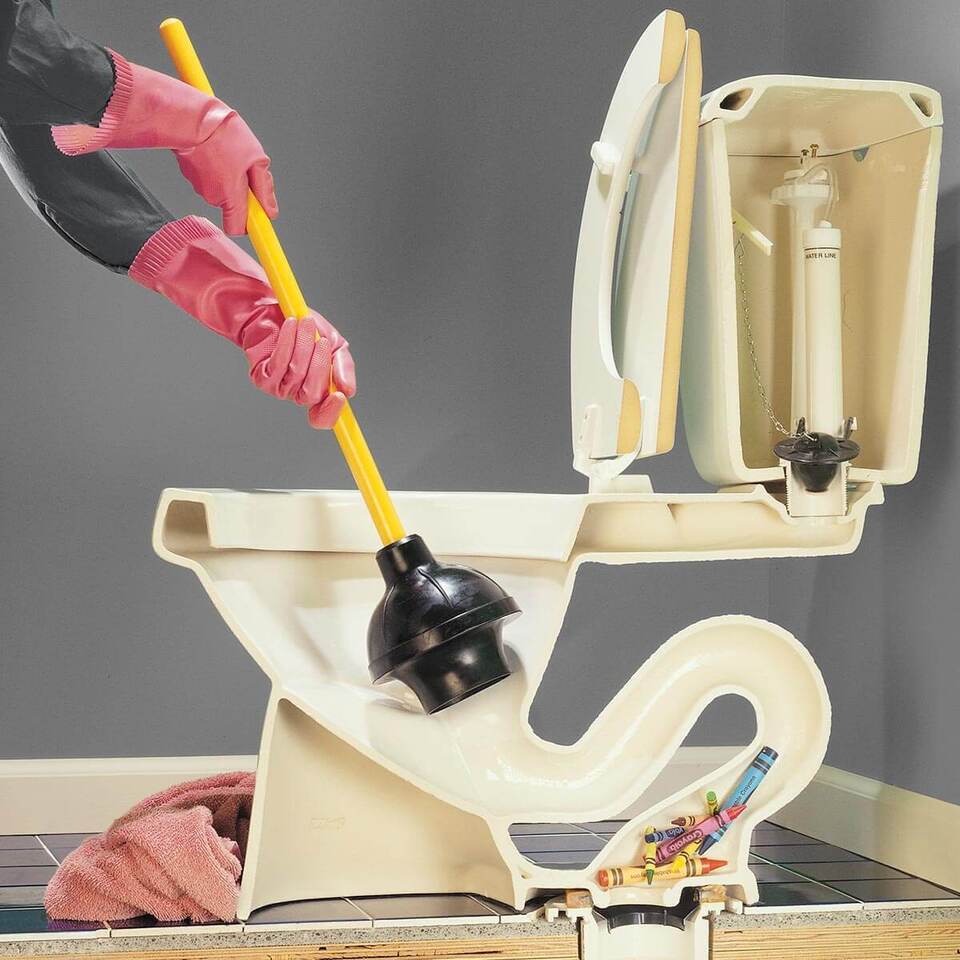
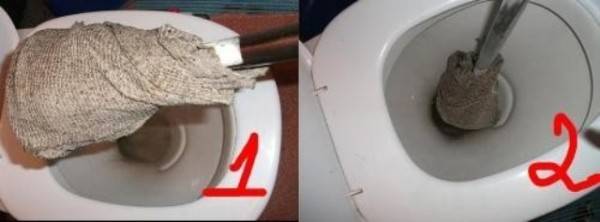
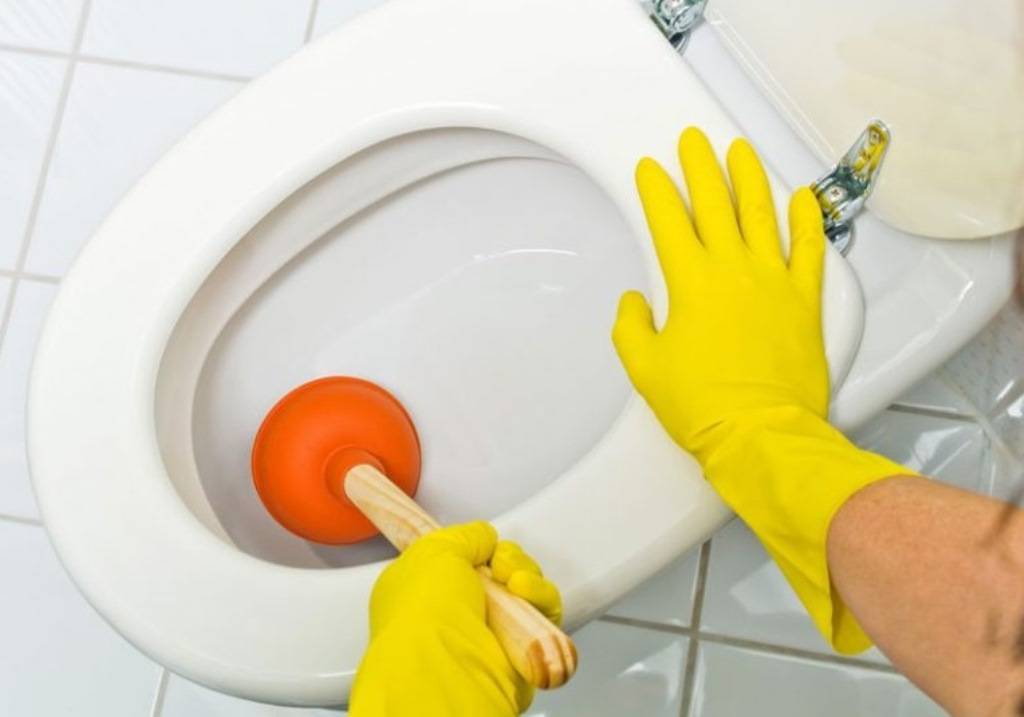
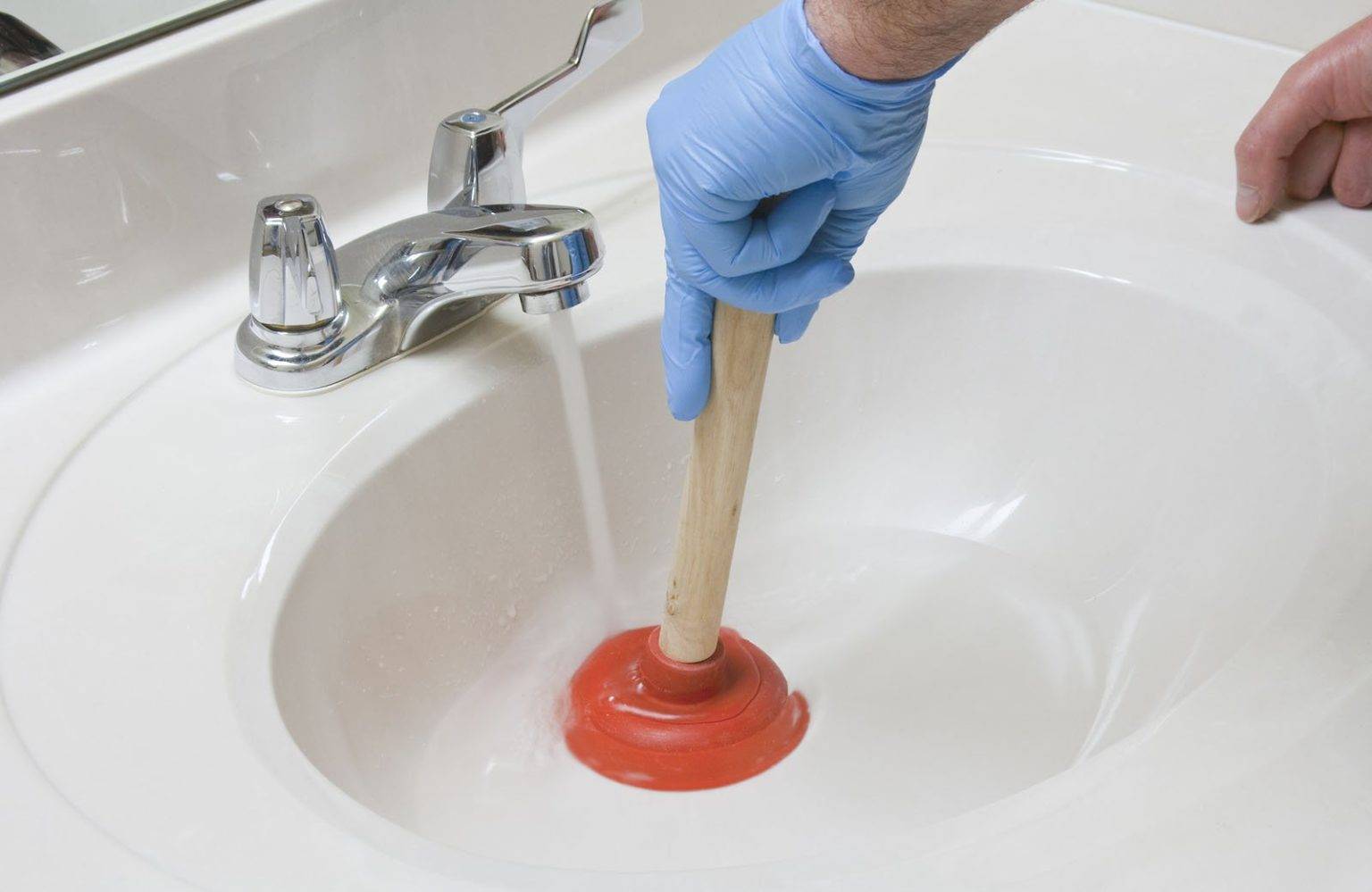
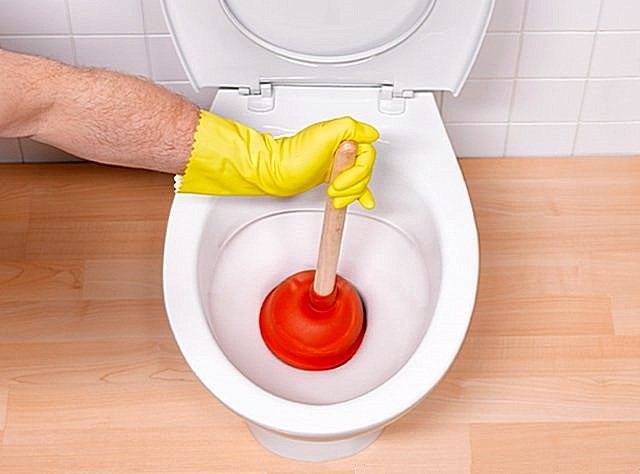
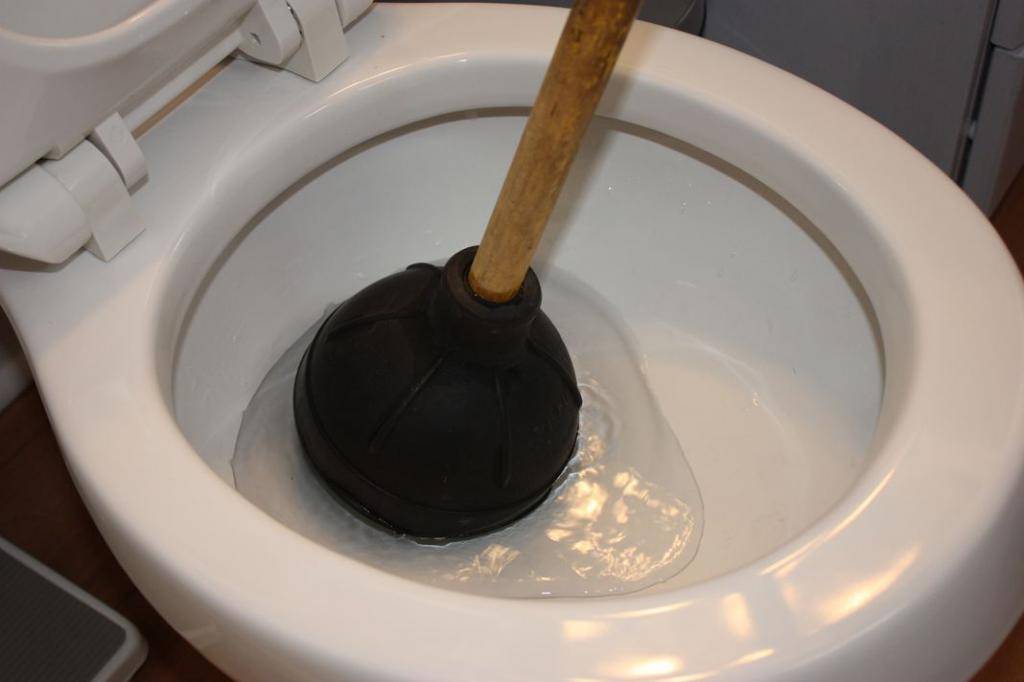
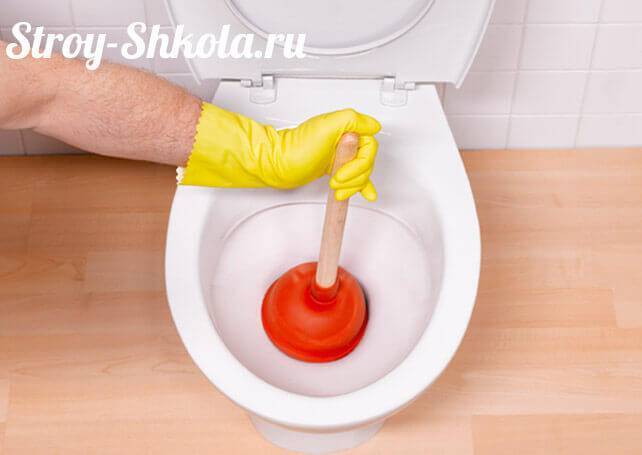
Before using the plunger, it is recommended that all other drains in the bathroom, as well as on the kitchen sink, be tightly closed. Next, pump the toilet hole with force with a plunger.
Plastic bottle
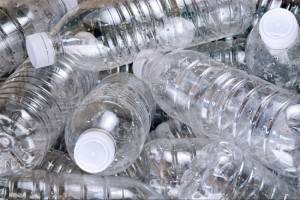
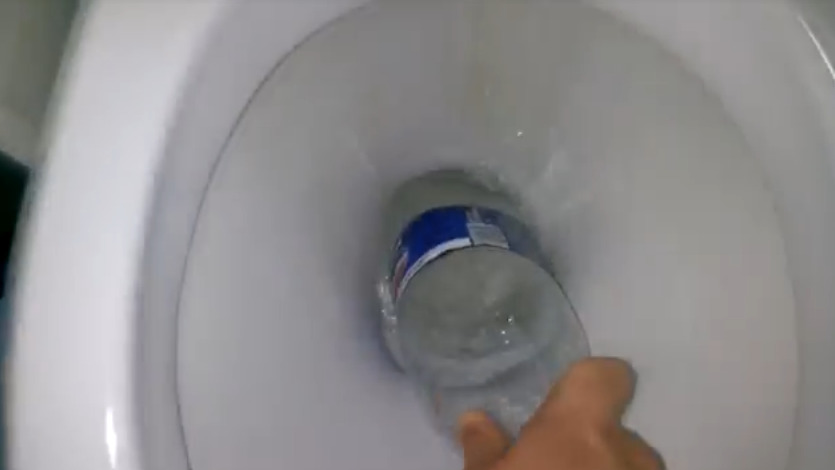
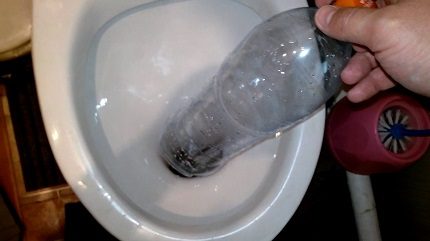
In some cases, a regular 1.5 liter plastic bottle with a stopper can deal with a blockage much more effectively than caustic chemicals or folk methods.
Let's describe the algorithm of actions in detail:
- The bottom of the bottle is cut off, while the cork is not twisted.
- We put on long rubber gloves and lower the hand with the bottle into the toilet hole, deep into the cut edge.
- Then several times with strong sharp movements we drive the bottle farther and farther.
The method with a bottle is similar in effect to actions with a plunger, but the force of the water hammer is many times greater. Due to the increased pressure, the blockage can fly further into the riser and float away into the wide sewer.
Cable
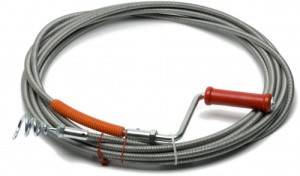
The cable is considered a professional plumbing tool. It is profitable to buy such a tool than to pay several times more for calling a specialist with it.
A standard steel cable reaches a length of 7-10 meters, has a handle and a pointed tip.
In order to destroy stagnant garbage with it, you must:
- Holding the handle, dip the tip of the tool to the maximum into the toilet drain.
- Next, with rotational movements, it is necessary to advance the cable to the blockage and try to push it through with gentle pushes.
Important: all movements must be carried out slowly and slowly, as sharp and strong blows of the cable can damage old sewer pipes.
Folk remedies to combat blockage
If the house does not have a plunger or a plumbing cable, use improvised means.
Plastic bottle
How to clean the toilet with a plastic bottle:
- Cut off the bottom of an empty plastic container.
- Grasp the neck and lower the homemade makeshift plunger into the neck of the toilet.
- Push in and pull out the bottle sharply.
- Repeat the procedure until normal drainage is restored.
soda + vinegar
You can clean the drain with soda and vinegar:
- Remove as much liquid as possible from the toilet, leaving only a little water.
- Pour half a pack of soda into the neck and push the powder as far as possible into the drain.
- Add 250 ml of vinegar to activate the chemical process.
- After a couple of hours, pour a few liters of boiling water into the drain, and then drain the water from the tank.
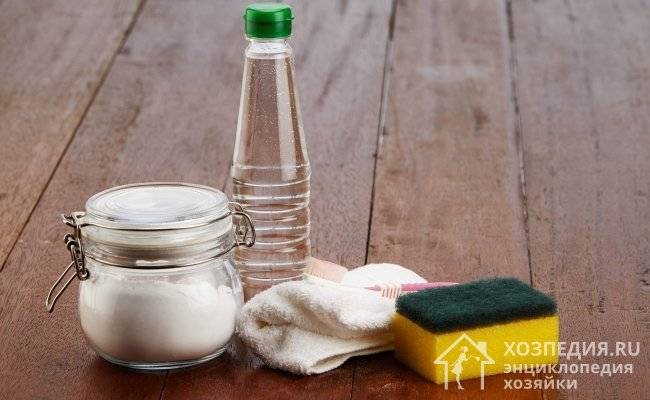 A mixture of baking soda and vinegar starts a chemical reaction that dissolves organic compounds well and removes a dirt plug in the sewer
"Doll"
Cleaning the toilet with a "doll":
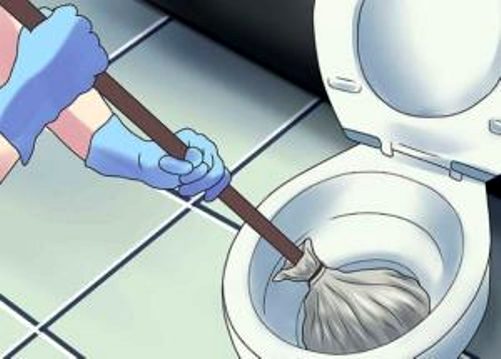
- Prepare the "doll" - pour sand into a small bag, tie it well and tie a long rope.
- Lower the fixture into the neck and press the drain button.
- Remove the pouch carefully by pulling on the string. Due to its weight, such a “doll” effectively eliminates the plug with contamination. If necessary, repeat the procedure several times.
caustic soda
Cleaning the sewer drain with caustic soda:
- In a container (not aluminum) combine 5 liters of cold water and 2 kg of caustic.
- Pour the solution into the toilet and leave for a while - the exact period depends on the extent of pollution and the location (it will dissolve faster in a siphon than in pipes).
- Add plenty of hot water (up to 10 liters) to flush the drain system.
Advantages and disadvantages of cleaning the toilet with a cable
One of the main advantages of a toilet tether is that it is easy to use. It is enough just to lower the device into the drain hole and rotate it.Works can be carried out at great depths of pipes, up to 70 m. Thanks to special nozzles on the tip, the blockage is easy to clean. It is pushable and breaks down quickly. Another positive feature of the device is its flexibility, the blockage can be cleared in pipes of different configurations.
Of the shortcomings, plumbers and homeowners note only 3 points:
Careless handling can damage the plastic walls of the pipes.
The process of breaking through the garbage plug can take a long time (10-40 minutes). The blockage is not always possible to clean out the first time.
After work, the device must be washed from dirt residues.. Note! Dried tools should be lubricated with machine oil.
This will extend its lifespan.
Comment! The dried tool must be lubricated with machine oil. This will extend its lifespan.
Prevention of plumbing blockage
To avoid clogging, follow the following preventive measures:
- Do not throw foreign objects into the toilet. If something accidentally gets into the neck, remove the thing as quickly as possible before it goes further into the drain.
- Do not wash away leftover food. Fats accumulate on the walls of the pipes, which in the future leads to the formation of a dense plug.
- During repairs in the toilet, cover the toilet with a thick cloth and a lid, otherwise the drain will become clogged with construction debris.
- Periodically carry out preventive cleaning of the toilet, using professional tools.
- If necessary, replace old pipes with new ones, as loose rust on their inner surface can cause drain problems.
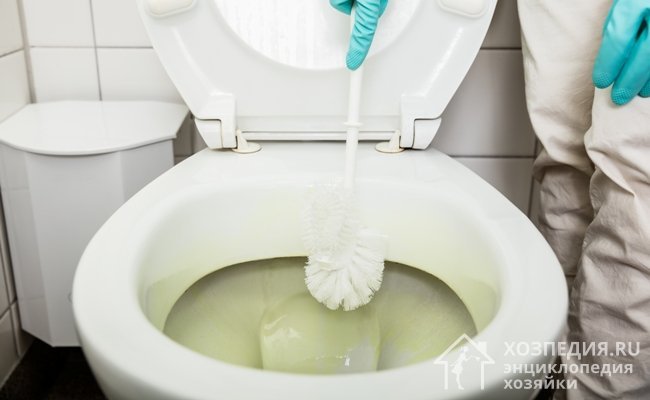 Regular preventive cleaning of the toilet and drain system will help to avoid clogging of the toilet bowl.
You can get rid of the blockage with the help of special tools, folk methods or professional means. When cleaning, follow all recommendations and safety rules. In order to avoid re-clogging, remember the rules for using the bathroom and do preventive cleaning of the toilet bowl.
If you are unable to solve the problem yourself, seek help from a plumber.
Clogged toilet with toilet paper or swab
In order not to have to deal with the problem of how to break through the toilet at home, you should not put anything into the device other than toilet paper, which has the ability to dissolve in drains. Everything else will certainly clog the sewer pipeline.
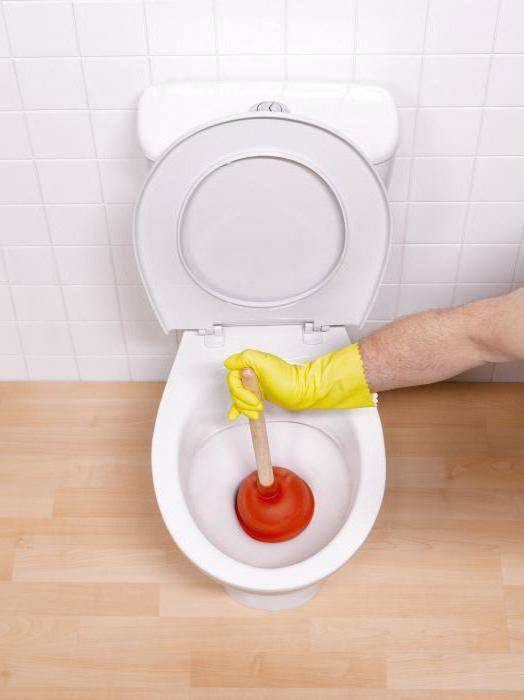
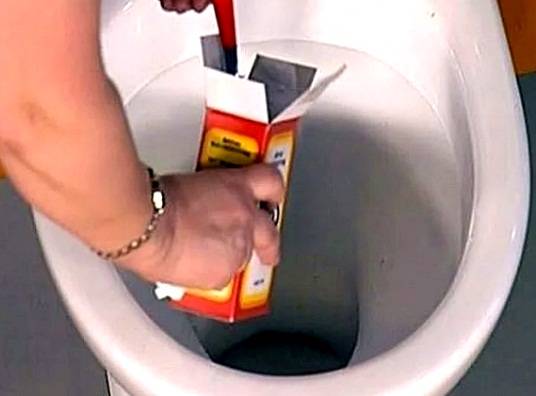
Also, it is forbidden to drain the fat formed in the pans into the toilet. They need to be wiped with a paper towel and then thrown into the trash. Used tea leaves should not be lowered into the plumbing fixture, as it can clog pipes by analogy with cement.
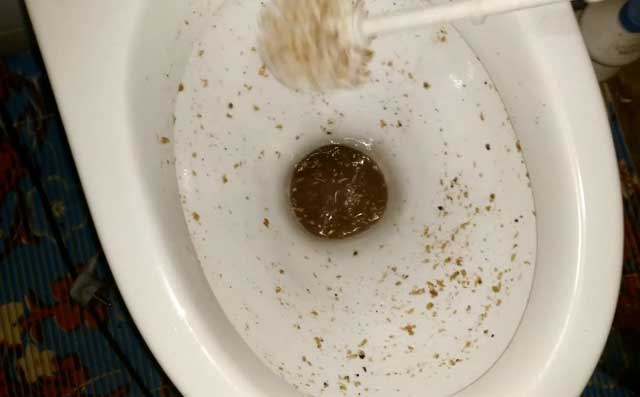
Another reason why the toilet is clogged is diapers, women's pads and tights, plastic bags and other hygiene items that have fallen into the sewer.
Folk remedies for blockage in the toilet
How to clear a blockage in the toilet at home
conditions? Once you find a problem, you can
go to the grocery store
remedy or use folk
proven methods that do not lose
its popularity.
Important! improvised means
effective only for minor
blockages
Hot water
Important! If there is a plastic thin pipe in the sewer structure, then when using high temperature water or vinegar, you must be as careful as possible so as not to damage the structure

If you are sure that your plumbing
withstand such a "test", then boldly
pour a bucket of hot water.
Important! The liquid must be
hot, but not boiling water!
Fill plumbing with 80% water. Liquid
should pour quickly and hold the bucket
at an angle of 90 degrees. Wait a bit,
and then try to just drain the water.
Is she slowly leaving again? Then take
to arm the plunger. Repeat procedure
flush with hot water and then use
suggested tool.
If the blockage is simple and caused, for example, by deposits from cat litter, then this method should remove it.

Baking soda
Prepare half of the package
in a bucket of hot water. The composition will turn out
aggressive as the combination of soda
and water forms an alkaline solution. However,
it will not harm the pipeline.
Hot soda water will do just fine
with fat accumulated on the inside
pipe side and organic
pollution.
You can use soda in other ways.
Pour half a pack of product into
toilet bowl and flush after 3-5 minutes.
Acetic acid
Important! Before proceeding with the procedure, leave only a small amount of liquid in the drain hole of the plumbing

Pour in half a box of soda
as deep as possible into the drain. Following
pour a glass of 9% vinegar.
Wash off after a quarter of an hour
bucket of hot water.
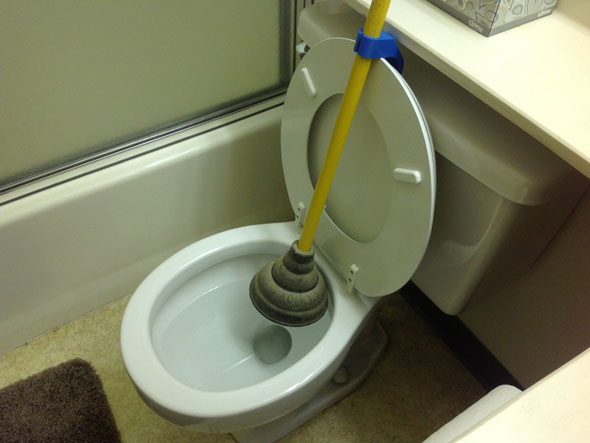
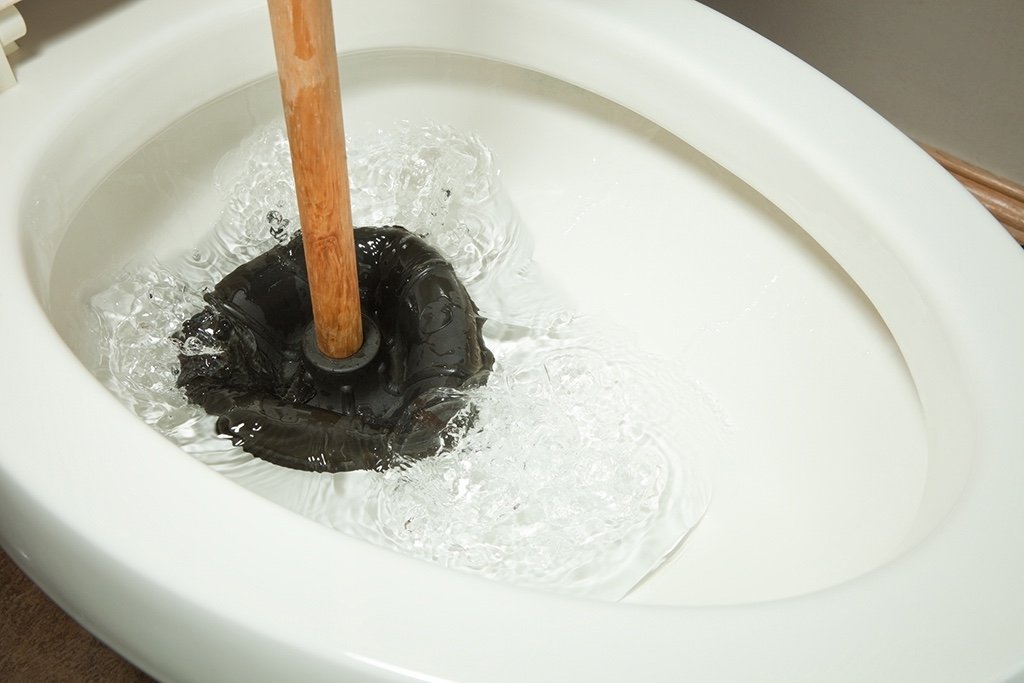
Sometimes another option is used
the same way. Action algorithm
similar. Fill half of the box
baking soda into the toilet, then pour
a whole bottle of vinegar there. Leave
for 2 hours, and then wash off the composition with a bucket
hot water.
Salt for cleaning the toilet
Sometimes vinegar is replaced with table vinegar.
salt. To get an effective
composition, soda and salt should be mixed in
equal proportions. For example, take both
substances in 1 cup.
After obtaining the mixture, pour it into
toilet drain hole and fill 1
liter of hot water.
It is better to carry out the procedure at night,
since the composition must act 7-9
hours.
Mustard Involvement
Dissolve 5 teaspoons of mustard in
10 liters of heated water. Less quantity
liquids are fine too. Most importantly, follow
proportions: 1 teaspoon mustard
powder in 2 liters of water.
The resulting solution is poured into the toilet. After 2-5 minutes, you can try to wash off. If the water still drains poorly, repeat the procedure.

What means are better
use?
There is an opinion that the notorious
dishwashing detergent "Fairy"
able to free the plumbing
fat blockage system. But the toilet
plugs are extremely rare
fat deposits, so this
option, of course, can be effective,
but with blockages in kitchen plumbing.
Otherwise, foaming agents
It's best not to pour it down the drain.
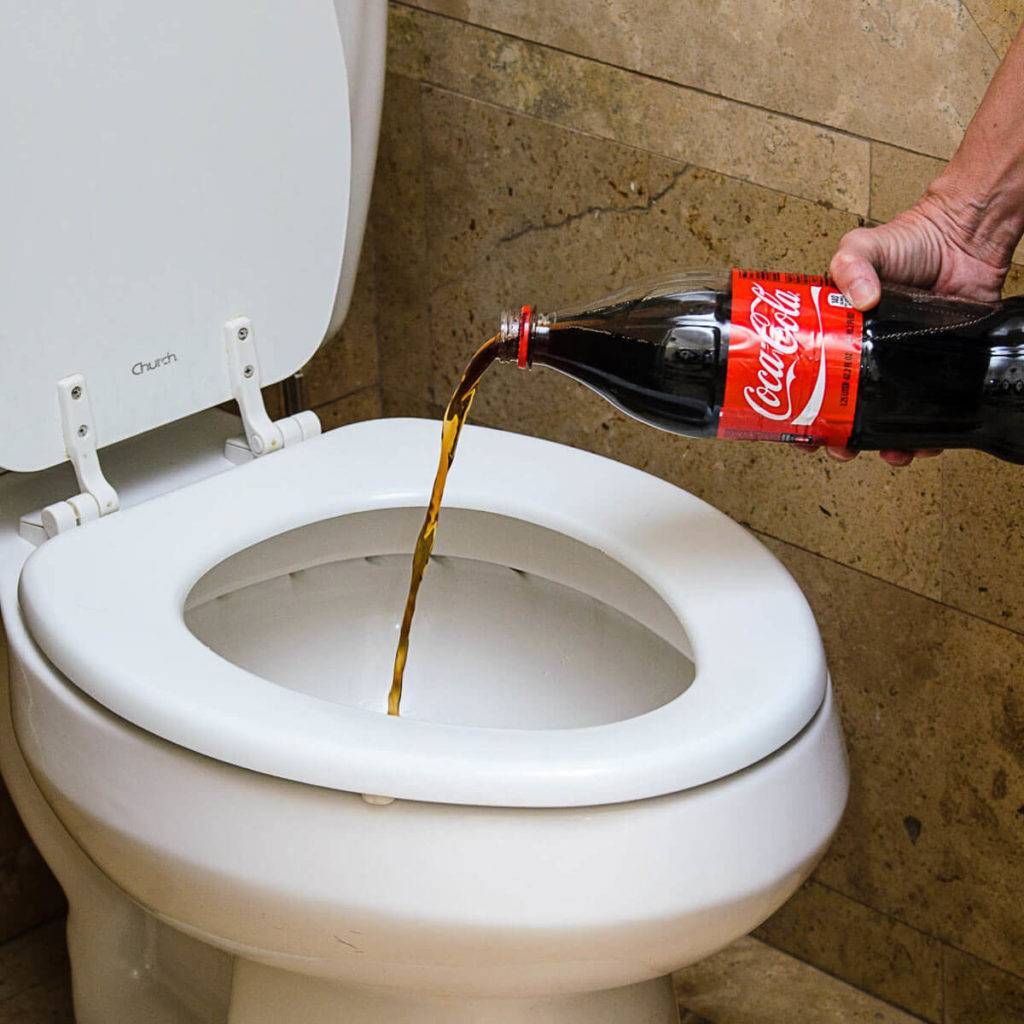
Also, no need to clean the pipes with Coca-Cola
or Pepsi. These drinks can cleanse
plumbing from plaque and darkening, but
they are unlikely to be able to cope with blockage.
How to determine the location of the blockage
What to do if the toilet is clogged? Before proceeding with the solution of the issue, make sure that the problem lies precisely in the toilet, since the localization of the cork may be completely different.First of all, check the riser in the kitchen and in the bathroom. Most often, it is common to several apartments, which means that a clogged sewer may not depend on you at all.

To make sure the solution is correct,
do the following:
- Simultaneously open the kitchen faucet and press the toilet drain.
- Observe how quickly the liquid goes down the drain? If the process runs freely, then the problem is in the toilet.
- When water stagnates and is in no hurry to leave everywhere, then the reason probably lies in the collective pipeline and it is better to call professionals.
Plumbers will quickly get you out of
trouble, but personally
remove the blockage and eliminate blockage
it will be extremely difficult.
In addition, you do not need to
try to clean the plug if the liquid
began to come out of the plumbing and flood
house. When this happens, immediately
make a call to the emergency service
block the sewer line.
If you are the owner of a private
at home, then most likely you already know that
blockages are localized in that part
pipeline, where it goes into the cesspool
pit and approaches the central or urban
sewerage.
When the situation does not require immediate
actions, you can try effective
home sewer repair methods
traffic jams.
Cleaning methods
There are several effective ways to wipe off pollution:
- Bring the vinegar to forty degrees, then pour baking soda into it, mix well.Apply the resulting gruel to the dirt and leave it there for ten hours. Clean up at night.
- Citric acid has long been successfully used by many housewives to successfully clean their toilets and bathrooms. Take a couple of sachets of this acid, sprinkle on contaminated areas. Make sure that the citric acid covers the dirt completely. After two hours, wash and rinse the toilet bowl with plenty of hot water.
- Sprinkle ethanedioic acid on urinary stone and limescale. Wait two hours. Then you need to wash the toilet with warm water.
- Flush all the water out of the toilet. Then throw a few liters of Coca-Cola into it. Leave sweet water to sleep in your toilet bowl. Just do not immediately drain the water! This will have to be done in the morning. Then, at the same time, wash the walls of the toilet bowl with a brush.
- A simple baking soda will help you remove the limescale. Take a pack of soda, pour it into the toilet and leave it for 30 minutes. Then pour table vinegar into it. You will see a chemical reaction between substances. Then scrub the toilet with a brush.
How to clear a clog in a toilet
The mechanical cleaning method is used when a rag or other object is stuck in the drain siphon and the owner of the house is sure of this. Usually, a plumbing cable with a set of various nozzles is used for cleaning. However, it is not at hand in every home, therefore, in emergency situations, it is possible to eliminate the blockage by hand.
You should work like this:
- From the toilet bowl it is necessary to remove all the liquid that is present there;
- It is necessary to put on a household glove on the hand, and a medical bandage or gauze on the face;
- Next, you need to stick your hand into the toilet and get the cause of the plug from there.
There are special products for cleaning the toilet
To eliminate bad smell in the bathroom, you can set fire to a large piece of newspaper and let it burn out. Fire will eliminate hydrogen sulfide in the air, which gives the smell. If you can’t get it manually, you can make a hook out of a piece of metal wire that will help hook the stuck object.
We connect the mechanics
You can quickly and effectively destroy the blockage in the toilet bowl by mechanical means. You should start with a brush or plunger. These are the most gentle methods, ideal if the cork is not deeply embedded and consists of individual particles that can be loosened. For example, accumulated small rubbish from fat, hair and nails (many people prefer to brush such things down the toilet, and not under the bucket lid). Cleaning with a brush, as a bonus, cleans the walls of the drain and pipes, removing surface deposits of salts and dirt.
plunger
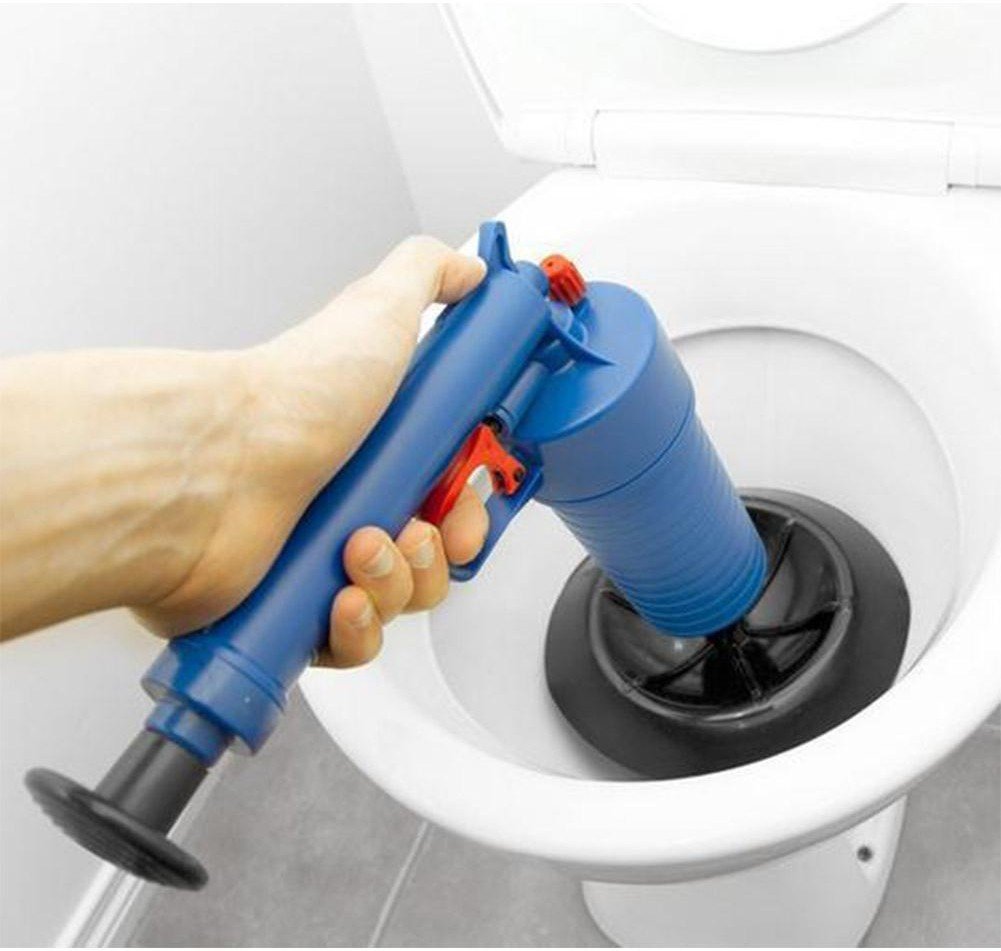
This is a powerful rubber suction cup with a wooden handle, and there are several modifications, including a special one for cleaning the toilet bowl, with a special cuff along the diameter of the sewer channel. The plunger, due to the periodic creation of hydraulic pressure and vacuum during sharp and active reciprocating movements, loosens the accumulation in the channel, which ultimately can lead to a blockage slipping through the sewer channel or a large “piece” coming out of the channel directly into the toilet bowl.
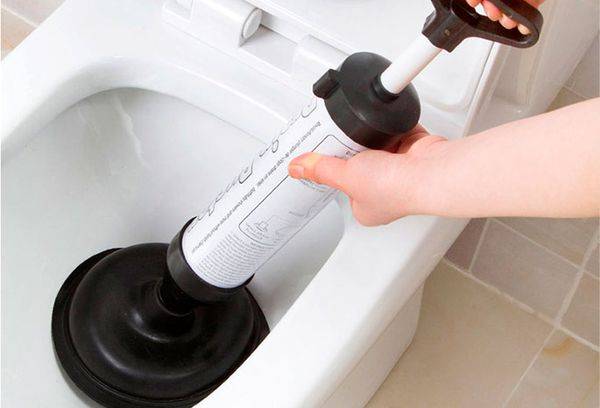
Using a plunger at home eliminates clogging in almost all cases, except for situations where the plug has formed much further along the sewer channel, and the hydraulic drops created are not sufficient to “get” and stir up the accumulated debris.
Plastic bottle
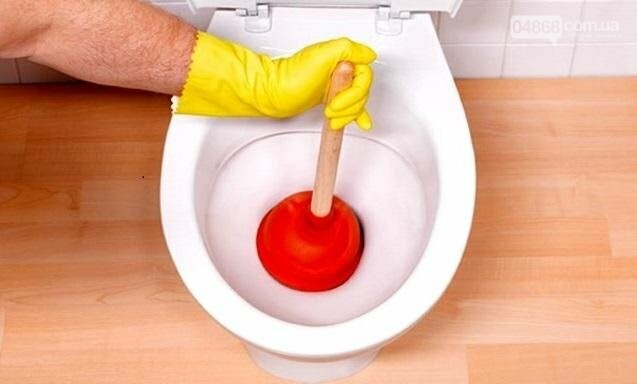
An object of a suitable diameter copes well with the task as an impromptu plunger. It is enough to cut off the bottom and use the bottle in the same way as a plunger, only the walls of the bottle must enter the channel. Cleaning the toilet occurs according to a similar principle due to the sharp hydraulic pressure from the movement up and down. It is recommended to preliminarily fill up the sewer pipe cleaner for 30 minutes. This is an effective way to clean the toilet without a plunger and a cable.
Steel rope
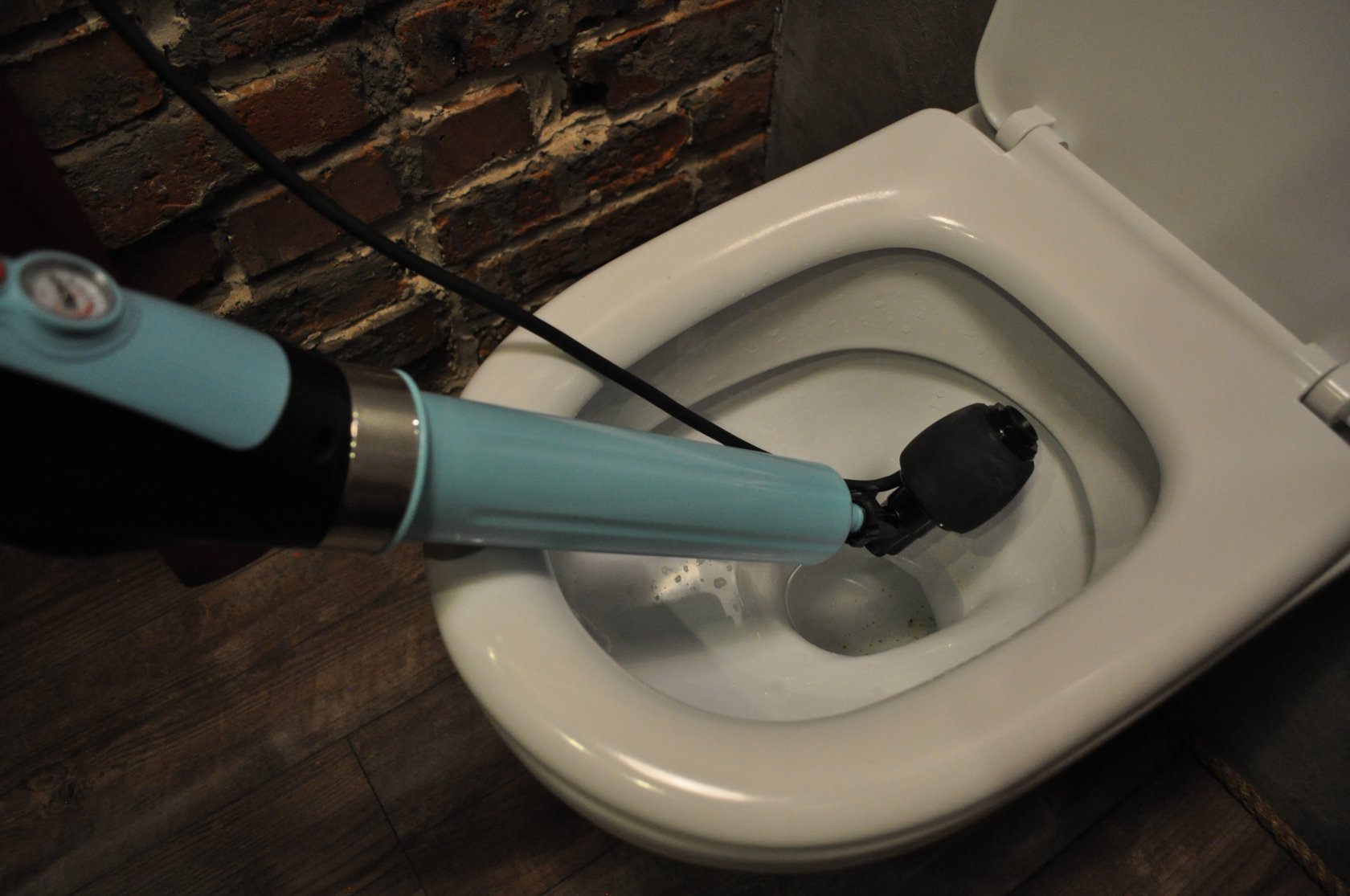
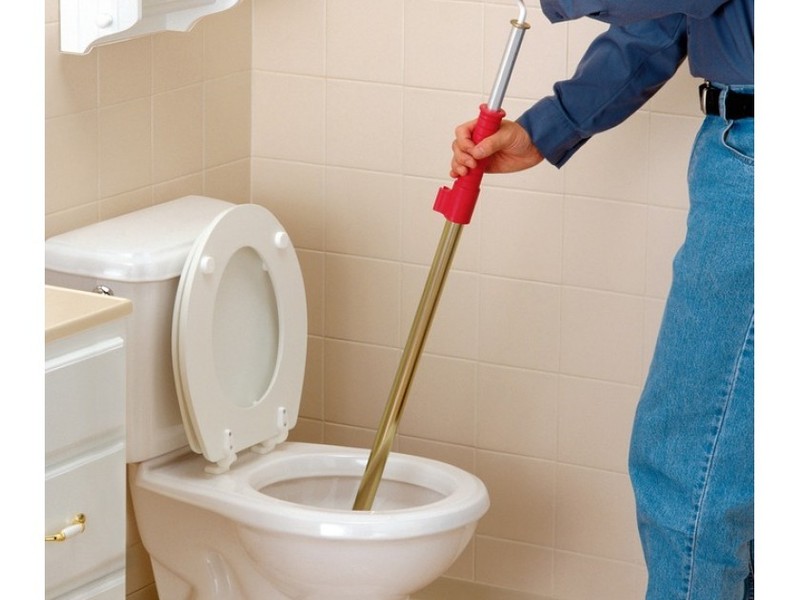
A semi-professional device, on the one hand it has a zigzag handle, and on the other - a hook, a blunt tip or a brush, the tool itself looks like a spring, which gives it elasticity. To clear the blockage, the cable is inserted into the sewer channel with a screwing motion, which ensures the tedding of the plug.
If the cable is stuck and does not go further, it is pulled out and the insertion operation is repeated with scrolling. The length of the cable can be from 1 to 3 meters, and a short cable of 1-1.5 m is more relevant for cleaning the toilet.
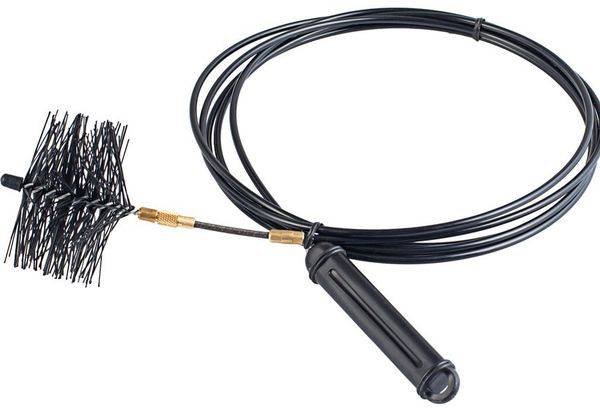
From improvised means, instead of a cable, an oxygen hose is suitable, which has sufficient rigidity and a small diameter. For deeper cleaning, such a hose is connected to a hot soda water supply and given maximum pressure, which flushes out all the blockage in the depths of communications.
It is worth noting that a single universal, highly effective method simply does not exist, therefore it is recommended to use several methods and devices in succession. For example, a cable can stir up a deep cork, but it is easier and more convenient to move it with a plunger.
Dismantling the toilet
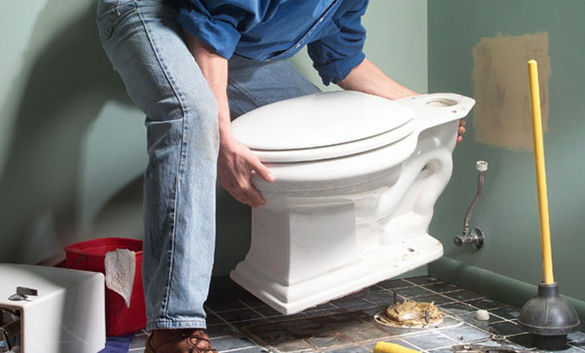
There are cases when, after cleaning the toilet, the water leaves well, but after the first trip “for the most part” everything gets up again. This can happen if some hard object, such as a pencil or a plastic children's toy, is placed in the knee.
It turns out that after draining, the water leaves, and paper and organic waste hang in the knee. And every time it gets worse
As you understand, after cleaning (no matter what, with a plunger or a cable), the situation will repeat itself as long as this item is in the neck
What can we do. You can bend a hook from a hard wire and try to get the unfortunate object through the drain neck or remove the corrugation and try to hook it from the other end of the drain.
If nothing comes out, you need to unscrew the toilet bowl from the floor and turn it with a drain towards you. So we will see what is stuck in the neck, and it will be easier for us to get it. Also, with the toilet bowl disconnected, we have the opportunity to inspect the pipeline adjacent to the toilet bowl.
Chemicals for cleaning the plumbing system
Currently, on the shelves of stores there is a wide range of various chemicals designed to deal with blockages in sewer systems. Particularly popular among such products are:
- Mole;
- Mister Muscle;
- Bagi Pothan;
- granulated Flup;
- Tiret gel.
Before using these tools, it is recommended to study the instructions in detail, and also do not forget about your own safety measures. Many of them contain very aggressive substances that, if they come into contact with the skin and mucous membranes, can harm your health. For this reason, when working with them, it is necessary to use rubber gloves, as well as thoroughly ventilate the room. To use them, you need to take the following steps:
- Pour into the toilet drain the dose of the drug indicated in the instructions for it.
- After a certain amount of time, wash off the substance with a powerful jet of water.
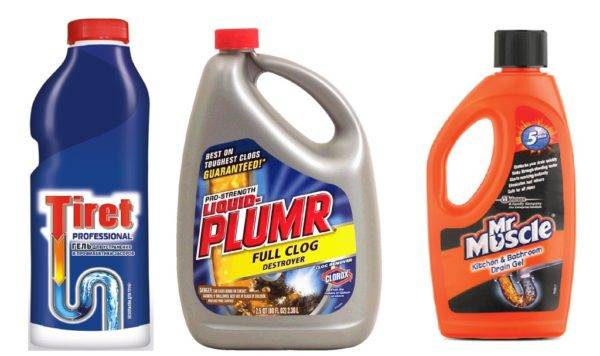
With the help of such purchased funds, you can deal with blockages formed in the sewer system