- Masking heating pipes in the wall
- How to hide pipes in the thickness of the wall
- Interesting design solutions for decorating pipes
- Kinds
- Do-it-yourself box making materials
- How to make a drywall box
- Various disguise options
- Do the work yourself or call the master?
- Seal pipes in the floor
- Ways to hide heating pipes
- Features of masking pipes in a private house
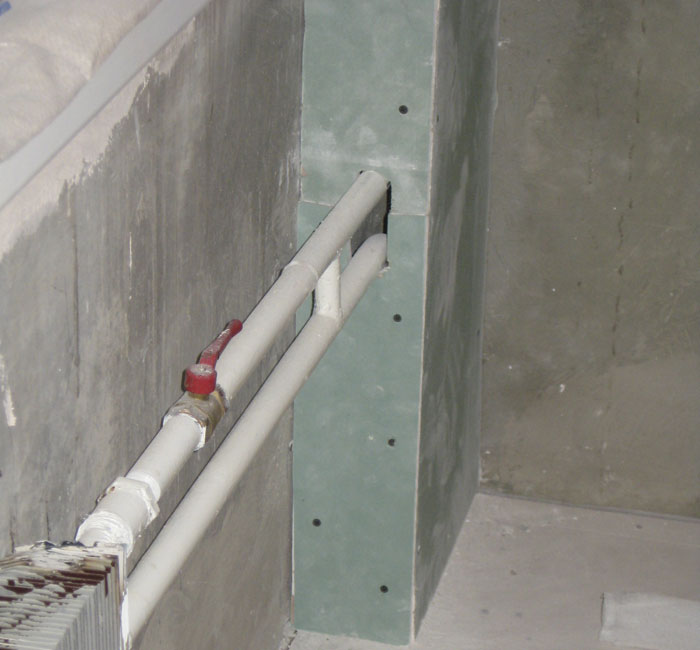
Masking heating pipes in the wall
Pipes, risers and radiators can be disguised in several ways. A fairly popular option is to hide communications in a wall or in a field.
At the same time, it is important to replace old pipes with new ones in the apartment before such work. It is better to choose plastic communications
Otherwise, leaks will occur, which are quite expensive to fix.
The sequence of installing pipes in the wall:
- First, a communication layout diagram is created. At the same time, the cross-section of pipes, thermal insulation and the thickness of the wall layer to be sealed are taken into account.
- Next, you need to make a hole in the wall. This is a special recess in which communications will be placed. Provide space for bends and tees.
- Then the insulation is put on the pipe and mounted in the provided niche. Communications should be well fixed, ensuring a secure fit.
- Pipes are fastened with brackets.To do this, holes with dowels are made in the wall. They will fix the device.
- Next, you should check the performance of the pipes. Only after that close up the niche.
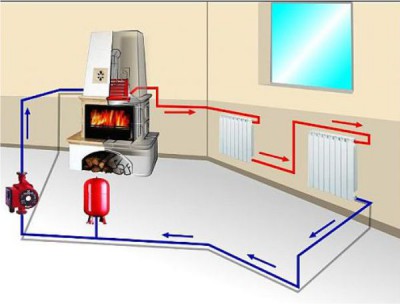
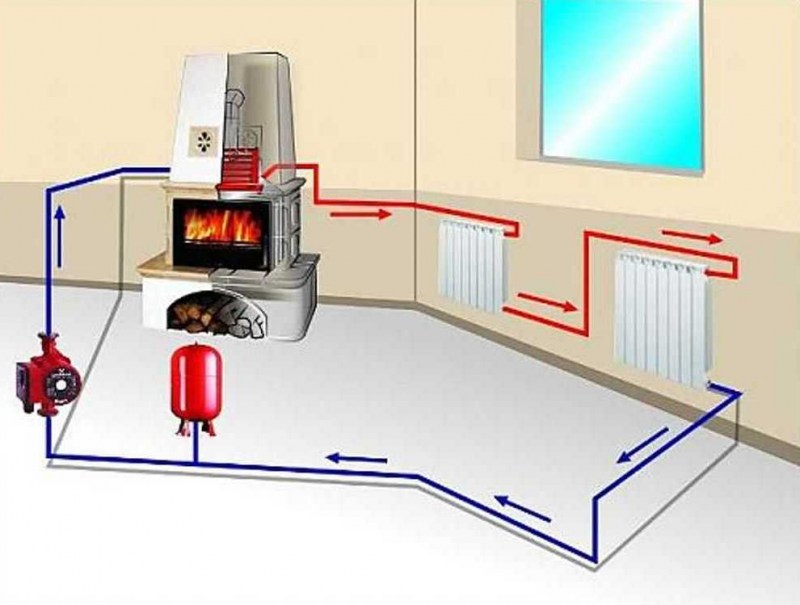
The second method involves sealing pipes in the floor. First, think over the laying scheme. A strobe is made in the floor. The top of the pipe should be slightly below floor level. Next, pipe insulation, inspection and installation are carried out. Communications are closed with concrete mortar. For normal water circulation, a pump is installed.
But hiding the pipes in this way, you should be prepared that in the event of a leak, you will have to completely disassemble the floor or wall
That is why it is important to minimize all risks. Solid pipes should be selected or with a minimum number of joints
This option can be called a warm floor.
This is interesting: Food waste grinder for the sink - how to connect it yourself
How to hide pipes in the thickness of the wall
A similar method of masking communications is used for heating, water and sewer pipes. You can resort to this method at the stage of laying communications. Such work consists of several stages:
The first step is to draw up and draw on paper a pipe installation diagram.
In the process of this work, the diameter of the communications and the thickness of the embedded layer should be taken into account. When it comes to heating pipes, the type of heat-insulating material chosen must also be taken into account.
Then, in the chosen place, where the pipes will run, a groove is made in the wall, which will correspond to the length and size of the pipe and take into account a small margin of depth
This work is carried out using a puncher or wall chaser.
If necessary, wrapping the pipe with a layer of heat-insulating material, it is hidden in the groove made, not forgetting to fix it well. To do this, take the brackets and mount them on the dowels, which are inserted into the pre-made holes.
After that, you need to check the serviceability of the pipes, and only then seal them in the wall with cement mortar.
Interesting design solutions for decorating pipes
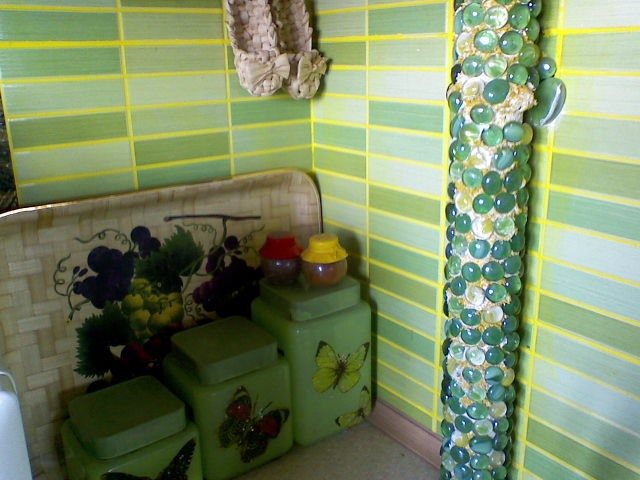
If you decide to decorate pipes on your own, you will first need to familiarize yourself with a wide range of design solutions. Staining is the most popular method. You can not only paint the plumbing element in the desired color, but also draw absolutely any pattern on it.
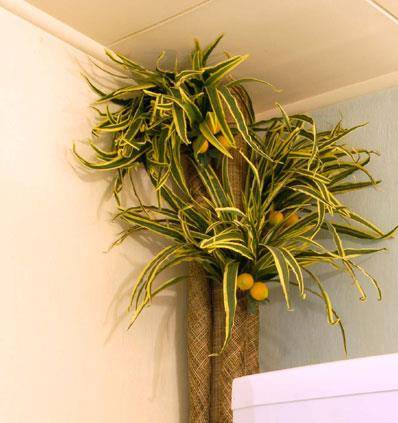
Tree branches will look very impressive. Such decor is within the power of any person. Art education is optional.





If you are looking for the least expensive way, then try using jewelry for decoration purposes. You can decorate pipes with a wide variety of decorative elements. Materials such as ribbons, buttons, fringes, laces, fabric, fur, beads and much more are perfect for this purpose.
Try decorating your pipe with a variety of animal, insect, or homemade toys. At the same time, the pipe itself can be painted to match the color of the tree trunk.
The heating pipe can be decorated with stained glass windows. At first glance, this method may seem incredible.
Glass or transparent plastic is used for decoration. This method of decoration can be safely combined with a variety of lighting techniques. In addition, such a spectacular composition can serve as a night light indoors.
Kinds
In order to decorate the pipes in the room and hide them from those present, you can use several options, these are:
Drowning heating structures directly into the wall, which in itself is very convenient and not so difficult to implement, but in case of any malfunctions, the consequences will be very bad
When installing the pipeline, it is important to completely replace it and carefully check all attachment points, solderings and any joints that may leak.
Disguise with the help of furniture, which is most often typical for the kitchen, but can sometimes be found in other rooms.
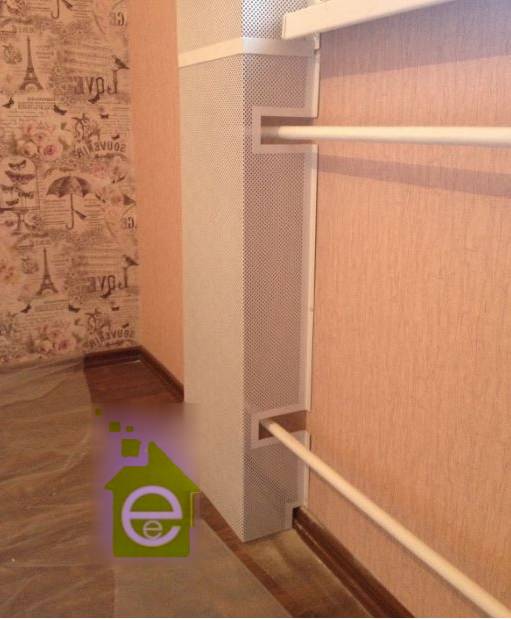
Using a special box where pipes are placed. You can make such a design from different materials, these are: plastic lining, brick, drywall, wood.
box for heating pipes may have a varied appearance, which depends on the room in which it is mounted.
- A box-wardrobe that forms a closed space where you can not only hide pipes, but also arrange small things in everyday life. It is very convenient to use it in the toilet, where space is significantly limited.
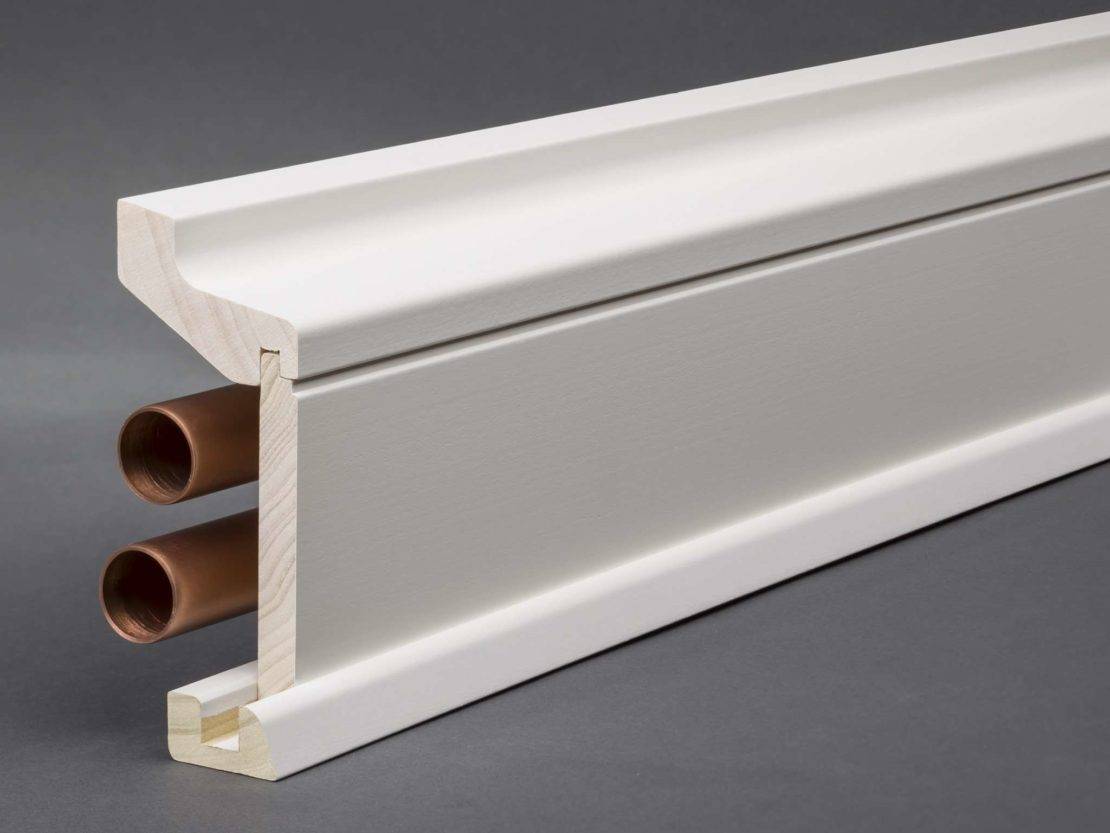
- A plinth box is needed in order to hide pipes with a small diameter, it is very convenient to install sockets near them, especially for a bathroom where the humidity level is high and you need to choose the right place to turn on electrical appliances.
- Box-shelf, having a horizontal arrangement. This is convenient for the appropriate installation of heating structures in the room. You can effectively, but at the same time effectively hide all communications, making the area useful.
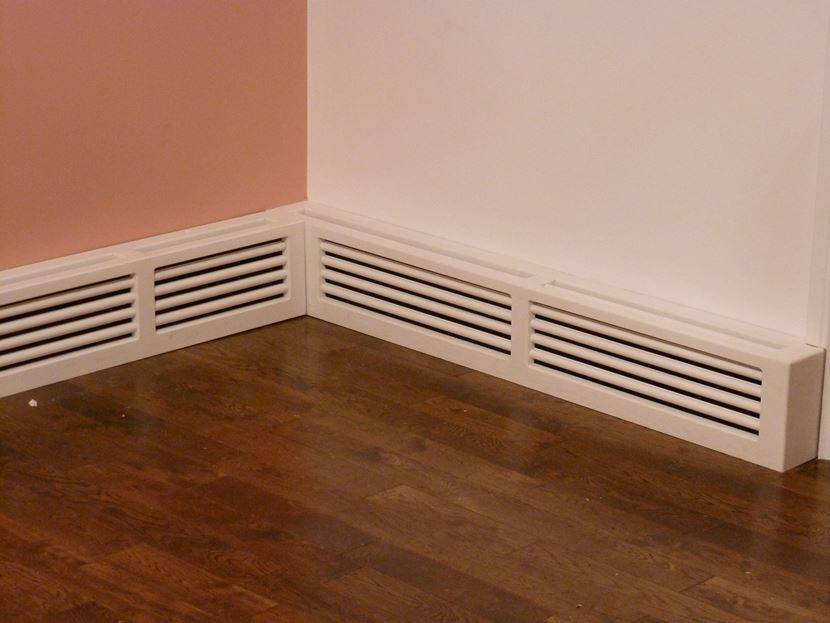
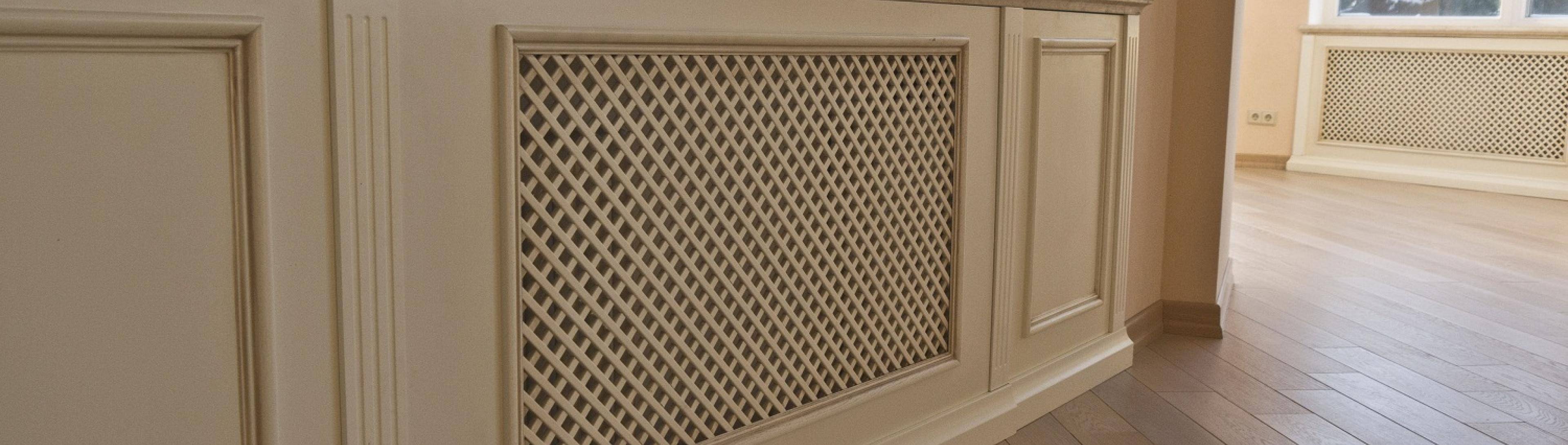
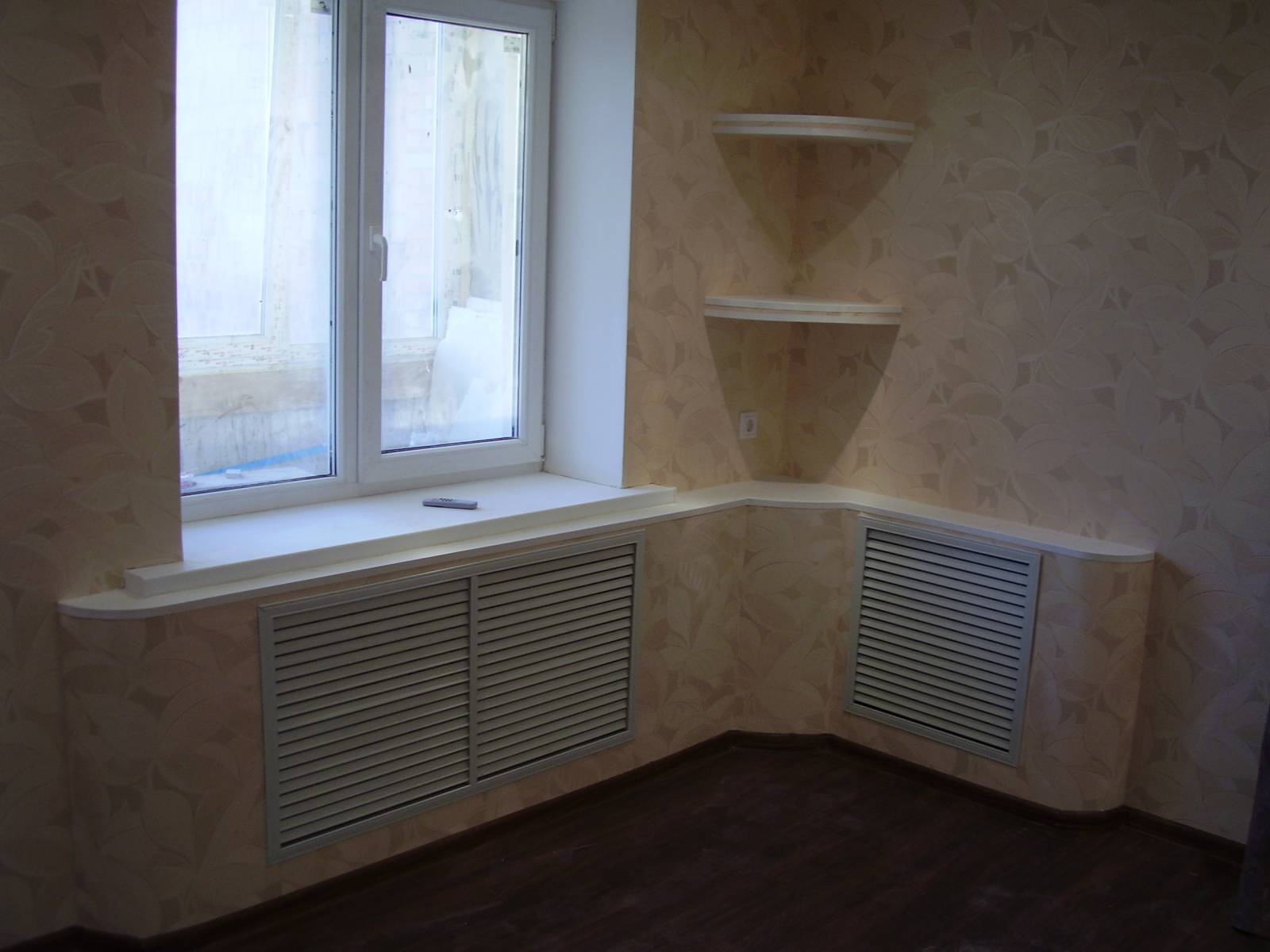
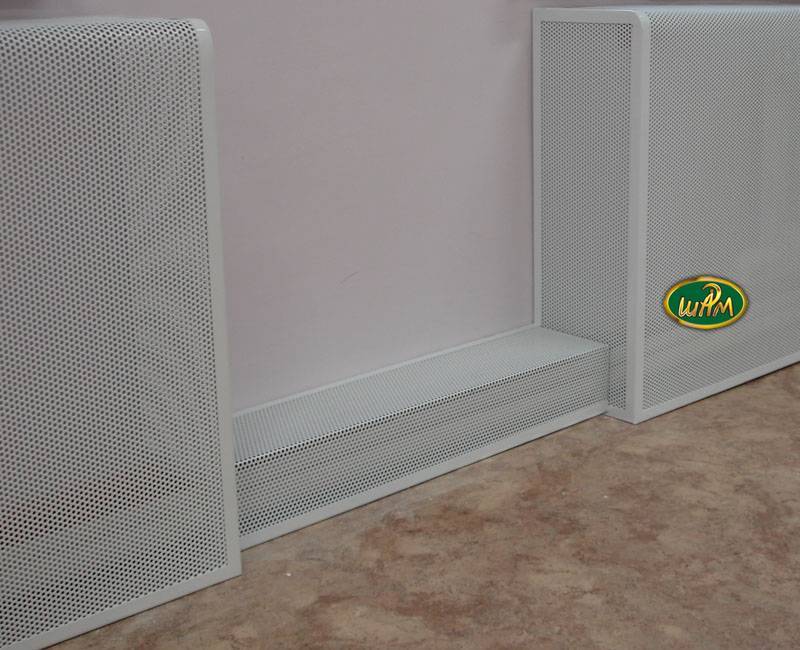
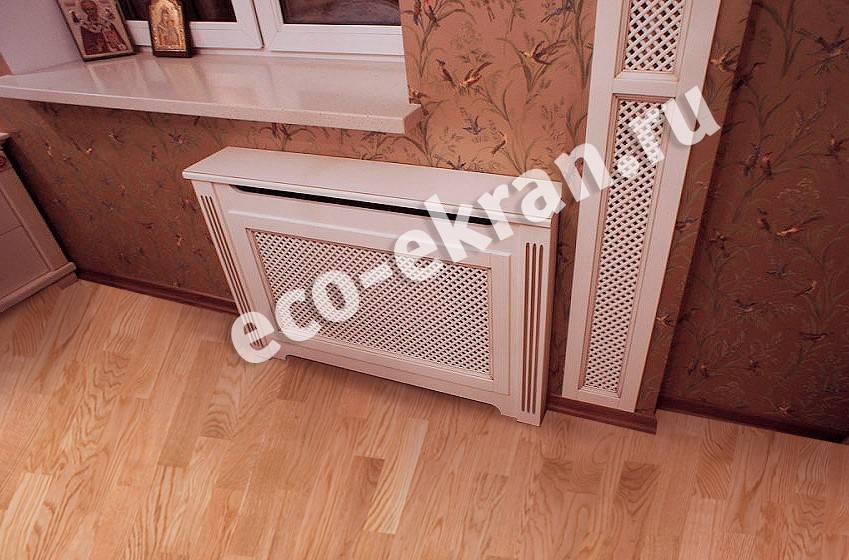
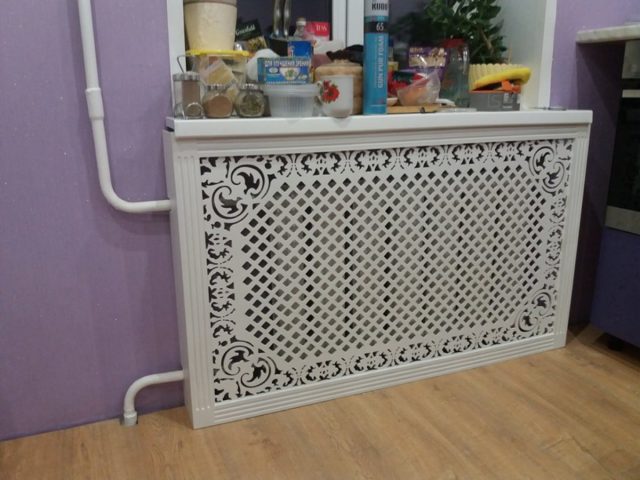
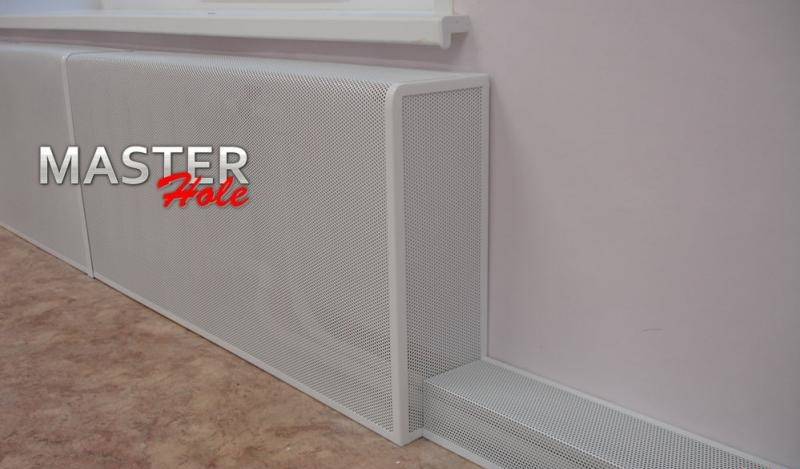
- A box screen that helps close large structures.Screens can be the most diverse in design and size, they will have one thing in common, a mesh structure that allows you to minimize heat loss without depriving the room of aesthetics.
- Decorative vertical structures are installed in places of common house communications, most often these are risers.
When planning the construction of any of the above options, you need to know that you can build two types of structures that will have radically opposite characteristics:
- Collapsible structures, their installation makes it easy to monitor the condition of the pipeline in any part of the room and control problem areas, if any.
- Stationary, structures that are installed for the longest possible service life and are not planned to be dismantled for a long time. Most often, such boxes are made on gas pipes; for heating, they will not be the best option.
Any type of structure can be bought or made independently, which requires an understanding of what exactly will be built and the use of the correct structural elements. If you need to hide the battery, then you cannot do without a screen, and it must be perforated, otherwise it will not be able to cope with the task, and the box itself will overheat, while the room will remain cold. Lattices can be both plastic and wooden, but if desired, you can even order forged products.
Any pipes that are in a house or apartment have an entry and exit point from the room, which makes it necessary to decorate these areas as well. The best thing to do with this is pads or plugs.Outwardly, they can have a varied appearance and even be made of different materials, but they have one task, to hide the pipe and make the interior of the room stylish and beautiful. Rings are the most common, but you can also find square, oval options, in addition, they can be designed for one or two pipes.


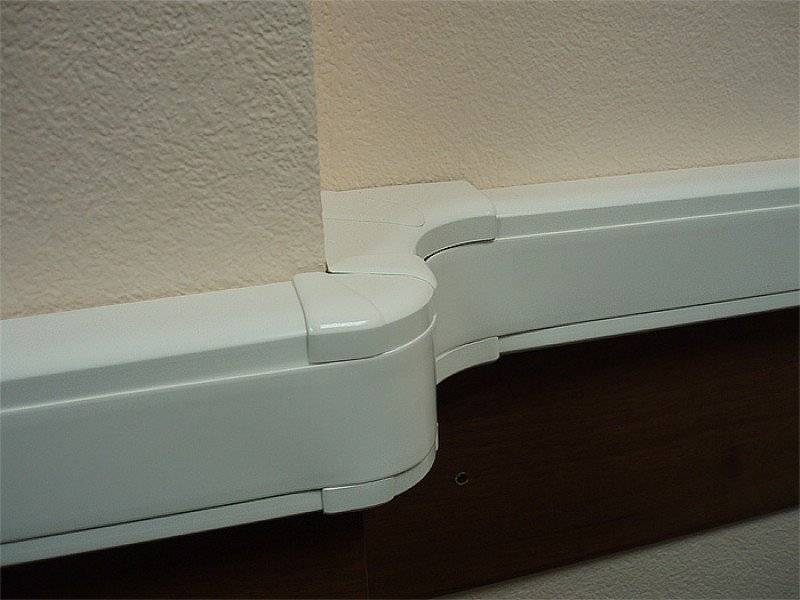

Modern technologies also require new approaches to the use of materials, so when installing stretch ceilings, pipes need to be bypassed, which, in turn, requires making holes in the canvas that need to be closed. For such purposes, decorative rings are now used.
Their design is extremely simple, but still effective, these are two identical halves that have a special lock at the junction that snaps into place and is securely held in place.
It is important to choose the right material and color for these plugs so that they fulfill their role.
In the event that it is not possible to hide the entire pipe, but you need to decorate it beautifully, for which cups are great. They can be made in different sizes, shapes and materials. Chrome is most often used, but there may also be plastic, which has a detachable design.
If the design has valves or other moving elements that need to be used from time to time, then you can hide them under a cap that matches the decor of the room, so as to merge with it and not be noticeable, but if necessary, give the opportunity to use everything you need.
Do-it-yourself box making materials
Homemade decorative screens can be made independently using the following materials:
- MDF and wood. Protective casing made of MDF will beautifully complement any interior.Products come in different colors and often imitate precious woods. The surface of MDF is covered with relief patterns resembling the structure of wood. The box is attached to the wall and secured with screws. Wooden boxes are usually made to order. Often, protective screens are decorated with multi-colored glass inserts and decorative lighting is built in. And then the protective box magically turns into a beautiful original lamp.
- Plastic boxes. Of the variety of decorative boxes, the plastic option is the least suitable for masking heating pipes. The fact is that contact with hot air negatively affects the attractiveness of plastic. It begins to turn yellow and eventually loses its strength. Plastic boxes can be used as a temporary option for decorating pipes.
- Lightweight metal structures. The excellent thermal conductivity of the metal is successfully used to transfer the thermal energy of the heating pipes to the room space. In this respect, metal boxes are superior to all other types of protective screens. Modern steel products with a perforated or mesh surface are treated with a polyester coating that can contact hot air and at the same time protect the metal from corrosion. Metal can be repainted in any color that suits the interior design of the apartment. And the last argument in favor of metal screens: they are easily removed, cleaned and are not afraid of wet cleaning.
- Plasterboard box. To install a protective screen, you need to prepare drywall sheets, galvanized steel metal profiles, self-tapping screws, dowels.In addition, the installation of such a screen requires certain knowledge and practical experience from the home master. A big plus of a drywall box is the ability to completely hide the heating pipes and make them almost invisible behind the finishing of the room. But the visible interior side of closed heating pipes has a big drawback - practically no heat enters the room from pipelines. A blank protective screen made of GKL deprives precious heat, for which a considerable payment is charged.
- Wooden corners and boxes. Natural natural material fits perfectly into any interior and will bring a special charm to the room. On the technical side, it should be taken into account that wood has a low thermal conductivity and therefore the protective box will not let heat through its structure. Under the influence of high temperatures, the tree begins to dry out over time and change its geometric shape. In order to maximize the service life of a wooden box or an attached corner, the structure is placed at a distance of 3 to 4 cm from the surface of the heating pipes.
A self-made casing closes the existing engineering communications of water supply, heating, gas pipes and air conditioning connection systems.
How to make a drywall box
One of the distinguishing qualities of GKL is the ability to create the necessary shape, which is very convenient for the construction of the box. Installation work is feasible to carry out independently, and it is not necessary to have special skills. It is appropriate to use bends, rounded lines and other design options, expanding the decorative possibilities.
The most common form is considered to be rectangular and is much easier to assemble, let's take a closer look at how to make a drywall box to securely cover pipes with your own hands, following step-by-step actions:
- We start with the drawings, make marks on the wall at the places where the metal profile is applied, also from below and along the top, using a level, it is especially convenient to work with a tool with a laser beam.
- In the walls we prepare holes for fixing screws and dowel nails, using a perforator. The pitch between the fastening holes varies from 30 to 60 cm.
- Working with the material, the profiles are cut with scissors for metal, and the sheets can be easily cut with a construction knife or a circular saw, no difficulties arise, the main thing is to follow the installation instructions. If wooden slats are used, then we cut them with an ordinary file.
We hide the riser and plumbing in the toilet.
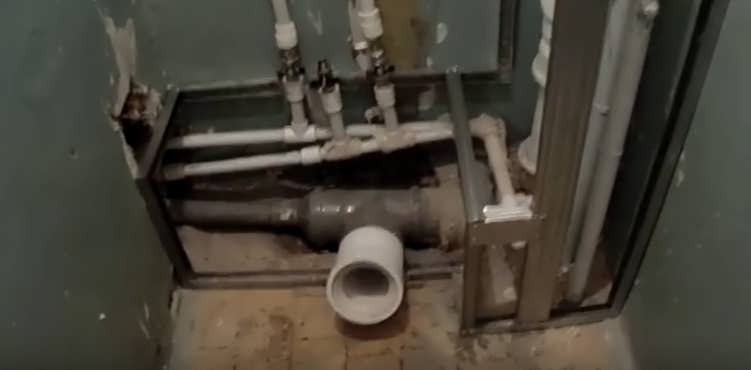
A frame is assembled from profiles.
We fasten the profile vertically along the walls, along the ceiling and the floor, a rack is installed from the same profile, which we connect with horizontal jumpers to the wall profiles, and fasten it with screws or a gun with staples, we create a frame.
The recommended step between horizontal jumpers is from 40 to 60, here it is necessary to take into account that the edges of the sheets, when they are superimposed, fall on the profile.
It is important to design the frame in such a way that, when assembling the box, the sheets do not come into contact with pipes or risers and have enough free space for revision checks and replacement of worn elements.
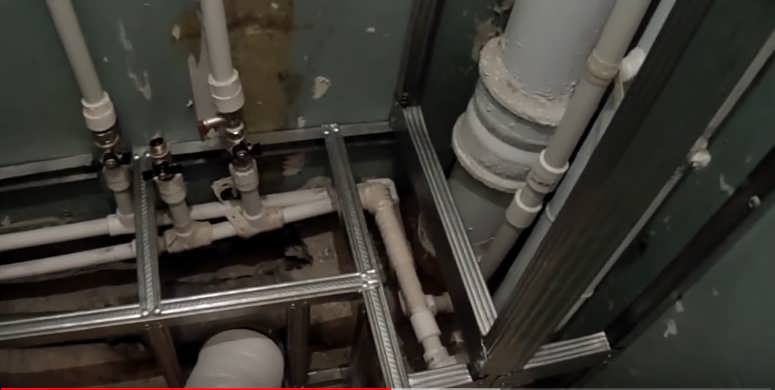
Pipe outlets are taken into account.
-
In the right places, we leave a place for the exit of pipes, places for counters, and reinforce with jumpers, places for possible windows and doors to enter the building, we also create using profiles. Inspection hatches are purchased separately; these are finished products with a frame and a door that are mounted on a specially prepared place.
- Where necessary, the frame is reinforced by a large number of jumpers between the vertical profiles, and with the help of built-in bars into the empty profile cavity.
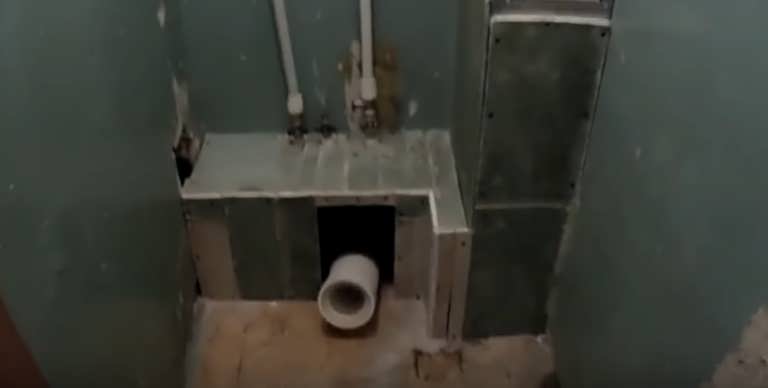
Fastening sheets to the frame.
- We lay a polyurethane tape on the assembled skeleton from the profiles, on the part where the sheet lies. It will serve as a shock-absorbing layer to reduce vibrations and the building will be better protected from the appearance of cracks in the joints.
- The sheets are laid from the corner and fixed with self-tapping screws with a distance of 25 cm. The self-tapping screws go slightly deeper into the sheet, the main thing is not to destroy the edge and screw it in without strong pressure. We cover the entire surface with drywall.
- The second layer of sheets is superimposed on top of the first layer, and fastened with self-tapping screws, while the sheets must be laid in a checkerboard pattern. So we get a stronger box and avoid possible cracks at the joints.
- The polyurethane tape dampens possible vibrations, thereby preventing the appearance of cracks, this is an additional measure that increases the strength of the entire structure.
- Holes for the exit of pipes and taps are prepared in advance by cutting holes of the required diameter on the sheet using a construction knife.
- We coat the joints between the sheets with a plastering mass. If the edge of the GKL is thinned, when puttying it will be necessary to use a reinforcing tape, it is laid along the junction of the sheets and puttied over it, leveling the surface.If the edges are cut, they must be ground off at an angle of 45 degrees, and puttied without tape, just do not use tape when the edge has a rounded shape. The photo shows a thinned edge and a puttying method with tape, a rounded edge, and how deep the self-tapping screw is twisted.
- In the corners we use a special protective corrugated corner, put it on the putty and coat it with a solution on top, then we level the entire surface with a finishing putty.
- After processing the joints and corner parts, for further application of the finishing coating in the form of paint, wallpaper or decorative plaster, it is necessary to completely level the base with putty, in some cases using a reinforcing mesh.
- If decorative panels or tiles and similar building materials that do not require a perfectly flat plane are superimposed, it is enough to treat the surface with a primer with an antiseptic effect, especially for rooms with a high humidity regime.
Various disguise options
In addition to using a pipe box, utilities can be hidden from the eyes of residents and guests using other methods:
- Brick heating circuits in the wallslaid throughout the apartment and house. On the one hand, it seems that such work is not difficult to do - you just need to lay the strobes, place pipes in them and then seal them with mortar and apply plaster on top. And on the other hand, before proceeding with the repair, it becomes necessary to eliminate even minor shortcomings made during the arrangement of communication systems. This problem is especially true for plastic pipelines that have been installed with fittings.Also, in case of non-compliance with the welding technology, steel pipes may leak.
- Disguise with furniture. This is very convenient to do in the kitchen. As for rooms where there are few pieces of furniture, it is almost impossible to use this option there.
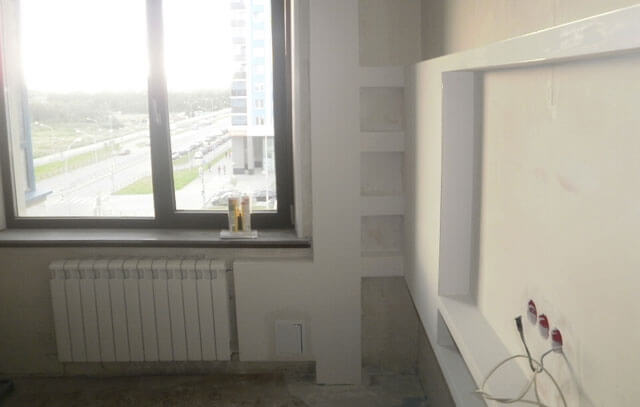
A box for closing heating pipes can be made from the following materials:
- plastic lining - it is fixed on a metal or wooden frame;
- bricks - masonry made from them is not always possible to implement, since this option is too laborious;
- drywall - the construction of a decorative structure from it is the most common way to mask heating systems;
- natural wood.
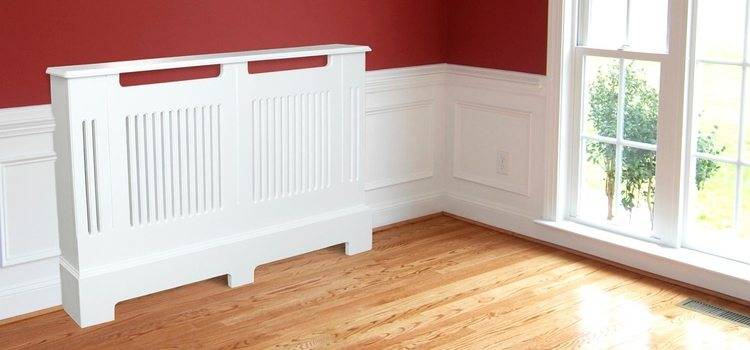
You can buy ready-made boxes made of plastic. They are installed around pipes and fixed on the wall using a metal profile frame.




Do the work yourself or call the master?
For installation of a heating system with hidden pipe laying, it is better to invite a master. Typically, this method of masking is used at the stage of building a building or during its overhaul, when old pipes are replaced with new products.
The assembly of the system requires a competent approach in order to ensure the reliable functioning of the entire heating in the future.
You can close the pipes with a box, a screen or decorate it yourself. The maximum that you risk in this case is that the design will not look beautiful enough. You will not cause much harm to the heating system of the house itself.
Seal pipes in the floor
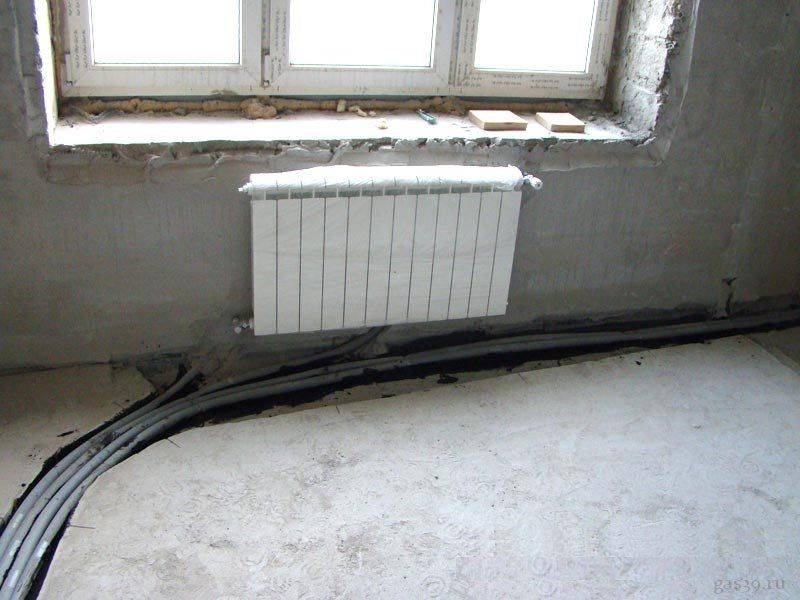
Laying pipes in the floor according to the technology is not much different from sealing the pipeline into the wall. But there are some nuances here.At its location, the system can play the role of a warm floor or, at least, a warm baseboard. This type of heating has great advantages: it evenly heats the walls. Thus, it is possible to insulate the coldest wall on which the window is located.
At the same time, it is important to remember that the concrete screed must be of sufficient thickness so as not to break through if the place where the route passes is accidentally stepped on. Installation of pipes in the floor is carried out when laying the heating system. Installation of pipes in the floor is carried out when laying the heating system
Installation of pipes in the floor is carried out when laying the heating system.
The step-by-step list of works is as follows:
A strobe is made in the floor, the depth of which is calculated taking into account the heat-insulating material and mortar
It is important that the top edge of the pipe does not exceed the floor level.
The pipeline in the casing is laid in a strobe.
The system is being tested.
The hole is sealed with concrete.
The flooring material is laid on top. In this system, if it is produced in a private house, it is worth providing a circulation pump, because the water flow slows down in horizontal pipes. It is also worth remembering that during a breakthrough you will have to break the floor
And of course, you need to have an executive scheme of work in order to know the location of the highway in the floor
It is also worth remembering that during a breakthrough you will have to break the floor. And of course, you need to have an executive scheme of work in order to know the location of the highway in the floor
In this system, if it is produced in a private house, it is worth providing a circulation pump, because in horizontal pipes the water flow slows down. It is also worth remembering that during a breakthrough you will have to break the floor.And of course, you need to have an executive scheme of work in order to know the location of the highway in the floor.




Ways to hide heating pipes
If the owner is involved in the design of his living space at the stage of construction or rough finishing, he has the opportunity to consider options for “non-random” hiding of heating pipes. For example:
- Brick risers (at least vertical, at least horizontal) directly into the wall or arrange a false wall for their thickness.
- Use decorative pipes.
- Carry out the wiring behind the false ceiling.
- Install decorative screens on pipes laid openly.
- Embed the heating system in the floor or arrange a raised floor above it.
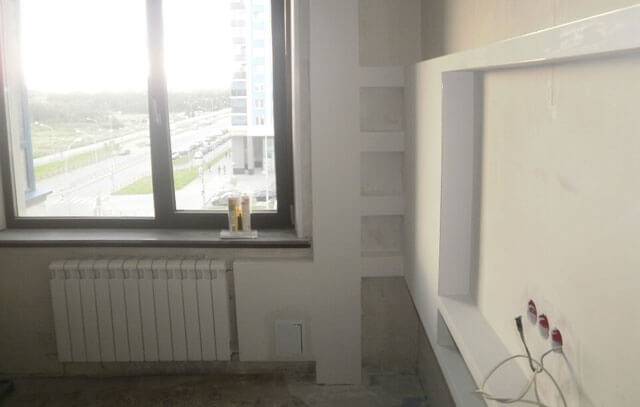
- Make a drywall box covering the pipes.
Important: In an apartment building, heating pipes cannot be moved without prior approval from the relevant permitting authorities. If the owner got the apartment or private house already finished, but with pipes in plain sight, the best solution would be decorative disguise
And the choice of a specific method will depend on the need to hide the heating radiator. And if so, then you will need to take care of the free conversion of warm air
If the owner got the apartment or private house already finished, but with pipes in plain sight, the best solution would be decorative disguise. And the choice of a specific method will depend on the need to hide the heating radiator. And if so, then you will need to take care of the free conversion of warm air.
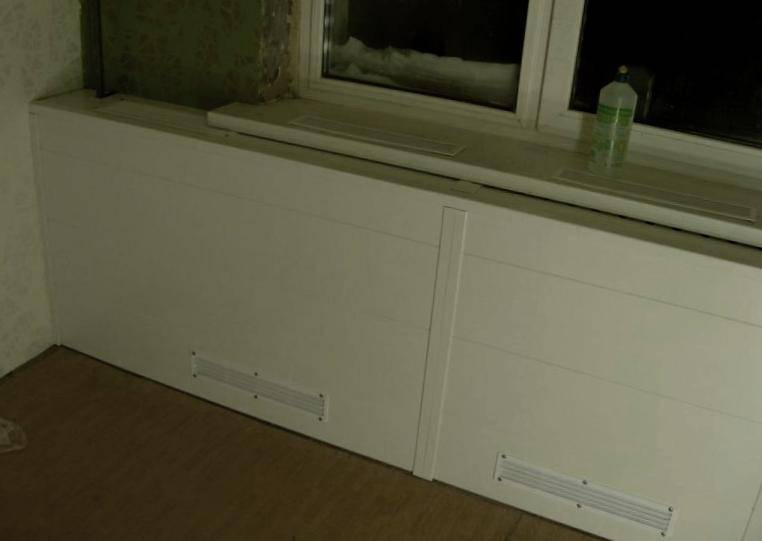
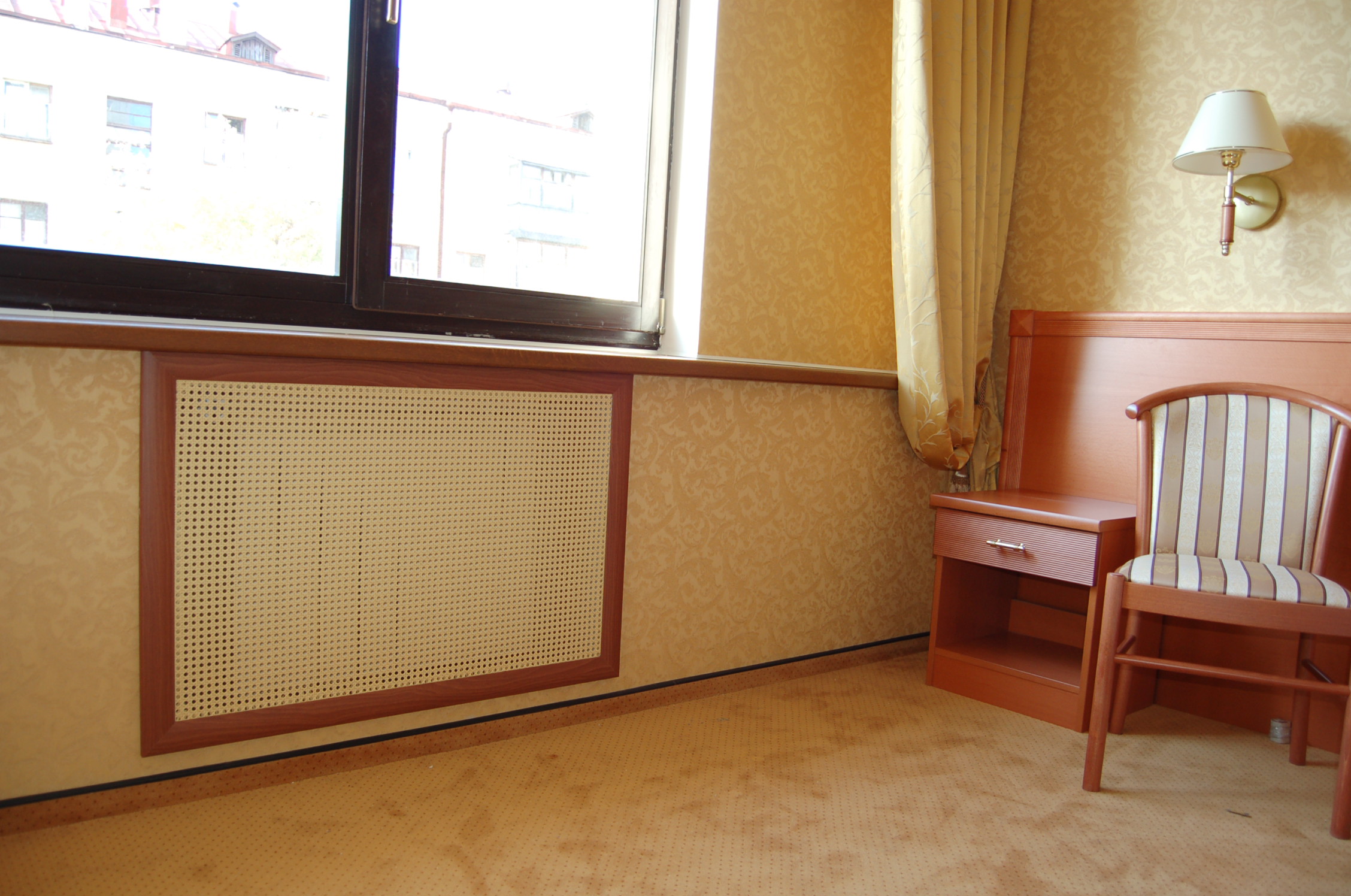
In rooms where the temperature allows, you can hide the pipes in a drywall box. And close the radiator with special decorative perforated panels or grilles (metal, plastic).
Features of masking pipes in a private house
Decorating heating radiators can also be a problem, but ideas how to close the battery beautifully, an order of magnitude more than the ability to beautifully hide the pipe.
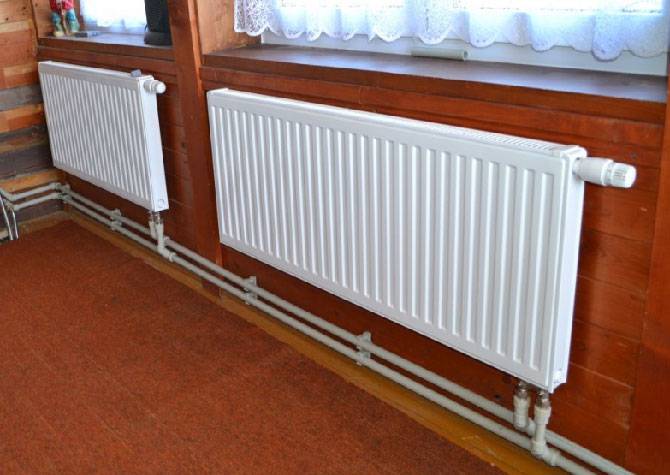
In private housing construction with an individual heating system, heating pipes are masked in the following ways:
- termination of communications in the floor, in the walls, under the false ceiling;
- construction of an additional box;
- decorating open communications.
It should be understood that the sealing of heating pipes in walls, floors, ceilings is beneficial in the event of a major overhaul of the house or during its construction.
Installation of a heating system with hidden pipe laying requires compliance with some key points:
- communications must be seamless;
- places of detachable connections, meters, taps (other equipment) must be available for inspection and repair;
- you can not wall up old pipes;
- it is necessary to have technical documentation with the exact location of the pipeline in the walls or floor, so as not to damage the pipes in the future.