
- Advantages and disadvantages of plastic tanks
- Instructions for the manufacture of sealed and filtration cesspools
- Building a drain hole
- The principle of operation of a pit without a bottom
- Volume calculation
- Construction of a sewage tank
- Volume calculation
- The design and purpose of the cesspool
- A responsibility
Advantages and disadvantages of plastic tanks
The cesspool is a storage tank for collecting and subsequent pumping of wastewater coming from the house through sewer pipes. The use of polymeric materials for the manufacture of such sewer storage tanks is due to economic feasibility.
The cost of containers and polypropylene is 3-5 times lower than analogues made from the same concrete rings or monolithic concrete.
Excellent performance characteristics of polymer containers have found due to the properties of the material used for their manufacture. Polypropylene is a thermoplastic polymer with a density of 0.9 g/cc.
It softens only at a temperature of + 140 ° C, due to which it is able to calmly, without deforming, endure fluctuations in ambient temperature.
Polymer compounds are chemically resistant materials.
Among the undeniable advantages of plastic storage tanks, it is worth highlighting the following qualities:
- high strength;
- low gas and vapor permeability;
- resistance to repeated bending and light impacts;
- the ability to spontaneously restore shape after deformation effects;
- excellent wear resistance, increasing with increasing molecular weight;
Properly installed plastic cesspools are famous for their high service life. Subject to the installation technology and proper maintenance of the structure, it can last more than half a century.
But the decisive argument in the construction of cesspools with the use of plastic sewage tanks is their tightness. All unpleasant odors and fumes remain inside the structure without spoiling the environment.
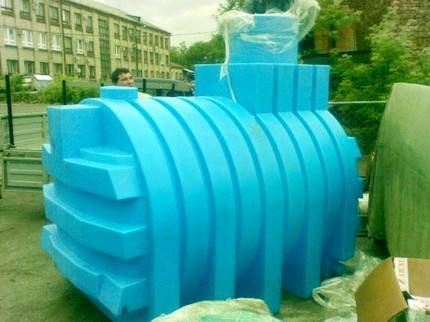
Due to the high tightness of the tank and the absence of surface seams, the sewage entering the tank remains inside, without penetrating into the ground and without polluting groundwater.
But the low weight of the structure can serve not only as an advantage, but also as a disadvantage. Over time, under the influence of the pressure of the soil surrounding it, a lightweight container can simply be pushed to the surface.
To prevent the occurrence of this situation, the container is installed on a solid substrate made of reinforced concrete slab and fixed on it.
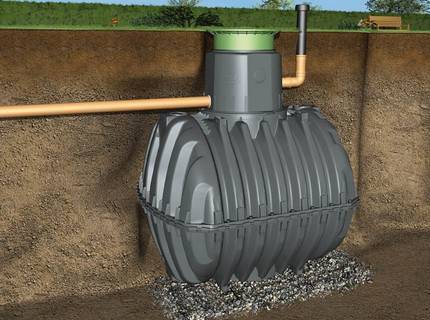
Some users who have installed plastic waste tanks in their areas note that such structures require careful handling during the installation process. Since any chip or crack formed in violation of the installation technology makes the operation of the structure unacceptable.
Instructions for the manufacture of sealed and filtration cesspools
After selecting the area for the location of the drain tank and having all the calculations, earthworks can begin.With the help of earth-moving equipment or manually, a pit of the required dimensions is prepared. Usually, an excavator is involved for such events, but the specifics of the site do not always allow special equipment to drive to the required place.
In such a situation, you can apply the old tried and tested method - install one ring in place and start picking up the soil from under the walls with a shovel
It is important to control the level of the product. After leveling the upper cut of the element with the level of the soil, another ring is set and the sampling of the earth continues in the same way
To make a cesspool yourself, you will need to prepare materials for the walls, a formwork board and prepare the following components:
- sand and cement of the required grade for mixing the solution;
- crushed stone and rubble for the manufacture of a filtration layer;
- reinforcement or bar will be useful for arranging the cover;
- corner or suitable metal for the manufacture of a hatch with a frame;
- waterproofing materials;
- suitable container and buckets for the solution;
- mason's tools;
- plumb line, building cord and level;
- set of bayonet and shovel.
When working on a large scale, you can rent or ask neighbors for a concrete mixer.
Building a drain hole
To begin with, we will decide on the volume of a cesspool to be built. The calculation is based on the number of family members. Each of them should be 0.5 m3. When making the calculation, you should also take into account the fact that your family can become larger, therefore, usually for a family of 4-5 people, you need a pit of 8 m3.





Let's assume that the house has water heaters that run on fuel or electricity, in which case each family member will consume 150 liters of water daily, if the water heater runs on gas, then this volume will increase by 30 liters.
Thus, it turns out that an ordinary family can spend 600-700 liters, which is almost 1 m3. In the event that the family lives in the house permanently, then you will have to call a sewage truck a couple of times a month, which is very expensive.
Therefore, carefully consider what depth of the drain pit will be suitable for you.
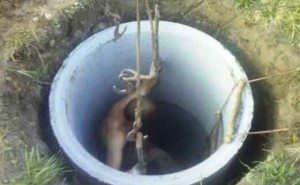
Drainage pit made of concrete rings
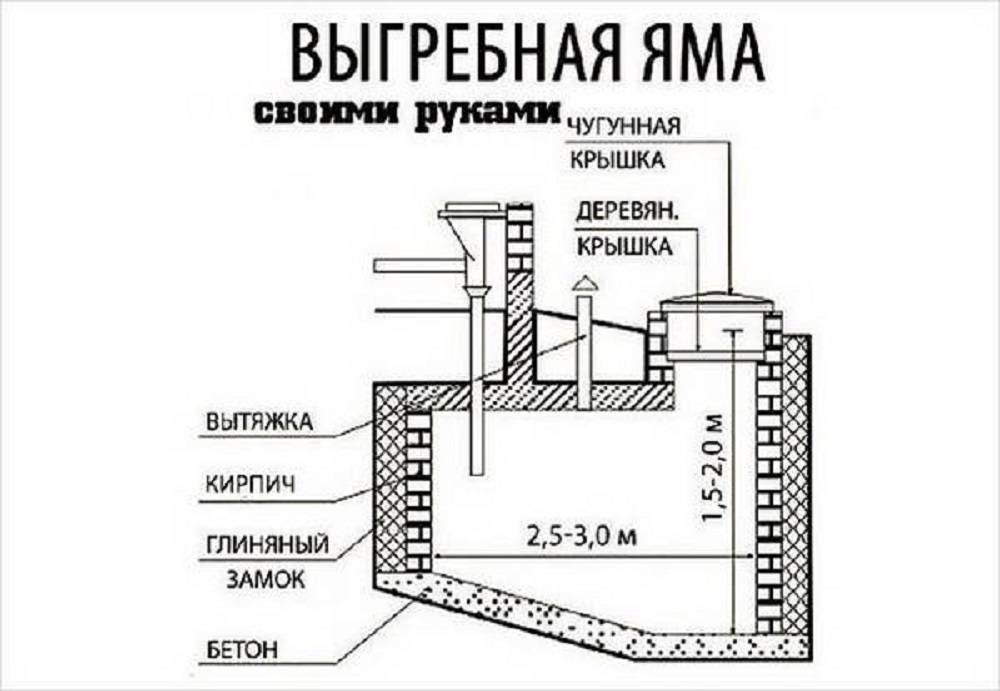
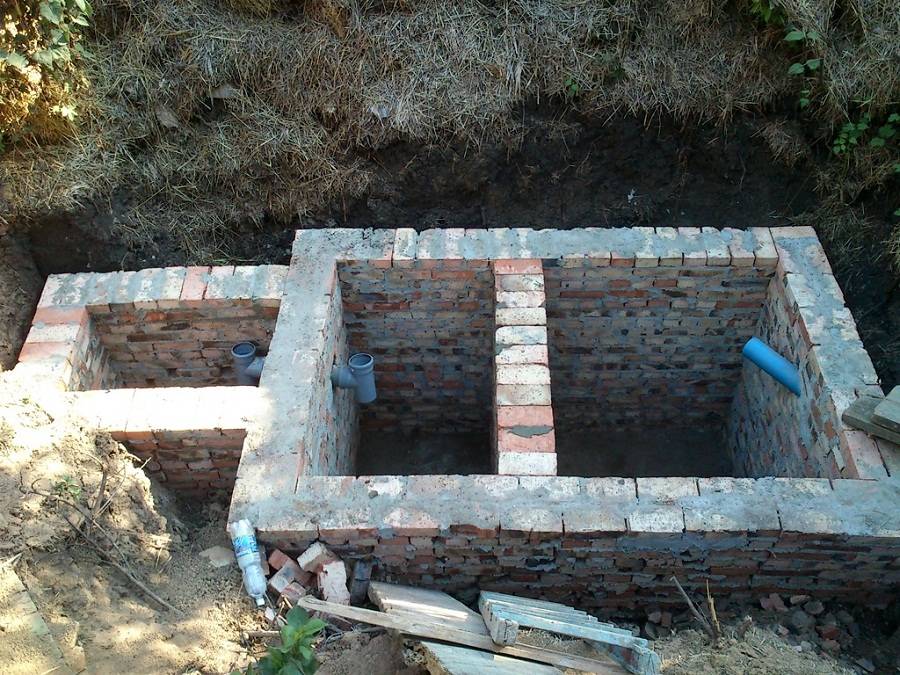
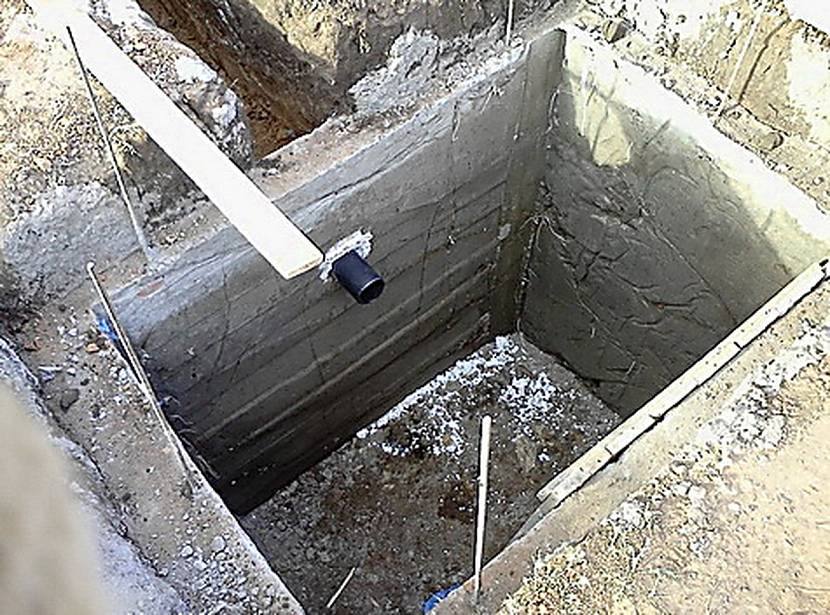
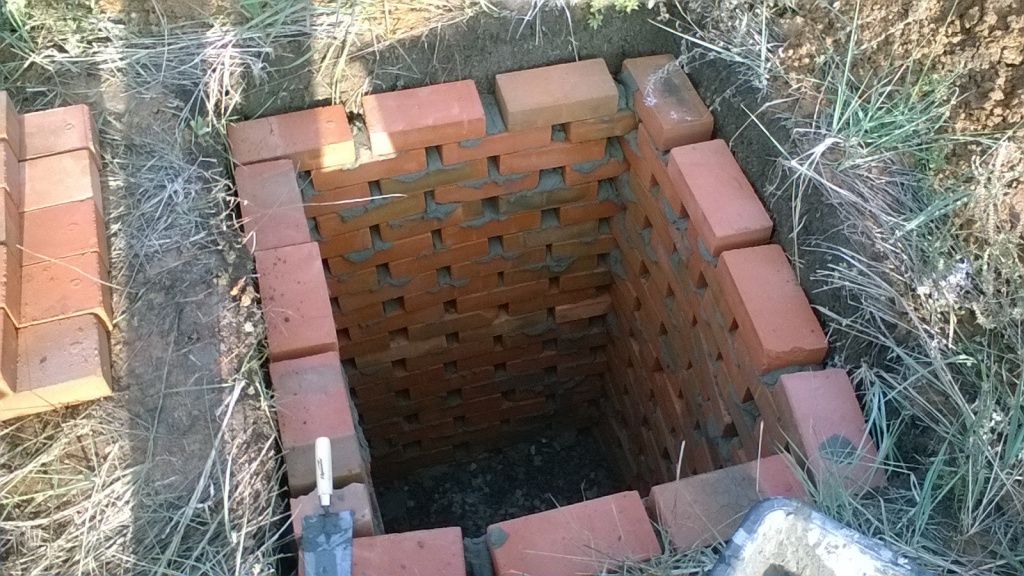
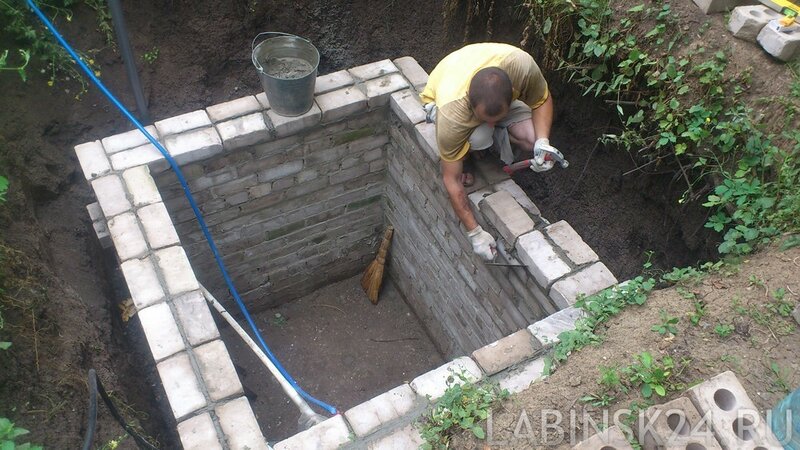
Lay out the walls of the pit of stone, brick or concrete, a drain pit of rings is also suitable, plaster them with cement mortar, iron them and cover with a layer of bitumen.
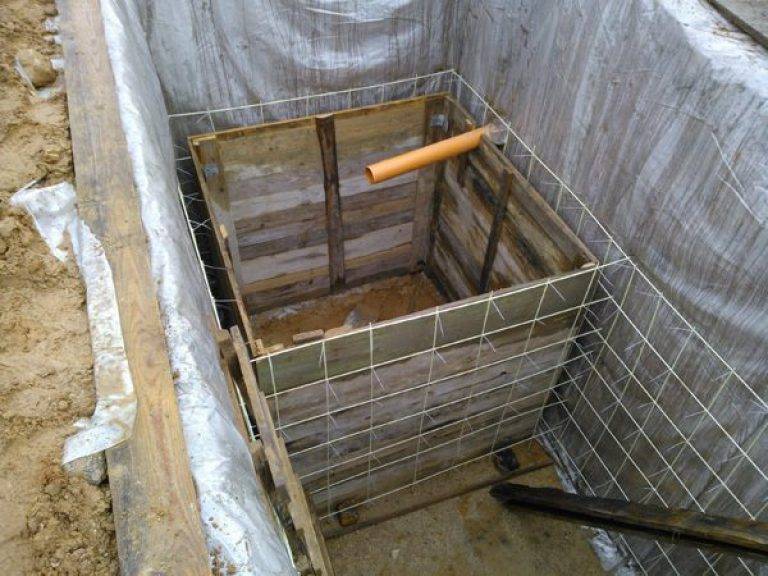
In principle, wood can also be used for walls, however, it is used extremely rarely. Choose only thick boards that are well caulked and covered with a double layer of bitumen.
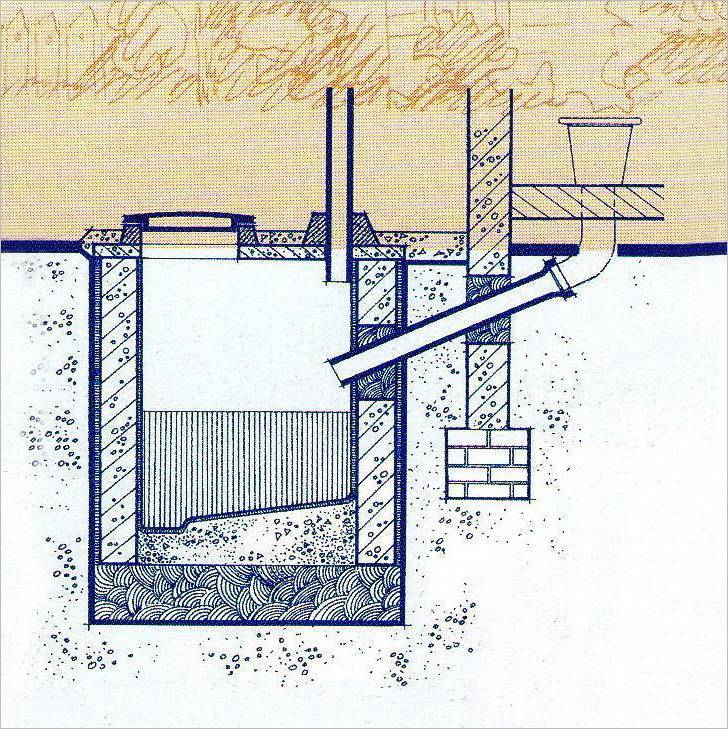
Insulate the outer walls with a good layer of clay. The layer should be noticeably 250-300 mm thick and carefully compacted. bottom in drain hole should be made sloped towards the hatch. At the bottom, you also need to lay clay in a thick layer, boards are laid on top or concrete is poured.
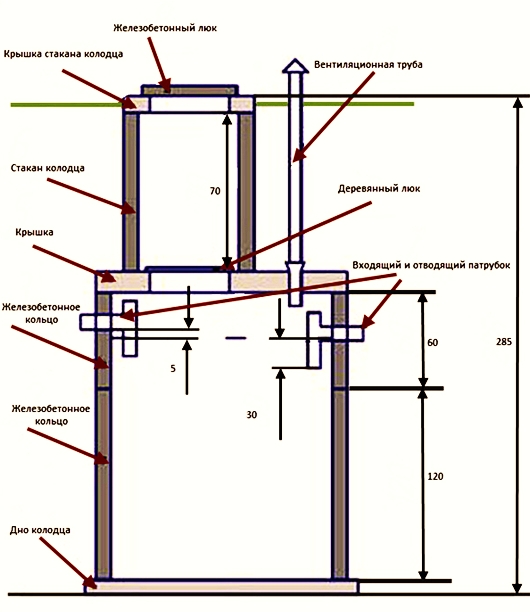
For overlapping, you can use wooden shields sheathed with roofing material, but it is better if they are reinforced concrete. A hatch with a diameter of 70 cm must be installed in the ceiling.
The ceiling also needs to be insulated with clay, and then covered with earth. The hatch for the drain pit should be double: the first one is on the floor, the second one is on the same level with the ground.Between the covers you need to make a heat-insulating layer foam or mineral wool.
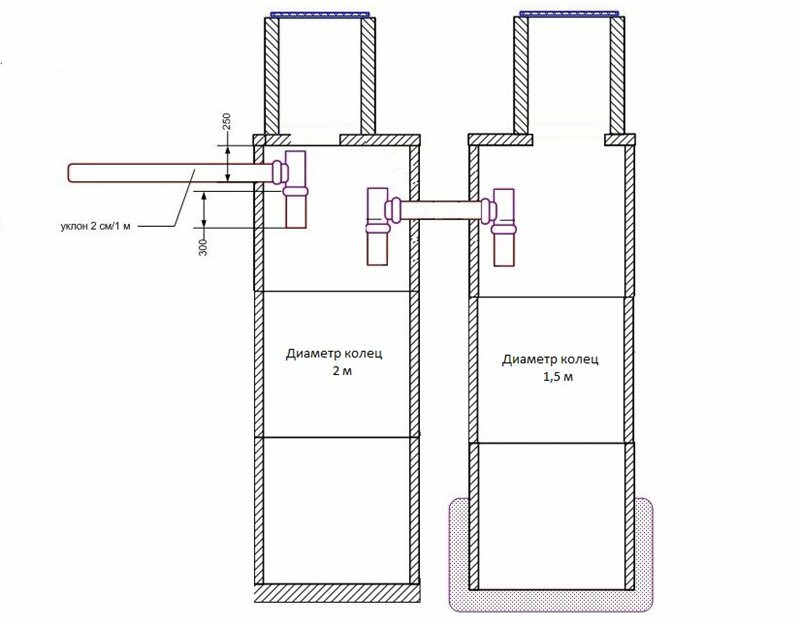
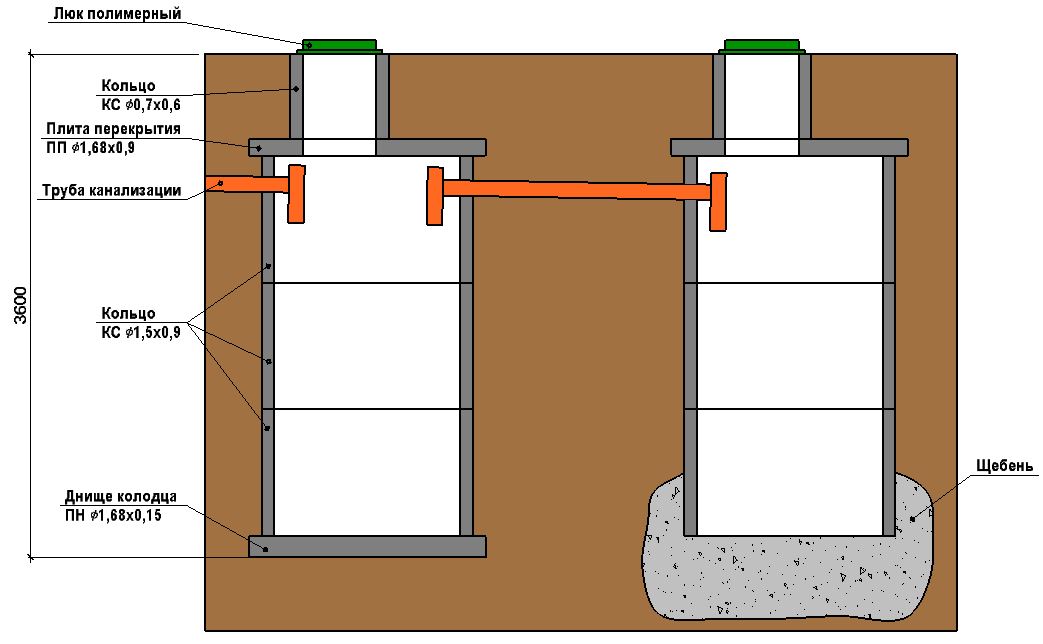
Often there are drain pits - the design of which is made in the form of a well, the stacks from which are made of ready-made concrete rings. They install pipes almost under the ceiling, which helps to make the usable volume large.
It will be much easier to find out how full the pit is if you install a float indicator in it, which indicates the filling level. The bottom must be located no more than three meters below ground level, otherwise the sewage machine will not be able to pump it out completely.
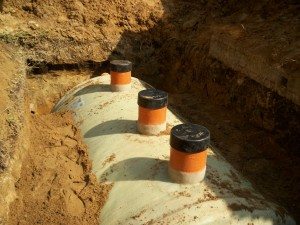
septic tank
Ready-made containers made of plastic are considered more airtight. Increasingly, Eurocubes are used for the installation of sedimentation tanks, the volume of which is 1000 liters. Such cubes are made in the form of plastic tanks enclosed in a metal crate and located on a wooden or plastic pallet.
Most often they are used in order to transport liquid substances, however, they can also be installed in a drain pit.
In the overlap of any drive, it is imperative to install a ventilation riser, the diameter of which must be at least one meter. It should be brought out above the planning mark by 7 meters. The inside of the tank should be flushed from time to time with a jet of water.
After the sump is completed, you need to stretch it and lay the sewer pipes with your own hands. The most commonly used PVC pipes. Pipes should be insulated. In the event that the pipeline is installed lower than the soil freezes through, then they may not be insulated.
Thus, a do-it-yourself drain pit in a private house serves as a storage place until they are pumped out by a sewage machine. Usually the car visits the site a couple of times a year, but can come two to four times a month.



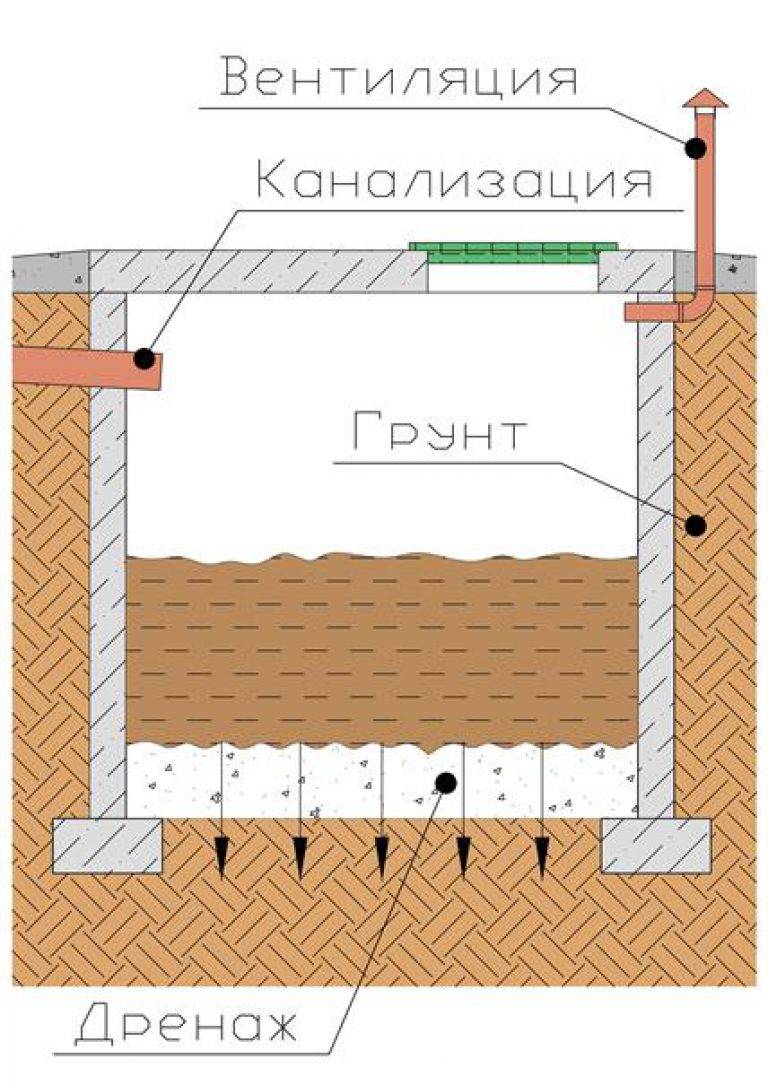
The principle of operation of a pit without a bottom
The cesspool is a reservoir of gray waste of human activity, i.e. effluents generated during household activities, cooking and taking hygiene procedures.
She is arranged at a certain (defined by sanitary standards) distance from the house. To install such a sewer, you need to dig a hole, strengthen and protect its walls from moisture, install an upper ceiling, and also bring a sewer pipe to the tank.
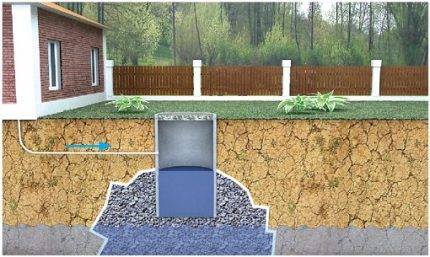
In cesspools without a bottom, the lower part is not sealed. A sand and gravel filter is installed here, through which liquid effluents slowly seep into the ground, where they are finally cleaned.
Wastewater enters the tank, and the overlap reliably protects others from unpleasant odors. The settled liquid component of the waste mass seeps into the underlying soil layers, and solid inclusions settle on the surface of the sand and gravel filter.
Over time, the reservoir fills with insoluble solid sediment and the contents must be removed. To do this, use a special sewage machine, although a small hole can be cleaned with a regular bucket.
The effluents inside the pit change slightly in composition over time. Partially, they are processed by microorganisms, the solid fractions turn into a precipitate, and the liquid part is separated.In order to reduce the amount of drains, in order to use the services of sewers as little as possible, the pit is made “without a bottom”.
The walls of the container for gray drains are carefully sealed, and a gap with soil is left at the bottom. On top of the ground, a filter is made from natural materials: sand, crushed stone and gravel. The liquid part of the effluent slowly seeps into the ground, and the solid fractions remain inside the sewer tank.
Waste water, passing through the filter, receive additional purification. Finally, liquid waste is processed in the ground with the help of microorganisms that live there.
In order to speed up and enhance the processing process, biological agents are added to the pit, which are based on the action of natural bacteria. Similar preparations are also used inside storage sealed cesspools to perform biological wastewater treatment and reduce sludge volume.
The “bottomless” sewer design is very convenient. It allows you to remove the liquid part of the effluent in a natural and safe way. As a result, the capacity is filled more slowly, and it is not so often necessary to pay for the services of vacuum trucks.
An interesting variation of a pit without a bottom is a post-treatment system in the form of a filter well. It is installed after the septic tank, in which the primary processing of wastewater is carried out.
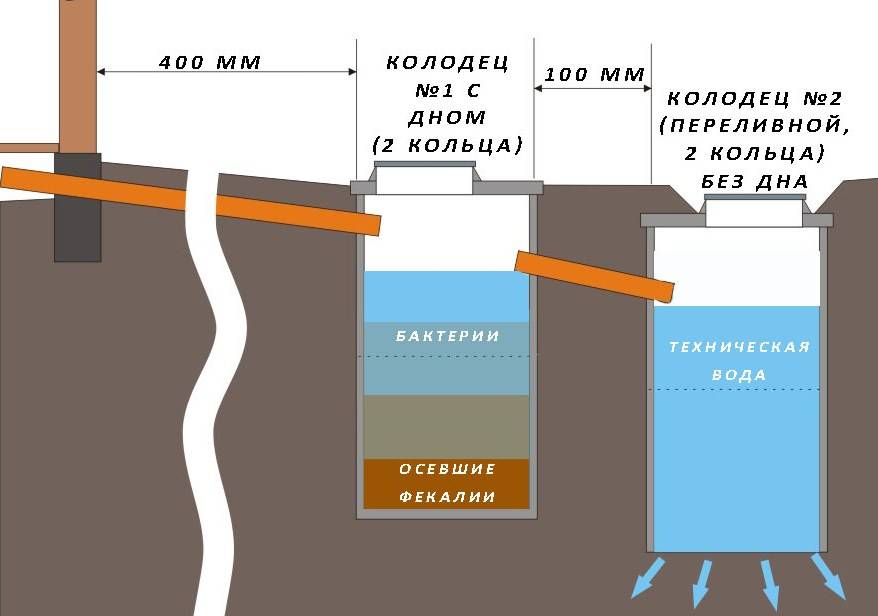
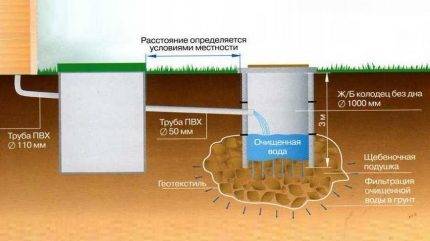 A cesspool without a bottom can play the role of a part of the structure, which consists of two chambers: sealed and permeable
Both sections are connected by an overflow pipe. First, the effluent enters the sealed sewer section.
Here, the waste settles, solid fractions settle to the bottom, light technical impurities accumulate at the top, and the so-called “gray drains”, i.e.water purified from the listed contaminants reaches the overflow level and moves into a container without a bottom. Waste water is filtered and disposed of in the ground, as described earlier.
The use of special microorganisms turns the design into an almost full-fledged septic tank, which operates on the basis of similar principles.
It makes sense to do such a two- or even three-chamber structure only for a house, in where a significant number of people live, in connection with which it is planned to receive a large volume of effluents. And for a summer cottage, you can arrange a relatively small cesspool.
Volume calculation
The volume of the cesspool is an important parameter on which the efficiency of the sewer system and the frequency of drain cleaning depend. It is calculated based on the number of people living in the house. If we are talking about a country option, then the arithmetic mean of the people staying in the building is taken. For example, 4 people live in a year-round cottage: 3 adults and 1 child.
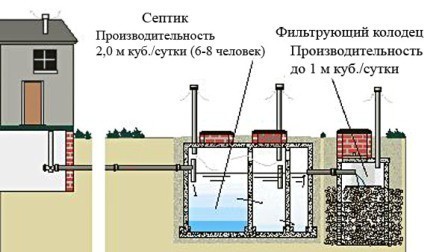 The principle of operation of the sewage tank
Expert advice:
As a standard, 0.5 cubic meters of waste is accepted per 1 adult, half less for a child. If any devices consuming water are connected to the drain, they are also taken into account. In our example, they are not connected. It turns out that 3 * 0.5 + 0.25 = 1.75 cubic meters of wastewater will merge into the cesspool per day. The resulting value is always rounded up. This will help prevent overfilling of the tanks, if necessary, select the appropriate volume of the finished container. In our case, the value of 2 cubic meters is taken.




The volume of the tank should be 3 times the daily amount of waste. Therefore, 3*2=6.The optimal volume of the tank for a family of three adults and one child will be 6 cubic meters.
For the equipment of the sewer system of a country house, a different scheme is used. Most often, large families do not live in the country, but they come for a few days to relax, harvest or clean the garden. You can not carry out calculations, but simply equip the drain, the capacity of which will be within 1-2 cubic meters.
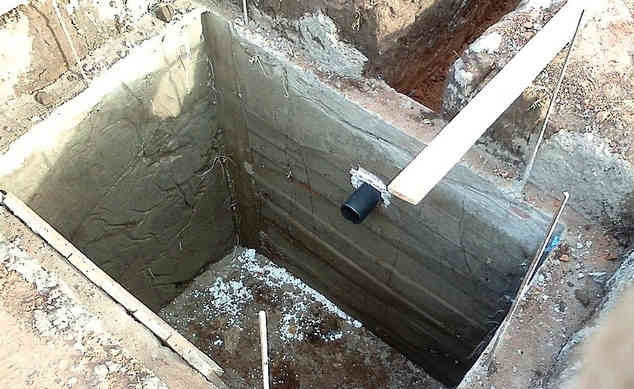 open pit
Why calculate volume:
- This is necessary for the selection of an appropriate design of the cesspool. There are two types of drains: open and closed. Open ones are easier to arrange and maintain, but are only suitable for processing wastewater up to 1 cubic meter. Closed ones are more practical, because they are able to absorb more waste and are environmentally safer;
- If it is incorrect to calculate the volume of wastewater at an open tank, then it will cope with its work much more slowly than it should. In addition, effluent will contaminate soils and groundwater.
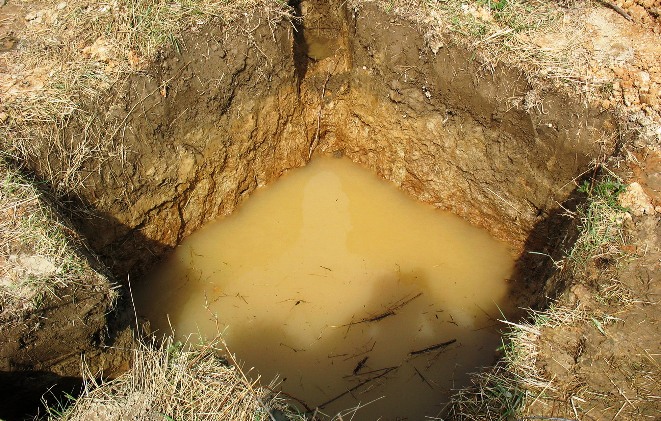 Filling the cesspool with groundwater
When calculating the required volume, it is necessary to additionally take into account the level of groundwater. In areas where they are close to the surface of the earth, the pit may overflow due to their increase.
Construction of a sewage tank
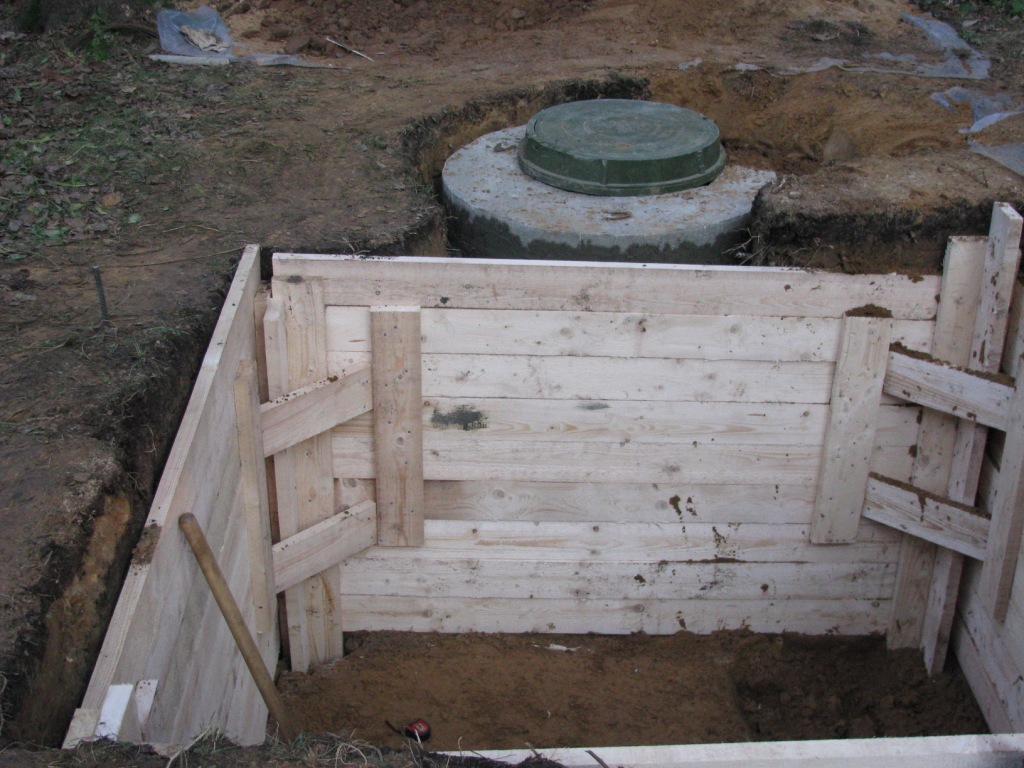
The design of the sump depends on the typical characteristics of the tank and the material used in its construction. The construction work algorithm includes digging a pit, the depth of which is determined by the level of groundwater. As a rule, it does not exceed 3–4 m.
The second stage is connected with the preparation of the bottom.It is carried out even when an impervious caisson made of plastic or metal is installed. Filtration pits require filling the bottom with a layer of crushed granite with a combination of pebbles of large and small fractions.
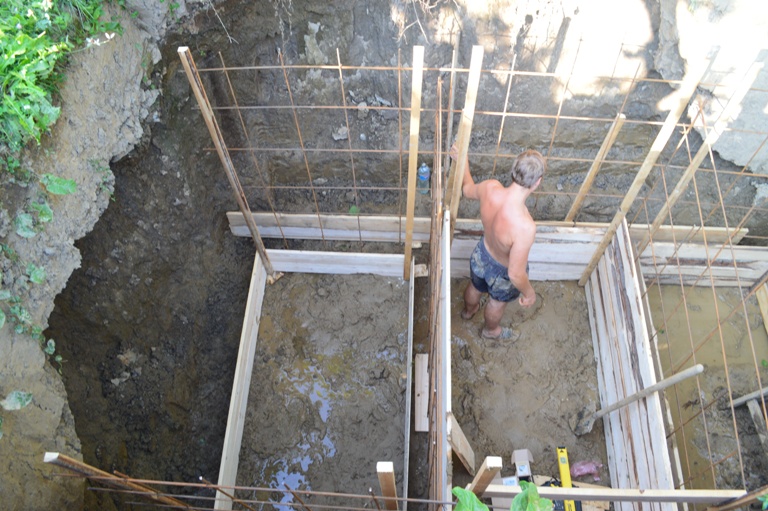
Limestone rock is used less often, as it does not have sufficient strength and predisposes to rapid silting. The bottom of the hermetic wastewater receiver, based on the consistent installation of reinforced concrete rings, is poured with a layer of concrete 15–20 cm thick, giving additional strength to the metal mesh or reinforcing strapping.
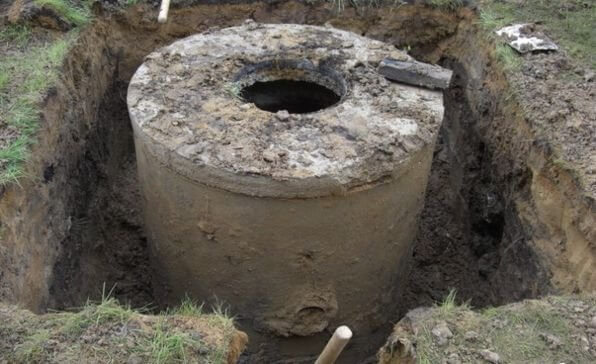
The maximum excavation of sewage when pumping out a cesspool requires a slight slope of the bottom surface of the drive. This circumstance allows the sewer machine to completely pick up the silty suspension. The settling tank device assumes a cylindrical or rectangular structure with a ceiling placed on top with a technological hole for pumping out.
The construction of a brick pit allows a conical configuration in the form of a bottle with a thin neck, on which an inspection hatch is attached. The entrance of the sewer main is below the level of soil freezing for a specific climatic zone, otherwise the engineering communication is additionally wrapped with heat-insulating materials. The branch pipe is launched inside and crowned with a branch, which excludes the destruction of the opposite wall by the jet of the utilized liquid.
For safe and trouble-free operation, a drain pit in a private house is equipped with a ventilation duct. The hood prevents the concentration of toxic and explosive vapors in the storage tank.Communication with the atmosphere levels the vacuum that occurs in the sewer pipeline during intensive use, which prevents silting of the drain line.
Height and fan pipe diameter depends on the size of the cesspool and the wind rose. The choice of a place for the construction of a sump, regardless of its design, should exclude flooding by storm and melt water. The volume of the working chamber of the drive is calculated based on regulatory requirements - 1.2 m³ per family member. Thus, for a family of four people, a drain pit with a capacity of five cubes is installed.
Volume calculation
To calculate the volume of a drainage type tank, you can use the following formula: V \u003d (Vn× N)×3, designations:
- V is the volume of the drainage type tank for wastewater;
- Vn - the volume of water consumed by a person during the day, it ranges from 0.15 to 0.2 m3;
- N - the number of people living in a country house or in a private house.
The coefficient 3 is introduced from the discretion that the capacity of the reservoir should be three times the daily water consumption.
Having made the calculation, we recommend making a margin of at least 20%. For example, four people live in a house, therefore, the calculation will be as follows: V \u003d (0.2 × 4) × 3 \u003d 2.4 m3. We add a margin of 20% and get the result, according to which the tank must have a volume of at least 2.88 m3.
Note that over time, a cesspool without a bottom will still require cleaning, but it does not need to be done as often as in the case when a sealed design is used.
The design and purpose of the cesspool
Cesspools, like septic tanks, serve to collect sewage.But these are primitive structures that are not able to purify the liquid.
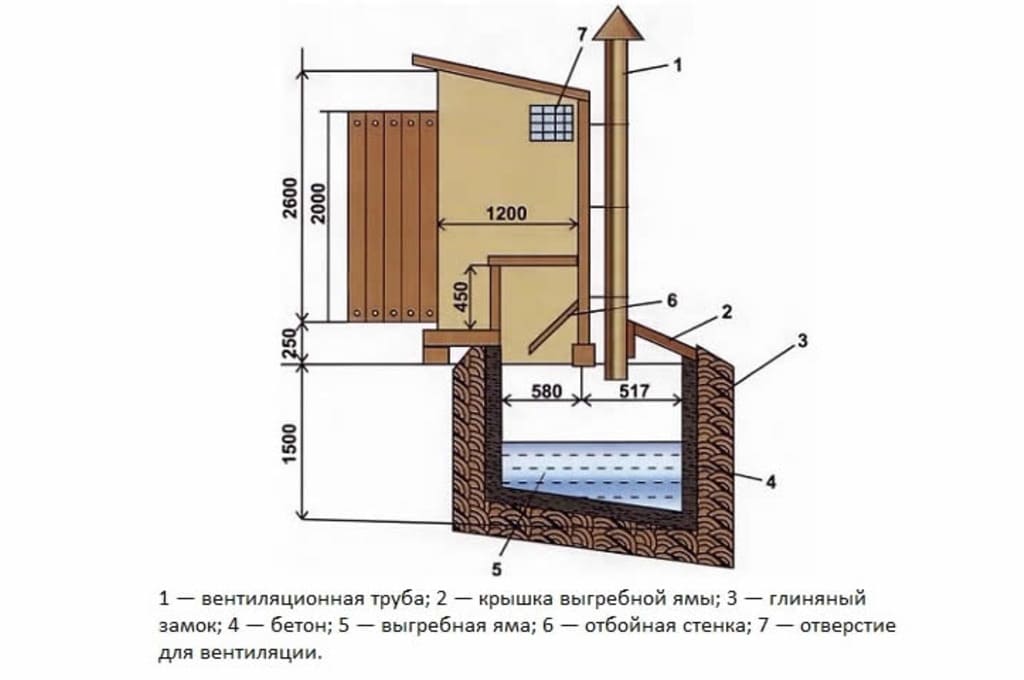




In storage tanks, waste only partially decomposes, unlike VOC, where effluents are divided into solid waste and liquid, which is further clarified and reaches a purity of 60-98%.
Image gallery
Photo from
A cesspool is the simplest variant of a storage sewerage point, which has recently been most often constructed from concrete or reinforced concrete rings.
The volume of the cesspool sewer well is calculated based on the number of people living in the house. A wide range of rings allows you to choose them for a storage device of any size
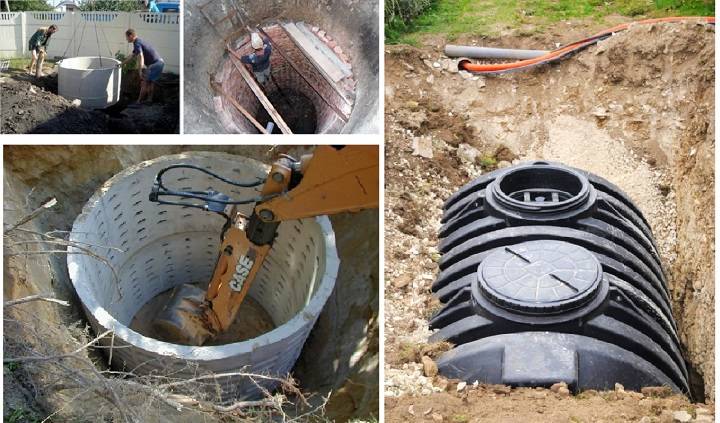
Concrete sewer wells, designed to perform the functions of a cesspool, are built by sequentially installing rings on top of each other
Rings for the construction of a sewer cesspool can be installed using construction equipment or manually
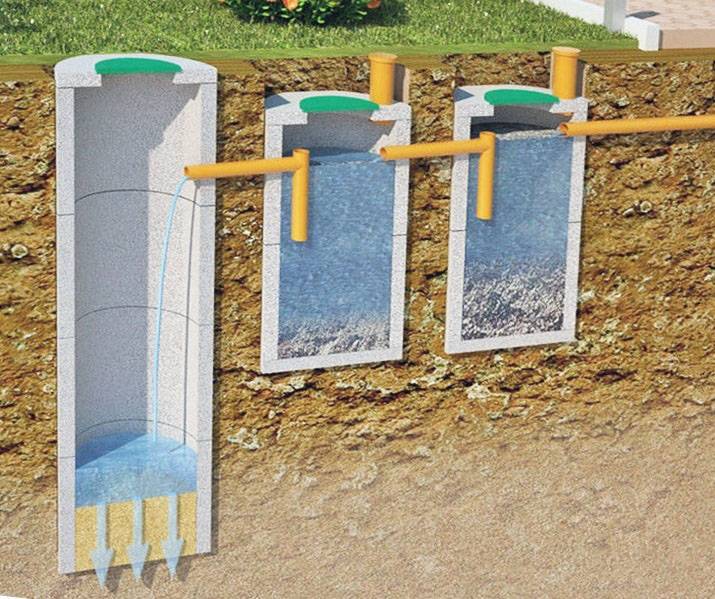
The modernized version of the cesspool involves connecting a well with a filtering bottom to it. In such a system, settled wastewater is disposed of into the ground, so that vacuum trucks are much less likely to be called.
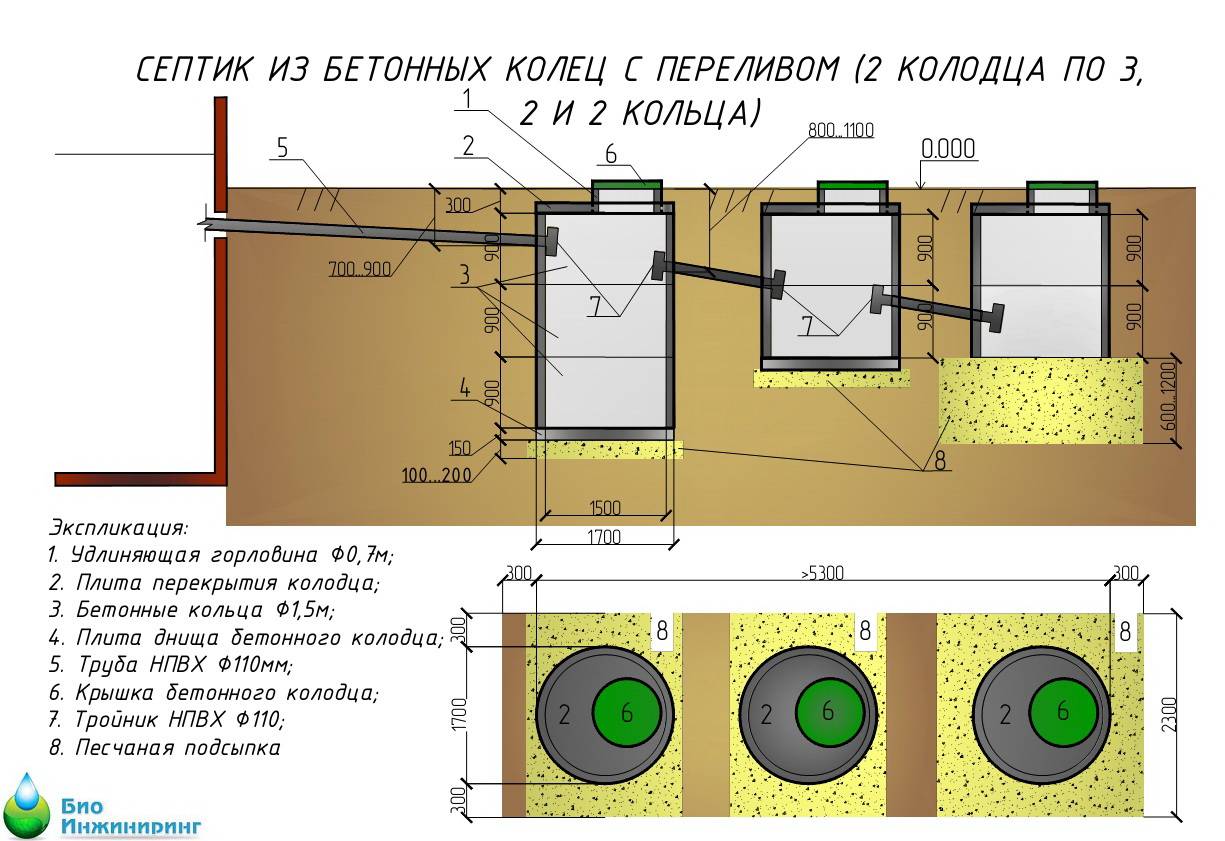
With an increase in the components of an independent sewer system, the degree waste water treatment increases. In such structures, the first two chambers with a sealed bottom, the third - with a filter
No matter how many separate wells the sewer system includes, each of them is supplied with its own manhole for maintenance.
Cesspools made of concrete rings are filled up to the very hatch. Only by its presence it is possible to externally determine the presence of sewer wells on the site
Cesspool of concrete rings
sewer object for big families
Modular construction principle
The use of small-scale mechanization
Organization of a cesspool with overflow
Three-dimensional sewer facility
Installation of a hatch over a sewer well
Sewer wells in the suburban area
All types of cesspools can be divided into two categories:
- sealed storage containers;
- drain pits with filter bottom.
For users, 2 differences are important - the device of the bottom of the tank and the frequency of waste removal. The first type retains the entire volume of sewage, so it is emptied quite often, once every 1-2 weeks.
For the second type of pits, vacuum trucks are called less often, since the tank fills up a little more slowly. Part of the liquid seeps through a kind of filter that replaces the bottom, and enters the ground.

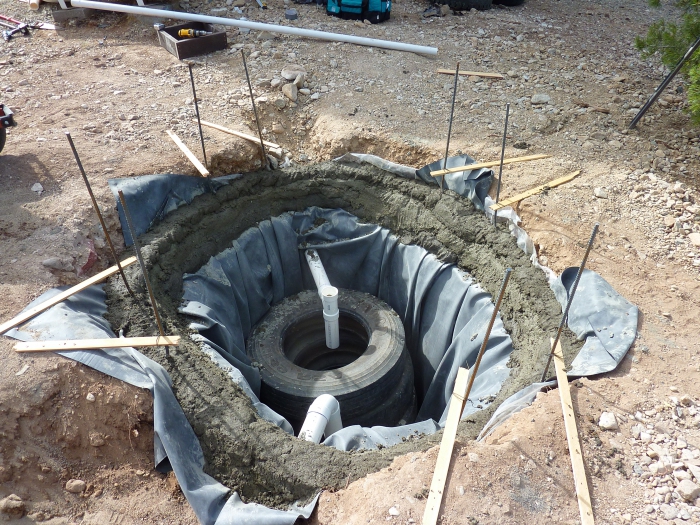

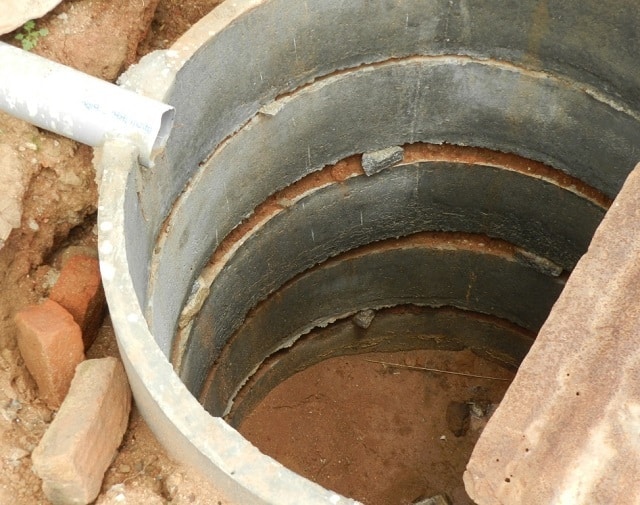


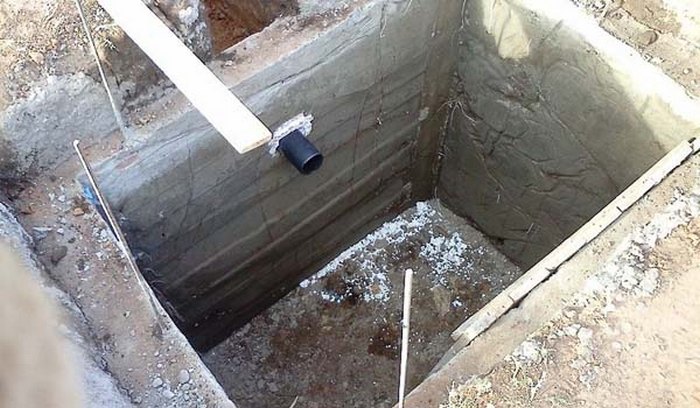

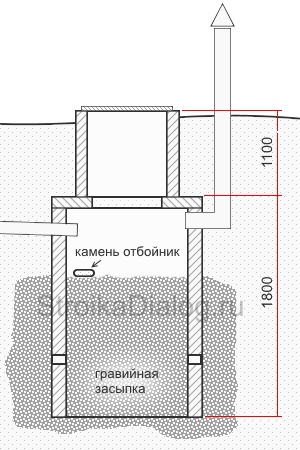
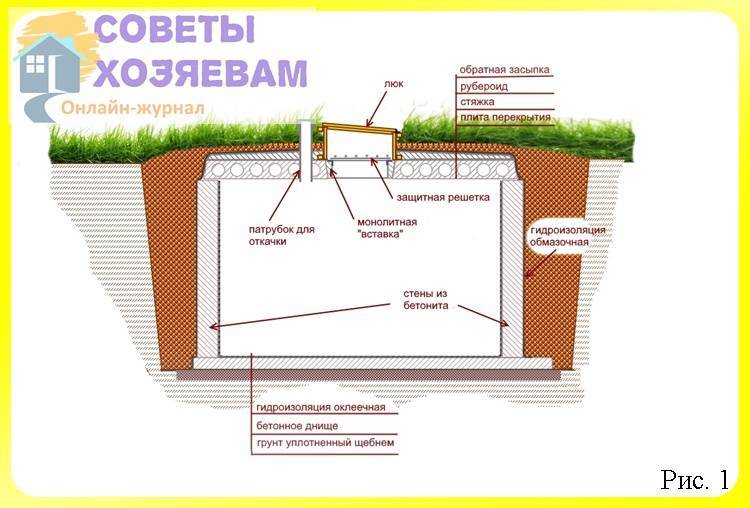
Scheme of the simplest cesspool. Usually it is designed in such a way that the volume of the tank is sufficient, and the drain masses do not rise above the sewer pipe.
At first glance, the second option is more acceptable, but it is only suitable for processing gray wastewater, and a number of factors must be taken into account when constructing it:
- compliance with sanitary standards;
- soil type;
- presence and location of aquifers.
If the soil in the selected area is clayey, unable to quickly absorb water, there is no point in making a filter bottom. The same with aquifers - there is a risk of contamination and violation of the ecological situation.
There are many solutions for organizing cesspools: they build structures from bricks, tires, concrete. Concrete structures and ready-made plastic containers are considered the most reliable.
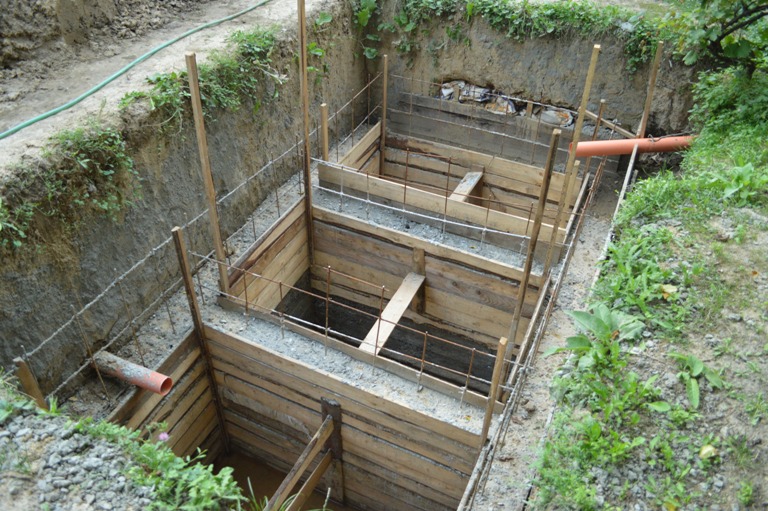
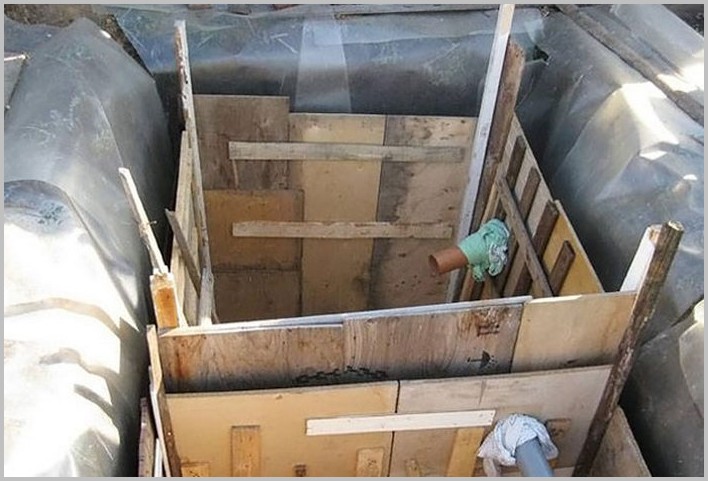
Concrete tanks, created by erecting formwork and pouring, are more difficult to build than analogues from ready-made rings, which we will dwell on in more detail.
Drain scheme pits with filter bottom. The air intake is removed as high as possible so that the unpleasant smell characteristic of sewer storage tanks does not disturb comfortable living
A cesspool made of cylindrical concrete blanks in finished form is a well from 2 m to 4 m deep. Rings in the amount of 2-4 pieces are placed one on top of the other, sealing the seams.
The lower element, depending on the type of pit, may be closed or completely absent. Sometimes, instead of a finished factory blank, a concrete slab is placed on the bottom.
The upper part is made in the form of a neck with a technical hatch and a tightly closed lid.
The main storage part of the tank is buried by about 1 m, since the inlet sewer pipe must be below the freezing level of the soil. The volume of the container is selected, taking into account the number of daily drains.
A responsibility
When constructing a cesspool, it is necessary to fully comply with the rules and regulations for this type of structure. If any sewage element is installed incorrectly, leakage and contamination of the territory, as well as the water source, may occur. For causing serious damage, liability is provided, up to criminal.
Regardless of the type of cesspool, it should be developed by a specialist who will not only take into account all factors, but also ensure that all building specifications are observed during the construction process. This is the only way to be sure that the sewage system is environmentally friendly and will last a long time.



