- Instruments and devices used in summer water supply systems
- Connecting the well to the house and internal arrangement
- Well water supply system
- Installation of the caisson
- We make the connection of the pumping station to the well
- We connect the pumping station to the well
- We make internal plumbing in the country
- Pipe selection
- Types and methods of water supply of a private house
- Centralized water supply at home
- Connecting the house to the central water supply
- Autonomous water supply at home
- Using the container (water tank)
- Using the automatic water supply system
- 1. Water from open sources
- Well construction, caisson device
- Types of wells for a private water supply
- Water supply of a private house from a well and a well: pipe laying
- deep laying
- close to the surface
- Sealing the entrance to the well
- Selection of the source of water intake
- Option 1. Plumbing from a well
- Option #2. water well
- Option #3. We connect to the central water supply
- Standard arrangement of the water supply system
- The right choice of location
- Generic Schema Definition
- Layout and location of equipment
- Pipe laying features
Instruments and devices used in summer water supply systems
To make the water supply system more practical, use the following devices:
- The union for fast accession of a hose to the crane. On the one hand, it has a spring grip, on the other, a “ruff”, which is inserted into the hose.
- Corrugated hoses that take up very little space when folded.
- Hoses and special accessories for drip irrigation.
- Sprayers and watering guns with special couplings (aquastop) that automatically shut off the water when replacing the watering device (the tap does not need to be closed).
- Irrigation and watering heads.
- Devices for organizing automatic irrigation - a timer or soil moisture sensors.
If there is no centralized water supply near the site, and it is planned to use a well or a well as a water source, a pump will be needed.
Connecting the well to the house and internal arrangement
The stage of arrangement and connection is considered the simplest process. All work is done by hand. The main thing is to assemble the system correctly. No laborious processes are observed here.
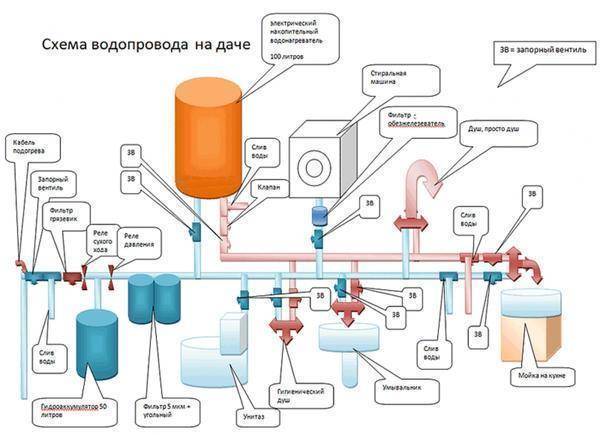
Organization of internal equipment for "dummies":
- First, a place is chosen for the installation of equipment.
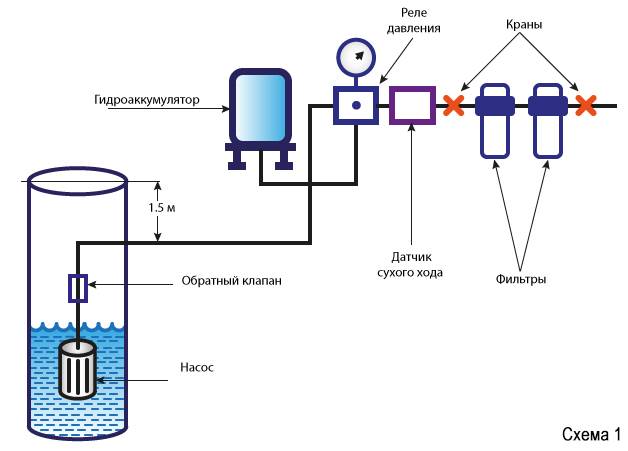
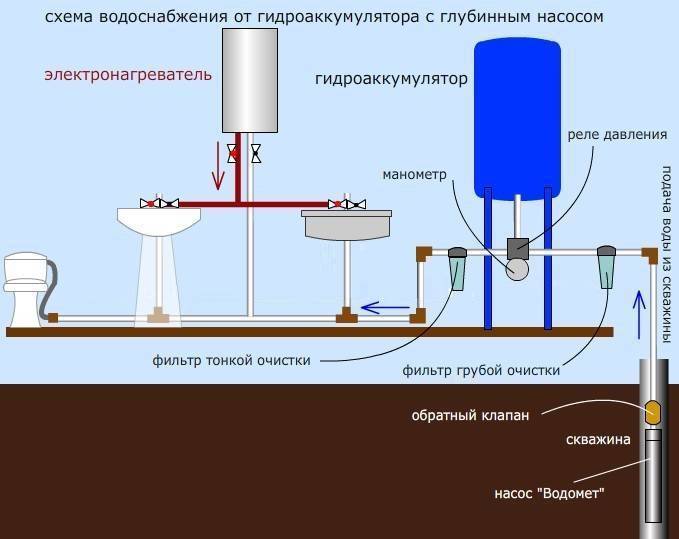
- A pressure switch is mounted on the inlet pipe. It determines the pressure of the water.
- Next, a coarse filter is installed. This is elementary protection against large particles.
- Then the hydraulic accumulator is mounted. Thanks to him, the working pressure will be maintained after the pump is turned off.
- Next, they carry out the wiring of the water supply throughout the house.
The accumulator has a certain volume, which is a supply of liquid. But using too large structures is unprofitable. It is better to take several mechanisms of smaller dimensions.So the pressure will not suffer and it will be possible to use the borehole for a long time without turning on the pump.
Well water supply system
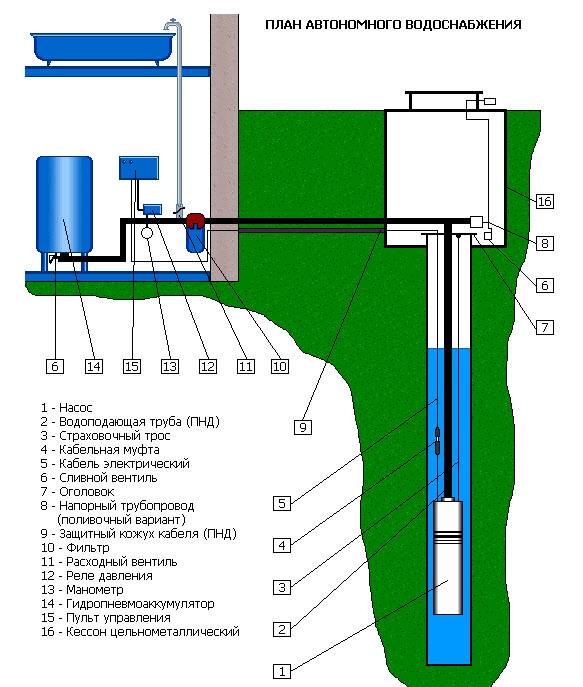
Pipe laying and trenching are no different. If you plan to install a pump and pipes directly above the well, equip a caisson or pit above it. Thus, you will provide protection against freezing.
Installation of the caisson
This work is carried out in compliance with certain rules and technology:
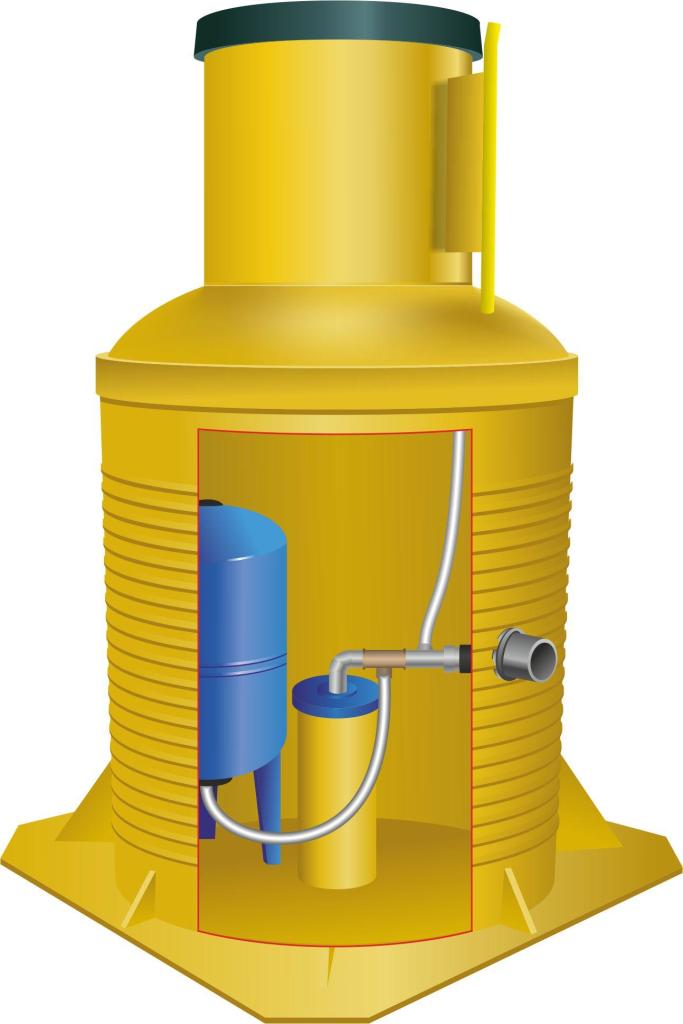
An example of a plastic caisson for a well
- Dig the well pipe 2.5 m high. The width should be twice the diameter of the caisson;
- After that, compact the bottom of the pit and fill it with a layer of concrete 20 cm thick.
- Then install the caisson.
- Cut the pipe, leaving 50 cm above the bottom of the caisson.
- At this level, create a hole in the caisson through which pipes will be laid in the future.
- Connect the pumping station, concrete the caisson from the outside (layer thickness - 30-40 cm), fill it with a cement-sand mixture, the remaining 50 cm with soil.
We make the connection of the pumping station to the well
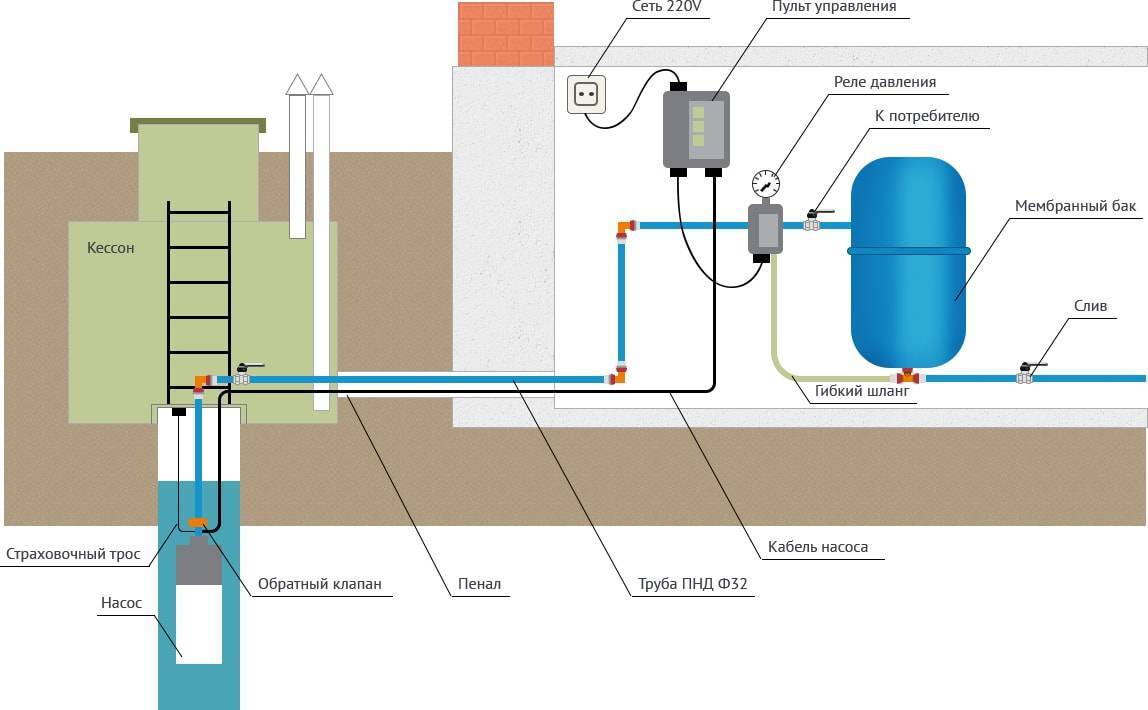
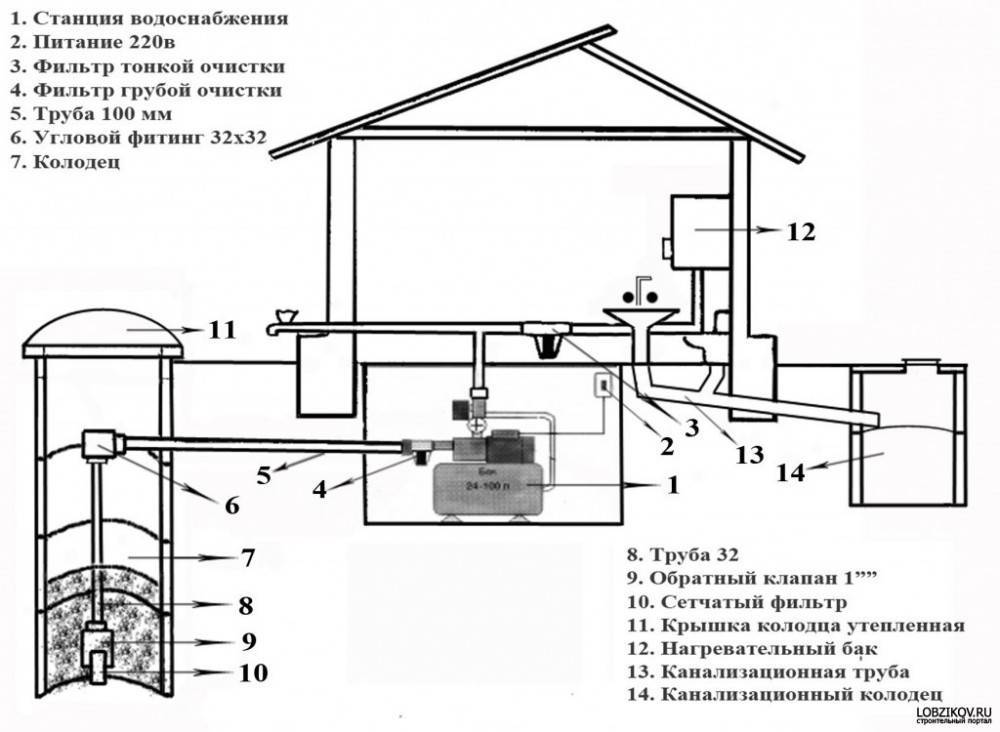
The remote pump can be installed directly in the caisson. With a close location of the well, the installation of a pumping station can be done in the house.
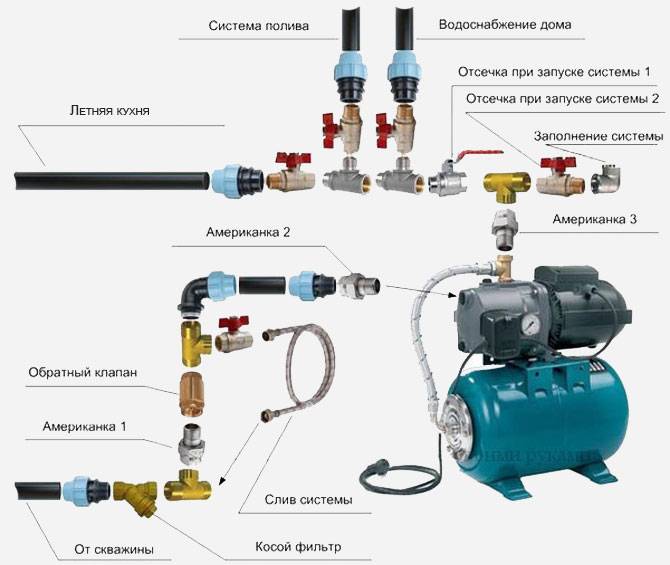
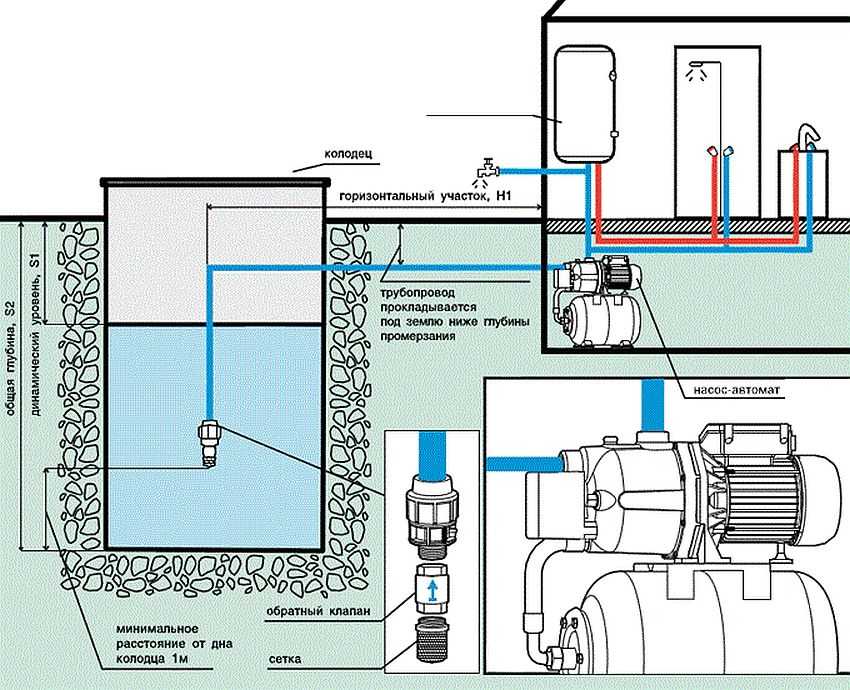
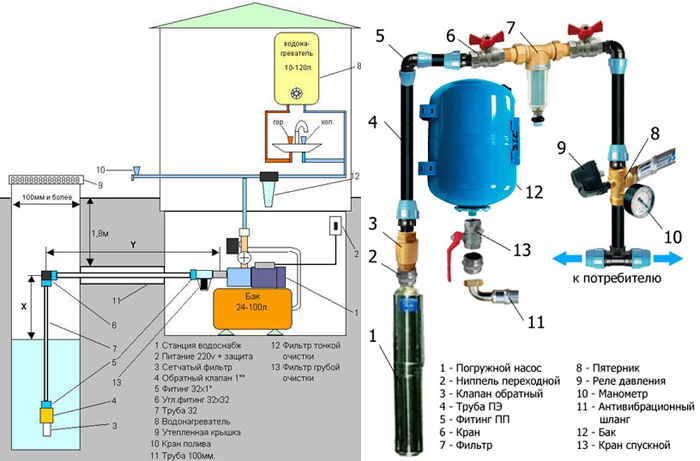
Scheme of connecting the pump to the well
So:
The supply pipe should be led into a caisson or pit and installed in the well pipe.
Install the rest of the equipment, such as filters, control relays and a hydraulic accumulator, in a farm building or house.
We connect the pumping station to the well
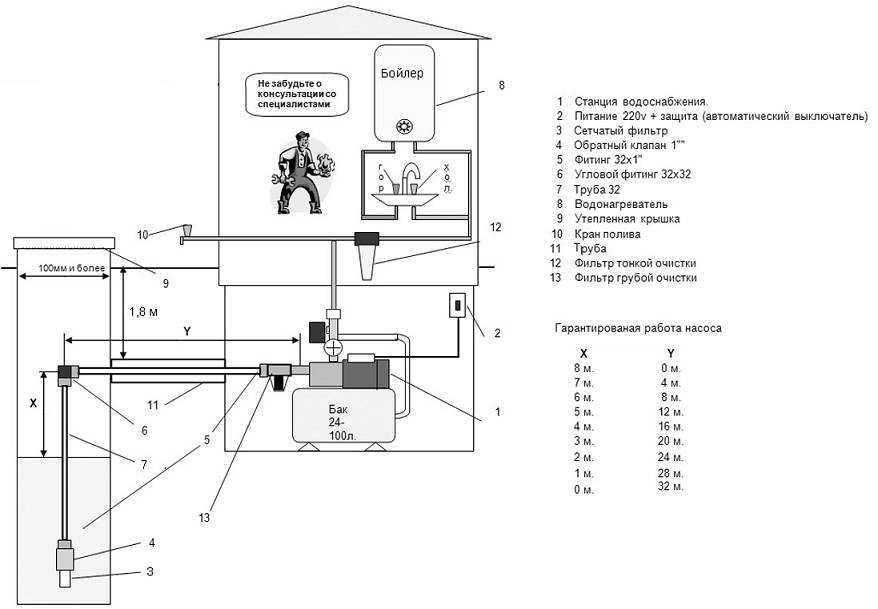
If your well is located near the house and there is a high water level in it, use a pumping station whose suction height does not exceed 9 m.
For installation, a utility building, a house and the well itself are suitable:
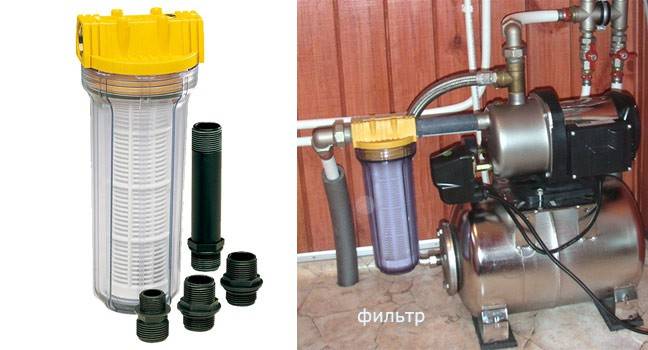
We make the connection of the pumping station
If the well is deep and remote from the house, use a well pump with an external ejector. Install the pumping station in the house, place the ejector in the well.
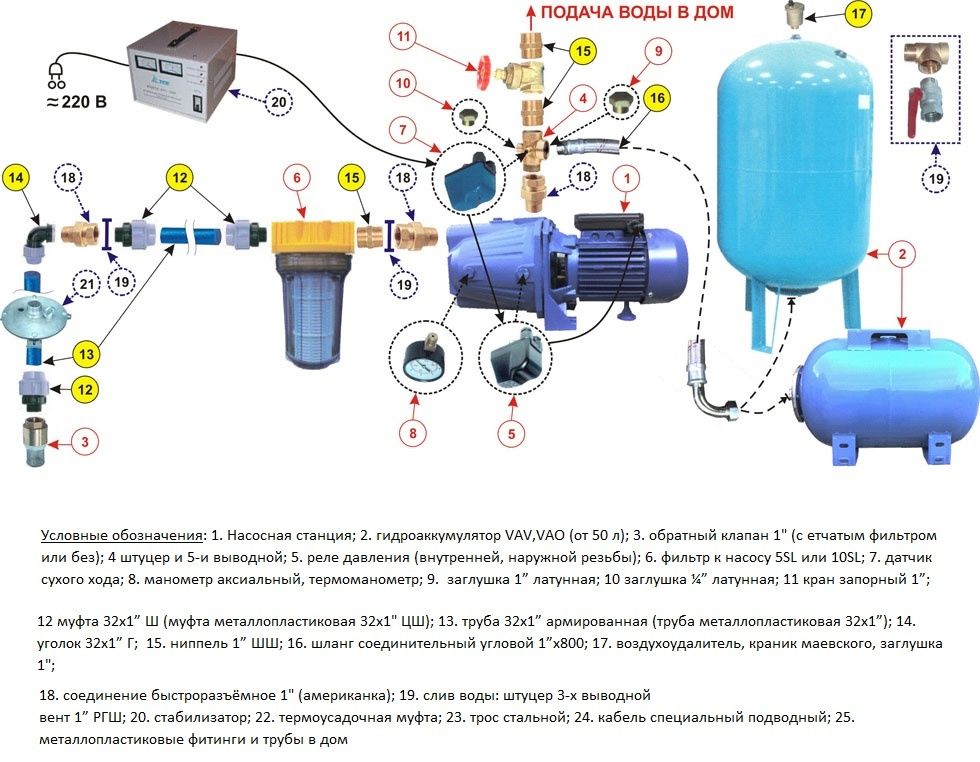
- Before the pump, install a valve designed to drain the liquid;
- We are installing a filter, which will provide a rough cleaning, and a check valve.
- After that, install the pump and filter, which will be designed for fine cleaning.
- As a result, if necessary, you can change the cartridge in the filter. Next, install the accumulator.
- After that, the entire water treatment and water treatment system is mounted.
We make internal plumbing in the country
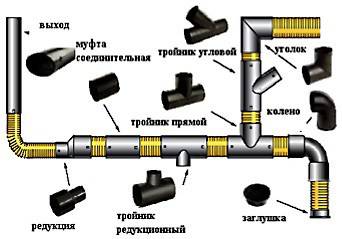
Elements for conducting internal plumbing in the country
So:
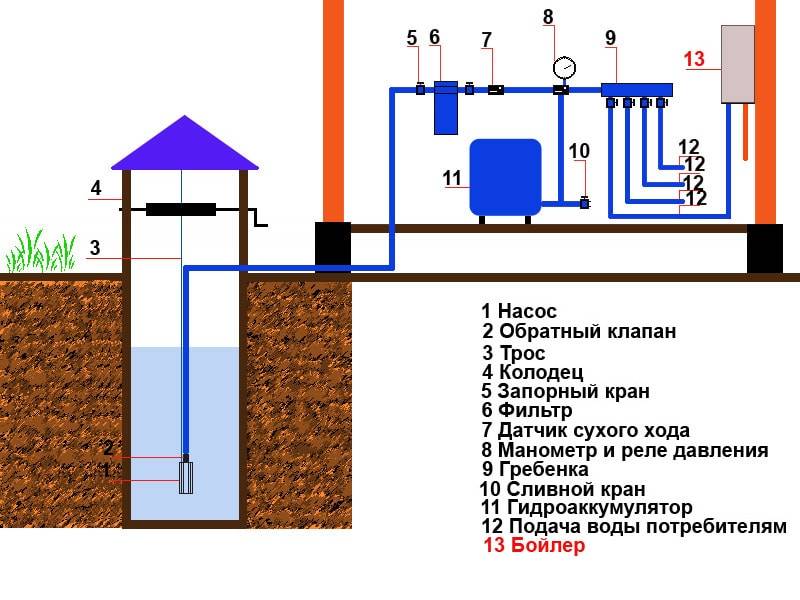
- Run a 32 mm pipe to the cold water manifold.
- Install ball valves in it, and then connect 25 mm pipes. It is they who will ensure the flow of water to consumers or their groups.
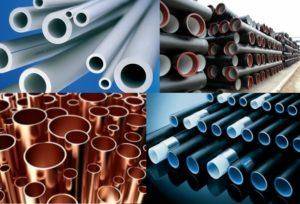
- For internal wiring, corrugated stainless pipes, metal-plastic pipes, as well as pipes made of polypropylene and steel are suitable. Corrugated products are the most expensive, but they are easy to install. Given the quality and price, the most optimal option is polypropylene pipes. They can be connected with an electric soldering iron and fittings. To work with an electric soldering iron, you do not need certain skills. In addition, this tool can be rented.
Lead the pipe to the water heater, then connect it, you need to do this from the side of the collector, only from its reverse side. A pipe with hot water comes out of the water heater, we make its connection to the collector, after that we make a tap for draining water and ball valves.
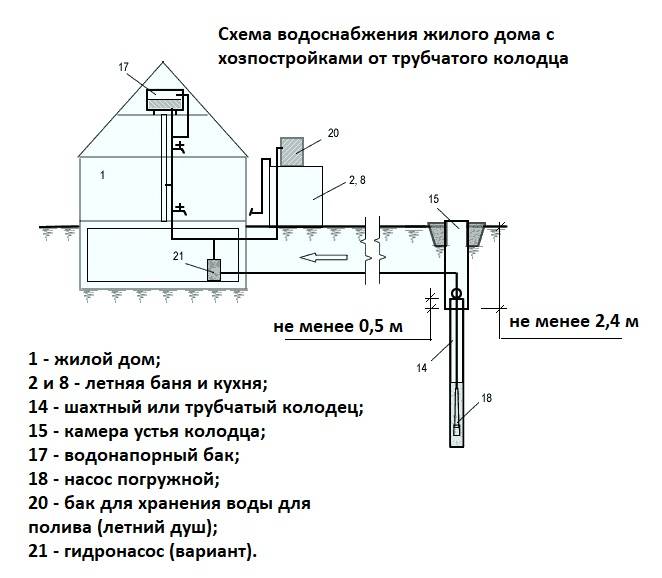
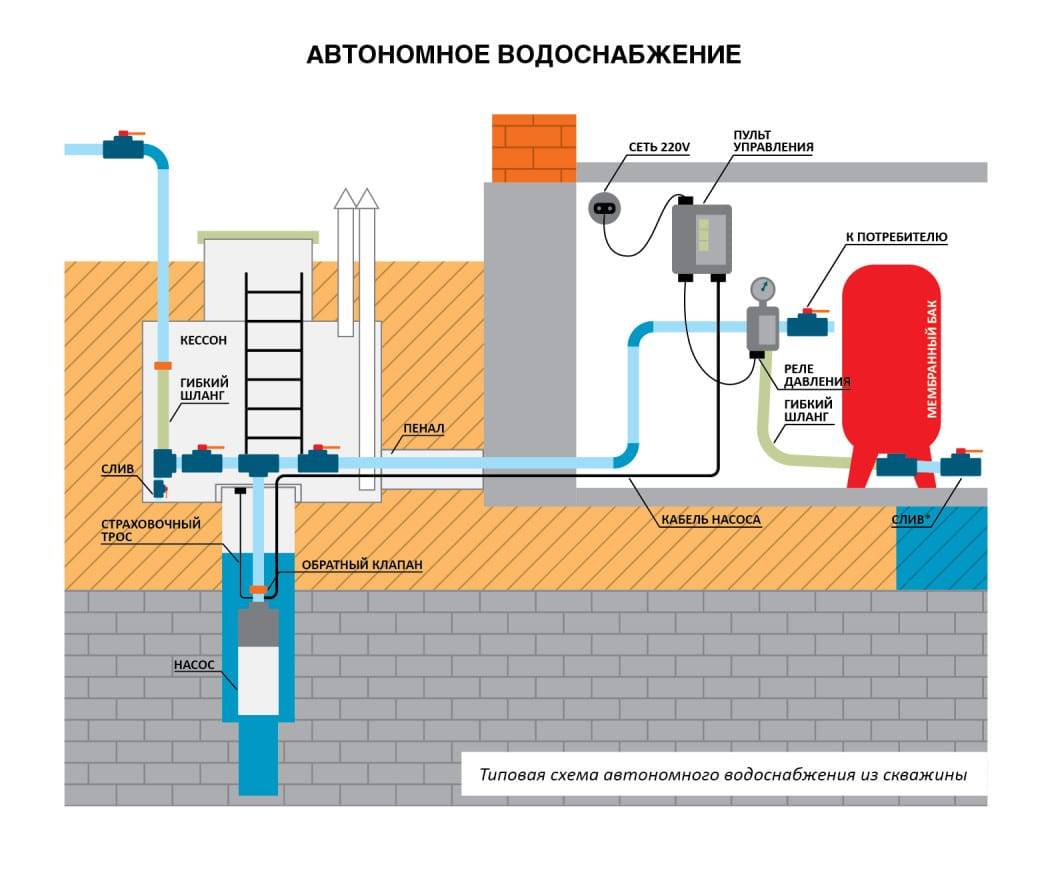

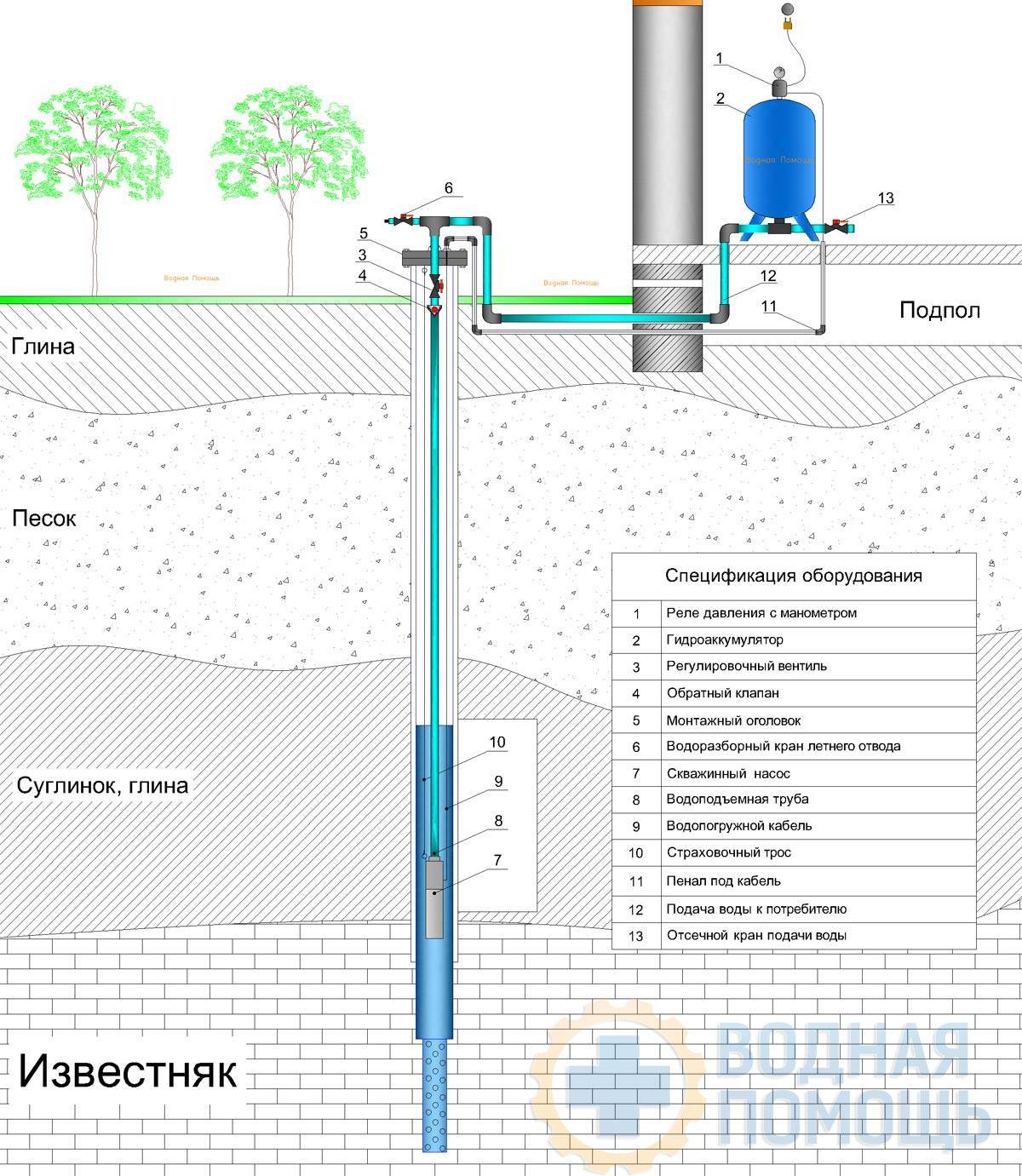
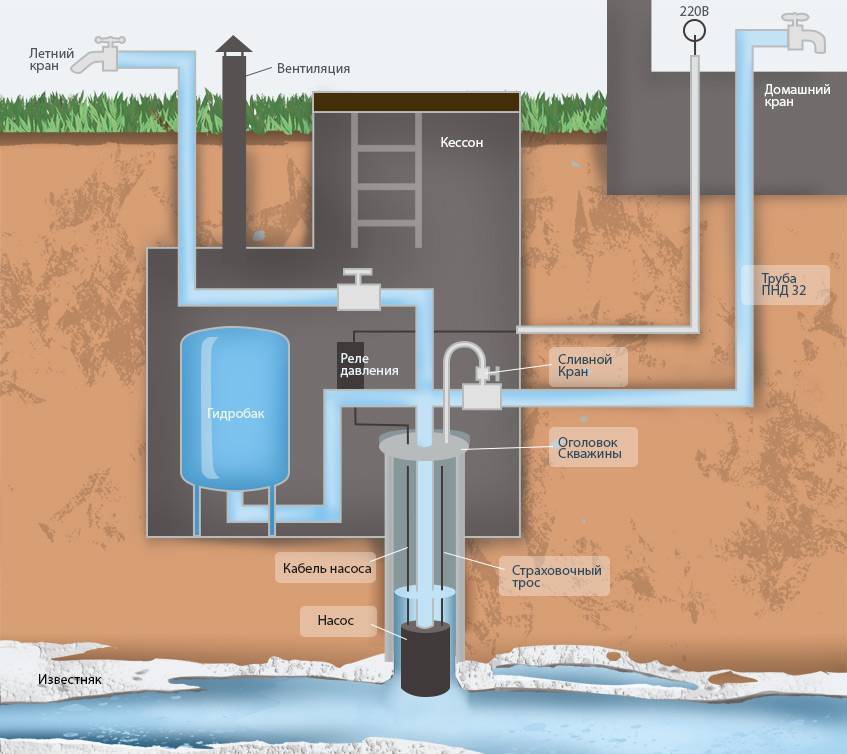

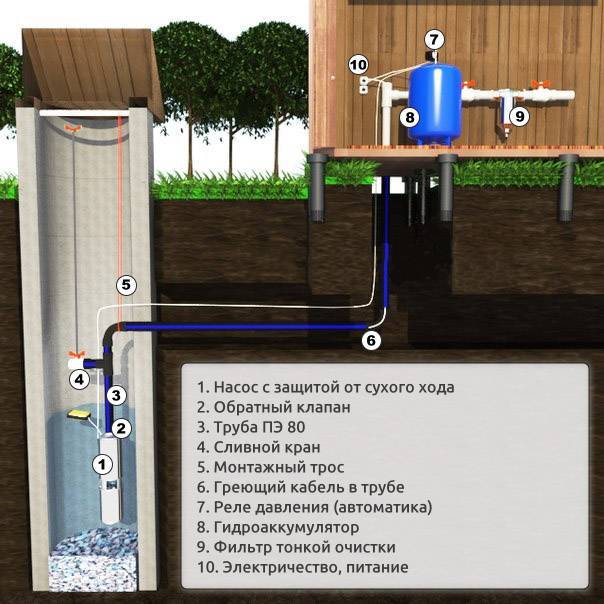
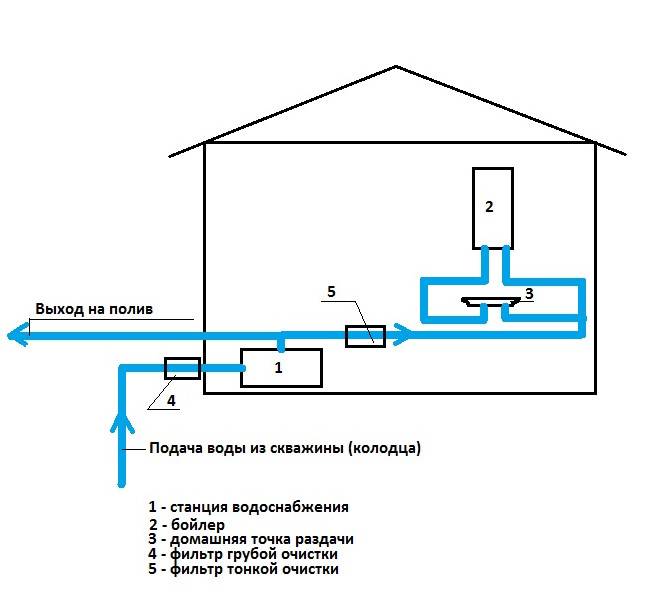
As can be seen from the above, there is nothing particularly complicated. The main thing is to determine the source correctly and then choose the right equipment and you can definitely handle it.
Pipe selection
The pump in the well is connected by a HDPE pipe. After the head of the well and up to the house, HDPE or metal-plastic can be used. In the southern regions, the piping in the pits can be done with a polypropylene pipe. But it should be borne in mind that at negative temperatures, processes of changing the structure of the material occur in polypropylene, microcracks appear on the surface of the pipe, the service life is significantly reduced, the pipes become brittle.
Plastic pipes for water supply: dimensions and diameters, characteristics of materials The use of plastic pipes for water supply made it possible to get rid of bulky steel networks, which were previously equipped with almost all residential buildings and public buildings. Sturdy and comfortable to…
The diameter of the pipe for connecting the pump determines the diameter of the connected pipe. As a rule, this is 32 mm. To connect a residential building with a family of up to 6 people, a pipe with an internal diameter of 20 mm is sufficient. It should be borne in mind that for plastic pipes the outer diameter is indicated, and the wall thickness of the pipes is different for different manufacturers. Therefore, a plastic pipe is chosen 25-26 mm. However, it will not be superfluous to connect the house with a 32 mm pipe.
The plumbing in the house is performed with polypropylene pipes. It is necessary to take into account their purpose according to the temperature of the carrier, when choosing for hot water from a water heater.
Types and methods of water supply of a private house
From the standpoint of the dependence of the source of water supply on external factors, two fundamentally different types of water delivery to the user can be distinguished:
Centralized water supply at home
In fact, the same autonomous, but within the region. In this case, the user does not need to take care of arranging the source of water supply. It is enough to connect (crash) to the central water main.
Connecting the house to the central water supply
All actions are reduced to the phased implementation of a number of requirements, including:
appeal to the regional municipal organization MPUVKH KP "Vodokanal" (Municipal enterprise "Department of water supply and sewerage"), which controls the central highway;
obtaining the technical characteristics of the tie-in. The document contains data on the place where the user's pipe system is connected to the main and its depth. In addition, the diameter of the main pipes is indicated there and, accordingly, instructions for choosing home piping. It also indicates the water pressure indicator (guaranteed water pressure);
get an estimate for connection, which is developed by a utility or contractor;
control the execution of work. Which are also commonly performed by UPKH;
perform a system test.
Advantages of central water supply: convenience, simplicity.
Disadvantages: fluctuations in water pressure, questionable quality of incoming water, dependence on central supplies, high cost of water.
Autonomous water supply at home
It is possible to independently provide water supply to a summer house, private or country house using autonomous water supply.In fact, this is an integrated approach, which includes activities for the installation of a water supply system, starting with providing a source of water supply, ending with its discharge into the sewer.
An autonomous water supply system can be represented as two component subsystems:
water delivery: imported, groundwater, from an open source;
supply to consumption points: gravity, using a pump, with the arrangement of a pumping station.
Therefore, in a generalized form, two water supply schemes can be distinguished: gravity (storage tank with water) and automatic water supply.
Using the container (water tank)
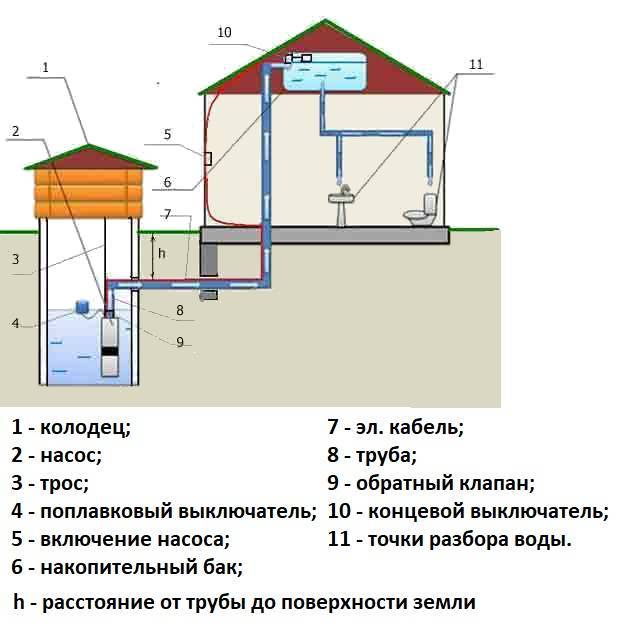
The essence of the autonomous water supply scheme at home is that water is supplied to the tank using a pump or filled manually.
Water flows to the user by gravity. After all the water from the tank has been used, it is refilled to the maximum possible level.

Gravity water supply system - water supply scheme from the storage tank
Its simplicity speaks in favor of this method, it is suitable if water is required from time to time. For example, in a dacha that is not often visited or in a utility room.
Such a water supply scheme, despite its simplicity and cheapness, is too primitive, inconvenient and, moreover, creates significant weight on the interfloor (attic) floor. As a result, the system has not found wide distribution, it is more suitable as a temporary option.
Using the automatic water supply system
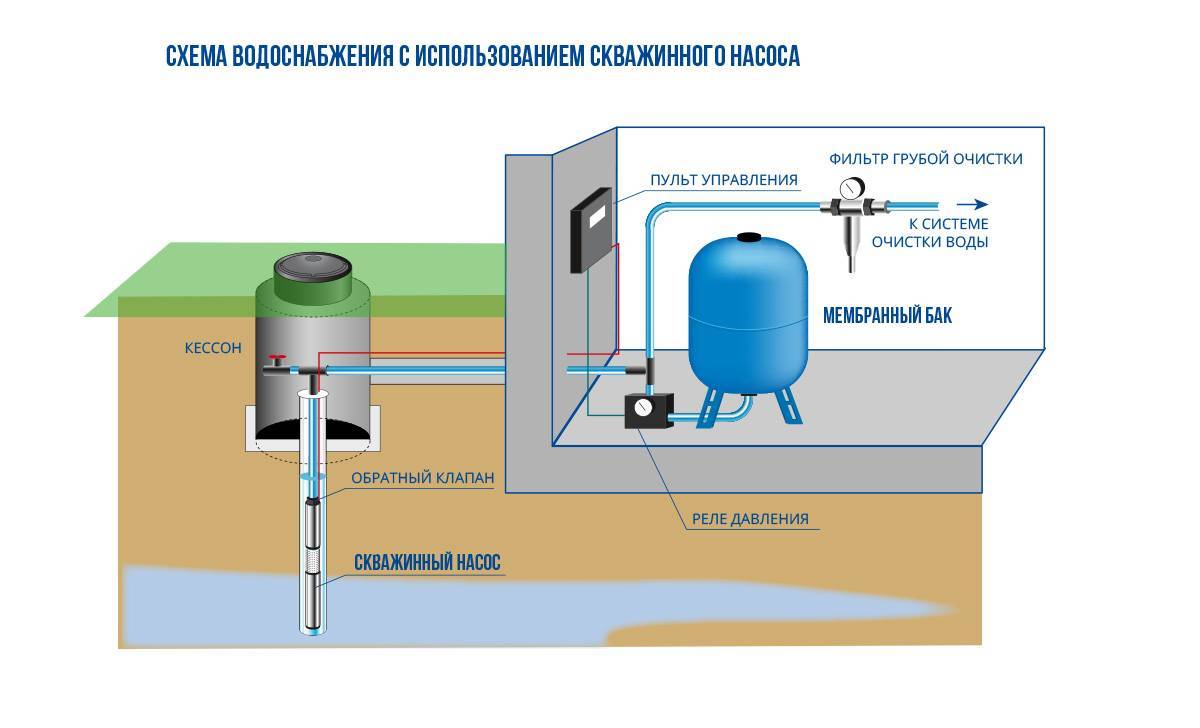
Scheme of automatic water supply of a private house
This diagram demonstrates the operation of a completely autonomous water supply system for a private house. Water is supplied to the system and to the user using a system of components.
It is about her that we will talk in more detail.
You can implement a completely autonomous water supply of a private house on your own by implementing one of the schemes. There are several device options to choose from:
1. Water from open sources
Important! Water from most open sources is not suitable for drinking. It can only be used for irrigation or other technical needs. Obtaining water from an open source requires the creation of sanitary protection of water intake points and is regulated by the provisions of SanPiN 2.1.4.027-9 "Zones of sanitary protection of water supply sources and drinking water pipelines"
Obtaining water from an open source requires the creation of sanitary protection of water intake points and is regulated by the provisions of SanPiN 2.1.4.027-9 "Zones of sanitary protection of water supply sources and water pipes for domestic and drinking purposes."
Well construction, caisson device
On non-marshy, dry soil, the best option to equip a well would be a caisson device. The caisson is a technologically fenced place around the well. Closed, from precipitation and melt water, with the possibility of carrying out technical work, a place around the well.
The task of the caisson is simple, it must close the well and the equipment around the well, and above all, this is a pump, from precipitation and melt water. If there is no surface water (perch water) on the site, then the caisson sinks into the ground; on wet soils, the caisson is arranged on the surface of the earth.
Do-it-yourself caisson is made from:
- concrete (poured on the formwork),
- from one concrete ring;
- from brickwork;
- is bought ready-made, made of metal or plastic.
To install the caisson, the soil around the well is selected, and a hole is formed around the well to fit the size of the caisson. The bottom of the pit is leveled and a layer of rubble and sand is laid on the bottom. The sand is rammed. For a complete "openwork", the platform for the caisson can be poured with a layer of concrete. Technologically, this is only necessary for the convenience of well maintenance.
The installed caisson must be level and firmly fixed. From the outside, insulation and backfilling of the soil is done. Be sure the caisson must be tightly closed with a lid. If the caisson turned out to be deep, it is necessary to mount a ladder to descend into it.
In the wall of the caisson, you need to prepare a hole for the water pipe. A sleeve must be laid in the hole to isolate the pipe from the walls of the caisson.
Types of wells for a private water supply
An undrinkable perch is quite suitable for watering the garden, cleaning and similar needs. It is easier and cheaper to get it by arranging a well-needle, also called the Abyssinian well. It is a column of thick-walled pipes VGP Ø from 25 to 40 mm.
Abyssinian well - the easiest and cheapest way to get water for temporary supply of a summer cottage
This is the cheapest and easiest way to get water for temporary water supply. For summer residents who need exclusively technical water and only in the summer.
- The needle well, otherwise the Abyssinian well, is the easiest and cheapest way to create a water source for a private house.
- You can drill an Abyssinian well in one day. The only drawback is the average depth of 10-12 m, which rarely allows the use of water for drinking purposes.
- An Abyssinian well can be arranged within the house by placing pumping equipment in the basement or utility room.
- The needle well is great for extracting water for watering a garden with a vegetable garden and caring for a suburban area.
- Sand wells can supply water for both technical and drinking purposes. It all depends on the specific hydrogeological situation in the suburban area.
- If the water carrier covers the layer of water-resistant soils from above, then the water may well turn out to be a drinking discharge.
The soils of the aquiclude, which prevent the penetration of water, prevent the penetration of domestic wastewater. If the water-containing sand does not have natural protection in the form of loam or solid sandy loam, the drinking purpose will most likely have to be forgotten.
The walls of the well are strengthened with a string of steel casing pipes connected to each other by couplings or a welded seam. Recently, polymer casing has been actively used, which is in demand by private traders because of its affordable price and corrosion resistance.
The design of the sand well provides for the installation of a filter that excludes the penetration of gravel and large sand suspension into the wellbore.
The construction of a sand well will cost much more than an Abyssinian well, but cheaper than drilling a working in rocky soils
The working part of the well filter should protrude beyond the aquifer from above and below by at least 50 cm. its length must be equal to the sum of the thickness of the aquifer and at least 1 m of margin.


The filter diameter must be 50 mm smaller than the casing diameter so that it can be freely loaded and removed from the hole for cleaning or repair.
Wells, the trunk of which is buried in rocky limestone, can do without a filter and partially without casing. These are the deepest water intake workings, extracting water from cracks in the bedrock.
They serve longer than analogues buried in the sand. They are not characterized by the process of siltation, because. in the thickness of the water-containing soils there is no clay suspension and fine grains of sand.
The risk of drilling an artesian well is that the fracture zone with underground water may not be detected.
At a depth of more than 100 m, it is permissible to use asbestos-cement pipes or drill a well without casing at all, if there is no need to strengthen the rocky walls of the hydraulic structure.
If an artesian well has passed more than 10 m of fractured rock containing groundwater, then a filter is installed. Its working part is obliged to block the entire thickness supplying water.
The scheme of the water supply system of an autonomous house with one filter is typical for artesian wells that do not require multi-stage water purification
Water supply of a private house from a well and a well: pipe laying
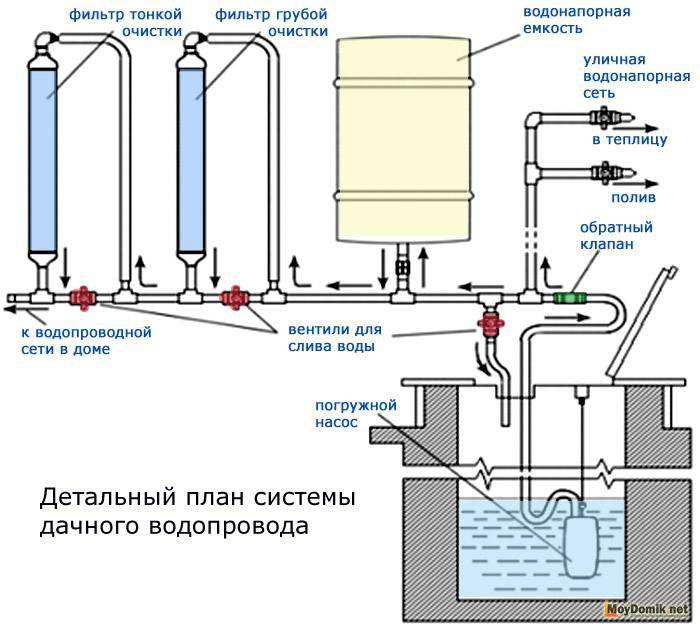
Any of the described water supply schemes for a private house is implemented using a pump that supplies water to the house. In this case, a pipeline must be built connecting the well or well with a pumping station or storage tank. There are two options for laying pipes - only for summer use or for all-weather (winter).
A section of a horizontal pipe may be located either below the freezing depth of the soil or it needs to be insulated
When installing a summer water supply system (for summer cottages), pipes can be laid on top or in shallow ditches.At the same time, you must not forget to make a tap at the lowest point - drain the water before winter so that frozen water does not break the system in frost. Or make the system collapsible - from pipes that can be rolled up on threaded fittings - and these are HDPE pipes. Then in the fall everything can be disassembled, twisted and put into storage. Return everything in the spring.
Laying water pipes in the area for winter use requires a lot of time, effort and money. Even in the most severe frosts, they should not freeze. And there are two solutions:
- lay them below the freezing depth of the soil;
- bury shallowly, but be sure to heat or insulate (or you can do both).
deep laying
It makes sense to bury water pipes deeply if it freezes no more than 1.8 m. almost a two-meter layer of soil. Previously, asbestos pipes were used as a protective shell. Today there is also a plastic corrugated sleeve. It is cheaper and lighter, it is easier to lay pipes in it and give it the desired shape.
When laying the pipeline below the freezing depth, it is necessary to dig a deep trench that is long for the entire route. But the water supply of a private house from a well and a well will not freeze in winter
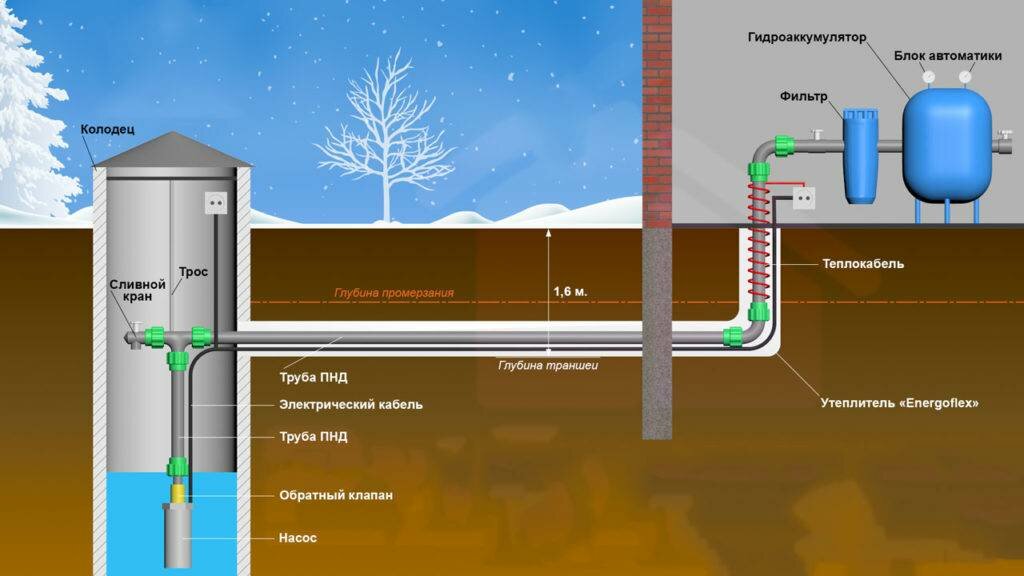
Although this method requires a lot of labor, it is used because it is reliable. In any case, they try to lay the section of the water supply system between the well or well and the house exactly below the freezing depth. The pipe is led out through the wall of the well below the depth of freezing of the soil and is led into the trench under the house, where it is raised higher.The most problematic place is the exit from the ground into the house, you can additionally heat it with an electric heating cable. It works in automatic mode maintaining the set heating temperature - it works only if the temperature is below the set one.
When using a well and a pumping station as a source of water, a caisson is installed. It is buried below the freezing depth of the soil, and equipment is placed in it - a pumping station. The casing pipe is cut so that it is above the bottom of the caisson, and the pipeline is led out through the wall of the caisson, also below the freezing depth.
Laying water pipes in a private house from a well when constructing a caisson
A water pipe buried in the ground is difficult to repair: you have to dig in. Therefore, try to lay a solid pipe without joints and welds: they are the ones that give the most problems.
close to the surface
With a shallow foundation, there is less earthwork, but in this case it makes sense to make a full-fledged route: lay out a trench with bricks, thin concrete slabs, etc. At the construction stage, the costs are significant, but the operation is convenient, repair and modernization are no problems.
In this case, the water supply pipes of a private house from the well and well rise to the level of the trench and are brought out there. They are laid in thermal insulation to prevent them from freezing. For insurance, they can also be heated - use heating cables.
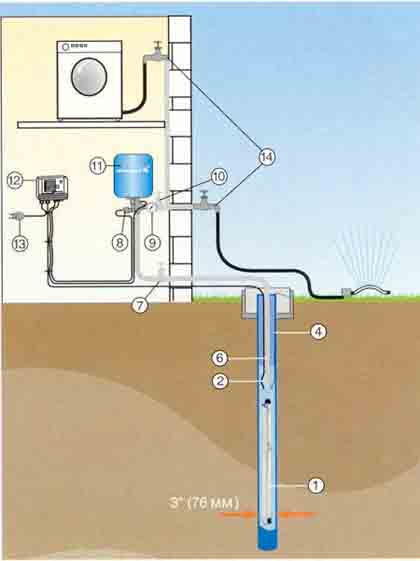
One practical tip: if a power cable runs from a submersible or borehole pump to the house, it can be hidden in a protective sheath made of PVC or other material, and then attached to the pipe. Fasten every meter with a piece of adhesive tape.So you will be sure that the electrical part is safe for you, the cable will not fray or break: when the ground moves, the load will be on the pipe, and not on the cable.


Sealing the entrance to the well
When organizing the water supply of a private house from a well with your own hands, pay attention to the termination of the exit point of the water pipe from the mine. It is from here that most often the dirty top water gets inside
It is important that the outlet of the water pipe of their well shaft is well sealed
If the hole in the wall of the shaft is not much larger than the diameter of the pipe, the gap can be sealed with sealant. If the gap is large, it is covered with a solution, and after drying, it is coated with a waterproofing compound (bituminous impregnation, for example, or a cement-based compound). Lubricate preferably both outside and inside.
Selection of the source of water intake
The device of any water supply begins with the choice of a source of water supply. Although the choice is usually not great. It can be a centralized water supply system, a well or a well.
From where the water will come from, not only its quality depends, but also the methods of constructing the entire plumbing system, its technical complexity and cost.
Option 1. Plumbing from a well
The simplest "old-fashioned" method is to dig a well. Its depth depends on the occurrence of the aquifer - up to 10 - 20 meters, as a rule. Of course, you can use such water only if filters are installed. Well water is often contaminated with nitrates and heavy metals.
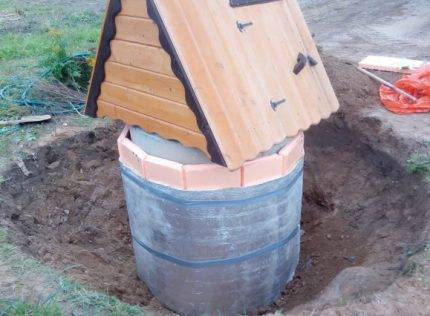 The well must be insulated. They do this to a depth that exceeds the mark of seasonal freezing in the region by 20 cm. They use foam plastic, which covers its entire above-ground part.They also insulate the pipe that connects the well to the pumping equipment
Option #2. water well
The best option is to equip a well. Here you can’t do without special equipment - you can’t drill a well with a shovel. The main advantage of such a source of water supply is the purity of the water.
The depth of the well for a private house starts from 15 m. With such a depth, the water is not polluted by nitrate fertilizers, domestic sewage and other agricultural waste.
It is important to take into account the presence of iron or hydrogen sulfide in the water. If such impurities are present, water can only be used if it is well filtered. Drilling a well will cost much more than digging a well, and it’s not easy to maintain it: constant cleaning, prevention, flushing
But 1.5 cubic meters per hour, which can be lifted from the well, provide an almost unlimited consumption of clean and fresh water.
Drilling a well will cost much more than digging a well, and it is not easy to maintain it: constant cleaning, prevention, flushing. But 1.5 cubic meters per hour, which can be lifted from the well, provide an almost unlimited consumption of clean and fresh water.
Option #3. We connect to the central water supply
If there is a centralized water supply near your site, you can connect to it. Among the advantages of this option are a constant pressure and water purification. However, in practice, the pressure often does not meet the standards, and there is nothing to say about cleaning.
In addition, simply connecting to the pipeline will not work for you - this is illegal.You will have to write an application to the water utility, provide a site plan with all communications, draw up project documentation and obtain permission from the sanitary and epidemiological station. The whole procedure stretches for several months and flies a pretty penny.
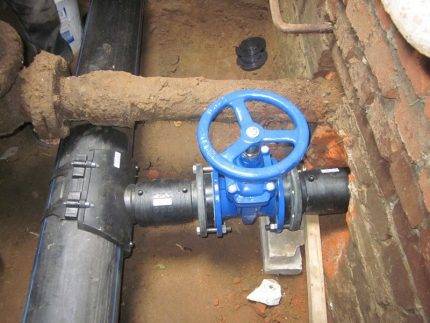
A plumber from a water utility who has a permit for such work should connect your site to the central water supply. Unauthorized use of water is prohibited
Uncontrolled use of such water is also impossible, for each used cubic meter you will have to pay at the established rate. Based on all of the above, not only many summer residents, but also residents of private households make their choice in favor of drilling a well on their site.

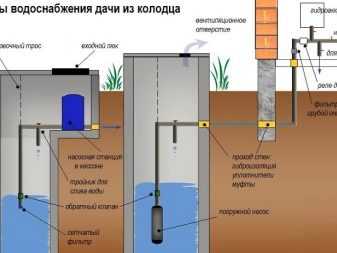
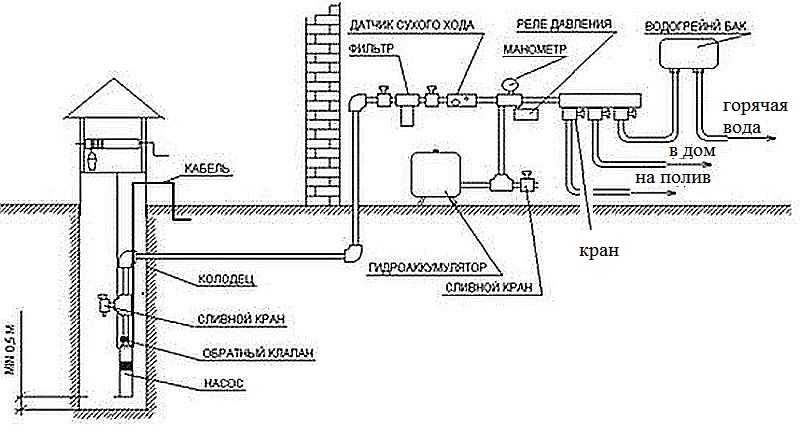



Standard arrangement of the water supply system
Laying the water supply system of a private house from a well has its own characteristics. Let's take a closer look at the steps of this process.
The right choice of location
First of all, it is necessary to determine the place of drilling. Based on financial costs, it should be as close as possible to the point of consumption.
Well location:
- no closer than 5 meters from capital buildings;
- at the maximum distance from the cesspool and septic tank, the minimum distance is 20 meters;
- the location should be convenient for drilling and maintenance.
With the right choice of location, the water from the well to the house will meet the requirements of drinking water supply.
Generic Schema Definition
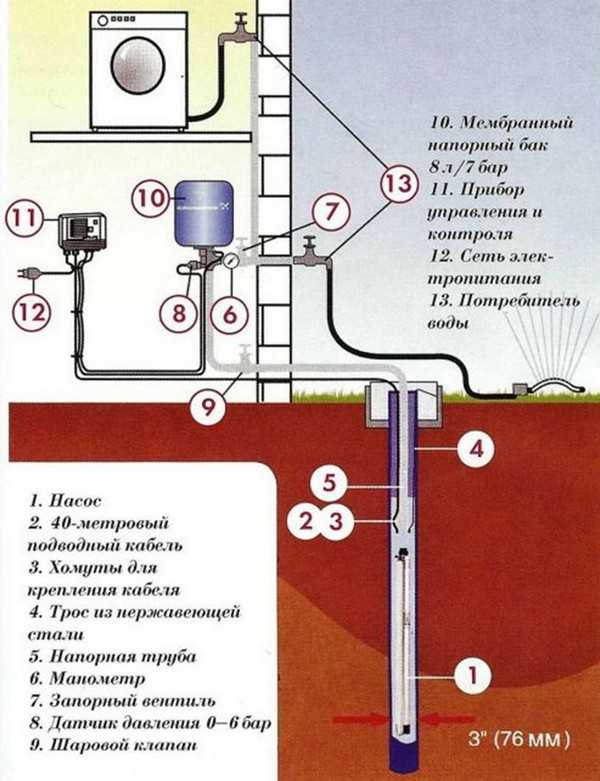
The water supply of a private house from a well with a hydraulic accumulator has its own characteristics.
Let us consider in more detail the elements used and the scheme of their connection:
- The main element that creates the movement of water to the surface is the pump.It can be surface and located indoors, or submersible and be in the water. The first option is used with a small lifting depth of up to 8 meters. The second type of pump is more popular and is used for depths of 100 meters or more.
- Installation of a hydraulic accumulator, which is a tank made of a rigid case, in which there is a rubber container for filling with air. The constant pressure in the system depends on this element.
- Automation is responsible for the smooth operation of the system and independently turns on and off the pump if necessary. The pump power and the volume of the storage tank are calculated with a margin, depending on all points of water consumption.
- Coarse filters are located at the water intake site, which cut off large fragments from their entry into the water supply system. Next, a fine filter is installed in front of the pump, which is selected depending on the composition of the water.
Layout and location of equipment
An important point remains the correct location of the equipment used in the water supply from the well. The most acceptable option is the arrangement of a caisson well, which is located above the well and allows you to provide comfortable conditions for the operation of the equipment used.
Rationality is as follows:
- the equipment is located in close proximity to the water intake, which contributes to the maximum efficiency of its use;
- soundproofing materials are used in the well to ensure the noiselessness of the pump;
- the equipment is located in one place and protected from mechanical damage;
- high-quality thermal insulation allows uninterrupted use of water supply throughout the year.
Of course, this equipment can be placed in the bathroom or in another room, but the presence of a caisson is certainly a big advantage.
Pipe laying features
The most suitable are low-density polyethylene pipes. They are distinguished by their durability and unpretentiousness, as well as their ease of construction and ease of installation:
it is possible to lay them directly into the ground, but it is recommended to dig a trench to a depth that excludes freezing; a technical pipe is installed in it, in which the pipeline itself is located; it is important to use heat-insulating materials, it is desirable to have a heating cable; in inaccessible places, unnecessary connections should be avoided, which is facilitated by the HDPE pipe. Indoors, the pipeline can be constructed from other materials: copper and steel
Indoors, the pipeline can be constructed from other materials: copper and steel.