
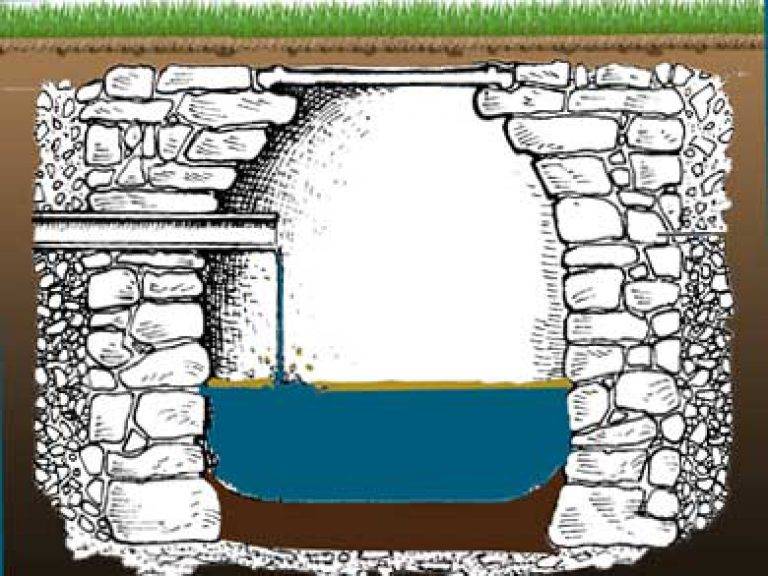
- SanPiN 42-128-4690-88: requirements and standards, installation distance
- Cesspool design
- What materials are used?
- Pit of concrete rings - detailed diagram, device
- Sealed pit - detailed diagram, device
- Rubber tires for a cesspool - cheap and cheerful
- Rules for arranging cesspools
- The choice of material for construction
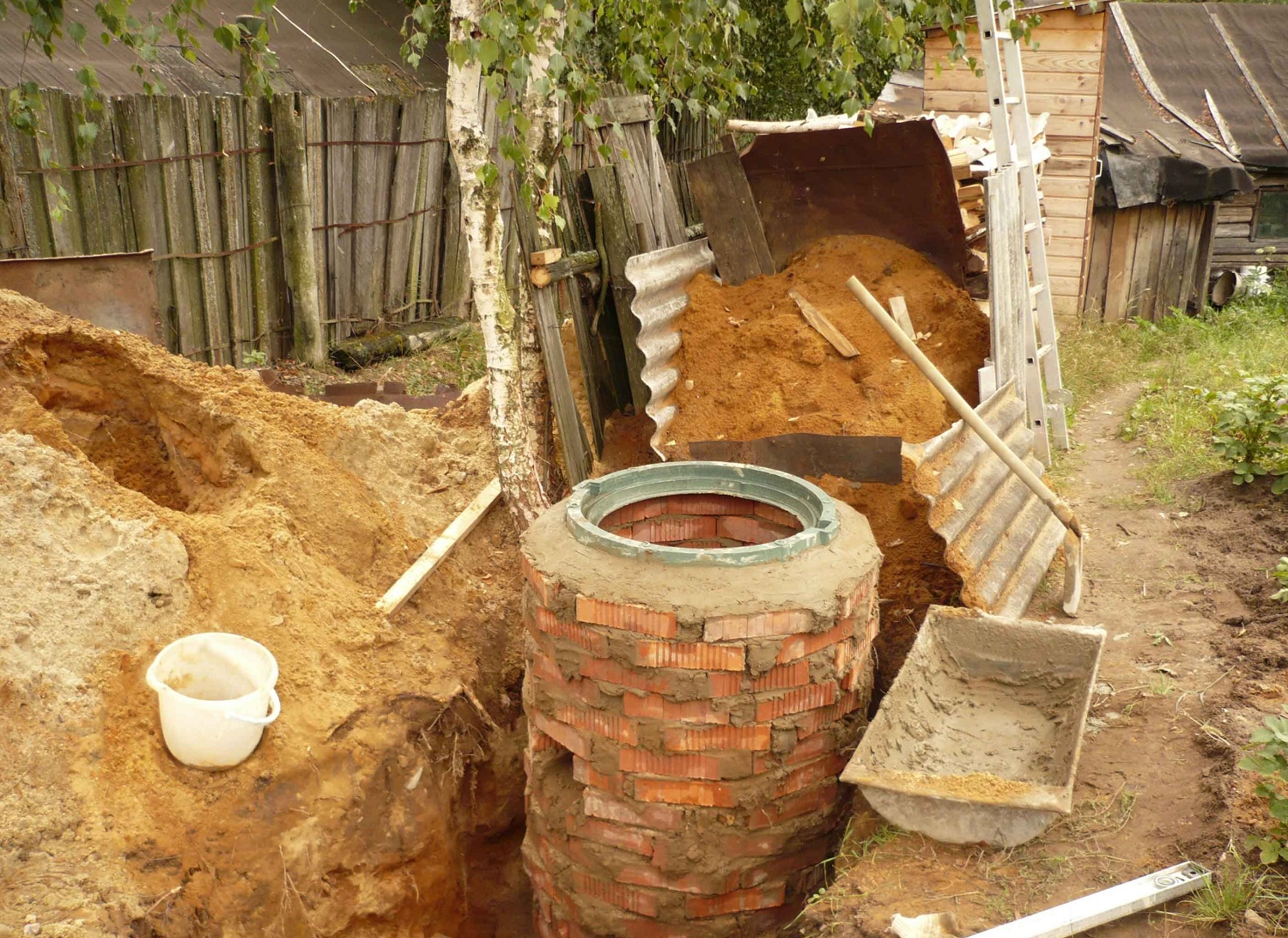
- brick
- From car tires
- From monolithic reinforced concrete
- From concrete rings
- From metal and plastic containers
- Cesspool volume
- Requirements for the arrangement of cesspools
- Cesspool made of other materials
- Cesspool made of bricks
- Cesspool of tires
- Cesspool made of plastic
- How to clean a cesspool
- How much does it cost to make a cesspool on the site
SanPiN 42-128-4690-88: requirements and standards, installation distance
On the territory of the Russian Federation, regardless of the region of residence, SanPiN requirements for cesspools apply.
When a private house does not have a centralized sewer system, its owners are allowed to locate a cesspool on the site. The main requirement for it is mandatory water resistance. Above the sump there should be a lid to close it and a special grate. You can equip a common drain pit with neighbors.
Treatment facilities must be cleaned at least once every six months.
When disinfecting drain pits, a product is used, the components of which are:
- 5% sodium hypochlorite;
- 5% - creolin;
- 10% lime chloride;
- 10% - naphthalizol;
- 10% - sodium metasilicate.
Under no circumstances should dry bleach be used for disinfection.
Cesspool design
sewage collection 1 m³.poison the environment
You can build the simplest cesspool in a summer cottage in a short time. Through the drain pipe, the waste is sent straight to the tank, the bottom of which is covered with a layer of gravel or pebbles. To exit the methane generated during waste processing, a gas outlet pipe is placed on the tank lid.
Such a system is not applicable in houses for permanent residence, because in them the approximate consumption of water per day for an average family is more than 1 cubic meter. m. They need a way to remove waste and fecal matter into the ground and their subsequent filtration. Such a system has become widespread among those living in dachas and country houses and cottages.
Its construction does not imply any difficulties, but it is worth considering some nuances:
- The walls of the pit must be reinforced, as water entering it will destroy the building. To prevent this, a tank or container is placed, the wall is laid out of brick or concrete rings are installed.
- The average volume of the drain pit is calculated on the basis of approximately 3 m³ per day, or to calculate that for each family member per day, water consumption does not exceed 1 cubic meter. m.
- Mandatory installation of a ventilation system in the pit to speed up waste processing.
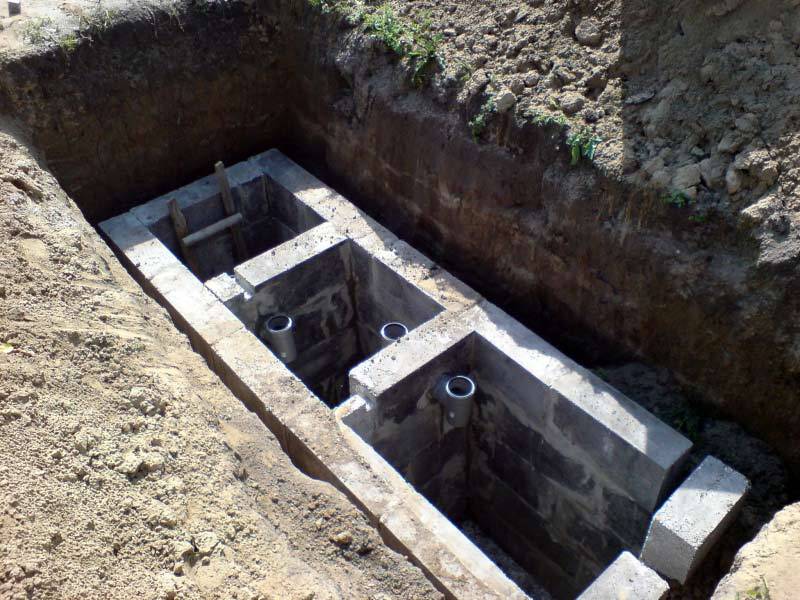
When building a cesspool of this design, keep in mind that it requires almost no cleaning.In such a system, several chambers are installed for processing sewage, first they pour into the first pit, where they are collected. Then, when they gather up to the overflow lintel, the sewage will go to the second chamber and the liquid waste will absorb the soil. The solid waste in the first pit will be recycled by pit latrine bacteria and sent to fertilizer.
What materials are used?
Various materials are used to equip a waste pit:
- Brick, concrete blocks and stone. A do-it-yourself brick pit is relatively rarely built. This is due to the fact that bricklaying itself is a very long and laborious process. And not every person has at least the minimum skills of a bricklayer.
- Reinforced concrete rings. A fairly common construction option.
- Barrels made of metal, plastic. On the one hand, they are easy and quick to install, but on the other hand, they have a relatively small volume of about 200 liters. For 1-2 people it may be enough, for a large family it is already not enough. The plastic version is more in demand because it is not afraid of rust.
Pit lined with bricks
Pit of concrete rings - detailed diagram, device
The advantages of cesspools made of concrete rings are obvious:
- Durability. The design can stand up to 100 years.
- Sustainability. Under the influence of fermentation and decay processes, concrete is not destroyed.
- Ease of installation. Significantly reduces time costs.
- Efficiency. Pollution will never enter the neighboring soil and groundwater.
Due to the fact that concrete rings are so popular and have many useful qualities, we will consider their use in arranging sewers.Inside the concrete is a reinforced mesh that increases the strength of the structure. Water will never penetrate through concrete - except perhaps in the area of \u200b\u200bthe junction of concrete rings. These places are recommended to be treated with cement with water-repellent properties.
- Before installing the rings, the bottom of the pit is covered with rubble and sand. Then a frame of reinforcement is installed, concrete is poured at least 20 cm. This is necessary to prevent sewage from entering the groundwater.
- The process can be accelerated by buying a finished bottom. They are usually sold in the same factories as the concrete rings. The cost will increase, but the time will be significantly reduced.
- The rings are lowered with a crane due to the exorbitant weight of the products. As soon as the first ring has been lowered into the pit, it is necessary to immediately make a seal at the junction with the bottom. For example, using liquid glass, a small amount of which is added to the cement mortar. Do not be lazy to process the seams inside and out. This will strengthen your confidence that the drains will not end up outside the concrete ring.
- After lowering the second element, the joints are processed in the same way. At the final stage, you install a cover equipped with a hatch, metal hooks and ventilation holes.
Pit made of concrete rings
Sealed pit - detailed diagram, device
- Light weight.
- Easy installation.
- 100% tight.
A wide range of plastic containers for sewage. They can be purchased at a hardware store.
A cesspool made of plastic requires minimal labor costs. It is enough to dig a hole of the desired shape and volume, and then place a tank in it.The concrete pillow is covered with sand, the plastic container is lowered into the pits. After connecting the sewers, the pit is covered with a mixture of concrete and sand in a ratio of 1: 5, and then with ordinary soil. It is completely ready for use.



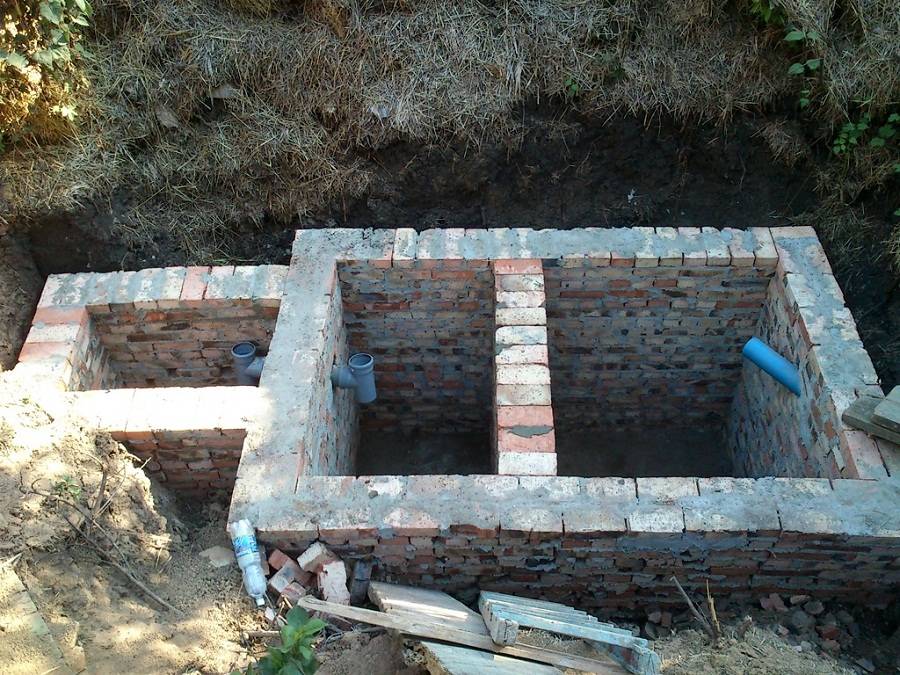
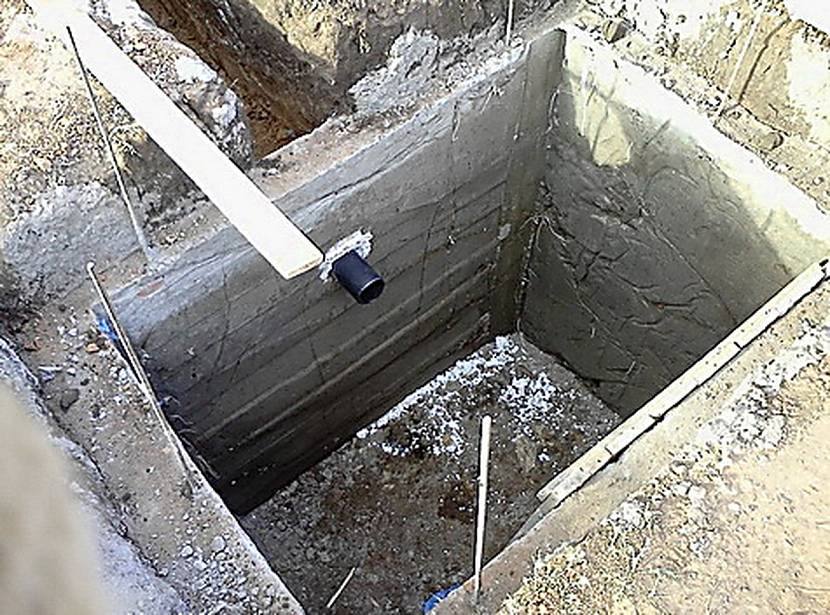
The layer of turf that was removed from the ground in preparation for work is not thrown away, but put back into place. After some time, it will quickly overgrow, and traces of some actions will remain almost invisible.
Rubber tires for a cesspool - cheap and cheerful
A tire cesspool is a worthy alternative to the first two options described above. Almost every household has unnecessary tires that have long outlived their usefulness. Do not rush to throw them away - you can build a magnificent cesspool.
Rubber wheels are used as a basis. You lay them in the same way as concrete rings. Clamps are used for fixing, and special waterproof glue is used for sealing. Ease, quick installation, low cost (and sometimes even free of charge) - these are the "trump cards" that a cesspool of tires has. The only drawback is that the bottom in such a hole in most cases is not done. Therefore, groundwater is still at risk of pollution.
Used tire pit
Rules for arranging cesspools
If a cesspool is being built, sanitary standards must be observed. Sedimentation tanks with a working volume of not more than one cubic meter of sewage and sewage per day belong to the classic version of cesspools for servicing summer houses and country houses, in which people live in intermittent conditions and water heating equipment and household appliances are not used.
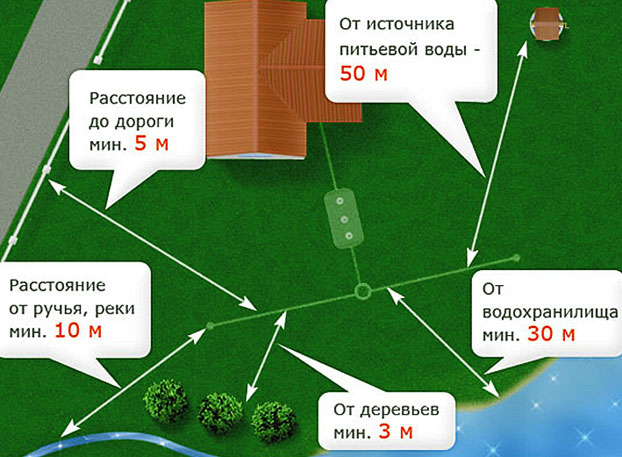
According to sanitary requirements, the distance from the septic tank to the summer kitchen cannot be less than 5 meters. In the event that the daily volume of wastewater reaches 8 cubic meters, the distance should be increased to 8 meters. In general, a pit latrine for a permanent residence should be more reliable and functional.
The rules for arranging cesspools provide for compliance with a number of requirements:
- when the drain per day is 3 cubic meters - the pipes must be located as close as possible to groundwater (distance 40-50 meters);
- pipes should be mounted upwards relative to the flow of groundwater;
- if there is an artesian source in the immediate vicinity of the house, the distance from the well to the cesspool should be at least 20 meters.
In the case when homeowners do not have the opportunity to keep the distance of the drain pit from the house and sources of drinking water, experts recommend making wells or cappings for several houses at the same time. In this case, it is necessary to observe 2.5-5 meters of indentation from the "red line". Before starting work, it is imperative to know how to make a drain pit correctly and according to the norms.
The choice of material for construction
The filtration pit can be built from whole or broken bricks, gas silicate blocks or concrete rings. Also, the walls of the structure are made of concrete, they use capacious iron containers without a bottom or old car tires. In a word, any suitable materials will fit for arranging a leaky structure.
For the manufacture of drain collectors of the second type, solid concrete structures are used, as well as sealed containers made of metal and plastic.In addition, it is possible to build a pit in the traditional way - from bricks or reinforced concrete rings, concreted its bottom, and ensured the watertightness of the walls.
brick
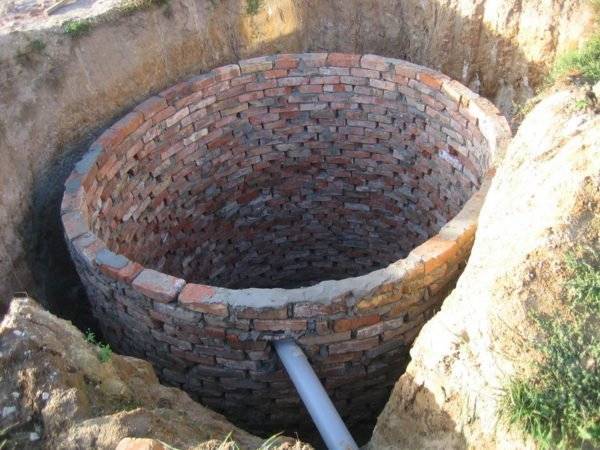
Brick pit absorbing type
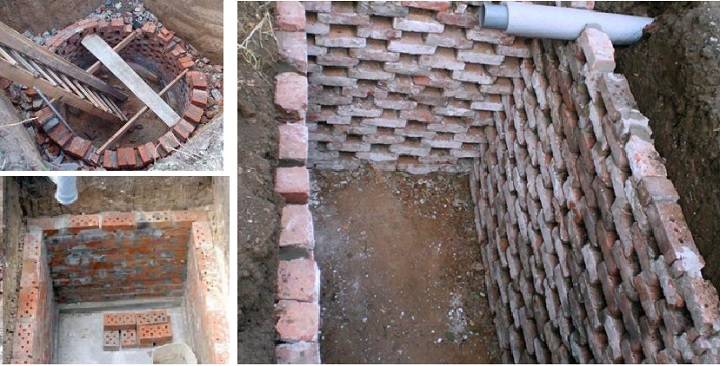
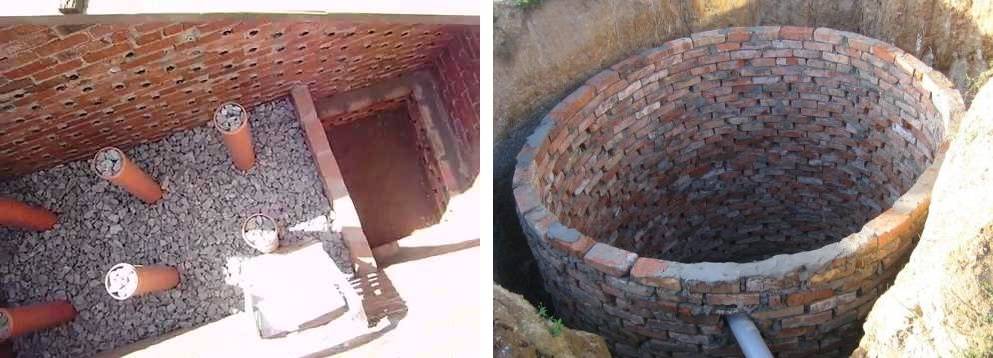
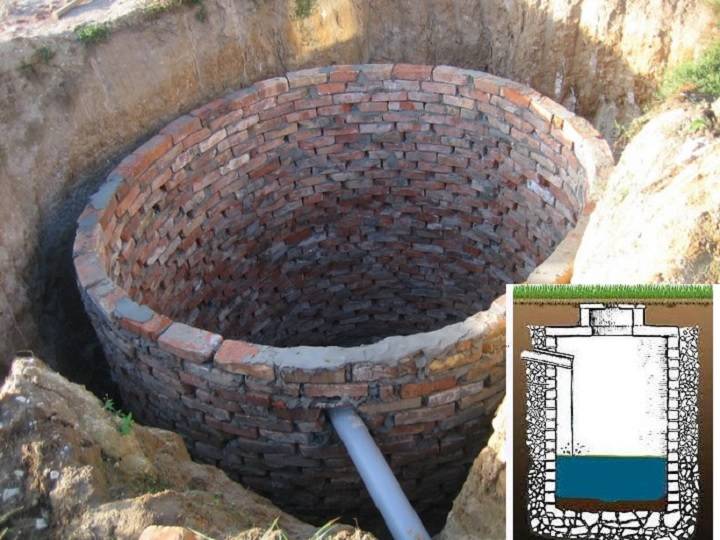
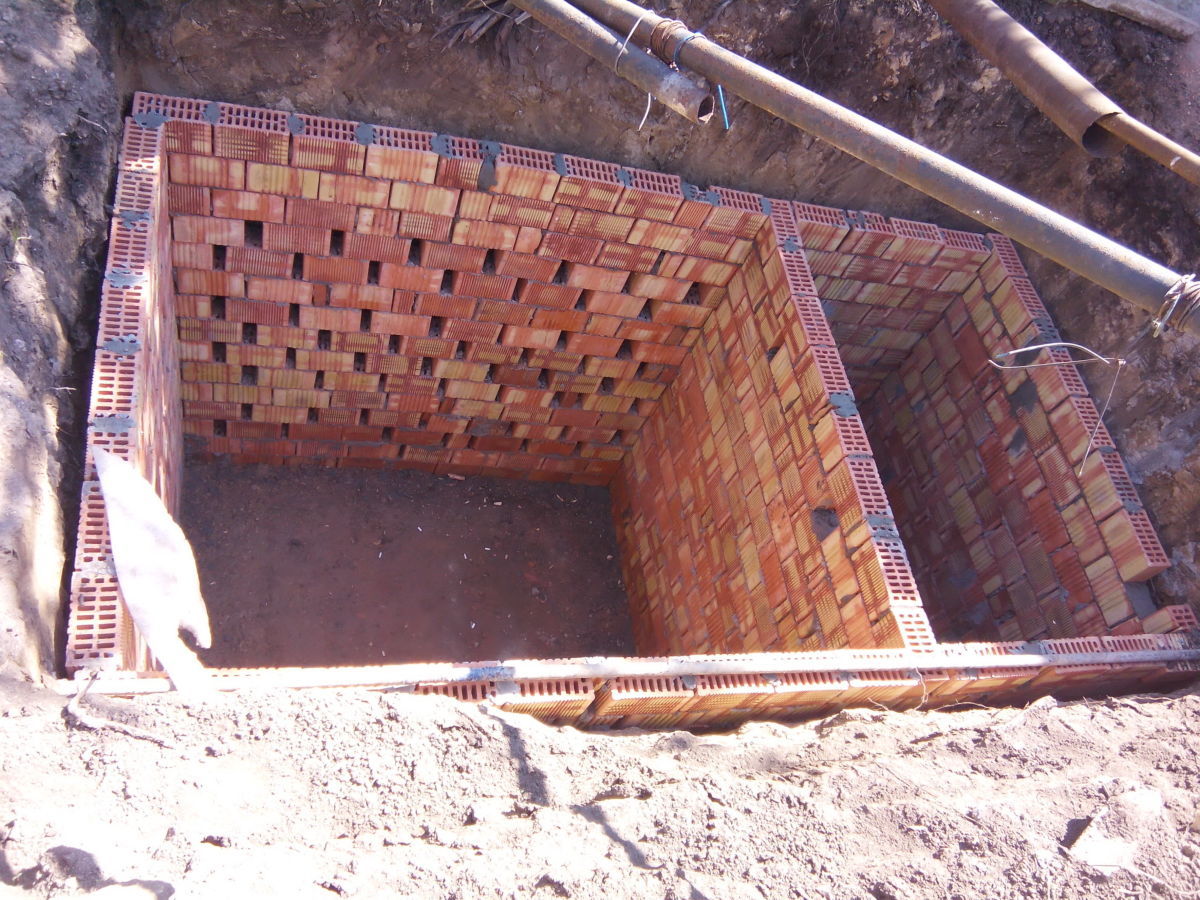
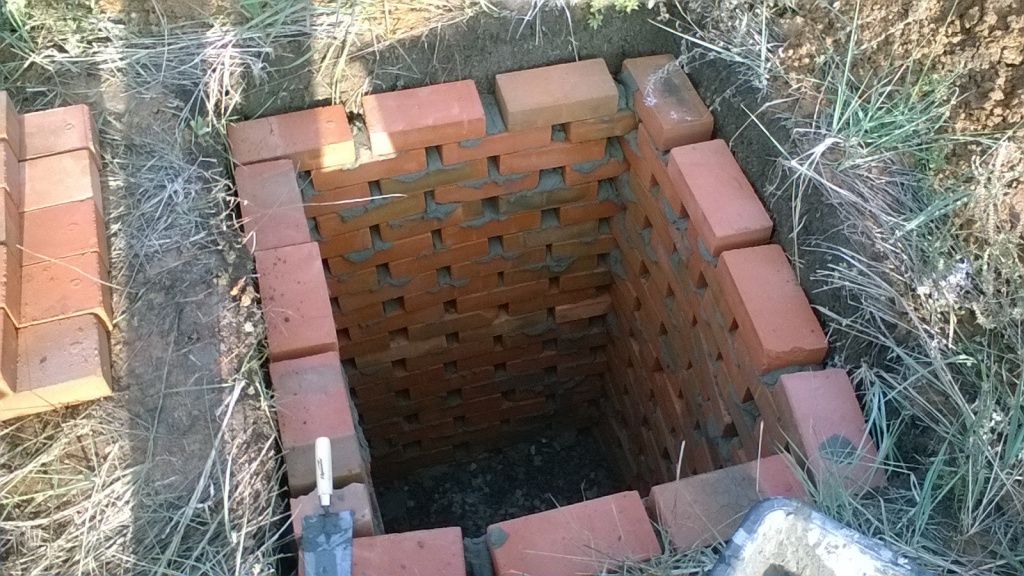
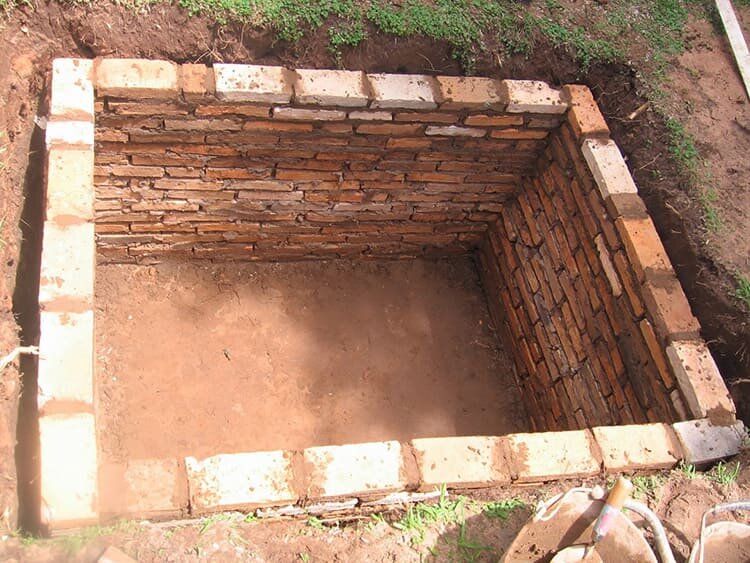
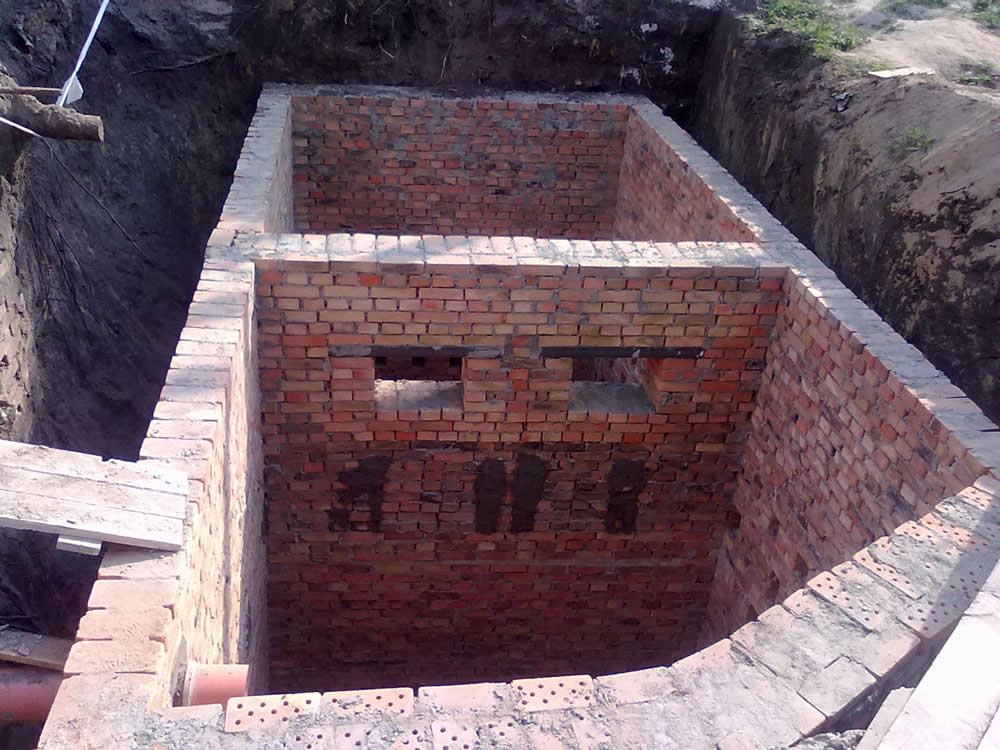
A waste tank built of brick is one of the most inexpensive and simple options, especially if you need to build a pit without pumping. Brick allows you to make the walls solid or with gaps that increase the filtration capacity of the structure. The advantages of this design include the possibility of building a pit of any size and configuration. Brick absorbent wells are not without the disadvantages inherent in any leaky systems - silting and a negative impact on the environment. In addition, masonry brick under aggressive operating conditions quickly collapses, which leads to a short service life of filtration systems - about 20 years.
From car tires
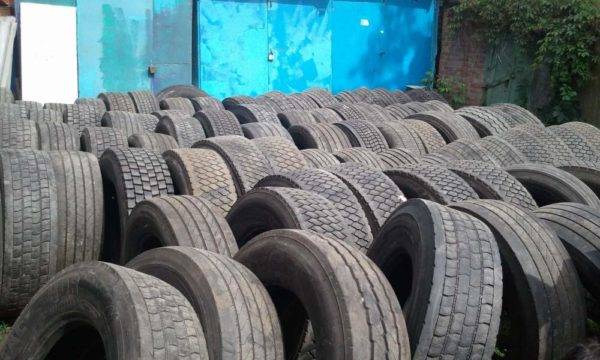
Worn truck tires are a cheap and durable material for equipping a sewage tank without pumping
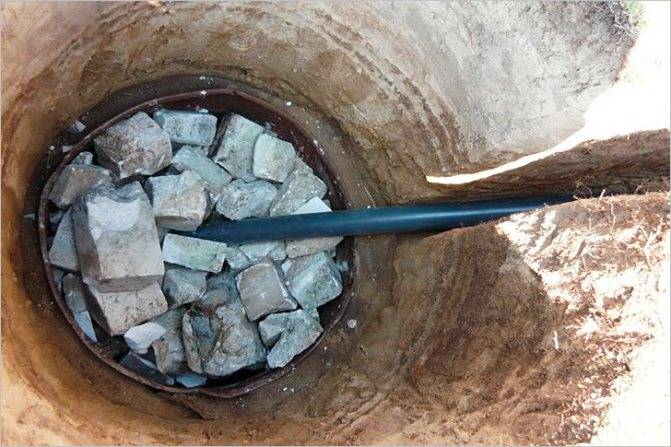
It is possible to build a drainage system for the bathroom and toilet of a country house at a minimal cost, using car tires as a building material for an absorbent cesspool. To do this, it is enough to dig a pit of sufficient size and equip filter layer of rubble at its bottom. Tires installed one on top of the other form a durable structure that prevents shedding of the walls of the structure.



As in the previous version, the negative aspects include a high probability of environmental pollution with wastewater and tire decomposition products, rapid silting and a decrease in the efficiency of the system.
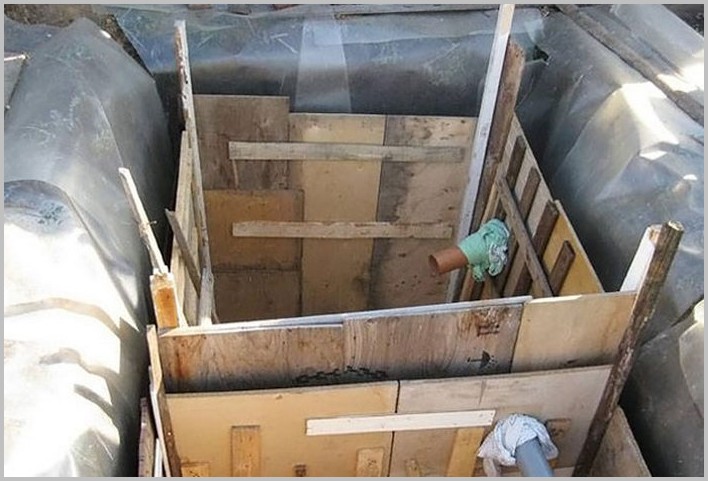
From monolithic reinforced concrete
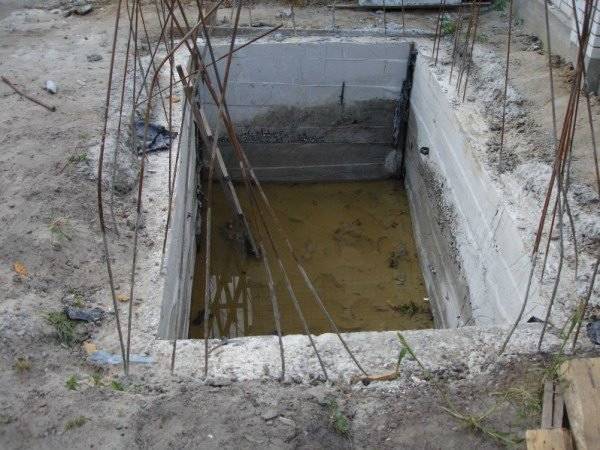
A concrete tank is one of the strongest and most durable sewer structures.
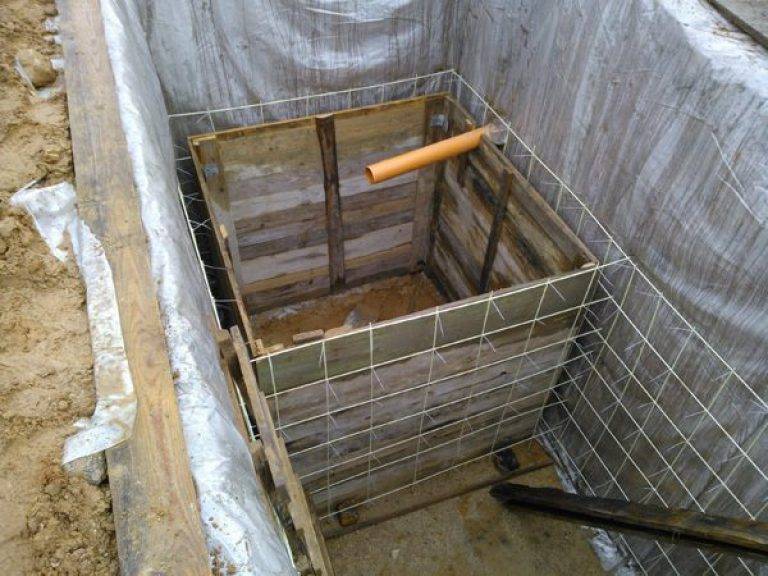
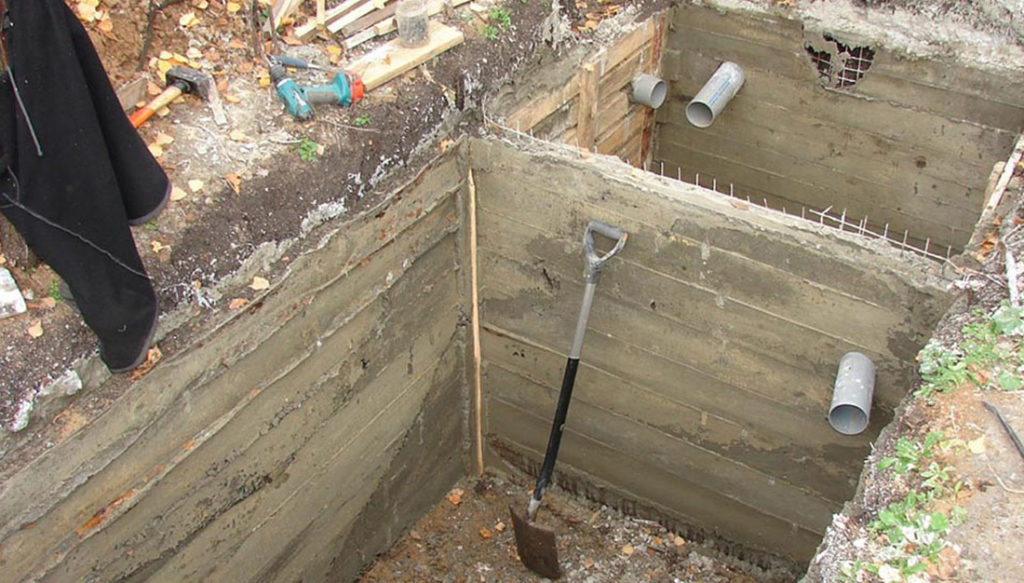
A cesspool of this type is a structure with concrete walls and a bottom constructed by pouring concrete mixture into an installed crate. Despite the fact that such a container is considered the most reliable and durable, high labor costs do not allow us to call this design the best. Currently, this method of construction is being crowded out by ready-made sets of reinforced concrete rings and covers.
From concrete rings
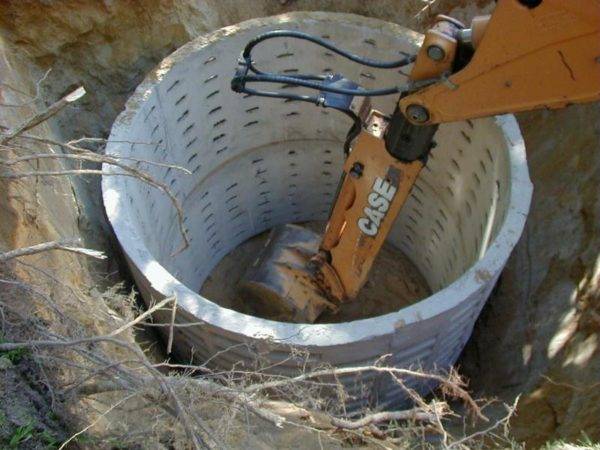
Depending on the tightness requirements, concrete rings can have solid or perforated walls.
The arrangement of a cesspool from cast concrete rings can only be partly attributed to inexpensive options. This is related tothat building materials will have to not only be bought, but also hire equipment for loading and transporting to the site. In addition, the installation of heavy reinforced concrete products will also require the use of lifting mechanisms (further we will tell you how, if you wish and have free time, you can get by with just a shovel). Nevertheless, it is this option that is the simplest and most durable way to equip both absorbent cesspools and hermetic structures. Reinforced concrete rings with perforated walls are currently being produced, which are ideal for the construction of waste collectors without pumping.
From metal and plastic containers
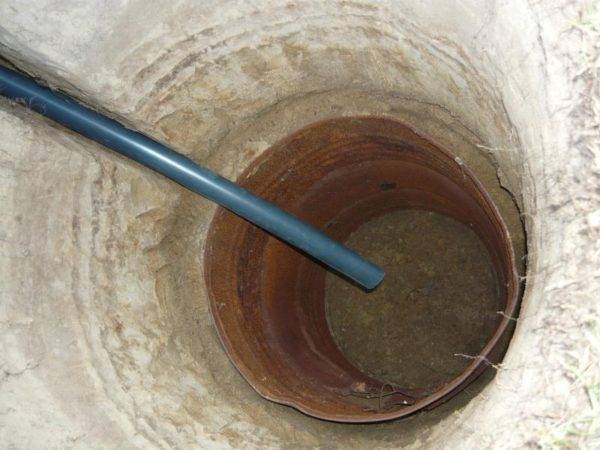
Even from an old metal barrel, you can build a filtration pit, which will ensure the efficiency of the sewerage of a country house
The easiest way to make a sewer pit is to bury a plastic or metal container of a suitable volume at a depth. Moreover, this method allows you to get both a sealed structure and an absorbent system. The difference between the second option and the first one is the absence of the bottom of the tank and the presence of perforations in the walls. In addition, in the latter case, you will have to additionally prepare the bottom of the pit by making a crushed stone filter pad.
Cesspool volume
Homeowners need to decide in advance (before choosing the type of cesspool) how to make a drain hole of sufficient volume. Its required capacity is calculated by the formula:
V=Ndays•Xpeople•Vday/person
Wherein:
- V is the estimated volume of the cesspool, m3;
- Ndays - the number of days of work of the pit for accumulation (before pumping out);
- Xpeople - the number of permanent households;
- Vday/person - daily water consumption by one household, l.
For example, for a private household with permanent residence of 5 people, cleaning the cesspool once a month and water consumption of 150 l / person, the volume of the cesspool will be: V = 30•5•150=22.5 m3.
We increase the resulting volume by at least 10% (filling the pit to the top is prohibited by the norms) and we get the volume of the cesspool: V = 22.5 + 22.5 • 0.1 = 24.75 m3. Let's round the value up to 25 m3 - better more than less.
The correct value of daily water consumption depends on the need of the household for bathing and washing, i.e. from their daily habits. According to statistics, city dwellers use more water than rural dwellers.




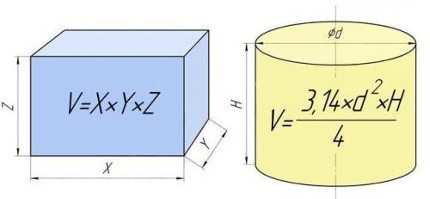
You can, of course, prepare a volumetric septic tank, calculating its cleaning once every two months. But the sewage tank truck does not accept more than 11 cubes
It is not worth digging a cesspool deeper than 3 m.Its bottom should not be in direct contact with the groundwater horizon; according to the standards, it must be at least 1 m above their level. Suppose that in the spring-autumn rainy season, the perch is at a depth of 3.5 m. This means that the depth of the drain pit can be no more than 2.5 m.
Since laying the walls of a rectangular cube is easier than that of a round tank, a rectangular cesspool will be considered. But a round septic tank is more reliable in operation, since the pressure of the soil on its walls is much lower.
The volume is calculated by multiplying the sides of the cube. We determine the long side (width) at the place of the future placement of the cesspool, taking into account the convenient entrance of the sewage truck. Let the width be 5 m. Then the length will be 25:2:5=2.5 m.
There is no need to get carried away with the capacity of the drain pit. The capacity of the sludge tank, as a rule, does not exceed 10 m3. This means that such special vehicles are not capable of emptying an overflowing sewer bin of a larger volume (as in the example above) and taking out waste at a time.
It is more rational to arrange a cesspool with a volume of up to 10 m3 and empty it every two weeks
After all, a large sewer bunker will take away usable area in a suburban area, which can be used for something no less important.
Requirements for the arrangement of cesspools
Construction and sanitary rules clearly prescribe the procedure for arranging cesspools.
The basic rules for equipping cesspools are as follows:
- The waste collector must be located on the territory that is the property of the owner of the residential building.
- A cesspool can be located no closer than 20 meters from a drinking water well and 10 meters from a water supply line. This will prevent their contamination in case of destruction of the sump.
- From the houses located in neighboring areas, the cesspool should be located at least 10-12 m. This will protect the flooding of these buildings with sewage in case of unforeseen situations.
- There must be a distance of at least 1 meter from the external fence to the drain tank. It can be increased if there are residential buildings, greenhouses, cowsheds or chicken coops on the adjacent site right next to the fence.
- The sewage pit should not be dug deeper than 3 meters. Otherwise, the sewage machine will not be able to pump them out. The tank hatch must open freely and completely so that the intake hose can enter it.
- Since fecal sewage emits harmful and explosive gas, underground tanks for collecting it are equipped with ventilation. For this, a pipe with a diameter of 100 mm is used, which should rise 60-70 cm above the ground.
- In order for the sewer truck to be able to drive up to the facility to pump out its contents, it is necessary to have a free entrance that can be used all year round, in any weather.
- When 30 cm remains to the top of the pit, the operation of the cesspool must be stopped and a special vehicle must be called.
You should pay attention to the presence of various communications near the septic tank. The minimum distance to them should be:
- to gas and reinforced concrete pipes - 5 m;
- to pipes made of cast iron with a diameter of more than 200 mm - 3 m;
- up to cast-iron pipes with a diameter of more than 200 mm - 1.5 m.
Failure to comply with these distances can lead to conflict situations associated with a violation of the tightness of sewage pits.
In most country houses, sewage tanks are used in the construction of autonomous treatment facilities ....
Cesspool made of other materials
In addition to the most common version of a cesspool made of concrete rings, there are many analogues. Some are cheaper but not suitable for permanent residences, some are more expensive but have restrictions on use in certain types of soil.




Cesspool made of bricks
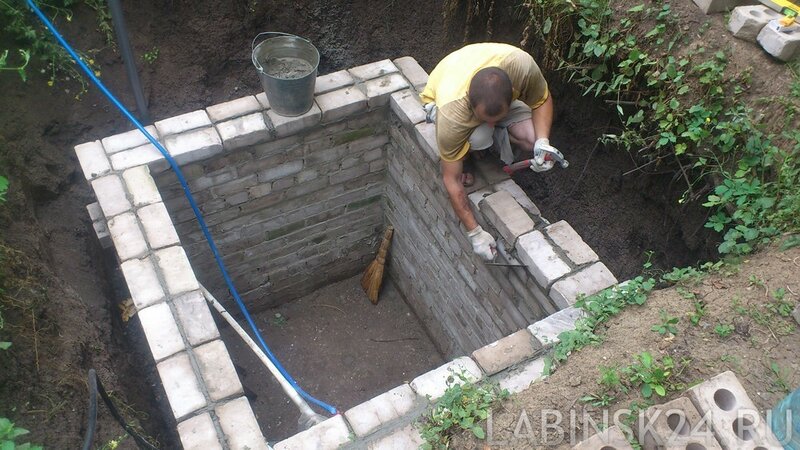
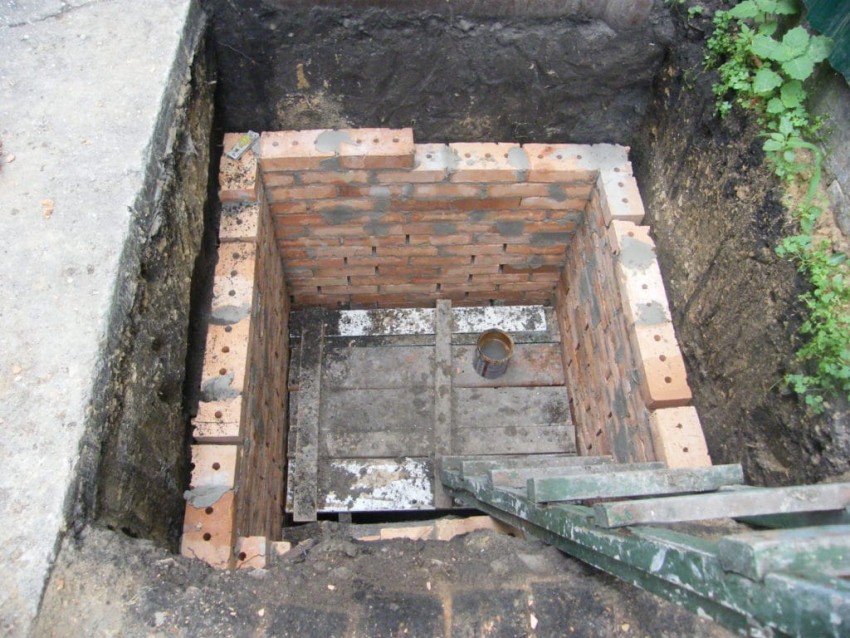
To lay out the walls of the well with bricks, it is not necessary to be a bricklayer. It is enough to have minimal knowledge and acquire basic bricklaying skills. To complete the work you will need:
- shovel ordinary bayonet - for leveling the soil in the right places;
- shovel shovel - for collecting and removing excess earth;
- stairs - in order to go down and get out of the pit;
- tape measure - to measure the required dimensions;
- buckets - for carrying mortar and various materials;
- trowel - to apply the mortar to the masonry;
- level - allows you to control the strict verticality of the walls.
Of the materials you will need - brick, cement, sand and water.
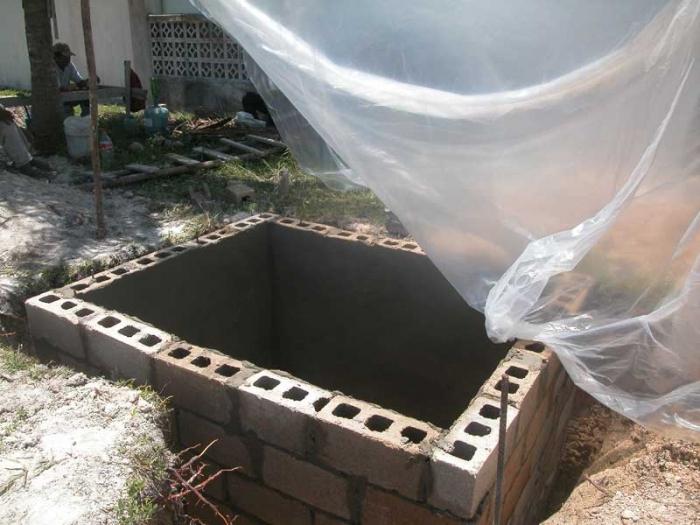
If you are laying a hole with a sealed bottom, then first you need to prepare a concrete base. To do this, it is necessary to make a compacted sand cushion with a thickness of at least 20 cm. After installing the cushion, you can start pouring concrete. The thickness of the concrete bottom should be at least 5-7 cm, it is also possible to reinforce such a base to make it more rigid.
After the concrete has hardened, you can begin the construction of the masonry. At the same time, there are no special requirements for either the quality of the brick or the quality of the masonry itself, the main thing is to maintain the level and the absence of cracks in the masonry. The pit can be either square or round - it all depends on your imagination.
If you are building a sewer without a bottom, then as a brick sole, you need to make a pillow and pour concrete in the form of a ring so that water can escape into the inside.
Cesspool of tires
A cesspool made from waste car tires is distinguished by its low cost and ease of assembly. To install such a pit, you will need old tires of the desired diameter, tires from a passenger car are suitable for a small volume, and for a large one you can take from a truck or even a tractor.
To add usable area, the side parts of the tires must be cut in a circle. You can easily do this with a jigsaw or a grinder. But if they are not available, an ordinary, only very sharp, knife with a rigid blade will do.
The prepared tires are stacked one on top of the other in a pit dug in advance for the diameter of the blanks and fastened together with plastic ties, bolts with nuts, etc. If necessary, the joints between the tires can be sealed with bitumen or other adhesive.
This type of cesspool is often used to collect wastewater in a bathhouse or summer kitchen.
Cesspool made of plastic
The easiest way to make a drain hole is from a ready-made plastic container that you can buy at the store. You just need to dig a pit and install the container itself there.
The indisputable advantages of this method is that you will deprive yourself of an unpleasant smell and be one hundred percent sure that the drains will not fall into the soil and will not mix with groundwater. But as it fills up, you will have to call the sewage equipment for pumping out, which will undoubtedly entail spending money.
Also, restrictions for such containers are imposed by the level of groundwater, since at their high level, the container can be squeezed out of the ground.
How to clean a cesspool
You can pump out the contents of the cesspool by inviting specialists with equipment that volume must not be less than your cesspool. The hose of such a sewage machine should be enough to completely lower into the pit, and the entrance to the pit should be convenient.



There are also special tools for cesspool cleaning, which are completely safe for nature bacteria that process waste products. You can buy such funds at any store for home and garden. Such products remarkably clean even the walls and bottom of the pit, processing solid waste into sludge, gas and water.
Thus, the cesspool hole in a private house is an economical option for organizing sewerage, requiring attention only a few times a year. The indisputable advantage of a cesspool made of concrete rings is its durability, low cost and the possibility of installing such a system with your own hands using minimal equipment.
How much does it cost to make a cesspool on the site
When determining the costs for the construction of a sewer collector, it should be assumed that the arrangement of a small capacity is not economically feasible. It is best to start calculating the total cost for devices from 3000 liters. Several major factors affect your financial investment. To make a cesspool whose price matches your capabilities, you should analyze the following parameters:
- the cost of materials for the selected type of device;
- prices for the services of specialists involved in the construction.
 For example, let's take a cesspool structure of two rings of one and a half meters in diameter. A neck is supplied with these elements, the presence of which will completely hide the main part below ground level.
If you order a turnkey installation, then the calculation includes:
- A complete set of materials, including concrete preparation components, waterproofing and a manhole.
- Delivery depending on the distance to the installation site.
- Digging followed by backfilling of the pit.
- Mounting measures for the installation of rings.
- Concreting the bottom of the well.
At the moment, all these stages will cost the customer 30,900 rubles.



