
- How to choose a place to install a septic tank?
- How to properly install a septic tank?
- What to do if water enters when digging a trench?
- Depth of soil freezing and GWL
- GWL closer than 0.5 m
- From 0.5 m and more
- 1.5 m or more
- Features of the system assembly
- Design choice
- The specifics of installation work
- Septic tanks for cottages with a high level of groundwater
- The nuances of installing a septic tank in quicksand
- How to determine how close is
- How to install an autonomous sewer
- The choice of septic tanks for areas with high GWL
- Finished structures
- Concrete septic tanks
- Sewerage at high groundwater
- Risks of proximity to groundwater
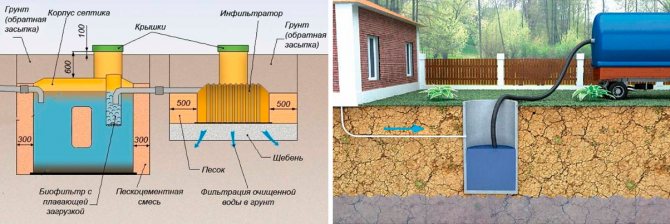
How to choose a place to install a septic tank?
The installation site must first of all meet sanitary standards:
- The distance from the residential building must be at least 5 m.
- From sources of drinking water, the distance should be from 50 m, and from open reservoirs - 30 m.
In this case, it is necessary to take into account the location of the buildings so that they are at a convenient distance for servicing the septic tank. Also, do not forget that the sewer pipe should go at an angle. The greater the distance from the sewage discharge points, the greater the depth required based on the condition of a slope of 2-3 degrees per meter of length, while if there is a minimum GWL up to 1 m, this is simply unacceptable.
When creating sealed containers for the removal of wastewater, it will be necessary to organize a convenient vehicle access for pumping them out.
How to properly install a septic tank?
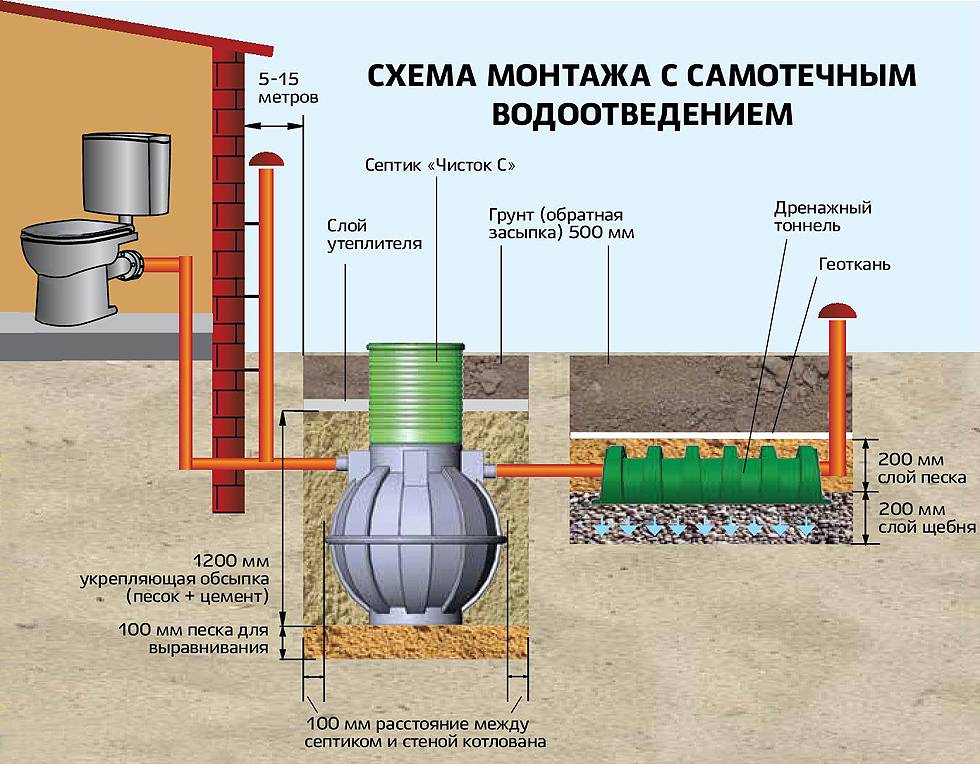
A septic tank for a high groundwater level must not only be installed on a stable base, but also be firmly fixed to prevent its displacement or deformation of the body in weak and moving soils. The base is a compacted sand and gravel cushion, which is poured into a specially prepared trench. The size of the trench is usually selected so that its walls have a gap of at least 30 cm from the walls of the storage tank. This is required to minimize the effect of heaving soil layers.
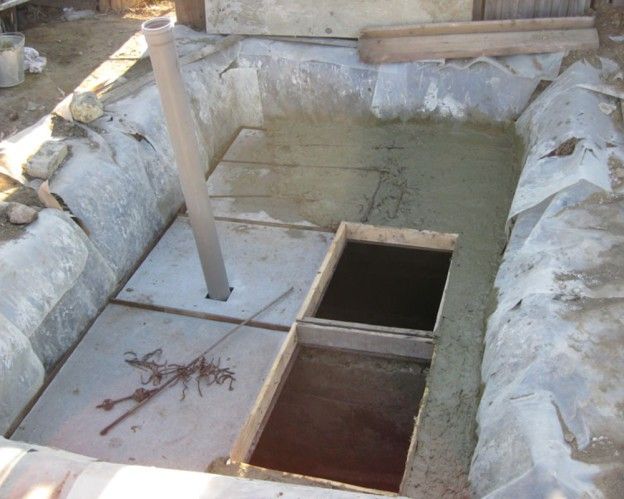
However, when the GWL is located at a level of up to 1 m, this will not be enough and it will be necessary to additionally pour a concrete monolith or lay a finished reinforced concrete slab, after which it must be waterproofed and insulated. It will serve not only as a base, but also perform the function of fixing in case of insufficient filling of containers, preventing them from surfacing. Failure to use insulating layers can lead to cracking of concrete and loss of strength. Sometimes drainage pipes are installed at the bottom to drain water from the trench.
Recommended reading: How a sewer septic tank works
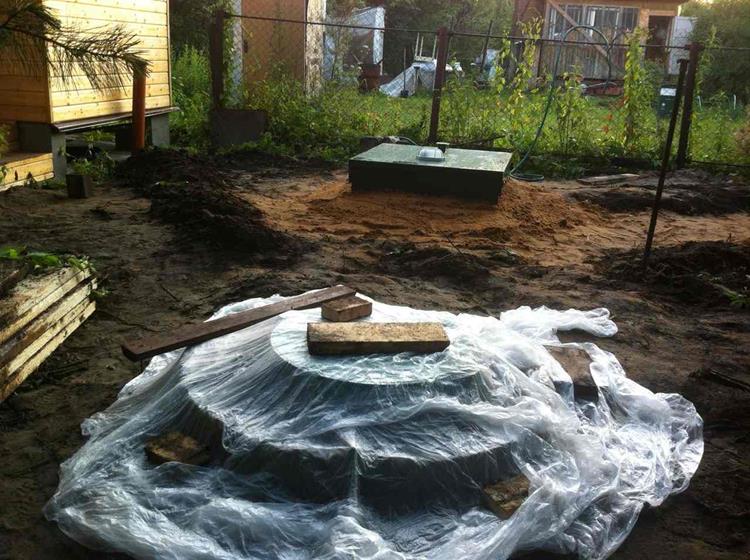
The supply pipes will also require the laying of a sand and gravel layer in order to prevent damage to it in case of possible swelling. After that, it is necessary to install a septic tank and fix it on anchor straps to a concrete base, as well as perform its waterproofing. Pipes are connected, and then a sand-gravel composition with the addition of dry cement is poured on the sides of the tank. The dimensions of the crushed stone should be up to 5 mm.
At the final stage, pipes for sewer ventilation are installed and the septic tank is covered with earth. Simultaneously with backfilling, fill the container with water by about 1/3 of its volume. The height of the ventilation pipe must be more than 60 cm above ground level.
What to do if water enters when digging a trench?
It should be noted that if there is water in the trench, installation work is strictly prohibited. Therefore, it is worth choosing one of the options for solving this problem, which are given below:
- Use a drain pump to pump out the accumulated water.
- Perform work during the winter. However, as a basis, use not pouring concrete mortar, but ready-made reinforced concrete slabs.
- Use the method of ground installation of a septic tank with forced injection of sewage.
- To make a sealed monolithic frame in the form of a box according to the size of the trench.
Depth of soil freezing and GWL
The presence of a high level of groundwater penetration affects several positions associated with laying the foundation. They are clearly spelled out in SNiPs. And most often in the rules there is a ratio of GWL with the level of soil freezing. Because these two indicators are the main factors that reduce the strength of the concrete structure. Here are a few positions.
- If the water level is less than the freezing level, then the foundation is calculated according to the usual scheme, that is, only for the load from the house.
- If the soil on the construction site is weak, soft and mobile, then the foundation is laid below the GTL. At the same time, a drainage system is necessarily organized for the removal of groundwater.
- If the groundwater level is very high, then the strip foundation is not recommended to be erected.
- If there are frequent floods in the development area, then the only option is acceptable - a house on stilts. In this case, the pillars are driven into the ground below the level of its freezing.
GWL closer than 0.5 m
In this situation, the only solution is piles. There are three options here: monolithic ready-made, screw from a steel pipe and bored.
- The ideal option is monolithic. They have long been used in construction, they have an increased bearing capacity, they easily withstand frost heaving. In addition, there is no need to think about draining the soil. True, this requires special equipment.
- Screw today have become very popular. In small private housing construction, such foundations for high groundwater are the best and cheapest solution. Their only drawback is not the highest bearing capacity. Therefore, you will have to calculate the number of piles and the distance between them. It is recommended to install screw piles to a depth of no more than 3 m.
- As for bored structures, this is a good option that has a high bearing capacity. But this technology also has its minus - a large amount of drainage measures will have to be carried out.
From 0.5 m and more
A strip foundation can be used, but only shallow, which is usually built for small, light buildings. In principle, he will withstand the frame cottage. In this case, it is recommended to build a foundation with an expanded base.
To the question of how to make a foundation slab. When pouring it to a depth of up to half a meter, it must be understood that its thickness and method of reinforcement will depend on the number of storeys of the building, as well as on the type of materials from which the walls will be mainly built. In this case, it is necessary to think over the technology of thermal insulation.By the way, this is an important stage in the construction of the plate.




If the soil on the site is very weak, then the pillow under the foundation of the house for high groundwater is covered until its materials displace excess moisture and stop going deep.
1.5 m or more
Comparing the conditions described above, it should be noted that in this case it is possible to use foundations on groundwater of tape type and slab type. But both designs should be of a shallow type.
Features of the system assembly
Consider the specifics of creating sewers at a high level
ground water. The overall design of the system remains the same. Can be
used:
- cesspool;
- septic tank;
- fully enclosed water treatment plant.
If the thickness of the aeration layer (UGVA) is large enough,
you can build a system based on standard technologies. However, it is necessary to ensure
tightness of connections and receiving tanks. If the ground water seeps
into the container, there will be a mixing of effluents and soil moisture. It threatens to pollute
drinking water wells. For cut-off, aeration plants are used for sewage at high
UGV. These are the devices
supplying oxygen to the soil. Outwardly, they are spirals of
a thin hose through which oxygen enters the soil. It stimulates the development
aerobic microorganisms that produce biological cleaning of the soil.
The recess under the tank should
dig with a margin. It is necessary to make a pit, covered with a layer of sand. over
beddings establish an anchor - a concrete slab, to which, with the help of
metal strips or nylon belts secure the container.This will rule out
the mobility of the elements of the system and maintain the tightness of the joints.
Arranging sewerage at high groundwater is very
difficult. It is recommended to carry out earthworks in winter so that wet
quicksand did not fill the pit. Digging frozen soil is difficult, but digging in mud
even more difficult. It becomes possible to make a recess of the desired size.
Arrange a mandatory sand cushion and a concrete slab under the tank. They are
compensate for heaving loads and partially drain soil moisture.
Design choice
Local sewerage in a private
a house with a high level of groundwater can have different types of construction:
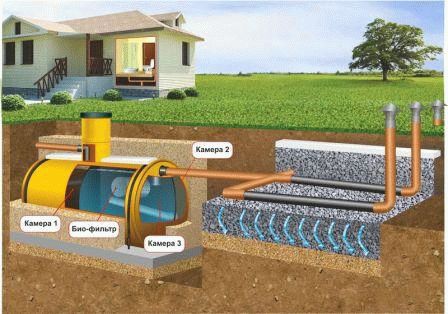
- flow septic tank. It is necessary to use multi-chamber structures (minimum 3 tanks);
- local treatment facilities. This option will cost more, but the effect of it is much higher.
The level of cleaning produced
septic tank, does not allow the use of drains for domestic or business purposes.
This means that the water from the last section will have to be sent for post-treatment. AT
in conventional systems, these are fields or filtration wells. However, sewerage at high GWL
rarely allows soil post-treatment. For this, it is necessary to comply
the following conditions:
- the thickness of the aeration layer should be large enough;
- there should be no drinking wells or wells nearby.
Clarified wastewater from local
treatment facilities (VOC) comply with SanPiN standards. This allows
use them for business purposes.
limiting factor
becomes the cost of the equipment. A ready-made treatment plant will cost too much, and
building a homemade complex requires skills and time.
Experts recommend choosing
prefabricated plastic tanks
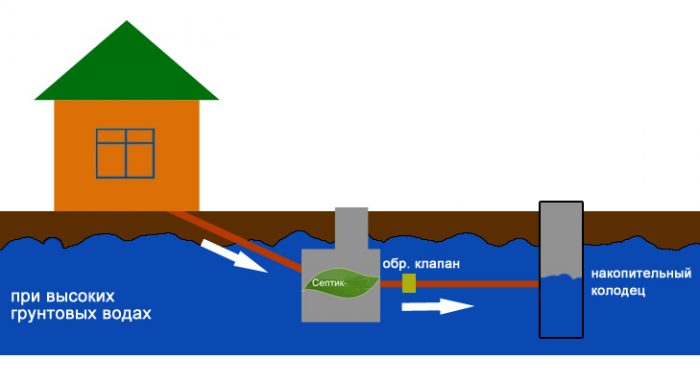
This is important, since to make a sewer, if groundwater is close,
in the most hermetic way possible. If the creation of a full-fledged sewage
station will turn out to be too costly a plan, it’s easier to get by with a cumulative
capacity
It will have to be cleaned frequently, but the risk of contamination of the aquifer
practically excluded. When using a septic tank, you will have to install a line
effluent for safe disposal. This will require the use
pumps, maintenance and repair of equipment.





The specifics of installation work
Produce
assembly of the system is recommended in winter. The liquid will freeze, installation can be
will produce in a dry trench. If this option is not suitable, you will have to acquire
or rent a pump. With its help, the pulp will be pumped out.
The general scheme of work is standard. The differences are only
in measures to cut off loads. Before you make a sewer, if a high level of ground
water, it is necessary to make a protective crate. Sometimes it is also called
formwork. This is a rigid box made of boards or metal elements that protects
tank from external loads. Frosty heaving of the soil is dangerous, it can crush
capacity. Creating a protective cocoon will compensate for lateral pressure
frozen pulp.
If the fluid flow is large,
will have to make a withdrawal. The pump will run almost continuously
mode. This contributes to the rapid development of the resource of the mechanism, the pump will have to
often repair and change.
Wet piping is not recommended. It is necessary to conduct a trench along a dry aeration level.High-quality insulation of the outer line is required, otherwise you will often have to break through ice plugs.
Septic tanks for cottages with a high level of groundwater
The construction of a country house does not end with the construction of a box. Ahead is the most difficult and crucial stage - the construction of engineering communications. It is they who determine the comfort of living outside the city.
Perhaps one of the most important systems is drainage. In most suburban villages there is no central sewage system, which means that its construction is the concern of the owner of the house. It is especially difficult to organize a sewer network if the house is located on a site composed of quicksand or having a high level of groundwater.
Are you ready to give up the usual city comfort and want to live in a country house with "comfort in the yard"? Probably not. So it's time to choose equipment for the drainage system.
There are two possible options: a flow-through septic tank or autonomous local treatment facilities. At first glance, it may seem that both options have their advantages and disadvantages, and this would be true if we were talking about areas with normal GWL. With quicksand, everything is much more complicated. Let's look at all this in more detail.
The nuances of installing a septic tank in quicksand
It is incredibly difficult to install a septic tank for a private house with a high level of groundwater in quicksand. Quicksand is a mixture of sand and water. It quickly erodes the walls of the pit, filling it. In clays and loams, installing a septic tank in a quicksand is easier, but not by much. In any case, such work is very labor-intensive.
Digging a pit for a septic tank in a quicksand is easier in winter, as the soil freezes through, does not float, and the level of groundwater and flood waters decreases.Despite this, there remains a risk that groundwater will not fall below the required depth.
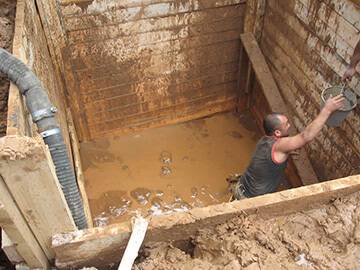
In the summer, when groundwater reaches its maximum level, the installation of a septic tank in the country is necessarily carried out with the installation of formwork. This complex, time-consuming work is carried out in several stages:
- The pit for the installation of a septic tank is dug until water appears. The depth depends on the characteristics of the site.
- After the appearance of water, the assembly of the formwork begins. With high groundwater, formwork with a frame is required. The frame is assembled from a durable beam, on which guide boards are attached. Their choice is also not an easy task, because in case of an incorrect calculation, the soil pressure will simply crush the entire formwork.
- If there is a lot of water coming in, then it is necessary to additionally dig a drainage pit into which water will leave the pit. A drainage pump for dirty water is installed in the pit and groundwater is constantly pumped out.
- Formwork installation. After assembly, the frame is lowered to the current bottom of the pit and earthworks continue. As the depth is deepened, the frame is lowered and new boards are stuffed on top. Constant pumping and installation of boards occurs until the required depth is reached.
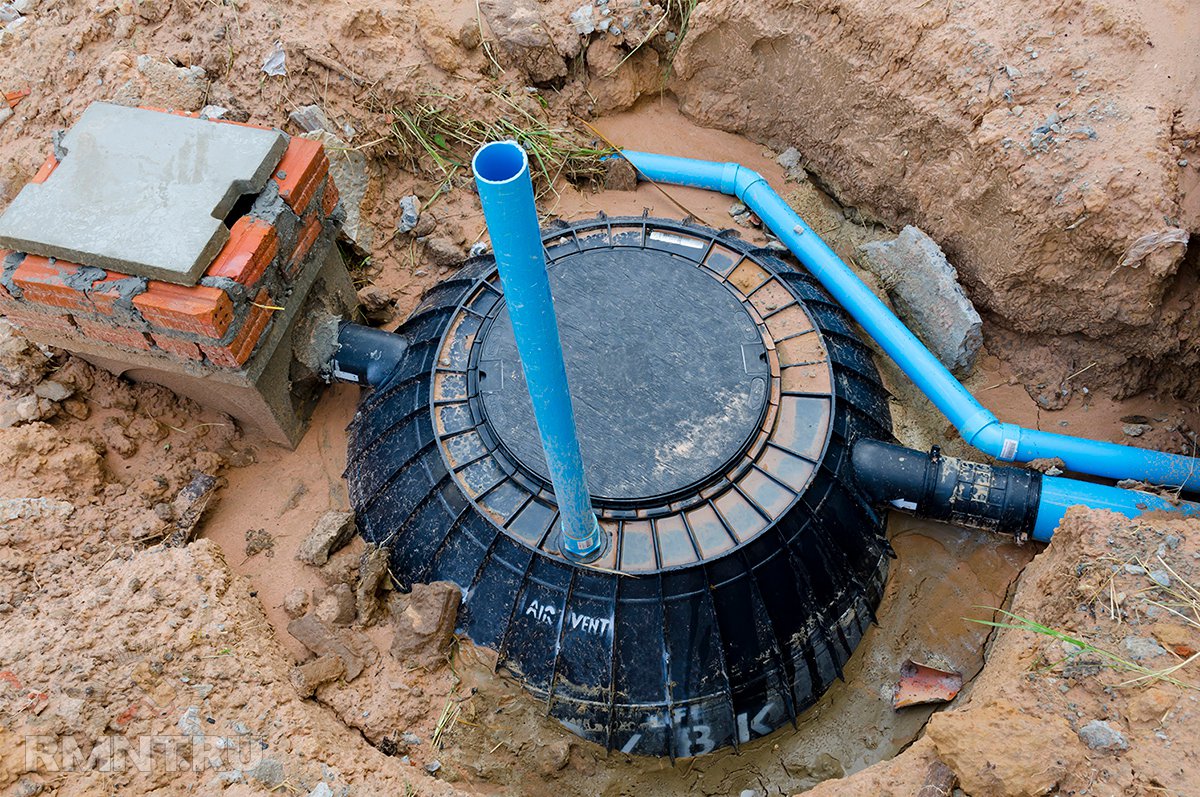
- A septic tank is lowered into the resulting pit. Regardless of the model of the septic tank, all installation work is carried out manually, without the use of special equipment. Immediately after installing the station in the pit and leveling it in level, it is necessary to fill all the chambers with water as quickly as possible.
- At the last stage, the development of a sewer trench takes place, this stage also complicates the fluidity of the soil, a pipeline is laid and the sewer pipe is connected to the station.
In practice, the installation of a septic tank at a high level of groundwater can be complicated by other factors, for example, the complex topography of the site or the special location of the station, the lack of the possibility of a quick intake of water or the impossibility of its rapid discharge, for example, into a storm drain, etc.
Septic tanks for summer cottages with - high groundwater levels In most suburban villages there is no central sewage system, which means that its construction is the concern of the owner of the house. It is especially difficult to organize a sewer network if the house is located on a site composed of quicksand or having a high level of groundwater.
How to determine how close is
The first thing to do is to define the GWL and understand the extent of the problem.
Here are 5 ways to identify it:
- The easiest way is to ask the locals. Perhaps the neighbors already know at what depth the GWL is located or they have a well on the site.
- Flora as a guide. Certain types of plants can only survive when the water comes close enough to the surface. The following table will help guide you:
GW, mm Plants 0-500 carex (sedge), bulrush, wild rosemary 500-1000 rhalaris, foxtail, bulrush 1000-1500 spruce, heather, blackberry, fescue from 1500 and below alfalfa, plantain, clover, lingonberry - Site inspection. If wetlands are present, then the GWL is located close to the surface or the soil is too clayey. Also check out the surrounding area.
- grandfather's way. To do this, you need a clay pot, a tuft of wool, defatted with white spirit and an ordinary chicken egg. A small layer of turf is removed with a shovel in the place where the septic tank will be located.They put wool, on top - an egg and cover with a pot. Check in the morning. If water drops are clearly visible on the egg, the GWL is close to the surface.
- Drilling pits at several points on a suburban area. This method is rather laborious. But it is 100% reliable. Step-by-step instruction:
- Find a good long drill - at least two meters - and a flat pole, on which put marks every 100 mm.
- Determine the points for drilling in the territory of the site. It is not necessary to drill a well only in the intended location of the sump. It is possible that it will have to be relocated, so select several points throughout the site.
- Drill wells. Lay waterproof material on top so that precipitation cannot enter the shaft. Please wait 24 hours.
- Using the prepared pole, determine the GWL: immerse it in the well, reaching to the bottom, pull it out and subtract the length of the wet part from the depth of the mine.
 Not bad help and folk signs. This is especially true in summer, when drilling cannot 100% guarantee the accuracy of measurements. The fact is that in the heat, the liquid drains into the nearest reservoirs and the level sometimes drops - quite significantly.


Places of possible flooding will help to identify midges that feel the proximity of moisture and will swarm in this place. And you can also navigate by the abundance of dew in the morning and the density of fog in the evening. The more clearly these signs are manifested, the closer the liquid is to the surface. Obviously, when constructing any underground structures, it is desirable to avoid such places.
A similar situation with a drop in the liquid level is observed in the middle of winter. Only the reason is not in the drainage of water, but in the freezing of the upper layer of soil during severe frosts.Measurements taken during this period can easily be misleading. With heavy rainfall, the liquid mark in spring can increase by 2–3 times.
How to install an autonomous sewer
- Dig a second pit near the cesspool;
- Equip a sealed container in each pit (for plastic and fiberglass tanks, it is advisable to make a sand cushion so that when lowering the tanks into the pit, the integrity of the tank is not damaged);
- Dig a trench between two pits, after laying the pipeline, the pipes must be buried carefully: between the soil and the pipes, make a sand and gravel layer, separated by a geotextile fabric. This is necessary, first of all, so that the system does not freeze at sub-zero temperatures;
Nothing stresses a site owner more than a wastewater treatment problem. In fact, there is no electricity - I bought a gas generator and there is no problem. There is no clean water in the well - I took a bucket, went to a neighbor, drilled a well, installed filters - no problem! And only in the fight against wastewater you are one on one. One toilet for two with a neighbor - where did you see this?
The choice of septic tanks for areas with high GWL
In order for the sewerage on the site to work properly at any time of the year, it is necessary to choose the right equipment that is part of the system, including a septic tank. Which septic tank to choose with a high GWL? The wastewater treatment plant should be:
- complete tightness, since water can penetrate into the equipment, which will lead to an increase in the frequency of pumping and a decrease in the level of cleaning;
- high strength, since groundwater strongly presses on the walls of the treatment plant and can lead to deformation and / or equipment failure;
- low height, which facilitates installation, in particular, earthworks;
- large weight, which will avoid the emergence of the device when lifting water. The problem of floating can also be solved by anchoring or otherwise attaching the container to the base.
The best septic tanks for giving with a close occurrence of groundwater are:
- prefabricated structures manufactured in an industrial way;
- from concrete rings;
- concrete cesspools.
Finished structures
Industrial production offers septic tanksmade from the following materials:
- plastic. Such devices are distinguished by a variety of models, low cost, maximum tightness and ease of installation. However, due to the low weight during the installation of the structure, additional protection against ascent is required;
- fiberglass. The material is more durable, not exposed to chemically active substances, light, which facilitates the installation process, but also requires anchoring;
- metal. The structures are heavier and more reliable at high GWL. However, the higher cost, susceptibility to corrosion and the complexity of installation significantly reduce the demand for them.
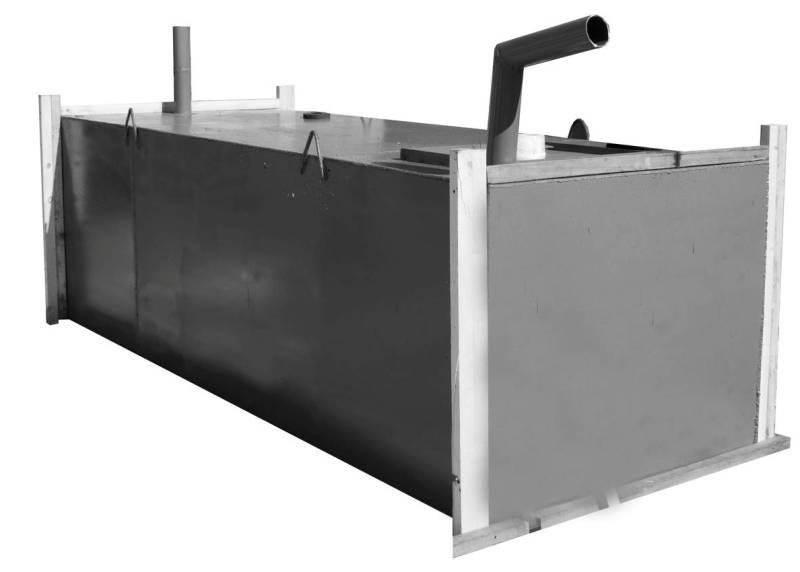
Metal tank of the treatment plant
Septic tanks can be:
- are made in vertical or horizontal execution;
- divided into several compartments for deep wastewater treatment;
- mechanical (effluent treatment by filtration), chemical (cleaning with chemicals) or biological (cleaning is done by bacteria).
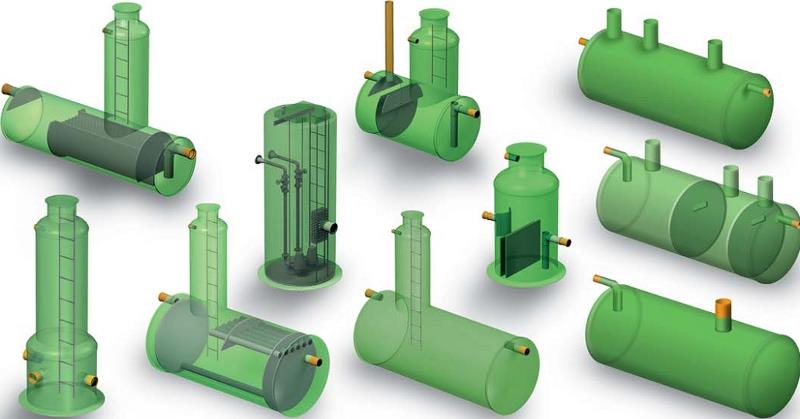
Types of septic tanks depending on the design
Rating of septic tanks based on user reviews:
- ROSTOK MINI.The volume of the treatment plant of 1 m³ is suitable for summer cottages with seasonal residence of 1 - 2 people. The device can be installed in a toilet or in a special place in compliance with safety rules;
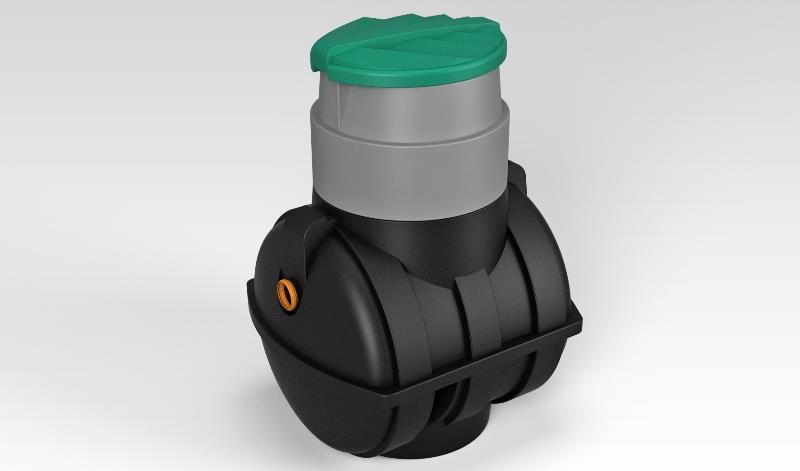
small septic tank
- Tank. Septic tanks are made of durable plastic. To give the structure strength, the container has stiffeners. You can choose a device of any capacity and with a different number of compartments for wastewater treatment. Water can be drained into reservoirs or a ditch;
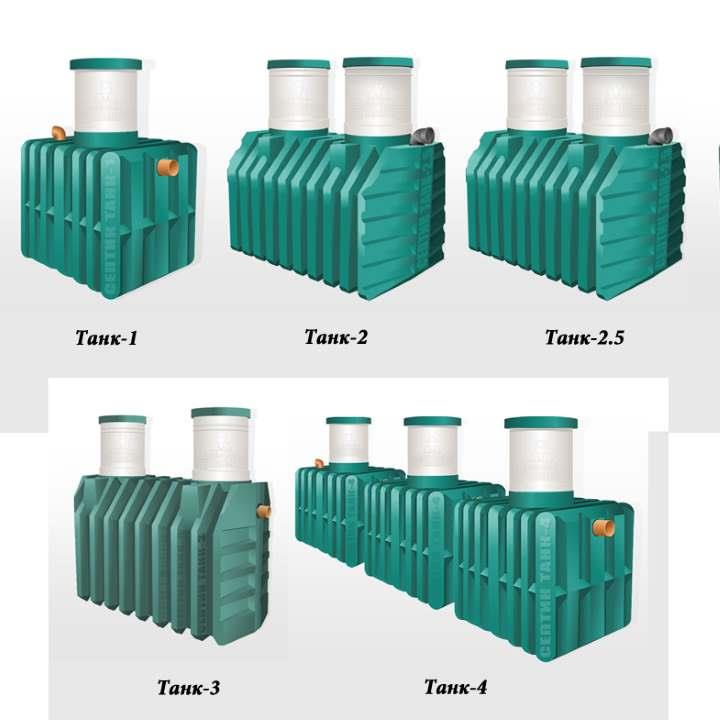
Model range Tank
- Tver. The plastic container is completely sealed. Cleaning is carried out in several stages, including the use of bacteria. The model range is wide;

Wastewater treatment plant Tver
- Unilos Astra. The container made of plastic is not subject to deformation, is characterized by low weight and maximum tightness. A multi-stage purification system allows you to reuse water for any technical purposes;
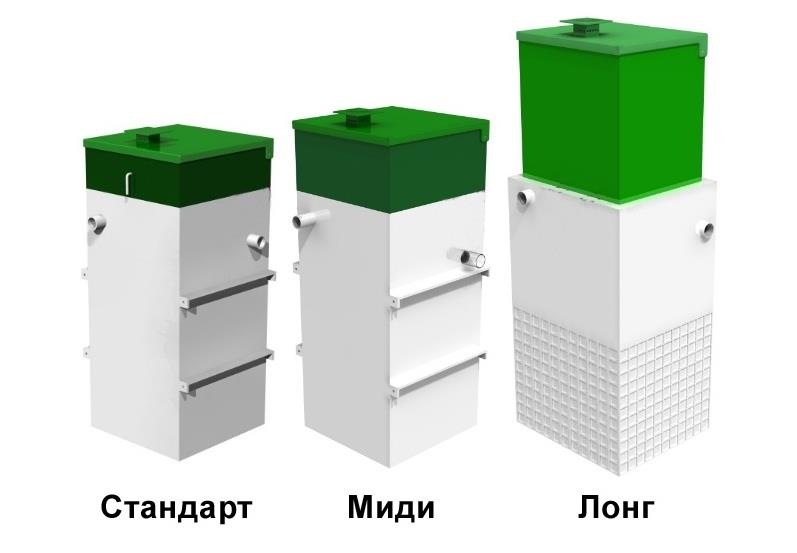
Model range of Unilos septic tanks
- Topas. Energy-dependent septic tank with active microorganisms that clean wastewater. Polypropylene container with stiffeners is durable and tight.
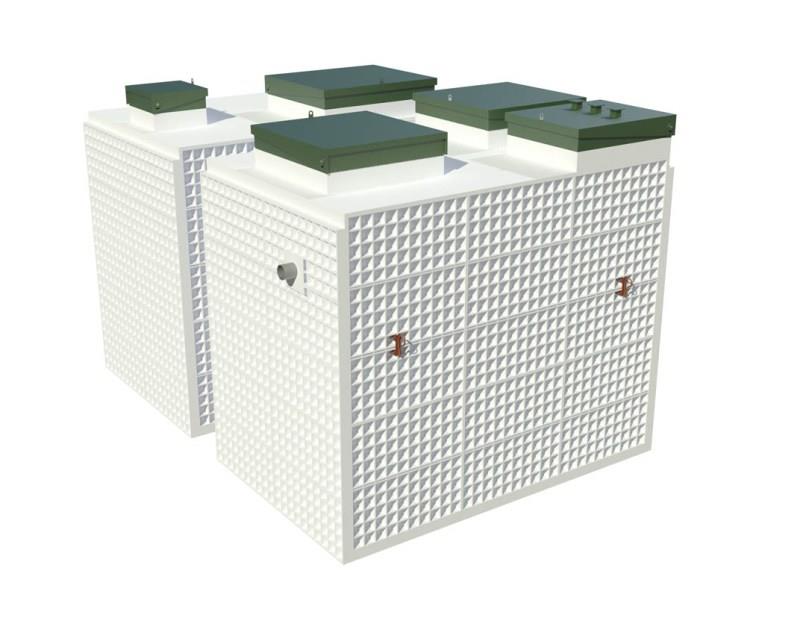
Energy-dependent treatment facilities
When choosing ready-made treatment facilities, it is also important to determine the volume of the device, depending on the daily water consumption and the frequency of cleaning.
Concrete septic tanks
A concrete septic tank made of concrete rings or a monolith is very popular, especially in areas with closely spaced groundwater.

Septic tank from monolithic concrete
These designs are:
- large weight, which complicates the installation process, but does not require additional fastening of the structure;
- high level of tightness;
- maximum strength;
- relatively low cost, if the drain pit is equipped on its own.
Sewerage at high groundwater
Most horticultural partnerships are located in areas with a high level of groundwater. During Soviet times, garden houses were used by gardeners once a week on weekends and only in the summer season. As a rule, there were no amenities in the houses. There was no water supply and sewerage, except that there was a summer water supply along the boundaries of the plots. The sewer was a cesspool, which in most cases consisted of a section of reinforced concrete ring buried in the corner. A small booth with a hole in the floor was arranged above the ring. The sewage accumulated in the ring was periodically raked out and composted or removed from the site. Such country sewerage was categorically not suitable for permanent, even seasonal residence.


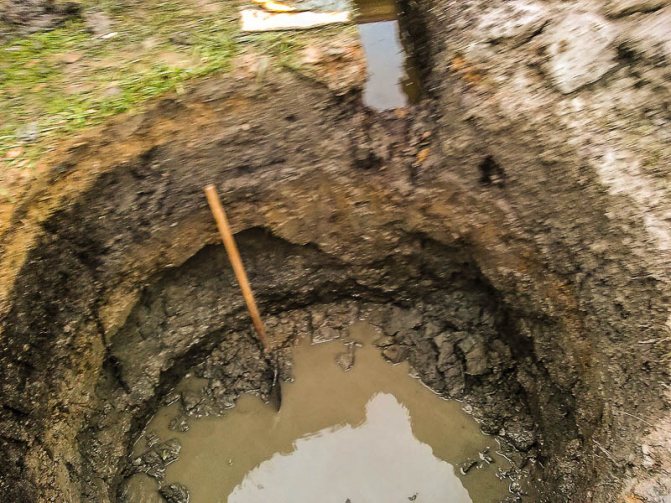
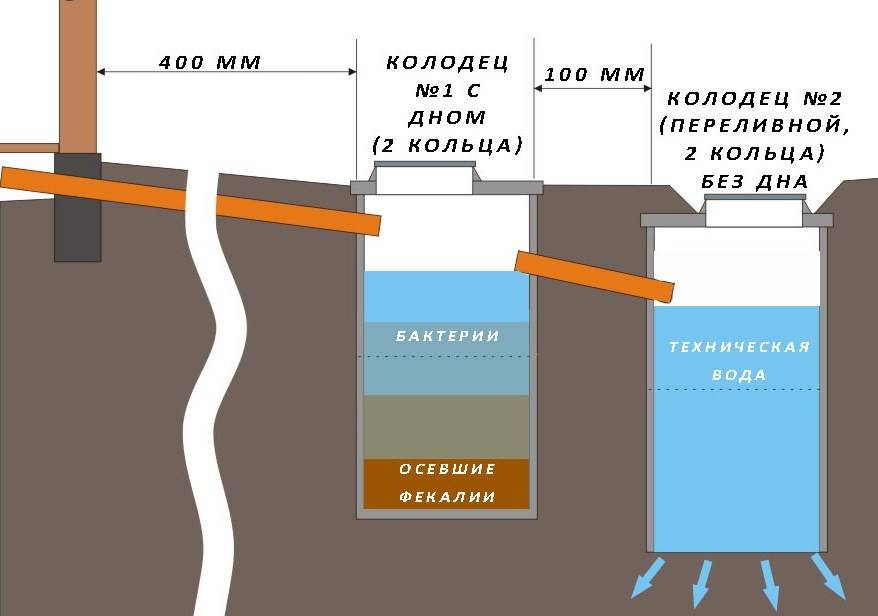


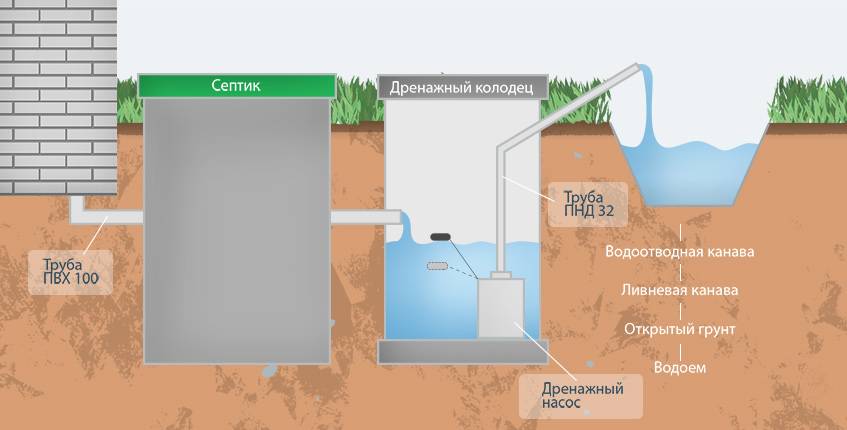


In the modern world, there are more and more people seeking to arrange a comfortable home on the garden plot. They are faced with the acute issue of sewerage at high groundwater. Entire families move from cozy apartments to country houses and want to live in the comfortable conditions of a country house all year round. A family of five people can produce up to a thousand liters of polluted wastewater per day, which contains feces, food debris, soap, washing powder, etc. Such wastewater must be cleaned and disposed of. Simply accumulating untreated wastewater in a container and taking it out with a sewage truck with permanent residence becomes unprofitable, since each call to the machine (once every two or three days) will cost you, depending on the region, from 4,000 to 8,000 rubles.With a simple calculation, you can establish that when installing a storage septic tank, you will have to pay about 30-50 thousand rubles to the services for pumping out septic tanks every month. Installation of an overflow septic tank with filtration fields in areas with a high groundwater level (GWL) is not possible due to the flooding of the fields with groundwater and the overflow of the septic tank with sewage that cannot be filtered into moisture-saturated soil. In addition to flooding, it is possible for clarified wastewater to enter groundwater after a septic tank, which will inevitably lead to contamination of underground sources of drinking water with bacteria and viruses. It must also be remembered that draining sewage after a septic tank into a ditch is strictly prohibited. The wastewater clarified after the septic tank must go through the process of soil post-treatment, otherwise you are breaking the law and creating an unpleasant atmosphere for yourself and your neighbors with fumes from the drains pouring into the ditch.
The best option for a sewerage device in a garden plot with a high level of groundwater is the Unilos Astra biological treatment plant for domestic wastewater with forced drainage to the terrain. Such a sewer system cleans wastewater by 98% with the possibility of draining treated water into a storm system (roadside or boundary ditch). A “turnkey” sewerage system for high groundwater will cost you from 85 to 115 thousand rubles, depending on the performance of the Unilos Astra station and the volume of earthworks. Maintenance of such systems does not require calling a pumping machine and is carried out according to the instructions independently.The appearance of modern treatment facilities to replace obsolete septic tanks will make it possible to organize a real and reliable sewerage system on any garden plot. Such a system will reliably serve you for at least 50 years.
Risks of proximity to groundwater
Groundwater is an underground aquifer that is close to the surface of the earth. The groundwater level is able to rise up if heavy rains or snow melts the day before. In dry weather, the amount of subsoil moisture decreases. The elevated soil water level complicates the arrangement of treatment systems, wells and the foundation of buildings:
- the structure of the street toilet is destroyed.
- an unpleasant odor appears;
- increased risk of intestinal infections;
- the service life of underground pipes is reduced - metal corrosion occurs.
- water erodes the walls of the cesspool, which prevents its purification.
There are several ways to understand how close groundwater is:
- Liquid level measurement. In the spring, you need to measure the water level in the well. A visual assessment is carried out by checking the filling of the tank after heavy rains, or snowmelt.
- In the absence of a well, you can drill several holes with a garden drill and see if they fill with water.
If both technologies are not available to you, contact your neighbors who use local treatment facilities.



