- Accommodation options
- Water connection
- Other ways to drain
- How to independently connect the washing machine to the sewer
- The washing machine has arrived - we begin to unpack and prepare for installation
- Step #3. How to choose and prepare a place to install a washing machine: 3 simple recommendations
- Installation wizard recommendations
- Tip # 1 - prepare the conditions for installation
- Tip # 2 - choose the optimal room
- Water connection to the machine
- The issue of power supply
- Tip #4 - consider external factors
- Quality flooring and flooring
- Ambient temperature
- Troubleshooting the drain system
- How to clean a drain hose
- Filter cleaning
- Four options for connecting a washing machine to the water supply
- Hot and cold - how not to confuse?
- Insertion through a compression sleeve
- Do-it-yourself washing machine installation - step-by-step video
- With a pipe
- We use a corner crane
- Faucet for connecting the washing machine to the water supply - a special tee
- Where to lead the drain hose
Accommodation options
There are several places where you can put a washing machine:
- toilet;
- bathroom or combined bathroom;
- kitchen;
- the corridor.
The most problematic option is the corridor.Usually there are no required communications in the corridor - no sewerage, no water. We'll have to "pull" them to the installation site, which is not at all easy. But sometimes it's the only option. In the photo below there are some interesting solutions for how you can put the typewriter in the corridor.
The option of installing a washing machine in a narrow corridor Making something similar to a portal is also an option Hide in a nightstand Embed in hallway furniture
The toilet has all communications, but in typical high-rise buildings the dimensions of this room are such that it is sometimes difficult to turn around - there is no space at all. In this case, washing machines are installed above the toilet. To do this, a shelf is made so that while sitting on the toilet, it does not touch the head. It is clear that it must be very strong and reliable, and the machine - with very good shock absorbers. The washing machine must be installed perfectly, otherwise it may fall during operation. In general, with this method of installing the washing machine, it does not hurt to make some planks that will prevent it from falling off the shelf.
The shelf is solid and reliable, but slippery - you need a rubber mat for shock absorption under the legs. Powerful corners are monolithic in the wall, a washing machine is installed on them. Plastic stops were removed from the legs, and holes were drilled in the corners for the remaining screws.
The yixtion is reliable, it is only important that the corners do not tear out of the wall from vibration. You can close it with vertical blinds. This is already a whole locker. Only the doors are missing
The bathroom is the room where the washing machine is most often placed.
However, in some apartments the bathroom area is too small, they barely fit the washbasin and bathtub. For such cases, there are alternative options.
Recently, washing machines are increasingly being installed in the kitchen along with other household appliances, where it is also possible to connect to the water supply, sewerage and electrical networks.
To make everything look organic, you need to choose a typewriter of such a height that it fits into the size, and the sink itself is better than a square one - then they will become wall to wall. If there is not enough space, you can at least slide part of the body under the sink.
Put the washing machine next to the sink. Now fashionable countertops in the bathroom can be finished with mosaics. If space allows, just put the machine next to the sink
There is a more compact way - to put the washing machine under the sink. Only the sink needs a special shape - so that the siphon is installed at the back.
To put a washing machine under the sink, you need a special sinkOne of the sinks under which you can put a washing machine
The next option for installing a washing machine in the bathroom is on the side of the bath - between its side and the wall. Today, the dimensions of the cases can be narrow, so this option is a reality.
Narrow cabinets are no longer a rarityBetween the bathroom and the toilet The sink should not be smaller than the cabinetNo one bothers to install a sink on top
One moment, putting such equipment in bathrooms or combined bathrooms is not a good idea. Humid air negatively affects the body, it begins to rust quickly. However, there is usually not much space, although in principle you can put the car under the washbasin or hang shelves above it. In general, it's up to you to decide.
Another popular place to install a washing machine is the kitchen. Built into the kitchen set. Sometimes they close the doors, sometimes they don't. This is left to the discretion of the owners. There are some interesting photos in the gallery.
Doors with a cut-out under the "porthole"Put in the kitchen cabinetIn the kitchen set, the washing machine looks quite organic
Water connection
First, about what water the washing machine is connected to. Generally - to the cold. The water is then heated as needed by the heating elements. Some owners, in order to save money, connect to hot water. This means less energy is used when washing. But the savings are doubtful - more hot water is spent. If a meter is installed on the hot water supply, then it is cheaper to pay for electricity than for hot water. It is also worth considering that connecting a washing machine to hot water is not very good in relation to linen: the proteins curl up from the temperature and then do not wash well.
This was about ordinary washers, but there are models that connect to both hot and cold water. They have not one water inlet on the back wall, but two. They are very rare in our country - there is too little demand, and the prices for such equipment are much higher.
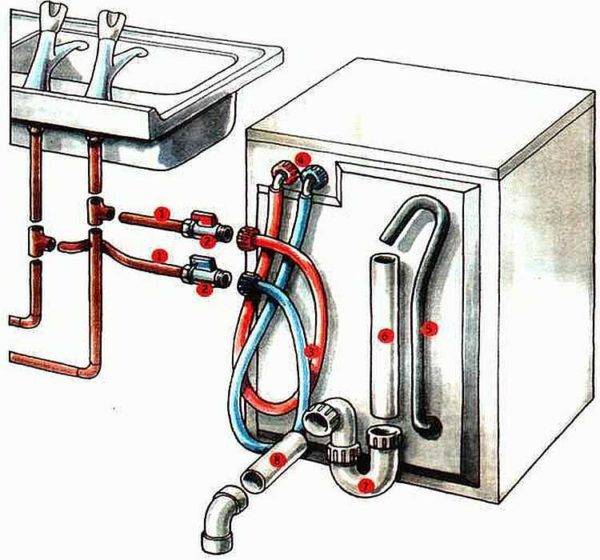
There are washing machines that connect to both hot and cold water.
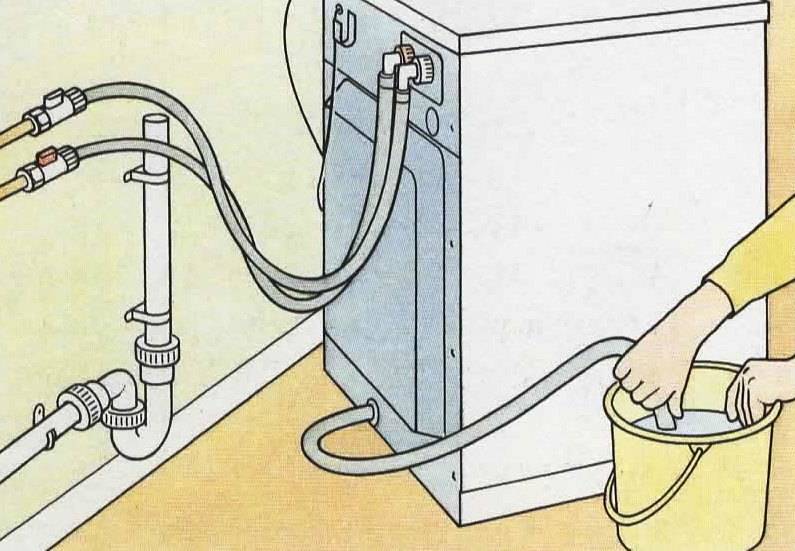
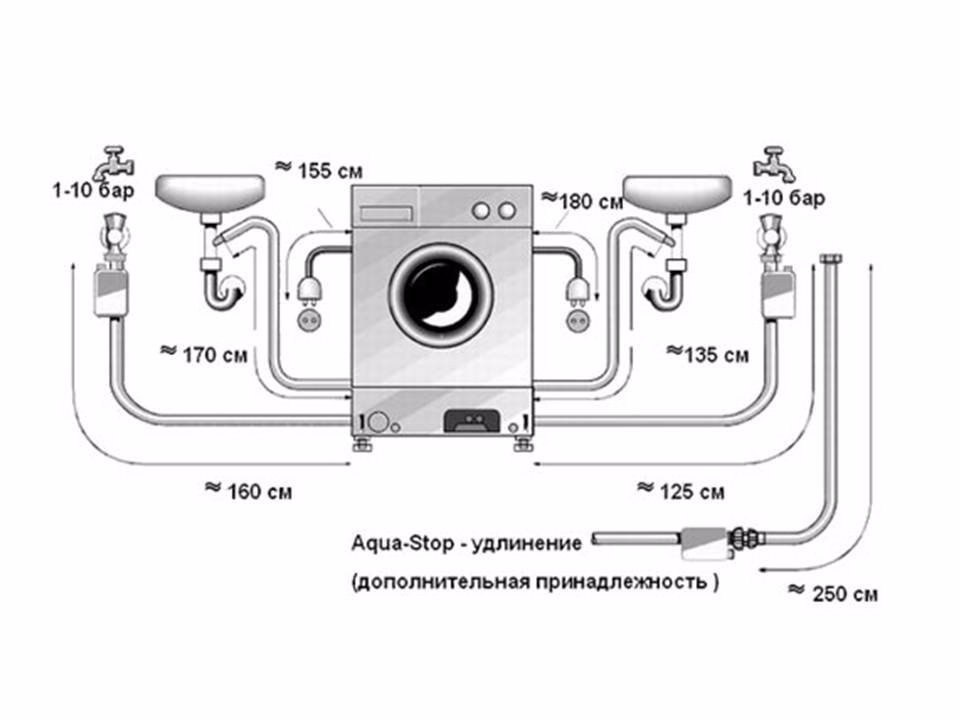
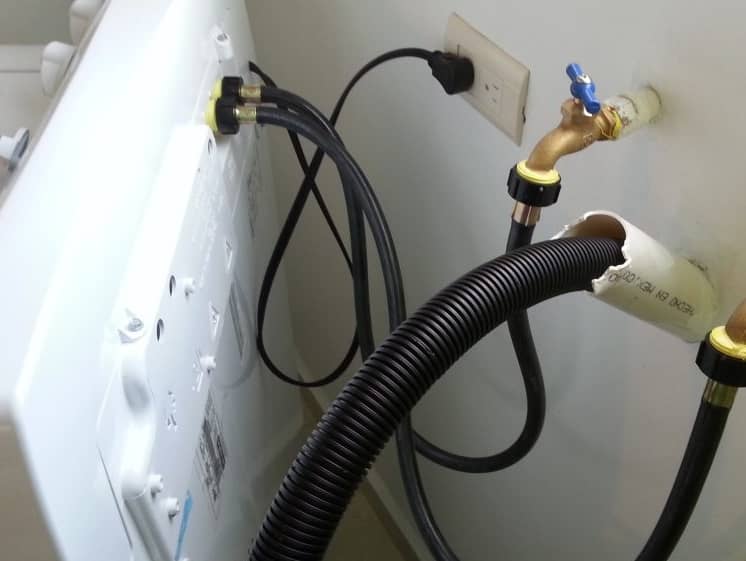
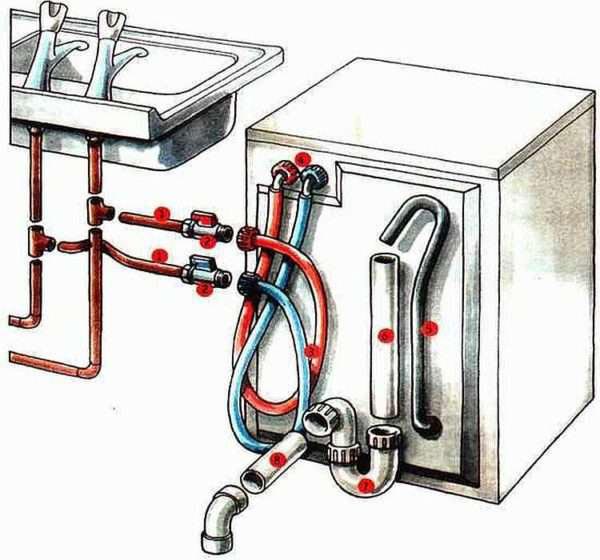
Now about the connection itself. The washing machine comes with a rubber hose that you need to connect the washing machine to the water. Its length is 70-80 cm, which is not always enough. If necessary, in stores selling plumbing, you can buy a longer one (3 meters is not the limit, it seems).
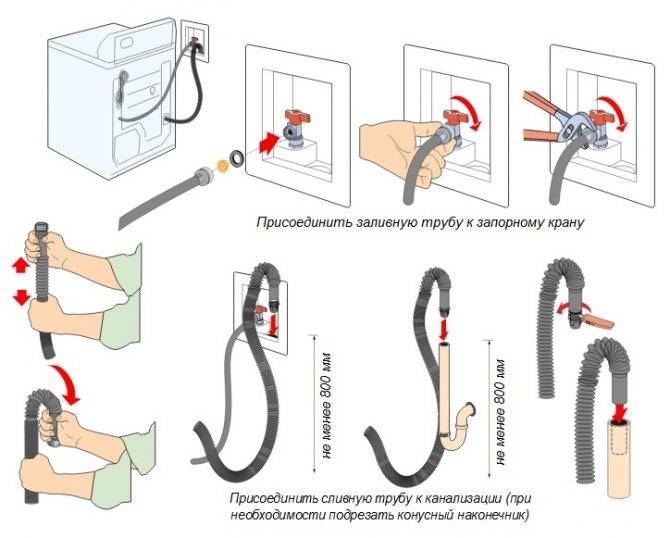
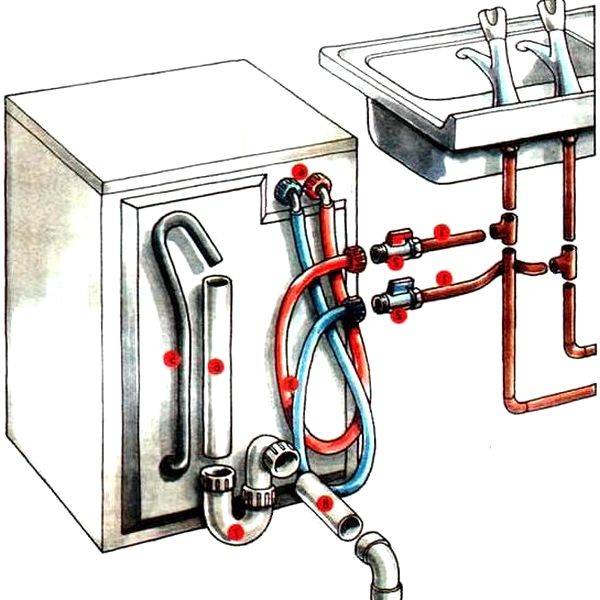
This hose is screwed onto the corresponding outlet on the rear wall. There should be a sealing rubber gasket, so there is no need to rewind. Tighten the union nut of the hose (plastic) by hand, if you use wrenches, then just tighten it by half a turn. Not more.
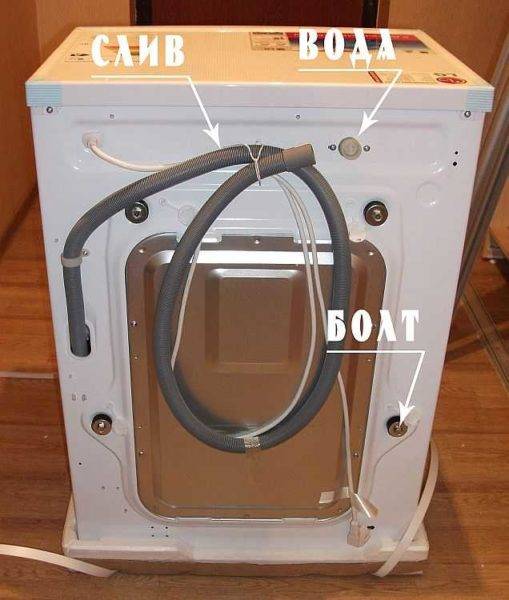
Screw the inlet hose to a special outlet on the rear wall of the housing
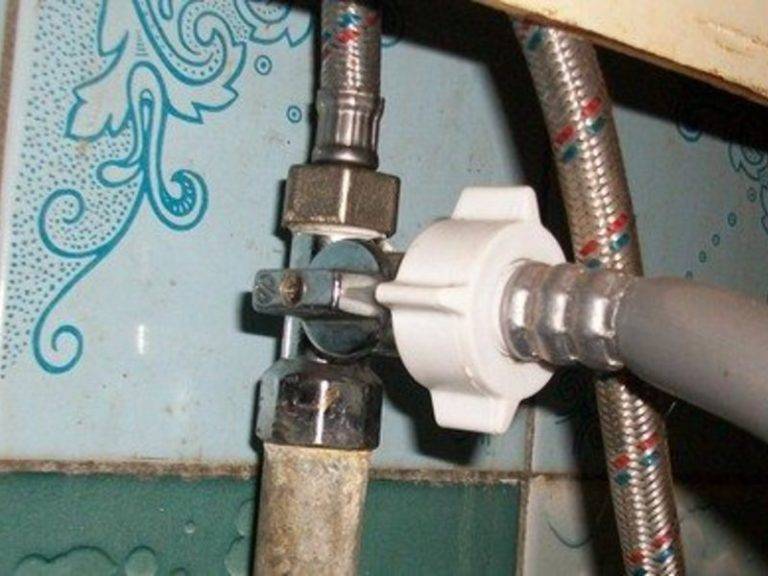
The other end of the hose must be connected to the plumbing system. If you have a free outlet somewhere, ending with a tap - great, if not, you need to make a tie-in.


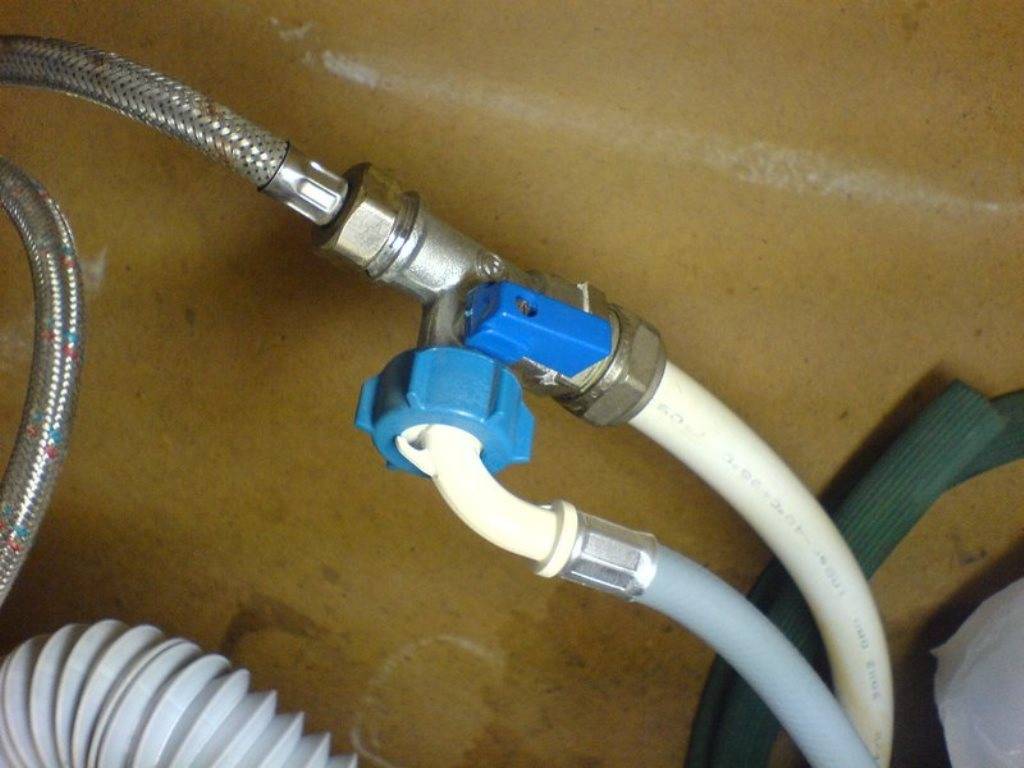


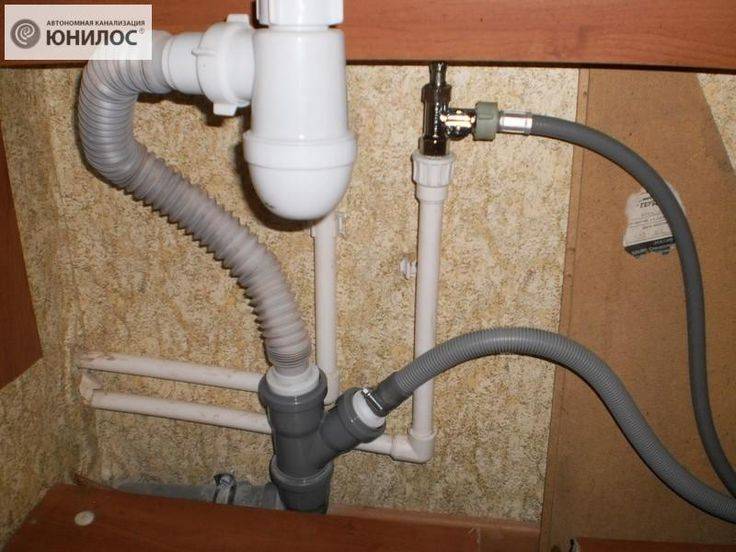


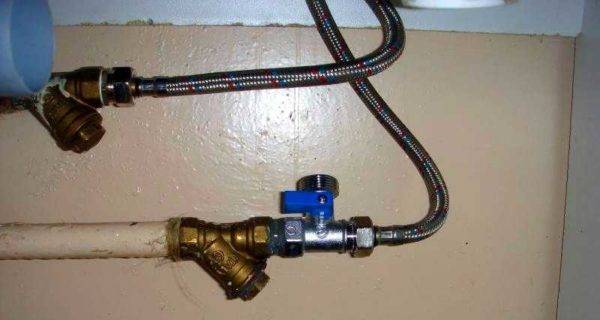
If there is a free water outlet, connecting the washing machine to the water supply is very simple - put a filter, and a hose to it. All
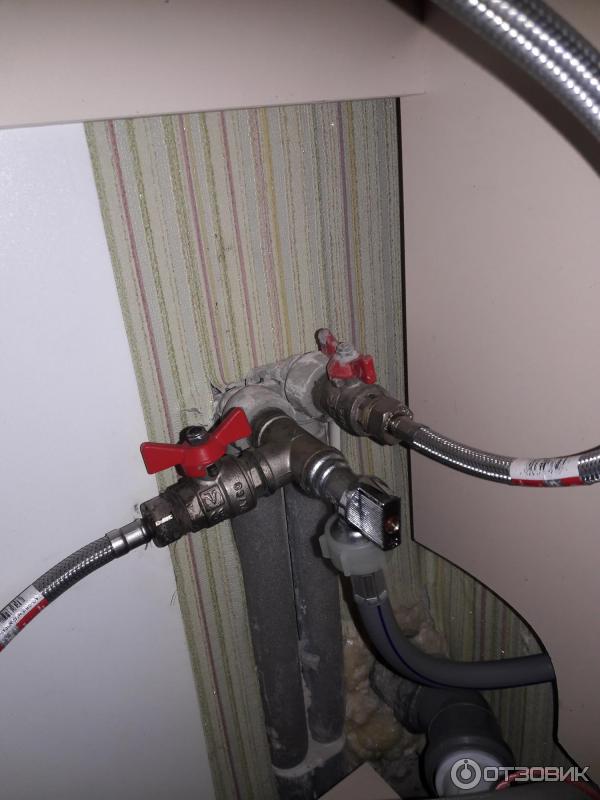
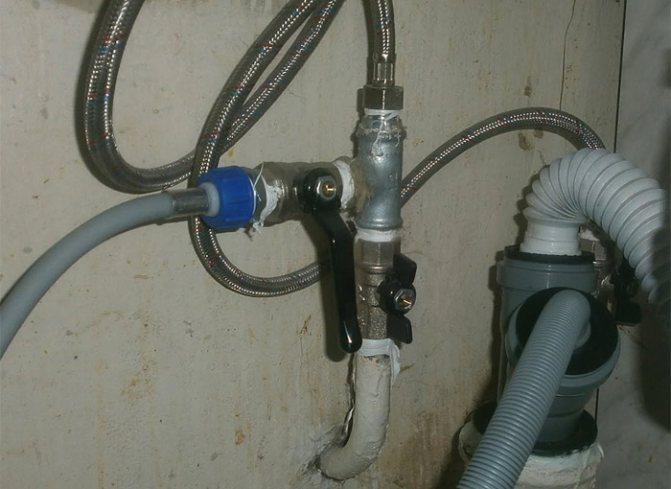
The easiest way is with plastic, polypropylene or metal-plastic pipes - they bought a tee (with one transition to metal), soldered / installed. If the water supply is diluted with a metal pipe, you will have to embed the tee by welding.
In any case, a crane is placed after the tee. Simpler and cheaper - ball. Here, when installing it, you can wrap linen tow on the thread and grease it with paste.
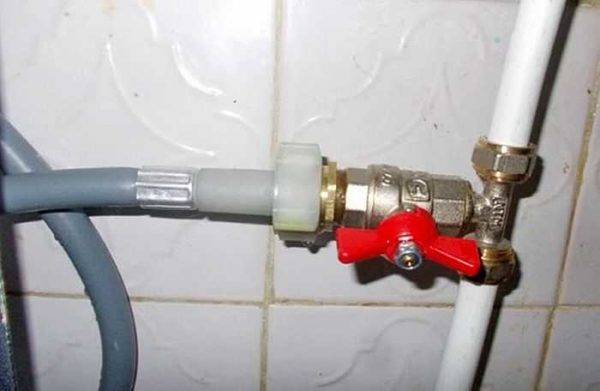
After the tee, put a ball valve, already connect the hose to it
There are also tees with taps for connecting washing machines and other household appliances. The same ball valve is installed in one of the outlets, but everything is done in one body. It looks more compact, but if the tap fails, you will have to change the entire tee, but it costs decently.
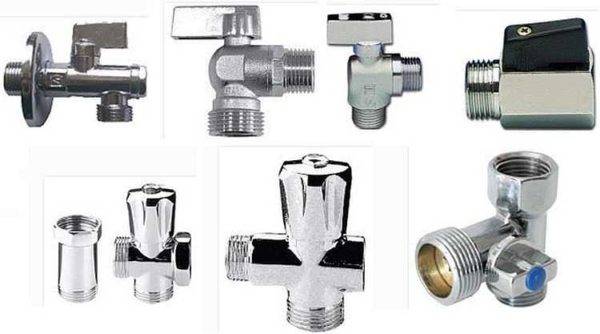
Faucets and tees for connecting household appliances
Sometimes it is advised to put a filter before the tap. Of course, it will not be superfluous, but if there is a filter at the entrance to an apartment or house, then there is no urgent need for it.
Other ways to drain
The washing machine can also be drained directly into a bathtub, sink or toilet. To do this, almost all household appliances in question have a hard plastic nozzle on the drainage hose.It is designed to fix the drain sleeve on the side of the above plumbing fixtures.
Washing machine drain installation and installation
The main advantage of such a connection is simplicity. However, plumbing will have to be washed after each automatic wash, since the water from the washing machine goes into the sewer by no means crystal clear. Plus, from the high pressure, part of the drains can spill out of the sink or toilet onto the floor. Then you have to clean the entire bathroom.
How to independently connect the washing machine to the sewer
Water is drained into the sewer through a special plastic hose resistant to various temperature conditions (after all, washing machines are able to heat water up to 95⁰С).
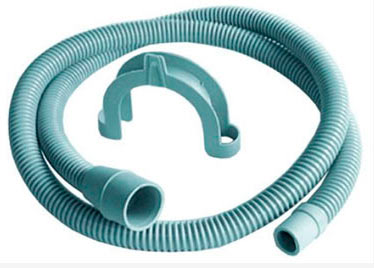
As in the case of the filler, if necessary, it can be extended
It is important that it does not twist and is not transferred. Otherwise, it may burst or break off.
And then the flood is guaranteed. There are also several options for output to the sewer.
For the simplest, a special hook adapter is included with the hose. With it, the end of the drain hose is simply hung on the bathtub or sink. Easy and accessible. But there are inconveniences - polluted water is poured into the bathroom or sink during the washing process. But we wash or wash ourselves there. Not the most hygienic option.
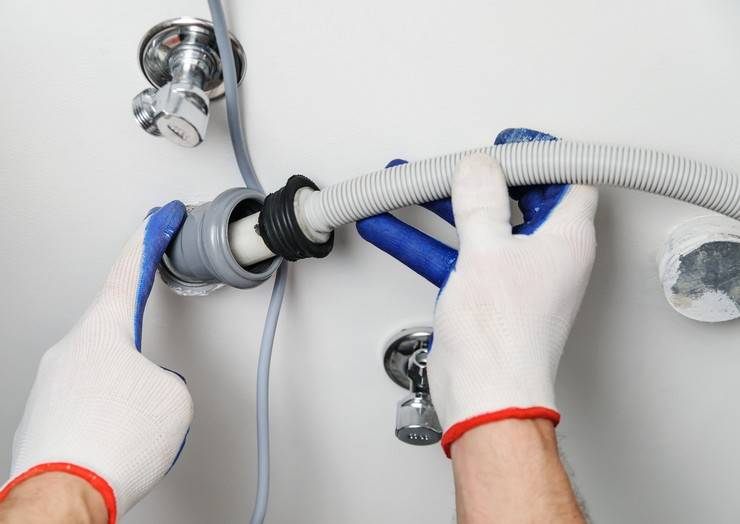
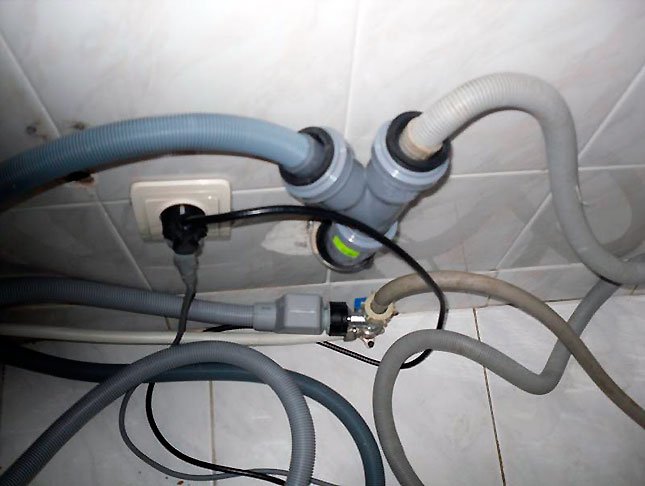
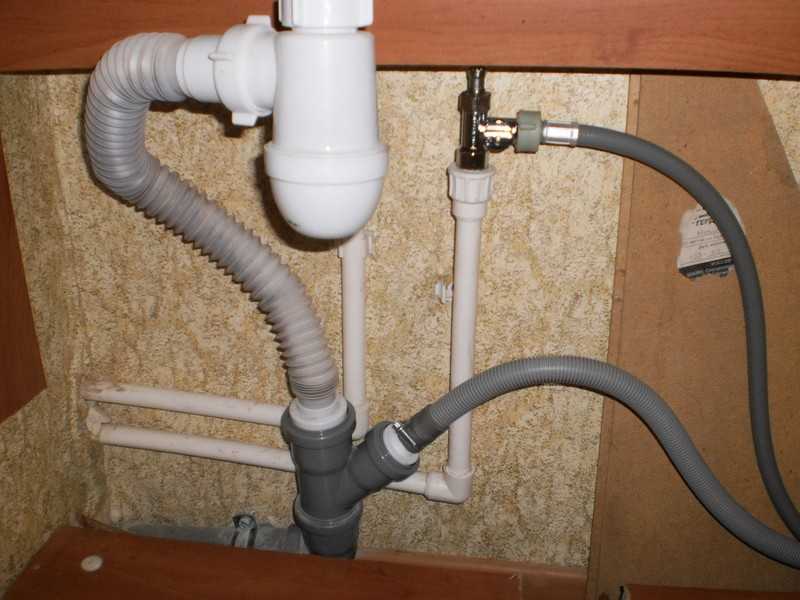
A more rational way is to directly connect to the sewer pipe. In this case, you need to use a special rubber adapter. It’s just doubtful that a separate, unused sewer pipe was present in the house. The problem is solved by installing a plastic tee.
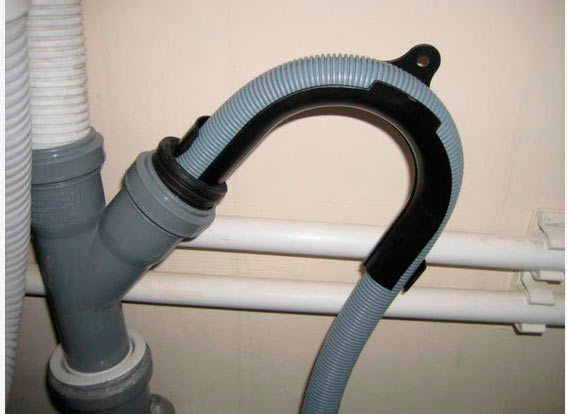
Install it strictly vertically. Otherwise, leaks are possible.The most effective option is to install a new sink siphon equipped with a drain hose connection.
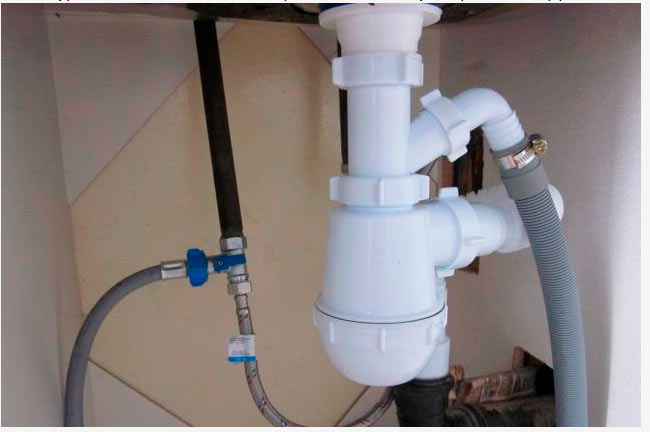
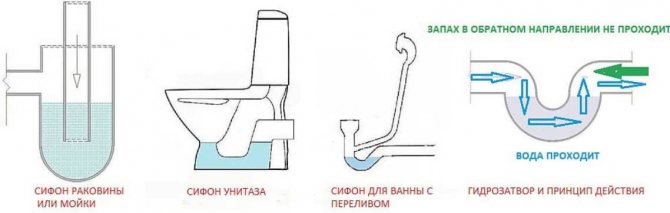
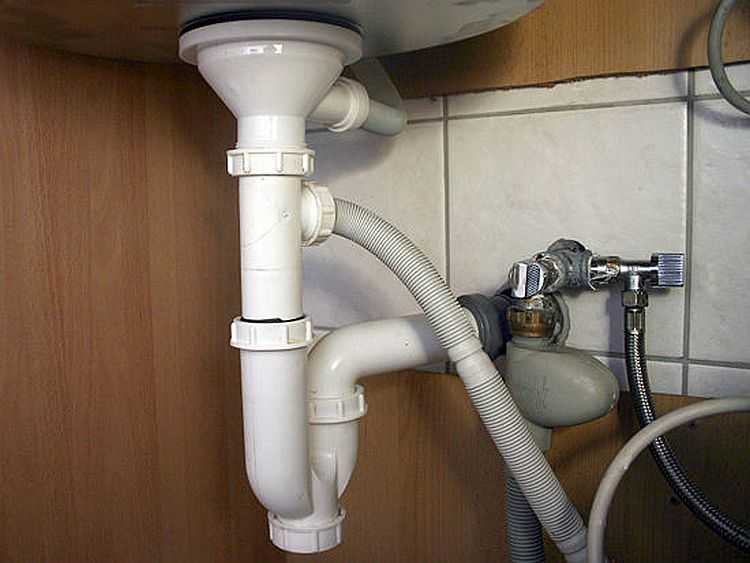
This plumbing item can be easily found at any nearby repair shop. And yes, they are quite inexpensive. A siphon is placed under the sink as high as possible from the floor. The drain hose of the washing machine is tightened on the pipe until it is completely tight.
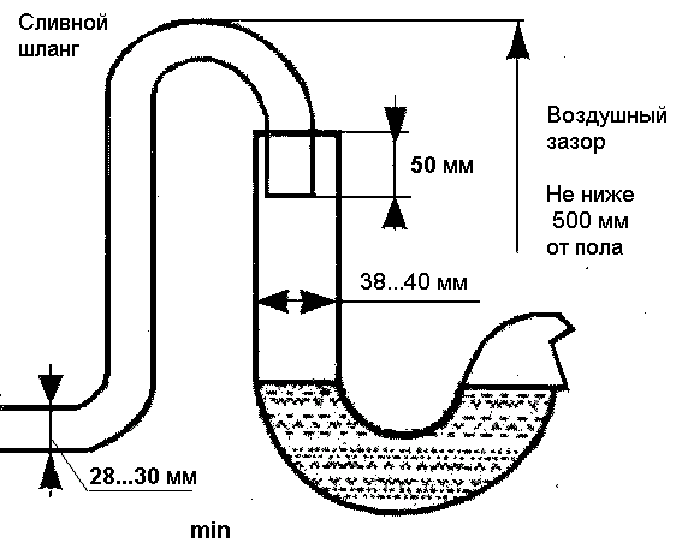
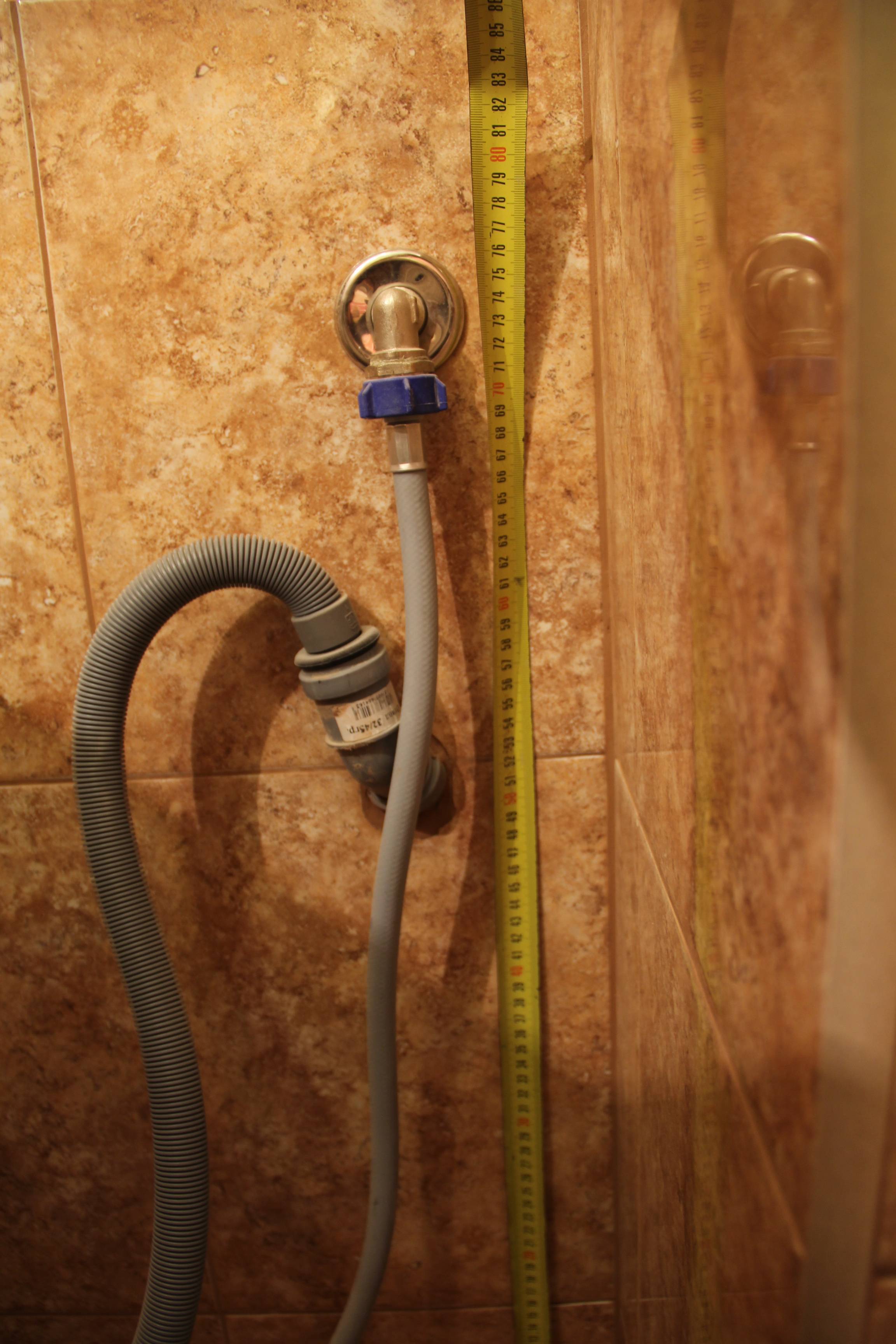
It is also necessary to clarify some of the nuances of the location of the drain hose. For proper operation of the drain, it is necessary to ensure that the drain hose rises to a height higher than the water level in the washing machine (at least 50 cm).
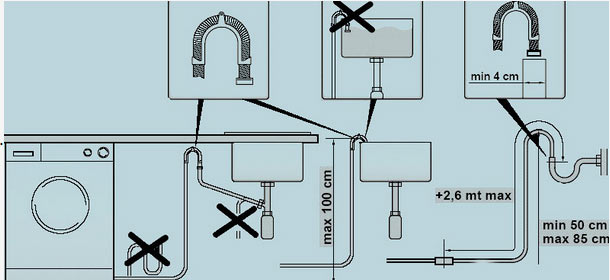
Otherwise, the incoming water will immediately leave. The machine will not work properly. And it is even possible to throw water into the car from the sewer. To the credit of manufacturers, in most modern models of machines, the drain hose exits the body from above. So, the necessary loop is already provided.





If this is not the case, be especially careful when connecting. Surely the necessary recommendations for the location of the drain hose are described in detail in the user manual.
These recommendations will help you independently conduct a high-quality connection of the washing machine to the plumbing system and sewerage without unnecessary problems and material costs. After completing all the necessary actions, it remains only to test run the machine and check the tightness of all connections made. All is ready! Can be washed!
The washing machine has arrived - we begin to unpack and prepare for installation
So, finally, an assistant for washing was bought, the order was delivered, and the movers brought the box into the apartment. Well, now the first step is to remove this box.Now we remove the fasteners that fixed the elements of the machine during its transportation, protecting the rotating parts from accidental damage. Fasteners are bars, brackets and bolts.
The brackets are located on the back and are designed not only to fix the electrical cord and hose, but also give the necessary rigidity for transportation. The bars are placed between the body of the device and the tank, they are easily removed if the machine is slightly tilted forward. The bolts are on the front, holding the drum. After removal, all these parts must be packed and stored - they will be needed when contacting the service.
Keep in mind that after the transport bolts are unscrewed, the washing machine tank will hang on the springs. Don't be scared - it's normal. Before connecting the device, do not forget to insert the plastic plugs that come with the kit into the holes in which these bolts were previously located.

Important: before removing all fasteners for shipping, in no case turn on the machine - this may end badly for its drum
Step #3. How to choose and prepare a place to install a washing machine: 3 simple recommendations
Which rooms are best suited for permanent installation
In this matter, the main role is usually assigned to the hostess, and she is guided by the area of the rooms in the apartment and their functional purpose, which is correct.
However, it is worth considering other factors: for normal washing, a close location of at least three communications is necessary:
- a water tap with the ability to quickly shut off the water pressure;
- sewers for draining contaminated streams;
- an electrical outlet that supplies electricity to electric motors and an automation system.
And they are only in the bathroom, toilet, kitchen. According to local conditions, you have to choose one of these premises. Sometimes the place in them is extremely limited. Then consider other options, for example, a corridor.
But in this case, there will be difficulties with connecting to water and sewerage.
What is the role of gender and why should you pay attention to its quality?
Household washers are not fixed in any way in the room, they are simply installed on the floor and strictly set to the horizon level.
Relatively quiet operation and high-quality washing is achieved due to:
- own weight of the structure;
- balanced operation of the rotating load compensation mechanism;
- taking into account the permissible load level of linen.
If your device is not installed rigidly, but on a wobbly floor, then washing will occur with great noise and problems. And this is typical for uneven plank flooring, poor-quality laying of laminate, staggering parquet.
Such installation sites should be avoided, but it is best to repair them with high quality. Methods for leveling surfaces depend on the type of coating.
It is important for us to end up with a solid and even structure that can reliably withstand vibrating loads. Otherwise, the jumping body will finish off the already loosened floor. How to check the working place of the machine and its secure installation
How to check the working place of the machine and its secure installation
Manufacturers create cases with strict geometry, when the upper surface is clearly parallel to the lower plane, and all sides are strictly perpendicular to them.
This property allows you to clearly set the washing machine even on slightly inclined floors in terms of level. It is enough to put the spirit level on the top cover and set the necessary protrusion with the adjusting screws on the lower legs.





This adjustment is carried out in three steps:
- the lock nut (position 1) is released with a wrench;
- the adjusting screw is released or wrapped to the required length, controlled by the spirit level (position 2);
- the created protrusion is fixed with a lock nut (item 3).
Four of these screws are mounted on the bottom of the case. Each one needs to be fine-tuned. After that, the level is again placed on the body, and with two hands they forcefully act on its various parts.
A securely installed washing machine should not wobble, move or slip. In the ideal case, the hands will feel a single monolithic structure that is not amenable to such power loads.
Remember well: only a clear installation of the body on a flat floor provides an optimal washing regime. It will save your nerves and will not give the neighbors cause for concern.
Installation wizard recommendations
It often happens that the equipment installed independently or by the master begins to vibrate during the spin cycle. This indicates that the installation was done incorrectly. Therefore, even before buying, you need to decide on a place for the car, read the recommendations of installation specialists.
Professional tips for installing a washing machine, as well as step-by-step instructions, will help you install and connect according to all the rules.
Tip # 1 - prepare the conditions for installation
When choosing the overall dimensions, type of construction and technical characteristics of the model, they are guided not by their own wishes, but by the possibilities of the room in which it will stand.
In a spacious bathroom, as a rule, there are no problems with installing a washing machine. In order to save money, it is placed as close as possible to the outlet, plumbing and sewerage.
The necessary conditions for the operation of the washing machine include the close location of the outlet and water. This will help avoid lengthening of electrical cables and hoses.
Pay attention to ease of use, as well as the aesthetic component. Accommodation problems most often occur in small apartments.
Tip # 2 - choose the optimal room
Most of the users, when choosing a place, choose a bathroom as the most suitable in terms of logic. After all, it is here that the water pipes and the sewer drain are located. In addition, the washing process will be hidden from view.
The washing machine can also be placed in a small bathroom, having previously decided on the size and location. In this case, to save space, the machine was installed under the sink.
When choosing a place for a typewriter, pay attention to the following points:
- the ability of the floor to withstand vibrations;
- the possibility of laying communications over remote distances;
- during measurements, it is necessary to take into account irregularities on the walls;
- the space for installing the machine must be at least 1 cm larger than its nominal dimensions.
If there is little space, and the dimensions of the machine are large, you should think about placing the unit in the kitchen or in the hallway.
Tip #3 - The Importance of a Proper Connection
The question of the correct connection of the washing machine to communications should be taken very carefully. Next, we will consider this process in more detail.
Water connection to the machine
Machine wash, like any other, is impossible without water. The plumbing must meet two basic requirements: sufficient pressure in the pipes and clean water.
If they are not observed, a pump is installed to increase the pressure, and the water is filtered. A tap is built into the pipe that supplies water to the machine to shut it off. Thus, the likelihood of leakage becomes minimal.
The issue of power supply
The washing machine is a powerful machine. Residents of old apartments in which the wiring has not changed are recommended to run a separate cable, since the wires and sockets installed many years ago are not suitable for connecting modern appliances. The cross section of the cable must correspond to the expected load.
The socket for connecting the washer is installed with grounding. If we are talking about a room with high humidity, for example, a bathroom, then it is advisable to choose models with a protective cover
We have analyzed in detail the installation and connection of an outlet with grounding in this material.
Tip #4 - consider external factors
Ambient temperature and type of flooring should also be taken into account when installing the washing machine
Quality flooring and flooring
The requirements for floor quality are high. It must be strictly horizontal, firm and even.





The floor covering will have to withstand the vibrations created by the rotating drum. If there are doubts about the quality, it is necessary to strengthen it at the installation site of the machine.
Ambient temperature
In a heated apartment or house, appliances are warm. With a long shutdown of heating, which is often observed in country houses and in technical rooms, the equipment cannot be left.
The water remaining inside the machine after washing will definitely freeze. This will rupture the hose or even the pump and require repair/replacement.
Troubleshooting the drain system
It is not possible to use the washing machine for its intended purpose when there are problems in the drain system. Some of them can be dealt with by hand.
Common Connection Mistakes
Table. Malfunctions and ways of their elimination.
| Symptoms | Cause of failure | Remedy |
|---|---|---|
| Crash in the program, a strong hum during the operation of the machine, a decrease in the speed of draining, turning off the machine when switching to draining water | Clogged drain hose | Hose cleaning |
| Unpleasant smell from clothes, poor drainage, pump malfunctions | Filter clogging | Filter cleaning |
| Water is pumped out, but slowly flows out, the pump motor hums, but the water does not drain, the pumping system does not function | Pump failure | Pump repair or replacement |
How to clean a drain hose
The drain tube may become clogged due to foreign objects entering it. Most often, threads from clothes, fluff, pile and hair accumulate there, which form a blockage that prevents water from draining. There are two ways to clear a blockage in a drain hose.
With the help of chemicals (in tablet, powder and liquid form), as well as food or soda ash.
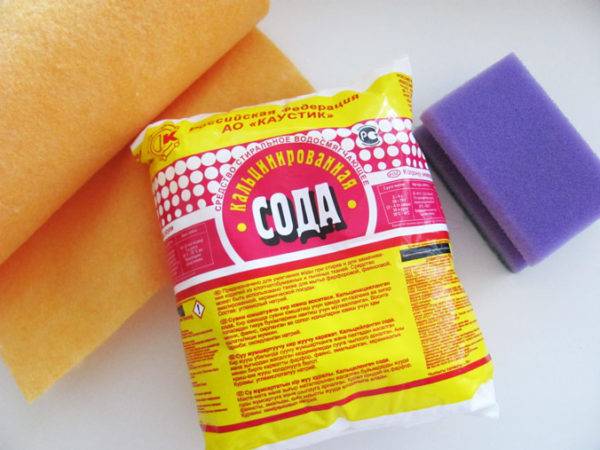 soda ash
You can take a glass of soda and put the powder in the drum. After that, select the wash mode at a temperature of 90 degrees on the control panel.Water mixed with soda and heated to this temperature perfectly eliminates dirt adhering to the inner surface of the hose. This method of cleaning is good because you do not have to remove the hose.
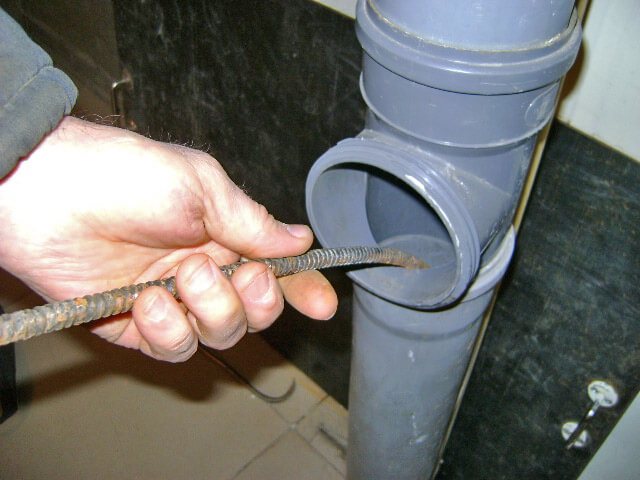
mechanical cleaning. In this case, the removed hose is cleaned with a narrow brush attached to the wire. Cleaning should be done at both ends of the drain tube. After this treatment, the remaining dirt is washed off with running water. For greater confidence in the result, you can soak the hose for a couple of hours in citric acid diluted in warm water.
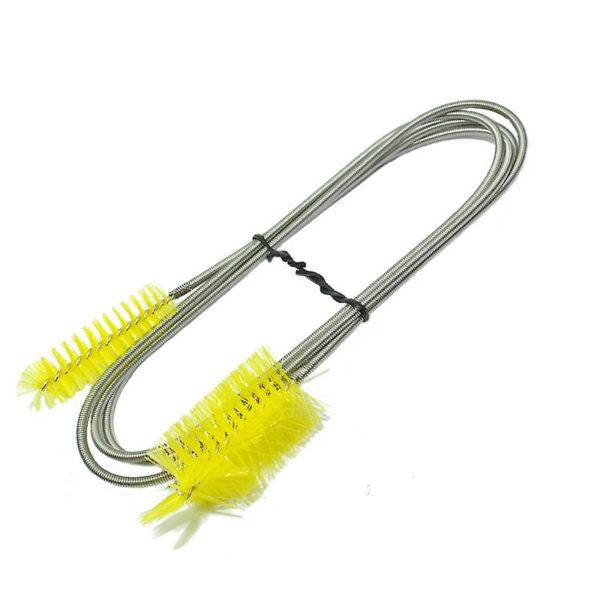 Drain hose cleaner
After reinstalling the hose, it is recommended to carry out a test wash without clothes at the maximum temperature. At the same time, citric acid should be added to the detergent tank, which will perfectly remove scale from the parts of the washing machine.
Filter cleaning
Removing a dirty drain filter is not so difficult. Finding it is easy. In all models, it is located at the bottom of the washing machine body, on the right or left. Usually the compartment where the filter is located is closed with a decorative cover that has the same color as the unit itself.
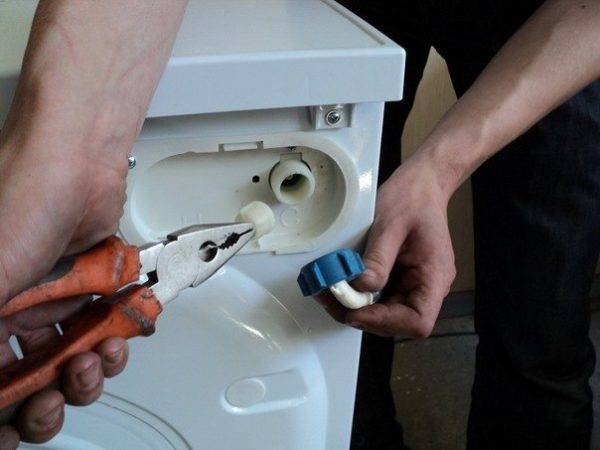 How to clean the washing machine filter
How can the filter be cleaned?
You need to open the plastic cover.
At the location of the filter on the floor, it is better to lay a rag that absorbs water well. This is due to the fact that some water (dirty) will pour out of the hole.
For the same purpose, you need to substitute a container for water under the compartment.
The cover is unscrewed.
The filter is removed.
It is necessary to manually remove large contaminants, then rinse the filter under running water.
By sticking your hand into the hole, you can check if there are any foreign objects on the impeller. They can be removed with your fingers.
The filter is back in place.
It is important to ensure that it is installed straight, along the thread. The part is tightly twisted so that there are no water leaks.
But over-tightening can strip the threads.
Four options for connecting a washing machine to the water supply
Water is the main element of any laundry. There are several options for connecting a washing machine to the water supply, but the main thing always remains: water pressure of at least 1 atmosphere and its purity. A special pump installed in front of the machine and a filter mesh will allow this to be achieved.
Hot and cold - how not to confuse?
It is known that rather old units could not heat water on their own, and therefore it was simply necessary to bring the machine to the pipeline with both cold and hot water.
 Connecting to cold water
Now it is almost impossible to meet such a rather troublesome washer in operation. New machines are equipped with a whole arsenal of devices for high-quality and easy work: a timer, thermostat, washing mode control units, filters, pumps.
Insertion through a compression sleeve
So, one of the ways to bring water to the machine is to insert through a compression sleeve. This method is suitable for those who have metal pipes. To do this, you need to take a flexible hose with a diameter of ¾ inch and, connecting it on one side to the washing machine, connect it to a separate valve, which then, using a compression coupling, will need to be cut into the water pipe.
The coupling consists of 2 halves that are put on the pipe and tightened with bolts, and there is also a threaded outlet, which serves to screw the valve onto it, and it is better if it is a ball valve. Do not forget that for the flow of water it is necessary to drill a hole through the put on coupling!
 | 1. We clean the surface of the pipe from paint. |
 | 2. We take a small chipper and punch a small dot at the place where we will cut the hole. |
 | 3. Using a thin drill and an electric drill, we drill a hole in the pipe (not through, but only in the upper wall). |
 | 4. Expand the hole with a thicker drill. In order to prevent water from flowing onto the floor, it is better to substitute a glass under the bottom and put a rag on the floor. |
 | 5. We insert a coupling with a gasket into the hole. |
  | 6. We apply the lower part of the coupling and bait the bolts along the 4th edges. Press with a spanner wrench. |
 | 7. We take the sleeve and wrap a fum tape on its thread for greater tightness (clockwise). Then we fasten the tap and connect the hose to it. |
 | 8. Done! |
Do-it-yourself washing machine installation - step-by-step video
You can learn more about this connection method in this video.
With a pipe
 |
pipe branch
1. We buy a special pipe in the store for connecting pipes from the washbasin and washing machine. After that, we mount it in the same hole where the pipe from the washbasin was previously.

2. We take a plastic hose and connect it to the pipe. Water from the washbasin will flow through it.

3. Disconnect the cold water hose going to the sink. In its place, we screw a special adapter for 2 outlets with a tap. One exit to the washbasin, the second - to the typewriter.

four.We connect the pipes to the washbasin and washing machine. We arrange a test wash to check the tightness of the connections.





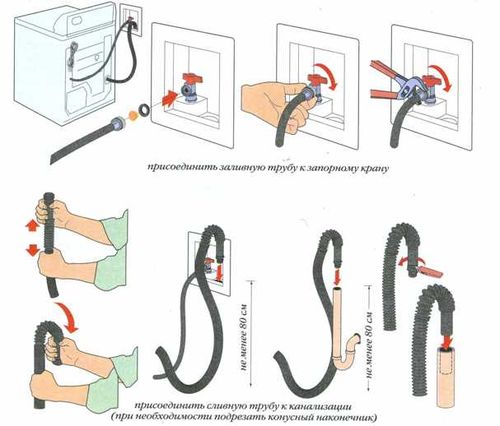
How to install a washing machine yourself? – The video below will give you a detailed answer to this question.
We use a corner crane
If you need to make a faucet at an angle, passing water through a wall or between pipes, we recommend using an angle faucet.
 |
corner faucet
1. Cut a through hole in the wall to insert the tap. For this, it is best to use an electric drill. After we close the irregularities with tiles. On the other hand, we cut a hole in the pipe (as in the case of installing the coupling) and fasten the adapter.

2. We insert the corner valve and wrap it. Pre-wrap it with fum tape for tightness.

3. Connect the hose from the machine.
More details in this video.
Faucet for connecting the washing machine to the water supply - a special tee
If the cold water pipes are metal-plastic, then you need a tap to connect the washing machine to the water supply, another name is a fitting. For installation, you will need to cut a hole in the desired section of the pipe and insert a fitting into it, to which we then attach a tap, sealed with a rubber cuff.
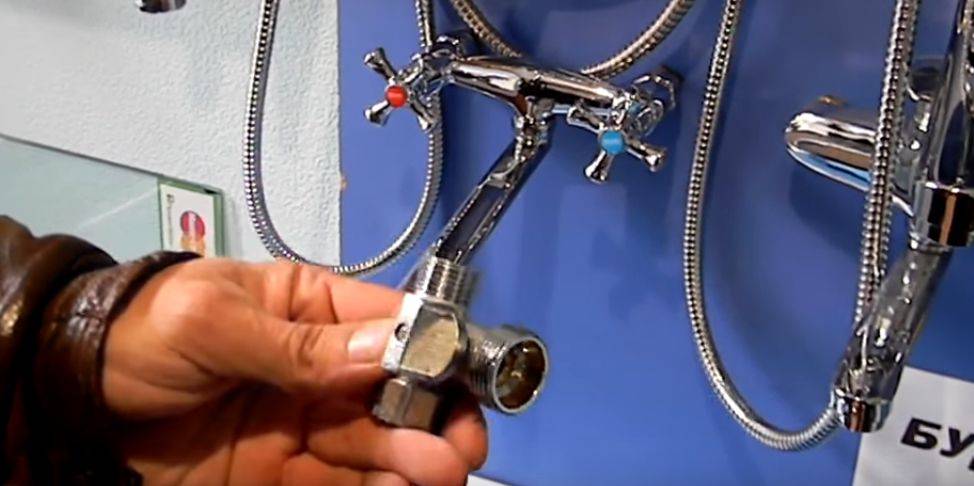 Tee tap
Where to lead the drain hose
If there is a sink or sink siphon nearby, there is no problem. You don't even have to redo the sewer. It will be necessary to buy a special siphon with a tap for connecting washing machines and other household appliances and install it instead of the old one.
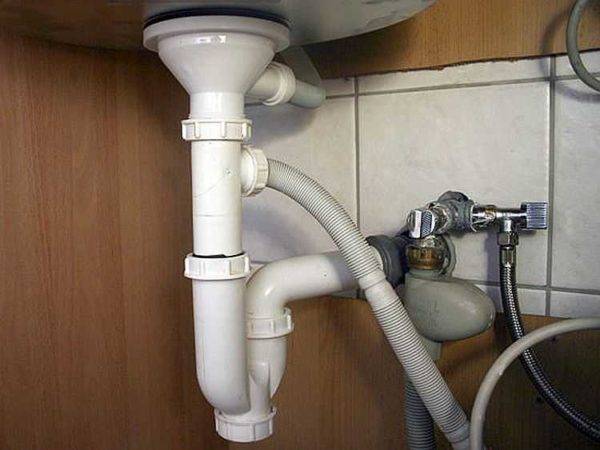
One of the siphons for connecting the washer drain to the sewer
Another option is to connect the washing machine to the sewer directly. For this you can:
- change the sewer tee that goes to the sink;
-
make a separate withdrawal.
All these methods require alteration of the pipeline, but the connection will be capital. There is one point: the diameter of the drain hose is much smaller than the size of the sewer gadflies. To ensure tightness and guarantee the absence of odors, special rubber cuffs are inserted into the outlets. They just plug in a hose. The elastic edge of the cuff compresses it, the connection is ready.
There are also temporary connection options. The drain hose is simply lowered into the bathroom, toilet or sink. This method, of course, is very simple, but not the best - the hose can fall off, you can forget to put it in place after turning on the machine, etc. Then the water drains directly onto the floor, and cleaning up the flood is not very pleasant, and even the neighbors from below (if any) will definitely not be happy.
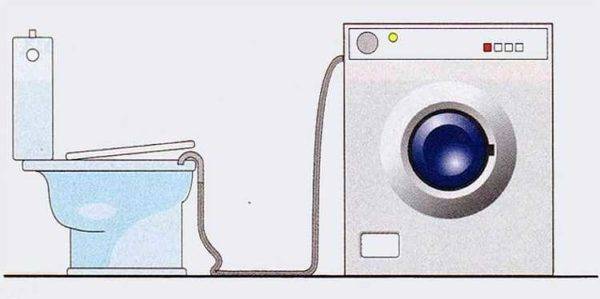
Lowering the hose into the toilet is simple, but unreliable
With any method of connecting the drain hose from the machine to the sewer, it is necessary to ensure that it does not bend or loop. The corrugated drain hose is prone to clogging, so the minimum bend radius must be observed.
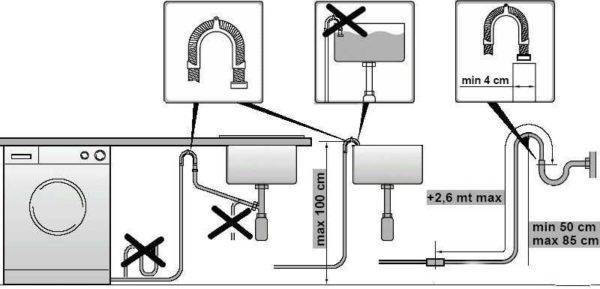
Rules for connecting a washing machine to a sewer
All these data are usually written in the instructions, but usually the minimum bending radius is 50 cm, the maximum is 85 cm. In order to be able to control the position of the hose, there are special plastic clamps that are put on top of the corrugation and hold it in position.
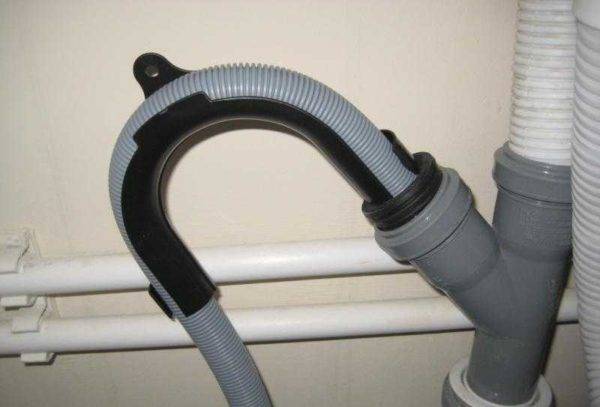
Clamp for fixing the corrugation