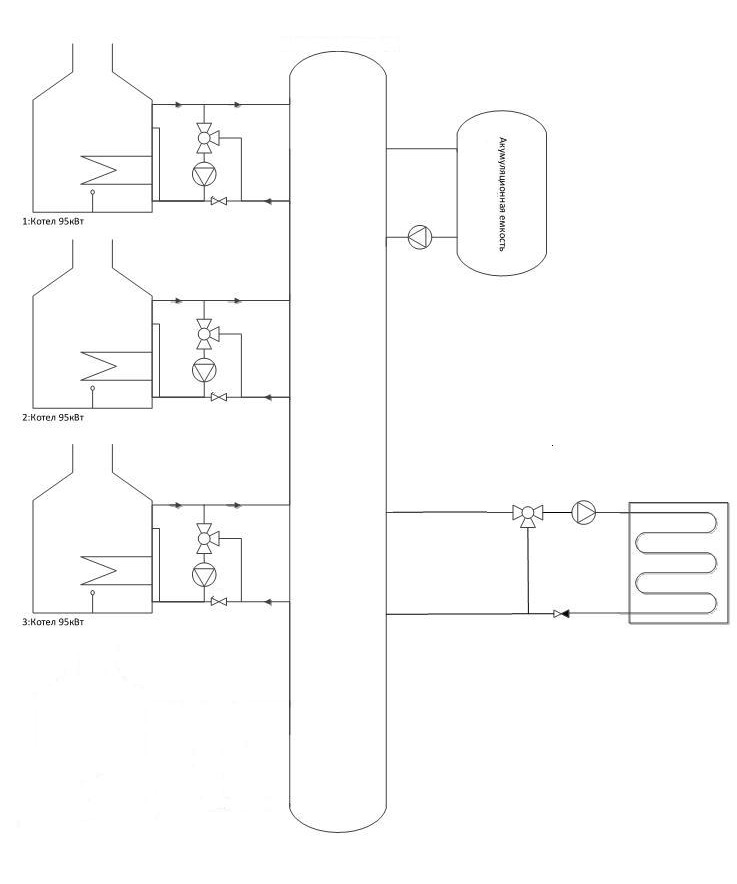
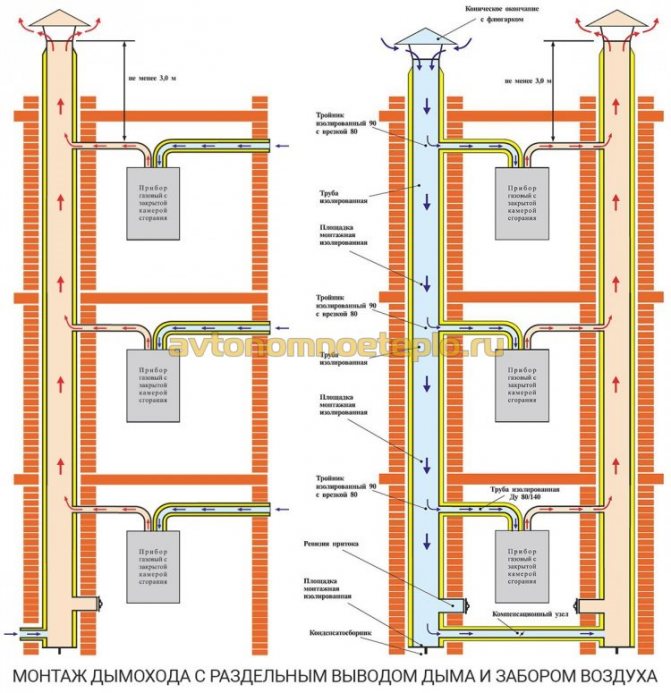
- The main values \u200b\u200bof calculating the heating power
- The formula for obtaining the power of the heating system
- Video on the topic of boiler power
- How to take into account the height of the ceilings in the calculations?
- Power calculation taking into account the dissipation factor
- How to calculate the power of a gas heating boiler for the area of \u200b\u200bthe house?
- How to calculate the power of the heating boiler by the volume of the house?
- How to calculate the power of a boiler with a hot water circuit?
- What is the best way to calculate - by area or by volume?
- How much is the "extra" kilowatt?
- We also recommend seeing:
- Varieties of boiler models
- What should be guided
- gas boilers
- Electric boilers
- Solid fuel boilers
- Oil boilers
- The concept of dissipation factor
- Calculation of the heating boiler power by area
- 2 We calculate the power by area - the main formula
- What else do you need to know to make the right choice?
- Boilers used in private houses
- Conclusion
The main values \u200b\u200bof calculating the heating power
The easiest way to get boiler heat output data for the area of \u200b\u200bthe house: 1 kW of power is taken for every 10 square meters. m. However, this formula has serious errors, because it does not take into account modern building technologies, the type of terrain, climatic temperature changes, the level of thermal insulation, the use of double-glazed windows, and the like.
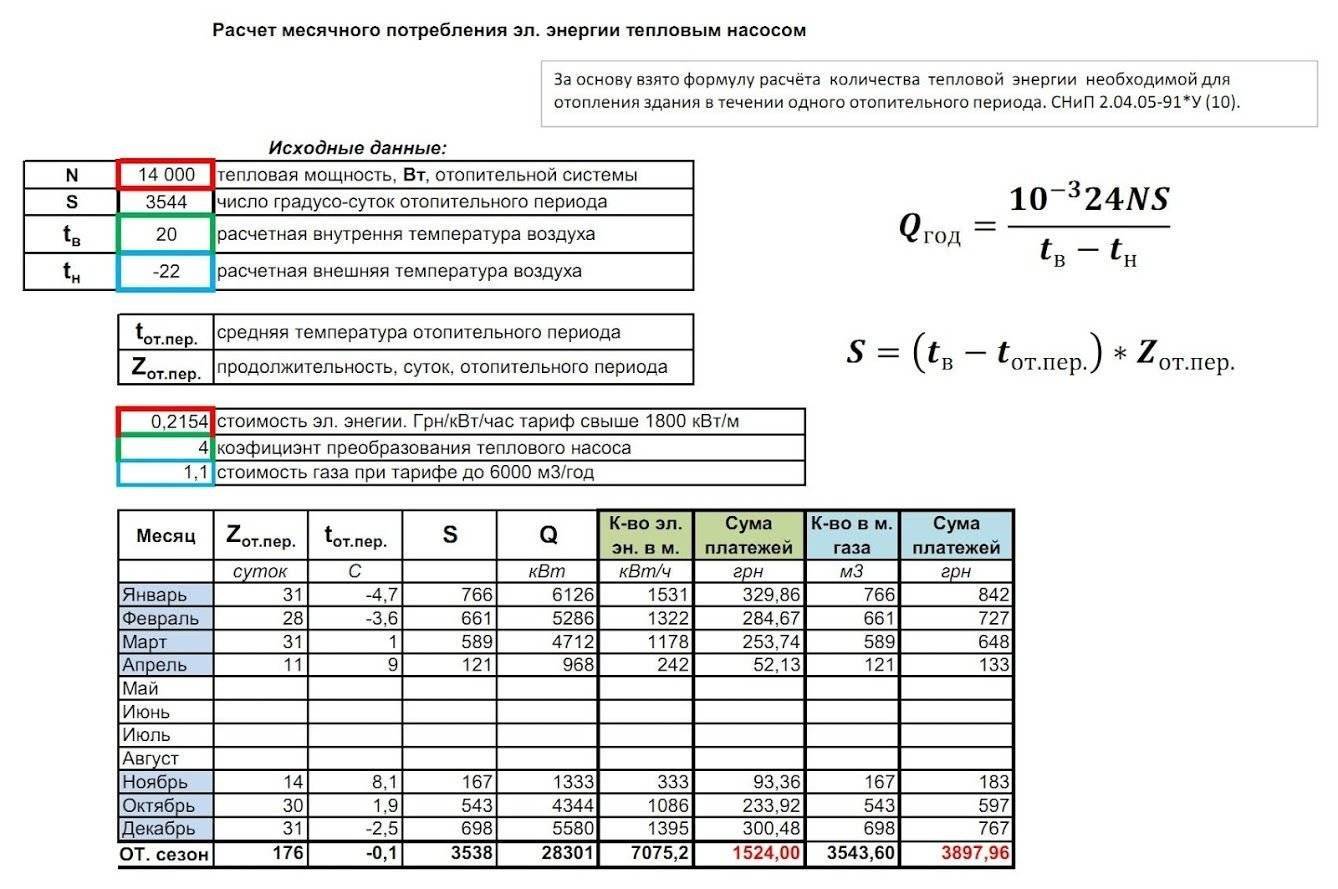
To make a more accurate calculation of the heating power of the boiler, you need to take into account a number of important factors that affect the final result:
- dimensions of the dwelling;
- the degree of insulation of the house;
- the presence of double-glazed windows;
- thermal insulation of walls;
- building type;
- air temperature outside the window during the coldest time of the year;
- type of wiring of the heating circuit;
- the ratio of the area of \u200b\u200bbearing structures and openings;
- building heat loss.
In houses with forced ventilation, the calculation of the heating capacity of the boiler must take into account the amount of energy needed to heat the air. Experts advise making a gap of 20% when using the result of the thermal power of the boiler in case of unforeseen situations, severe cooling or a decrease in gas pressure in the system.
With an unreasonable increase in thermal power, it is possible to reduce the efficiency of the heating unit, increase the cost of purchasing system elements, and lead to rapid wear of components. That is why it is so important to correctly calculate the power of the heating boiler and apply it to the specified dwelling. You can get data using a simple formula W = S * Wsp, where S is the area of \u200b\u200bthe house, W is the factory power of the boiler, Wsp is the specific power for calculations in a certain climatic zone, it can be adjusted according to the characteristics of the user's region. The result must be rounded up to a large value in terms of heat leakage in the house
The result must be rounded up to a large value in terms of heat leakage in the house.
For those who do not want to waste time on mathematical calculations, you can use the gas boiler power calculator online. Just keep the individual data on the features of the room and get a ready answer.
The formula for obtaining the power of the heating system
The online heating boiler power calculator makes it possible in a matter of seconds to obtain the necessary result, taking into account all of the above characteristics that affect the final result of the data obtained. In order to use such a program correctly, it is necessary to enter the prepared data into the table: the type of window glazing, the level of thermal insulation of the walls, the ratio of floor and window opening areas, the average temperature outside the house, the number of side walls, the type and area of \u200b\u200bthe room. And then press the "Calculate" button and get the result of the heat loss and heat output of the boiler.
Thanks to this formula, each consumer will be able to obtain the necessary indicators in a short time and apply them in the design of the heating system.
You can choose a boiler of the required power on the Teplodar website
Video on the topic of boiler power
Video:
Video:
Video:
How to take into account the height of the ceilings in the calculations?
Since many private houses are being built according to individual projects, the methods for calculating the boiler power given above will not work. To make a fairly accurate calculation of a gas heating boiler, you must use the formula: MK \u003d Qt * Kzap, where:
- MK is the design power of the boiler, kW;
- Qt - predicted heat loss of the building, kW;
- Kzap - a safety factor that is 1.15 to 1.2, i.e. .15-20%, by which experts recommend increasing the design capacity of the boiler.
The main indicator in this formula is the predicted heat loss of the building. To find out their value, you need to use another formula: Qt \u003d V * Pt * k / 860, where:
- V is the volume of the room, cubic meters;
- Рt is the difference between external and internal temperatures in degrees Celsius;
- k is the dispersion coefficient, which depends on the thermal insulation of the building.
The dispersion coefficient varies depending on the type of building:
- For buildings without thermal insulation, which are simple structures made of wood or corrugated iron, the dispersion coefficient is 3.0-4.0.
- For structures with low thermal insulation, typical for single-brick buildings with ordinary windows and a roof, the dispersion coefficient is assumed to be 2.0-2.9.
- For houses with an average level of thermal insulation, for example, buildings with double brickwork, a standard roof and a small number of windows, a dispersion coefficient of 1.0-1.9 is taken.
- For buildings with increased thermal insulation, well-insulated floors, roofs, walls and windows with double-glazed windows, a dispersion coefficient in the range of 0.6-0.9 is used.
For small buildings with good thermal insulation, the design capacity of heating equipment can be quite small. It may happen that there simply is not a suitable gas boiler with the necessary characteristics on the market. In this case, you should purchase equipment whose power will be slightly higher than the calculated one. Automatic heating control systems will help smooth out the difference.

Some manufacturers took care of the convenience of customers and posted special services on their Internet resources that allow you to calculate the required boiler power without any problems. To do this, you need to enter the following data into the calculator program:
- the temperature to be maintained in the room;
- average temperature for the coldest week of the year;
- the need for hot water supply;
- the presence or absence of forced ventilation;
- number of floors in the house;
- ceiling height;
- overlap information;
- information about the thickness of the outer walls and the materials from which they are made;
- information about the length of each wall;
- information about the number of windows;
- description of window type: number of chambers, glass thickness, etc.;
- size of each window.
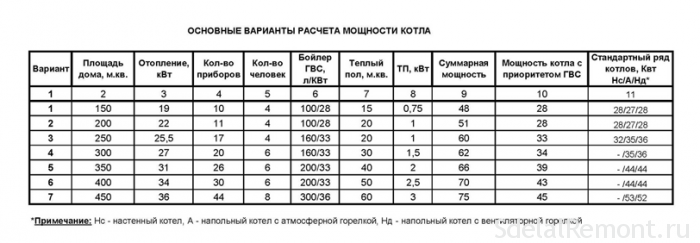
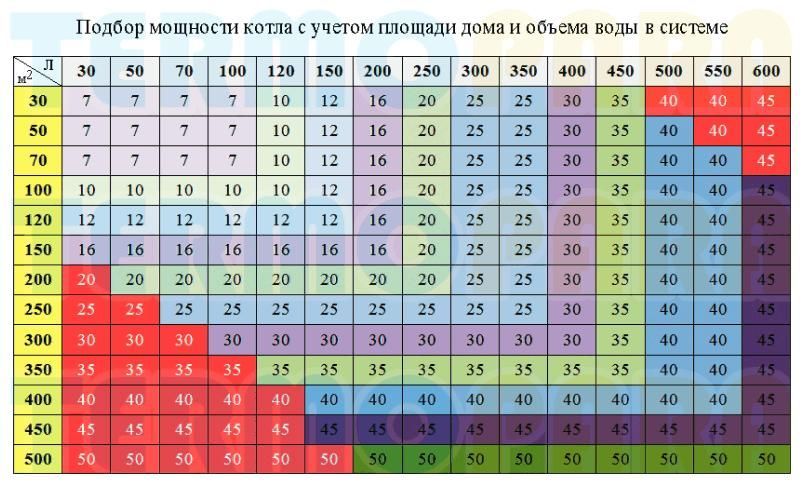
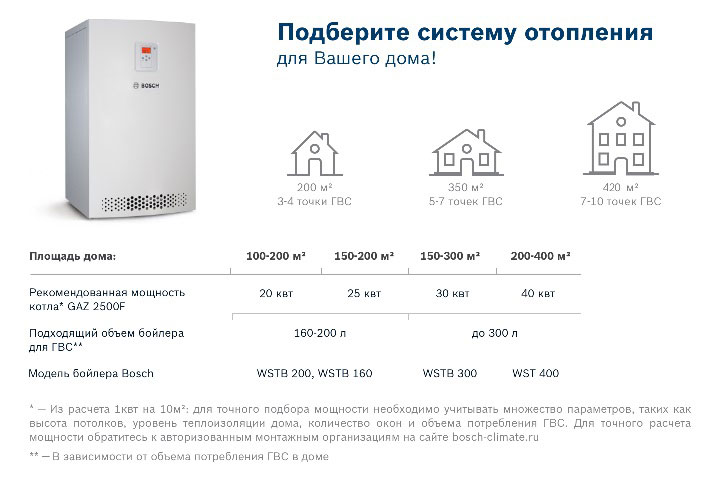
After all the fields are filled in, it will be possible to find out the estimated power of the boiler. Options for detailed calculations of the power of boilers of various types are clearly presented in the table:
Some options have already been calculated in this table, you can use them as pre-correct ones (click on the picture to enlarge)
Power calculation taking into account the dissipation factor
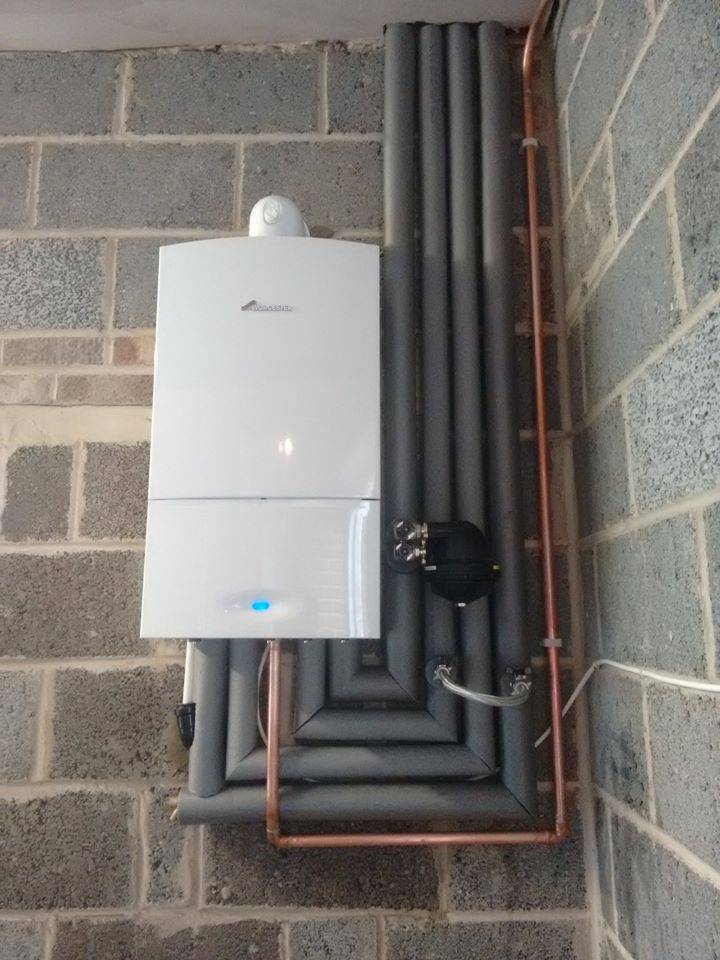
One of the important factors of heat exchange between the environment and a residential building is the dissipation coefficient. Depending on how well the building is insulated, you should use indicators that allow you to get the most accurate figure when applying the formula. If we are talking about a house where there is no thermal insulation at all, the dissipation factor will vary from 3 to 4. Most often these are temporary houses made of wood or corrugated iron.
When calculating the power of a gas boiler for heating, a coefficient from 2.9 to 2 should be used, which is suitable for buildings with insufficient thermal insulation. We are talking about houses without insulation and with thin walls, which are built in one brick. Instead of windows, there are usually wooden frames, and on top there is a simple roof. The coefficient will vary from 1.9 to 1 if the house has an average level of thermal insulation. This coefficient is assigned to buildings with double plastic double-glazed windows, thermal insulation of the facade or double masonry, as well as insulated roofs or attics.
The dispersion coefficient will be the lowest in the case of houses that are built using modern technologies and materials.Such buildings include those in which the floor, roof and walls are well insulated, as well as good windows are installed. Usually such buildings have a good ventilation system. The dispersion coefficient in this case will be the lowest - from 0.6 to 0.9.
By calculating the power of gas boiler for home using a formula that contains the value of the dispersion coefficient, you will get the most accurate numbers for a particular building. The formula is: QT \u003d V x Pt x k: 860. Here, the QT value is the level of heat loss. The volume of the room is indicated by the letter V, and it can be determined by multiplying the height by the width and length of the room. The temperature difference is Pt. To calculate from the desired room temperature, subtract the minimum temperature that can be outside the window. The scattering coefficient in the formula is denoted by the letter k.
If you want to calculate the power of a double-circuit gas boiler, then you can substitute the numbers in the above formula to find out the heat loss. In the example, a house with a volume of 300 m3 will be considered. The level of heat loss here will be average, and the desired indoor air temperature is +20 ˚С. The minimum winter temperature is -20 ˚С. The calculation of the level of heat loss will look like this: 300 x 48 x 1.9: 860 ≈ 31.81. If you know this figure, you can calculate how much power the boiler will perform its task. To do this, the heat loss value must be multiplied by a safety factor, which usually varies from 1.15 to 1.2. These are the same 15-20 percent. The result will be: 31.81 x 1.2 = 38.172. The figure can be rounded down, which will allow you to get the desired number.
How to calculate the power of a gas heating boiler for the area of \u200b\u200bthe house?
To do this, you will have to use the formula:
In this case, Mk is understood as the desired thermal power in kilowatts. Accordingly, S is the area of \u200b\u200byour home in square meters, and K is the specific power of the boiler - the “dose” of energy spent on heating 10 m2.
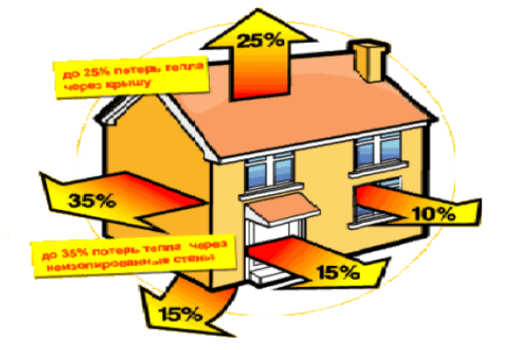
Calculation of the power of a gas boiler
How to calculate area? First of all, according to the plan of the dwelling. This parameter is indicated in the documents for the house. Don't want to search for documents? Then you will have to multiply the length and width of each room (including the kitchen, heated garage, bathroom, toilet, corridors, and so on) summing up all the obtained values.
Where can I get the value of the specific power of the boiler? Of course, in the reference literature.
If you don’t want to “dig” in directories, take into account the following values of this coefficient:
- If in your area the winter temperature does not fall below -15 degrees Celsius, the specific power factor will be 0.9-1 kW/m2.
- If in winter you observe frosts down to -25 ° C, then your coefficient is 1.2-1.5 kW / m2.
- If in winter the temperature drops to -35 ° C and lower, then in the calculations of thermal power you will have to operate with a value of 1.5-2.0 kW / m2.
As a result, the power of a boiler that heats a building of 200 "squares", located in the Moscow or Leningrad region, is 30 kW (200 x 1.5 / 10).
How to calculate the power of the heating boiler by the volume of the house?
In this case, we will have to rely on the thermal losses of the structure, calculated by the formula:
By Q in this case we mean the calculated heat loss. In turn, V is the volume, and ∆T is the temperature difference between inside and outside the building.Under k is understood the coefficient of thermal dissipation, which depends on the inertia of building materials, door leaf and window sashes.
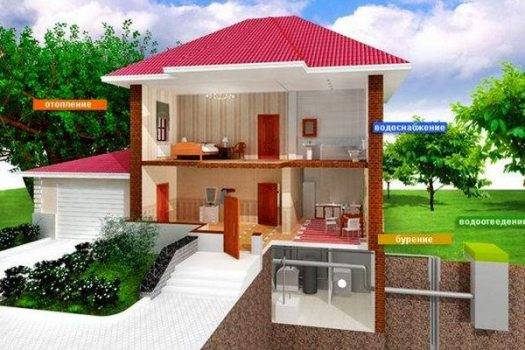
We calculate the volume of the cottage
How to determine the volume? Of course, according to the building plan. Or by simply multiplying the area by the height of the ceilings. The temperature difference is understood as the "gap" between the generally accepted "room" value - 22-24 ° C - and the average readings of a thermometer in winter.
The coefficient of thermal dissipation depends on the heat resistance of the structure.
Therefore, depending on the building materials and technologies used, this coefficient takes the following values:
- From 3.0 to 4.0 - for frameless warehouses or frame storages without wall and roof insulation.
- From 2.0 to 2.9 - for technical buildings made of concrete and brick, supplemented with minimal thermal insulation.
- From 1.0 to 1.9 - for old houses built before the era of energy-saving technologies.
- From 0.5 to 0.9 - for modern houses built in accordance with modern energy-saving standards.
As a result, the power of the boiler heating a modern, energy-saving building with an area of 200 square meters and a 3-meter ceiling, located in a climatic zone with 25-degree frosts, reaches 29.5 kW (200x3x (22 + 25) x0.9 / 860).
How to calculate the power of a boiler with a hot water circuit?
Why do you need a 25% headroom? First of all, to replenish energy costs due to the "outflow" of heat to the hot water heat exchanger during the operation of two circuits. Simply put: so that you do not freeze after taking a shower.
Solid fuel boiler Spark KOTV - 18V with a hot water circuit
As a result, a double-circuit boiler serving the heating and hot water systems in a house of 200 "squares", which is located north of Moscow, south of St. Petersburg, should generate at least 37.5 kW of thermal power (30 x 125%).
What is the best way to calculate - by area or by volume?
In this case, we can only give the following advice:
- If you have a standard layout with a ceiling height of up to 3 meters, then count by area.
- If the ceiling height exceeds the 3-meter mark, or if the building area is more than 200 square meters - count by volume.
How much is the "extra" kilowatt?
Taking into account the 90% efficiency of an ordinary boiler, for the production of 1 kW of thermal power, it is necessary to consume at least 0.09 cubic meters of natural gas with a calorific value of 35,000 kJ/m3. Or about 0.075 cubic meters of fuel with a maximum calorific value of 43,000 kJ/m3.
As a result, during the heating period, an error in calculations per 1 kW will cost the owner 688-905 rubles. Therefore, be careful in your calculations, buy boilers with adjustable power and do not strive to "bloat" the heat generating capacity of your heater.
We also recommend seeing:
- LPG gas boilers
- Double-circuit solid fuel boilers for long burning
- Steam heating in a private house
- Chimney for solid fuel heating boiler
Varieties of boiler models
Boilers can be divided into two types depending on the purpose of the application:
- Single-circuit - used only for heating;
- Double-circuit - used for heating, as well as in hot water systems.
Units with a single circuit have a simple structure, consist of a burner and a single heat exchanger.

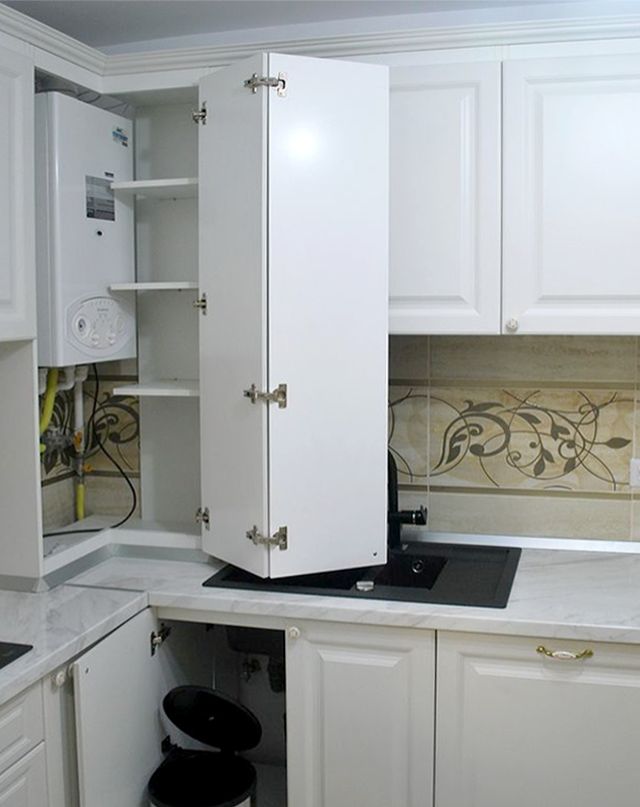
Single-circuit wall-mounted gas boiler
In dual-circuit systems, the water heating function is primarily provided. When hot water is used, the heating is automatically turned off for the duration of hot water use so that the system is not overloaded. The advantage of a two-circuit system is its compactness. Such a heating complex takes up much less space than if the hot water and heating systems were used separately.
Boiler models are often divided according to the method of placement.
Boilers can be installed in different ways depending on their type. You can choose a model with a wall mount or installed on the floor. It all depends on the preferences of the owner of the house, the capacity and functionality of the room in which the boiler will be located. The way the boiler is installed is also affected by its power. For example, floor boilers have more power compared to wall-mounted models.
In addition to the fundamental differences in the purposes of application and methods of placement, gas boilers also differ by management methods. There are models with electronic and mechanical control. Electronic systems can only work in homes with constant access to the mains.
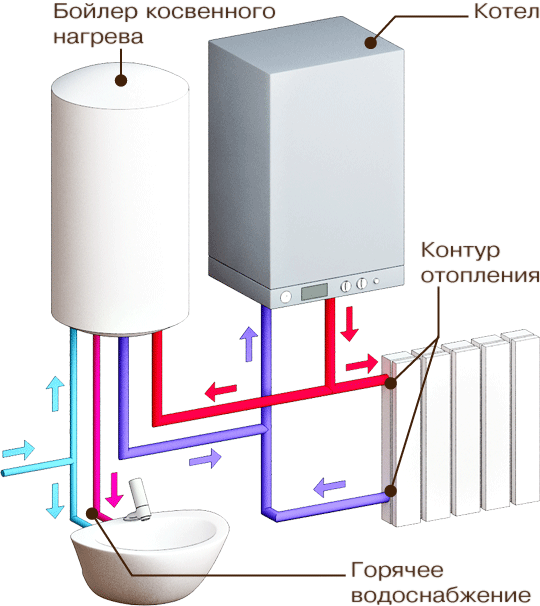
Double-circuit gas boiler with indirect boiler heating
What should be guided
When asked how to choose a heating boiler, they often answer that the main criterion is the availability of a particular fuel. In this context, we distinguish several types of boilers.
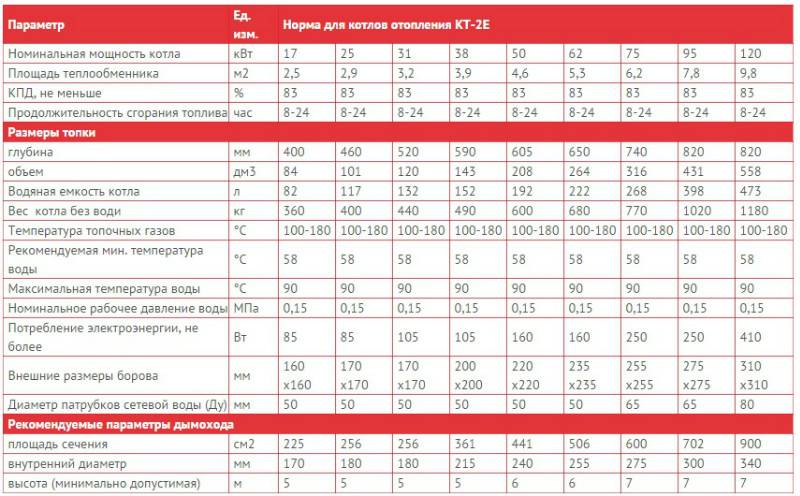
gas boilers
Gas boilers are the most common types of heating equipment. This is due to the fact that fuel for such boilers is not very expensive, it is available to a wide range of consumers.What are gas heating boilers? They are different from each other depending on what type of burner - atmospheric or inflatable. In the first case, the exhaust gas goes through the chimney, and in the second, all combustion products leave through a special pipe with the help of a fan. Of course, the second version will be a little more expensive, but it will not require smoke removal.
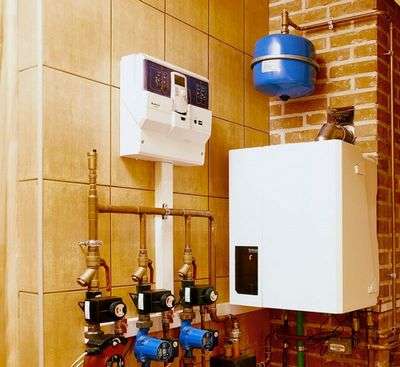
Wall mounted gas boiler
As for the method of placing the boilers, the choice of a heating boiler assumes the presence of floor and wall models. Which heating boiler is better in this case - there is no answer. After all, everything will depend on what goals you are pursuing. If, in addition to heating, you need to conduct hot water, then you can install modern wall-mounted heating boilers. So you will not need to install a boiler for heating water, and this is a financial savings. Also, in the case of wall-mounted models, combustion products can be removed directly to the street. And the small size of such devices will allow them to fit perfectly into the interior.
The disadvantage of wall models is their dependence on electrical energy.
Electric boilers
Next, consider electric heating boilers. If there is no mains gas in your area, an electric boiler can save you. Such types of heating boilers are small in size, so they can be used in small houses, as well as in cottages from 100 sq.m. All combustion products will be harmless from an environmental point of view. And the installation of such a boiler does not require special skills. It is worth noting that electric boilers are not very common.After all, fuel is expensive, and prices for it are rising and rising. If you are asking which heating boilers are better in terms of economy, then this is not an option in this case. Very often, electric boilers serve as spare appliances for heating.
Solid fuel boilers
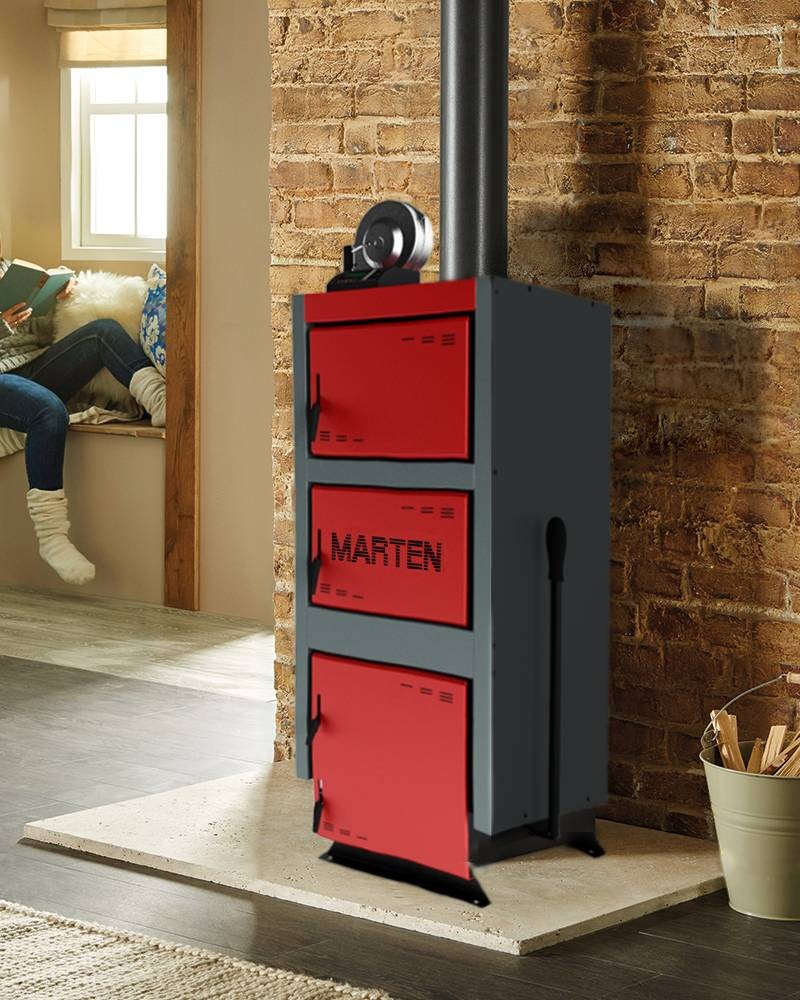
Now it's time to consider what solid fuel heating boilers are. Such boilers are considered the most ancient, such a system has been used for space heating for a long time. And the reason for this is simple - fuel for such devices is available, it can be firewood, coke, peat, coal, etc. The only drawback is that such boilers are not able to work offline.
Gas generating solid fuel boiler
Modification of such boilers are gas generating devices. Such a boiler differs in that it is possible to control the combustion process, and the performance is regulated within 30-100 percent. When you think about how to choose a heating boiler, you should know that the fuel used by such boilers is firewood, their humidity should not be less than 30%. Gas-fired boilers depend on the supply of electrical energy. But they also have advantages in comparison with solid propellant ones. They have a high efficiency, which is twice as high as solid fuel appliances. And from the point of view of environmental pollution, they are environmentally friendly, since the combustion products will not enter the chimney, but will serve to form gas.
The rating of heating boilers shows that single-circuit gas-generating boilers cannot be used to heat water. And if we consider automation, then it is great.You can often find programmers on such devices - they regulate the temperature of the heat carrier and give signals if there is an emergency danger.
Gas-fired boilers in a private house are an expensive pleasure. After all, the cost of a heating boiler is high.
Oil boilers
Now let's look at liquid fuel boilers. As a working resource, such devices use diesel fuel. For the operation of such boilers, additional components will be needed - fuel tanks and a room specifically for the boiler. If you are thinking about which boiler to choose for heating, then we note that liquid fuel boilers have a very expensive burner, which can sometimes cost as much as a gas boiler with an atmospheric burner. But such a device has different power levels, which is why it is profitable to use it from an economic point of view.
In addition to diesel fuel, liquid fuel boilers can also use gas. For this, replaceable burners or special burners are used, which are capable of operating on two types of fuel.
Oil boiler
The concept of dissipation factor
The dissipation coefficient is one of the important indicators of heat exchange between the living space and the environment. Depending on how well the house is insulated. there are such indicators that are used in the most accurate calculation formula:
- 3.0 - 4.0 is the dissipation factor for structures in which there is no thermal insulation at all. Most often in such cases we are talking about makeshift houses made of corrugated iron or wood.
- A coefficient from 2.9 to 2.0 is typical for buildings with a low level of thermal insulation. This refers to houses with thin walls (for example, one brick) without insulation, with ordinary wooden frames and a simple roof.
- The average level of thermal insulation and a coefficient from 1.9 to 1.0 are assigned to houses with double plastic windows, insulation of external walls or double masonry, as well as with an insulated roof or attic.
- The lowest dispersion coefficient from 0.6 to 0.9 is typical for houses built using modern materials and technologies. In such houses, the walls, roof and floor are insulated, good windows are installed and the ventilation system is well thought out.
Table for calculating the cost of heating in a private house
The formula in which the value of the dissipation coefficient is used is one of the most accurate and allows you to calculate the heat loss of a particular building. It looks like this:
In the formula, Qt is the level of heat loss, V is the volume of the room (the product of length, width and height), Pt is the temperature difference (to calculate, you need to subtract the minimum air temperature that can be in this latitude from the desired temperature in the room), k is the scattering coefficient.
Let's substitute the numbers into our formula and try to find out the heat loss of a house with a volume of 300 m³ (10 m * 10 m * 3 m) with an average level of thermal insulation at a desired air temperature of + 20 ° C and a minimum winter temperature of - 20 ° C.
Having this figure, we can find out what power the boiler needs for such a house. To do this, the obtained value of heat loss should be multiplied by a safety factor, which is usually from 1.15 to 1.2 (the same 15-20%). We get that:

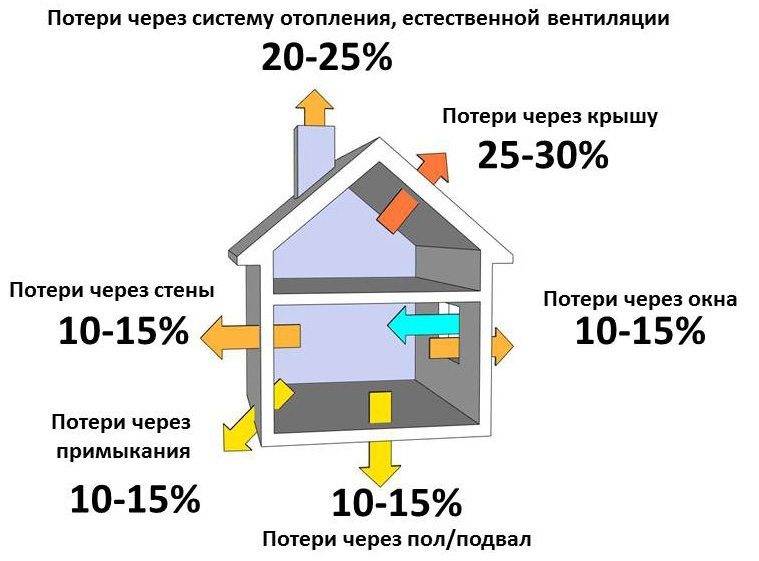
Rounding the resulting number down, we find the desired number. To heat a house with the conditions we set, a boiler of 38 kW is required.
Such a formula will allow you to very accurately determine the power of the gas boiler required for a particular house.Also, to date, a wide variety of calculators and programs have been developed that allow you to take into account the data of each individual building.
Do-it-yourself heating of a private house - tips for choosing the type of system and type of boiler Requirements for installing a gas boiler: what is necessary and useful to know about the connection procedure? How to correctly and without errors calculate the heating radiators for the house Private water supply system borehole houses: recommendations for creating
Calculation of the heating boiler power by area
For an approximate assessment of the required performance of a thermal unit, the area of \u200b\u200bthe premises is sufficient. In the simplest version for central Russia, it is believed that 1 kW power can heat 10m2 area. If you have a house with an area of 160m2, the boiler power for heating it is 16kW.
These calculations are approximate, because neither the height of the ceilings nor the climate are taken into account. To do this, there are coefficients derived empirically, with the help of which appropriate adjustments are made.
The indicated norm - 1 kW per 10 m2 is suitable for ceilings 2.5-2.7 m. If you have higher ceilings in the room, you need to calculate the coefficients and recalculate. To do this, divide the height of your premises by the standard 2.7 m and get a correction factor.

Boiler power calculation heating by area - The easiest way
For example, the ceiling height is 3.2m. We consider the coefficient: 3.2m / 2.7m \u003d 1.18 rounded up, we get 1.2. It turns out that for heating a room of 160m2 with a ceiling height of 3.2m, a heating boiler with a capacity of 16kW * 1.2 = 19.2kW is required. They usually round up, so 20kW.
To take into account climatic features, there are ready-made coefficients. For Russia they are:
- 1.5-2.0 for northern regions;
- 1.2-1.5 for regions near Moscow;
- 1.0-1.2 for the middle band;
- 0.7-0.9 for the southern regions.
If the house is located in the middle lane, just south of Moscow, a coefficient of 1.2 is applied (20kW * 1.2 \u003d 24kW), if in the south of Russia in the Krasnodar Territory, for example, a coefficient of 0.8, that is, less power is required (20kW * 0 ,8=16kW).
Calculation of heating and selection of a boiler is an important stage. Find the wrong power and you can get this result ...
These are the main factors to be considered. But the values found are valid if the boiler will only work for heating. If you also need to heat water, you need to add 20-25% of the calculated figure. Then you need to add a "margin" for peak winter temperatures. That's another 10%. In total we get:
- For home heating and hot water in the middle lane 24kW + 20% = 28.8kW. Then the reserve for cold weather is 28.8 kW + 10% = 31.68 kW. We round up and get 32kW. When compared with the original figure of 16kW, the difference is two times.
- House in the Krasnodar Territory. We add power for heating hot water: 16kW + 20% = 19.2kW. Now the "reserve" for the cold is 19.2 + 10% \u003d 21.12 kW. Rounding up: 22kW. The difference is not so striking, but also quite decent.
It can be seen from the examples that it is necessary to take into account at least these values. But it is obvious that in calculating the power of the boiler for a house and an apartment, there should be a difference. You can go the same way and use coefficients for each factor. But there is an easier way that allows you to make corrections in one go.
When calculating a heating boiler for a house, a coefficient of 1.5 is applied. It takes into account the presence of heat loss through the roof, floor, foundation.It is valid with an average (normal) degree of wall insulation - laying in two bricks or building materials similar in characteristics.
For apartments, different rates apply. If there is a heated room (another apartment) on top, the coefficient is 0.7, if a heated attic is 0.9, if an unheated attic is 1.0. It is necessary to multiply the boiler power found by the method described above by one of these coefficients and get a fairly reliable value.
To demonstrate the progress of the calculations, we will calculate the power gas heating boiler for an apartment 65m2 with 3m ceilings, which is located in central Russia.
- We determine the required power by area: 65m2 / 10m2 \u003d 6.5 kW.
- We make a correction for the region: 6.5 kW * 1.2 = 7.8 kW.
- The boiler will heat the water, so we add 25% (we like it hotter) 7.8 kW * 1.25 = 9.75 kW.
- We add 10% for cold: 7.95 kW * 1.1 = 10.725 kW.
Now we round the result and get: 11 kW.
The specified algorithm is valid for the selection of heating boilers for any type of fuel. The calculation of the power of an electric heating boiler will not differ in any way from the calculation of a solid fuel, gas or liquid fuel boiler. The main thing is the performance and efficiency of the boiler, and heat losses do not change depending on the type of boiler. The whole question is how to spend less energy. And this is the area of \u200b\u200bwarming.
2 We calculate the power by area - the main formula
The easiest way to calculate the required power of a heat generation device is by the area of \u200b\u200bthe house. When analyzing the calculations carried out over many years, a regularity was revealed: 10 m2 of an area can be heated properly using 1 kilowatt of heat energy.This rule is valid for buildings with standard characteristics: a ceiling height of 2.5–2.7 m, average insulation.
If housing fits into these parameters, we measure its total area and approximately determine the power of the heat generator. The calculation results are always rounded up and slightly increased in order to have some power in reserve. We use a very simple formula:

W=S×Woud/10:
- here W is the desired power of the thermal boiler;
- S - the total heated area of the house, taking into account all residential and amenity premises;
- Woud - the specific power required for heating 10 square meters is adjusted for each climatic zone.
Method for calculating the required power of a heat generation device
For clarity and greater clarity, we calculate the power of the heat generator for a brick house. It has dimensions of 10 × 12 m, multiply and get S - a total area equal to 120 m2. Specific power - Woud take as 1.0. We make calculations according to the formula: multiply the area of 120 m2 by the specific power of 1.0 and get 120, divide by 10 - as a result, 12 kilowatts. It is a heating boiler with a capacity of 12 kilowatts that is suitable for a house with average parameters. This is the initial data, which will be corrected in the course of further calculations.
There are a lot of units on the market with similar characteristics, for example, solid fuel boilers from the Kupper Expert line from Teplodar, whose power varies from 15 to 45 kilowatts. More similarly, you can get acquainted with the rest of the characteristics and find out the price on the official website of the manufacturer.

What else do you need to know to make the right choice?
There are many more parameters besides power that need to be considered when heating:
A double-circuit gas boiler is needed for the simultaneous heating of the house and heating water.
- It is necessary to determine the number of circuits. To do this, you must first find out what is the difference between single-circuit and double-circuit devices.
- are different. You can give your preference to wall or floor equipment. Most often, gas boilers are installed, which are mounted on the wall.
- Different devices use different combustion chambers. They can be of two types: open and closed.
- Design. Now boilers are not only functional, but can also complement the design of the room. At the request of the client, the manufacturer can decorate the boiler with carved patterns or use special material for its production and decoration that the buyer will like. However, such services are not very popular in our country.
Boilers used in private houses
In private households, boilers can act as the main heat generator, differing not only in power indicators, but also in other technical parameters, including the type of fuel and functionality. The manufactured equipment runs on solid (wood, special pellets, coal), liquid, gaseous (main and bottled gas) fuels, as well as from a traditional electrical network.
Design features:
- according to the material of execution - cast iron or steel models;
- according to the method of installation - floor or wall models;
- by the number of circuits - single or double circuit models.
Non-volatile devices are able to function without being connected to the mains, and when installing volatile boilers, it must be remembered that systems with forced circulation of the heat carrier are not able to work without electricity.
When purchasing a heat generating device, it is necessary to take into account a large number of criteria
In this regard, special attention is paid to the cost of the boiler, the features of the installation and installation of the heating system, the power of the device and the number of circuits, the type of fuel used, as well as the option of removing all exhaust gases
The most affordable boilers in terms of price include domestically produced models, and you need to choose a device according to the type of fuel, taking into account the climatic conditions and the existing opportunities inherent in the locality in which the house is supposed to be operated. If desired, it is quite possible to significantly increase the performance of the system and the uniformity of heating the premises with the help of a special heat accumulator attached to the installed heating boiler.
Conclusion
Installation and calculation of the heating system in a private house is the main component of the conditions for comfortable living in it. Therefore, the calculation of heating in a private house should be approached with great care, taking into account many related nuances and factors.
The calculator will help if you need to quickly and averagely compare various construction technologies with each other. In other cases, it is better to contact a specialist who will correctly carry out the calculations, correctly process the results and take into account all the errors.
Not a single program can cope with this task, because it contains only general formulas, and the heating calculators for a private house and tables offered on the Internet serve only to facilitate calculations and cannot guarantee accuracy. For accurate, correct calculations, it is worth entrusting this work to specialists who can take into account all the wishes, capabilities and technical indicators of the selected materials and devices.