
- Compressor pumping of the well
- How to independently pump a well after drilling?
- How to download?
- Well flushing after drilling
- When and why pumping a well is needed
- Causes of silting and how to eliminate it
- Cleaning time depends on well parameters
- Common mistakes when flushing a well
- Features of the buildup of the well
- With a small debit
- on clay
- Errors and some nuances
- Mistakes
- Nuances
- Description of the work technology
- Choosing the Right Pump
- Suspension of the pump
- Time required for buildup
- Mistakes to avoid
- The most typical are:
- Ways to deal with silting
- Recommendations for the fight against silting and sanding
- How long does it take to drill a well?
- Cleaning work in the well
- Video description
- Cleaning work with a bailer
- Cleaning work with a vibration pump
- Cleaning work with two pumps
- Preparing for a long downtime and pumping after it
- Briefly about the main
- How to pump an old mine drilled into sand or clay
- Application area
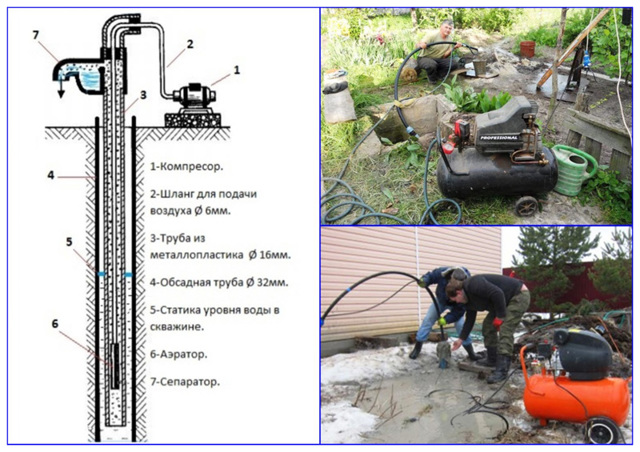
Compressor pumping of the well
How to properly pump with compressed air is known to any driller. This method is used when there is no electricity at the work site.Mobile compressors with internal combustion engines are used, capable of supplying from 2 cubic meters of air per hour to the water intake shaft.
Air is supplied to the bottom of the pit through a perforated metal tube with a plugged end. The air rises through the well pipe, dragging the cuttings particles with it and carrying them out.
With a casing diameter of more than 5 inches, it is correct to use an airlift system. It consists of two tubes. One of them pours air into the mixer. The second sucks in the sludge and passes it up along with the air.
How long it takes to clean the water intake in this way depends on its depth and the height of the dynamic level.
The ease of use of the method determines the possibility of doing the washing with your own hands.
How to independently pump a well after drilling?
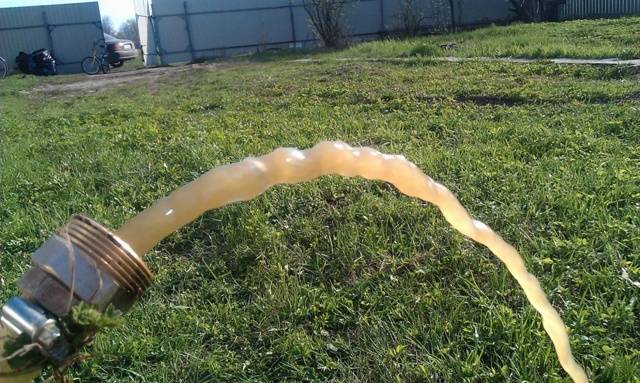
After drilling a new well for water, the problem of its pumping arises. In principle, there is nothing complicated here, everything is done quite simply. An inexpensive drainage pump with a hose is inserted into the well and sinks almost to the very bottom, and for 7-10 days we pump the well for 2-3 hours a day. What does this give us? Firstly, the water will be very cloudy at first, but with each subsequent turn on of the pump it will gradually become clearer, and the water level in the well may also drop significantly. Secondly, when pumping, water channels are formed near the casing pipe, with the help of which the well will be filled with water, these channels will be washed over time and clean water will flow through them.After 10 days of pumping, the water should become clean and then you can proceed with the installation of the water supply system, but it should be understood that for the first time using the well, you should not overload it in order to avoid clouding the water again or a strong drop in the water level in the well.
moderator chose this answer as the best
add to favorites link thank you
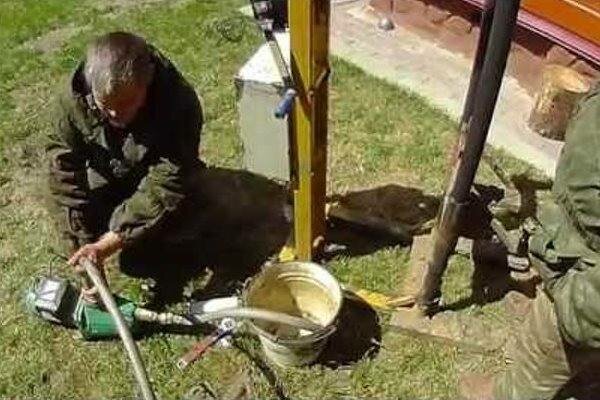
If unscrupulous drillers haven’t finished working on the well, they say the water will soon become clear (or you didn’t have it in the contract), and the water is getting muddy and muddy, don’t be discouraged - you can pump the well with your own hands. You need to pump with what you have, whether it be a compressor, a pumping station, a deep pump, a motor pump or even a vibration pump.
The technology is quite simple - we pump out water until it becomes transparent, for which we put the pump in the well and turn it on for a couple of hours for 5-7 days. True, such a process can take up to several weeks, depending on the type of soil where the well is punched. If the water is very dirty, then I recommend taking a dirt-resistant pump, you can drain it. And here's a simple one vibratory pump type Brook, every hour you need to remove and rinse with clean water.
After drilling, you are required to pump the well to clean water. Otherwise, it's bullshit. If the well is on sand, then I do not advise using a vibration pump for a long time. It sets in motion the grains of sand, which always vary slightly in size. The result is the entry of small grains of sand into the casing and the failure of the well. For pumping, it will fit, but then you need to install a centrifugal pump. It is better to pump continuously to clean water, but monitor the level.The pump should not be at the very bottom, but should also be submerged 2-4 m into the water.
add to favorites link thank you
When a well was drilled for me at a dacha with a depth of 15 meters, I also did the initial pumping. But they explained that it would also be necessary to clean the well from suspension and sand, and that this could be done using a conventional 'baby' vibration motor. During the week I pumped out water for an hour a day, it was very cloudy at first and then became transparent.
add to favorites link thank you
Project statistics for the month
New users: 65
Questions created: 181
Responses written: 877
Reputation points earned: 10034
Server connection.
How to download?
 Powerful submersible pump
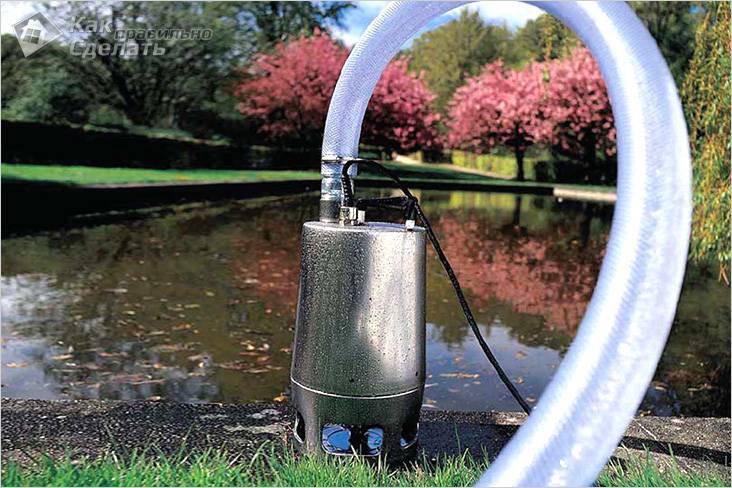
Let's start with the question: Was the well made by a company, or covens? Further actions depend on the answer, since in the first case this service is included in the terms of the contract (if you, out of ignorance, did not refuse it). This is done using a powerful submersible centrifugal pump capable of pumping from 3 to 6 m³ / h of water containing a large amount of impurities. Such a pump sinks almost to the bottom of the well, and with a powerful suction stream it will pull out all the rubbish.
If you “saved” on pumping by hiring shabashnikov, the cost of which is less than that of professional drillers, but at the same time they are not responsible for anything, then you will have to pump the well yourself. To do this, you will need to purchase an inexpensive pump of domestic production.


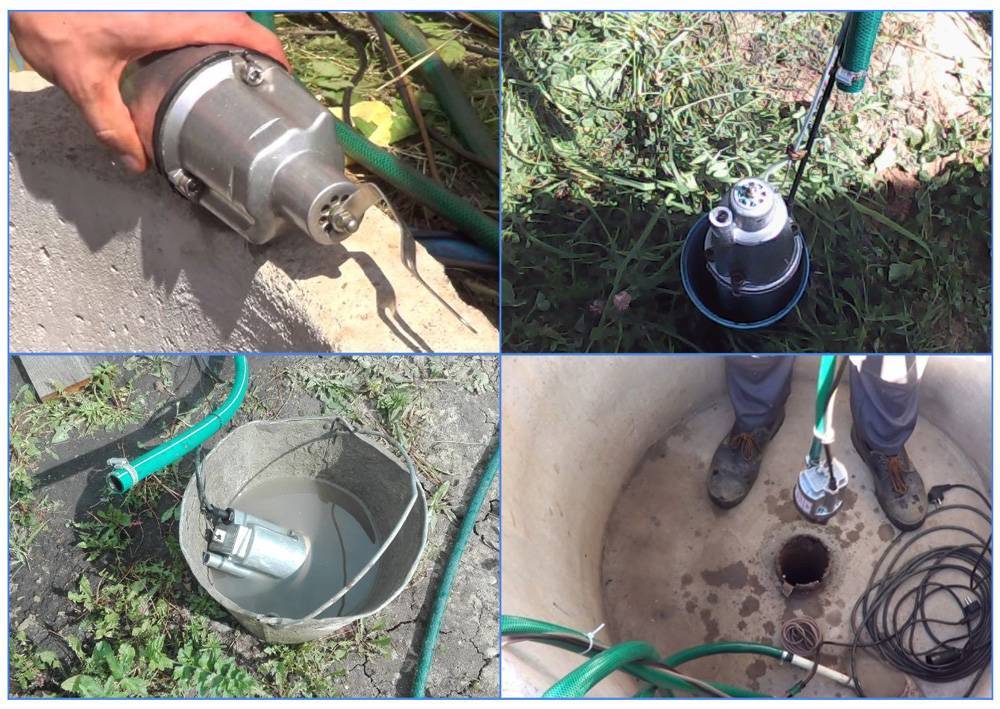


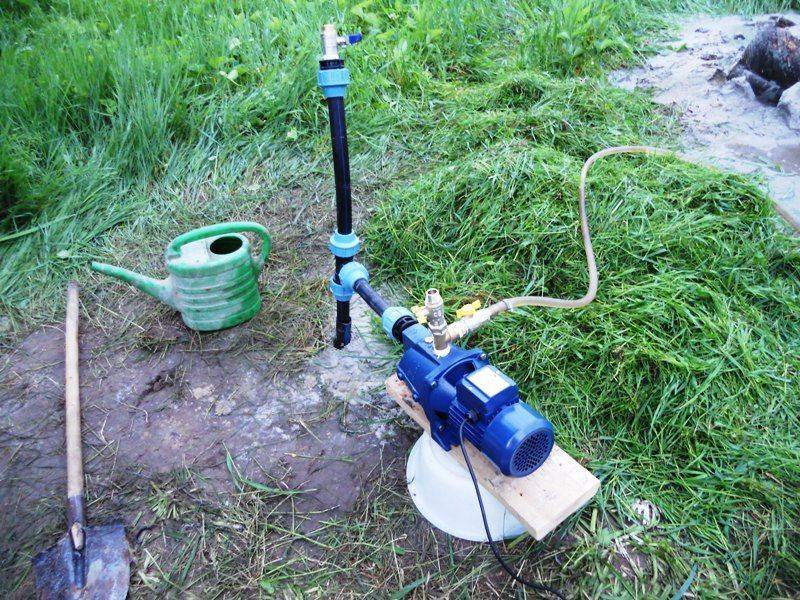
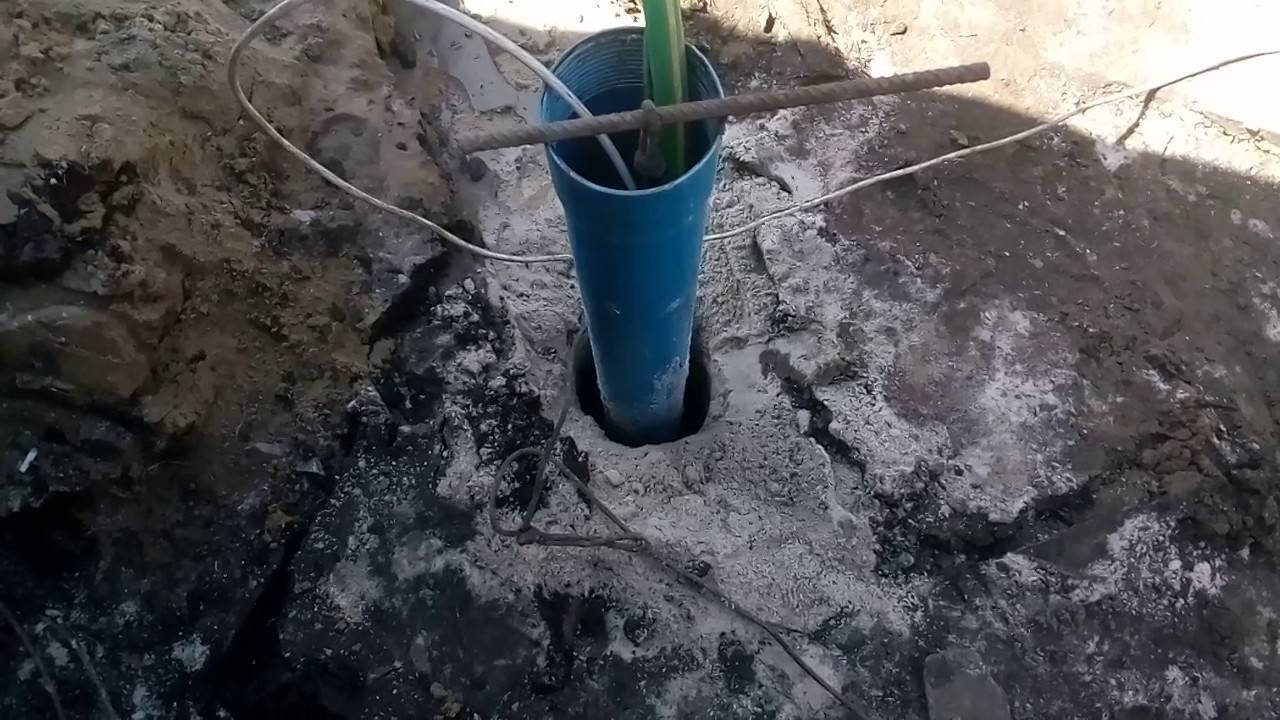
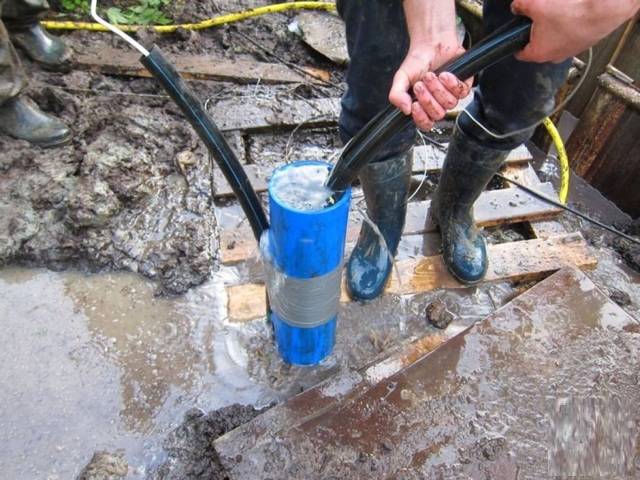
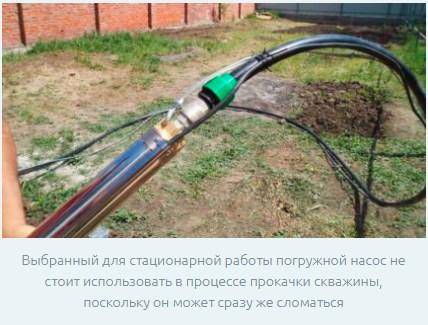
Do not rush to say that you do not need it, since an imported one specially purchased for this purpose is already available.What kind of water will we pump out? Almost a swamp with sand and various rubbish! So if you are in a hurry to install your expensive branded priming pump, then get ready to say goodbye to it, as it is simply not designed for such work.
Let's get back to an inexpensive domestic pump, which may not even “survive” until the end of the flush:
- Attach a stainless steel cable to it, and lower it to the bottom of the well.
- Then lift centimeters by 30-40 and secure in this position. Now you can turn it on. Seeing how the water went, you yourself will be glad that you did not put an expensive pump.
- In order for your "Kid" (or "Brook") to serve as longer, you need to pull it out from time to time, and give it the opportunity to clean itself with clean water, and then lower it back into the well.
The pump must not be in the same position. It must be slowly raised and lowered by 4-6 cm, while not making sudden movements. This is necessary so that the sand from the cork rises in parts and does not clog the hose.
The pump must be gradually lowered lower and lower in order to clean the bottom of the well from all that is superfluous. If suddenly water stops flowing from the hose, then most likely the pump has sucked. In this case, it must be immediately disconnected from the power supply and pulled out, and this would not have happened without an attached cable, since the silt firmly holds everything that gets into it.
Well flushing after drilling
Well flushing is carried out using pipes that sink to the bottom and supply water at the highest possible pressure. The pressure of the water washes out the silt and all the dirt that has accumulated during the operation of the well. When flushing, the accumulated dirt particles rise through the pipes and are removed to the outside.
When flushing a clogged well while drilling, it is very important to be careful to avoid damaging the filter.
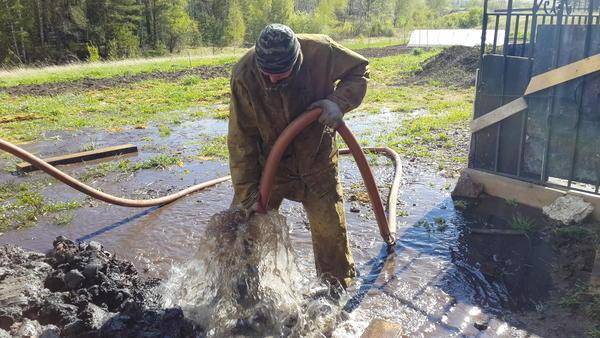
It is not recommended to flush the well before starting the casing procedure, as rock collapse may begin, and this will lead to clogging of the mouths.
For the tightness of the cleaning process, it is necessary to fix the pump on the upper part of the pipe by putting an adapter on it, and this adapter is fixed with pipes with self-tapping screws in the amount of 4 pieces. The volume of water used will depend entirely on the size and characteristics of the well, as well as the degree of contamination.
When and why pumping a well is needed
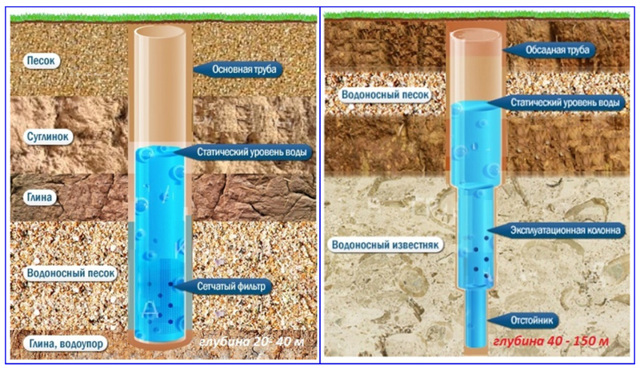
The purpose of pumping a well is to clean it of impurities immediately after the installation of the last casing pipe during drilling and to prevent silting during operation. As a result, the following tasks are solved:
- Rise to the surface of rock settled after drilling.
- Washing out of sand and clay from the filtration zone.
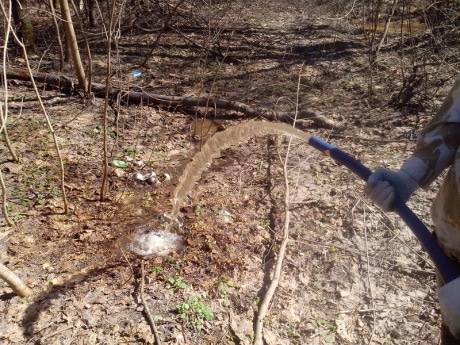
It is important to clarify that water source pollution is a completely natural process, since there are a large number of fine particles in the aquifer that pass through the filter unhindered. As a result of their settling at the bottom of the well:
- its depth is significantly reduced;
- the quality of the extracted water changes;
- debit (volume of produced water per unit of time) decreases.
If you notice any of these signs, you need to pump the water source. Subsequently, it is recommended to repeat this procedure to prevent silting. It is especially important during periods of reduced water intake or complete shutdown of the well, for example, in winter.

To achieve the desired result, it is necessary to purchase a suitable pump and follow the well flushing technology.
Causes of silting and how to eliminate it
When silting or sanding, cleaning the well can be carried out by various methods. As a preventive measure, after some downtime or if a slight silting is detected, it is enough to turn on the pump for several hours and pump out water with accumulated sludge. The problems are evidenced by a slight decrease in the debit of the well.
When figuring out how to properly pump a new well, you can find various recommendations, some of which apply to cleaning already finished and commissioned facilities. For example, there is a method of cleaning a well with a fire truck.
At the same time, a large amount of water under pressure is supplied inside the well, which makes it possible to break up the contaminants accumulated there, partially wash them out and facilitate further cleaning of the water source.
The idea is interesting, but it refers to structures that are already in operation and for some reason need to be cleaned again. It is difficult to pump a well immediately after completion of drilling operations in this way.

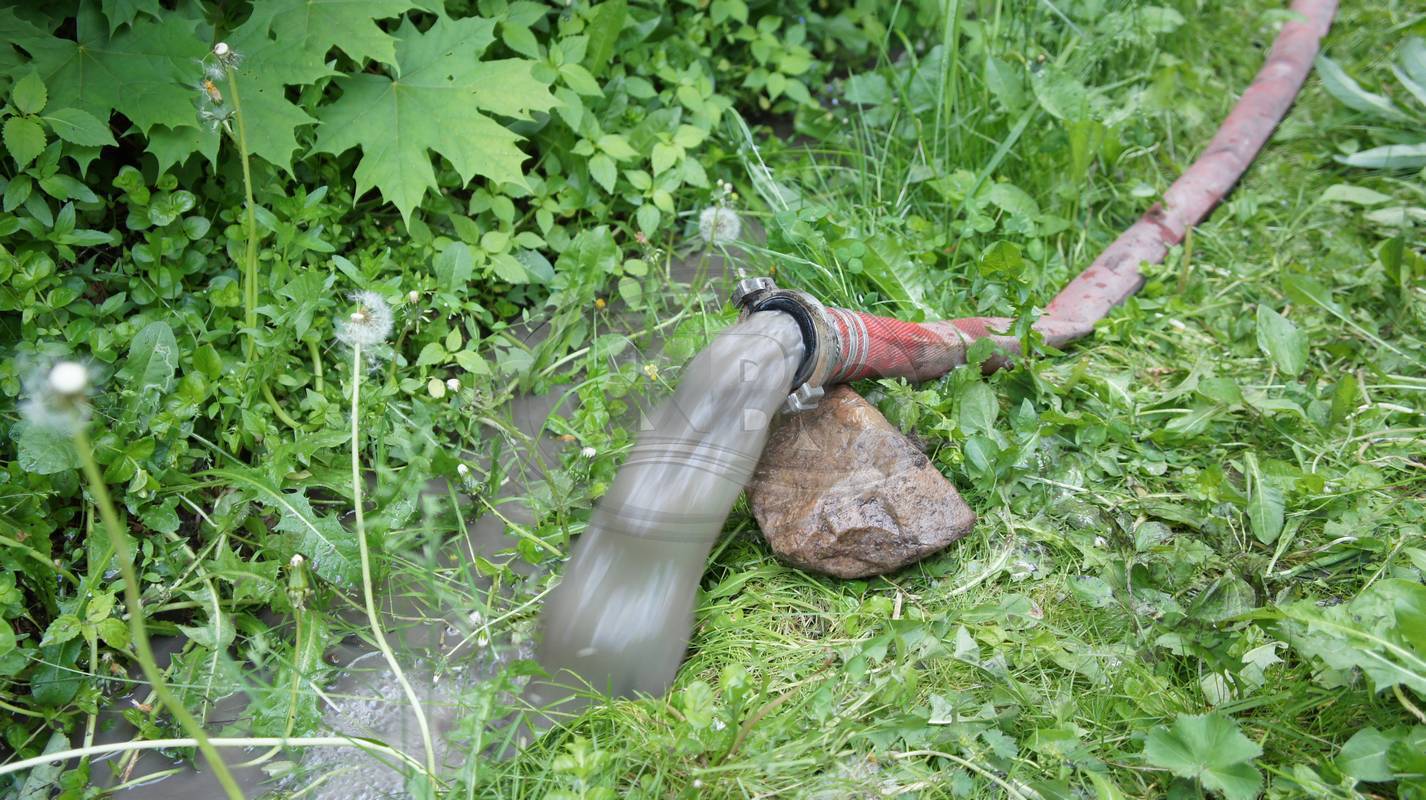


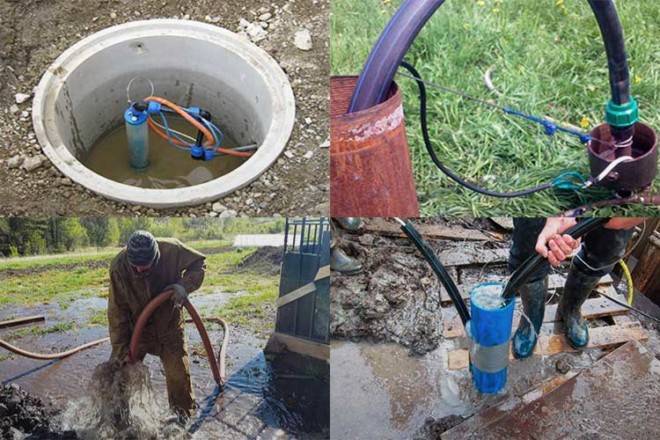


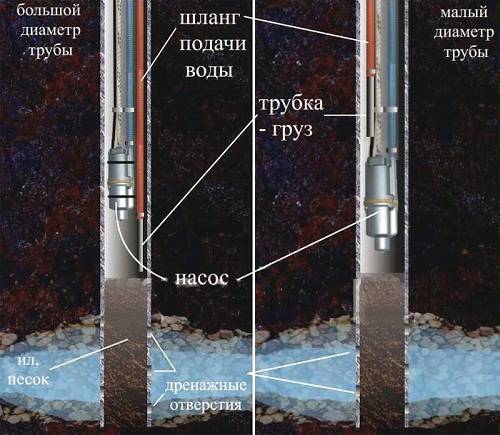
Image gallery
Photo from
Sign of siltation of a water well
Cloudy brown water from a well
Pump can't handle water
Pollution of pipes and pressure drop
The same can be said about the work with the bailer. This is a manual method of cleaning, in which a special bailer (a heavy metal product) is thrown to the bottom of the well in such a way that it breaks and scoops up the dirt and sand accumulated at the bottom. The bailer is taken out, freed from sediment and again thrown to the bottom of the well.
Wells are also pumped with the help of a motor pump: Caiman, Hitachi, Honda, etc. The cost of such a unit can be about a thousand dollars, or even two or three thousand, depending on the model.
This method, like those described above, will come in handy in the future if you need to reanimate the finished well and clean it of dirt, sand or silt. But at the end of drilling, pumping equipment should be used.
Cleaning time depends on well parameters
A reasonable question arises: how long does it take to pump the well on its own? The cleaning time of the well depends on its parameters such as depth and diameter, the power of pumping equipment, as well as on the composition and geological structure of the soil. clean up clay well very difficult. Cleaning a mine shaft fifty meters deep takes about 48 hours. In the case when the penetration into the ground is twenty meters, the amount of work in time is much less: shallow wells are much easier to pump.
A special place should be provided for pumped water.
It is most difficult to remove finely dispersed clay contaminants, the more of them in the composition of the soil, the longer the time that will have to be spent on pumping the well. Sometimes it can be measured in months. The more powerful the pumping equipment, the greater the volume of liquid it is able to pump per unit of time, that is, the well cleaning time is directly dependent on this parameter. The minimum pumping time is twelve hours, you can understand that the process is over by a steady stream of crystal clear water at the outlet of the pumping equipment.
Common mistakes when flushing a well
Inexperienced well owners often make the mistake of ignoring well flushing after drilling is complete. As a result, the water in the working remains untreated, which makes its use limited.
Mistake #1. One of the most common mistakes when flushing a well with a pump is its incorrect hanging height.
The pump must not be allowed to touch the bottom, in which case the cleaning will not be effective: the pump will not be able to capture silt particles under its body. As a result, silt will remain at the bottom of the well, blocking access to the aquifer and deteriorating water quality.
In addition, too low a position of the pump can cause the equipment to “burrow” into the sludge and it will be problematic to get it out of there. It also happens that the pump gets stuck in the wellbore.
This can be avoided if a thin but strong cable is used for immersion, and when pulling the pump back, do not make sudden movements, but gently swing the cable to lift the pump from the well.
Mistake #2. Incorrectly organized water disposal. Contaminated water coming from the well should be diverted as far as possible from the mouth.
Otherwise, there is a risk that it will again enter the source, which will lead to an increase in the flushing period, and hence additional financial costs. For the organization of drainage, it is best to use durable fire hoses.
It is important to flush the well before clean water comes out of it. Putting an uncleaned well into operation is prohibited! This will lead to damage to pumping equipment and problems in the operation of the well in the future.
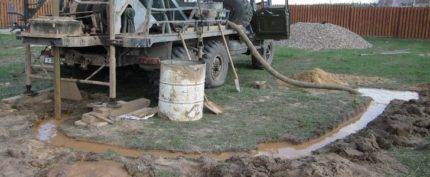
For drainage, you can use a shallow trench, through which water will drain into a drain pit, sewer, or other specially designated place.
Features of the buildup of the well
There are different types of wells, and some of the nuances of the work will depend on this.
With a small debit
There are situations when a well already exists, but its resource, or, as they say, debit, is very low. This characteristic refers to the amount of water received from the well for a certain period. Most often it is measured in liters per unit of time.





Many site owners want to increase the productivity of the well, and sometimes they succeed. To do this, buildup is used with simultaneous erosion of the lower layer with a strong jet of water. Use two pumps running at the same time. You can also try to increase the debit of the well mechanically using special devices (bailers) that select silt and sand from the bottom. In most cases, a positive result can be achieved, but if nothing helps, then a new source has to be drilled.
on clay
If a sand well can be cleaned in 12-24 hours, then with a clay bottom, this process can drag on for several days or even weeks. If clean water cannot be reached quickly, then it makes sense to use bailers or a second pump, as in the case of increasing debit. Constant pumping of the clay mixture will eventually lead to a positive result.
Errors and some nuances
It would be easier to answer how long it takes to pump a well if some significant errors did not interfere with the work, which could ruin the whole thing altogether.
Mistakes
Possible errors include the following:
- the pump is suspended too high, it is too close to the water surface - as a result, low efficiency; you will be able to feel it when the water comes out for quite a long time, which is called “neither this nor that” - it is not too dirty, but also clean, without impurities, it cannot be called either; in the worst case scenario, in this situation, the well quickly becomes silted up and the pump stops pumping water altogether;
- the pump is lowered too low - and begins to constantly become clogged with silt; you will be able to determine this condition when you have to clean the pump too often; a very unpleasant consequence of the low position of the pump is its complete immersion in silt, while it can be very difficult to remove it from there;
- very close drainage of water on the surface - the water above must be diverted to the side as far as possible, otherwise it can return down through the existing channels in the ground and, thus, the pumping process will continue indefinitely;
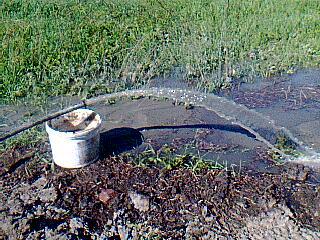
We drain the water as far as possible from the structure
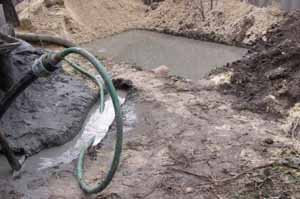
If you do not choose the right place for draining the outgoing water, then the answer to the question of how long to pump the well after drilling will be one answer - for a long time and for a very long time ... so you need to take the place away
Nuances
We draw attention to some of the nuances associated with the described action:
- any work on the well refers to work of increased injury risk and labor intensity, be extremely careful - the soil can “go” to the side, the pressure can turn out to be unexpectedly large - all dangers must be carefully calculated and a rescue recipe must be prepared for each;
- when lowering the pump into the well, use the mormyshka fishing technology familiar to all fishermen:
-
- lower the pump carefully until you feel the bottom of the plug;
- lift it up again by 30-40 cm;
- turn on the pump;
- slowly start lowering it again, but with jerks up - 5 cm down - 3 up;
- this behavior will cause the sand to rise but not clog the hose.
already during the operation of the well, it is necessary to carry out preventive pumping for 2-3 hours during periods of reduced water consumption;
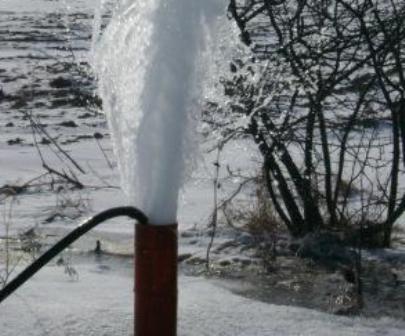
A very effective pumping method can be the use of high pressure - this is usually used when resuscitating a well
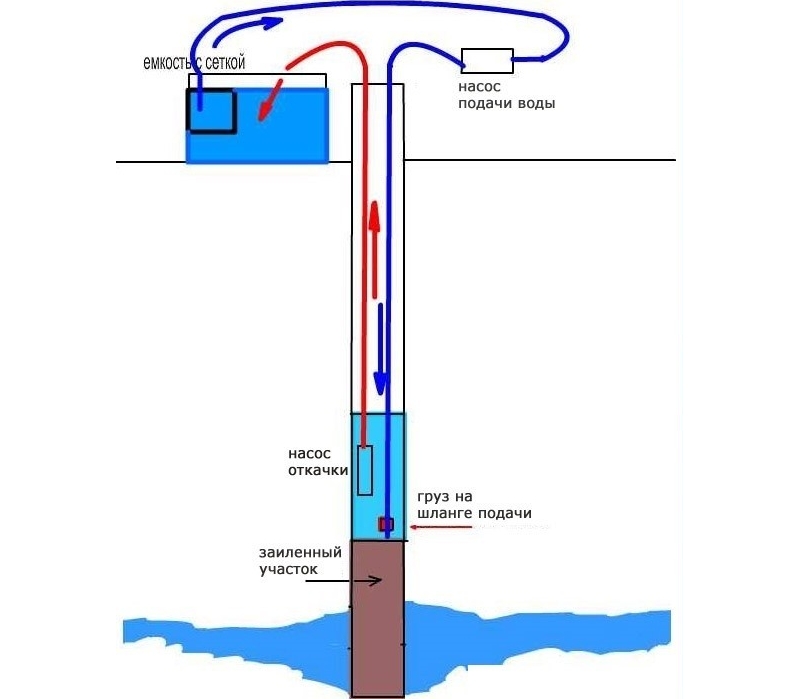
- the plug formed below from or, which is the reason why the well is not pumped, can be washed out with clean water supplied down under pressure through a hose;
- by the way, this method of pumping a well is also practiced - by the high pressure method, or by supplying clean water down; this method allows you to pump in the shortest possible time, but only on clean aquifers, when it is necessary to reanimate a previously used well, or on a well, in the reliability of the design of which you are 200% sure.
Description of the work technology
Actually pumping a well is an ordinary pumping of water
However, there are several aspects to which special attention should be paid.
Choosing the Right Pump
Even if the owner has prepared a powerful water supply device, you should not lower it into the well. Experience shows that high-quality expensive equipment will come in handy later, for pumping clean water. Whereas, especially for the buildup process, it is advisable to purchase an inexpensive submersible pump.Most likely, he will regularly fail, pumping a muddy suspension, but he will bring his work to an end. At the same time, the more expensive “permanent” option will remain unscathed and will be able to work perfectly on clean water. Another caveat: the “temporary” pump must be a submersible centrifugal pump, since vibration models simply cannot cope with such a load.
Suspension of the pump
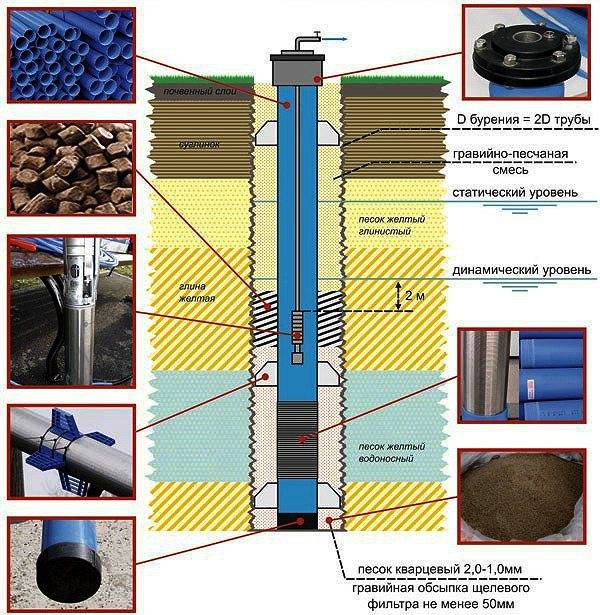
When thinking about how to pump a well after drilling, you should pay special attention to the height of the pump. It should be close to the line of the bottom of the well, 70-80 cm above its mark, practically on the same level with the gravel pack
In this case, the sludge will be captured and actively removed to the outside. In order for the pump to work in this mode for as long as possible, it must be periodically stopped, removed and washed, passing clean water through it.
Time required for buildup
It is difficult to determine immediately how much time it will take to build up the well.
The process should continue until clean water appears. The intensity of the swing directly affects the result. The more water is pumped out, the more sand and other small particles go with it. Coarse sand that has not passed through the filter settles to the bottom, forming an additional filter layer.




The duration of the buildup process depends on the composition of the soil on which the well is equipped
Experts say that in order to completely clean the well, more than a dozen tons of water must be pumped out of it. On average, with a structure depth of 50 to 500 m, the process should take at least 48 hours, with a smaller depth, respectively, less.
Mistakes to avoid
In the behavior of the buildup of a new well, errors occur that disrupt the cleaning process.
The most typical are:
- Pump too high. It should not be placed near the surface of the water. Otherwise, the use of the equipment will be useless: it will not be able to capture fine particles, which are most abundant in the bottom part of the well. In this case, despite the measures taken to build up, the well will quickly silt up and stop producing water.
- Pump set too low. A buried device will not be able to function properly. It will very quickly clog with suspension and stop. In addition, the pump can "burrow" in the silt. It is very difficult to extract the apparatus pulled into the ground to the surface.
- Illiterate water disposal. Pumped out dirty water should be discharged as far as possible. Otherwise, it can again fall into the well, and then the buildup process can last almost indefinitely.
- Descent of the pump on an insufficiently strong cord supplied with it. It's better not to. The device can get stuck in the well or be sucked into the silt. In this case, pulling it out by the cord is unlikely to succeed. It is worth buying a strong thin cable and using it to lower the pump for buildup.
Ways to deal with silting
The water in the well will always be clear and clean if preventive maintenance is carried out from time to time.
Each owner of the structure needs to know how to pump the well in order to prevent re-silting. To do this, during periods when water intake is reduced, you should regularly turn on the pump for two to three hours. If, nevertheless, despite all efforts, a plug of silt has formed at the bottom, you can try to wash it out.A hose is lowered into the well to the pump, through which clean water is supplied under pressure. It will wash away unwanted bottom sediments, rise up through the annular space and splash out of the well. The procedure should be carried out until gravel from the bottom filter begins to come to the surface along with water. Next, carry out the usual buildup.
The well is quite easy to operate
It is important to competently carry out drilling work and equip the structure, which subsequently will not cause much trouble. It is very important to know how to properly pump a well so that it produces a large volume of crystal clear water.
High-quality rocking work is the key to a long and trouble-free operation of the structure.
Recommendations for the fight against silting and sanding
The processes of silting and sanding, as already noted, are completely natural. Underground water does not flow through pipes and is not in an isolated state. It is constantly in contact with various particles, mixes with them and, in the absence of proper arrangement, is removed from the dirty well. In order for the water to constantly come out clean and transparent, the well owner must periodically carry out preventive maintenance to avoid re-silting.
To do this, during periods of reduced water intake, you need to regularly turn on the pump for at least a few hours. If a silt plug still collects at the bottom, try to wash it out. To do this, take a hose, lower it into the well to the pump and supply clean water under pressure. It should wash away deposits.As a result, all the dirt will rise and come out of the well along with the water. Continue the procedure until gravel from the filtration backfill begins to come to the surface. After that, do the usual buildup discussed earlier.
How long does it take to drill a well?
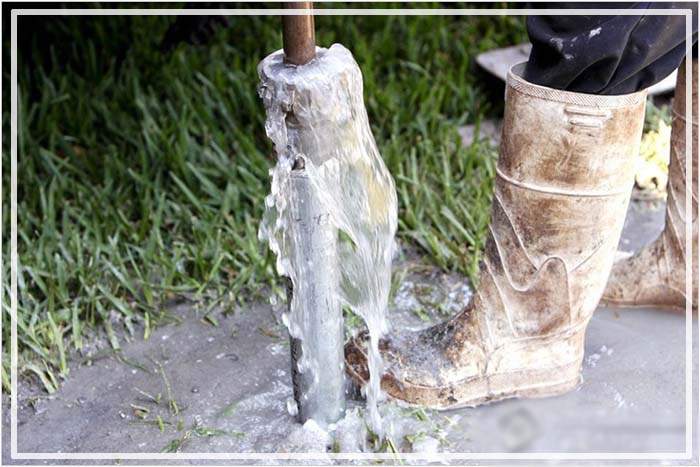
The use of professional equipment can reduce the period of cleaning the barrel from sand and other impurities
Pumping a well takes a different time. The cleaning period of the barrel depends on several factors, such as:
- well depth;
- the nature of the pollution;
- the amount of sediment;
- equipment power.
The last point is the most significant. Sometimes tons of water are used for high-quality cleaning of the well. When using a low-powered vibratory pump, this activity can take weeks, especially with a large number of complex, in terms of flushing, sludge components. The use of professional equipment can reduce the period of cleaning the barrel from sand and other impurities to a matter of hours. That is why experts recommend ordering a full cycle of well construction from drilling crews, from exploration to putting a water production facility into operation. If you decide to save money on the buildup of a water source or unscrupulous contractors are caught, you will have to flush the well yourself using available equipment.
With an insignificant depth (up to 15 m) and relatively small volumes of pollution, in which sand predominates, pumping a well can take from half a day to 3-4 days. If the sediment is voluminous, and viscous clay predominates in it, the process will be extended. It is difficult to name the exact period, but it can be several weeks.The criterion that determines the end of flushing is the exit from the pump pipe of clean, clear water without impurities.
Cleaning work in the well
If the location of the well is supposed to be in a summer cottage, used only for weekends in the summer, then it is not worth it. Too laborious and costly. It will be quite enough to have imported (brought) water for a couple of days.
It is quite another matter if agricultural work on growing vegetables is carried out on the site, there is an orchard or a flower garden. Or it is used for long-term residence. In this case, the presence of a constant source of fresh water is simply necessary, because. it is supposed to water the beds, cook food and use it for hygienic purposes.
Own well allows the owner to:
- do not depend on the central water supply;
- always have an uninterrupted supply of water in the required volume;
- use clean water that has passed through natural filters and is saturated with essential trace elements.
Video description
Which option of a well for water to choose can be found here:
However, the presence of these advantages will require the owner of the site to carry out periodic preventive maintenance to clean the clogged device. As a rule, this cleaning is carried out in several ways:
- with the help of a bailer;
- pumping the well with a vibration pump;
- using two pumps (deep and rotary).
The use of these methods presupposes both their separate use and their joint use in turn. It all depends on the weediness and depth of the well.
Cleaning work with a bailer
The bailer (metal pipe) is fixed with a strong iron cable or rope and smoothly lowers to the bottom.When it reaches the bottom, it rises (up to half a meter) and drops sharply. The blow of the bailer under the influence of its weight is able to lift up to half a kilogram of clay rock. Such a well cleaning technique is quite laborious and long-term, but inexpensive and effective.
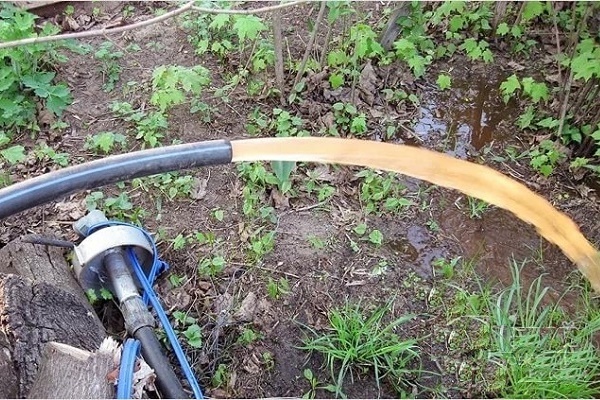
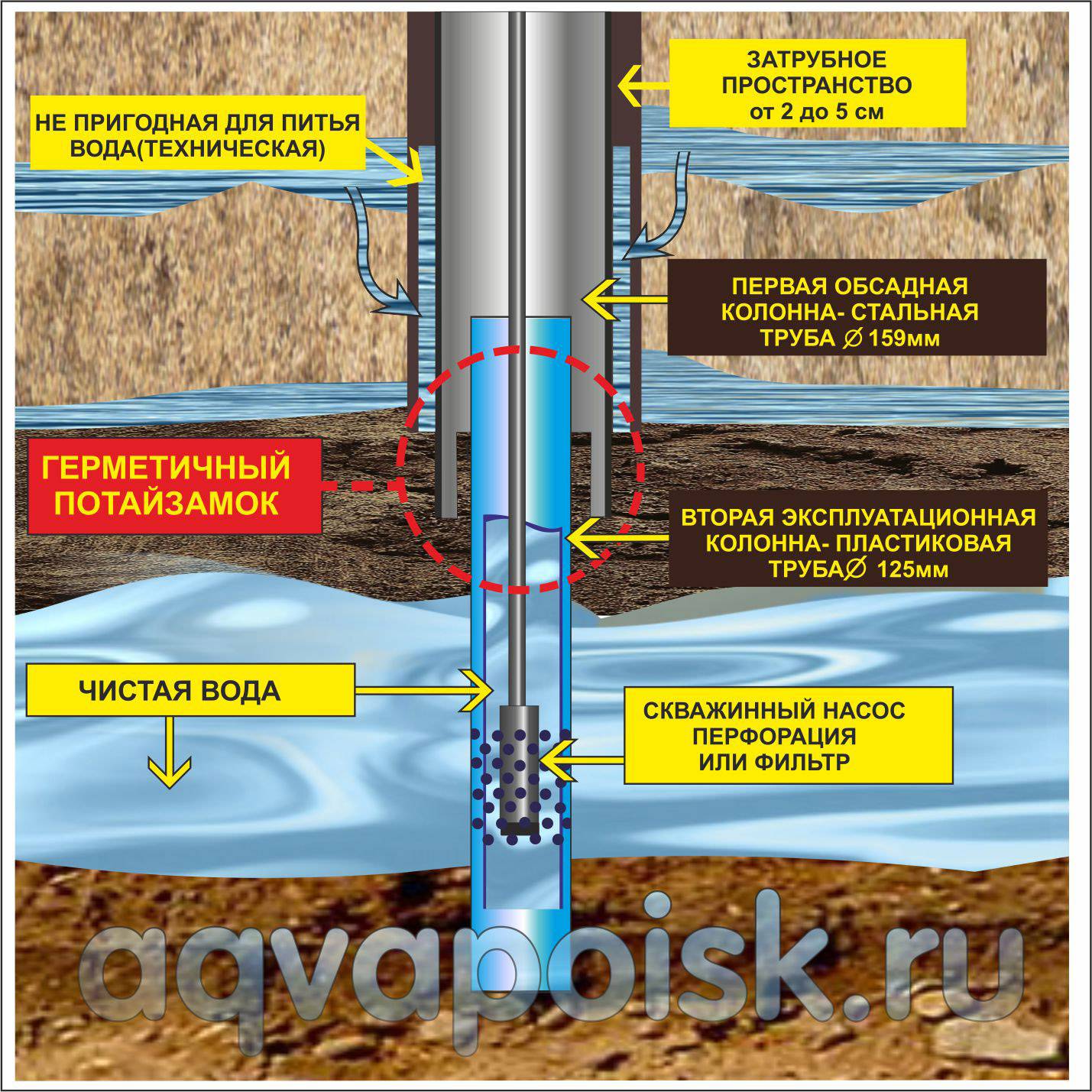

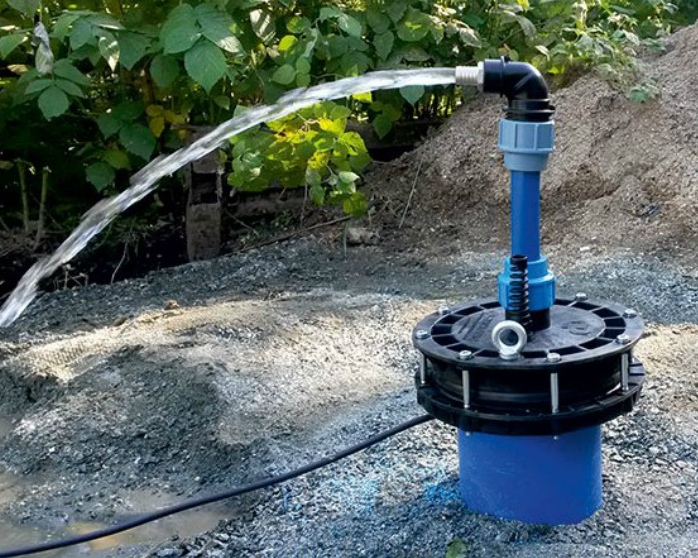


Cleaning the well with a bailer
Cleaning work with a vibration pump
This option for cleaning the well will be the simplest and fastest. That is why it is considered the most common and has found application even in mines with a narrowed receiver, which is why the use of a conventional deep pump is not possible.
Vibration pump cleaning
Cleaning work with two pumps
This method is characterized by the fact that it does not actually require human participation in the process. The flushing of the well takes place using two pumps that do all the work themselves, but the time spent on this is simply enormous.
Preparing for a long downtime and pumping after it
If a visit to the summer cottage in the winter (or for another long period) is not expected, and the well will not be used either, then you should take care of this in advance. It is necessary to consider preparing the device for inactivity and how to pump the well after a winter or a long downtime.
Preparation comes down to installing a heating cable inside or using any materials at hand to insulate the device.
Well pumping after winter is carried out by standard methods, which are described above, and are used only if necessary.
An example of well insulation for the winter
Briefly about the main
A private well on your own site is a useful and absolutely necessary thing.However, it will require some periodic maintenance work on cleaning and buildup. The above describes what buildup is, why it is used, which pump to pump the well after drilling, how to do it correctly and in what way, and what are the features of using one or another option. The issues of preparing the device for a long downtime (wintering) and restoring performance after this period are also mentioned.
Source
How to pump an old mine drilled into sand or clay
The above steps are also suitable for sources that have been in operation for a long time. Except for a few rules:
- The old well must be cleaned before pumping. There are several proven ways to do this. The bailer is a special device for removing silt and sand deposits in the shaft.
- Washing with high pressure water.
As in the old spring, a large amount of sediment is collected in the casing in the form of dense, thick sand or clay (in the case of clay, it is also viscous. To pump the shaft, all deposits must be broken up and mixed with water. There is hardly such a large mixer for agitation of the slurry, where back-injection is used.
Under high pressure, a significant amount of water is discharged into the barrel, it breaks the cork and stirs it. The pump then draws the slurry to the surface. The procedure is repeated several times.
A motor pump is used to lift heavy silty or sandy deposits with water to the surface. This is a powerful pumping equipment that works on the surface, without immersion in the wellbore. The device is considered vacuum and to start work you will have to pour water into a special plug. The pump easily handles thick slurry.The depth of such equipment is limited. No more than 30 meters.
Application area
The method is ideal for flushing water intakes in fine sandy, fractured and clayey rocks at a relatively high dynamic level of the well.
Flushing is the most important technological stage of the water intake device. Allows you to check the correctness of the opening of the water carrier, ensure the performance of the well and achieve the production of water with high consumer properties. Wanting to save money, it is quite acceptable to do it yourself. Good luck and clean water!
Cleaning the water intake during silting
Well water level dynamics
When should a well workover be done?



