
- Advantages and disadvantages of domestic osmosis
- Is water purified in this way useful?
- What is the harm of water after reverse osmosis
- 1. Water is demineralized
- 2. Water becomes acidic
- 3. Some critical contaminants are not removed
- Reverse osmosis plant operation
- How reverse osmosis works
- Optional equipment
- Startup and flushing
- The Real Benefits of Membrane Cleaning
- Why post-treatment of permeate?
- pump reverse osmosis principle
Advantages and disadvantages of domestic osmosis
The reverse osmosis system has a number of advantages:
-
Universal purpose. They can be used both at home and at large enterprises, in children's and educational institutions, healthcare institutions (schools, kindergartens, hospitals, etc.).
-
Efficient cleaning of organic particles. The membrane does not allow molecules of biological origin to pass if their weight is more than 100 units, as well as pathogens of hepatitis viruses, cholera and other dangerous diseases.
-
Purification of water from salts and inorganic substances harmful to the body by almost 98%. Household osmosis helps to purify water from strontium, lead, nitrites with nitrates, iron, chlorine, asbestos, mercury, arsenic, cyanides and other impurities.
-
The natural taste of water is preserved.Oxygen and other harmless gases easily penetrate through the pores of the membrane.
-
The purity of water filtered by domestic osmosis is similar to that of distilled water, which does not contain any harmful substances.
-
Affordable price. Reverse osmosis systems are quite popular. The market range of models allows everyone to choose the appropriate option based on their financial capabilities.
We have listed the main advantages of domestic reverse osmosis systems, and now we propose to move on to the disadvantages.
Any device has its drawbacks. And domestic reverse osmosis systems are no exception. However, among the frequently encountered negative points, there are those that are rather controversial.
-
Insufficient amount of useful salts and minerals in water after membrane treatment. Some experts call this point the negative phenomenon of purification using domestic reverse osmosis systems. In their opinion, in the resulting water, as in distilled water, there are no valuable elements necessary for the human body.
A number of nutritionists say that such purification makes water completely useless. That is, when filtering, not only harmful, but also important elements for health are eliminated. As a solution to the problem, they propose to enrich the purified liquid with minerals and salts. This is sometimes done in the food industry, but in everyday life it will require additional financial and time costs. In addition, the assertion that pure water must contain additional components has not yet been proven.
-
Membrane clogging. Concentrated salts are constantly in contact with the domestic osmosis filter.Over time, small pores become clogged with compounds of iron, calcium and silicon, etc. Sooner or later, any membrane becomes clogged: cellulose acetate, thin-film composite. The most effective prevention of such blockages are pre-cleaning filters: ion-exchange, coal and other types. But their installation requires financial costs.
-
Destruction from high temperature. The domestic osmosis system cannot be used to filter hot water.
Read the material on the topic: Ways to purify water - from complex systems to simple methods
Is water purified in this way useful?
In society and scientific circles, there are two points of view about how useful water purified using reverse osmosis is for the human body.
- Supporters of the first argue that water in the human body will only serve as a solvent, and, accordingly, the purer it is, the better.
- Their opponents are of the opinion that water entering the human body is harmful from reverse osmosis.
The liquid must, without fail, contain various trace elements that ensure human health.

Both of them use a lot of arguments, however, experts have not yet found evidence of the absolute correctness of one of the parties.
As arguments in favor of using water purified by reverse osmosis, the following can be cited:
- the content of mineral substances in water is far from those norms that are necessary for human life, he receives the lion's share of them with food;
- far from always, minerals in water are in a form that is absorbed by the body;
- water purified in this way has excellent extracting properties, which makes it possible to obtain healthy and tasty food when it is used;
- pure water does not cause allergic reactions;
- as a result of drinking pure water, the accumulation of harmful substances in the body is impossible.
Namely, these advantages have led to the widespread use of reverse osmosis plants for some industries.
What is the harm of water after reverse osmosis
You may be interested to know that reverse osmosis was actually developed as a water treatment method over 40 years ago. This process was used mainly to remove salts from water.


The three main disadvantages of drinking reverse osmosis water are listed below:
1. Water is demineralized
There are some disadvantages of using this water treatment system. First, the disadvantage of a reverse osmosis filter is that most of these water treatment systems do not have the ability to distinguish between “bad” compounds and good ones. While this filtration system removes harmful pollutants, it also removes beneficial minerals that our bodies need, such as iron and manganese.
In an ideal world, this would not matter, because we would get all the necessary substances from the foods we eat. Unfortunately, in the modern world, not everything is so simple. For example, almost 10% of women are iron deficient, which can lead to anemia. And deficiency of manganese can lead to malfunction of all systems of our body, as this mineral plays an important role in balancing hormones.If we don't already get enough vitamins and minerals from our diet, and then we eliminate them from our drinking water as well, this can lead to a higher risk of critical deficiencies.
In addition, the harm of reverse osmosis water is also the following - cooking with demineralized water, for example, water passed through a reverse osmosis filter, actually reduces the amount of vitamins and minerals contained in whole foods. For example, when using demineralized water such as reverse osmosis water, you can lose up to 60% magnesium or 70% manganese from your food.
2. Water becomes acidic
One of the main reasons why reverse osmosis water is harmful to the human body is that the removal of minerals makes the water more acidic (often well below 7.0 pH). Drinking acidic water will not help maintain a healthy blood pH balance, which should be slightly alkaline.
Depending on the source water and the particular reverse osmosis system, the water after filtration can have a water pH of approximately 3.0 pH (very acidic) to 7.0 pH (neutral). In most cases, the pH of water purified with OS is between 5.0 and 6.0 pH. PH 7.0 water after cleaning with OS may have if an additional remineralization element is present in the system.
In medical communities, acidosis in the body is considered to be the root cause of most degenerative diseases.
In fact, in 1931, Dr. Otto Warburg received the Nobel Prize for discovering the cause of cancer. In essence, he said that cancer could be caused by a lack of cellular oxygenation due to acidosis in the body.
Medical research has also determined that drinking acidified water (as well as other acidified drinks) often causes an imbalance of minerals in the body.
According to a WHO study, water with a small amount of minerals increased diuresis (urine production by the kidneys) by an average of 20% and markedly increased the excretion of sodium, potassium, chloride, calcium and magnesium ions from the body.
3. Some critical contaminants are not removed
While RO is effective at removing various contaminants from water, a reverse osmosis membrane does NOT remove volatile organic chemicals, chlorine and chloramines, pharmaceuticals, and a host of other synthetic chemicals found in tap water.
However, some reverse osmosis systems now have a multi-stage filtration system (in addition to an OS membrane) such as activated carbon modules that remove chlorine and some pesticides.
Reverse osmosis plant operation
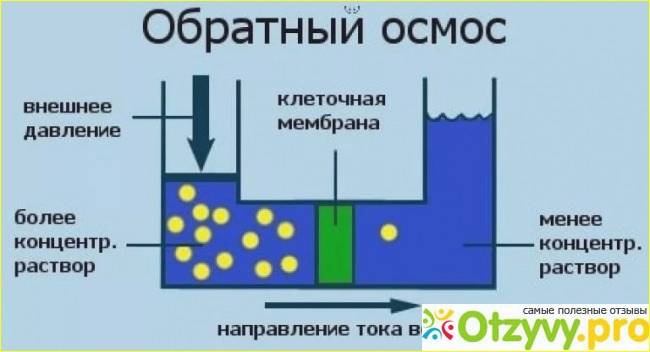
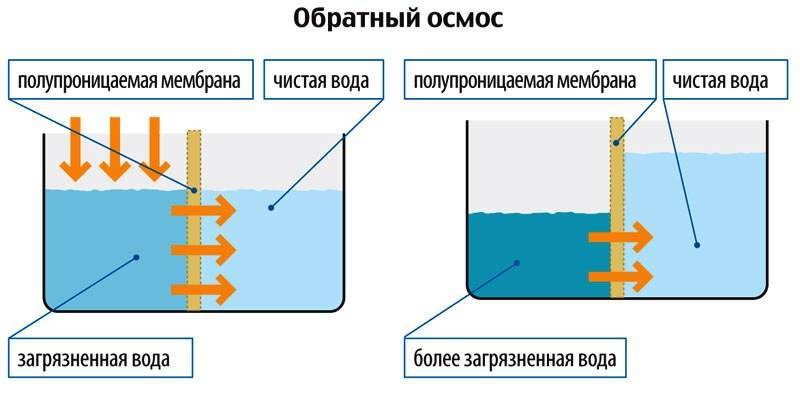
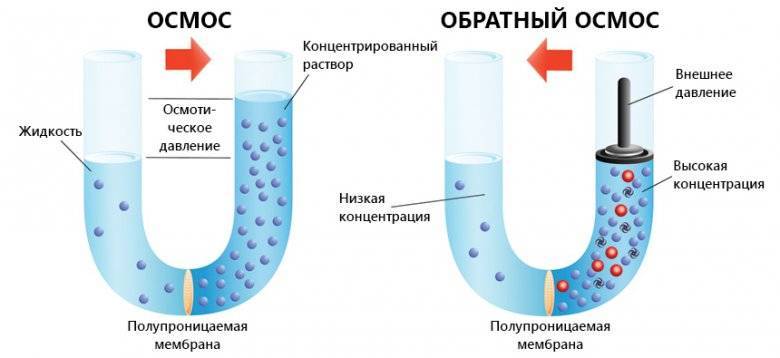
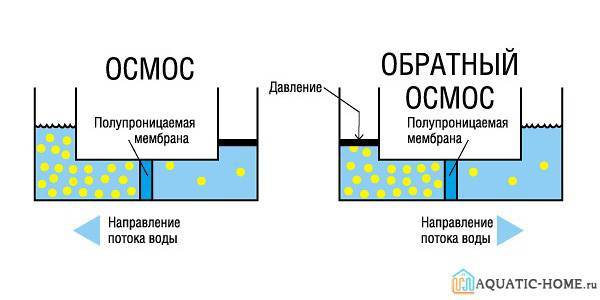
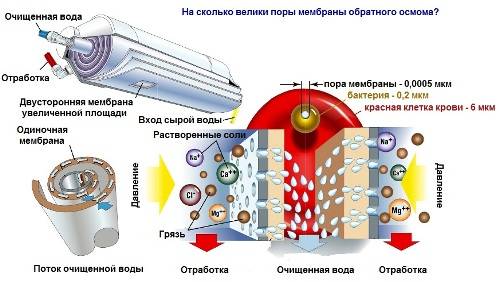
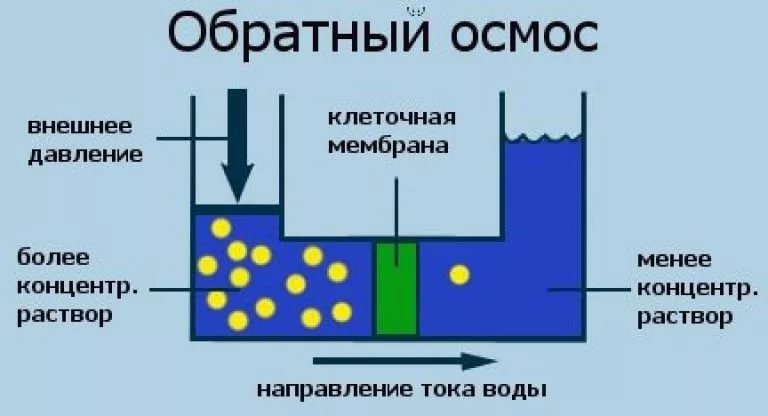
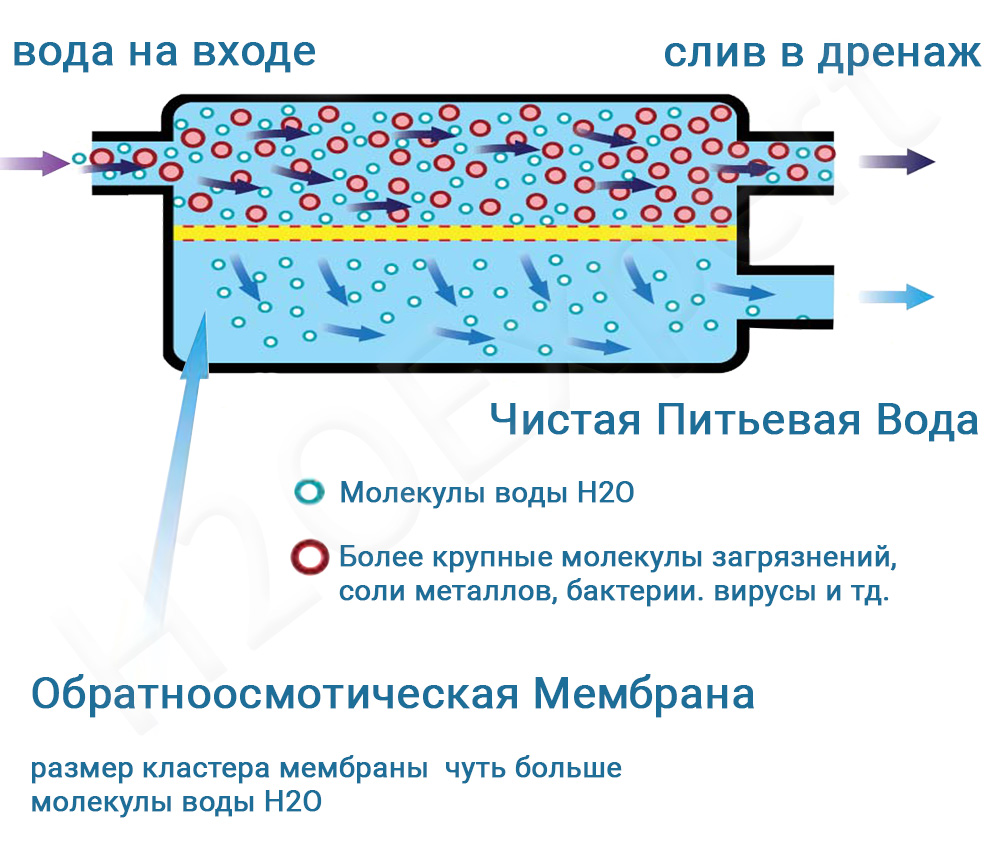
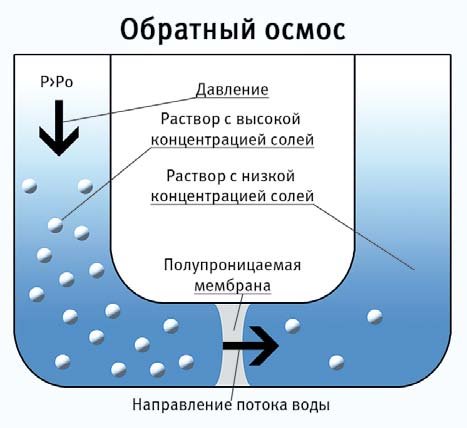
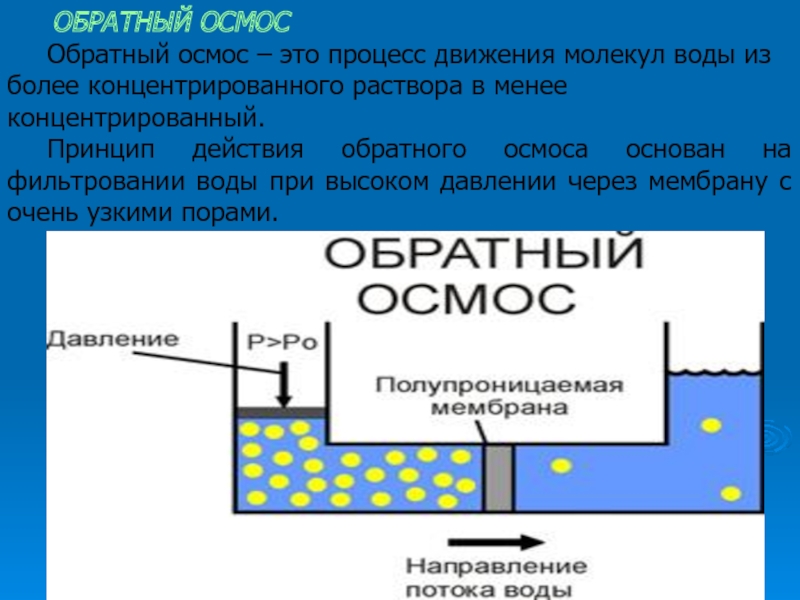
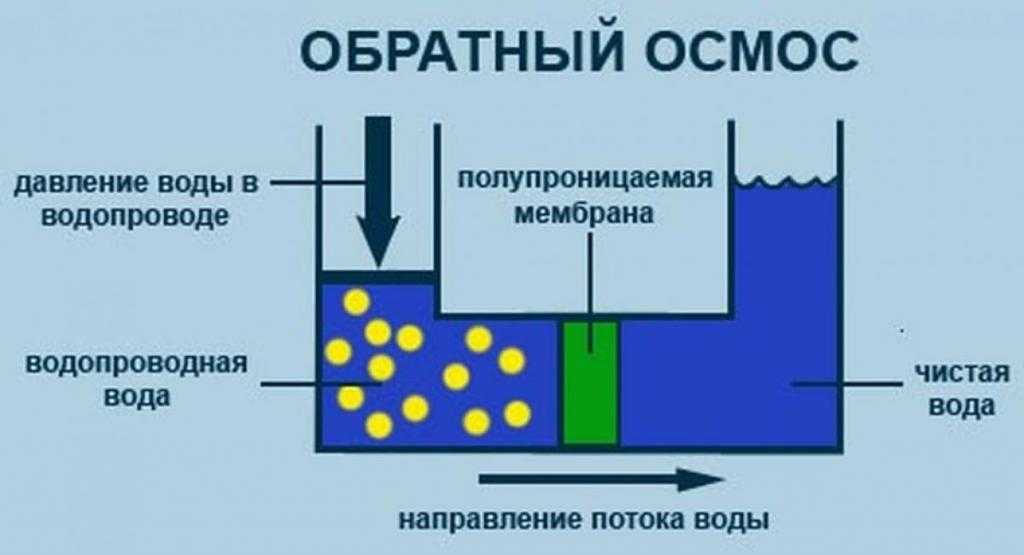
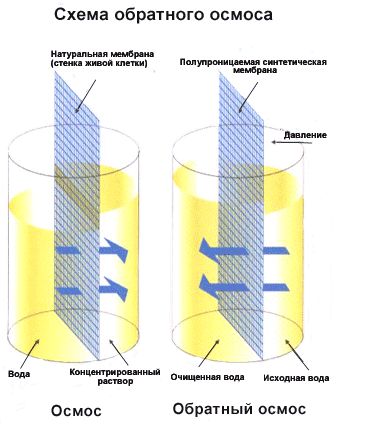
The osmosis process is based on the property of water to equalize the level of impurities in solutions separated by a membrane. The holes in this membrane are so small that only water molecules can pass through them.
If the concentration of impurities is increased in one of the parts of such a hypothetical vessel, water will begin to flow there until the density of the liquid in both parts of the vessel equalizes.
Reverse osmosis gives exactly the opposite result.In this case, the membrane is not used to equalize the density of the liquid, but in order to collect pure water on one side of it, and on the other, a solution that is maximally saturated with impurities. That is why this process is called reverse osmosis.
All these chemical features are of little interest to buyers, especially those who are not too well versed in science. It is enough for them to understand that the center of the reverse osmosis system is a special membrane, the pores of which are so small that they do not let through anything that exceeds the size of a water molecule, and this is a significant part of the contaminants contained in tap water.
Alas, the water molecule is not the smallest on earth, for example, chlorine molecules are much smaller, so they can also seep through the membrane. In addition, contact with large suspensions of this membrane is contraindicated. Its small pores will quickly become clogged with such exposure, and this element will have to be replaced immediately.
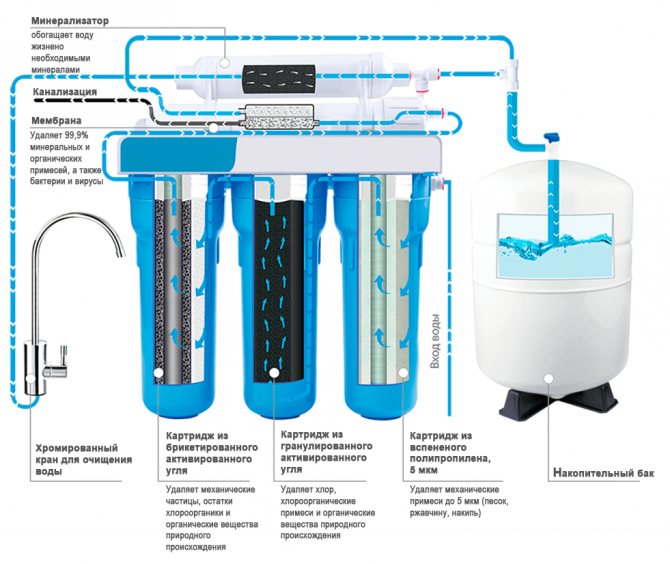
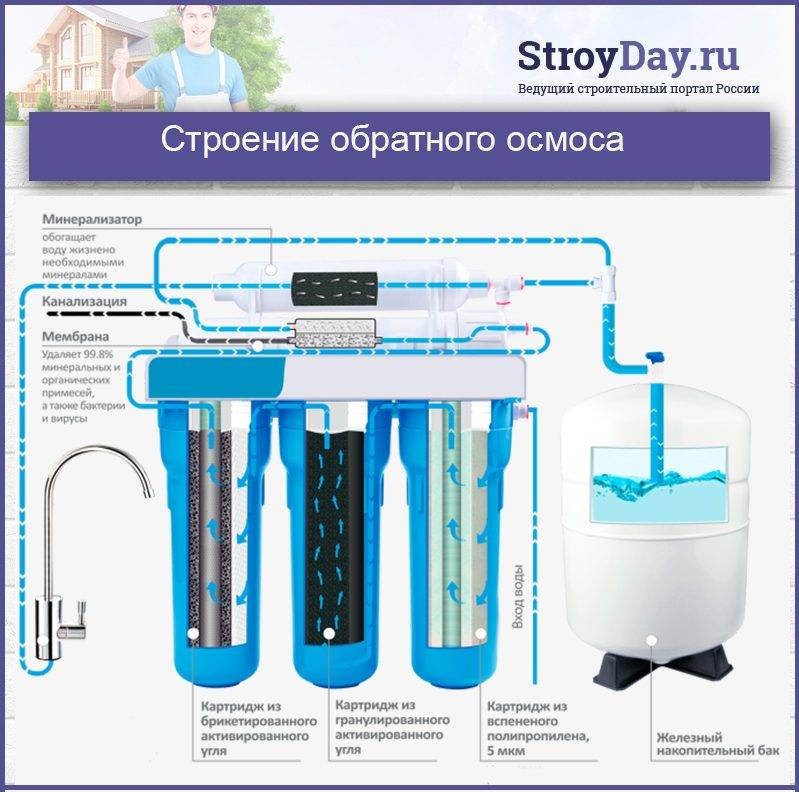
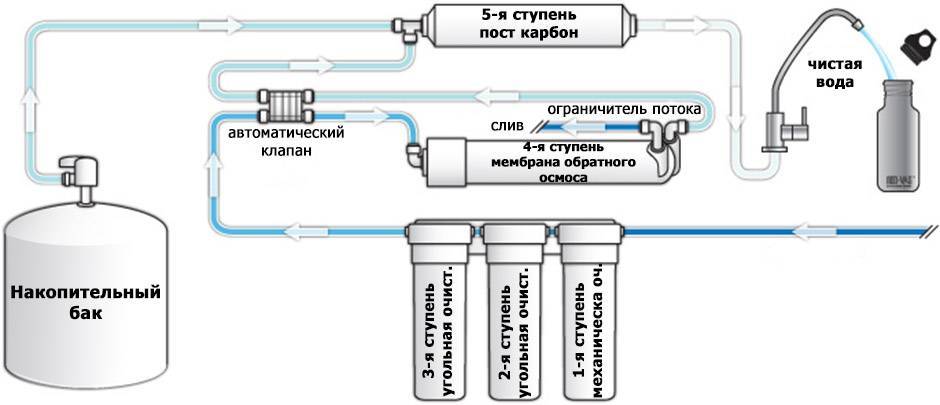
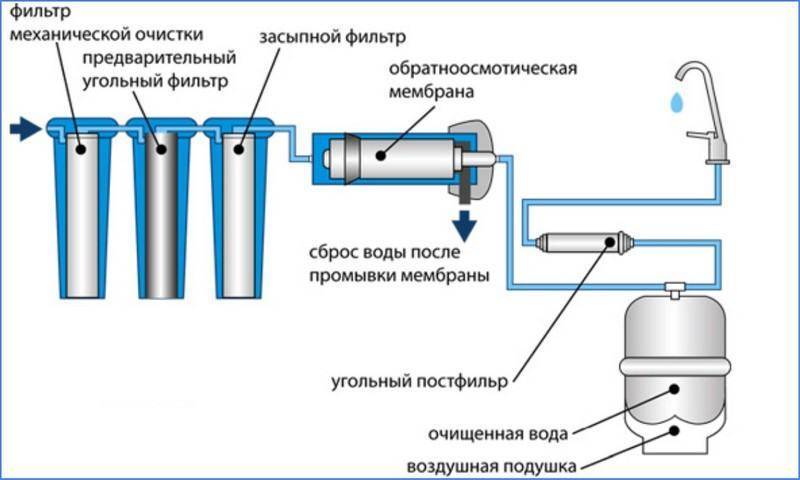
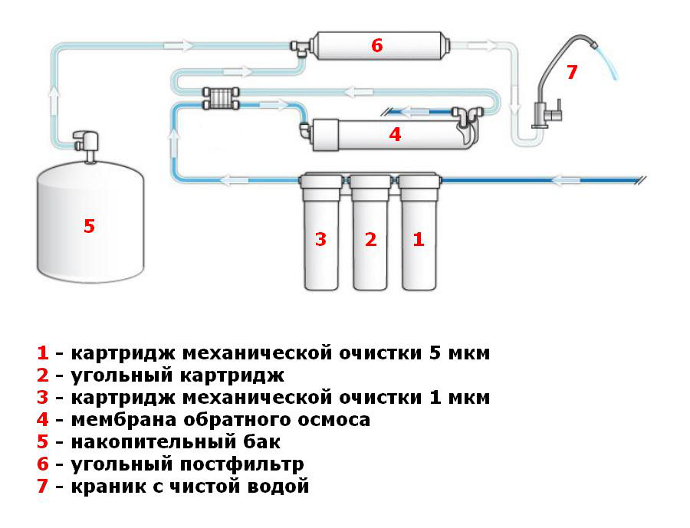
This diagram clearly shows the five stages of water purification using a reverse osmosis system: pre-treatment through three filters, a membrane and post-treatment
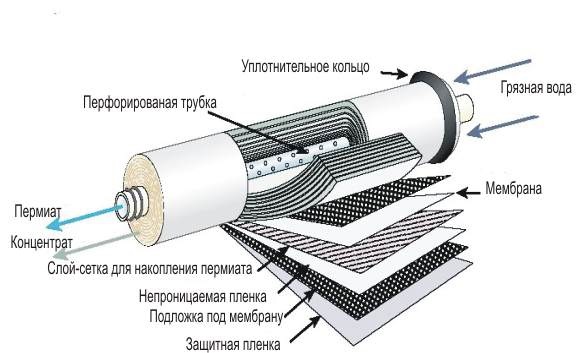
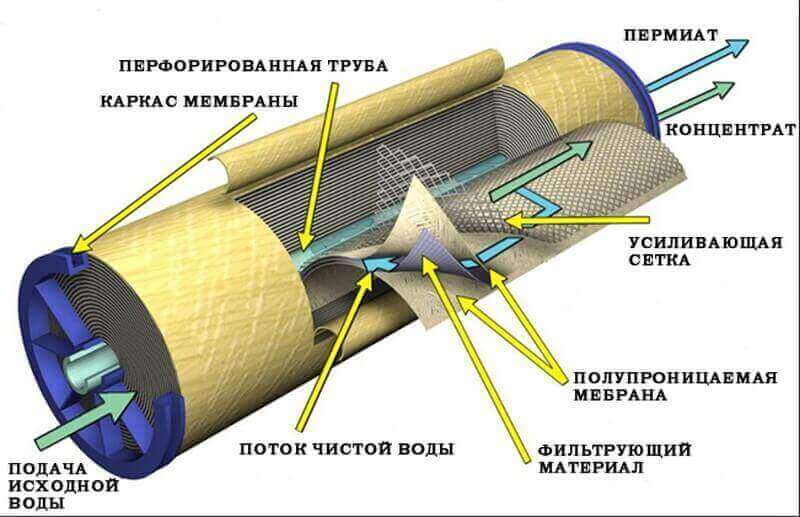
To prevent this from happening, three more additional filters are included in the reverse osmosis system, with the help of which the water undergoes preliminary preparation. The membrane divides the partially purified water into two unequal parts. Approximately one third of the received volume is pure water, which then enters the storage tank.


Another two-thirds of the volume of water is the part in which pollution is concentrated. This concentrate is discharged into the sewer. There is usually a small container between the tank and the faucet.A cartridge is installed here, which is designed to improve the quality of already purified water, for example, to saturate it with useful minerals.
Schematically, the principle of reverse osmosis can be described as follows:
- Water flows from the plumbing system to pre-filters.
- The liquid then goes through a reverse osmosis process.
- Purified water enters the storage tank.
- The concentrate containing filtered contaminants is transferred to the sewer.
- Clean water from the storage tank goes to the clean water faucet directly or through additional devices.
Thus, the reverse osmosis system is a set of devices that provide the ability to obtain drinking water with a high degree of purification. Until recently, such systems were used mainly in industry, catering establishments, health facilities, etc.
This diagram demonstrates the separation of the flow of water purified using a reverse osmosis system into two streams: pure water and a concentrate that moves to the sewer
But due to the growing demands on the quality of tap water in recent years, reverse osmosis systems designed for domestic use have become popular. They differ in configuration, performance, storage capacity, etc. Filters and membrane must be replaced periodically.
How to determine that the membrane needs to be replaced? As it is used, its pores become clogged, and there comes a time when water simply does not pass into the storage tank. Such a membrane will have to be replaced in any case. But experts recommend replacing much earlier.
The reverse osmosis system consists of a storage tank, a set of three pre-filters, a membrane and a post-filter for water purification and enrichment
To determine the quality of water purified using a reverse osmosis system, an electronic device is used - TDS-metr. It is used to determine the level of salt content in water.
For tap water before purification, this figure can be 150-250 mg / l, and after purification using reverse osmosis technology, salinity in the range of 5-20 mg / l is considered the norm. If the amount of salts in the purified water is more than 20 mg/l, it is recommended to replace the membrane.
Those who wish to select water filters used in various stages of purification will find a lot of useful information in the following article.
How reverse osmosis works
The reverse osmosis system cuts into the central or home water supply. The collected impurities are discharged into the sewer. The process takes place in several stages:
- preliminary treatment of incoming water;
- filtration;
- accumulation of clean water (there are models of filters without a storage tank);
- final cleaning;
- supply of completely purified water to a special faucet and its spill for kitchen needs.
Important processes take place at each stage. Precleaning is one of them. This is because the reverse osmosis membrane is the most expensive part of the filter, and the duration of its operation depends on the quality of the fluid passing through it. For this reason, the installation of osmosis is recommended after the main filter.
To maximize the use of expensive equipment, use the initial water purification using three filters. They prepare water before supplying it to the membrane.
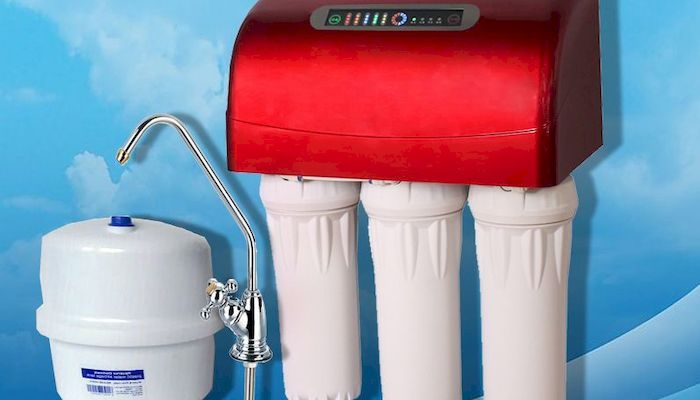
In the first filter, mechanical cleaning of particles over 5 microns is carried out. It is made from polypropylene. Detains coarse impurities such as sand, rust, clay and other similar inclusions.
The second filter is carbon. It removes organics and chemicals such as chlorine, heavy metals and petroleum products. Directly in front of the membrane itself, a third, mechanical filter is installed, with which water is purified from particles less than one micron.
Optional equipment
Purified water is collected in a storage tank. Each model has a different tank size. The tank itself consists of two enameled steel chambers separated by a silicone membrane. One of them is filled with air. When water evaporates in the upper chamber, the membrane inflates and creates the pressure necessary to supply water.
The air chamber is equipped with a nipple that regulates the pressure. There are filters with reverse osmosis without a storage tank. They are used if there is little space for installing a filter or purified water is needed in small quantities.




There is also a final filter, it guarantees the supply of clean drinking water directly to the supply tap.
Additionally, reverse osmosis can be equipped with a mineralizer. It is needed to enrich water with calcium, magnesium and sodium compounds, which are necessary for the human body. Calcium - for the neuromuscular and skeletal systems, the work of the heart. Magnesium - to ensure chemical reactions in the body. Sodium - for optimal acidity of the body.
A bioceramic cartridge can be installed to restore the natural structure of the water. It consists of clay balls with tourmaline. Tourmaline emits infrared rays, similar to the energy of the sun. Under their influence, water acquires literally healing properties.
The reverse osmosis system has the following features:
- two-thirds of the water that enters it goes into the sewer;
- the filter works until the tank is full, after which the valve closes;
- the membrane can last up to 5 years, additional filters - up to six months;
- maintenance involves: replacement of filters, revision of nodes, control over the operation of the membrane;
- the work of osmosis is controlled by a TDS-meter, it determines the level of salt content after cleaning (from 5 to 20 mg / l);
- the system is serviced every six months;
- the reverse osmosis system can operate at a pressure not higher than 2–6 bar;
- if the pressure in the water supply is above 6 bar, it is necessary to install a reducer, and if it is below 2, a pump.
Startup and flushing
Before starting operation, it is necessary to flush and check the system. This is done like this:
- Rinse the filter elements by running water with the valve of the storage tank closed. Drains about 10 liters of water. Simultaneously with flushing, air is expelled from the system.
- Stop the flow of fluid to the filter. Check for leaks. If necessary, correct errors when connecting.
- Fill the system with the valve of the storage tank open. This will take several hours. After all the liquid is drained.
- For drinking and cooking, use water only after refilling the container.
The Real Benefits of Membrane Cleaning
Despite a number of disadvantages of reverse osmosis, its advantages cannot be underestimated.This is a truly effective water treatment system that can cope with even the most dangerous pollution.
Water, no matter where we take it from - a city water supply, an open reservoir, a well or a well - contains a large number of harmful and dangerous elements.
The inconsistency of the consumed liquid with sanitary-chemical and sanitary-biological standards has an extremely negative effect on the well-being and health of a person.
The main sources of water pollution are:
- communal drains;
- municipal waste;
- effluents from industrial enterprises;
- industrial waste.
They are saturated with its various chemical and microbiological contaminants.
Bacteria and viruses that multiply in municipal drains can cause many different serious diseases, including:
- cholera;
- bacterial rubella;
- typhus and paratyphoid;
- salmonellosis.
Polluted drinking water may contain toxic substances, worm eggs, nitrites, nitrates.
The effluents of industrial enterprises are "full" of almost the entire periodic table. Formaldehyde, phenol, heavy metals, organic solvents contained in them can cause genetic mutations and cancerous growths, have a teratogenic effect on the fetus.
Mercury, copper and lead damage the kidneys. Nickel, zinc and cobalt adversely affect the liver. They also have a huge negative impact on the cardiovascular system.
Needless to say, the constant use of water with such a “rich composition” is extremely detrimental to the human body? Therefore, the use of household water treatment plants is by no means a whim, but a necessity.
Laboratory studies show that drinking water is most often contaminated with iron, calcium salts, organic contaminants, manganese, fluorides and sulfides.
Conventional flow-type filters, nozzles, jugs reduce the amount of harmful impurities in the water, reduce their concentration. The taste of the liquid becomes more pleasant, the smell and color disappear.




But, unfortunately, it will not be possible to cope with 100% of all pollution with their help. Only a household reverse osmosis filter can help with this.
Reverse osmosis devices are among the best systems for purifying water in the home. They "cope" with more than 98% of harmful impurities. No other filter for home use can do this.
Really high efficiency makes this equipment more and more popular. People refuse freezing and boiling water in his favor.
Despite its impressive size, the reverse osmosis unit is completely invisible in the kitchen, as a filter is installed under the sink.
The only detail indicating its presence is a separate chrome-plated spout for supplying purified liquid. This faucet is mounted either in the countertop or directly into the sink.
The device does not create any trouble at all, it works quietly and practically does not remind of itself.
Reverse osmosis filters are equipment that works for the benefit of the whole family. Adults, children and the elderly can drink water that has passed through the purification system without hesitation. On it you can safely cook, dilute mixtures for newborns with it.
Water from reverse osmosis is also good for washing, bathing babies in it.It does not cause irritation and allergies, great for sensitive skin prone to rashes.
The purified liquid extends the life of household appliances (irons, coffee machines, etc.).
Reverse osmosis systems remove components from the liquid that interfere with the disclosure of the true taste of dishes. And especially drinks. Purified water produces very fragrant coffee, excellent cocktails.
Reverse osmosis water ensures the impeccable quality of alcoholic beverages, packaged juices, etc.
Absolute safety of the purified liquid is a key advantage of reverse osmosis systems
This is an important purchase for a healthy life.
The quantity and quality of purified water depends on such factors as the pressure in the water supply, the temperature and degree of contamination of the liquid, the performance of the membrane
Many authoritative sources claim that with a proper, nutritious and varied diet, you should not worry about low fluid mineralization. After all, the "lion's share" of useful substances enters the body from food, and not from water.
Why post-treatment of permeate?
Particular attention should be paid to the stages of post-processing or finishing correction of the permeate. As part of domestic reverse osmosis systems, these stages are implemented using various post-filters installed on the line for supplying purified water from the storage tank to the faucet. There are various options for post-filters that manufacturers complete with domestic reverse osmosis systems, but in practice they all perform three different functions:
- correction of taste qualities of water;
- ensuring microbiological purity of drinking water;
- remineralization and pH adjustment.
Let us consider in detail each of the tasks solved by various options for post-treatment of permeate in domestic reverse osmosis systems.
Almost all household osmosis uses post-treatment of permeate with activated carbon obtained from coconut shells. For this purpose, the reverse osmosis system is equipped with a so-called post-carbon - an encapsulated filter filled with high quality coconut activated carbon. When water passes through this filter, important organoleptic indicators of water quality - taste and smell - are corrected. Postcarbon improves the taste of water for those consumers who find permeate tasteless, and also eliminates possible odors associated with storing water in a storage tank.



The question of the need to ensure the microbiological purity of water after the storage tank in domestic reverse osmosis has arisen relatively recently. To solve it, routine maintenance of the system is usually carried out with flushing the tank with disinfecting reagents. The problem of the presence of microorganisms in water can also be solved with the help of certain methods of post-treatment of water.
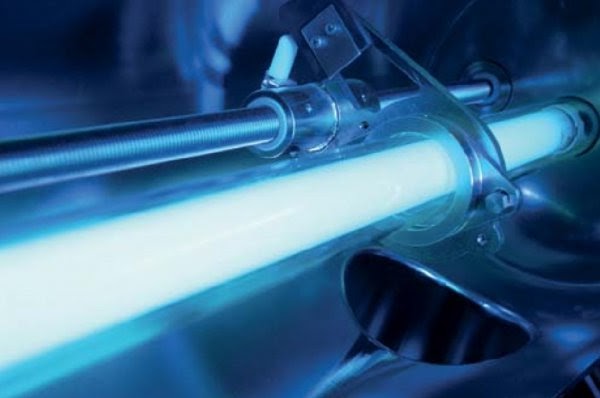
One of these methods is the disinfection of water using ultraviolet radiation. This physical method, which has been used for many years, is distinguished not only by high efficiency, but also by the absence of a negative effect on the chemical composition of purified water. Until recently, the high cost and energy consumption of the method significantly hindered the widespread use of UV, but today a wide range of lamps of different power, including light-emitting diode (UV-LED) disinfectants, allows it to be used in various fields.For domestic water treatment, UV lamps are almost ideal. Compact and ergonomic, they are easy to install in cleaning systems, ensuring trouble-free operation and effective water disinfection.
Another physical method of water disinfection that can be applied in local water treatment is ultrafiltration. The essence of water disinfection using ultrafiltration is that when water passes through a semi-permeable membrane with a pore size of 0.001 to 0.1 microns, various impurities are retained: colloids, organic substances, algae and most microorganisms. More recently, this method has been mainly applied to the removal of colloidal impurities and suspensions on an industrial scale. Now there has been a significant increase in interest in its use for the removal of microorganisms in domestic water treatment.
Today, various companies produce compact, easy-to-use ultrafiltration cartridges that are as effective as UV lamps in terms of disinfection efficiency. Cartridges of this type are recommended to be used after the storage tank of household reverse osmosis systems for post-treatment of water from possible microbiological contamination.
Salt content of household osmosis permeate does not exceed 15–20 mg/l. In recent years, the world medical community has recognized that demineralized water does not harm human health. However, the taste of such water is significantly different from the usual. It is to ensure the possibility of choosing the composition of purified water that there is such an option for domestic reverse osmosis systems as a mineralizing post-filter, or a mineralizer.The mineralizer generally represents the filter filled with a crumb from various natural minerals. Reverse osmosis permeate, characterized by pH 5.8-6 and low salt content, upon contact with such a crumb slowly dissolves it and is saturated with calcium, magnesium, sodium and potassium salts to a level of 50–100 mg/l. Also, in this case, the permeate acidity is corrected - the pH value rises to values of 6.5–7.
pump reverse osmosis principle
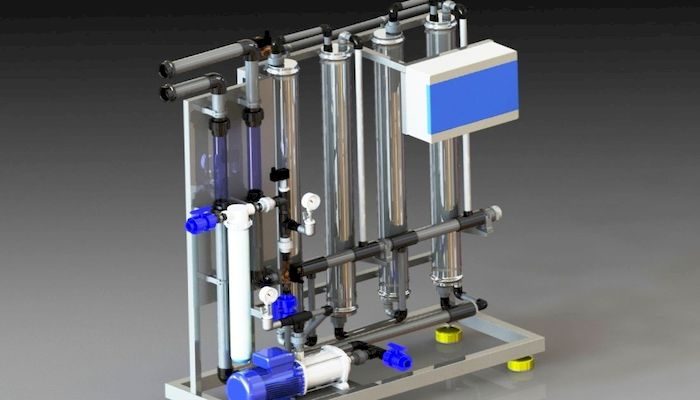
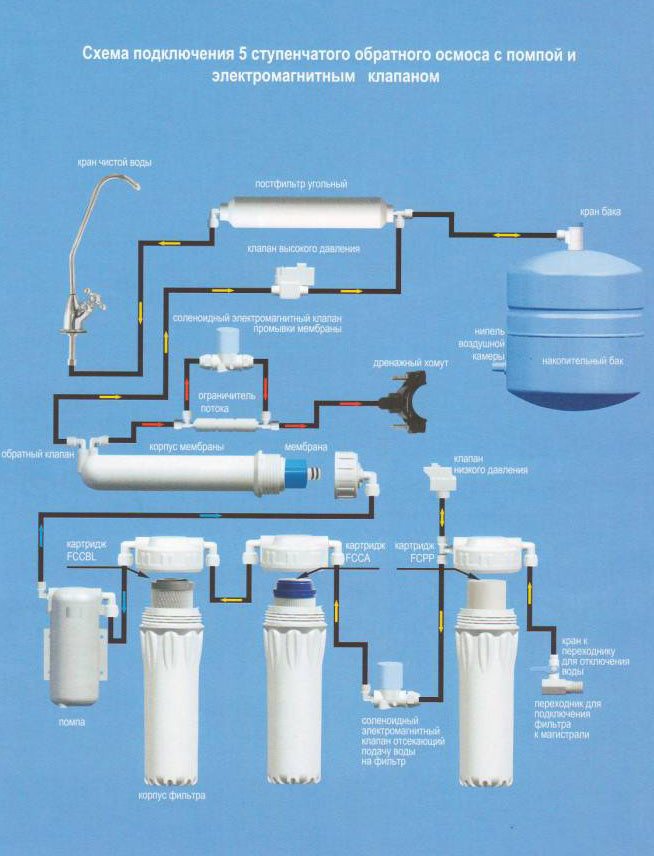
To purify water with a high content of harmful salts or in conditions where its inlet pressure is less than 2.5 atm, the system must be equipped with a pump.
The pumps used to complete these filters operate completely silently and consume a minimum of electricity. The filter package with a pump includes a mounting kit, automatic protection against running without water, a 24V power supply, a pressure sensor, and a mounting plate. The most effective reverse osmosis filter option is a five-stage model with a pump. The purpose of the steps of such models:
- The 1st stage removes mechanical particles ranging in size from 15 to 30 microns using a polypropylene pre-cleaning cartridge;
- 2nd stage removes chloride compounds and other organic impurities from the water using a GAC cartridge (granular activated carbon), which improves the taste of water;
- the 3rd stage performs additional purification from mechanical particles, the size of which is in the range of 1-5 microns, and chloride compounds using a CBC-CarbonBlock cartridge (compressed activated carbon);
- the 4th stage performs water purification on the principle of reverse osmosis;
- The 5th stage carries out the final stage of cleaning with an in-line carbon cartridge, which contains activated carbon in granules.
The delivery set of a 5-stage reverse osmosis filter includes a membrane, cartridges, a storage tank, a tap for purified water supply, mounting hardware and a pump. The pump is controlled by on / off sensors when the pressure in the system changes. In addition, the kit includes a sensor for emergency shutdown of the pump without water, as well as a sensor for monitoring the filling of the tank.



