- Advantages and disadvantages
- hob
- Enamelled hob
- Stainless steel panel
- Aluminium alloy
- Glass-ceramic and heat-resistant glass
- How to light a fire
- Benefits of using gas control
- Child lock
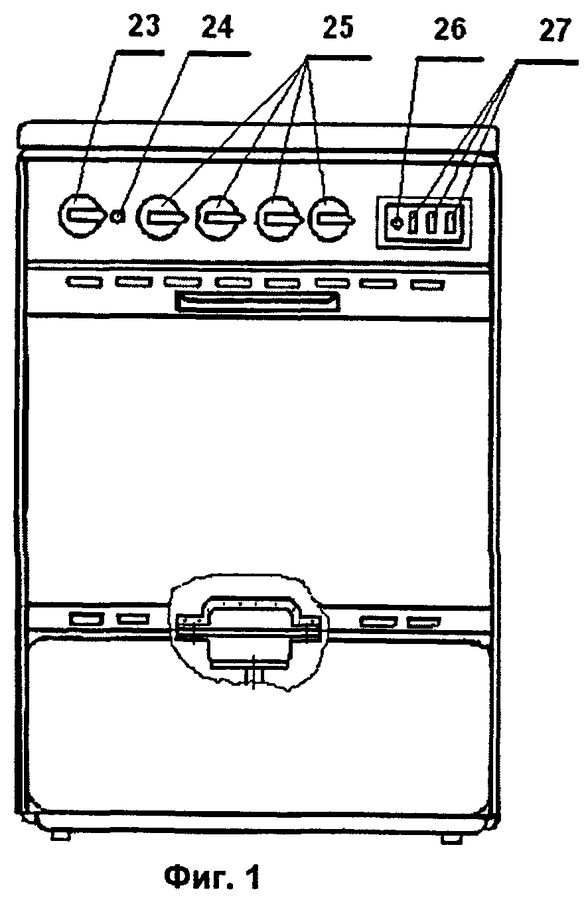
- Gas stove device
- Gas burner device
- Gas control
- Electric ignition
- Thermostat for overheating
- How to turn on the oven
- Gas stoves, manufacturers and selection of spare parts
- Safety regulations
- Briefly about the power of burners and stoves
- Troubleshooting step by step guide
- Using the oven
- Oven thermostat
- What Not to Do
- Oven Lighting Safety
- Conclusions and useful video on the topic
- Conclusions and useful video on the topic
Advantages and disadvantages
Along with the advantages common to all gas stoves (fast cooking, the ability to change the temperature conditions for cooking, control and regulate the strength of the fire), mini stoves also have their own advantages.
- The size. Having compact dimensions, they take up little space, so they can be installed in a small area.
- Portability. Due to their small size and weight, you can change their location, transport to the country, take on any trip.
- Versatility. They are able to work from a gas pipeline and from a cylinder.
- Models with ovens have the same functional abilities as conventional floor models. They have options for electric ignition, piezo ignition, gas control, and are equipped with a thermostat.
- Profitability. Their operation is more profitable compared to electric stoves.
- Price. Their price is much less than the cost of classic gas stoves.
The disadvantages include several factors.
Single and double burner stoves have low power and are limited in the number of simultaneously cooked dishes.
For models powered by a liquefied gas cylinder, it is required to periodically change the cylinder or refuel it at specialized gas stations.
It is necessary to regularly check the connection system of the stove to the cylinder.
When using gas cylinders, it is important to follow safety rules.
hob
The appearance of a gas stove largely depends on the material from which its hob is made. Namely:
Enamelled hob
Inexpensive gas stoves most often have an enamelled panel. This traditional coating has stood the test of time and has proven itself well. Enamel, as a rule, is a durable coating, but upon impact or strong pressure, surface chips are possible, from which the appearance of the plate will suffer greatly. Today, enameled plates, although they are produced in a new, modern design, are gradually becoming a thing of the past. They are being replaced by plates with other, qualitatively new coatings.
Stainless steel panel
Steel is widely used as a material for the cooking surface of kitchen stoves. Steel coating is always practical and reliable. The metal mirror surface of the plate looks great.Also, the matte surface gives the stove a modern look and a special style. Unfortunately, stainless steel is susceptible to stains and streaks.
Aluminium alloy
This material is similar in appearance and color to stainless steel, but has a lighter shade. Basically, it's nothing special.
Glass-ceramic and heat-resistant glass
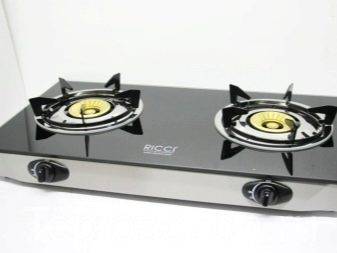
It seems that these materials must be brittle. But it's not. The latest models of gas stoves, called "gas on glass" and "gas under glass", use this high-strength and heat-resistant material. The beauty and attractiveness of these models is undeniable, but their care has its own characteristics.
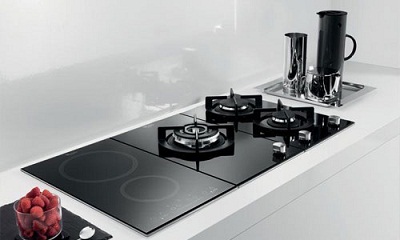 glass-ceramic gas hob
How to light a fire
If you have never encountered gas stoves before, then the question of how to light a gas stove can be very relevant. To do this, you need to follow a certain algorithm. First of all, you need to ventilate the room. Next, follow these steps step by step:
- Open the valve on the pipe or the valve if a gas cylinder is used.
- Light the burner.
This process occurs in different ways, depending on the type of stove and the source of fire. The stove can be ignited in the following ways:
- from an open source of fire - matches;
- using an electric or silicon lighter;
- electric ignition.
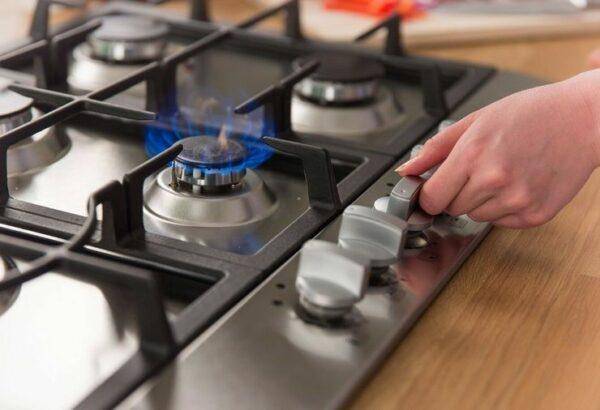
Modern models of gas stoves are equipped with a built-in electric ignition system. This function can be displayed on a separate button, or it can be built into the burner tap. This is the only case when the burner can be ignited at the same time when the stove valve is turned on. In other models, you must first provide a fire (spark), and then open the burner valve.The faucet opens clockwise with slight indentation. For information on how to light a gas stove oven, read here.
The flame should be a distinct blue color and evenly distributed around the burner. If it slips inward, close the tap and re-ignite the burner. The optimal flame height should not exceed 2-2.5 cm and is adjusted by turning the valve knob. If there is a draft in the room, the flame will tend to break away from the burner, which is dangerous in terms of fire safety. With an excess of air, it is necessary to close the window. With a lack of air, the color of the flame will clearly change from blue to yellow, and carbon monoxide will be released, which is dangerous to human health.
Benefits of using gas control
The gas used in household stoves and hobs is a very dangerous substance. Even in the absence of an explosion and fire, it can cause death from poisoning. And reports of incidents indicate a high frequency of such cases. Gas control allows you to reduce the level of danger to almost zero. The system automatically blocks the fuel supply in the absence of a flame.
The main thing that the gas control system offers is a significant increase in the level of safety. Blocking the supply of a combustible substance is an almost complete guarantee not only of the absence of a fire, but also of the risk of human poisoning.
In addition to purely technical solutions for blocking emergency situations, users of stoves with gas control get the opportunity not to monitor the stove: gas control will automatically shut off the supply in cases of flame blown out by a draft or due to food spills onto the burner.
Also, housewives have the opportunity to reduce the level of control over children. By accidentally rotating the handles, they will not be able to initiate the gas supply. This requires holding the knob down for a few seconds, which is quite difficult for a small child.



Child lock
Rare modifications of gas stoves contain such a function as a child lock. But we found a wonderful example - Bosch HGG 233127 R. This is a powerful technique that ignites with almost a click, gives hints for heating the oven using an indicator, is equipped with a timer, a digital display and a host of other useful things. The assembly is Turkish, but this OEM order inspires confidence. By the way, the cost of the model is not as high as expected - only 24 tr. Just a gift against the background of such wide functionality.
I will add that some stoves have special mechanical locks that block the door. This is also a very useful option for those who have small children in the family.
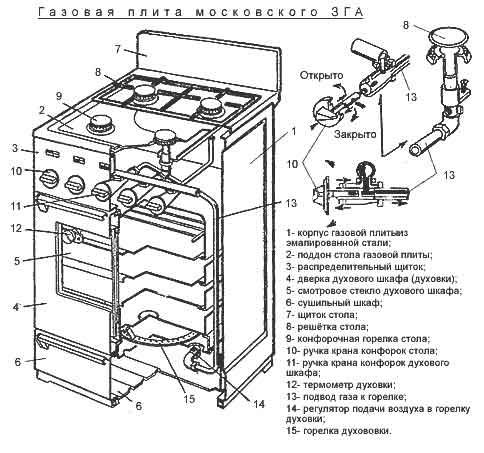
Gas stove device
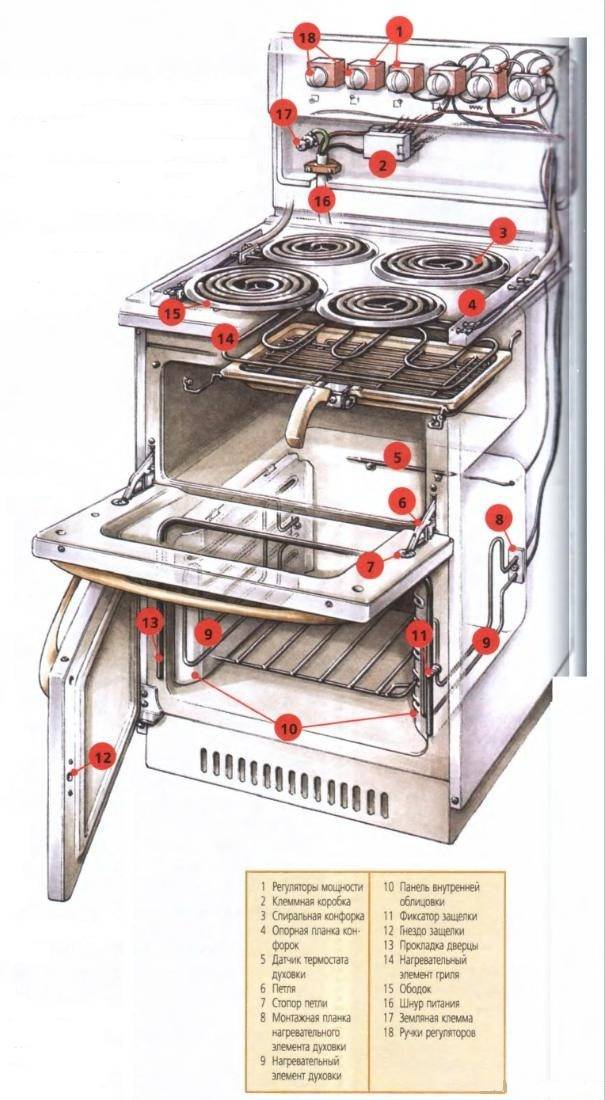
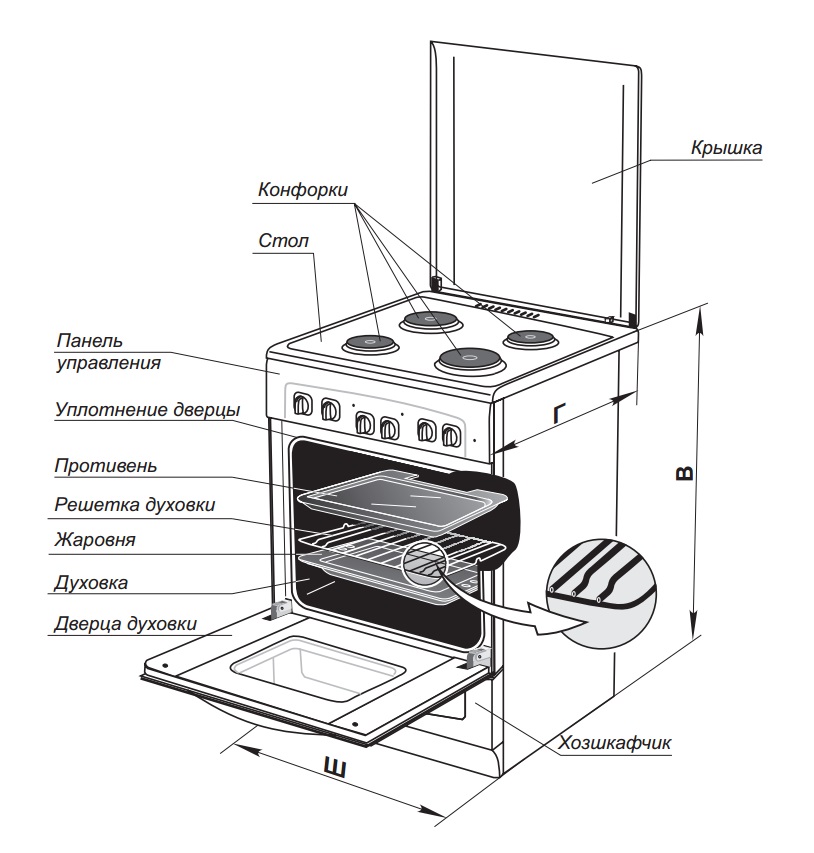
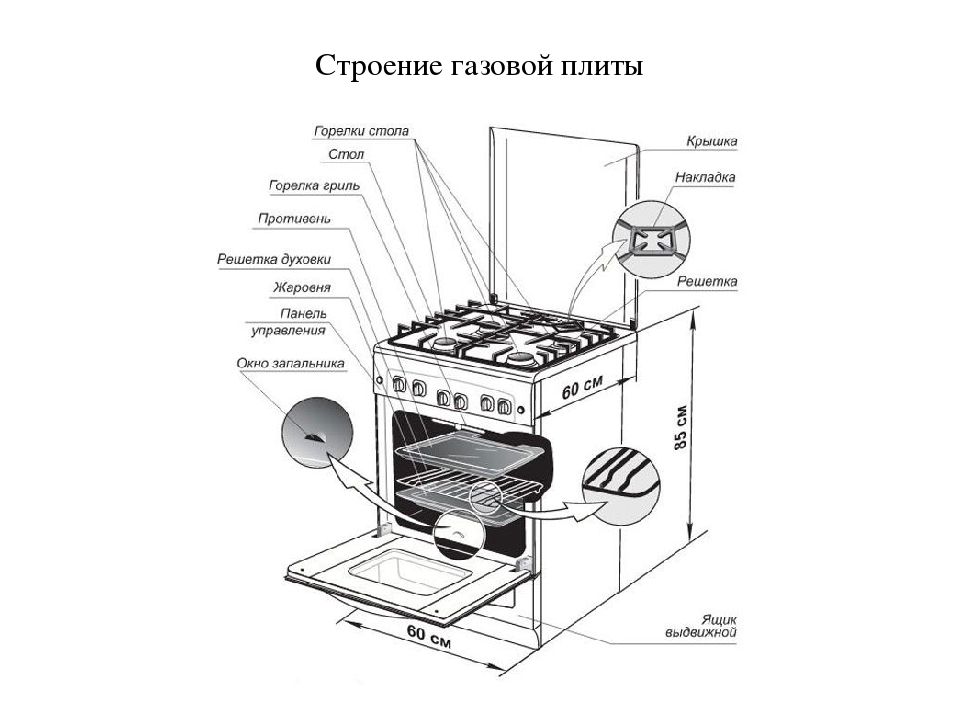
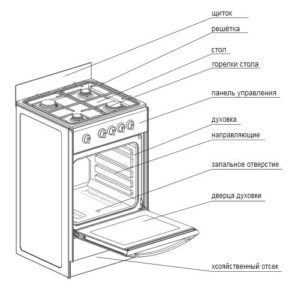
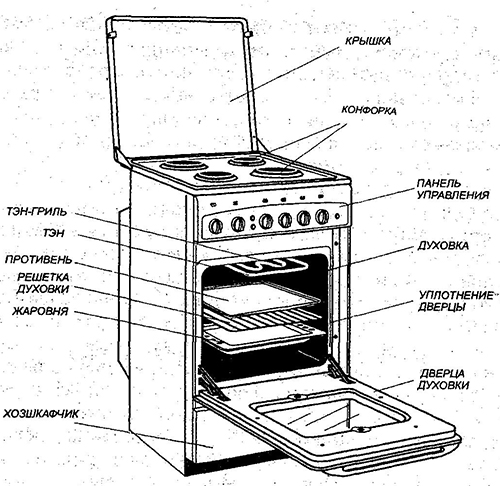
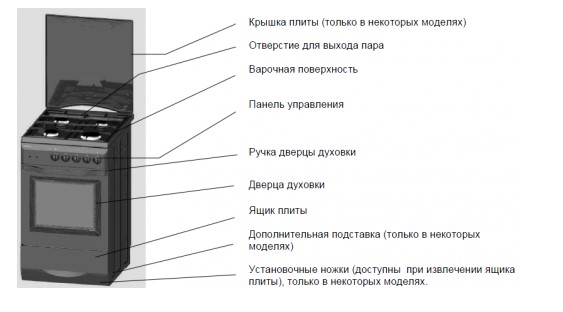
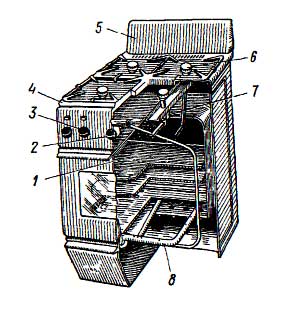
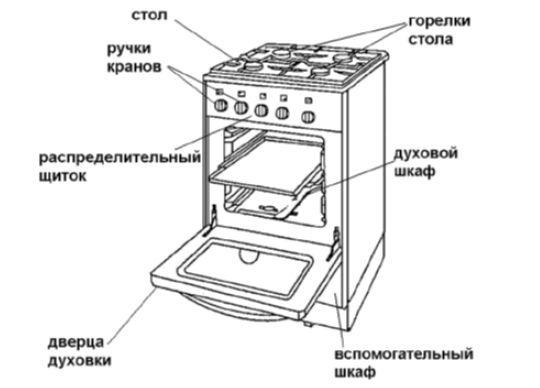
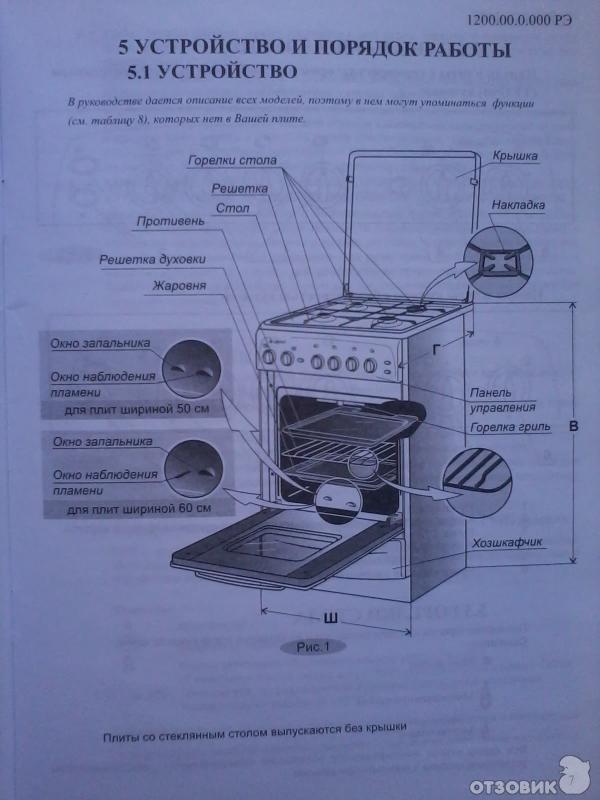
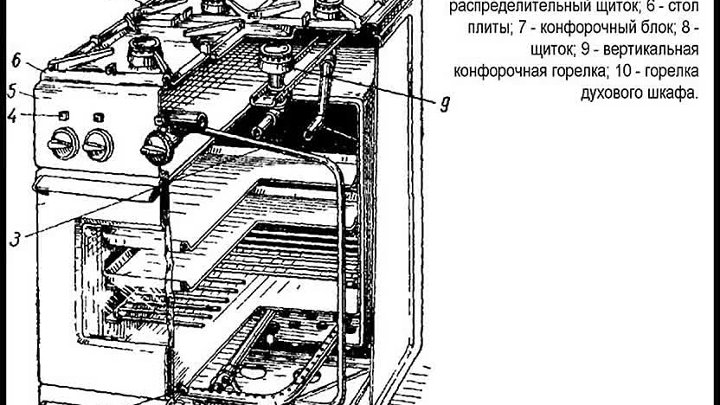
Manufacturers of gas stoves are constantly improving their products, but the basic principle of operation remains the same. Therefore, the design of gas stoves of different models is not much different from each other. Each model consists of:
- corps;
- hob;
- burners;
- oven;
- domestic gas supply systems;
- gas equipment (hoses, shut-off hoses).
Modern models are equipped with electronic systems that, in addition to electric ignition and lighting, allow you to control the operating time of the unit, the temperature and the safety of the gas system as a whole.
Gas burner device
The burner is located inside the stove, its main function is the formation of a combustible mixture.In the burner tank, gas is mixed with air and fed to the burner through a nozzle.
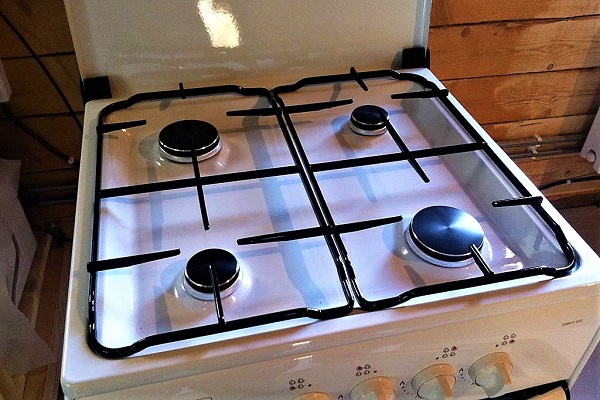
The burner of a gas stove is located on its surface and consists of a base, a divider and a cover. The flow of burning gas enters the reflector cover, and from it into the divider, which distributes the same flames.
Burners differ in size, which affects the burning power. It is regulated by the gas supply knob.
Burner power indicators:
- small - 0.7-1.2 kW;
- medium - 1.3-1.8 kW;
- large - 2.0-4.0 kW or more.
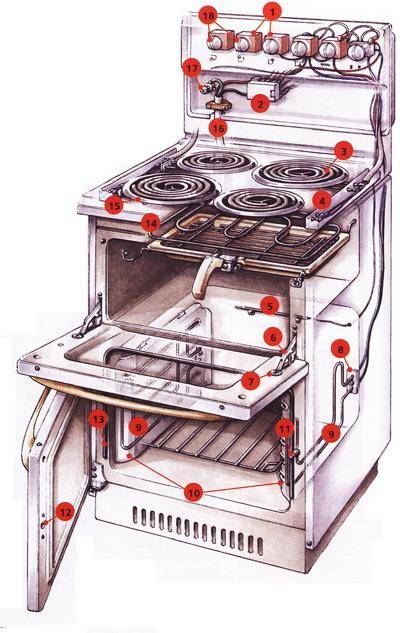
In some models of gas stoves, electric burners are used. The practicality of such models lies in the different intensity of heating of gas and electric elements. In case of interruptions in gas or electricity, such stove models are indispensable.
Gas control
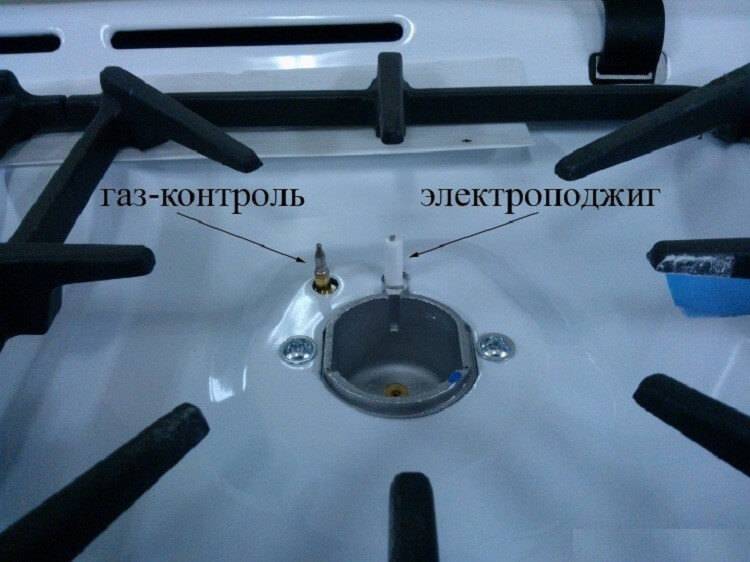
Despite the ease of use, gas stoves are fire hazardous devices. To solve this problem, a gas control function was created. If the burner goes out or there is a gas leak, the mechanism shuts off its supply to the burners or the oven.
The gas control system consists of a thermocouple and a solenoid valve, which are connected by a special insulated wire. The thermocouple is assembled from two different metals, fused together at the end, and is located at the edge of the flame. The fused element sends a signal to the solenoid valve, which leaves the gas cock open.
In the event of a sudden extinction of the flame, the thermocouple immediately cools down and stops signaling the valve. It closes and stops the gas supply.
The gas control system is installed mainly on hobs, but in many models such a system is also provided in the oven.
Electric ignition
All modern plates are equipped with a function electric ignition. They work from a network with a voltage of 220 V.
The system includes:
- rotary ignition knob;
- capacitor;
- transformer;
- candles;
- semiconductor element (thyristor).
When turning and drowning the handle on the panel, voltage is applied to the capacitor. This provides him with a charge. The charged capacitor sends current through the thyristor to the transformer, where a high voltage is created. Next, the current flows to the candles located at the burners. Candles form a spark and ignite the gas flowing to the burner.
Electric ignition can be mechanical or automatic. In the first case, in addition to turning the handle, you must press the gas start button. In the second, gas and a spark occur simultaneously when the handle is pressed and drowned.
Thermostat for overheating
The thermostat lives in the oven and maintains the set temperature. In general, this prevents overheating and provides more comfortable operation. There are models with mechanical, electronic, electromechanical thermostats.
In gas stoves, a mechanical thermostat works more often; it is usually combined with an oven gas valve. This thing works quite simply: after the set temperature is reached in the chamber, the thermostat switches the tap to a minimum. As soon as the oven begins to cool down, the thermostat again brings the tap to the maximum temperature.






There are a lot of models of gas stoves with thermostats, but I would recommend referring to Gefest 6100-03. The design of this technique is relatively simple, but reliable. The mentioned model is available in three colors, equipped with automatic ignition of both the hob and the oven. There is a timer, gas grill. Excellent set for 19 tr.
How to turn on the oven
An oven is another invariable component of a modern gas stove. However, even now there are housewives for whom it is not easy to light the oven correctly. What tricks have not been invented in order to protect the user.
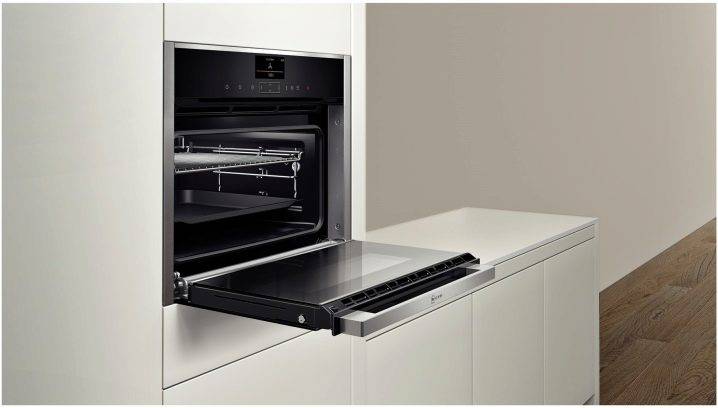
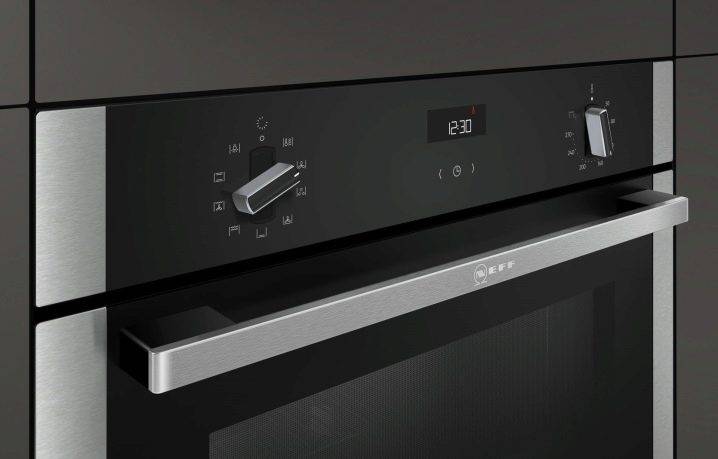
Cookers can have various gas ignition systems in the oven. Some even now need to be set on fire with a household match. On modern stove models, there may be an automatic electronic or a somewhat simplified semi-automatic ignition system. Leak prevention is also installed on such plates. At the same time, even modern appliances retain the ability to set fire to the gas in the oven with your hands.
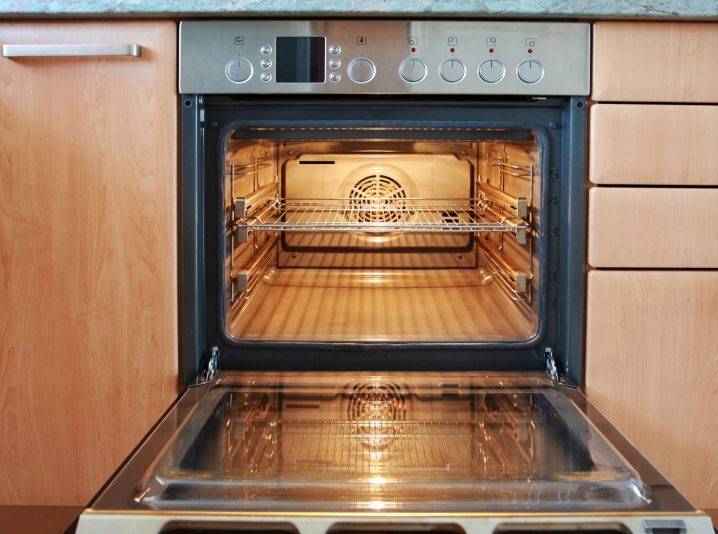
In order to ignite the gas without automatic devices, i.e. manually using a match, an igniter is provided at the bottom of the oven. It is to him that a lit match is brought. The corresponding switch must be turned to the maximum position and held for about 10 seconds so that the gas-air mixture has time to accumulate in the amount necessary for ignition. After preheating the oven and turning off the safety valve, you can use the device by setting the temperature required for cooking.
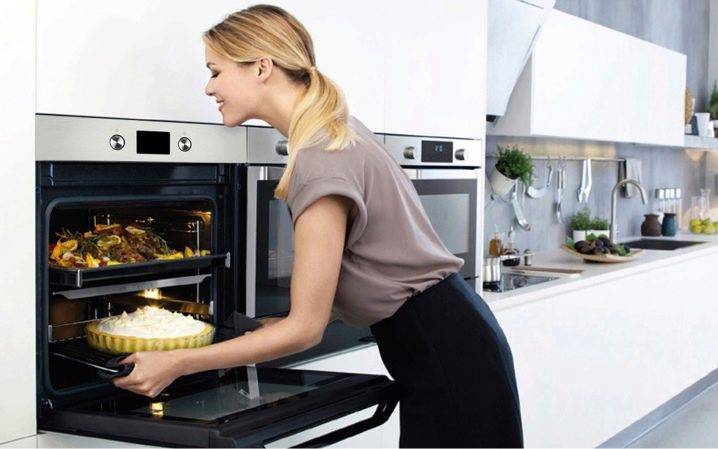
You can turn on the oven for some highly modernized modern stoves both in the traditional way and with the help of electric ignition. An automatic system is considered when it is enough to turn the gas supply regulator. After that, an electric charge is applied to a device resembling the contacts of a piezo lighter. With semi-automatic inclusion, you will have to additionally press the button.
A kind of memo on ignition of a semi-automatic oven may contain several important points.
- Adjust the maximum gas supply using the mode switch.
- Press and hold the electric ignition button for 10 seconds (you can count up to ten to yourself).
- Make sure the gas is on, release the button.
- If the fire in the oven does not appear, you cannot hold the button for more than 15 seconds. It is better to release it and ventilate the oven, and then repeat all the above operations.
- If it was not possible to ignite the oven with electric ignition, after airing it, you can try to ignite it with a match.
- If the burner partially ignited during ignition, it is better to turn off the gas and repeat the ignition of the oven.
In the case of manual ignition of the oven, the same steps are performed, only instead of holding the electric ignition button, you need to hold a match near the igniter. In order not to be afraid of a sudden ignition of the gas-air mixture, it is better to use long household matches. In case of any deviations from the order of ignition of the oven provided for in the instructions, it is better to consult with specialists.
Gas stoves, manufacturers and selection of spare parts
The manufacturer's logo is affixed to modern gas stoves. Labeled on the back with:
Label with manufacturer's logo
- GOST products. Look up the possibilities of the stove on the Internet by the name of the regulation.
- The heat of combustion is shown below. The gas is different, the equipment is designed for certain conditions. In our case, the specific heat of combustion will be 35570 kJ/cu. m: typical values for a mixture of propane and butane, at the upper limit of natural gas. Information will be needed when it comes time to buy nozzles for a gas stove. The product is marked with the letter G, followed by the type of fuel mixture. Compare the numbers by looking at GOST 27441-87.It will become clear: we are dealing with G20 gas. See the full specifications of the mixture.
- The nameplate shows the gas pressure figures. Through a fraction of 1300 and 2000 Pa. In mbar - 13 and 20. Typical values. The literature indicates that the pressure depends on the specific heat of combustion, on the type of gas. 20 mbar is typical, tolerances are guaranteed in each direction. Find out the pressure in the gas service. For natural fuel - 13 mbar, propane-butane gives 20.
Nozzle (injector)
Nozzles are needed type G20 / 20 or G20 / 13, sold everywhere. G30/30 nozzles are suitable for the cylinder. Russian gas services provide reference information in millimeters of water column. Approximately convert to mbar by dividing the figure by 10. Double-check the information: in some parts of the city, conditions differ from those indicated by the information service.
Specify the bore diameter, thread pitch. The diameter for the oven is often 8 mm, for the burners - 6. The thread pitch is 0.8 mm. It is better to measure with a caliper (for external, internal dimensions, see the engineering graphics reference book). Photograph the old spare parts, send them to the dealer, or take them to the store. Buyers are wondering why the diameter of the holes from the jets is different. The burner power is different. It is not enough to know the gas parameters, you need to take into account the position of the burner, the purpose. For network supply of natural gas, we will approximately determine the diameter in mm, as the square root of the power in kW. For 2 kW:
D \u003d √ 2 \u003d 1.4 mm.
For liquefied bottled gas, the hole size is 62% of this value. As the pressure increases, the diameter correspondingly decreases. The desired concentration of the gas-air mixture is achieved.Before you buy nozzles for gas stoves, check the availability of spare parts in the kit. The machine with a nameplate on the back wall is not designed to work with a cylinder, do not try to adapt it to liquid gas.
Nozzles for gas stoves
An ordinary citizen cannot modify equipment, change nozzles. People are called to carry out operations by phone 04. The nozzle can stand up crookedly, poison the gas. The result is an explosion.





See the manuals, then the process will be fine. New plates have a passport indicating the required values.
Safety regulations
And finally, you should pay attention to the safety rules and useful tips for installing and connecting a gas stove. When connecting, you must comply with all requirements that relate to the cubic capacity of the room
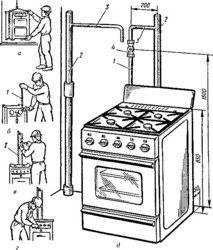
The flexible rubber hose must be visible and must not be blocked by anything. Gas pipelines and hose must be easily accessible for external inspection. Do not hide hoses behind fixed false panels and drywall so that you can show them when checking. Use a neat box. They are now produced in a great variety of any color.
Also, do not make more connections than required by the technical conditions for the operation of a gas stove. Watch a video about installing a gas stove: the connections should be only those that are necessary, nothing more! Do not paint the hose, because the paint can ruin it, and it will crack over time. For a more aesthetic look, you can use oilcloth or sticky paper.
The rubber hose should be directly connected only to the downstream tap, and its other end only to the outlet of the gas stove (an adapter is allowed).If gas workers come to check the stove and find unidentified connection operating rules, there will be trouble. The stove can be turned off and fined for violating the rules for operating gas appliances.
Remember, if you connected the gas stove correctly, without gas leaks, without violating any requirements, it will work happily and for a long time. If all work related to the installation of a gas stove is carried out in compliance with all the norms and conditions that prescribe work with gas, there will be no claims from the gas industry. And the process of cooking will bring you a lot of positive emotions!
Briefly about the power of burners and stoves
The total power of the working surface depends on the number of burners and their direct power, indicated in the equipment passport. The average for one burner is 2-2.5 kW. With a decent quality of gas and normal pressure in the line, this value is quite enough for a comfortable and relatively fast heat treatment of products. In this case, the maximum power of the burner is determined at the maximum turn of the regulator and full gas supply.
Manufacturers often offer household hobs, the burners of which have different power ratings:
- on small ones - 0.7-1.2 kW;
- on medium - 1.3-1.8 kW;
- on large ones - up to 4 kW and more.
Such a technological solution is quite logical and convenient: it makes no sense to brew coffee in a Turk on a powerful WOK burner or try to boil a large amount of water on a small one. The choice of different capacities allows you to save gas, and if the temperature in the room is maintained using an air conditioner, then you can save electricity.
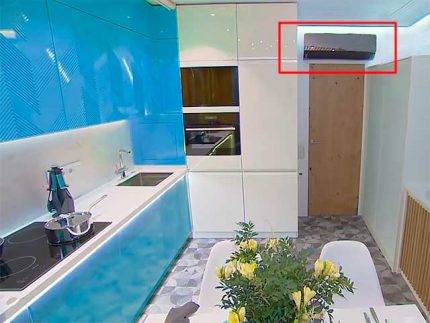 When using powerful burners, the air warms up more due to heat transfer, so climate technology will need more resources for cooling
Thus, the acceptable parameters for the calorific value of the gas used by a hob from the middle price segment, consisting of 4 burners, is 8-10 kW. More budget models usually have a total power of 5-7 kW.
Cooking surfaces with a high calorific value for normal safe operation may require the arrangement of a separate chimney or the installation of a heavy-duty hood. However, for home conditions, the purchase of such models is not always impractical.
Especially popular are gas stoves with two- and three-circuit burners. The so-called double or triple "crown" is a powerful burner in which the flame is issued not in one row, but in several circles. Such a device allows you to cook faster and heat the dishes more evenly.
Troubleshooting step by step guide
Algorithm for identifying the most common equipment failures:
- Check the presence of voltage at the terminals of the supply cable using a voltmeter. After making sure that power is supplied to the control panel, press the "Sand" button. Sound and light indication is activated on the touch panel.
- On the introductory machine located in the power supply switchboard, the voltage on the upper contacts is checked. This process is carried out using a multimeter, a low voltage indicator (UNN) and a single-pole indicator.
- The voltage supply to the mechanical and electronic control mechanism is carried out using a special unit.To check the health of the cooking zones, it is necessary to alternately measure the electric current with an ammeter.
- Tubular electric heaters, temperature sensors, electrical switches, normally open and closed contacts, all kinds of regulators are checked for faults and to find the causes of device failure.
Using the oven
After turning on the fire in the oven, it is best to set the maximum heating temperature to save time. But during this period, it is necessary to carefully evaluate the smell that may appear when the temperature rises. In older models of stoves, you will have to check the uniformity of fire visually.
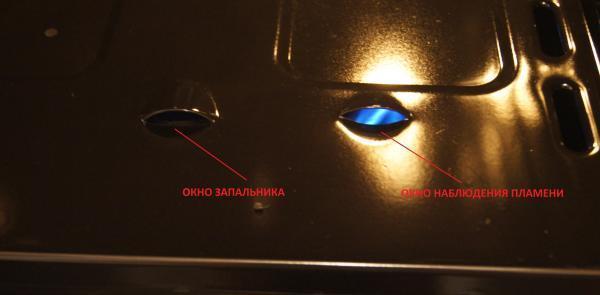
You can watch the flame in the oven through a special window.
If there are signs of a specific gas composition, it is necessary to immediately turn off the device, ventilate the room and repeat the heating after a while. If, after a couple of minutes of heating, it “pulled” a burn, then this means poor cleaning of the walls after the previous use. It is better to turn off the stove and wash the walls, otherwise the new dish will absorb the burnt particles and ruin its flavor.
Some models of past releases have design flaws that lead to burning of dishes. If it is not possible to replace the equipment, then folk remedies can come to the rescue: the location of silicate bricks at the bottom, containers with water, salt or sand.


Oven thermostat
This element is necessary to maintain the set temperature inside the chamber. Depending on the model chosen, there are electronic, electromechanical and mechanical thermostats.For adjustment, a knob rotating in a circle is most often used. In the case of an electronic system, this may be a touch display with numerical data visualization.
The main element of the thermostat is a dilatometer, which reacts to temperature fluctuations inside the chamber. As soon as it rises to a critical level, the linear rod expands, acting on the valve. The latter begins to gradually shut off the gas supply. If the temperature, on the contrary, decreases, then the dilatometer gives the command to increase the volume of fuel supplied for combustion.
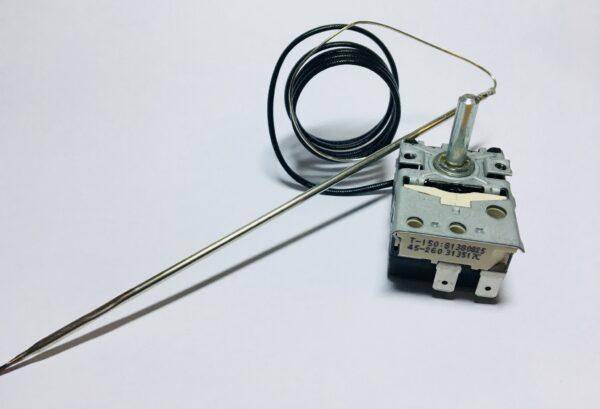
Oven thermostat
The parameters critical for cooking are set by the user via local control. If the thermostat is out of order, then the oven will either warm up to maximum values, or completely stop pumping the temperature.
What Not to Do
Like any technique, it is undesirable to use a gas stove for other purposes. The occurrence of many emergency situations is caused precisely by such actions. It is worth remembering that the harm caused by the improper use of gas equipment may not be commensurate with the momentary benefit.
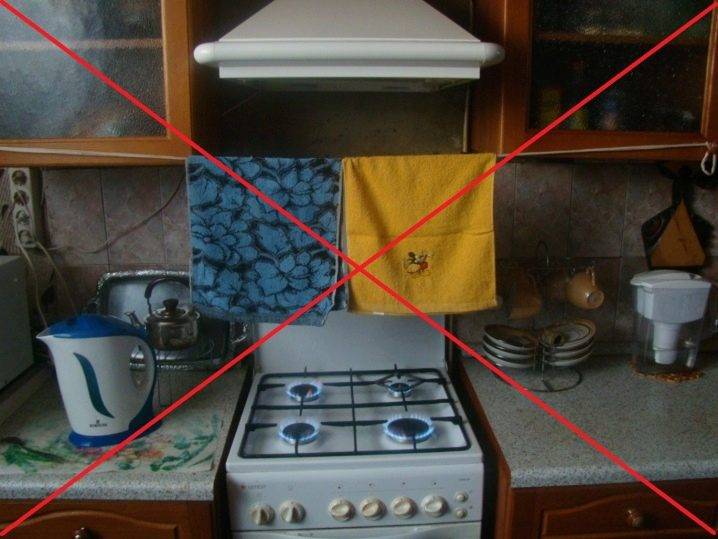
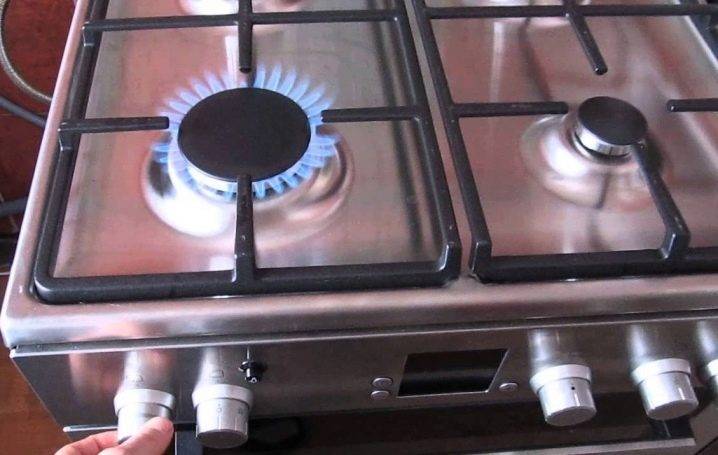
There are known cases of using gas stoves to warm up from them, for example, when for some reason the heat supply to the central heating system is too small or absent. Often, the owners of gas stoves for such purposes turn on all the burners (2-4 burners) and the oven at the same time, which is also left open. At the same time, the stove remains unattended for quite a long time.
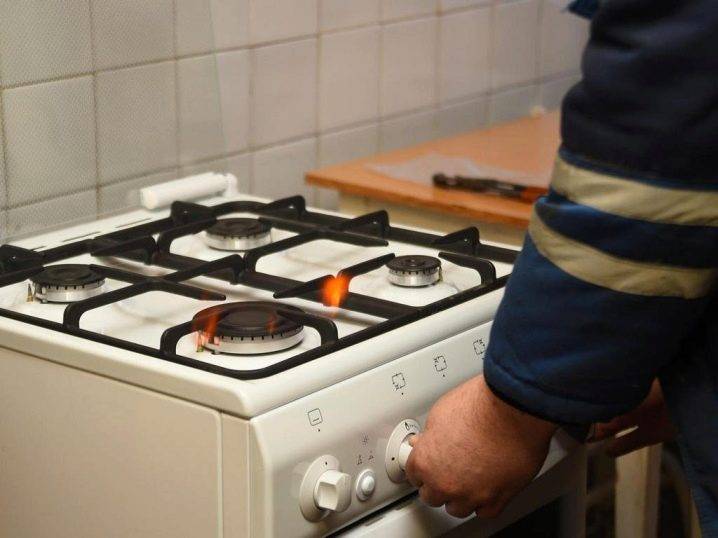
Specialists in the operation of gas equipment categorically do not approve of such treatment of stoves. With the operation of all gas-consuming devices, its consumption increases sharply.Often, in the desire to heat the room as soon as possible, frozen citizens try to open the supply to the maximum. If for some reason one of the burners goes out, ignition from other burners or the oven may occur.
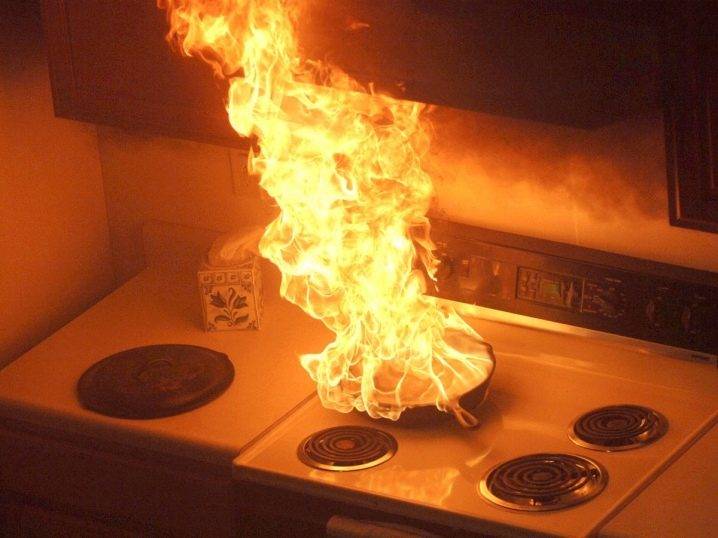
Flammable objects (curtains, plastic bags, any plastic products) should not be placed near the stove. During the operation of the oven, the outer side of the stove is very hot. This can not only damage the object, but also cause it to ignite.
Oven Lighting Safety
No matter how the flame is ignited in the oven, it is always worth following the specific rules for safe operation. Interaction with gas is always a risk, so you should be extremely careful to level the likelihood of an emergency.
Next, consider the basic rules for safe ignition of the oven:
- Before turning on the gas oven, always ventilate it to free the space from possible gas accumulation.
- Inspect the hoses, periodically check the tightness of their connections, and, if necessary, replace worn ones with new ones.
- Make sure the oven burner is fully ignited. If any segment does not burn, turn off the gas supply, ventilate the cabinet and re-ignite the flame.
- Never leave a working oven unattended, do not forget to check the presence of a flame through the window of the cabinet door.
- Never use the switched on oven as a heating source. It is impossible to heat the kitchen with the help of air heated by the burner.
- Thoroughly clean all surfaces inside the oven after each cooking.Fat deposits and other contaminants can clog the holes of the igniter or the burner itself, due to which the flame will burn unevenly or will be completely absent during subsequent operation.
The smell of gas or the audible alarm of the leak sensor is an alarm in which it is forbidden to use the equipment. Ventilate the area and, if possible, find the source of the fuel leak.
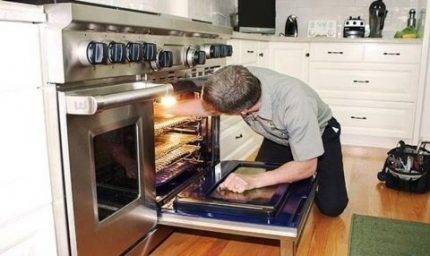 The primary diagnosis of oven malfunctions can be carried out independently if the procedure does not involve disassembling the main components. In other cases, the work must be entrusted to a specialist.
It is always worth monitoring the operation of potentially dangerous equipment. Incorrect functioning of any elements should be alarming and become a reason for calling a master from the gas service to inspect, diagnose the problem and fix it.
Conclusions and useful video on the topic
What it looks like and where the igniter hole is located in a gas oven is described in the video below. Additionally, the video shows how to remove the protective plate and gain access to the burner.
Information on how to light a flame in an oven without electric ignition with gas control in the following video:

As with any gas equipment, work with the oven must be extremely careful.
Pay attention to any alarming dysfunctions of the device and contact specialists in time to avoid emergency situations.
And it’s quite simple to kindle a flame in a gas oven: you just need to learn how to do it right only once, after which the hostess will not need outside help.
Do you want to supplement the information provided with useful recommendations or comments? Or do you have questions that we have not covered in this material? Ask them to our experts and other site visitors - the feedback form is located below.
Conclusions and useful video on the topic
The video will discuss the mandatory maintenance of gas in-house equipment:
What the master must do during maintenance:
What we have to pay for during inspections and how you can save:
It is strictly forbidden to operate a faulty water heater or gas hob. However, not all the problems in them an inexperienced person is able to determine on their own. Therefore, it is highly not recommended to interfere with routine checks of the gas stove in your apartment. It's not even so much a matter of law enforcement as of personal safety.
If you have a positive or negative experience of communicating with gas workers or an interesting story related to the operation (repair) of gas equipment, write comments in the block below. We are also ready to help you understand all aspects of inspecting and maintaining your gas appliances.