- The principle of operation of the sensor
- How to check gas column draft
- Troubleshooting
- Pipe cleaning
- Structural Troubleshooting
- Arrangement of ventilation
- Installation of appliances
- What to do if suddenly lost traction?
- Water node malfunction
- Thrust calculation
- Gas Volume Calculation
- Section area calculation
- Diameter definition
- Example
- Effective ways to increase chimney draft
- Measurement methods
- Causes of malfunctions
- Ways to increase traction
- Traction boost
- How to increase draft in a water heater?
- Top reasons for lack of traction
- Reason 1. Incorrect chimney.
- Reason 2. Ventilation
- Reason 3. The impact of natural factors.
- Troubleshooting Instructions
- Summing up
The principle of operation of the sensor
The gas boiler works by burning blue fuel. Naturally, in this case, combustion products are released. If they get into the room, then this is fraught with severe poisoning of all residents of the house, up to and including death. Therefore, the design of the column provides for connection to the chimney, through which all harmful substances are removed to the street.
Naturally, for high-quality removal, the ventilation shaft must have impeccable draft.But it happens that some kind of violation occurs - for example, the chimney can become clogged with debris or soot. If in such a situation the boiler stubbornly continues to burn fuel, then the combustion products will inevitably go into the house.
To prevent this, an element such as a chimney draft sensor is included in the design of the gas boiler. It is located in the place that is located between the ventilation duct and the equipment case. The type of sensor depends on the type of boiler:
- in a boiler with an open combustion chamber, the protective sensor is a metal plate to which a contact is connected. This plate is the indicator that monitors the temperature increase. The fact is that normally escaping gases are usually heated to 120-140 degrees. If the outflow is disturbed, and they begin to accumulate, then this value increases. The metal from which the plate is made reacts to such a situation and expands. The contact attached to the element is displaced and closes the valve responsible for the gas supply. Thus, the combustion process stops, and at the same time, the entry of a new portion of harmful substances is prevented;
- in a boiler with a closed combustion chamber, the products are removed through a coaxial channel, while a fan is used. The sensor in this case is a pneumatic relay with a membrane. It reacts not to temperature, but to the flow rate. While it is within the acceptable range, the membrane is bent, and the contacts are in the closed position. When the flow rate becomes weaker than necessary, the membrane straightens, the contacts open, and this leads to the blocking of the gas supply valve.
As you can see, if the draft sensor is triggered, turning off the gas column, this means some kind of malfunction in the equipment. For example, it could be:
- initially poor quality traction. This is the first and main reason why the sensor can work. As a rule, this phenomenon is associated with improper installation of the exhaust structure. If the products of combustion are poorly drawn out, then this is a danger to all living things in the house;
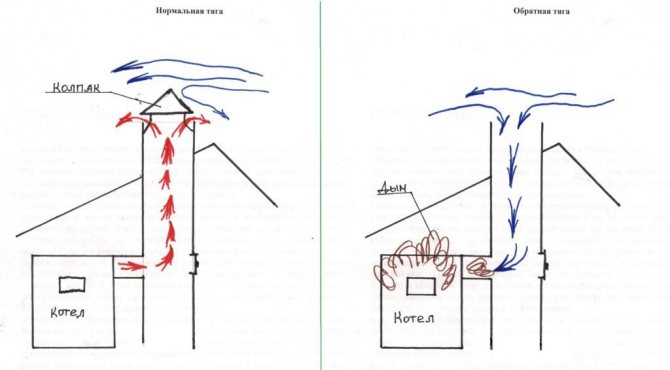
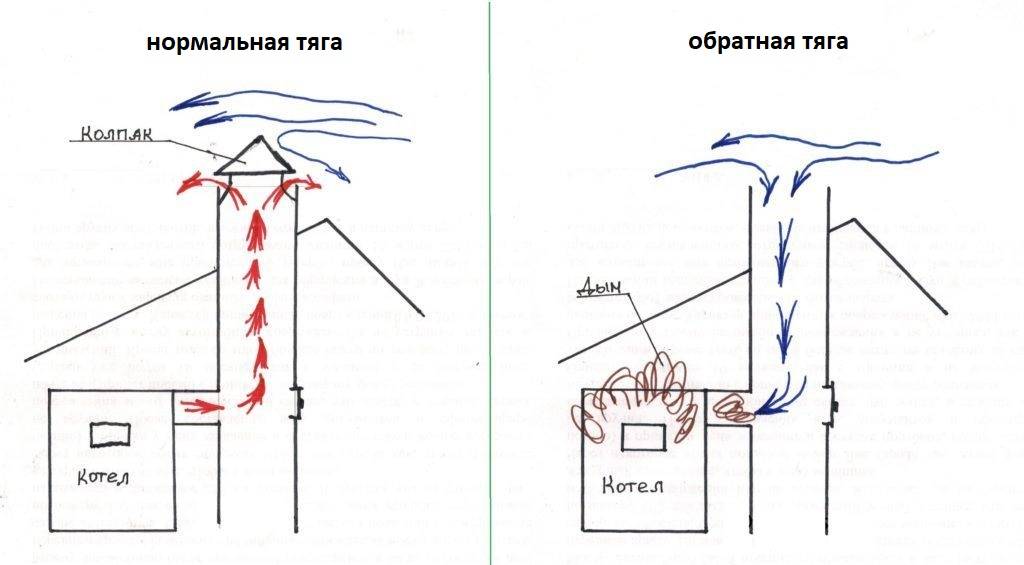
- reverse thrust. This phenomenon occurs when an air lock forms in the chimney. Gases, which normally should move to the very top of the pipe and then go outside, cannot overcome this obstacle and return back, filling the room with themselves. The effect of reverse draft can occur if the thermal insulation of the chimney is made very poorly. The temperature difference leads to the formation of air congestion;
- chimney blockage. It may seem to inexperienced owners that the pipe leading to the roof simply cannot be clogged with anything. In fact, there are many factors that lead to clogging. The first one is birds. They can make nests on the pipe, which then fall down. Yes, and the birds themselves often manage to get stuck in the chimney, and then die there. In addition to birds, one should also take into account the possibility of getting, for example, leaves, as well as the deposition of soot on the inner walls of the pipe. If the chimney is clogged, the draft intensity becomes too low, and there is only one way out - cleaning;
- strong wind. If the pipe is not properly positioned, gusts can enter it and blow out the burner. Naturally, in such cases, the sensor shuts off the fuel supply. To avoid such a danger, it is necessary to purchase and install a stabilizer.
How to check gas column draft
Since a chimney and good draft are needed for units with an open combustion chamber, we will talk about them. Turbocharged water heaters push out the products of combustion forcibly and do not need a classic chimney. I must say that all modern atmospheric columns are equipped with safety automatics that do not allow the device to be started in the absence of traction or turn off the gas supply when it disappears during operation.
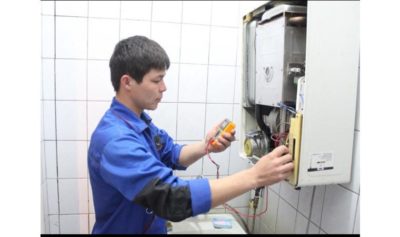
In general, to check the draft, you need a special measuring device, which is used by professional stove-makers. They allow not only to determine the presence of air movement in the pipe, but also to calculate the traction force. It is clear that the average layman does not have any devices, the arsenal of verification is limited in two ways:
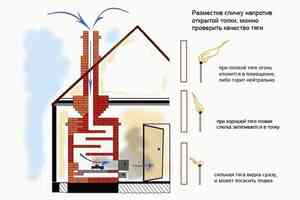
- having removed the horizontal section of the chimney from the entrance to the mine, stick strips of paper to the wall above the opening. If the shaft works well, then the strips will be pulled inward;
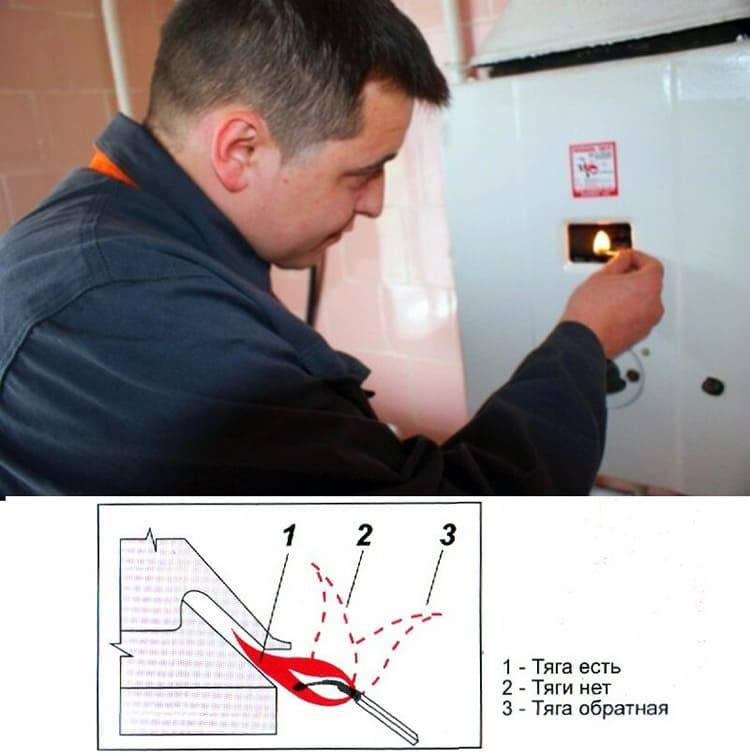
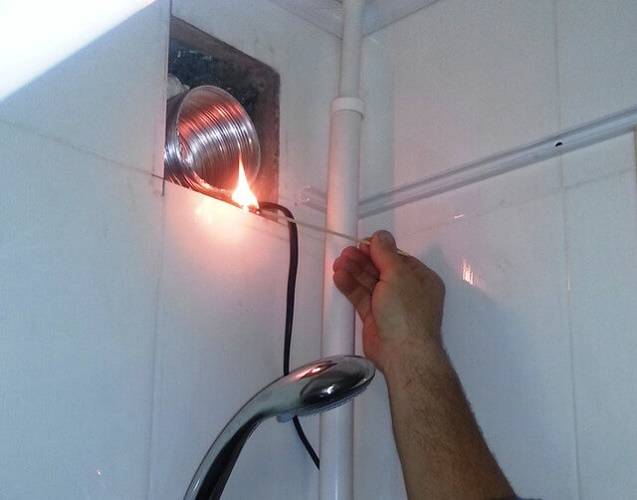
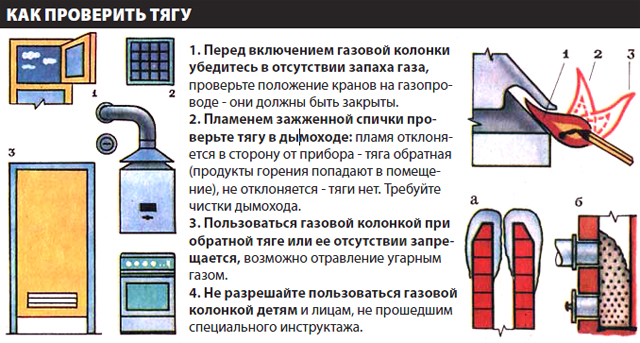
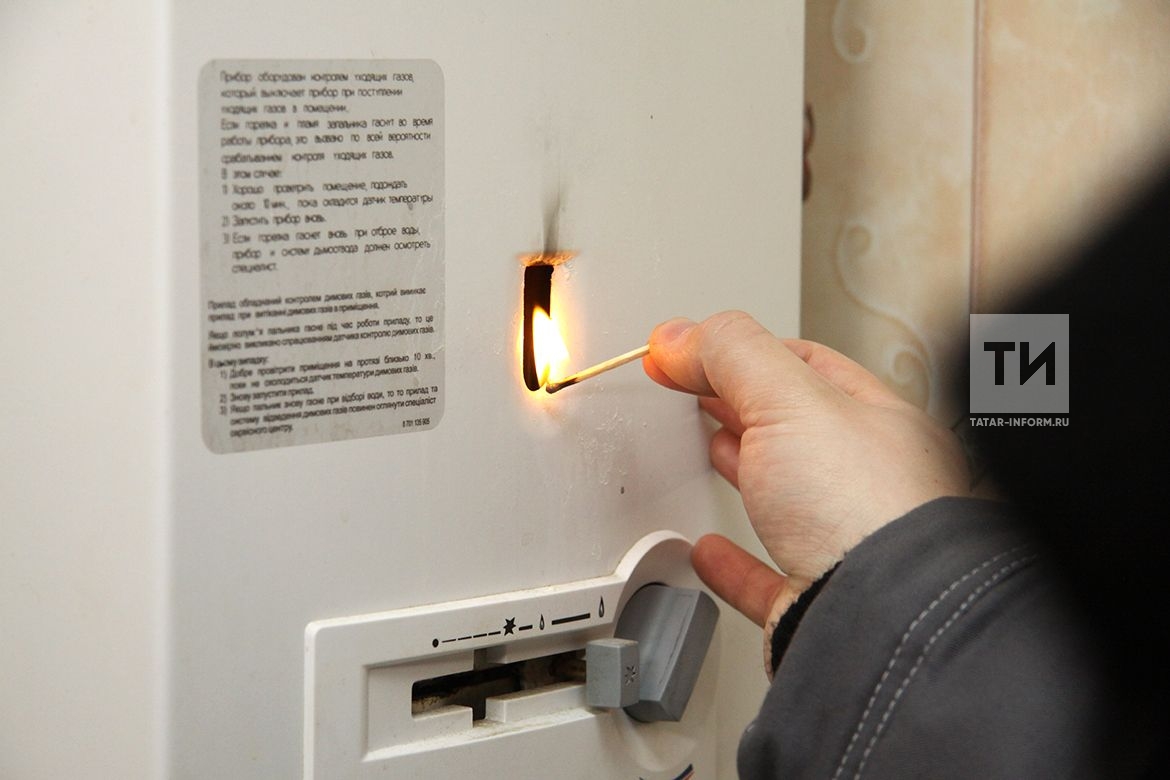
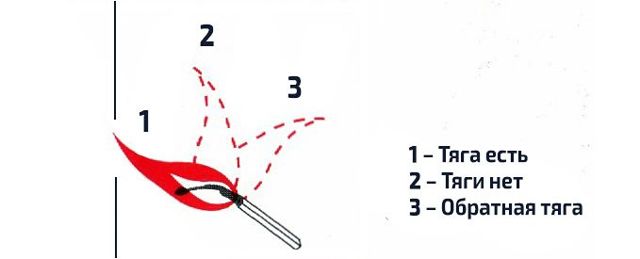
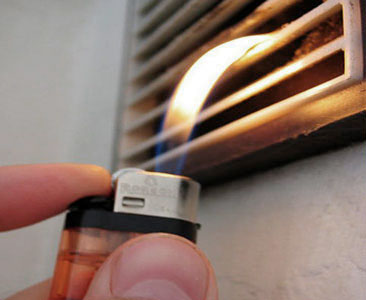
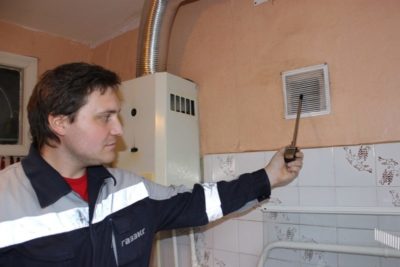
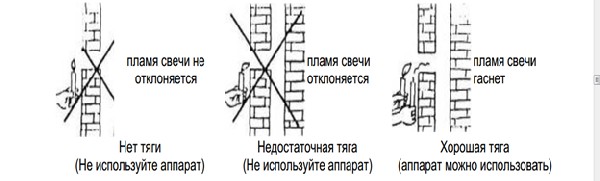
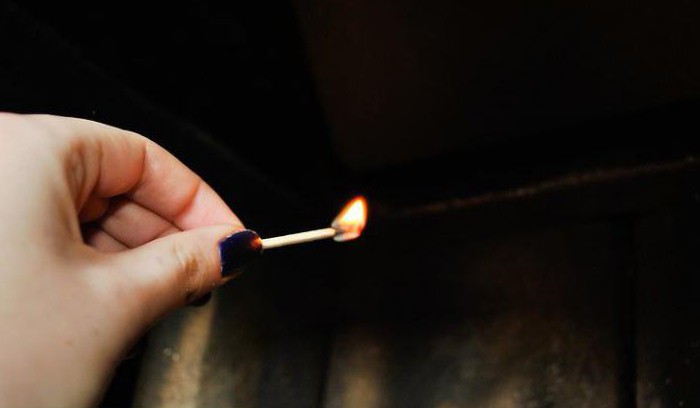
- to check the draft of the gas column without any disassembly, you need to light a match or stick and holding it in a vertical position, bring it to the viewing window on the front panel. The flame should noticeably deviate towards the gap;
Troubleshooting
If you have stated problems with traction, then, of course, they need to be eliminated as soon as possible.
The choice of means to combat poor or reverse draft depends on the reasons that led to the abnormal operation of the chimney.
Pipe cleaning
One common method for improving traction is pipe cleaning. Fuel, burning in the furnace, emits various substances that settle on the inner surface of the chimney. Soot adheres well to pipes if they are uneven or bent.
When carrying out work, do not forget about safety measures
How to clean the chimney so that there is good draft?
First of all, acting purely mechanically. Chimney channels can be made wider by getting rid of plaque in the following ways:
After cooking about one bucket of potatoes, peel and cut them. Potato peels will work too. Throw a little into the furnace and wait. When burned, potatoes will release starch, which will become a tool that can soften soot formations. Soft pieces of soot will fall off on their own, and firmly adhering ones will have to be removed mechanically.
Aspen firewood. Heat the oven with two or three logs. They will heat the chimney pipes very much and help get rid of soot.
But this method requires special care, because the probability of a fire will be very high (soot may ignite).
Rock salt
This method is more suitable for prevention. Salt added at the time of burning improves the condition of the chimneys.
Pipe brush. A heavy load is attached to a brush suspended on a steel rope, and lowered into chimneys. By lowering and raising this structure, it is possible to force soot formations to fly off the pipe walls and fall into the furnace. These fragments are then removed from the firebox.
the probability of fire will be very high (soot may ignite).
Rock salt. This method is more suitable for prevention. Salt added at the time of burning improves the condition of the chimneys.
Pipe brush. A heavy load is attached to a brush suspended on a steel rope and lowered into the chimney openings. By lowering and raising this structure, it is possible to force soot formations to fly off the pipe walls and fall into the furnace. These fragments are then removed from the firebox.



The second group of anti-soot measures is based on the use of chemicals. The most popular chemicals for cleaning the chimney are Log Chimney Sweep, Kominichek. According to the instructions, chemicals are added to the coals formed during the burning of a stove or fireplace and continue to be heated. After all the fuel burns out, it is advisable to leave the coals, because they continue to “work” in terms of cleaning the chimney (at least, this is what the manufacturers advise).
When used correctly, chemicals will not harm your home.
Do not believe the spiteful critics who talk about the mandatory ignition of soot when using the chemical method. This method does not pose any danger, since the beneficial effect is due to chemical reactions, and not due to the ultra-high combustion temperatures of the reagent.
Special mention should be made of the observance of safety measures during all work related to the chimney. Do not fix chimney problems in windy weather! Try to use safety devices while working at height!
Structural Troubleshooting
If certain features of the chimney design are identified that adversely affect the traction force, adjustments should be made to eliminate them. Such actions should include:
- dismantling of several disparate pipes and installation of a single chimney channel;
- pipe superstructure on the roof to the required height;
- insulation of chimney elements, etc.
Arrangement of ventilation
In some cases, draft may improve if drafts are not allowed in the house or bath.To help with problems with traction, you can install ventilation devices on windows.
In the absence of the desired effect after all the methods described above, modern devices should be adopted to improve draft in the chimney.
Installation of appliances
To improve the operation of the chimney, it is best to use special devices that allow you to regulate and control the draft. Such devices can be bought in a store or made by hand.
What to do if suddenly lost traction?
This situation sometimes occurs suddenly. More often in bad weather. Before dealing with the chimney system, you should evaluate the duration of the malfunction and the likelihood of carbon monoxide poisoning - ventilate the room by opening windows and doors. The reasons for stopping the hood should then be assessed. It is better to make sure that the chimney is not blocked mechanically - there is no ice on the head, no soot has fallen. Then proceed to restore the operation of the equipment: open the gate, ignite the heating unit, make a strong fire in the stove or fireplace to warm the walls of the chimney.
If the movement through the chimney is not restored, it is impossible to leave the equipment turned on or the burning fire in the furnace - you can get poisoned by carbon monoxide and carbon dioxide. Measures should be taken to clean the chimney and get rid of frozen ice and condensate (but not at night).
Water node malfunction
Most often, gas water heaters are repaired due to a malfunction of the water block. Its job is that, under the influence of fluid pressure, the membrane inside it, bending, transmits movement to the rod, and already it moves the pusher of the gas unit.As a result, the spring valve opens and the power supply to the control module is switched on. Therefore, if the water unit is faulty, then the device will not start.
The failure of the water block can be determined by external signs.
- If you opened the water supply, and the rod pressing the switch plate remained motionless (shown in the figure with a blue arrow), this means that the membrane located inside the main component of the water unit, the “frog”, is damaged.
- Jamming of the stem may be due to its sticking.
- There may be a leak in the place where the gas and water units are interconnected, or seepage of liquid from under the control valve (shown by red arrows).
If you notice at least one sign, then the node will need to be removed and repaired. The water unit is removed only together with the gas module, since they are a single structure. You can do this in the following way:
- after you have made sure that the gas valve on the pipe is switched to the closed state, you can disconnect the supply hose (a);
- similarly, when the water supply is turned off, the nut on the water block pipe (b) is unscrewed;
- then, using a wrench, unscrew the nut that connects the water block to the heat exchanger (c);
- disconnect the terminal block (d) on the conductors connecting the solenoid valve with the control module;
- in the same way, the wires (e) going to the switch are disconnected;
- using a screwdriver, it is necessary to unscrew the 2 screws (e) that attach the branch pipe to the water-gas unit, through which fuel is supplied to the burner manifold;
- after unscrewing the fastener, the entire assembly can be easily removed from the device.
Next, you need to disassemble the gas-water module itself.
After removing the device, it is required to separate the water unit. To do this, unscrew the 2 screws (indicated by arrows). It is not necessary to unscrew them completely. With the help of a clamp, they fix the “frog” in the gas unit. The fastening of the “frog” to the latter in different models may differ, as, for example, in the gas column Neva 3208.
This is what the gas module looks like with the water module disconnected.
Next, you will need to disassemble the “frog” itself by unscrewing 6 screws. They can stick and twist out tightly or even “lick off” with a screwdriver if you apply a lot of effort. To prevent this from happening, you can first drop a special liquid WD-40 on them, after which they will easily unscrew, and none of them will break.
After successfully unscrewing the screws, the module opens into two halves, and you will see a rubber membrane.
The membrane must be carefully examined, and if it is found that it has been greatly stretched, or there are gusts on it, it must be replaced with a new one.
To get to the plate with the spring, you need to remove the membrane. If it is intact, it must be done carefully so as not to damage the ring with which it is put on the pipe (indicated by the red arrow in the figure above).
After removing the membrane, you will see a plate with a spring.
So that you do not disassemble the unit once again, inspect the oil seal
To do this, carefully remove the plate with the rod.
Remove the spring and you will see a plug with a slot for a screwdriver. There is an o-ring underneath.
The plug must be unscrewed from time to time to lubricate and replace the rubber seal.
Having previously purchased a repair kit for the “frog”, change the failed gland and membrane. When you install the oil seal back, do not forget to lubricate it with silicone grease, and also lubricate its location.
The assembly of the water block of the geyser occurs in the reverse order. The plug must be tightened so that the stem passes through it without much effort. When you fully assemble the “frog”, the repair of the water block can be considered finished.


The repair of the Neva 3208 gas column due to a “frog” malfunction is similar and intuitive, although the internal view of the unit is slightly different. The gas column Neva 4511 is also disassembled, the repair of which is quite feasible with your own hands.
When a Chinese geyser is being repaired, the size of the water unit is always surprising. It is quite small in size, and to disassemble the “frog”, you need to unscrew only 4 screws.
Thrust calculation
So, the draft calculation is the calculation of the section of the chimney for a gas boiler, fireplace, stove or other heating equipment. How to calculate the cross section? To do this, you need to define:
- the volume of gas that will pass through the chimney in 1 hour;
- cross-sectional area of the chimney;
- section diameter.
Gas Volume Calculation
To calculate the volume of gas passing through the flue channel, the following formula is used:
V = B x V1 x (1 + T/273) /3600 where
B - mass of fuel burned for 1 hour of operation of heating equipment;
V1 - correction factor, which depends on the type of fuel used for heating;
T is the gas temperature determined at the outlet of the chimney.
Indicators V1 and T can be obtained from the table available in GOST 2127 - 47.
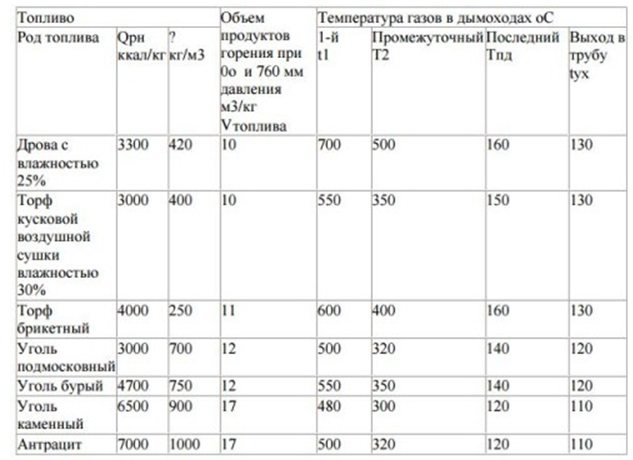
Table from GOST to determine the calculation parameters
Section area calculation
After determining the volume of gases passing through the flue channel, you can calculate the size of the pipe section:
S = V/W, where
V is the volume calculated earlier;
W - the speed of passage of gases through the smoke channel (this value is constant and equal to 2 m / s).
Diameter definition
The next step is to directly determine the diameter of the chimney. For this, the following formula is used:
D = √4 * S/ π, where
S is the cross-sectional area of the smoke channel;
π is a constant equal to 3.14.
Example
For example, we will calculate according to the indicated formulas with the following parameters:
- in the stove installed in the bath, 10 kg of firewood is burned every hour;
- the temperature of the gases at the outlet of the pipe is 130ºС.
Calculate the volume of gases:
V \u003d 10x10x (1 + 130/273) / 3600 \u003d 0.041 (m³ / h)
Determine the cross section of the chimney pipe:
S = 0.041/02 = 0.0205 (m²)
We find the most suitable pipe diameter for the given parameters:
D \u003d √ 4 * 0.0205 / 3.14 \u003d 0.162 (m)
This means that for the stove used in the example, it is enough to install a chimney with a diameter of 165 - 170 mm.
How to make calculations and install a chimney on your own, look at the video.
Effective ways to increase chimney draft
The design of a chimney is complex and responsible, the efficiency and safety of using a heater depends on the correct implementation of it. Not a single heat generator is able to function normally without a pipe that removes smoke from the room. Smoke is a mixture of gases containing residual products of combustion of fuel.The appearance of smoke inside the heated room is a sure sign of an incorrect calculation of the chimney system, which entails the risk of fire and carbon monoxide poisoning. This article will tell you what reverse draft in a chimney is and how to prevent it from occurring.






Measurement methods
If you doubt that the draft of the chimney channel of the stove, fireplace or heating boiler is sufficient, you need to check it. The easiest way to dispel doubts is to check with your own hands using an anemometer. If the device shows a thrust of 10-20 Pa, then it is considered normal. The problem of this method is the low measurement accuracy of inexpensive anemometers, if the thrust is less than 1 Pa, then they will show that it does not exist. More accurate professional instruments are expensive, stove-makers use them.
If you do not have an anemometer, use one of the popular methods for determining the chimney draft force:
- By smoke. The most obvious sign that there is no draft is the presence of even a small amount of smoke inside the room, a large amount of smoke indicates a high risk of fire and carbon monoxide poisoning.
Note! The draft inside the chimney duct is created due to the difference in pressure outside and inside the building. In a heated room, the temperature is higher than outside, so there is more pressure
Heated air, propped up from below by colder air, is squeezed out into a zone with lower pressure, that is, into the atmosphere. If you take measurements in summer, when the temperature difference between inside and outside is minimal, you will get a lower result than in winter.
Causes of malfunctions
After making sure that there is not a sufficient level of draft inside the chimney system, it is necessary to determine and eliminate the possible cause of this defect.Experienced craftsmen say that the most common causes of failures in the operation of smoke ducts are:
- Design error. The choice of the chimney pipe should be based on the volume of the furnace. If the diameter is less than the calculated parameter, a weak one will not allow smoke to leave their premises.
- Insufficient pipe length. A pipe length of less than 5 m does not provide a significant difference between the pressure inside and outside, which creates a weak draft.
- Incorrect location of the chimney tube. Furnace masters advise laying the chimney vertically, as narrow turns trap smoke inside the chimney, reducing draft.
- Long horizontal sections. If, when laying a chimney, it is not possible to avoid horizontal sections, then make sure that their length is no more than 100 cm. Otherwise, she will need an amplifier.
The first step in detecting problems in the chimney system is to eliminate the most obvious causes of insufficient draft. When inspecting, make sure that the connections of all pipe segments are tight, that there are no soot blockages. Check that no moisture has entered the flue ducts and that the atmospheric pressure is correct.
Ways to increase traction
If the traction force is in the chimney channel of the heater, it is not always easy to eliminate this defect. Experienced stove-makers use the following methods, ways to increase it:
- The first thing to do if you suspect insufficient draft in the chimney is to clean the pipe. To do this, call a chimney sweep or remove soot deposits from the inner surface of the chimney with your own hands using a metal stove brush.
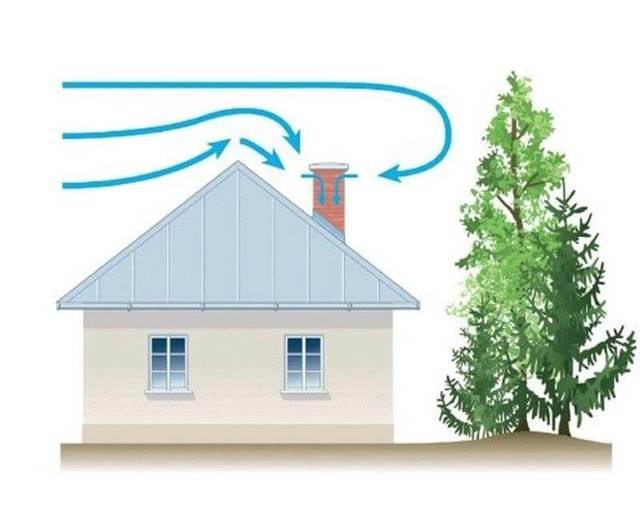
- A significant increase in the power of the chimney can be achieved by increasing the height of the chimney above the roof surface by extending it with several additional segments. In the same way, the chimney is removed from the area of \u200b\u200bwind backwater from the ridge or a higher building.
If it was not possible to find a solution to the problem of the lack of draft inside the chimney channel on your own, seek advice from an experienced stove-maker who will tell you what to do and correct the defect in the most rational way.
Effective ways to increase chimney draft Effective ways to increase chimney draft. Common causes of reduced draft in the chimney and methods and devices for their elimination.
Traction boost
If the check of the chimney draft showed its complete absence or a small value. You can also use a device such as a chimney draft stabilizer or a turbine. True, their use is limited only to gas boilers. Too high a temperature of the exhaust gases at the outlet of the pipe will contribute to the malfunction of the device or its failure.
If we talk about stoves or fireplaces, then in order for the chimney to work correctly during not very good weather conditions. Special tips are installed on the pipe - outbuildings. This device rotates freely in such a way that its rear part is always located against the wind. This position prevents wind or rain from entering the chimney directly.
You can also use special fans. Such devices have a built-in electric motor. Their operating principle is as follows.They mainly work from the wind, with strong gusts the fan rotates, increasing the exit of exhaust gases from the pipe, if the wind flows are not strong enough, then the electric motor turns on, which makes the fan work forcibly and all harmful substances also end up on the street.
A small caveat, you should not immediately run to the store and buy a new device after reading the article. Before you decide to install it, you should make calculations. And already, based on the results obtained, it will be clear whether this device can be installed on your chimney.
If there is no draft in the chimney, it will be useful to check the operation and dampers. For stoves and fireplaces, this is a kind of regulator of the exhaust gas output force.
How to increase draft in a water heater?
One of the main reasons for the lack of draft is a blockage in the smoke channel. Often this problem occurs in old-type apartment buildings.
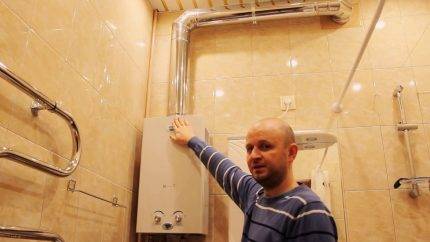
In the so-called Khrushchevs, 2 mines are laid - for a column and a ventilation one. First of all, you need to call specialists for cleaning.
 Clearing the blockage in the smoke channel will help increase the draft in the water heater. You can clean it yourself with a metal brush or a special brush.
In a private house, draft improvement should begin with an inspection of the chimney and an assessment of the contamination of the clogged pipe. After removing the blockage, a mirror is placed inside the channel. There should be light at the top of the chimney. It is recommended to carry out such a procedure at least once every three years.


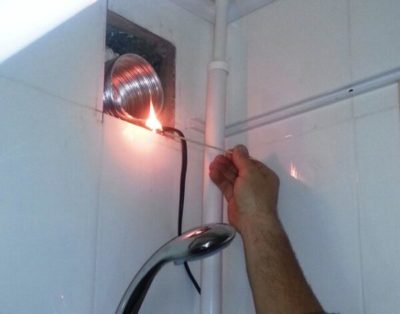


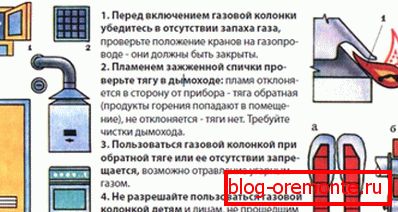

Poor draft can also be caused by improper installation of the chimney hood or too many unnecessary turns, sharp corners and bends in the chimney.If the correction of errors made during installation did not help, you can increase the draft in the chimneys with the help of smoke exhausters and fans.
Top reasons for lack of traction
It is necessary to determine the time frame for the occurrence of a malfunction. Separately, it is worth considering cases when the chimney is new and during the test run, the fact of reverse draft was revealed. Consider the reasons separately and in detail.
Reason 1. Incorrect chimney.
Proper chimney design is essential for good air movement. If there is no draft when checking a new heating structure, then the reason is one or a combination of errors:
- The pipe diameter is too small and does not correspond to the installed capacity of the serviced heating system.
- The design of the chimney contains turns at an angle of 90 degrees. The maximum allowable rotation angle is 45 degrees. For ideal operation, the entire chimney must be extended along a strict vertical axis. However, such a design is not always possible, then tees and transitions are used. For a 90 degree turn in the chimney, you need to add 1 meter of pipe length. For a rotation angle of 45 degrees, you need to add 0.5 meters.
- The presence of horizontal sections of the chimney. The total length of horizontal sections should not exceed 1 meter.
- Wrong pipe shape. The pipe must have a round section. At the corners of the square pipe, the air flow swirls, which clogs the chimney. Square sections have chimneys made of brick, for their normal functioning it is necessary to install stainless steel pipes inside. Stainless steel pipes are easy to install, airtight, their smooth surface prevents the accumulation of soot.
- Insufficient length of the blower, which does not give the desired flow of oxygen.
- The chimney consists of pipes of different diameters; in places of size difference, favorable conditions are created for the accumulation of soot and soot.
- Insufficient tightness of pipe joints.
- The absence of a cap over the chimney. The cap protects against the effects of precipitation, ingress of objects that can clog the chimney (snow, dead birds).
- Incorrect pipe placement. The pipe should rise above the flat roof by at least 0.5 meters. The distance between the ridge and the pipe should be 1 meter. The length of the sleeves in total must be at least 5 meters.
- Insufficient chimney insulation. The part of the pipe outside the heated room must be insulated. Insulation will prevent the settling of gases in the form of condensate on the inner surface of the pipe.
Reason 2. Ventilation
For the correct operation of the heating system, proper ventilation must be established in rooms with approved combustion equipment. Often because of it there is no draft in the chimney. Reasons for lack of sufficient traction:
- Constantly open windows in the furnace room. Especially when the windows are above the firebox.
- Strong draft, aerodynamic forces can change the direction of air movement.
- Insufficient amount of fresh air required for combustion.
Reason 3. The impact of natural factors.
The reasons for the lack of chimney draft can be:
- Rain, snow, hail creating a pressure drop. The impact of high street pressure leads to sedimentation of combustion products in the chimney, reducing the useful volume of the chimney.
- The crown of a tree obscuring free access to air masses.
- A tall building nearby reflects the smoke coming out of the chimney.
- Use of raw wood as a raw material.
- Too low position of the visor above the pipe.
Troubleshooting Instructions
There are various reasons for back draft in a gas boiler. They have varying degrees of complexity, some will require large expenditures to eliminate. These include the following problems:
- The design features of the chimney have a serious impact on the formation of draft. Therefore, if there are any defects in the system, they will definitely show themselves. Too narrow sections, incorrect pipe location, incorrect calculation of the cross section may be detected. All this will require the replacement of the chimney, which is a rather complicated undertaking.
- There may be a blockage inside the pipe. In this case, it will need to be cleaned. This is a laborious undertaking, however, less complicated than replacing the entire system.
- The reason may be too tall trees or the presence of high-rise buildings around. In this case, it will also be necessary to redo the chimney, taking into account such an environment.
- The ventilation system also has an effect on the formation of traction. If mistakes were made during its design, these communications will have to be redone to fix the problem.
And also the cause of poor traction may be less complex. Usually such situations arise suddenly, when before that everything was in order, and then the craving worsens for a couple of days, after which everything returns to normal again. As a rule, a similar phenomenon can be observed when the weather changes, if it becomes cooler. The situation may arise if the oven has not been used for some time. This is due to cold air masses that have accumulated in the chimney.You can solve the problem by continuing heating. After some time, it will be possible to break through a layer of cold air, and the thrust will return to normal. You can use a special stabilizer device that provides a secondary air supply.
If the draft problem is related to the ventilation system, some actions may be required to restore normal air exchange in the room:
- Installing additional supply valves on walls and windows will provide additional air flow.
- A special device for forced air intake from the street can be placed on the windows.
- The easiest option is to slightly open the window or door.
In the presence of poor draft, the source of problems may indeed lie in ventilation. If opening a window or door helped, then the problem is in the ventilation system. It may be possible to confine ourselves to installing additional supply valves. If this does not help, then more complex and costly repairs will be required.
The most important for draft are the characteristics of the chimney. Therefore, it is necessary to properly arrange everything at the design stage, so as not to run into problems later. The optimal height of the structure is 5-6 meters, this is enough to provide good traction, but not too strong.
Traditional brick structures perform well as a material, but the metal heats up and cools too quickly. And it is also necessary to ensure that the cross-sectional area of \u200b\u200bthe pipe matches the dimensions of the furnace.It is strictly forbidden to equip the chimney so that it meets sections with different diameters, as this contributes to the accumulation of soot and blockages, which invariably leads to problems with traction. Careful planning at the construction stage will avoid problems in the future.
Summing up
If you have a question: why is there no draft in the chimney, then first of all you should check the following
If problems with the removal of waste substances arose during the first use of the stove or fireplace, then pay all your attention to the project documentation. Check the correctness of the calculations and dimensions of the chimney
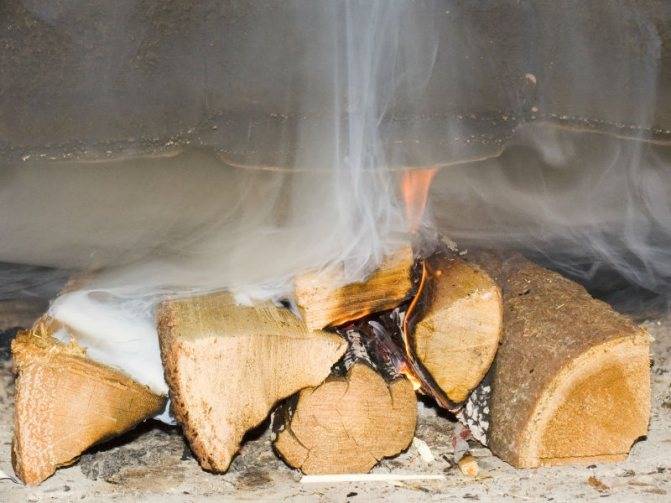
If until now you have used the oven and everything was in order, then you should first check for a blockage in the pipe. It is possible that after a long stagnation, the chimney was clogged with various dirt. Birds can sometimes nest in the pipe.
Perhaps, over time, the destruction of the chimney pipe occurred. In this regard, normal sealing has disappeared, the exhaust gas flow has become not so strong. First of all, it is worth checking the chimney, part of which is located above the roof. A pipe that is constantly exposed to precipitation can easily collapse. This can happen if a mortar with a low cement content was used for bricklaying.

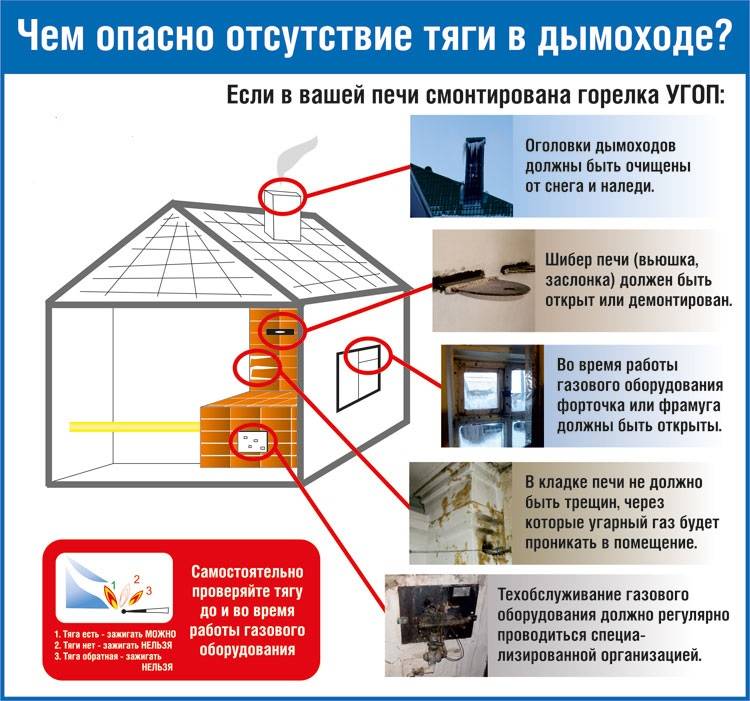


Another reason that very often leads to the problem of poor draft is the large amount of draft accumulated in the chimney. In this case, the chimney must be cleaned. After cleaning from soot, it is imperative to check the reverse draft in the chimney.If your chimney has not been cleaned of soot for many years, then after cleaning it, be sure to use products that prevent excessive soot from settling on the walls of the chimney.
Useful advice. If you have not used the stove or fireplace for a long time, and the weather turned out to be with a lot of precipitation, then it is recommended to check the efficiency of the chimney before heating. Otherwise, it may turn out that all the smoke will go directly into the room, and not into the chimney.
If you find that there is a reverse draft of the chimney, what should you do to eliminate it? Try to remove excessive moisture accumulated in the pipe. To do this, before kindling a stove or fireplace with wood or peat, be sure to burn a couple of newspapers. Such actions will somewhat dry the walls of the pipe and eliminate high humidity, so the stove will melt easier and faster, and the smoke from the burning fuel will begin to go out into the pipe.