
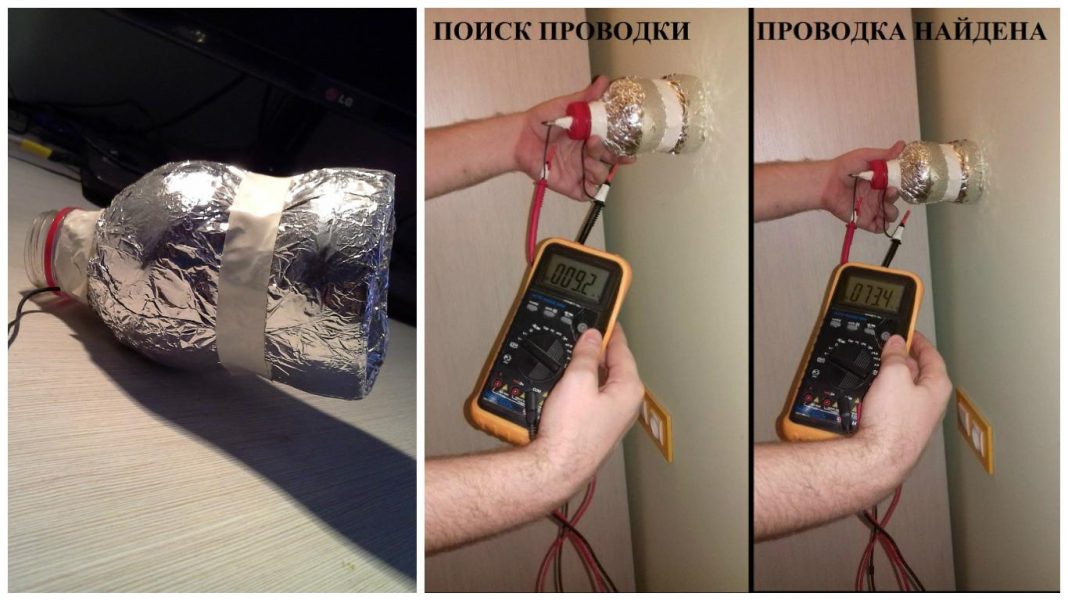
- How not to get caught in the wires on the ceiling
- Use of special devices
- hidden wiring detector
- Instructions for finding the place of the break
- Phase wire break
- Neutral wire damage
- Walls
- Types of detectors, their features
- Visual search method
- Professional electrical wiring search devices
- Old-fashioned ways to find wires in the wall
- Video about detectors and methods for finding hidden wiring
- Ceiling wiring - preparatory stage
- Misconceptions and errors in detecting electrical wiring in the wall
- Briefly about the main
- Best Options
- Wiring detector Woodpecker
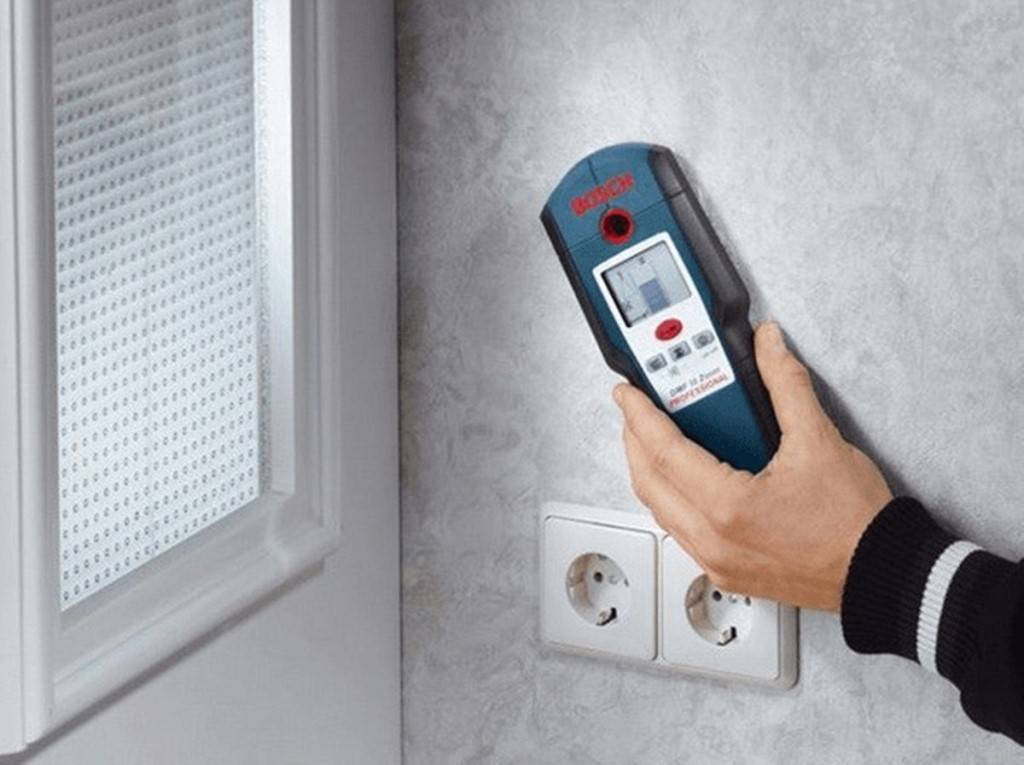
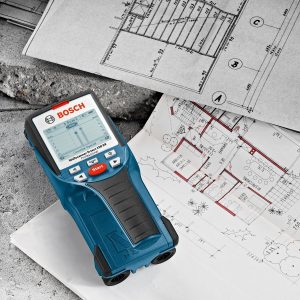
- Bosch DMF 10 Zoom
- Identify hidden wiring Bosch GMS-120
- POSP 1 device
- Acoustic and induction methods for finding the place of the break
- General recommendations
- Searching with an old radio
- Finding a broken cable in the wall
- Alternative Methods
- When might you need wiring location information?
- Every homeowner should know the location of the power grid route
How not to get caught in the wires on the ceiling
Find wire on the ceiling much easier, because here you only need to install chandeliers or lamps. Now there are a few rules that will allow you to avoid all possible problems: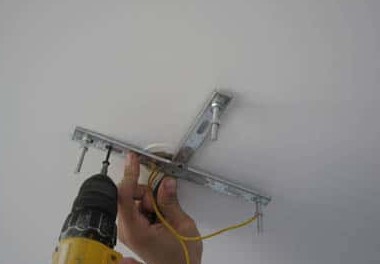
- Before drilling the ceiling, it is recommended to slightly open the place where you will be drilling.There is nothing terrible here, because after that a chandelier will be installed on this place, which will hide all possible defects.
- If you have a monolithic ceiling, then the wiring to it goes vertically. Therefore, step back from possible wires and make a hole there.
- If you need to find a wire on the ceiling in a private house, then what can you see under the plaster that stands out.
- Some wires overheat and leave black marks. If you find such, then the wire lies in this place, so you can make holes without much risk for yourself.
Use of special devices
There are many different devices on sale, with the help of which the search for wiring in the wall, instead of guessing on coffee grounds, will turn into an interesting and accurate activity. Their task is the same, but the principles of work are different.
There are only two ways to detect hidden wiring (this is from the point of view of physics, let psychics deal with branches from the vine).
- The direct method is based on the search for the main component - a metal conductor. A fairly simple method, especially since there are a lot of metal detectors that can detect even a small screw in the thickness of concrete and plaster.
This is the problem: in the walls there can be reinforcement, fasteners, the same screws and nails left from the previous hinged structures. All this economy will be found by a metal detector, especially if it is a budget model. The issue is resolved by purchasing more expensive models that can at least determine the type of metal (steel, copper or aluminum). And ideally, the screen can show the contours or route of the cable. - Indirect method: detection of hidden electrical wiring, based on the search for electromagnetic waves that occur when an electric current flows. The technique is more accurate (in terms of sifting out passive metal elements), but the geometric error is quite high.
Detectors that detect electromagnetic waves are simpler and cheaper to manufacture. There are also disadvantages: the wire can only be detected if an electric current flows. Often, it is required not just to turn on the light bulb, but to apply a significant load. The principle is simple: the greater the current, the stronger the magnetic field. This means that it is not possible to find a break in the wiring in the wall using such a device.
In addition, any household device that emits electromagnetic waves (mobile phones, Wi-Fi routers, microwave ovens) gives active interference that can completely block the search. Moreover, these devices may be located at the neighbors, you will probably turn off your electrical appliances.
hidden wiring detector
This device is directly designed to detect wiring hidden in the wall. Detectors according to the principle of operation can be electrostatic, electromagnetic and combined. The first ones are quite easy to use and inexpensive. They allow you to detect hidden wiring and broken wires that remain energized. However, at high humidity in the room, they give false positives.
Electromagnetic detectors allow you to very accurately locate the cable in the wall. However, for this you need to apply a phase load of at least 1 kW - for modern household appliances this will not be difficult. Naturally, without voltage in the network, it will not work to find the cable.

Combined devices combine electromagnetic, electrostatic and metal detecting. In fact, this is a hand-held metal detector that allows you to find the wire in different ways, and even in the absence of mains voltage. The maximum detection depth of most devices is 7-8 cm, which is quite enough for wiring in an apartment. In addition, he can see reinforcement in walls and other metals. The ADA instruments Wall Scanner 80 detector is a prominent representative of the “detectives” for wiring, which allows you to determine the cable at a depth of up to 5 cm.
Instructions for finding the place of the break
If a malfunction is detected, it is necessary to immediately take measures to find out the cause of the damage and find the approximate location of the defect in the electrical networks.
First of all, you need to check which rooms have problems with the supply of electric current.
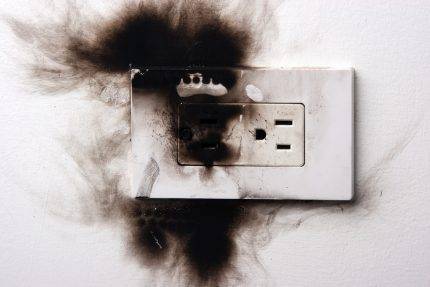
Molten switches or sockets they say that damage to the wiring happened in the sections of the power grid adjacent to them
Then you should find out if the cable break affected the lighting fixtures or sockets by checking them with a tester. Depending on the answers to the last question, you should follow the instructions below.
In this case, the fault may be caused by a fault in the phase or neutral cable.
Phase wire break
First of all, it is necessary to determine to which machine the damaged socket is connected. Having found out the power source to which the faulty cable is connected, it is necessary to turn off the electricity and disconnect all cores from the shield: “zero”, “phase”, “ground” (if any).
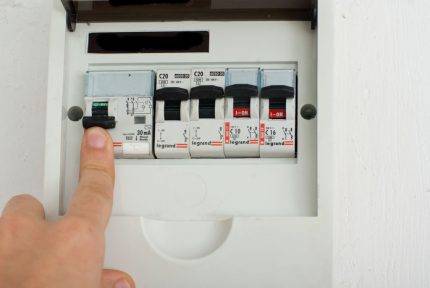
In order to find the power source of the socket, it is necessary to switch the machine, at the same time checking the presence or absence of a phase with the indicator
Then you need to arm yourself with a multimeter, with which you should sequentially check all the connections adjacent to the damaged object, starting from the cable in the shield.
In this way, it is possible to identify the affected area: usually there are two wires between two sockets, and if there is a "ground" and three wires. If only one vein can be identified in this area (for example, zero), we can safely assume that the cliff is located here.
Junction boxes are often inaccessible because they are hidden under a layer of finishing materials. If you have access to such devices, it is advisable to open them, since damage to the cores often occurs in them.
If no malfunctions are found at the same time, you should check the idle wires with the indicator, starting with the twists, and also examine the terminal block and the disassembled twists.
A wiring option is possible that does not provide for the installation of a junction box. In this case, the cables run freely from one outlet to another, while two wires that make up 4 cores enter each socket. In this case, to identify a defect, it is required to remove the devices located at the beginning and end of the faulty section, and then examine all the wires with a multimeter.
Neutral wire damage
The search for a break in the neutral wire practically does not differ from the work on detecting a break in the “phase”, however, it has certain features.
You can find out about a break in the zero core at the socket contacts by bringing an indicator screwdriver to this place: it will glow on the “phase”, but it will show the absence of “zero”. In this case, it is useless to use a multimeter to check the voltage, since this device will show an arbitrary value from 0 to 220 V.
It is important to observe strict safety precautions: due to the presence of a phase, there is a risk of electric shock even if the socket is not working. The intricacies of wires placed inside the wall are quite difficult to figure out. In order to identify a faulty cable, it is often necessary to check the integrity of each element of the network.
In order to identify a faulty cable, it is often necessary to check the integrity of each element of the network.
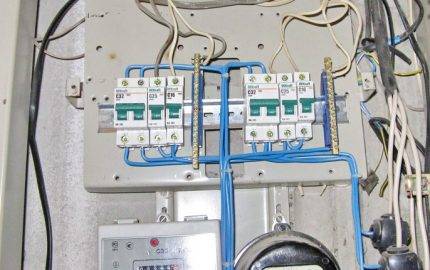
The intricacies of wires placed inside the wall are quite difficult to figure out. In order to identify a faulty cable, it is often necessary to check the integrity of each element of the network.
If a three-core cable is used for distributing electricity, as a last resort, a “ground” conductor can be used to transmit “zero”. However, in this case, the "ground" function will be absent in the outlet: this is generally undesirable and unacceptable when it comes to high-power household appliances, such as a washing machine.



Walls
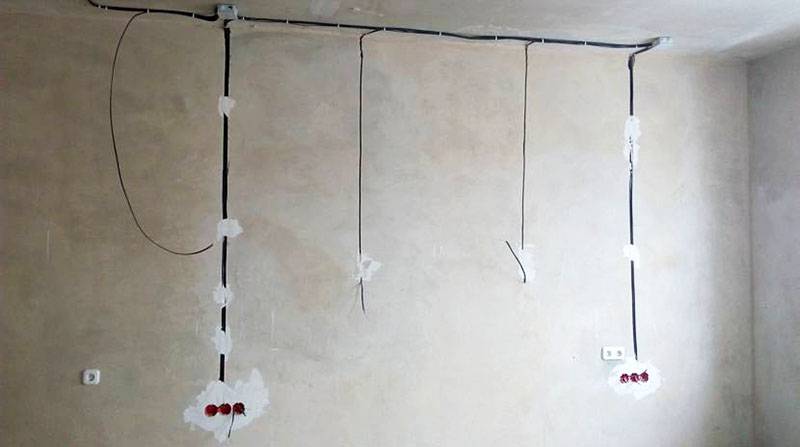
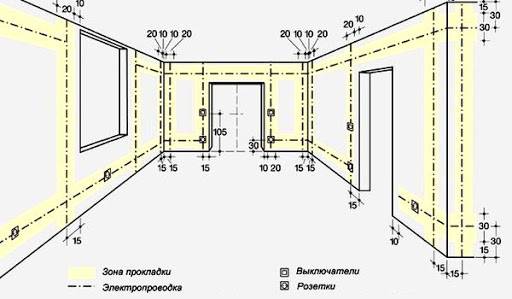
With walls, things are much easier, because. it is possible, based on logic and generally accepted standards, to determine where the wiring passes, so that you can avoid getting into it with a puncher. So, as a rule, the cable line runs parallel under the ceiling at a distance of 15 cm from it and goes down to the electrical points at a right angle, as shown in the photo below:

In order not to get into the electrical wiring when drilling, it is enough to find junction boxes in the walls (this can be done with the naked eye), which will show the exact height of the wires. After that, you need to see where the sockets, switches, electrical panel are located.From all these points, the cable rises, so it is better not to drill the wall above them, otherwise the chance of getting into the wiring will be almost 100%.
However, such a method cable routing is not found always. In panel houses, wiring is laid in channels (cavities) in slabs. They, due to the design features of the plate and the requirements for its rigidity, run diagonally. You can see an example of their location in the figure below.

If you are unable to locate the electrical line in an apartment or house using the described methods, it is better to use a special detector. There are inexpensive devices for finding hidden wiring. Their accuracy, of course, is not at the highest level, however, with an error of 10-15 cm, you can find the wires in the wall, which will allow you to avoid getting into them with a drill.
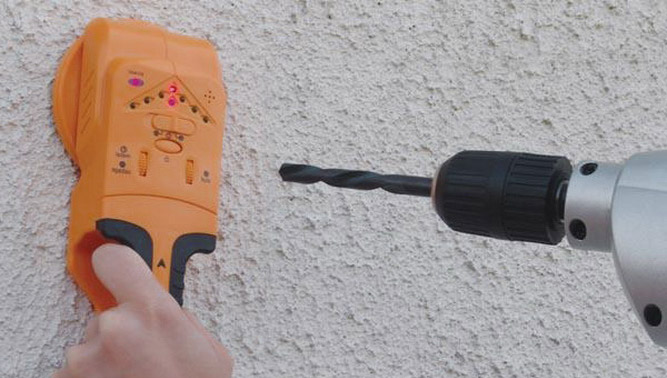
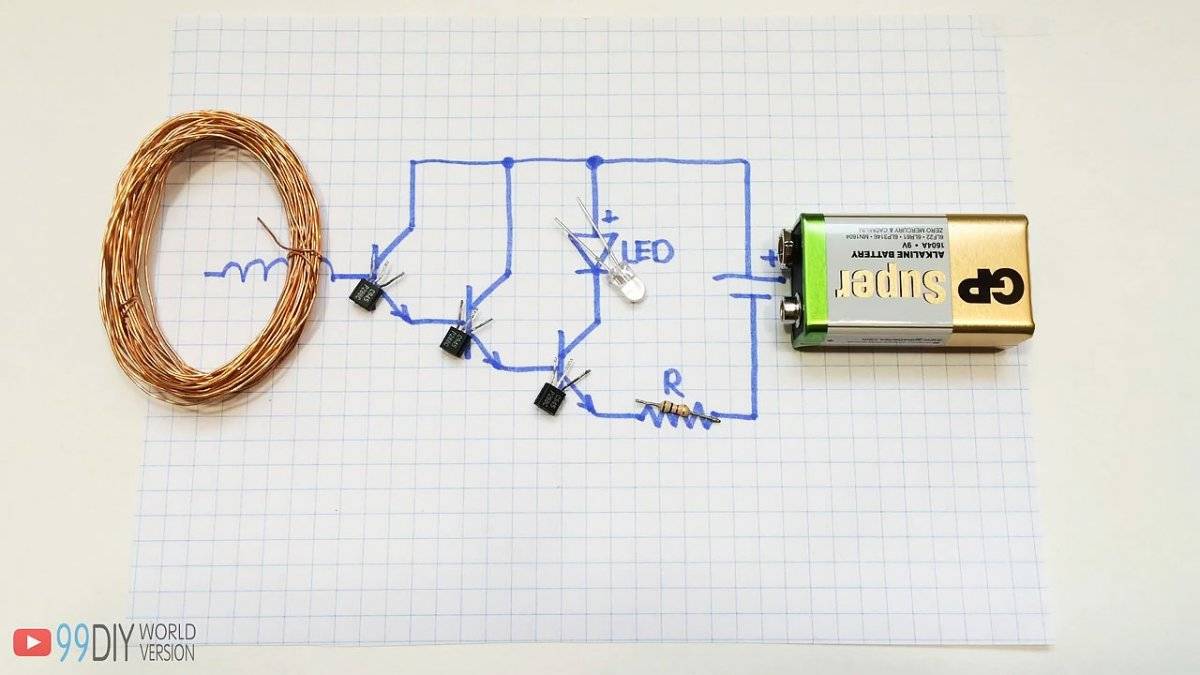
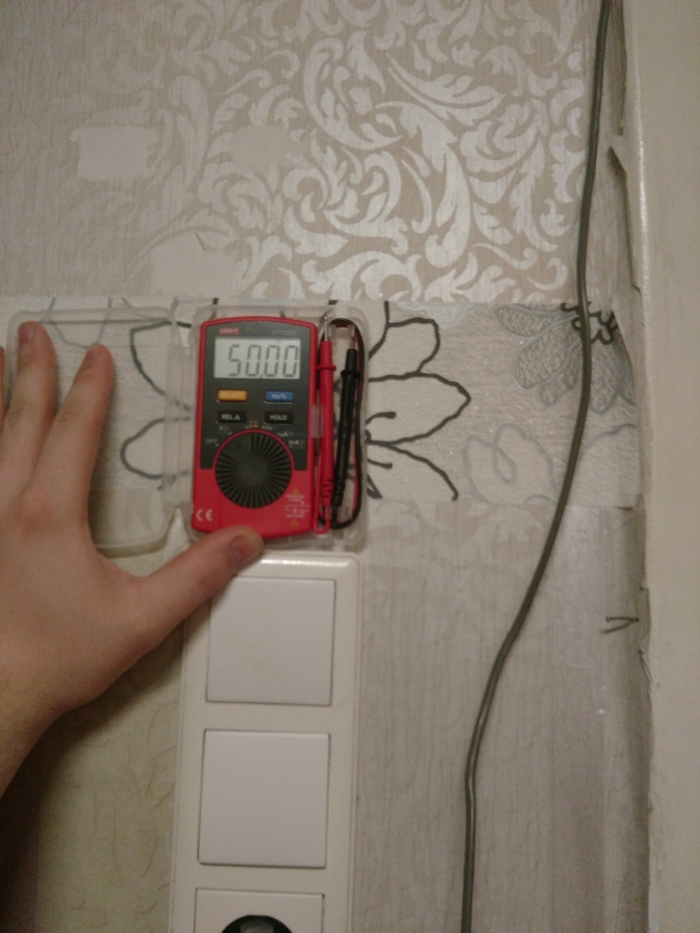
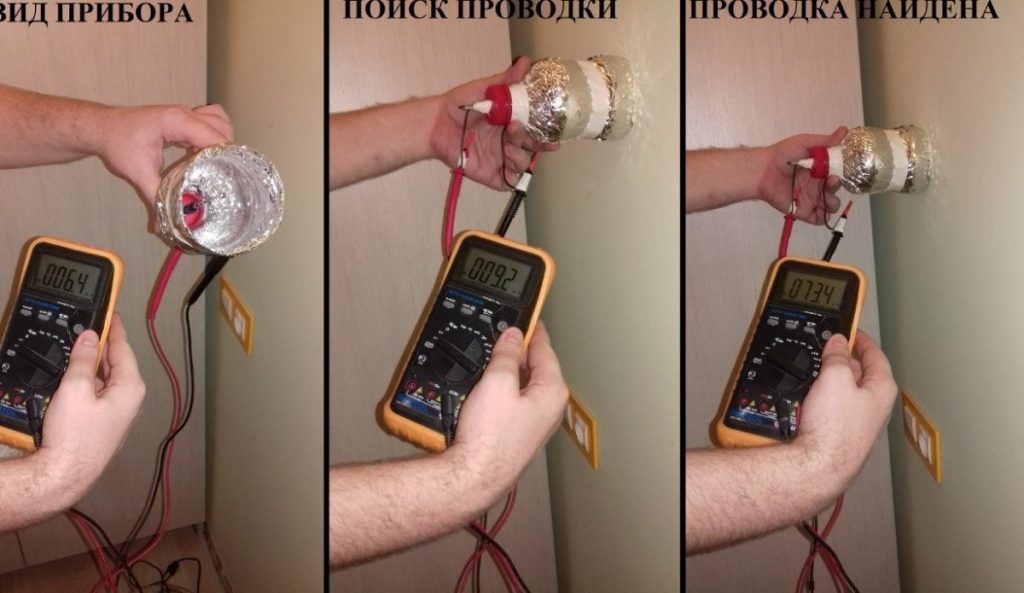
If you just need to hang TV on the wall or to install a kitchen (meaning hanging cabinets), it is not advisable to buy a detector. In this case, we recommend making a metal detector with your own hands. A simple homemade device will also show the approximate location of the wiring.
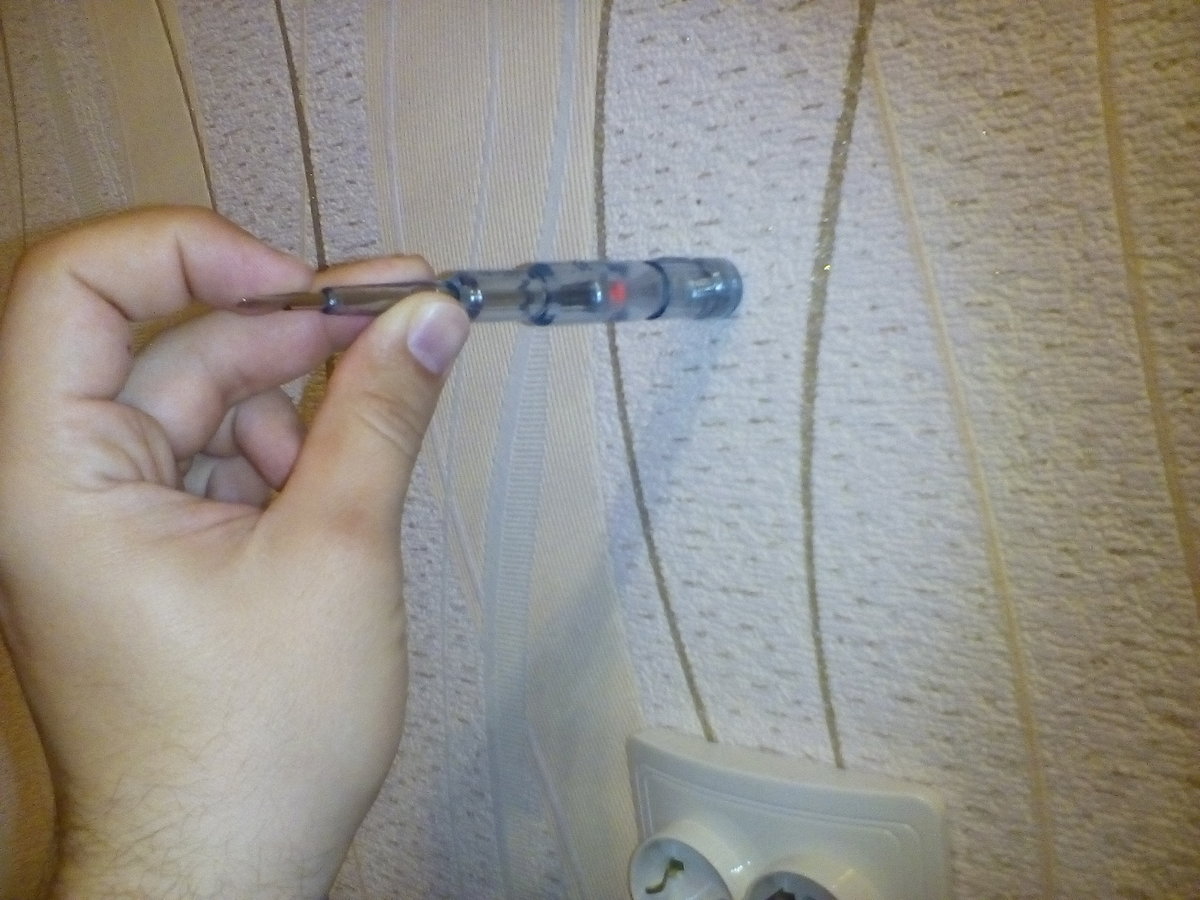
You can also try to use an indicator screwdriver to detect hidden wiring, but not the one with a neon lamp, but the one with batteries and an LED. If you take it by the sting and drive it with its back along the wall, it glows near the line, although this method is not very accurate. We also recommend tapping the wall around the proposed drilling site - this way there is a chance to “tap out” cavities and cable lines.
Types of detectors, their features
Now produced concealed wire detectors, the design of which affects the way wiring is detected, and also affects the conditions for detection.
One of the types of this instrument are electrostatic indicators.
They use sensors that are sensitive to an electrostatic field to detect wiring.
They are among the cheapest, although their detection accuracy is very good - up to 1 cm from the axis of the wire, that is, it is able to almost accurately detect the wire.
The depth of the wire, which is able to detect an electrostatic detector, reaches 60 mm, which is also quite good.
However, it can only detect wires that are energized, which is one of its drawbacks.
In addition, this device will not work if the wall is wet or covered with metal. But in general, it is quite suitable for finding wiring in an apartment.
The second type of detectors is electromagnetic.
In them sensors respond to electromagnetic field.
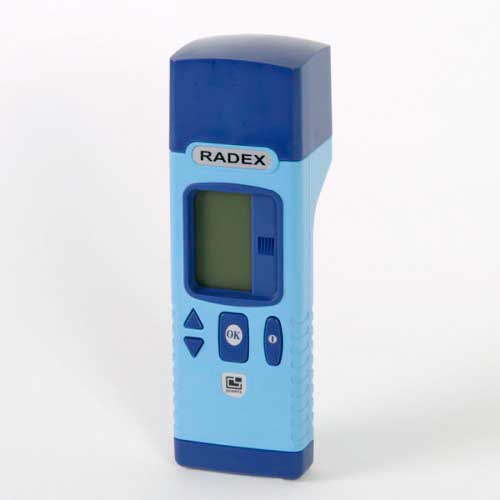
They are also quite accurate and detect wiring even at great depths.
He is not "afraid" of damp walls and their metal coating. But they, too, can only detect wiring that is powered.
At the same time, for its operation, it is necessary that the wires are loaded, therefore, in order to detect the wiring, a consumer with a power of at least 1 kW should be connected to it.
And the third kind.
Nothing more than ordinary metal detectors, but only very compact ones.

Structurally, it differs from the previous two.
The first two use sensors that respond to the field that creates around itself an electric current passing through the wiring.
The metal detector, on the other hand, consists of a coil that creates an electromagnetic field around itself.
If any metal object gets into this field, this will change the field of the device, to which it will react.
Metal detectors are able to detect metal hidden in the wall. Moreover, some high-tech devices are able to determine what metal he found - black or non-ferrous, to detect changes in the environment inside the wall (voids), even to indicate hidden wooden or plastic elements.



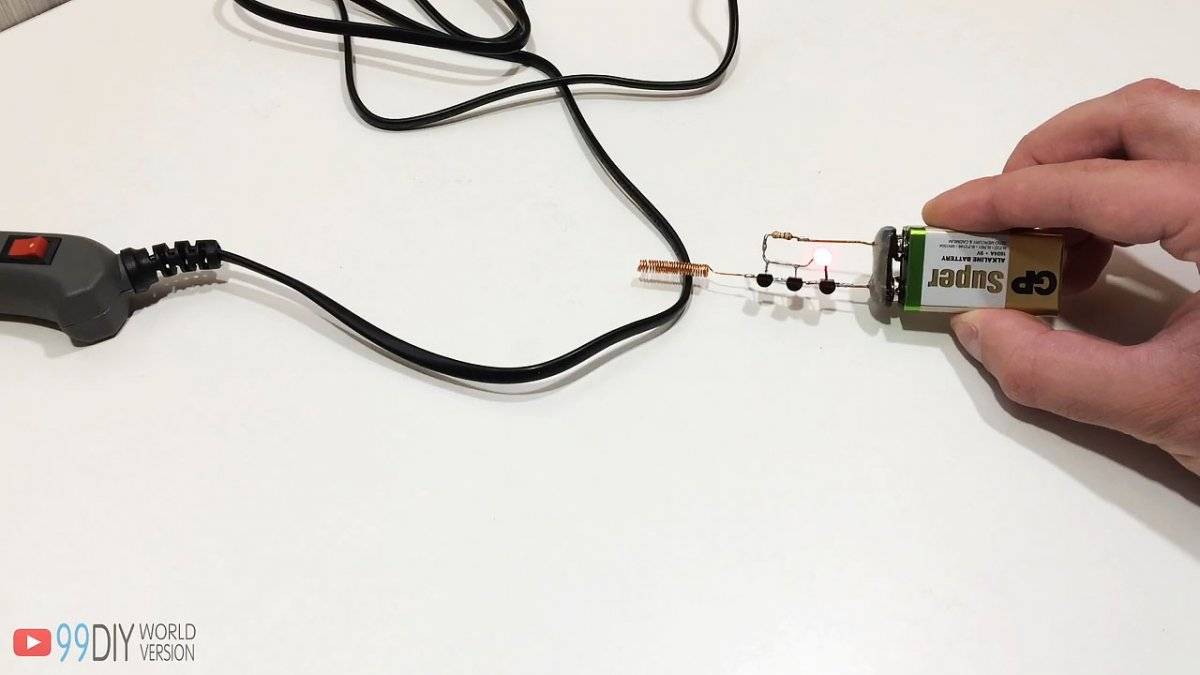
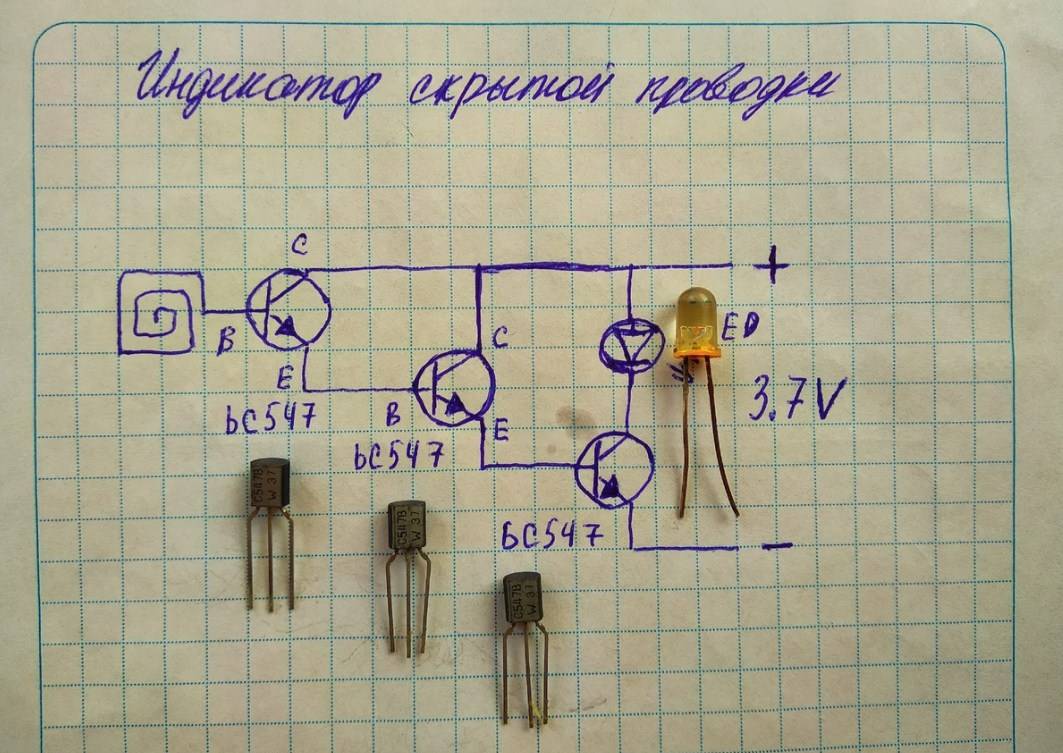


One of its main disadvantages is that it will not react to the voltage in the wiring, that is, it will show that there is metal inside, but whether it is wiring and whether voltage passes through it - no.
Each of these types has its drawbacks, and in order to eliminate them, manufacturers are increasingly producing combined devices that include all detection methods.
They are now the most common.
Visual search method
This method is extremely simple and especially convenient when redecoration is planned, which involves replacing the wallpaper.

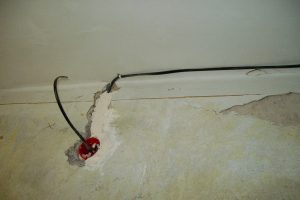
The top layer of plaster is partially removed. The fact is that during installation, the wiring is placed in strobes - long straight "streams" in the wall, made using special equipment.


You can detect them visually or tactilely - they are recesses or recesses in the wall. To expose the detected cables, a metal hammer is used, gently tapping it along the entire length of the strobe.

Naturally, this method is not suitable forwho wants to know the wiring plan just to hang a picture on the wall. About the better to look for wiring in the wall in such cases, we will discuss below.

Professional electrical wiring search devices
On sale you can find testers GVD-504A, BOSCH DMF 10 zoom, GVT-92, GVD-503, VP-440, produced by European manufacturers. They are usually used for discovery.hidden under the finish and analysis of its condition by professional electricians. From Chinese counterparts, they differ in build quality, compact and beautiful design. The principle of their work is approximately the same, but the cost is quite high, especially if you buy for a one-time use.
Water table of prices of the considered devices
Old-fashioned ways to find wires in the wall
The high price of special devices is one of the reasons why home craftsmen are interested in how to find a wire in a wall without a device and often prefer grandfather's proven methods for solving this problem more than once. After all, in the old days, when wiring was found in the wall, they did without devices, finding electrical networks under plaster and wallpaper using safe methods.
There are several such methods that allow you to find hidden wiring in the wall without special technical means, and each of them can provide a different degree of accuracy.
1. Visual determination of the location of the route. This method is suitable for brick and concrete walls, pasted over with wallpaper, which is removed during repairs, this makes it easy to find a strobe where wires are usually laid. Since the integrity of the surface is violated during gating, and even after embedding, the place where it was carried out remains noticeable. If the wall is plastered or covered with putty for wallpaper, then it is not possible to visually detect an electric wire in the wall.
2. With radio or receiver. The masters advise this method to amateurs who are interested in how to determine where the wiring passes in the wall. Moreover, for this purpose, the most common receiver tuned to the medium wave frequency will do.To pleasant music, it must be driven along the wall, watching for the appearance of crackles.
3. A microphone connected to the radio can become an alternative to the receiver. You should work with it, as with a radio receiver, the appearance of noise and crackling will mean the detection of hidden wiring.
It must be remembered that using a radio or a microphone, you can determine the location of the wiring in the wall with an error of 15–20 cm. Therefore, when using these devices, it is better to make a small indent to avoid electric shock and such a safety net will not be superfluous.
Video about detectors and methods for finding hidden wiring
Video: Search for hidden wiring (Woodpecker)
- Color marking of wires and cables
- LED strips and the reasons for their burnout
- The truth about LED lamps and their quality
- Installation height of sockets and switches, GOST and European standard
- Why is the RCD circuit breaker turned off?
- What is RCD and how does it work
- How to hang a chandelier correctly
- How to install and connect an internet outlet, TV outlet and telephone
- How to install and connect spotlights correctly
- How to install and connect a ceiling chandelier correctly
- How to install and connect a hidden-open wiring switch
- Electric stove connection diagram
- 3D apartment projects
- Apartment design
- Repair video
- All about repair
- doors
- Window
- Ceiling
- Walls
- Drywall
- Plaster and putty
- Furniture
- Other about repair
- Floor
- floor leveling
- Cement strainer
- Dry floor screed
- Semi-dry screed
- self-leveling floor
- All about plumbing
- Water pipes
- bath, shower
- Heating
- Faucets
- Toilet
- All about electrical
- Ventilation
- Wiring
- LED in everyday life
- Miscellaneous articles
- Repair of a country house
- building materials
- Tools
- Construction Materials
- construction calculators
- Question answer
- Top review
- News
Ceiling wiring - preparatory stage
Before you start installing electrical wiring on the ceiling, you need to solve the following tasks:
- determine the optimal laying method;
- count the number of components, purchase them;
- think over the points where the junction boxes will be located;
- draw up a wiring diagram, while all wires must be located strictly at an angle of 90 °. In the drawing, mark the locations of fixtures and other lighting elements;
- using a special table, select the brand and section of the cable.
Wiring can be outdoor or hidden.
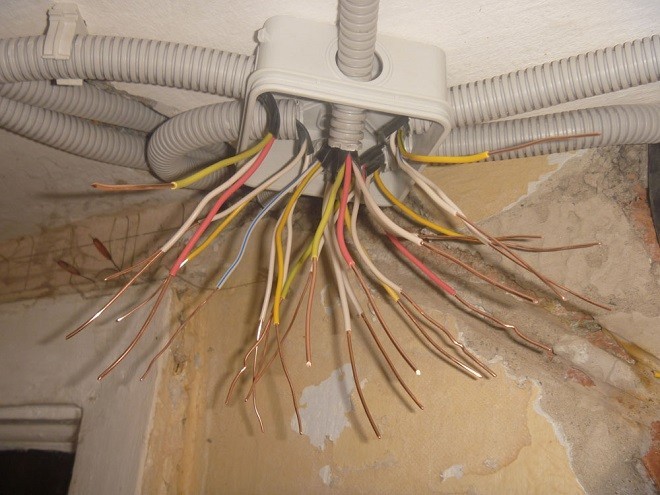
The main types of outdoor wiring include:
- installation of the cable on fireproof surfaces without the use of protective pipes (open);
- the cable is removed into special corrugated sleeves;
- use a metal corrugation;
- use steel or electrical pipes;
- laying is carried out in cable channels;
- wires are laid on special brackets and ceramic insulators.
Each type is selected depending on the type of ceiling base and decorative finishes.
Misconceptions and errors in detecting electrical wiring in the wall
The above describes how to find a wire in a wall using tools and improvised means. But there are allegedly “folk methods” for detecting hidden wiring, which will not help at all and take extra time:
Using a compass. There is a theory that using a compass you can find a cable. But this is a myth, since it is impossible to create the necessary magnetic induction at home for the compass to respond.




With an ordinary magnetic compass, they sometimes try to look for wiring
- The use of a magnet as a hidden wiring finder. There is a hypothesis about a magnet tied to a rope and its action: if you drive along the wall, then it will deviate in the place where the electric wires pass. And following the fluctuations, mark the alleged locations of the wires. But this method will not bring any benefit either.
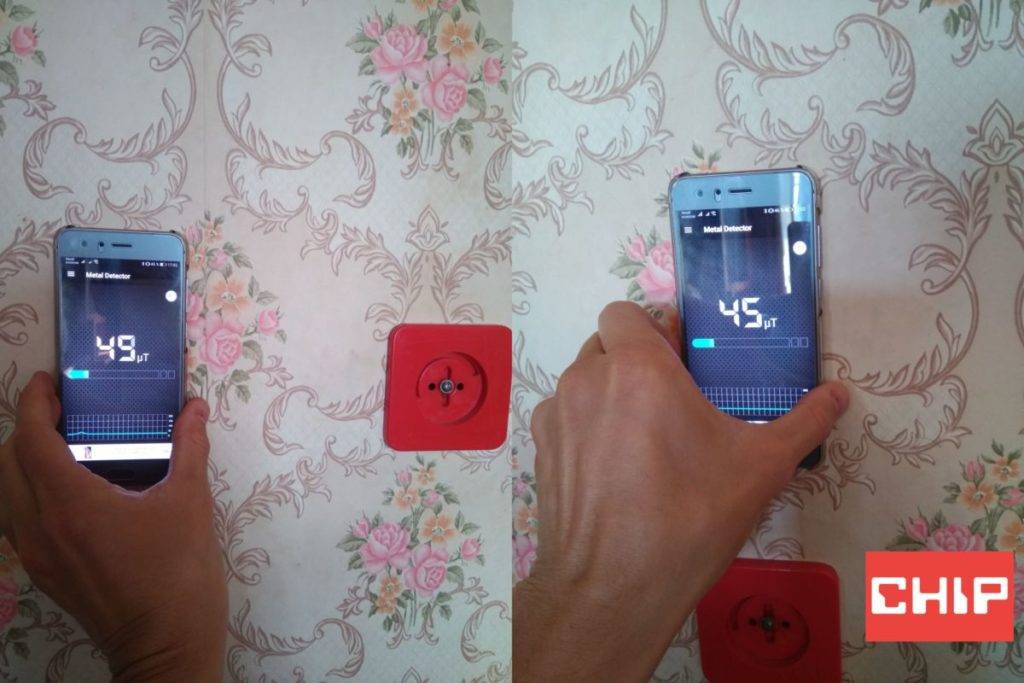
- Search for hidden wiring using a smartphone. A very dubious method, based on the installed special application, which supposedly can find the cable. Smartphones have a built-in magnetic sensor and, using the application, the phone turns into a metal detector. But such a device will react to everything that contains metal parts in the wall.
Budget ways to search for electrical wiring
Briefly about the main
Hidden wiring is safe and aesthetic, but in some cases you need to know where it goes. You can find out the location of the electrical wiring in several ways and you need to choose the one that fits exactly.
If a major overhaul is being done, then the easiest way to find strobes with wiring is simply by visually inspecting the wall. In other cases, specialized equipment is used, in particular, a route finder.
You can also look for hidden wiring with a radio, hearing aid, multimeter, metal detector, and in some cases a classic indicator screwdriver.
There are also "mythical" ways to search for hidden wiring - with a compass, magnet or using a smartphone application. In fact, they do not withstand any criticism, so do not waste your time on them.
In any case, don't count that this work can be easily done independently, without knowledge of the basics of electrical engineering. At best, this is a waste of time, and at worst, a wrong result that can lead to a short circuit and a fire in the house. Therefore, if you have doubts about your own abilities, it is better to turn to professionals.
Source
Best Options
In this section, we tried to collect the most successful models of hidden wiring detectors according to reviews. As usual, on the same model at times have opposing reviews. We tried to select those with positive reviews that significantly outnumber negative ones.

A hidden wiring indicator is needed even when it is required to beat a nail
Wiring detector Woodpecker
This device is produced in Ukraine, it costs relatively little $25-30. Received three times more positive ratings than negative ones. Can be used to locate live conductors. During operation, do not turn off the light, and it is desirable to load the network with something (for example, turn on the lamp). He successfully detects live wires, but if the conductor is laid in a plastic pipe, he does not see it.
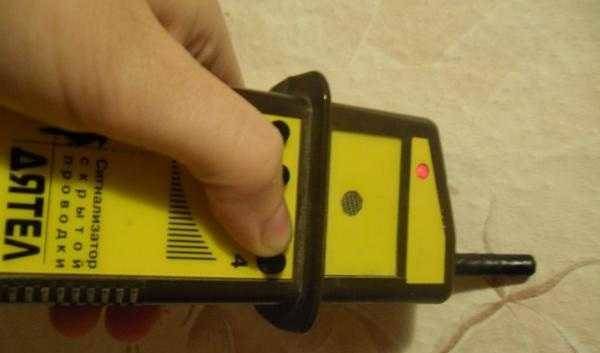
Woodpecker - hidden wiring detection device
The device for detecting hidden wiring Woodpecker has four sensitivity modes:
- determines the location of the conductor with an accuracy of 10 mm;
- up to 100 mm;
- up to 300 mm;
- up to 700 mm.
That is, you need to start working by turning on the 4th mode. When approaching the conductor, the LED starts flashing, a squeak is heard. The closer to the conductor, the faster the flashing, the louder the sound. Having found out the boundary of the most intense signals, we put a mark on the wall. The operation is repeated on the other side. Next, we switch the mode and start the search from the already marked boundaries.So, gradually, we find the location of the conductor with an accuracy of 1 cm in both directions.
Bosch DMF 10 Zoom
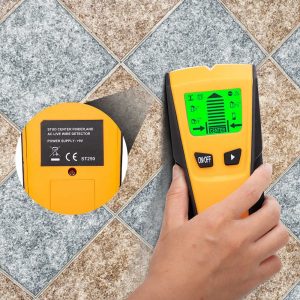
This device has a liquid crystal monitor and two modes of operation: detection of metal (magnetic and non-magnetic), wood and wiring. There is a Zoom mode to increase the sensitivity of the device. But turning it on leads to the fact that the detector begins to react not only to wiring, for example, but also to metal racks or reinforcement bars located nearby.
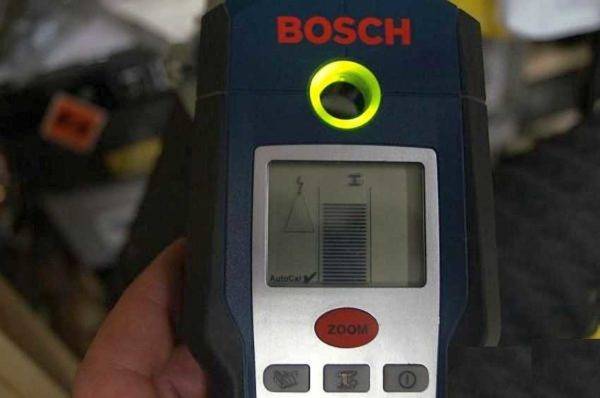
Bosh dmf 10 zoom
When approaching the desired object, the sound and light indication turn on. A scale is lit on the screen of the device, by which you can determine how close the device is to the conductor - the closer, the more filled stripes on the scale.
Also the display shows graphic images of the found materials:
- a crossed-out magnet means a non-magnetic metal (aluminum, for example);
- lightning with divisions - live wiring;
In order to be able to find objects normally, it is necessary to study the instruction manual. It describes many nuances that will allow you to correctly interpret various situations and not make mistakes when working.
Identify hidden wiring Bosch GMS-120
Another detector of the famous company. In addition to wiring and metals, he is looking for wood. There are three modes of operation:
- metals are magnetic and non-magnetic;
- wiring;
-
wood.
It has good reviews, differs from the previous version in the absence of the Zoom function. But in the middle of the case there is a hole through which you can mark on the wall the place where the conductor passes, or vice versa, a place free from all kinds of metal - for safe drilling in the wall, ceiling or floor.
A few practical recommendations can be drawn from all the reviews:
- if the device “rings” all over the wall, touch the wall with your other hand (remove pickups), it will work fine;
- if you don’t understand the indications, read the instructions, everything is clearly described there - in which cases to use which modes.
In general, with some experience, you can quite accurately determine where the wiring is located.
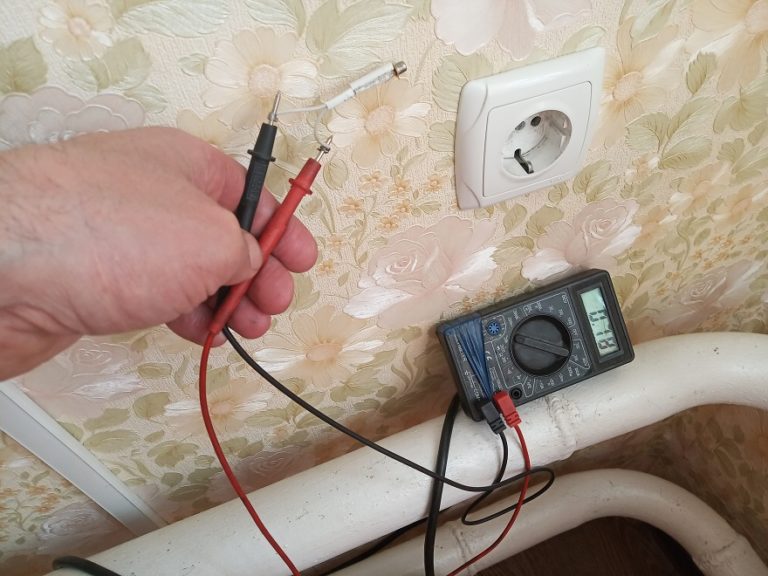




POSP 1 device
A domestic product is good because it allows you to not only detect live wiring. He can even find a broken wire in the wall. To do this, the included device must be led along the conductor. As long as the wire is intact, the light indication is on. In the place where the indicator goes out and there will be a break. To be sure, carry out a similar operation on the other side (you can repeat the test twice).
This device costs a little - $ 20-25, but its popularity is not very high, there were no reviews.
Acoustic and induction methods for finding the place of the break
The acoustic method for determining a break in hidden wiring assumes the presence of:
- A generator that is connected to the wire.
- Acoustic signaling device.
- Head phones (headphones).
During the search, the wiring is listened to using the listed elements. Upon reaching the place where the electrical wiring is broken, a sharp click will be heard in the headphones. To get the result, you need the generator to be tuned correctly, to the frequency that is needed.

The induction method of searching for a break in the wiring hidden in the wall involves connecting the generator to the power conductor.After setting the load level on the generator, testing is carried out similarly to the acoustic method, using headphones and a special signaling device. The difference is that along the entire length of the line up to the point of damage, a signal will be heard in the headphones, which will increase significantly when it reaches the break point and disappear behind it.
General recommendations
Drilling load-bearing walls and partitions made of concrete is not an easy task. To complete the intended work quickly and efficiently, you need to know some secrets and tricks. It also does not hurt to listen to the opinion of experienced craftsmen who advise:
- Use a drill bit for concrete for work with the same material, as well as with stone and ceramics. They are absolutely not suitable for metal and wood.
- Drill steel reinforcement that comes across in the wall only with a drill for metal, and then change it again to a drill for concrete.
- Break hard stones in concrete manually with a sledgehammer or using an old drill for this purpose.
- Monitor the condition of the nozzle when working with hard concrete. It should not overheat, so you need to take breaks in work every 10 minutes.
- To maintain the integrity of the wall on the reverse side, it is sometimes necessary to slow down.
- You can drill ceramic tiles with a concrete drill, but do not press hard on the drill so as not to split the finishing material.
Following these guidelines, you can drill a hole in a concrete wall without any problems. Thus, it will be possible to save not only time, but also your own strength.
Searching with an old radio
This method is perfect for those who do not like modern devices for finding wires in the wall, because it only requires an old radio that can be finely tuned to a frequency of 100 kHz.




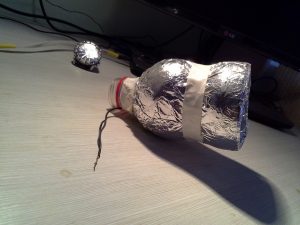
In order to determine the location of the cables in the wall, the room is first provided with complete silence. After that, turn on the device, and hold it as close as possible along the wall, without touching its surface.

A retractable antenna makes it a little easier to find wiring: its tip must be drawn along the wall in the place where the cable is supposed to be laid. When approaching this place, the device will start to emit a low crackle or background noise.


Finding a broken cable in the wall
To find out how to find a wire break in the wall, you should start by determining which conductor is broken - phase, zero. To do this, probe the contacts with a screwdriver: the phase is in place, therefore, zero is broken.
To search for damage to wiring in concrete walls, various indicators of hidden wiring are used. The device moves along the walls horizontally or vertically. When the wiring is found, the device emits a special signal, and if the sound stops, then a break is found.
This is how a special device works - a locator, which quickly and accurately finds a break in hidden wiring. The principle of its work consists in probing the electrical network under voltage and without it. If the cable is de-energized, then a generator is connected to it, which supplies the network with a voltage of the desired frequency, to which, in turn, a special sensor, configured to determine the electric field, reacts. When the sensor is over a live wire, a signal sounds. There will be no voltage and electric field at the place where the wire is broken, and the signal will begin to fade.

Professional locator MS6812-R
Finding a break in a cable line in a wall is a difficult and time-consuming task. But to save time, it is better to use modern equipment that will find the problem within a few minutes.
Alternative Methods
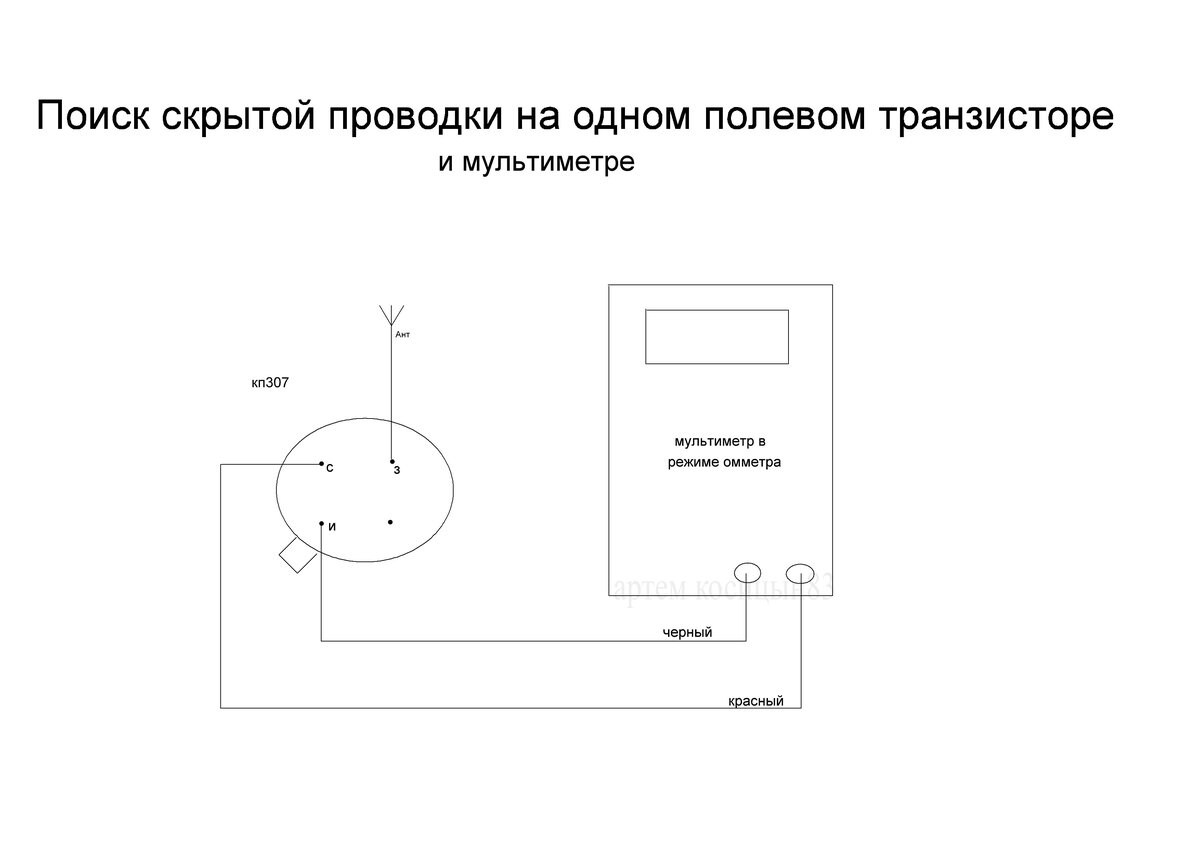
In addition to professional and specialized devices for searching for electrical wiring lines, improvised tools can be used. Their functionality is determined by the assembly scheme and the model class.
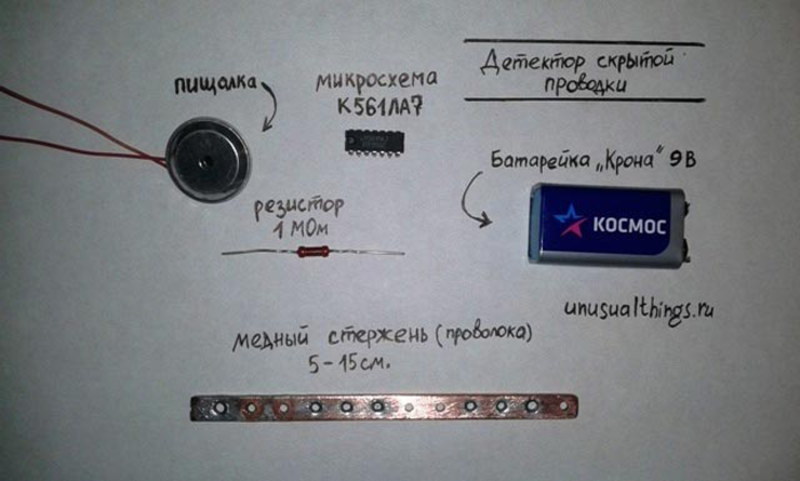
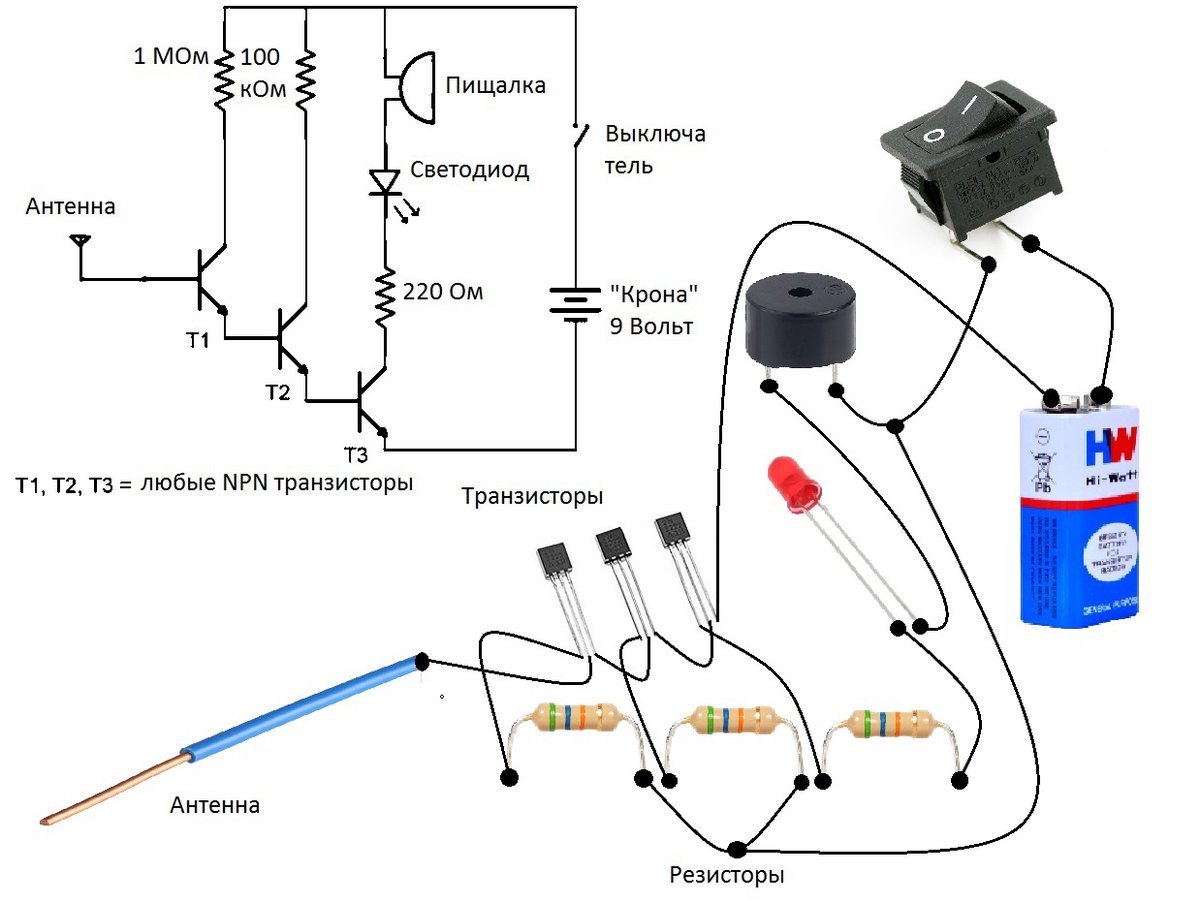
In most cases, an ordinary indicator screwdriver is enough for basic tasks, but with simple skills, you can make a wire finder with good sensitivity yourself. To do this, prepare such components:
- Phone speaker (from a stationary device).
- Arrow ohmmeter.
- Field-effect transistor.
- Power supply.
By the way, currently for the manufacture of wire finders you can use normal smartphone running iOS or Android. All that is needed to transform the device into a highly efficient wire finder is a phone with a special program like "Metall Detector" (or any other equivalent), as well as a small magnetic sensor.
A smartphone equipped with such an element becomes a full-fledged metal detector that can determine the location of cable cores and other metal products. Another useful tool for finding wiring in the wall can be a regular radio. To do this, you need to set the frequency to 100 kHz and start driving the receiver near the wall. As you get closer to the wiring, the noise will become very intense.
Also, to solve this problem, you can use an old cassette player or tape recorder, regular headphones, as well as a reel-to-reel microphone. Such devices are able to respond to any electromagnetic interference, but are characterized by low sensitivity. However, the basic working properties are quite enough to find a place for laying a cable, therefore, for isolated cases, such alternative means are quite relevant.
When might you need wiring location information?
During repairs, drilling of walls is often required, and this is where hidden wiring becomes a problem, especially if the cables have been laid for a long time and there is simply no plan for electrifying the room.
In order not to damage the wiring during work, you should know its location.
In general, such information may be required if:
- Re-planning of the electrification of the premises (changing the location of sockets, switches, etc.);
- Redevelopment of the premises itself (making new openings - door, window);
- Problems with wiring (break or short circuit);
- Improving the interior by hanging various appliances and furniture on the walls.
In the event of a replacement, it is not necessary to know the location of the wiring, since the old one will still be removed, so the house network is de-energized, and then the wires are simply pulled out of the strobes (they are usually plastered, and it is not difficult to pull them out), after which the circuit will be perfectly visible.
And then it’s up to the owner to decide whether to install a new cable into old strobes or cut new ones.
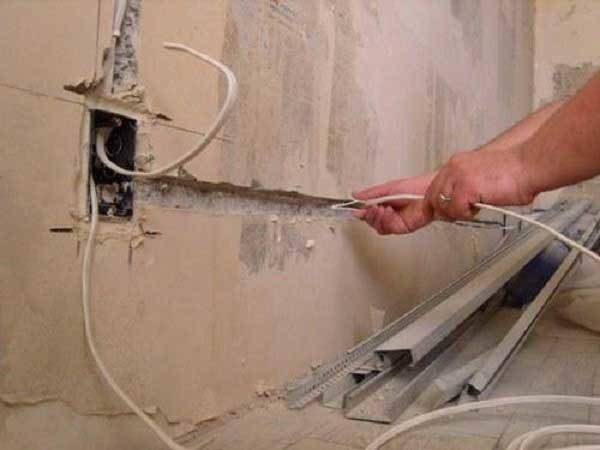
Information about the location of the wiring in the walls is most often required when carrying out drilling work.
Next, consider what can be done to determine where the cables run in the wall if there is no room layout.
Every homeowner should know the location of the power grid route
In most cases, the owners resort to finding the layout of electrical communications in the house when problems have already arisen.
In the meantime, this should be considered in other cases as well:
Before home remodeling
During the restructuring of the premises, with changes in its configuration, it is necessary to take into account the location of the electrical network so as not to de-energize the apartment or house. When installing lamps, hanging pictures, shelves or stretch ceilings
When installing lamps, hanging pictures, shelves or stretch ceilings
When carrying out any wall work, you need to know where the wiring lies so as not to damage it with a nail or drill it.
Often, wiring damage occurs during the installation of suspended ceilings. The corners for which the ceiling is attached are attached to the wall with self-tapping screws, and often these fasteners fall on the line of electrical wires.


After buying a home
Each owner must have a diagram of the location of the electrical circuit. Therefore, it should be drawn up immediately after the acquisition of a new premises. The plan should indicate the routes of electrical communications and the location of switches, sockets and junction boxes. In the future, the scheme will come in handy when arranging furniture and during repairs.



