
- What to choose for the sewerage of a country house?
- Cesspool
- VOC
- Sealed sump
- septic tank
- Varieties
- What to do if there is an odor
- Fundamentals of the basics
- Scheme and depth of laying sewerage in a private house
- How to choose a septic tank for autonomous sewage
- Characteristics of the septic tank
- The lineup
- Model LOS-5
- Model LOS-5M
- Model LOS-8
- Model LOS-8A
- Principle of operation
- 1) Calculation of the volume and performance of the modern sewerage system
- What is aeration and sludge pumping for?
- Installation Requirements
- Basic rules for the operation of septic tanks VOC
- Types of sewerage
- Outdoor sewerage system
- How to choose VOC based on soil factors?
What to choose for the sewerage of a country house?
There are several ways to create an autonomous sewer:
Cesspool
Cesspool, that is, a wooden house in the backyard according to an old project. Not the best way, suitable only for giving, where you spend your weekends.
VOC
Local treatment plant (VOC). If you intend to live permanently in a country house, VOC is exactly what you need. storage capacity.
Sealed sump
Sealed sump in which drains accumulate. To clean the containers, you need to periodically call the vacuum trucks. This option is suitable for a small family. In the country, this version of the toilet is also quite acceptable, especially if you come only for the weekend.
septic tank
Effluent is cleaned mechanically and enters the filtration well. Such autonomous sewerage requires maintenance, but not as often as with storage tanks. And once every 5 years it is necessary to pump out solid fractions.
Varieties
Sewage treatment systems can be made in different structural forms. Among them are distinguished:
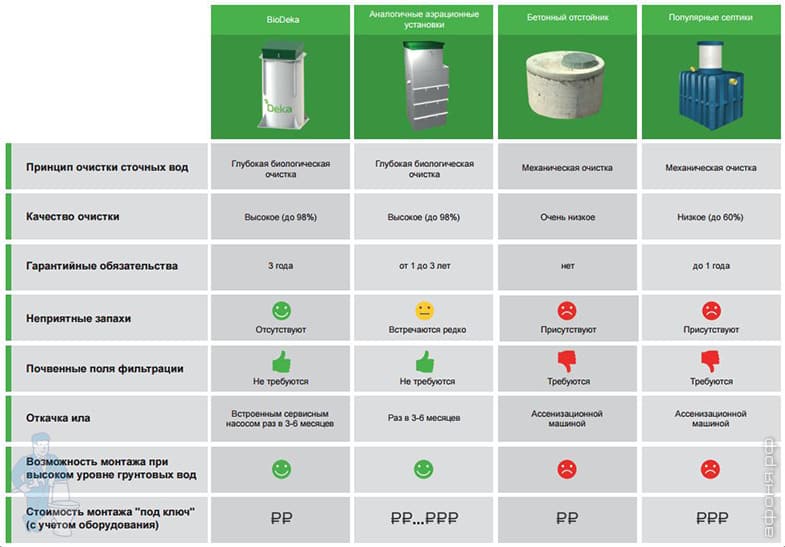
- cesspool. The simplest option, which is a container with a lid. As the tank fills, the contents are pumped out and taken out. It has a lot of disadvantages - a constant smell near the pit, the need for cleaning and disposal of waste, you have to monitor the amount of drains. There is a more modern variety - storage capacity. It is a container with a sealed lid. There is no fundamental difference from the cesspool, except for the reduction of odors;
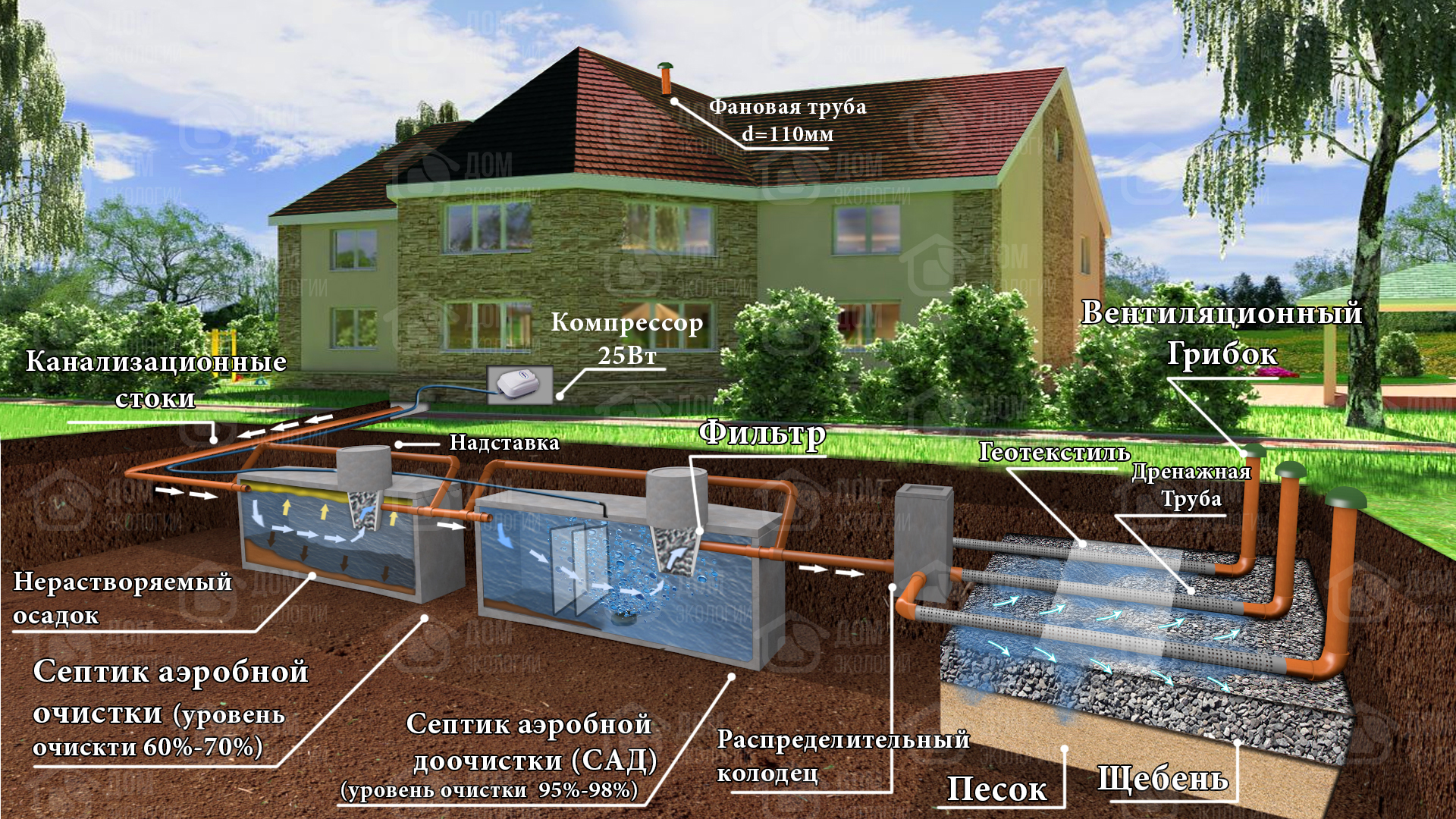
- septic tank. This is a facility that produces partial treatment and disposal of wastewater. The principle of operation is based on settling the liquid. The local sewage septic tank is a container divided into several sections. The first runoff comes from home. Solid organic waste gradually settles to the bottom, and partially clarified water is in the upper layers. As it fills, it enters the second section through the overflow device, where the settling process continues. From the last section, the effluents enter the drainage well, or the filtration field. The receiving section is cleaned much less frequently, the bad smell from the septic tank is practically absent;
- local treatment plant (VOC). This is an expensive, but effective option that can fully utilize household waste.VOC sewage is a complex structure that uses special biological components in its work. These are bacteria that feed on organic matter. Similar methods are used in conventional septic tanks, but in VOCs this technique is implemented with maximum efficiency.
The most popular type is the septic tank. Most users associate the term "local sewage treatment plant" with this particular device. The simplicity and high efficiency of septic tanks has led to their widespread distribution. On sale there are ready-made kits with certain parameters. However, most users prefer to build the system and treatment facilities themselves. It is much cheaper, and the results often exceed the effect of factory models.
What to do if there is an odor
Periodic occurrence of an unpleasant odor during the operation of a septic tank is normal, but a constant fetid atmosphere is a clear sign of a malfunction. The main reason is the death of a colony of bacteria and the suspension of processing due to the appearance of a high concentration of harmful chemicals in the septic tank. In most cases, the work of the septic tank is restored in 2-3 weeks on its own, you can speed up the process by introducing additional bacteria.
Do not forget about the importance of installing a fan riser for the removal of secondary gases, this also applies to drainage wells and filtration fields.
Fundamentals of the basics
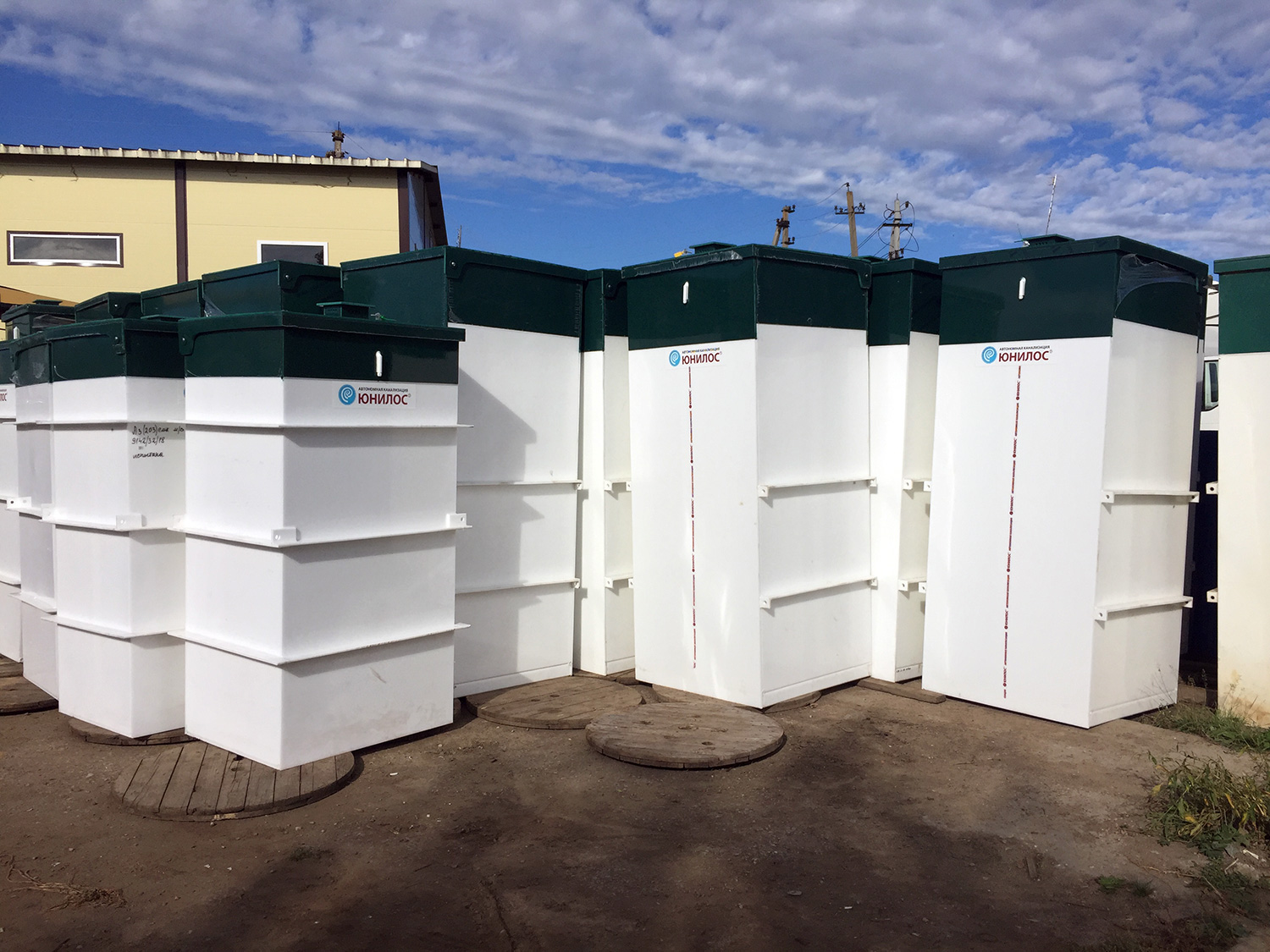
The model range of Unilos and Bioksi trademarks includes many solutions, among which it will not be a problem to choose a station in exact accordance with the operating conditions.Different in performance, size, power, all options from the range of these brands provide excellent cleaning quality: at least 95% of pollutants are removed from the drain. At the outlet to the reinforced concrete well or to the relief, the local sewer system supplies odorless ghostly water and impurities - such a liquid is suitable for watering green spaces on the site. Before thinking about how to choose a VOC, you should analyze the following:
- number of regular and occasional users to measure performance;
- soil conditions to determine the depth of laying the inlet and outlet pipes, which is optimal for a particular site;
- the level of groundwater in order to be able to determine the method of diverting treated wastewater and decide whether it is necessary to anchor the installation in the ground.
Scheme and depth of laying sewerage in a private house
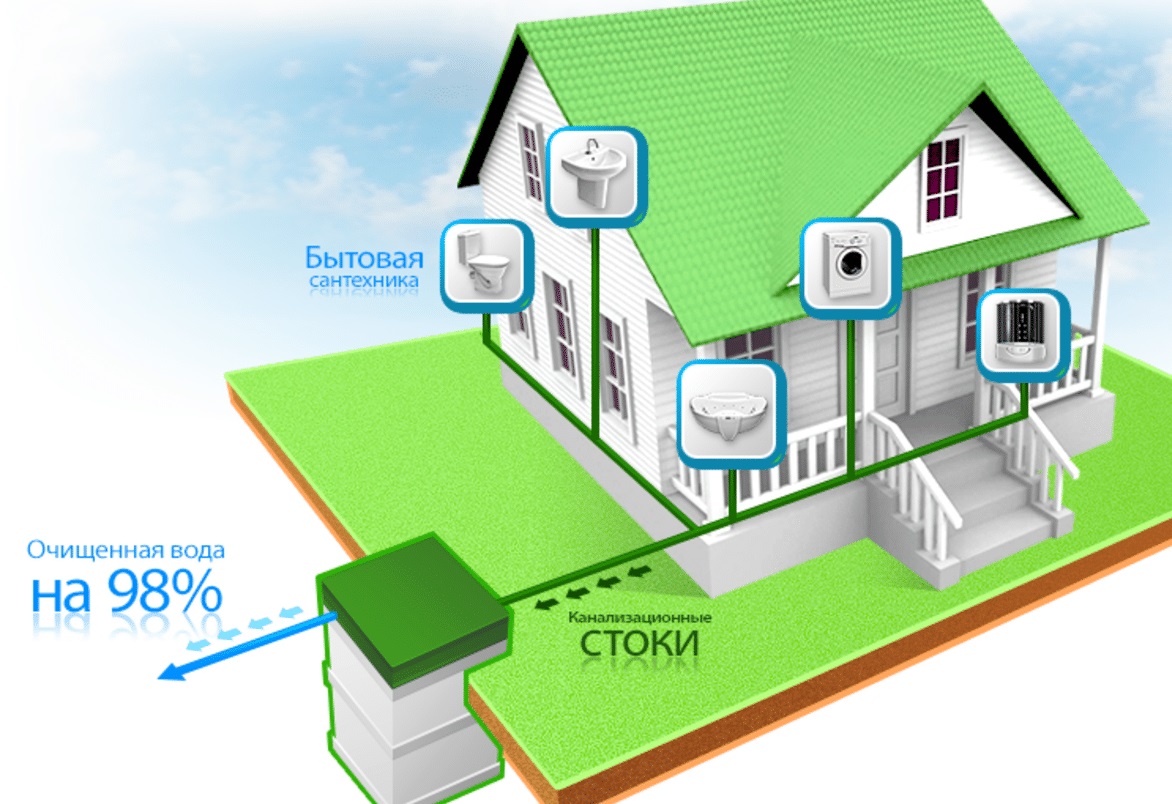
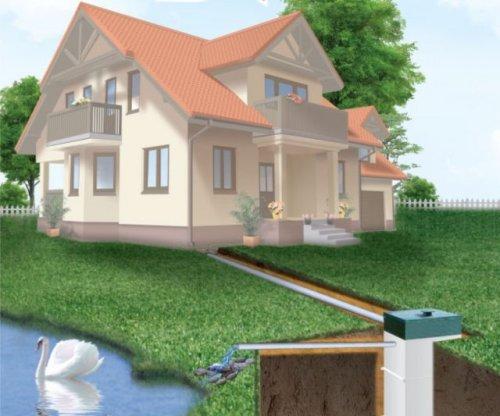
The sewerage system for a private house includes:
- Pipeline inside the house or internal sewerage network.
- External piping to a purification or collection plant. External sewerage must be laid at a slope for gravity flow
- Accumulation or treatment facilities (reservoir, septic tank, filtration fields).
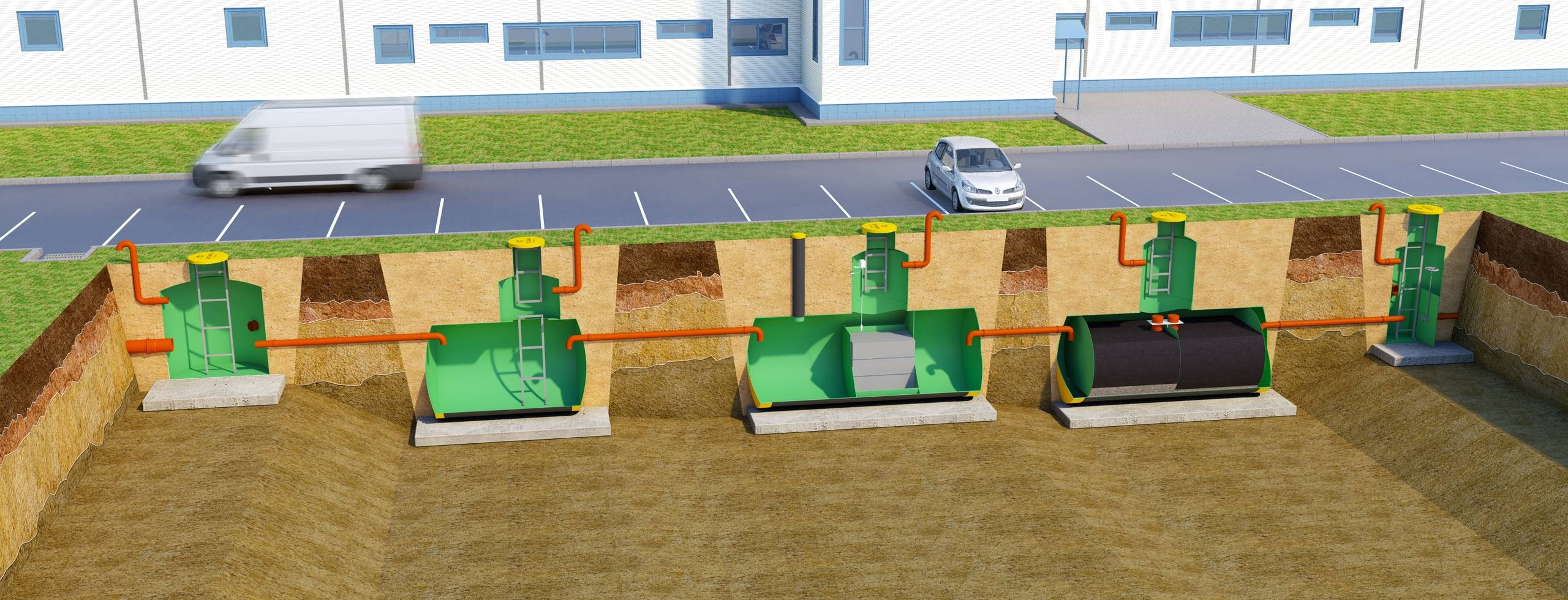
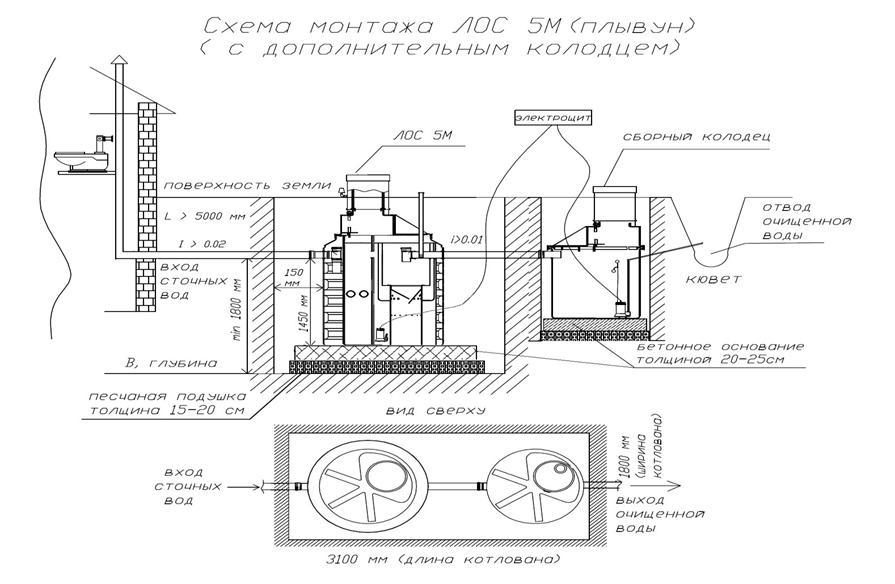
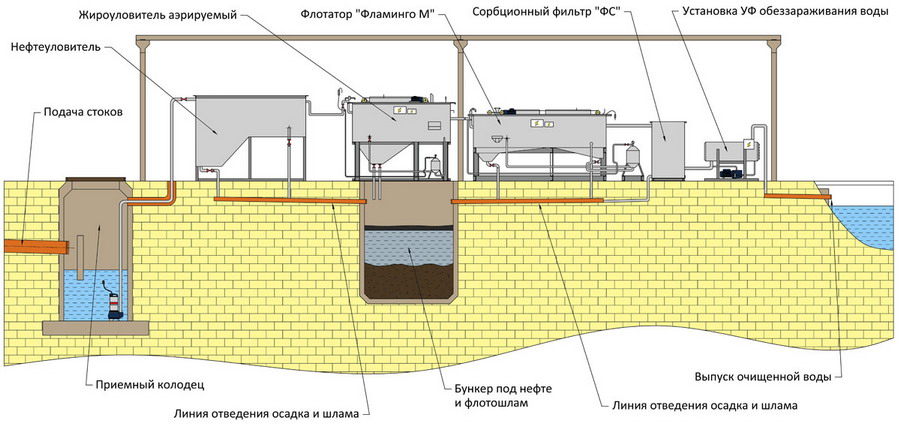
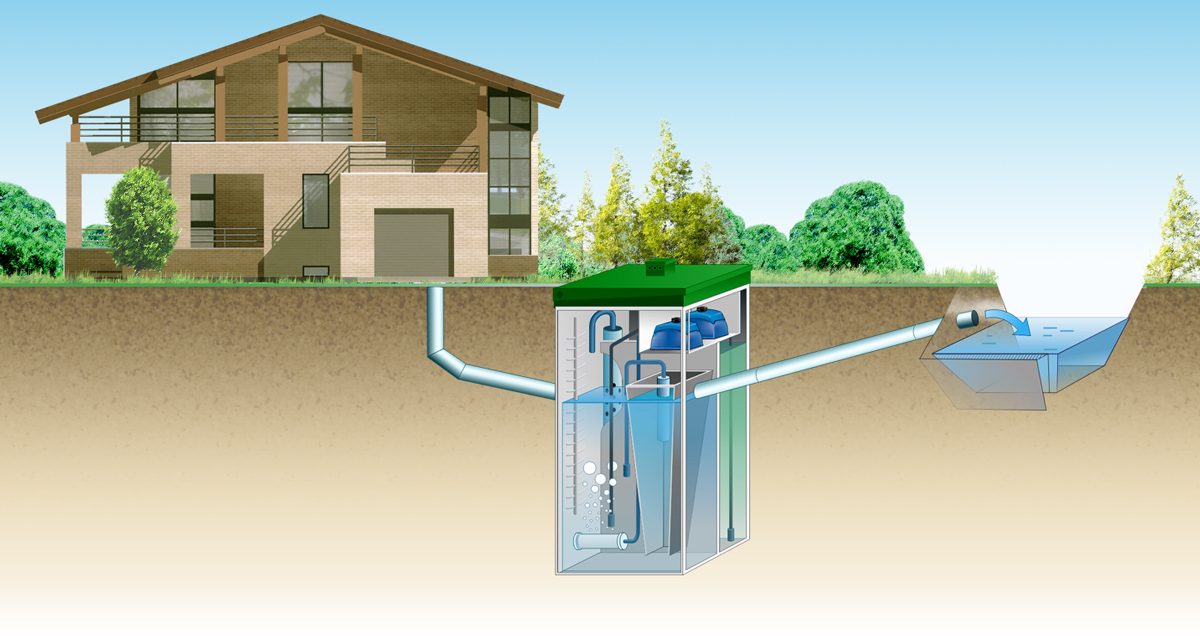
The device and the depth of laying sewerage in a private house is clearly demonstrated by the diagram below:
Since a cesspool, a local treatment plant and a sealed sump are more suitable for the sewerage of a country house, I propose to consider the further arrangement and principle of operation of a sewerage system for a private house using a septic tank as an example.
How to choose a septic tank for autonomous sewage
Before the direct arrangement of the local sewer system, it is necessary to correctly select the main equipment - a septic tank.It will depend on this whether the communication will cope with the amount of waste that will be discharged into it during operation.
First of all, the septic tank is selected based on how many people will regularly use the sewer system. It depends on such a parameter as daily productivity. For one person, the average water consumption rate is taken, which corresponds to a figure of 200 liters per day. That is, if 5 people permanently live in the house, then the septic tank must have time to process at least one cubic meter of wastewater per day (5 × 200 = 1000 liters, or 1 m3).
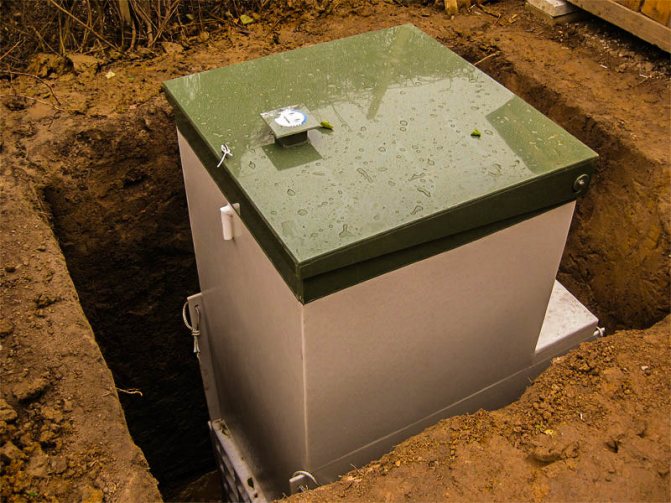
Some manufacturers make it easier for users to choose by indicating directly in the name of the septic tank model the number of people that it can serve. Others are sure to provide the appropriate parameters in the detailed description for each modification of their equipment.
The second important parameter for choosing an active septic tank is the maximum amount of waste that it can accept at a time. The fact is that modern treatment plants are made very compact, plus they are divided into functional compartments, and therefore, if the selection is incorrect, they may simply not cope with the volume of wastewater discharged into them. This parameter is always calculated by specialists individually, based on the equipment available in the house connected to the sewer.




Characteristics of the septic tank
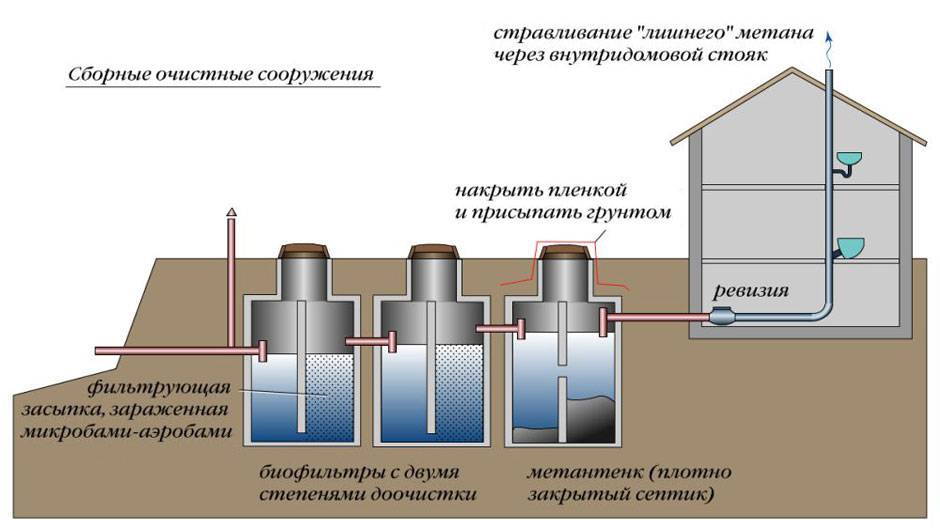
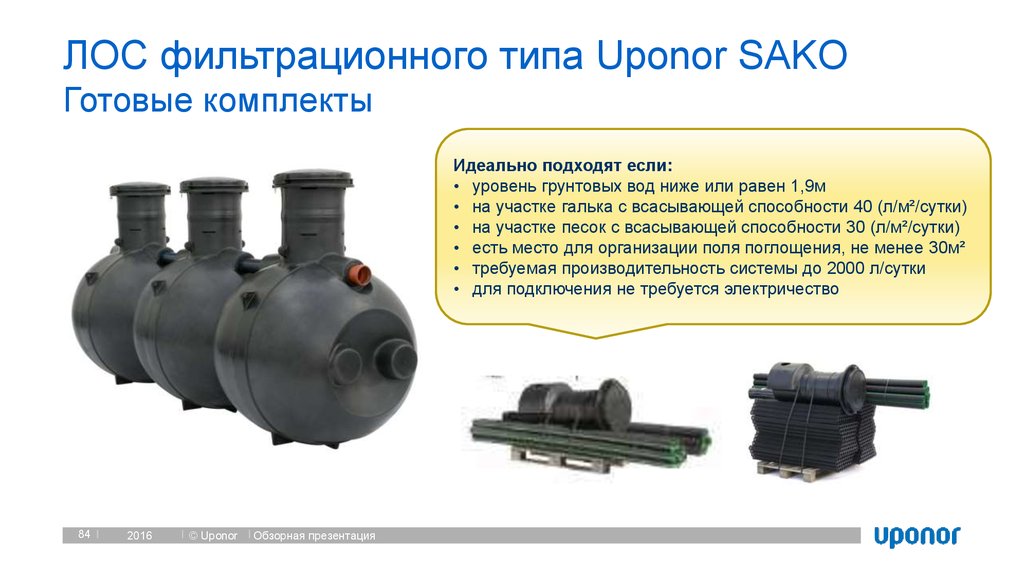
The design of the septic tank is quite simple. It may consist of one or more containers connected to each other by means of branch pipes. They are designed for the gradual cleaning of sewer waste. The more containers in the septic tank, the better the process.In a three-tank design, the first one performs the primary cleaning. Due to natural processes, heavy and light fractions are separated. In the second tank, chemical compounds and organic matter decompose. The third tank provides clarification of drains. As a result, sediment in the form of sludge remains at the bottom of the tanks. It is removed during the cleaning process of the septic tank. The clarified liquid with undissolved substances is discharged to the drainage fields. There is another variant of such a system - a bioseptic. It is characterized by a higher level of wastewater treatment and less sludge. All this is due to bacterial preparations, they are periodically added to the treatment tanks. Thus, the biological treatment of effluents entering the tanks is carried out. To remove undissolved sediment, sewage equipment is used. The regularity of cleaning the septic tank from silt depends on the frequency of its use and the number of people living in the house. View the catalog of septic tanks.
Advantages:
- the septic tank is not afraid of overflows;
- the design can be used even after a long period of inactivity;
- the septic tank does not need power supply, so it will work even in its absence;
- relatively low construction cost.
Flaws:
- for the arrangement of a septic tank and a drainage system, a relatively large area is required;
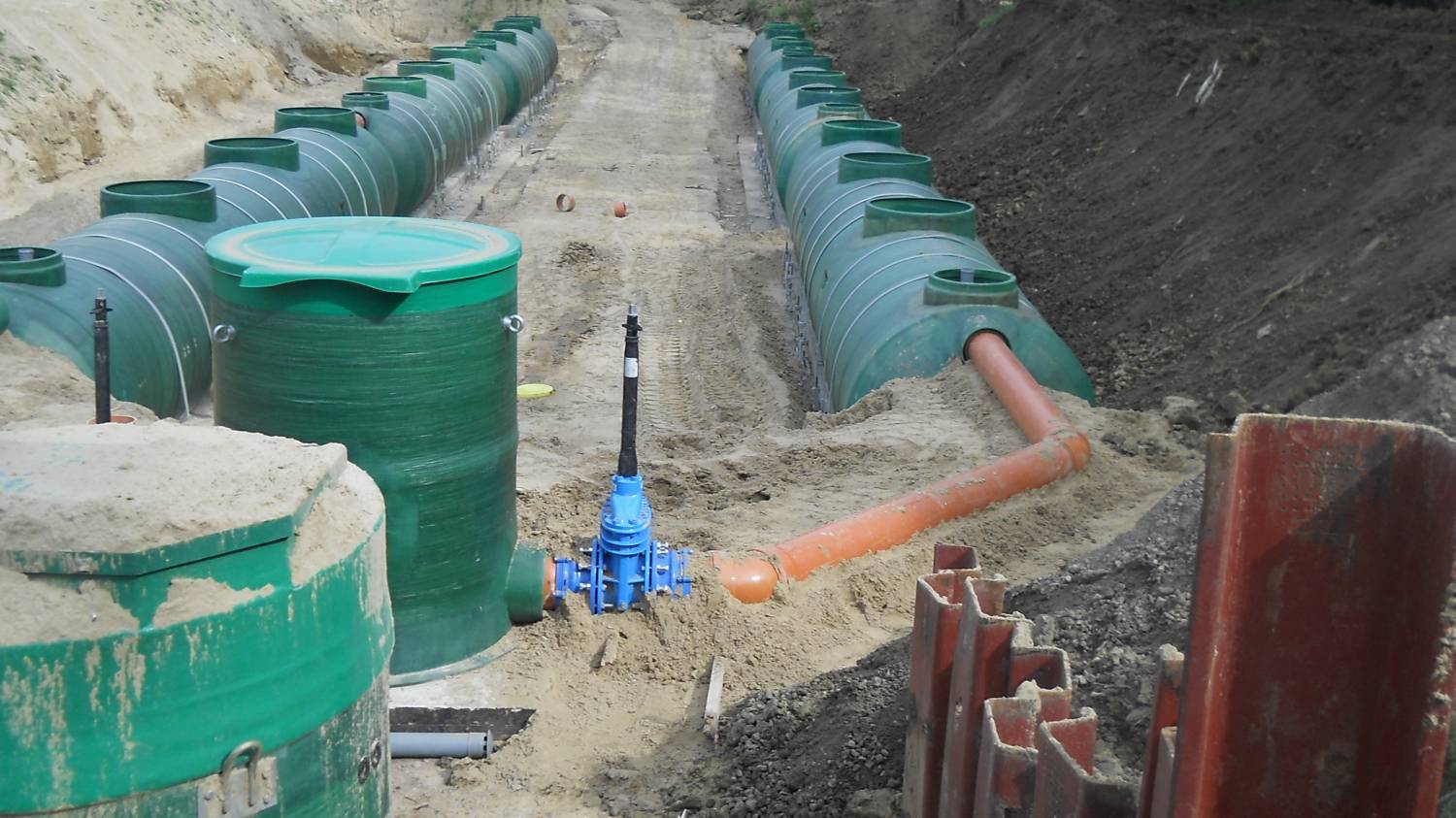
- installation of a treatment structure is laborious and expensive;
- for maintenance of a septic tank, it is necessary to provide an entrance for equipment;
- regular cleaning of the structure tanks and drainage system is required.

The lineup
The manufacturing company was not aimed at a particular variety of assortment: the series of VOC septic tanks is represented by only four positions.
Characteristics of the model range of treatment facilities
Model LOS-5
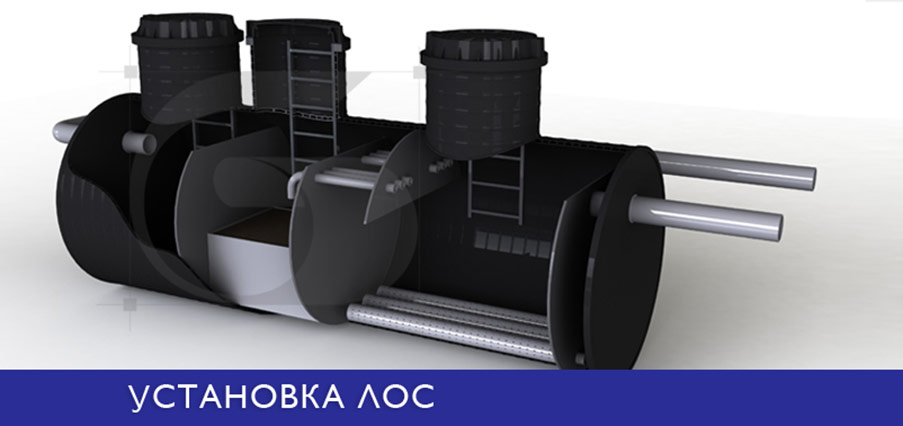
This is a design that consists of two or three parts. This includes the sump and air tank mentioned above, but in some cases there is also a third tank - a distribution well. It is installed in cases where, for one reason or another, it is impossible to dump liquid into the nearby soil. There is a pump in the well, which removes the treated effluents to the place of their disposal forcibly. The distributor is only an addition to the septic tank, and therefore is sold separately from it.
The height of the model is 227.5 cm, weight - 260 kg. With a diameter of 152.5 cm, its useful volume reaches 4.5 thousand liters, and the daily output is 1.2 thousand liters.
The average market cost of a LOS-5 septic tank is approximately 80 thousand rubles.
Note that despite all the obvious advantages, such a model is quite massive, which is why it is not always possible to install it in small areas. Therefore, Aquatech engineers developed a more compact version of it.
Septic tank LOS-5
Model LOS-5M
To reduce the dimensions, a modified version of the LOS-5 septic tank was created. In it, the settling chamber and the aeration tank were placed in one structure. This made it possible to reduce the installation area by more than a third.
It is important that with almost the same technical parameters, the cost of LOS-5M is significantly lower than its predecessor - about 65 thousand
Septic tank LOS-5M
Other differences:
- weight decreased to 230 kg;
- usable volume - 3 thousand liters;
- volley drop here is lowered to 250.
In general, the operation of the model is similar to that of the LOS-5 described above, but, despite the deterioration of some parameters, LOS-5M has a number of advantages.
- Compactness - no more than 3.2 m² of free space is required for installation.
- The cost has decreased by almost 20% when compared with the previous model.
- The septic tank is easy to maintain and operate.
- A special inspection window is provided for pumping out excess sludge.
Thanks to all this, LOS-5M has gained considerable popularity in the arrangement of an autonomous sewer system in small suburban areas.
Model LOS-8
If four to eight people live in a private house, then it is necessary to install a more productive LOS-8 septic tank. Its main advantage is that, with the dimensions and weight of the fifth VOC, it demonstrates extremely high performance - up to 2 thousand liters per day. This became possible due to the increase in the productivity of the aerotank. The useful volume of the septic tank is 4.5 thousand liters, and the pump with which it is equipped has a capacity of 0.5 kilowatts per hour.





After passing all the treatment cycles, wastewater is used for household needs; this is acceptable. But if you plan to dump water into a pond or lake where there are fish, then more thorough filtration will be needed.
The average cost of the model is 95 thousand rubles.
Septic tank LOS-8
Model LOS-8A
This septic tank cleans sewage so effectively that the liquid after all cycles can be dumped immediately into water bodies. A similar result is achieved due to double anaerobic treatment: the device has two chambers, moreover, biopurification takes place in both at once.
Septic tank LOS-8A
Below are the main stages of operation of the LOS-8A model.
Stage 1. Effluent enters the first tank, where the drainage pump crushes them. In parallel with this, the bacteria in the sludge dissolve all organic elements.
Further, the liquid passes into the next chamber through overflow channels.
Stage 2. The volume of the aeration tank in this case is 1.5 cubic meters. Here, the effluent is further cleaned, and the remaining coarse particles are broken when passing through overflows. The formation of an active sludge layer in combination with a backup biological treatment is the secret of the effectiveness of such a septic tank.
Stage 3. At this stage, the water is chlorinated at the outlet of the collector. For this, there is a special compartment in which a special chlorinating capsule is placed.
With regards to the application, this model is mainly set to service several private houses at once. Excellent cleaning efficiency and small dimensions are the decisive factors when choosing a LOS-8A septic tank.
Characteristics of purified water
Principle of operation
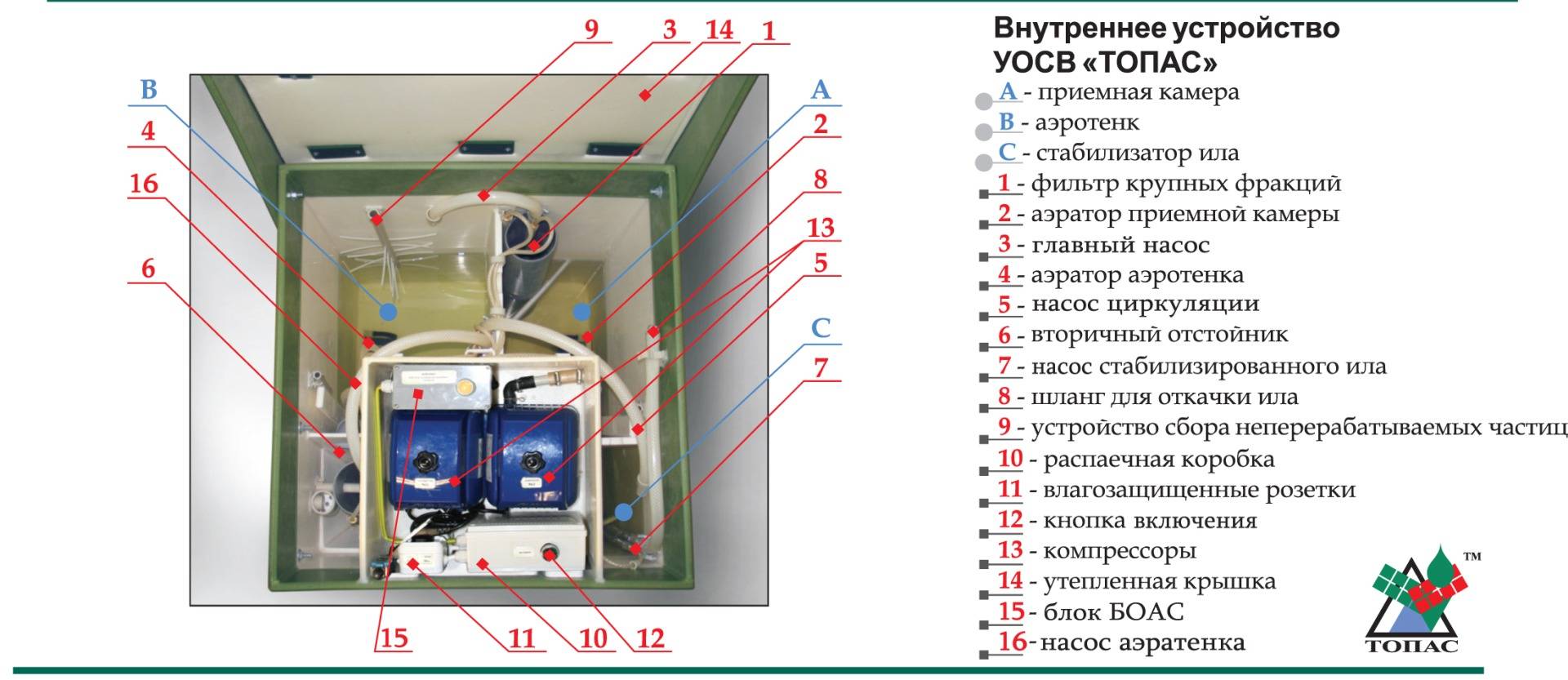
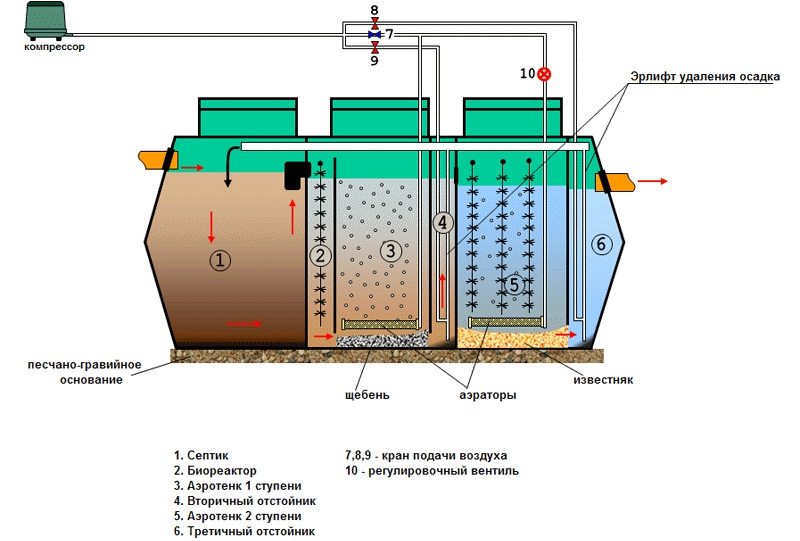
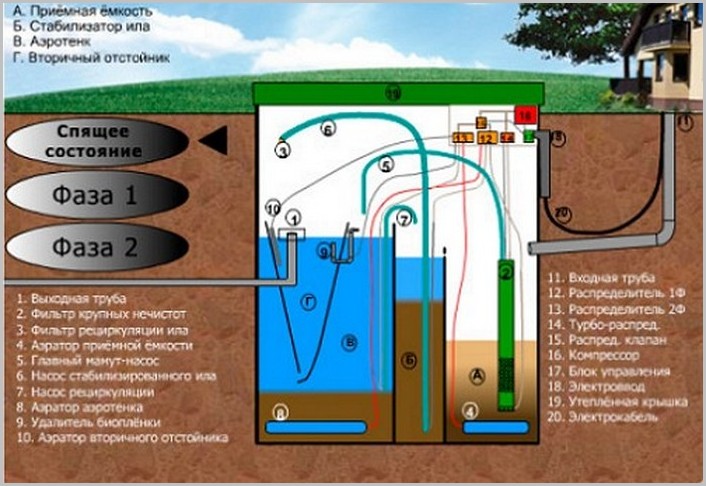
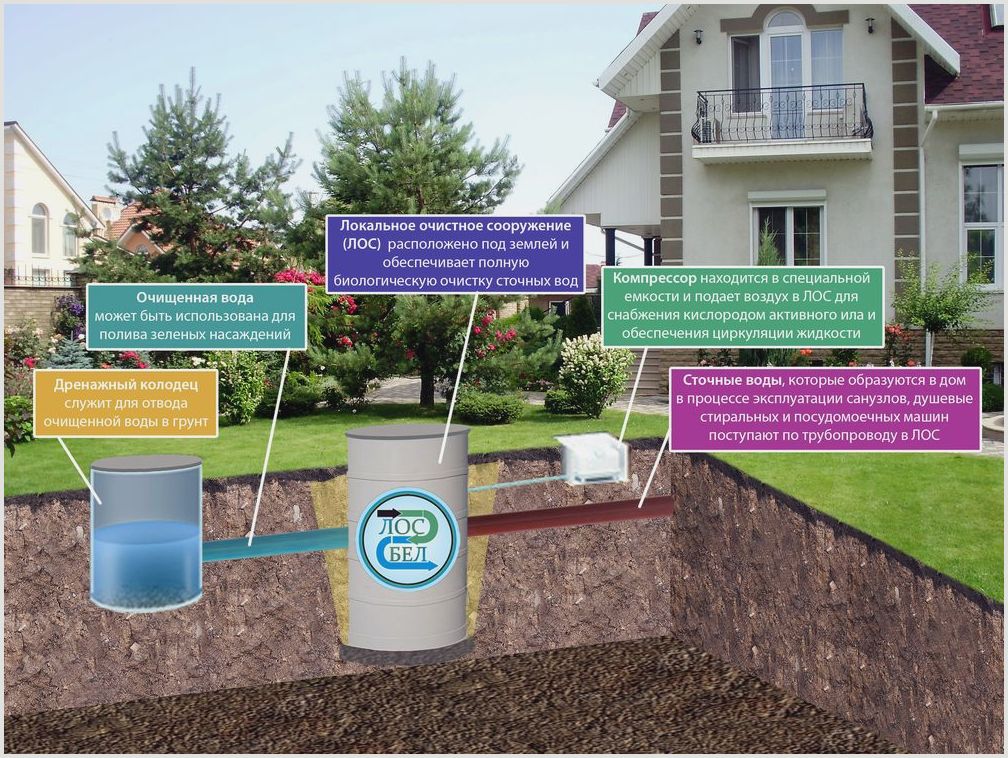
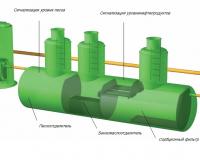
The scheme of operation of a septic tank practically does not differ from other similar devices. With the help of the inlet pipe, sewage from the sewer enters the primary filtration compartment. There, through the use of filters and an aerator, the drains are cleaned of solid waste that accumulates in the lower part of the well. The aerator saturates moisture with oxygen for more effective work of bacteria and provides getting rid of unpleasant smells.
After the compressor pumps water to the next section - the aeration tank. Here the separation of liquid waste, sludge and moisture is carried out. The sludge is screened to the bottom of the compartment, liquid effluents are cleaned with a finer filter. A notable feature of the sludge pumping system is that it is transported to the primary compartment. This allows you to clean the septic tank only in the first chamber.
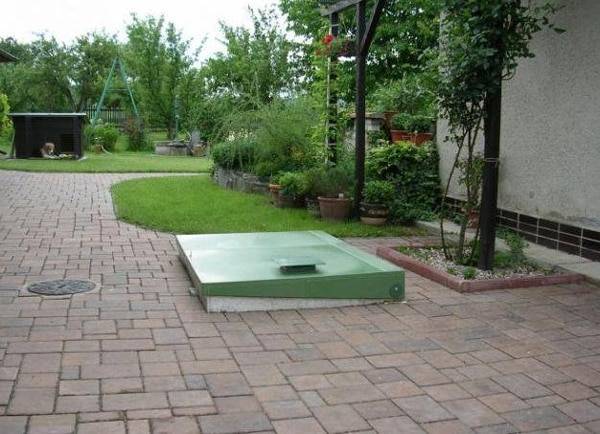 Photo - poplar in landscape design
After the aeration tank, the water is pumped to the secondary sump, where its cleaning is completed. After that, the liquid can be used for irrigation, as technical or in other needs.




According to the manufacturer's recommendations, maintenance of the Poplar septic tank is optional (but only on condition that the operating instructions are followed):
-
The septic tank can be connected with your own hands, without the involvement of specialists. But it should be located on a sand cushion that protects the device and the case from the effects of external factors (temperature changes, earth pressure, etc.). The minimum backfill level on each side is 250 mm, while the height of the cover above the ground should not exceed 200 mm;
- The manufacturing company has a very strict requirement for the use of a treatment station: the system cannot be used to treat wastewater containing polyethylene and other films, aggressive chemicals and metal particles. This may affect the quality of filters and compressors;
- Before the first start, the container is filled with clean water to provide the right environment for the life of bacteria.
Owner reviews Poplar Eco-Grand positive. Most owners of the system are inclined to believe that this septic tank is the best combination of price and quality.
 Photo - poplar in full size
The entire system is cleaned twice a year - after the winter and summer seasons. Regardless of the operation of the sump and compressors, it is recommended at least once a month to inspect the working mechanisms, filters and check them for the presence of litter.
Related video:
1) Calculation of the volume and performance of the modern sewerage system
1.1 Used as autonomous sewers or local sewers, treatment facilities must be installed only after an accurate calculation of data regarding the number of people living in the house at the same time, as well as the number and volume of plumbing fixtures. The following factors must be taken into account: the average number of people living in a daily period, a possible increase in the volume of flow due to the appearance of guests to calculate the reserve. 1.2 The volume of runoff sometimes changes as the composition of the wastewater changes. To do this, you should understand the issues regarding separate drainage. Waste water is divided into gray water and black water. Black waters assume the presence of faecal effluents, which make up approximately 5 percent of the total wastewater composition in joint drainage. Gray water is the collection of wastewater from all kinds of plumbing fixtures, such as a bathtub, shower or sink. 1.3 The seasonality of residence is an important factor that must be taken into account due to the fact that the full operation of the treatment plant depends on the continuous supply of sewage. Runoff waters contain organic substances necessary for the biological treatment process through the work of microorganisms. Uneven flow can disrupt the work of such organisms, which will lead to a decrease in the quality of the treatment process. 1.4 The size of the third chamber of the septic tank must be determined in advance so that peak loads do not disrupt the complete cleaning process and do not wash out incompletely purified water along with some of the beneficial microorganisms.
Calculation of daily flow volumes and the required volumes of treatment equipment for local or autonomous sewage.The volume of wastewater per day dictates the volume of treatment equipment. The calculation should be made on the basis of regulatory documents, in this case it is SNiP 2.04.03-85 Sewerage. External networks and structures. The volume of water consumption per inhabitant is calculated on the basis of SNiP 2.04.01-85 Internal water supply and sewerage of buildings (Appendix 3 of the norms of water consumption by consumers) The volume of water consumption per inhabitant is calculated based on the data given in SNiP 2.04.01-85 Internal plumbing and sewerage of buildings. An average rate of 200 liters per person is taken as an average value and is used in the calculation. This norm includes all plumbing fixtures that a person can use. The calculation of the required volumes of treatment equipment is carried out in strict accordance with the norms of SNiP 2.04.01-85 Sewerage. External networks and structures. The daily inflow of wastewater determines the required volume of a septic tank for a country house: if the volume of wastewater does not exceed 5 cubic meters per day, then the volume of the septic tank should be 15 cubic meters (that is, three times more). With a volume of wastewater exceeding 5 cubic meters per day, the volume of the septic tank must be two and a half times the volume of the drain. These calculations are valid for at least one use of the cleaning equipment. The volume of the septic tank can be reduced by 15-20 percent only if the average wastewater temperature in winter exceeds 10 degrees, and the rate per person is more than 150 liters per day.
For example: five people live in a country house at the same time, therefore, 5 people. * 200 l = 1000 l/day. Therefore, the volume of treatment equipment should be 3000 liters (1000*3=3000).Such a tripling is necessary for the cleaning process, since the work of beneficial microorganisms is carried out for 3 days. Calculations of the volume of facilities for cleaning at industrial enterprises, campsites, hotels, hostels are carried out on the basis of the standards specified in SNiP 2.04.01-85.
What is aeration and sludge pumping for?
The presence of the so-called aerotank in the septic tank allows you to expand the set of biological types of microorganisms by including aerobic bacteria in the work. They allow you to speed up the process of cleaning wastewater, but for this their habitat must be saturated with oxygen. But one interesting incident is connected with aerobic bacteria: at a certain moment, their population becomes so numerous that food supplies are exhausted and the colony simply dies out. To restart the operation of the aeration tank, a part of the activated sludge from the primary settling tank is added to it. Also, the sludge pumping system allows you to remove the spent mineral residue and accumulate it in one container, thereby facilitating the cleaning of the septic tank itself.
Installation Requirements
Further work of the treatment plant depends mainly on whether the installation was correctly carried out. Here are the manufacturer's guidelines for installation:
- it is desirable to install the device at the lowest point of your site;
- you need to take into account the free passage of a sewage truck;
- the distance from the installation site to the nearest road must be at least 6 m;
- if the length of the outer pipe exceeds 15 m, then it is necessary to think about how to equip an additional revision well;
- the septic tank should be located at least 5 m from the house and 3 m from the nearest fruit plant;
- the distance to the nearest well or well should be 45 m.
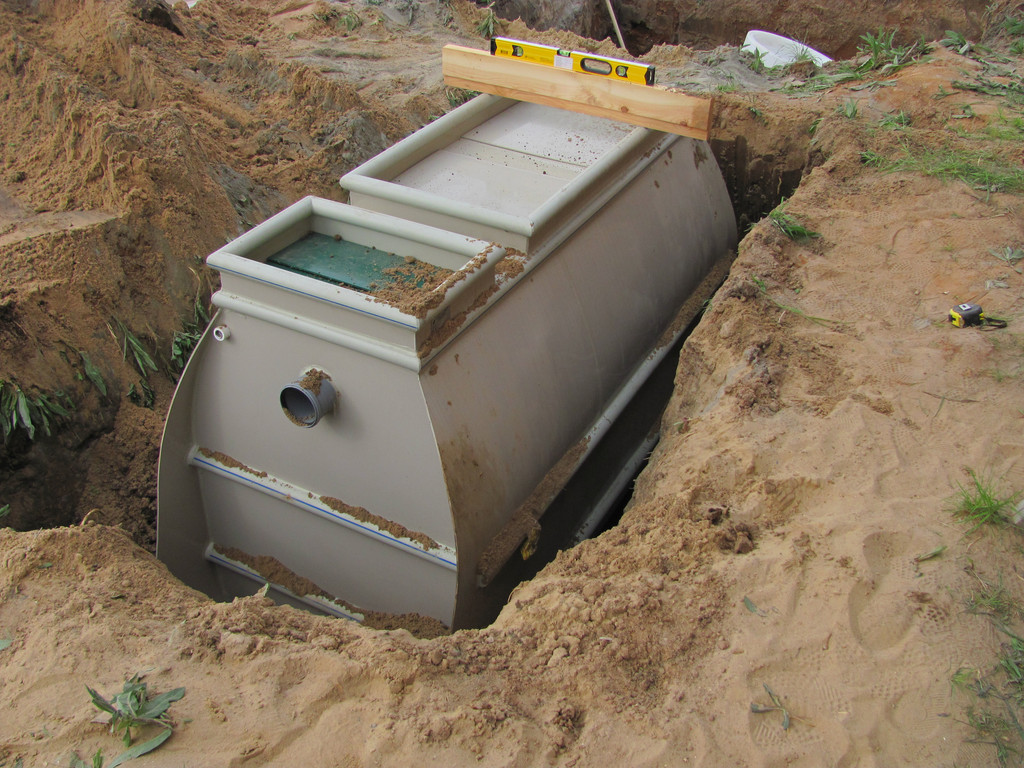
With the choice of location, everything is more or less clear, now you can start earthworks. The depth, as well as the shape of the pit for the septic tank, depends not only on the features of the chosen model, but also on the type of soil. For example, if the groundwater level is high, then it is necessary to equip the anchoring system of the device so that the septic tank is not squeezed up under the pressure of rising water in the spring. Also at this stage, a 25-cm sand cushion is laid and reinforcement is mounted.
The next step is to install a septic tank. Due to the fact that VOC cannot be installed horizontally, it is desirable that the installation is carried out under the guidance of an experienced specialist who is able to quickly respond to changing circumstances and make the right decisions.
This is very important for the further operation of the treatment plant.
Installation of a VOC septic tank
Then sewer pipes are installed. They need to be installed under a certain slope towards the septic tank (approximately 2 ° for each linear meter of the line). If the slope is greater, then the drains will move too quickly.
At the end of the installation work, you can proceed to the summing up of the power supply. The cable must be placed in a sealed channel, otherwise condensation will form on it, which sooner or later will cause a short circuit. This, in turn, will lead to the failure of electrical components. The other end of the cable is connected to the electrical panel.
At the final stage of the work, all pits are buried, construction waste is removed. Then you need to fill the bacteria into the septic tank and that's it - you can start operating!
Basic rules for the operation of septic tanks VOC
At the end of the installation, the device is completely ready for operation. In this case, you must adhere to some rules.






- The composition of treated effluents should be inspected weekly. The liquid must be clear and odorless.
- Every two weeks it is necessary to add a special preparation "Biosept" (you can read about chemical preparations for a septic tank here). This can be done immediately in the tank, or it can be done through the internal sewage system.
- Every year, the tanks are cleaned from excess sludge. The work of the station stops for two hours, then you need to wait until the silt settles and pump out all the water. In this case, the aerator must be emptied by a third of the total volume, and the sump - by two thirds.
- Once every two weeks, the chlorinating capsule is replaced, which is located in a special compartment.
Maintenance of a septic tank, as we can see, does not take much time, so if you strictly adhere to the rules described above, then the quality of the device will be guaranteed.
Maintenance of a VOC septic tank does not take much time
It is also recommended to read about how to choose the right septic tank for a summer residence.
Septic tank LOS-5M
Maintenance of a VOC septic tank does not take much time
Installation of a VOC septic tank
Characteristics of purified water
Septic tank LOS-8A
Septic tank LOS-8
The principle of operation of septic tanks VOC
Model range of VOC septic tanks
Characteristics of the model range of treatment facilities
Septic tank LOS-5
Septic VOC
Types of sewerage
There are various types of sewers for a private house, two large groups can be distinguished:
- Gravity - the design has many advantages, since it does not require the presence of pumps, a nearby electrical network. During operation, there is no need to spend extra money on maintenance.The system is convenient in operation - all wastewater goes through the pipes under the influence of its own weight due to a slight slope. The main thing in the calculations is to correctly determine the magnitude of the slope. It is advisable to make a slope of 3 cm per linear meter of pipe.
- Water moves at a higher speed than the solid particles contained in it. Therefore, if you make the slope more, the water will drain, and the solids will remain in the pipe. As a result, there will be blockages that need to be cleaned. The disadvantage of such a system is that it will not be able to function at a great distance from home. If you decide to use this type of sewage in a private house, you must choose the right slope. And most importantly - you can not make turns.
- The pressure type of sewer systems is considered the best option if the distance from the septic tank to the house is large. The principle of operation is that the pump creates pressure, and all waste tends to exit along with water. In the case of pumps, it is allowed to make pipe turns, they will not have any effect. Among the shortcomings, one can single out the fact that electricity is constantly consumed, and when the light is turned off, it will not be possible to use the sewer.
- All-alloy - all drains are connected in them. These are atmospheric, household and industrial wastes.
- In a semi-separate, industrial and domestic are sent to the sewer system, and atmospheric are collected first in channels and ditches.
- The separate type is characterized by the fact that it has two channels. Atmospheric water enters one, and domestic wastewater enters the other. Thanks to this, the cleaning system is not overloaded.
Outdoor sewerage system
With the help of an external sewerage system in a private house, it is collected and transported to a discharge point in a cleaning tank.The system includes not only pipelines, but also such elements:
- Septic tanks.
- Inspection wells for monitoring the status of the treatment system.
- Local treatment facilities.
How to choose VOC based on soil factors?
To pre-select the desired model, you need to know the depth of soil freezing in your region, as well as assess the level of groundwater. The first factor determines what overall dimensions the installation will need - standard or enlarged. The average pipe laying level according to the standards is about 60–70 cm from the ground level. In areas where there is a risk of deeper freezing, it is advisable to look at VOCs with an extended neck. For example, Unilos Astra stations in the “long” gradation, they allow deepening pipelines to a depth of up to 1.2 meters.





In areas with a high level of groundwater, traditional septic tanks should not be installed, because they simply cannot work. There remain biological treatment plants, in which all working processes take place in a sealed container. However, everything is not so simple here either. Polypropylene cases Bioksi, Yunilos or Topas have a relatively small weight (installations for 3-5 people weigh about 180-280 kg, depending on the configuration). Therefore, they can eventually be squeezed out of the soil due to the pressure of groundwater, and this phenomenon becomes even more likely during floods. The problem is solved by installing heavy concrete elements in the soil, to which the ribs of the station are attached.



