
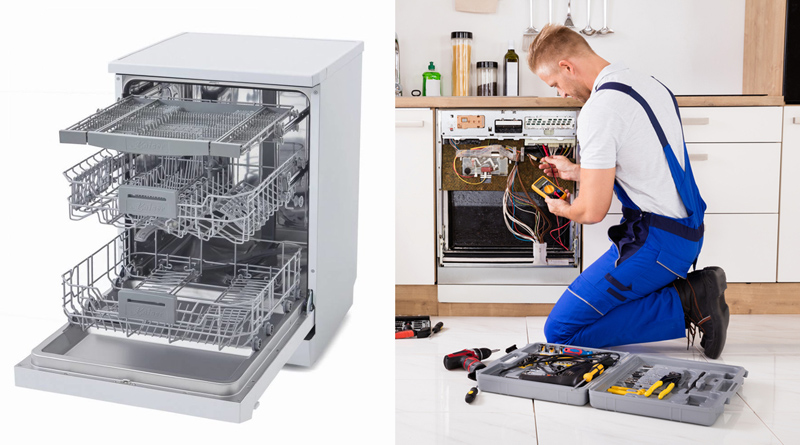
- What you need to know before starting your dishwasher for the first time
- Why You Can't Use Regular Table Salt
- Procedure for first start
- Sequence of actions at the first switching on
- How to turn on the dishwasher
- Additional recommendations for installing embedded appliances
- What tools are used in the dishwasher
- Washing and drying modes
- Machine loading
- What Not to Wash in the Dishwasher
- Wood
- Plastic
- Porcelain
- Crystal
- Different types of metals
- Metal knives and pottery
- The nuances of the dishwasher
- How long does it take to wash dishes
- We determine the degree of loading of the device
What you need to know before starting your dishwasher for the first time
The dishwasher (hereinafter also - PMM, dishwasher) cannot be turned on for the first time, immediately filling it with dishes. To get started, you should conduct a test run, and here's why:
- At the final stage of production, PMM is not cleaned from the waste that accompanies each production process. In addition, there are traces left by the hands of workers in production and shop visitors examining the goods. Therefore, the first run of the dishwasher in test mode is necessary to clean the unit from grease, dirt, debris and grease.
- A trial run will make sure that the automatic dishwasher is working properly.Unfortunately, this is not possible in the store. A test run will show if the PMM was damaged during transportation to the owner's kitchen.
- Another important reason for testing the PMM is to check that the dishwasher is properly connected to the water supply, electricity and sewerage. No one is immune from errors in the installation of communications. A set of water, its heating and draining during testing will show whether the machine is connected correctly.
- It is also better to understand the operation of the dishwasher during the first idle start, in order to use the PMM correctly in the future.
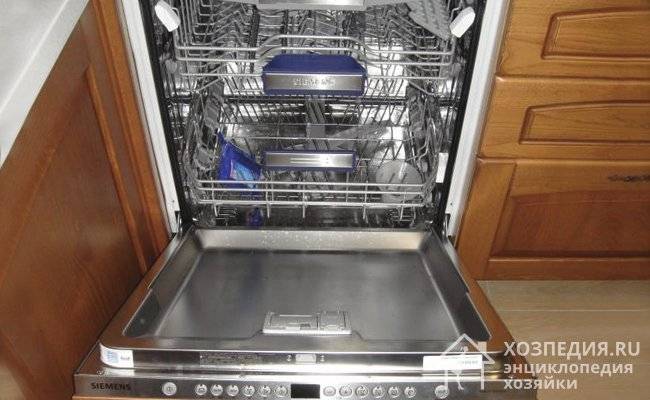
To test and clean the PMM, you need to stock up on three components:
- detergent;
- dish rinse;
- salt specially designed for PMM.
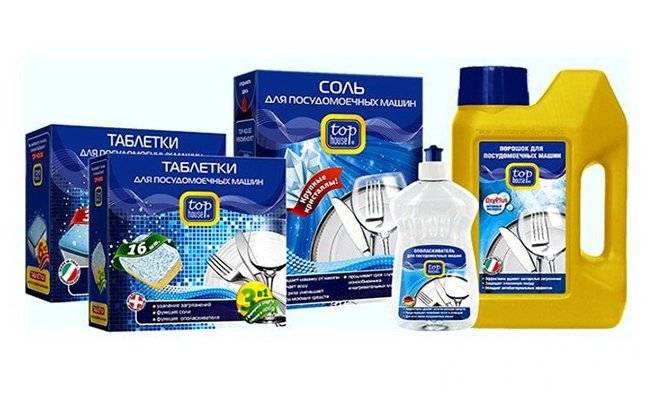
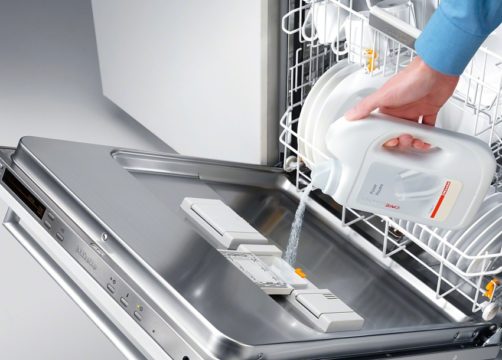
Special dishwasher salt contains ingredients designed to to soften tap water water, preventing the appearance of scale on the electric heater (heater), as well as better dishwashing. For salt, a special reservoir is provided - an ion exchanger, in which it must be filled.
Detergent cleans surfaces from grease deposits. Rinse aid removes residual dirt. Household chemicals of the European brand Bon, designed for use in dishwashers, have proven themselves well.
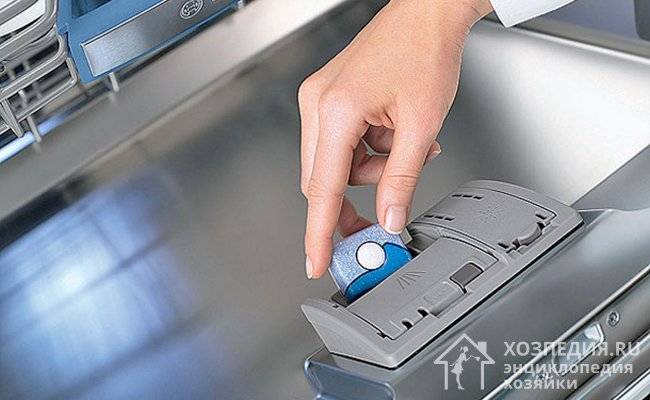
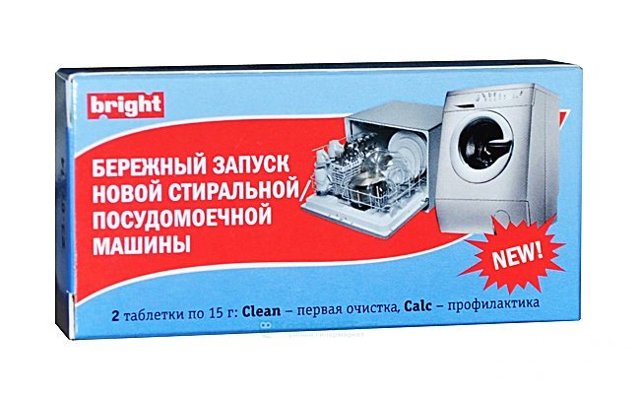
In addition to the above household chemicals intended for the daily operation of the PMM, tablets, powders and other formulations are now being produced that are intended for use in the test run of an automatic dishwasher. They include all the necessary components.
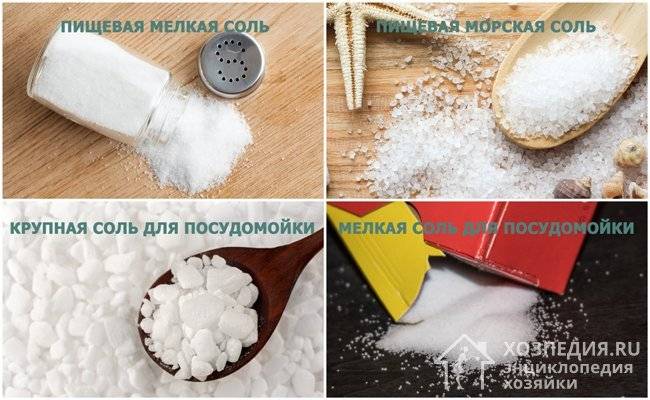
Why You Can't Use Regular Table Salt
Many owners are tempted to use ordinary table salt, as it is much cheaper than the one intended for dishwashers.Although their composition is 95% similar, there are still several significant differences:
- The degree of purification of table salt is much lower, although it is intended for cooking. In addition to the main element - sodium chloride - it contains such chemical elements as iron, manganese, potassium, iodine and others. They do not affect the work of the PMM in the best way.
- Specialized salt granules are much larger than table salt crystals. Therefore, the product intended for dishwashers dissolves more slowly.
If you want your dishwasher to serve for a long time and without fail, use a special salt composition designed for its operation.
The video informs about which household chemicals are best used in PMM:




Procedure for first start
Now it's time to turn on the connected equipment and check it in test mode:
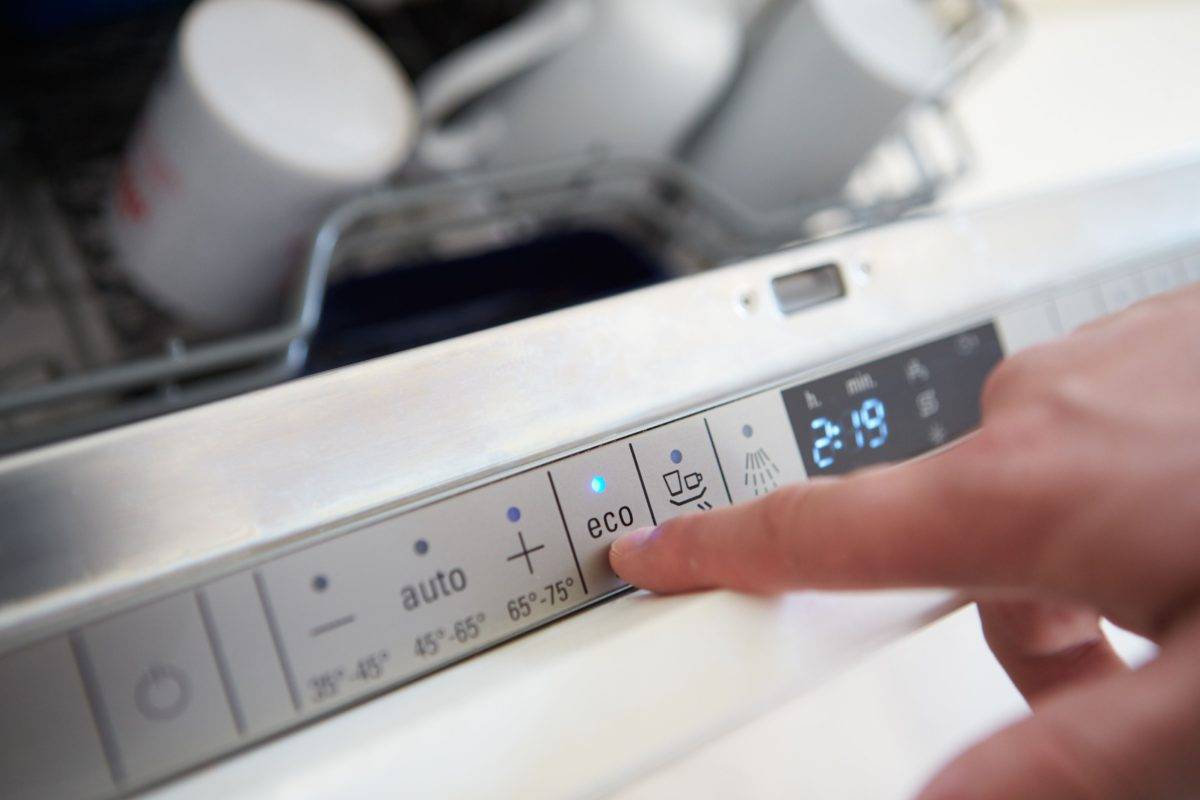
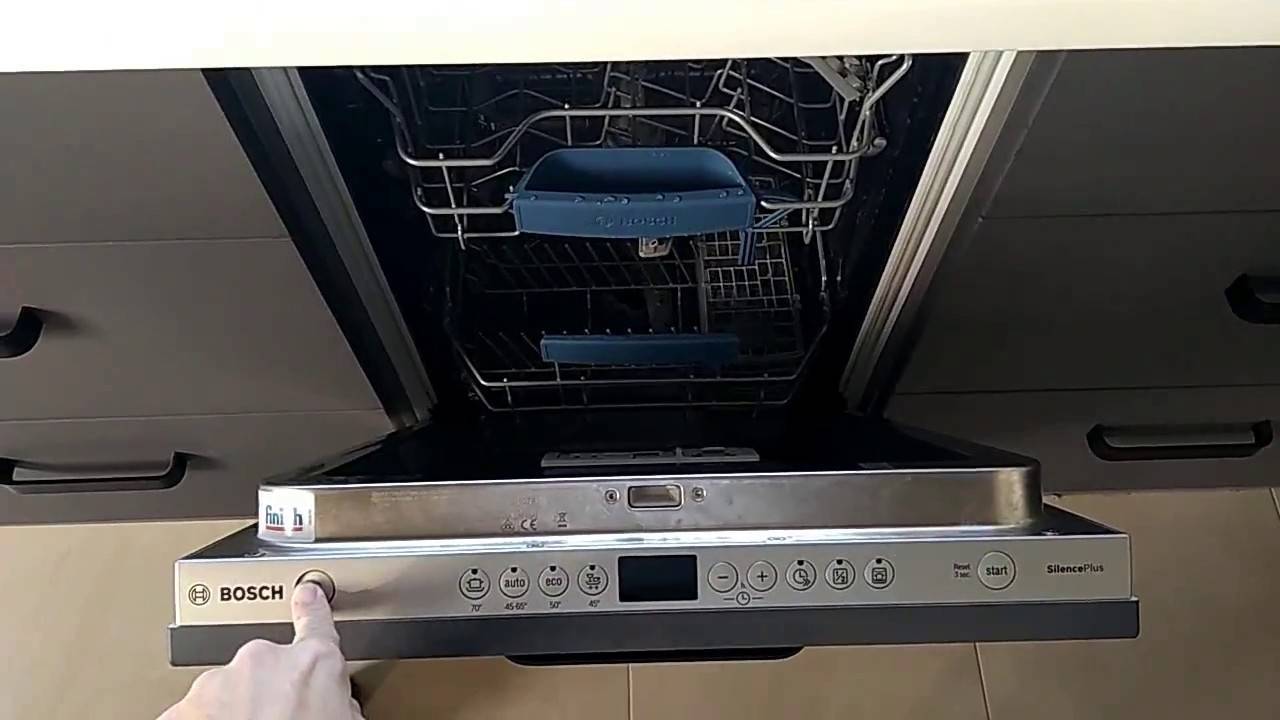
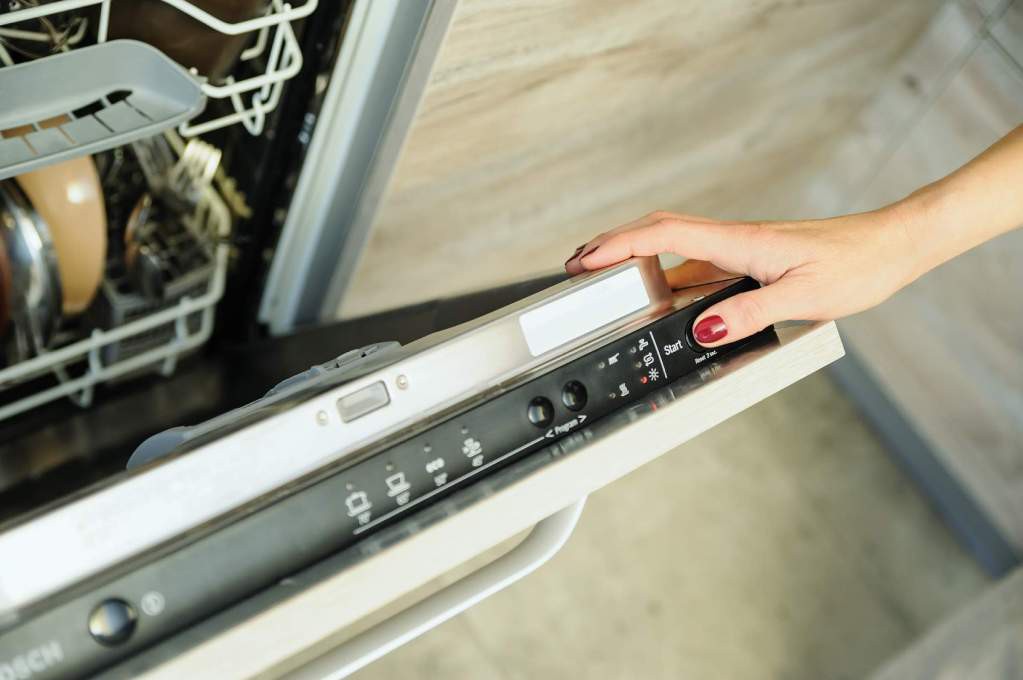
- Turn on the dishwasher and press the "On / Off" button on the control panel.
- Select the type of detergent on the panel. Many dishwashers themselves recognize it thanks to the sensors in the compartment. If your unit does not have this function, you will have to configure it manually. Don't forget to save your selections before starting.
- Set up a test program. The longest mode at high temperatures is optimal.
- Close the door tightly and press start.
- During the first cycle of the PMM, it is necessary to control the stability of the work until its completion. All nodes and places of connection of communications are carefully examined. In the event of a malfunction or leak, the equipment is turned off and troubleshooting.
Sequence of actions at the first switching on
Once all the ingredients have been loaded, the dishwasher can be started for the first time.Actions are performed in the following sequence:
- Check again if the home appliance is installed exactly horizontally.
- Check the reliability of the connections of the supply and drain hoses, as well as the connection to the mains.
- Open the shut-off valve that closes the access of water in case of emergency.
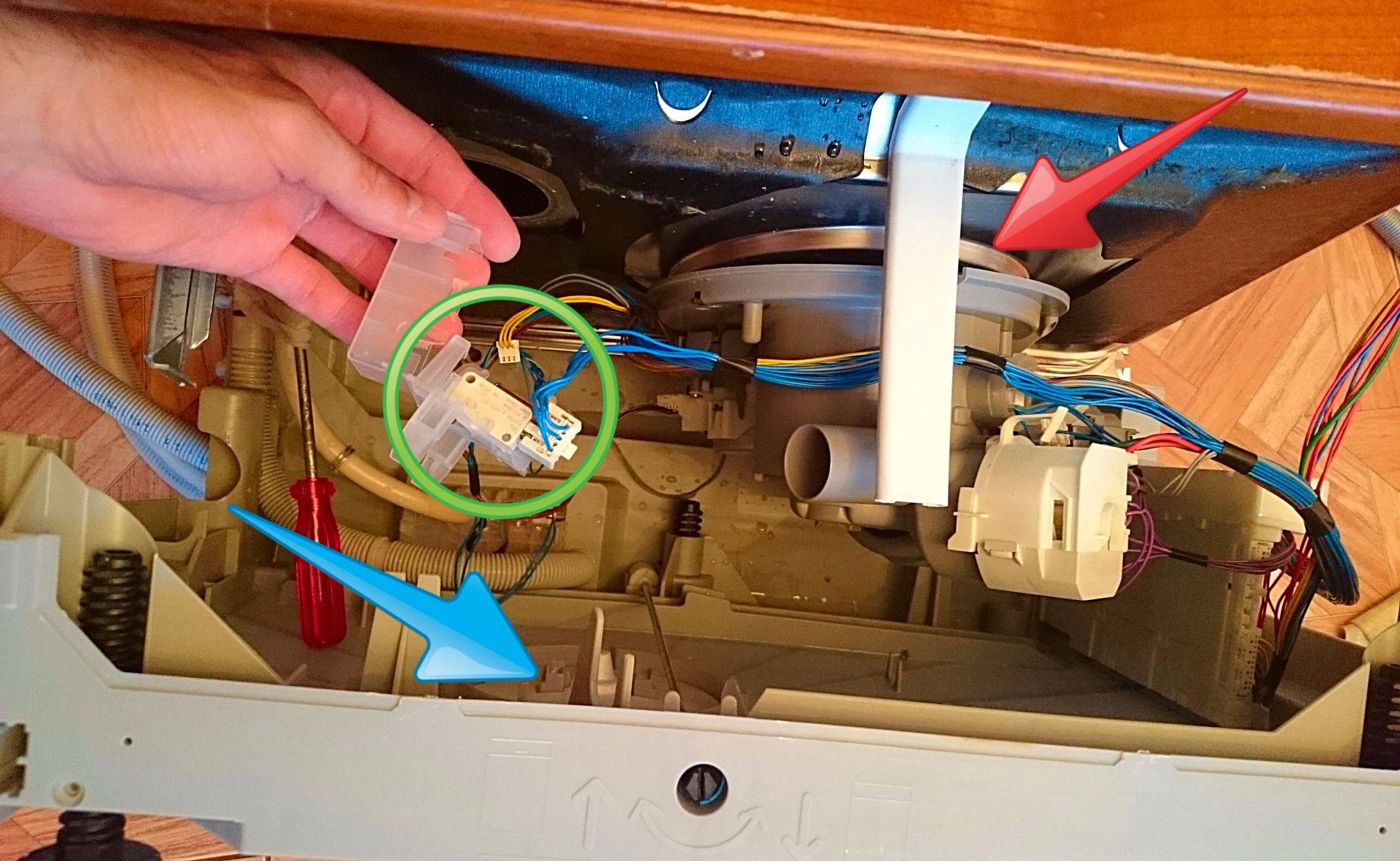
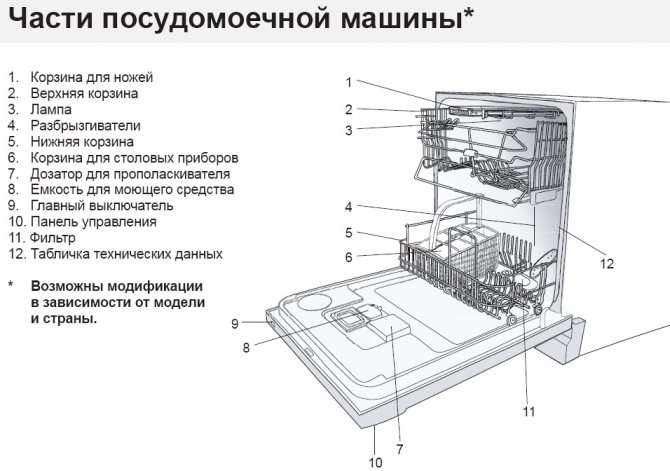
- Open the PMM door and make sure that the atomizer rotates freely around its axis (scroll it by hand).
- Unscrew the drain filter, then rinse it under running water. For better cleaning of industrial dirt and dust, use cleaning products. Return the filter device to its seat.
- Select on the panel the type of detergent to be used (tablet or powder, salt and rinse aid).
- Set the desired mode - during the test run, it should be as long as possible. The water temperature should also be as high as possible.
- Close the PMM door and start the washing process.
How to turn on the dishwasher
After loading all detergents and rinse aids, the device is switched on for the first time. Before this, check again that the machine is strictly horizontal in level. Then they check how well the water supply and waste solution drain hoses are connected. Also check the electrical connection.
After all checks, perform the following steps in sequence:
- Open the shut-off valve for water supply.
- Open the appliance door and check how freely the atomizer moves. To do this, it is scrolled by hand.
- Unscrew the drain filter and rinse it under the tap.To effectively get rid of industrial pollution and dust, detergents are additionally used. The washed filter is installed in its original place.
- On the dashboard, select which detergent will be used.
- Set the desired mode. For the first test run, choose the longest program. Water heating is also done the most.
- The dishwasher door is closed and the device is started.
While the machine is running in test mode, the following indicators are monitored:
Water supply during normal operation goes without interruption. The dishwasher does not stop working.
Water is heated by a heating element to the desired temperature. This parameter cannot be checked in the store
Therefore, it is important to make sure during the idle start that the water heats up.
The drain is carried out to the end, the water does not linger.
After the cycle is completed, no water remains inside the appliance.
Important!
If the test run did not reveal any malfunctions, the device is left to dry and cool for several hours. Only then the dishes are loaded into it and operation begins.


Additional recommendations for installing embedded appliances
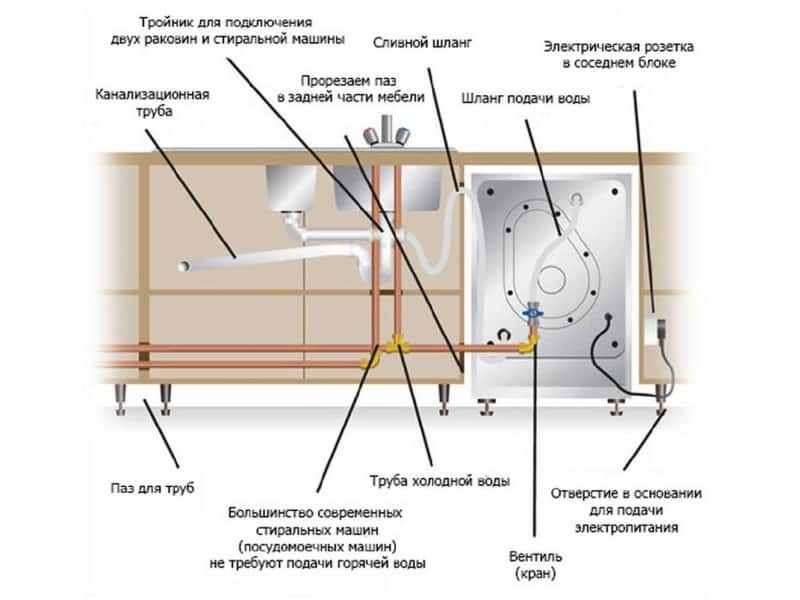
As we wrote above, built-in models are best built into kitchen furniture according to a pre-planned plan.
A freestanding dishwasher is simply installed in the place allotted for it, and only then communications are brought to it and connected to it.
There are also useful subtleties that will help you correctly suggest how to install the built-in dishwasher in the process of arranging the kitchen space:
- Cabinets for the future dishwasher must match its size;
- The product passport already contains approximate installation diagrams. It is not recommended to deviate from the factory prescriptions;
- If protective elements are included in the kit, for example, such as: a metal bar to reinforce the countertop cover or a vapor barrier film, they must be used;
- If the cabinet is not level, you can use the feet to level the bottom of the machine;
- If there is a side bushing, it must be installed. Do not forget to apply it too, and fix the body with self-tapping screws;
- All decorative elements are installed strictly in accordance with the stencils and templates that come with the kit.
- It is better to put the dishwasher away from the electric stove and in general from any heat sources. Some manufacturers specifically indicate these rules in the instructions. The minimum distance from the oven is 40 cm;
- Not the best place for a dishwasher - next to the washing machine. If both devices are turned on at the same time, then the vibration from the washer can be transmitted to the dishwasher and, for example, break fragile glass goblets;
- Do not place a microwave and dishwasher nearby. Electromagnetic waves have a negative effect on the electronic control unit;
- The device calmly tolerates the proximity to the refrigerator - it practically does not heat up and does not cause strong vibration.
Each device is different in its design, so during the installation process it is recommended to focus on the instructions for this particular model. It is in it that it is set out step by step how to properly install your device, the procedure for installation work and connection to communication networks
What tools are used in the dishwasher
Neglect the quality of detergents dishwasher detergents not worth it, otherwise it will affect the durability of the equipment itself.
What tools can be used for a dishwasher:
- in the form of gels.This type of detergent is the safest for both the apparatus itself and the dishes themselves, even from delicate materials. In terms of the quality of removing various contaminants, gels occupy a leading position
- Tablets. This type of detergent also does not cause any complaints from consumers. Economical, efficient, it is able to wash 1 set of dishes with a full cycle
- Powders. This type of product has been in demand since the days of the first dishwashers. The powder fights dirt well, is economical in terms of price and in terms of the amount consumed per 1 washing cycle
In addition, there are “3 in 1” products on sale that act as a detergent, rinse aid and water hardness softener.

Washing and drying modes
The phases of operation of the device vary, depending on additional options, but on average they take 0.5 to 2.5 hours. Using some short cycles can save time and reduce resource consumption.
| Mode | Peculiarities | Nuances |
| Main wash | 2-3 hours in water with t about 600C. | The VarioSpeed option reduces the period to 78 minutes. |
| Fast Cycle | Lasts 33-40 minutes | Cleaning lightly soiled appliances. |
| Super wash (intensive program) | 84min at t 60-700C | Intensive washing of pollution. |
| soaking | 95 min in water with t reaching 700 C | Designed for dried or burnt dishes and utensils. |
| Economy (daily program) | 170 min at t 500С | Can be shortened to 80 minutes. |
| Rinse (quick program) | 15 minutes | Used before the main wash. |
| Delicate wash | 110min at t 450С | Designed for fragile materials. |
The program of intelligent recognition of the degree of pollution and congestion. Automatically switches to the most appropriate mode.
The presence of the IntensiveZone option allows you to create a special washout zone, where a larger volume of hot water enters.
We invite you to read How to remove midges from indoor plants
The turbo drying mode makes it possible to speed up the drying process.
Machine loading
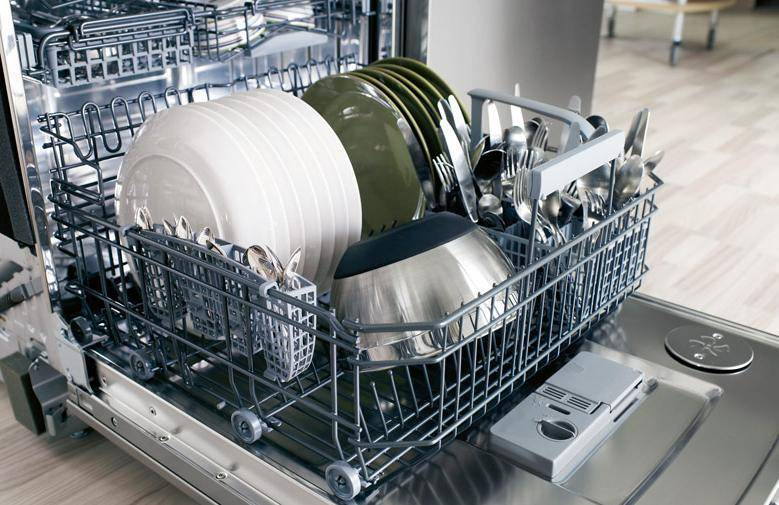
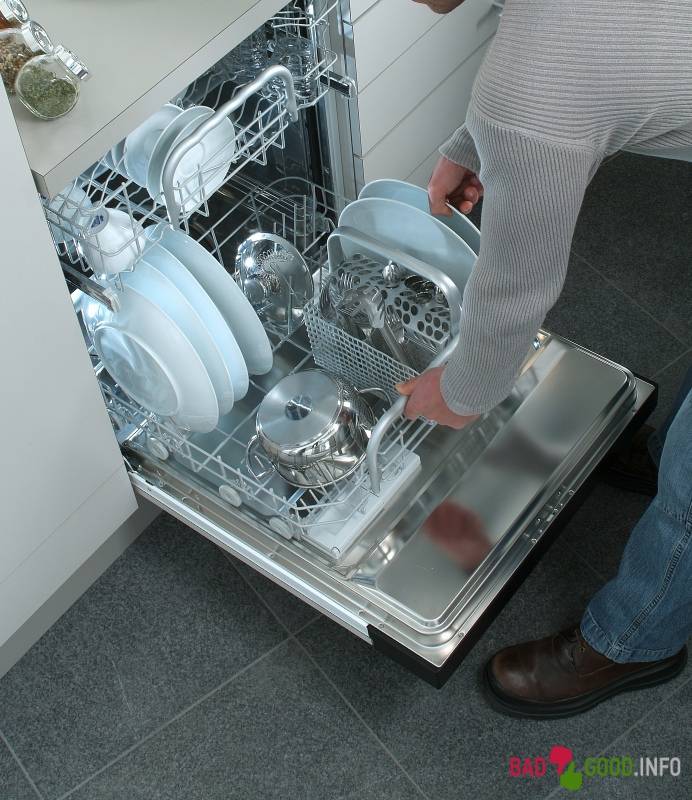
The efficiency of the product and the quality of washing depend on the correct placement of dishes. Indesit manufacturers in the instructions for the dishwasher provide special diagrams indicating how to properly stack the dishes in order to fill the baskets and trays as much as possible.

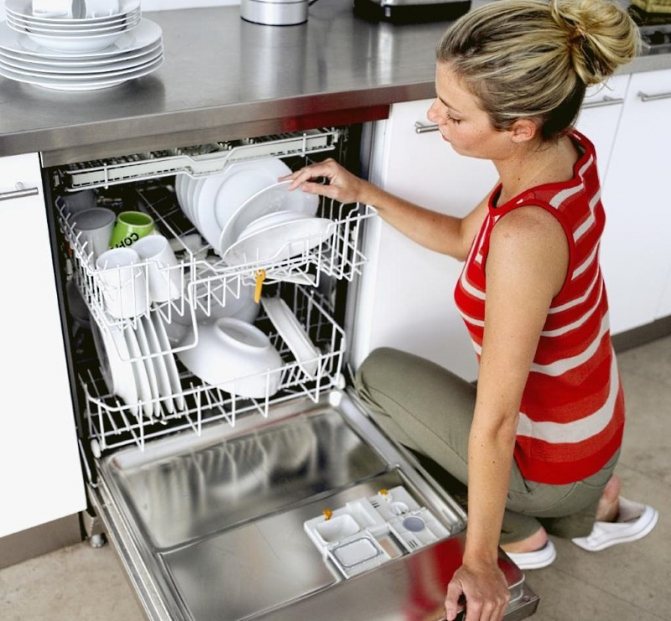


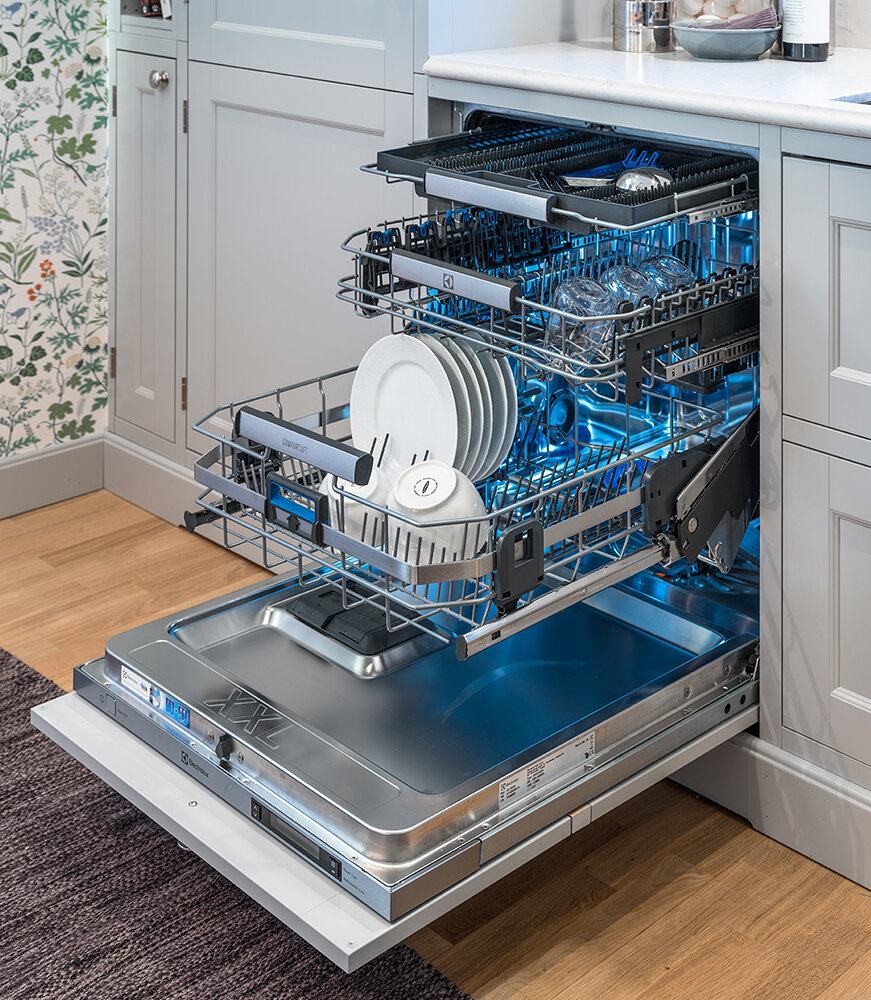

Separately, recommendations are given for table silver:
- all items must be inserted into special devices with handles down;
- knives and other dangerous table setting items are placed with their handles up.
The plate racks can be folded as shown in the attached picture to accommodate larger pots or pans.
What Not to Wash in the Dishwasher
A modern dishwashing machine can wash any dish: from a simple fork to a large frying pan. True, not every material from which the dishes are made can withstand high temperatures, hot drying, detergents that affect the dishes.
Wood
If you do not plan to throw a wooden object in the trash, then do not load it into the dishwasher. The fact is that the tree, upon contact with water, begins to increase greatly in size.
Then, after thorough drying, it begins to decrease in size, but the structure of the fibers is already broken, as a result of which the surface of the wooden product becomes rough, uneven and ugly. In general, the product completely loses its original appearance, in addition, it is dangerous to eat from this product. For example, you put some unwashed fruit, vegetable or other food product in a wooden bowl. Microbes will quickly spread in the crevices of a damaged product. And when you start eating, the same bacteria will get inside your body.
Probably, you think that in a short time the tree will not have time to swell? If you think so, you are deeply mistaken. The tree begins to swell in ice water after 50 minutes, and in hot water in 15-20 minutes. Therefore, we strongly recommend that you do not load your dishwasher with wooden utensils.
Plastic
It is not recommended to load plastic dishes into the washing machine even if they have increased heat resistance. The fact is that even with such resistance, there is a possibility that plastic utensils are deformed, as a result of which a hole will appear in it through which air will pass.
It is strictly forbidden to load disposable dishes into the dishwashing machine, as under the influence of high temperature and chemicals it will turn into porridge. Liquid plastic is difficult to clean from the inner walls of the device.
Porcelain
Porcelain is one type of fragile material. Therefore, do not load porcelain dishes into the dishwasher. When exposed to high temperatures, the product will be covered with inclusions, and the colorful lining will be washed off. When drying, the product may break into small pieces.Therefore, porcelain dishes can only be washed if they have thick walls and a gentle dishwashing regime is used.
Crystal
Crystal dishes are very beautiful, however, it is not recommended to wash this type of product in a dishwasher, as they are susceptible to temperature changes. Such beautiful and expensive ones can be washed in the upper compartment of the dishwasher in a gentle mode. If you violate this recommendation, then the crystal tableware will fall apart into small fragments.
Different types of metals
It is impossible to wash products made of certain types of metals in the usual mode. For example, it is not recommended to wash silverware in a dishwasher, because when interacting with hot water and chemicals, silverware begins to fade, lose its original appearance and become covered with a black coating. It is not yet possible to wash silver dishes together with stainless steel dishes, since the second type of products adversely affects the coating of silver dishes.
It is also not recommended to wash items made of shiny metals (copper, bronze, tin) in a dishwashing machine, as they begin to lose their original luster.
Aluminum utensils should also not be washed in the dishwasher. The fact is that the material from which the product is made reacts very well with other chemical elements. Usually, when people wash dishes, they do not notice this reaction, because the product is covered with a special protective film. But in the dishwasher, this film can completely dissolve, as a result of which the aluminum utensils will be covered with a black coating and will be unusable.


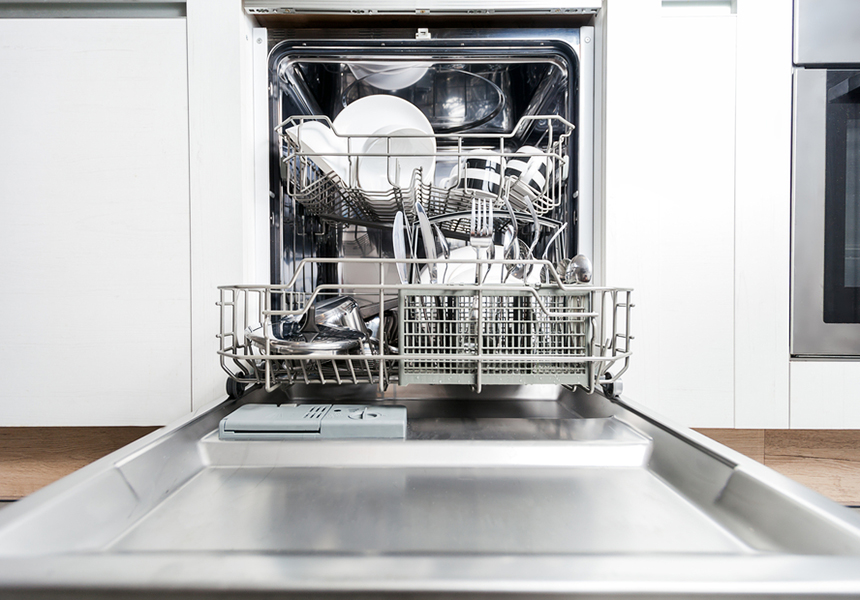



Cast iron dishes also cannot be washed in a dishwashing machine, because after several washes the products will be covered with plaque and the appearance of the dishes will deteriorate.
Metal knives and pottery
In no case should such products be washed in a dishwasher, as when exposed to high temperatures, chemicals and water, the knives begin to lose their sharpness. After each wash, you will have to sharpen your knife again. Therefore, it is recommended to wash this type of product in running water.
Clay products cannot be washed in a dishwasher, as the dishes are deformed, clay particles will clog the internal mechanisms of the equipment, and the dish itself will lose its original appearance.
The nuances of the dishwasher
If you just purchased a car, then it is better to test run the device. It will help get rid of lubricants that may have remained on the product. In addition, it will help to check the quality of installation of the dishwasher design. Check the rate at which water enters, how it heats up and whether liquid is pouring out of the device. All problems can be removed at this stage.

In order to carry it out, you need to use a special salt or detergent, which usually comes with the kit. First you need to find out how hard your water is. This will not be difficult for a working Bosch dishwasher. They are equipped with special strips that will help determine the hardness of the water. Just dip one of them into the liquid and refer to the plate, which is also included. The hardness influences the amount of salt to be set in the device.
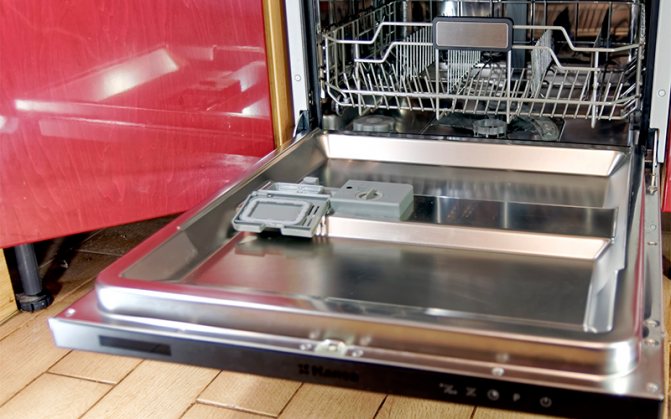
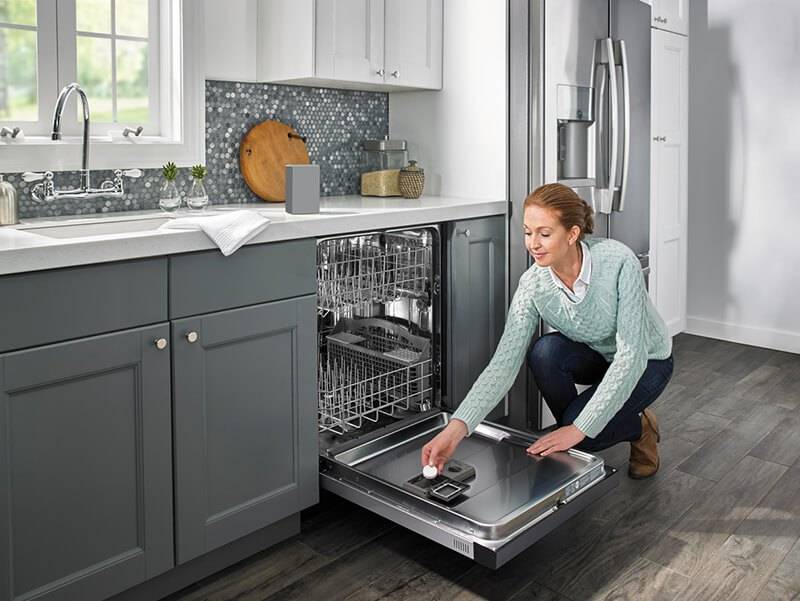
The compartment with salt must be filled completely with water. It must be poured there once, just before the test run. In order to place salt in this compartment, you must use a special watering can. It needs to be visible through the hole. If a little water spills out of there, then it's not scary. When you close the compartment with a lid, just wipe it off.
For the device to work effectively, you need to get a special rinse aid, tablet or powder detergent and salt that softens the water (this is exactly the salt that is needed for the test run). You can buy all these tools separately. But it is better to take ready-made kits from one manufacturer. As a rule, in this case they have components that are perfectly combined and complement each other in the process.
How long does it take to wash dishes
The operating time of the dishwasher depends on which mode you have selected and on the model of the device. For example, if you have chosen a program with a soak and pre-rinse, then be prepared for the fact that the unit will run for 20 minutes longer. The mode should be selected depending on how dirty the dishes you put to wash.

Also, the operating time of the unit is affected by the temperature of the water required for washing. For example, if you select a mode that requires water of 70 degrees, you will have to wait another 20 minutes longer. The dishwasher can run from half an hour to three hours.
Here are some of the most popular modes and the time in which you get clean dishes:
- Intensive mode is used for washing very dirty dishes using water at a temperature of 70 degrees. Washing takes 60 minutes.
- Normal mode involves drying and additional rinsing.In this case, the wash will last 100 minutes.
- A quick wash is needed to cope with light dirt, and lasts half an hour.
- The economy mode is used to save resources and wash standard dirt. This mode lasts 120 minutes.
These are the most standard modes. In most devices, there are many more with additional features. For example, a fairly common additional mode is delicate. It is needed to wash fragile dishes made of crystal, glass or porcelain. As a rule, the duration of the device in this mode is almost two hours. But if the names of these modes are not found on the device, then be guided by the temperature. The mode at 35-45 degrees will work for an hour and a half, at 45-65 degrees - 165 minutes, at 65-75 degrees - 145 minutes, quick wash - a little more than half an hour, pre-rinse - 15 minutes.

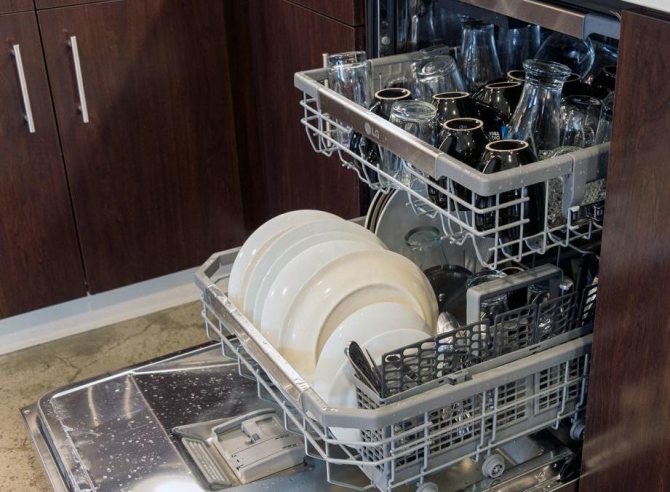


We determine the degree of loading of the device
The machines are designed for a certain number of sets of dishes. It is different for every car. Can be for 6 or 12 sets. This information is written in the technical data sheet of the device.

However, you do not always need to wash just as many dishes, and there is simply nothing to load the device completely. Therefore, manufacturers of units made sure that housewives do not have to save up dirty dishes and wash only a certain number of sets of dishes.
Modern dishwashers, for example, the Electrolux brand, have an operating principle in which you can select a mode not only based on time and water temperature, but also on the degree of load of the unit. The half load feature is very popular. It helps if you need to download only 6 instead of, for example, 12 kits.The device will calculate the required amount of water, detergent and electricity for these six sets. That is, it will work only half of the possible power.



