- What batteries can and should be painted
- Cast iron
- Aluminum and bimetallic
- Copper
- Types of paints
- Training
- Overview of paints for heating pipes and radiators - tips for choosing
- Paint selection
- Choosing the Perfect Battery Paint
- Color selection
- Painting recommendations
- What tools and materials are needed for work
- Preparing the bath for painting
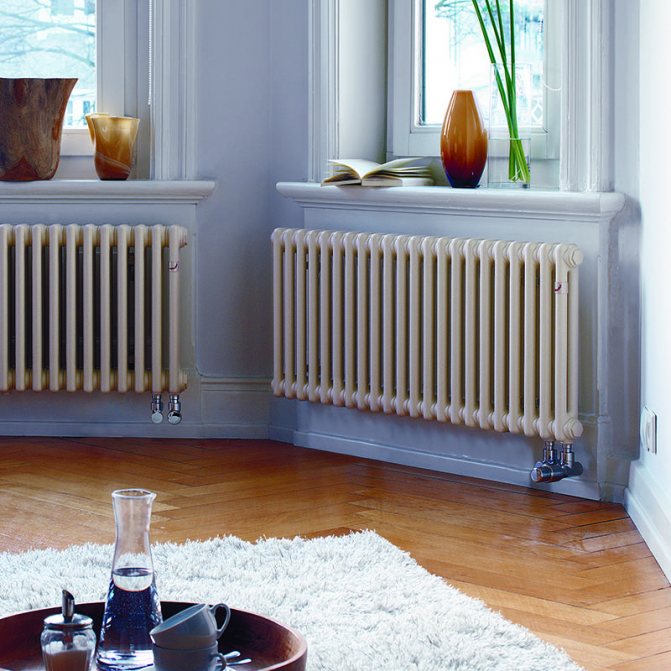
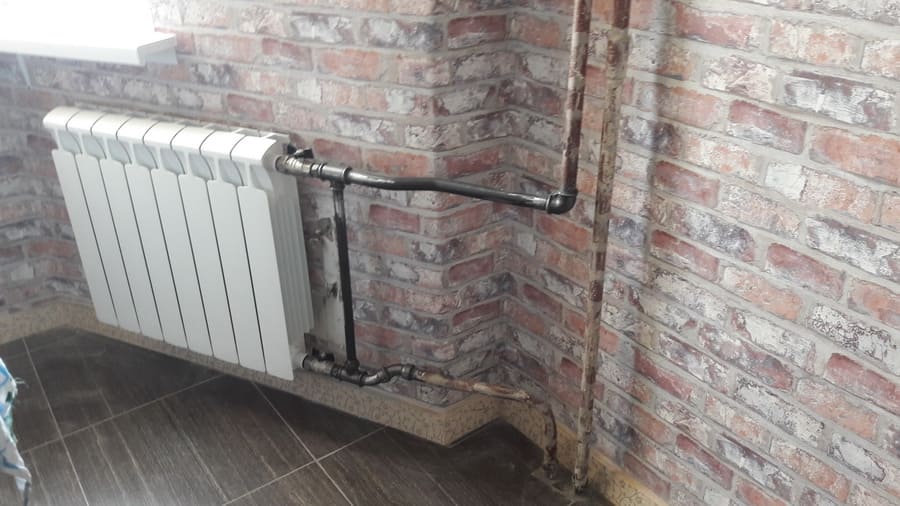
What batteries can and should be painted
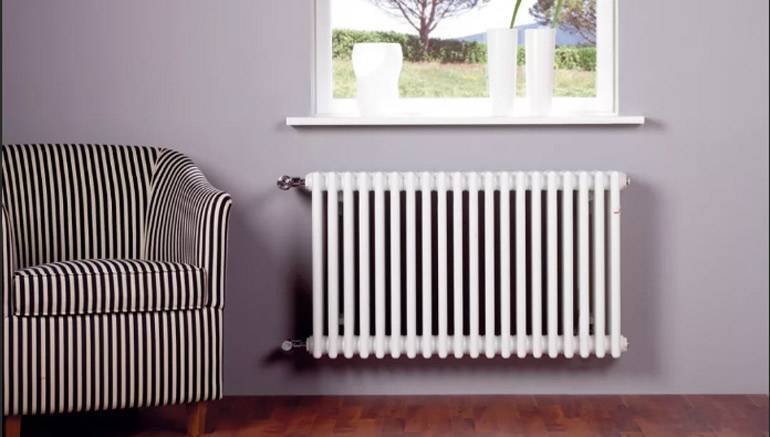
From the point of view of common sense and to ensure safety, it is imperative to paint heating devices that are susceptible to corrosion, that is, made of steel and cast iron. But it has long been a tradition that window slopes and window niches are painted white, and white radiators are also preferred. In any small store, the entire range of heating appliances is painted white, and only in construction hypermarkets can you occasionally see aluminum or colored radiators.
Cast iron
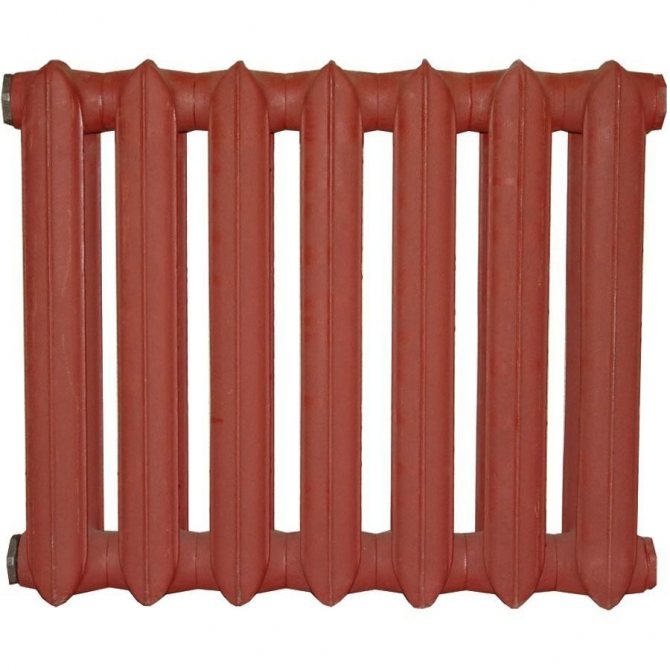
When they talk about painting batteries with their own hands, it is cast-iron radiators that first of all come to mind - reliable, heavy, "eternal". If you have such radiators in your heating system and suit you in terms of the safety of heating your house or apartment, then you probably should not change them.If you live in an apartment building, then replacing the heating system in general can lead to disagreements with the heat supply organization. In a private house, cast iron has its drawbacks, but changing it for no reason also does not make sense. But periodic cleaning and do-it-yourself painting of cast iron is necessary.
Aluminum and bimetallic
You can also paint aluminum heating appliances and bimetallic ones yourself, but this painting is mainly done for aesthetic reasons. For painting aluminum with your own hands, special primers are needed. In a bimetal, the steel core is usually not visible, and the aluminum shell is painted.
Copper
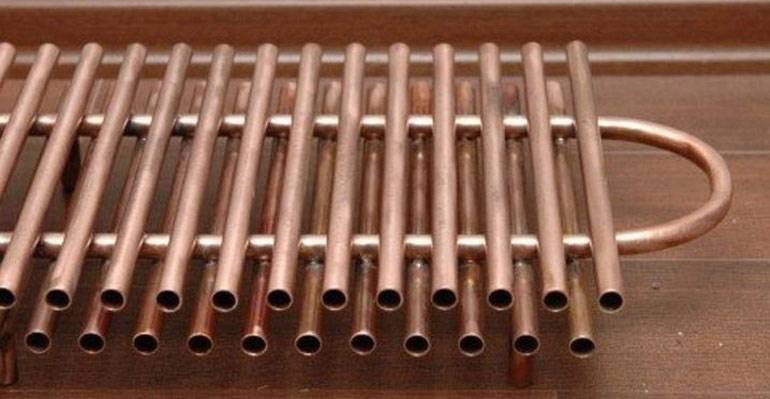
Copper batteries oxidize, darken and become less attractive. Therefore, copper radiators and pipes are also painted with their own hands. For copper heating systems, a special primer for non-ferrous metals is used.
Types of paints
What paint to paint radiators? You are very lucky if you have modern powder-coated radiators at your disposal - it lasts for decades without peeling and hardly changing its color. Such paint covers aluminum, bimetallic and steel radiators of various designs. To give special strength, the coloring is subjected to procedures that make it stronger and more durable. The longest service life is characterized by multi-stage painting.
Painting batteries is needed not only to give a neat appearance to the radiator, but also to protect it from the environment.
If the house has ordinary cast-iron accordion batteries or old steel batteries, then they need to be tinted periodically.The paint quickly turns yellow, begins to crumble, exposing the metal and creating all the conditions for the formation of corrosion centers. Therefore, the paintwork needs to be updated. It may also be needed during repairs - what if you decide to paint the batteries in different colors and adapt them to your interior design?
What paint to paint radiators? There are many types of paints:
- water-dispersion - do not emit an unpleasant odor and dry quickly;
- acrylic - they smell of solvents and give gloss;
- alkyd - resistant durable, characterized by long drying;
- oil - not the most worthy option for painting batteries;
- heat-resistant silver - an excellent option for painting heating appliances;
- silicone aluminum - excellent in all respects, but very expensive;
- canned automotive enamels are a reasonable heat-resistant option.
The water-dispersion composition for radiators is completely safe, as it dissolves with water.
Water-based paints are good because they do not have a strong solvent smell, since their base is ordinary water. They are fast drying and are well suited for painting radiators. On some varieties there are marks indicating the possibility of painting heaters.
You don't like matte radiators and want them to shine? Then we recommend that you turn your attention to modern acrylic enamels. They give excellent gloss and have a long service life.
Their disadvantage is the smell of the solvent, so the premises after painting will need to be ventilated.
Alkyd paints are the most durable.They are resistant to temperature loads, well resist abrasion, do not change their color for a long time. Some of them withstand heating up to +150 degrees without turning yellow for many years. Despite the obvious advantages, such paints have one striking drawback - the strong smell of the solvent. It manifests itself not only at the stage of painting, but also when starting the heating system.
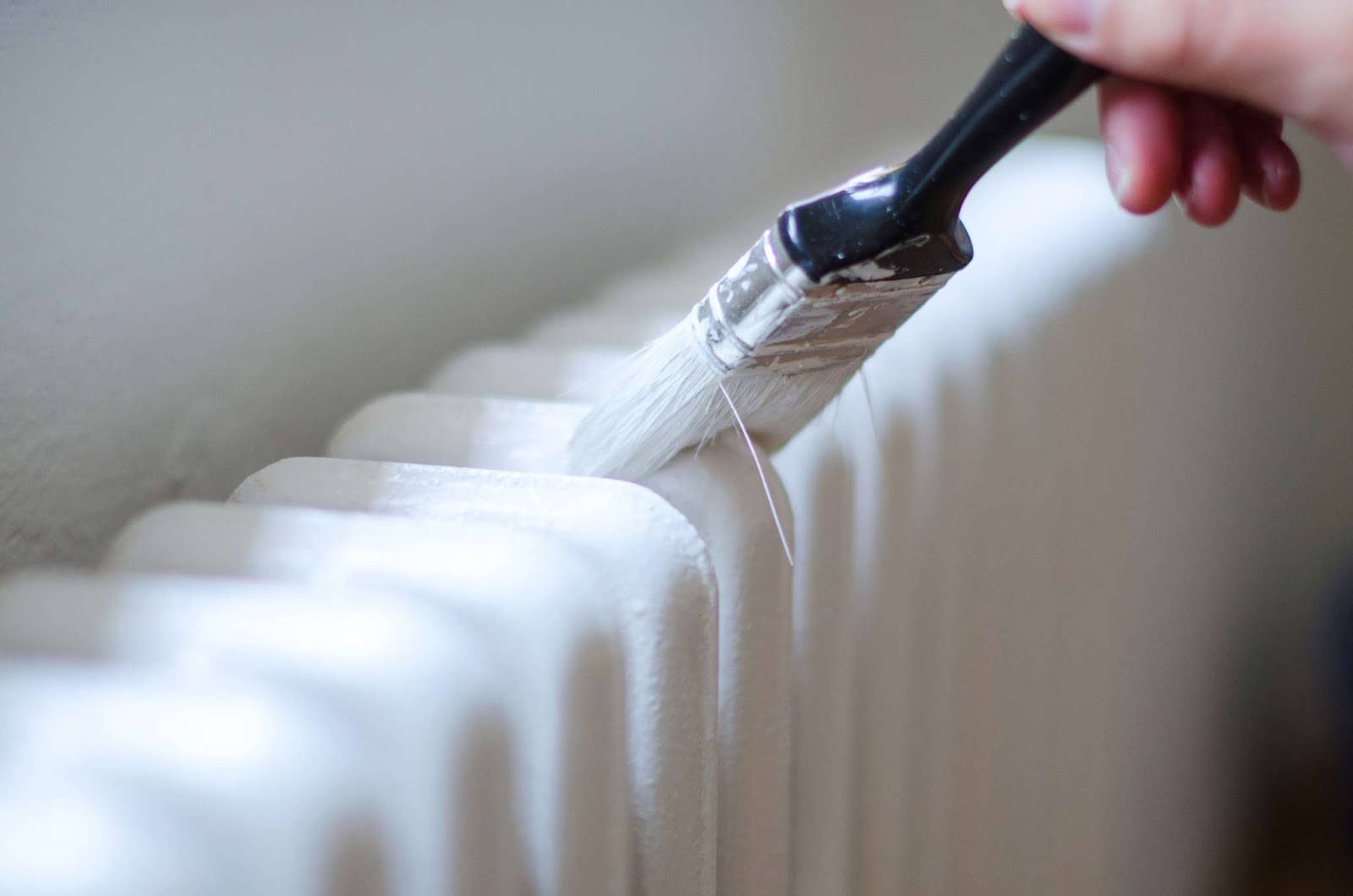
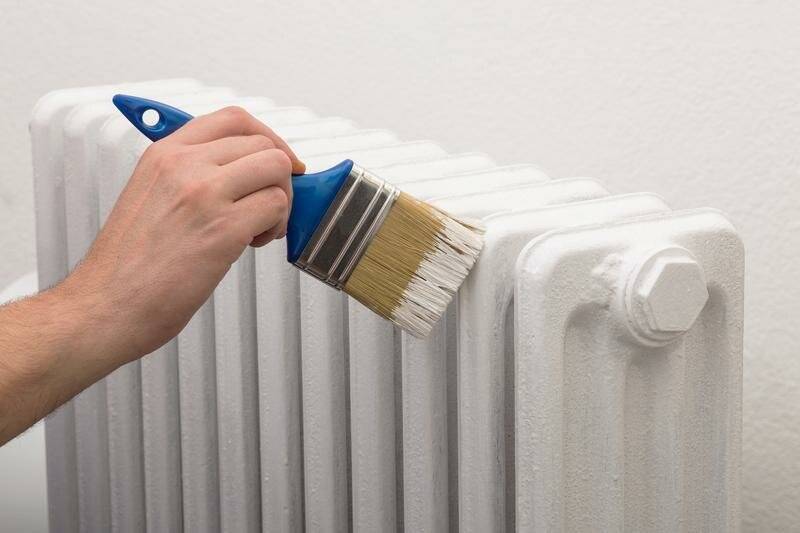
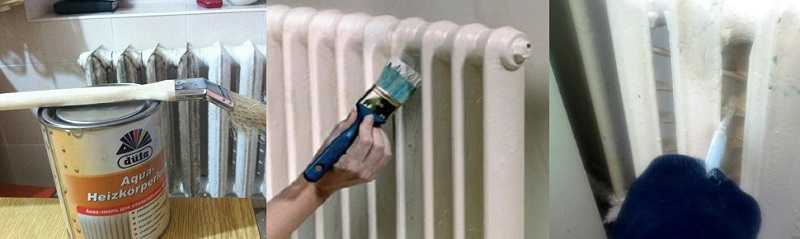
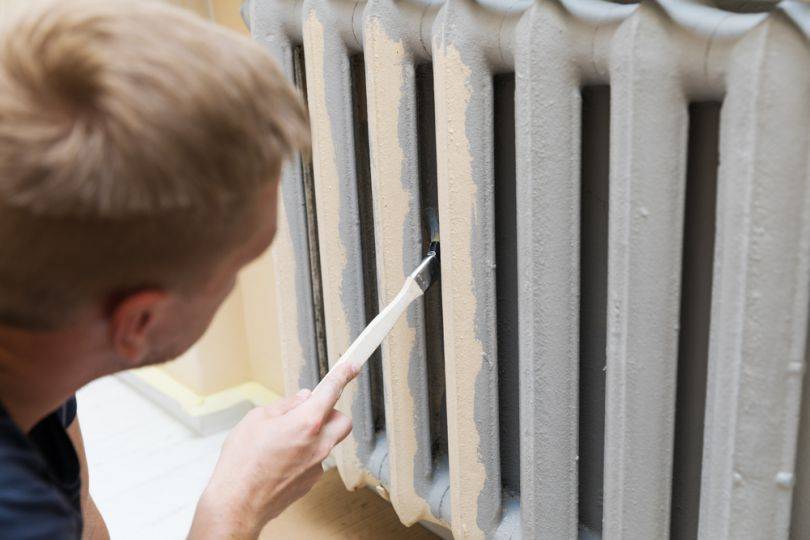


Some consumers note that after drying, the unpleasant odor disappears, but appears already at the first start of heating, disappearing after 1-2 days. During these periods, it is recommended to carefully ventilate the rooms in which the painted batteries are located.
Oil paints are not very well suited for heating radiators, so they have been practically not used recently. They have a strong solvent smell, dry and stick for a very long time, and the dyes used in them turn yellow over time. In addition, after a year or two, such a painting will begin to peel off and fall off, exposing the metal of the heating devices. We do not recommend using this paint for painting heating radiators.
Radiators painted with silver look very attractive, but the main thing here is that the surface of the battery is even, without bumps and depressions, otherwise the impression will be smeared.
Heat resistant silver is a great choice for painting batteries in silver color. It contains heat-resistant varnish and powdered aluminum. Tserebrianka advantages:
- withstands heating up to +200 degrees;
- does not change color;
- almost does not peel off and does not fall off.
The disadvantage is a rather strong smell, so after painting the batteries, the rooms must be ventilated.
Silicone-aluminum paints have the highest resistance to high temperatures. They fit well on any surface, forming a strong and reliable connection. The surface is smooth and plastic, the painting does not peel off even after several years of operation. The payoff for such excellent performance is high cost - you have to pay for advantages and durability.
Autoenamels are also suitable for painting heating radiators. They are resistant to temperatures up to + 80-100 degrees and form a shiny glossy surface that does not change color under the influence of temperature loads.
Training
Before painting, the surface of the radiator is prepared for applying a decorative layer. Stages of preparation:
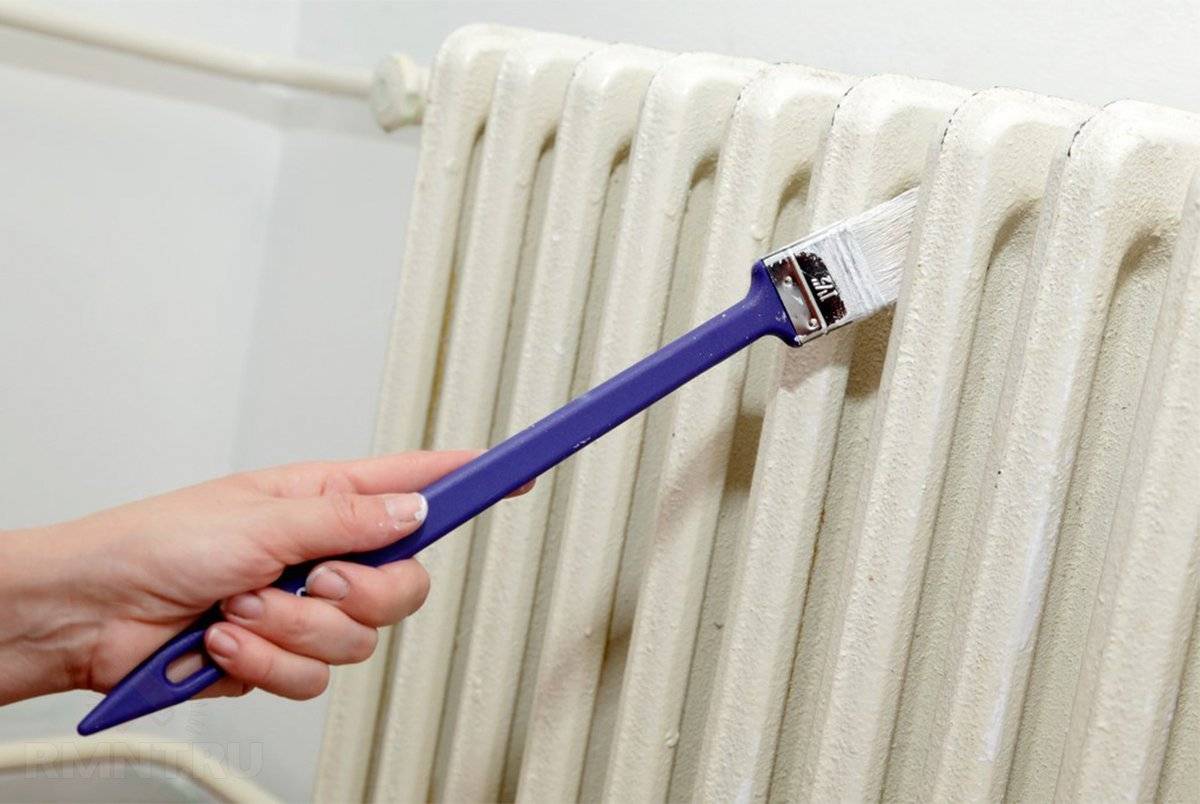
Wipe the heating element from dust and dirt.
With a metal brush or sandpaper, clean the base from a layer of old paint. You can also clean with chemicals.
If rust has appeared under the old decorative coating, it must be cleaned mechanically - using sandpaper
It is important to make careful movements so as not to damage the outer layer of the radiator.
A primer can be used to increase adhesion. Before applying it, you need to study the rules for priming metal surfaces.
Overview of paints for heating pipes and radiators - tips for choosing
Immediately after installation or during operation, the main components of the heating system (batteries and pipes) require additional processing - painting. Given the specific conditions under which the devices operate (high coolant temperature), this process is not as simple as it might seem at first glance.For this reason, special paints for radiators are used.
They mean a suspension of mineral or organic colored substances (pigments) and binders - latex, drying oil, PVA emulsion. For painting radiators and indoor heating pipes, special compositions are used that are distinguished by increased heat resistance, non-toxicity, and durability. In addition, they must protect the metal from corrosion, be easy to clean from dust and dirt, while maintaining color.


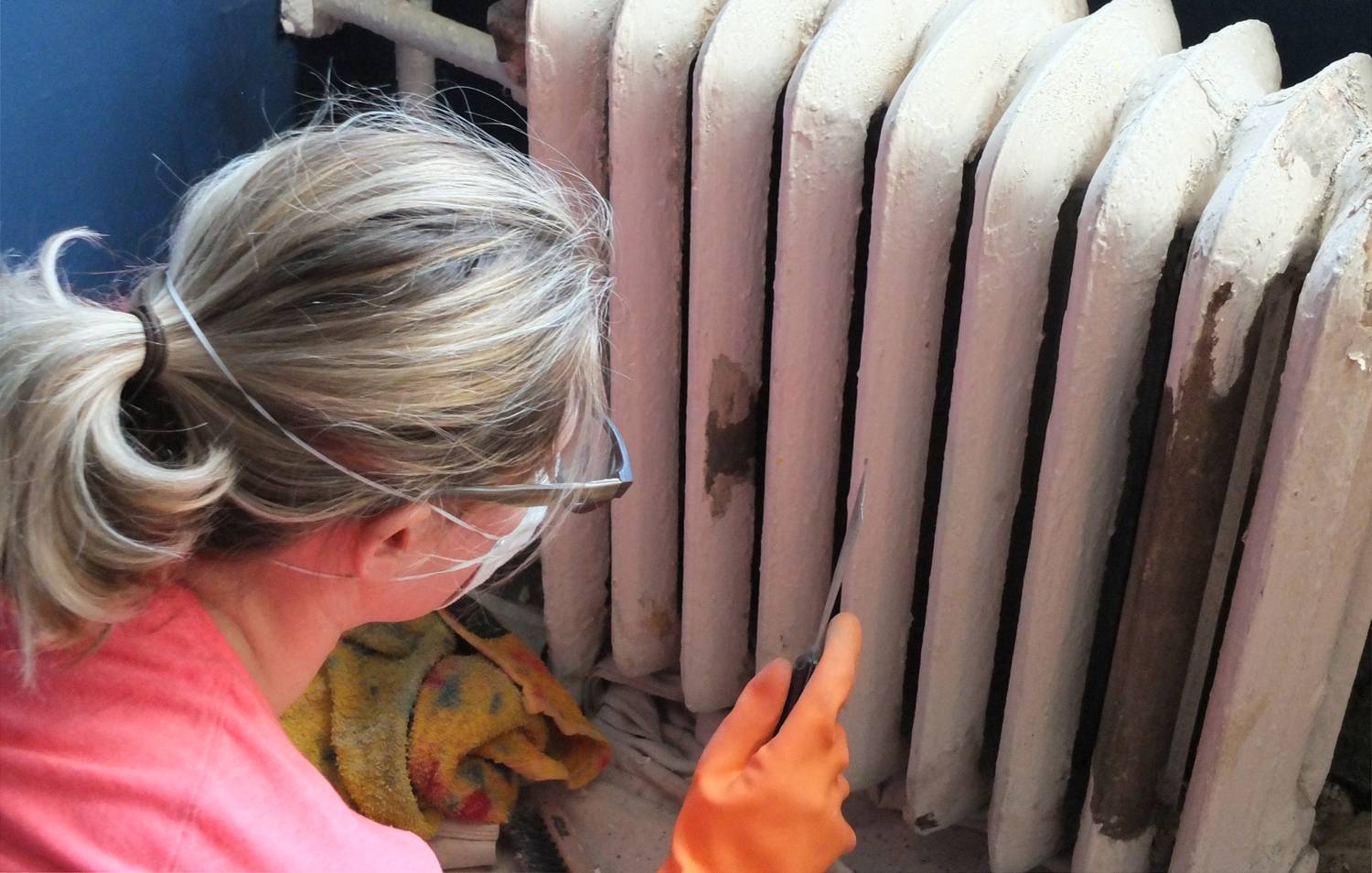


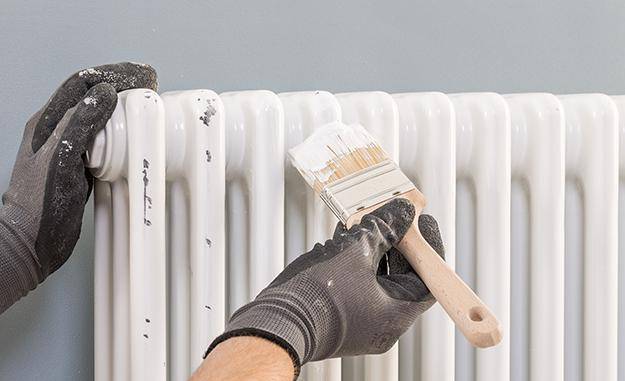


What are the types
Depending on which components are taken as a basis, heat-resistant paint for batteries 3 types are produced:
It consists of resins, pigments and organic components, as well as specialized modifiers that increase anti-corrosion properties, thermal stability (up to +100 ºС) and so on. This paint is used to coat cast iron, steel and aluminum batteries. It dries quickly, gives the surface a glossy shine, is resistant to abrasion, and is durable. Since acrylic enamels contain an organic solvent, the disadvantage of this type of coloring matter is a sharp unpleasant odor, but it disappears over time.
Tricky meter that saves electricity Pays for itself in 2 months!
Produced on the basis of pentaphthalic varnish and solvent (white spirit), with the addition of coloring pigments and fillers in the form of silicon oxide or marble chips. Suitable for painting radiators made of any metal. Resistant to abrasion, easy to clean, dries quickly.
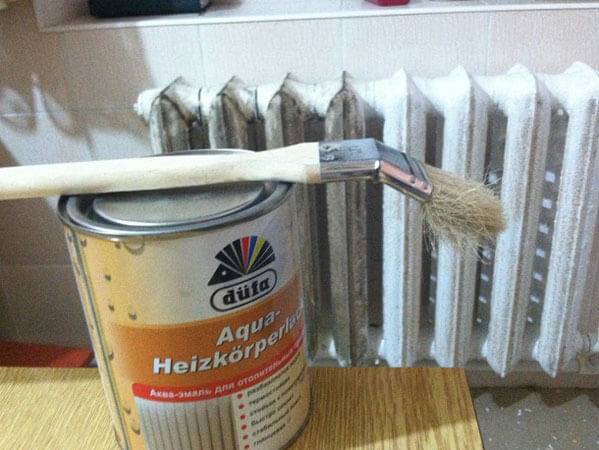
Manufactured in a wide range of colors. The disadvantages include a rather high price. For example, paint for heating systems Dufa Heizkorperlack in a 2.5 kg package costs from 1500 to 1680 rubles.Also, alkyd enamels fade over time, can become covered with small cracks, and during the first 3-5 days after application, they emit a sharp, unpleasant odor.
A water-based radiator paint may contain acrylate, latex or polyvinyl acetate dispersion as a binder. It is used for coloring any types of heating devices and pipes.
The advantages of this type of coating are: the absence of a sharp, unpleasant odor, thermal stability, uniformity and strength of the coloring layer, durability. Perhaps the only drawback is the very high cost. The price of paint for Tikkurila Thermal heating pipes is from 2900 to 3300 rubles per 2.5 kg can.
In addition to the listed types of coloring compositions, oil-based suspensions are used, but much less frequently. They are suitable for radiators made of cast iron and steel as well as non-ferrous metals. Virtually odorless, resistant to high temperatures (up to +90 ° C), quick-drying, they are, however, not as durable as acrylic or alkyd compounds, although they are not inferior to them in price. For example, colored paint for Alpina Heizkorper cast iron radiators costs between 1300–1450 rubles per 2.5 kg.
Paint selection
Main selection criteria:
- Safety - the absence of hazardous components in the composition of the paint that evaporate when heated.
- Heat resistance - the paint must be resistant to thermal stress (80-90 ° C).
- Resistance to fading and mechanical abrasion determines how long the coating will not require updating.
- Adhesiveness - in other words, the ability of the composition of paintwork materials to adhere strongly to the surface.
- Anti-corrosion properties of the paintwork, i.e. the presence of substances in the composition of the paint that save the radiator from rusting.
Before painting, it is important to make sure that the paint composition is specifically designed for painting radiators. The purpose of the paint is noted when marking. But if for some reason this information is missing, you need to choose heat-resistant dyes
But if for some reason this information is missing, you need to choose heat-resistant dyes.
The composition distinguishes: alkyd, oil and water-based paints:
- Oil paints dry for a long time, emit a strong odor during painting and drying, quickly wear off, crack under high temperatures, poorly protect against corrosion, and they are not recommended for painting batteries. Low price, cannot smooth out all the disadvantages when working with oil paints.
- Water-dispersion paint is safe, low cost and fast drying. However, this type of coating is short-lived and resistant to abrasion, therefore, such a coating will need to be updated quite often. Acrylic paint also belongs to the dyes of this group, which is distinguished by resistance to temperature extremes, strength in relation to mechanical stress. It is durable, retains an attractive appearance for a long time, does not fade for a long time. With the help of acrylic paints, a durable coating is created that has a juicy bright color, resembling plastic with a slightly shiny sheen.
- Alkyd paint is suitable in all respects for use as a coating for radiators: it has a uniform composition and is highly resistant to abrasion.The composition of alkyd paints includes substances that resist corrosion processes. One of the interesting types of alkyd is hammer paint. With its help, a coating is created that distinguishes an uneven surface, resembling chasing in appearance, this allows you to hide irregularities and gives originality. However, the alkyd coating, with all the pluses, has a persistent unpleasant odor that disappears for a long time, and sometimes, when the batteries are strongly heated, it appears even after complete drying. The paint dries very slowly and is best used only where there is good ventilation. In addition, the paint does not retain color well, and eventually begins to turn yellow.
- Among other types of paint and varnish coatings that are suitable for painting radiators are dyes based on silicate resins and aluminum. If we discard the only drawback - a strong pungent odor that they emit during the staining and drying process, then this is one of the most stable types of coatings that have excellent adhesion: no primer is required for painting, since the paint itself provides a strong adhesion of the composition to the surface.
- Serebryanka - a mixture of aluminum powder with varnish - is another type of coating that is often used for painting batteries, it can be applied both to the primer and to the old paint due to its high adhesiveness.




Choosing the Perfect Battery Paint
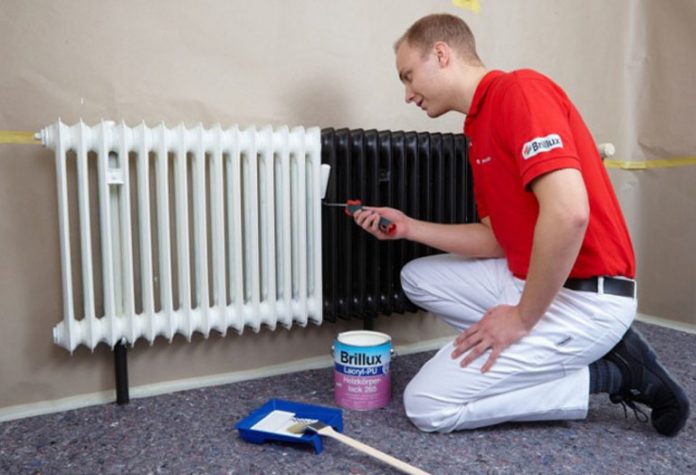
It is important to determine which paint is best for transforming radiators. There are a number of requirements that must be met by paint applied to batteries.At least one hundred degrees heat resistance of the paint is required, abrasion resistance, non-toxicity are also needed, since the batteries are regularly cleaned, and the radiator itself is heated
The highest heat resistance is distinguished by paint containing metal powder instead of coloring pigments.
At least one hundred degrees, heat resistance of the paint is needed, abrasion resistance, non-toxicity are also needed, since the batteries are regularly cleaned, and the radiator itself heats up. The paint containing metallic powder instead of coloring pigments differs in the highest heat resistance.
There are special paints for radiators on sale, many use water-based enamels, heat-resistant varnishes. The selected paint must necessarily be designed to cover the metal, match the primer. Good compositions are durable, do not change color, and are able to protect themselves from corrosion.
Glossy gloss, color fastness for a long time are provided with acrylic enamels on organic solvents. But they smell pretty strong when applied.
Water-dispersion paints will dry quickly, but it is important to choose them carefully by choosing special types. After painting with alkyd enamels, the uniformity of the coating is guaranteed, it will be durable and resistant to impacts. However, the smell can be observed not only during the painting process, but also some time after drying, standing out from heating
However, the smell can be observed not only during the painting process, but also some time after drying, standing out from heating.
Color selection
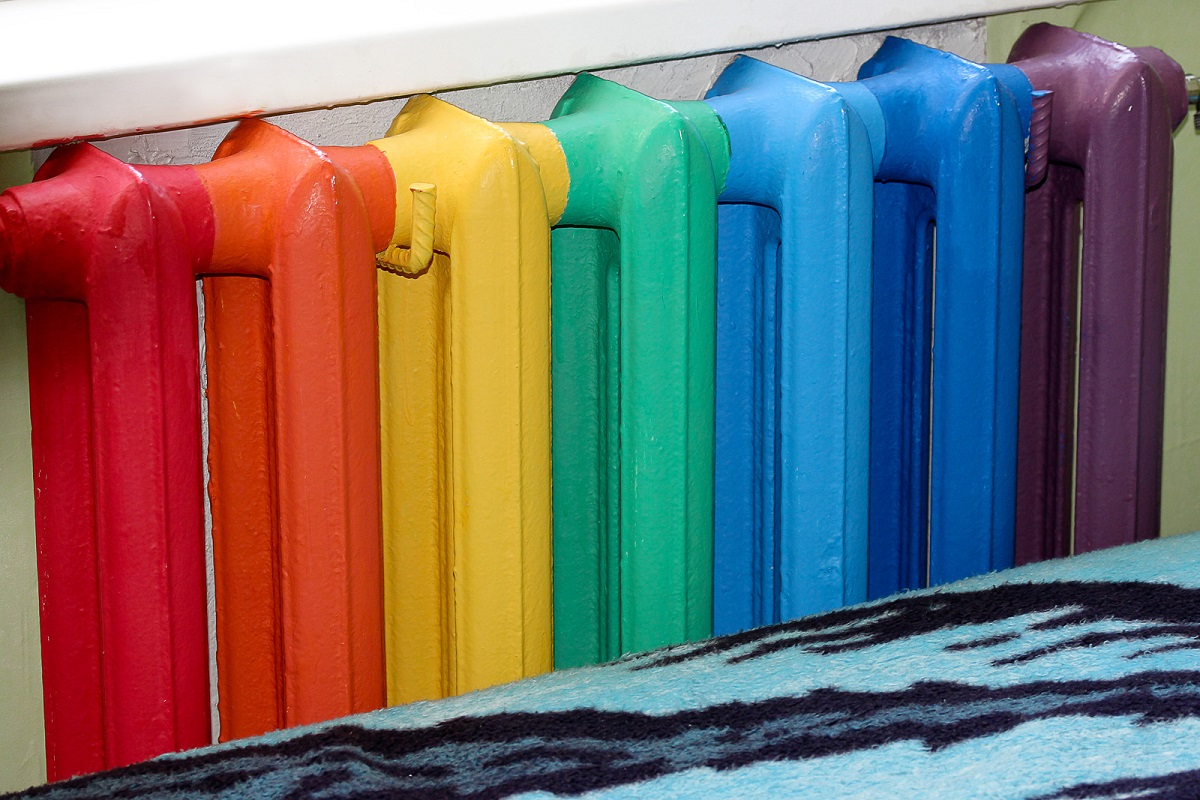
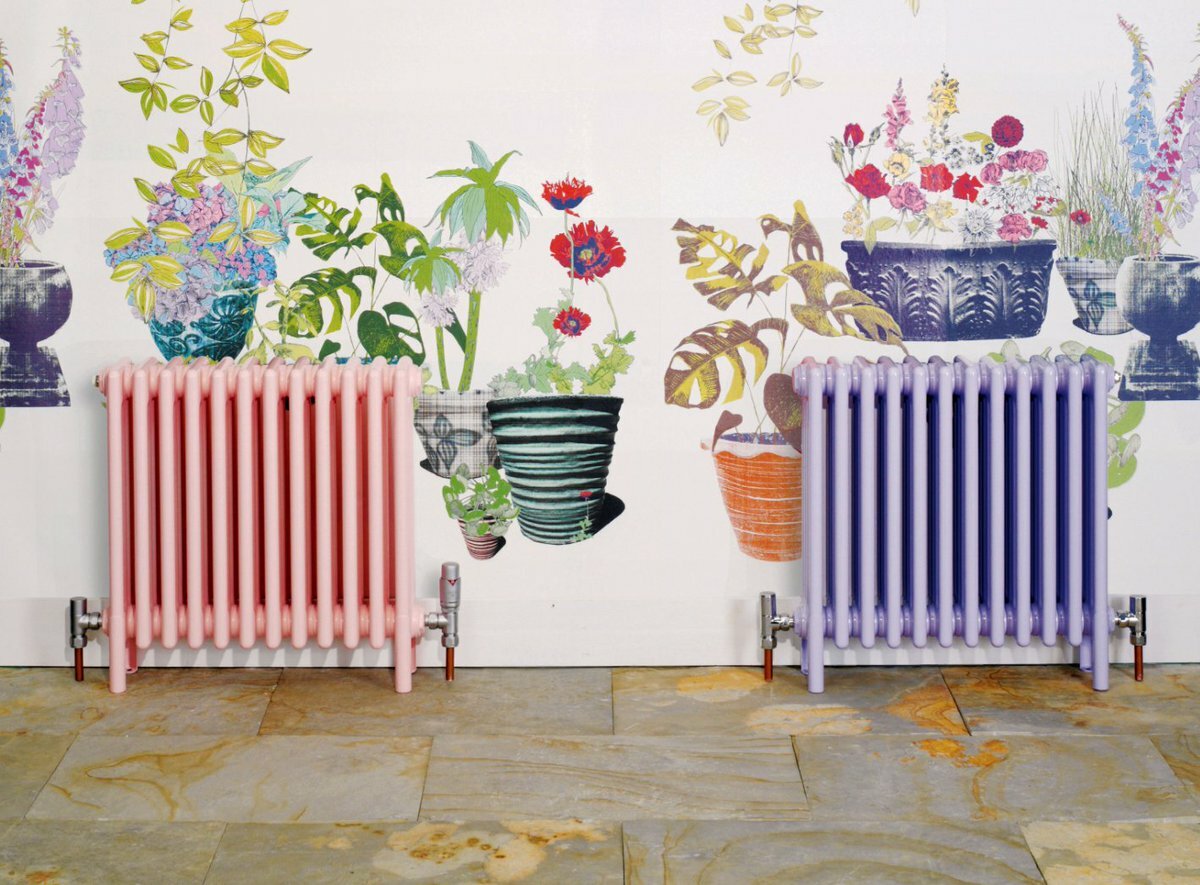
The decision in what color it is better to paint the radiators is up to the owners. Now available a wide range of funds, a variety of compositions.Classical is considered to be white enamel, silver. Some choose colors in accordance with the interior, lighting, general style of the apartment and design features. Gold and bronze shades, subtle patterns, drawings look unusual.
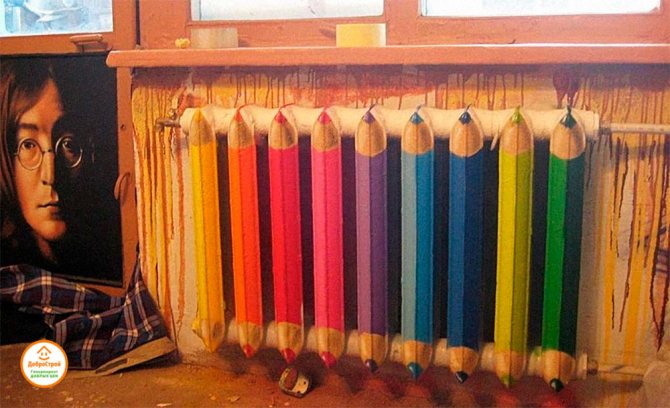
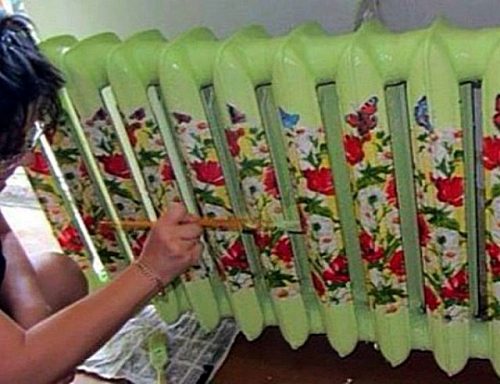
If the look of your old radiators no longer pleases you, then you can try to breathe new life into them with the help of experiments.
- The quality of painting cast iron batteries also largely depends on how well they are prepared. As a tool for applying paint, a smooth foam rubber roller of small diameter is optimally suited, and a brush is useful in hard-to-reach places. To decide for yourself how to paint the most convenient, you should think about removing the batteries. The radiator separated from the pipes can be covered with a composition on all sides, so there will be much less inaccessible places. At the same time, this method does not always justify itself, sometimes it is easier to paint over the battery more carefully without wasting time removing it. It all depends on the specific circumstances, the shape of the radiator.
- A very important factor is the temperature of the painted surface: the radiator must be cold. To the question “is it possible to paint hot batteries?” any specialist will answer unequivocally: this cannot be done. The most convenient moment is the time when there is no heating season. But the beginning of the heating period will not be a hindrance if you close the valves on the batteries, stopping the access of boiling water. It is enough to wait for them to cool completely to start painting. In the case of applying paint to a hot radiator, it will lie unevenly, swell, and various spots and stains will probably form. Moreover, you can connect the heating only when the paint is completely dry.
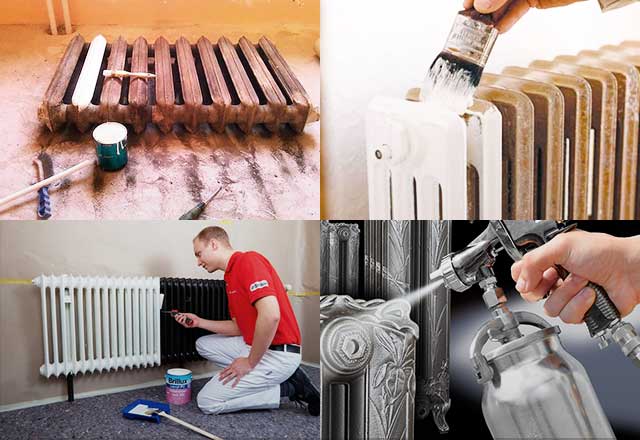
Painting radiators and heating pipes requires care and accuracy. It is good to use brushes, small rollers, spray cans. From the spray gun, it is optimal to process a previously removed battery, then all hard-to-reach areas will be perfectly painted over. It is from those places that are the least accessible that staining should begin.
It is important to observe a uniform layer thickness, otherwise the color may subsequently differ in different areas.
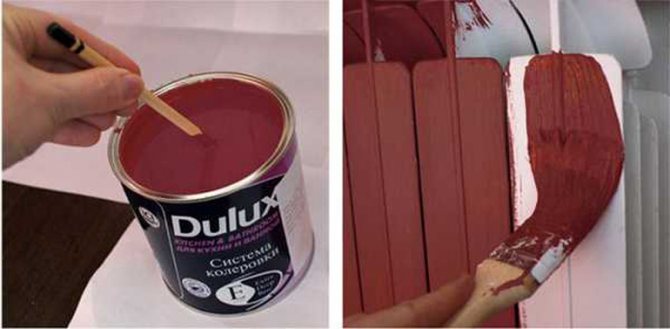
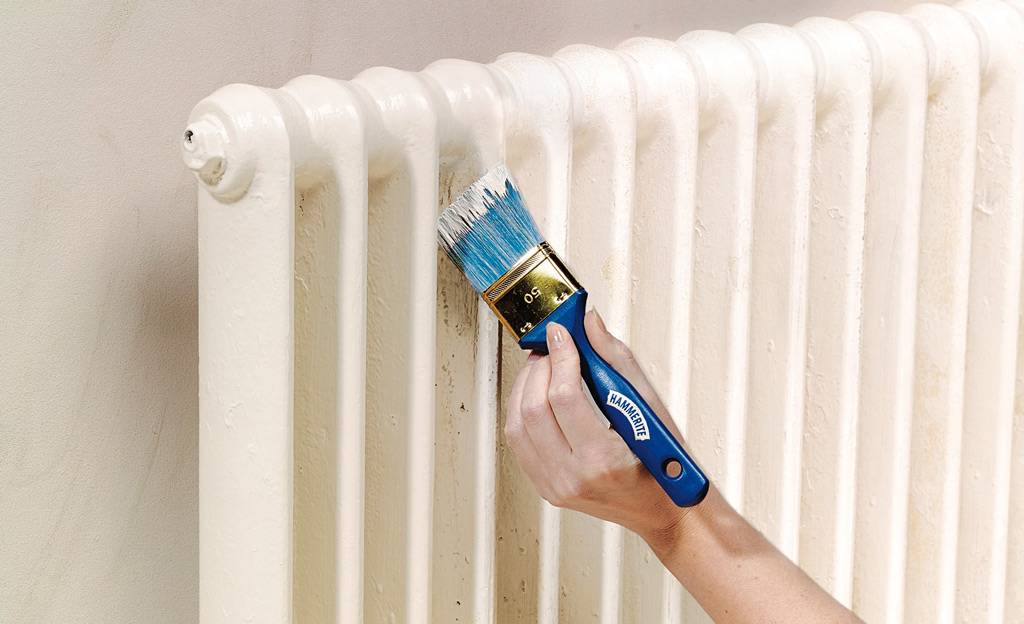
It is recommended to start painting from above, then accidental streaks will not spoil the lower part. You need to cover the entire battery with the composition, not limited to its front part. It is more effective to apply paint in two thin layers, and wait for the first one to dry completely before re-painting
Then there will be no streaks, and ideal evenness is easier to achieve with thin layers.
It is more effective to apply paint in two thin layers, and wait for the first one to dry completely before re-painting. Then there will be no streaks, and ideal evenness is easier to achieve with thin layers.



Painting recommendations
- The quality of painting cast iron batteries also largely depends on how well they are prepared. As a tool for applying paint, a smooth foam rubber roller of small diameter is optimally suited, and a brush is useful in hard-to-reach places. To decide for yourself how to paint the most convenient, you should think about removing the batteries. The radiator separated from the pipes can be covered with a composition on all sides, so there will be much less inaccessible places.At the same time, this method does not always justify itself, sometimes it is easier to paint over the battery more carefully without wasting time removing it. It all depends on the specific circumstances, the shape of the radiator.
- A very important factor is the temperature of the painted surface: the radiator must be cold. To the question “is it possible to paint hot batteries?” any specialist will answer unequivocally: this cannot be done. The most convenient moment is the time when there is no heating season. But the beginning of the heating period will not be a hindrance if you close the valves on the batteries, stopping the access of boiling water. It is enough to wait for them to cool completely to start painting. In the case of applying paint to a hot radiator, it will lie unevenly, swell, and various spots and stains will probably form. Moreover, you can connect the heating only when the paint is completely dry.
Painting radiators and heating pipes requires care and accuracy. It is good to use brushes, small rollers, spray cans. From the spray gun, it is optimal to process a previously removed battery, then all hard-to-reach areas will be perfectly painted over. It is from those places that are the least accessible that staining should begin.
It is important to observe a uniform layer thickness, otherwise the color may subsequently differ in different areas.
It is recommended to start painting from above, then accidental streaks will not spoil the lower part. You need to cover the whole battery with the composition, not limited to its front part
It is more effective to apply paint in two thin layers, and wait for the first one to dry completely before re-painting. Then there will be no streaks, and ideal evenness is easier to achieve with thin layers.
What tools and materials are needed for work
Not always and not everyone has the opportunity to change batteries. A universal way out of this situation will be painting the radiators in any color you like. To work, you do not need to have certain skills, but you will need to purchase some materials and stock up on tools. The purchased paint must be resistant to high temperatures. This property is necessary, since in winter the radiators of the heating system heat up and become very hot.
In addition, the composition must retain its original color for a long period of time. A rather important factor is also considered the absence of a smell in the paint, so that after work it is not necessary to ventilate the living quarters. Before you learn how to paint, you need to figure out the paints that are suitable for this. So, in stores you can always find acrylic compositions. They are distinguished by the absence of a pungent odor and the ability to retain their color for quite a long time.
Oil formulations are also often found in stores, but not many people buy them. This is due to the emergence of safer formulations of the first two types. All of these paints work in one way or another. Painting radiators with your own hands using these materials will give a positive result if you follow the operating instructions and dilute the paint with a solvent in the proportion indicated by the manufacturer.
To quickly complete the work and not be distracted, you will need to stock up on the necessary equipment. So, you will need:
- fine-grained sandpaper;
- a knife or other sharp object for cleaning radiators;
- several brushes of different shapes:
- small roller;
- old rags.
With everything you need at hand, you can get to work.
It is very important to stock up on rubber gloves and a protective mask, which will help protect the skin from stains and the respiratory tract from fumes.
Preparing the bath for painting
After the question of what paint to paint the bath has been sorted out and the final conclusion has been made, it is necessary to begin work on preparing the surface of the cast iron for applying the coloring composition:
- First of all, the drain and pipes are removed from the cast-iron bath;
- All fat and lime deposits are removed from the inner surface with the help of special detergents, which include alkali (oxalic acid or baking soda). The cast iron bath is polished from the outside;
- Peeling paint, enamel is removed with a grinding wheel or an electric drill with abrasive nozzles to smooth the surface;
- Cracks and log cabins are polished separately with sandpaper;
- The primer is distributed throughout the bath, a thick layer is applied to the chips and to the edges of the bath sides;
- We prepare the mixture - we breed. You need to know that the diluted composition should not stand for more than half an hour - this is the time for painting the bath, as it begins to harden.
- Next, a coloring composition is applied to the dried surface and evenly distributed over the surface of the cast-iron bath with your hands;
- The second layer of cast iron or metal bathroom paint (quick-drying option) is applied only after the first layer has dried;
- After application, allow to dry for at least a day with doors and windows closed.
The grinding nozzle is selected in accordance with the material being processed - for metal, you can also use sandpaper or a steel brush.
in our climate heating required 6-7 months a yearTherefore, radiators are an integral part of the interior.
Cast iron batteries do not look the best, it is not always possible to close them with grates.
So that the battery does not spoil the look of the room, with the help of paints you can make her attractive.