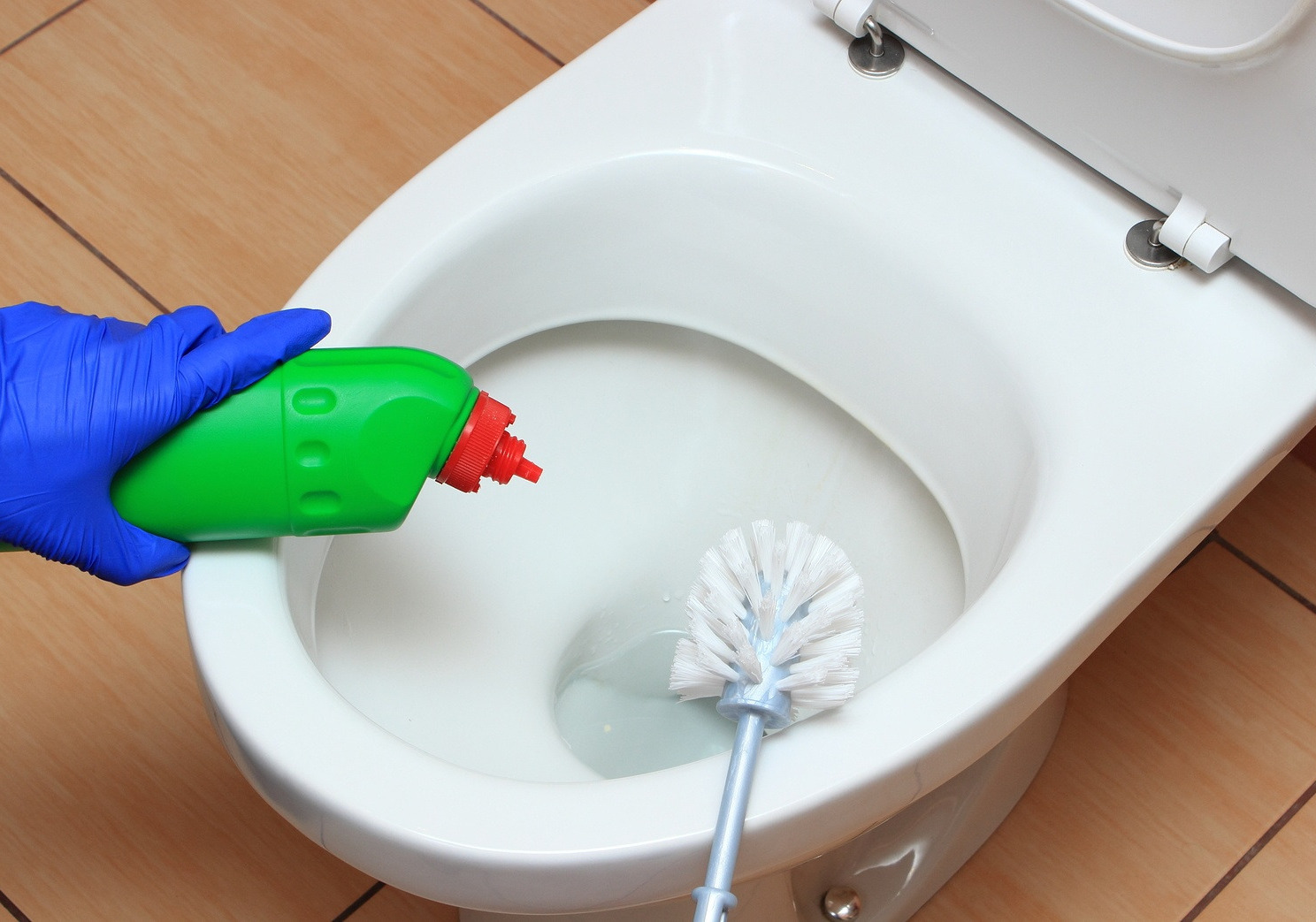
- home methods
- Lemon acid
- Vinegar
- Oxalic acid
- Soda
- Cola
- Why is plaque formed in the toilet
- Ways to clean the toilet bowl at home using folk remedies
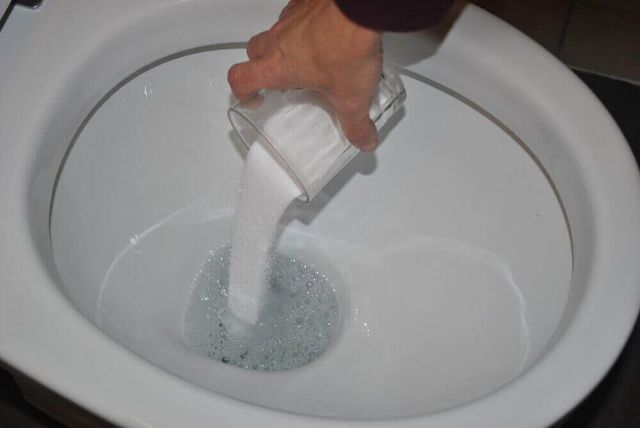
- How to clean a toilet with baking soda
- How to clean the toilet with mustard powder
- Cleaning the toilet with vinegar
- Cleaning the toilet with wood ash
- 3 Radical methods of destruction
- Strong chemistry to fight urinary stone
- Phosphoric acid (5-7%)
- Hydrochloric acid (33%)
- Battery electrolyte
- Plaque removal - what is the best way to wash
- Abrasives
- alkalis
- acids
- Folk remedies for plaque removal
- Causes of urinary stone and limescale
- Means for removing urinary stone
- How to wash a urinary stone in the toilet with specialized products
- Mistakes in plumbing care
- Cleaning a Clogged Toilet with Baking Soda and Vinegar
- Chemistry on guard of purity
- Pollution Prevention
- Household chemicals
- We wipe the toilet bowl with special means of household chemicals
- Cleaning Coca-Cola
- "Whiteness"
- hydrochloric acid
- Automotive electrolyte
home methods
You can quickly clean the toilet from urinary stone, limescale and rust with the help of substances that are in almost any kitchen.
Lemon acid
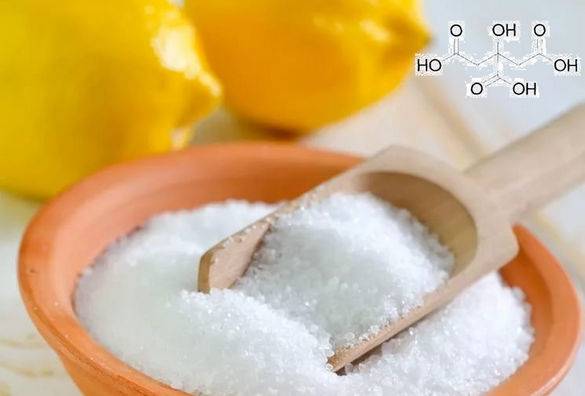
The tool is not very strong, therefore it will not clean old deposits, but it will perfectly help to remove those that have not yet reached a critical point. The algorithm of actions looks like this:
- Take 3-4 bags of "lemon" and apply to areas with visible pollution.
- Cover the toilet with a lid.
- Leave for a few hours. Ideal for all night long.
- Clean the surface with a brush.
- Rinse with water.
If necessary, repeat until the contamination is completely gone.
Vinegar
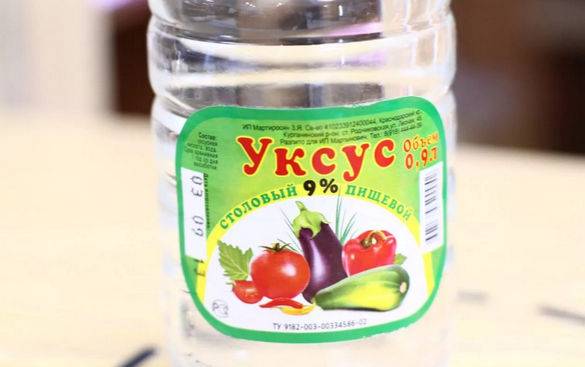
Well removes dirt 9% vinegar. How to clean the toilet with vinegar?
- Pour 250 ml of acid into a container.
- Close the lid and heat up to 50°C.
- Pour into the toilet.
- For best results, add a couple of teaspoons of baking soda.
- Leave it on for at least 2 hours, but overnight is best.
- Clean with a brush and rinse with water.
Oxalic acid
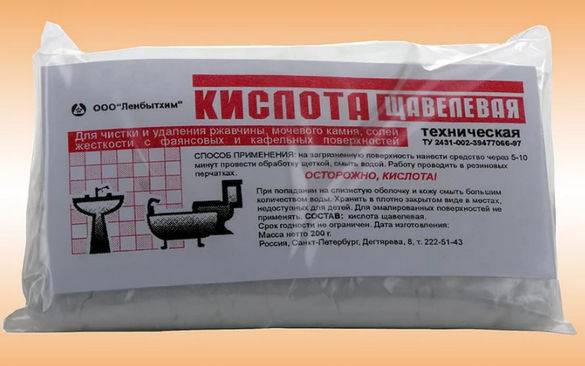
Another effective toilet bowl cleaner is oxalic acid.
To clean the toilet from urinary stone, rust, acid is applied on a damp sponge or cloth, and after that - to problem areas. It remains only to rub them with a brush and rinse with water.
Oxalic acid has one drawback - it is difficult to find it on store shelves.
Soda
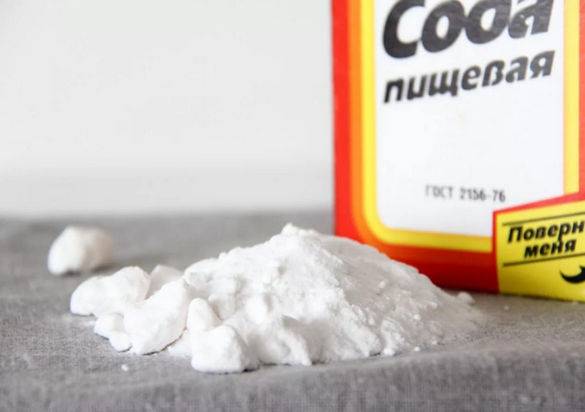
Ordinary baking soda turned out to be no less effective in the fight for the cleanliness of plumbing. It is used both separately and in combination with acids, for example, oxalic or acetic. Due to its abrasiveness, soda destroys and removes plaque from plumbing. For one cleaning you will need about 200 g of the substance. It must be applied to contaminated areas and left overnight. After cleaning the toilet with a brush and, as in the previous methods, rinse with water.
Cola
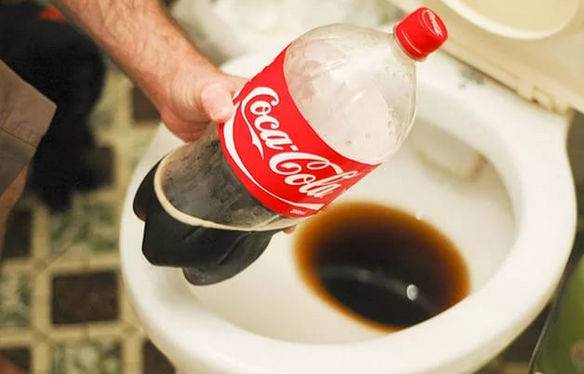
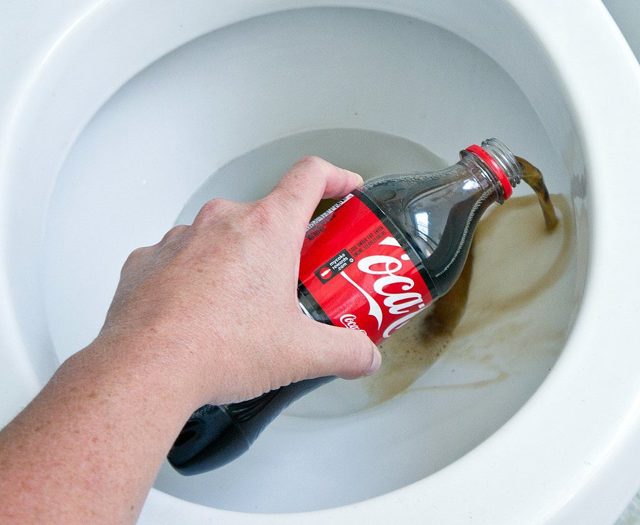
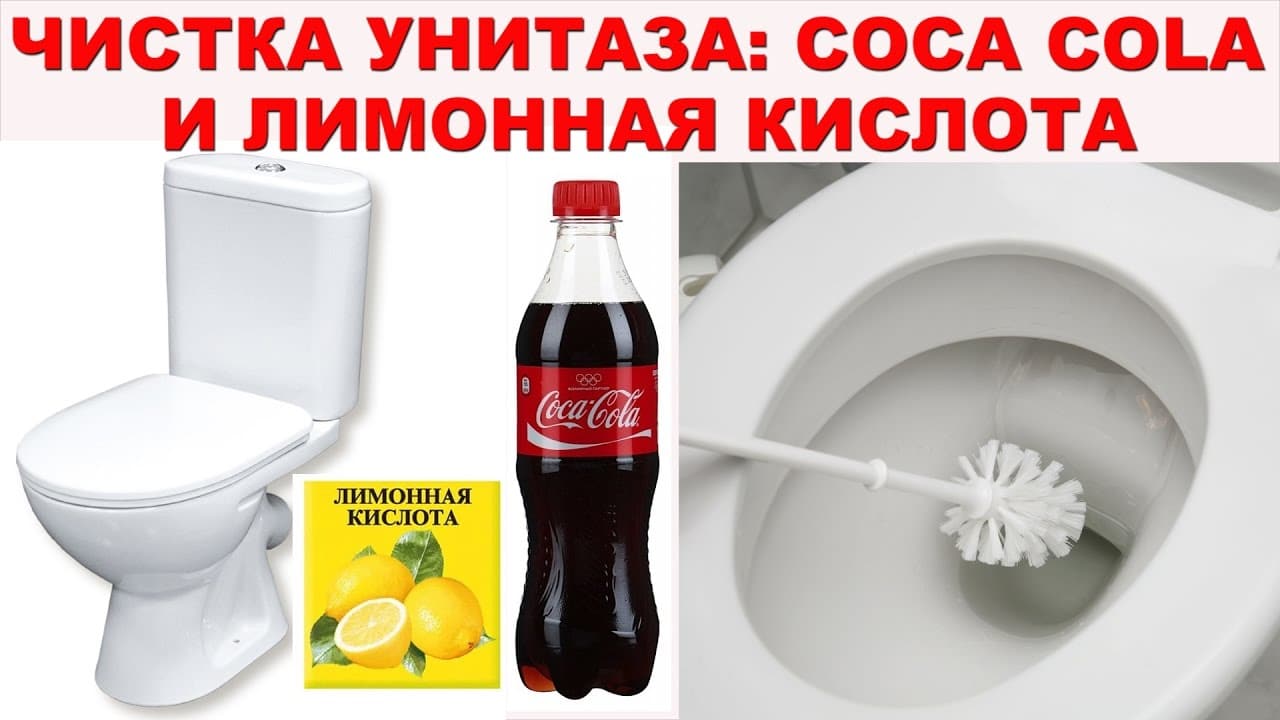
A great toilet cleaner is the sweet drink Coca-Cola.It easily copes with many contaminants due to the high content of phosphoric acid. To clean plumbing to a shine, just pour a couple of liters of this liquid into it. Rinse with water after a few hours.
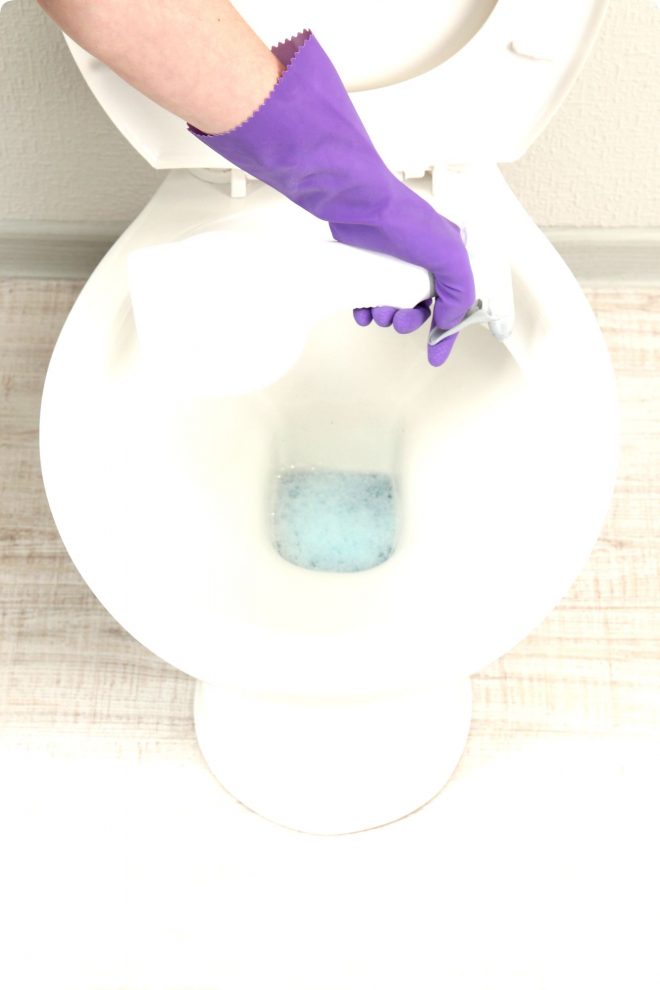
When working with the listed substances, it is recommended to use protective gloves.
Why is plaque formed in the toilet
The main "enemies" of cleanliness in the bathroom and the impeccable appearance of plumbing include urinary stone, limescale and rust. Let's take a closer look at the problem:
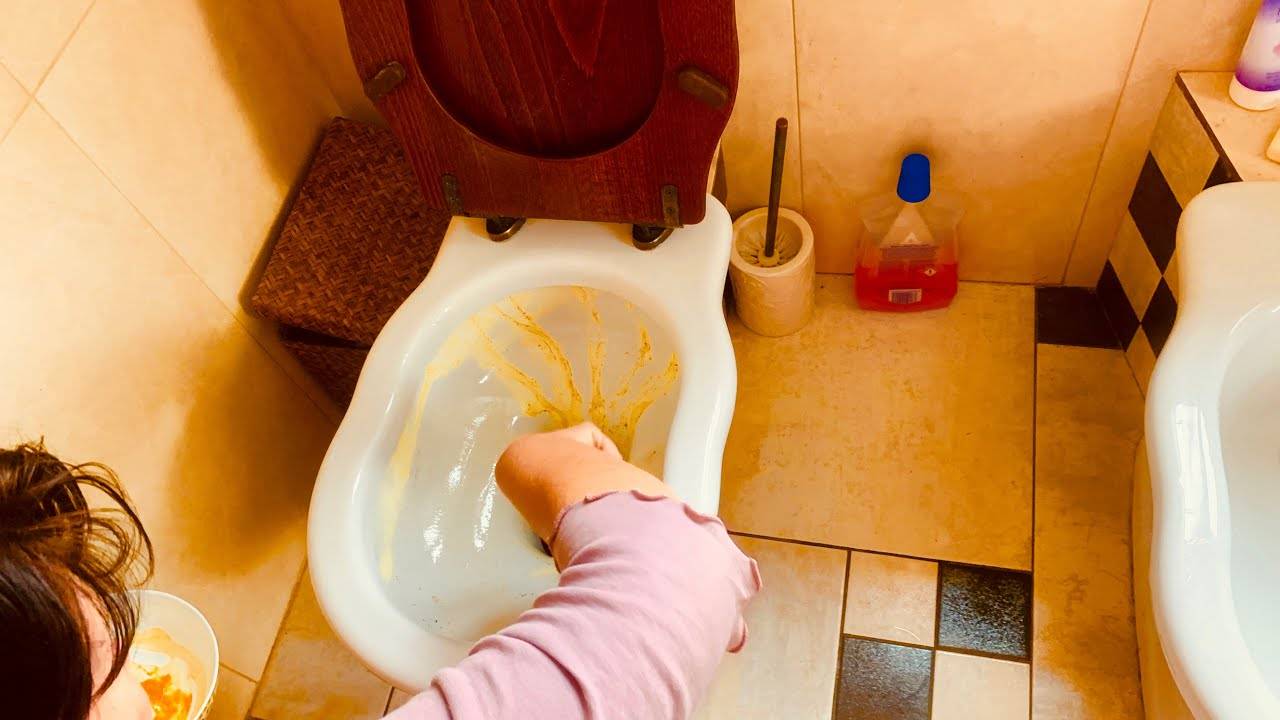
The formation of a urinary stone is a serious and intractable problem for those who do not know how to deal with it. Deposits form at the bottom, where water accumulates. Urinary stone is a complex compound based on the mineral salts found in human urine.
As a result, a persistent brown coating forms on the bottom of the toilet bowl, and when there is a lot of deposits, this can also lead to a decrease in the diameter of the drain hole. For this reason, it is necessary to get rid of a urinary stone immediately after its appearance.
The appearance of limescale is due to the calcium salts that tap water contains. The more of these compounds, the higher the hardness of the water and the more abundant deposits.
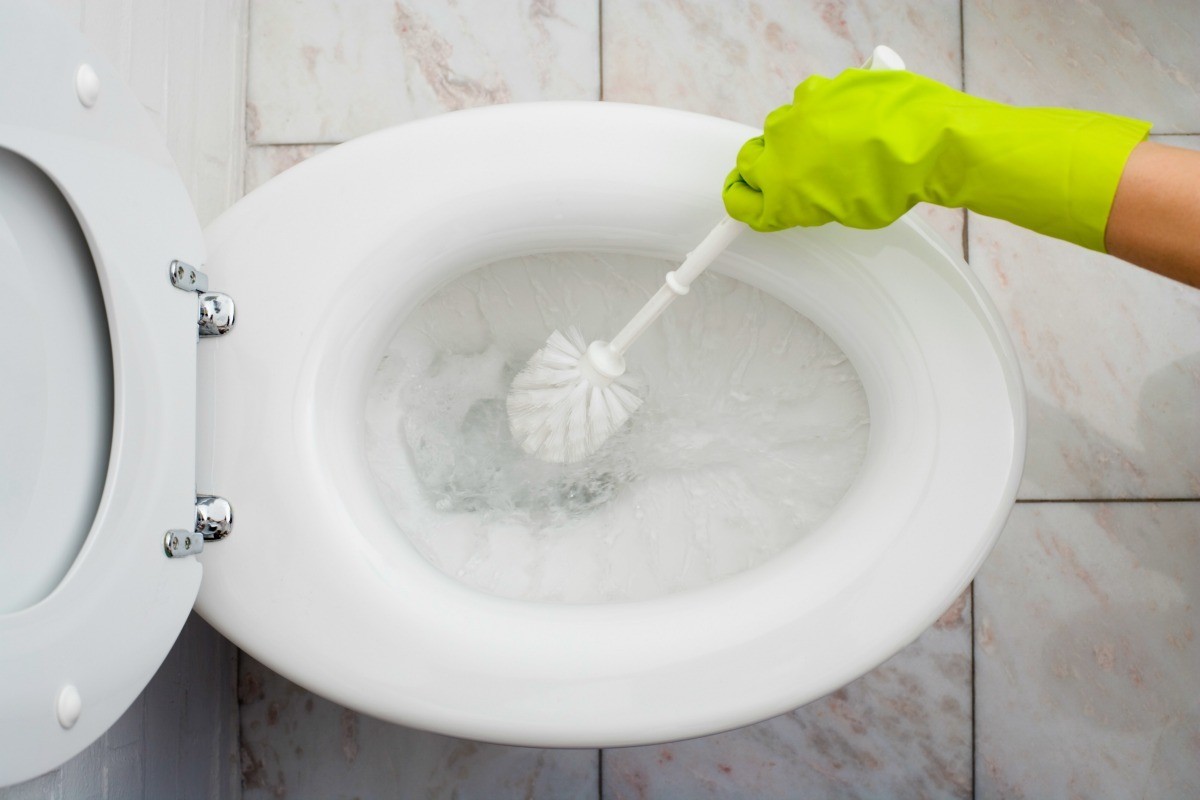

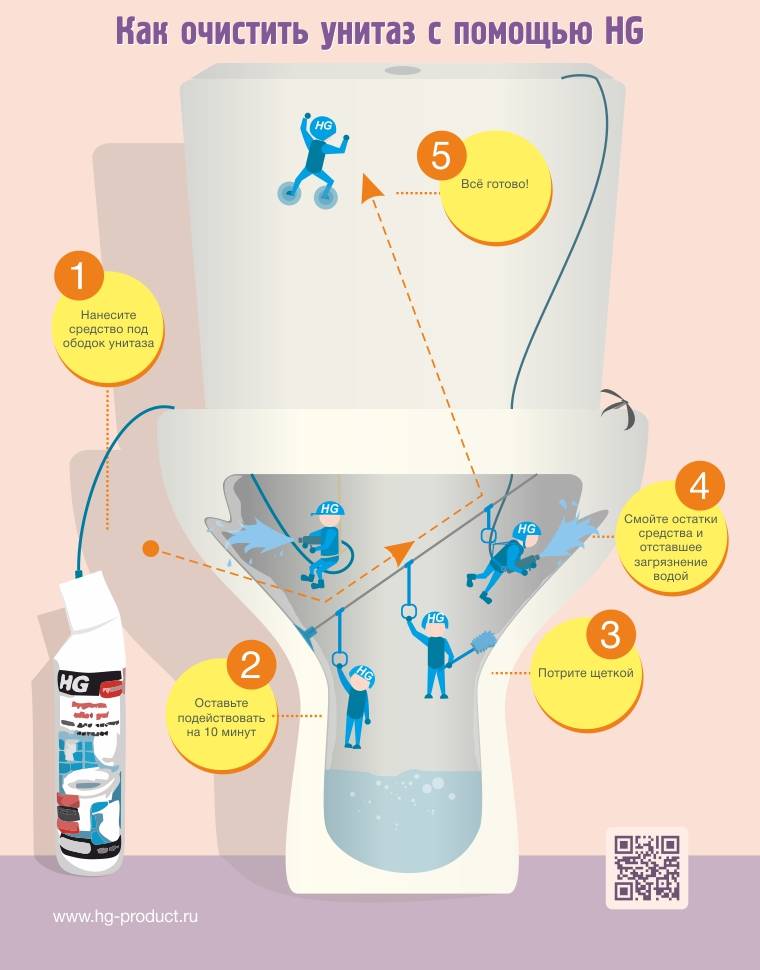

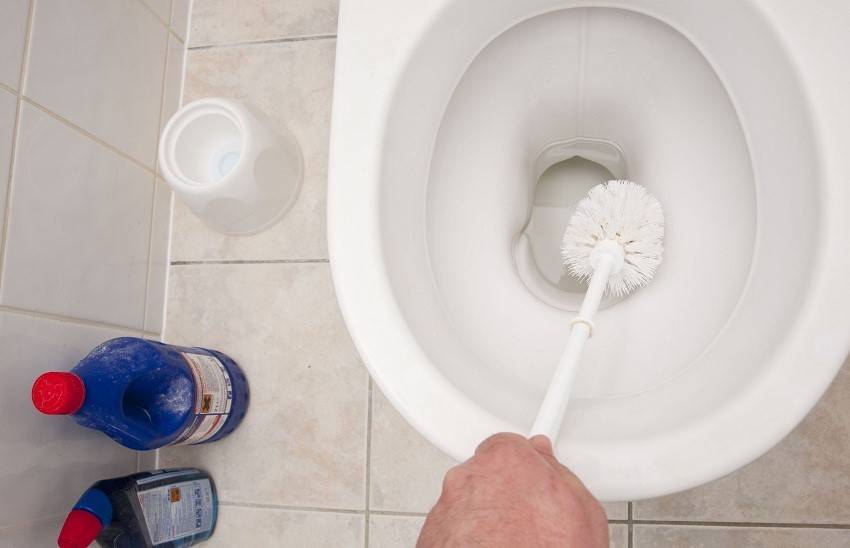

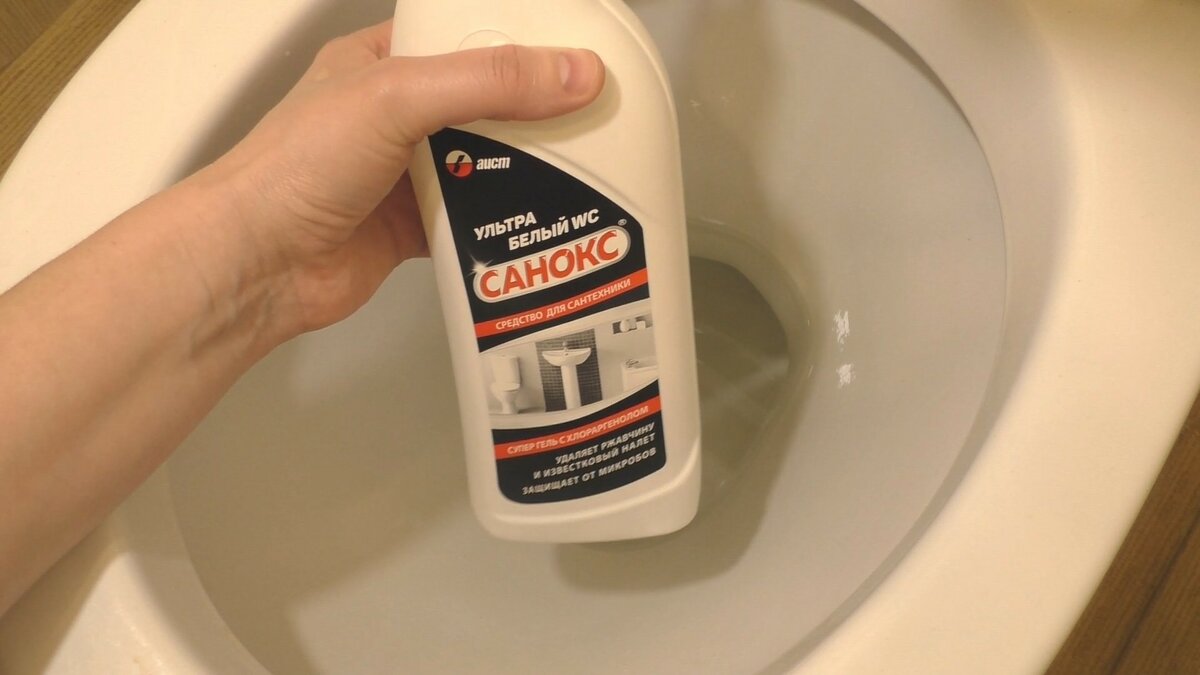


Plaque forms on the inner surfaces of the toilet bowl, as well as in the cistern. Lime deposits are an ideal "basis" for other types of pollution, and to prevent this from happening, it must be removed immediately.
Rusty streaks on plumbing appear due to poor water quality and poor condition of water pipes.If the system is old, and a large amount of rust has formed inside, its particles, along with water, fall on the surface of the plumbing, forming orange-brown streaks. It should be remembered that the “older” the stains, the more difficult it is to remove them, and to clean them in a timely manner.
Related article: Do-it-yourself felt angel: a master class with patterns
How to clean the toilet from urinary stone, rust stains and lime deposits? Dealing with dirt on the surface of plumbing is not difficult if you know how to do it and act in accordance with the rules.
Ways to clean the toilet bowl at home using folk remedies
To avoid the doubts that gnaw at us, let us recall our grandmother's recipes long forgotten by us. These little tricks will help you get the much-needed desired result.
How to clean a toilet with baking soda
To clean the toilet from limescale to a radiant sheen, think of ordinary baking soda. So, we clean, like our grandmothers, with “Baking Soda”. This recipe will tell you how to clean the toilet at home with baking soda and vinegar. The main thing is to do everything according to the instructions!
Before the scheduled cleaning, do the following:
- sprinkle abundantly the inner surface of the toilet bowl with baking soda, let it stand for half an hour;
- then fill with vinegar;
- while everything foams and boils, we carefully work with a brush.
The result of the effect will amaze you: no rust, no limescale, no urinary stone, just a perfect shine.
How to clean the toilet with mustard powder
Here is another long-forgotten recipe for how to clean the toilet with folk remedies. Probably every housewife in the house has an unopened pack of mustard powder.Yes, it can be used to clean the toilet to a shine, preparing a remedy from mustard, vinegar and ordinary starch, which is undoubtedly found in every home.
The recipe is the following:
- take 1 tablespoon of mustard powder;
- add 1 tablespoon of citric acid there;
- we fall asleep 1/2 part of a pack of starch;
- mix everything thoroughly with the addition of plain water.
The toilet bowl cleaner is ready, let's start cleaning. Apply to the surface of the toilet and leave for a while, then rinse with a brush. The effect is guaranteed excellent and without much effort.
Cleaning the toilet with vinegar
Let's think about ordinary vinegar. It will also give an excellent and effective result, effortlessly rid the toilet of a urinary stone inside.
Recipe and how to use:
- we take and heat up to forty degrees a glass of nine percent vinegar;
- add a small pinch of salt to the warmed vinegar;
- mix all this until the salt is completely dissolved and pour it onto the walls of the toilet bowl;
- leave overnight for a better result;
- in the morning, rinse with running water from the tank.
Everything is perfect, easy and simple - the toilet bowl is cleaned to a shine.
Cleaning the toilet with wood ash
Recall another popular recipe for cleaning the toilet using wood ash. So, a couple of packs of citric acid and wood acid will make your toilet smile and shine with amazing shine.
Recipe for preparation and method of application:
- we take ordinary wood ash (it will give the effect of abundant foam, which will facilitate further cleaning);
- mix the ash with citric acid (everything in equal quantities and proportions);
- at night we fall asleep in a glass of the toilet, in the morning we clean everything with a brush, easily and effortlessly.
This composition will help get rid of unwanted contaminants.
A lot can be remembered and put into practice, but of course it’s better not to forget that daily cleaning with such an ordinary brush and a little ordinary toilet cleaner will give you the opportunity not to think about the difficulties of cleaning unwanted smudges. All the work done in time will keep your toilet in perfect condition and save your nerves, effort and time.
And now we offer to watch a video on how to wash the toilet correctly, as well as the rules for caring for it:
3 Radical methods of destruction
Cleansing with radical means is the most effective, but in no case is suitable for plastic. With all the practicality of this material, in all respects, products containing acid cannot be applied to it.
Acids are the most aggressive of all existing methods, but they have 1 significant drawback: they require certain knowledge of chemistry and difficult precautions. With the help of aggressive hydrochloric acid, even age-old deposits of urine layers can be peeled off, but also chemical burns of the skin and respiratory tract can be obtained.
Therefore, hydrochloric acid is increasingly becoming obsolete, and it is also unlikely to purchase it in a simple sale, except perhaps in a chemical reagent store.
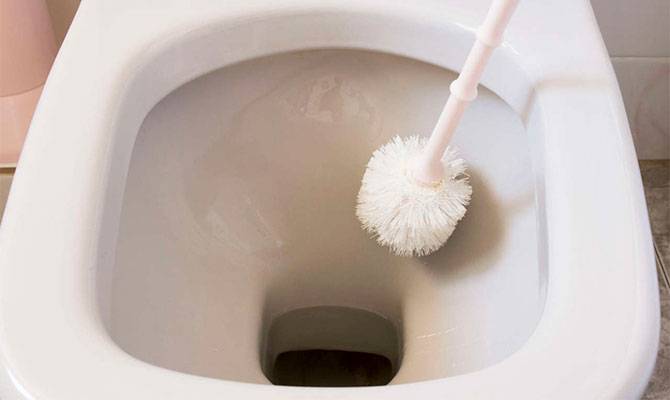 Of the acidic agents, citric acid is optimal.
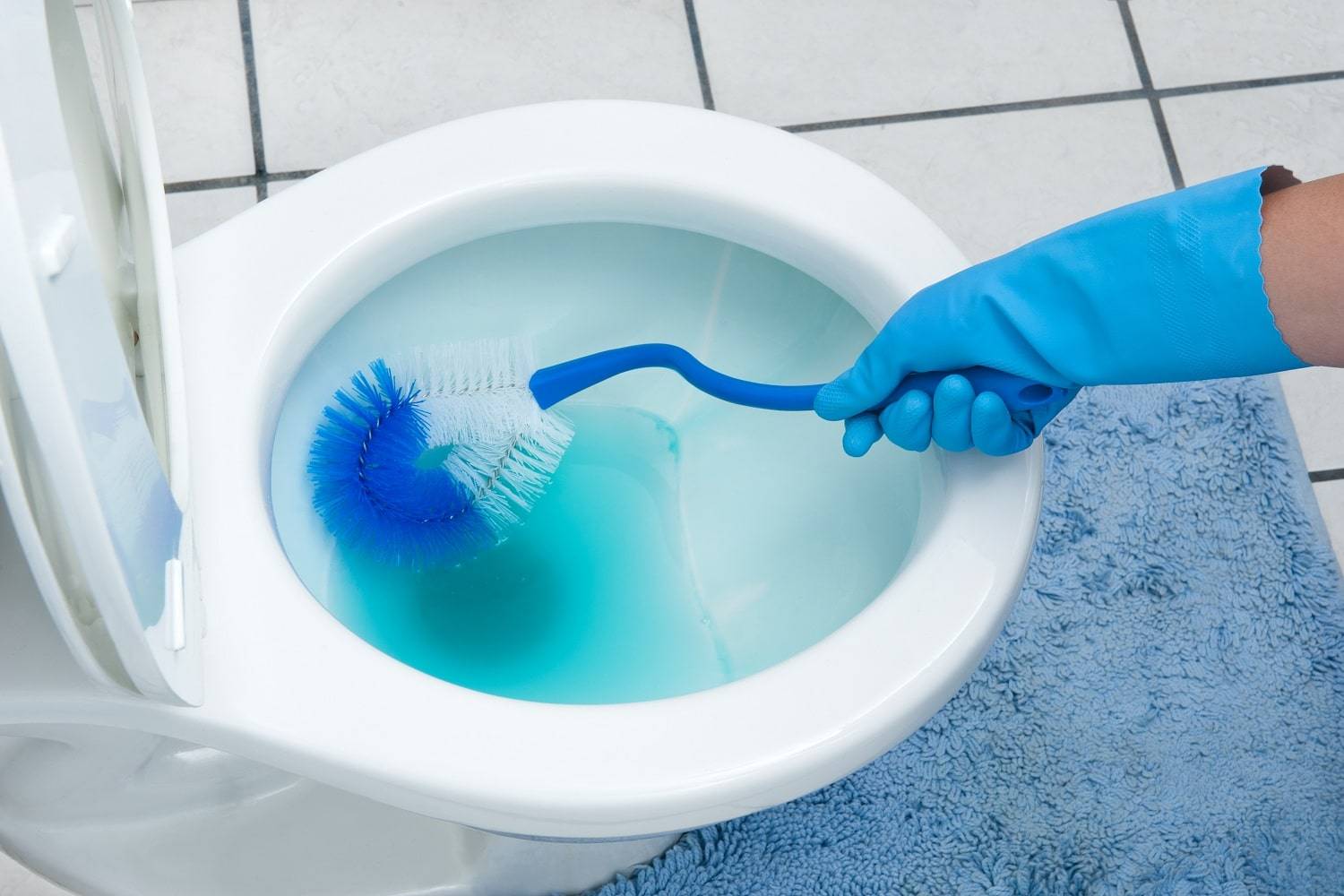
Oxalic, citric acid, used car electrolyte from a battery are much safer, besides, acids can be applied, protecting only hands with rubber gloves, and left for a while, and then simply washed off with water using a brush.But citric acid is weak, and for significant contamination, its application will have to be repeated several times, oxalic acid is also now sold not in every hardware store, and the electrolyte is not always at hand.





Strong chemistry to fight urinary stone
If the methods described above did not succeed in dissolving the urinary stone in the toilet bowl, then it accumulated for quite a long time and stronger means are needed to remove it.
Don't forget to wear rubber gloves!
Phosphoric acid (5-7%)
This substance copes with plaque in 10-15 minutes, does not destroy rubber and plastic, therefore it can be used in apartments with plastic pipes. Wear rubber gloves while working.
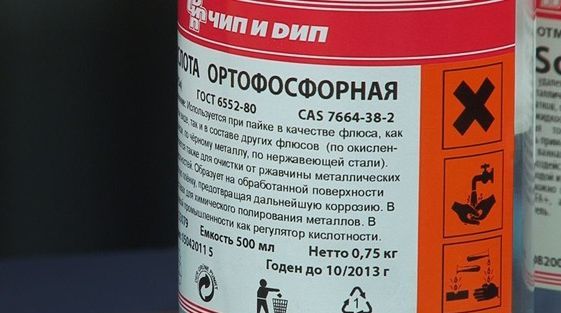 By the way, phosphoric acid can also come in handy if rust has begun to appear on the internal parts of the tank. To remove it, pour 100 gr. into the tank. acids, the same amount is poured into the toilet, distributing along the walls with a brush. After 15 minutes, the tank is emptied and the inner surface of the toilet bowl is actively cleaned with a brush, the water is drained again.
Hydrochloric acid (33%)
This substance is quite dangerous, while working with it, it is worth observing safety precautions. Do not inhale hydrochloric acid fumes and use rubber gloves, if the exhaust port is equipped with a fan, then turn it on beforehand
Hydrochloric acid is not recommended for use in apartments with plastic pipes, it corrodes plastic.
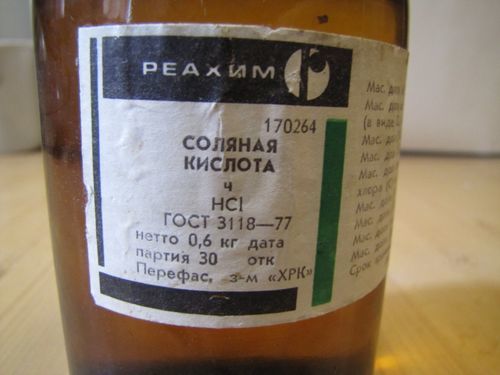
Pour a glass of hydrochloric acid into the toilet and spread with a brush along the walls and under the rim, close the toilet lid to reduce evaporation. Rinse after 15 minutes and brush vigorously.
Battery electrolyte
Liquid battery electrolyte can be purchased at a car dealer, it is used in the most neglected cases.
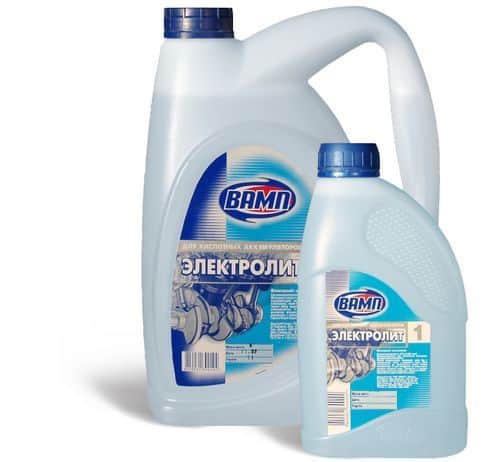
The main active ingredient is sulfuric acid, as you know, the substance is quite dangerous.
The instructions for using the battery electrolyte are the same as for hydrochloric acid, and the precautions do not differ. It is worth saying that this tool can not be used often.
Plaque removal - what is the best way to wash
Below are the effective cleaning products most commonly used by housewives to solve the problem in question. Each of the listed options for cleaning the toilet deserves attention, so it makes sense to talk about each of them separately.
Abrasives
Abrasives include a variety of powders. The action of these substances is realized due to the fact that the layer deposited on the plumbing is peeled off, erased from the surface.
To achieve the desired result, they are armed with a wet rag, after which they rub the surface, applying effort
Before carrying out the procedure, it is very important to remove water from the tank. The proposed option for dealing with deposits takes a lot of effort, the work is very dirty
In addition, after such a procedure, a large number of scratches appear on the surface of the toilet bowl, and after a while, not only its appearance deteriorates, but also the structure is disturbed - it becomes rough. This leads to the fact that in the future plaque will form even faster. So it’s definitely impossible to call this option for removing deposits on sanitary ware ideal, it’s possible to use it only a couple of times.
alkalis
More convenient, and most importantly - effective in the use of substances are compounds that include caustic soda. Its chemical feature is that soda will effectively “eat” plaque without damaging the hard surface of plumbing. You can clean the toilet bowl with alkali, regardless of whether there is a glazed coating on the plumbing or not - under the action of caustic soda, it will not be destroyed.
Working with alkaline preparations is extremely simple. It is enough to apply the composition to the walls of the toilet bowl, after emptying the tank of water. After the composition is applied, it is necessary to pour the liquid into the tank. Wait 10-15 minutes for the caustic soda to react with the deposits, and then you can rinse off. If the plaque has not been removed for a long time, it makes sense to repeat the procedure 2-3 times.
acids
The effectiveness of acid products on unwanted deposits is much higher than that of alkaline products. Good aggressive acid perfectly removes even obsolete plaque
The cleanser has another advantage - a low price.
However, acids should be used very, very carefully. On enameled surfaces, such substances should not be used at all, because in addition to removing plaque, the surface of sanitary ware will be damaged
Exposure to acid will roughen it up, which will cause plaque to form faster in the future. It is necessary to use acids to cleanse sanitary ware from urinary stone deposits very, very carefully, because even a drop of acid on the skin, and even more so on the mucous membrane of the eye, can lead to sad consequences.

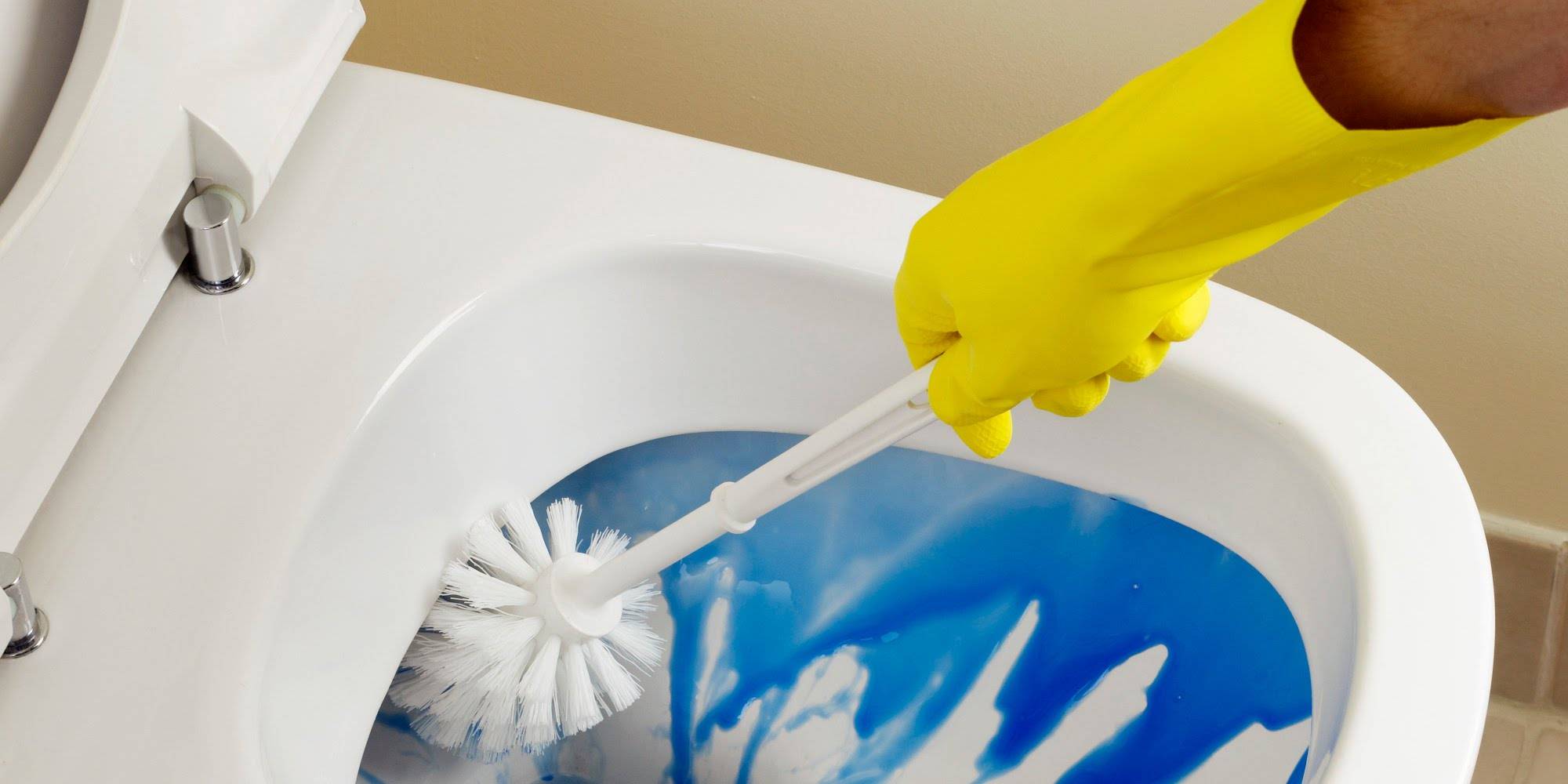
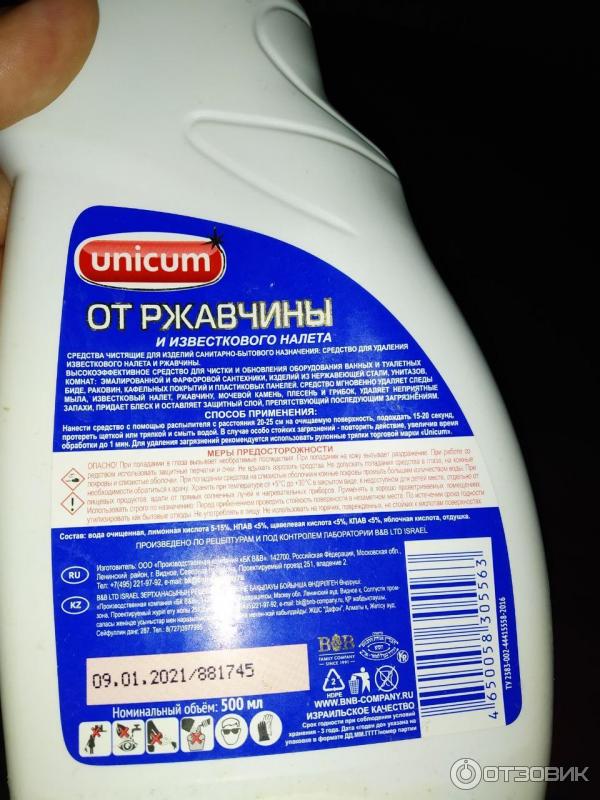



Folk remedies for plaque removal
No desire to use purchased formulations? There are many highly effective home remedies that have been used to remove plaque from the toilet for long periods of time long before synthetic products were commercially available.
- Battery acid is highly corrosive and effective. Its use is quite enough to clean even a heavily contaminated toilet bowl.
- Dry oxalic acid is also widely used to remove urinary stone deposited on the toilet bowl. To use this substance, apply it to a damp sponge or cloth, and then proceed to rub the surface. As practice shows, the result obtained during the procedure exceeds all expectations.
- Acetic essence, citric acid. Perhaps this is the cheapest way to remove urinary stone deposits from the toilet. Simply apply the essence or acid to the surface, then wait a few minutes, then clean the surface with a brush (or the abrasive side of a dishwashing sponge). Do not forget to rinse the surface with cold water 3-4 times at the end of the procedure.
Causes of urinary stone and limescale
If dirt and scale build up in the toilet, take immediate action to prevent bad odors and buildup of deposits.
Inside the toilet, the following types of pollution are formed:
Urinary stone is the result of laziness and negligence of the owners. Most often, yellow nondescript spots form on the plumbing of people who forget to flush after themselves. Initially, drops of urine dry up and form a thin hymen. With repeated absence of flushing, a stronger film is formed - urinary stone.You can get rid of it only by special methods, but it is better to prevent its occurrence by carrying out prevention.
Limescale - minerals contained in water (borehole or river, tap water). The more often you wash away after yourself, the more actively the film forms. You need to get rid of limescale regularly, because over time it clogs the holes that supply water to the toilet, which leads to plumbing failure.
Enamelled plumbing is less prone to the formation of plaque that cannot be removed, but on rough surfaces it appears more often and more intensely.
Means for removing urinary stone
Urinary stone looks like pollution of an unpleasant brown-yellow color. Usually such stains can be observed under the rim or toilet seat.
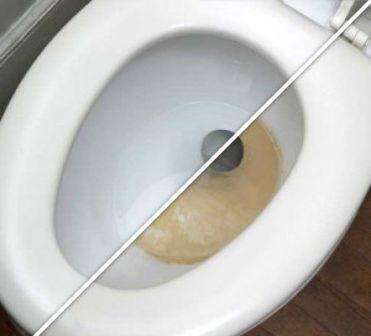
- No. 14. First, treat the contaminated surface with ordinary table vinegar. Thoroughly pour vinegar over the surface and leave for 8 hours. It is better to carry out the procedure before going to bed. In the morning, thoroughly rub the surface with a ruff or brush. Often such an impact is enough to completely remove the stone;
- No. 15. Vinegar can also be used in other recipes. Heat 1 cup of vinegar to 40°C, add 1 tbsp of baking soda with a mountain and a couple of drops of iodine. Carefully move the components until the soda is completely dissolved. Be careful not to inhale vinegar fumes. Pour the warm liquid into the toilet bowl and leave overnight. In the morning, just rinse with water. If traces are still visible, you can repeat the procedure. Any vinegar is suitable for this method, both apple and grape, but only 9% concentration;
- No. 16. Instead of vinegar, you can use citric acid.Take a package of lemons, mix the powder with water. Add water little by little to achieve a paste consistency. The resulting slurry must be applied to pollution and left to act for a couple of hours. Then wipe with a ruff and rinse thoroughly with water;
- No. 17. The next method is based on the use of conventional Whiteness. Remove all water from the drain hole, pour a bottle of product into it and leave it overnight. In the morning you need to rinse the surface well with clean, and preferably warm water.
If the first time it didn’t work out without a trace, try combining several methods using different active ingredients. Immediately begin treatment with the most gentle means and gradually move on to more aggressive methods.
How to wash a urinary stone in the toilet with specialized products
An old urinary stone from the toilet will help to wash special chemicals. In this case, it is better not to resort to the use of abrasive substances. Those in which there are small, but sharp and hard particles. With their help, mechanical surface treatment is carried out. They effectively remove all contaminants, however, it is undesirable to use such mixtures on ceramics. This is especially true for sanitary porcelain, as abrasive compounds leave deep scratches on a smooth surface.
Among the most popular specialized household chemicals include the following products:
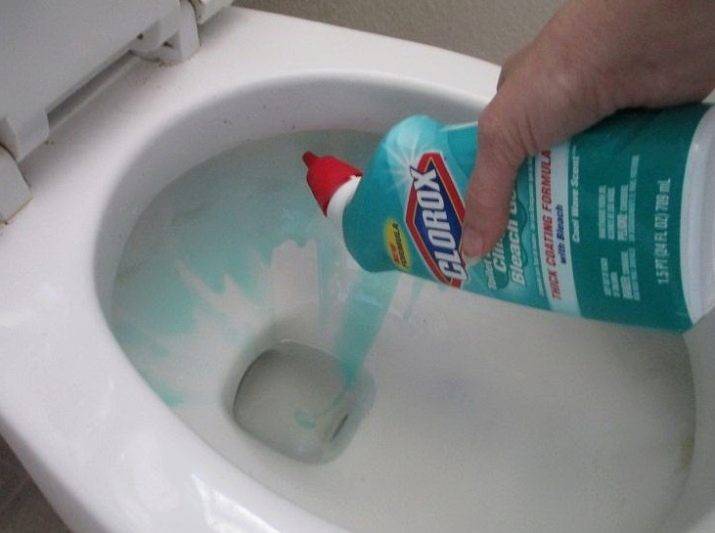
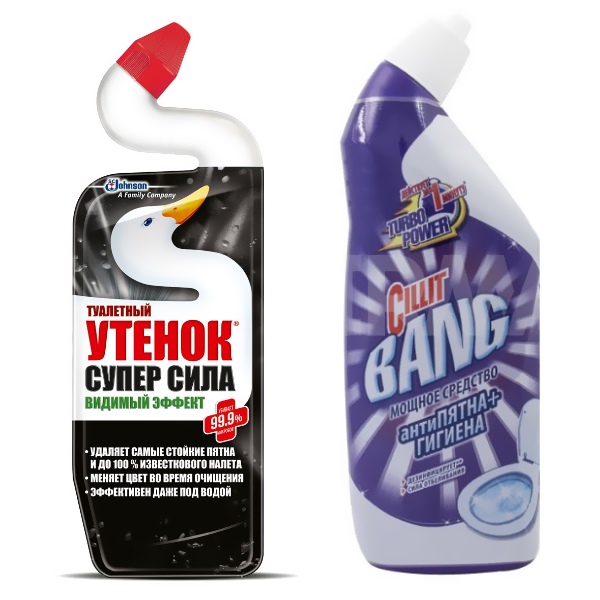
- Gel-like "Cillit Bang" for toilet bowls is one of the best remedies for urinary stone. As a plus, it is worth noting the form in which the gel is produced, since the bottle is equipped with a dispenser in the form of a small spout.With its help, it is convenient to squeeze the cleaning agent directly from the can into hard-to-reach places under the rim, which eliminates the need to moisten the sponge or rags. The main active ingredient of "Cillit Bang" is hydrochloric acid, which allows the use of the gel as a universal detergent - it effectively removes both urinary stone and rust stains. Pollution of a different origin also dissolves quite quickly under the influence of acid.
- "Domestos" for the toilet. Just like "Cillit Bang", this is a multifunctional tool that removes various kinds of pollution in a few hours. On the other hand, Domestos is based on alkaline components that quickly corrode organic matter - for this reason it is not suitable for working with rust, but the gel removes urinary stone effectively. In addition, it contains chlorine-containing bleach, so Domestos not only copes with dirty stains, but also disinfects the surface. The advantages of this product are economical consumption of the substance, speed and relatively low price. Of the disadvantages, a rather sharp chlorine smell of the gel should be noted.
- "Toilet duck" in the form of a gel. The product is available in bottles with a strongly curved spout, which allows you to remove the deposit of petrified urea from the most inaccessible places. The hydrochloric acid contained in it also copes well with rust, however, its concentration in the total mass of the product is very high. In order not to damage the skin of the hands, clean the bathroom only with protective gloves. The advantages of the drug include a disinfectant effect, low cost and convenient packaging.The downside is the strong smell and rather liquid consistency of the gel - it is consumed very quickly.
Important! Industrial cleaners remove a variety of plaque and dirty stains in a matter of hours, however, products of different brands cannot be mixed.
Mistakes in plumbing care
In order to clean the toilet bowl, it is not recommended to use soft sponges that are intended for washing dishes, because such a structure is an excellent environment for the accumulation of pathogens. Therefore, if you still had to use such a sponge, then after the procedure is completed, it should be disposed of.
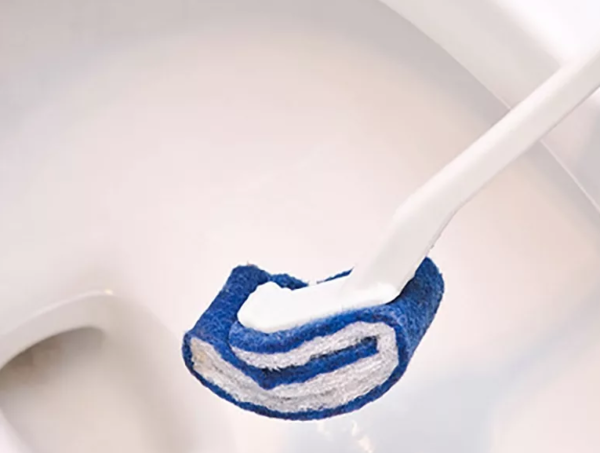 For the care of plumbing, special fixtures with a long handle are sold
If a dense layer of urinary stones and noticeable rust spots do not accumulate on the surface of the toilet bowl, then it is not recommended to abuse cleaning products based on strong alkali or acids, because such components gradually destroy the coating.
Tank cleaning features
Cleaning a Clogged Toilet with Baking Soda and Vinegar
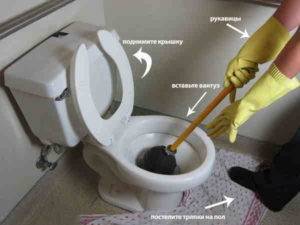
The cause of such a problem can be anything: from various household garbage to the accumulation of food debris washed down the drain. If your toilet is clogged and the water has stopped flowing, try using a mixture of baking soda and vinegar:
- Pour 1/2 pack of regular baking soda (NaHCO3) down the drain;
- Pour in 2 cups of acetic acid;
- If possible, it is better to plug the drain with a large rag or towel to prevent the gas released during the reaction from evaporating.
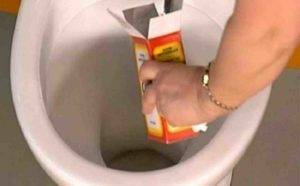
This method will help eliminate small "plugs". The main thing is not to increase the dosage, if necessary, it is better to repeat the procedure again.




Soda ash (Na2CO3) will also be a good helper in getting rid of blockages. With its help, you will get rid of stubborn dirt, simultaneously cleaning the inside of the toilet. For this:
- In a deep metal container, mix 5 tbsp. l. food and soda ash. Pour the mixture down the drain. You can also apply it to interior surfaces using a rag or sponge.
- Wait 30-40 min. Take two spray bottles, fill one with ordinary whiteness-type bleach, and the other with acetic acid. Spray the vinegar solution down the drain and along the walls, pour bleach over everything.
- Close the toilet lid, leave the room. After 30-40 min. rinse with plenty of water, ventilate thoroughly.

Work with such a mixture can only be carried out with rubber gloves and a respirator - its components are poisonous and can cause burns to the mucous membrane.
If the drain is clogged “tightly”, caustic soda (NaOH or caustic soda) will come to the rescue. The cleaning algorithm will depend on the form of release of caustic soda.
If NaOH is present in crystalline form:
- Pour 4 kg of caustic soda into an iron bucket with a volume of 10-12 liters, stir until it is completely dissolved. In the process of mixing, the water will become warm. Don't be surprised - the rise in temperature is due to a fast chemical reaction.
- Carefully pour the solution into the sewer, wait about an hour. Rinse with plenty of water. It is better to fill the whole solution - it is not recommended to store it, over time it loses its properties.
- Shake the closed container with the gel;
- Pour into the drain from 200 to 250 ml.substances, leave for 2-4 hours;
- Wash off with plenty of warm water.
These tools will help to independently and quickly break through the blockage, and completely clean the drain. When using any kind of soda to clean the toilet, remember that all work should be done only with rubber gloves.
You can also clean the bath with baking soda and vinegar, read about this method here.
Chemistry on guard of purity
Improvised substances can clean non-critical pollution. When lime deposits look more like a toilet bowl coating, and the formation of a urinary stone has acquired a dark brown hue, folk remedies are useless. Only heavy artillery in the form of powerful chemical cleaners can cope here.
Orthophosphoric acid. This tool will help not only clean the mineral plaque on the bottom of the toilet, but also get rid of the rust that covers the details of the drain and filling fittings inside the tank. For cleaning, it is necessary to pour about 100-150 g of the drug into the bowl and into the toilet bowl, wait 10-15 minutes and thoroughly rinse the surface of the product with running water. The main advantage of this tool is that it does not destroy rubber and plastic products.
Hydrochloric acid
It must be used with extreme caution, protecting not only the skin, but also the respiratory tract. It is enough to wipe the limescale with a substance, and it immediately dissolves.
And to remove a urinary stone, pour ½ cup into the bowl and leave it for 10 minutes. When using, make sure that no plastic or rubber connections have been made when connecting the toilet. Hydrochloric acid will dissolve them along with plaque.
Chlorine. Used in whiteness and dissolves all organic compounds.Chlorine vapors are dangerous for the body, so this cleaning method is highly undesirable. Also, after using chlorine, rubber seals lose their elasticity and begin to leak water.
abrasive preparations. The use of powders in cleaning sanitary ceramics is quite effective. But small granules can leave microscopic scratches on the surface of the toilet, disturbing the smoothness of the product's coating, which subsequently leads to even more lime and urinary stone deposits.
It is best to use specialized detergents that are designed only for toilets. Be sure to read the product label before use.
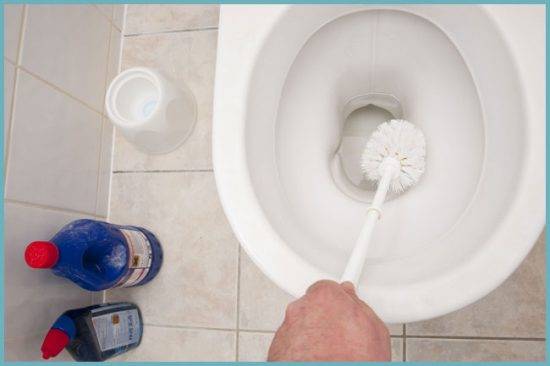 After keeping the product, be sure to brush the bullshit
With critical and extremely abundant growths of mineral deposits, you can use a liquid electrolyte, which is used in car batteries. Use it only as a last resort, when other means have not brought results. It contains sulfuric acid in its composition, so do not forget to take care of your own safety.
Pollution Prevention
Despite the fact that the formation of urinary stone and limescale cannot be completely avoided, minimizing the frequency of occurrence of heavy deposits is within the power of every toilet owner.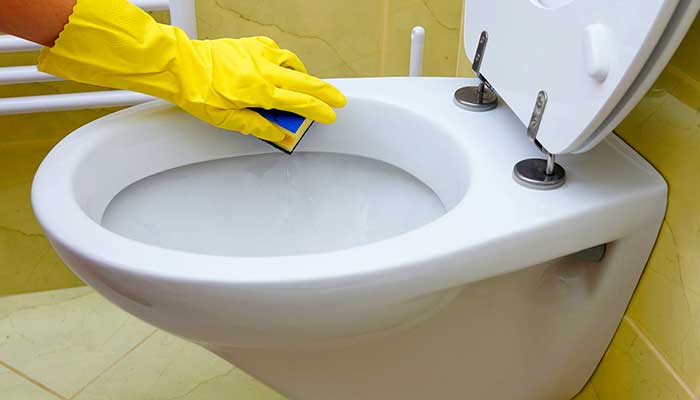
To alleviate the fate of the plumbing fixture, you should follow the simple rules of care:
- The toilet bowl is designed to fulfill the natural needs of a person, flushing food residues is unacceptable. Fatty food does not dissolve in water, but settles on the walls of the bowl, which leads to the accelerated formation of plaque and stone.
- Wash off in a timely manner, without neglecting the recommended dosages of water.Almost every modern toilet is equipped with a function that is designed to flush a certain type of discharge. Given that the frequency of changing the water in the tank affects the degree of susceptibility to plaque, try to use the "big" button only for its intended purpose.
- Take preventive measures in a timely manner. It is ideal to clean the entire toilet every two weeks, including the cistern. At least once a week, the bowl should be cleaned from stone and plaque.
- Avoid build-up of dirt, which not only becomes food for bacteria, but also an excellent starting point for the formation of stone and plaque.
- Troubleshoot the toilet immediately after the appearance: along with water, not only money flows down the drain, but the ability to minimize the appearance of plaque.
Household chemicals
 and plaque is possible with the help of purchased household chemicals. Fortunately, today on sale you will find a huge selection of different cleaning products, both budgetary and more expensive. In any case, before buying them, carefully read the instructions.
Tip: for cleaning sanitary ware and faience, it is better to give preference to gel and creamy formulations.
The most common are toilet cleaning gels containing chlorine, such as Toilet Duck. This tool effectively cleans the toilet from the formed plaque and bacteria. In addition, thanks to a specially curved spout of the package, it is very convenient to apply it to the most difficult to reach places, that is, under the rim of the toilet bowl.
From other liquid products, one can single out the usual cheap Whiteness. It is poured into the toilet bowl, but it should not be poured into the drain tank.
The Breff and Domestos tools will help you clean the rust.
Also, Comet gel, Cilit Bang, Sarma gel, Sanita, Sanfor Universal and others will cope with various contaminants.
We hope that our advice will be useful to you and your toilet will always be clean and snow-white.
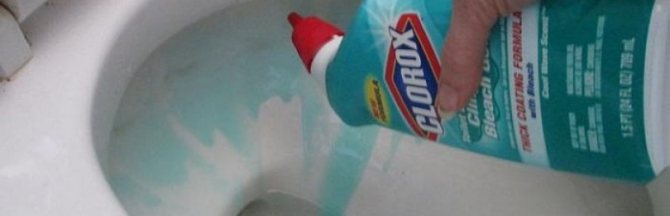


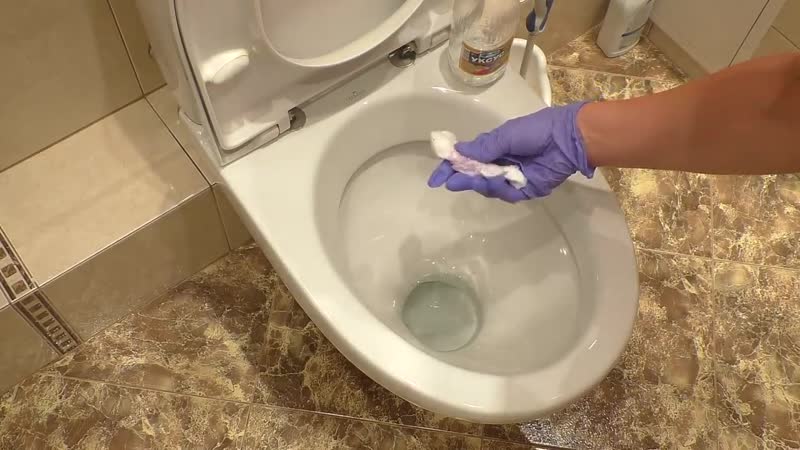
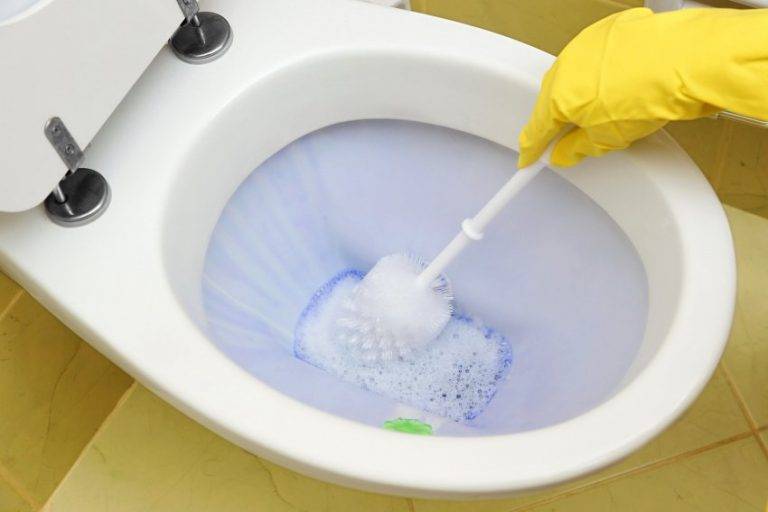
We wipe the toilet bowl with special means of household chemicals
Modern chemicals clean enameled plumbing from limescale, sediment, urinary stone, blackness and rust. To clean the bathroom, purchase the product in the household chemicals department or online, read the instructions for use and handle safely: wear rubber protective gloves and a respiratory mask to protect the respiratory tract.
Cleaning Coca-Cola
It is easy to wash the bottom and the thicket of the toilet bowl from the urinary stone with Coca-Cola.
Its components effectively corrode contaminants that have fallen into the zone of prolonged contact. Therefore, many housewives buy this inexpensive drink for cleaning kettles and plumbing:
- Remove the water by pushing it into the drain with quick movements.
- Pour out 1.5-2 liters. coke in the toilet.
- After a couple of hours, wipe off the dissolved dirt with a toilet brush.
Given the liquid consistency of the drink, the removal of intense contaminants under the rim is almost impossible. Therefore, housewives use Coca-Cola as a prophylaxis against urinary stone and limescale.
"Whiteness"
Washing the toilet from streaks with "Whiteness" is simple, since chlorine resists many types of stains and stubborn dirt.
The disadvantage of this tool is an unpleasant smell, but it is inexpensive, so it is used by many housewives.
Using "White" to clean the toilet step by step:
Remove as much water from the toilet as possible.
Pour "Whiteness" on a brush or contaminated enamel
To enhance the effect, add any thick consistency to clean the toilet.
Rub the toilet bowl vigorously, paying special attention to problem areas.
After 2-3 hours, clean with a brush and remove the remaining deposits with a non-metallic scraper.
hydrochloric acid
When using this remedy, be sure to follow the safety rules so as not to damage the skin and lungs! Douse the toilet bowl with hydrochloric acid, rub it with a brush and close the lid. After 15-20 minutes, rub the dirt again and wash off the acid. Do not use the product if the drain is made of plastic pipes.
Automotive electrolyte
Electrolyte for cars helps from stone, corrosion and plaque, returning the original whiteness and shine to the bathroom.
Additionally, the tool will clean the sewer from blockages and eliminate red rusty streams. The principle of treatment is the same as that of hydrochloric acid, but use this method as little as possible so as not to damage the enamel.