- How to know that it's time to clean the gas column
- Cleaning the water intake
- Cleaning the heat exchanger
- Soot and soot removal
- Methods and means of cleaning
- Descaling
- Elimination of soot and soot
- Nozzle cleaning
- Cleaning the water intake
- Cleaning the heat exchange element
- How and how to clean the geyser from scale
- How to protect a geyser from scale
- How to flush the column radiator?
- Method number 1: cleaning with special means
- Method number 2: cleaning with cardboard cards
- Performance
- Folk remedies in the fight against pollution: time-tested
- Clean kitchen lamps
How to know that it's time to clean the gas column
Gas column cleaning is necessary if:
- The column does not turn on, or turns off after working for a while. At the same time, it is precisely known that gas and water enter the column.
- The column thermal protection sensors are constantly triggered. The scale layer has a porous structure and has heat-insulating properties, which interferes with the normal cooling of the column.
- The efficiency of the column has noticeably decreased: during normal operation of the burner, the water heats up much weaker.
- Weak head at the outlet of the column with a normal head at the inlet. Water cannot get through the channels covered with scale.
Cleaning the water intake
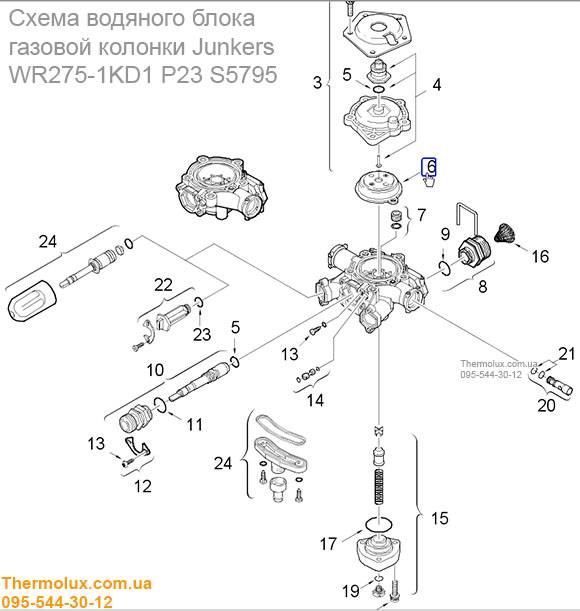
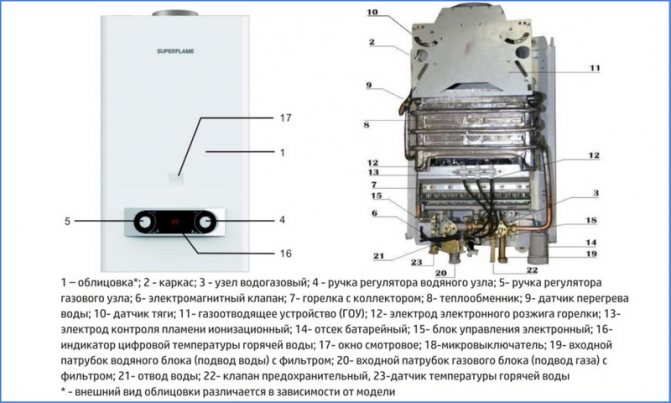
The water intake unit is installed at the inlet of the water supply system of the column, it has a mesh filter to prevent clogging of the heat exchanger tubes with large particles of rust and sediment, as well as a membrane for automatic gas supply when the water tap is turned on.
- We remove the water intake unit from the column body.
- Having unscrewed the connecting screws, we open the case.
- We clean the filter and rinse it with a strong pressure of water.
- We check the membrane. The membrane should be flat, if the membrane has a pronounced concavity, then it has exhausted its resource and must be replaced. You can replace the "native" membrane of the old column with a modern silicone one, which has a much longer service life.
- We close the cover of the water intake unit, “bait” the screws and tighten alternately diametrically opposite pairs of screws. Thus, a uniform tension of the membrane is ensured.
Cleaning the heat exchanger
- Disconnect the water inlet and outlet pipes to the heat exchanger. If the heat exchanger is not cleaned regularly, the fastening nuts may be clogged with scale, preventing them from detaching. In this case, we recommend using a special VD-40 fluid, which can be purchased at any car dealership. It is necessary to drip liquid into the junctions of the nuts using an oiler. You can also use "Silit" from scale. After 15-30 minutes, the nuts can be unscrewed. If that doesn't work, try tapping on the nut from all sides.
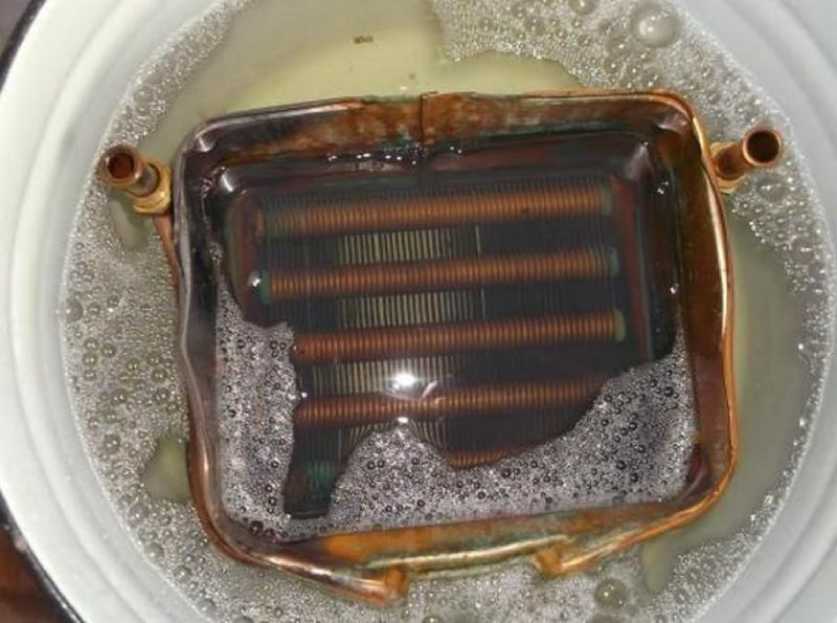
- After disconnecting the heat exchanger, using a funnel, pour the descaling agent into it. As such a tool, a solution of 100 g of citric acid per 0.5 l of hot water is perfect. You can also clean the heat exchanger with nine percent table vinegar, diluted with water in a ratio of one to three.But the use of hydrochloric acid is not recommended, as it can react with the metal from which the heat exchanger is made, which will only aggravate the situation. Leave the solution inside the heat exchanger overnight.
- Drain the solution carefully. If the scale that has left the walls is not removed, it can clog the tubes of the heat exchanger, so we wash the heat exchanger with a strong stream of water from the tap. To do this, you can adapt the tubes of the appropriate diameter.
- We put the washed heat exchanger in place, tighten the fastening nuts, after changing the seals.
Soot and soot removal
Unlike the water supply, it is impossible to disassemble the gas part of the column on your own; only a master from the city gas service should do this. The only thing we can do to eliminate soot is to remove carbon deposits from the burner jets.
- The jets are cleaned with thin copper wire.
- The soot is swept away with a metal brush.
- It is advisable to immediately check the column for gas leakage. To do this, it is necessary to prepare a soap solution, which is applied to all joints of gas pipes and units. A gas leak will be indicated by the formation of characteristic bubbles at the junction. If you find a leak, turn off the gas and call 104.
Preventive maintenance can minimize the need for column cleaning. Longer operation of the column without failures and cleanings is facilitated by the use of filters and devices to reduce water hardness.
Methods and means of cleaning
The instructions necessarily describe in detail the rules for cleaning the components of the device, deviating from which can be life-threatening.If during the process of descaling or burning, damage to one of the elements of the device occurs, and a gas leak occurs, you must immediately contact the emergency gas service.
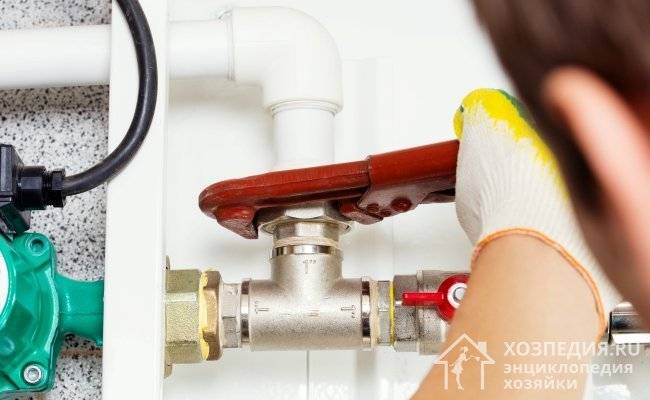
If, after weighing all the pros and cons, you have decided to clean the device yourself, we suggest that you familiarize yourself with industrial preparations and folk remedies that will effectively get rid of pollution.
In the video below, you can see in more detail how to flush the water heater radiator with citric acid:
Before starting work, be sure to turn off the gas and water supply.
With your own hands you can clean:
- burner from soot and soot;
- internal parts from dust;
- scale heat exchanger;
- water pipes.
Basic cleaning products:
| Problem | folk recipe | industrial facility |
| Scale in the heat exchanger | An aqueous solution of citric acid (100 g of the substance per 0.5 l of hot water) | Calgon, Antinakipin |
| Carbon deposits on the heat exchanger | A solution of table vinegar and warm water (1: 3) | 7-10% hydrochloric acid solution |
| Dust on internal parts | Warm soapy water | Ordinary household vacuum cleaner |
Descaling
You can eliminate scale with the help of chemicals, following the manufacturer's recommendations, as well as folk remedies.
If the second option is chosen, the following procedure must be followed:
- disconnect the device from gas and water;
- disconnect the heat exchanger, remove it from the wall, drain the water;
- using a pear or syringe, pour a cleaning agent (a solution of soda or vinegar) into the pipes of the heat exchanger;
- then the whole part is immersed in a deep basin with the same mixture and left for several hours.
After the contaminants are completely eliminated, the heat exchanger is connected back and the column is started. The pressure of water will finally clean the inner surface of the pipes, making them perfectly clean.
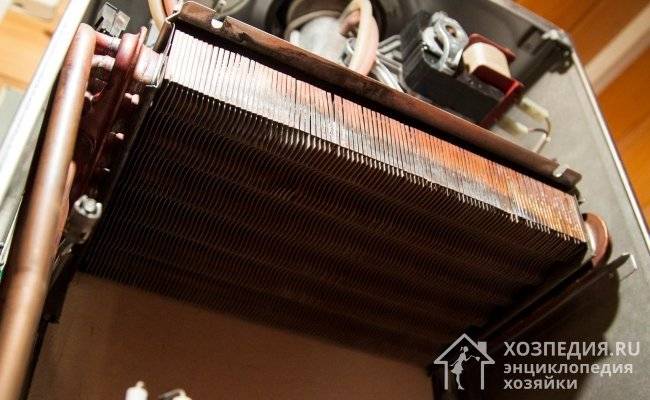
The heat exchanger can be cleaned without dismantling. To do this, remove the front panel and disconnect the device from the water supply hose. After that, a cleaning solution is poured through the inlet into the pipes. In this form, the device is left for 2-3 hours, after which the liquid is drained and everything is returned to its place.


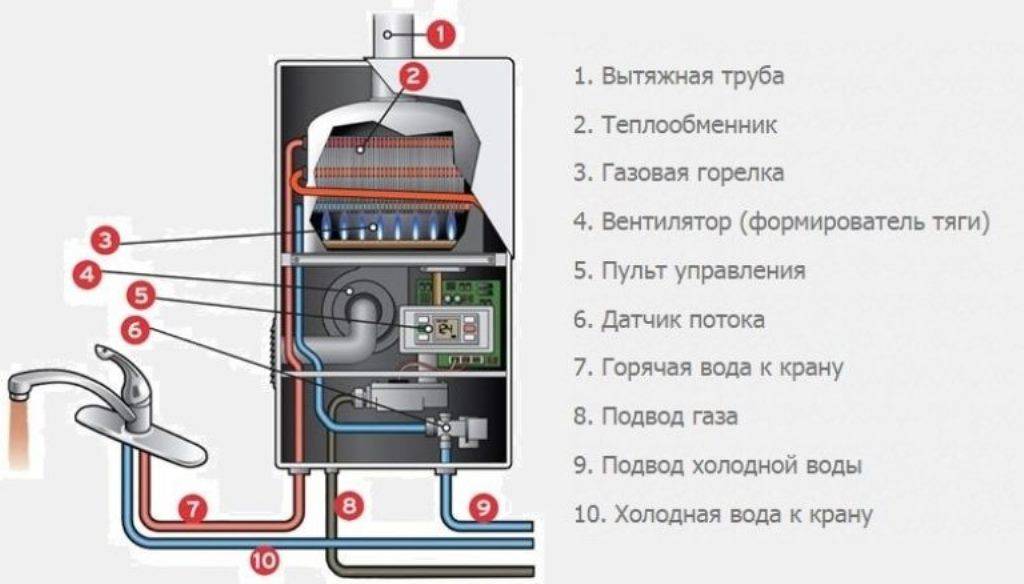
Elimination of soot and soot
It is possible to clean the surface of parts from soot without disassembling the column in just a few minutes. To do this, you must adhere to the following procedure:
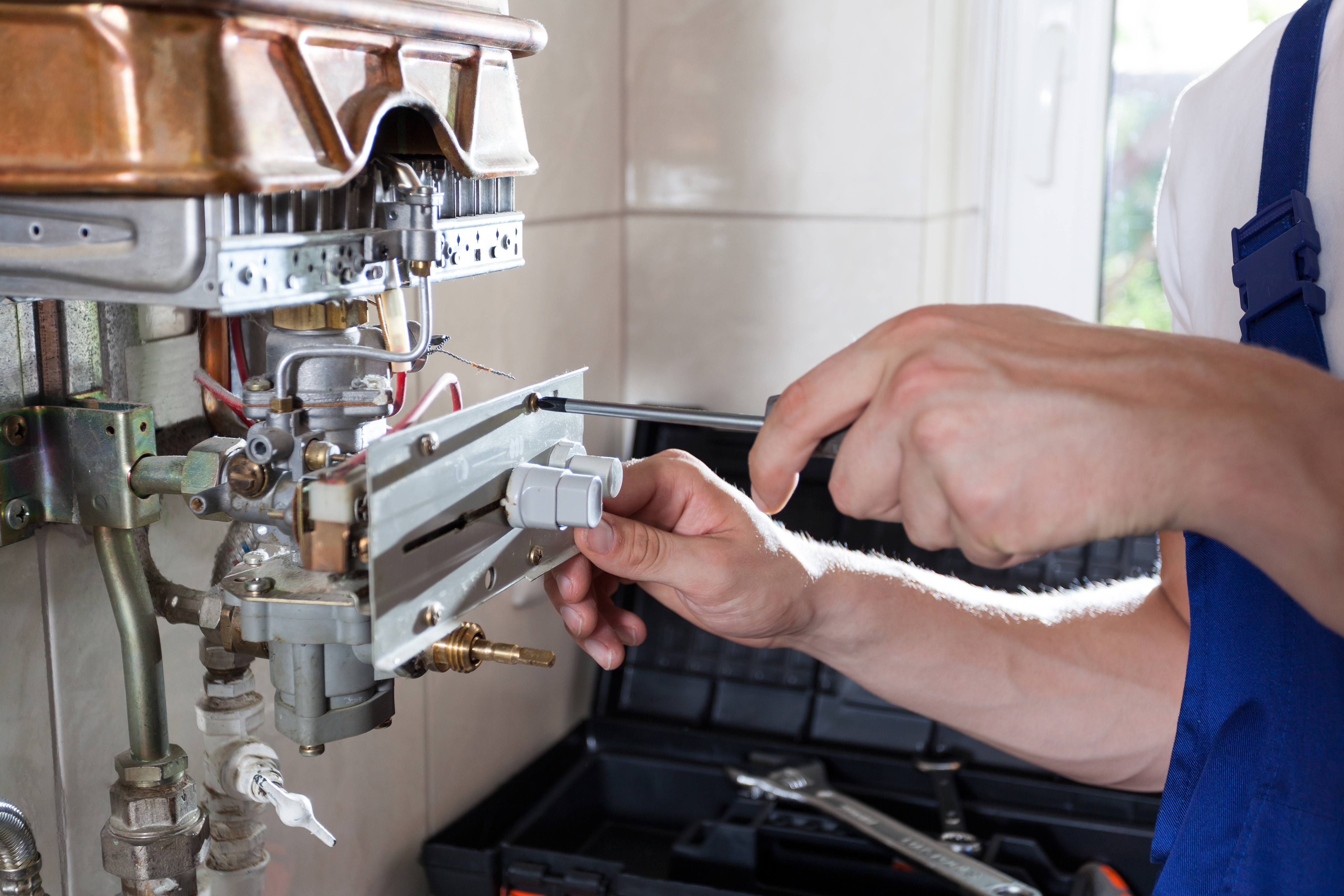
- turn off the gas and remove the front of the case;
- wipe the internal parts with a damp cloth or vacuum;
- assemble the column back.
From the video below, you will learn how to quickly and effectively clean soot from burners:
Nozzle cleaning
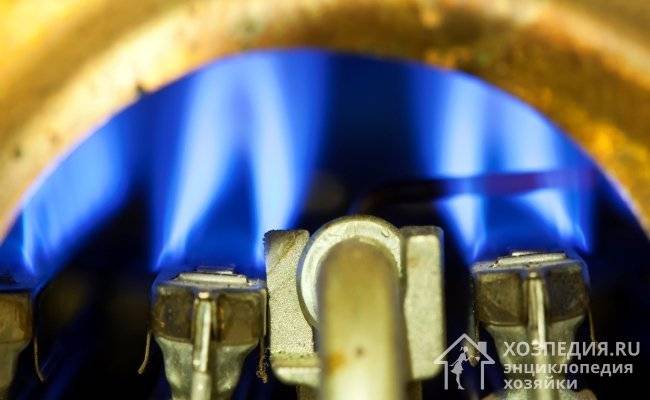
If the column starts to burn weakly, the nozzle is most likely clogged. You can find it on the gas manifold near the pressure sensor. For cleaning use a thin wire or a stiff brush.
After the work is completed, it is imperative to check the column and exclude the possibility of gas leakage. To do this, lubricate the burner with soapy water and make sure that there are no bubbles.
Cleaning the water intake
In addition to the water heating part, any geyser is equipped with a water intake unit, the main task of which is to prevent large solid particles from entering the heat exchanger.Over time, the mesh filter and the membrane become dirty, which is responsible for the automatic supply of gas when the water is turned on.
To clean the water intake, you must:
- remove it from the column body;
- rinse the filter under running cold water;
- inspect the membrane for the presence of curvatures and bulges (if there are defects, the membrane must be replaced with a new one).
After research and washing, all parts are installed in place, and the water intake is closed with a lid.
This is interesting: Do-it-yourself installation of drywall partitions - we will write down the main thing
Cleaning the heat exchange element
This procedure is a little more complicated than the work of removing dirt from the water intake. All actions can be laid down in four stages:
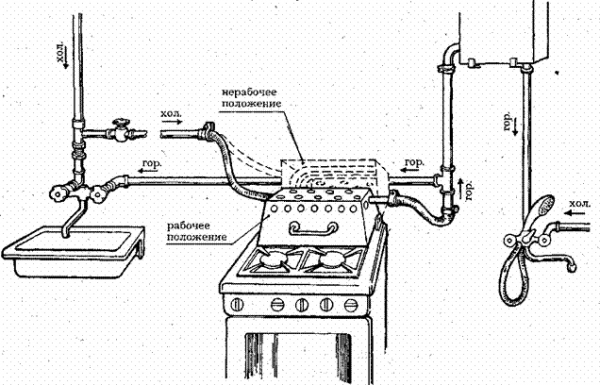
First you need to disconnect the pipes through which water enters and exits.
Very often, the fasteners on the nozzles are covered with scale. To make it easier to unscrew the nuts, you can apply WD-40 universal fluid to the joints. After a few minutes, when the scale has been neutralized, you can safely unscrew the nuts with the help of wrenches.
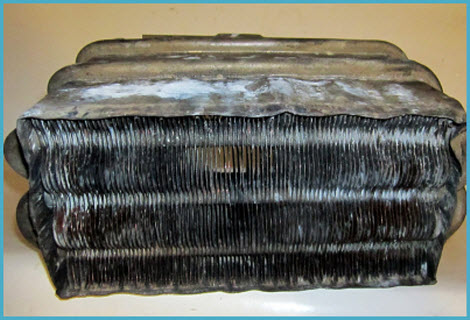
After that, liquid for descaling must be poured into the heat exchange element.
Among folk remedies, a solution of citric acid showed itself best. Firstly, it is safe, and secondly, it is quite inexpensive. Proportions: for 1 liter of water you need 200 grams of acid.


The poured solution should be kept inside for several hours (it is better to leave it overnight).
The heat exchanger housing also needs to be cleaned. To do this, it is recommended to dilute vinegar (9%) in water (proportions 1: 3). Never use hydrochloric acid. It reacts with the metal, causing the appearance of additional oxidation products.
.
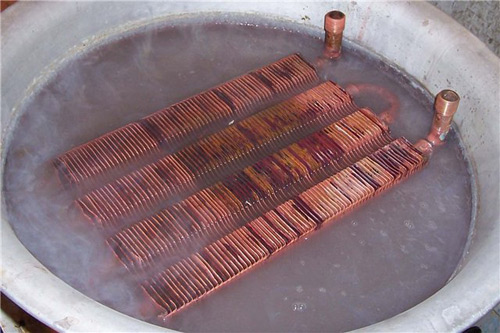
After a few hours have passed, the citric acid solution can be drained.
Important
! It is NOT necessary to install the heat exchange element immediately afterwards. Scale products could still remain inside it and they must be removed
To do this, the heat exchanger must be flushed with a strong pressure of water!
After flushing, pipes can be installed.
It was mentioned above that all the work can be done independently. This is true, but you should never disassemble the gas column assembly. It can only be cleaned.
The process of cleaning the gas part from soot is not very complicated; prepared wire is useful for this. A wire is pushed into the holes of the jets, thereby removing all the dirt and soot
When this operation is completed, it is important to check the column for possible gas leaks. The same principle applies here as when looking for a puncture on a wheel: a soapy solution is applied to the places of all joints and the absence / presence of bubbles will show if there is a leak
In the event that you notice bubbles, you need to call the gas service and call a specialist!
Geysers are in many homes. They are practical and durable. But often their efficiency decreases, which significantly affects the quality of heated water. This occurs due to the fact that scale forms in the column.
It is very important to remove it, the only way to restore the functionality of the equipment. Do-it-yourself gas column cleaning
But this must be done strictly according to the instructions. Only then will you be able to clean the geyser in a safe way and avoid mistakes during this.
Home water heaters need regular cleaning to prevent further breakdowns.
How and how to clean the geyser from scale
There are several ways to remove lime deposits from the inside of the tubes of a heat exchanger or storage tank. To get started, you can use improvised descaling agents or a special cleaning fluid (sold in household chemical stores and building supermarkets). So, you can get rid of a small scale.
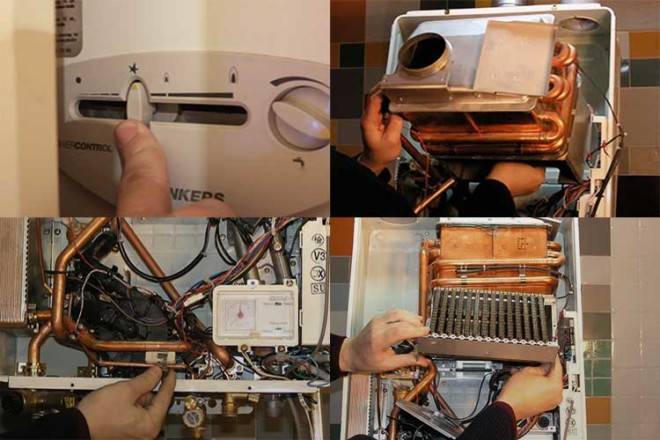


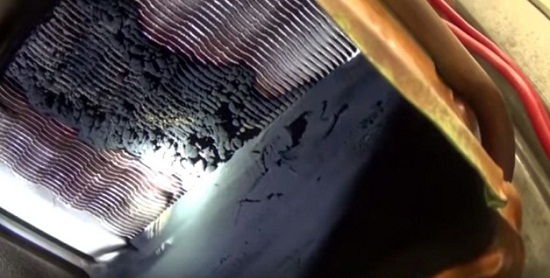


If the deposits are of moderate severity, it will not work to flush the heater without the use of specialized equipment. In the best case, it will be possible to reduce the thickness of the deposits.
You can clean the geyser from scale at home with a special washing machine. The pump is filled with professional products that dissolve calcium and lime deposits. Flushing the geyser from scale is carried out under pressure. The device is connected to the outlets of the heat exchanger. At home, with the help of a pump, it will be possible to clean the gas column without disassembling it.
If the tips above do not help, service will be required. Specialized industrial equipment will help to remove scale in a gas water heater.
To clean the coil from scale at home, you can use the following improvised and chemical means:
- Household chemicals and improvised means - washing the gas column with citric acid is effective. Citric acid, a tool that is present in almost every kitchen, will be able to cope with primary deposits. A similar effect has ordinary vinegar, diluted to 7% solution.
After washing the heat exchanger with lemon or vinegar, the pipe cavity is treated with soapy water.Among household chemicals, you can use Silit and any other composition that eliminates calcium and lime deposits.
- Specialized means for flushing geysers from scale - ready-made compositions based on hydrochloric acid. Effectively cope even with serious pollution. Flushing a flowing gas water heater with hydrochloric acid and products based on it is carried out in specialized service centers.
If necessary, you can try to clean even severe contamination of the heat exchanger at home, without resorting to store products. For this purpose, hydrochloric acid is purchased and diluted with distilled water, so that a 5-8% solution is obtained. The finished composition is poured into the heat exchanger and left for several minutes. Work is carried out using personal protective equipment.
How to protect a geyser from scale
The problem of the appearance of scale is due to the fact that hardness salts, which are in the water in a liquid state, harden with intense heating. The optimum temperature at which accelerated crystallization occurs is 70-80°. Accordingly, in tanks of storage water heaters, deposits appear faster than in flow columns with a lower heating intensity. There are roughnesses inside the tank and pipes of the heat exchanger, on which the scale settles more strongly.
To prevent the appearance of deposits, a filtration and purification system is used. Water treatment includes several degrees of protection:
- Mesh main coarse filter - is installed on the supply of cold water. It must be provided in the water heater piping scheme.The mesh retains large metal particles and protects against clogging of dispenser assemblies, faucets and relief valve.
- Water filter for softening water - resembles a plastic flask in which there is a tube, or salt crystals are filled in. As liquids pass through, the chemical composition changes. The gas column filter reduces the amount of scale by approximately 40-60%. Cartridges with ion exchange resin for water softening are one of the most effective ways to protect the heat exchanger. Despite the certain costs of installing a softening filter in front of the gas water heater, this is economically justified. The service life of the water heater is increased by at least 30%.
- The magnetic filter is a simple device. It is based on the magnetohydrodynamic transformation process. The design contains two magnets that form a field. Calcium salts, passing through the segment on which the water filter is located, are modified into aragonite. The substance does not deposit on metal surfaces and does not form scale. The installation of a magnetic filter is carried out on a pipe section that does not have scale. Before the first start, it is recommended to clean the water intake unit, rinse the heat exchanger.
Experts recommend installing several filters at once with different effects. So it is possible to level the harmful effect of hard water on the heat exchanger and storage tank as much as possible.
How to flush the column radiator?
In most cases, scale accumulates in the radiator. Therefore, it is best to start cleaning it in the first place.
It is important to note right away that this can be done in one of two ways. Each of them gives excellent results.
Therefore, the choice is yours.
Method number 1: cleaning with special means
You can remove scale in the gas column that has accumulated in the radiator using special cleaning agents (for example, silit or another that quickly removes scale). In addition to them, to carry out such work, you will need the following:
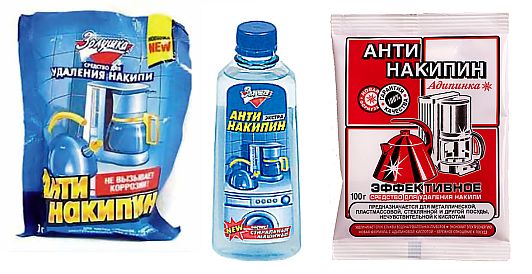
The antiscale solution must remain in the heat exchanger for several hours.
- garden sprayer;
- two clamps;
- PVC hose;
- bucket;
- cork;
- screwdrivers;
- spanners.
So, the first step is to turn off the gas.
Then you need to tighten the tap of the incoming water pipe. Then you need to immediately substitute a bucket under the entrance from the gas column, since water will come out from there. Next, you need to plug the spout of the faucet in the bathroom or in the kitchen with a cork and turn the faucet through which cold water flows. At this time, it will begin to flow in the opposite direction and go through the column, thereby flushing the radiator. Here you need to be careful and do not remove the bucket, you should wait until the water starts to come out of the column without any impurities of mechanical particles.
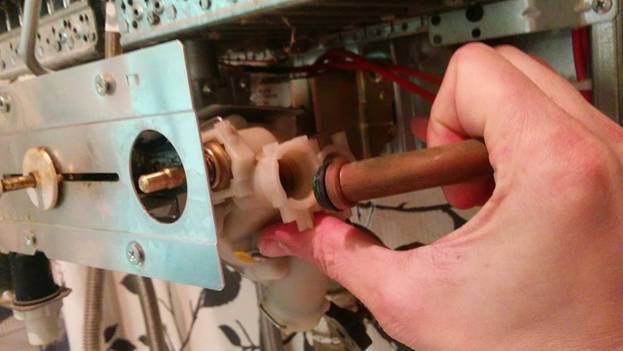


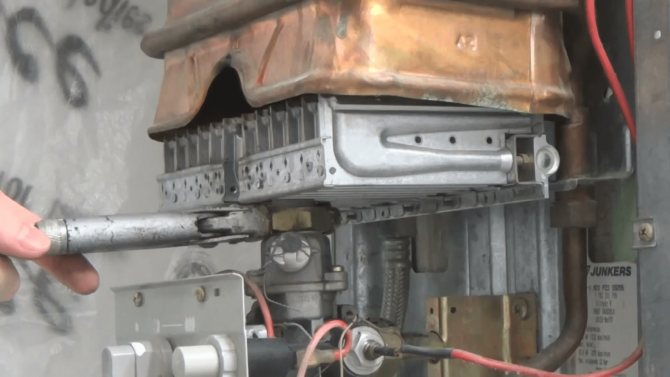


At the next stage, you need to take a garden sprayer, and then unscrew the cap in it, from which you need to cut off the end that has side holes. Then put a PVC hose on the sprayer and fix it with a clamp. Be sure to make sure it is securely attached. Next, you need to take the other end of the plastic hose and connect it to the pipe that enters the geyser. Here you also need to use a clamp for fixing. Now water and descaling agent are taken (see the instructions for the amount) and mixed in a spray container.Then a cap is screwed to it, the tap responsible for supplying hot water is closed, and about a third of the prepared liquid in the spray tank is poured into the radiator of the gas column. The rest will need to be added gradually, in about 5 doses with an interval of 3-4 minutes. In this case, before each injection of such a liquid, it will be necessary to gradually release the pressure in the pipe. To do this, open the tap, which is responsible for supplying hot water.
Method number 2: cleaning with cardboard cards
If you do not have the opportunity to purchase a special descaling agent, then the second option is perfect for you. After all, here you only need to use cardboard cards that you can cut with your own hands. So, to clean the column radiator in this way, you will need the following:
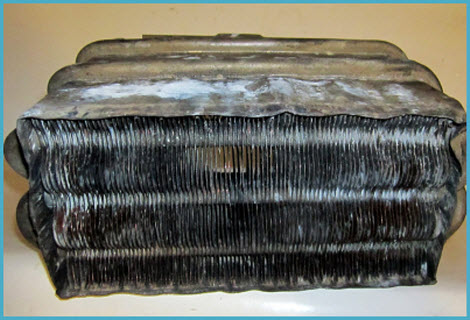
To clean the heat exchanger, a solution of citric acid or vinegar is suitable.
- cardboard;
- scissors;
- screwdrivers;
- spanners.
It is necessary to start cleaning the radiator with preparatory work. First, the gas supply is shut off, and then the water supply. After that, the protective cover is removed and the casing is removed using the appropriate tools. Then it will be easy to see the radiator of the geyser and the fact that it is clogged with scale and burning. To start its mechanical cleaning, you will need to take cardboard and cut it into strips of 10 × 1 cm. Harvest them immediately in large quantities, as they lose their elasticity very quickly, and you have to use new ones.
When the cardboard strips are ready, you can directly begin to clean the radiator, namely its honeycombs. Cardboard strips should be inserted into them one by one and accumulated dirt should be pulled out with them.
It is important to clean all the cells of the radiator, while from each of them it is necessary to remove cinders and scale until the holes are completely clean. This process usually takes about 35-50 minutes.
But the result will be excellent - the gas column will heat up quickly.
It is important to note that for cleaning the radiator it is better to use such methods in turn, that is, for the first time to do, for example, work according to the first scheme, and after a few months - according to the second, then it will be possible to remove scale with the highest quality and simultaneously get rid of soot, the presence of which also has a negative effect on the efficiency of the column.
Performance
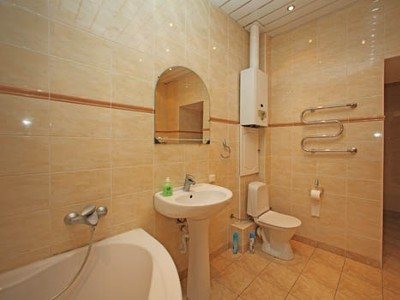
When choosing and buying a geyser, it is very important to pay attention to its performance. It will depend on this whether the equipment will be able to fully serve you. This value can be 6-11 l/min, 12 or 14 l/min, and it usually depends on the burner power, which is 11-19 kW, 22-24 kW or 28-30 kW, respectively.
The more intense the flame, the greater the performance. To service one faucet, a column with a minimum power is enough, but if hot water is needed in the bathroom and in the kitchen, and maybe the second toilet in the house, you will need equipment that can heat at least 12 l / min
This value can be 6-11 l/min, 12 or 14 l/min and is usually dependent on the burner power, which is 11-19 kW, 22-24 kW or 28-30 kW, respectively. The more intense the flame, the greater the performance.To service one faucet, a column with a minimum power is sufficient, but if hot water is needed in the bathroom and in the kitchen and, perhaps, the second restroom in the house, you will need equipment that can heat at least 12 l / min.


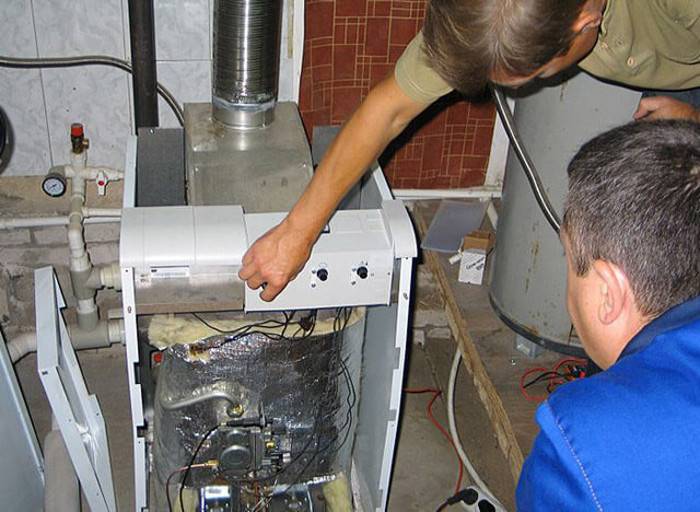




Expert tip: It is best to choose a column with a capacity slightly higher than required. Running the column constantly at maximum power can cause rapid wear.
Folk remedies in the fight against pollution: time-tested
The modern chemical industry offers a lot of products that will easily and quickly clean your stove from any contaminants. But recently, housewives have been skeptical about such substances. There are several reasons for this: such products can be expensive, they are unsafe, therefore they require special storage (which becomes more relevant if there are children in the house), and it is recommended to use them with rubber gloves.
In the meantime, feel free to rub with a good dose of soap and a jet of water the entire stovetop of the gas stove, which undoubtedly also has dirt. This way you can also focus on cleaning holes blocked by liquids or products. To clean dirt from all dirt, use the wiping pad and rub it with energy; When you are done cleaning, rinse with hot water. In case it is very difficult to remove so much dirt, feel free to use a more effective oven cleaning product.
Finally, to finish off, to give your gas stove a shine, we suggest you use a lemon. As you already know, this is a magical product to put an end to oven grime.You have two options: either replace the vinegar with the lemon, or rub half of the lemon with all parts of the burner and then rinse with hot and copious water. This citrus will act as a natural degreaser, so it's much easier to pull and remove dirt from the gas stove.
The stove can be perfectly cleaned with the help of folk remedies
For women, it is important that such products, even with protection, negatively affect the skin of the hands, which means that creams should be used. This adds cost to the already high cost of cleaning gels and powders.
In addition, we all faced such a situation: it is urgent to clean the stove, and the industrial tool is over. And running to the store is not an option. This is where the well-known and used tools will come to our aid, which are probably always at hand:
If you use the kitchen every day, it's a good idea to pack as much as you can during cooking, and after meals, if you have time to put the dishwasher in, order some countertops and sweep if necessary. Cleaning the kitchen can be organized in batches and do it 2-3 times distributed over the course of a week or a month, but it always depends on how we use it.
Everyone will have their own preferences, especially with the oven if they don't have dirty pots, but clean and place the pots in a dish drain or place in the dishwasher. Depending on the system used, there will be cleaning methods. Gas burners: If ovens are gas burners, remove the burner and top covers, and with a small cream or powder cleanser, clean the area where the burners are placed, rinse and place previously rinsed accessories.
- laundry soap solution;
- lemon acid;
- vinegar;
- ammonia alcohol;
- baking soda;
- ammonia-anise drops.
Almost all of these tools will easily help you cope not only with pollution on the gas stove, but also clean almost all household appliances to a shine - a refrigerator, a boiler, an electric kettle, a washing machine, a juicer. They can handle any dirt, and most importantly, their advantage is the possibility of safe use even with children.
Clean kitchen lamps
Apply grease to the tiled area where the kitchen is, let's work for a few minutes. If the kitchen extractor is dirty, it prevents fumes and odors from being removed properly. In the kitchen, grease and fumes rise and settle in the highest parts of the kitchen. Countertops should be transparent for easy cleaning. Wood countertops such as maple, teak or mahogany: once a year should be cleaned with teak oil or linseed in the direction of the grain of the wood. Crumbs and food residues always accumulate in the refrigerator and cabinets, especially those that are powdered or ground in the form of sugar, salt, coffee. etc. once a month it is convenient to remove these remains to prevent insects.