- How to clean the inside of a washing machine
- How to clean the heating element of the washing machine from scale
- How to clean the drum of a washing machine
- Cleaning the glass and sealing rubber of the washing machine door
- How to wash the detergent and softener trays in the washing machine
- Cleaning the drain pump and inlet hose filter of the washing machine
- Cleaning the cabinet and door
- Folk remedies for cleaning the washing machine from scale
- Lemon acid
- Vinegar
- White
- Washing machine maintenance
- Use lemon juice or vinegar
- The best folk methods
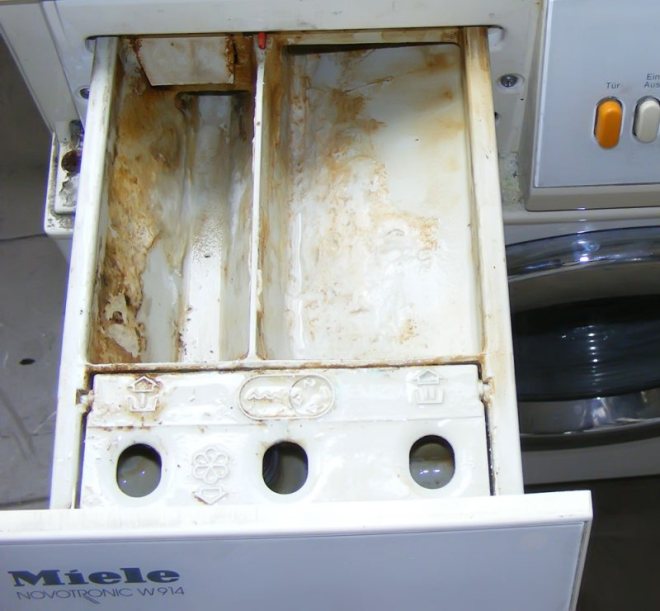
- Why you need to clean the tray
- Local cleaning
- Cleaning the cuff
- Drum cleaning
- Tena cleaning
- How is scale formed and why is it dangerous?
- How to clean a washing machine
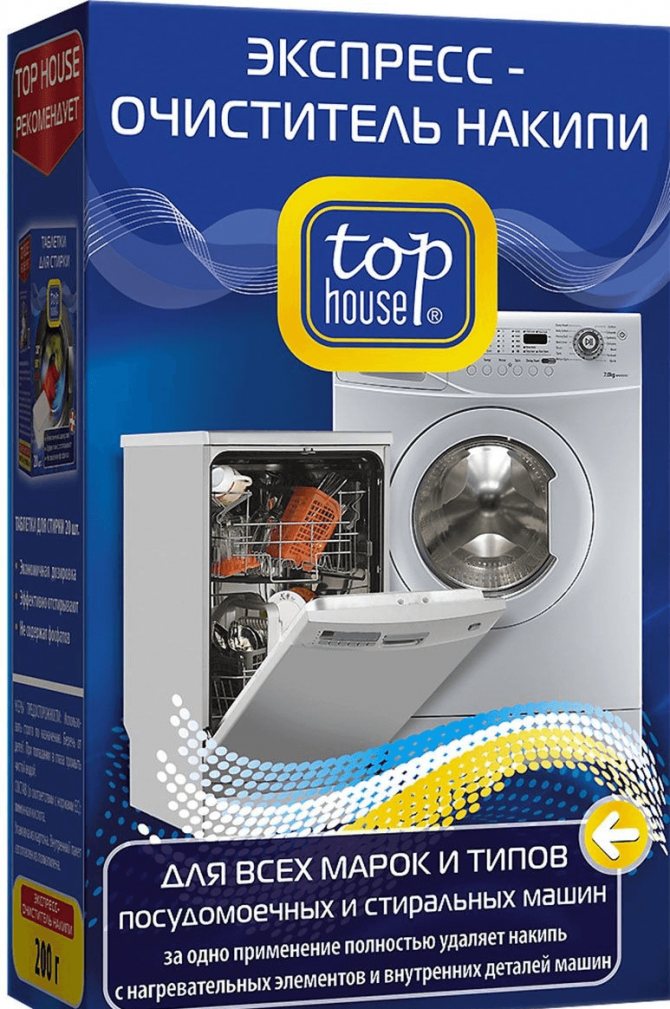
- Household chemicals for washing machines from dirt and scale
- Folk remedies for cleaning the washing machine
- What is dangerous "dirty" drum
How to clean the inside of a washing machine
Causes of dirt and smell in the machine:
- high iron content in water;
- frequent use of the delicate wash cycle. The temperature value of 40°C does not completely cope with the remnants of grease and dirt on clothes. The washed dirt gets from the drum into the drain hose and the seal. Over time, the dirt decomposes, and an unpleasant odor appears;
- laundry detergents (bleach, powders, conditioners) do not completely dissolve in water during washing. They fall under the rubber.
How to clean the heating element of the washing machine from scale
Several ways to clean the heating element from plaque:
- citric acid. Cleaning with citric acid technology is no different from the procedure that we described above. You need to pour acid into the powder compartment and put the machine to work in any mode with a high temperature. Acid, when heated, destroys plaque and limestone, cleans the drum and heating element from scale;
- manual cleaning of the heating element. In the case of cleaning with chemicals, fragments of limescale may remain inside, therefore, if the situation requires high-quality cleaning, it is better to do this with the help of a master by disassembling the front panel.
Step-by-step instructions for cleaning the heating element.
| Illustration | Action Description |
| Remove the back cover of the washing machine. | |
| Disconnect the wires, the sensor and pull out the heating element itself. Scale and accumulated dirt can interfere with the process. In this case, pry off the flange with a flat screwdriver. The movements should be as smooth as possible so as not to damage the stroke and the tank. | |
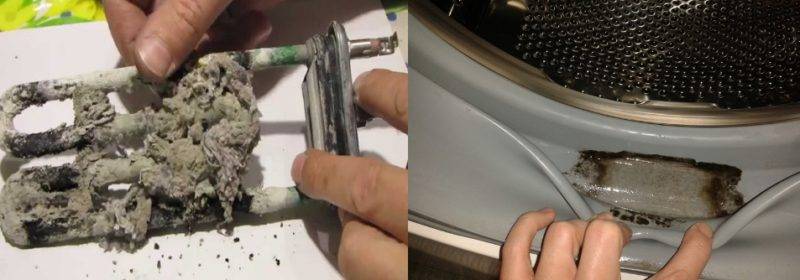
| So, the heating element may look unsightly after several years of operation. Rinse the heating element with a hard stream of warm water, this will remove fresh deposits and dirt. | |
| For the final disposal of plaque, a concentrated solution is required. Take a plastic bottle with a cut neck and pour 4 tablespoons of citric acid. | |
| What is called, "feel the difference." | |
| We place the clean heater back, doing all the steps in reverse order. |
How to clean the drum of a washing machine
If the washing machine does not provide an automatic drum cleaning mode, then manual cleaning will be required. Consider how to clean the drum:
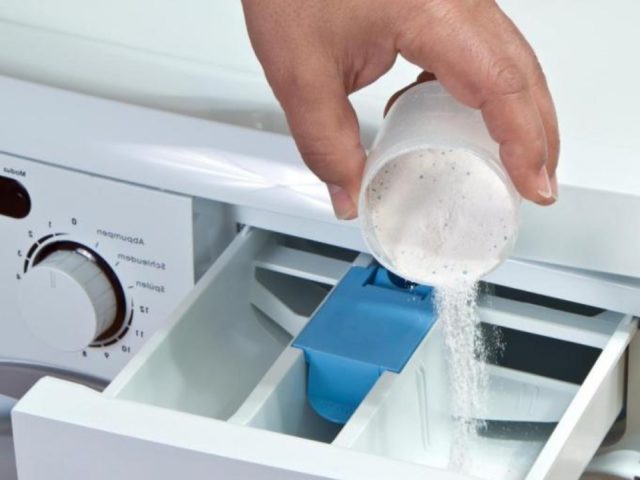
- Pour 2-3 packs of citric acid into the powder compartment.
- You can put a few clean kitchen towels in the machine so as not to force the device to work just like that.
- Set the mode for synthetics and the temperature to 90 ° C. Run the wash for 2 hours.
- Turn on rinse mode.
If the smell remains, the fungus has spread to the filter, and it needs to be cleaned.
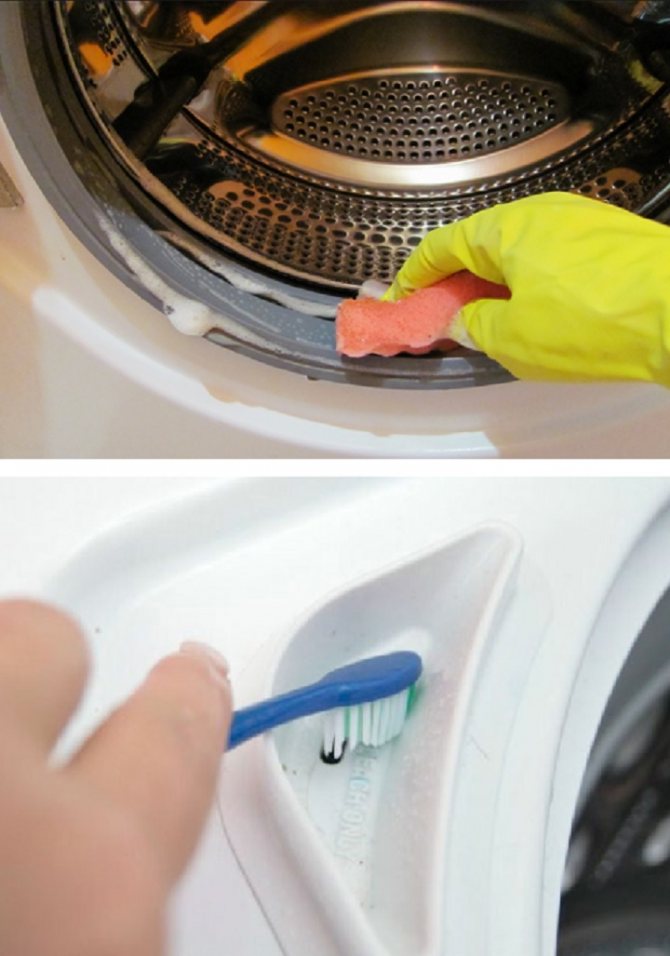
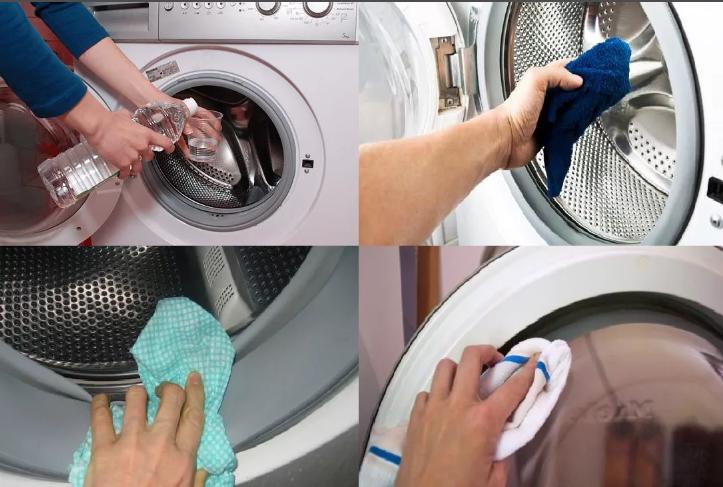
Cleaning the glass and sealing rubber of the washing machine door
In order to clean your washing machine, the following steps are required:
- Put a pinch of copper sulfate in a glass of water, stir until completely dissolved.
- Infuse for 3 hours so that there are no substances left that corrode the gum.
- Using a sponge or toothbrush, apply the product to the gum.
- Process details and hard-to-reach places, leave for a day.
- Prepare a soapy solution the next day.
- Remove the remains of the crust and the product itself with a sponge.
The door can be wiped with a sponge or towel, if necessary, instead of water use soap solution.
How to wash the detergent and softener trays in the washing machine
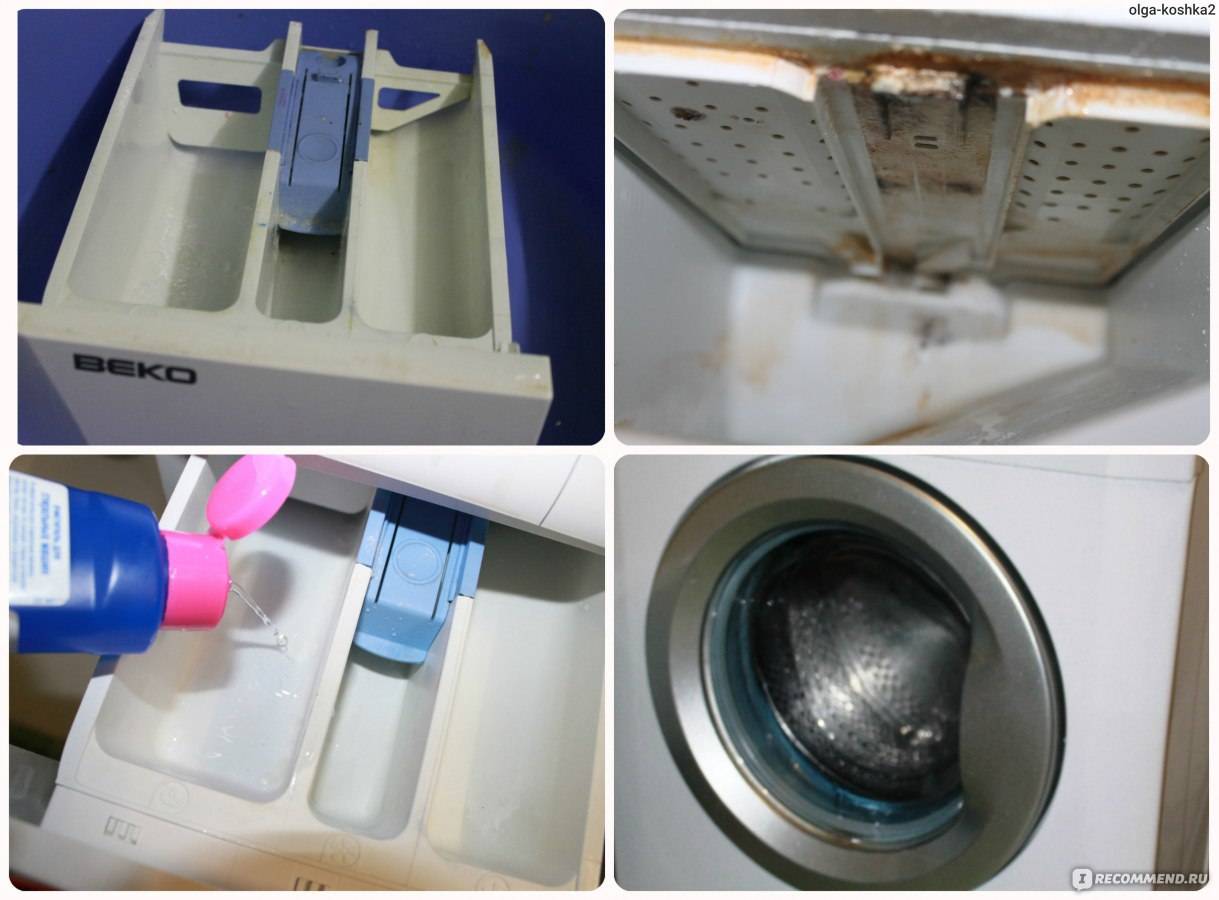
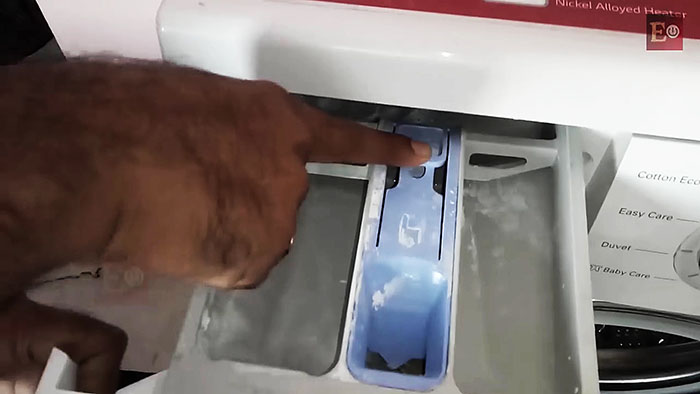
Due to stagnant water, mold and fungus form in them. Flushing the compartments is required every 5-7 uses of the washing machine. Remove the tray and clean it with a sponge or brush with bath cleaner.



Cleaning the drain pump and inlet hose filter of the washing machine
If you do not pay due attention to the drain pump filter, the machine will stop draining water. There is an easy way to clean up. Auxiliaries required:
- the oven tray will be used as a tray;
- rag;
- flat screwdriver.
Actions:
- Open access to the pump filter at the bottom of the machine body.
- If access to the filter is blocked by a panel, use a screwdriver.
- Before opening the filter, lay a rag on the floor and place a drip tray to prevent water from dripping onto the floor.
- Unscrew the cover.
- Take out all the trash.
To clean the inlet hose filter, follow these steps:
- Shut off cold water before starting work.
- Turn the machine with the back of the body so that the inlet hose can be seen.
- Unscrew the nuts and remove the filter with pliers.
- Clean it with a toothbrush.
- Insert the filter back, twist the hose.
- Open the water.
Cleaning the cabinet and door
The body of the washing machine can most often be simply wiped with a damp cloth without the use of cleaning products. If the dirt is old, you will have to use the same liquid products that are used to remove plaque on the sink and bathroom. To do this, apply them to the body, wipe with a sponge, wipe with a clean rag.
The door of the machine is most often covered with limescale. It cannot be removed with water. Therefore, it is necessary to use products such as Clean Home, Sarma, etc. They must be used according to the instructions.
You can use improvised means:
- 2 tbsp. l. dilute soda in a small amount of water to make a slurry;
- add 1 tbsp. l. citric acid;
- apply the mixture to the glass;
- leave for 10-20 minutes;
- wash off with a damp cloth;
- wipe.
Buttons and other small parts on the body can be cleaned with the same mixture using old toothbrush.
Folk remedies for cleaning the washing machine from scale
It is possible to clean the car from solid deposits not only with specialized chemistry. Some household substances show good results in the fight against scale.
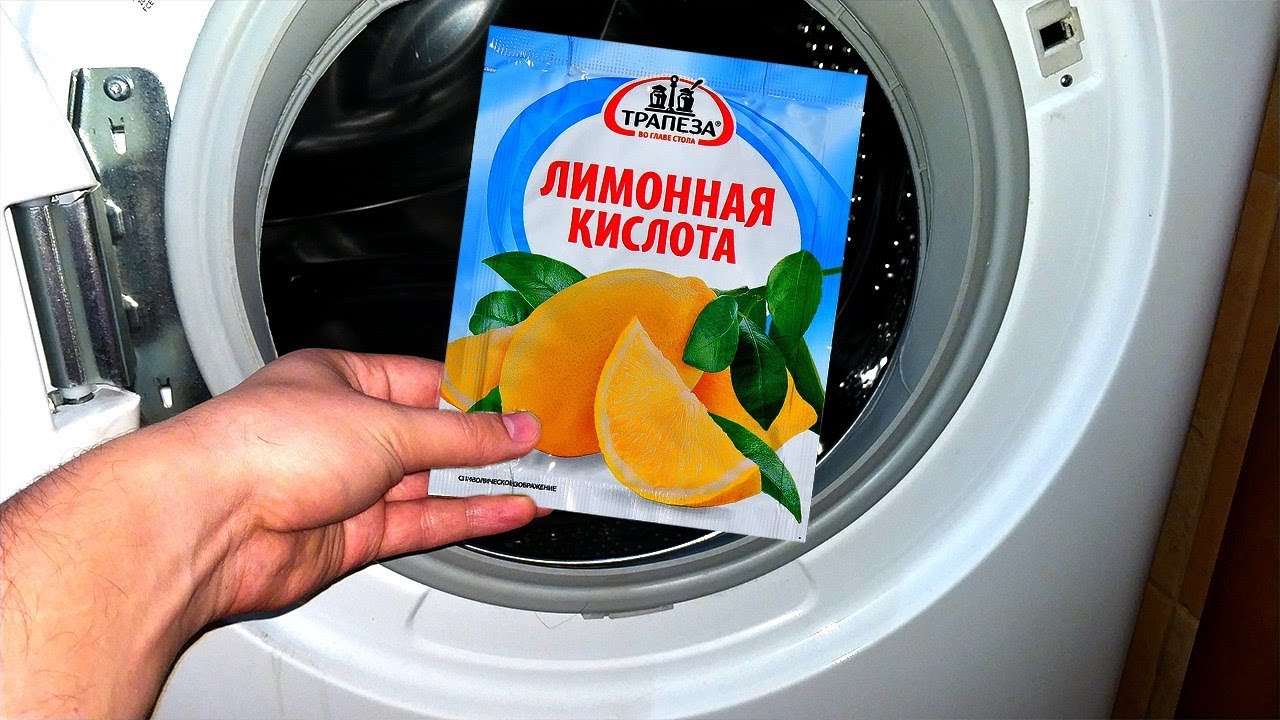
Lemon acid
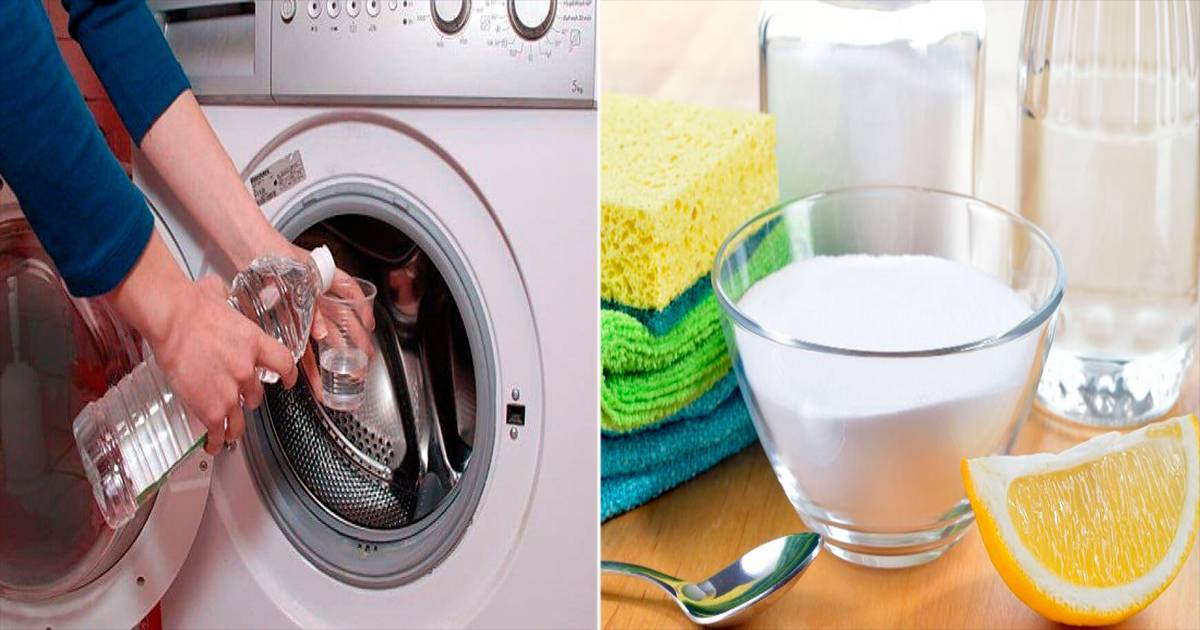
Citric acid powder can be purchased at any store at a very low price. The substance effectively allows you to clean hard salt deposits and also has a disinfectant and antimicrobial effect.
You can clean the drum of the washing machine from scale in the following way:
- all things are removed from the drum and check if there are any small objects left in the folds of the cuff;
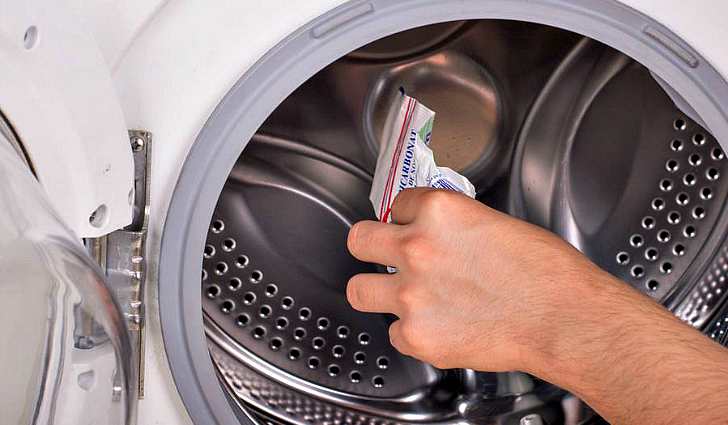
- 200 g of citric acid is poured into the drawer of the device;
- set the cotton washing mode or intensive washing, the water temperature should be 90 ° C;
- set an additional rinse, and turn off the spin completely, in the absence of linen, it will not be needed;
- the machine is put into operation.
Citric acid effectively removes scale, but can damage rubber parts.
After the wash is completed, you will need to open the hatch of the unit and thoroughly rinse the cuff with a damp sponge. It should not leave traces of citric acid, since the product has a very negative effect on the condition of the rubber.
Citric acid helps to clean the pockets of the washing machine from scale and mold. When added to the tray, it dissolves accumulated dirt and kills microorganisms, but after cleaning is complete, you should additionally wipe the drawers with a clean, damp cloth.
Advice! If a bad smell comes from washing machine drum, you can pour citric acid directly into it.
Vinegar
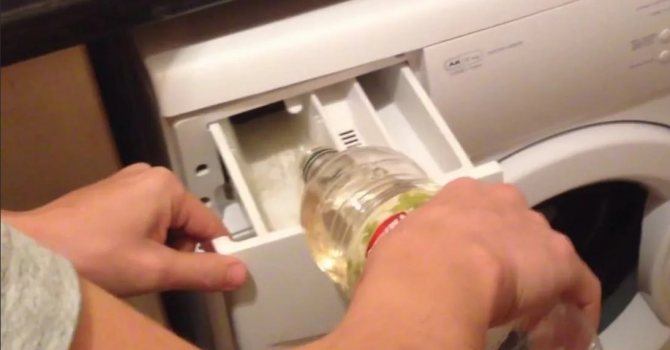
Table vinegar 9% has an aggressive composition and is suitable for caring for the drum and cleaning the heating element of the washing machine from scale.
You can process the aggregate with it like this:
- the machine is freed from linen;
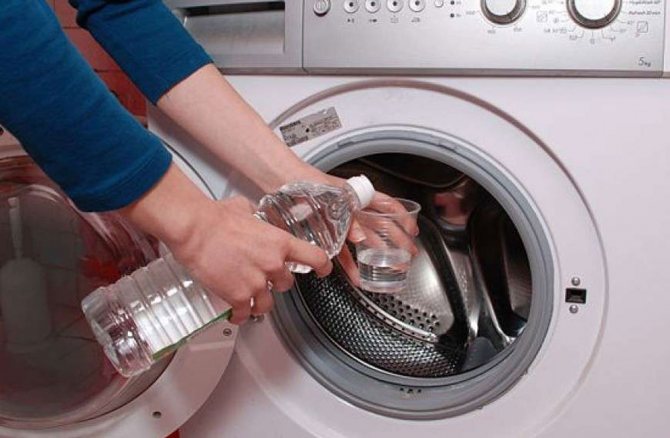
- 2 cups of pure vinegar are poured into the drawer or directly into the drum;
- the washing machine is put into operation at a temperature of 90 ° C with a double rinse and no spin;
- 20-30 minutes after the start of washing, press the pause button on the control panel and leave the machine off for an hour, during which time the vinegar will be able to have the desired effect;
- after this period, the washing machine is unpaused and waiting for the completion of the wash cycle.
Vinegar emits a strong smell, but it helps well to remove scale in the machine.
The disadvantage of table vinegar can be considered its pungent smell.
After processing the machine, it is important to leave the hatch open for several hours so that the vinegar aroma disappears from the drum
As with citric acid, special attention must be paid to the cuff. It should be cleaned with clean, warm water so that residual vinegar does not cause the rubber to dry out.
White
The famous chlorine-containing agent is used not only for bleaching things, it helps to fight deposits in an automatic machine. To clean the internal elements of the device from solid salts, you must:
- pour 100 ml of Whiteness into the tray or drum of an empty washing machine;
- set the washing mode with a maximum duration and temperature not lower than 90 ° C;
- turn on an extra rinse, which will remove the remaining whiteness from the washing machine.
Whiteness with chlorine not only whitens stains, but also dissolves scale in the machine
Chlorine Whiteness in hot water softens scale and allows you to clean the interior of the washing machine from any bacteria. The main disadvantage of the proven home remedy for washing machine scale is its strong and toxic smell. When using Whiteness, it is better to open a window for fresh air and leave the room with the washing machine. Upon completion of cleaning, the hatch of the unit must be opened, the gum should be cleaned of bleach residues and the drum should be allowed to air out properly.






Washing machine maintenance
As in other areas of life, timely preventive maintenance can significantly extend the performance of washing equipment and save money for its owner. To do this, you need to remember a few simple rules and do not forget to follow them during the operation of household appliances.
- We use the strictly necessary amount of powder, the principle "more is better" does not work here. We put in the container exactly as much detergent as indicated in the instructions. Otherwise, the excess powder, especially if it is not of the best quality, will simply settle on the surfaces of the machine and will “delight” you with unpleasant odors.
- To avoid clogging the drain filter, do not forget to check the pockets of clothes before washing: they should not contain any, even small particles.
- Do not store dirty clothes inside the washer, use a specially adapted laundry basket for this. The combination of dirty clothes and moisture can lead to an unpleasant smell, which will be quite difficult to get rid of. After washing, immediately remove things and send them to dry.
- After washing, do not immediately close the hatch cover, let the drum dry. Also, leave the powder tray open.
- In order to avoid the build-up of scale on the heating element, it is recommended to add special agents to the washing powder during the operation of the machine to prevent the formation of plaque. You can also purchase a special filter for the water supply hose.
- After washing, do not forget to dry the drum, the hatch door and the rubber seal, rinse and dry the powder tray regularly.
- Fluffy items must be placed in a fine mesh bag before washing. So small villi will not get inside the machine.
Here are some washing machine cleaning tips to help make it more efficient:
use chlorine-containing products with caution, as they can damage the rubber elements of the machine;
do not combine cleaning with washing, as the aggressive substances that make up cleaning products can ruin your clothes. if you don't like to spin the drum wasted, fill it with unnecessary rags;
heat and moisture, which no wash can do without, lead to the formation of plaque that feeds bacteria and contributes to the formation of an unpleasant odor
Plaque is not easy to see, but its presence can be determined with the help of a simple experiment: place a clean piece of cloth in an empty washing machine and put the machine on a short wash at a high temperature (without the addition of detergents). If after a few minutes of work you notice foam through the glass of the hatch - do not hesitate, there is a raid in the car.
do not use vinegar as a cleaner if you used chlorine bleach in the previous cycle, as it is highly undesirable to mix them. It is also undesirable to pour vinegar into the machine through the bleach dispenser;
do not forget to use rubber gloves during cleaning;
even if you usually choose a low temperature mode, do at least one wash per month at a temperature of at least 60 (preferably 90) degrees to get rid of bacteria and germs that have settled in the machine;
clean items of stubborn dirt before sending them to the washing machine.
Regular cleaning of the washing machine at home helps to avoid serious problems and breakdowns. Especially timely cleaning is important for those who have hard water in the house, who often do laundry or have furry pets.
So, scale on such an important element as a heating element can lead to its malfunction, and then to the breakdown of the heating element. Much easier and more economical to clean regularly
Moreover, for this it is not necessary to buy expensive funds or use the services of specialists. Pay a little attention to your household appliances at least once a month - and it will delight you for a long time to work properly.
Use lemon juice or vinegar
“Dry” scale cannot be removed - attempts to scrape off plaque can result in damage to the walls of the bunker. It is better not to experiment, but before directly removing hardened layers, soak the container in a special solution. The ideal option is to mix water with citric acid or vinegar.
We act as follows:
- fill a deep basin with water heated to 60 degrees (boiling water deforms the plastic, so you can’t raise the temperature);
- dissolve in water 250 g of "lemon" or 100 ml of vinegar;
- we lower the container into the finished solution and soak for 1.5-2 hours.
Citric acid and vinegar are effective in dealing with scale, but they cannot dissolve thick deposits without residue.However, the "defense" of deposits will be weakened, it remains only to mechanically scrape off the layers that are not softened.
The best folk methods
The basis of all cleaning products for preventing and forming scale is acid.
It enters into a chemical reaction with the salts in the water, and thus removes scale.
- Ordinary citric acid in powder is poured into the detergent tray. For every 6 kg of machine loading, 100 grams of powder is taken. Next, the longest cycle starts with a temperature of more than 60 degrees.
- Some washing machine repairmen advise pouring citric acid into the tray instead of powder and starting the wash in the evening at a temperature of at least 90 degrees without spinning. In the middle of the cycle, disconnect the machine from the mains. In this state, she should stand all night. During this time, the heating element and the drum will be completely cleaned. Then the machine should be connected to the mains, and it should continue the washing cycle from the stopped place.
- Sometimes whiteness is added to citric acid and a long wash cycle is also started at a temperature of 90 degrees. With this method of cleaning, good ventilation of the room where the washing machine is installed is necessary. It is also necessary to ventilate all other rooms where people will be at this moment. Chlorine vapors released from the whiteness dissolved in water, when idling the longest cycle with high temperature, can affect human mucous membranes.
- Cleaning with acetic acid. Pour 50–100 ml of vinegar into the powder and conditioner tray. The longest wash cycle starts with a temperature of 60 degrees. Such cleaning is more aggressive, but also more effective.You can turn off the power or stop the washing machine for 1 hour, then continue the cycle.
Descaling with folk remedies should be done no more than once a month, because the acid gradually destroys the rubber parts of the machine.
- You can remove mold and fungus from the drum with ordinary soda. 250 grams of soda is dissolved in 250 ml of warm water. Wipe the inside of the drum with this solution.
- Perfectly removes mold spores any chlorine-containing products (including whiteness and other bleaches). 100 ml of product is poured directly into the drum and a wash cycle is started at a temperature of 90 degrees. 30 minutes washing is enough for cleaning.
- 50 grams of copper sulfate is poured into 100 grams of warm water. This solution is well mixed and poured into the drum of the washing machine. A 30-minute wash cycle starts at 90 degrees.
All procedures for cleaning the heating element and drum using washing are carried out without linen!
The washing machine must be cleaned at least once a month.
If the machine is used more than 3-4 times a week, then cleaning is carried out 2-3 times a month.
Any chemicals, citric and acetic acid affect not only scale, but also all other parts of the machine. So get carried away with it.




Why you need to clean the tray
Not every housewife knows about the need to clean the powder compartment. Ignoring this mandatory work can lead to various negative consequences. Among them are the following:
- Deterioration in the appearance of clothing.There may be particles of detergent in the tray that is only suitable for one type of fabric. If you do not remove them, then the next time you wash them, they will fall into the drum of the device and ruin your wardrobe items.
- Fading bright colors. This problem may occur after using bleach. If you do not clean the tray from the remnants of the product, then the washed colored items will become pale.
- The appearance of dirt and mold. If you regularly ignore the cleaning of the tray, a large amount of detergent may accumulate in it. Gradually, it will turn black and acquire an unpleasant odor. If after that you do not start cleaning the powder compartment, then mold will appear in it.
- blockage. If not cleaned for a long time, dirt can block the hole through which water enters the tray and washes out the powder. As a result, washing will turn into a useless task.
Local cleaning
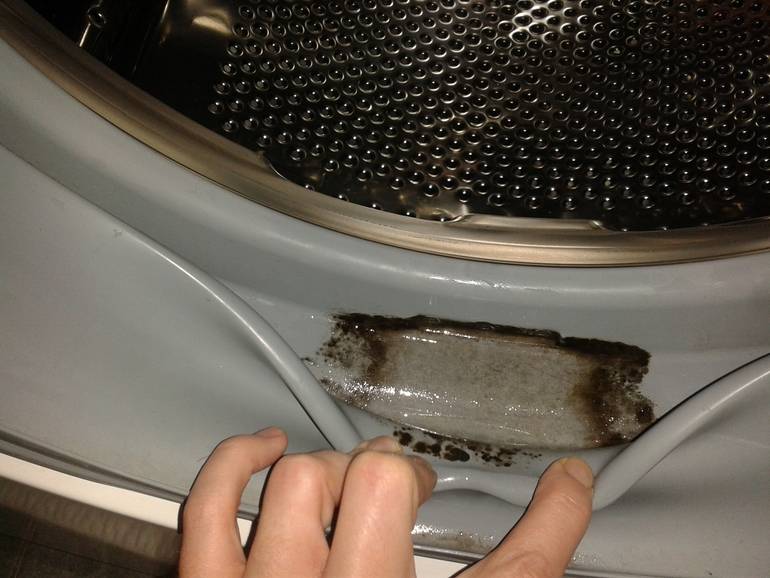
Many people wonder about the frequency of cleaning the washing machine from various unwanted deposits. According to the instructions, local cleaning should be done once a quarter. But if there is a dog or cat in the house and you wash woolen things quite often, then such cleaning should be done much more often. The fact is that the internal elements of the washing machine are overgrown with dirt, which is removed from the clothes during the washing process. This becomes especially noticeable on rubber seals and edges of the drum. Dark spots appear there, and these are signs of mold development. Heating elements and some other parts during operation may become covered with a hard white coating. This is the result of the presence of salt in the water.
To keep the washing machine clean, you need to periodically arrange general cleaning and cleaning, and you need to start from the body, gradually moving on to the internal details. Explicit external contamination in the form of gel smudges, stains from the conditioner, traces of the powder is removed with warm water and a sponge. Hidden parts inside the machine also need to be cleaned.
Cleaning the cuff
This warm and humid place seems to be created for the accumulation of all kinds of dirty deposits and the development of mold.
Therefore, the cuff must be paid close attention and thoroughly cleaned. This plaque is washed off with cleaning products.
You can take either pemolux or regular soda. If a huge amount of fungus is found on the cuff, which smells rather unpleasant, then you can take a more powerful remedy. It can be Domestos, duckling or whiteness. But you need to keep in mind that the chlorine-containing agent can deform the rubber. Therefore, its too frequent use is undesirable.
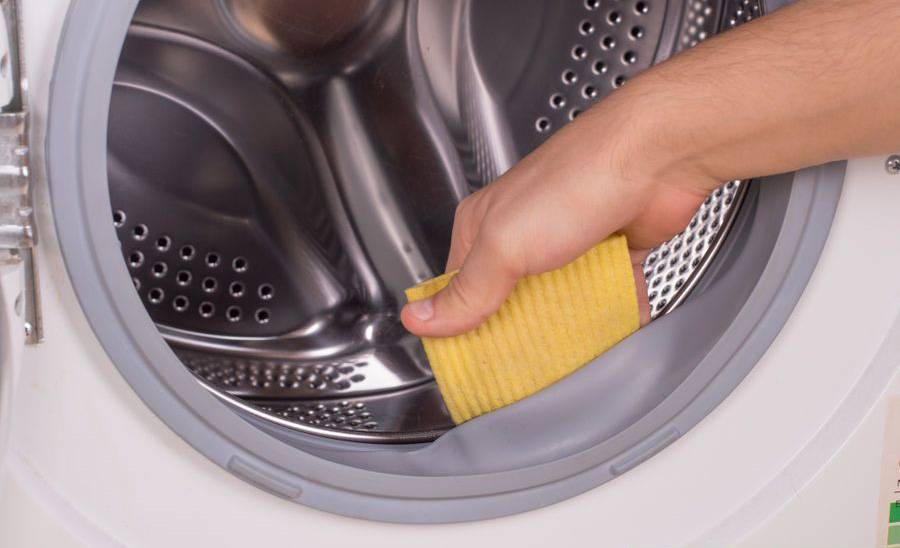
How it's done. It is necessary to apply the selected agent to a wet piece of rag, then gently pull the rubber and wipe the metal parts of the case. The rubber cuff itself is cleaned in the same way. Remember that most dirt accumulates at the bottom, but you still need to clean around the entire circumference of the drum
Be careful when retracting the rubber cuff, do not apply too much force, otherwise it may be damaged. After cleaning with a cleaning agent, you need to wipe the cuff with a clean, damp cloth
Drum cleaning
Each wash leaves some water and dirt on the bottom of the drum. Soon we will begin to notice that dark spots begin to appear on the sealing collar, and an unpleasant smell comes out when the drum is opened.The problem with the smell is solved by starting at idle and using a disinfectant (you can use citric acid). But the rubber cuff is cleaned only by hand.
Scale causes the greatest harm to the drum of a washing machine; the formation of bacteria is unsafe for human health. To combat microorganisms, disinfectants are used, and to combat mineral plaque, a substance is required that can dissolve it. The drum, in either situation, is cleaned by treating its surface. Here you can use two options. You can use the cleaning mode, but not all units have this mode, but only those that have such a function. You can choose the composition to combat the corresponding problem, apply it, and then rinse.
Tena cleaning
The first step is to clean the inside of the washing machine. We have to remove mineral deposits on the drum and heating element. We will use a simple method. It is known that scale is formed from salts of magnesium and calcium. Therefore, it is necessary to fight it using organic and inorganic acids. Such acid can be found in every apartment and it costs a penny. This is vinegar, vinegar essence or citric acid.


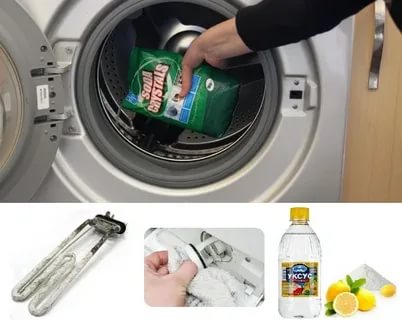
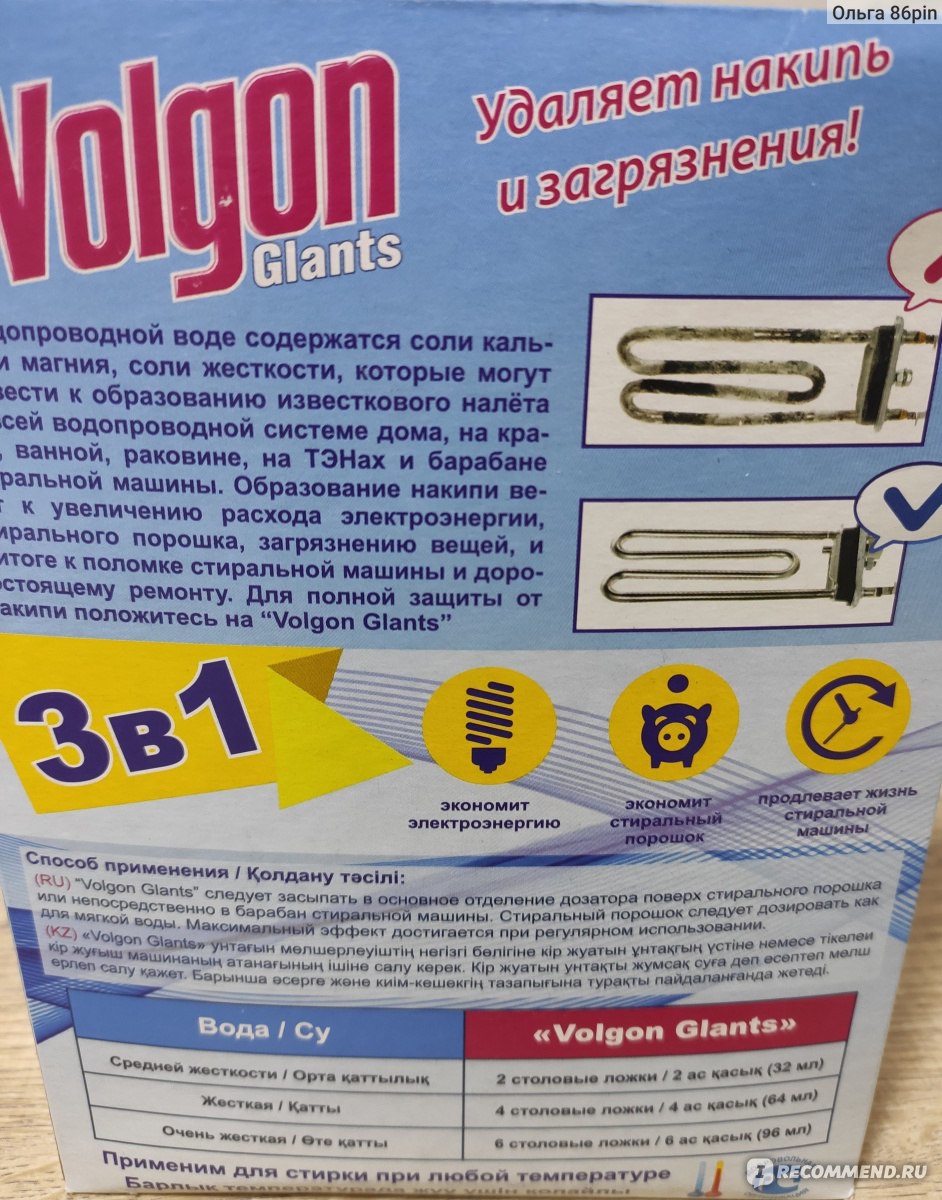
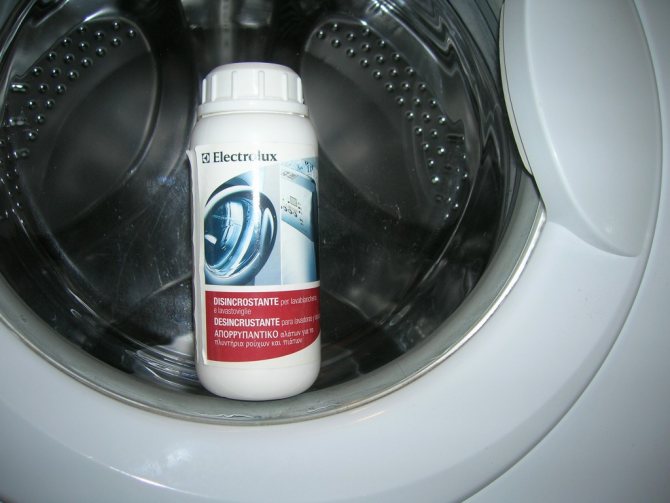


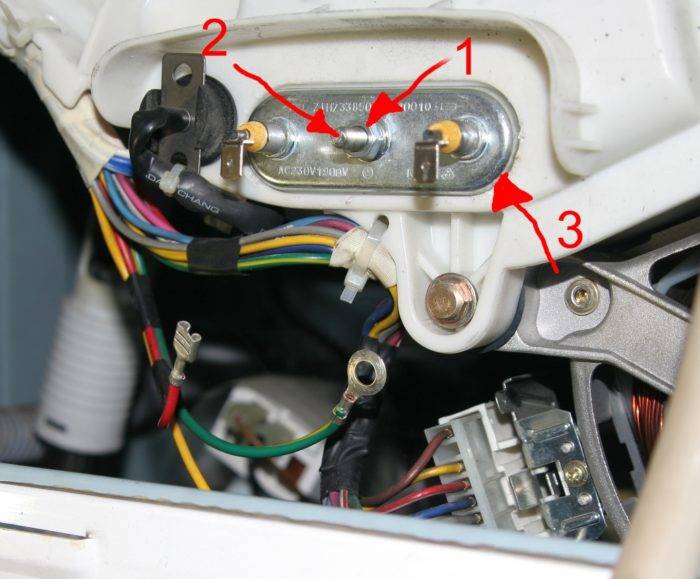
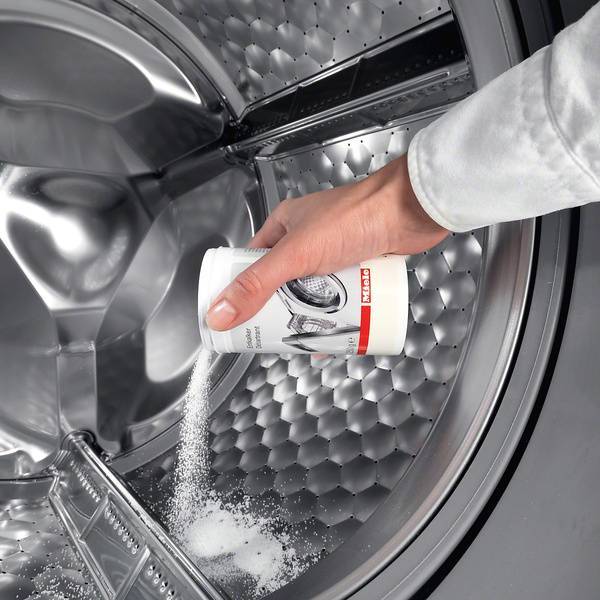
But first, let's try to clean the washing machine with a special tool. It is called "anti-scale". This tool consists of an acid that dissolves deposits. When pouring the powder into the washing machine, you need to use the “no linen” washing mode. As a result of heating, chemical reactions occur that rid the elements of the machine of scale.
How is scale formed and why is it dangerous?
Another inevitable problem in the operation of any device that is associated with contact with water is the formation of scale. If you have a boiler with an open or “wet” heating element, then you probably know this phenomenon.
Scale is solid deposits that form on the surfaces of elements that are in direct contact with water and provide its heating. There are several reasons for the formation of such a plaque:
- The most basic is the very poor quality of water, which contains many different impurities and components. In some regions or areas, the water may be softer, in others it may be too hard. The water contains magnesium and calcium salts, which are the most harmful for the heating element and the washing machine tank. When water is heated, the salts of these minerals precipitate and form solid deposits;
- In addition to impurities in the water itself, various chemical additives in washing powders also have a detrimental effect;
- Also, scale forms very quickly with regular use of the machine in the “intensive wash” mode.
There are two ways to get rid of limescale. And it is best to use them in combination. But first of all, you need to assess how expedient it is to do it right now. To do this, you need to try to consider the state of the heating element through the holes of the drum. To do this, you need to shine into the holes and rotate the drum. How quickly it is better to do this, you will understand in the process. If characteristic deposits are visible on the surface, perform two types of cleaning in sequence:
- Mechanical. It is a very efficient way.But for this you will need to study the device of your device well and be able to disassemble it without sad consequences. After you get to the heating element and more clearly appreciate the scale of the tragedy, you will need to remove the hard coating. It is highly not recommended to use knives, screwdrivers, files and other improvised tools that can leave scratches on the surface for these purposes. It is better to use a sponge with a hard layer, fine-grained sandpaper;
- After that, to remove the remaining scale, soak the heating element in a solution of vinegar or citric acid for several hours, then thoroughly clean with a toothbrush and rinse with clean water. Also, with the help of these two products, you can clean the machine without disassembling it, but more on that later. I would also like to clarify what exactly the excessive accumulation of scale on the heating element is dangerous for:
- The level of heat transfer of tubes, which are called heating elements, are noticeably reduced due to the buildup of plaque on their surface. This leads to slower heating of the water;
- As a result, in order to reach the set temperature, the machine needs to work much longer, which naturally entails an increased consumption of electricity;
- The large load that falls on the heating element in the conditions of such work will lead to its early breakdown and the need for replacement;
- And as we have already found out - the formation of scale can cause an unpleasant odor.
- An excellent method of preventing scale formation is to install a magnetic filter. This small device is attached to the water supply hose and forms a permanent magnetic field. When the machine is filled with water, passing through the formed field, it changes its structure.As a result, impurities are destroyed and do not settle on the internal surfaces. The cost of such a device is quite high, however, its service life reaches 50 years, which fully justifies the costs.
How to clean a washing machine
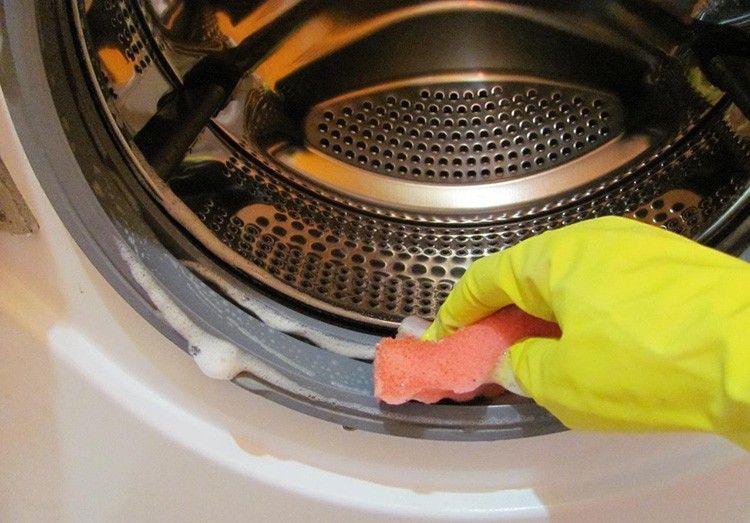
There are several ways to clean a washing machine at home. Options for cleaning the washing machine:
- soda;
- citric acid;
- citric acid with the addition of whiteness;
- acetic acid;
- bleaches;
- copper sulfate;
- chemical means.
Household chemicals for washing machines from dirt and scale
Let's bring review of the best cleaning products for washing machines. For convenience, we have arranged the most important information in a table.
Folk remedies for cleaning the washing machine
Among folk remedies for cleaning washing machines, citric acid, blue vitriol, and vinegar are very popular. These simple products, which are in every home, not only rid the machine of scale, but also eliminate mold, fungus and unpleasant odors. For example, here is a step-by-step instruction on how to descale a washing machine with vinegar. It is widely known that acetic acid easily removes plaque and removes it from the elements of the device. If you carry out such prevention regularly, then the risk of clogging your washing machine with lime will be minimized.
| Illustration | Action Description |
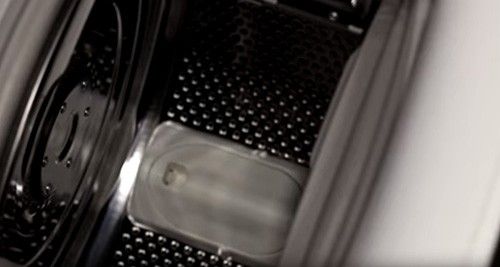 | We check the drum and, if necessary, remove things from it. |
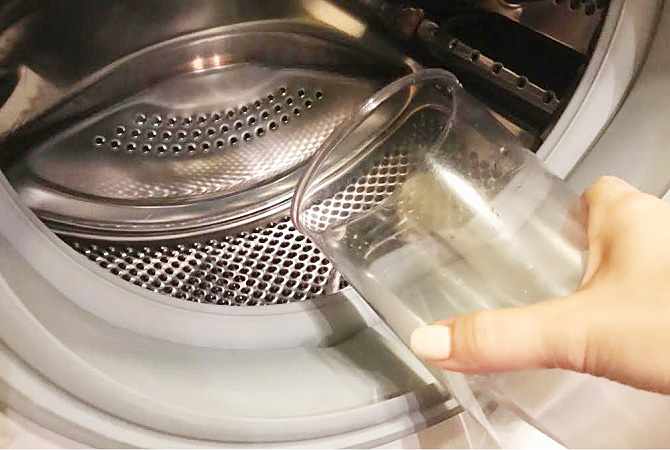
| We take a glass of 9% vinegar and pour it into the washing machine tray designed to load the powder. | |
 | We set the highest temperature and a long wash cycle. We start the washing process. |
| After the vinegar mixes with water and the solution warms up, pause the machine and wait at least an hour.Then we start washing again and cleaning resumes. Be sure to wait until the end of the cycle. | |
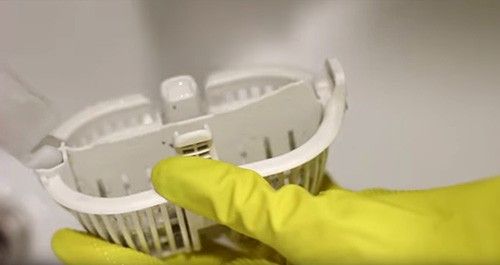 | After the program is completed, be sure to clean the drain filter. Small pieces of scale may accumulate on it. |
| Next, we breed in half a liter of water a tablespoon the same vinegar. And we wipe the accessible parts of the spiral machine with a solution: a drum, rubber parts, the body itself, as well as a removable filter. | |
| Cleaning is completed by starting the washing machine for another cycle of work. But this time there is no need to add anything, no reagents, no cleaning agents, we choose a short washing cycle. It will be enough to finally clean the device from the remnants of the detergent component and scale residues. | |
| We wipe all parts of the machine with a dry cloth. And don't forget about the powder tray. We leave all the details of the machine as open as possible, allowing the machine to get rid of the pungent smell of vinegar. |
What is dangerous "dirty" drum
Scale and mold, as we have already found out, are the main “enemies” of the automatic machine, which must be actively fought. It is the drum that is the most vulnerable part of the SMA in terms of the deposition of such formations on it.

Moisture and heat, which are constantly present in it, create ideal conditions for the reproduction of harmful microorganisms inside the device and the further appearance of mold. An unpleasant smell on washed clothes is the first sign that the washer needs disinfection. This situation is not dangerous for the washing machine itself, but sooner or later it will affect the health of its owners in the form of an allergic reaction.
A potential threat to CMA components comes from scale. Its formation is facilitated by the use of water with a high content of mineral salts.Limescale, affecting the main functional units of the SMA, reduces the efficiency of its work, and hence the quality of the wash itself. The problem will be solved by elementary cleaning of the device with special cleaners or substances that can remove harmful formations.