
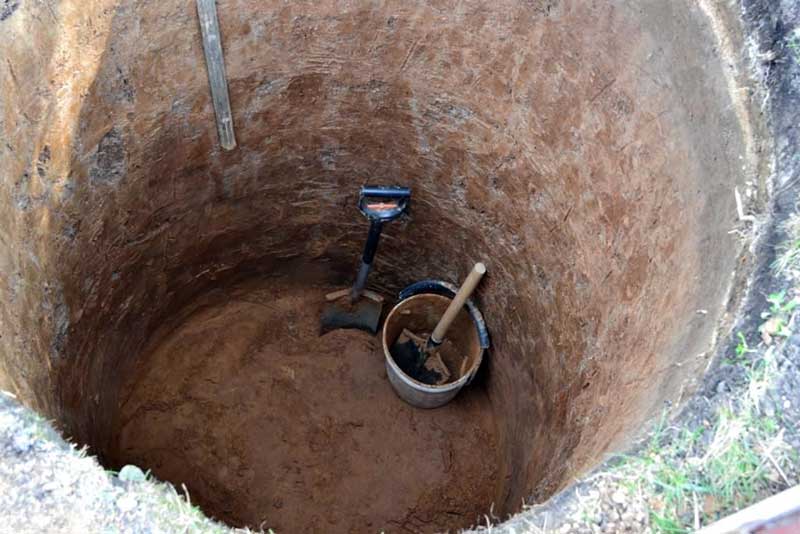
- The most popular types of deception
- A few words about well construction technology
- Typical ways to dishonestly make money on materials
- How to deceive
- And let's immediately make a blind area ...
- Be wiser!
- How to protect yourself from deception
- How to protect yourself from fraud when ordering a well?
- Promising field for "divorce"
- When can we expect water?
- How to start a well digging business
- Finding water
- digging a well
- A few words about well construction technology
The most popular types of deception
Most companies that build drinking wells protect their reputation and provide quality services. At the same time, the main goal of a small percentage of brigades is to make quick money through deception. It is not so easy to recognize scammers, during preliminary negotiations they will describe their many years of experience, guarantee high quality and promise low prices. It is far from always possible to recognize unscrupulous performers at first, so do not be shy to ask tricky questions and scrupulously check the fulfillment of the agreed conditions during the construction process.
Based on the reviews of deceived customers, there are such commonly used methods of fraud:
- Fraud with the size of materials. Attempts to install well rings of a smaller height, thickness or diameter.A tape measure for measuring diameter and other sizes, seen in the hands of a customer, will immediately discourage you from “earning” in this way.
- Fraud with the quality of materials. Installers may try to install defective rings, with cracks and chips, bought on the cheap. The second option is the installation of cheap rings designed for industrial needs and containing harmful substances.
- Attempt to obtain payment for additional services or materials. So, some teams may require money for unloading work or mounting brackets. To take into account such details when drawing up an estimate is the responsibility of the contractor and no additional payments in this case are inappropriate.
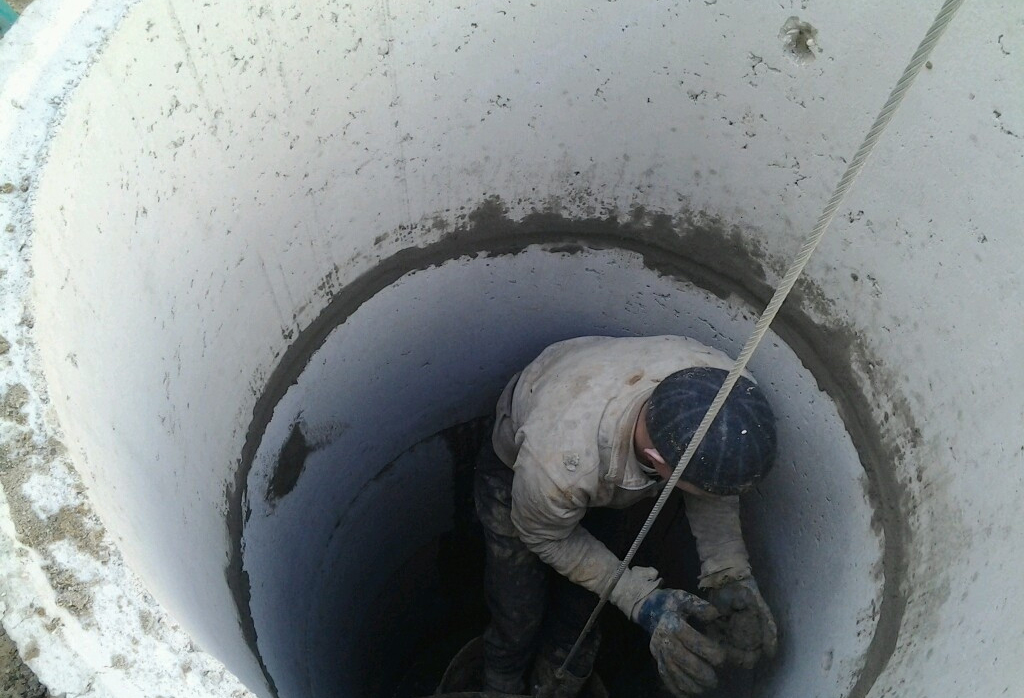
- When working on deepening the well, repair rings are used for a well smaller than the agreed diameter, a smaller number of them is installed (and, accordingly, the amount of work performed is reduced), or even the bottom is simply cleaned without deepening. In this case, in addition to measuring the diameter of the ring, it is worth checking the depth of the shaft before starting work and after finishing with a rope with a load.
- Attempts to impose additional survey work or pay for the services of a dowser. Firstly, local wells have known the depth of water horizons for so long, and secondly, such information can be easily obtained from the nearest neighbors.
- Without digging the shaft to the required depth, would-be masters justify themselves by the fact that water will appear over time, and it takes time for the sources to make their way. Such stories testify to the lack of minimum necessary skills for installers.
WATCH VIDEO
A few words about well construction technology
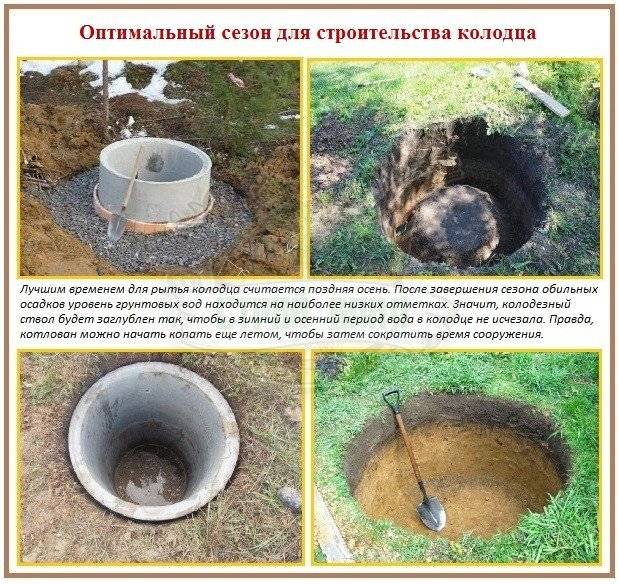
In short, the process of building a well looks like this:
- Choose a place.
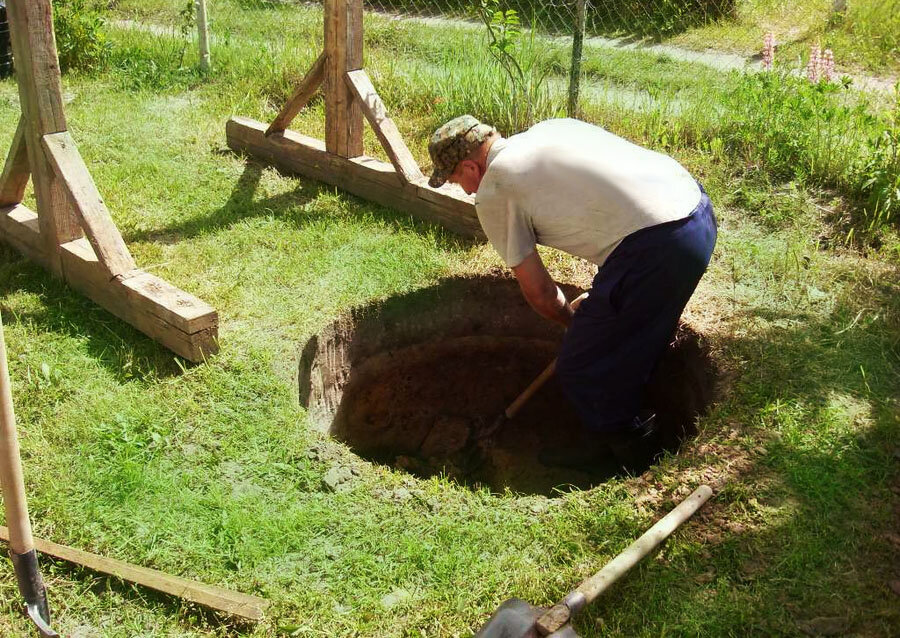
- Dig a round hole slightly wider than the concrete ring.
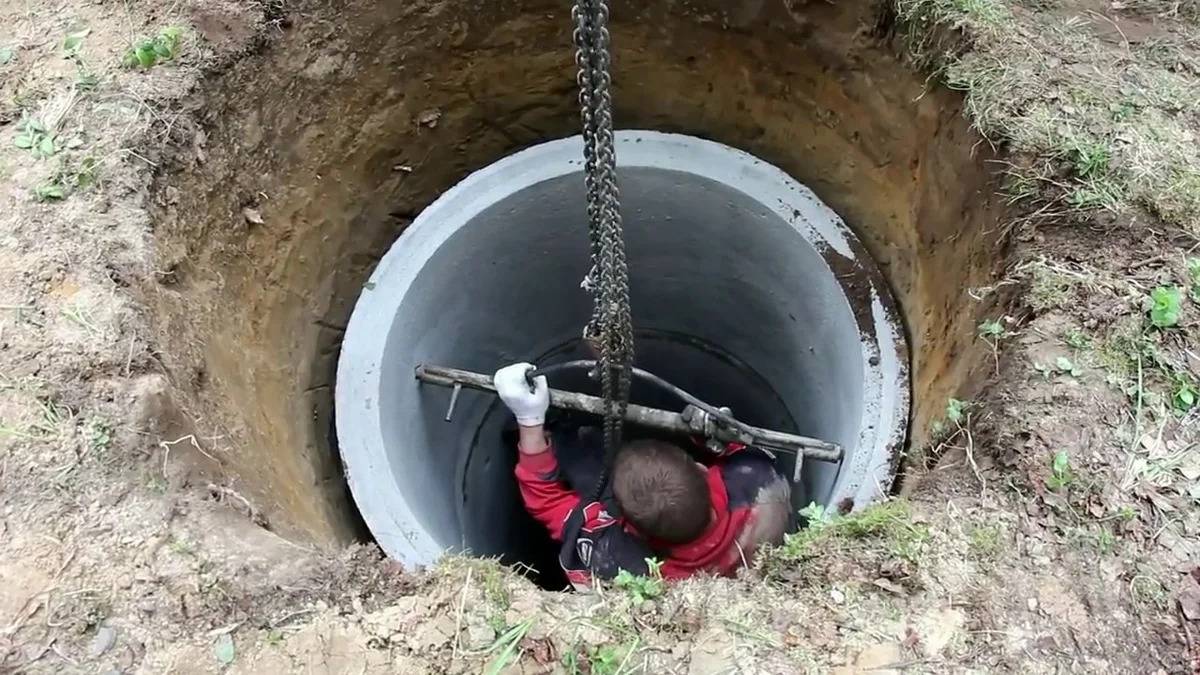
- Lower the ring into the hole and continue excavation.
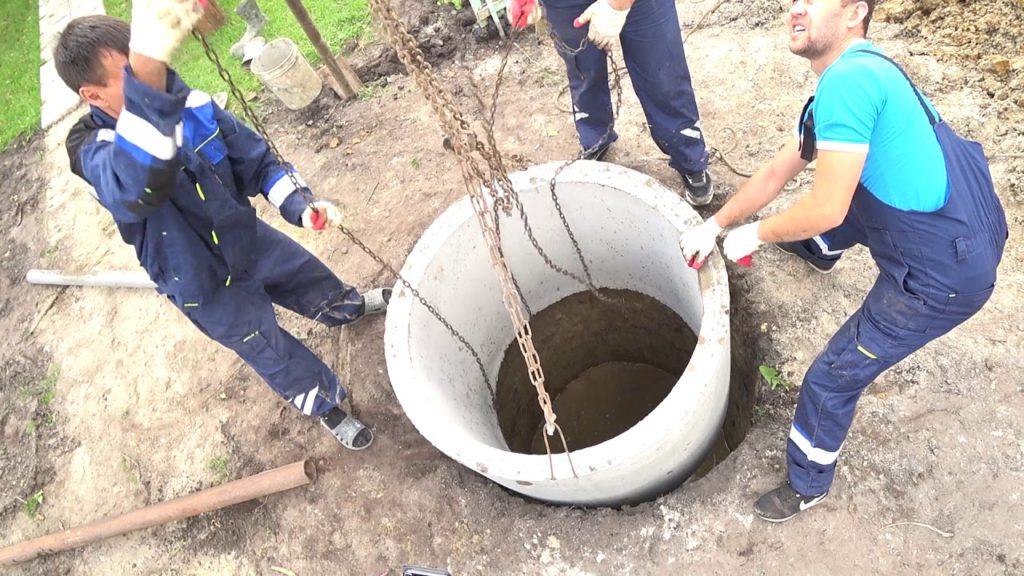
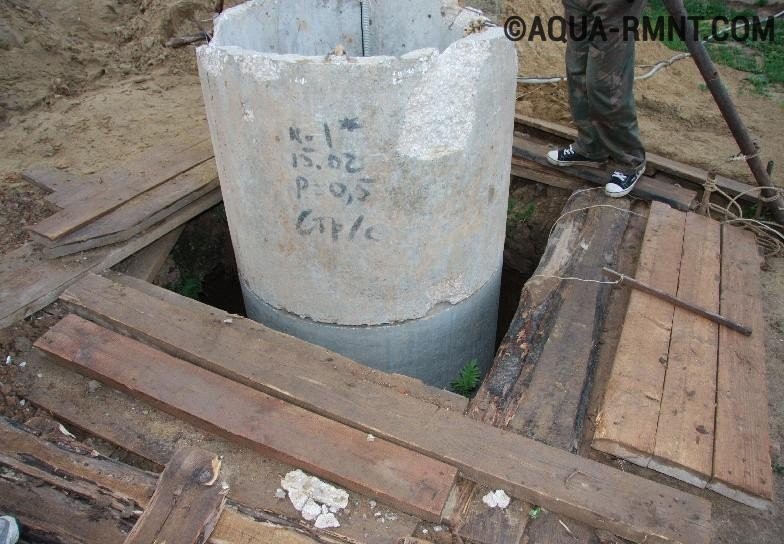
- When the ring sinks deep enough (below the ground), the next ring is placed on it.
- Continue excavation and installation of rings until water appears.
- Pump out some of the dirty water.
- Install the bottom filter.
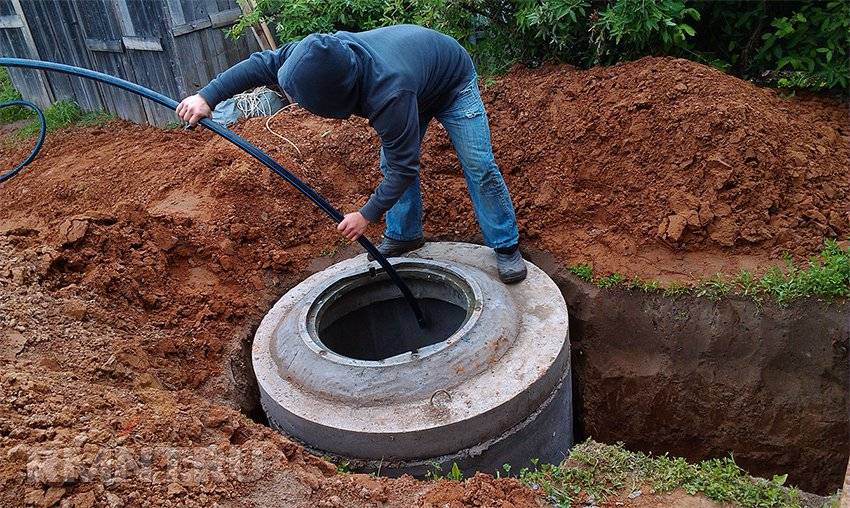
- They decorate the upper part of the well and arrange a clay castle.
In more detail, the process of building wells is presented in the video:
It looks simple, but in reality each stage requires close attention and knowledge of certain nuances. If the customer does not know these subtleties, he can easily be deceived.
This is interesting: How to carry out TOPAS maintenance yourself
Typical ways to dishonestly make money on materials
It is possible to go for a conscious deception not only at the stage of impersonating an experienced well, which a person is not. When performing work, unscrupulous workers resort to various tricks. For example, handicraft reinforced concrete rings are used, and the invoice is issued as for factory products.
There is a standard grid of standard sizes of reinforced concrete products, which corresponds to the products of leading manufacturers. Rings of reduced cross-section and / or height are taken, and in a pit 10 meters deep there will be not 10, but 11. When working with smaller diameters, less time and effort is spent on excavation. The company's prices are based on the descent of one ring, so increasing their number increases the bill, but does not deepen the well.
You need to check the rings immediately upon unloading, and even better right on the trailer, and immediately negotiate a price reduction if they turn out to be of a non-standard format.Dimensional mismatch is not the weakest point of products from small workshops. Violation of production and storage technology makes them less durable. In work, they hold loads worse and are destroyed even when descending into the mine.
We described the differences between factory and self-made rings in previous publications. In addition to incorrect proportions of components, products can simply be dried or stored incorrectly. Difficulties may arise with the joining of the seams.
An ordinary tape measure, measuring tape and a coil of rope will help you check the dimensions of the rings, the total depth of the finished shaft and the height of the water surface. All measurements are carried out without descending into the mine
Tricks with rings also happen at the stage of deepening the well. The worker performs a simple cleaning of the well, but takes money as if for a dug repair ring. Or dug on two rings, and lowered three, and included 4-5 pieces in the bill. To divert eyes, the excavated soil was scattered around the territory and created the appearance of a large volume. With a deepening of at least half a meter, several dozen buckets of clay or other rock will be raised up, and a full meter will drag on a ton or more.
Another construction moment is grouting. In a good way, it is done after casing the trunk in order to close the passage of water from the upper horizons and prevent the soil from spilling. Materials and labor are already included in the total estimate. And only during the next repair it turns out that not a single seam below the visibility zone was sealed at all or smeared with a blunder. In the future, such negligence may cause contamination of the well with sewage.



How to deceive
There are several ways to deceive customers who expect to receive a quality well in the shortest possible time. And they all stem from the inexperience of employers.

Ring size matters! It matters more than ever in the case of concrete rings used to strengthen the walls of the well. The industry produces several sizes that differ in height
To the eye of a non-professional, the difference is almost imperceptible. It never occurs to anyone to pick up a tape measure and check the actual height of the rings bought by the "masters". As you know, the brigade receives money for the number of installed rings. If this number is increased by size manipulation, the workers win, but the owners will have to pay a larger amount. And the greater the depth, the stronger the unjustified spending of clients of such a dishonest team grows. A similar fraud can be carried out with the diameter of the rings. If you take a smaller diameter when cleaning and deepening the well, you can increase the depth by just one ring, and charge for two (the smaller ring is easily inserted into the larger one and “extra” work is not required). The quality of the material matters. A fairly common occurrence is the acquisition of cheaper rings that have technical flaws - chips, cracks. The builders promise to “fix everything and do it right,” but in fact, you can’t work with such rings. They are short-lived and dangerous to use, because under the weight of the whole structure, the lower rings can burst (and well, if not during digging!). Consequently, when trying to save money, the owners will have to face re-construction. Another way to cheat is to install industrial rings.When they are used, diesel fuel spots appear in the water, looking like a greasy film. Special rings designed for contact with drinking water are always more expensive. Negligence in work on the part of the construction team is a real test for the owners. Here the masters use a variety of tricks. For example, an unfinished well is put into operation, promising that “the keys will make their own way and there will be more water.” The real reason for the dryness or lack of water in the well bottom may be the failure to enter the aquifer, or the shallow depth of the well. The client is not informed about this, but promises are made to come if there are problems with water (the well will be shallow, silt and sand will appear). As a rule, the phone of the masters is then unavailable, and there is no water in the well or there is very little water. In this case, the owners have to forget about good water supply. It is not uncommon for the owners to take money for the ring broken by the workers themselves. Or for unloading the rings, although this was included in the payment for delivery services. Advertising gimmicks are another common scam. Trusting residents are ready to believe in anything! Therefore, they are promised "fast and high-quality work, low prices and the most reliable guarantees." In reality, the client gets slow work, damage to the rings, missing the aquifer and a requirement to increase payment for additional work. Often they refer to the fact that there is rock in the soil, through which it is necessary to break through to the water. And it is expensive, as it requires enormous physical effort from the workers. Along with advertising for fast and professional digging, a guaranteed search for a powerful aquifer with the help of a vine can be imposed. And this also requires a separate fee.In fact, an experienced craftsman knows how to determine the right place literally by eye, by indirect signs - for example, by the slope of the site or the depth and location of nearby wells. And he does not need any vine!
And let's immediately make a blind area ...
Waterproofing the upper part of the shaft is certainly needed, but it is fundamentally wrong to lay it immediately after digging the well. The excavation is not carried out clearly according to the outer diameter of the rings, but with a small gap, so that the trunk descends more easily under its own weight. There will be a small gap around the shaft. Over time, the surrounding soil will shrink tightly, and the gap will disappear - nature does not tolerate emptiness. If you dig a pit and lay a blind area without waiting for the final subsidence, it turns out that a void forms on the border of the soil and the blind area array, where water or insects will collect.
Clay castle is recommended to lay at least six months later. This is an old way to protect against precipitation, which requires oily clay, thorough rinsing and tamping. Sometimes builders simply fill the trench with soil excavated during digging, which is fundamentally wrong. Plastic mashed clay does not allow water to pass through, then any other types of soil do not have such qualities.
Do not miss the aquifer and go deep into it correctly - this is the main task of the well master. The method of deception is to dig to the first moisture and tell the owner "the well is ready, wait until it is full." But in fact, water may not appear
We advise you to treat the proposal of arranging a clay castle with caution. Ask why the workers recommend this particular type of blind area, and where they plan to take the breed
In reality, it takes a lot of effort to wash a cubic meter of clay, and most likely the craftsmen are simply unfamiliar with the details of the technology. It is much easier to make a modern analogue - a dry blind area on a waterproof film.
Be wiser!
Don't give scammers a reason to cheat!
Collaborate only with trusted companies, as well as with teams that have positive reviews.
Check all the calculations, delve as far as possible into the construction of the well.
Do not quarrel with the performers until the work is completed. Remember that this can easily result in poor quality well water.



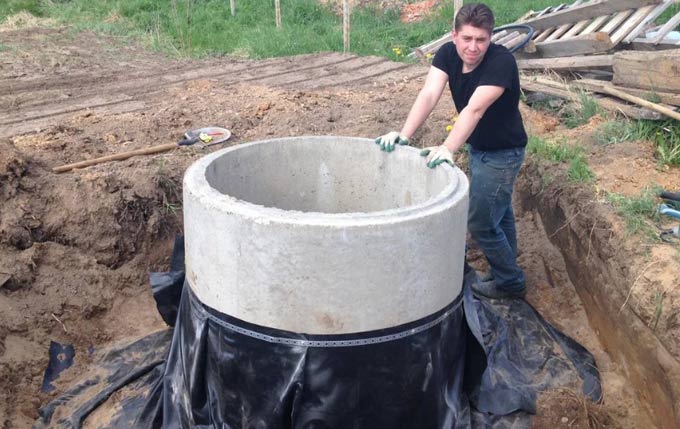


Take care of yourself, your nerves, and, most importantly, your health!
This is interesting: Electricity in the house - digest
How to protect yourself from deception
 The main thing is to hire really experienced workers. To do this, of course, is difficult. There are a lot of inexperienced or outright fraudulent teams on the market.
It is possible to find out the reputation of a particular team only if there is an opportunity to communicate with former clients.
Often, the reviews of the owners who built the well on the site are the most reliable and impartial information that allows you to make the right choice.
Here are some more insurance options:
- Before concluding a contract, it would be useful to inquire about the average cost of well digging services in the region. By signing the contract, you can take into account the data already received and find out if the builders are trying to artificially inflate the total amount of the estimate.In this case, the owners will have self-confidence, and they will be able to ask why some of the services are offered to them at an inflated price.
- The contract must provide for the actions of the brigade in the event of a drop in the water level. This happens if the well is dug in the spring during the flood. In summer, the water mirror will naturally go to the depth. Professionals always eliminate such a defect for free (they dig a well in the summer).
- In cases where the reputation of the brigade remains a "dark horse", the owners will have to arm themselves with elementary construction tools - a plumb line and a tape measure, with which it is necessary to control the size of the rings.
- A good way would be to fix the passport data of the foreman. Having reinsured themselves, the owners will subsequently be able to easily find their workers for warranty service. Yes, and the foreman himself will have an incentive for high-quality work. But this simple trick will frighten scammers, allowing the owners to avoid much bigger problems than the failure to meet construction deadlines.
Living in a private house is the dream of almost all citizens! How to build a house from a bar - read the article.
You can and should recycle non-working printer cartridges. Follow the link to find all the information you need.
The digging process looks like this: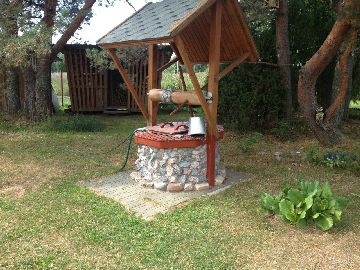
- a place is chosen (no additional dowsing for money is required at this stage!);
- a recess is dug under the first ring, slightly exceeding its diameter;
- the ring is inserted into the hole;
- excavation continues inside the ring and it settles down;
- the following is placed on the sagging ring;
- these two stages alternate until water appears and continue further - usually there are one or two rings in the water (the productivity of the well depends on the depth);
- dirty water is pumped out with a pump or scooped out with buckets if the water flows slowly;
- at the bottom there is a filter (bottom);
- a layer of clay is poured around the upper ring and compacted well.
If the team missed one of the listed stages of work, this is a reason for the owners to be on their guard. Perhaps the work is being done poorly.
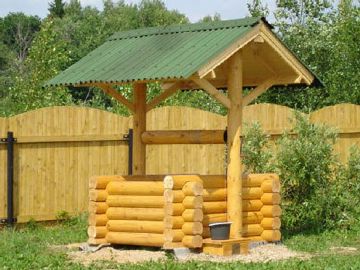 The construction of a well has always been and will be a "tidbit" that attracts potential workers. The subtleties of this matter are little understood or not at all known to the uninitiated. And, therefore, the probability of falling for the trick of deceivers is quite high. We can say that in some way the success of the work will depend on luck. After all, even among hereditary craftsmen there can be unscrupulous people striving to get big money, and caring little about the quality of the dug well.
Knowledge of the basic ways and methods of deception, as well as construction technology, will greatly increase the chances of success. Also, we must not forget that flaws happen even among experienced craftsmen who do not specifically seek to harm or do the work quickly and inattentively, only for the sake of money.
How to protect yourself from fraud when ordering a well?
To date, a lot of brigades have appeared on the market for digging wells. And, unfortunately, not all of them are true masters of their craft - wells! For many crews, the construction of a well is either just income or even a means of profit.Ordinary people suffer from such dishonest "diggers", who, for their hard-earned money, wanted to get a source of water, but receive either a poor-quality and unprofessional built "well", or just a hole in the ground, and sometimes nothing at all! It also happens that the customer expected to spend a certain amount on the construction of the well, and at the end of the work he is given an amount for payment that exceeds the agreed upon by 20-50%!
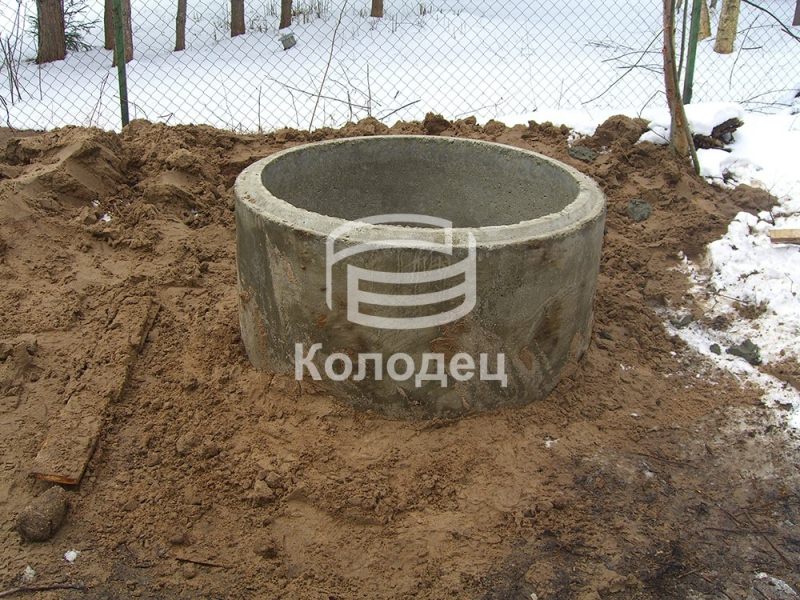


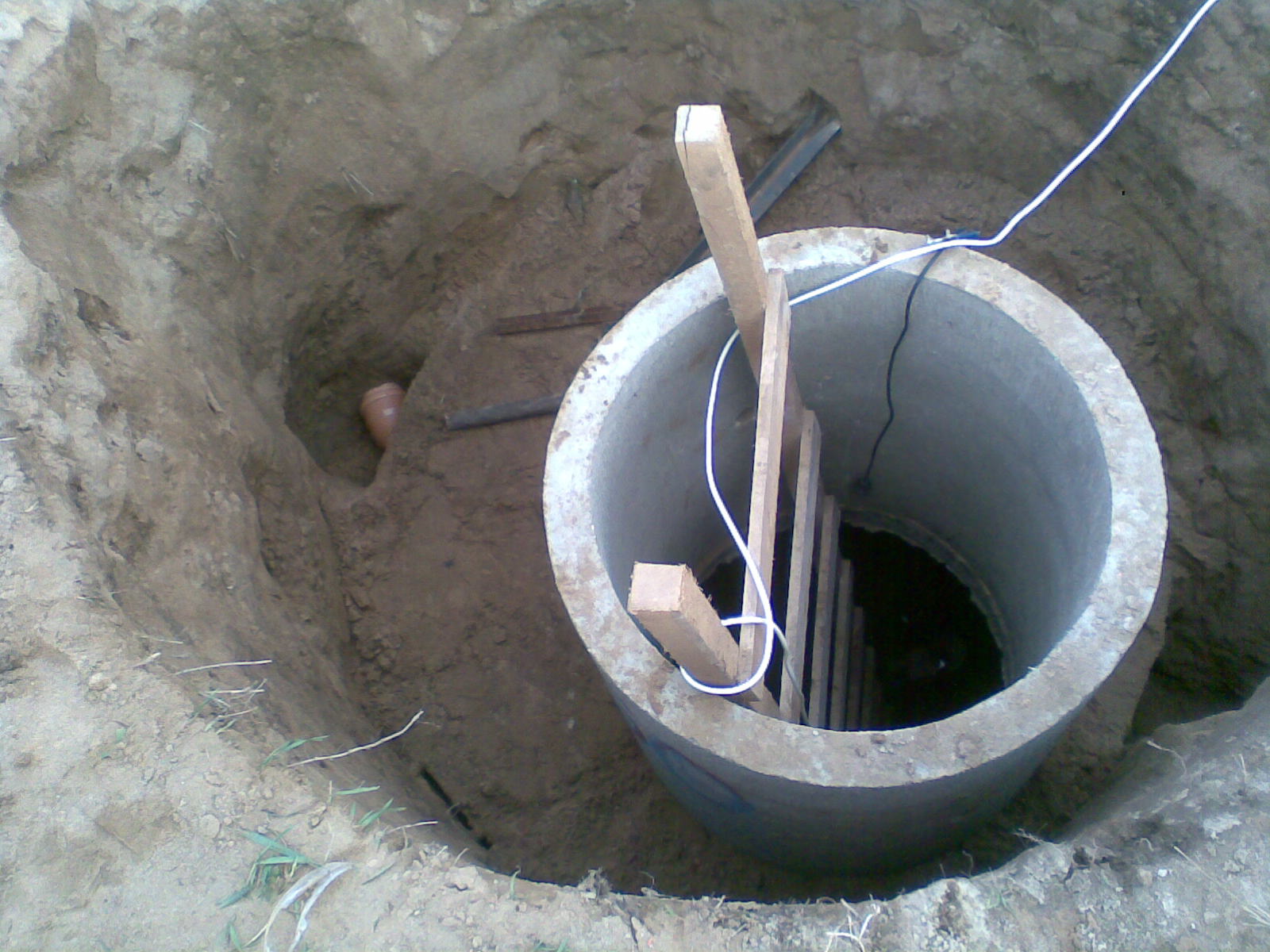


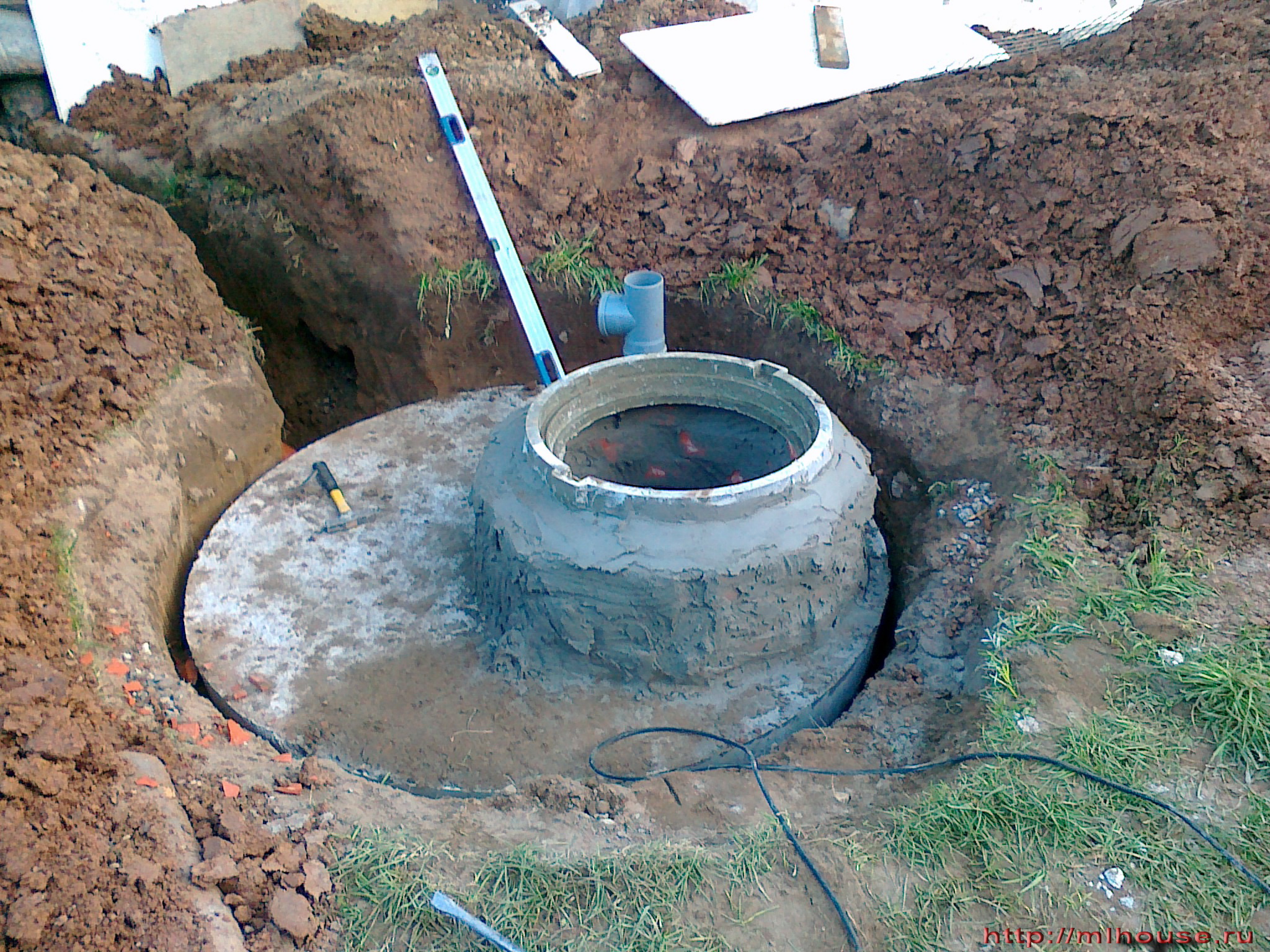

Here are a few examples of how customers are sometimes deceived when digging a well.
The most common way is to increase the final cost of the well after its completion. Then it turns out that the price did not include (or simply “forgot to mention”):
– delivery of rings to the site and their unloading
- putty joints between the rings
- the top of the well and the cover for the well
It also happens that the depth of the well is measured not from the ground level, but from the well cover. That is, if the real depth of the well is 8 meters, then such “diggers” will have a depth of 8.5, or even all 9 meters!
Another option is when, instead of a brigade of wells, the customer ends up with “ring sellers”. Such teams, in order to be guaranteed to attract the customer, or rather his money, initially voice the cheap cost of the finished well. After the customer agreed with them on the start of work, reinforced concrete rings are immediately delivered to the site. The customer pays for the cost of the rings, their delivery and unloading, the team under the pretext that “we will start digging tomorrow, it’s too late today”, “they forgot the tool”, etc. is leaving. And they will never appear again on the site! No matter how much the customer calls and waits, they will not come, so their task was originally to sell the rings.
And it seems that there is no deception as such - the customer paid only for the rings and their delivery. But the most interesting thing comes out later, when it turns out that the rings were sold at an inflated price! Moreover, the quality of such rings leaves much to be desired!
There is only one conclusion from all of the above - in order to protect yourself from deception and unnecessary expenses, you must take a responsible approach to choosing a contractor for the construction of a well!
Promising field for "divorce"
Well digging is attractive to seasonal work crews because it does not require much capital investment to get started. Digging requires a modest set of tools and fixtures. The chance of getting to a place with an inaccessible aquifer is relatively small. And if you practice only in areas with obviously simple soils, where the depth of wells ranges from 7 to 15 meters, then you can make good money. Special investments are not needed - teams of handicraftsmen are content with posting ads on poles in settlements and dacha cooperatives.
With luck, everything goes smoothly. The customer receives a normal well, and the workers receive the agreed payment. Problems arise if it turns out that the horizon is not sufficiently opened, the mine is twisted, or only the name is present from the waterproofing. Finding labor migrants and demanding free correction of shortcomings is difficult, and most often unrealistic. They will give plausible reasons for the current situation, and then offer to eliminate their own mistakes, but for an additional fee. The customer becomes a hostage of the situation. The choice is small: pay again or look for another team and pay again.
The first step towards non-professionals is a call on an ad from the nearest fence. The second is making an advance payment without signing a contract. An experienced master, at least, wants to see the site where he will have to work, and the guest performers do not care where it will turn out, or the well will not turn out
There are sites on the network that, under a beautiful name, are just intermediaries. Several performers drop commercial offers here, and the administrator sends a free performer to a potential buyer. The first alarm signal is when one person answers the phone, and a completely different one arrives at the meeting. Finding the person responsible for providing a poor quality service turns into an exciting but unpleasant quest.
When can we expect water?
We present to your attention the most common case of deception among unscrupulous workers - not digging a well. For faster work, you may be promised that the keys will make their own way to the well.
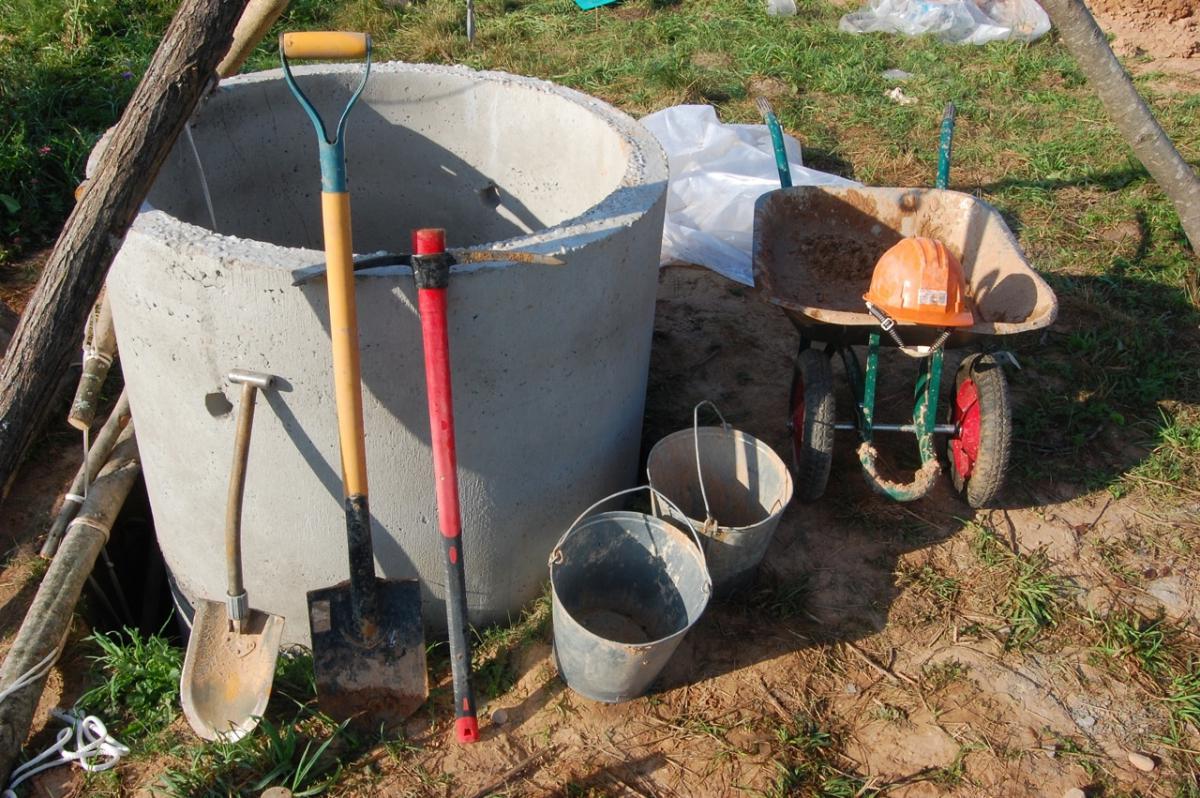

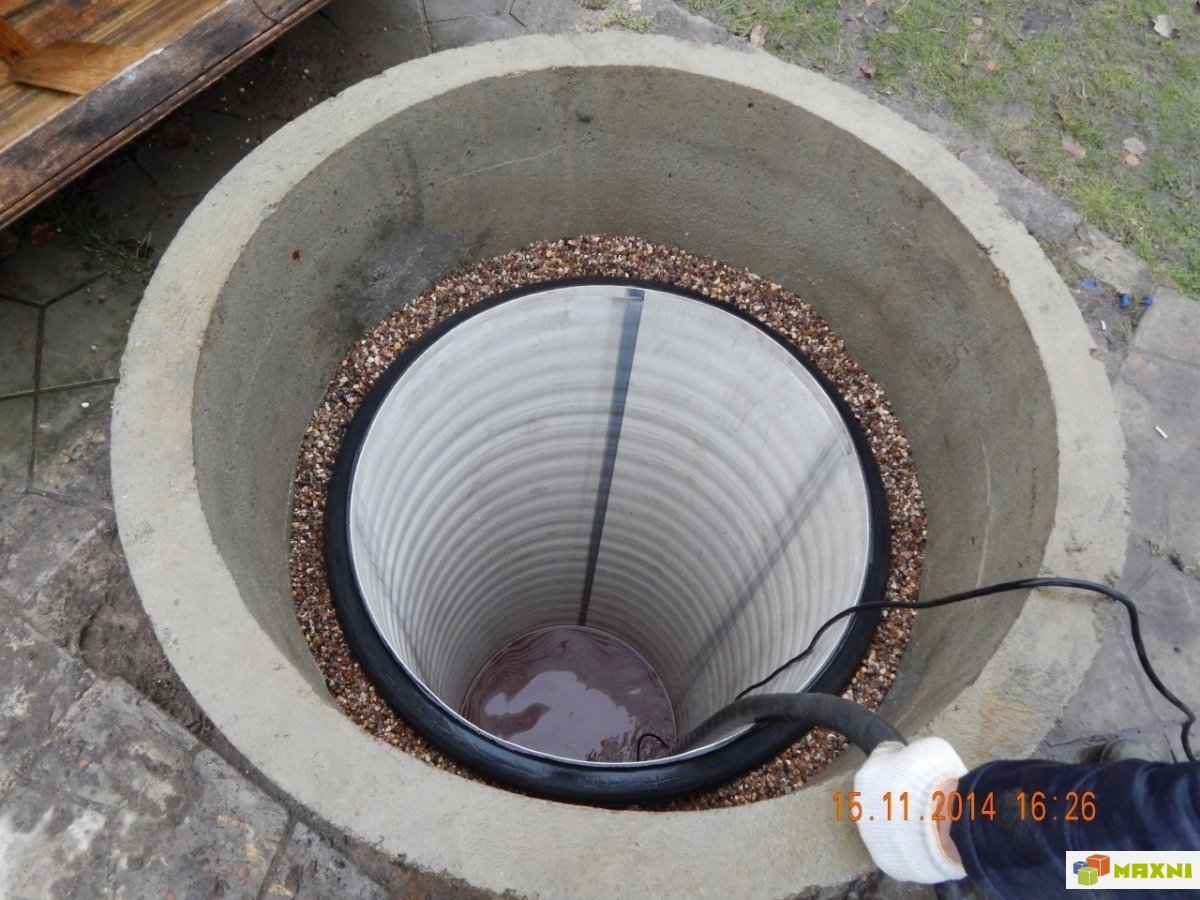
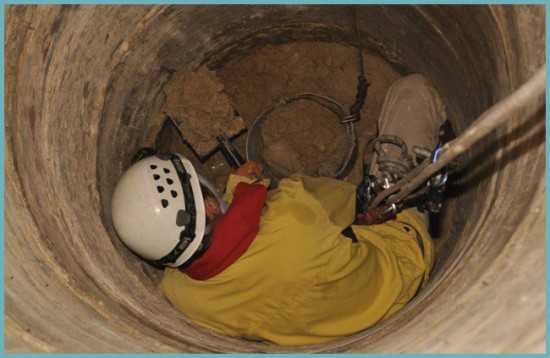


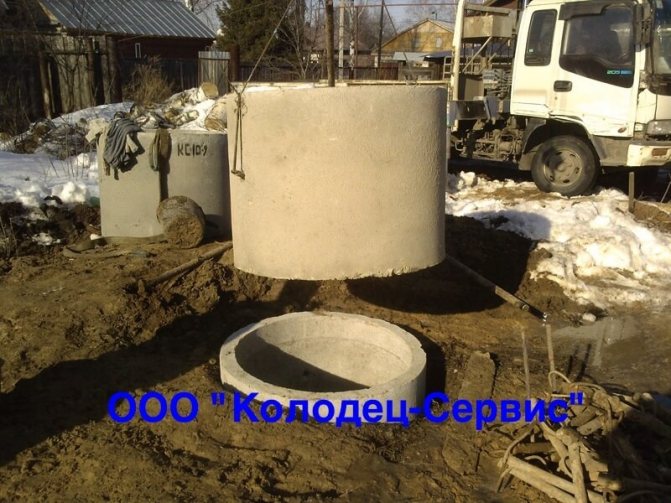


The fact is that even beginners in this business are able to dig a hole and then bury the rings. But often, having reached the water, they simply do not know what to do with it next. But they know that you can come up with an excuse for yourself.
As a result, we get unsuccessful. Sometimes there is no water in them.
How to start a well digging business
Consider what we need to dig a well:
Finding water
Until today, water finders with a special flair enjoy high prestige among rural residents.
Using primitive instruments, water finders pinpoint exactly where groundwater will provide a constant flow of clean water to the well.
Now the process search for an aquifer is produced on the basis of scientific research, so wells in household plots appear quickly and function for a long time.
The future water source should be located at the point of the highest groundwater level. Sanitary standards require that the well be located at a distance of at least 20 m from the toilet, outbuildings, gardens where chemicals are used.
You can prevent flooding, which means water pollution, by placing a well in the upper part of the site. Not only the thickness of the aquifer is important, but also the composition of the soil.
digging a well
You can dig a hole in the ground by hand, which takes a lot of time and requires a lot of strength.
Specialized organizations have modern technology that simplifies the entire digging process.

The walls of the shaft will be smooth, do not require additional processing, the rings fall evenly, the lower ones are several meters deeper than the aquifer. After sealing the seams and arranging the lower, filtering layer, the well can be considered ready.
The last stage remains - the ordering of the territory around the well. This is the cleaning of the soil, the construction of a well house, three-quarters of a meter above the ground.
It is advisable to agree on the implementation of works on a turnkey basis.
The team will deliver all the necessary tools and materials, calculate the number of rings, and correctly fill the bottom filter layer.
Thus, the owner saves time, effort and nerves, and you get your profit.
After carrying out all the work on the site, a beautiful, well-equipped well should appear.
A well-executed service for digging a well will become your calling card and after a while the so-called word of mouth will work, your customer will definitely advise his friends to contact your company.
A few words about well construction technology
To deceive an ignorant person is as easy as shelling pears, therefore, in order to be able to check the quality of the work, it is worth familiarizing yourself with the information about the features of the well device, the rules of construction and the materials used for this in general terms.
Builders very often deceive (roll) the owners when drilling and assembling the well
- Choice of location. At this stage, the customer needs to take an active part in the selection process. The contractor is only responsible for a sufficient supply and quality of water, that is, it takes into account the depth of the aquifers and the distance from potential sources of pollution (septic tanks, cesspools, and others). But you should take care of the ease of use, the distance to the residential building, the location relative to the paths, elements of landscape design and other nuances.
- Choice of construction method. For different depths, various types of wells are equipped. Shaft wells for water are created using hand tools at a depth of up to 20 m, tubular wells require the use of special equipment.
- Next, you need to dig a shaft of the desired depth and install the rings. The diameter of the shaft and the dimensions of concrete rings for wells are agreed in advance.
- Sealing of joints between rings, insulation and other related work is carried out.
- The bottom filter is equipped.
- The category of additional services includes the installation of a cap (well house), disinfection, water supply to the building.
Other types wells for water (wooden, brick, stone, concrete) are built using a similar technology.



