
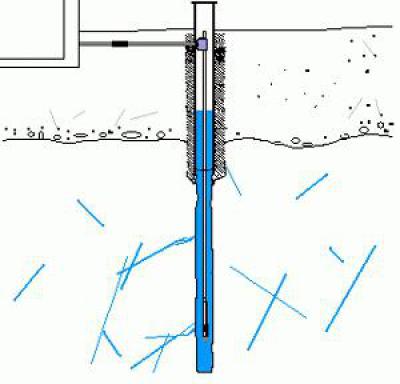
- Effect of Depth on Water Quality
- Folk ways of determining
- Orientation by natural features
- With the help of dowsing frames
- Requirements for the location of the well
- Finding a place to drill a well
- Various methods for finding water on your own
- Application of silica gel
- barometric method
- Exploration drilling method
- Finding a suitable place for a well with plants
- Peculiar animal behavior
- Nature as an assistant in the search for water
- Where to equip a well?
- At what depth should the aquifer be located?
- How to find water for a well - an overview of methods and means
- Electrical sounding for finding water
- What is seismic exploration
- Optimal well depth for drinking water
- Places where water occurs
Effect of Depth on Water Quality
If you dig a well in the place where exactly the water is located, the aquifer can be found even just some two to two and a half meters from the earth's surface. Knowledgeable people call such a water layer top water and do not use it for drinking.
Proximity to the surface is not a good sign, because the water has accumulated due to the melting of snow, infiltration of rain streams and waters of nearby reservoirs.The quality of the water in it leaves much to be desired, because there is a high probability of leakage of sewage and other dirt.
The deeper the aquifer is located, the less likely it is that all kinds of dirt on the surface of the soil can spoil the water.
In addition, the mirror of such water is, as a rule, unstable. A well with perched water can dry up completely during the summer heat and fill up during the season of snowmelt or autumn lingering rains.
And this means that the sources of water supply that feed on perched water will also be empty, and summer residents will be left without water in the hot summer season, when it is especially needed. Under such circumstances, it is better to forget about plans for the harvest. After all, until late autumn, water in the well is not expected.
Therefore, we will look for water deeper. Experts believe that high-quality water is not so deep, only 15 meters from the soil level. In the sands, the water in which is clean and tasty. The sandy layer in which water is "stored" is a natural filter. Passing moisture through itself, it cleans it from the remnants of dirt and harmful elements.
If you are interested in arranging a personal water source in your summer cottage, you should compare the arguments in favor of a well or a well, and also learn about their shortcomings. We invite you to take a look at our comparison review.
Folk ways of determining
It is possible to carry out exploration on your own in search of an aquifer for drilling a shallow working or a well-needle, even if there are no landmarks in the adjacent areas.
Orientation by natural features
Signs of the presence of an aquifer in the soil can be:
- Observation of the behavior of animals and insects.Pillars of midges curl in the place where there is a source of water, and red ants, on the contrary, try to settle away from it.
- Wide distribution of moisture-loving plants in the area.
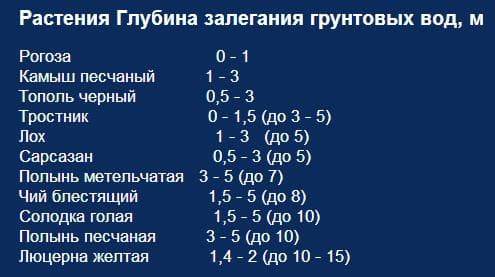
Nettle, horsetail, sedge, sorrel, reeds act as indicators of the proximity of groundwater from herbaceous plants. Tree-like plants with a taproot, such as bird cherry, willow, birch, black poplar, sarsazan, will indicate that the water lies at a depth of up to 7 meters.
On a hot afternoon, animals dig in the ground in search of coolness in places where groundwater is close to the surface.
The soil and underlying rocks, under which the source passes, are characterized by increased humidity. It will certainly evaporate, forming clouds of fog in the morning; you just have to keep an eye on the area.
Pay attention also to the relief. It is noticed that water carriers lie almost horizontally.
Therefore, in the region of depressions, the probability of occurrence of water is always higher.
With the help of dowsing frames
The old method, based on the dowsing effect, in which a person reacts to the presence of water and other bodies in the earth, creating heterogeneities of various configurations and sizes in its thickness, does not lose popularity.
When searching for water to select a place for a water well in a site using a dowsing method, a wire frame or a tree branch with a fork in the hands of a human operator acts as an indicator. It is able to determine the presence of an aquifer, despite even the layer of soil separating from the water.




Dowsing - the ability of frames to move under the influence of external factors, for example, vibrate and approach each other above the places where the keys beat
Dowsing frames can be made of calibrated aluminum, steel or copper wire with a diameter of 2-5 mm. To do this, the ends of the wire segments 40-50 cm long are bent at a right angle, giving them an L-shape. The length of the sensitive shoulder will be 30-35 cm, and the handle 10-15 cm.
The task of the operator is to ensure the free rotation of the “tool”. To make it easier for yourself, wooden handles are put on the bent ends of the wire.
Bending your arms at a right angle and taking the tool by the wooden handles, you need to slightly tilt them away from you so that the wire rods become, as it were, an extension of the hands.
To achieve the goal, you need to consciously tune in and clearly formulate the task in front of you. After that, you just need to slowly move around the site and observe the rotation of the frames.
In the place of the site where groundwater is hidden, the rods of the frame will cross each other. The operator must mark this point and continue to explore, but already moving in a perpendicular direction relative to the original line of motion. The desired source will be located at the intersection point of the found marks.
The dowsing frames will react by connecting the ends to each other in the place where the aquifers pass on the site
It is believed that the best time to search for water by dowsing is summer or early autumn. The most favorable periods:
- from 5 to 6 am;
- from 16 to 17 days;
- from 20 to 21 pm;
- from 24:00 to 1:00 am.
L-shaped frames are convenient to use in the field, but in the absence of wind. To work with the tool you need experience and skill.After all, the deviation of the frame can even depend on the emotional state of the operator.
For the same reason, before working with frames, it is better to refrain from drinking alcoholic beverages. Before you start searching, you need to learn how to work with a biolocator and “hear” it. Thanks to this, in the process of searching for water for a well, the operator will not be distracted even by the presence of closed water pipes on the site.
But it is worth noting that folk methods cannot give a 100% guarantee of obtaining the expected result. Indeed, even with a successful outcome, there is always a risk of obtaining a water well with low productivity.
Requirements for the location of the well
Before starting drilling, the selected location must be assessed in terms of suitability for the construction of a well for the production of drinking water. At a distance from it within a radius of at least 50-100 m, sources of pollution, such as cesspools, garbage dumps and manure heaps, cannot be located. You should not plan the location of the well closer than 3 m to a residential building, otherwise it may be difficult to operate a drilling rig and dig a trench for water pipes.
The slope of the surface at the point of drilling cannot be higher than 35°. The drilling mast requires a free height of about 10 m and a horizontal area of at least 30 sq.m. In the immediate vicinity of the drilling site there should be no electrical wires and other interference that may be unsafe for the upcoming work.
Finding a place to drill a well
It is believed that only a specialist can drill a spring vein or build a well.However, anyone can use a secret method, signs or simple methods to determine the depth of water from the surface of the earth.
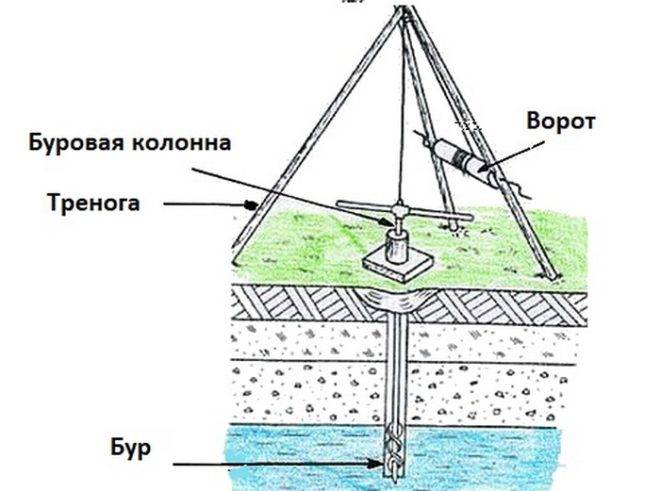
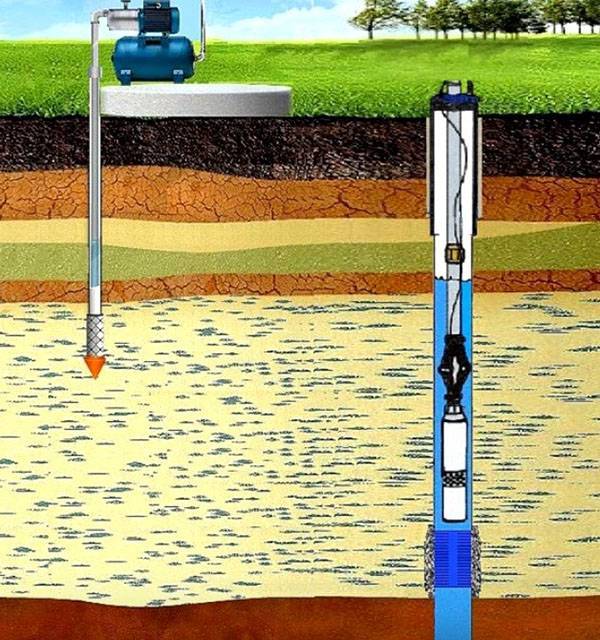
An ordinary garden drill drills an exploratory well with a depth of 6-10 meters. The same vein can be drilled with a homemade drill with an extendable handle. Drilling can be stopped when you reach the aquifer, and the presence of water in the well becomes obvious. Then it will be necessary to determine and make a decision in favor of the well or well.
To search for water, you can use the method of exploratory drilling
What you should pay attention to:
- With careful care and operation, the service life of a well and a well is several decades.
- There are more arguments in favor of a well when the water is deep and there are especially many stones in the soil. They can significantly complicate its drilling.
- 10-15 meters can be considered a conditional depth. It is easier to make a well if the water is deeper.
- The place for a well or well should be located no closer than 30 meters from the source of pollution (drainage pits and trenches, septic tanks, bathhouses, compost and garbage heaps).
- If a well or well is being built on a slope, then it is necessary to divert rain and melt water from it. The possibility of water and any objects from the outside should not get into the device.
- The water source must be securely closed with a lid, and it can only be opened when necessary.
Sooner or later, every owner wants to know how to find water for a well on the site. For everything, water is needed on the site: domestic and household needs, plumbing and watering the beds.



All homeowners dream of having water supply on their territory organized at the highest level. Outside the city, the main condition for a comfortable life is an uninterrupted supply of high-quality drinking water. Most often, public water supply does not meet these wishes. It will take a lot of effort to put an autonomous home water supply into operation. It always starts from a well or a well. It is necessary to correctly determine the location of the underground aquifer, and only then proceed to drilling or digging an autonomous water source.
Various methods for finding water on your own
With your own hands, some of the most common ways to find a suitable place for drilling a well under water will help:
Application of silica gel
Silica gel granules are a substance that has high qualities to absorb and subsequently retain moisture. Therefore, it is successfully used to find a suitable site for a well or well. Having acquired silica gel granules, they must be thoroughly dried.
You can dry it in the oven. After that, the granules are poured into a clay (non-glazed) pot, wrapped with a dense cloth and weighed.
Having chosen a place for a future well in the house, the pot is buried 70 - 100 cm deep and left for a day. Then it is dug up and weighed again. The more weight added to the pot, the closer the water is to the surface. The search for a suitable place can be accelerated by burying several pots at the same time.
barometric method
For this method, a barometer is used, using its indicators, where 0.1 mm of the mercury column of the device corresponds to a pressure drop of 1 m in height. First, the pressure is measured on the shore of the reservoir, which is located as close as possible to the place of the proposed well.
After the pressure is measured at the very place to extract water. Based on the data obtained, the approximate depth of water in the soil is calculated.
Exploration drilling method
This method is considered the most reliable among all the ways to independently find a suitable place for a future well.
An ordinary garden drill with an auger diameter of 30 cm is used, but since it will need to be deepened by about 5 - 10 meters, it is worth considering increasing its handle in length. Exploration drilling makes it possible to:
- determine the presence of groundwater;
- the level of their occurrence;
- establish the characteristics of the layers in the soil. In some places, the presence of wet silvery sand is observed 2-3 meters from the surface.
Finding a suitable place for a well with plants
Plants that are very fond of moisture and grow in places rich in it will help to find the close location of underwater waters:
- currant bushes (wild);
- plum and apple trees;
- reeds and meadowsweet;
- alder, maple and willow;
- sedge, nettle, sorrel.
Cherry, near underwater waters, will begin to dry.
Peculiar animal behavior
Geese, like water-loving birds, try to find a nesting place near the water, but a chicken will never lay eggs in such places. Mosquitoes and various midges swarm in the vicinity of the source.
A place to rest, the dog also chooses away from groundwater, but the cat likes to soak up in such places.
It is worth paying attention to the red ants that build anthills away from moisture.
Nature as an assistant in the search for water
Nature itself, with its phenomena, also helps a person in search of water hidden underground. For example:
- the water source is close if the fog falls low above the ground in the evening;
- the close location of the water to the surface, confirms the abundant and large dew;
- soil that contains water will make salt sprinkled on it wet, even in dry weather;
But today, exploratory drilling, shown in the video, is considered one of the best ways:


Where to equip a well?
With the depth of occurrence of drinking and industrial water, we decided above in the text. But where can you equip a well "in a horizontal plane"? In what place of the site can a well be drilled and a well dug?
The answer to this question can be given by a set of sanitary norms and rules, which indicates areas of the site that are unsuitable for arranging wells.
And these areas include:
well under water
- Space at a distance of 3-5 meters from the foundation of the house. Here, the well is forbidden to be equipped by architects who fear for the integrity of the foundation.
- A plot with a radius of 25-30 meters from the borders of a septic tank or cesspool. In this case, epidemiologists have objections.
- Space at a distance of 5 meters from the carriageway or road adjacent to the site. In this case, the sanitary doctors have objections.
- A plot within a radius of 30-50 meters from a well or well of neighbors. Here common sense objects - install a well closer, lose water in two sources - your own and your neighbor's.
- The space at a distance of 10-15 meters from the edge of a natural or artificial reservoir.This option is opposed by both epidemiologists and sanitary doctors.
Accordingly, any well can be drilled throughout the rest of the territory - even under the top water, even into the mineral layers. But it is not a fact that at least a perch will be found in the place chosen by the owner of the site. Therefore, on the territory "suitable" for drilling, you need to find the most promising place. Well, how to find it, we will tell below in the text.
At what depth should the aquifer be located?
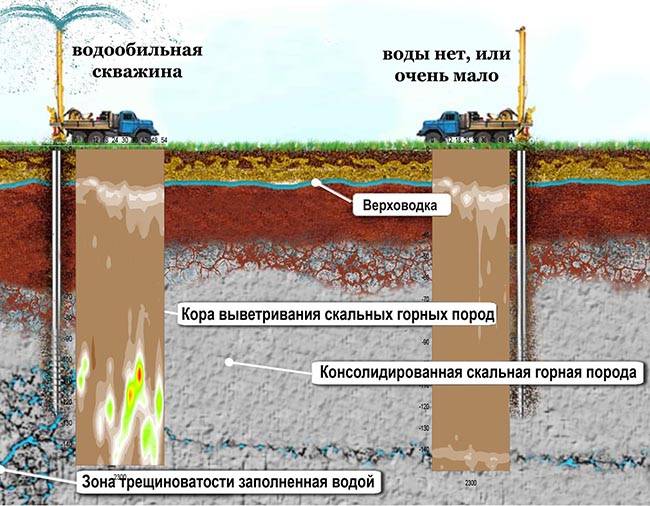
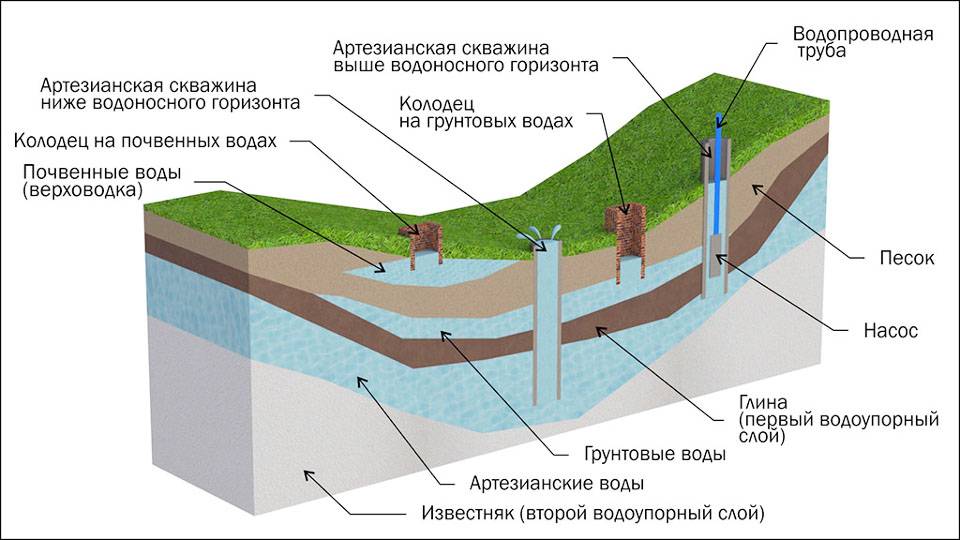
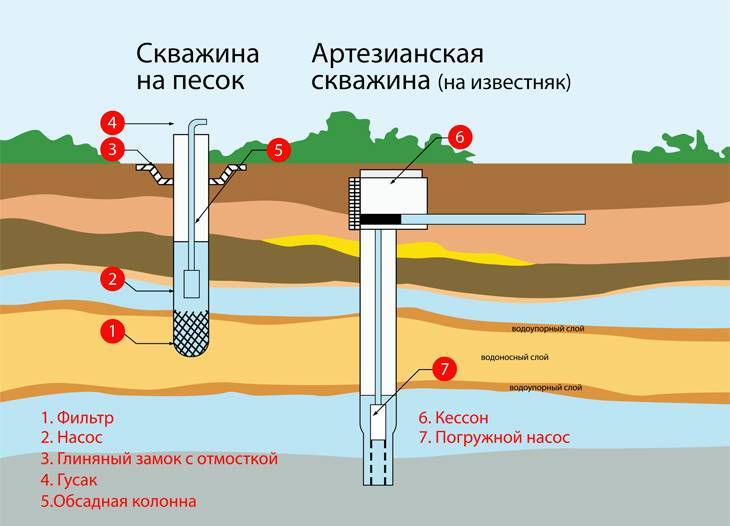
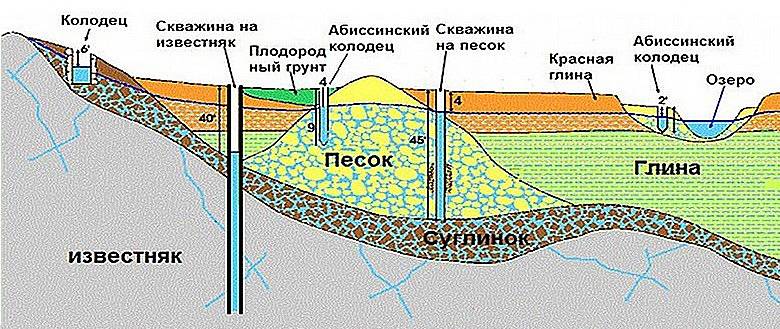
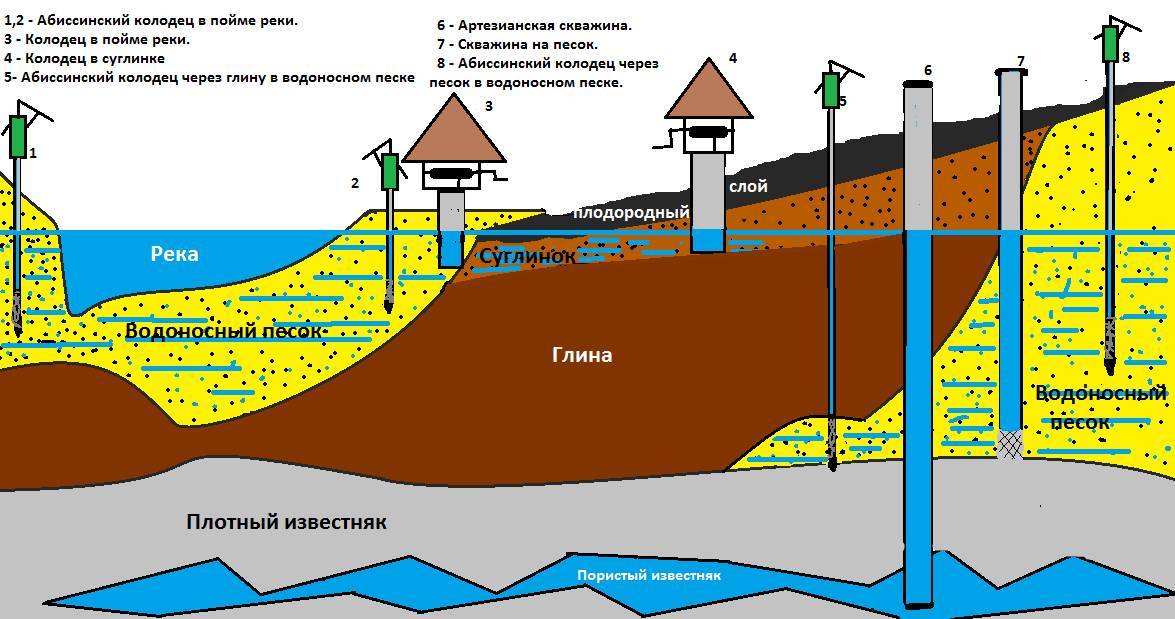
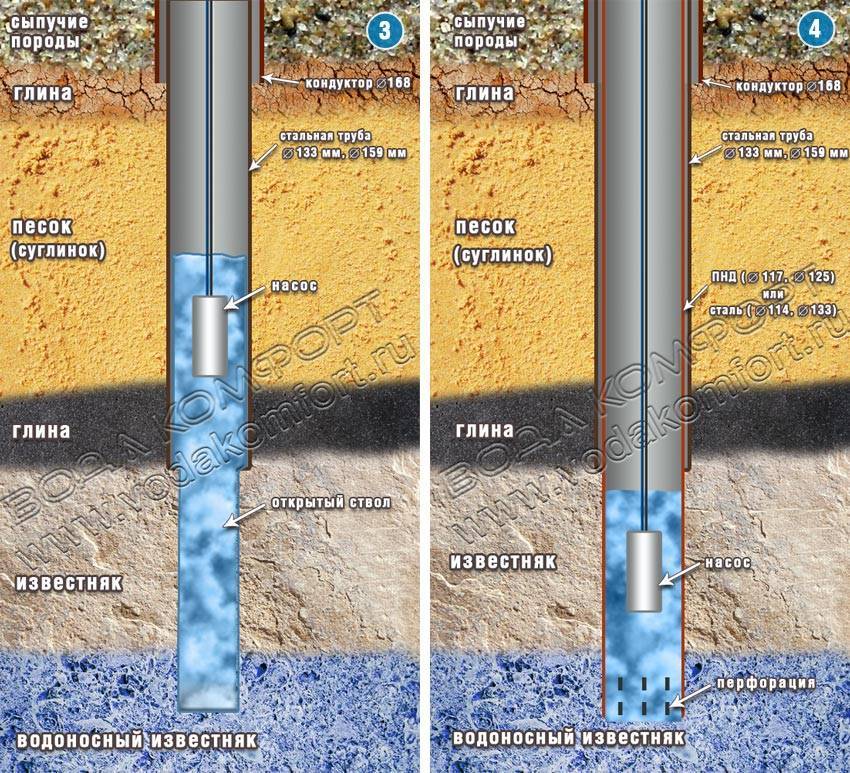
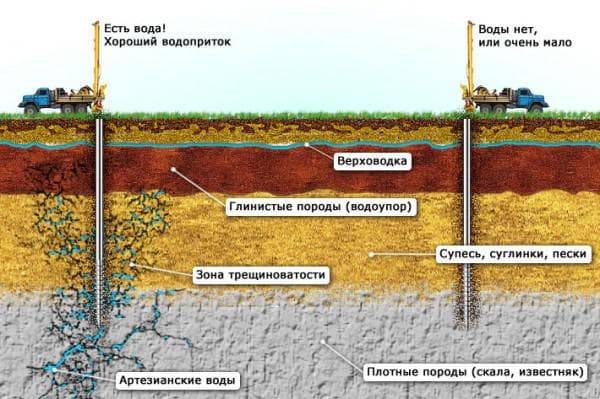
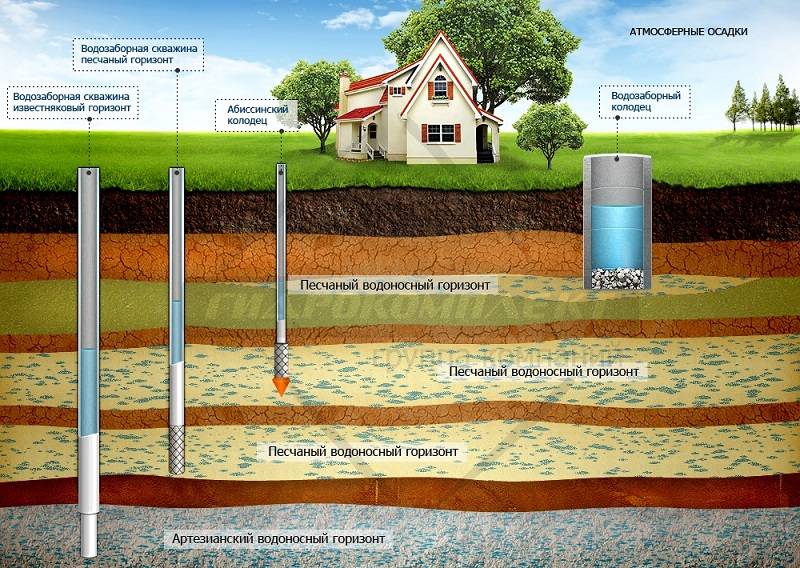
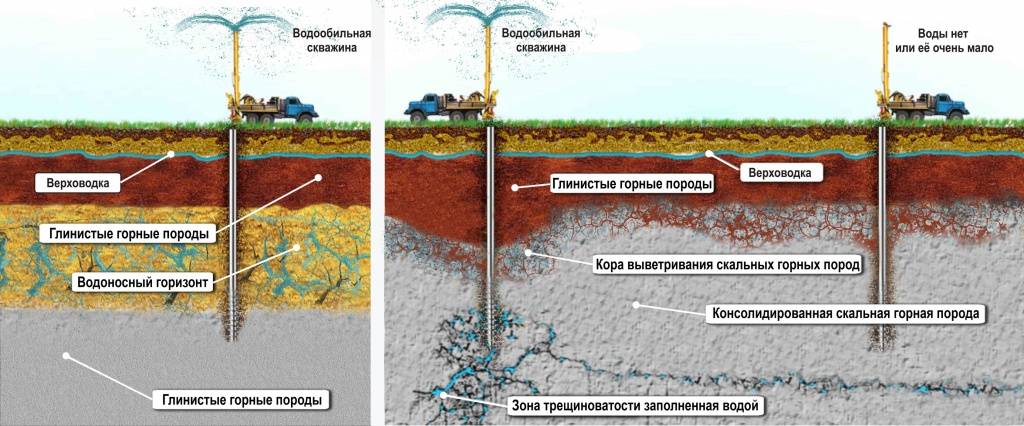
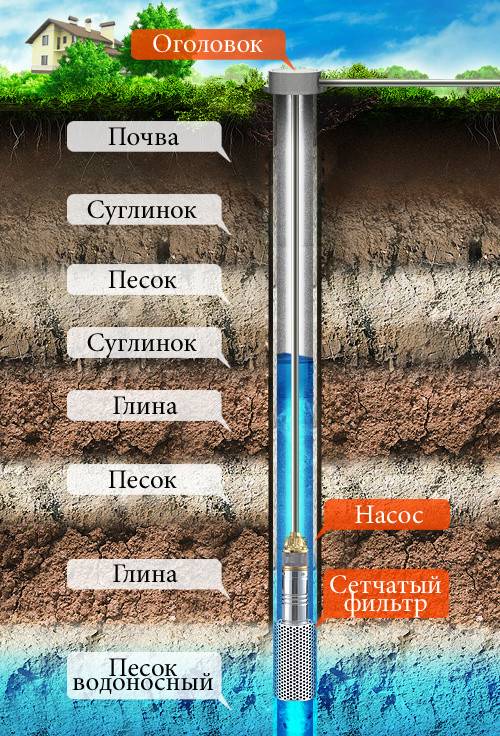
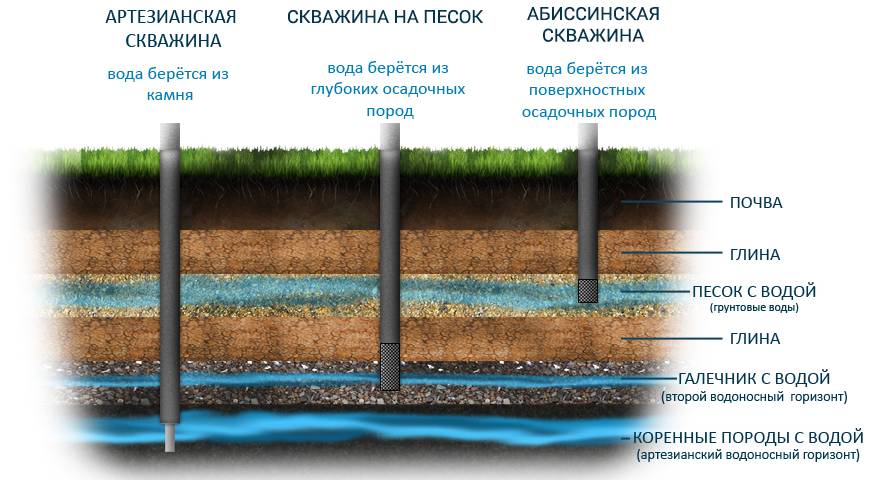
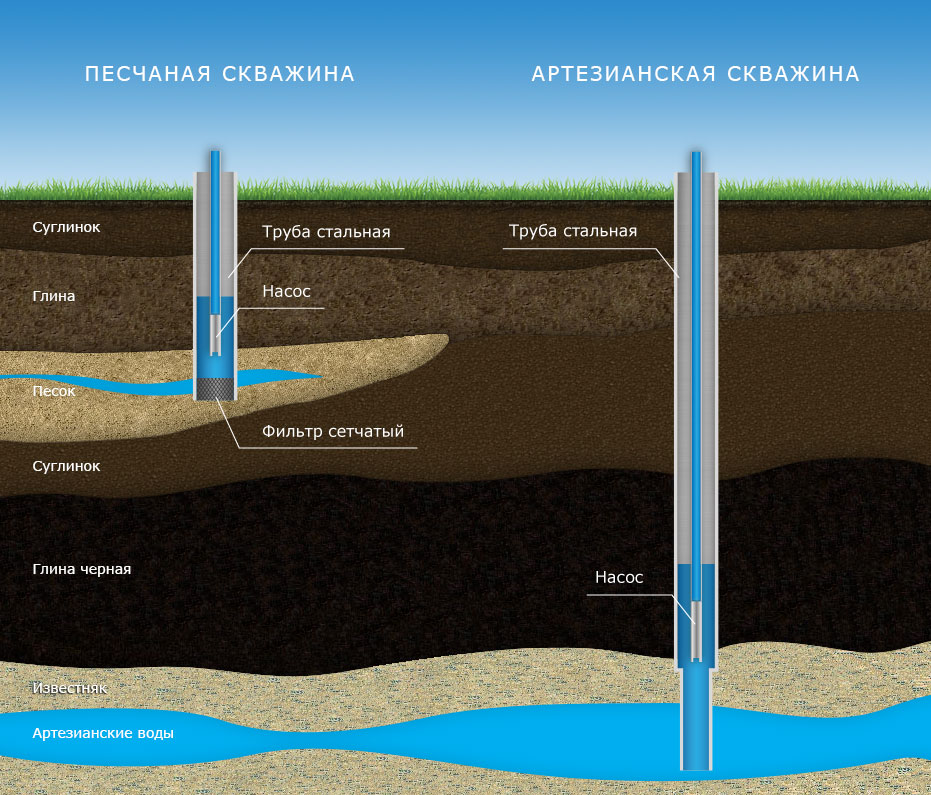
The water in the ground is kept by water-resistant layers, which prevent the veins from breaking through to the ground or going too deep. Such layers, as a rule, consist of clay, but there are also stone ones.
Between them is an aquifer of sand, saturated with clean water, which must be sought. Since the water-resistant layers are not located strictly horizontally, but with all kinds of bends, niches with a high level of humidity are formed in places of curvature, which are called underground lakes.
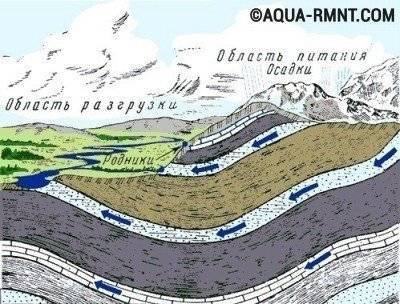
Several aquifers can lie in the ground, but the best are those located below 15 m in depth.
When looking for water for a well, you can get to the lake, which is very close to the surface - only 2.5 m deep. The water in it is called perched, because it is replenished with precipitation, melting snow, carrying with it dirt and a lot of harmful substances. Such an aquifer for a well is not suitable both in terms of the quality of the liquid and in terms of quantity. In a drought, your well will simply dry up, because the underground lake with perched water holds a small amount of water, and if it is a hot summer, it will leave it altogether and will not return until late autumn.
For a well, water is needed from lakes that are located about 15 m deep into the earth. There are aquifers of continental sands, the thickness of which is so great that it can feed a huge amount of cubic meters of water. And these sands serve as excellent filters, thanks to which the water is maximally purified from impurities and debris and becomes drinkable.
How to find water for a well - an overview of methods and means
Attracting drillers to drill wells, the money will still have to be paid, even if there is no water. Therefore, before doing this, it would be best to try to find water in the area for the well on your own.
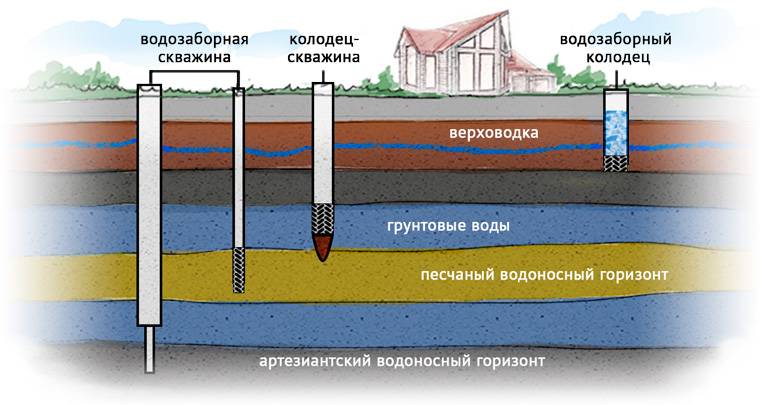
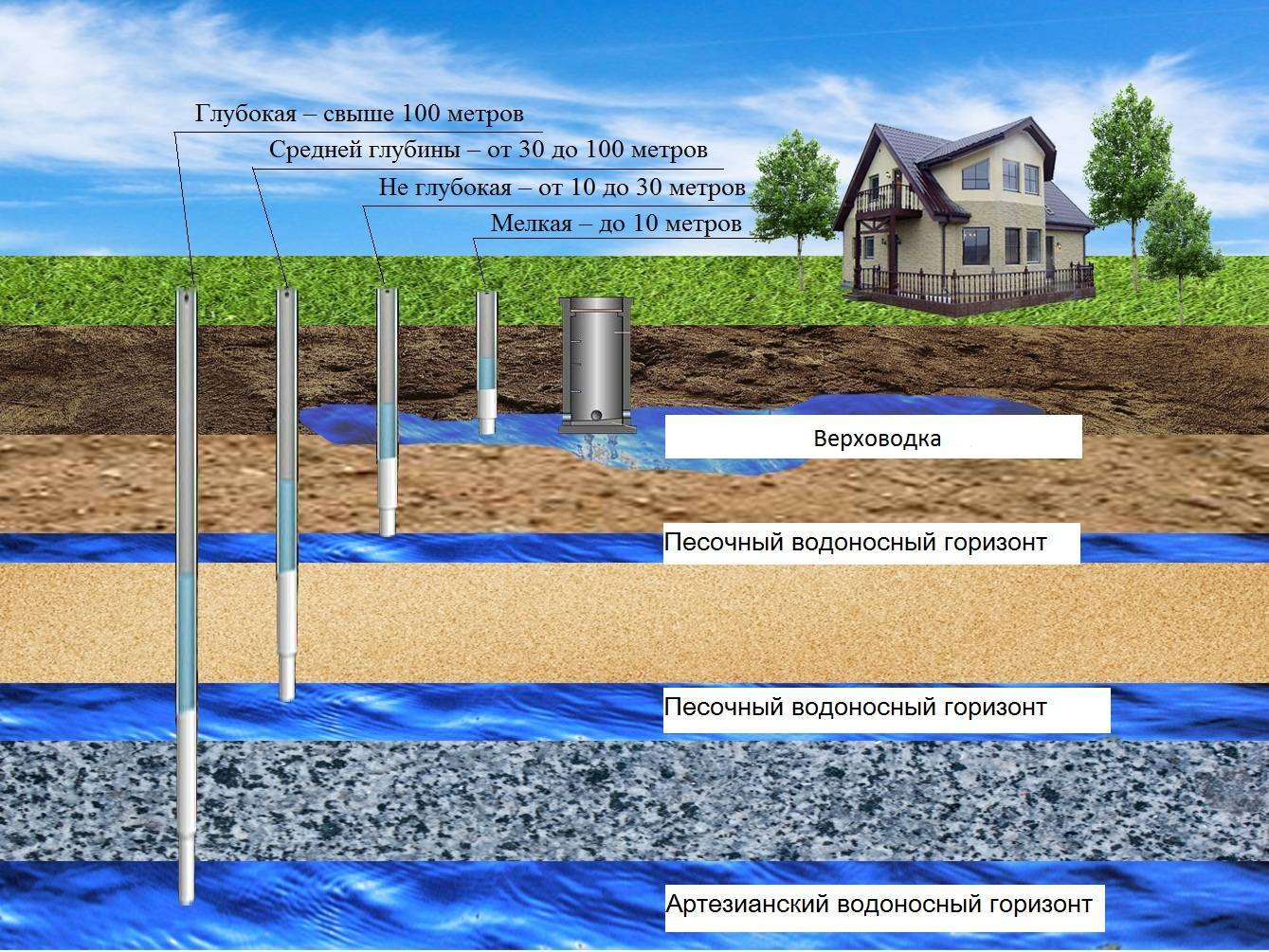
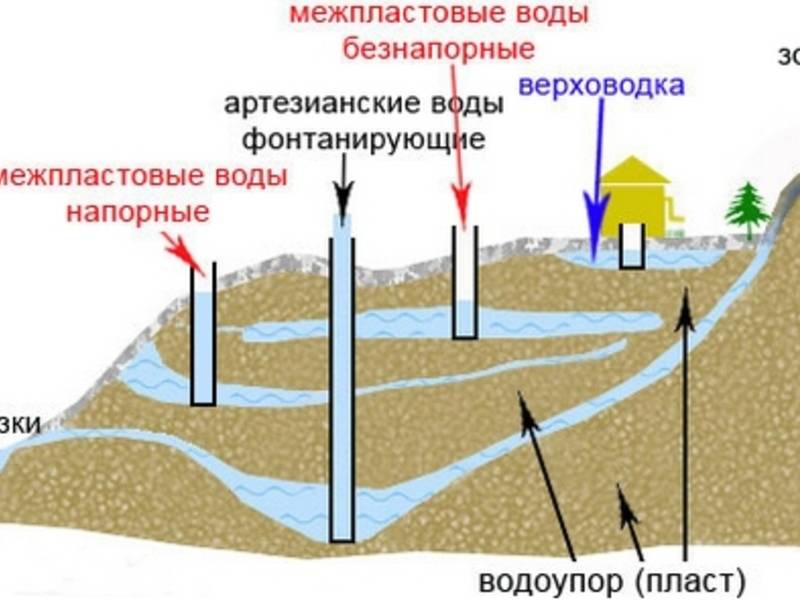
Depending on the depth of occurrence, groundwater is divided into three types:
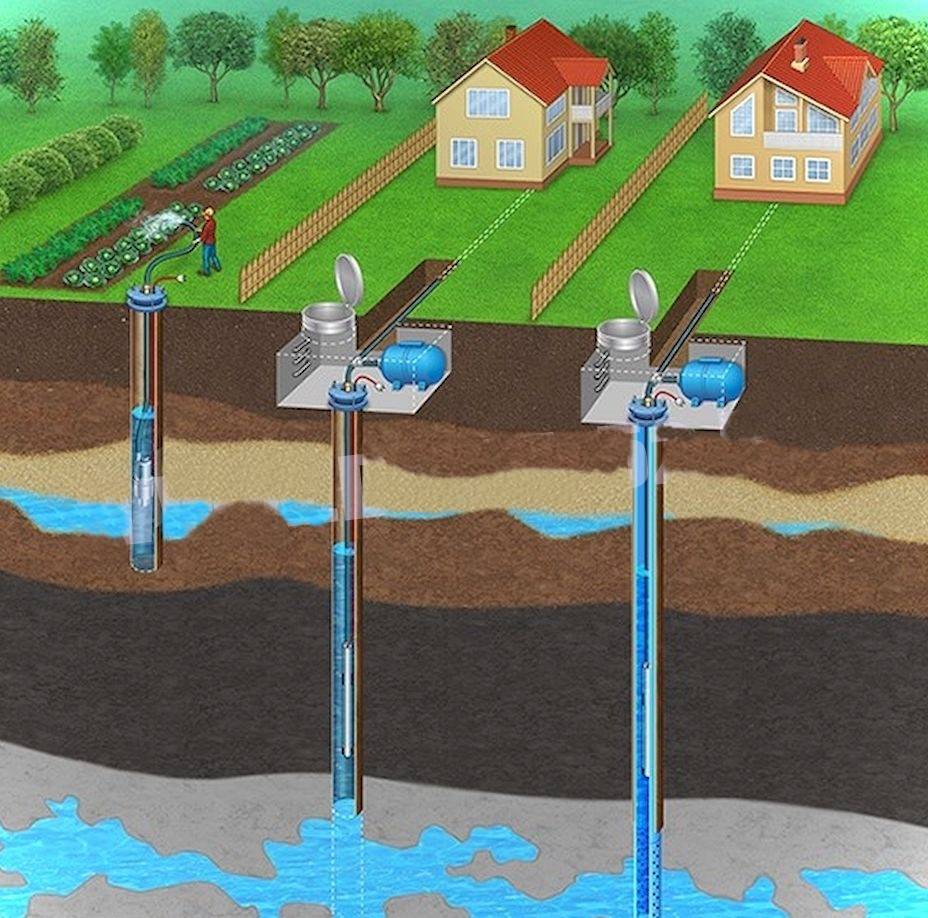
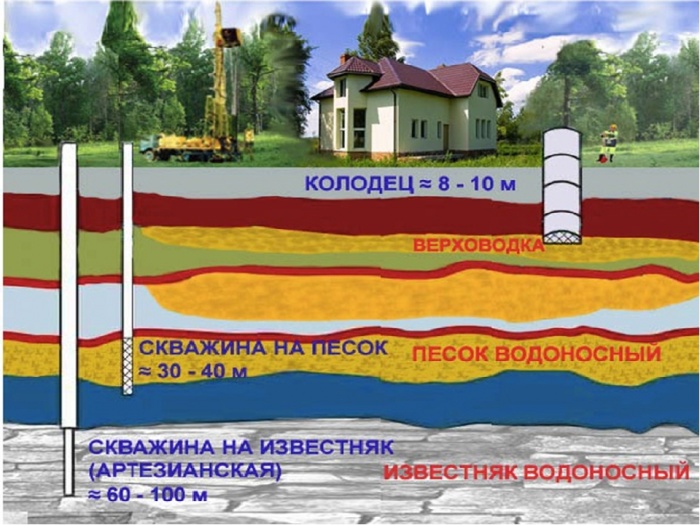
- Verkhovodka - the depth of occurrence of high waters is not more than 5 meters from the surface of the earth. It is not recommended to drink such water, since most often it is formed due to precipitation;
- Groundwater - the depth of groundwater from 8 to 40 meters. As a result of being protected by soil, clay and rock, such waters most often serve as a source for a well and a well;
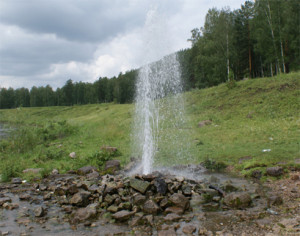
- Artesian - the depth of artesian waters, as a rule, is more than 40 meters. The main difference between artesian water is the presence of mineral salts in the composition and a fairly large flow rate of wells.
Now let's move on to the issues of finding water for a well on the site.
Electrical sounding for finding water
Let's start with modern methods of searching for water on the site, namely, with electrical sounding. The fact is that the specific electrical resistance of the aquifer and rocks has a difference. Soil saturated with water always has a lower electrical resistance.

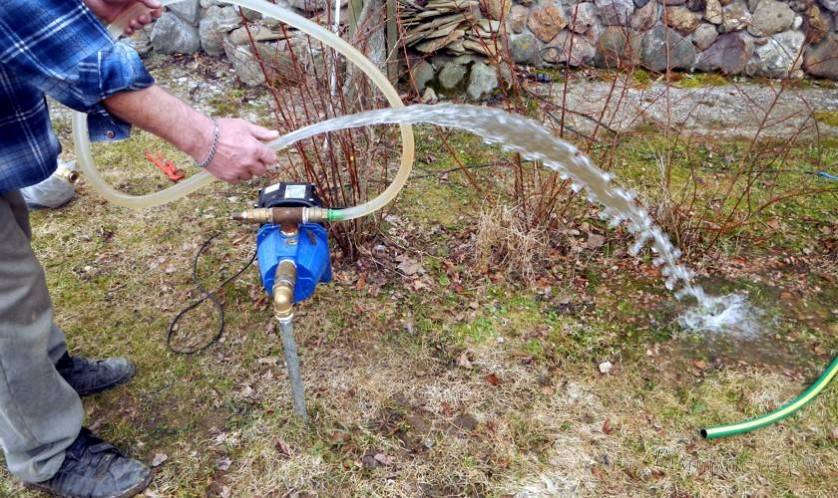
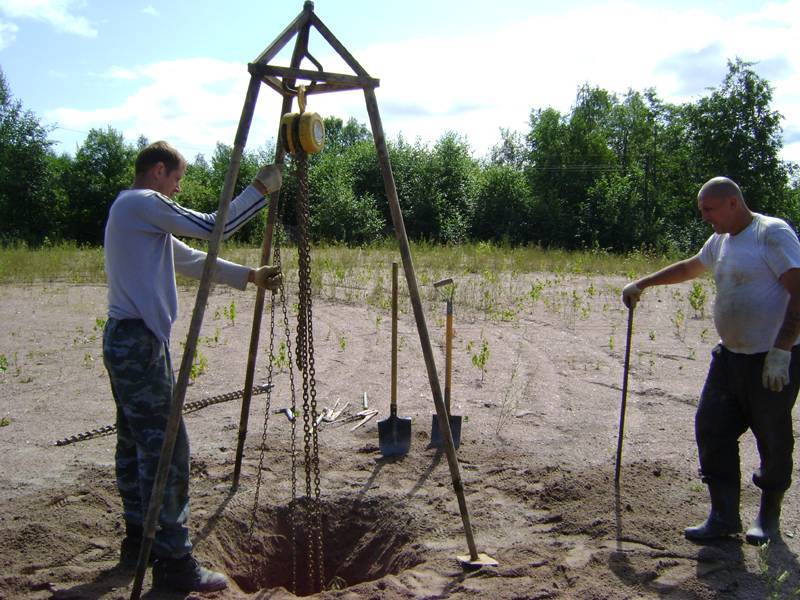

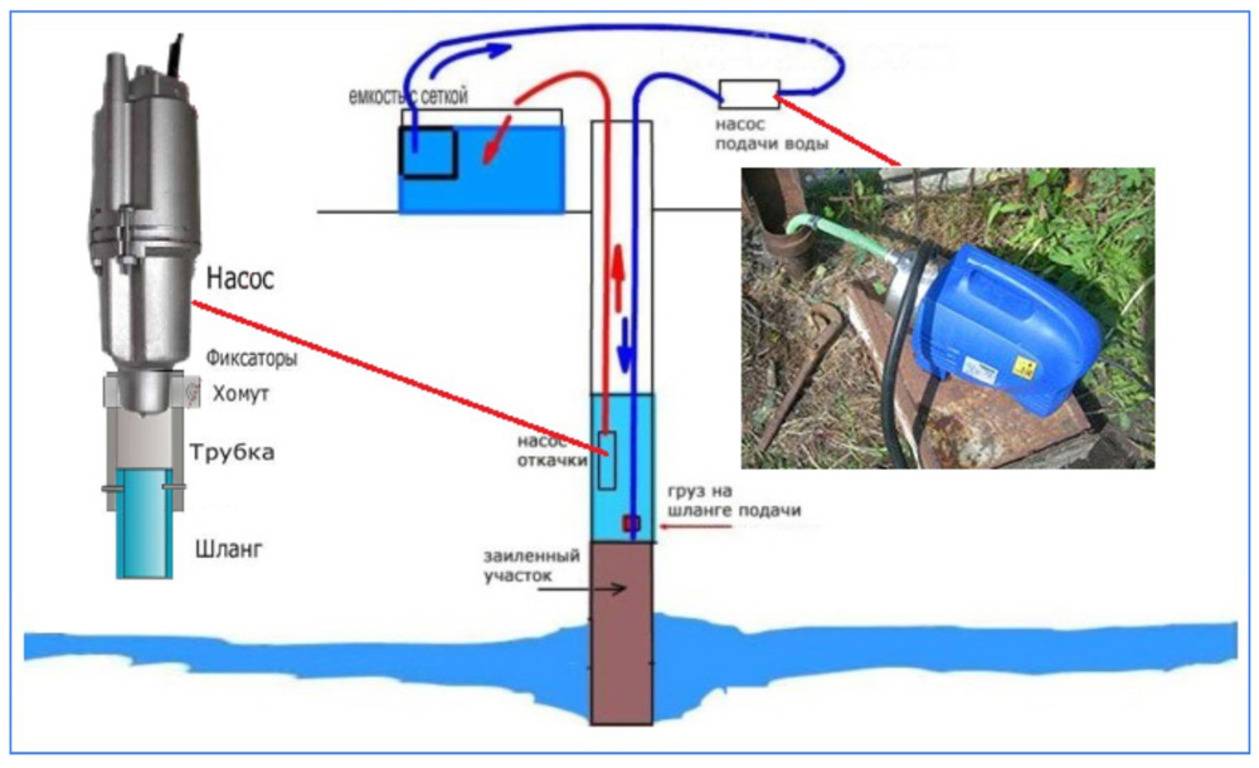



For vertical electrical sounding when searching for water, a low-frequency current is used. For these purposes, electrodes are clogged in different places of the site, to which an alternating voltage is applied. Then, electrical resistivity measurements are made. As mentioned above, in the presence of water, the resistance will always be less.
What is seismic exploration
Often, when searching for water for a well, a seismic survey method is also used, which is based on measuring the kinematics of waves. For these purposes, special instruments are used that make it possible to study the seismic background by directing the generated waves into the ground.
Upon reaching a layer of rock or water, the waves are reflected upward. In this way, the geology of the site can be more accurately explored and water can be found. Passing through water, the frequency of acoustic waves increases, which indicates the presence of a large accumulation of liquid in the soil.
Optimal well depth for drinking water
A person who has nothing to do with drilling thinks something like this: water starts from 10 meters and the deeper it becomes, the cleaner and cleaner it becomes, and starting from 40 meters (conditionally), it is as clean as possible. It is this water that is potable, and a well for such water is called artesian. This is where the classic question arises: “at what depth is drinking water?” Having learned such a depth from someone, people want to drill a fixed well of 70 meters, or 30 or 100 meters.
We also often hear similar words: “I don’t need a lot of water, I just need to water the plot.” Some people believe that if a well is drilled in a summer cottage and the water will go mainly for irrigation, then it is possible to drill shallow. This is a myth and let's find out why it's not true.
Places where water occurs
It is almost impossible to find water on the ground surface. In this case, it accumulates only in depressions - man-made or natural.
Most often, on the site, water is in the ground: above the first clay layer or below, so finding it is not so easy. Sometimes the depth at which they are looking for a vein reaches fifty meters or more.
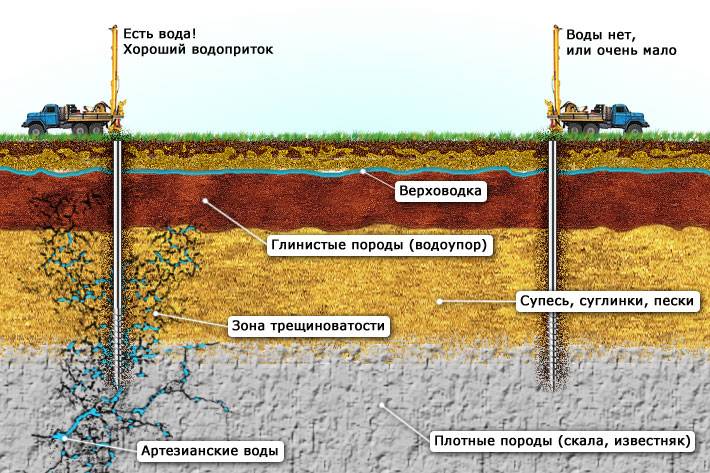
Moreover, you should not think that you can just drill a well without going too deep into the ground.
Yes, indeed, it is very easy to make a well at a depth of several meters, but experts unanimously say that this will only create an extra headache.
The so-called top water does not meet sanitary standards, it may contain impurities of sand and clay, pollution.
Wells at such a depth are more often dug in summer cottages where constant watering is necessary, and water quality does not play a role.
Then a well is dug not far from it, deepening below the water level in the river. However, there is a high probability that the well with technical water will quickly dry out due to its shallow location.
On the site, it is best to make a well at a depth of more than ten meters. This is where you can find filtered and suitable waters that meet the requirements.
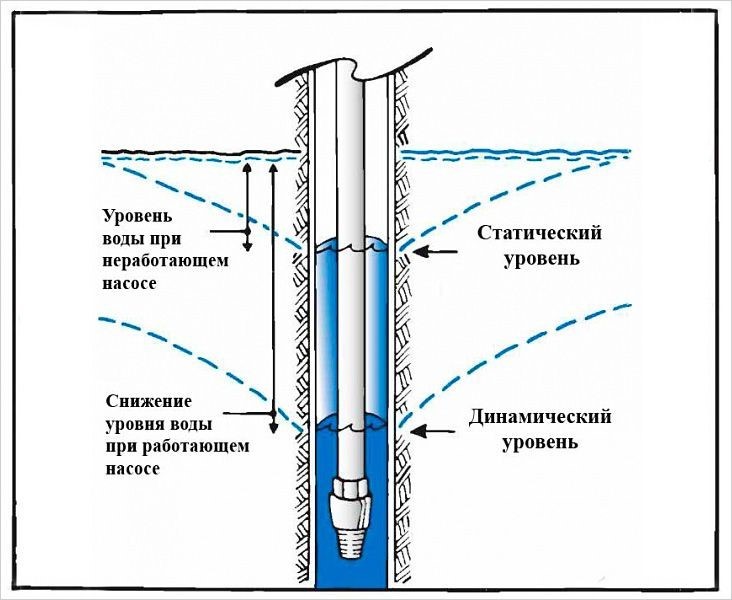
Deposits can be both pressure and non-pressure. In the latter case, you will also have to connect a pump to pump out water.
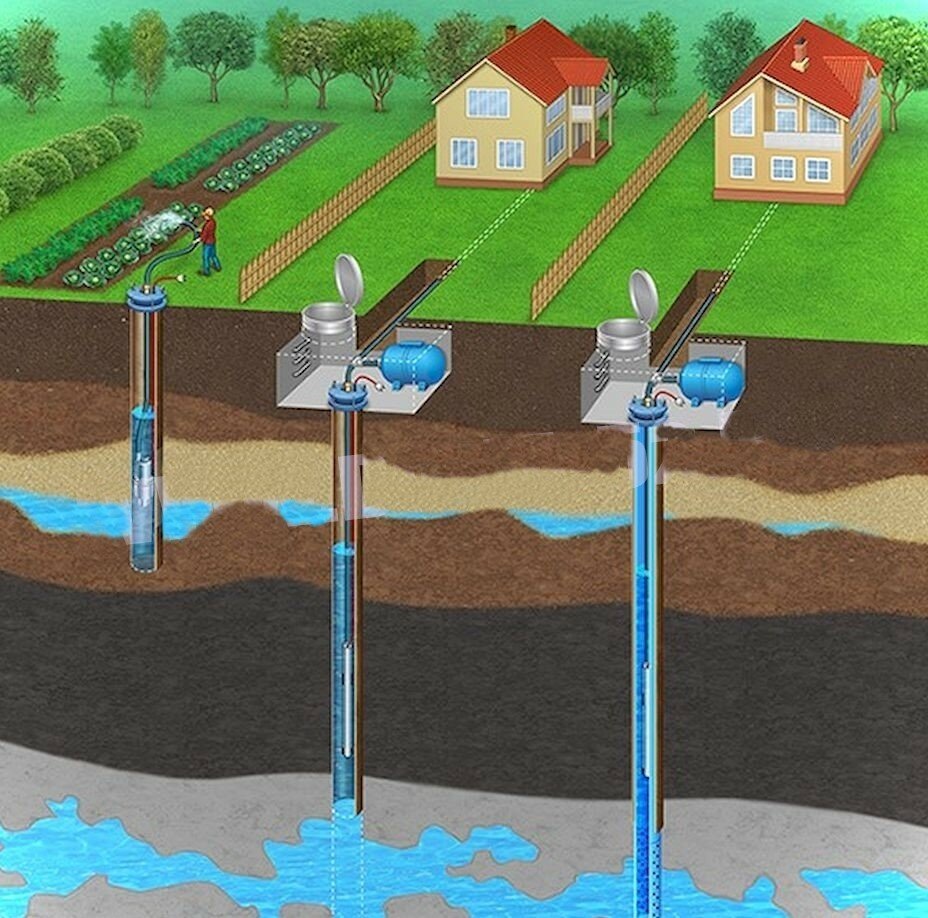
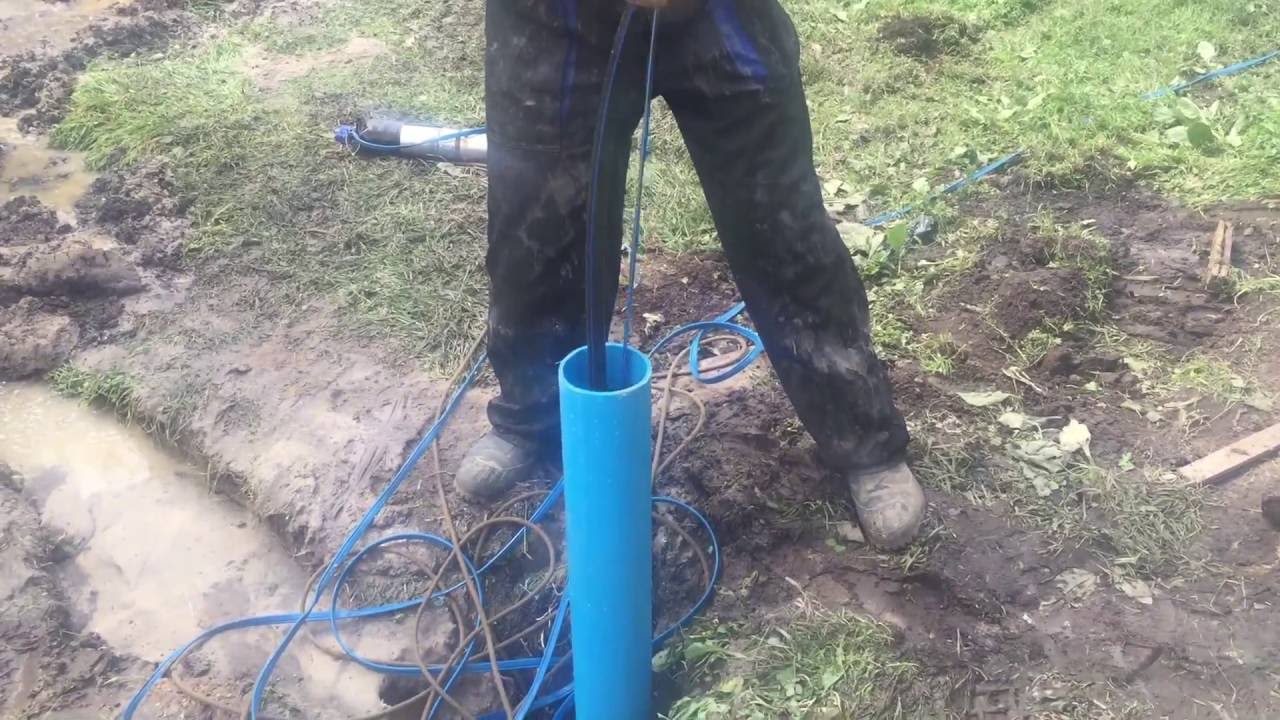



Of course, drilling is associated with certain expenses. The most expensive thing will be to find a vein with mineral water, which lies at a level below thirty meters.
It is saturated with useful elements and substances, but such drilling will cost a decent amount.



