
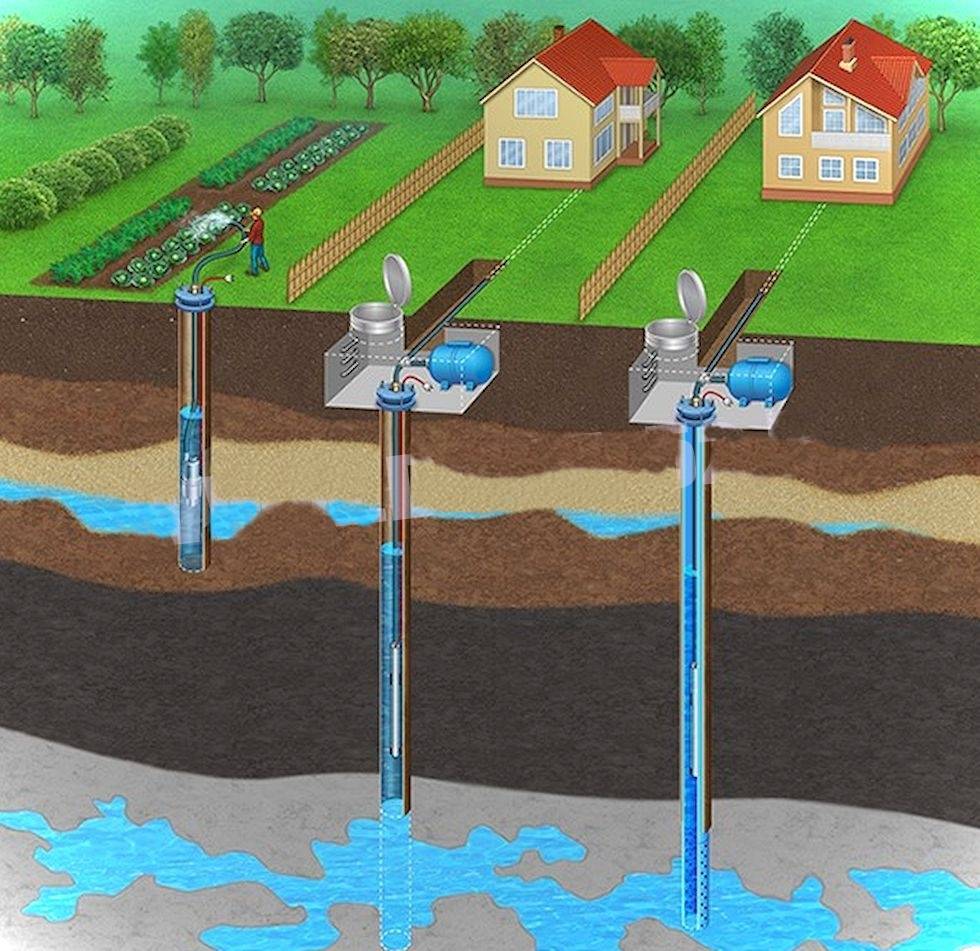
- Working ways to find water
- How to find water in a well site
- Use of clay utensils
- The use of silica gel
- Inspection of vegetation
- Inspection of the territory
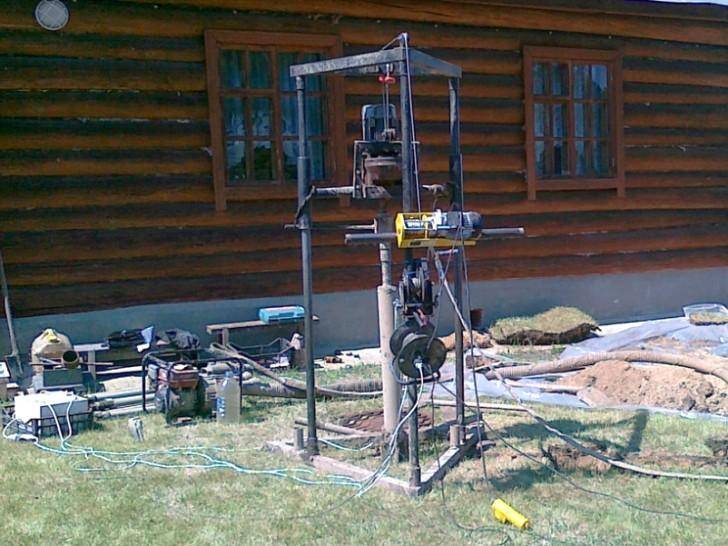
- Professional drilling
- Dowsing on your own
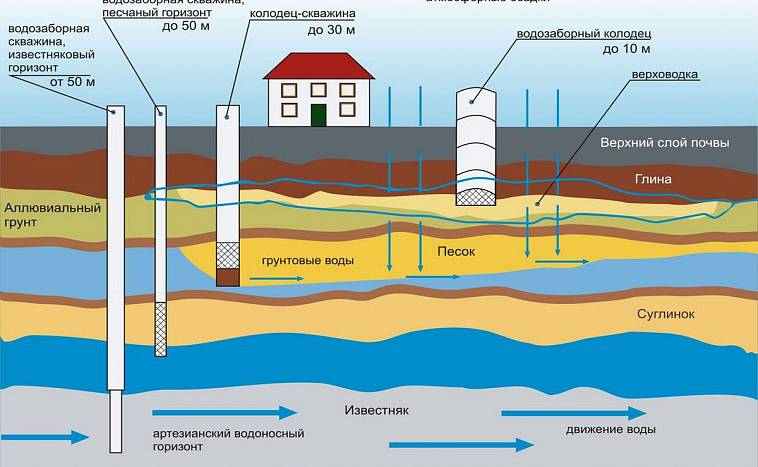
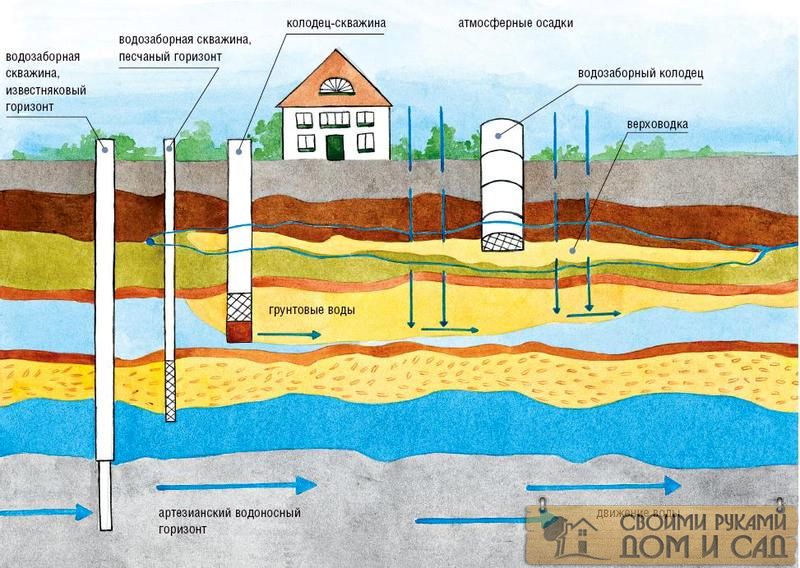
- Aquifers and location in the ground
- The concept of groundwater regime
- Folk ways of determining
- Orientation by natural features
- With the help of dowsing frames
- Where to make a well?
- Practical Water Detection Methods
- The simplest thing is to interview neighbors in the area
- Dowsing with a frame made of vine or aluminum
- The most reliable is to conduct exploratory drilling
- Folk method - arrange pots and jars
- Method for finding water by measuring the mass of hygroscopic materials
- The use of a barometer and other instruments is serious
- aquifers
Working ways to find water
We suggest that you familiarize yourself with several of the most effective methods of how to find water for a well, which are successfully used:
- Fog watching. Before looking for water in this way, you need to wake up at dawn and inspect the site. Where moisture is close to the surface of the earth, fog forms. The thicker the nebula, the closer the aquifer.Moreover, if the fog is caused by moisture rising from the ground, then it does not stand still, but rises in clubs or spreads near the ground itself.
- Animal behavior. Here you need to show your observation, watching the behavior of insects and animals. A horse, when looking for water in the soil, beats with its hoof in an area with the highest level of moisture. The dog is trying to lower its body temperature a little, so it looks for moisture and digs a hole where it hides its head. Mosquitoes and midges in the evening swarm in the wettest areas.
Mice never burrow if the underground water is too close to the surface. For the same reason, partridges and domestic chickens do not equip their nests. Therefore, if there are mouse holes or chicken nests, then there is no moisture in this place. But geese, swans and ducks always rush at the intersection of aquifers.
- Moisture indicator plants. Some plants indicate the depth of the aquifer. In places with lush growth of coltsfoot, sorrel, hemlock, nettle, it is always quite humid. Where the liquid lies deep, moisture-loving vegetation does not live. Pines grow in areas with deep groundwater.
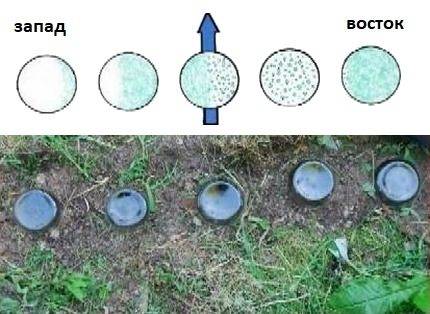
- Glass jars. Such a search for water in areas is based on physical properties. In the morning, it is necessary to arrange glass jars of the same volume with their neck to the ground throughout the site. The next morning, you need to check in which container the most condensate has formed. Where there is a lot of it, there is an aquifer.
- Application of brick or salt. These mothers have a high degree of moisture absorption. You need to wait until the ground is completely dry after the rain. Pour dry salt or crushed red brick into an unglazed clay pot. Weigh the container with filler and record the data.Wrap the pot in cheesecloth and bury half a meter in the soil for a day. After 24 hours, remove the pot, remove the gauze and weigh again. If the mass has increased significantly, then moisture is very close.
- With a barometer. Applicable if there is a reservoir nearby. Using an aneroid barometer, the change in pressure can be used to determine the depth of water. every 13 meters the pressure drop is 1 mm Hg. Art. Using this device, you need to measure the air pressure in two places: near the shore of the reservoir and in the intended place of digging the well. If the pressure drop is 0.5 mm Hg. Art., the water carrier is located at a depth of 6-7 meters.
- Exploration drilling. The most accurate and reliable method involving drilling for exploration purposes. It is necessary to drill an exploration well to a depth of 7-10 meters using a conventional drill or a special device. After the discovery of an aquifer, exploration stops and digging of a well structure begins.
- Neighbor experience. If there is a working well or well in the neighboring area, then you should also have water. You need to find out from your neighbors how they get water, how deep their source is, whether the level in it is stable. This is the easiest way to obtain hydrogeological data and plan work on arranging a source of life-giving moisture.
The choice of water search technology does not affect the duration of operation of the water facility. With good care and careful use, the source will last for several decades. At the same time, if the liquid is deep and there are a lot of stones in the soil, then it is better to organize a well. A well is preferable with a close location of moisture (12-17 meters) and with average volumes of water consumption.
This is interesting: How to pump a well: technology pumping after drilling
How to find water in a well site
Consider some of the most popular ways to search for water in a summer cottage.
Use of clay utensils
This method has been used by our ancestors for centuries. Let's take a clay pot, dry it thoroughly, turn it over and put it in the place on the ground where the water vein probably lies. If, after a few hours, condensation settles on the inner surface of the pot, then water probably lies in this place. Unfortunately, the result of the accuracy of the experiment is affected by soil moisture, and if it has recently rained, then this method will give incorrect results.
The use of silica gel
A more modern way to search for water, which is based on silica gel, which perfectly absorbs moisture. We take two liters of gel, previously dried in the oven, and put it in a pot. The gel is wrapped in gauze and weighed on a scale.
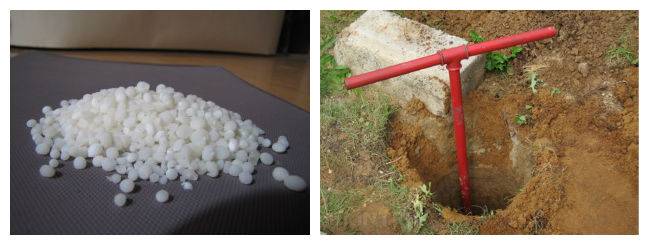
Searching for water with gel
After weighing, put the gel in a pot and bury it in the ground about half a meter deep. This procedure should be carried out in several places on the site, in order to more accurately determine the water-bearing layer. We leave our holes alone for a day, then we dig out our pots and weigh the gel.
The gel that weighed the most was buried closest to the water source.
Inspection of vegetation
The easiest, and sometimes effective way to search for an underground source. We carefully inspect the vegetation on your site. Here are some signs by which you can determine the depth of water.
- Birch - a clear sign of the presence of a source under the tree will be a twisted tree trunk, a small height of a birch and a “witch's broom”.
- Woodlice - the presence of woodlice on the site indicates the presence of underground sources.
- Black poplar and reeds are a sure sign of water occurrence at a depth of 2-3 meters.
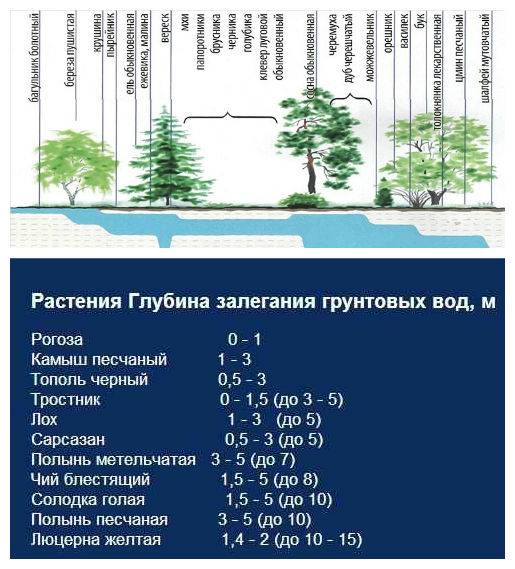
Plant search
Inspection of the territory
Pay close attention to natural phenomena in your area. If the ground is wet, it will necessarily evaporate moisture from the surface, and this in turn leads to the appearance of fogs above the ground in the morning. And if the fog rises in a column, or begins to swirl, then the water lies close to the surface.
Remember that in the pits and lowlands in your area, the water is closer to the surface, which means it is easier to get to it.
Professional drilling
The most effective method, but, unfortunately, quite expensive. Specialists with the help of special equipment will determine the location of the water and carry out professional drilling to the required depth.




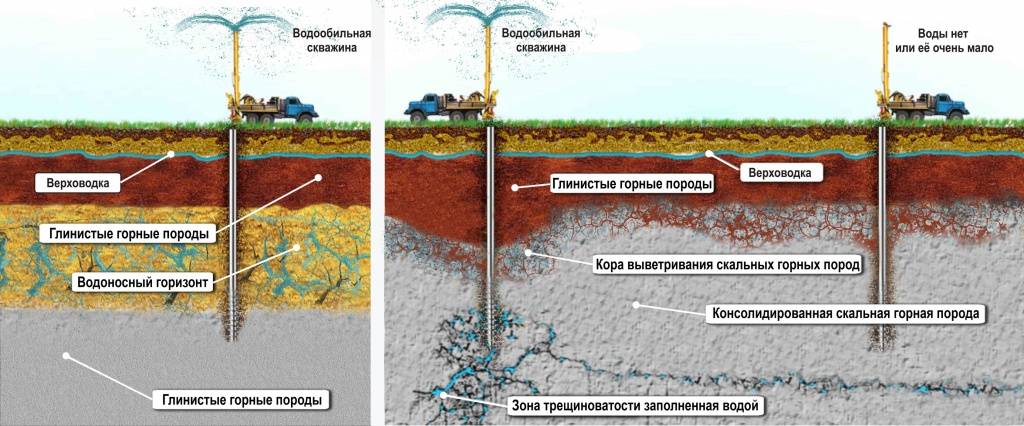


well drilling
We will not stop at this point, there are many offices on the network that provide this service.
Dowsing on your own
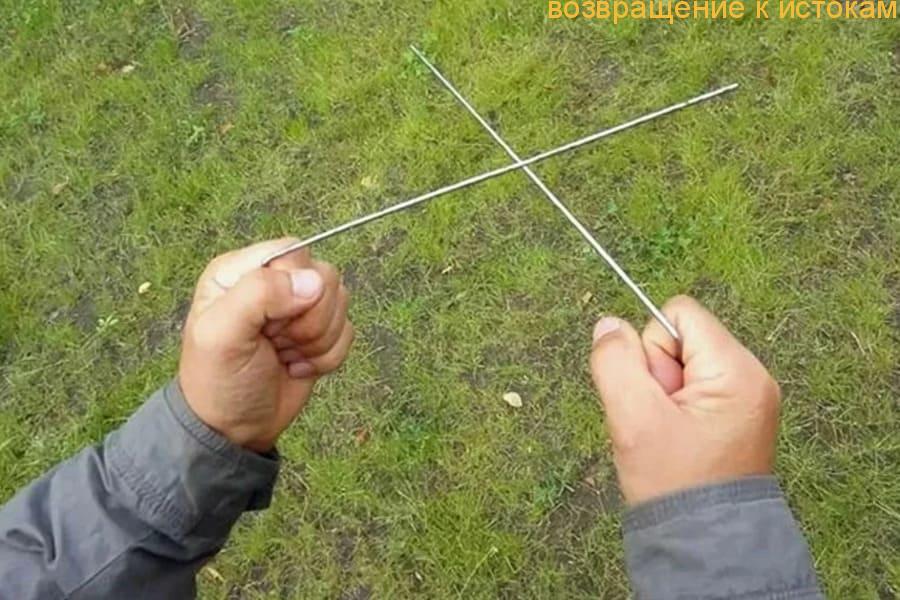
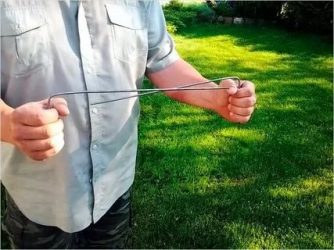
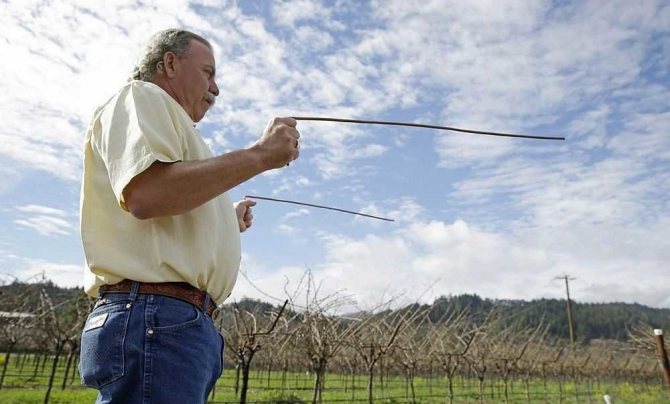
The method is quite old, but very effective. Before we start looking for water, let's prepare the material. We take an ordinary aluminum wire about 35 centimeters long, on one side we bend the wire at a right angle, at around 15 centimeters.
We make handles for the water search frame. We take branches of elderberry or viburnum, drill holes in the core of the branch and insert 15 cm ends of the wire there. It should turn out to be a kind of children's pistol J. The wire should rotate freely in the handles, it will show us the place where the water occurs.

Frames are an effective and popular search method
We take our frames in our hands, press our elbows to the body, arms parallel to the ground. We go along the site from north to south, in the place where the underwater reservoir lies, the wire will begin to move in the handles and intersect. We mark this place and move on. Thus, we go around the entire site and look for the best place. More detailed instructions in the video below. Read also about how to get great fertilizer for free with a compost pit.
Aquifers and location in the ground
There is water underground, but it is not so easy to find. You can, of course, dig a hole at random in the hope of accidentally stumbling upon an aquifer, but the result is likely to be disappointing.
Meanwhile, it happens that if you didn’t miss literally two meters, the desired goal would be achieved.
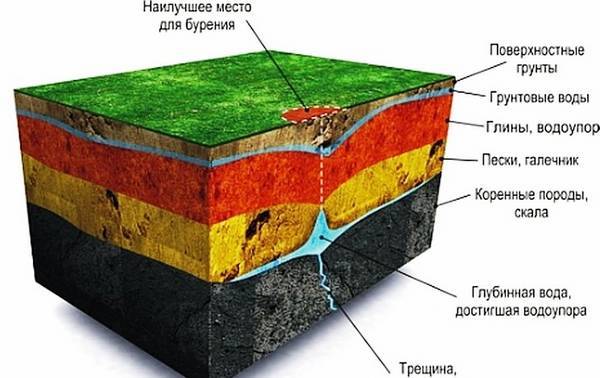
After all, the water in the earth is located between the layers of soil, which it is not able to erode because of its water-resistant composition, which is based on clay and rocks.
Clay layers are interspersed with sandy interlayers, gravel and pebble deposits. They contain pure water. It is to such an aquifer that it is necessary to get to those who decide to dig a well in their area.
Aquifers lie unevenly and their location is not so easy to detect, but for those who are going to equip the well, such information is necessary
It should be noted that the aquifer is not the same in terms of geometric parameters throughout its entire length. Somewhere the sand layer becomes thinner, and in other places it becomes wider and deeper.
The waterproof layer is also not the same: in one place it is located horizontally, and in another it can bend or even bend.In places of curvature of the water-resistant layer, the largest volumes of sand saturated with water are stored.
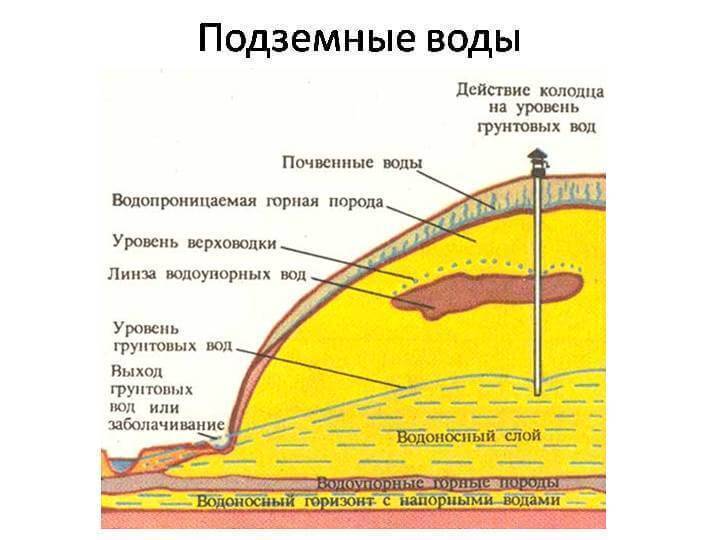
The concept of groundwater regime
Underground mode
waters are regular in time
changes that are taking place in
aquifer as episodic,
daily, seasonal, annual, perennial
and secular fluctuations due to
meteorological and geological
processes. The concept of the mode of underground
water covers all aspects of their activities
and properties: temperature, physical
condition, nature of water exchange, level
(head), flow rate, chemical and gas
composition, etc. The groundwater regime can
be very fickle (top watering),
changeable, dependent on episodic
climatic factors (upper
groundwater horizons), constant
(lower groundwater horizons), very
permanent (artesian waters).




Folk ways of determining
It is possible to carry out exploration on your own in search of an aquifer for drilling a shallow working or a well-needle, even if there are no landmarks in the adjacent areas.
Orientation by natural features
Signs of the presence of an aquifer in the soil can be:
- Observation of the behavior of animals and insects. Pillars of midges curl in the place where there is a source of water, and red ants, on the contrary, try to settle away from it.
- Wide distribution of moisture-loving plants in the area.
Nettle, horsetail, sedge, sorrel, reeds act as indicators of the proximity of groundwater from herbaceous plants. Tree-like plants with a taproot, such as bird cherry, willow, birch, black poplar, sarsazan, will indicate that the water lies at a depth of up to 7 meters.

On a hot afternoon, animals dig in the ground in search of coolness in places where groundwater is close to the surface.
The soil and underlying rocks, under which the source passes, are characterized by increased humidity. It will certainly evaporate, forming clouds of fog in the morning; you just have to keep an eye on the area.
Pay attention also to the relief. It is noticed that water carriers lie almost horizontally.
Therefore, in the region of depressions, the probability of occurrence of water is always higher.
With the help of dowsing frames
The old method, based on the dowsing effect, in which a person reacts to the presence of water and other bodies in the earth, creating heterogeneities of various configurations and sizes in its thickness, does not lose popularity.
When searching for water to select a place for a water well in a site using a dowsing method, a wire frame or a tree branch with a fork in the hands of a human operator acts as an indicator. It is able to determine the presence of an aquifer, despite even the layer of soil separating from the water.
Dowsing - the ability of frames to move under the influence of external factors, for example, vibrate and approach each other above the places where the keys beat
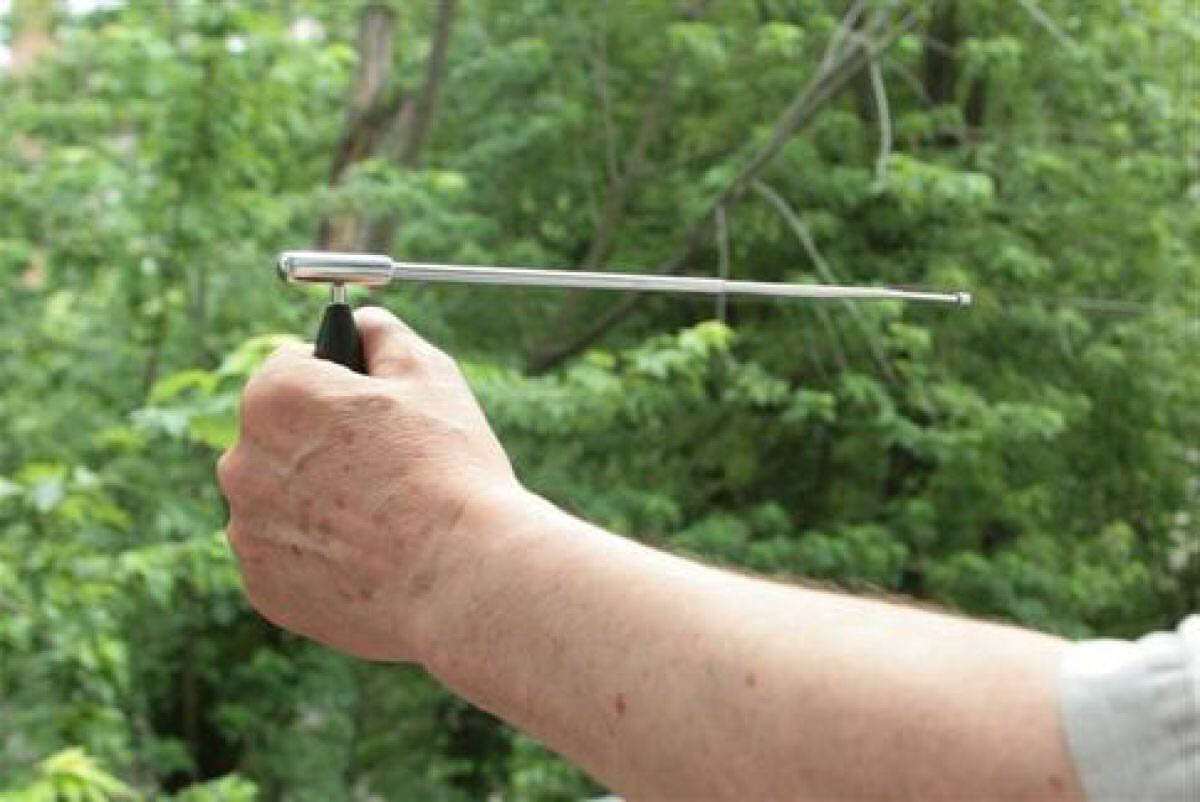
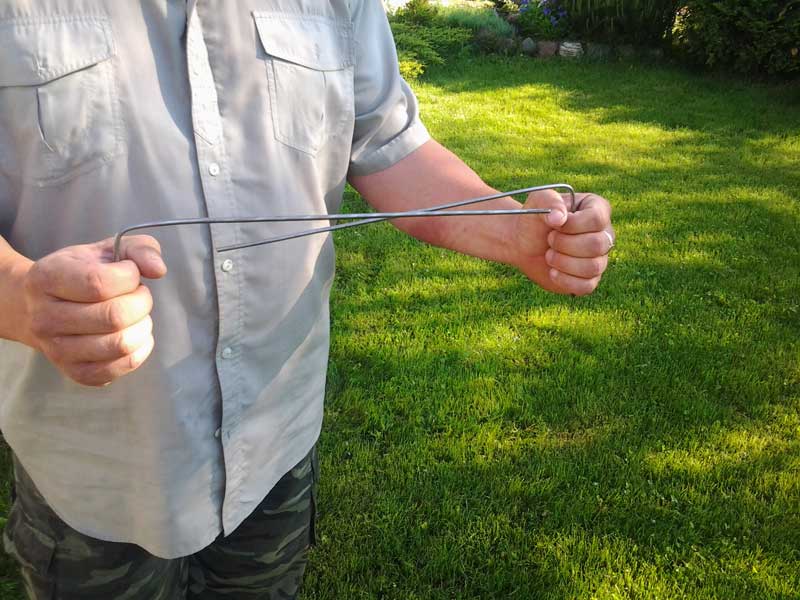
Dowsing frames can be made of calibrated aluminum, steel or copper wire with a diameter of 2-5 mm. To do this, the ends of the wire segments 40-50 cm long are bent at a right angle, giving them an L-shape. The length of the sensitive shoulder will be 30-35 cm, and the handle 10-15 cm.
The task of the operator is to ensure the free rotation of the “tool”.To make it easier for yourself, wooden handles are put on the bent ends of the wire.
Bending your arms at a right angle and taking the tool by the wooden handles, you need to slightly tilt them away from you so that the wire rods become, as it were, an extension of the hands.
To achieve the goal, you need to consciously tune in and clearly formulate the task in front of you. After that, you just need to slowly move around the site and observe the rotation of the frames.
In the place of the site where groundwater is hidden, the rods of the frame will cross each other. The operator must mark this point and continue to explore, but already moving in a perpendicular direction relative to the original line of motion. The desired source will be located at the intersection point of the found marks.


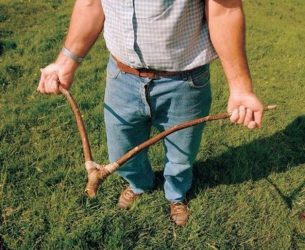

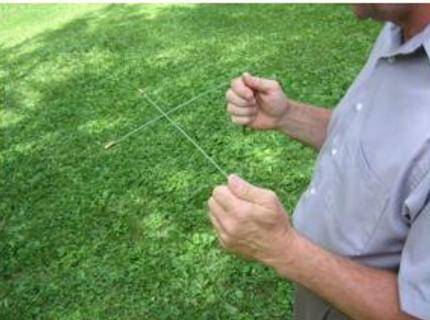
The dowsing frames will react by connecting the ends to each other in the place where the aquifers pass on the site
It is believed that the best time to search for water by dowsing is summer or early autumn. The most favorable periods:
- from 5 to 6 am;
- from 16 to 17 days;
- from 20 to 21 pm;
- from 24:00 to 1:00 am.
L-shaped frames are convenient to use in the field, but in the absence of wind. To work with the tool you need experience and skill. After all, the deviation of the frame can even depend on the emotional state of the operator.
For the same reason, before working with frames, it is better to refrain from drinking alcoholic beverages. Before you start searching, you need to learn how to work with a biolocator and “hear” it. Thanks to this, in the process of searching for water for a well, the operator will not be distracted even by the presence of closed water pipes on the site.
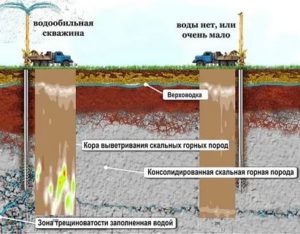
But it is worth noting that folk methods cannot give a 100% guarantee of obtaining the expected result.Indeed, even with a successful outcome, there is always a risk of obtaining a water well with low productivity.
Where to make a well?
If everything is clear with the depth of occurrence, then it is worth deciding in which place on the site to make a well.
It should be understood that the well must not only meet the requirements of the owners, but also certain sanitary standards.
Video:
Drilling is prohibited in the following places:
- the place for the well is located at a distance of five meters or less from the foundation of the house (that is, washing or a well can destroy the house);
- the well will be located closer than thirty meters from the septic tank;
- you can’t make a well if it is located at a distance of five meters or less from the road;
- if the site for the well is located closer than thirty meters from the site of the neighbors;
- the well will be built at a distance of less than fifteen meters from a natural reservoir.
That is, in all other places you can build a well if you managed to find a source in this place.
Moreover, if the soil meets the requirements, then for drilling it does not matter at all whether the well will be, for example, in a rock or at upper levels.
Practical Water Detection Methods
In addition to visual observation and analysis of what you see, practical methods for detecting water on the site using various tools and devices will help you find water. These can be glass jars and clay pots, grapevine and aluminum wire, moisture-absorbing materials (silica gel or red brick, and so on).
It must be said that at present these methods are used less and less. Although independent searches for an aquifer are very exciting, here you can imagine yourself as a gold digger.It is much more reliable and efficient to carry out exploratory drilling in the right place. True, this requires financial costs.





The simplest thing is to interview neighbors in the area
The simplest, but at the same time the most effective method of finding a place where it is best to equip a well is to interview neighbors in the area.
Those of them who have already acquired their own autonomous source of water supply, probably conducted research before digging it.
They can provide effective assistance by providing information on the intelligence work carried out. This information will help save a lot of time looking for an aquifer. If the neighbors in the area do not have wells, you will have to look for water on your own.
Dowsing with a frame made of vine or aluminum
The location of the aquifer can be determined by dowsing using an aluminum frame or willow vine. The procedure for the aluminum frame is as follows:
- two forty-centimeter pieces of wire are bent at a right angle, as in the photo, and placed in a hollow tube so that they can rotate freely in it;
- having turned the ends of the wires in different directions and taking the tubes in hand, we begin to move along the site;
- in the place where the ends of the wire converge, there is an aquifer;
- the control passage of the section is carried out in a perpendicular direction.
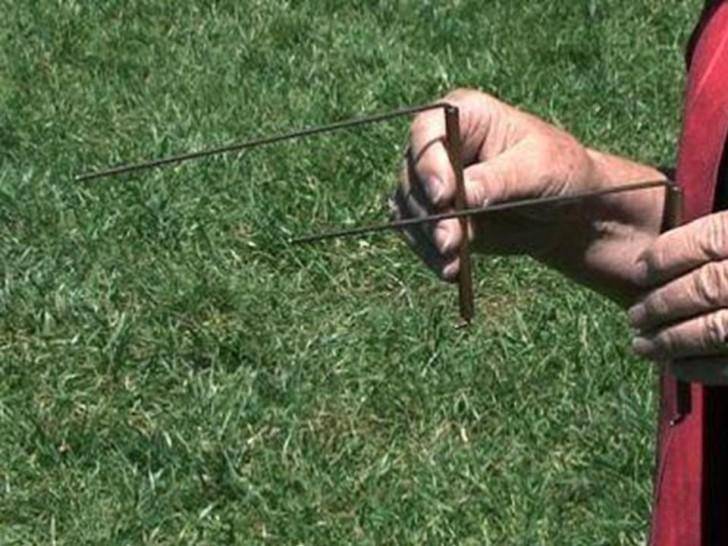
The manipulations when using a willow frame are similar. This method is called dowsing and is as follows:
- a branch is cut from a willow with a fork of approximately one hundred and fifty degrees;
- the vine is thoroughly dried;
- when passing through the site, the vine is taken in hand so that the trunk is directed upwards;
- in the place where it goes down, there is water.

The most reliable is to conduct exploratory drilling
The most reliable method of detecting water on the site is to conduct reconnaissance drilling on it.
Using a conventional drill, several meters of rock are passed before colliding with the water horizon. Before you start digging a well, you need to send a sample of it for analysis to determine the presence of harmful impurities in its composition.
Folk method - arrange pots and jars
The folk method of searching for water on the site is carried out using glass jars and clay pots. In the evening, ordinary glass canning jars or pots are placed upside down throughout the site. In the morning they are carefully examined. The containers, at the bottom of which the largest amount of condensed moisture has collected, will indicate the location of the water vein.

Method for finding water by measuring the mass of hygroscopic materials
Moisture-absorbing material, such as ordinary table salt, is placed in identical clay pots. Pots of salt are weighed and buried in the ground evenly throughout the site. They are then dug up and weighed again. Those of them who received the greatest weight gain will show the location of the water.
The use of a barometer and other instruments is serious
A device such as a barometer, which can measure atmospheric pressure, will allow you to determine the depth of the water vein if there is a river, lake or other body of water near the site and, thus, help answer the question: how to find water for a well?
Atmospheric pressure is measured at the site and on the shore of the reservoir. Then you should remember from the school physics course that one millimeter of mercury corresponds to a height difference of thirteen meters and compare the measurement readings. If the difference was half a millimeter of mercury, then the aquifer is located at a depth of 13/2 = 7.5 meters.




We hope that the above information will help you find crystal clear water on your site. The following video sets out the authoritative opinion of a hydrologist on this issue.
aquifers

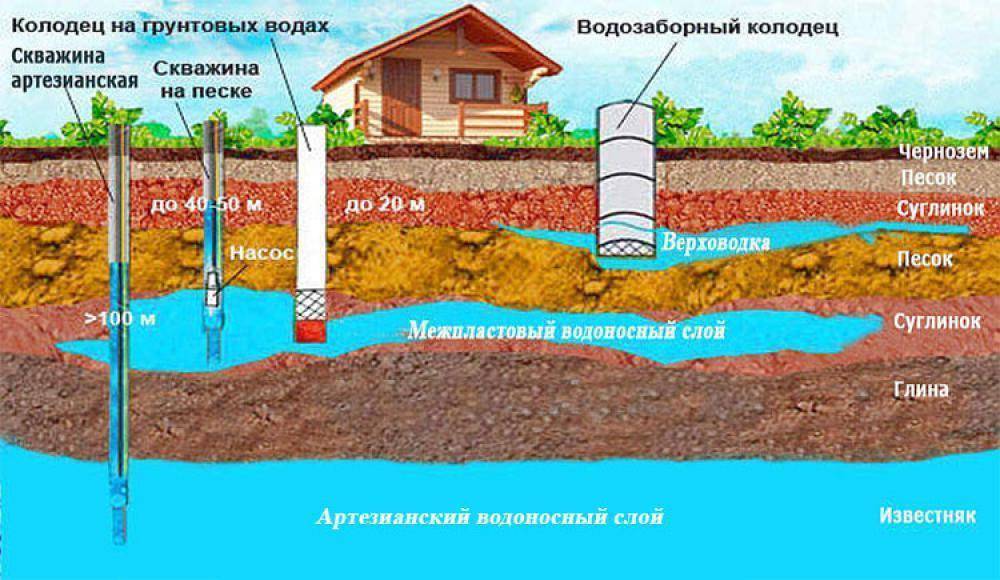
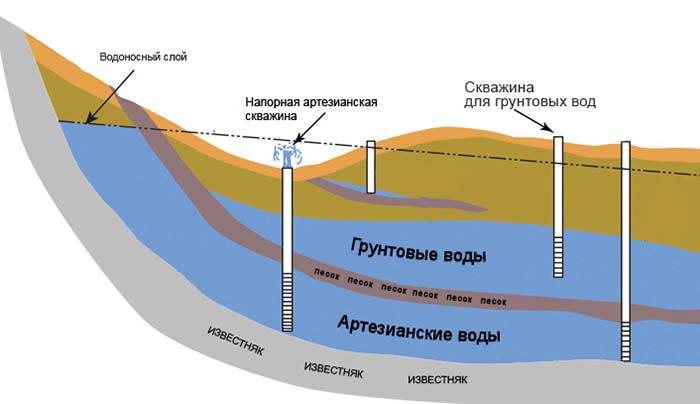
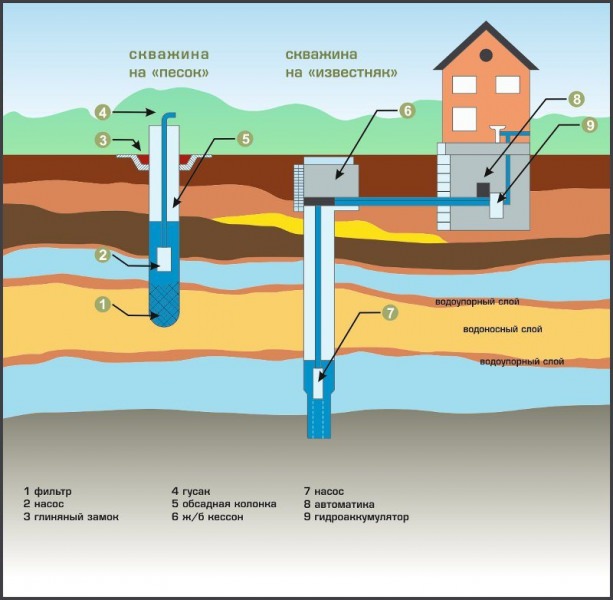
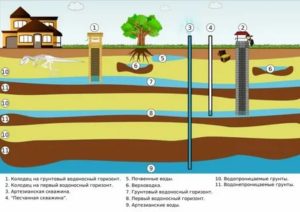
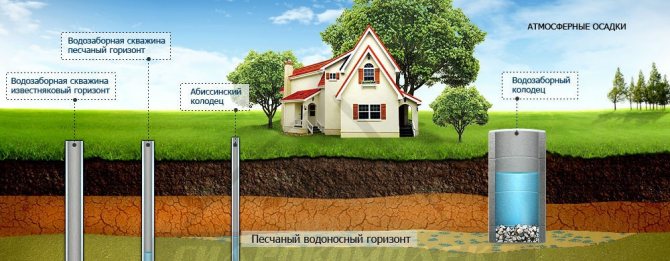
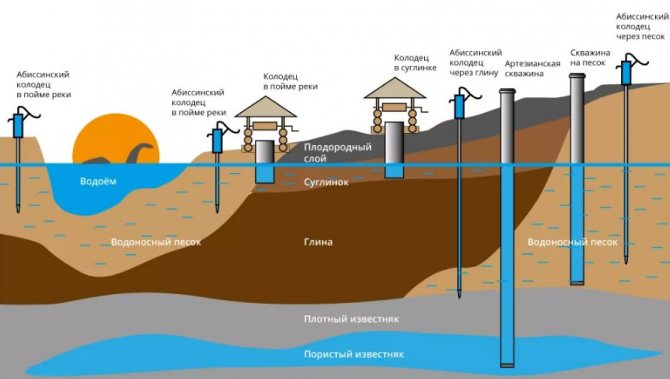
Before you start searching for underground water, it is worth understanding the features and varieties of water horizons. Underground moisture that enters the ground as a result of precipitation filtration accumulates in aquifers. They can be of several types depending on the depth of occurrence. At the same time, they differ not only in the depth of location, but in the quality and composition of the water. Water accumulated between water-resistant layers of rock (clay, stone) can form entire underground reservoirs.
Each aquifer is not strictly horizontal. It can bend and refract to form whole water lenses. The volume of water in these lenses can vary from a couple of cubic meters to several tens of cubic kilometers.
There are several types of groundwater:
BC 1xBet has released an application, now you can officially download 1xBet for Android by clicking on the active link for free and without any registration.
- Closest to the earth's surface (2-3 m) is a layer called "perched water". The filling of this horizon occurs as a result of melting snow and precipitation. During a drought, the water in these horizons may disappear altogether.Since various pollutants from the surface of the earth easily enter this layer, the quality of this water is the lowest. Such water on the site is recommended to be used only for technical needs and watering the garden.
- The next layer is deep groundwater. This layer is located at a depth of more than 5-7 m. Before entering this horizon, the water is well filtered, so such a source on the site can be used for drinking and domestic needs.
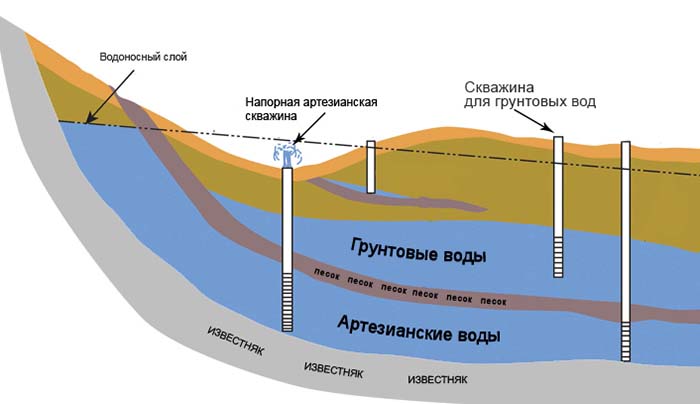
- Artesian water is considered the most valuable and high-quality. This layer is located at a depth of more than 50 m. In most cases, such waters are saturated with minerals and salts. It is expensive to drill a deep well, but if there is such a horizon in your area, then the construction of an artesian well is worth it, because this is the cleanest and highest quality water.
In addition, groundwater can be divided into two types:
- Non-pressure. These are horizons that are close to the earth's surface. As a rule, after drilling a well or building a well, the water level in the hydraulic structure is at the same level as in the aquifer before the opening of the layer.
- Pressure. Such waters are usually found at considerable depths. They are sandwiched between two waterproof rocks of stone or clay. When an aquifer is opened during drilling, water rises into the well and will be above the horizon. Sometimes such pressure water can gush from the well. Artesian horizons belong to this variety.



