
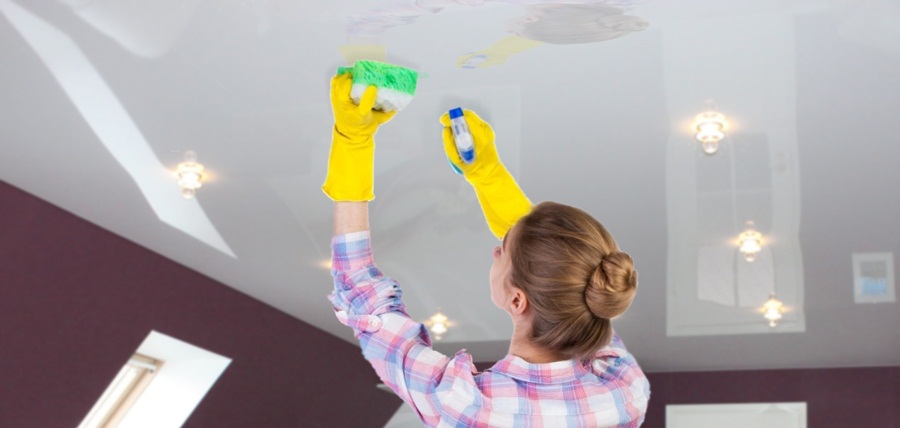
- How to wash stretch ceilings?
- Washing Glossy PVC Film
- How to wash matte ceilings?
- How to clean a stretch ceiling without streaks
- Film ceiling care
- Fabric ceiling maintenance
- How to wash stains on the ceiling
- Table: how to wash stains from PVC and fabric stretch ceilings
- Causes of pollution
- Caring for fabric ceilings
- Rules for the care of a stretch ceiling made of fabric
- Surface cleaning methods
- Mandatory principles for washing tensile structures
- What not to do when cleaning stretch ceilings
- Cleaning other stretch ceilings
- Tips
- Recommendations for cleaning fabric coverings
- Web
- Spots
- Rust
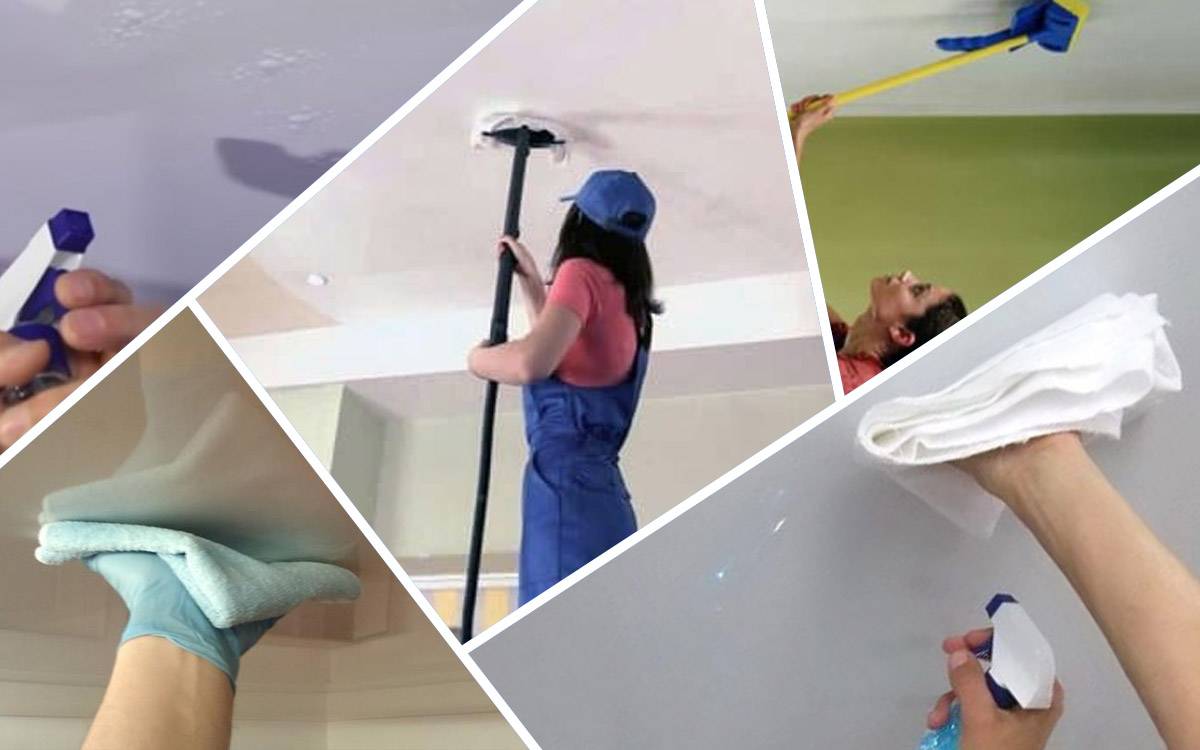
How to wash stretch ceilings?
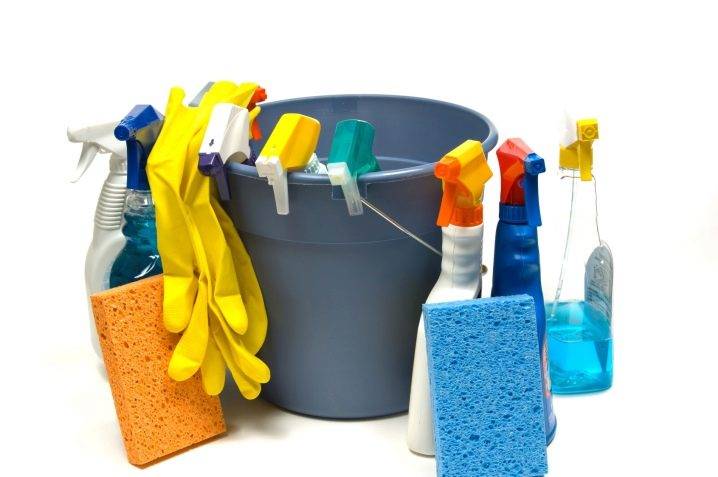
How to wash a stretch ceiling in accordance with all the rules and what is required for this? To clean and wash the stretch ceiling, you will need:
- stepladder;
- soft napkins made of suede fabric or microfiber;
- soft sponge;
- vacuum cleaner with soft bristle brush head;
- non-abrasive detergents.
Depending on the material of the stretch ceiling and the type of pollution, one or another method of cleaning and washing is used.
Video instruction for proper cleaning of the stretch ceiling:
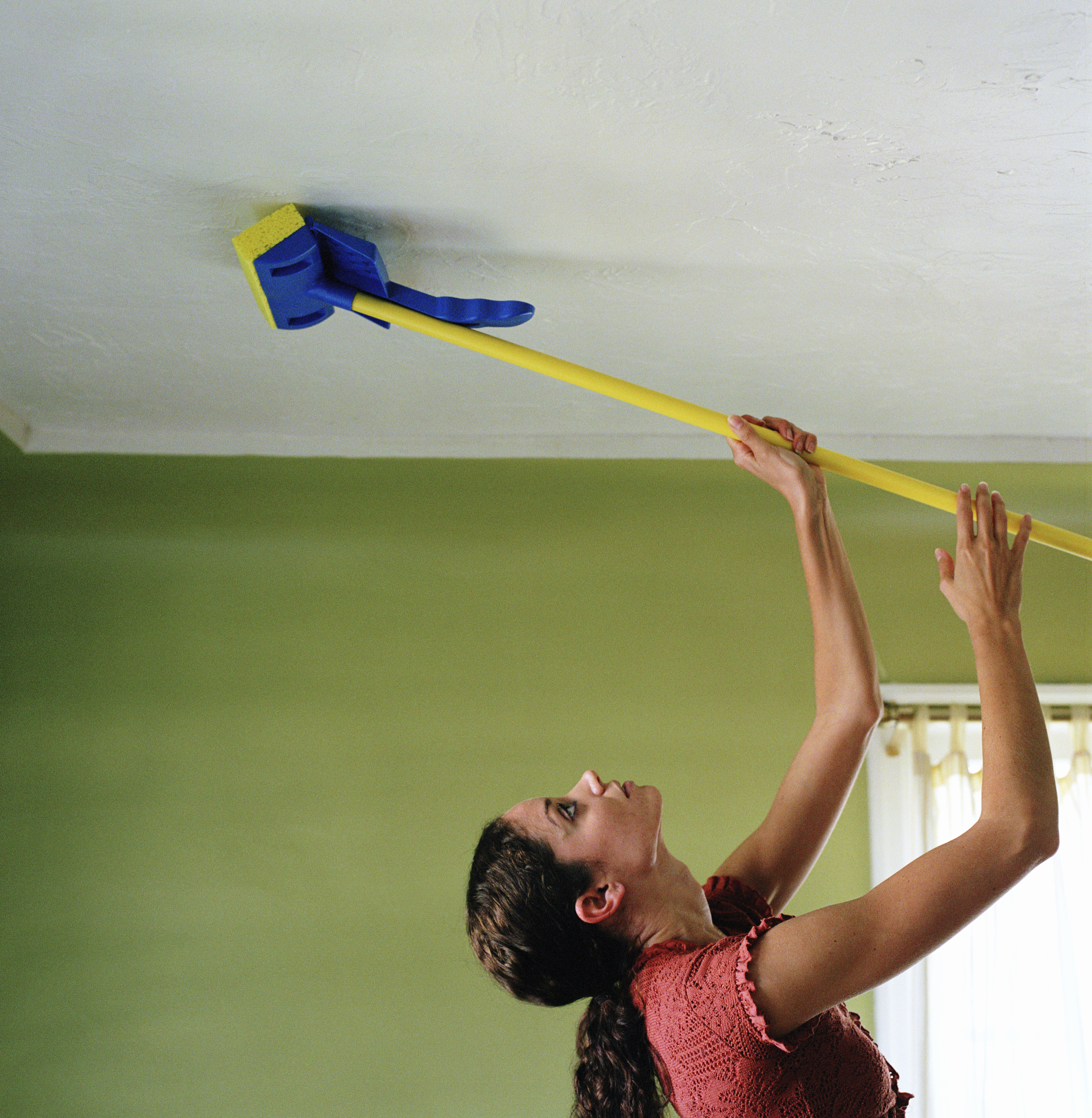
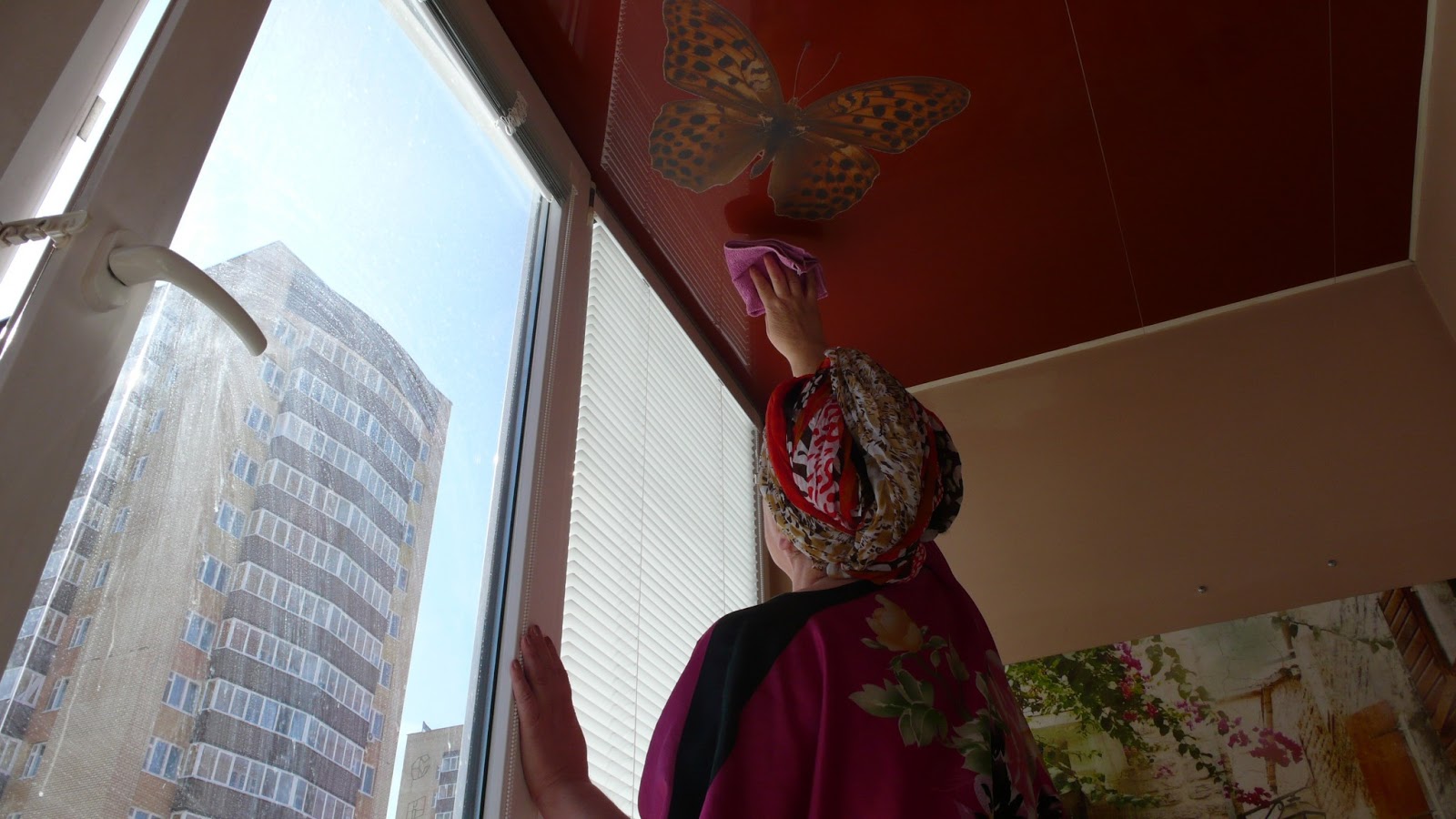
For example, to remove small dirt from a stretch ceiling: minor stains, dust, simply wipe the canvas with a damp and clean soft suede or microfiber cloth.
After wet cleaning, wipe the cover with a dry cloth.
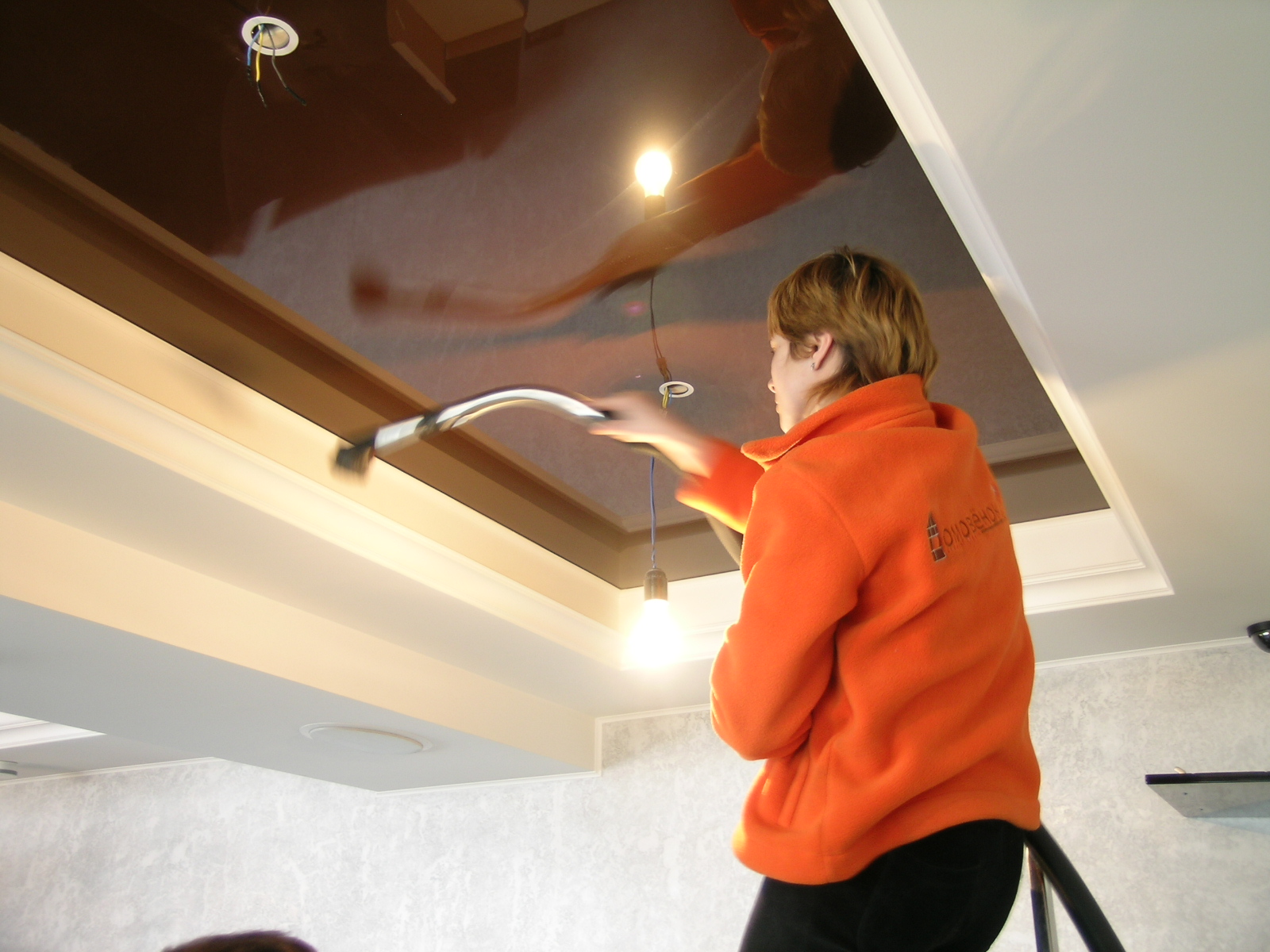
If the stretch ceiling is heavily soiled, more serious measures will have to be taken. If the ceiling after repair work is heavily covered with dust, then use a vacuum cleaner to clean it with soft brush head.
The brush must not touch the ceiling. It is best to drive it 2-3 centimeters from the canvas, otherwise the ceiling material may sag or be damaged.
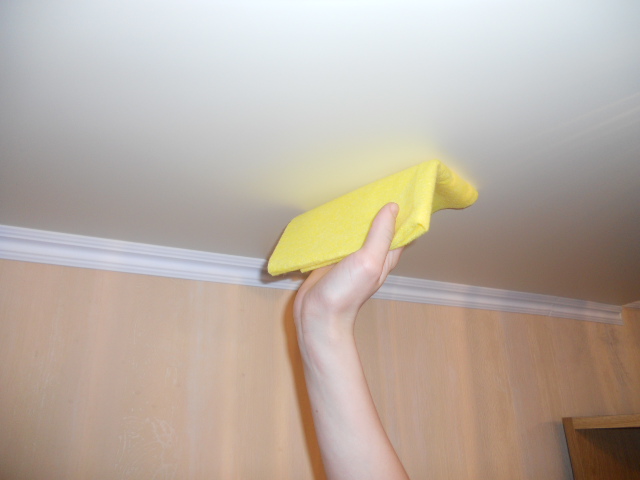
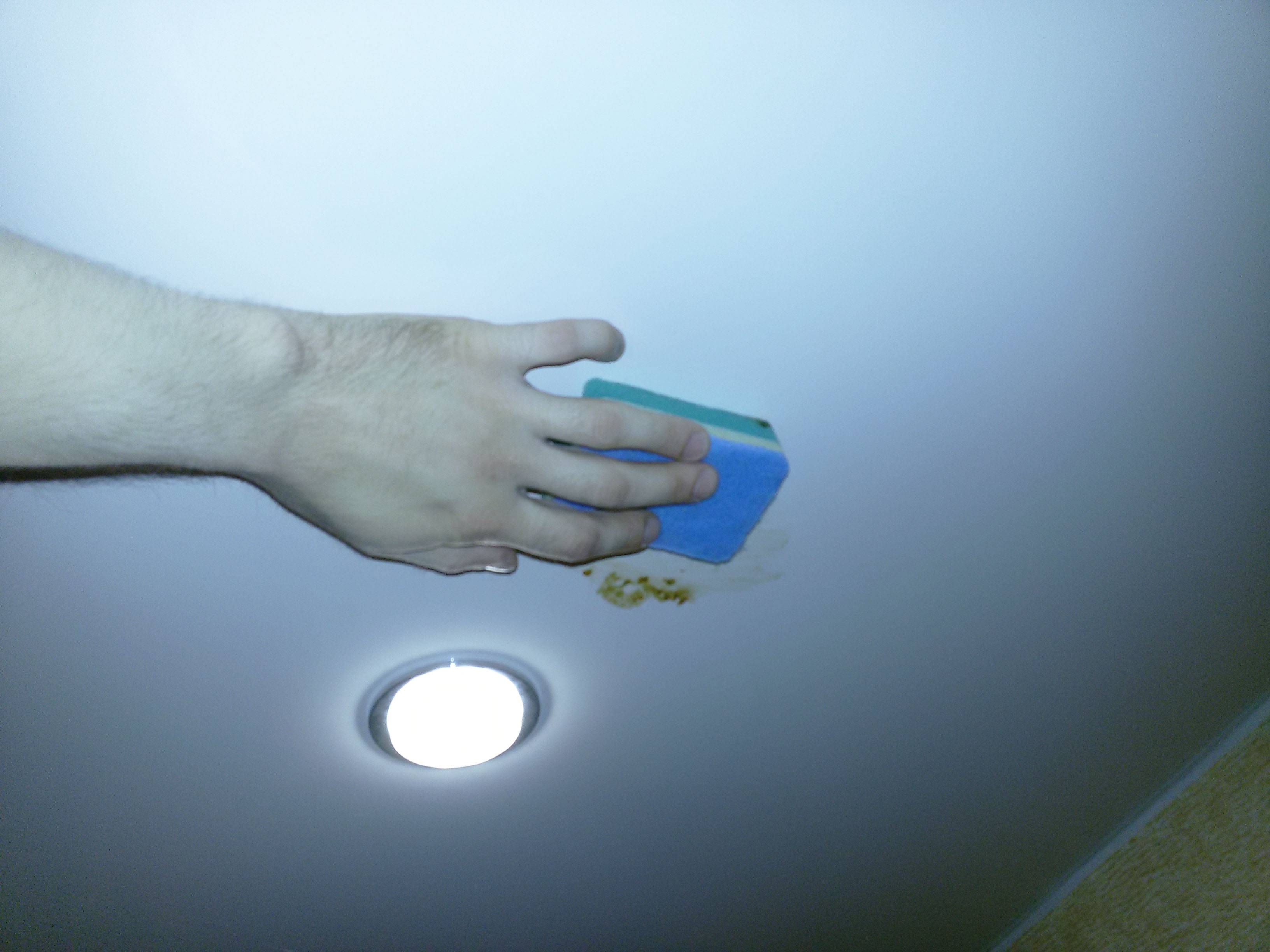
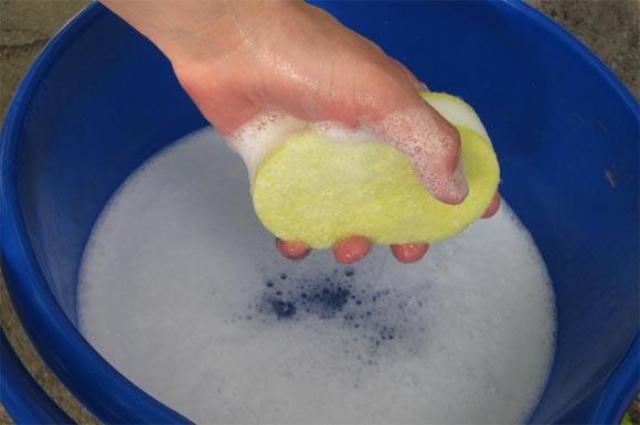
Remove stains and other heavy soiling with a soft cloth or sponge using soapy water or detergent, then wipe dry with a dry soft cloth.
Wash the ceiling with soft circular motions, without pressure and pressure.
If the ceiling is made of suede polyester fabric, then you need to clean it only with a soft dry brush, again without pressure, with gentle movements.
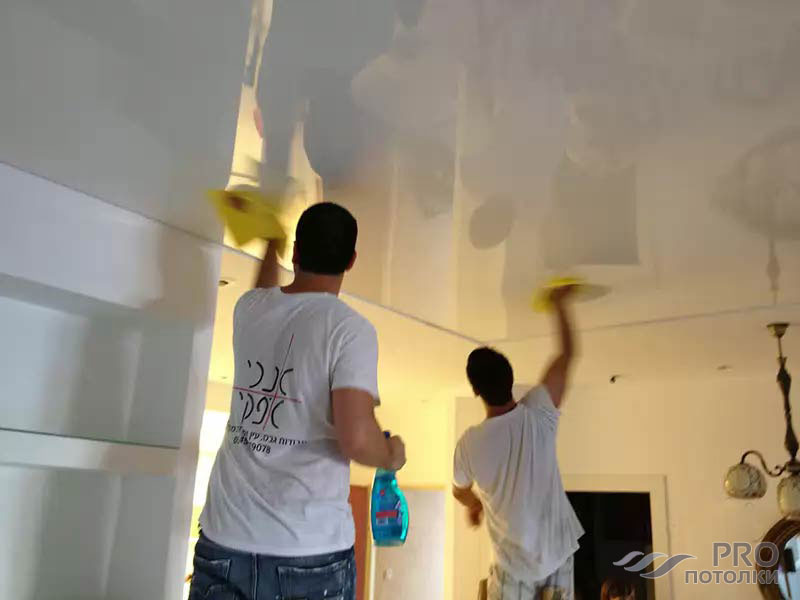
To restore the shine of the glossy surface of the ceiling, wipe it with a soft, lint-free cloth soaked in 10% ammonia or glass cleaner.
After such restoration, the ceiling is wiped with a dry cloth.
Washing Glossy PVC Film
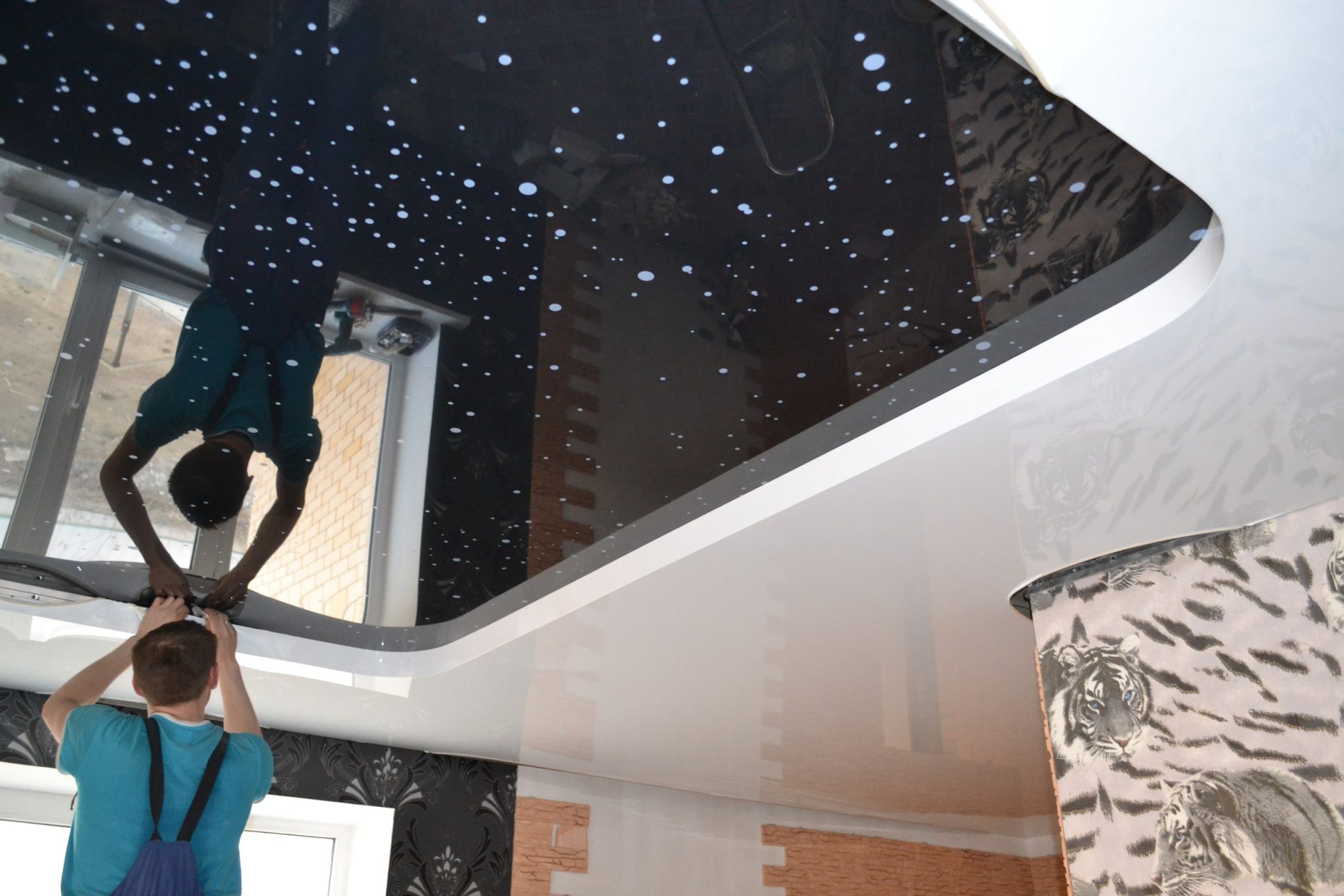
Stretch ceilings are glossy or matte. To avoid streaks, it is best to wash glossy stretch ceilings with glass cleaners.
But before you wash the ceiling with a product, you need to apply it somewhere on the edge of the ceiling canvas and after a while check the reaction.
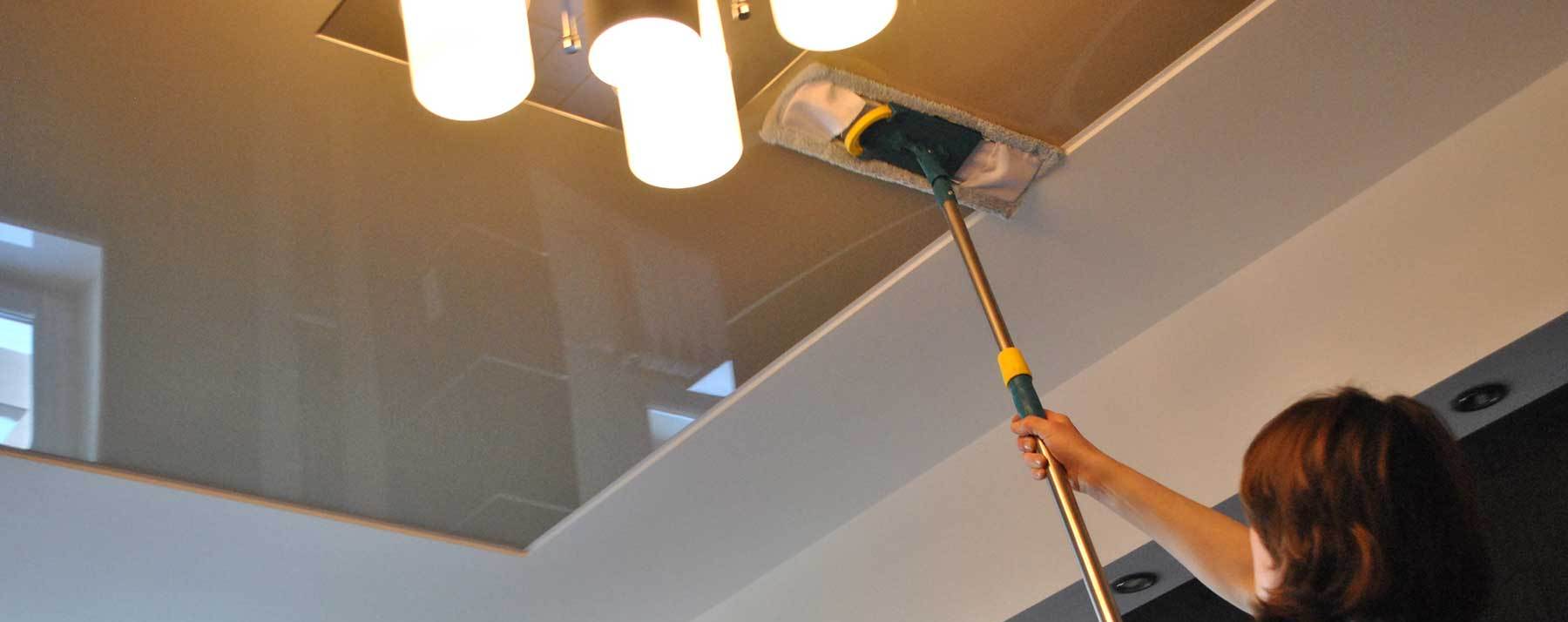
To wash the glossy ceiling, use a soft suede or microfiber cloth, as well as special cleaning wipes premises.

Microfiber is best for washing glossy PVC film
The reflective properties of glossy ceilings can also be improved with ammonia.
After wiping the ceiling with a soft cloth moistened with ammonia, then wipe it dry with a dry suede or microfiber cloth.
Stiff bristles with careless movement can scratch the glossy PVC film. The vacuum cleaner is switched on to the minimum or medium mode and, without touching the ceiling, drive the nozzle at a distance of 2-3 cm from it
The vacuum cleaner is turned on to the minimum or medium mode and, without touching the ceiling, drive the nozzle at a distance of 2-3 cm from it.
In case of severe contamination, the ceiling is washed with a cleaning agent diluted according to the instructions, and then wiped dry with a clean, dry cloth.

The stretch ceiling is removed from construction dust with a vacuum cleaner with a soft brush attachment.
How to wash matte ceilings?
The classic matte stretch ceiling most of all resembles a perfectly plastered surface. The material for such a ceiling is a canvas impregnated with polyurethane.


The surface of matte ceilings is not subject to the appearance of cracks, scratches or dust settling, but they still need to be looked after from time to time.
It is much easier to wash matte stretch ceilings than glossy ones, as there are no streaks left on them at all.
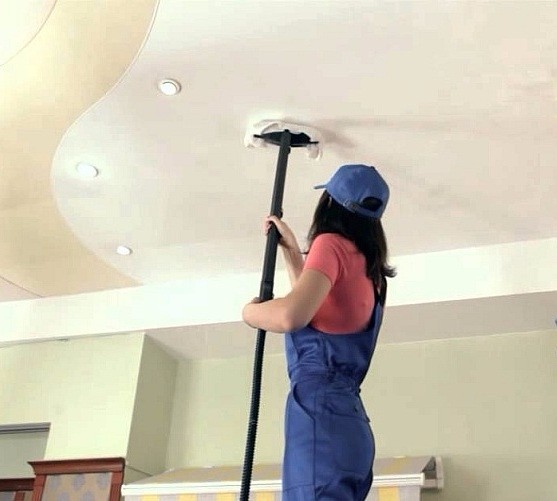
The maintenance of a matte ceiling mainly consists in cleaning it with water vapor, or washing it with a mild degreasing agent.
After washing, the matte ceiling cloth is wiped dry with a soft cloth and polished.

Matte ceilings are best steam cleaned
How to clean a stretch ceiling without streaks
For dry dusting, a soft cloth is enough, but it is more convenient to do this with a vacuum cleaner. Turn it on to minimum power and, if there is no special nozzle, collect dust by holding the hose a short distance from the ceiling.So the thin coating will not suck inside the vacuum cleaner. First check how well the canvas is fixed and stretched.
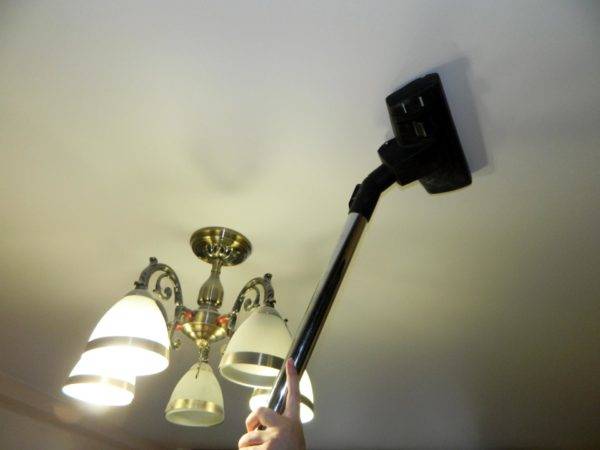
Before starting wet cleaning, it is recommended to dry clean the ceiling with a vacuum cleaner.
Vacuuming can be done before washing the ceiling. Wet cleaning is done in several steps:
- We clean the ceiling from dust.
- We apply detergent, and better - soap suds.
- Wash off dirt and soap.
- If stains remain, apply a special tool and wash it off.
- Wipe dry.
Soap foam does not penetrate the surface so much, and it is easier to wash it off. Therefore, do not use concentrated dishwashing detergents.
You need to wash the ceiling during the day, in natural light, so that there are no streaks left from one corner to another. If you wash in a circular motion, there will definitely be stains.
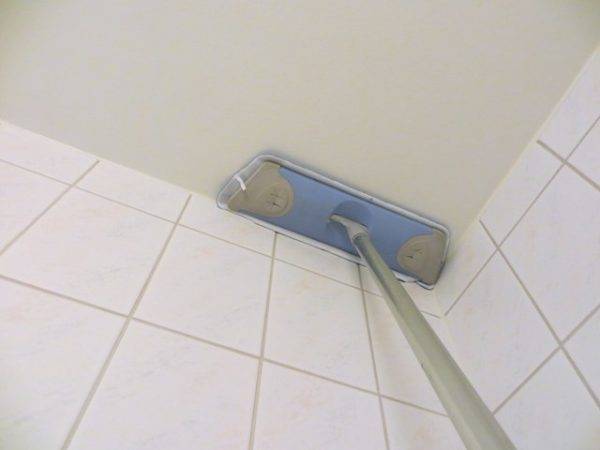
When washing a stretch ceiling, cleaning should start from the corners
These are the main stages of cleaning, but depending on the type of material, there are some nuances.
Film ceiling care
PVC ceilings are chosen most often. They are available in satin, matte and glossy finishes. The latter are especially popular because they visually increase the space. But it is on them that all the stains after cleaning are clearly visible. To reduce them, use a 10% solution of ammonia. All smudges after washing are cleaned with a cloth with a soft pile. You can also use detergent diluted in water. It will clean the ceiling of grease, and so that there are no stains, carefully rub the film with a paper towel, which will restore its gloss.
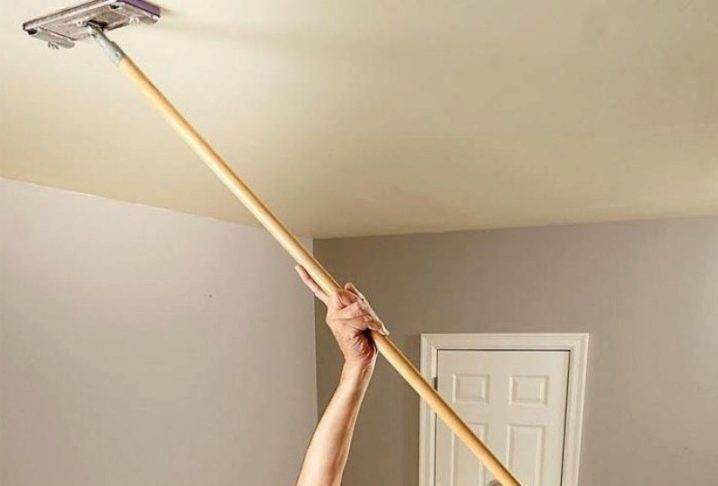
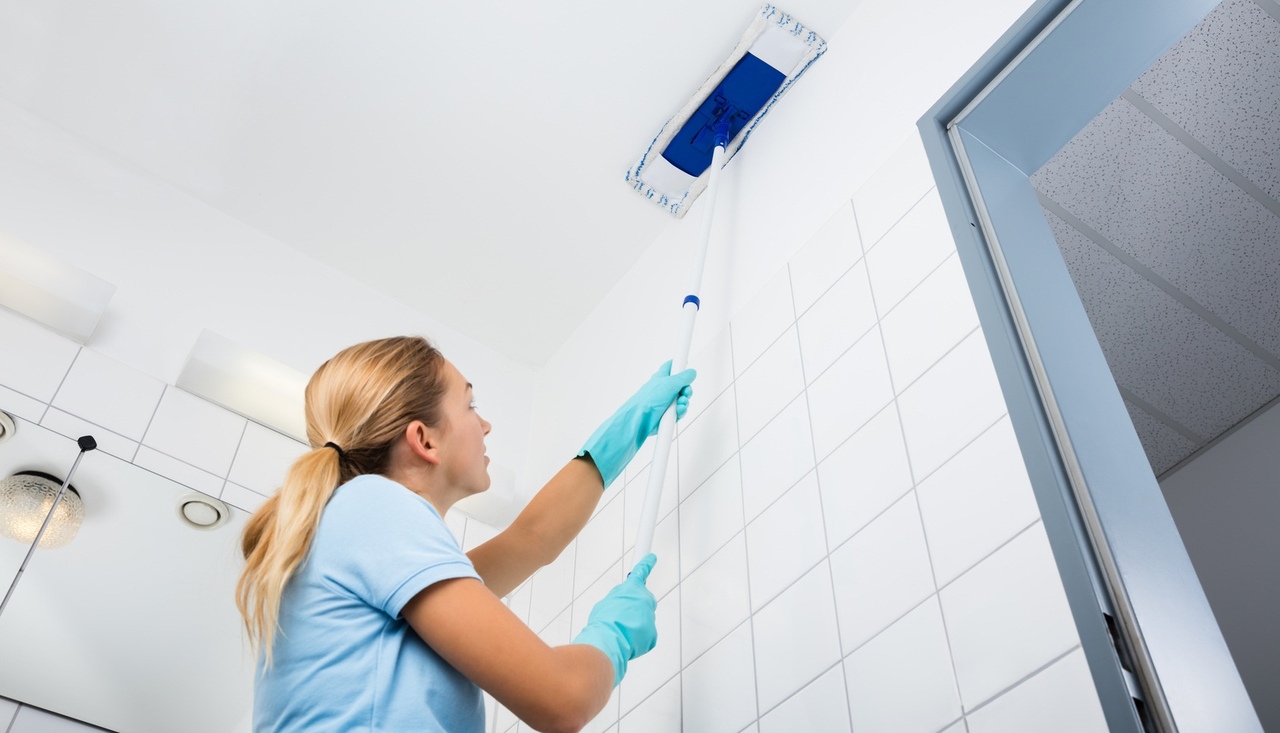
Matte surfaces are easier to clean, and traces of a rag are not so visible on them. Shake the soapy solution into a foam and apply it to the ceiling, then rinse with warm water. Finally, wipe with a dry cloth.For cleaning, take a butterfly mop and wrap it with a soft cloth.
There are special sponges and polishes for PVC ceilings. These products are good because they leave almost no streaks, unlike conventional wet cleaning. You can use car polishes that will give the surface a shine and protect against stains and dust.
Care Tips behind the foil ceiling:
- Stains from film materials can be easily removed with a white rubber band.
- Grease is washed off with dishwashing detergent.
- Water-based paint will easily lag behind if moistened with warm water, left for a while and removed with a soft spatula.
- If a cut appears during cleaning, seal it with transparent tape, and then contact a ceiling repair service.
Fabric ceiling maintenance
The textile surface creates comfort, but also requires more serious care. If the film is easy to clean and easy to repair, then the fabric, especially the dyed one, requires more attention. Leaks on such ceilings leave dirty water stains that cannot be removed. The only way is to wash off the visible dirt and paint the fabric with water-based paint. Textile ceilings can be painted up to 10 times. You can remove other stains in the following ways:
- Mounting foam must be removed with special solvents, strictly following the instructions. Do not apply the product to the entire stain at once. Treat a small area, and when it is clear, move on to the next. Then wash the area with soapy water.
- Oily spots. Do not use hot water. Dilute the soap, let the water cool, and only then start cleaning. Do not apply pressure to the surface, it may tear, and its elasticity is lower than that of PVC.
Textile ceilings must not be cleaned with glass cleaners and ammonia must not be used. Wash the canvas with translational movements, in a straight line. Although you can clean such a ceiling with a brush. Do not use a broom, which will not only scratch the fabric, but also leave pieces of twigs on it.
How to wash stains on the ceiling
The easiest way to remove stains from a stretch ceiling is with soapy water. She even copes with kitchen soot, which gives the canvas a yellowness.
Table: how to wash stains from PVC and fabric stretch ceilings
| Type of pollution | fabric | PVC |
| Fat | soap solution | |
| Soot | Steam cleaner | Steam cleaner / soap solution / ammonia solution |
| Cigarette smoke | Means for cleaning car interiors | Soap solution/ammonia solution |
| Ketchup | Hydrogen peroxide solution (35-50 ml per 5 liters of water) | |
| Dye | Soften with soapy water, remove with a spatula | |
| Marker | Weak alcohol/soap solution | |
| Spots after the flood | Paint over with water-based paint | Soda ash solution 5% |
| Glue "Cosmofen" | Dimexide solution | |
| Champagne | Weak alcohol solution | Lather |
Causes of pollution
Before you start cleaning up dirt, you should understand the nature of their origin in order to choose the right cleaning products. The coating is divided into two types: fabric and PVC. In the first case, the cost of materials is quite high, but at the same time it is possible to achieve a smooth surface that looks like a single canvas and does not have “seams” characteristic of many materials.





PVC ceilings are often called simply film ceilings, they are particularly durable and can be photoprinted.They have ample opportunities in terms of color and design, and are also resistant to water when flooded by neighbors.
With proper installation, the properties of the materials are preserved, but over time, the colors fade because they are covered with a layer of dust, and cleaning is indispensable here.
The unsightly appearance of a glossy stretch ceiling is also provided by water stains as a result of children's games with water guns, splashes from soda, or the consequences of flooding from neighbors.
Quite often, when stretch ceilings are installed in the kitchen, pollution appears as a result of the release of moisture or the evaporation of fats during cooking.
Experts recommend cleaning the ceiling at least once a month, at least to remove dust.
Caring for fabric ceilings
Fabric stretch ceilings look very beautiful, but require careful maintenance. They are extremely sensitive to any mechanical impact, care for fabric stretch ceilings should be without unnecessary pressure. Before washing stretch fabric ceilings, their features should be taken into account:
- have an antistatic effect, but can attract dust particles and absorb them during construction work indoors;
- when heavily wet, noticeable stains appear on the surface;
- fabric fibers are impregnated with polyurethane, but have micropores through which air can pass;
- fabric structures are strong, but do not have great elasticity;
- their use in houses and apartments is the most environmentally friendly and safe approach to interior design, such structures do not have foreign odors;
- may have a relief texture, but even perfectly smooth surfaces are very sensitive to any scratching tools;
- some fabrics can be dyed.
In order for the fabric stretch ceiling to please the owner of the room for a long time, you need to properly care for it.
 Fabric stretch ceiling
Rules for the care of a stretch ceiling made of fabric
To wash the fabric ceiling, follow the same rules as when caring for tension structures made of other materials. An important advantage of the fabric construction is the possibility of staining. It is she who allows you to get rid of accumulated stains with a simple procedure - using any acrylic paint.
However, the procedure is carried out more than once a month or a year. Sometimes staining every 3-5 years is enough. If the fabric is used in the kitchen, then this period may be somewhat reduced. Here are the basic rules for caring for a fabric ceiling:
- Using a vacuum cleaner with a delicate nozzle to remove dust and cobwebs, you can use washing vacuum cleaners. The use of detergents for cleaning dust is inappropriate - they can "drive" particles of dirt into the pores of the fabric;
- Stains are removed with soapy water and a sponge, as when caring for glossy ceilings, the use of kitchen detergents is ideal;
- Ammonia removes greasy and other stains, except for rust;
- You can remove light rust with lemon juice, but this procedure is not always effective.
It is possible to wash the entire surface of the fabric ceiling only after dusting with a vacuum cleaner. For washing, it is enough to use clean warm water without the addition of chemicals.

Surface cleaning methods
A slight accumulation of dust can be easily removed from the stretch ceiling with a small soft cloth.In this case, it is necessary to avoid strong mechanical influences on the canvas in order to avoid its deformation or damage. In particular, we are talking about canvases made of polyvinyl chloride, which, with strong pressure, stretch into unattractive strips and form wrinkles. Only professional craftsmen are engaged in the elimination of defects of this type.
When cleaning the stretch ceiling from dust using a special nozzle on a vacuum cleaner, you should be careful and careful. The minimum distance from the brush to the tension web should be about 2 cm
It is not recommended to apply the nozzle tightly to the canvas.
Using the steam generator:
- The tool is sent to the contaminated area and treated with steam.
- The resulting condensate is removed, and the surface is wiped dry with a soft cloth.
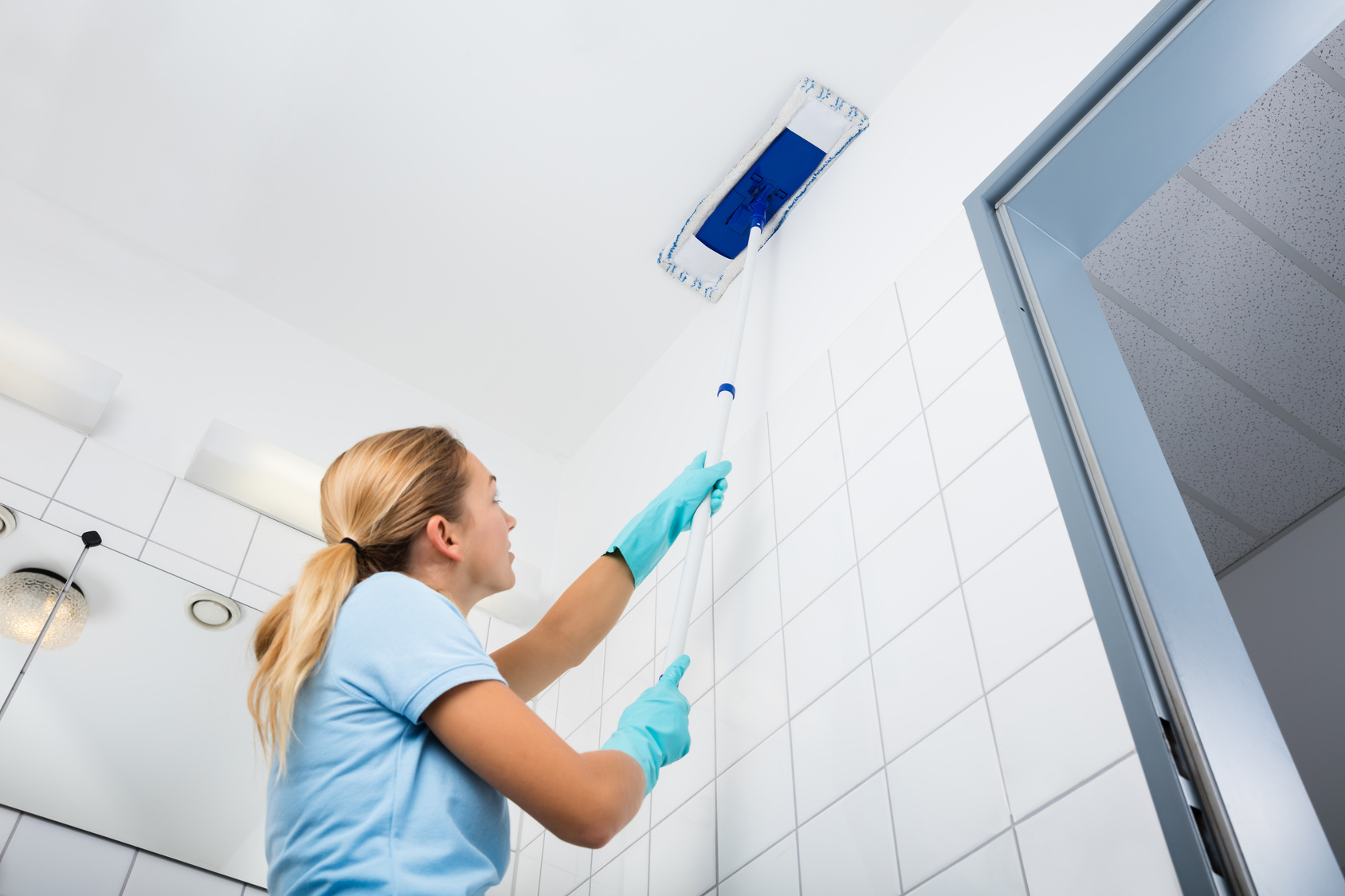
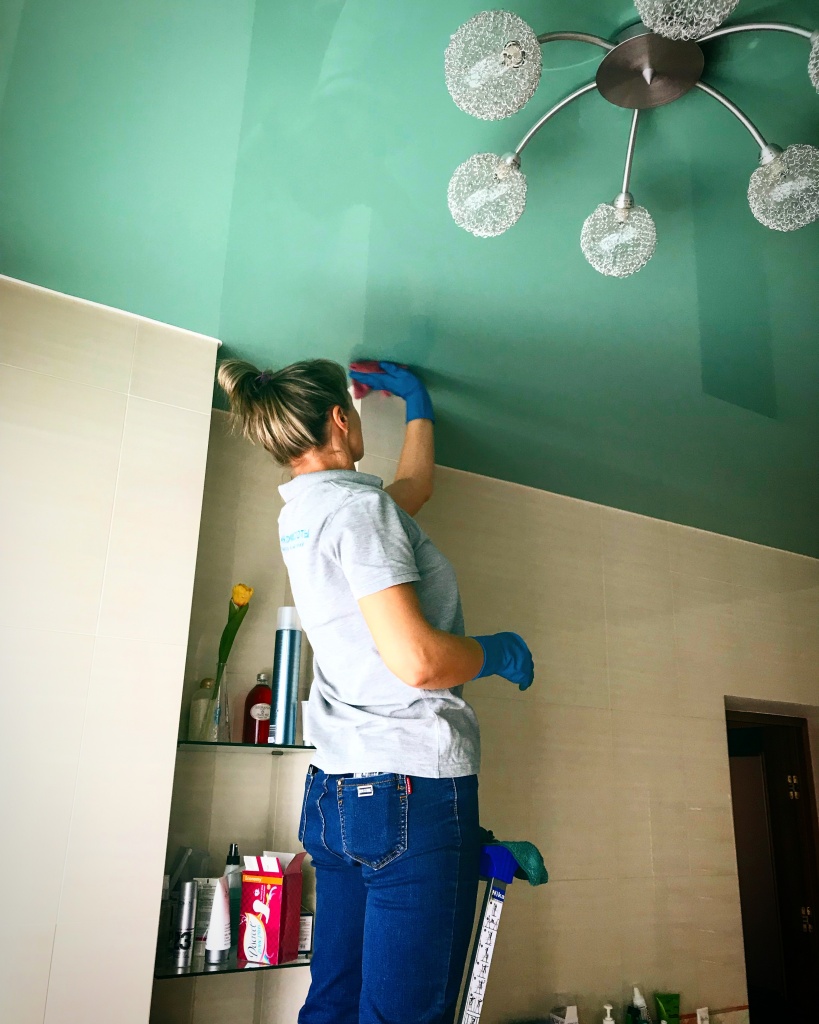
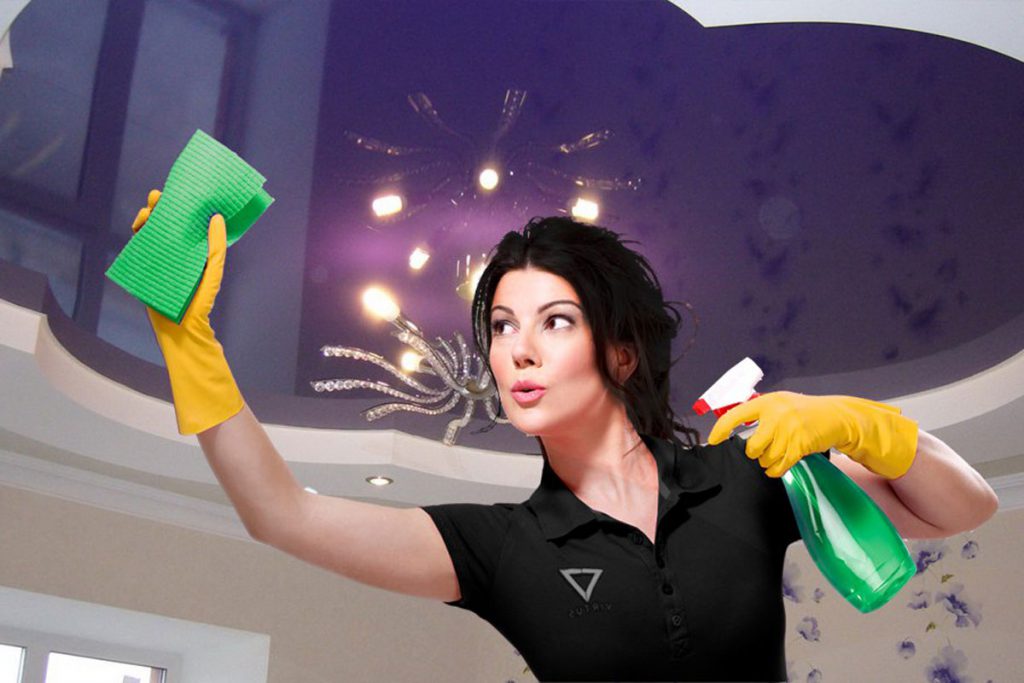
When manually cleaning the canvas of the stretch ceiling structure, it is recommended to wear gloves, after removing all decorations. To wash the surface, you need to prepare several napkins or rags. With the help of some, they wash the ceiling, others wipe and dry the material, and also eliminate all kinds of stains.
All work is divided into several stages:
- Dry cleaning of the canvas is carried out, during which accumulations of dust and waste products of small insects, for example, cobwebs, are removed in the corners and on the lamps.
- A suitable cleaning agent is applied to the ceiling and left for a while. In this case, the composition is able to act on the most persistent pollution.
- Next, the ceiling is well washed and dried using dry wipes and rags.With the help of other dry rags, wipe the surface, eliminating soap stains.
Mandatory principles for washing tensile structures
Before cleaning, it is important to adhere to the following tips:
- all the necessary mixtures and accessories are bought in advance;
- shortly before the start of all operations, powdered substances are diluted, solutions are prepared;
- chemical compositions are tested for coating reaction; initially, the product is tested on an inconspicuous area of \u200b\u200bthe ceiling, and in the event of whitish areas or distortions, the detergent is replaced;
- all jewelry is removed from the head, fingers and hands, the hair is tied up or covered with a scarf so as not to interfere during the process;
- protective gloves are worn to protect the skin;
- loose clothing is selected;
- important things, the furniture in the room is covered or taken out to another room;
- a ladder or stepladder is installed so that the light falls on the areas to be treated.

Rubber gloves must be used
There are recommendations that should be followed during the removal of contaminants.
Rubbing should be done with soft and smooth movements without pressure along the lines of the seams.
Do not scratch, press hard or resort to other deforming movements.
The entire area of the product is visually divided into several segments, which are sequentially cleaned one after the other.
Smooth brushes are used to clean the corners.
Glue and substances based on it are carefully scraped off and peeled off from the matter (being already dried).
In the presence of gaps, cracks, washing is postponed. You need to call the repairman to eliminate defects.
In a situation where the owner is not able to cope with the task on his own, you need to seek help from employees of the relevant companies
You can also apply for a specialist consultation with a company that sold and installed tension structures.
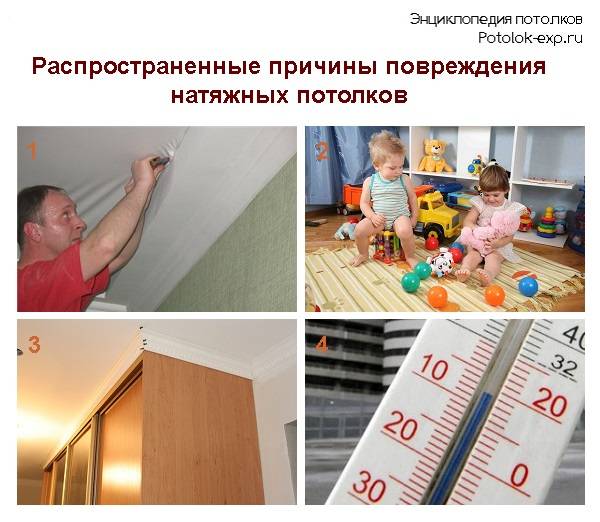
Common causes of damage to stretch ceilings: 1. Careless handling of sharp objects. 2. Children's games. 3. High furniture. 4. Sharp temperature changes.


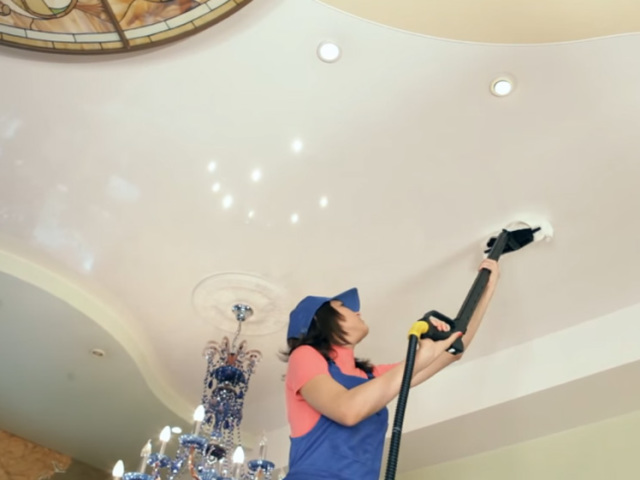

What not to do when cleaning stretch ceilings
In order for the ceiling to last as long as possible, use these tips:
- Do not use products based on acids and alkalis.
- Work with gloves, removing rings and bracelets so as not to damage the canvas.
- Use only those compounds that are suitable for the type of your ceiling.
- Do not smoke in the room and ventilate the room regularly.
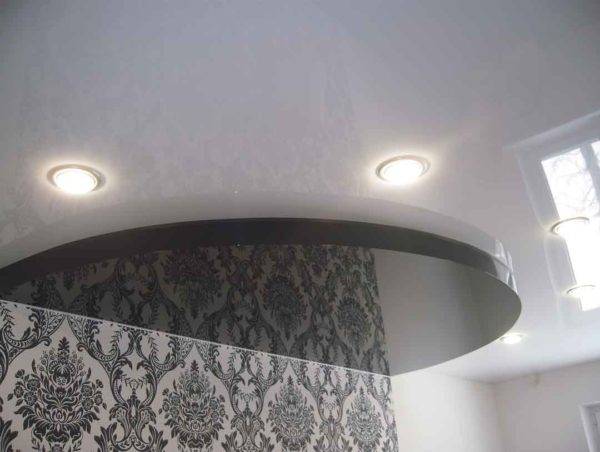
Subject to the recommendations for cleaning, the stretch ceiling will delight the owners with its impeccable condition for a long time.
What definitely can not be used when cleaning:
- Do not wash the ceiling with abrasive particles: substances such as Pemolux, dry soda and washing powder. They not only scratch the surface, but also penetrate the structure of the material, so they are difficult to wash off.
- Do not use alcohol products for textile ceilings. They damage the antistatic impregnation.
- Coarse brushes, washcloths with a hard surface.
- Products containing dyes.
- Do not use acid or alkali. Even ordinary vinegar can hopelessly ruin the surface.
- Soap should be light, you should not take dark household and tar soap - they will leave greasy traces.
- Chlorine is able to completely destroy the structure of the stretch fabric.Do not under any circumstances use it.
- It is forbidden to rub stains with solvents and acetone. These products are not suitable for PVC and leave greasy stains on the textile floor.
To keep the stretch ceiling in its original form as long as possible, use only mild formulations and care products designed specifically for this type of surface. Frequent cleaning of the stretch fabric is not needed. It is enough to wipe it with ordinary soapy water a couple of times a year, and the ceiling will be as good as new.
Cleaning other stretch ceilings
We saw glossy and matte ceilings, but what are satin ones? What makes them different from others? Satin film tends to be more glossy, but does not have such a clear mirror effect. This is something between a matte and glossy film. On the one hand, the ability to create a very soft play of light on the surface, on the other hand, a slight haze, but without surface graininess. The satin ceiling reacts very interestingly to different lighting. In daylight, the natural color of the film is visible, while in artificial light it is noticeably lighter. Moreover, the type of lighting, the direction of the light flux, and the viewing angle affect the visual perception of the ceiling surface. These are, perhaps, all the differences between the types of ceilings, but the recommendations for the care of the Khasatin film are absolutely similar to those described above. But I would like to add that, unlike glossy, matte and satin can be cleaned with water vapor. To do this, you can use a steam cleaner, as we see in this video
Caring for fabric ceilings is the easiest. There is no need to use special tools, dry cleaning is enough.If you need to wash the fabric, then use the minimum amount of water and wring out the sponge well, otherwise the water will leave stains on the film.
Do not be afraid that you will have to climb with a ladder every time you clean your apartment.
It will be enough to clean the canvas once every six months, and it does not matter whether it is cheap or expensive. Care is the same for everyone
The exception is rooms with a high degree of pollution - kitchens and bathrooms, where you need to more often be puzzled by the cleanliness of the ceiling.
Tips
The procedure for cleaning a stretch ceiling takes place along a trajectory from one corner to another, or in sections if the ceiling structure is complex and has several levels.
When removing cobwebs in the corners, it is advisable not to use a vacuum cleaner, since, being a large-sized apparatus, it can easily damage the coating.
Despite the efforts and competent approach to business, a situation may occur when the tension coating breaks. In this case, you should not solve this issue on your own, and at the first opportunity, you should seek help from a trusted specialist. Before his arrival, it is only allowed to seal the place of the breakthrough with ordinary tape, but nothing more.
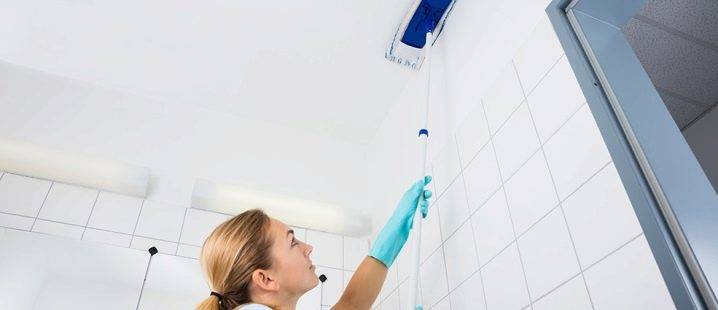
It is quite difficult to carry out cleaning without streaks, but if you follow the recommendations of experts, it is quite possible to avoid such unpleasant consequences of cleaning. After washing, you will have to stock up on clean running water, a few rags and unlimited patience. To begin with, the soap solution is completely removed, after which the entire surface is wiped with a dry cloth.If this method does not get rid of stains on the ceiling, then the procedure with running water and a dry rag is repeated, but a little ammonia will have to be added to the water.
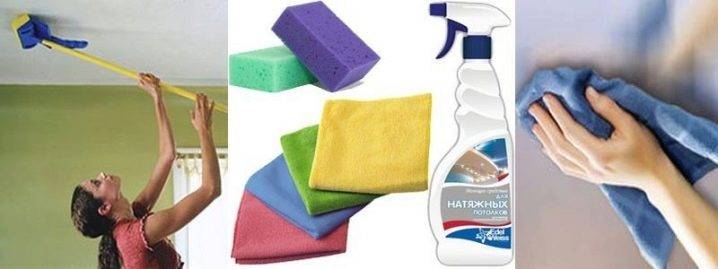
Washing them is quite difficult. It is necessary to make any movements for the purpose of cleaning exclusively along the seams, because otherwise water will flow into it, and possibly detergent. In the future, this will lead to partial deformation and the need for a complete replacement of the coating or a complex partial repair.

The kitchen is a place of high humidity and pollution. The specifics of the room is such that the care of glossy coatings in this room will be completely different. In the kitchen, there is constantly a large emission of fumes during the cooking process, as a result of which a dense layer of burning, soot and fat forms on the ceiling. Many people believe that this problem can be easily solved with a hood, and they are partly right, but all the same, ceilings are constantly polluted.

In addition to the layer of soot, on the ceilings in the kitchen oily and other stains often appear as a result of improper handling of appliances, food or drinks. A stain can also be placed completely by accident, for example, when opening a bottle of champagne or when frying some product, but removing it is much more difficult.

Detergents are the same as in other rooms, although soap solutions are more applicable than plain water. In the presence of greasy stains, it is necessary to make a soapy solution using soap or dishwashing detergent, after which the foam from the resulting mixture is applied to the stain.Leave all this for a few minutes, then wipe it several times with a clean, damp cloth and finish cleaning with a dry sponge or napkin to avoid streaks.
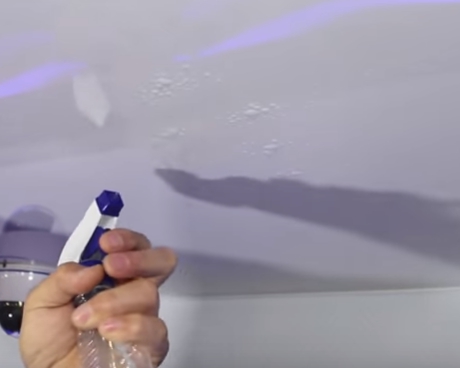

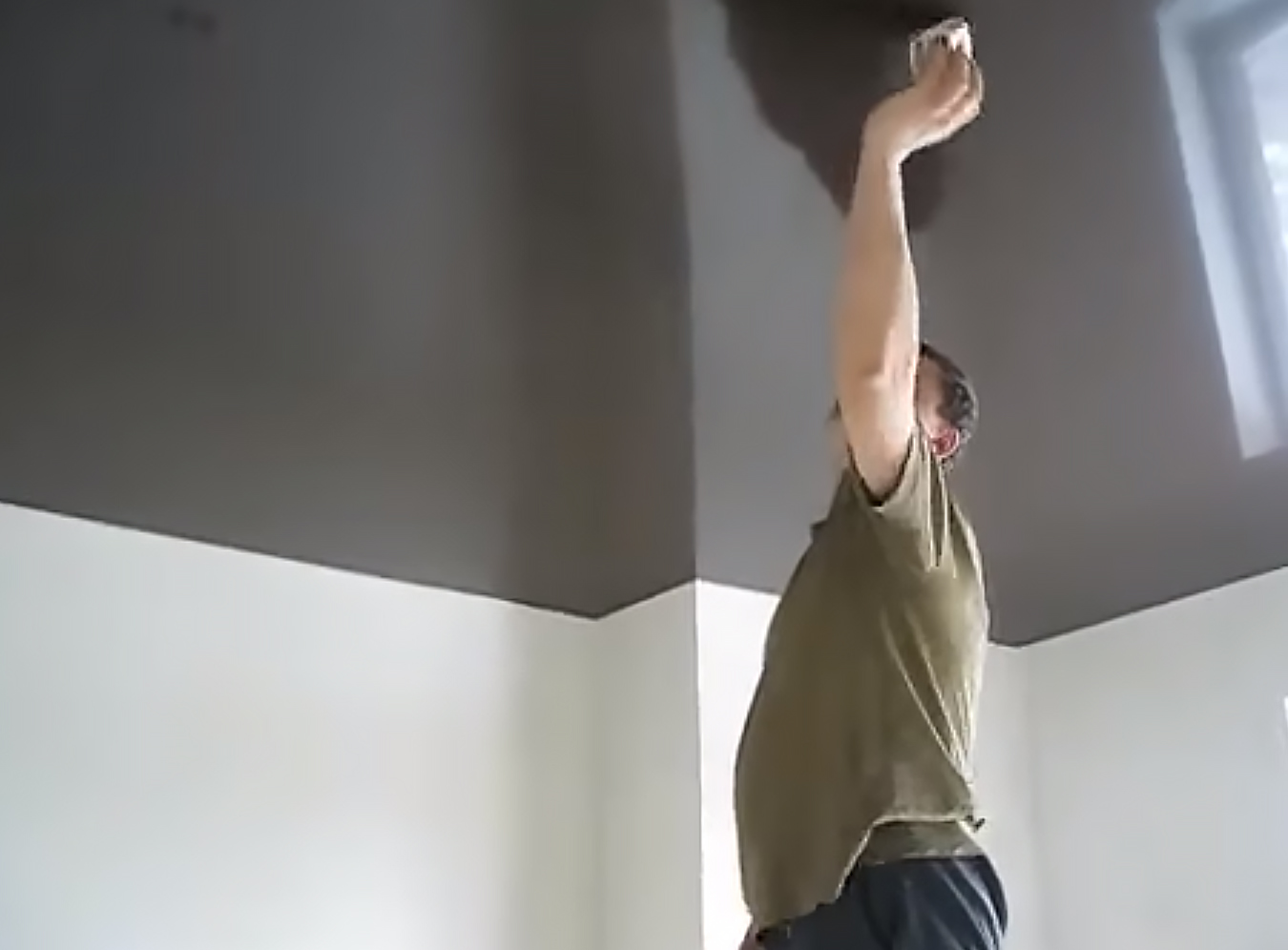


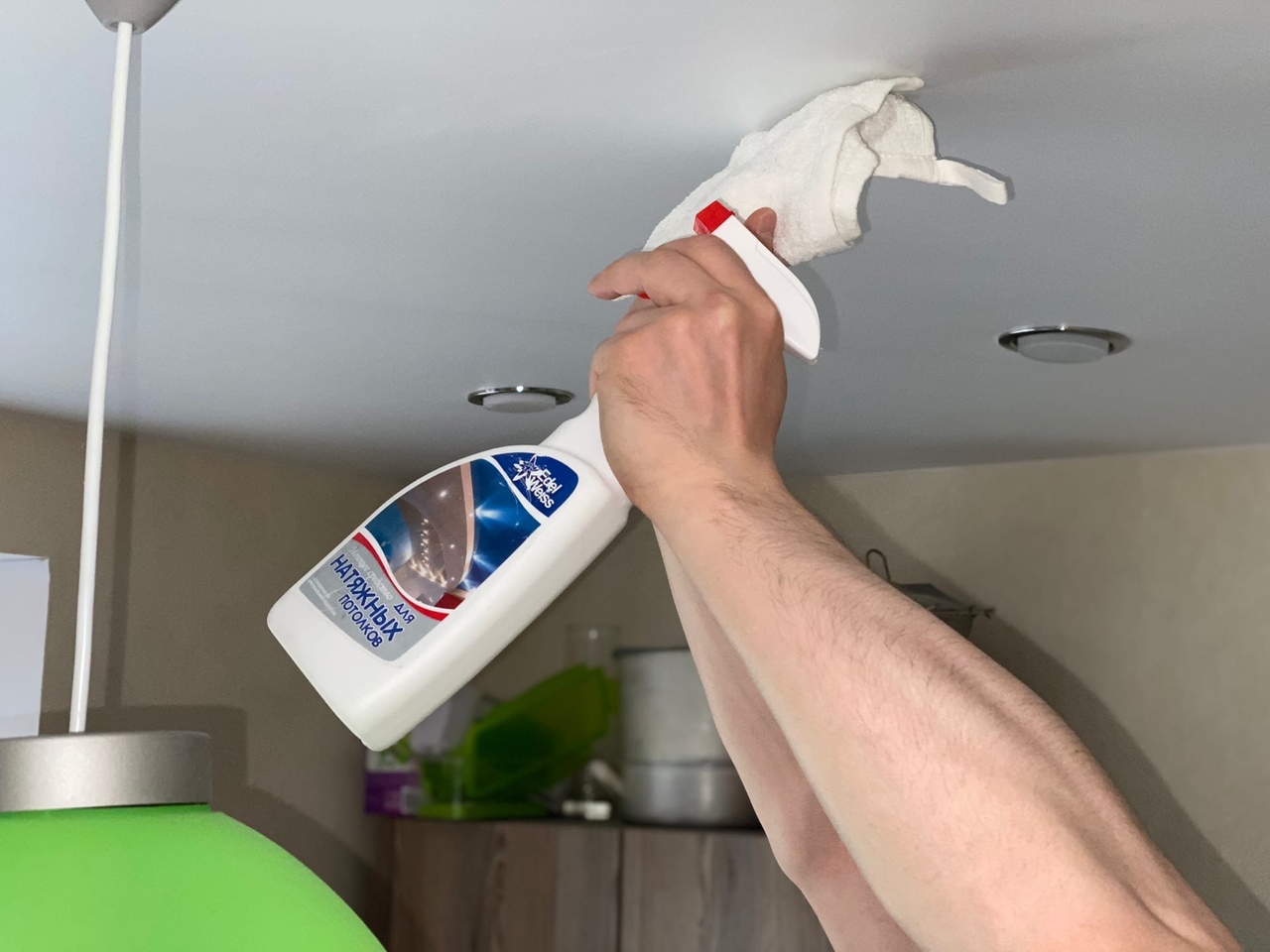
A steam mop or steam cleaner can easily deal with stains in the kitchen and bathroom, but this method also requires caution. Cleaning takes place with light movements when using a nozzle with microfiber
All movements go along the seam, and not vice versa. The jet of steam must be directed directly to the ceiling, and then remove all the accumulated condensed liquid with a dry cloth or napkin.
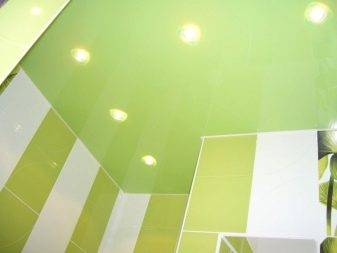
Experts recommend wiping the stretch ceiling every time a family member takes a shower. This will allow you to quickly and seamlessly remove soap stains and splashes that form during bathing, since after some time it is extremely difficult to get rid of them.
Glossy stretch ceilings are one of the most beautiful ways of interior decoration of a room, which has a lot of advantages, but at the same time needs careful maintenance. Any cleaning is a planned and prepared process, where any little thing can play a big role.
For information on how to effectively wash a glossy stretch ceiling yourself, see the following video.
Recommendations for cleaning fabric coverings
Different types of pollution will require a different approach to their removal. Dust, as already mentioned, is easily removed with a conventional vacuum cleaner. But with other pollution, you need to act differently.
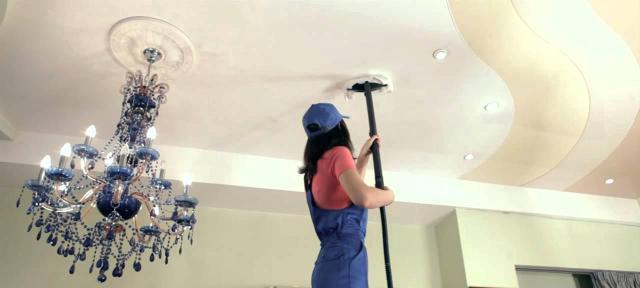
Web
It would seem - what is difficult to remove the web? It is worth taking a broom and brushing it off, as there is no problem. However, this is the wrong way.
By brushing the web with a broom, you can rub it even harder into the outer layer of the fabric. It is better to take a vacuum cleaner and remove the cobwebs with it. So it will be cleaner and more correct.
Spots
They just can't be removed. The wet method is required. For wiping fabric cloths, you can use the same tools as for film coatings.
 Dishwashing detergents are great.
They need to be applied in a small amount to a damp sponge, and wipe the spot with a stain.
If the spots could not be removed in this way, you will have to use stronger means.
The most common means of dealing with stubborn stains on stretched canvases is ammonia. You need a 10% solution of this substance. Having moistened a sponge or a napkin with it, gently wipe the place on which there is an intractable stain.
Usually, such processing is enough, and no additional care for fabric stretch ceilings is required.
Some types of dirt can be removed with soapy water. This is ordinary soap, which is dissolved in a small amount of water. Most types of dirt do not tolerate soap and are easily washed off.
Rust
Unfortunately, these stains are very difficult to remove. In most cases, they appear after the flood and rust penetrates the canvas. It is almost never possible to remove them, despite the abundance of "folk" methods.
There is a way out in such a difficult situation. It is not necessary to replace a blade that has a rust stain. Textile ceilings are good because they can be easily repainted.




At the same time, it becomes possible at the same time to bring a new touch to the interior by painting the ceiling surface in a different color. You can repeat this up to five times.
It must be remembered that it is better to use acrylic paint, and it is better to make each subsequent coloring layer darker than the previous one. Thus, it is possible to reliably hide both stains and flaws made during the past staining.



