
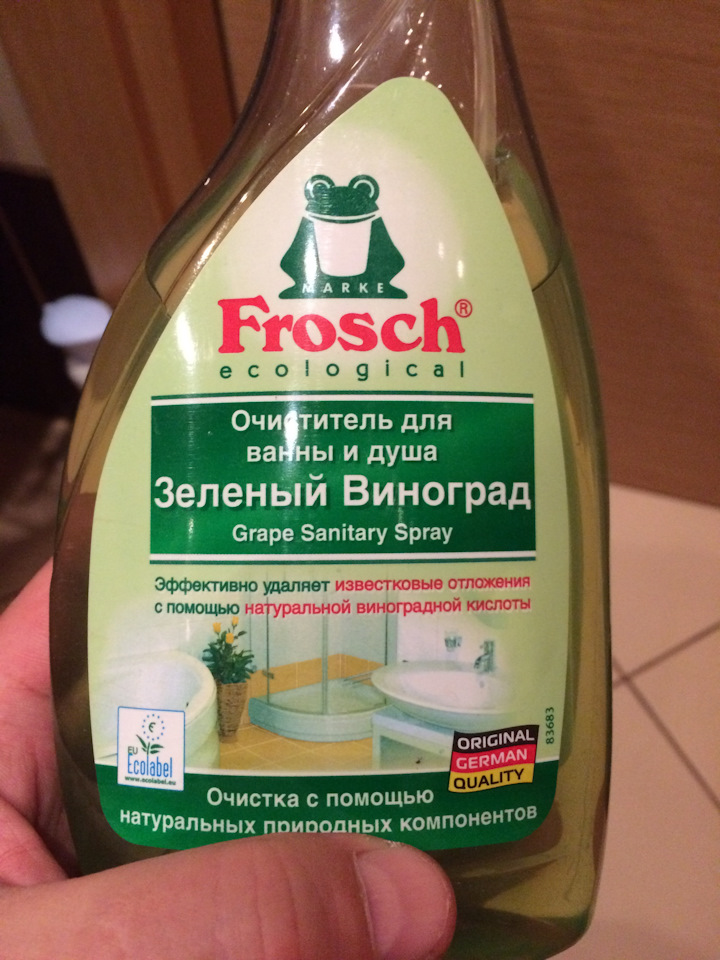
- Folk ways to clean the bathroom
- soda and vinegar
- Lemon acid
- Borax solution with lemon juice
- Toothpaste
- Mustard
- Washing powder and soda
- Oxalic acid
- Methods of cleaning folk remedies
- old stains
- fresh footprints
- Effective bath cleaners
- Cast iron bath cleaners
- Folk ways to effectively clean cast iron baths
- Acrylic Bath Cleaners
- Enamel bath cleaners
- Cleaning methods by folk methods
- Lemon acid
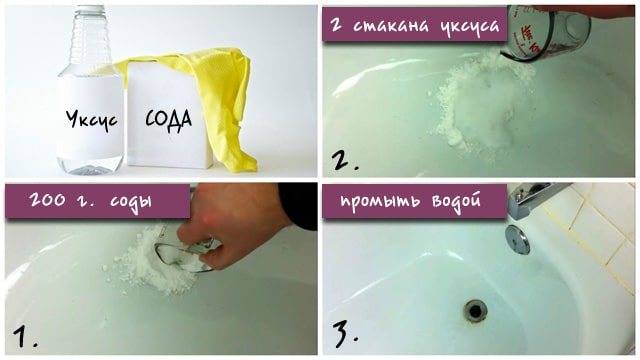
- soda + vinegar
- Laundry soap + soda
- ammonia + soda
- Sodium tetraborate (borax) + vinegar
- Turpentine
- Whitening powder + baking soda
- Heated vinegar + salt
- Ammonia, laundry soap, soda
- Hydrogen peroxide + ammonia
- Toothpaste
- Choosing the right way
- Features of cleaning acrylic, steel, cast iron and enameled bowls
- What is not recommended by manufacturers?
- How to clean the bottom and walls of the bath from rust
- Top 10 folk recipes
- Vinegar Soda
- Vinegar
- Lemon acid
- Salt and wine vinegar
- Oxalic acid
- Hydrogen peroxide and sodium salt
- Laundry soap and soda ash
- Washing powder, peroxide and soda
- Cleaning powder, peroxide, cream of tartar
- ammonia and peroxide
- 11 recommendations
Folk ways to clean the bathroom
Cleaning the bath with the help of folk funds - an affordable way to effectively wash and not damage an expensive product.
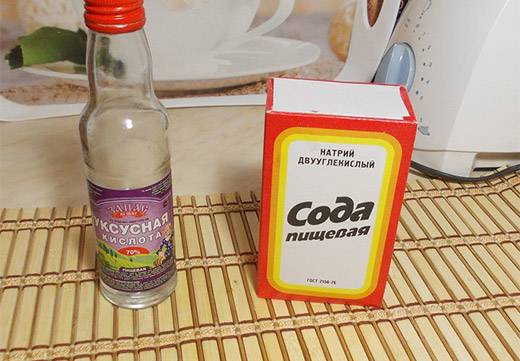
soda and vinegar
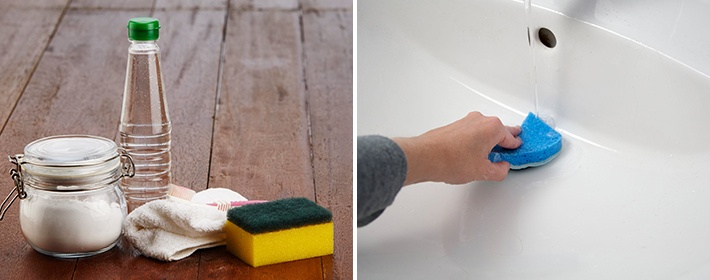
Baking soda does an excellent job with the complex gray coating that remains from the sediment of water with a high concentration of magnesium and calcium salts. You need to prepare a soft paste by mixing 100 g of soda and 100 ml of warm water. For best results, add 50 ml of table vinegar, which should be replaced with lemon juice if you need to clean the acrylic coating. The resulting solution should be applied to the contaminated surface, after 30 minutes, gently wipe with a soft sponge, then rinse with running water. After the cleaning procedure, it is recommended to wipe the bath with a dry cloth. Vinegar essence will help destroy the fungus that is harmful to health in the bathroom. It is necessary to wipe all problem areas with a solution, after 2 hours rinse with water, ventilate the room.
Lemon acid
To remove yellowness, you can use a solution of citric acid. You will need 1 pack and 200 ml of warm water. The mixture can be applied to individual spots, to the entire surface. After 15 minutes, rinse thoroughly with running water. If necessary, the procedure can be repeated, citric acid is a gentle substance. According to numerous reviews of housewives, this method acts like a real bleach, helping to restore a sparkling white color.
Borax solution with lemon juice
A borax-based solution is suitable for rust removal on all types of bathtubs. It will take 50 ml of lemon juice, which must be mixed with the powder to a paste consistency. It must be applied to red marks, wait for it to dry, then rinse with running water and wipe the surface with a dry cloth. If necessary, the procedure can be repeated.
Toothpaste
Ordinary toothpaste will easily cope with limescale, yellow smudges. It is necessary to squeeze out a small amount and rub with a soft sponge. After drying, the paste is washed off with warm water. The soft consistency will not damage the coating, it will return the former whiteness.
Mustard
The enamel coating can be cleaned with mustard powder or ready-made mustard. It copes with various stains, has a disinfectant property, which will help in the fight against mold at the junction with the wall. The method does not require special preparations, you just need to apply the cleaning component for 30 minutes, then rinse with water.
Washing powder and soda
Soda ash, along with washing powder, cleans serious contaminants on the surface of plumbing. You need to take 50 g of soda and powder, pour hot water to dissolve solid crystals, apply to the contaminated area with a porous sponge. After 15 minutes, repeat the action, and then rinse thoroughly with water. To wash an enamel bath, add 20 ml of hydrogen peroxide.

Oxalic acid
Oxalic acid will help wash the old yellowed bath. It must be mixed with water in a ratio of 1:10. The resulting aqueous acid solution is moistened with a soft sponge and applied to the entire surface. An hour after application, rinse thoroughly with running water. This folk method effectively copes with old stains of rust and limescale.
In conditions of repair, it is recommended to completely close the bath. But if it was not possible to avoid the ingress of drops of cement, paint, excess sealant or silicone-based glue, the substances can only be removed with the help of professional household chemicals.
Methods of cleaning folk remedies
Folk methods are resorted to in the following cases:
- I do not want to spend money on expensive household chemicals;
- if you need to quickly clean the plumbing;
- households are allergic to the components of cleaning products.
Washing an old cast-iron bath white promises a recipe that contains vinegar and soda. An economical option would be to use citric acid. Turpentine and salt help with rust stains. You can use ammonia, hydrogen peroxide. There are many effective grandmother's recipes.
old stains
It is not easy to deal with old pollution of a cast-iron bath. Most of the old stains are rust formed at the site of the chips.
What can not be used in this case:
- bleach, products containing chlorine;
- acid for treating large cast iron surfaces. They use any acids, treating only problem areas;
- abrasive substances. Destroy the enamel, scratch it. In place of scratches, rust, plaque will penetrate even deeper, the affected area will become larger;
- hydrochloric acid;
- goy pasta.
Traces on the cast-iron bath will help to wash:
- Baking soda, vinegar and bleach. We take two types of soda: table soda, calcined, mix in equal proportions (two tablespoons each), add liquid to make a slurry, apply to enamel, leave for 20 minutes. We combine half a glass of vinegar with the same amount of bleach, apply over the mixture, wait a few minutes, rinse. We wipe the treated bath dry with a soft cloth.
- Lemon acid. Dilute a sachet of citric acid in a glass of water, mix until the granules dissolve. Apply the resulting solution with a soft sponge for washing dishes on stains, the entire surface of the enamel of the cast-iron bath. After 25 minutes, rinse, wipe.
- Soda and turpentine cope with old rusty marks.Mix until smooth 100 g of salt, 35 ml of turpentine, apply to contaminated areas, leave for 25 minutes, rinse, wipe thoroughly. This composition can be processed several times until the result is completely satisfactory.
- Vinegar. We fill the cast-iron tank, pour 200 g of vinegar, mix, leave for three hours. It is better to close the bathroom for a while. Drain the water after 3 hours.
- Ammonium chloride. Removes yellowness. 100 g of ammonia, add hydrogen peroxide (50 grams) to them, mix until smooth. Dial the resulting product on a soft sponge, apply to old stains or the entire surface of the cast-iron bath, leave for 25 minutes. Rinse, wipe the walls with a soft cloth. A very old yellowness comes off after several such treatments.
- Oxalic acid, nitro enamel. Dilute oxalic acid with water to make a slurry, treat the contaminated area, leave for 40 minutes, after the time has elapsed, remove from the walls using sandpaper. Apply nitro enamel in two layers. The first - for thirty minutes, then - the second. You can use plumbing when it is completely dry.
fresh footprints
Dirty marks on the enamel of a cast iron bathtub can be washed off using products that have been used in the fight against old stains and rust.
Plumbing can be treated with gasoline. We fill the tank with water, add half a glass of gasoline (about 100 ml), stir, leave. You need to wait from several hours to a day, rinse well.
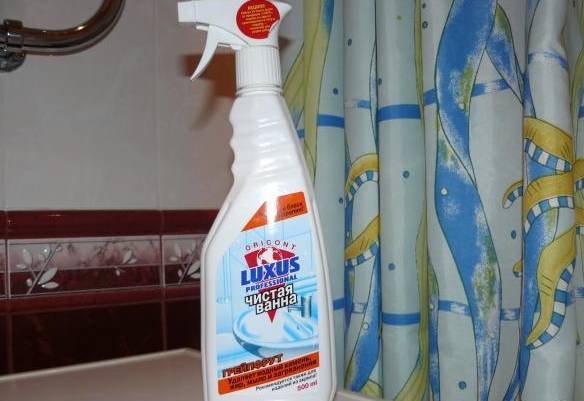


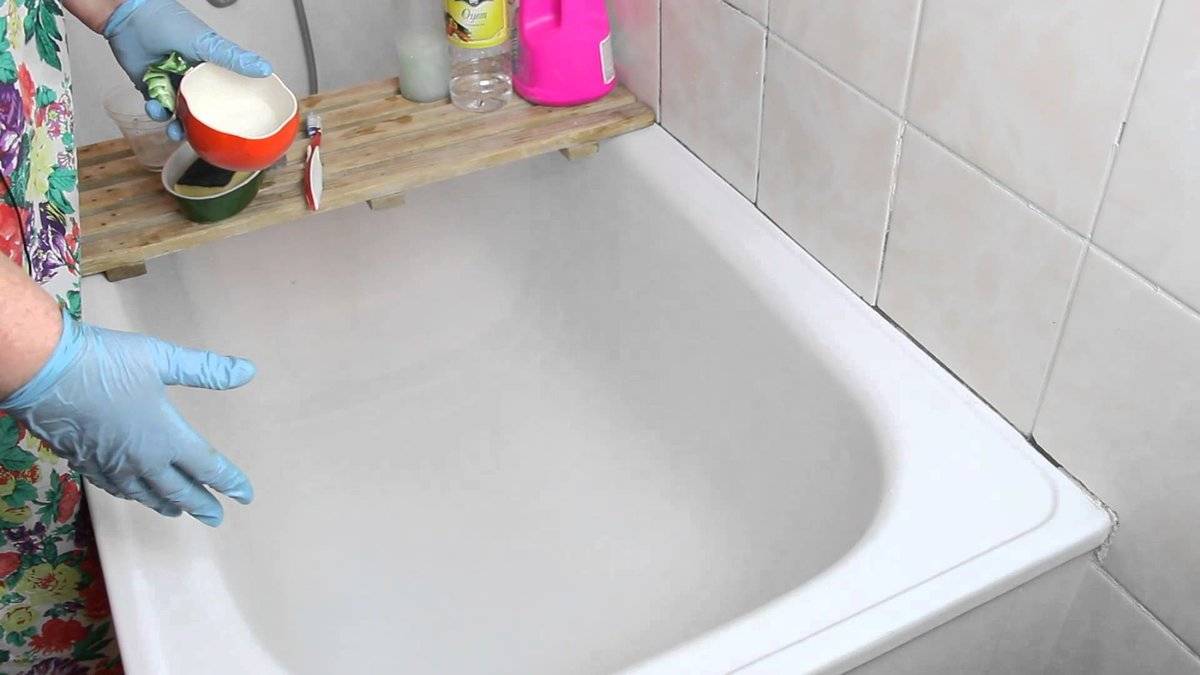


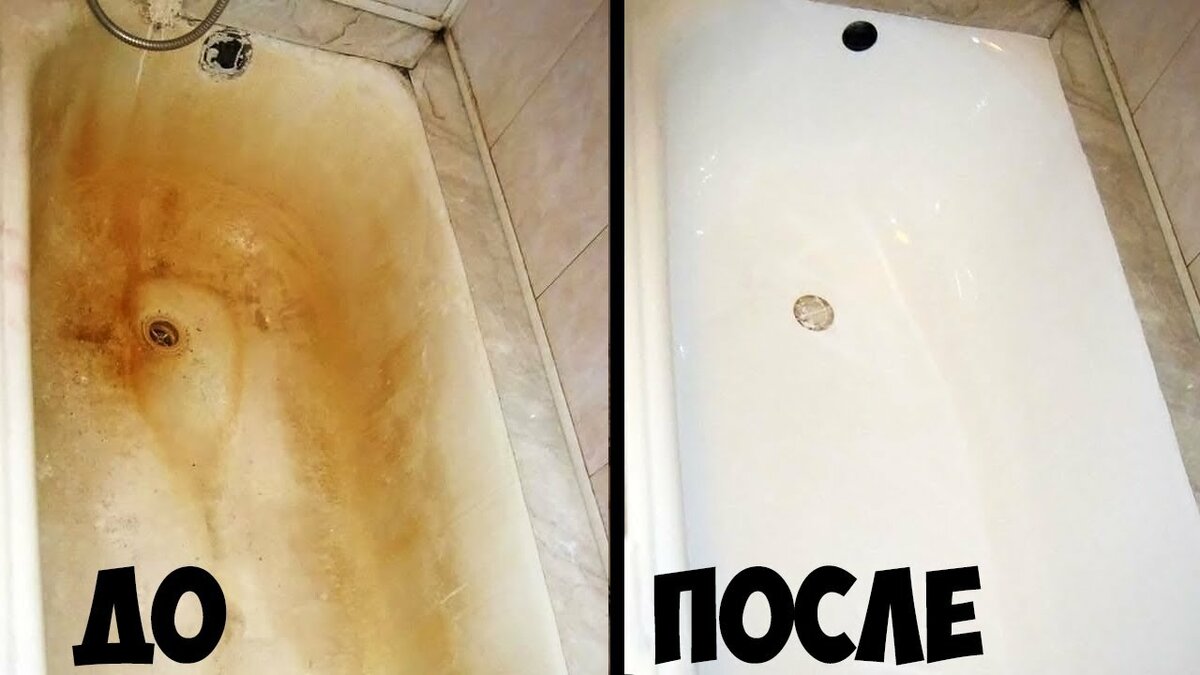

For cleaning, we take lemon juice, apply it to a household sponge, moisten it in a solution of ammonia, hydrogen peroxide, lubricate, leave for an hour.Then pour 500 ml of vinegar, wait twenty minutes. We drain the water, rinse, wipe with a soft cloth. Rescues a cast-iron surface, on which there are stains from potassium permanganate.
Effective bath cleaners
In order to wash the bathtub and tiles on the floor and walls to a shine, there are many folk remedies, and the chemical industry came to the rescue a long time ago, developing and releasing a bunch of special products to facilitate cleaning bathrooms.
Today in homes you can find one of three types of baths: acrylic, cast iron, enameled
It should be understood that products that effectively clean one type of bathtub from plaque and stains may not only not be suitable for the second type, but also damage it. Therefore it should choose carefully and thoughtfully
Cast iron bath cleaners
There are two big problems with cast iron bathtubs: the use of zirconium salts when applying enamel leads to rust over time, very quick tarnishing and loss of appearance.
Despite the fact that cast iron is an almost eternal material, the inner surface of the cast iron bath is covered with delicate enamel, which means that the first product that comes across is not suitable for washing. It is not recommended to use products containing abrasive particles or concentrated acids, as well as products containing oxygen, such as "Sanitary 2" and "Silit"
These substances remove rust and plaque perfectly, but at the same time damage the top layer of enamel due to the content of hydrochloric acid concentrate. All this will lead to the fact that the surface of the bath becomes rough and dull
- cif. An all-purpose spray or cream, great for cleaning bathtubs and sinks, toilets and tiles.To clean the bath, you need to apply it to the bottom and walls of the bath, and rinse with water after 5 minutes.
- Sannox. It copes well with limescale, rust, as well as organic and fatty deposits, even if they are old. In addition, the tool eliminates unpleasant odors and kills E. coli and staphylococci.
- Comet gel or spray. Effectively removes dirt and limescale, and leaves a dirt-repellent film on the surface of the bathtub.
- Phenolux. A very effective gel. Destroys a rust, soap stains and a raid right after drawing, without long waiting.
Folk ways to effectively clean cast iron baths
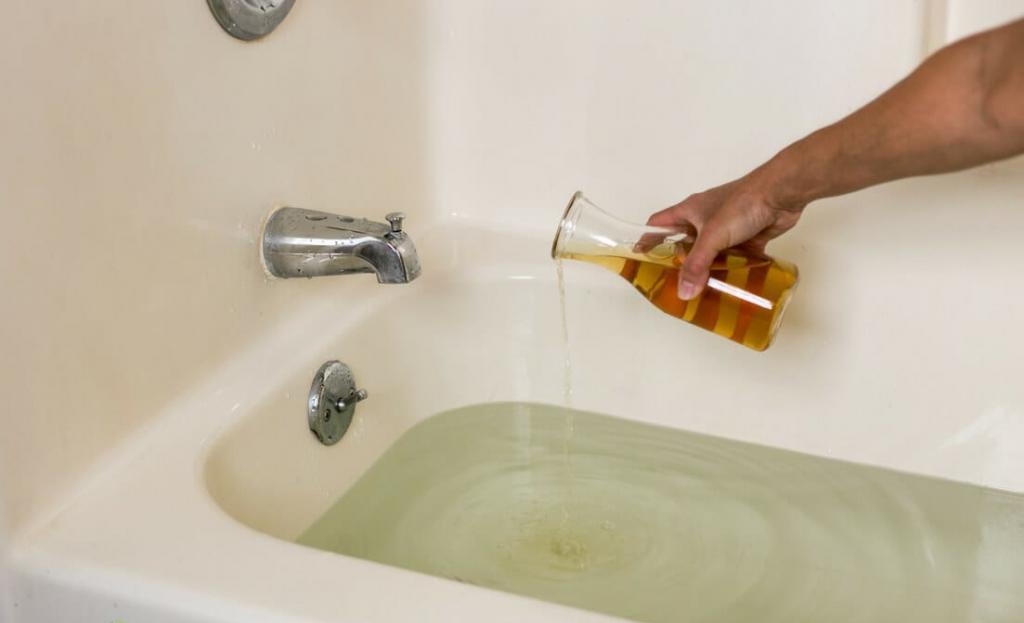
If the pollution is old, you need to fill the bath with warm water and dissolve vinegar essence (200 ml) in it. After three hours, the water should be washed off and the bath rinsed with running water.
Good for cleaning surfaces toilet soap mixed with baking soda
With very strong deposits, add a few drops of ammonia to the soda and apply the composition with a nylon brush.
To whiten a bath, you should powder bleach
dilute with water so that it is thick, creamy, and then apply it to the surface of the bath and leave until it dries. After that, it should be washed off.
Acrylic Bath Cleaners
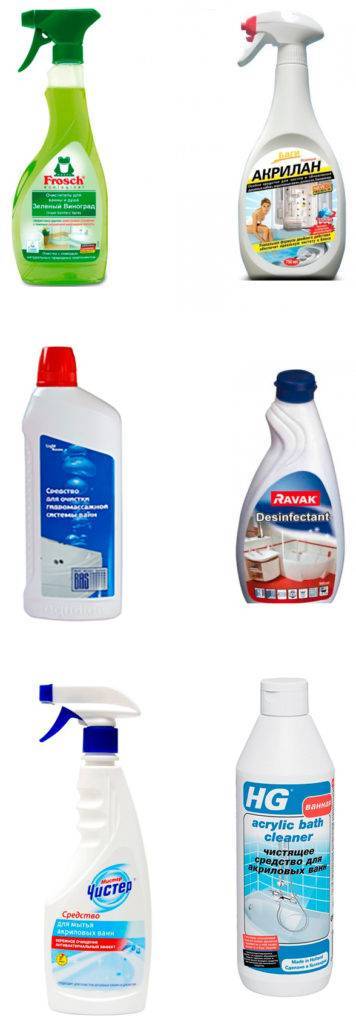
For the care of acrylic, it is not recommended to use products containing chlorine, gasoline, alkali, ammonia, acetone and other acids. Metal brushes and hard sponges should not be used. The following substances are perfect for cleaning acrylic surfaces:
- Bass. For cleaning acrylic bathtubs, use only in liquid or gel form.
- Acrylan. Care foam for acrylic.Perfectly deletes a rust, a mold, a fungus, soap stains and old stains. Leaves a film on the surface that does not allow lime to accumulate.
- Team pro. An environmentally friendly and effective product that removes plaque and dirt, as well as adding shine to acrylic.
- It is popularly recommended to use vinegar and lemon juice to clean acrylic. This mixture should be applied to the surface and washed off with warm water after a while.
- To disinfect the bath, you need to fill it and leave it for 15 minutes with a solution of 7% bleach, then thoroughly wash and polish.
Enamel bath cleaners
To clean enamel baths, you should use the chemicals used to clean cast iron baths, but it is better to use folk remedies so as not to damage the thin enamel layer.
Cleaning methods by folk methods
A dirty bath is not a reason to run to the store for household chemicals. You can often clean your bathtub with home remedies.
Lemon acid
Helps to remove light rust, yellow deposits on the surface of the bath at home. To do this, dilute a packet of lemon peel in a glass of water, apply the resulting concentrate to problem areas for 30 minutes, then rinse with water.
Interesting! To make the bathroom sparkle, fill it with water by adding two sachets of citric acid. After 3 hours, drain the water, clean the bath with any powder, and the lost shine will return!
To remove stubborn stains, apply lemon peel concentrate to the stain and sprinkle baking soda on top. After 1 hour, clean with the back of a foam sponge.
soda + vinegar
Bath to white can be cleaned with soda and vinegar. A combination of these substances is used when they alone do not help.Mix baking soda with water until a slurry forms, then apply to the contaminated area. After 30 minutes, spray the area with vinegar (it is convenient to use a spray bottle). Leave the chemical reaction for 1 hour, then wash off the remaining substance with warm water and a sponge. Lightening the bath is happening almost before our eyes!
Laundry soap + soda
The product is suitable for removing gray deposits on the bath and disinfecting. Grate a piece of laundry soap, add 5 tablespoons of soda, pour a little warm water to make a thick mixture. Apply the substance to the entire surface, then leave for 30-40 minutes. During this time, the mixture will penetrate into all microcracks, provide high-quality disinfection. It remains to clean the coating and rinse with water. Bath like new.


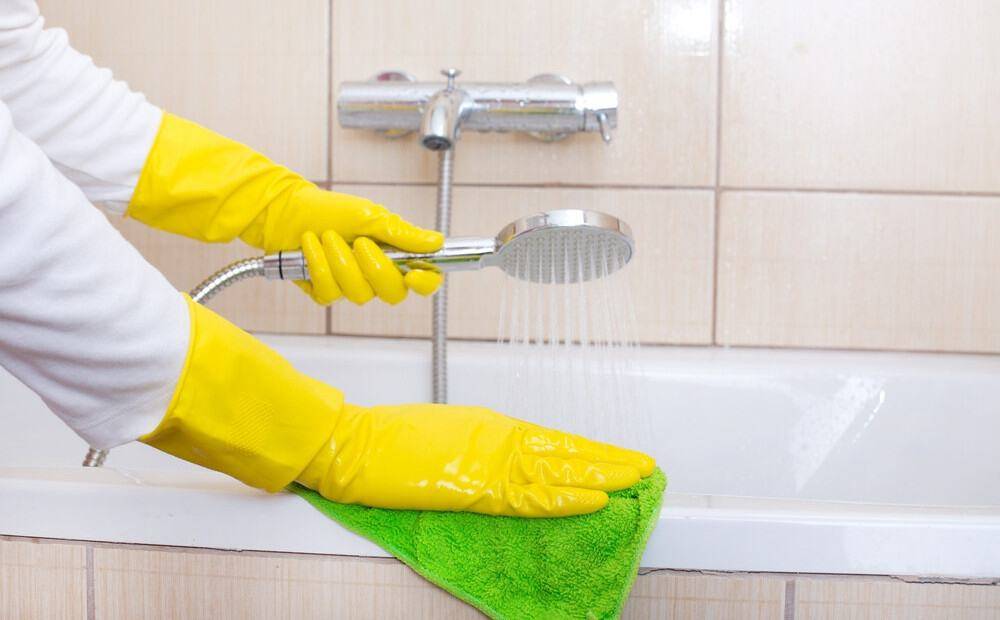



ammonia + soda
Helps to quickly wipe old stains on the bath. Mix 1 tablespoon of ammonia and soda, apply to a difficult area and leave for 1 hour. Wash off the rest with water.
To make it easier to clean the bath from stubborn dirt, lay paper towels soaked in 9% vinegar on its surface. After such a procedure, the rest of the methods will become much more effective!
Ammonia and soda clean deep dirt
Sodium tetraborate (borax) + vinegar
Very effective tool in the fight against rust on the bath. Borax can be bought at a household chemical store. Mix the ingredients in equal proportions and apply on the stain. After 2 hours, the rust will disappear or become lighter. Repeat if necessary.
Borax with vinegar will help get rid of rust
Turpentine
Yellow stains, smudges, rusty spots will help eliminate turpentine.Dampen a sponge in water, pour salt on it, pour a little turpentine on top. Rub the mixture into the bath until the stain begins to lighten. The procedure ends with rinsing. Unpleasant odor is removed with a weak solution of citric acid or dishwashing detergent.
You can remove rust stains with ordinary turpentine
Whitening powder + baking soda
To make the bath white, mix equal amounts of soda and powder, apply with a wet sponge to the walls and bottom of the bowl. After half an hour, the dirt will go away on its own, it remains only to wash it off with water.
Heated vinegar + salt
Place the container with diluted vinegar in a pot of hot water. You can also heat it up on the battery. Then add salt to the vinegar, the mixture should be thick. Substance to withstand on the surface of the bath for at least 1 hour. The tool is suitable for ingrained dirt.
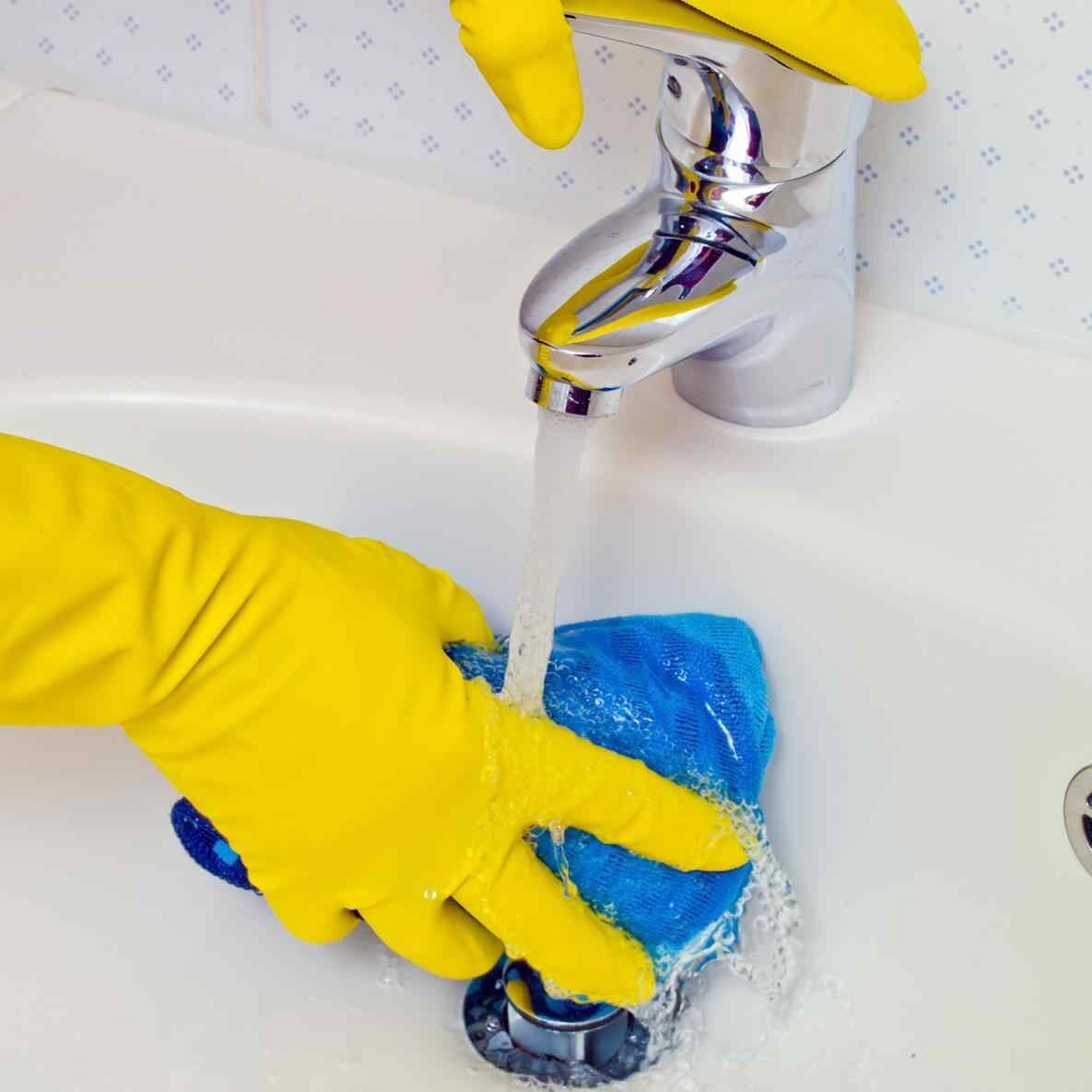
Attention! When using solvents, alkalis and acids, be sure to wear rubber gloves and a respirator. These substances are highly toxic! Use rubber gloves to protect your hands
Use rubber gloves to protect your hands
Ammonia, laundry soap, soda
Make shavings from soap, mix with soda in equal proportions, add a few drops of ammonia and a little water. Spread the mixture evenly over the surface. Rinse with water after 1.5 hours.
Hydrogen peroxide + ammonia
For the preparation of the substance, use only glassware! You will need a vial of hydrogen peroxide (50 ml) and ammonia (100 ml). Wipe the surface of the bathtub with a cloth dampened with the solution. To remove heavy soiling, leave the cloth on for 20-30 minutes.
Toothpaste
It has a brightening effect, suitable for removing small stains of hair dye, tea, plant juice.If a little paste is applied to the contaminated area, the stain will become less noticeable.
Toothpaste is a quick way to get rid of small stains
Choosing the right way
As mentioned above, the main criterion for choosing a tool is the material of manufacture. Any thoughtless action can lead to an aggravation of the situation. To avoid mistakes, check out the best folk remedies for dealing with unsightly divorces.





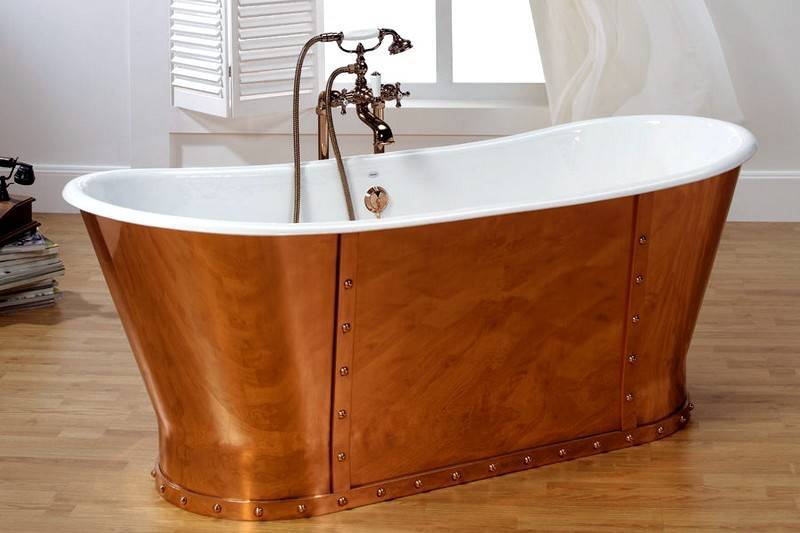
Cast iron bath. First, let's give an example of a simple method. All you need to do is to draw hot water to the very edges and add a few flasks of ordinary bleach. Leave the solution overnight, and in the morning you will only have to enjoy the result.
Any thoughtless action can lead to an aggravation of the situation.
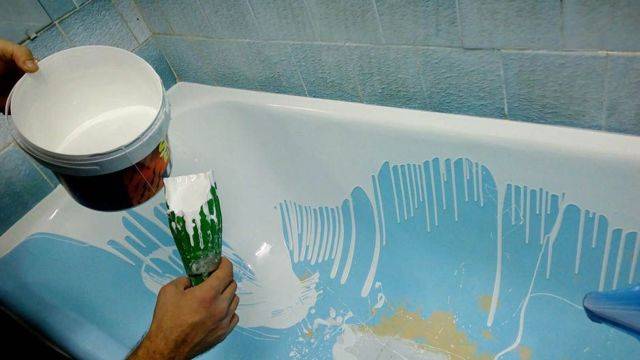
If you are ready for more drastic measures, there are more sophisticated ways. Everyone is interested in how to clean an old bathtub white and restore its former beauty, but experts recommend not wasting energy simply, but eliminating large-scale pollution through re-painting. To do this, you will need the following devices: a sheet of sandpaper, rubber gloves, a can of solvent, rust remover gel, nitro enamel, flannel or rags. Armed with such a set, you will certainly cope with the raid. Getting started, remove the top layer of rust. Oxalic acid is well suited for this: it acts quite gently, protecting the product from damage. It is diluted with water to a viscous mushy state and applied to the affected area. If the gruel did not cope with the task, buy a package of store-bought products. Read the instructions carefully before use.Next, apply detergents, and then work on stubborn stains with sandpaper. Once these steps have been completed, use a thinner: it will degrease the surface and ensure even distribution of the paint. The most crucial moment is the application of enamel.
Use a flannel swab, with which you can carefully paint over all areas. The main requirement during the procedure: the room must be absolutely dry. The bath is covered with the first layer, wait 20 minutes, apply the second, wait 30 minutes - the third finish. Complete drying will take at least a day, but after that you can splash in a snow-white font.
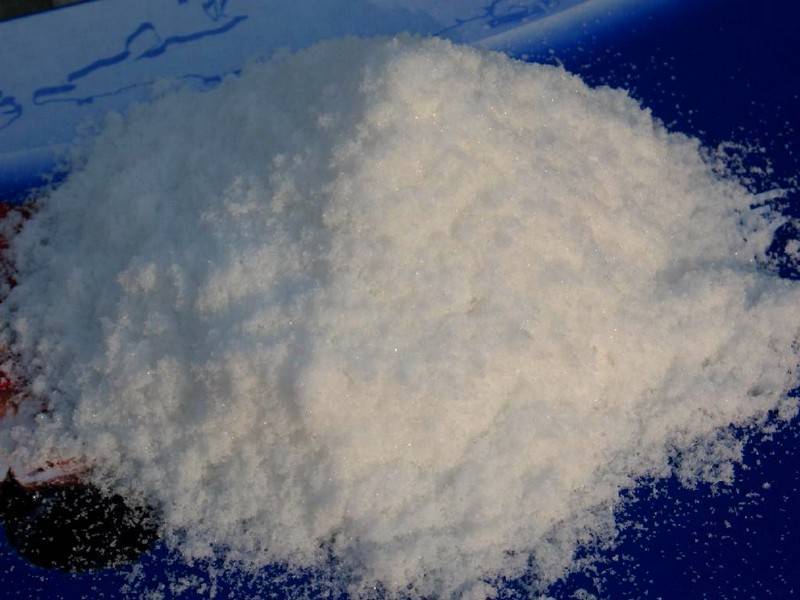
Oxalic acid is suitable for washing a cast-iron bath
Steel products. Not many of those who are looking for how to clean an old bath at home know that the best products are in an ordinary medicine cabinet. Colleagues in the fight against the yellowness of enameled coatings will be hydrogen peroxide and ammonia. Mix them in a ratio of 1: 2 and moisten the rusted areas with a solution. After 20 minutes, rinse with water and ventilate the room.
Old divorces will not resist a mixture of table salt (1 tbsp) with wine vinegar (100 ml). Mix the gruel thoroughly and heat to 650C in the oven or microwave. Put the hot mass on a rusty surface and leave for 20 minutes. Rinse with water and pat dry.
The following recipe is potent, so it should be used only in exceptional cases. Take 2 tbsp. baking soda and soda ash, add warm water and rub into a damp bath. While it is sour, prepare a solution of 1/4 cup of bleach and the same amount of vinegar, moisten the problem area with it and leave for 30 minutes.At the end, you need to remove the product and rinse the bathroom thoroughly.
We clean acrylic. It requires special care. Strong loads and excessively hot water will simply harm him. Be extremely careful, use only soft sponges. The most gentle and safe method is soaking in an acid solution. 1.5 liters of acetic or citric acid (7%) are poured into a full font and allowed to stand for 12 hours. It is enough to carry out such a procedure once a year to get rid of the accumulated layer of sewage. This material easily absorbs any contaminants, so they must be removed immediately.
Features of cleaning acrylic, steel, cast iron and enameled bowls
Depending on the type of bathroom, the products that can be used to care for it will differ:
- Acrylic bath should not be cleaned with products containing acids, solvents and alcohol. It is not recommended to bleach it with whiteness and bleach.
Soft gels are the best choice. From improvised means, washing powder, soda, laundry soap are suitable.
- An enamel bath cannot be handled with brute force. Corrosive acids and chlorine are not recommended. It can be washed with table vinegar, soda, ammonia.
- Cast iron bathtubs are covered with a layer of enamel, so the rules for caring for them do not differ. For washing, it is recommended to use gel compositions without abrasive particles.
- Steel bathtubs do not tolerate water temperatures above 75 degrees. It is recommended to wash it after each use. If there is no strong contamination on the surface, then it is enough to rinse it with soapy water and walk with a soft sponge. You can get rid of difficult stains with the help of soda and table vinegar.
Regardless of the type of bathroom, no surface tolerates the use of brute force and caustic substances.
This article will tell you how and with what to clean an acrylic bath, and this one about a cast-iron one.
What is not recommended by manufacturers?
Application for acrylic bath products:
- Powdery and abrasive. Micro-damages remain on the surface, due to which, over time, the surface will become dull and acquire a gray tint.
- Chlorine-containing. The bath bowl becomes cloudy, the structure of the coating is damaged, it becomes porous.
- With acetone, solvent, ammonia. They destroy the surface, the bath loses its luster, darkens.
For the same reasons, long-term contact with chlorine, gasoline, and alcohol is contraindicated for acrylic products.
For steel and cast iron products coated with enamel, there are restrictions:
- The use of products containing strong acids (sulfuric, hydrochloric, oxalic, and so on).
- Prolonged contact with chlorine-containing solutions.
- Use of metal, hard brushes and washcloths.
All of the above can damage the protective layer of enamel or destroy its structure. This will affect the appearance of the bowl and enhance the process of deposition of dirt and plaque on the surface.




How to clean the bottom and walls of the bath from rust
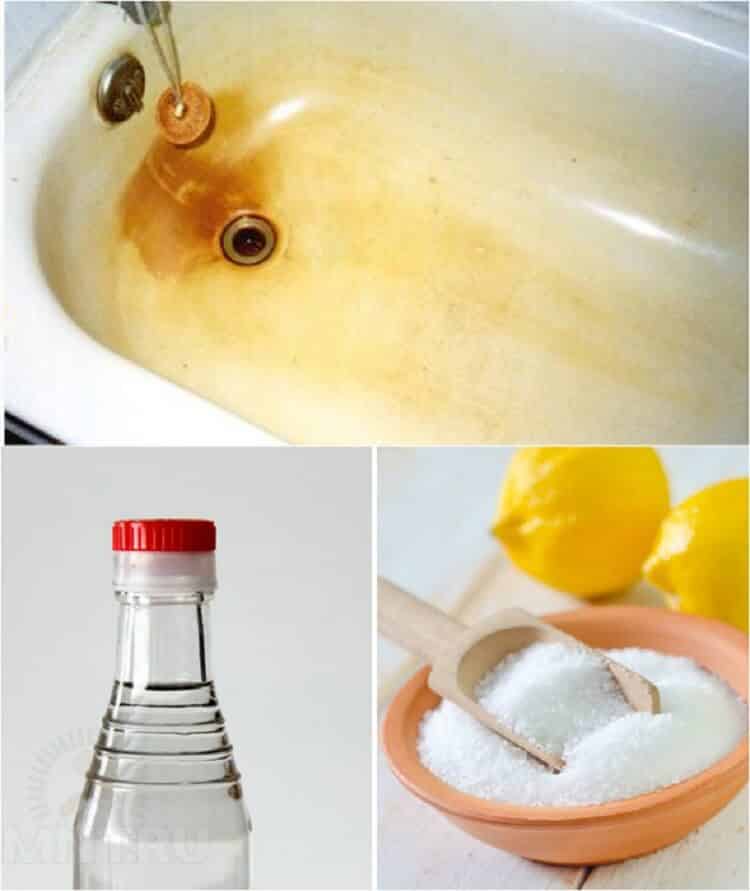
Most often, red spots eat into the surface of metal models. Cleaning a bath from rust is quite difficult. Many housewives purchase specialized preparations in the store, but expensive preparations do not always cope with the “redhead”. You can wash a metal surface from yellowness with hydrogen peroxide:
- Take a glass jar and wash it thoroughly. Dry or wipe dry.
- Pour in 100 ml of ammonia.
- Add 50 ml of hydrogen peroxide to the container and mix the solution well.
- Soak a piece of cloth in this liquid, and wipe the dirt with it.
- You can partially pour the solution on the spots and leave it there for 20 minutes.
- Rinse with warm water, and if necessary, repeat the procedure.

Rust is iron oxide, which can be removed with alkalis and acids. Should dissolve from vinegar, ammonia and other special means.
Top 10 folk recipes
Homemade bathtub cleaning recipes can be just as effective as store-bought products. When using them, you must follow the procedure and rules for use.
Vinegar Soda
In cases where persistent contamination occurs, vinegar and soda can be used in such a way that the reaction between these substances takes place on the contaminated surface.
Procedure:
- Wipe the surface of the tub with a cloth soaked in water.
- Sprinkle the bath with soda so that a thick layer forms.
- Let stand 10 minutes.
- Drizzle with vinegar.
- Withstand 20 minutes.
- Wipe the tub with a sponge.
- Wash off with water.
The method is suitable for cast iron bathtubs with enamel coating.
Vinegar
To clean the bath, you can use table vinegar. Its use allows you to remove rusty streaks.
For processing, it is enough to walk on the surface with rusty streaks with a rag soaked in vinegar. Finishes with rinsing with water.
Lemon acid
Treating the bath with a solution of citric acid will help remove rust and yellowness. Procedure:
- pour 1 cup of warm water into the prepared container;
- pour 1 sachet of citric acid into the water;
- stir so that the powder dissolves;
- moisten a napkin in the solution and wipe the surface;
- leave for 30 minutes;
- wash off.
Salt and wine vinegar
To give an enamel bath whiteness, a solution prepared from half a glass of wine vinegar and 1 tbsp is suitable. kitchen salt.
Work procedure:
- The ingredients are mixed in a container.
- Heated to a temperature of 60ºС.
- Apply to areas to be whitened.
- Leave to act for 20 minutes.
- Wash away.
Oxalic acid
Oxalic acid can be used to remove traces of rust from acrylic bathtubs. How to prepare and use:
- pour 1 glass of water into the container;
- add 1 tbsp. l. oxalic acid;
- apply to areas affected by rusty drips;
- leave for an hour;
- drain with water.
Hydrogen peroxide and sodium salt
The recipe is suitable for removing heavy rust from the bottom of a cast iron bath. Cooking:
- Pour 3 liters of water into a bucket.
- Pour in ¼ cup of hydrogen peroxide.
- Pour in 4 tbsp. l. sodium salt.
- Stir.
In the bath, close the drain hole and pour the resulting solution. The rest of the surface is wiped with a sponge. After a quarter of an hour, the bath is washed, the solution is drained.
Laundry soap and soda ash
A recipe based on soda ash and soap is suitable for complex processing. Both components must be taken in equal proportions.
Cooking order:
- grate soap;
- mix with soda;
- add a little water to form a slurry;
- apply to the surface;
- endure an hour;
- rub the bath with a sponge;
- wash off.
This composition is neutral with respect to all types of bath surfaces.
Washing powder, peroxide and soda
A cleaning mix based on baking soda, laundry detergent and peroxide can be used for all types of baths. This composition allows you to remove rust and lime.
Procedure:
- Pour ¼ cup of peroxide into the prepared container.
- Add 2 tbsp. l. soda and powder.
- Pour in hot water (1 cup).
- Wetting the sponge in the solution, treat the surface of the bath.
- Leave for 30 minutes.
- Wash away.
Cleaning powder, peroxide, cream of tartar
To prepare the cleaning composition, the following ingredients are needed:
- Cleaning powder (for example, SARMA or Gala) - 0.3 kg.
- Peroxide - 70 ml.
- Tartar stones - 5 grams.
Connect all components. As a result, a cleaning paste is formed, which is conveniently applied to the surface of the bath. It is left to act for a quarter of an hour, after which it is washed off with water.





This recipe can only be used on enamelled bathtubs and should not be used on plastic or acrylic.
ammonia and peroxide
A bath anti-yellow cleanser can be prepared from two components - hydrogen peroxide and ammonia.
Procedure:
- combine ½ cup of peroxide with 1 cup of ammonia;
- wipe the bath
- leave for a few minutes to take effect;
- wash off.
The prepared solution will bleach not only the bath, but also the tiles.
11 recommendations
The following recommendations from experts will help to effectively and without errors clean the tiles:
- Do not clean with metal scrapers or brushes, as this may damage the surface.
- Tile cleaning should be carried out regularly, trying not to start the condition. Quick cleaning is wiping off splashes of water after taking a shower, maintenance - at least once a week, general - at least once a month.
- It is advisable to test strong household chemicals before the first use on an inconspicuous area.
- A whitish coating on the tiles will form more slowly if, after each shower, the tiles are wiped dry with a napkin.
- If repairs are carried out when the tile has already been laid, it must first be covered with a protective film.
- Properly organized ventilation in the bathroom will prevent condensation and mold.
- For better preservation, grout seams are recommended to be treated with moisture-resistant impregnation.
- Cleaning agent residues must always be removed from tiles.
- To launder hard-to-reach areas (in the corners, at the joints of a complex shape), it is convenient to use an old toothbrush.
- A tile with a damaged surface loses its resistance to strong cleaning agents.
Chlorine-containing cleaning products can be used very limitedly - only on white tiles, and with good ventilation. In this case, it is necessary to use personal protective equipment.
All the most important and useful information about cleaning the bathroom is collected in this section of the site.



