
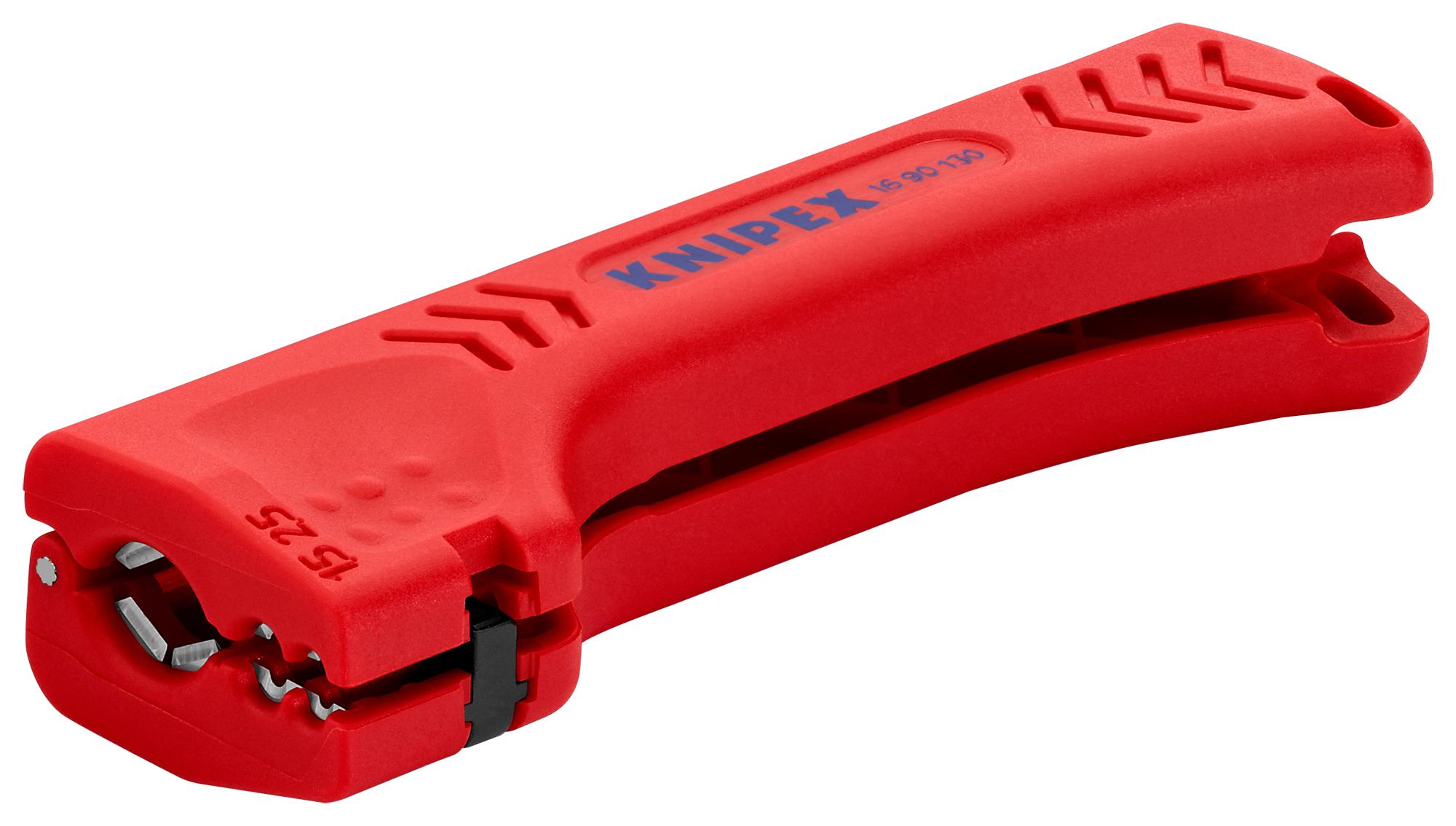
- Wire stripping methods
- coaxial wire
- PTFE coated cable
- enameled wire
- How to use the tools correctly
- A set of tools to get the job done
- Wire thickness and current
- Tips for safe stripping
- difference between wire and cable
- Which company is better to buy a manual stripper
- WS-01D
- Sc-28 cable stripper, 8 - 28 mm, stayer
- WS-01C
- WS-01A
- Hand tools
- mechanical stripper
- Insulation stripping pliers
- Stripping pliers
- Stripping pliers for round cables
- Casing knife
- Stripping knife
- Wire or cable stripping process
- Automatic stripper
- Why you need to remove the insulation
- Rating of quality automatic strippers
- WS-11
- WS-08
- WS-07
- WS-04B
- WS-04A
Wire stripping methods
It is not always possible to remove the insulating layer with the help of special tools. There are some protective coating options that require a specific stripping method. Types of processing such as crimping, mechanical action, thermal and singeing can be used. In this case, the specific type of core protection must be taken into account. The most popular are ceramic, coaxial and fluoroplastic wire.
coaxial wire
In this case, no automatic or manual special tool will help in the fight against the insulating coating. The core is usually very thin in such a cable, and the coating is durable. The best method would be the process of reflowing the old insulation. It is necessary to heat the soldering iron and draw along the coating, separating the desired length for stripping. Then make a longitudinal movement and remove the plastic protection. A tong can be used as a fixative.
PTFE coated cable
Fluoroplast is a polymer coating that has excellent characteristics with stable performance to any type of impact. This is a very expensive coating for wires, so it is used extremely rarely, namely in design solutions.
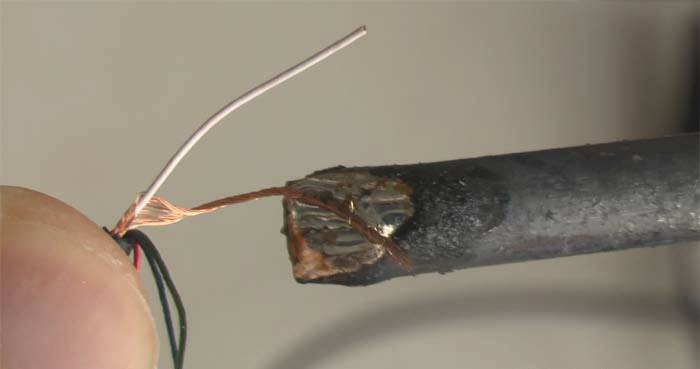 singeing method
Important! As an alternative for a fluoroplastic coating, fabric or rubber is often used. The method of removal remains the mechanical type of cleaning
The main condition is to strip the wires correctly, without making notches on them.
The fluoroplastic coating looks like a thin tape around the main core. Usually use it exclusively for the copper type of conductor. Only mechanical cleaning is suitable for removal. It is best to remove with a sharp knife by scraping off the surface layer. After scraping the fluoroplastic to the desired length, it is cut with the same knife.
enameled wire
There is no special device to remove the protective layer in the form of an enamel coating. A knife or sandpaper is used to prepare the conductor. Here mechanical cleaning is used. The desired area is rubbed with sandpaper. The knife is used to scrape off the enamelled area.
clean enameled wire
If the core is very thin, then it is worth using the thermal option - solder the enameled coating with a soldering iron. It is necessary to heat a special tablet, along which the part that needs to be cleaned will be stretched. Then the coating is simply erased or removed by hand.
How to use the tools correctly
The quality of cleaning the wires from the protective layer depends on the ability of the electrician to work with one or another version of the tool. To avoid problems during the cleaning process, it is worth considering the principle of operation:
- Before laying the wire between the cutting edges of the stripper, it is worth determining the correct groove along the cross section of the conductor and separating the protection from the metal part with twisting movements. In semi-automatic, the same manipulation is performed to select a cell, and the cut is made by pressing the handle. In models, the machine performs all of the above work by the device.
- Working with side cutters is simple and safe if you know a few nuances. The device can be used in two ways. Cut the insulation from different sides at the same level, pull off the formed piece from the conductor (for a large cross section). Fix the braid and cut through with the sharp part of the side cutter, then pull the remnants to the side, scrolling the protection part.
- The principle of using pliers is identical to side cutters. You need to start making an incision around the circumference with the part where the sharp blades are placed. Then fix the prepared part in the clamping part and simply pull the coating off the core. In this case, you should not strongly influence the mechanical method - you can tear off a piece of the core and stretch the rest of the cable.
- The principle of using an electrician's knife depends on its type.Some models of denuders of this type can only be used to make a certain incision and according to a special technique. It is better to choose the simplest models to use, as too intricate shapes and functional features can confuse an inexperienced user.
- The pliers are identical in use to side cutters and pliers. A distinctive feature is the need to control the depth of the incision. If this action is not followed, then damage to the metal part of the wire may occur.
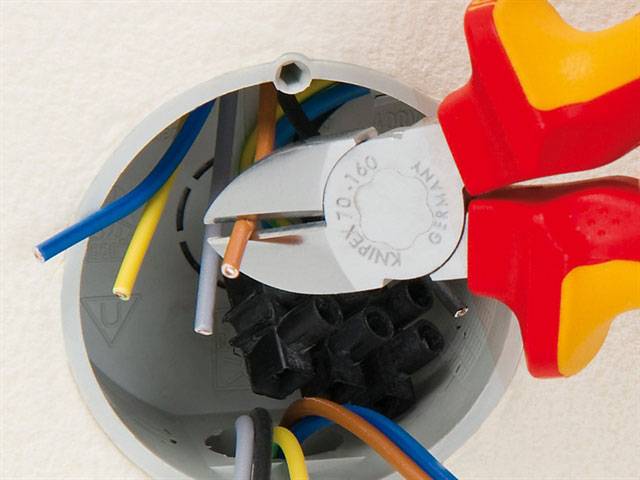 Side cutters at work
When using any type of equipment, care must be taken not to damage or completely remove the separated part of the conductor. Particular attention should be paid to longitudinal and circular cuts.
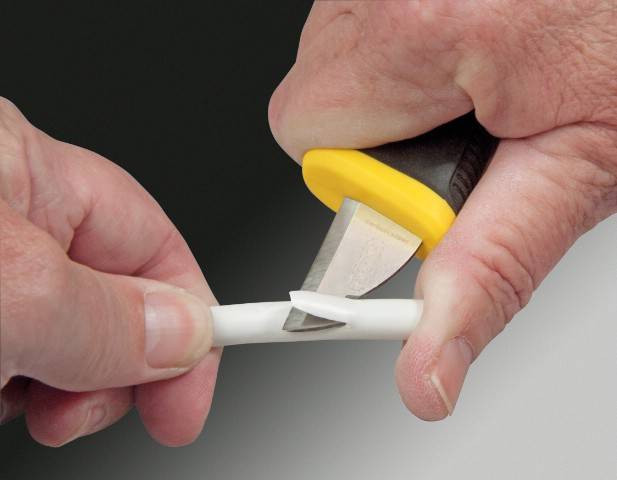 Knife
Knife
To "cut" the wires qualitatively, you need to train. If you constantly hone your skills in work, using different devices, you can significantly increase your professionalism.
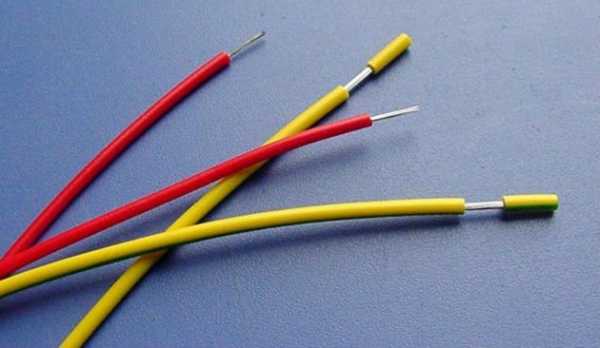 Finished wires
To cope with the work of an electrician as well as a professional, you need to have an idea of the work being done, as well as choose the right tool. In particular, this applies to the selection of a cleaner for wire insulation. There are several options, each of which has its own distinctive features and principle of operation. Each cleaning device can be classified as a professional or amateur category of use. Some options may become irrelevant to an inexperienced user due to the complexity of construction and use without certain skills that can only be acquired with time and constant use.
A set of tools to get the job done
Sometimes it is required to use a special tool for stripping wires, because due to objective reasons only this type is suitable. Most commonly used:
- Side cutters, since almost every owner has them, and are unpretentious in work;
- Mounting, stationery or construction types of a knife - a sharp household option is allowed;
- One of the versions of the electric burner;
- The use of pliers is allowed;
- Specialized versions of cutters designed to work with thick wires or scissors for cutting metal;
- For convenience, a vice or any type of fixture for fixing is suitable.

With these devices, you can make an easy option for cleaning almost any wire. Now take a look at the wire stripping photo so that you understand what the various tools look like and the nuances of working with them. But there are special cases that require the use of rare tools. Let's consider some of them:

The stripper can help in a difficult situation, because it was created with one purpose - to help clean wires with high quality. Simplified options for functionality are almost the same as side cutters.

The blades have recesses with different radii for working with veins of a suitable section. And the semi-automatic version has a set of two sponges and blades.
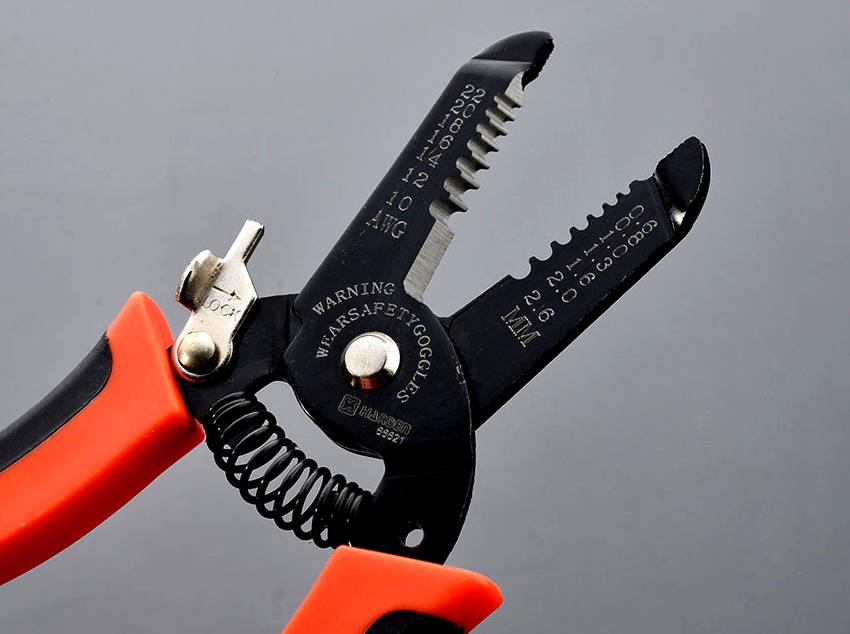


For operation, you will need to put the end of the cable on the working compartment, fix the position and remove the insulation. The upper cover of the insulation is cut with blades, and the rest of it is qualitatively removed with sponges. On the territory of Russia, this version is called KSI (pincers that help remove insulation).
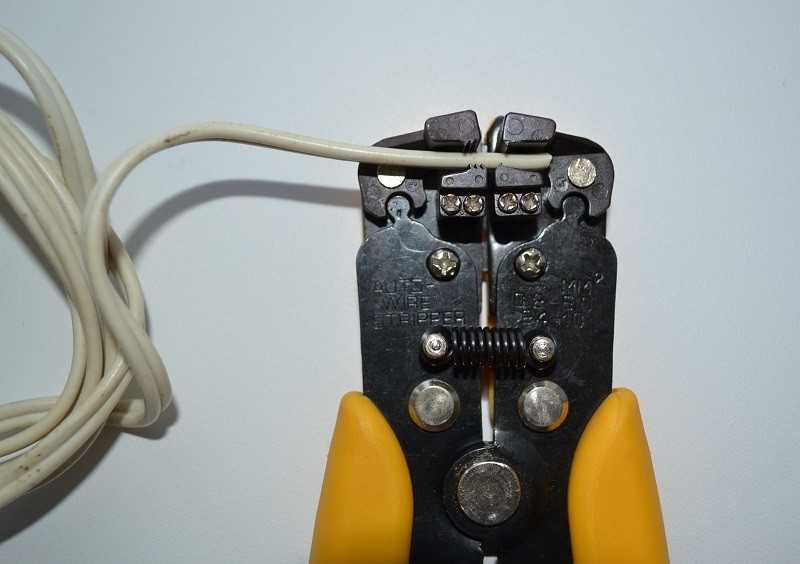
But there are products that help to carry out several operations:
- They cut off the isolation zone;
- Clean up the remains of the insulation;
- Help to qualitatively twist the cores.


The German manufacturer "Knipex" produces many high-quality tools for stripping various current carriers. They are often used by professionals because they are verified by various tests based on voltages of 10,000 volts or when exposed to temperatures in the region of +70 and down to -25 Celsius. Because of this, reliability is guaranteed.

This company offers:
- Set of combination pliers;
- Knitting types of pincers;
- Clamping types of pliers;
- Various cutting options;
- An impressive list of multifunctional tweezers;
- Forceps for almost any purpose;
- Cable knives.
Wire thickness and current
If the current passing through the conductor exceeds the calculated nominal values, the balance in the operation of the electrical network is disturbed, which leads to overheating of the insulation layer, and at critical values, to the melting of the metal elements of the wires. Electric welding machines work on this principle.
Reducing the thickness of the conductor leads to an increase in its electrical resistance, a decrease in performance. Such a wire will not withstand the required current loads, but at lower values it can work for a long time. In addition, the mechanical properties are further reduced.
How the cross section of a conductor affects the amount of current passed through it can be determined using Ohm's law.
Scheme of the influence of the cross section of the wire on the magnitude of the current
It can be seen from the figure: if a large force is applied to the knife that cuts through the insulation layer, then the blade, after entering the metal, will violate the cross-sectional area and structure of the wire. How the metal is cut is clearly seen in the photo.
Wire size reduction
Tips for safe stripping
Electrical work is not easy. Therefore, even with certain knowledge, one must not forget that a damaged core will fail over time.
For safety reasons, when removing insulation for a slightly longer length than required, the excess must be cut off. Bare veins are too dangerous.
It is not advisable for a home master to purchase expensive tools in order to use them several times, removing the insulation. In most cases, simple improvised means will do.
When working with a tool, you need to be extremely careful and attentive. The insulation must be pressed slowly to avoid damaging the strands.
Microscopic damage to the conductors is invisible, so it is better to do everything slowly, but correctly, so as not to have big problems later.
To ensure reliable and safe contact, you need to use special terminal blocks.
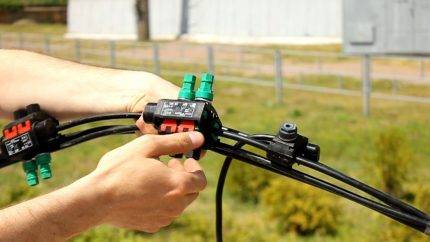 It is not always advisable to remove the insulation if the cable consists of thin strands. It is possible, without removing the insulating layer, to disconnect the cores, and to create a contact, use a special clamp with teeth
Contact in case of installation of a piercing clamp will provide a puncture of the insulation. Sometimes this is enough.
difference between wire and cable
When describing electrical wiring, the term "wire" or "cable" is often used as a current conductor. To an uninitiated person in the subtleties of electrics, it may seem that this is one product.In fact, they are different.
A wire in the traditional sense is a cord with a small cross section. Such a conductor can be single or stranded. He may not have insulation at all, and if there is, then it is light in the form of a tube. Taking it off is really easy.




The cable consists of a certain number of current carriers. They are connected in one piece, but do not touch each other and are enclosed in a shell of a special material.
For a wire with one core, the cross section is set by one core, for a multi-core wire, the cross-sectional area is formed by the sum of the sections of all cores. To improve the performance properties of the cable, a nylon thread is introduced into the middle.
Any conductor should be handled with care, especially aluminum conductors. Compared to copper, they are more brittle. Bending loads reduce the already small margin of safety of aluminum conductors.
Some specs for comparison:
- aluminum density - 2.7, copper - 8.9 t / mᶾ;
- stranded version for aluminum is excluded, for copper it is possible;
- specific resistance of aluminum 0.0294, copper - 0.0175 Ohm x mm² / m.
Damage during stripping aluminum conductors further reduce their performance.
You can read more about the types of cables and wires in this material.
Which company is better to buy a manual stripper
Such a device belongs to the category of the simplest. It is a tongs that are equipped with small notches with pointed edges. Removal of the old layer of insulation will be carried out due to the ongoing circular movements. The cutting element will pass through the edge as the handle is compressed. In order not to breed ticks manually, a spring is provided. The handle lock will protect children from accidental contact with cutting elements.The weight and dimensions of strippers from the world's best manufacturers will be negligible.
WS-01D

Rating opens the model for an advanced user. The function of protecting conductors of a certain range is provided. The device can be used for crimping ferrules and cutting wires. Used for crimping coaxial connectors. Externally, the device differs from similar devices, which makes it so popular. It is characterized by the presence of a handle of normal volume. However, there is no return spring. In the absence of a crimper, you can use pliers or a stripper tip. In extreme cases, multi-tool undercompressions will come to the rescue.
The average price of a novelty is 1300 rubles.
WS-01D
Advantages:
- tip crimping function;
- advanced model;
- protection of conductors with a cross section of 4 mm or less;
- comfortable handles;
- build quality;
- light weight;
- Blades are sharpened by hand.
Flaws:
- no return spring
- the latch is also not provided.
Sc-28 cable stripper, 8 - 28 mm, stayer

An accessory that is preferred by beginners who have not yet determined the final scope of its application. Used to remove old insulation from a 2-28 mm cord. Manufacturer brand - STAYER. The multifunction type puller is made of high quality materials. Experts note the presence of an amazing resource that will allow perform any electrical work. Protective cap available. It is also possible to adjust the cutting depth.
Sc-28 cable stripper, 8 - 28 mm, stayer
Advantages:
- weight 103 g;
- comfortable sizes;
- possibility to order online;
- manufacturer's warranty (one year from the date of purchase);
- multifunctionality;
- budget model.
Flaws:
not identified.
WS-01C

Multifunctional device, for the manufacture of which stainless steel is used. It can cut M3 and M4 screws. It is also possible to form loops. One part of the jaws has a relief surface, so it can be easily used as pliers. The handles are large, so they lie comfortably in the male hand. One of them is slightly curved. At the same time, it remains small and relatively light. Length - 18 cm. The return spring is rounded, comfortable to use. The section size is offered in two variations, specified according to American standards (AWG). There are also six cutting edge sizes to choose from. High-strength steel is used as raw material. It is considered one of the most practical models on the market.
Price - 1200 rubles.
WS-01C
Advantages:
- multifunctionality;
- working range 0.5-4 mm;
- comfortable handles;
- compact dimensions;
- return spring.
Flaws:
the handles are flat, so there can be no talk of ergonomics
WS-01A

Of the presented line of manual strippers, perhaps this model is considered the simplest. It can be used to work with wires with a thickness of 0.25-4 mm. The handles are two-component, however, outwardly the tool looks more like a cable cutter. The value regulator is located on the handle and has markings. The mechanism will not allow the lips to close more than necessary. Therefore, there is no question of damage to the insulation. The return spring is located on the back side. There is a blocker that will come in handy when transporting equipment.


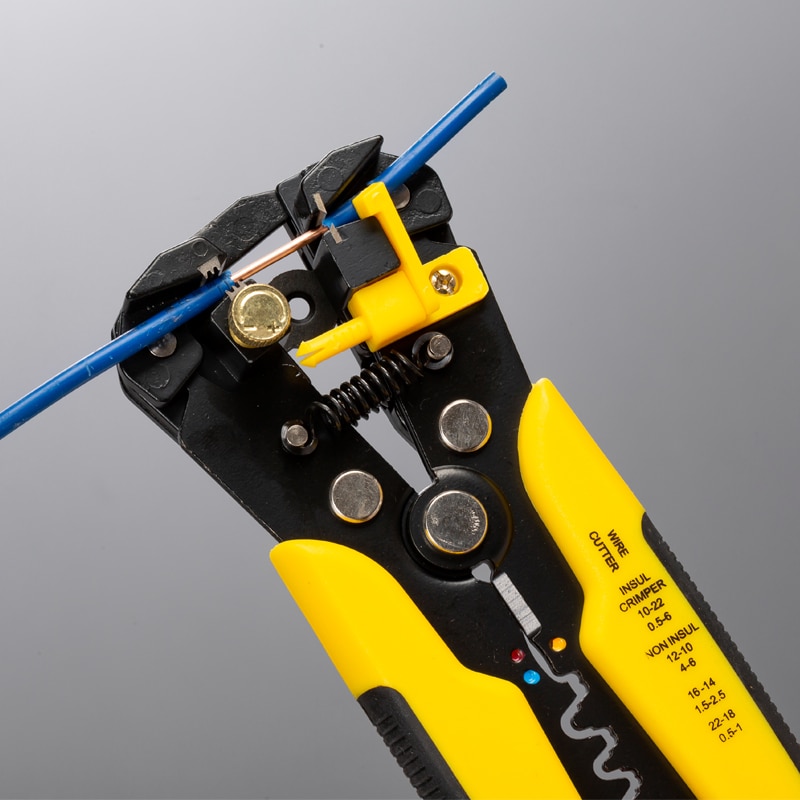

Cost - 600 rubles.
WS-01A
Advantages:
- the weight;
- ease of use;
- two-component handles;
- rotary regulator;
- handles are not slippery;
- return spring;
- blocker;
- compactness.
Flaws:
not identified.
Hand tools
 Popular removal tools insulation:
- mechanical stripper;
- ticks;
- knife;
- tongs for round conductors;
- pliers;
- knife for removing shells.
mechanical stripper
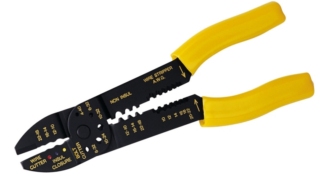 mechanical stripper
This is a stripper-crimper for stripping the insulation at the ends of wires. It consists of nippers and press pliers, which are used to crimp and crimp the ends. To remove the braid, the wire is clamped into a hole of the desired diameter, in a circular motion, and the insulating coating is removed. This is a simple cheap tool. It has a short service life, used for simple operations. Press tongs have 6-7 holes, which allows working with elements of different diameters.
Insulation stripping pliers
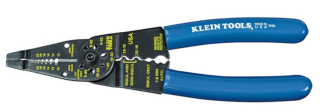 pliers
Pliers (pliers) are a universal tool for stripping insulation and other operations performed during electrical work. In the front part there are 6 standard sizes of detachable holes, the range of sections is from 0.5 to 3 mm. In the second half there is a long zigzag connector, with which the ends are crimped, the wire is bent, and thin soft wires are cut. This is a handy, inexpensive wire stripper.
Stripping pliers
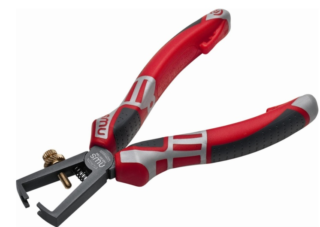 Stripping pliers
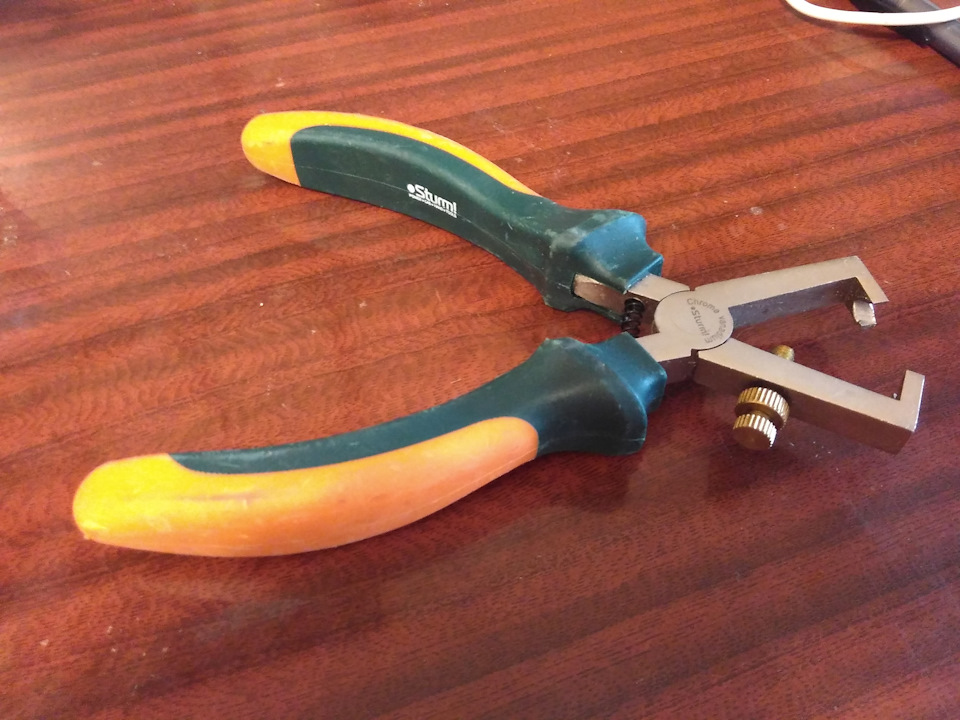
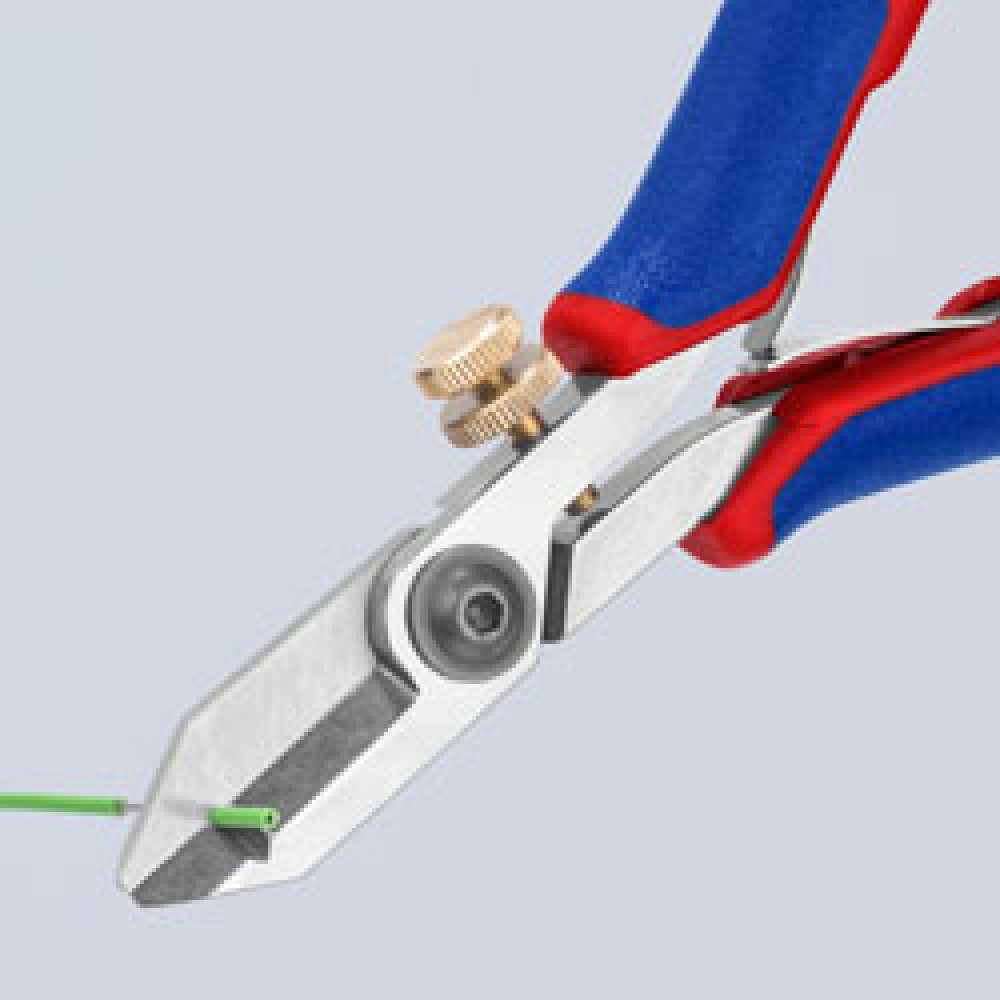
The device is equipped with handles, which are covered with a dielectric shell, an adjusting screw that allows you to change the diameter of the hole. To remove the sheath, the cable is lightly bitten, the tool is turned and the incised coating is pulled through.The wires installed in the pincer hole must not be strongly compressed and deformed. This will scratch the steel strands of the conductor.
Stripping pliers for round cables
This is a round handle. It is opened, the conductor is inserted, clamped and turned. The cutting edge makes an incision in a circle, while pulling the shell is removed. The device is designed for cables of large cross-section of a round shape.
Casing knife
This knife has a retractable blade and a metal clip that holds the cable against the cutting part. The rotary mechanism allows cutting the casing along its length and around the circumference. The blade extends to the thickness of the braid, which eliminates damage to the conductor itself.
Stripping knife
It's a wire stripper. The blade is bent in the form of a hook. The braid is removed by moving away from you, the knife is placed at an acute angle, excluding damage to the steel cores of the conductor. The heel located at the end of the hook limits the depth of the incision. It controls the depth of cut by removing the top shell. Not suitable for thick coverage.
Wire or cable stripping process
Most often, wire stripping is done using side cutters. Sometimes cutting wires is accompanied by improper use of side cutters, which complicates the work and leads to damage to the current-carrying part of the wire.
To remove insulation, it is important that the cutting parts are directed in the direction opposite to the movement of the tool. Thus, the knives can cut into the insulation even with slight pressure.
If there are no side cutters or other special devices at hand, you can take a knife, do not press the wire insulation with the cutting part of the knife and circle it around
If necessary, repeat until the protective layer of insulation is cut through and the point reaches the core. You can make an incision not across. and along the wire, then stretch the edges along the sides and cut off the sheath. This method is even considered by many to be better and safer.
When cutting, you can easily cut your hands, so be extremely careful.
How to cut outer insulation with a heeled knife video
When removing the outer layer of insulation, try not to cut it with translational movements (resembling sawing). You just need to push it with the sharp side of the knife and slowly turn it. Do not use force. When the work is done, inspect the stripped ends of the conductor. There may be cuts or breaks in the current-carrying part of the wire. This end of the wire is not suitable for further use. It needs to be cut off and redone. If this is not given due importance, over time a dangerous situation may arise. As a rule, the damaged part of the wire core in the future, during operation, breaks off. In the future, it will be necessary to look for the place of cable damage, and this place, as a rule, will be hidden by insulating tape.
Sometimes it is not clear how to strip the wire, especially when it is too thin, and even stranded. There is one trick.
- Take an old razor blade.
- We break it and take one half of the blade.
- We fix the wire using a vice or clamps. You can use the table lamp clip.
- Cut the insulation along the conductor.
- We make neat cuts across the section, trying not to touch the conductor with the blade.
- We bend the cable so that the notched edges slightly part.
- We cling to the incision with a fingernail and pull the insulation off the core.
Stripping wires is a painstaking job that requires patience.
Mistakes often occur when stripping wires. Typical errors of stripped wires are visible in the figure:
Automatic stripper
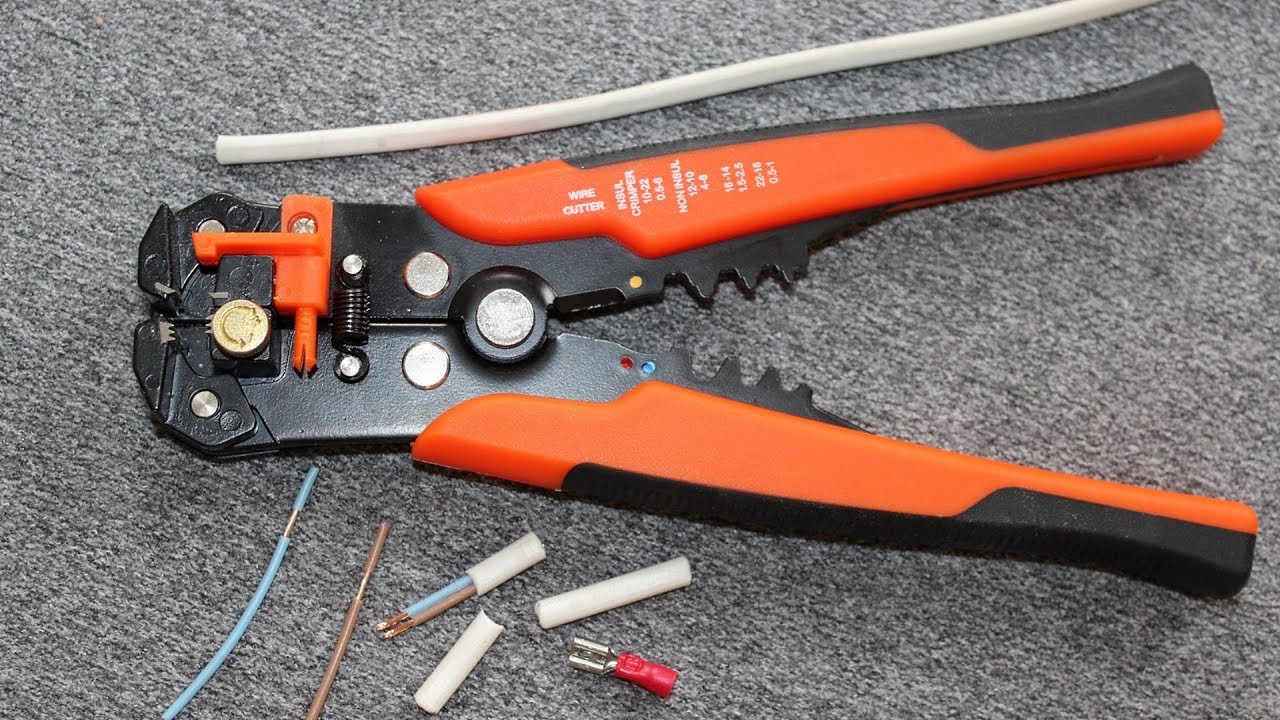
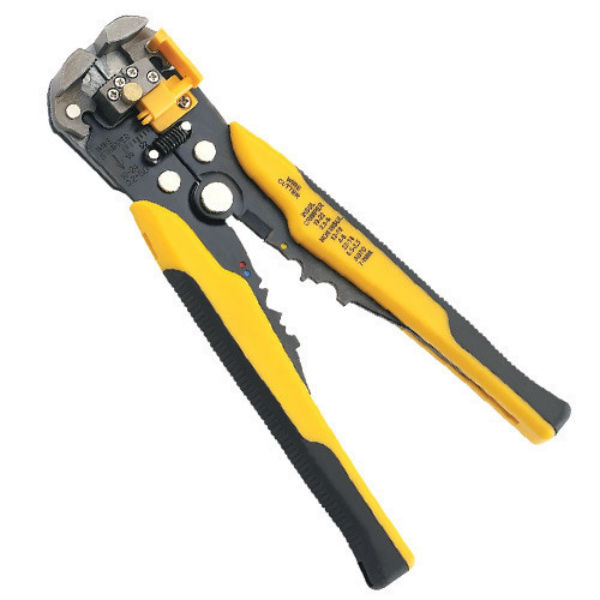
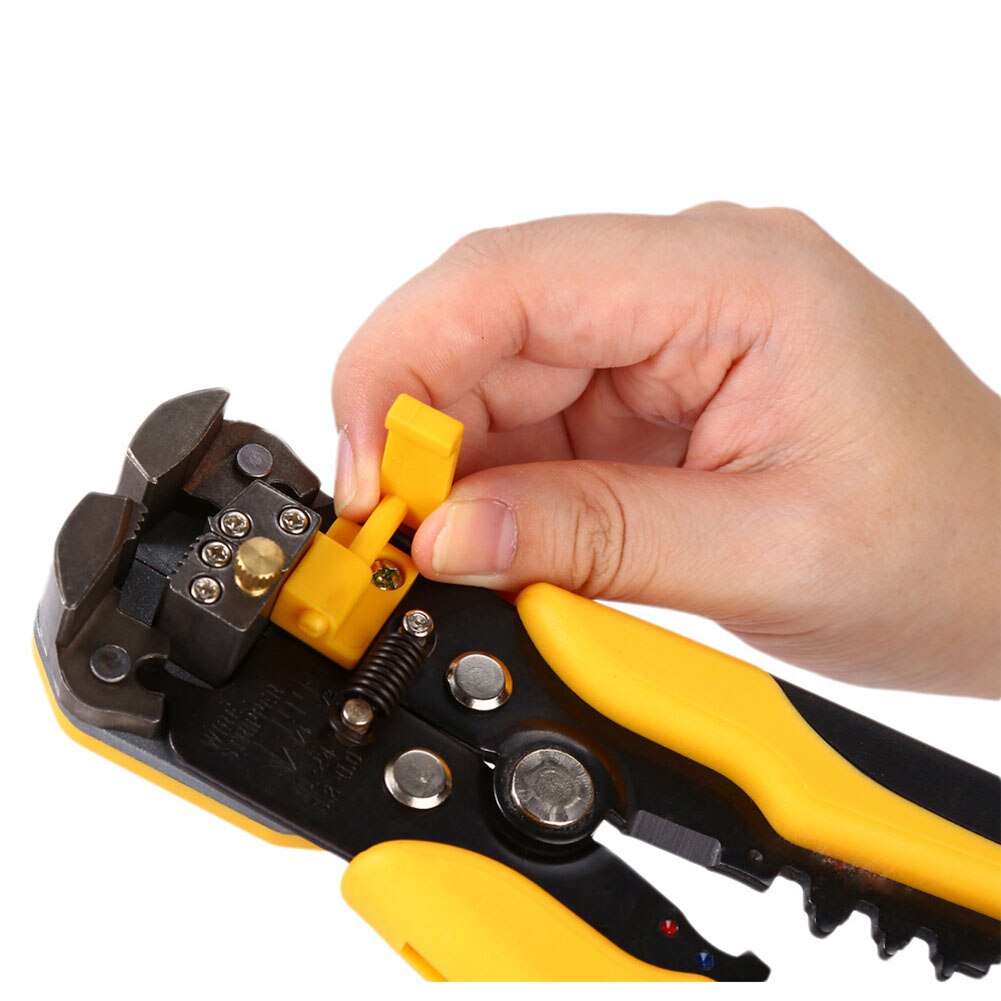
Basically, this type of stripper is no different from the previous one, except for its main advantage - the lack of a requirement to select a suitable nest. Its entire essence is contained in a single socket, suitable for absolutely any diameter of the wire section.
Fortunately, any beginner can handle this type of tool, because the insulation is removed automatically.
The only remark about this device is the setting of its socket for wires of various sections, so this element is not able to strip insulation from all types of wires, you should definitely take this parameter into account when choosing an automatic stripper.
In addition to all of the above, this type of stripper is also capable of crimping wires, creating a single wire from several, cutting wires like wire cutters and performing the functions of some other tools.
The price of an automatic stripper varies from 2000 to 5000 rubles.
Why you need to remove the insulation
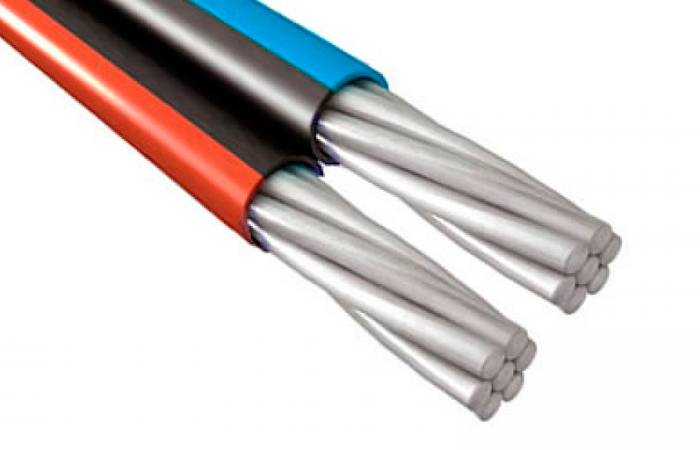
The insulating layer is peeled off the wires, usually in order to replace or renew the connection. There may be many cases for this. Especially often it is necessary to expose the ends of the wires in the process of replacing switches, sockets. Connecting some electrical devices also requires a direct connection to the network backbone. And this leads to the need for stripping wires.






 Wires without insulation
Sometimes you have to replace the old protective layer.Then the old base is removed and replaced with a new one. When the wire is oxidized, the damaged area can be removed, and this requires reconnection. The need to increase the length of the cable. In each of the cases presented, the presence of bare ends is required, which will later be connected to the same parts of another conductor.
Rating of quality automatic strippers
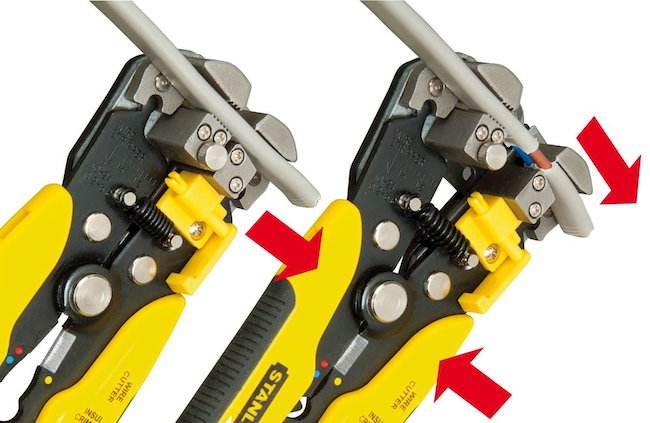
This type of device is considered the most common. Often, such devices consist of a standard set of elements:
- The base is made of two parts. Placed under the lips.
- Sponges of movable type in the amount of two units. One is used to fix the wire, while the second makes an incision.
- There are two levers.
In the process of removing the old layer, one of the elements will be pressed against the base, thereby cutting off the old layer. The second will be responsible for reliable fixation. Pressing harder will cause the base to move apart and the material to be removed from the tip.
WS-11

The product has been on the market for several years. Two guides are used. A plastic element is used as a limiter. If necessary, it can be removed by unscrewing the screw. The handles are short, but the tool copes with the tasks. The working range is 0.2-10 mm2, which makes it almost universal. The screw turns only if you have to work with a cross section of 0.05-0.2 mm2. Tips can be crimped. Wire cutting is also possible.
Cost - 2700 rubles.
WS-11
Advantages:
- multifunctionality;
- build quality;
- Ease of use;
- universality;
- possibility of manual adjustment.
Flaws:
grip problem on earlier models.
WS-08
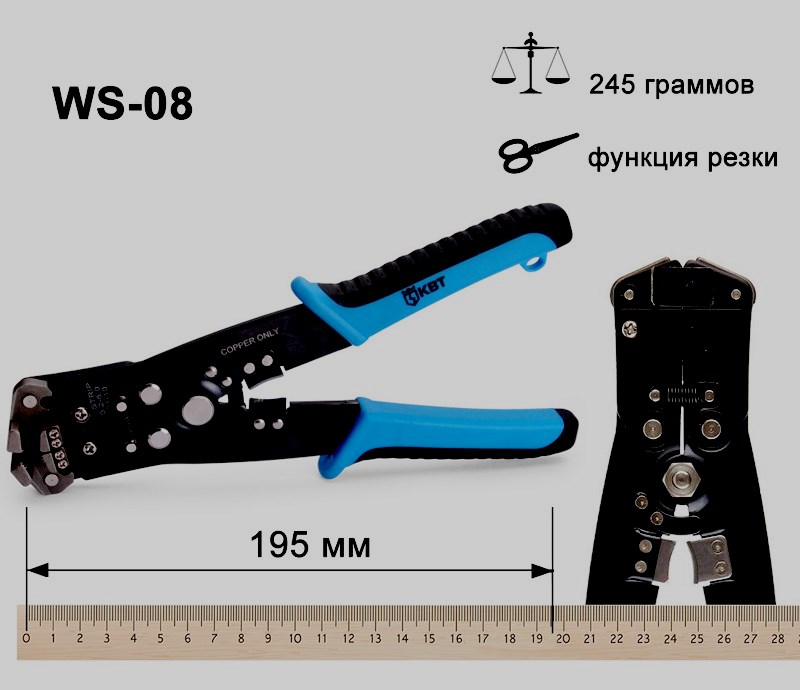
Compared to the previously described models, the tool has more compact dimensions, which do not affect the functionality in any way. Crimping is not provided, so with their help the master can only cut. There is protection. A guillotine cutter is installed. Knives are riveted and cannot be replaced. Operating range 0.2-6 mm2. The guide is metal, so loose sheath is not expected
There is no length limiter, so you need to cut with care
Price - 1600 rubles.
WS-08
Advantages:
- compactness;
- the price corresponds to the declared quality;
- functionality;
- durability;
- practicality;
- build quality.
Flaws:
- knives cannot be replaced;
- there is no crimping die;
- handles are not comfortable;
- problems when working with a small section.
WS-07

A modern fixture that has clamping jaws. A convenient opening is provided for removing cut material. Operating range - 0.05-10 mm2. Cable crimping 0.5-6 mm2. These are the tips:
- Autoterminals (double crimp).
- Uninsulated tips.
- Insulated tips with yellow, blue and red cuffs.
Stripping is fast and efficient. The limiter works in automatic mode, independently adjusting to the wire used. A screw is used to adjust it.
Price - 1900 rubles.
WS-07
Advantages:
- several modes of operation;
- the result of manipulations;
- Ease of use;
- operating range;
- holes for removing spent insulation.
Flaws:
the mechanism quickly becomes loose, and the screw begins to scroll.
WS-04B

Operating range 0.5-10 mm2. Able to work with tips (for crimping) NShV and NShVI.It is allowed to remove old material from flat wires (PUNP, VVG-P). There are no complaints about the work of the device. Numerous positive reviews on the network speak in favor of buying such a device. Knives are not well placed. The lever is not convenient to use, as it has small dimensions.


Price - 2300 rubles.
WS-04B
Advantages:
- work with wires up to 10 mm2;
- build quality;
- numerous reviews on the network;
- multifunctionality;
- retainer.
Flaws:
- poor location of the cutting elements;
- small levers
WS-04A

Our TOP is closed by a popular model, which is in high demand among specialists. There are practically no complaints.
What type of tips can work with:
- Autoterminals (double crimp).
- Non-isolated.
- Isolated with yellow, blue and red cuffs.
Operating range 0.5-10 mm2. Protects, gently removes old insulation. Works with both stranded and single-wire conductors. Manual adjustment and fitting of the hole to a certain size is acceptable. On the front side there is a convenient screw for adjustment with a standard section (0.2-6 mm2).
Price - 1400 rubles.
WS-04A
Advantages:
- multifunctionality (crimping, stripping, cutting);
- practicality;
- efficiency;
- possibility of manual adjustment;
- price.
Flaws:
the screw often gets stuck.



