- Accommodation Recommendations
- Features of various types of infrared heaters
- Electric IR heaters
- Gas infrared heaters
- Rules for installing and connecting an electric IR heater
- Ceiling infrared electric heaters: thermostat selection
- Heating element material issue
- Features of IR ceiling heaters
- Pros of ceiling electric infrared heaters
- Disadvantages of infrared ceiling panels
- Scope of infrared ceiling heating
- The best infrared heaters
- Polaris PMH 2007RCD
- Vitesse VS-870
- Ballu BIH-AP2-1.0
- Polaris PKSH 0508H
- Timberk TCH A5 800
- NeoClima NC-CH-3000
- Polaris PMH 2095
- Ballu BHH/M-09
- Cons of infrared heaters
- Rapid drop in temperature when the heater is turned off
- Uneven heating
- Negative impact on a person with prolonged intensive exposure
- Dangerous for children and pets
- Bright light
- Fire risk
- Comparison of popular brands
- Wavelengths of IR heaters
- Types of infrared heating devices
- Rating of ceiling infrared heaters, features of manufacturers
- conclusions
Accommodation Recommendations
Before purchasing an IO, the following premises data are taken into account:
- his appointment;
- dimensions;
- humidity level.
Other important factors:
- type of main heating source;
- ceiling parameters (height, format);
- number and parameters of windows;
- lighting technology;
- the perimeter of the outer walls.
In the bathroom and kitchen, a compact ceiling or wall model with waterproofing is usually mounted. She also has to fit in there. Suitable options: Royat 2 1200 and AR 2002. Manufacturers: Noirot and Maximus (respectively).
A silent and non-luminous apparatus fits into the bedroom. Examples: SFH-3325 Sinbo, Nikaten 200.
Any AI that has the required heating area is placed in the living room. Examples: good wall fixtures (any of the appropriate ones listed above).
On a balcony, in a garage or a country house, Almac IK11 or IK5 are good.
In one room, you can not put one powerful AI. It is much more profitable to distribute here 2-3 devices with a more modest power.
Features of various types of infrared heaters
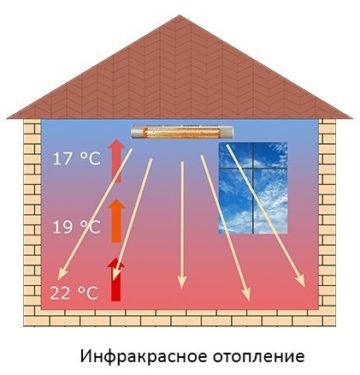
The result of the IR heater is similar to the effect of the sun. Radiant heat immediately warms a person, bypassing the air, which increases the efficiency of the device. Walls and objects gradually heat up, which also begin to reflect heat. According to the type of energy carrier, all infrared heaters are divided into electric, gas and liquid fuel. Electric and gas IR heaters are used for heating domestic premises. At the same time, gas is used much less often.
Electric IR heaters
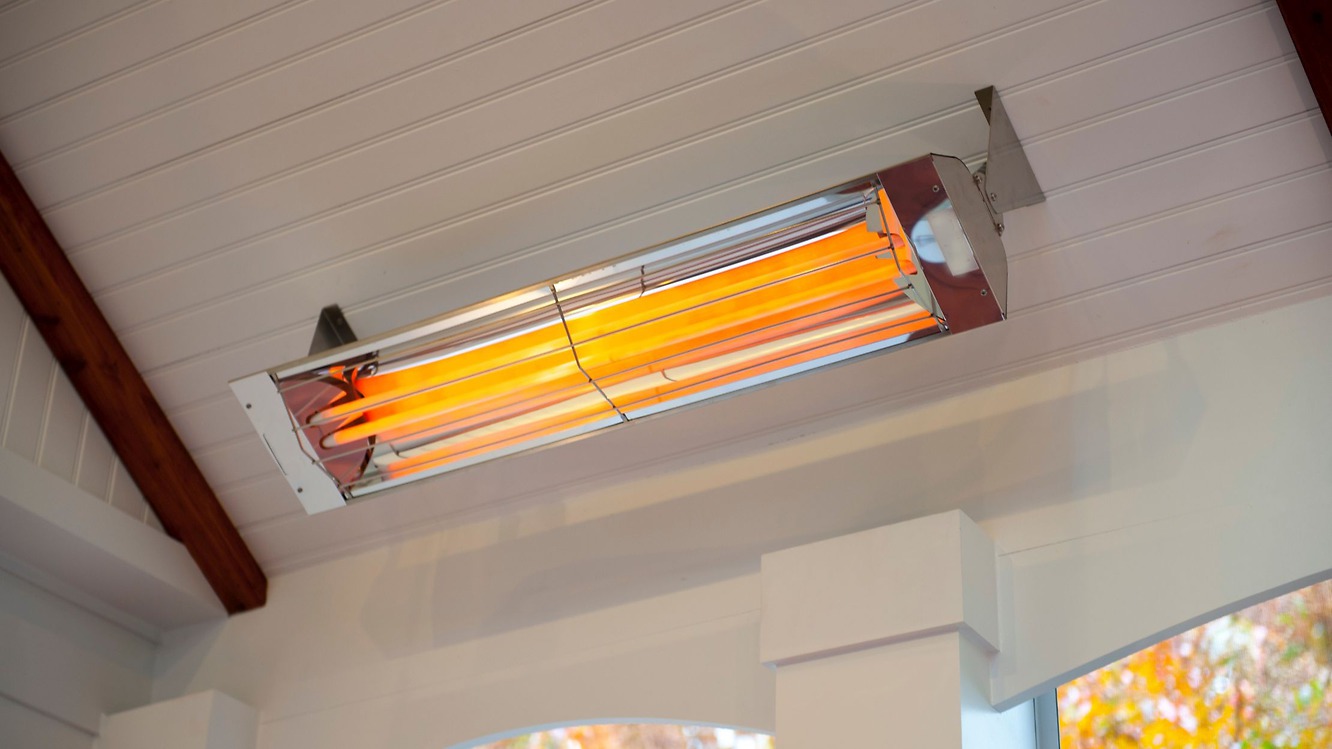
Electric infrared heaters can be divided into light and dark ones. Light or short-wave IR heaters have glass tubes with spirals enclosed inside as a heating element. They are able to heat up to temperatures over 60C and emit quite bright light.These appliances produce very intense heat in the direction their heating elements face.
Dark or long-wave IR heaters have an operating temperature of less than 60 C and are available in the form of heat-generating panels and films. Most often, such heaters have an operating temperature of 30 C to 40 C. This allows you to hang such devices on a wall or ceiling. IR heaters of this type are not capable of overheating the human body, they can be turned on for a long time.
The principle of operation of an electric infrared heater is to apply voltage to the heating element, where, due to the internal design, thermal energy is converted into electromagnetic waves emitted in the infrared range, and a metal reflector contributes to their distribution throughout the room. In the case of thin plates (wall models), heat is distributed over short distances.
A person feels IR rays in the range from 5.6 to 100 microns, starting from which they produce heaters with short (2-4 m), medium (3-6 m) and long-range (6-12 m) action. Depending on this, heaters are used both in ordinary houses and apartments, and in production for heating workshops and hangars.
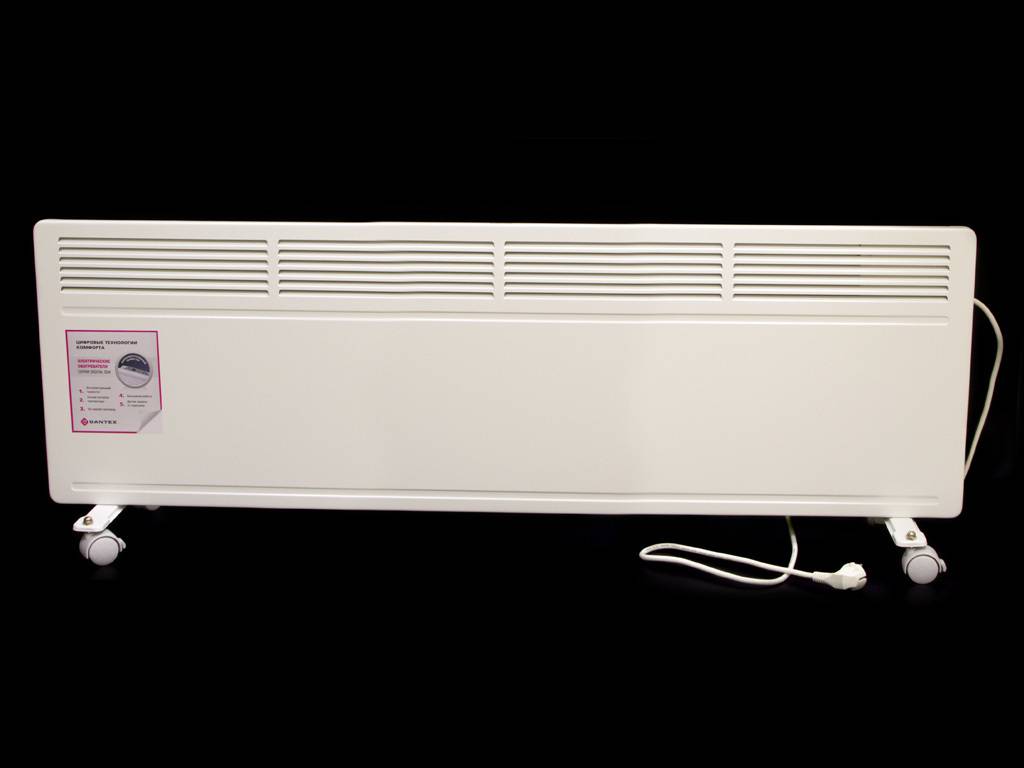
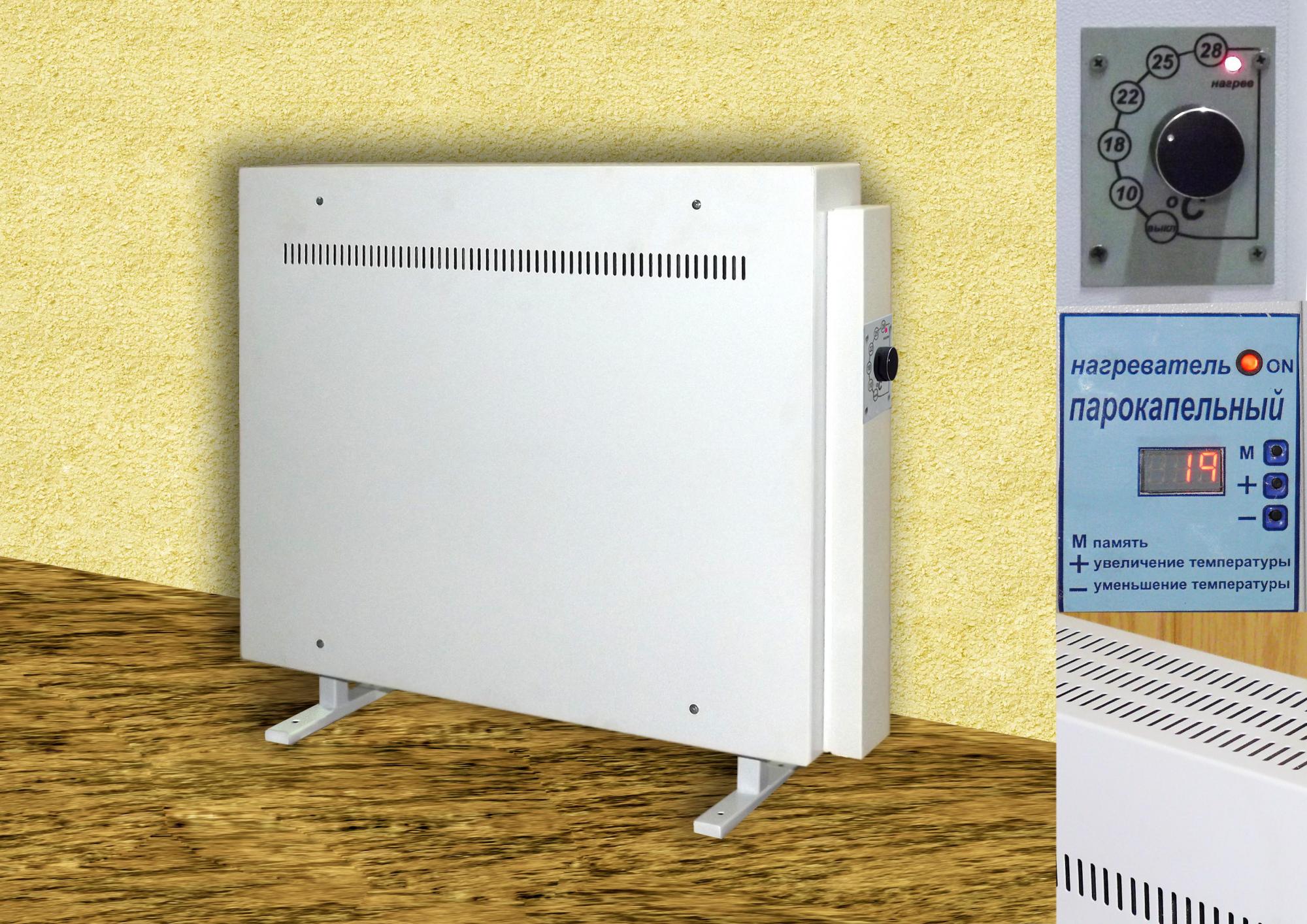
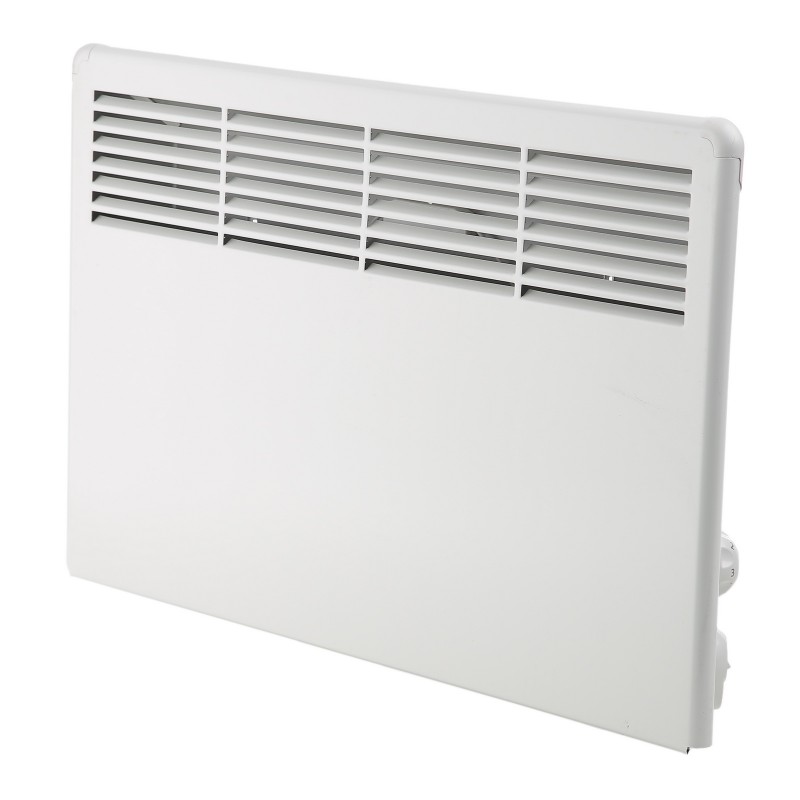
Electric infrared heaters are produced in vertical and horizontal cases. According to the type of installation, they are floor-low, floor-mounted with a high rack, wall-mounted and ceiling-mounted. The equipment is effective both indoors and outdoors.
Gas infrared heaters
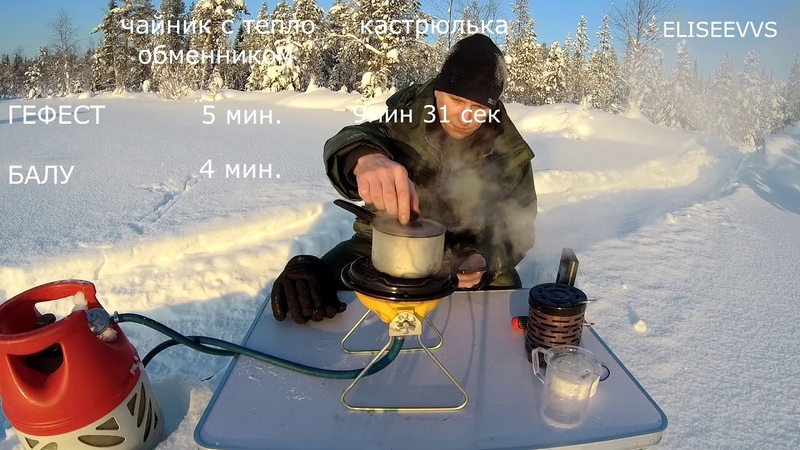
The principle of operation of a gas infrared heater is similar in the final result to an electric one - radiant heat in the infrared range is also released here. But to create it, a ceramic plate is used.It is heated by a supply of natural gas and air combined in a mixing chamber where flameless combustion takes place. As a result, the main heat is transferred to the porous ceramic plate. The heated ceramics begin to emit IR rays into the room.
This type of equipment is more mobile because it is powered by a cylinder. The latter is installed next to or can be diverted from the device thanks to a long hose. The design of some heaters allows you to hide the cylinder inside the case.
According to the form and type, gas infrared heaters are:
- household (house, cottage);
- camping (for a tent);
- on a high stand (for street cafes, viewing platforms).
Now, understanding the principle of operation of the main types of this equipment, let's look at the advantages and disadvantages of infrared heaters relative to oil or convection ones. This will help you make the right choice for heating an apartment, house, open area or workplace.





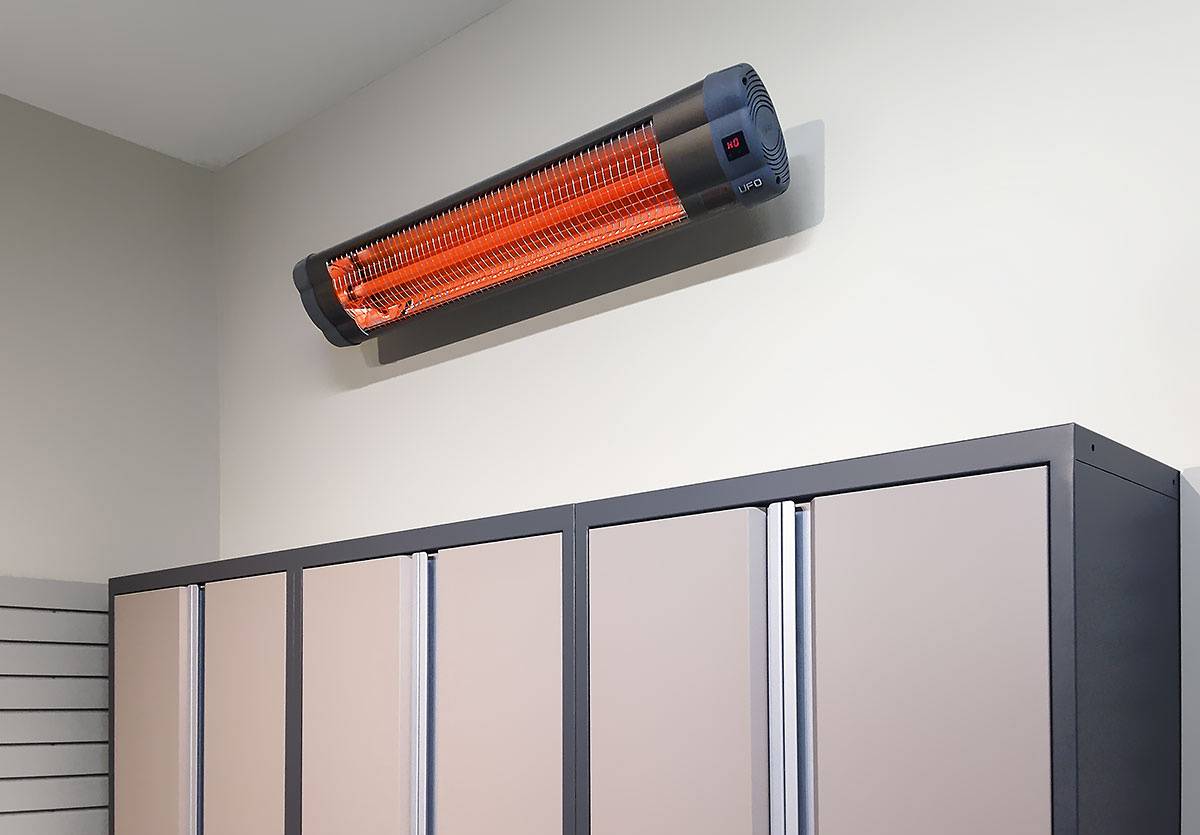
Rules for installing and connecting an electric IR heater
Reading reviews about electric infrared heaters, you often come across the words that this is really efficient and economical equipment. People note "comfortable" warmth, the absence of hot air and the absence of cold objects in the room. In addition, infrared heaters are relevant for rooms with high ceilings, where convectors give in a little, unable to cope with the volume of air.
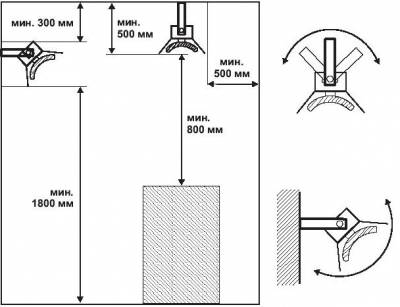
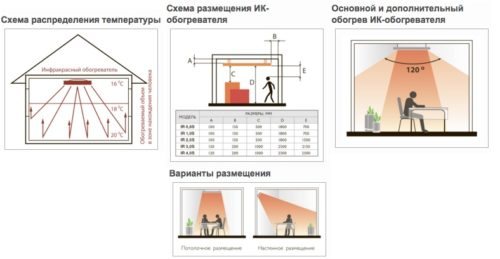
Rules for the installation of ceiling and wall infrared heating devices.
True, in the reviews there are mentions that some people, after a long stay in the working area of \u200b\u200bthe heater, begin to have a headache and feel dry skin. This means that you have approached the installation issue incorrectly.Follow the following rules:
- Do not try to get by with one heater with a power of 1 kW, it is better to buy two devices of 0.5 kW each - this way you will heat up the same area, but avoid problems with a headache;
- Do not hang infrared heaters over sofas and beds (especially next to it, on the wall) - otherwise you will definitely have a headache or you will have an incomprehensible feeling, as if your head was stuffed with cotton wool;
- Do not exceed the power recommended for a particular room;
- Wall-mounted electric infrared heaters are best hung on blank walls, avoiding installation under windows.
The easiest way to install a floor electric heater is to place it near you, but not point-blank to yourself. If the skin of the face feels discomfort, you should move the device away.
Understanding the requirements for installing infrared heaters, do not forget to look at the instructions - there you will find personal recommendations for the selected device.
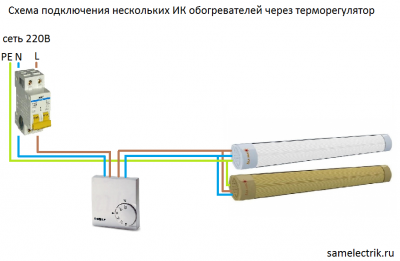
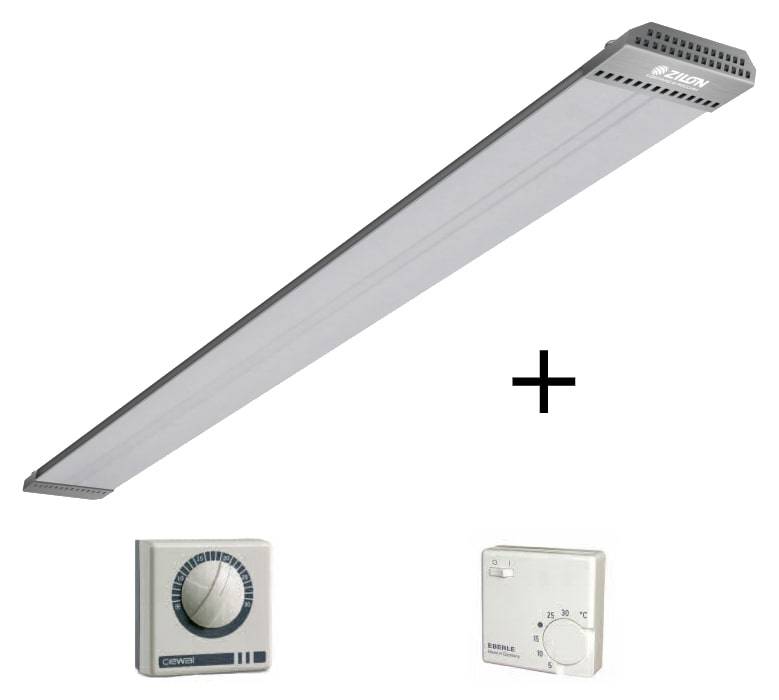
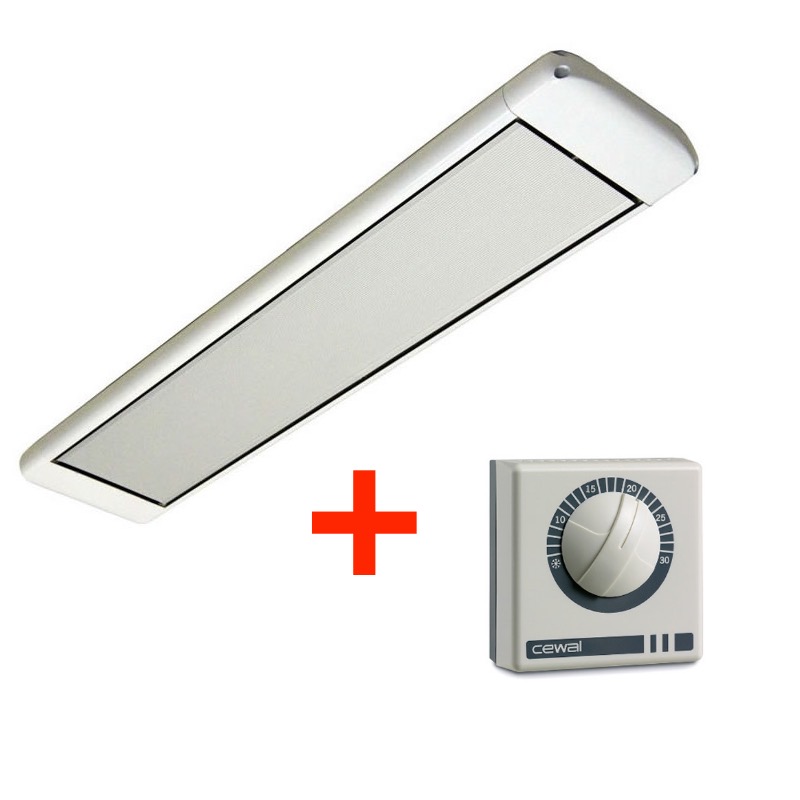
When connecting an infrared heater, we recommend using an external thermostat, of course, if your device is not equipped with an internal one.
As for the electrical connections, they must be made with a wire of a suitable cross section - for this you need to know the power consumed by the equipment. For example, a wire with a cross section of 0.5 square meters. mm. suitable for connecting equipment with a power of not more than 2.4 kW (in order to avoid heating the wire, a small margin should be provided)
We also pay attention to the marking of the connection of the phase and zero - despite the fact that the current is alternating, make the connection in accordance with the marking (it will help to avoid electric shock)
You also need to pay attention to the order of installation of the thermostat - it should break the phase wire. The regulator itself must be located in such a zone that it does not receive radiation from infrared heaters and direct sunlight. With grounding, everything is much worse, since in 90% of houses it is more likely not there than it is
Somehow it is customary for us to neglect this. However, all operating instructions for electric IR heaters require a mandatory connection to the ground loop. If there is no circuit in the house, it is better to leave the device without grounding, but do not try to use plumbing and other metal structures instead
With grounding, everything is much worse, since in 90% of houses it is more likely not there than it is. Somehow it is customary for us to neglect this. However, all operating instructions for electric IR heaters require a mandatory connection to the ground loop. If there is no circuit in the house, it is better to leave the device without grounding, but do not try to use plumbing and other metal structures instead.
Ceiling infrared electric heaters: thermostat selection
The price of an IR heater with a thermostat will be higher than devices without a built-in thermostat. But keep in mind that purchasing a thermostat separately can compare with the price of the heater itself. In this case, it all depends on the manufacturer of the device and its complexity, so there are also budget models on the market.
If you decide to purchase a thermostat separately, you should know what characteristics to pay attention to.
Types of thermostats and their features:
| Thermostat type | Peculiarities |
| Mechanical thermostat with timer |
|
| Electronic thermostat with manual temperature control |
|
| "Smart" rheostat |
|
Heating element material issue
The materials from which the heaters are made are also important. If it is black, then in places with a serious percentage of humidity, the device should not be used. If the metal is stainless, then the use of the device in bathrooms, toilets and other similar places is quite reasonable.
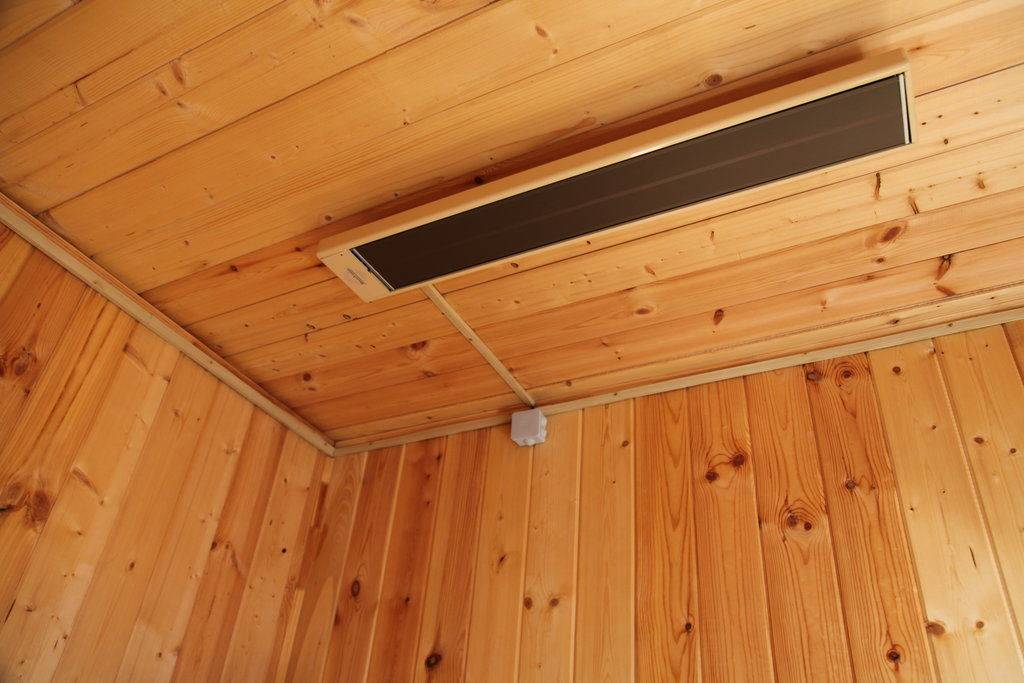





Emitter foil. Its minimum thickness is 120 microns. If the indicator is less, then the rays from the AI will simply heat the ceiling, and not the room.
Checking the thickness of the foil is as follows: you need to press a little on the foil with a rod from the handle. If it gets a crumpled place or a hole, its quality is rather weak (no more than 100 microns). If the parameter is 120 microns, the hole will not work.
Features of IR ceiling heaters
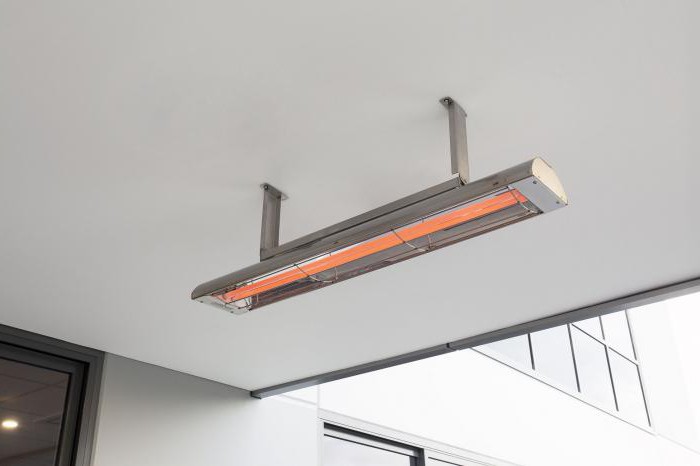
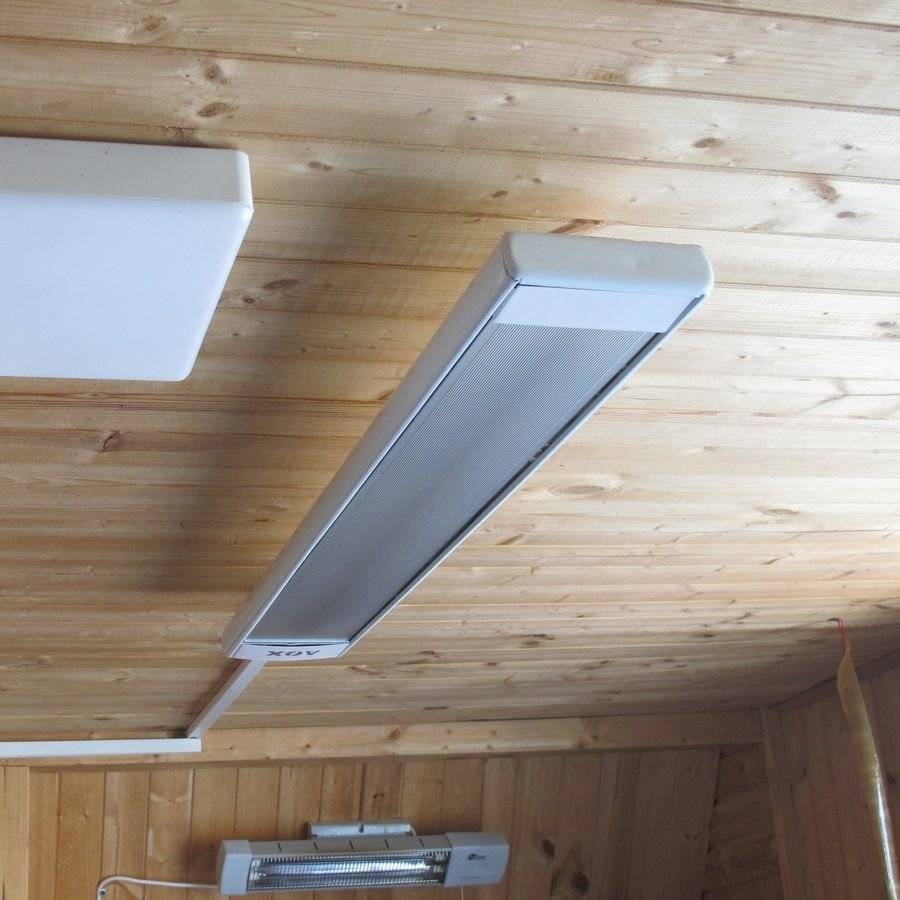
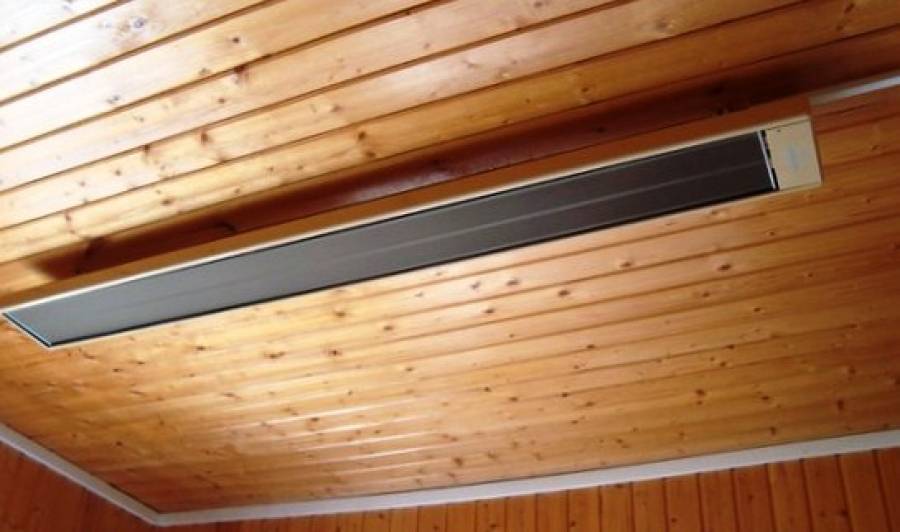
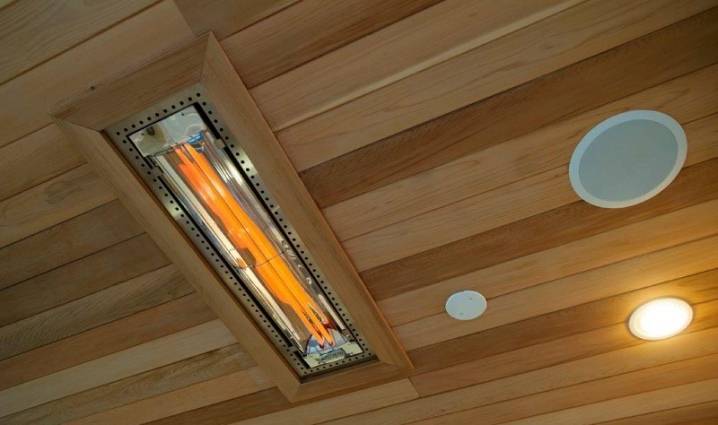
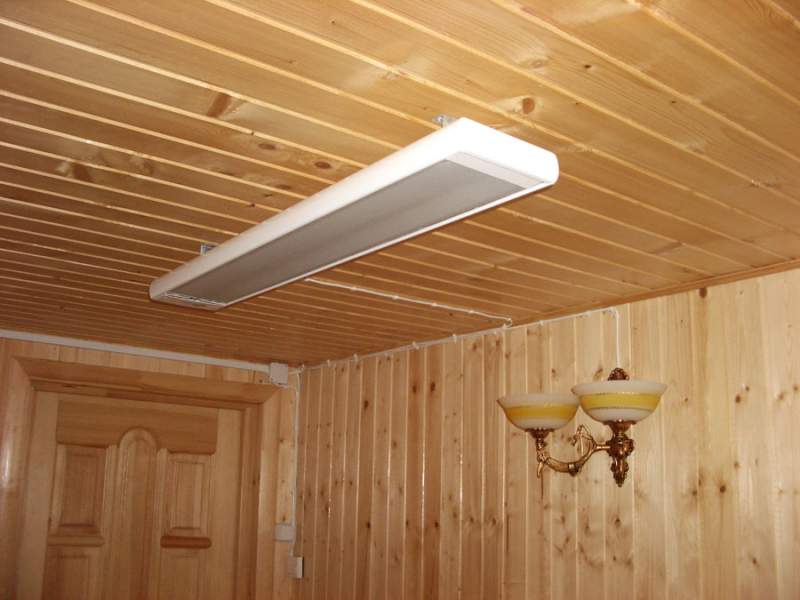
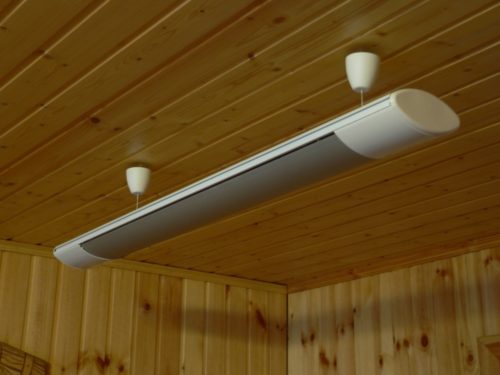
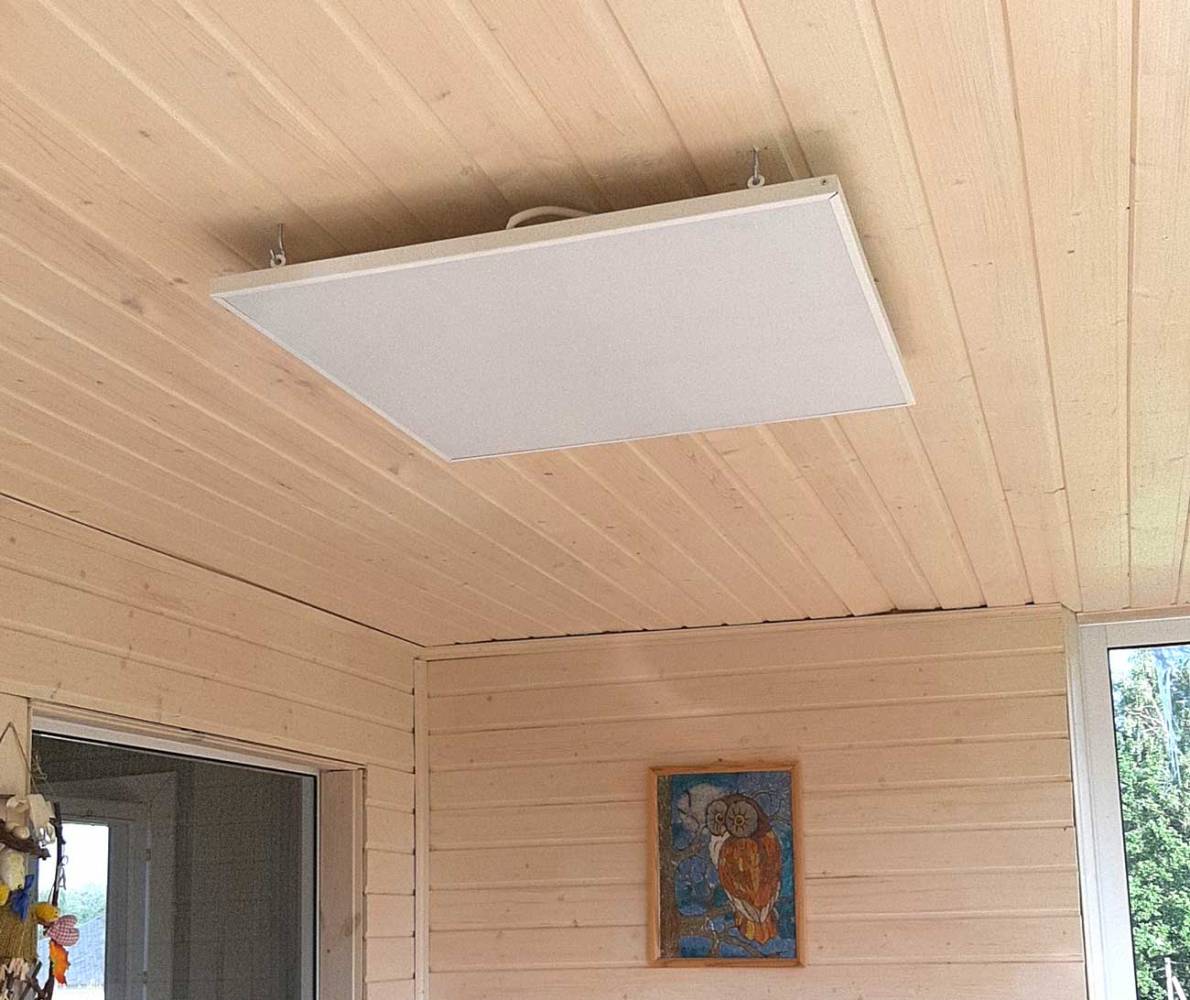
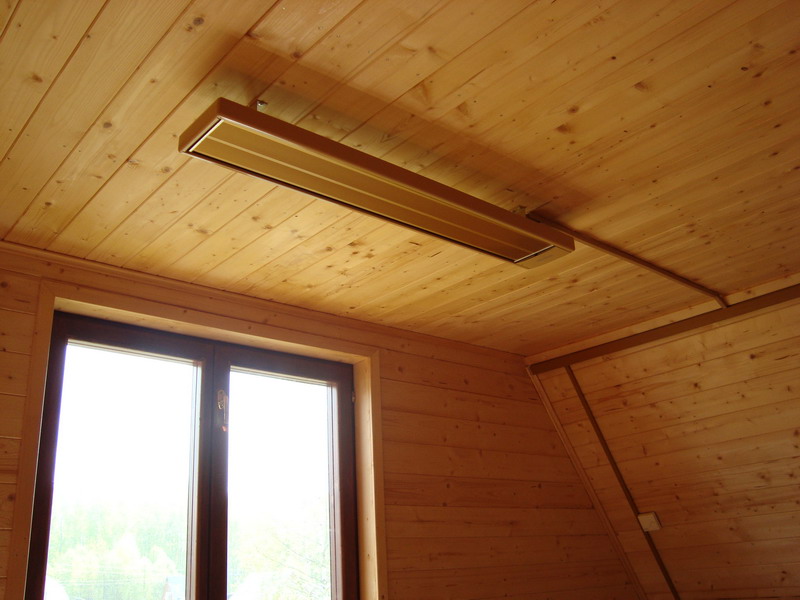
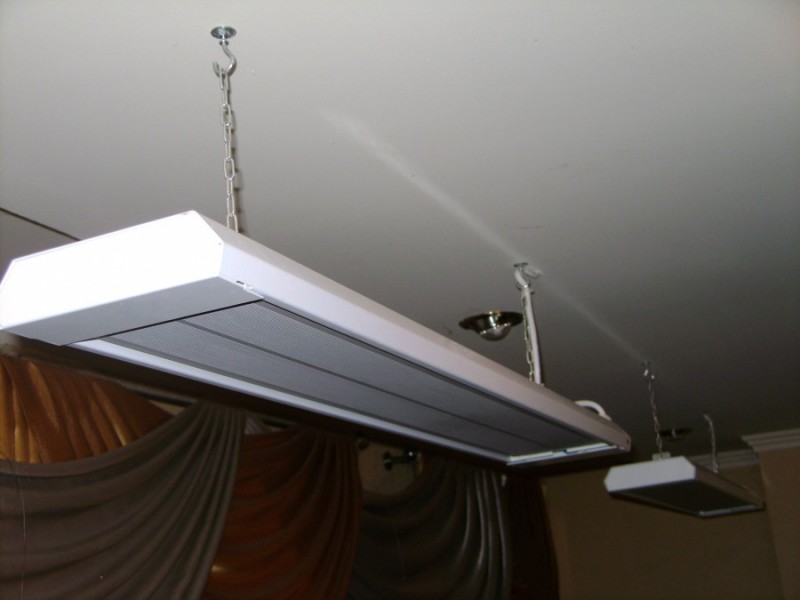
Ceiling infrared heater is a heating device that converts electrical energy into heat during operation.The transfer of thermal energy is carried out using a directed flow of long-wave infrared radiation to different surfaces or objects located in the area of the device. Thus, such types of radiation contribute to heating not the air itself, but objects located in the living room.
Pros of ceiling electric infrared heaters
Before purchasing a new generation ceiling infrared heater, it is recommended to first study all its strengths and weaknesses. If we consider the advantages of heaters mounted to the ceiling surface, then the following points can be distinguished:
due to the high level of return of thermal energy, ceiling infrared heaters have a high coefficient of positive impact;
the room warms up to the desired temperature as quickly as possible;
high level of fire safety, which is very important for residential and technical premises;
these models are mobile;
infrared heating devices work silently;
the level of saving electrical energy varies from 40% to 60%;
if necessary, you can set the focusing of the radiation;
some models are equipped with the ability to heat the room to the required temperature and subsequently maintain it.
Ceiling-mounted infrared heaters can be installed independently without the help of specialists.
Disadvantages of infrared ceiling panels
As practice and reviews of consumers who have managed to use and appreciate the work of infrared heaters installed on the ceiling show, these heaters have no drawbacks.Despite this, on the Internet you can find reviews of dissatisfied consumers who speak negatively towards new generation infrared heaters. As you know, negative reviews are directly related to improper operation of the equipment. This is due to the fact that the conditions in which infrared heat sources operate do not meet the regulatory requirements:
- the walls of the living quarters are poorly insulated or not insulated at all, as a result of which all the heat quickly disappears;
- there are a large number of holes in the walls, which also contribute to the rapid cooling of the living space, as a result of which the operation of the heater becomes invisible;
- rather thin walls in the room;
- constantly open door.
Before you purchase this type of heater, you must first check the thermal insulation, otherwise the expected result may not be felt at all.
Scope of infrared ceiling heating
Infrared ceiling heaters, as a rule, are used for heating not only residential premises, but also for industrial purposes. Such heaters can be used as the main or additional source of heat. Depending on the goals, choose the power level. Experts recommend choosing power with a small margin, taking into account possible heat losses during the operation of the equipment.
The best infrared heaters
Polaris PMH 2007RCD
- power 2000 W;
- floor installation;
- mikathermic heater;
- electronic control;
- weight 4.5 kg;
- the price is about $100.
An excellent option for floor mounting, suitable for heating a room of a decent area.The model boasts electronic control, remote control and timer. The heater promises to be as safe as possible to use, as it has a shutdown function in case of overheating and tipping over. The only thing that users complain about is the large timer step - 30 minutes. Otherwise, an excellent model that fully meets expectations and copes with the tasks assigned to it.
Vitesse VS-870
- power 800 W;
- floor installation;
- carbon heater;
- electronic control;
- weight 3.5 kg;
- the price is about $90.
Stylish floor heater, the feature of which is the ability to rotate the body. In addition, the manufacturer has equipped the model with electronic control, remote control, timer, thermostat, shutdown functions in case of overheating and rollover. It costs, of course, the device is appropriate, but in terms of the set of characteristics, this is one of the best infrared heaters.





Please note that the power of the model is low, so it is not suitable for large rooms.
Ballu BIH-AP2-1.0
- power 1000 W;
- ceiling installation;
- tubular heater;
- mechanical control;
- weight 3.4 kg;
- the price is about $50.
Excellent ceiling infrared heater, the most popular model among analogues. It is necessary to install the device at a height of no more than 3 m above the floor; universal brackets are supplied in the kit. The manufacturer talks about the possibility of connecting to a thermostat. The device warms up a small room well, but decently cracks during operation.
Polaris PKSH 0508H
- power 800 W;
- floor installation;
- carbon heater;
- mechanical control;
- the price is about $50.
A good infrared heater for floor mounting, a special comfortable handle is supplied in the kit. Additional features include a timer, rollover shutdown and overheating protection. For some reason, the manufacturer refused the thermostat. This is a significant drawback, but judging by user reviews, the model in circulation is still quite convenient and functional.
Timberk TCH A5 800
- power 800 W;
- ceiling installation;
- tubular heater;
- mechanical control;
- weight 3.5 kg;
- the price is about $40.
This ceiling heater is perfect for installation above the bed or in the office above the workplace, i.e. for zone heating, because the power here is small. The manufacturer supplied the model with a thermostat and provided for the possibility of combining several such heaters into a group that would be connected to a remote control unit and a thermostat.
NeoClima NC-CH-3000
- power 3000 W;
- floor installation;
- carbon heater;
- mechanical control;
- weight 2 kg;
- the price is about $85.
One of the most powerful heaters on the market. The power of the device allows it to be used outdoors. Otherwise, this is a fairly simple heater with no frills. Of the shortcomings, a simple design, gluttony and a short wire.
Polaris PMH 2095
- power 2000 W;
- floor installation;
- mikathermic heater;
- mechanical control;
- the price is about $100.
Powerful and durable floor heater, which is equipped with an overheating protection function and turns off when tilted. The control of the device is very simple, the power is adjustable, the device heats up efficiently, there are practically no shortcomings in it.
Ballu BHH/M-09
- power 900 W;
- floor installation;
- halogen heater;
- mechanical control;
- weight 1.1 kg;
- the price is about $15.
This device can be called an infrared heater in the body of a fan heater, and its price is about the same as that of simple "dueks". The device is suitable for zone heating or heating a small area. There are no additional functions here - everything is on the case. I am glad that the manufacturer provided the model with protection against overheating and rollover. Of the minuses, there are only two stages of power adjustment and not the highest build quality, which is not even surprising at this price. It is better to use such a heater in a room with high ceilings.
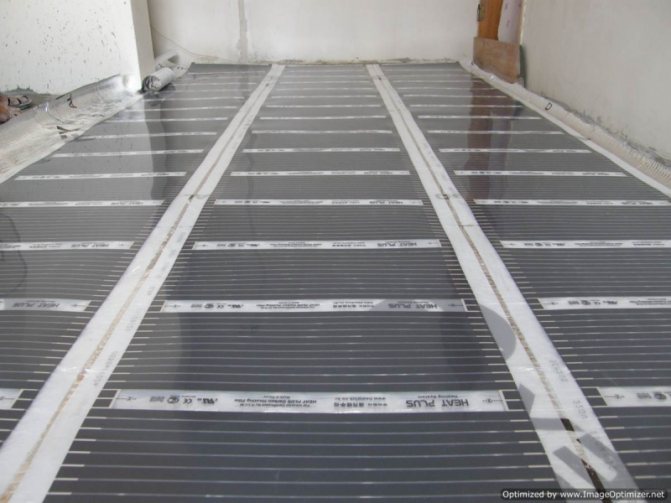
Finally, we note that the infrared heating function is also implemented in film heaters that are hung on the wall and can resemble paintings. The same principle is implemented in film infrared heat-insulated floors. Such a film is also used for mounting on the ceiling.
Cons of infrared heaters
Despite all the advantages of infrared heaters, compared to oil or convection heaters, this type of equipment still has disadvantages. They are insignificant, but they should be taken into account when choosing a heater for an office, house or apartment, as this will affect ease of use and safety.
Rapid drop in temperature when the heater is turned off
If you turn off the oil heater, then the heat from the heated liquid will still spread throughout the room for some time. This allows you to alternate the intervals of activity and passivity of the device so that it consumes less electricity, but does not stop heating.
Infrared heaters give off heat only when switched on. As soon as the voltage stops flowing to the heating element, radiant heat stops.The user immediately becomes cool. If the device has been working in the room for a long time, so that the walls and objects have warmed up, then the comfortable temperature will last a little longer. When turned on for a short time, as soon as the device is turned off, it will immediately become cold.
Uneven heating
Another disadvantage of an infrared heater is uneven heating. All his work, due to the involvement of electromagnetic waves in the infrared range, has a directional effect. As a result, in a room of 5x5 m, heat will be felt by those people who are in the zone of influence of the heater. The rest will be cold. For example, if there are two beds in a children's room in different corners, then you will have to put them side by side or use two IR devices at once.
Uneven heating is also manifested in the fact that radiant heat heats the zone like light from a flashlight - where it hits. Therefore, on the one hand, the human body can even be hot, and on the other, it feels cool from the surrounding air. With such an operation of the device in the open air, it will have to be periodically rearranged or turned by itself in order to warm up from all sides.
Negative impact on a person with prolonged intensive exposure
In general, IR heaters are safe for health, but problems can arise when you stay under a constantly turned on high-temperature device for a long time. It's like sitting under the sun for a long time - you won't get a tan from infrared rays, but the concentrated heat will dry out the skin, and the body will not have time to compensate for the loss of moisture by removing sweat in this place. Overdried skin can then bake and peel off.Therefore, sitting on one side with bare parts of the body to a constantly turned on heater is not recommended.
Dangerous for children and pets
High-temperature IR heaters with spiral heating elements can cause burns if a person touches the bulb or reflector. Although the heating element of the IR heater is enclosed in a glass tube, the surface of the latter is still very hot.
The heating element of the apparatus is often covered with a metal grate with large cells, so children, out of curiosity, can easily stick their hand in there. In view of this, you should not leave the included IR heater and children in the same room unattended. A pet with long hair can be hurt if it rubs against the heater and accidentally touches the heated bulb with the coil.
Bright light
Infrared heaters with tubular heating elements have another drawback - a bright glow. In daylight, this is not very noticeable and only helps to see whether the device is working or not. In the setting of a street cafe, it is even attractive in the evening.




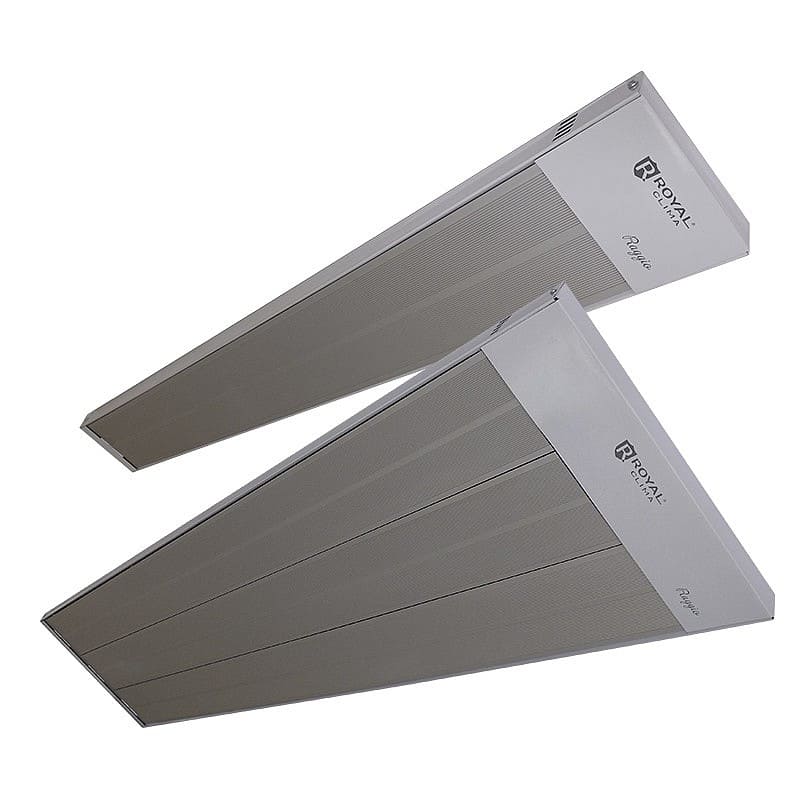


But in a room at night, such a “bulb” can interfere with rest, continuing to shine brightly in the eyes. It is impossible to turn the case in the other direction, because then the heat will be directed past.
Fire risk
This shortcoming again concerns only high-temperature models. The tall stand of the heater allows it to be installed at different heights to adjust the direction of radiant heat depending on the user's location. The stand has a four-point stand to ensure a stable position, but a large dog in the house can easily overwhelm the unit by running past.If this is not seen, then touching the carpet or continuing to shine on the wooden flooring in this position, the heater can start a fire.
Having considered from all sides the topic of the pros and cons of IR heaters, it will be easier for you to make your choice. And you can find out already tested and popular models that have positive reviews by looking at the next page of the site, which describes the best infrared heaters of all kinds.
Comparison of popular brands
In order not to reduce the story to bare figures and calculations, we will give a rating of brands common on the market and indicate the features of certain models of heaters.
- PEONY. Russian development, the best heaters for a number of assessments. In the first place, experts place the energy efficiency of devices: they are able to convert up to 90% of electricity into heat. The first generation of heaters was built on tubular thermal elements and made a crackling sound. Modern models use ceramic plates, work quietly, have a very long service life. The angle of coverage is 120 degrees.
- ECOLINE. Long-wave infrared heaters, the advantages of the models include high heat output, an excellent combination of price and quality, a wide range of products is offered for different room sizes and ceiling heights. The radiation coverage angle is 90 degrees.
- BILUX. Heaters of the medium-wave segment, the heating system is built on heating elements that transfer heat to the radiating plate. The coverage angle is 90 degrees, it is recommended to mount the devices on suspensions: polymer felt is used as a thermal insulator, so mounting on a wooden ceiling is not recommended.
- ALMAK.Devices (most of the manufacturer's models) use a tubular heater with a carbon coil, belong to the short-wave segment, and are distinguished by good heat transfer. The coverage angle is 90 degrees, the features of the devices include a limited installation height, the manufacturer also notes this: it is recommended to use it in rooms with ceilings no higher than 3.5 m.
UFO, Polaris, other popular cheap heaters have good value for money. This class of devices uses a quartz heater, most of the devices are intended for domestic use.
Wavelengths of IR heaters
IR devices work on the principle of heat wave radiation. Depending on their length, the temperature and area of \u200b\u200bthe room on which the heater will be effective is determined. There are 3 main ranges of emitted waves:
Shortwave (0.7-2.5 microns). As a rule, these are ceiling mount devices. They are not recommended for use in residential buildings or apartments, as they are intended for large industrial premises with a ceiling height of more than 6 m, or even for heating small areas of the street.
Waves of medium length (2.5-5.6 microns). They are used in large private houses, as well as in public spaces or large offices, with ceiling heights from 3 to 6 m.
Longwave (5.6-100 microns). Units with similar characteristics are suitable for use in ordinary rooms. They have enough power to heat small areas.
Types of infrared heating devices
First, a few words about how similar ones function.The heart of each apparatus is an electric heating element of one design or another, which releases thermal energy in the form of infrared waves. The surface of the element, heated to temperatures above 100 ºС, emits waves within the line of sight, and they heat up all objects and surfaces that they fall on. In turn, the heated surfaces transfer heat to the room air.
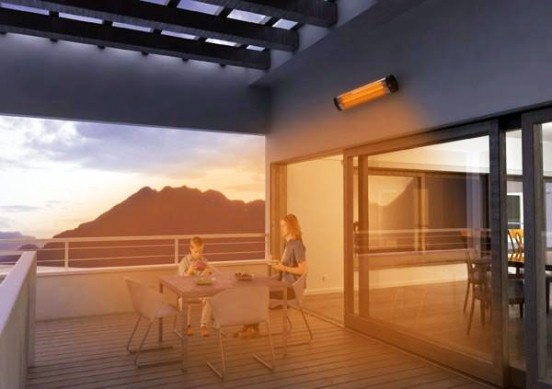
The bulk of such devices are powered by electricity, but there are also gas infrared heaters, where the principle of operation is somewhat different, although the result is the same - the element directs radiant heat into the room. Another thing is that the installation of such devices requires special permission, since they are gas-using installations. For this reason, gas heaters are practically not used for heating residential buildings.
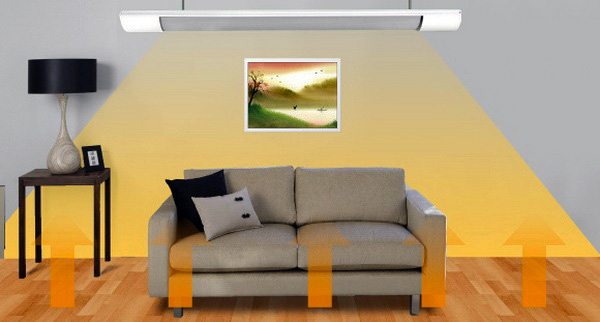
Radiant heating devices according to the installation method are divided into 2 groups:
- ceiling;
- wall;
- floor.
With the installation site, the user is able to somehow figure it out on their own. However, the devices still differ in the type of heating element, and this issue should be dealt with in more detail. So, an element that emits infrared waves is of the following types:
- an aluminum plate with an attached heating element of a special design emits long waves (from 6 to 100 microns) that are not visible to the eye. There are devices with a wavelength of less than 6 microns, but they are placed on ceilings with a height of more than 3 m. The plate is heated to a temperature of over 100 ºС;
- carbon fiber (translated from Latin - coal) thread is placed inside a durable glass tube with air pumped out of it.Technical characteristics are similar to the previous type of element, wavelength - up to 100 microns, tube temperature - 120 ºС, while the element glows red;
- mikathermic element is a multilayer plate with a heater in the form of a metal mesh inside. Its temperature is unknown, but on the surface it does not exceed 90 ºС, and the case where this high-tech source of infrared radiation is placed does not warm up to more than 60 ºС;
- infrared halogen lamp. Quite rare types of heaters, devices caused a lot of negative reviews, allegedly due to the harmful effects on people through too short waves, but this fact has no evidence.
Rating of ceiling infrared heaters, features of manufacturers
There are various heaters of both domestic and foreign manufacturers on the market. And every company has its leading models. So, consider the most popular ceiling type IR heaters:
infrared ceiling heaters Pion. The equipment of this brand is the number one decision when choosing among domestic manufacturers. Models of this company with ceramic heaters are especially popular. The company also has an original line of designer devices in glass cases. One of the main advantages of these heaters is their versatility - suitable models can be found both for home and for summer cottages. In addition, the price of infrared ceiling heaters with a Pion thermostat will be lower than foreign analogues with similar quality;
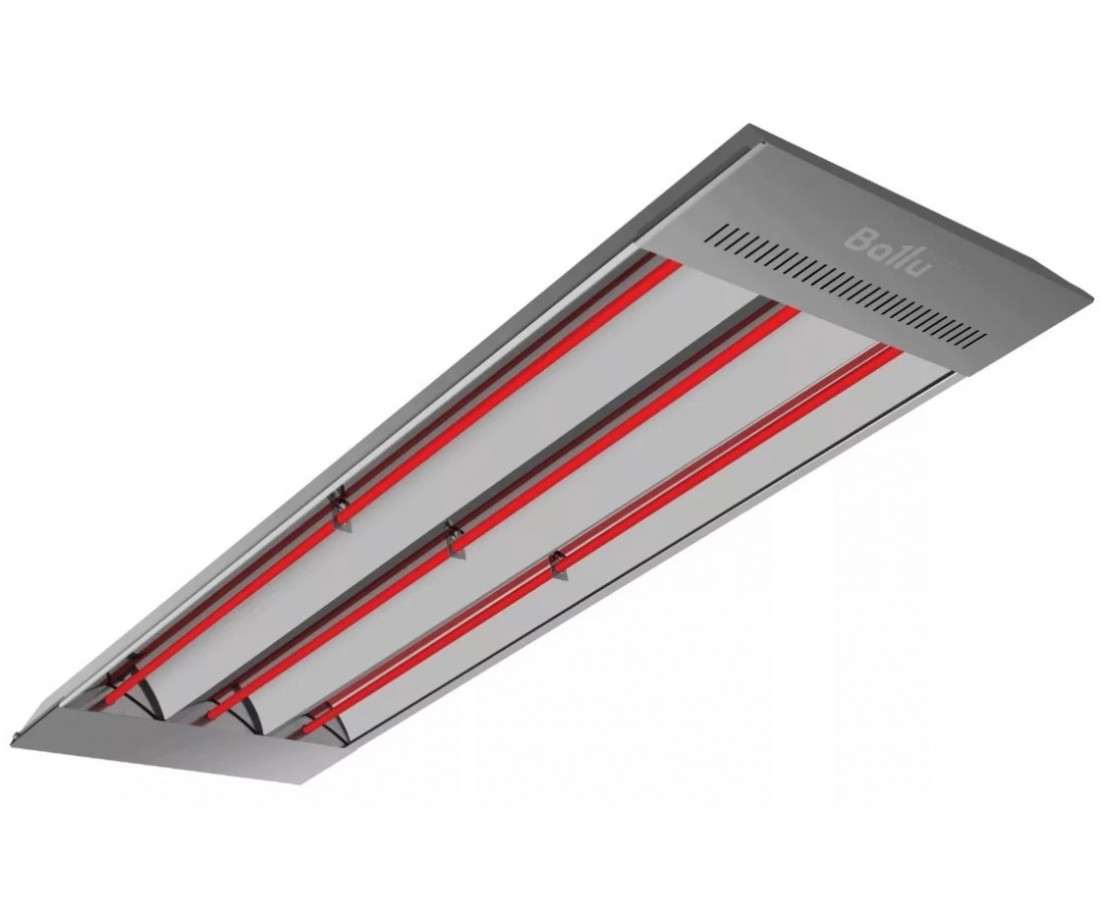
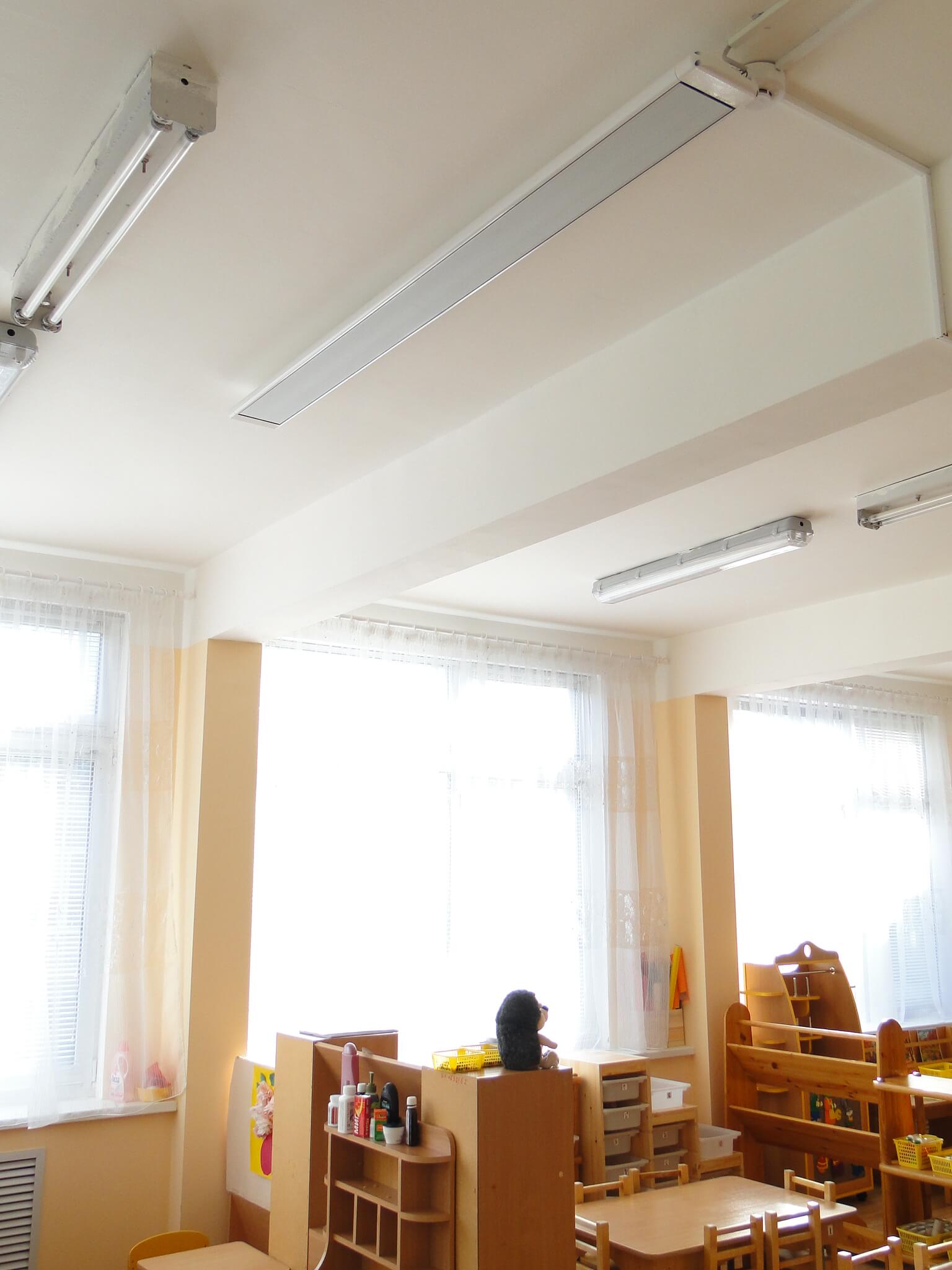


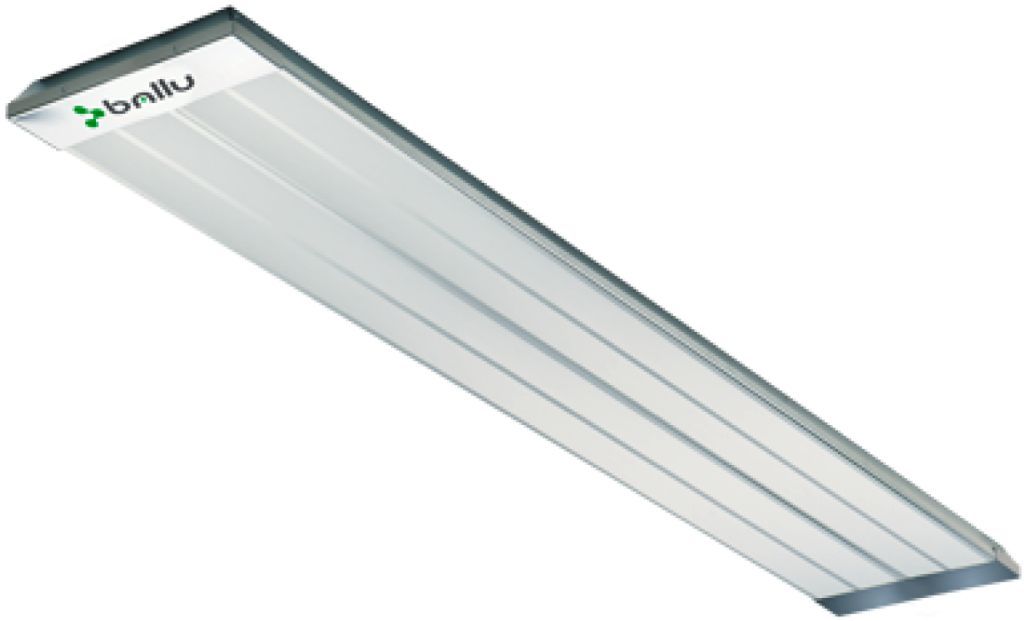


Ceiling infrared heaters can be installed not only inside the building, but also outside, for example, on a veranda or in a gazebo
- infrared ceiling heaters Ballu. This company is the undisputed leader among the products of foreign manufacturers. Infrared ceiling heaters Balu are durable. In addition, the products of this company are universal: both models for domestic and industrial use are on the market;
- heaters of ceiling type Ecoline. The devices of this company show themselves well in everyday life. Their strength is high efficiency with a long service life without loss of performance;
- infrared heaters TeploV. Industrial infrared ceiling heaters of this company have proven themselves especially well. Among their advantages are adaptability to continuous operation, the ability to work at extreme temperatures and resistance to negative environmental influences;
- ceiling heaters PLEN. This company offers high-quality film heaters.
conclusions
We considered the options and prices for heating a country house. The cheapest types of fuel are gas and coal. It is possible to connect to a free geothermal heat source, but the cost of installation is not yet affordable for most consumers.
In any case, when planning a home heating system, take into account the availability of energy sources and choose the best option.
Take the time to carefully calculate and consult heating experts. Their professional opinion will help you make the right choice.
Most owners of private houses are accustomed to gas heating from a boiler, which is considered the most economical and affordable.However, what about those where there is no possibility of installing such a heating system? A great alternative is PLEN heating. Specifications, price and reviews of different models are different. We will analyze all the features and self-installation of such a “warm film”.
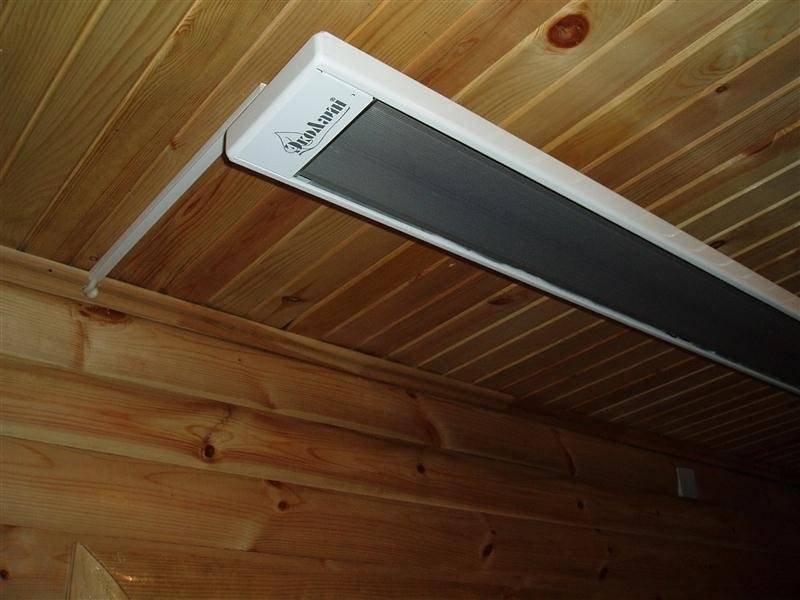
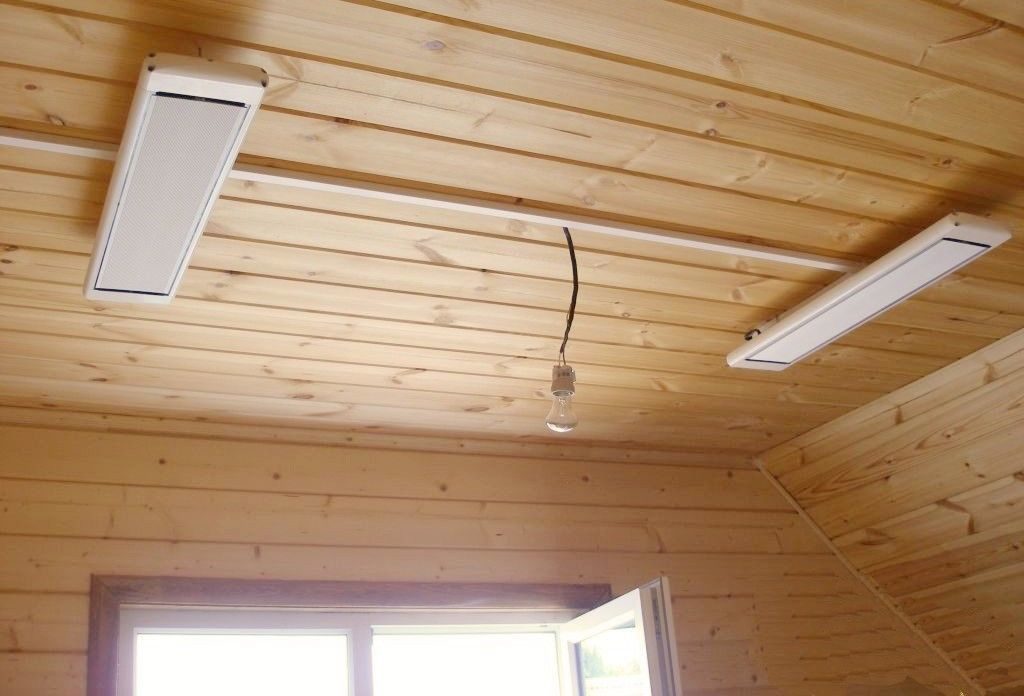
Mounting option in a wooden house