- Infrared radiation and wavelength in PLEN
- Pros and cons
- Popular Models
- Warm ceiling
- The main advantage of a warm ceiling
- The lack of a warm ceiling
- Installation of a warm ceiling
- PLEN ceiling infrared heater
- Advantages and disadvantages of the PLEN heating system
- Necessary tools and materials
- Where and how to install an IR heater?
- Safety
- Location and height from the floor
- Selection Tips
- What is PLEN heating
- Installation of infrared ceiling film
- Specifications
- Advantages
Infrared radiation and wavelength in PLEN
How does infrared radiation work in a film heater? Electric current heats the resistors up to 35-55°C and they emit infrared waves in the range of 9-15 microns.
PLEN heats objects within the range of the wave. Having accumulated heat, the objects in the room radiate heat themselves, warming the air. Traditional convection heating is the opposite - it heats the air, which then warms the objects.
Sellers claim that infrared radiation with a wavelength of 9.6 microns is the most natural for humans, but any solid body radiates in a certain wavelength range, and not at a single wavelength. Allegedly, radiation with a length of 9.6 microns gently warms our body with natural "radiant heat" to a depth of 4 cm.
However, a wave longer than 3 microns warms up only the upper layers of the skin to a depth of up to 0.2 mm, not deeper. You can read about this in the textbook "Biophysical Foundations of Physiotherapy", G.N. Ponomarenko, I.I. Turkovsky, pp. 17-18 (university course), or in: International Labor Organization, Encyclopedia of Occupational Health and Safety, second edition, 1988.
If ideal heating was observed in the "peak radiation" of a person, then we could "heat" each other. But the second law of thermodynamics will not allow us this - heat is transferred only from a more heated body to a less heated one. The range declared by film makers, of course, also heats up, but with minimal intensity and very inertly. And the "rays of life", obtained by means of film heating, remain a fairy tale.
The higher the temperature of the radiating surface, the more efficiently the surface is heated, which is affected by IR rays. In other words, the heating is more influenced by the radiation power, and not by the range. Achieving a balance based on wavelength is quite difficult, and a low-temperature ceiling heater is questionable from this point of view.
Infrared rays are partially shielded by wood, drywall, suspended and stretch ceilings (which often cover the film on the ceiling in the room). In fairness, the higher the humidity of the finish (for example, wall paneling), the higher the penetrating power of the rays.
This is interesting: Individual heating in an apartment building - device rules
Pros and cons
How the PLEN heating system works
The film electric heater, in addition to saving energy, has a number of other advantages:
- Easy and fast installation.To start the film heater, you do not need to install additional communications, you only need an electrical network. Installation of a turnkey system for an area of 100 m² will take about two days.
- If necessary, the heating system can be dismantled without damaging its functionality.
- The operating period of the PLEN IR system is at least 50 years.
- Voltage fluctuations and instability of the power supply are not terrible.
- PLEN-heating is fireproof.
- It is stable and can become unusable only together with the room.
- Creation of a favorable microclimate.
- Heating the air in the room from 10 to 20 °C will take only 40-50 minutes (while convective air heating from 10 to 20 °C will require more than 10 hours).
- Since the system is self-regulating, it will independently maintain the specified temperature heating stable, automatically turning the heaters on and off (a thermostat is mounted).
- The PLEN system can operate from the power supply network all year round.
- When heated in this way, oxygen is not burned, the air is not dried out.
- No dust (since the principle of convection is not applied).
- Infrared rays do not adversely affect human health.
- When installing the PLEN system in rooms in areas with a humid climate, the humidity indicators will be normal due to effective drying.
- During operation of the device, various combustion products are completely absent.
- The operation of the system without noise ensures its installation in houses outside the city, cottages, recreation centers, pavilions, etc.
- Aesthetics. PLEN heating can be closed with various decorative materials that do not contain metal.
- Fast payback.This heating system pays off the owner in 2-3 years.
There are a lot of advantages of using the considered heating system. However, it also has disadvantages:
- It is worth saying that the film IR heater on the ceiling is not very effective. Warm air accumulates near the ceiling and it seems that only the upper body and head are heated, while the legs remain cold.
- With high heat transfer, the PLEN heating system works only in rooms with good thermal insulation.
- The surface on which the system is to be installed must be solid, level and dry.
- The IR design should be treated with care, it does not withstand various mechanical influences.
- The use of the PLEN system as the main source of heating in very cold rooms can lead to significant energy costs.
You can read more about infrared electric heaters here.
Popular Models
In PLEN film heaters, the role of the emitter is played by a screen made of reflective foil (aluminum), which is heated by a resistive element (metal thread) connected to the mains. The length of the emitted infrared waves is 9.4 microns. The temperature of the heating element is 40 - 50 degrees, which makes PLEN heaters absolutely safe for people and pets.
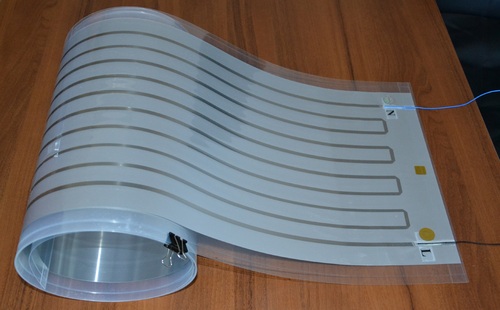 Film heater PLEN
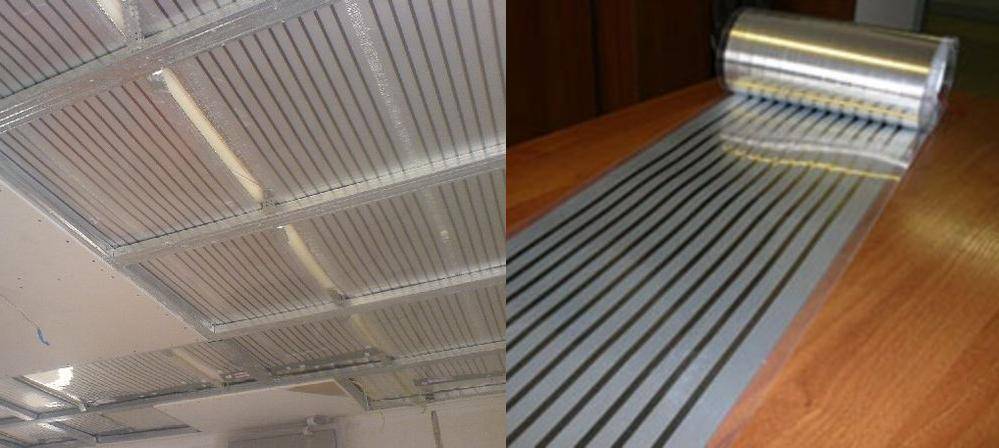
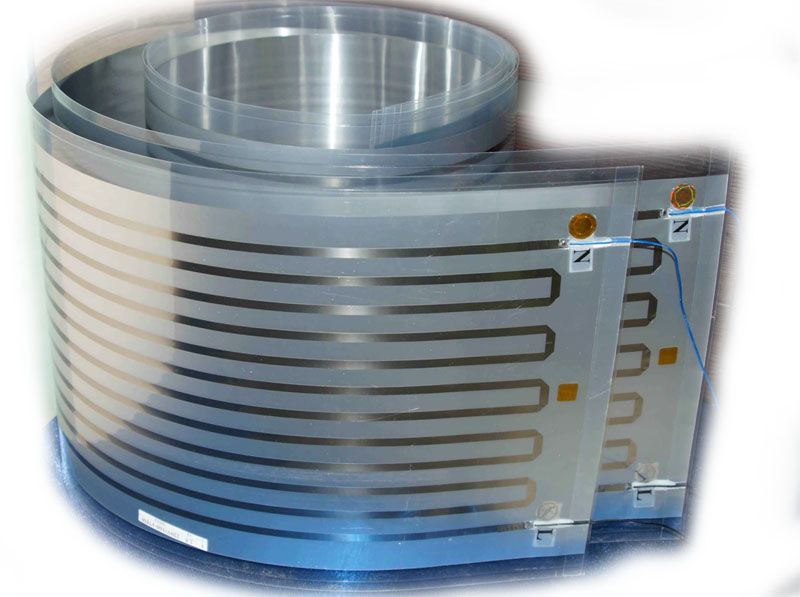
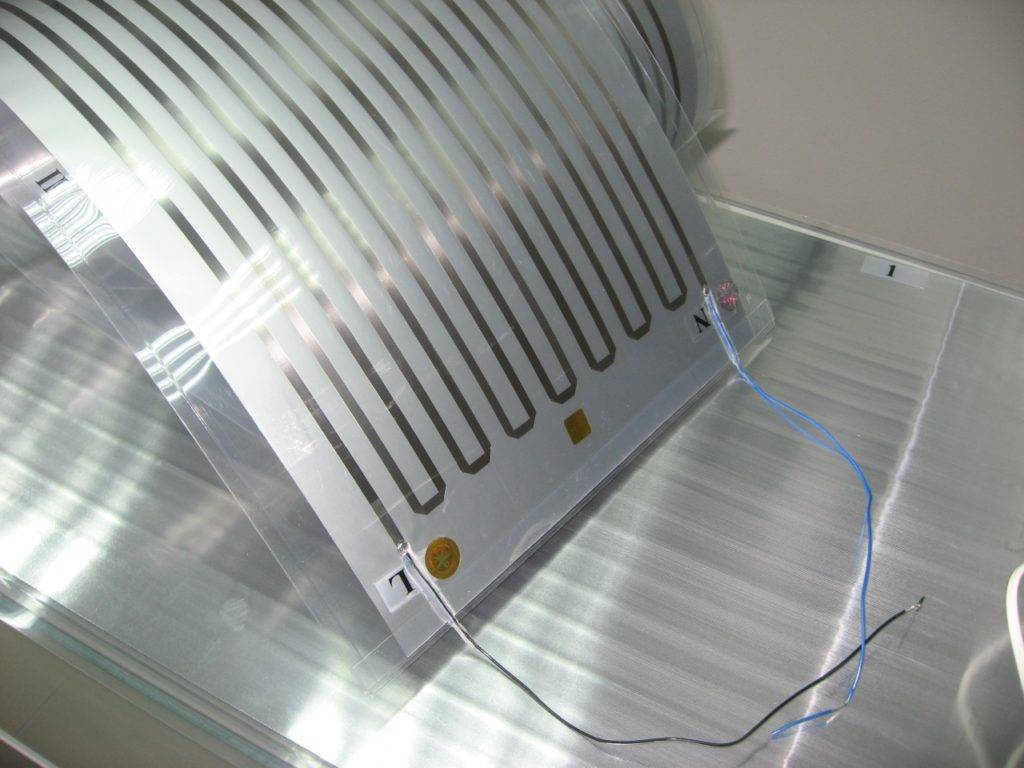
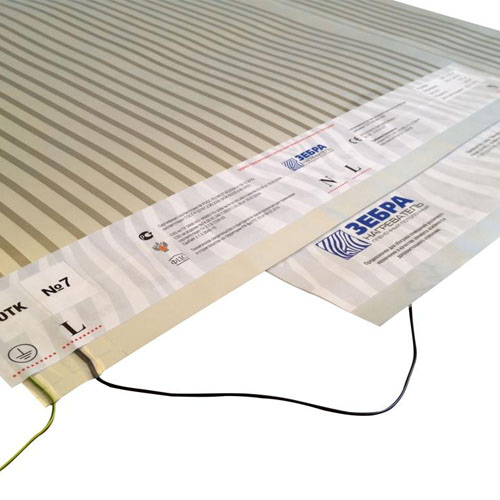
The heating element and aluminum foil in PLEN IR heaters are separated from each other by a lavsan (domestic name for polyester) film. The whole structure is enclosed in a shell of the same material. The total thickness of all five layers of the PLEN heater is from 1 to 1.5 mm.
The maximum installation height of PLEN heaters on the ceiling is 3 - 3.5 m.
Infrared radiation in heaters of this brand is generated by a thin carbon fiber enclosed in a polymer shell. Pion heaters are low-temperature, depending on the settings on the thermostat, they can heat up to a temperature of 30 to 110 degrees. The maximum power of one heater is 500 W.
Power cord and thermostat are included.
The service life declared by the manufacturer is 25 years.
Film heaters Zebra are produced on the same production base as PLEN, but using more advanced technologies and materials. This has resulted in some improvements:
— the protection class has been increased to IP44 (for PLEN it is IP20), which made it possible to use infrared heaters in rooms with high humidity;
— a third ground wire has been added to the Zebra heater connection scheme;
— a series of heaters "Multivoltage" was developed, capable of operating under conditions of voltage drops up to 150 V.
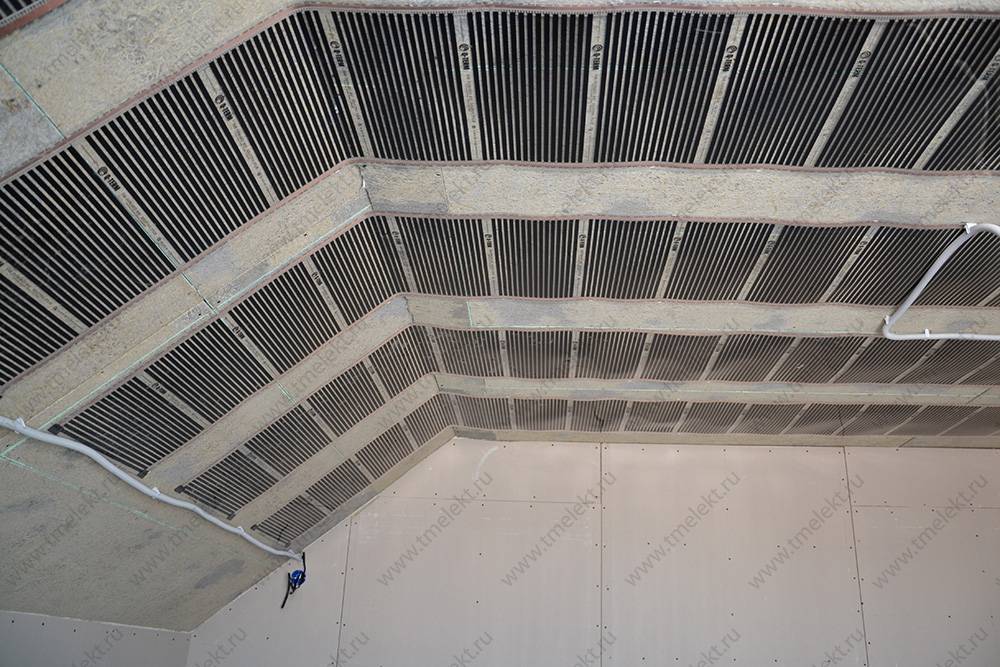
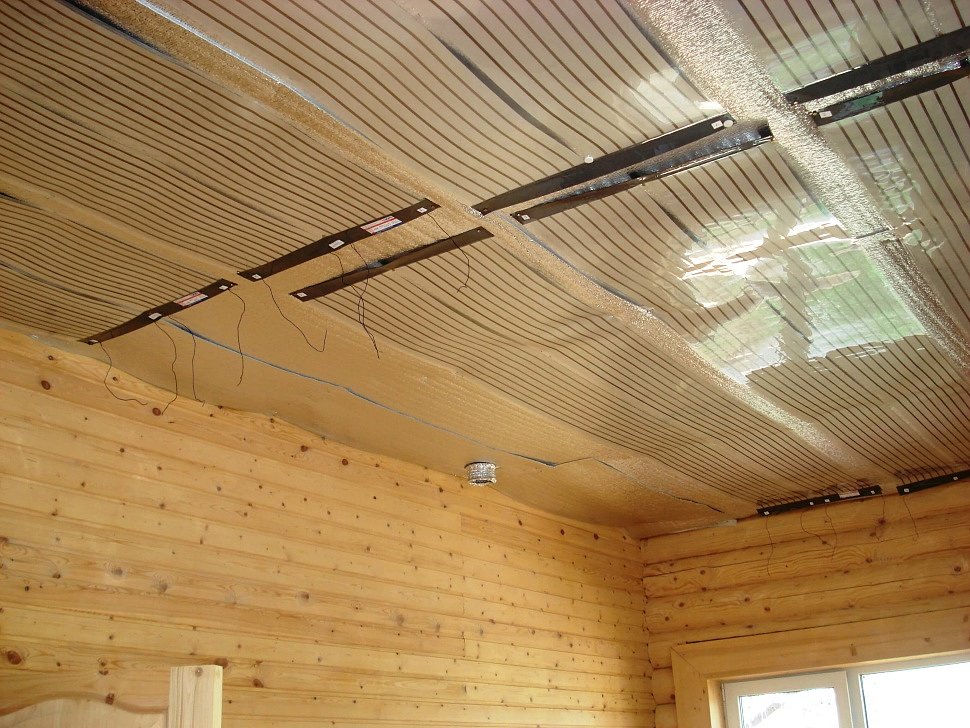
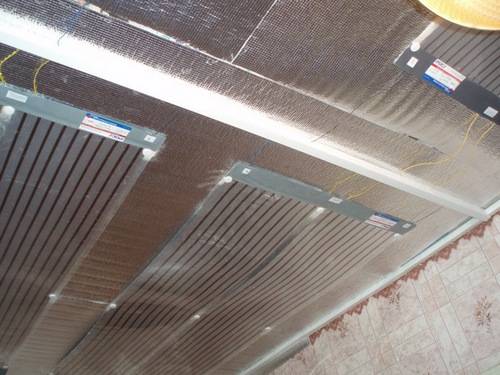 Film heater mounted on the ceiling
Warm ceiling
- The main advantage of a warm ceiling
- The lack of a warm ceiling
- Installation of a warm ceiling
The main advantage of a warm ceiling
So, the most important argument in favor of using infrared heating is precisely the low power of this type of heating compared to other heating systems.
For example, the power of a water-heated floor system averages 50-80 watts per square meter. And the power of films for a ceiling heating device, declared by the manufacturer, is 15 watts. It's great of course. But not everything is so simple.
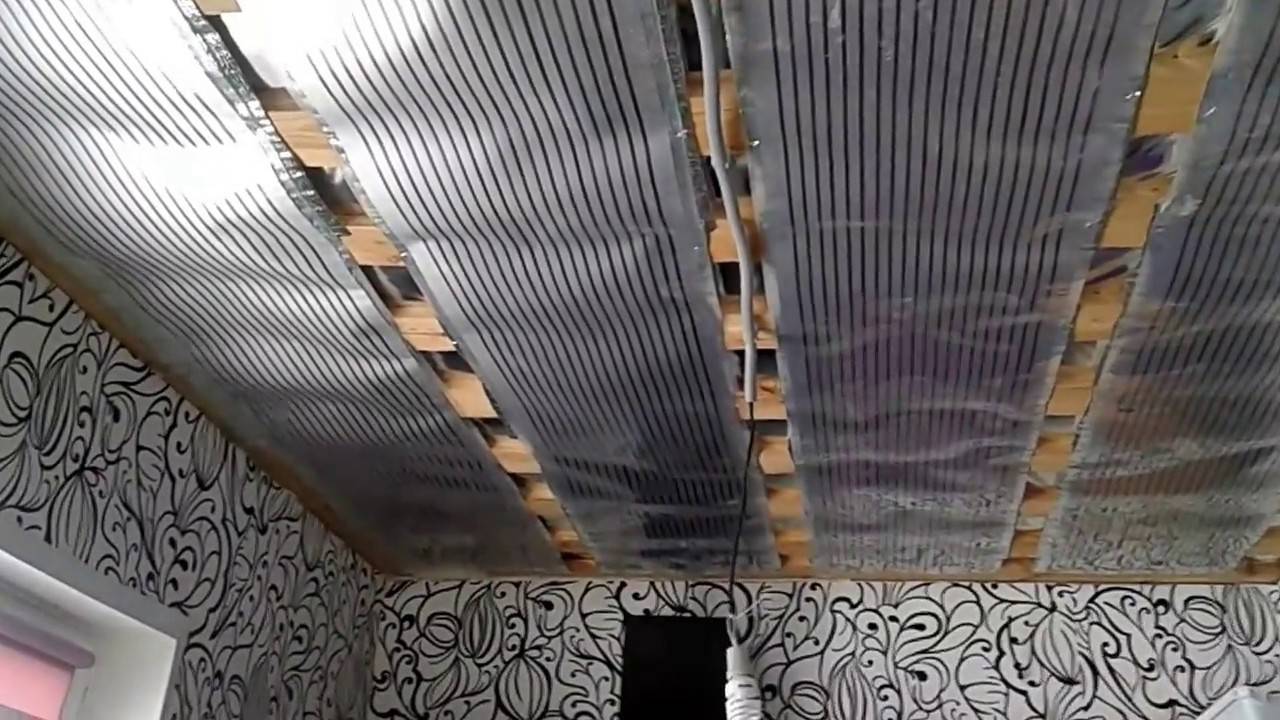
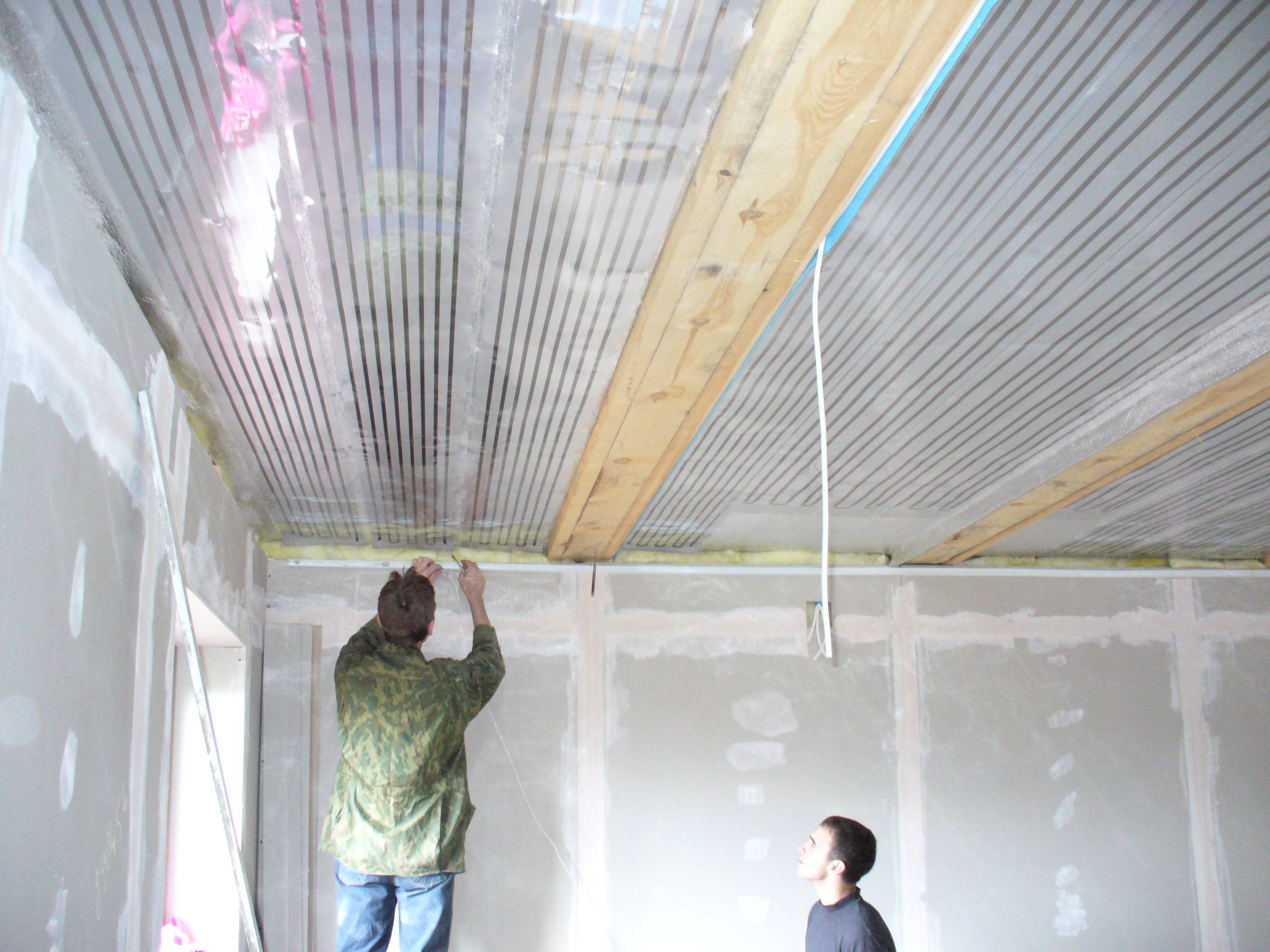

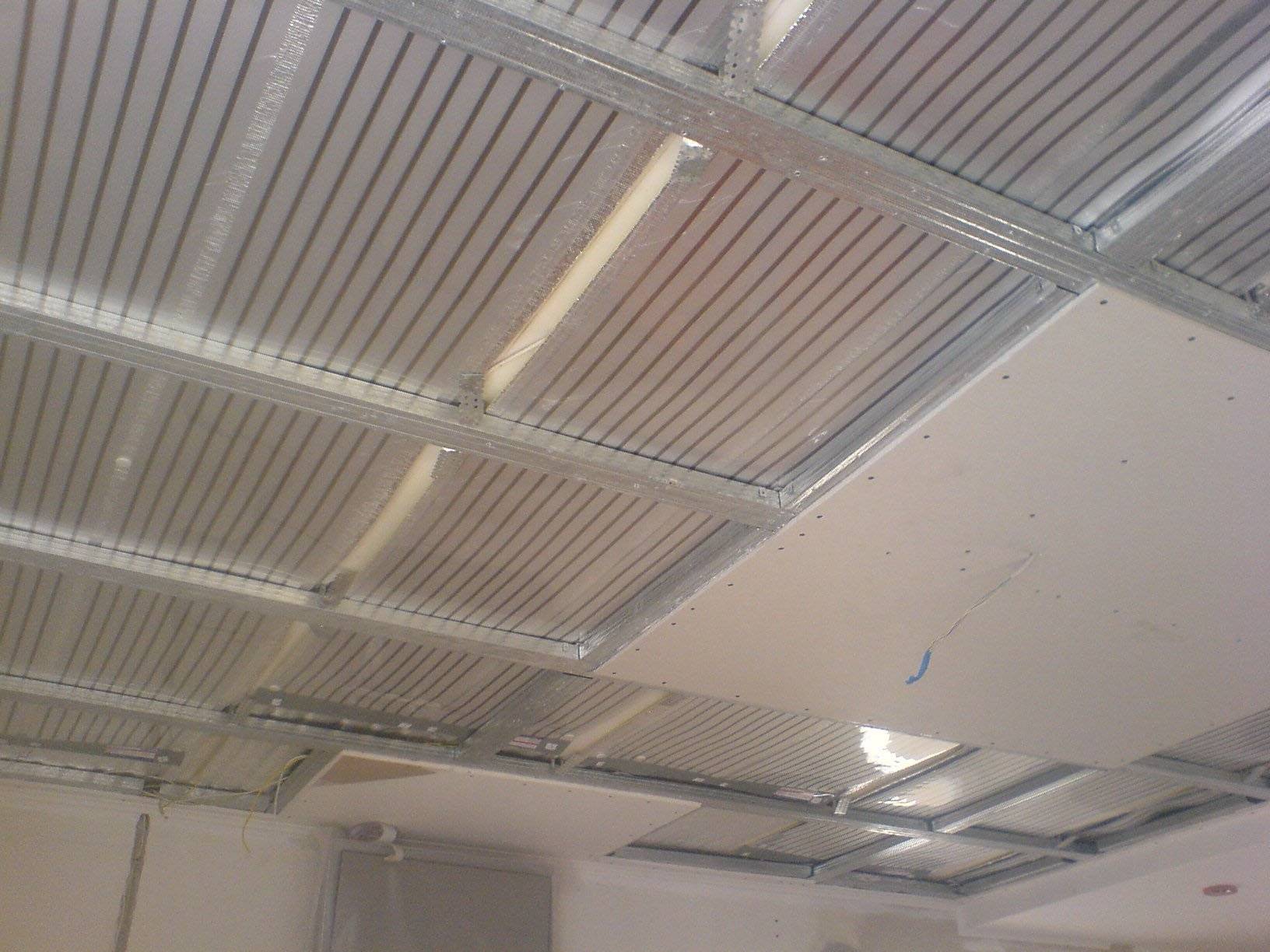
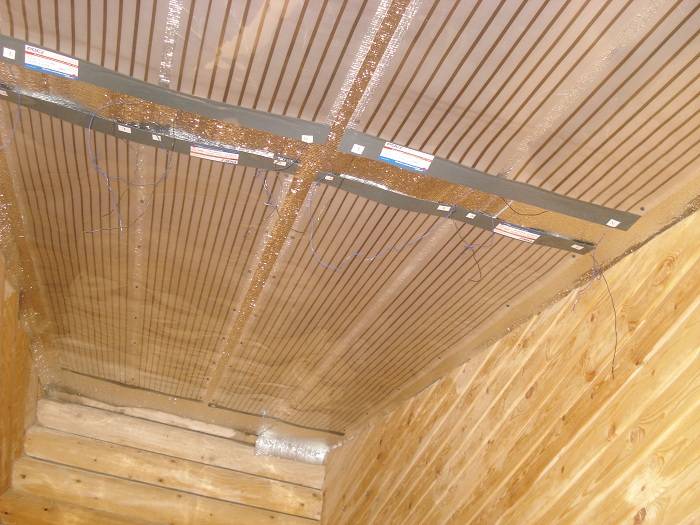
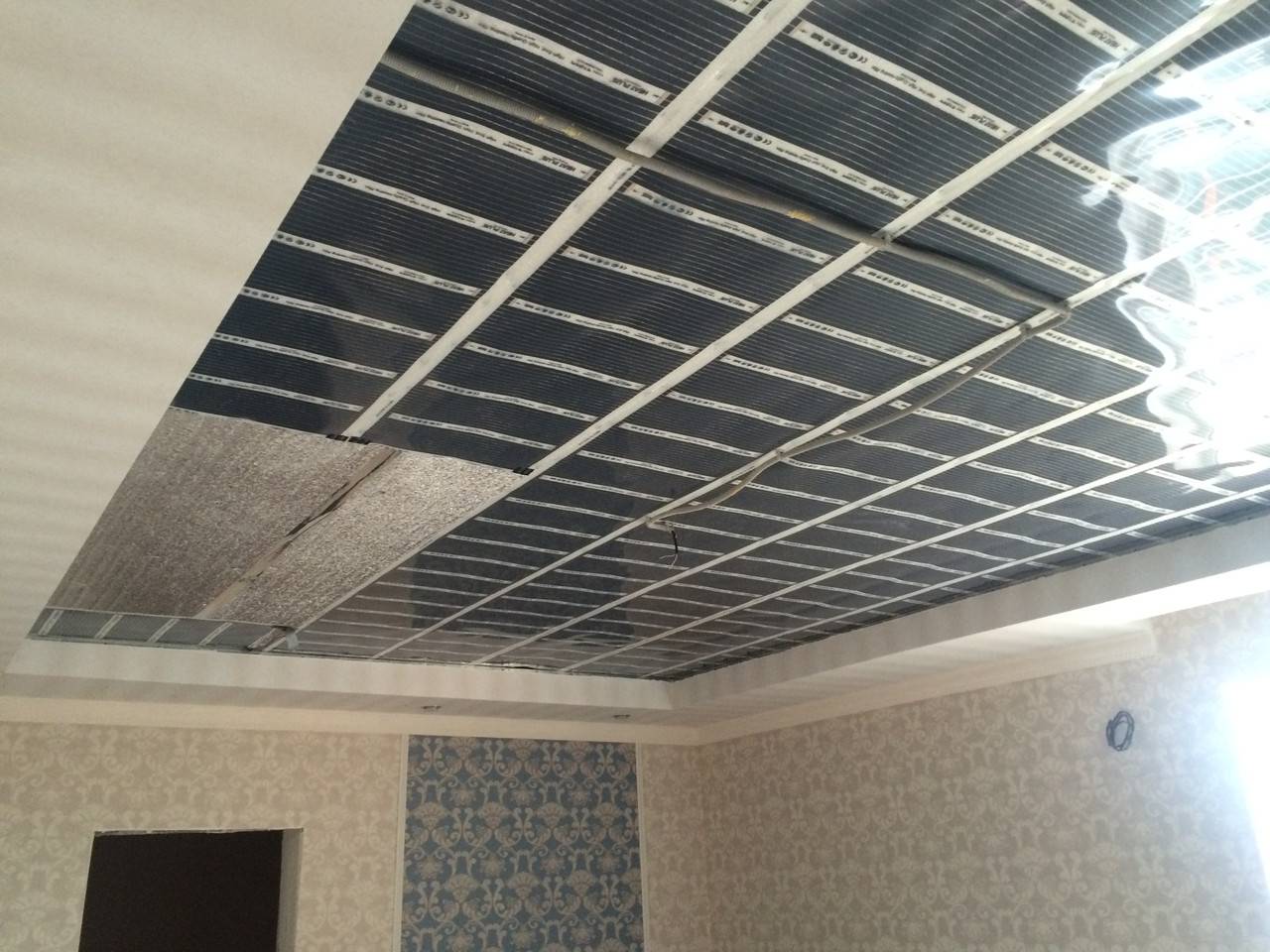
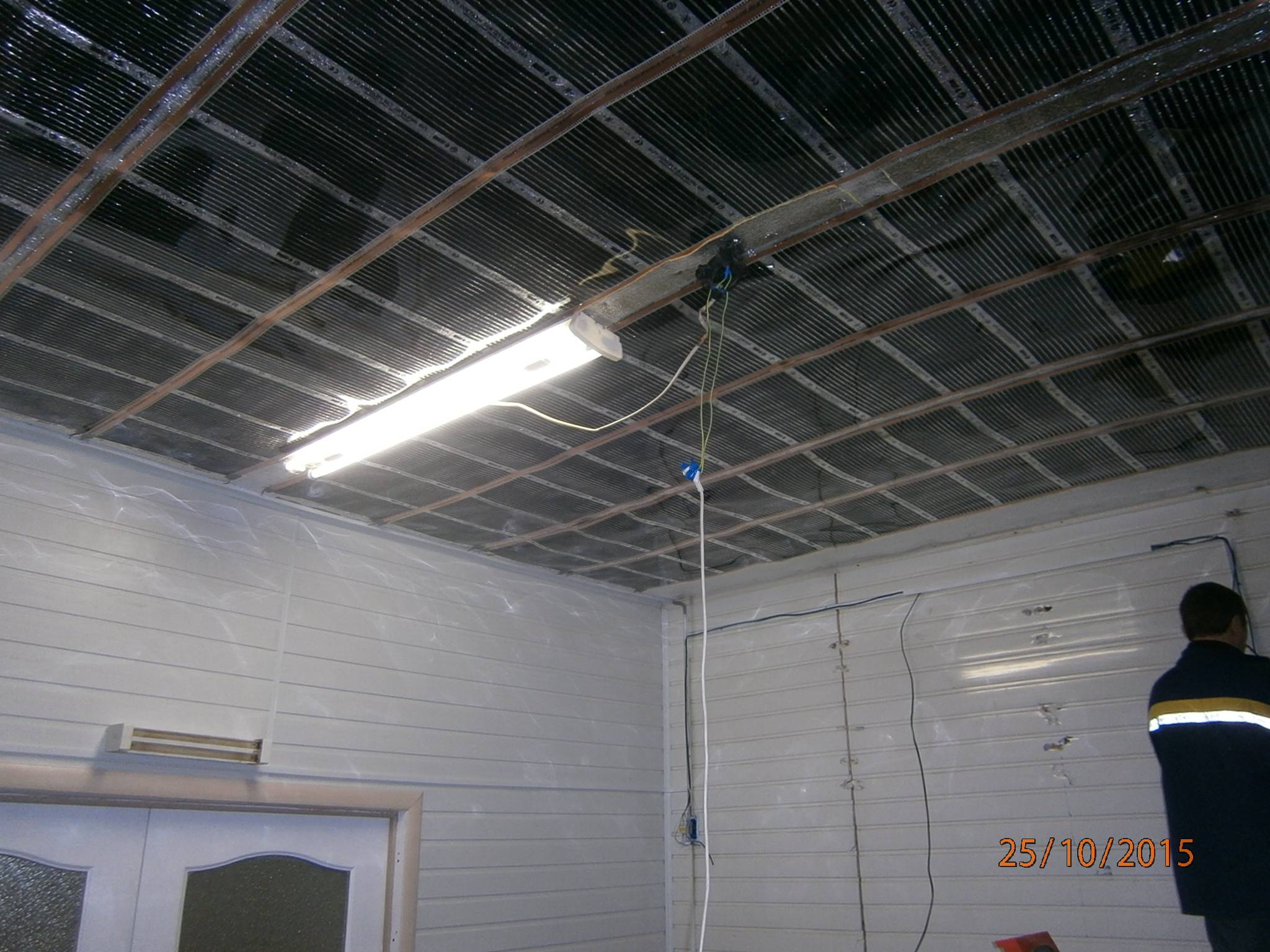
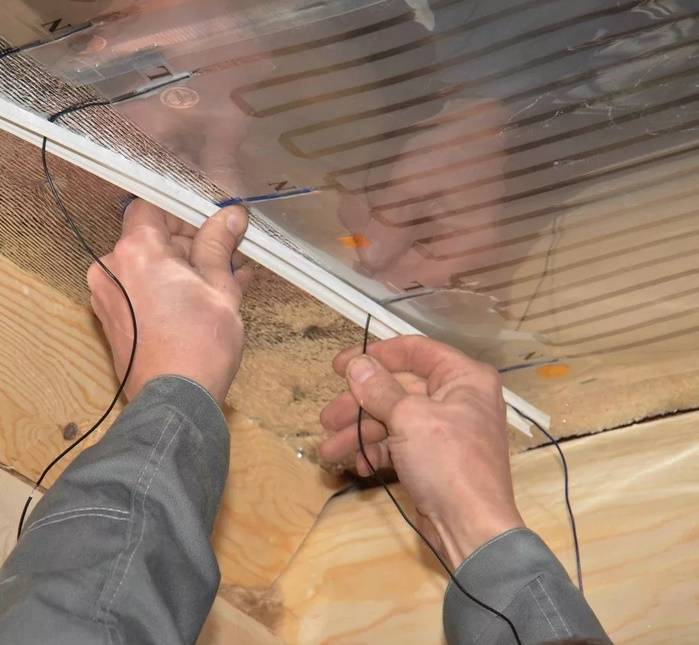
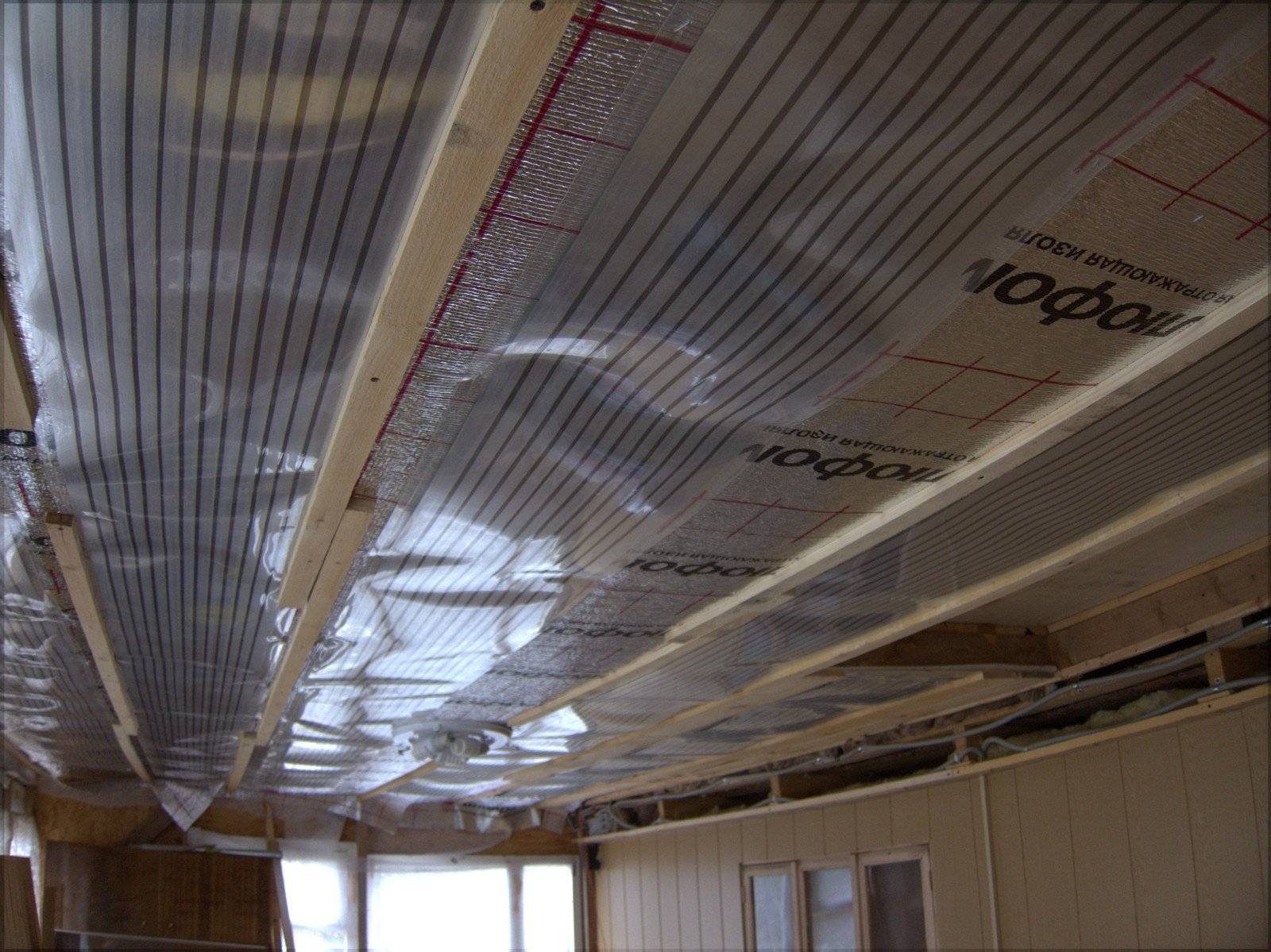
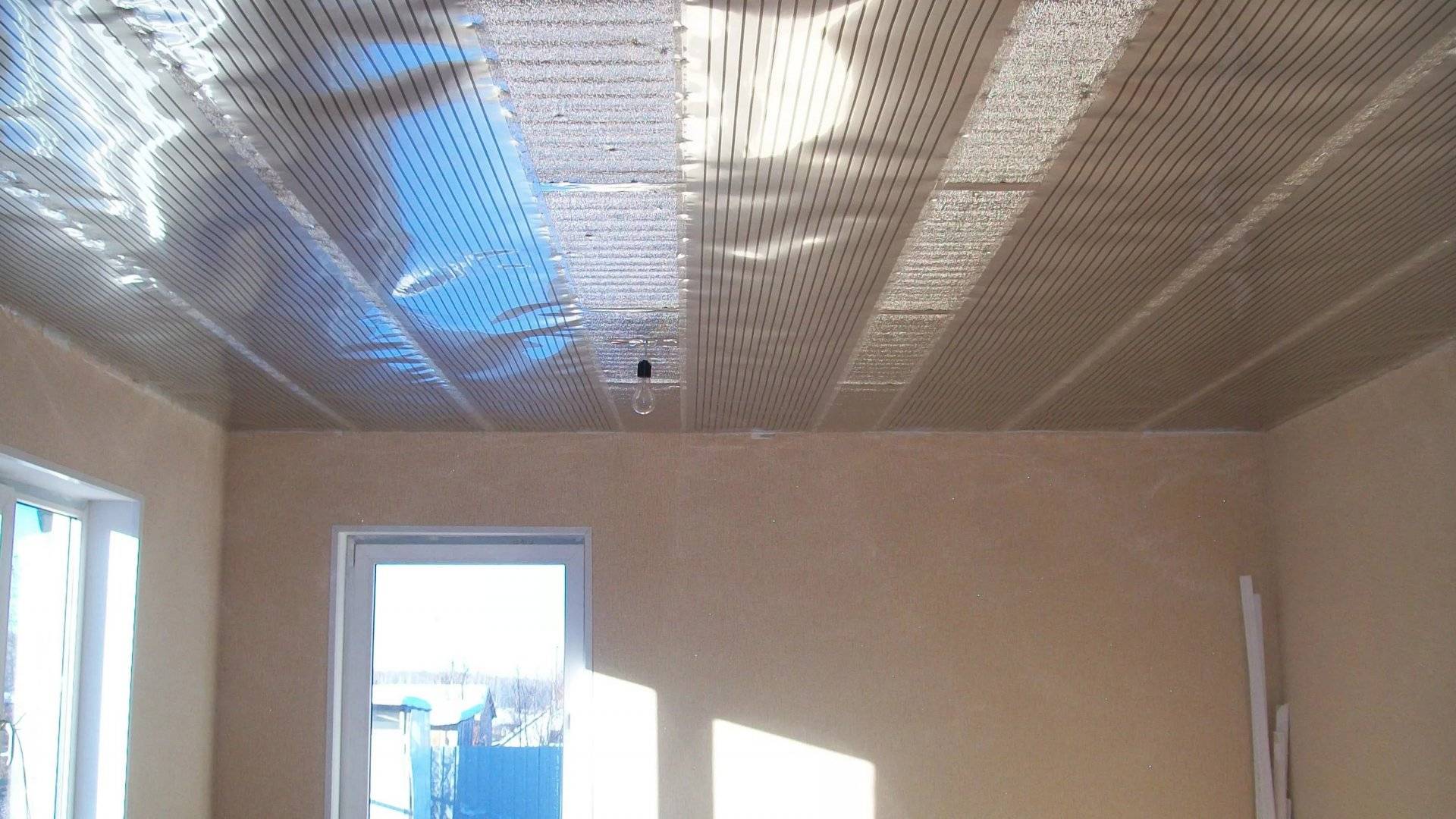
To mount the heating film on the ceiling, it is necessary to mount the lathing, mount heat-insulating mats, mount the reflector layer, and only then mount the heating film.
At the same time, you need to understand that the heat loss of your home or premises should be minimal. Otherwise, the energy consumption when using a warm ceiling will be comparable to traditional heating systems.
This is of course cheaper than a device, for example, a concrete system for a warm water floor. But the quality is the only positive.
The lack of a warm ceiling
If you have warm water floors, then they can be heated by any boiler. For example, electric, gas, diesel, solid fuel, heat pump, solar collector and so on.
But the infrared heating film works only on electric energy. Thus, if the electricity is turned off, you will be left without heating.
According to the principle of heating, warm ceilings and warm floors are the same. Both of these systems work in the range of long-wave infrared heating.
Therefore, I would not consider warm ceilings as the main heating. As an alternative please. For example, you turn on warm ceilings during the day while you are at work. And at night, heat the stove or turn on another boiler.
It is also convenient to use ceiling heating in the off-season to maintain a comfortable temperature in the house without turning on the main heating.
Installation of a warm ceiling
When installing a heating film on the ceiling, it is necessary to pay attention to the quality of the connection between the supply cable and the film and the reliable insulation of this connection, since water leakage from the roof or upper apartments is not ruled out. And if the connection is poorly insulated, then you can get an electric shock or a fire can occur due to a short circuit with water. And if the connection is poorly insulated, then you can get an electric shock or a fire may occur due to a short circuit with water.
And if the connection is poorly insulated, then you can get an electric shock or a fire can occur due to a short circuit with water.
The next rule when installing a warm ceiling is precisely the permissible installation of a finishing ceiling at a distance of no more than 100 mm from the heating film.
In this case, the thickness of the finishing ceiling materials should not exceed 20 mm.
In addition to all of the above, a heating film for a warm ceiling device differs from a film for a warm floor device.
The film for a warm ceiling is equipped with additional reflective elements, which in turn allow you to mount warm ceilings with a height of no more than 4 meters.
To summarize the above, it is advisable to use warm ceilings in well-insulated buildings and premises as an alternative heating or in the off-season.
It is also convenient to use warm ceilings with an uninterrupted supply of electrical energy. Although today no one will give guarantees for an uninterrupted supply.
And to provide basic heating, you can use radiator heating systems, underfloor heating or any other system.
If you have questions about the installation of underfloor heating systems, then follow the links and you will receive comprehensive answers on the installation of water or electric underfloor heating.
If you have any questions on this topic, ask them to specialists and readers of our project here.
PLEN ceiling infrared heater
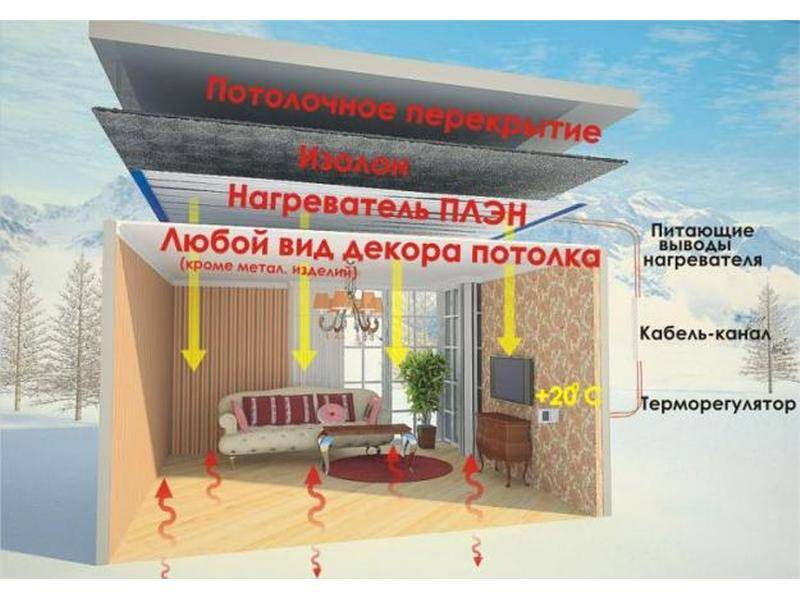
The work of film heaters placed on the ceiling occurs according to established physical laws. The system, which is in an activated state, emits infrared waves from top to bottom. Reaching the end point, these waves are absorbed by the floor surface. The rest of the radiation is delayed by furniture and other large-sized objects. Thus, at first there is an accumulation, and then the release of heat.
Then the laws of physics come into play, according to which the air heated from the floor rises. The air mass with a lower temperature sinks down and also heats up. As a result, the highest temperature in this room will be in the floor area. With increasing height, it gradually decreases and becomes the most optimal for the human body.


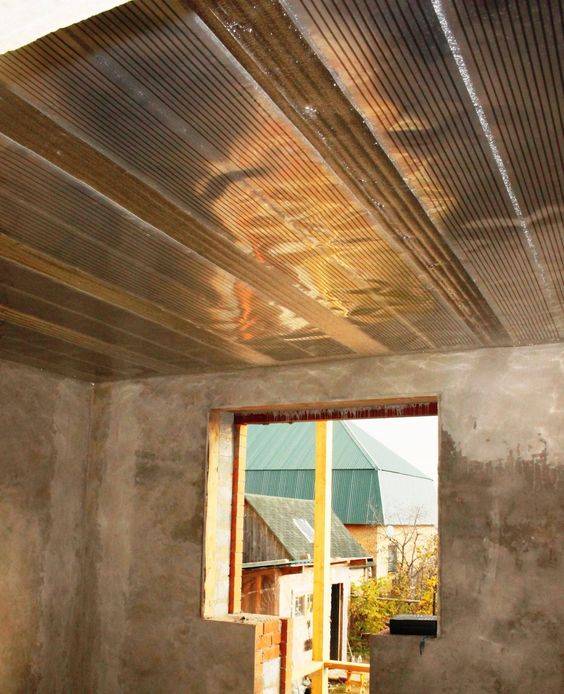
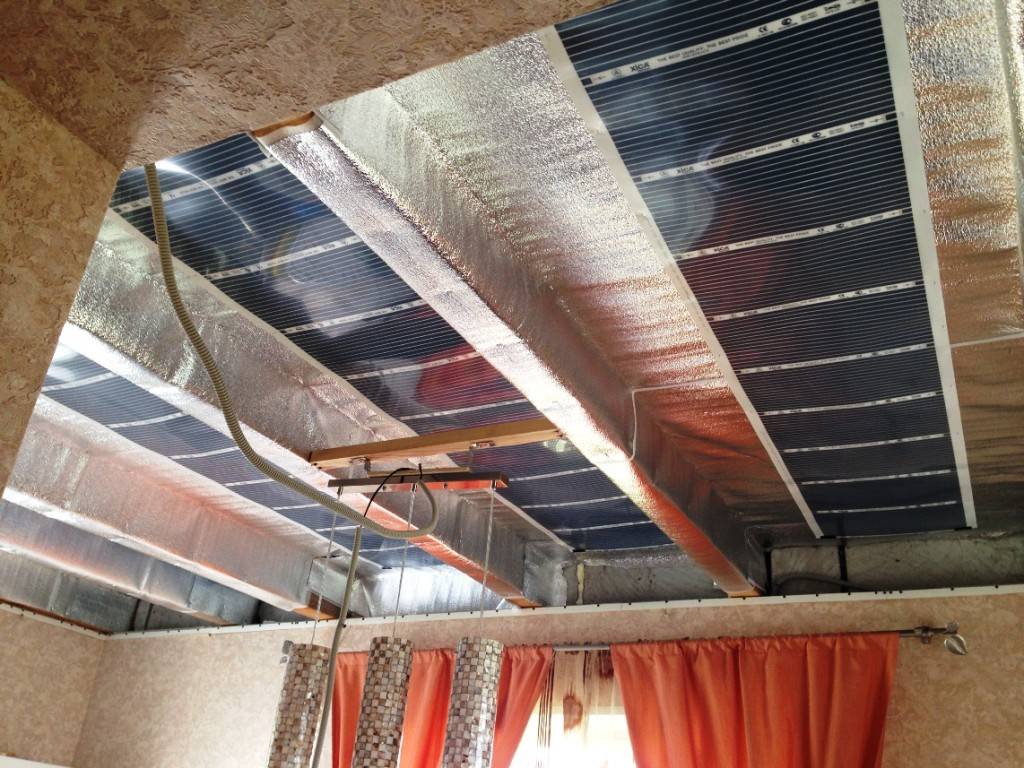

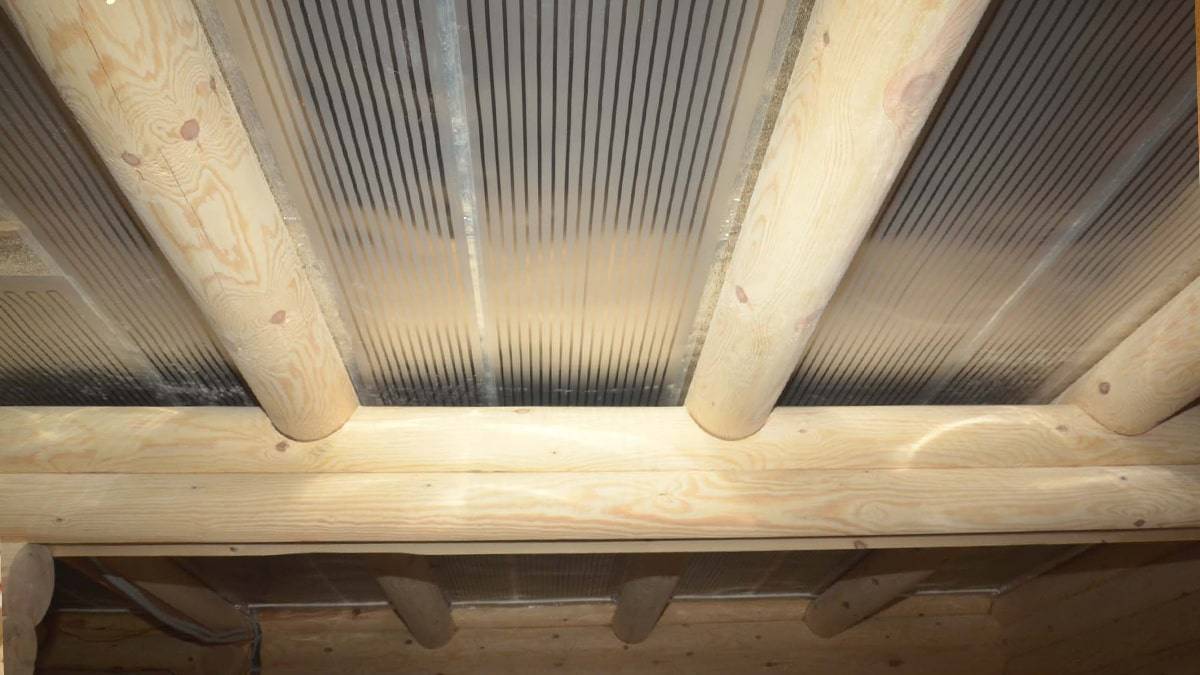

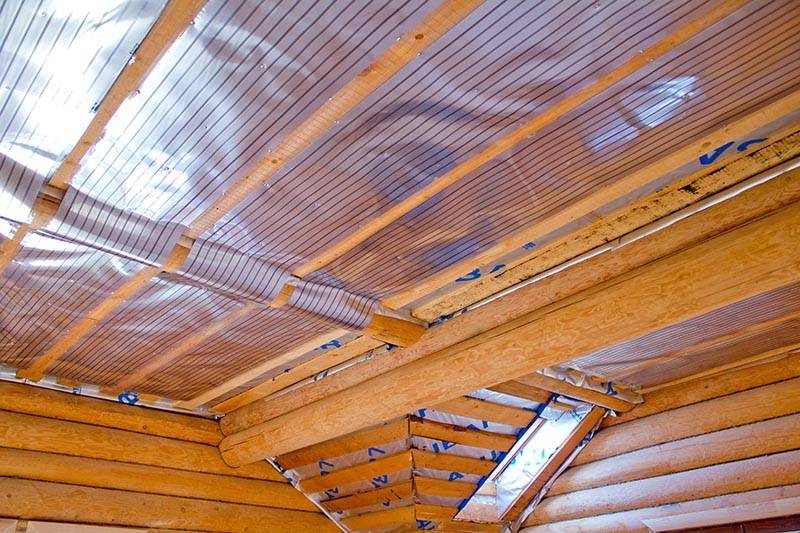
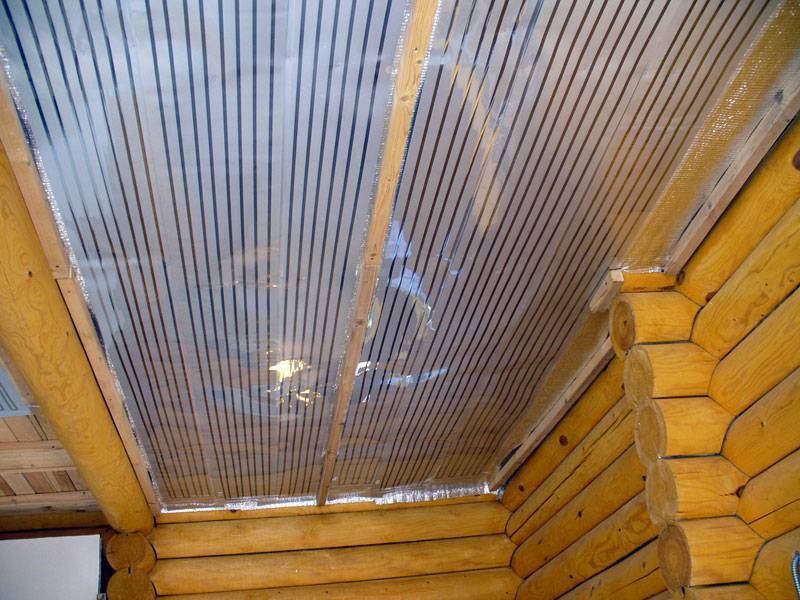
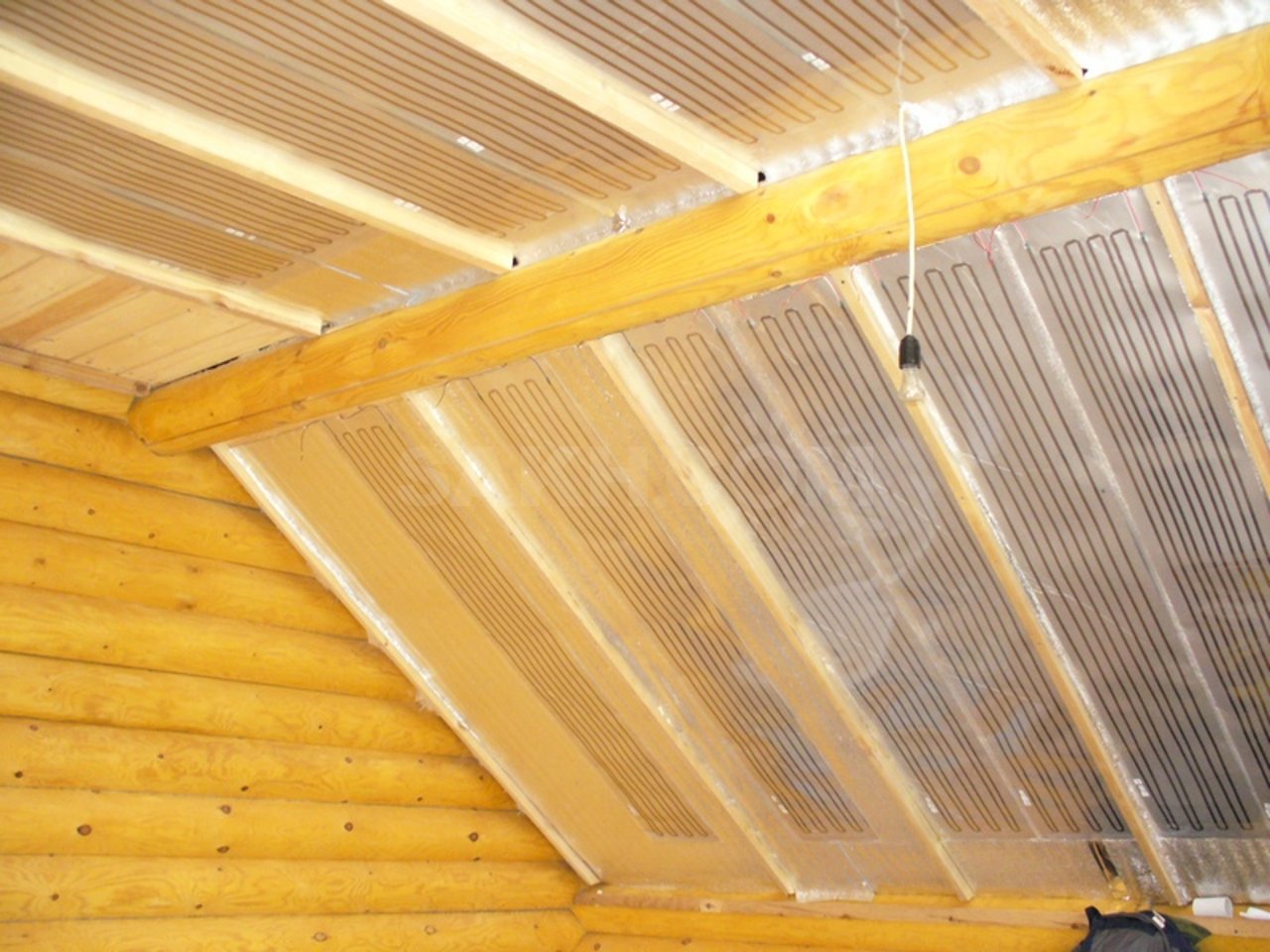
You can close the heating system installed on the ceiling with almost any coating from the available list of building materials. The exception is various types of stretch ceilings, which can be deformed under the influence of high temperature. If, nevertheless, it is necessary to combine PLEN ceiling heating with stretch ceilings, in this case it is recommended to install drywall for additional protection.
In addition, the PLEN heating system installed on the ceiling is less prone to accidental damage.However, in apartment buildings there is a high probability of flooding from the neighbors from above, after which the heating will completely fail. Another disadvantage that distinguishes the ceiling PLEN is a more complex and inconvenient installation, although technically it is practically no different from the floor version. This type of heating is not recommended for installation in rooms with a ceiling height of more than 3.5 m due to increased energy costs.
Advantages and disadvantages of the PLEN heating system
The following list shows the benefits, features and some important parameters of quality systems in this category:
- The conversion of electricity into heat is carried out efficiently, without unnecessary losses. The efficiency reaches 90-95%, which is 15-20% better than typical oil heaters.
- The temperature of external surfaces of PLEN heating films does not exceed +50°C. This means that no additional measures are needed to comply with the most stringent requirements of fire safety regulations.
- Close placement of the PLEN film heater near wooden and plastic parts is acceptable. This simplifies the installation and selection of suitable structural elements, finishing materials.
- At this temperature, mechanical particles that are contained in the atmosphere of the room do not burn out.
- Convection flows for any placement of the PLEN heating system are minimal. This prevents the movement of dust, pollution of the premises, the occurrence of allergic reactions.
- A small film thickness means an economical use of free space.
- IR emitters of this type are hidden behind decorative panels and functional coatings. They do not have any effect on the aesthetics of the interior.
- To connect such a heating system, the proximity of the main gas pipeline is not needed.
- Laying cable routes is cheaper than installing pipes. Working operations are facilitated by the low weight, high strength of film structures.
- Ceiling infrared heating performs its functions without chimneys, circulation pumps, boilers and boilers.
- Film emitters provide fast heating, operate completely silently.
- Their minimum inertia, together with the principles of control, are well suited for inclusion in modern control complexes of the “smart home” category.
- With appropriate equipment, it is not difficult to maintain the temperature in individual rooms with high accuracy (± 1-1.5 ° C).
- Good protection from external influences, combined with gentle temperature conditions, ensure a long service life. Modern models retain good consumer characteristics for 50 years and more.
"Pros" of PLEN: simple installation, inexpensive components, rational distribution of air temperature
According to reviews, a film heater really has many advantages. However, for an objective analysis, it is necessary to consider the “cons” mentioned by the owners and some specialized specialists.
The heating area is limited by the directivity of the radiation. Outside the corresponding zones, the air temperature is noticeably lower. To evenly maintain the temperature in the room, it is necessary to cover large areas with film emitters.
Despite the high efficiency and relatively low consumption per 1 sq. m. The PLEN will have to take into account significant operating costs. The cost of heating with electricity is higher these days compared to gas.To connect, you will need an appropriate power supply.
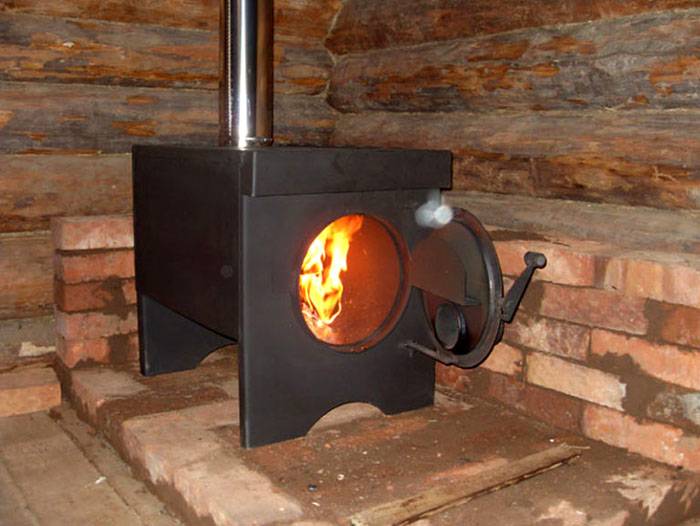
You can save extra if you install the simplest "potbelly stove" and engage in illegal logging
A serious analysis will help to more accurately assess the real costs when comparing PLEN with alternative heating systems. It can be done independently, taking into account individual needs, operating conditions
Pay attention to the following nuances:
- To use liquid heating systems, it is necessary to purchase and install radiators, pipes, locking devices, a boiler, and other components.
- In the process of using such equipment, it is necessary to provide reliable protection against freezing, to prevent the formation of scale.
- Storage of relatively inexpensive solid fuels would require a warehouse. Handling it is accompanied by additional labor costs.
Necessary tools and materials
In order to quickly and easily install an infrared heater on the ceiling, you will need the following tools:
- Drill or screwdriver (drill holes for fasteners).
- Pliers (for shortening wires).
- Indicator screwdriver (determine phase and zero).
- Metal detector (optional, used to search for wiring and metal objects in the wall, so as not to accidentally get into these objects when drilling holes. You can make a metal detector yourself from improvised means.
- A simple pencil and construction tape (mark the attachment points on the wall).
- Detachable electrical plug.
- Three-core copper cable, section 2.5 mm.kv.
- Wall mounts (purchased as needed, becauseCeiling brackets only included.
Having collected all the necessary list of materials and tools, you can proceed to mounting and connecting the heater.
Where and how to install an IR heater?
The location of the infrared heater depends on its type and heating plan. It can be installed on the ceiling, on the wall, with or without a slope.
Safety
Remember that installing IR heaters is working with electricity
Therefore, it is important to remain as careful as possible and follow the safety rules:
- Never install the heater near flammable objects.
- Wiring must be run over a non-combustible substrate.
- Fasteners must not touch the heating element.
- Do not install devices with a power of more than 800 watts for a residential building or apartment.
- Do not connect the heater to the mains until the installation is completed.
For best use of the heater in your home, place it near materials that have a high heat absorption rate, such as wood, carpets, stone walls. At
Do not install the heater near reflective surfaces, this will reduce the efficiency of the device.
The mounting surface must be strong enough, as some heaters can weigh up to 28 kg, although many are, of course, lighter in weight.
Location and height from the floor
Room
Recommended place
Bedroom
An area above the headboard so that at least ⅔ of the bed is exposed to IR.
Kitchen
The heater is recommended to be installed so that its rays are directed towards the window, the place where cold air flows from the street into the room.
Bathroom
On the ceiling, if this is the only heat source in the room, or opposite a small area where people most often visit, if the IR heater is considered as an additional heat source.
Hallway
On the ceiling pointing down to the floor. It stays warm and dries very quickly. The same goes for shoes - they also dry quickly and stay warm.

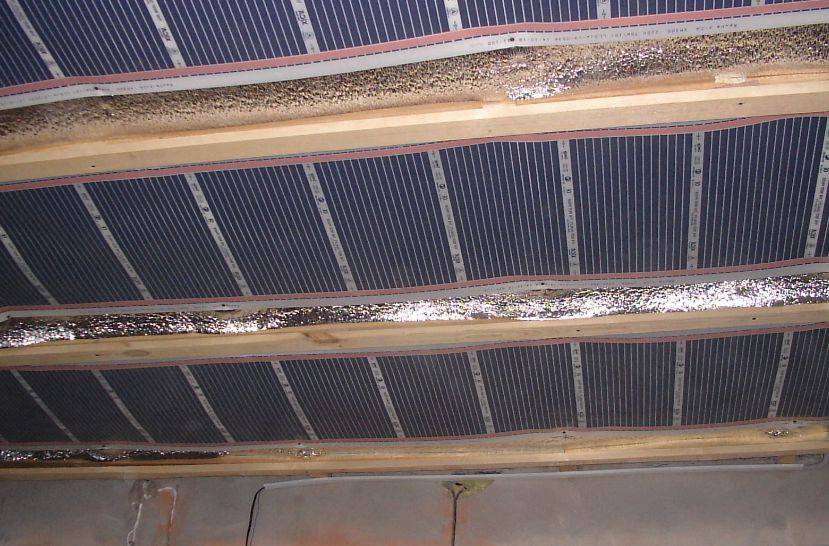


However, it is important to clean it so as not to overdry, thereby spoiling it.
Next Post
This is interesting: How to properly install the hob in the countertop: lay out the points
Selection Tips
In order not to be disappointed in the IR heater, you should take the purchase of this device responsibly and calculate everything in advance. Consider the following criteria carefully.
- The possibility of heating with other, cheaper options. For example, it is not entirely reasonable to install an electrically powered heater where there is gas. The latter option is still more economical. If gas is not available, then PLEN would be a good option.
- How much time do you plan to spend indoors? If the option of heating with the help of a film heater in a country house is considered, in which they do not live all year round, then you can make a choice in favor of decorative panels or infrared paintings. Installing a full-fledged ceiling or floor system in such a room is impractical due to its expensive cost, as well as labor-intensive installation.
- PLEN shows itself most fully in concrete and brick houses, but in buildings made of other materials, alternative options can compete with them.
- Before buying, you must check all the certificates for the purchased heaters.Unfortunately, not all sellers sell goods of good quality. Therefore, it makes sense to purchase products only from trusted and reliable companies.
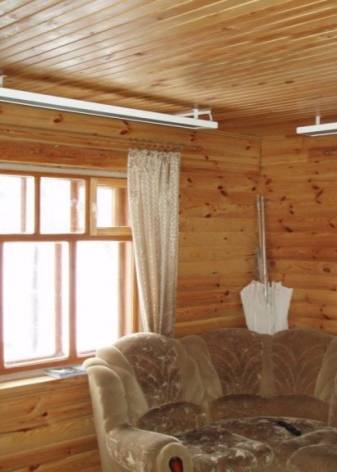

What is PLEN heating
Gas has made its way to many cities and villages of our country, but not all of them yet. We will talk about the option of heating without gas.
We have been talking about gasification of the entire country for so many years that it is already indecent to talk about it. Gas pipelines are slowly but surely penetrating into the most remote corners of Russia. And it begins to seem that access to blue fuel is in every home. However, this is far from being the case – gas is not available everywhere. Moreover, it sometimes does not happen even in completely gasified areas. Therefore, people are forced to use alternative heat sources.
With electrification, the situation is simpler - electricity has really made its way even to the most remote corners of Russia, delighting millions of consumers. Therefore, in some settlements, electricity remains the only source of energy for heating residential and non-residential premises. But electric heating has one small drawback - it is extremely uneconomical, which leads to gigantic financial costs.
Classic electric boilers allow you to heat any type of room without any problems. They have high efficiency, but the high cost per kilowatt and high consumption force consumers to pay huge sums of money for heat. And the larger the heated area, the higher the costs. Modern technologies become the salvation of the situation - this is PLEN infrared heating, which is characterized by economy and high efficiency.
What is PLEN heating and what is this equipment? The PLEN heating system works on the principle of infrared heating. It uses special film electric heaters that generate infrared radiation. It is this that provides high-quality and relatively fast heating of the premises. How is PLEN heating equipment arranged?
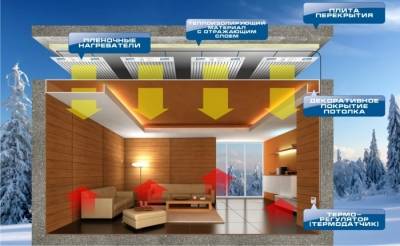
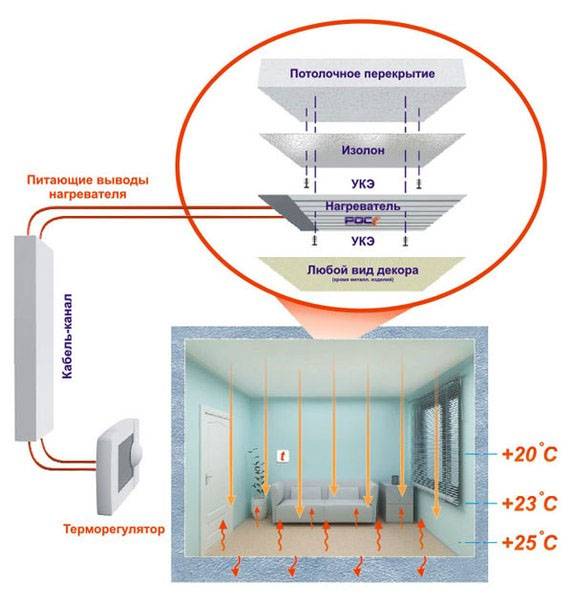
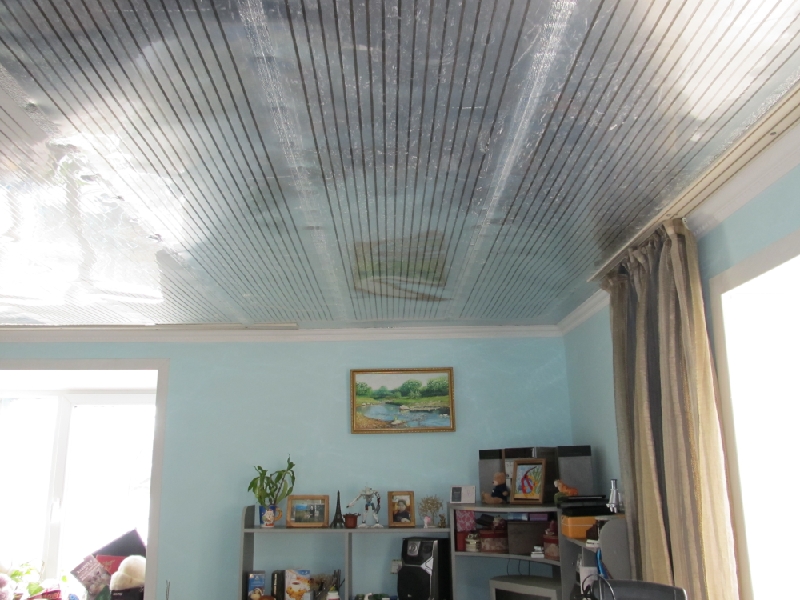
Film heaters are installed on the ceiling, behind a decorative coating. They themselves do not radiate heat, but only heat objects around them.
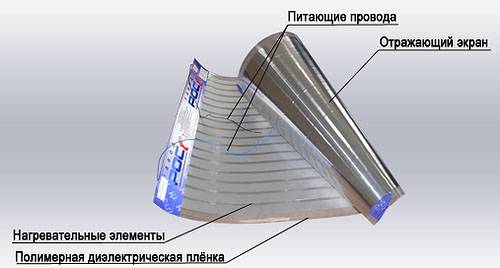
- mounting area required for fixing the film;
- heating (resistive) strips - this is the working body of the film;
- foil - reflects heat in one direction.
Here we can also find the wires with which the film is connected to the electrical network.
The infrared radiation created by the PLEN film penetrates the room and heats the objects in it - furniture, floors and much more. After some time after turning on the equipment, the rooms become noticeably warmer. To regulate the temperature, thermostats are used, through which the heating elements are connected.
PLEN is built on the principle of a multilayer "sandwich", and the main working fluid is thin resistive strips through which an electric current flows. The heating temperature is + 40-50 degrees. Thanks to this, PLEN is distinguished by fire safety. The infrared radiation generated by the resistive strips is directed strictly in one direction, which must be taken into account during installation. The film itself (PLEN) is placed on the ceiling.
According to its principle of operation, PLEN resembles a film for infrared underfloor heating, but differs from it in its design and installation features.
As we have already said, a PLEN film placed on the ceiling generates infrared radiation. Reaching the floors, walls and any objects, the radiation heats them up, as a result of which they begin to emit heat. A notable advantage of such heating is that the air temperature near the floors is slightly higher than the temperature in the center of the room. It will appeal to those who constantly have cold feet.
Installation of infrared ceiling film
In the event that this system will act as the main source of heat, it is recommended to first fix the mats on the surface, which will occupy about 80%. If an infrared ceiling heater is used as an additional heat source, then it is enough to install mats on 30% of the total area of the entire ceiling surface.
Before proceeding with the installation work, it is necessary to first correctly calculate the power level of the heating elements. Thanks to the calculation of power, it will be possible to choose a thermostat. For example, a thermostat consumes 4 kW, for each sq. m of film accounts for 0.2 kW. In this case, the surface area should be up to 20 square meters. m.
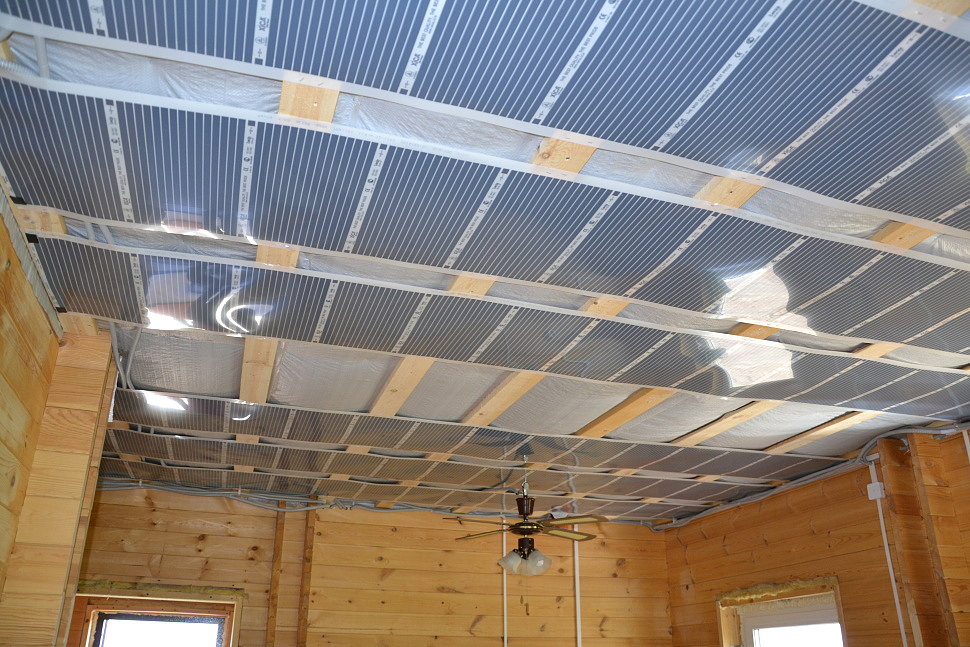





After that, proceed to the installation of thermal insulation materials. If it is planned to install an infrared heater in a multi-storey building with a concrete floor, then due to thermal insulation, heat loss can be prevented. In wooden houses, thermal insulation prevents heat dissipation and, as a result, drying out of the wood.
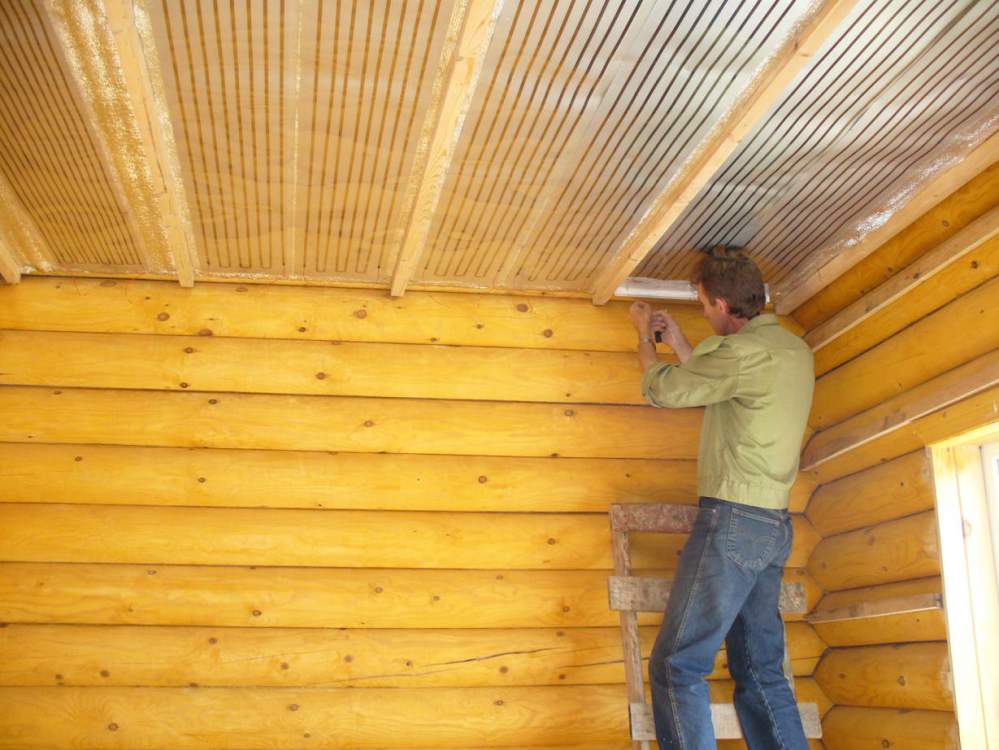
For insulation, you can use foamed polystyrene, which is covered with a layer of foil on one or both sides. The material should be fixed to the ceilings using refractory dowels for this purpose. Joints are recommended to be glued with adhesive tape made of foil. Only after that you can proceed with the installation of a film ceiling heater.
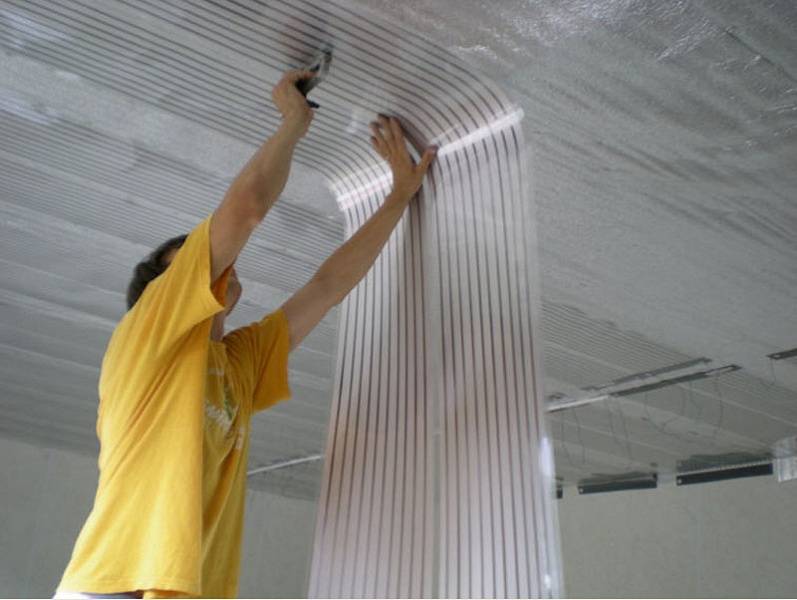
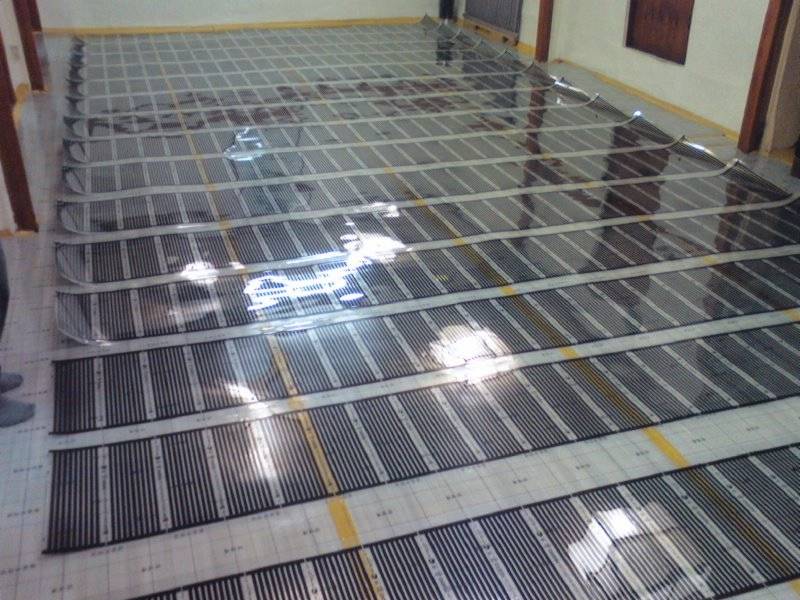
When attaching an infrared film sheet, it is necessary to first step back around the entire perimeter from the walls of about 35 cm. A distance of up to 5 cm should be left between the strips. The infrared film should be placed parallel to each other on the ceiling surface. During the work, it is recommended to follow a special scheme, according to which the heating elements should not be located above the sleeping places and electrical appliances.
After all the elements have been fixed, it is worth checking the performance of the system. To do this, you have to connect the terminals to the copper busbars and clamp them tightly with pliers, the connection points must be securely insulated.
To interconnect infrared film sheets, electric copper wires are used, which have a minimum cross section of 2.5 square meters. mm. If necessary, the wires can be masked; for this, a strobe is made in the walls using a perforator, which is then covered with plaster.
Attention! If necessary, you can install an infrared warm floor on the ceiling.
Specifications
The price of PLEN depends on the size of the film and the power. On average, in Moscow and the Moscow region, the cost is 1,200 rubles / m 2.If compared with conventional oil radiators, the efficiency of which is not more than 75%, then based on the data in the table, it turns out that thanks to the PLEN, the power consumption per 100 m 2 is reduced by 10-15%. In fact, the efficiency depends on the degree of insulation of the housing, the thermal conductivity of the finish coat under which the heater is mounted, and the correct installation. In addition, as is known from physics, the amount of energy expended is equal to the amount of heat generated. That is, reviews about the operation of PLEN, as economical heating, do not correspond to reality.
The convenience of the infrared heating system lies in the fact that it allows you to organize local zones. Film-radiant electric heaters are quite light and do not create additional load on the supporting structures. They are suitable for all surfaces: floors, walls, ceilings. Applications are not limited: from small apartments to shopping pavilions.
A review of infrared heating based on PLEN reveals a fairly wide list of advantages:
- Does not burn oxygen - the effect of stuffiness in the room is not created.
- Doesn't dry out the air.
- No service required.
- The stated service life is an average of 25 years.
- Simple and quick do-it-yourself PLEN installation.
- Quiet during operation.
- No toxic emissions or unpleasant odors.
- High degree of fire safety even in wooden houses.
- Takes up virtually no space.
- Helps to eliminate moisture.
- When installed under the floor covering, PLEN maintains a comfortable floor temperature.
- Suitable for any finish layer except metallic and mirror.
The heater is produced in rolls, laying is carried out on the floor, walls and ceiling by specialists or independently. The kit includes a thermostat, through which the intensity of radiation is regulated.
According to reviews, heating a country house with a PLEN mounted on the top floor is not very effective. Warm air accumulates near the ceiling, it feels like the head and upper body are heated mainly, and the legs, on the contrary, get cold. From this we can deduce the following disadvantages of the infrared heating system:
Irrational distribution of heat flows.
The cooled room warms up for a very long time, that is, there is an extra cost of electricity.
Any mechanical impact on the heater will damage it, so care must be taken when working.
The surface under the film-radiant emitter must be perfectly flat, hard and dry.
Maximum efficiency is achieved in a well-insulated building.
Feedback on infrared heating PLEN
“I saw enough advertisements and decided to buy a ceiling heater for a house under construction. Unfortunately, he quickly became disillusioned. An oil radiator of the same power heats much better than an infrared one. At the same time, the effect of the heater is felt only if you stand under it, the rest is money thrown to the wind.
Tricky meter that saves electricity. It pays off in 2 months! Everyone needs to know this in order to save money!
Konstantin Borugov, Kostroma.
“I was attracted to the system by the fact that it is not difficult to install a film-radiant electric heater on your own. The main thing is to follow the sequence.Practice has shown that infrared heating is good as an additional one, that is, when the house has warmed up from the boiler, it can be turned off, and the PLEN will maintain the temperature no higher than +22 degrees. It doesn’t pull anymore, why is not clear. ”





Maxim Bogun, Vyborg.
“I hung PLENs in the country house under the ceiling 4 years ago. While standing under the film, your ears are burning, and your feet are cold. As soon as you go outside the zone, you freeze completely. To warm up the house, they need not half an hour, as the advertisement claims, but at least 5 hours. And if you calculate how much the heating system of a private house PLEN costs, taking into account consumables (foil, etc.), it turns out that convectors of the same power come out 2.5 times cheaper.
Sergey Bondarev, Moscow.
Advantages
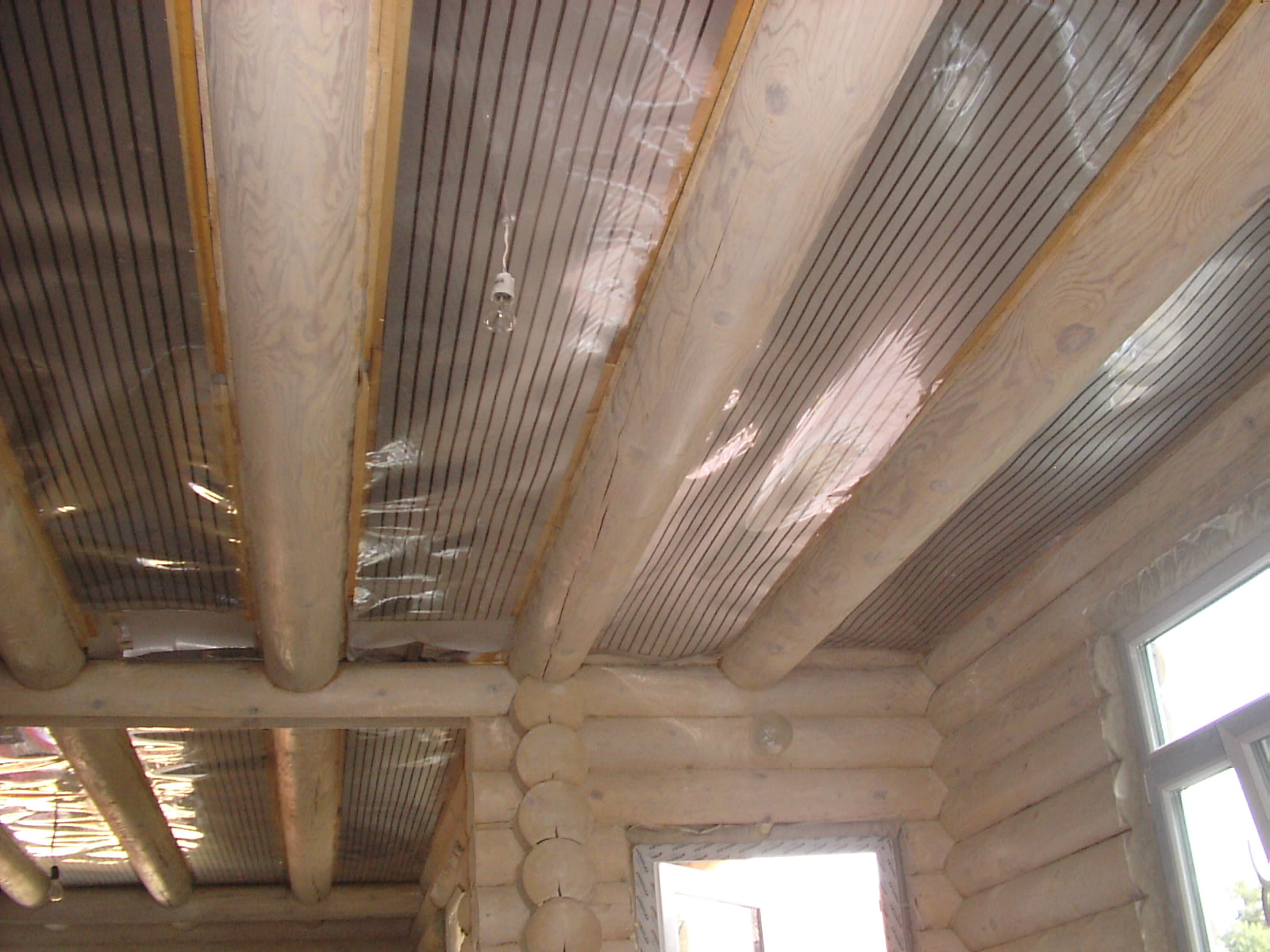
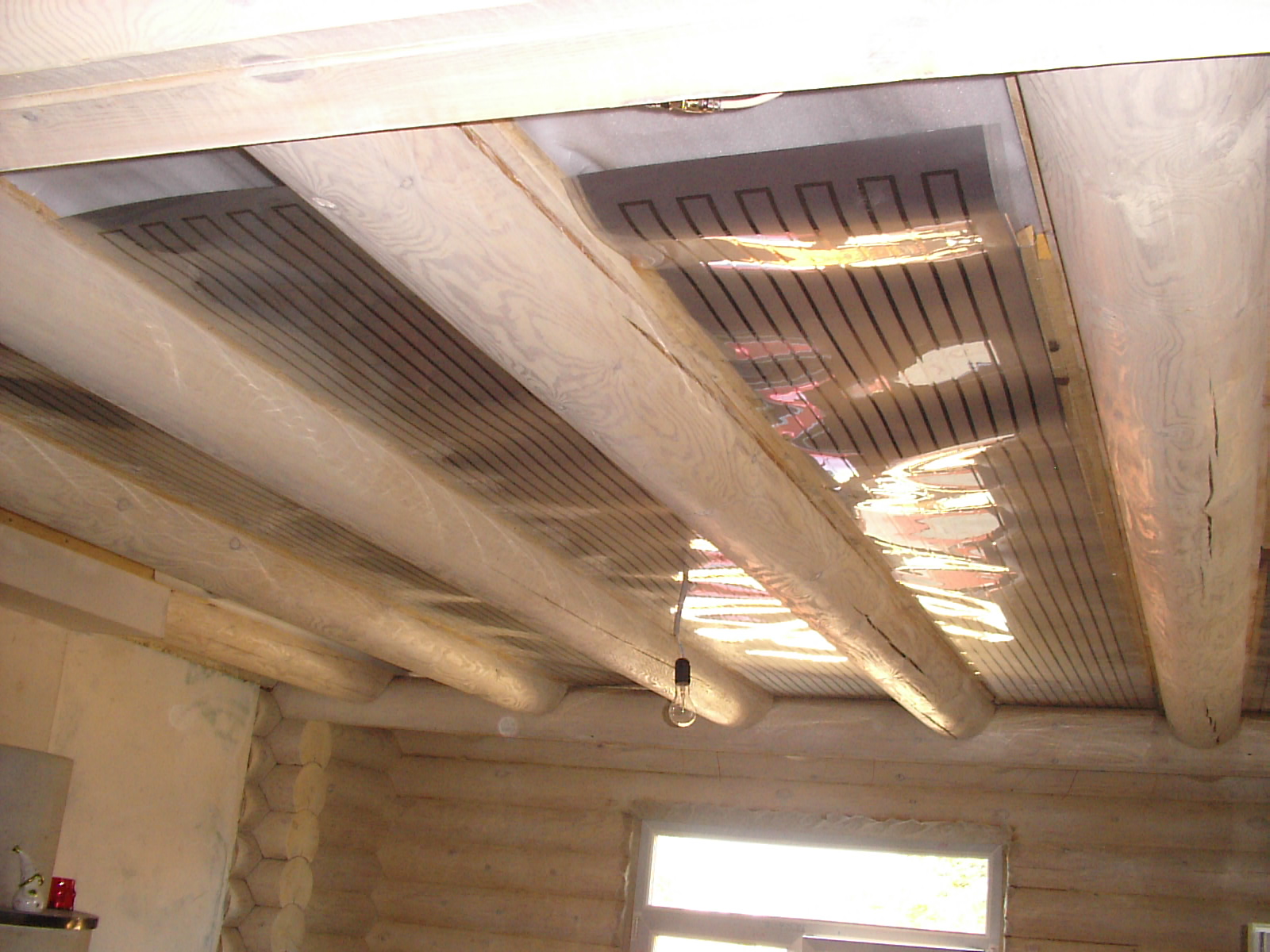
Installing the film on the ceiling
Consumers have managed to check most of the characteristics and benefits declared by the PLEN manufacturers. An approximate list of all the declared advantages:
- Does not burn oxygen, does not affect humidity.
- The minimum service life is 25 years, subject to the installation technology. The estimated period is 50 years or more.
- Service is not required.
- Lower heating costs compared to other systems - up to 70%.
- The system pays off, including installation costs, in 1.5-2 years.
- Easy assembly and dismantling for reinstallation in another location.
- Noiseless operation and no harmful emissions.
- Fireproof, provided with appropriate protection against electric shock.
- Absolutely eco-friendly.
- Does not take up useful space.
- The electromagnetic field is much smaller than that of most household appliances and is within the permitted background level.
- Not critical to drops and temporary power outages.
- Effectively fights dampness and mold on walls.
- High performance, fast warm-up - surfaces become warm immediately after switching on.
- Ease and automation of temperature control.
- Supports standby mode +10˚С.
- Decorated with any material except metal.
- Ionizes the air in the room. Such air and radiation itself are healthy and beneficial for the immune system.
- The floor is constantly warm - prevention of colds.
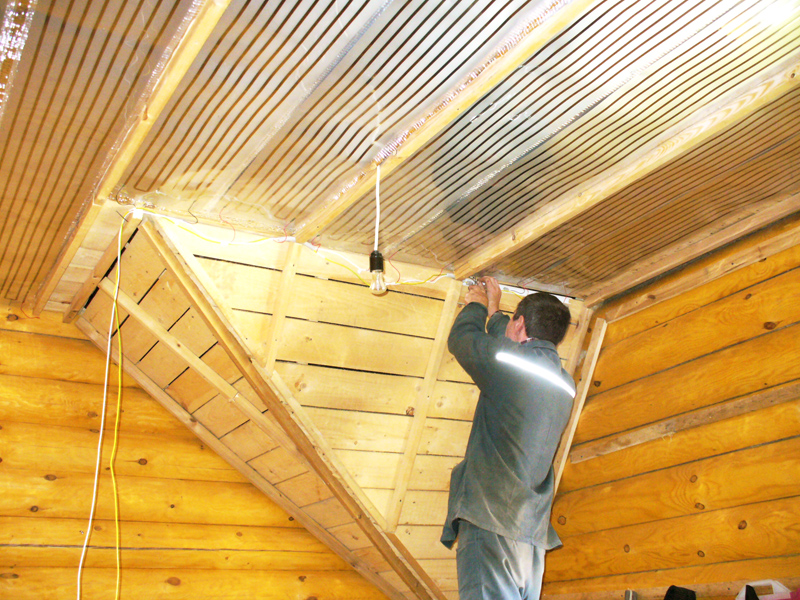
Installation of PLEN on a wooden ceiling by one person
Based on 1 sq.m:
- Efficiency = 89.9%.
- Protection class IP67.
- Rated supply voltage 220 V.
- Rated electric power 170 W.
- Rated current consumption 1.2 A.
- The radiation wavelength is 10 µm.
- Surface heating PLEN 45-50°C.
- Web width 0.33, 0.51, 0.65 m.
- Length 1-5 m.
- Thickness 0.55 mm.
- Weight 550 g/m 2 .