
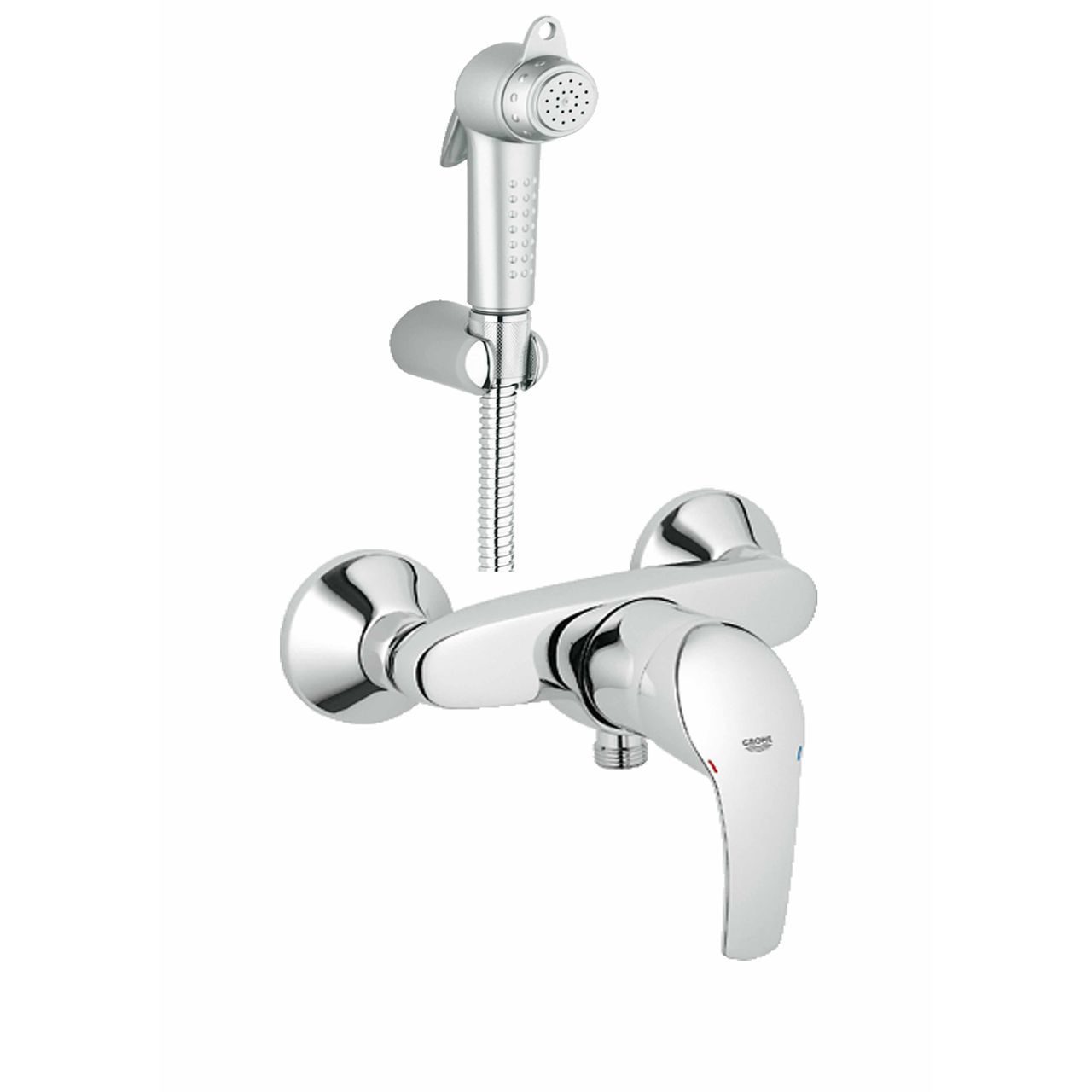
- Possible device installation options
- In the form of a shower toilet
- In the form of a bidet cover for the toilet
- In the form of a shower attached to the wall
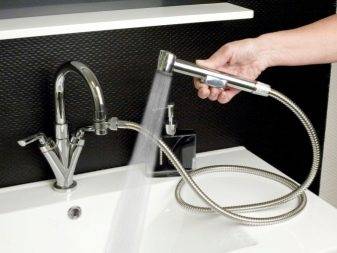
- In the form of a shower connected to the sink
- How to choose a shower faucet
- Features of mounting the device
- Design features
- overlay button
- Equipping the watering can with a reverse water flow valve
- Anti-lime coating
- Cleaning of deposits
- Number of nozzles
- watering can holder
- Features of the assessment of the main elements of a hygienic shower when choosing
- Hygienic shower mixers
- Shower head and flexible hose
- The best two-valve bath faucets
- Olive's Sanitarias Vasco (27231VS) - double coated
- Elghansa Praktic Bronze (2702660) - retro style
- Iddis Jeals JEASBL2i10 - designer model
- Types of shower spout
- Features and purpose
- Installation of a hygienic shower
- Installation of a wall-mounted shower
- Installing the faucet on the sink
- Built-in toilet shower
- Installation of the bidet cover
Possible device installation options
Installing a hygienic shower in the toilet has several advantages:
- ease of installation and installation variability;
- small design;
- multifunctionality in application;
- low cost;
- comfort in use.
Structural execution of the concept of "hygienic shower" is possible in four different externally and functionally options.
In the form of a shower toilet
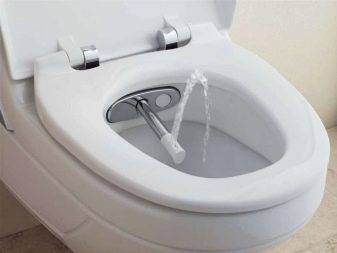
This equipment has a special design with nozzles built into the body, which are hidden under the rim when the bidet function is turned off. The control of the device is built into the drain tank, increasing its dimensions. So you can adjust the power and temperature of the flow, but the direction of the jet does not change with the adjustment.

Toilet combined with bidet
This type of plumbing fixture is produced in floor and hanging versions, it can be mechanical or electronic and is constantly being improved by manufacturers. Therefore, the functionality of the device directly depends on the manufacturer and cost.
In the form of a bidet cover for the toilet
A fairly compact and convenient option that is easily mounted to an old toilet model. In fact, this is a standard toilet lid of a special design, containing a fitting for the water supply. The control of the device is built directly into the cover, as a rule, it is able to heat water, dry and gently lower the seat.
The weak side of the design is the external water supply with flexible hoses. Often this does not look very aesthetically pleasing.
There are even fully electronic versions of bidet covers from well-known brands. The functionality and comfort of such elite sanitary ware differs significantly from conventional models, as does the price.

Electronic bidet for toilet
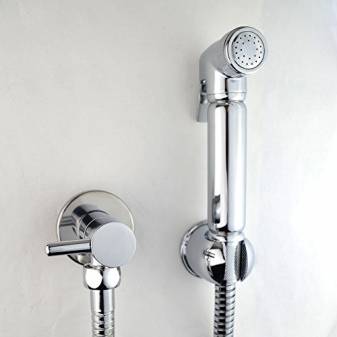
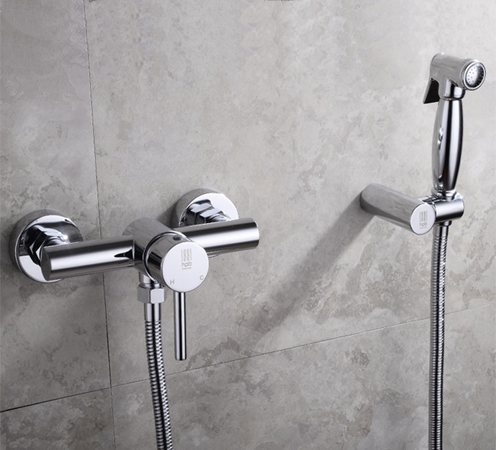
In the form of a shower attached to the wall
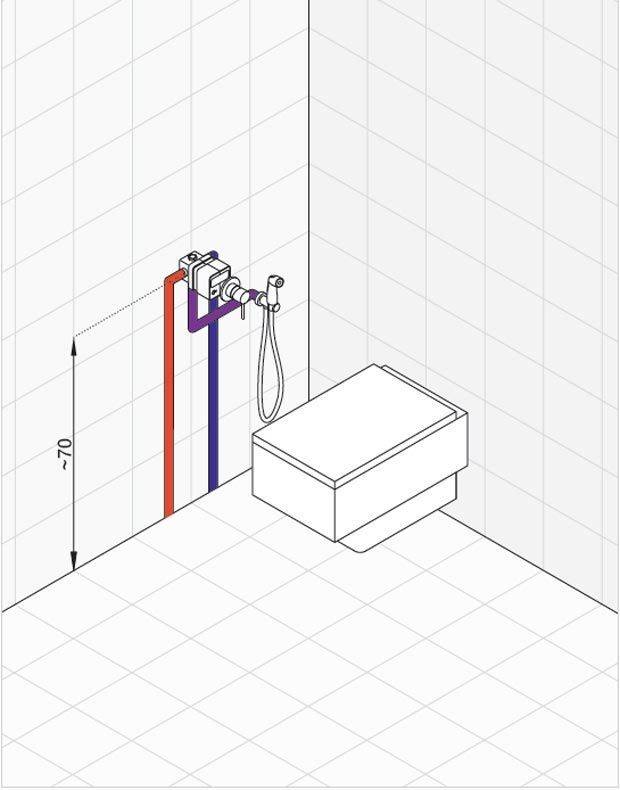
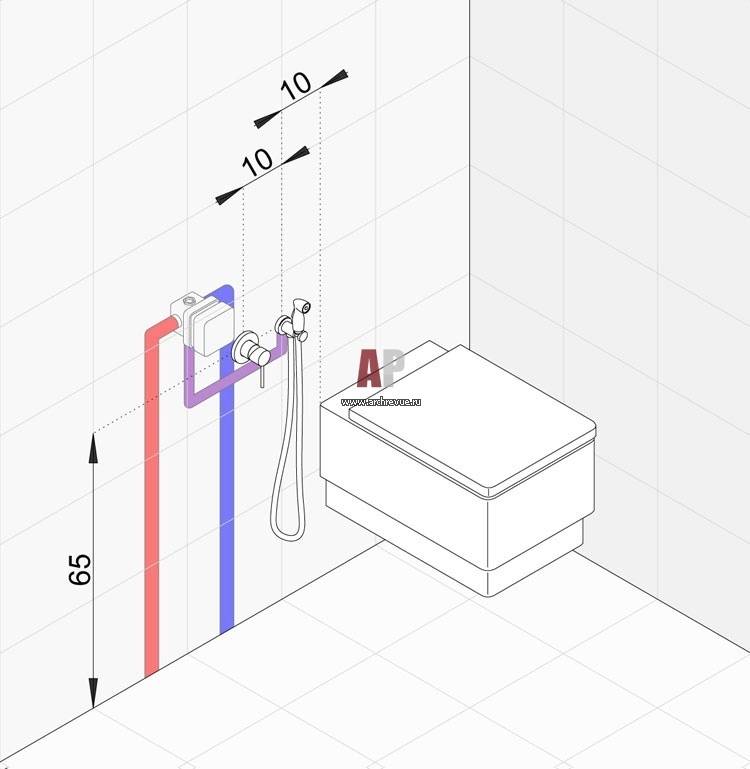
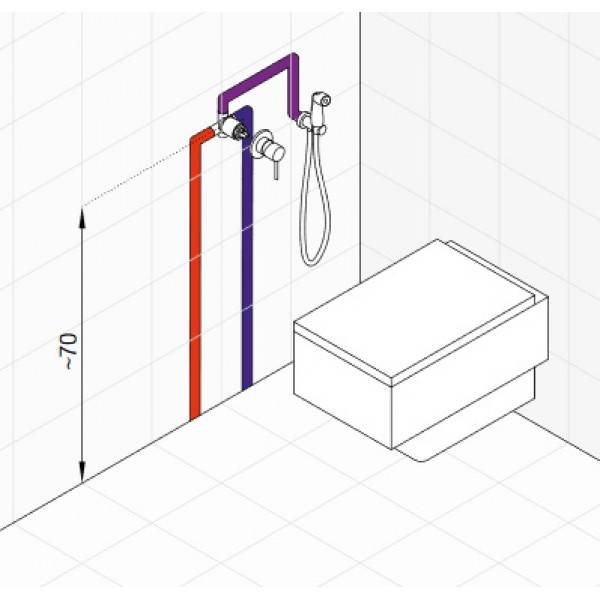
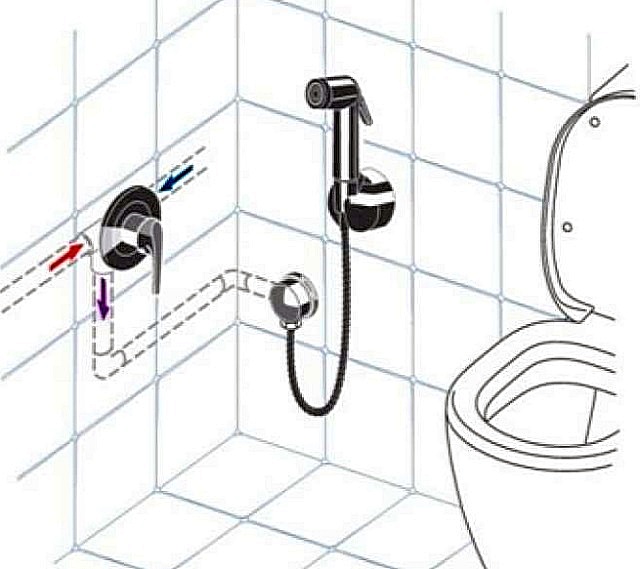
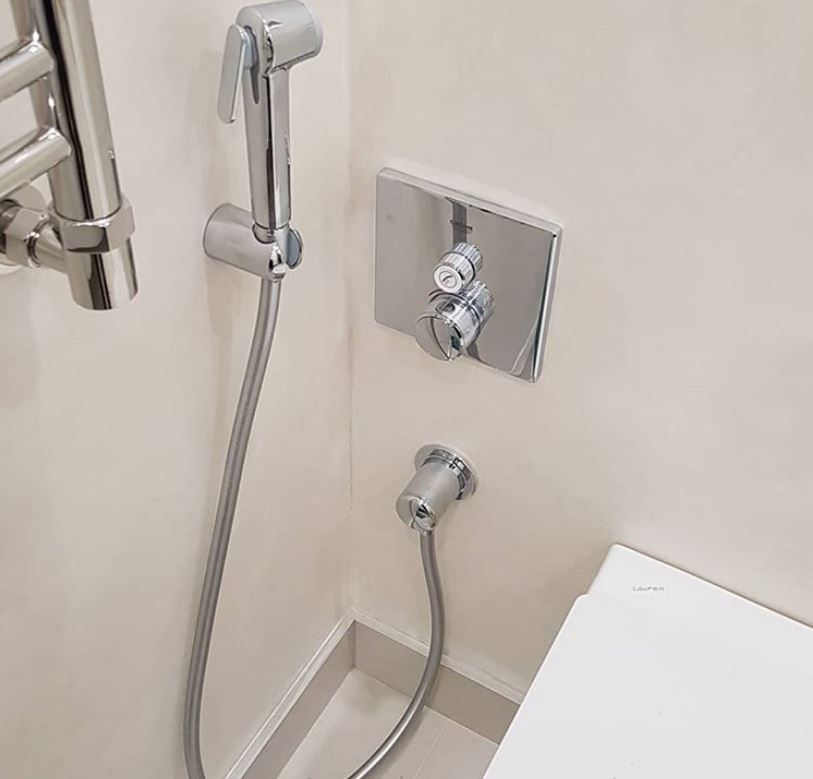
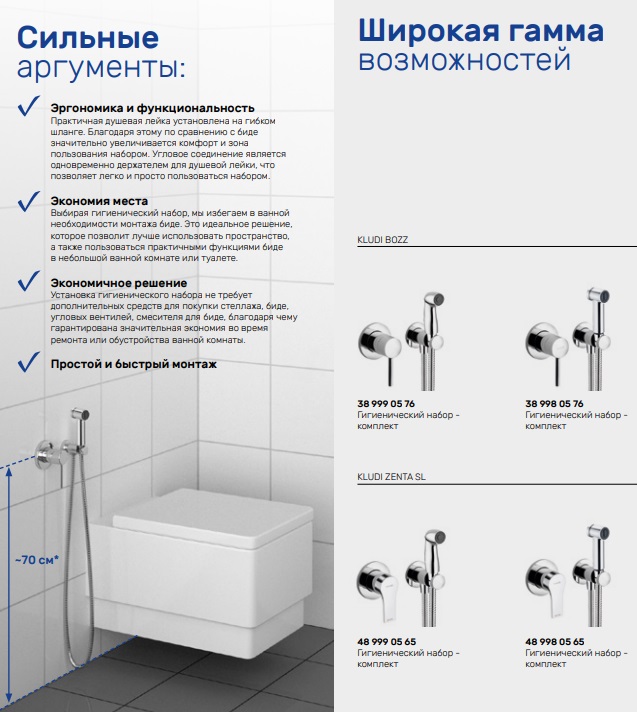
The location of the hygienic shower in this way is the most common and convenient. Installation is carried out directly to the pipeline, and the placement of a compact watering can on a long flexible hose is carried out on the wall. This will require some construction work.
According to the standard, the height of a hygienic shower from the floor should be 60-80 cm, and the length of the hose should be limited to 1.5 meters. It is not recommended that it touch the floor.
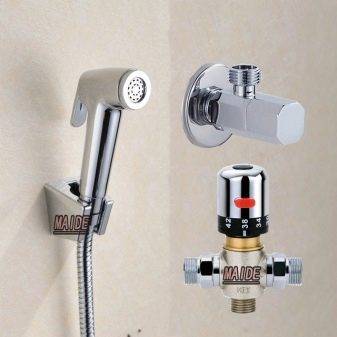
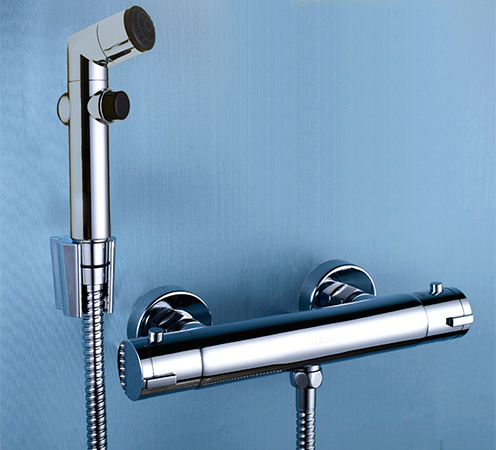
As a rule, this version of the mixer is not equipped with a thermostat. However, it will not be difficult for a competent plumber to install this unit directly near the water supply in an inaccessible place. This will not affect the usability, tk. it is enough to adjust the thermostat once and for the entire period of operation.
The installation height of the hygienic shower and the distance from the toilet must be set so that the use of the device does not require additional efforts and acrobatic abilities.

Hygienic shower on the wall
In the form of a shower connected to the sink
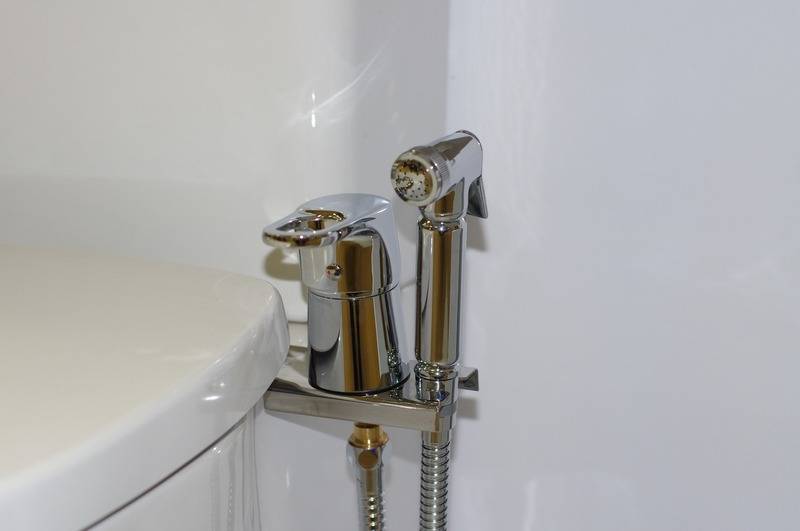
This option is suitable for combined bathrooms, where there is a sink located near the toilet. You will need to purchase a special mixer for three outlets.
In the case of a separate bathroom, it will be enough to install a small sink in the corner of the room.
If the sink is already standing, then this option will be the most financially beneficial and the least time-consuming. Adjusting the water temperature is also carried out easily in manual mode and does not require additional costs.

Installation in the toilet of a small sink with a hygienic shower
How to choose a shower faucet
Products with a lateral arrangement of the gander rotate to the right and to the left, up and down. Such devices are equipped with a cartridge built into the base of the structure.
With it, the water temperature and the speed of its supply are regulated, all operations are carried out with one hand.
Two-valve models - a faucet box that passes or blocks the flow of cold and hot water.Such products have a sealing gasket that wears out quickly, which leads to the faucet leaking.
Models equipped with ceramic valves regulate the temperature and water supply.
Thermostatic faucets regulate the temperature of the water, adjusting to pressure drops. Equipped with two revolving handles.
Non-contact products are conveniently controlled using special infrared sensors
Such models are often used to equip public institutions, bathrooms of cafes, bars, restaurants.
When choosing, be sure to pay attention to what materials the product is made of. As a rule, modern models are made of brass.
Brass bodies can be chrome-plated or nickel-plated for a more polished look.
Chrome finishes are durable and hygienic. Ball regulators and fasteners are often made of stainless steel.





Accessories (showers, handles) are made of synthetic materials (ABS plastic). Handles are decorated with glass, wood, marble, malachite.
Floor products are one or two functional racks with a successful masking of the water supply. Wall models are easy to mount, easy to mount.
- Consider the dimensions and specific gravity of the structure. It is desirable that the mixer weighs no more than 5 kg.
- Look at the quality of the package. Among the main components are a shower head, a hose. Be sure to check the availability of the warranty card, instructions for using the mixer.
Important parameters:
Pay attention to the equipment of the structures with a thermostat. Such products regulate temperature differences, provide excellent mixing of cold and hot water.
Buy designs with a comfortable metal handle
The handle must be reliably protected from heat.
Choose products that have a backflow protection feature.
Look at the water flow rate. The lower this indicator, the more economical the use of the mixer.
Pay attention to the speed of switching on the mixer. The faster the device turns on, the better. The optimal response time is up to 30 seconds.
The product must be equipped with special cleaning filters, eccentrics.
Choose faucets that are installed in several ways, for example, a combination of vertical and horizontal mounting.
The design must be securely fastened and stable.
Secondary options:
One of the selection criteria is the compliance of products with the general style of the room.
Pay attention to the color of the faucet, it should be combined with the exterior decoration of the room and furniture.
The design form should be convenient and practical for use.
Features of mounting the device
When installing any hygienic shower, you must first turn off the water. All necessary elements are usually sold together with the product. You will need a common plumbing tool, such as an adjustable wrench. It does not hurt to stock up on a bucket and a rag in case of an unexpected leak.
Models of a hygienic shower, which is mounted with a faucet on the sink, are suitable for a combined bathroom, installing such a device is almost as easy as a conventional faucet
In advance, you need to compare the diameter of the pipes to which the device will be connected and the supply hoses of the device. If the flexible hose and pipes do not match each other (this rarely happens), you should stock up on eccentric adapters.
On the pipes leading to the device, it is very desirable to immediately install stopcocks in order to facilitate the dismantling and repair of the device in the future.
To hide the water pipes that lead to the hygienic shower, it may be necessary to ditch the walls, followed by the sealing of communications
Usually the instructions describe in detail the order of work.
To install a shower with a mixer on the sink, you need to perform the following operations:
- Connect the flexible hoses to the mixer by screwing them into the appropriate sockets.
- Insert the gasket into the groove on the bottom of the mixer.
- Install the faucet on the sink by threading a flexible hose into the appropriate hole (or holes).
- Fix the position of the mixer with the nut and clamping ring.
- Seal and connect the flexible hose and the corresponding water pipes.
- Attach the wall holder.
- Connect the shower hose to the faucet nozzle and watering can using gaskets.
- Perform a test run of water and eliminate deficiencies, if any are found.
- Release the hose from the remaining water and put the watering can in the holder.
If leaks appear immediately after installation, the gaskets should be checked. Perhaps the element is skewed and just needs to be corrected
It also happened that inexperienced masters simply forgot about this important “little thing”
Everything that is needed for installation is usually sold with the device, although it does not hurt to clarify this point before starting work.
The hidden installation of such a device requires more attention; beginners are not often able to complete the work without flaws. These models are more demanding on the quality of installation, since it will not be so easy to eliminate the consequences of errors: you will have to dismantle the part of the wall behind which the connection node is hidden.
To install a built-in shower, you can use a false panel. If the model is equipped with a mounting cabinet, this can significantly facilitate the process.
Work is carried out as follows:
- Select a location for all items.
- Lead to the selected point of the water pipe, you may need to gouge.
- Make a niche in the wall, hang a box, prepare a false panel, etc.
- Connect the flexible hose to the water supply.
- Install the mixer and the holder for the watering can, if it is mounted separately.
- Connect the faucet to the hoses leading from the water supply.
- Attach the shower hose to the faucet.
- Check the tightness of all connections.
- Perform a water test run.
- Eliminate identified deficiencies.
- Perform the necessary decorative wall decoration.
Budget models are often equipped with low quality fittings. Professional plumbers in such situations recommend immediately replacing the flexible hose with a more reliable option in order to minimize the risk of leaks and breakages.
Design features
The watering can is an important part of the shower. Otherwise, this design is also called a bidet watering can.
The main features that distinguish it from a shower head are:
Dimensions. It is compact, unlike a simple shower head.
Fine nozzles



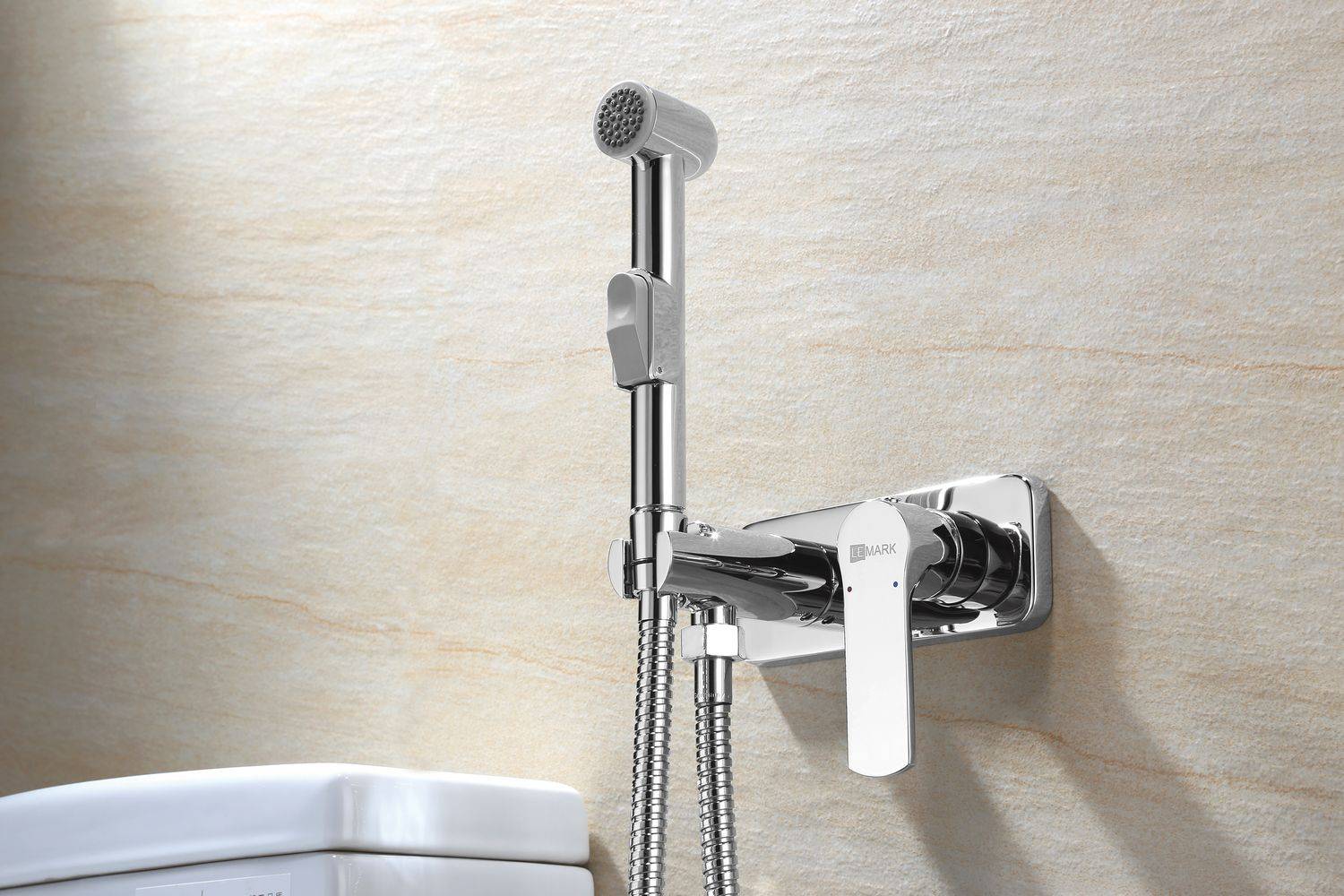
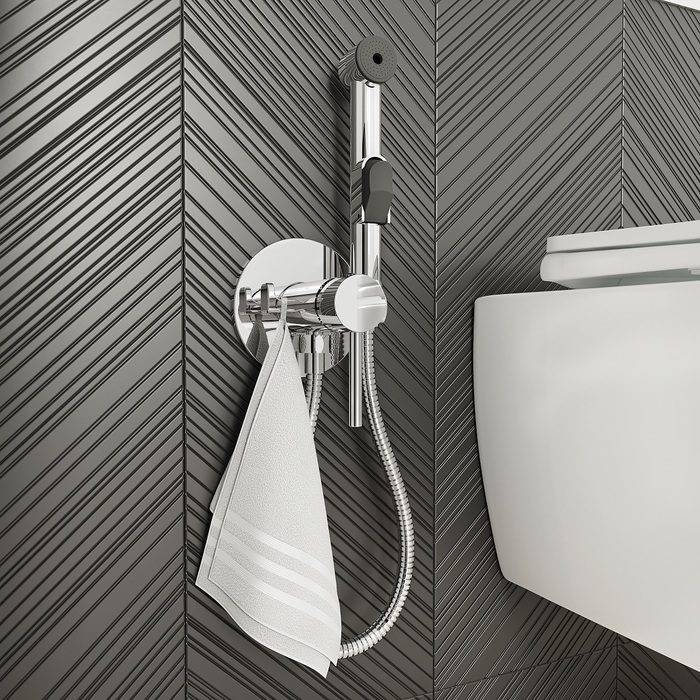
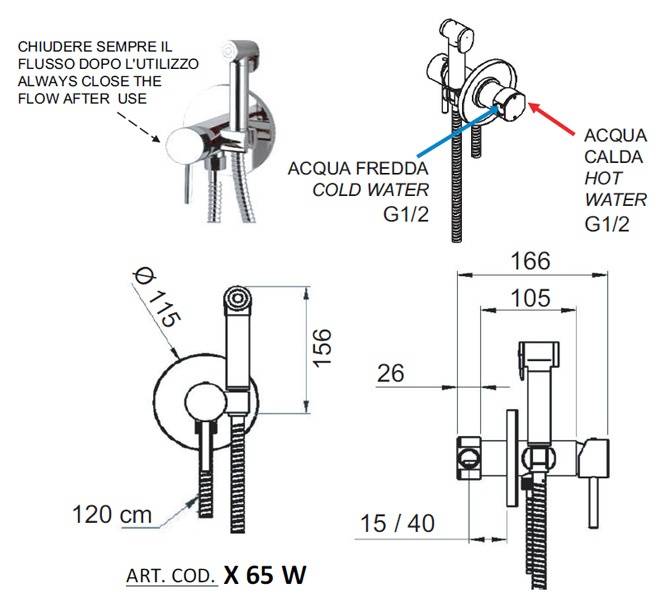

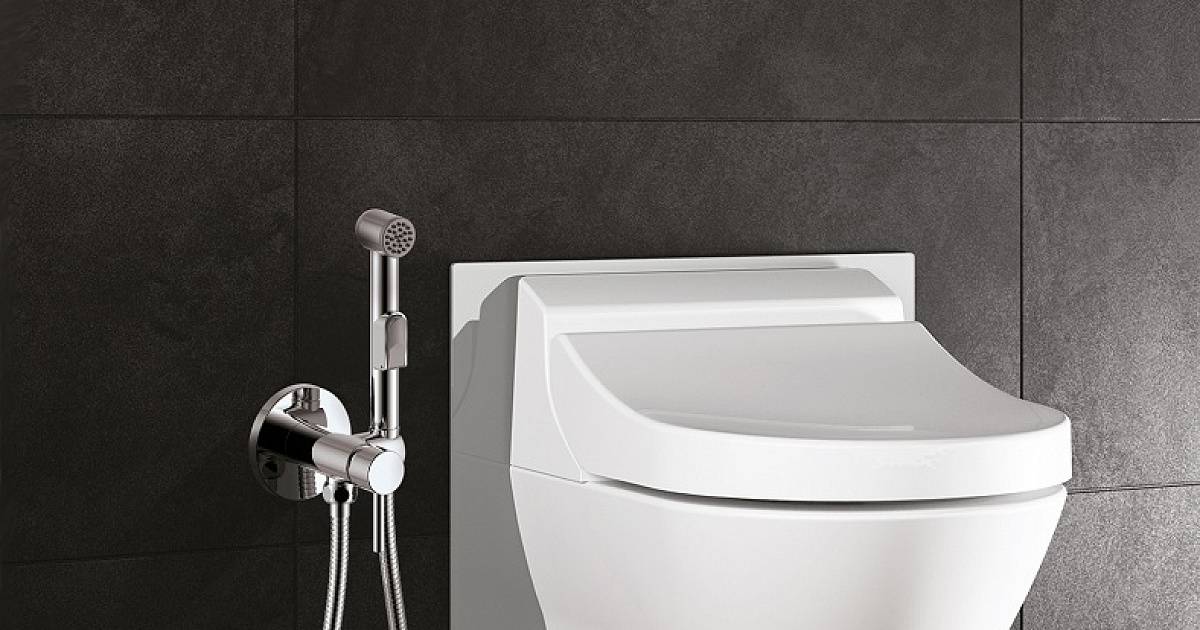
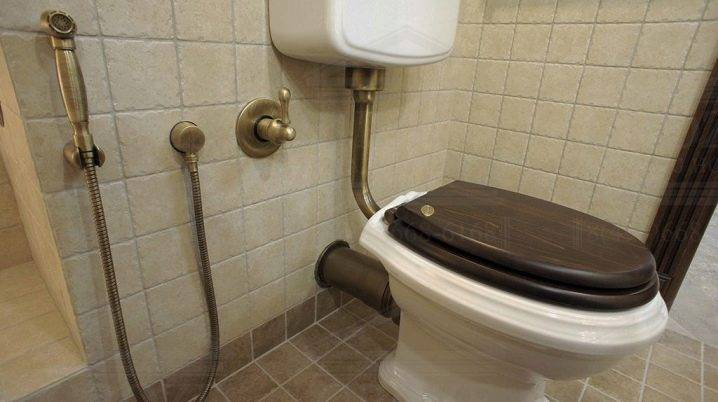
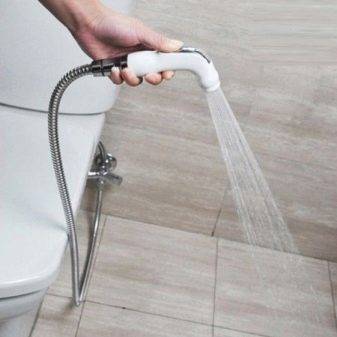
For a hygienic shower, it is important that the water does not splash in different directions.
Cover button.The main important difference from simple shower heads is the presence of a water on/off button on the bidet located on the handle.
Watering cans are different in their design features. Let's analyze their differences and features of the main models.
overlay button
The shut-off button plays an important role in the design of the bidet, as its main function is to shut off the water without closing the faucet. The design is simple - a spring is attached to the button, when pressed, the valve opens, without pressing - the valve is closed. With the same button, you can adjust the flow rate.
You can find several options for the location of the keys on the bidet, which one is more convenient to decide in the store by trying out pressing with your own hand. The button can be located directly above the atomizer, then it will be easy to press it with your thumb. It can also be on the handle-holder, in this case, pressing is done with several fingers, mainly the index and middle ones.
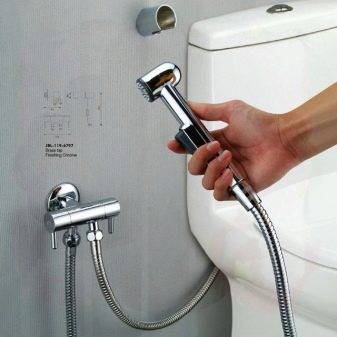
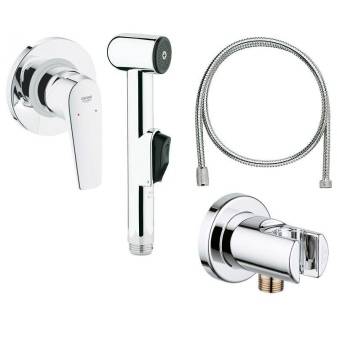
As for the materials from which the keys are made, there are two options:
- plastic buttons (for example, on the Oras Optima model);
- metal, from the main material of the watering can itself (Grohe Eurosmart).
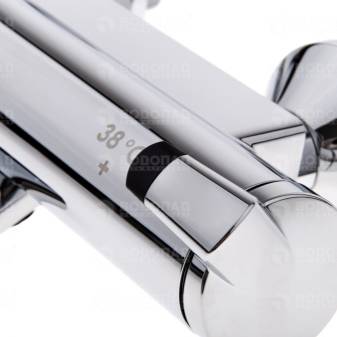
Equipping the watering can with a reverse water flow valve
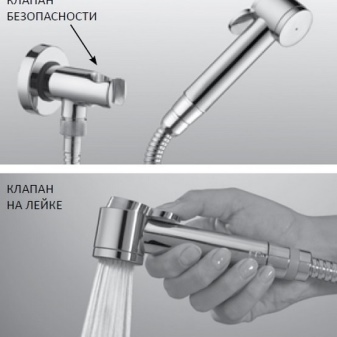
The valve is installed in the event that, inadvertently, you could leave the hygienic shower mixer open and the shut-off button (shut-off valve) closed. For this reason, hot water may penetrate into the cold water supply system, this is due to the pressure difference in pipes of different temperatures (as a rule, hot water has more pressure)
Such a check valve will prevent mixing of water in the risers.Manufacturers producing products with such equipment are Hansgrohe, Grohe, Wasser.
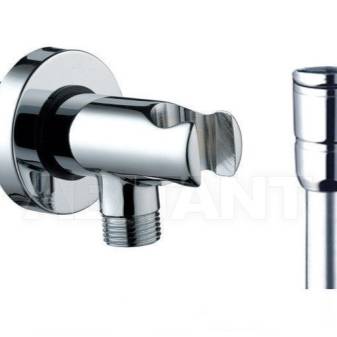
Anti-lime coating
The presence of such a coating facilitates the regular care of sanitary ware. Such models are found in the manufacturers Iddis, Grohe, Jacob Delafon.
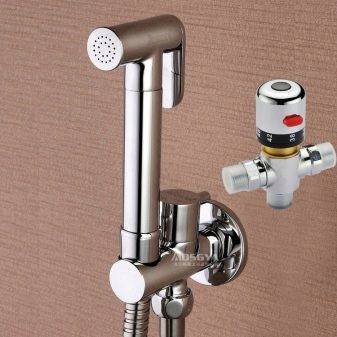
Cleaning of deposits
In conditions of increased hardness of water, a large amount of mineral deposits can remain on plumbing fixtures, which significantly reduce their service life. Bossini, a manufacturer of shower accessories, has original models of bidet showerheads with the Easy-clean function - they have special rubber diffusers that allow for easy cleaning.
Number of nozzles
Watering cans are equipped with from one to many sprinklers, they can have a directed thin jet shape or pour out with the Rain function. Several of these models are present in the line of the manufacturer Bossini. The mono jet is used as a hydrobrush for toilets, a popular model is the Bossini Paloma.
watering can holder
Such a simple detail as the holding mechanism of a watering can is very practical and functional. For example, some models are equipped with a watering can holder that shuts off the water.
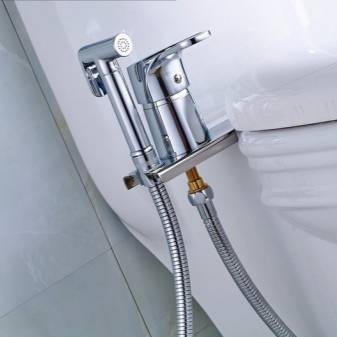
The holder can be wall-mounted, of various shapes and sizes. Sometimes it is immediately attached to the mixer, making up one design with it. In built-in versions of a hygienic shower, as a rule, the bidet is attached to the hose connection.
Features of the assessment of the main elements of a hygienic shower when choosing
Having decided to install a hygienic shower to a regular toilet in the bathroom, you should be aware that the designs of the models can vary significantly.Therefore, it is necessary to decide which of them will be the most convenient in a particular case.
Hygienic shower mixers
The faucet of wall-mounted and hygienic showers installed on the sink can be single-lever and double-lever. There are no specific recommendations for choosing a mixer according to this criterion, so each user can choose the most convenient one for himself. However, it will be useful to know the features of these structures:
Single-lever version of the mixer on a complex device installed on the washbasin.
Single-lever models are equipped with one handle, with the help of which the pressure and temperature of the water supplied to the watering can are adjusted. The convenience of this device lies in the fact that the setup takes a small amount of time, while all manipulations are comfortable to perform with one hand.
Double-lever external model of a hygienic shower.
Double lever mixers. Adjusting the temperature and water pressure in these models is done using two handles or flywheels, which is not very convenient, as it takes more time to achieve the desired result. The advantage of this mixer design is the large volume of the cavity for mixing hot and cold water.
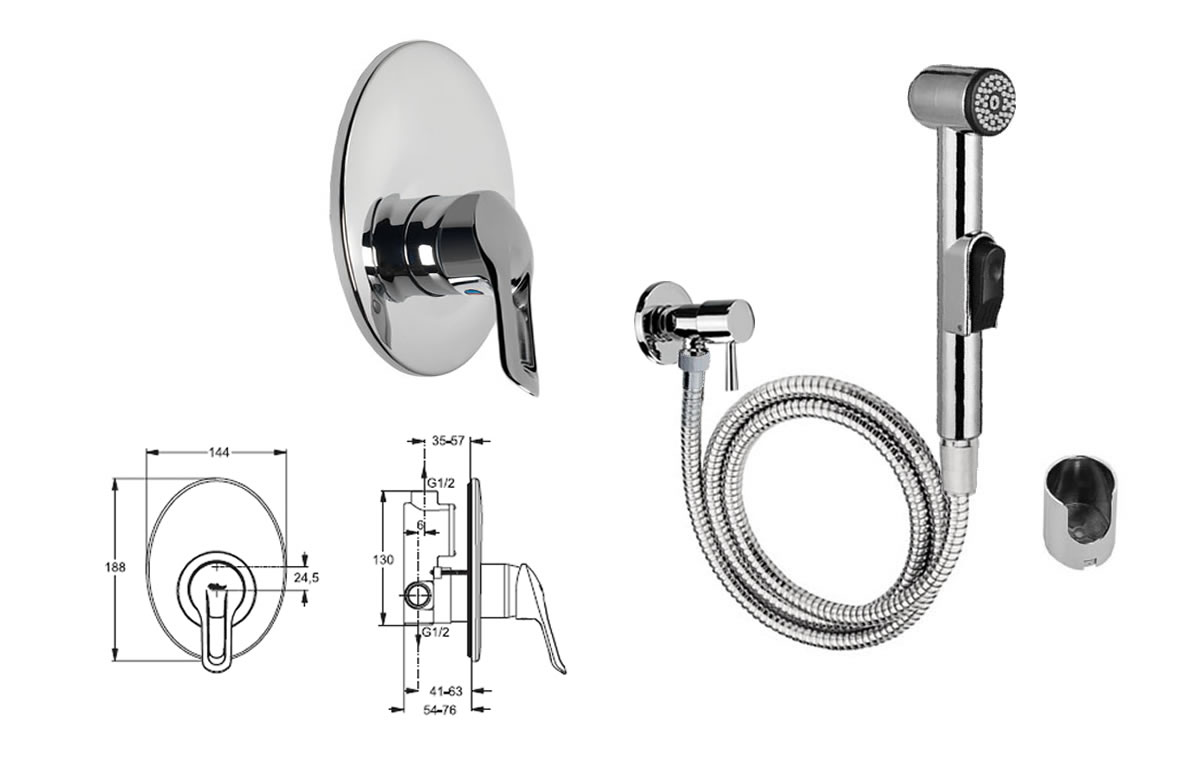


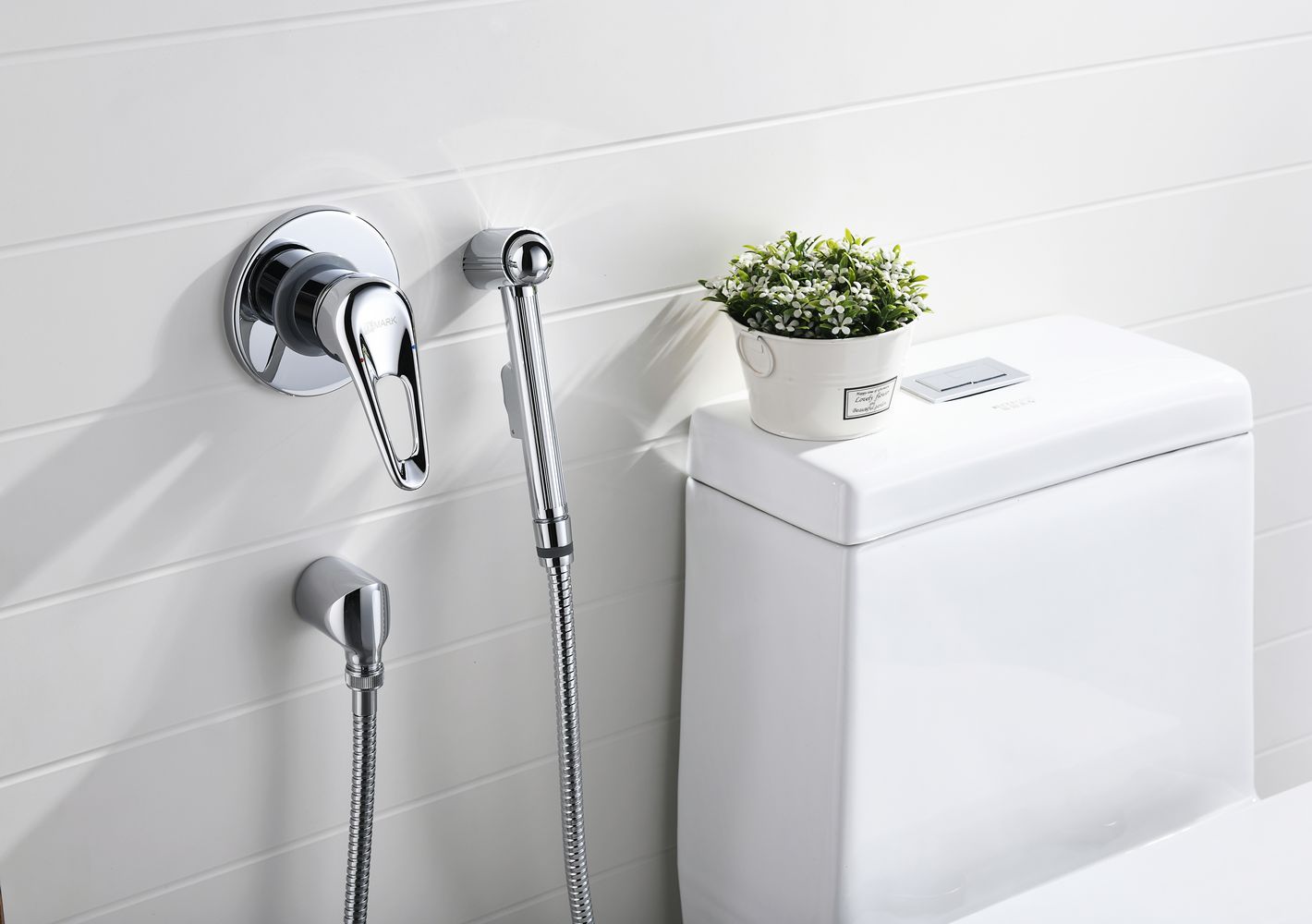
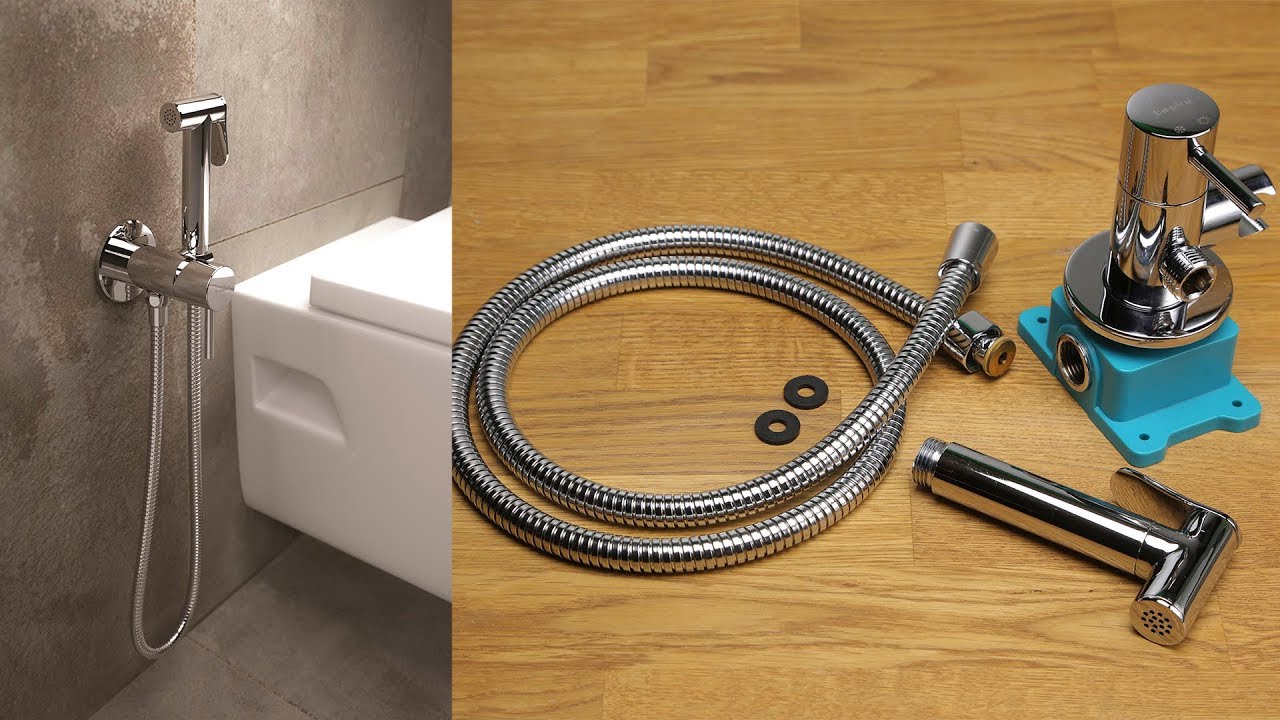

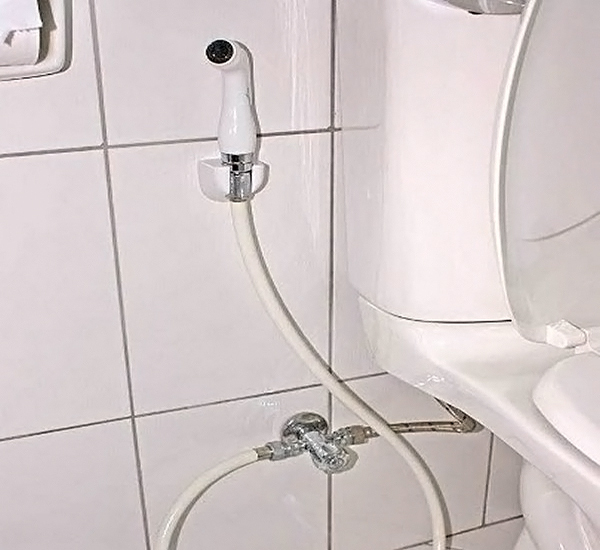
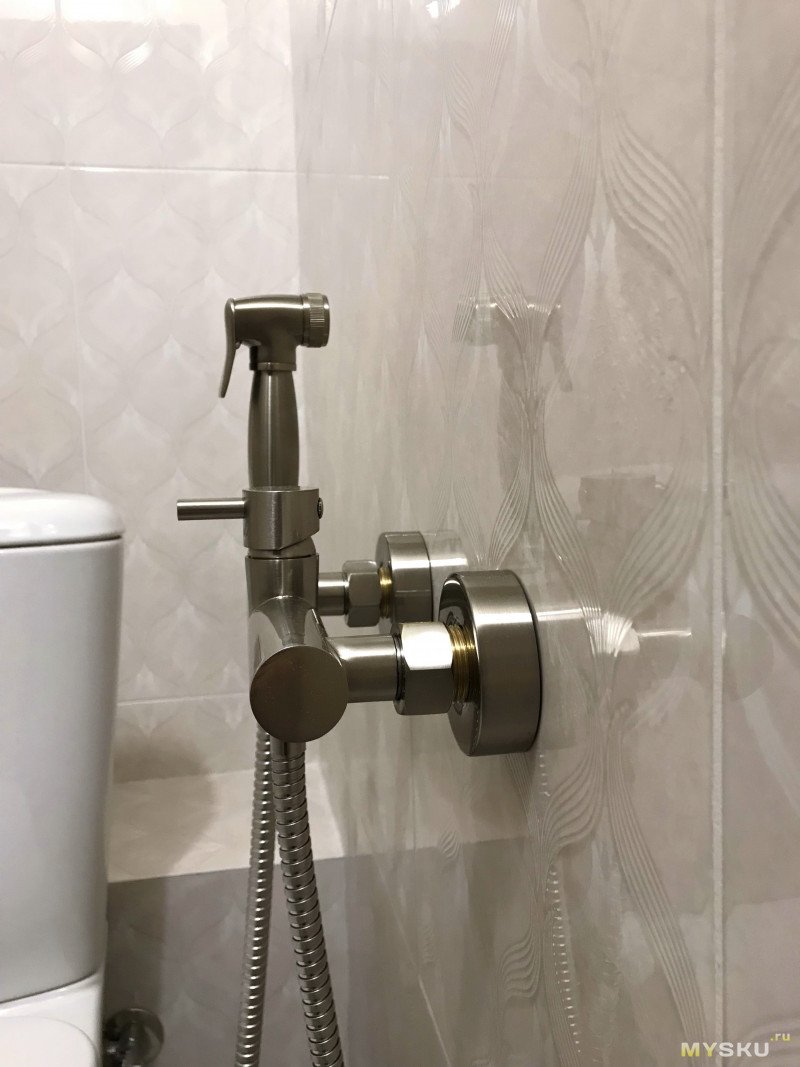

Still, we have to admit that today the most popular option among consumers is single-lever models - because of the convenience of their operation.
Shower head and flexible hose
A flexible hose and a shower head most often come with a faucet. But if desired, these design elements can be purchased separately. The best option would be to use those accessories that are offered by the system manufacturer.The main criteria for choosing these devices are the anti-corrosion properties of the material of their manufacture, the tightness of the connecting nodes, the comfort in operation, and, of course, the aesthetic appearance.
The hose can be purchased separately if you are not satisfied with the length of the faucet included in the kit. As a rule, it is 1500 mm, but there are also models with shorter ones - manufacturers are “greedy”. Besides. The hose must be really flexible - there are such “samples” that are difficult to bring under this definition, and which, in their “flexibility”, look more like supply hoses.
When choosing a shower head, you should pay attention to the presence and configuration of the key. Examples of watering cans for a hygienic shower
Examples of watering cans for a hygienic shower.
The best thing when choosing is to try to hold the watering can in your hand and test it for ease of use. On many models of watering cans, a key or lever is provided, when pressed, the shower turns on. The button-key is located on the handle of the watering can, and the lever is most often located on the back of the shower head.
The simplest options for watering cans do not have a blocking device; water is supplied from them when the lever on the mixer is turned on. The convenience of such devices is highly questionable.
The best two-valve bath faucets
Two-valve plumbing is a classic of the genre, but this does not mean that it is obsolete. The beauty of such faucets is that they are easy to repair, and no more than modern models with “paws” fail if they have modern ceramics inside them.
Olive's Sanitarias Vasco (27231VS) - double coated
4.9
★★★★★editorial score
89%
buyers recommend this product
The universal bathroom faucet has a modern design and is embellished with oval faucets without notches. He received a classic 38 cm spout and a quarter diverter for switching to a shower.
In ceramic faucet boxes, the manufacturer has provided special Safe Touch inserts that do not allow the valves to heat up from the inside. And on the spout itself there is a plastic aerator, which not only reduces water consumption, but also reduces the noise level.
The Vasco kit includes a 1.5 meter hose, a regular watering can and a swivel wall holder for it. The faucet body is made of nickel-free HQ Brass and is additionally protected by a two-layer chrome plating.
Advantages:
- Protection of valves against overheating;
- Wear-resistant housing (manufacturer's warranty - 7 years);
- Convenient ceramic diverter;
- Aerator that reduces water noise.
Flaws:
- Wet faucets become slippery;
- Single mode shower head.
Elghansa Praktic Bronze (2702660) - retro style
4.8
★★★★★editorial score
88%
buyers recommend this product
The updated model from Elghansa was previously produced with two types of coating: chrome and "white stone". It recently came out in bronze, which gives it a more interesting look with a retro twist.
This was done not only for the sake of beauty: the brass body with such a finish became more resistant to wear, rust and aggressive reagents.
The faucet is completed with a long swivel spout (42 cm) and a ceramic shut-off valve. Also included are a hose and a watering can with three modes of operation.
The shower holder is located here - on the faucet body, wall mounting is not provided for this model.
Advantages:
- Original retro design;
- Long swivel spout;
- Three-mode watering can;
- Reliable ceramic crane box;
- Water stains on the case are almost invisible.
Flaws:
- No wall watering can holder;
- There is no aerator.
Elghansa Praktic is a practical and beautiful faucet for a classic style bathroom.
Iddis Jeals JEASBL2i10 - designer model
4.7
★★★★★editorial score
87%
buyers recommend this product
Classic faucet with curved swivel spout, watering can and petal valves, made of weighted brass. And its nickel-chrome finish is easy to clean and easy to clean with a dry cloth.




The plastic aerator is equipped with a mesh that reduces noise levels, and the hot water valve is protected from overheating.
The hose comes with a Double Lock linkage system that gives the long tube flexibility and strength at the same time. In addition, Twist Free technology is used here, which protects against twisting.
The standard watering can has 2 modes of operation. Switching to the shower and back is carried out manually using a ceramic diverter.
Advantages:
- Aerator for quieter operation
- Watering can with 3 modes;
- Strong hose that does not twist or deform;
- Protection of valves against overheating;
- Eccentrics with reflectors included.
Flaws:
Shower attachment directly on the body.
Jeals JEASBL2i10 is practical and reliable plumbing for home or salon. And the design of the faucet will help it easily fit into the interior of any bathroom.
Types of shower spout
Bathroom spouts are available in two options. First, it is a long spout. Widely used type.The mechanism looks overall, so it is desirable to take into account the area of \u200b\u200bthe room. The average length of the gander is 30 cm, this characteristic involves using the sink faucet and the bathroom at the same time, with close proximity.
Shower with long spout
The fixing nut is the weak point of the structure of the long spout. The element carries a heavy load, the material used must be of the appropriate quality. If the design belongs to the budget line or is made in violation of production technologies, the operating time is reduced due to the accelerated failure of the fixing device.
The second option is a short spout. It is produced for a short time by Russian manufacturers. The structure is a cast mold, not separated by a rotating assembly. This engineering solution extends the service life. Installing on the side of the bathroom will take up a small amount of space.
Wall mounted shower faucet (short spout)
The type of spout should be chosen based on the dimensions of your shower room. If you want to save space and use the faucet for both the bathroom and the adjacent sink, you should opt for a long spout. The short type is installed if a static water direction is the best solution for you.
Features and purpose
The modernity of our world makes the presence of a shower much more necessary and popular than before. Most people install it in their small toilets, especially modern apartment buildings. Such a device is considered an innovation, so consider this plumbing in more detail.
A hygienic shower is one of the new modern plumbing devices, which is an innovative solution that allows you to replace a classic bidet with minimal space. Due to the presence of such an analogue, it is possible to carry out the procedure for personal hygiene while being right on the toilet. That is, the device combines a toilet bowl and a bidet, fulfilling their full functionality and adequately replacing them with itself.
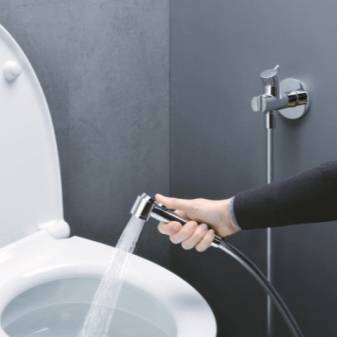
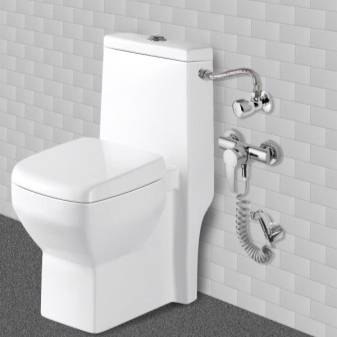
The design of the shower in question consists of a rather small kind of watering can, a small button on it, with which the speed of the water flow is regulated. Attaching a watering can is not a difficult procedure - using a flexible hose, it is installed on a single-lever mixer or on the outlet pipe, on which a shower is usually attached. You can connect a thermostatic built-in hygienic shower using various methods.
For example, it can be mounted on the sink next to the toilet. Another installation method is called built-in - fastening in the toilet itself, for example, on the lid, from above. And you can also install plumbing on the wall, but for this you will need to install the appropriate communications in the wall or on top in advance.
Each of the methods has a number of its own advantages, its own functionality and features. Each of the methods will also differ in the cost of installation, the time spent on it, as well as the presence of additional costs.
Installation of a hygienic shower
It is not enough just to purchase a plumbing fixture. It still needs to be properly installed.
It is extremely important to do this correctly, because the comfort of its use depends on it. Consider how to install various options for a hygienic shower
Installation of a wall-mounted shower
A well-made installation of a shower on the wall can decorate a bathroom, especially if you choose a device in the same style as the design of the room. Wall mounting can be carried out in two ways - open and closed.

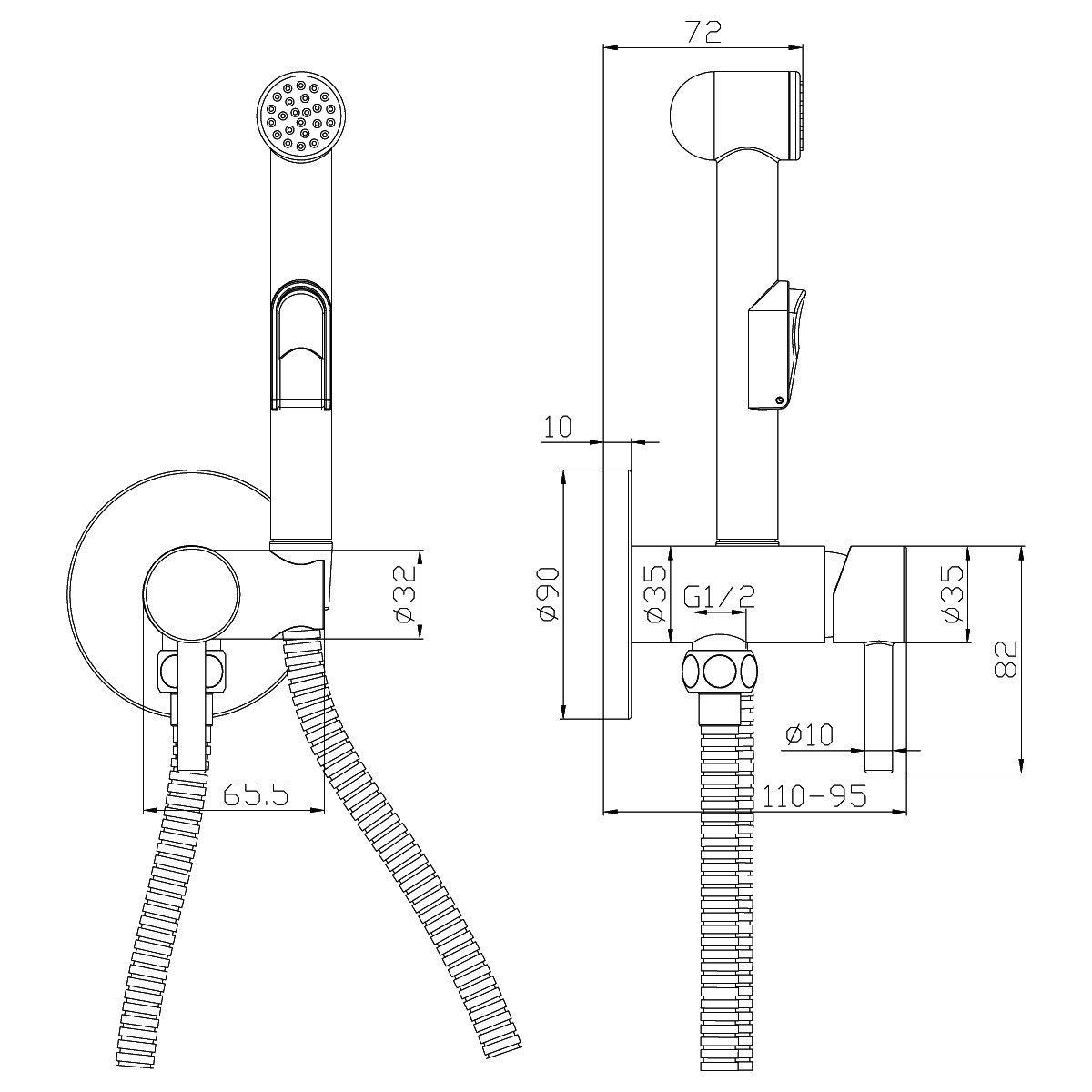

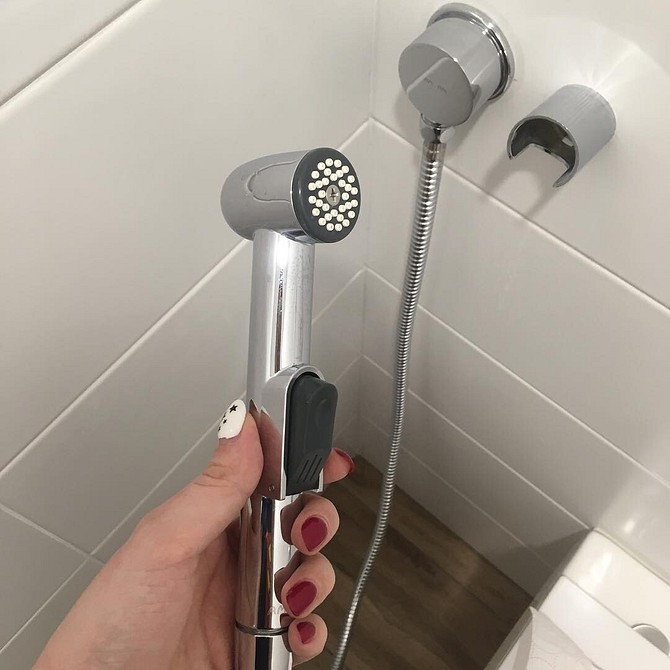

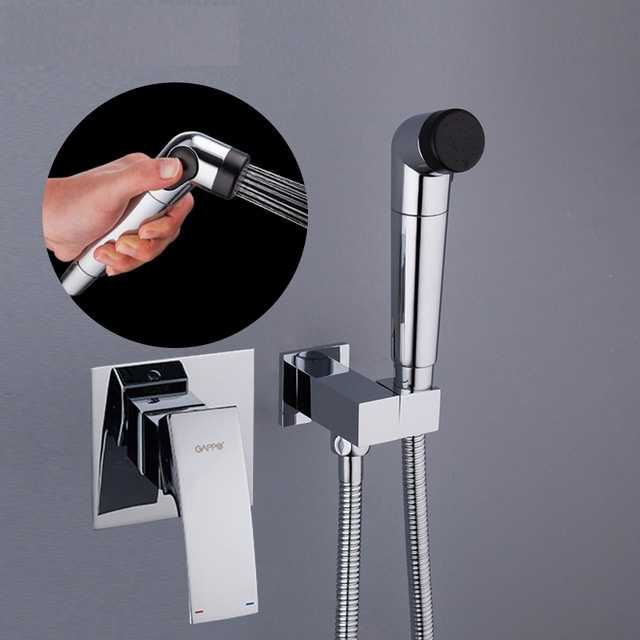

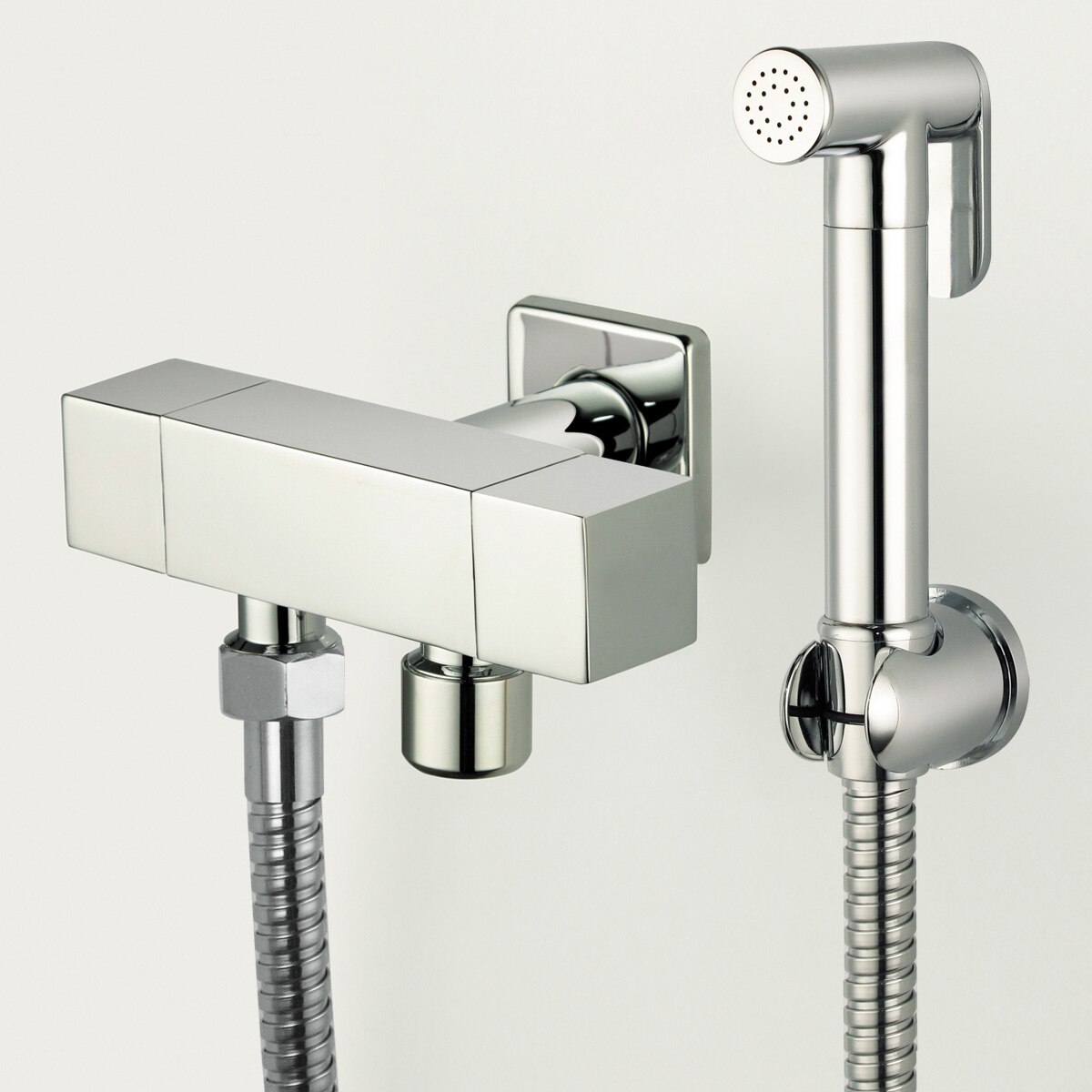
Open mounting is easier as it does not require any dirty work. The mixer is mounted on the wall with anchors or dowels, using a drill. A holder for a watering can is screwed next to the mixer.
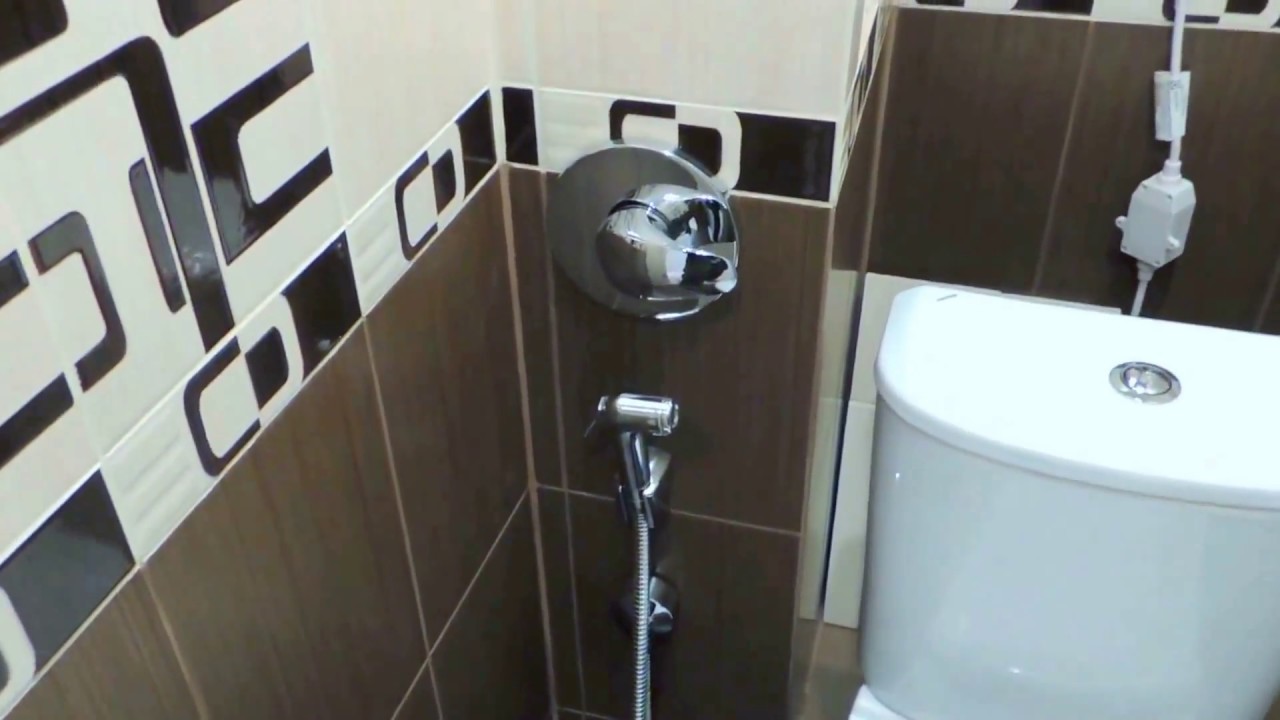
Installation of a hygienic shower in a toilet in a closed way involves equipping a special recess in the wall in which the mixer will be hidden. Only the control lever and the holder with a watering can will remain visible.
In any case, it is necessary to bring water pipes to the mixer inside or outside the wall and connect them. Often a thermostat is built into such a system, which is also mounted on the wall.
Installing the faucet on the sink
When there is a sink in the bathroom, it is not difficult to conduct a hygienic shower for the toilet from it. First you need to decide on the type of faucet on the sink. If it is already installed, then you may not need to purchase a new device. A prerequisite is the presence of a watering can of a special form, designed for hygiene procedures.
If there is no mixer yet, then buy just such a mixer, as described above. Its installation is not difficult. The flexible hose should freely reach the toilet. Usually it works in conjunction with a spout. When the faucet is open, water flows into the spout, and when the button on the shower is pressed, the water rushes into the flexible hose.
Built-in toilet shower
When a toilet with a hygienic shower (bidet toilet) is installed in the room, the old toilet is first dismantled. In its place, a new device is installed and attached to the floor or wall. In the new room, the toilet is immediately installed in a permanent place.
When the built-in hygienic shower in the toilet is connected, the connection diagram is as follows:
- water hoses are connected to the mixer;
- the mixer is inserted into the existing hole and fastened there;
- the ends of the hoses are wound onto water pipes;
- shower tests and mixer operation are carried out;
- if a retractable nozzle is used, its operation is checked.
Installation of the bidet cover
This work can be easily carried out on your own, since it does not involve violating the integrity of the walls and tie-in to the plumbing system. It is enough to purchase a tee, which will be installed next to the toilet bowl.
Do-it-yourself installation of this type of hygienic shower in the toilet is carried out in the following sequence:
- the old lid is removed from the toilet, and a bidet lid is attached instead;
- the water in the system is blocked;
- the tank is completely drained;
- the supply hose is unscrewed, through which water flows into the tank;
- a tee is installed between the water pipe and the tank. One end of the tee enters the tank, and the other is connected to the toilet lid;
- if the device is controlled by an electric drive, then it is connected to a socket specially designed for this purpose.
When buying a hygienic toilet shower, try to focus not only on the price, but also on well-known manufacturers that specialize in the production of such accessories.Thus, you will provide yourself with high-quality equipment, the purchase of which you will not regret.



