- The main functions of the water seal
- Varieties of water seals for sewerage
- Is sewer ventilation really that important?
- Features of a dry water seal
- Dry option
- Advantages of the option
- Types
- Features of the choice of water seal
- How to install
- Varieties
- knee water seals
- Bottle seals
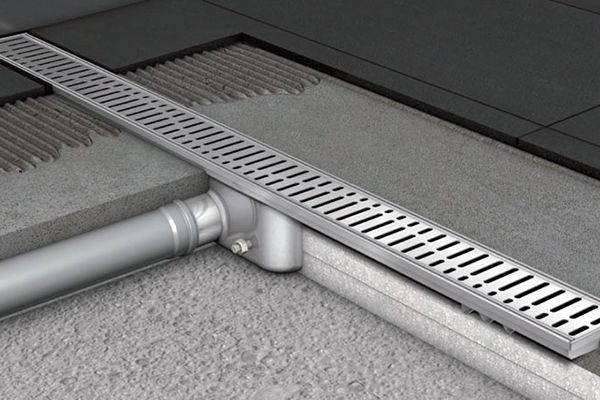
- ladders
- Dry seals
- The principle of operation of the water seal
- Self-installation of a water seal
- How to choose
- Blockage Prevention
- Dry seals
- float type
- pendulum type
The main functions of the water seal
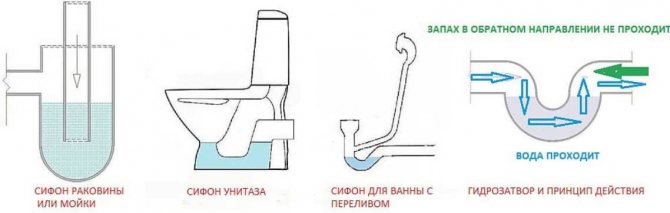
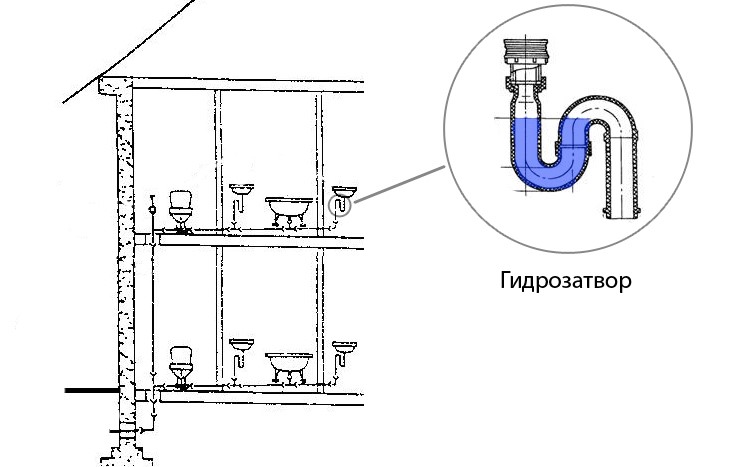
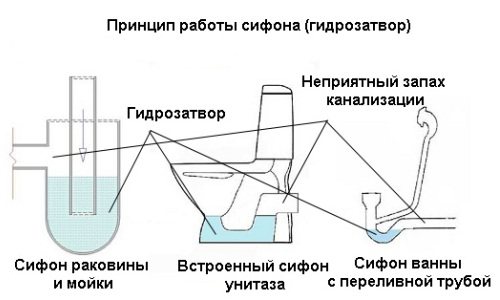
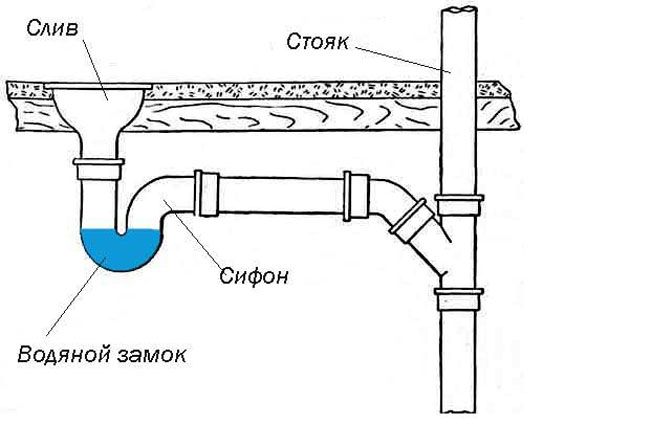
A water trap is a siphon that is installed near the sewer drain points (under a sink, bathtub, shower cabin). It performs the following functions:
- prevents odors from the sewer system from entering the room;
- prevents the sound of draining water from spreading;
- does not allow the ingress of hazardous gases (ammonia and methane);
- in the event of a fire, it prevents the spread of fire through the sewer.
It is used not only in domestic applications, but also in the arrangement of industrial drainage systems and the creation of storm drains.
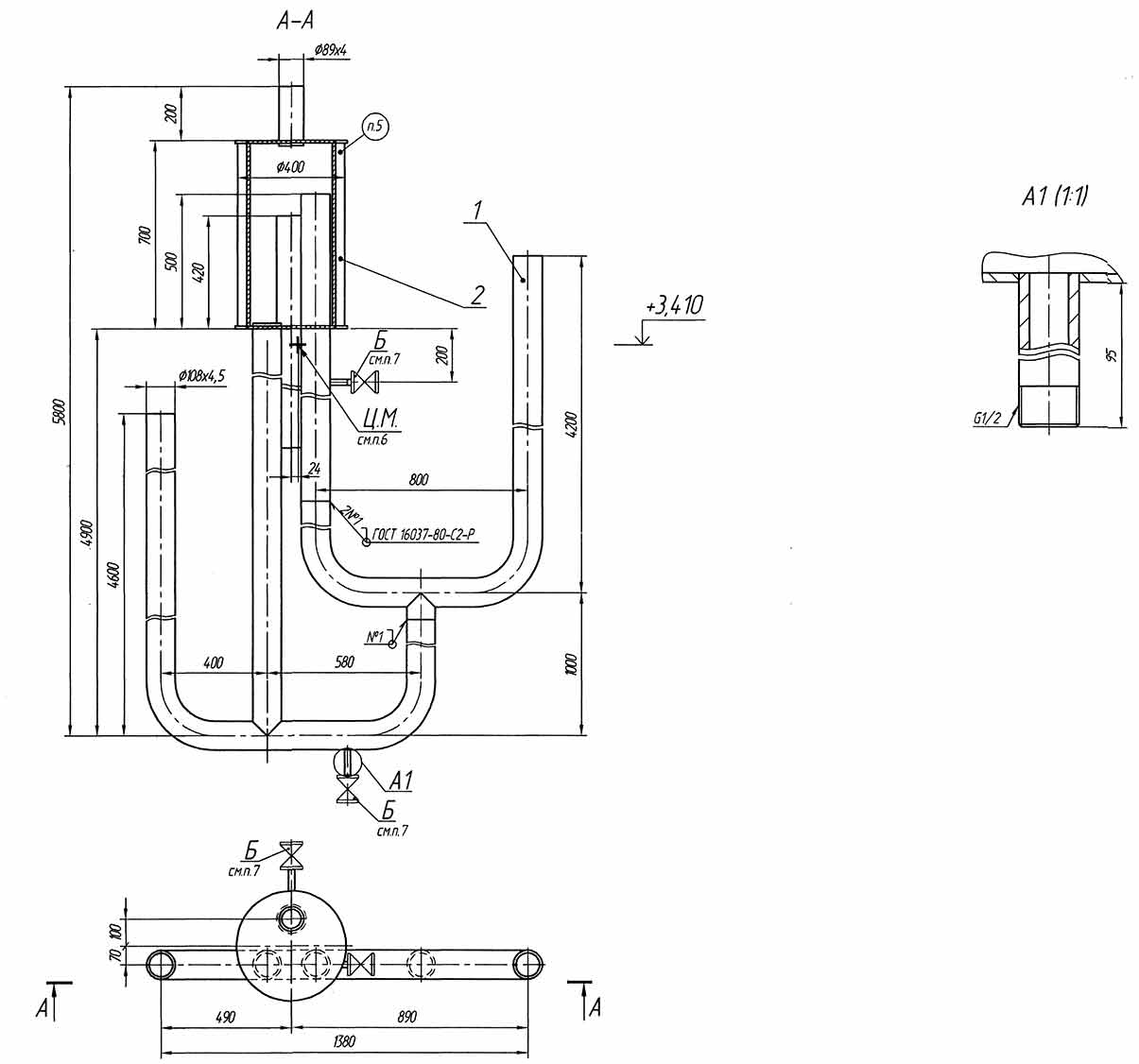
If it is possible for flammable substances to enter the sewer, to increase fire safety and prevent fire in the pipeline, a well with a water seal must be made.
Varieties of water seals for sewerage
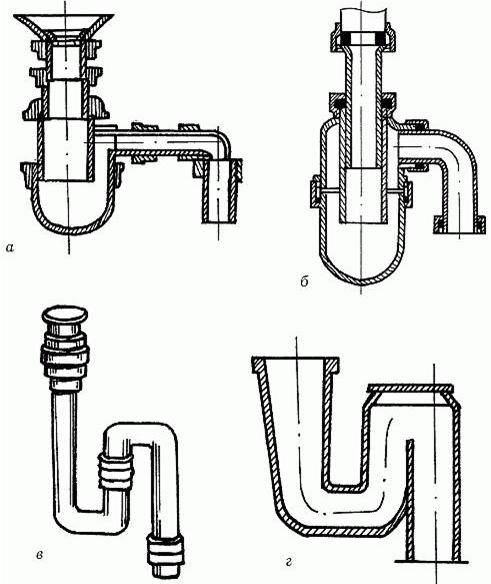
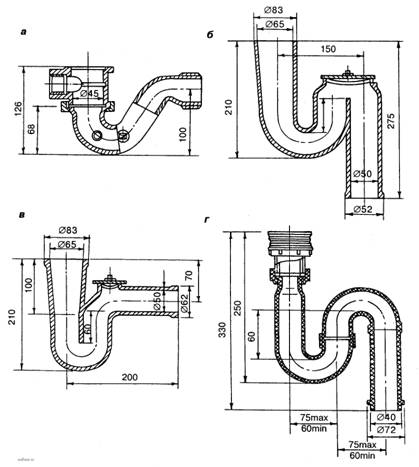
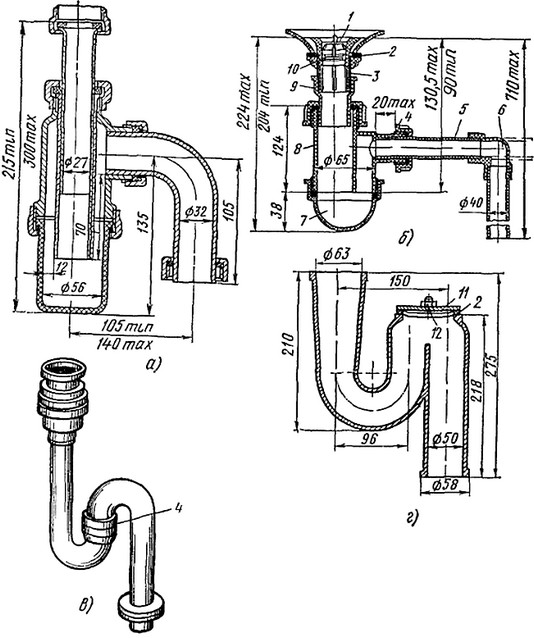
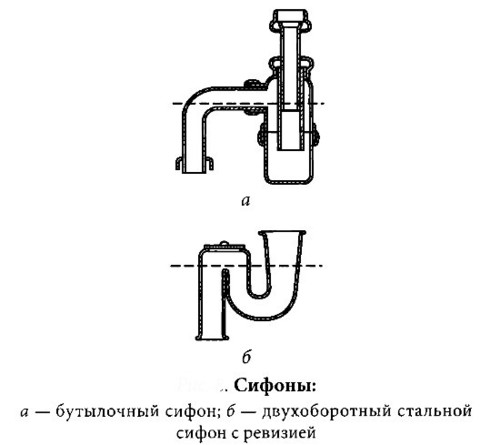
- The bottle siphon looks like a flask that can be easily disassembled for cleaning and rinsing. The inlet pipe docks with the drain, and the outlet with the domestic sewerage pipeline, which often stops functioning due to a clogged siphon. You can eliminate the blockage, by the way, without plumbing. It is enough to remove the device, disassemble and rinse.
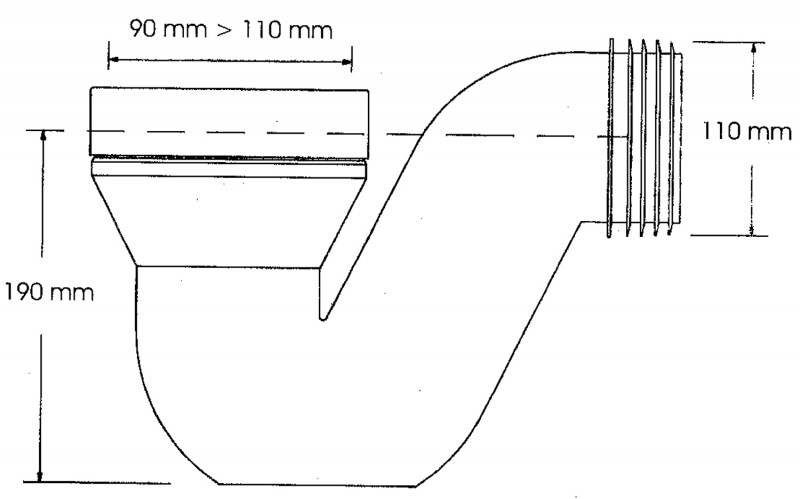
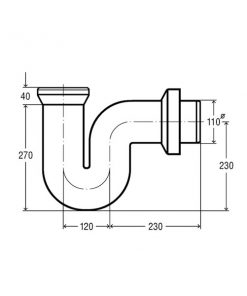
- The knee sewer water trap has a U-shape and in order to increase productivity, in the case of a large amount of drained water, it is recommended to use the original pipeline with a diameter of 110 mm or use the same adapter. If you do not use plumbing for 40-50 days, then the water will evaporate from the cork, which will lead to the penetration of odors from the sewer into the room. Therefore, in case of rare use of this sanitary point, use a different type of siphon or periodically fill it with water.
- A dry water trap for sewage does an excellent job of drying out, and therefore it is operated, just in places of rare use, for example, in summer cottages. It is installed individually or together with a conventional water seal. And if you want to know how to make a dry water seal with your own hands, then just put a tennis ball in such a way that it closes the entrance to the sewer pipe. When water appears, it will rise again and ensure the passage of the liquid.
This type of product has two subspecies, namely: float and pendulum.
When the float dries out during the evaporation of water, it lowers and closes the pipeline.
The pendulum subspecies is based on the gravitational qualities of materials and the possibility of transferring the center of gravity.Some manufacturers have already begun to use the capabilities of molecular memory on these instruments.
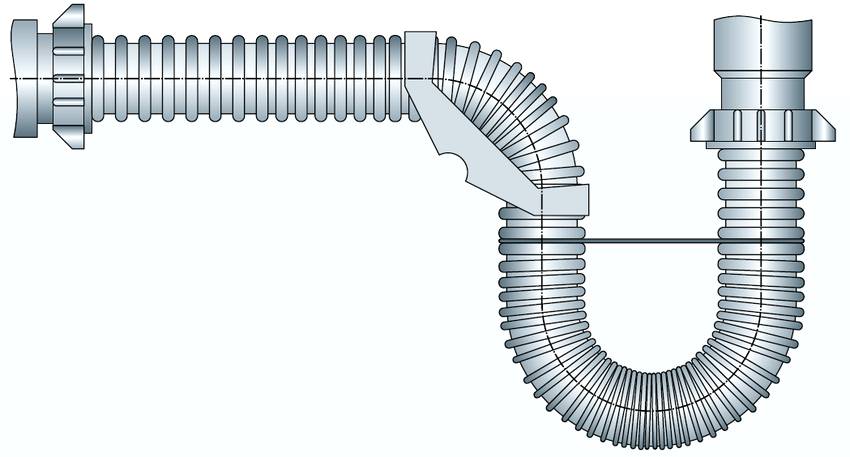
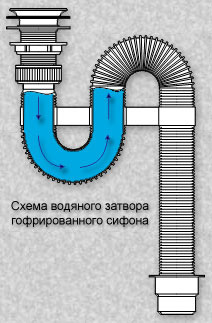
- Corrugated tubular siphons are becoming increasingly popular due to their ability to accommodate bends of required dimensions even in tight spaces of use. The advantage of this system is the ability to adjust the hinge of the device after its installation, as well as the sink itself or other plumbing fixture can be freely moved without turning off the siphon.
- Double-turn products can be with vertical docking and horizontal, which is especially in demand for showers, bathtubs and bidets. Double-turn siphons have a special water pocket formed by two opposite elbows made of corrugated or more rigid pipe.
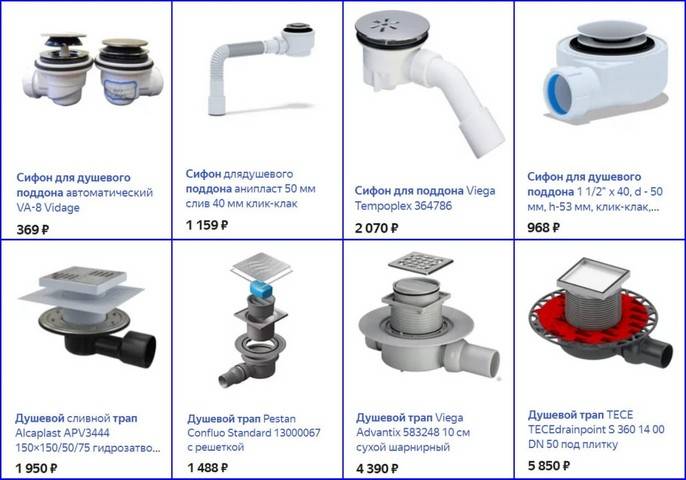
- The sewer drain for the shower is used with a removable water trap with a sump for heavy impurities.
Is sewer ventilation really that important?
Firstly, during the decomposition of organic matter, gases that are extremely dangerous for human health are also released. And poisoning with such products, including fatal ones, is not at all such a rarity. It is better that they do not concentrate, but enter the atmosphere in a timely manner.
Secondly, there is another "pitfall". If there is no ventilation air circulation in the pipes, then the accumulation of fetid gases has nowhere to go, and sooner or later it will seep into the premises. A simple example - a family, having been out of town for the weekend, left for a week "for winter apartments."
And with a fan pipe, such large-scale troubles can be avoided.
Conclusion: a vacuum valve is a very useful element of the sewerage system, which in some cases makes it possible to significantly simplify the scheme, to avoid disruption of water locks in long horizontal and other problem areas. But to consider it as a full-fledged replacement for a fan pipe is unacceptable!
The reason is that it does not provide the necessary ventilation for the sewer wiring. And without this, talking about the usefulness of the system being created would still be an exaggeration.
Features of a dry water seal
A dry water seal is used if the drain is rarely used and the water in this area dries up. A dry device is installed separately or in parallel with a conventional water seal. When creating such a device on your own, you can simply put a tennis ball so that it blocks the entrance to the hole in the sewer pipe.
When dealing with the device of a dry water seal, it must be remembered that its functioning is based on the action of a membrane attached with a spring. The spring fixes the float in cases where the water has completely dried out. If the water flows constantly, then the spring will not be able to fix the float for a long time. Therefore, it is advisable to turn to the pendulum system, the essence of which lies in the gravitational properties of materials and in ensuring the displacement of the center of gravity.
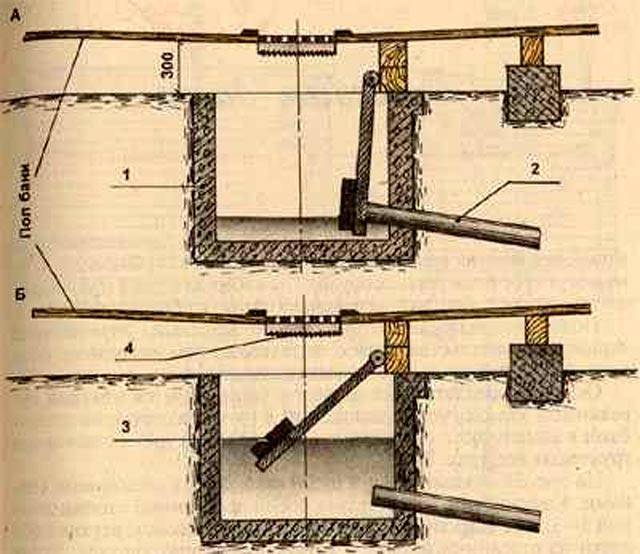
When arranging the sewer system in the bath, you can make a dry water seal yourself. To do this, find a ball, the diameter of which is slightly larger than the diameter of the sewer pipe. A chamber is set up at the entrance to the sewer pipe, and the ball is placed on the inlet. If there is no water, the ball lies on the hole, closing the passage, excluding the outflow of gases from the system.If the chamber is filled with water, the ball floats, and the water passes unhindered into the sewer pipe. This method is suitable not only for arranging sewage in baths that are operated exclusively during the warm period. If the ball freezes to surfaces in cold weather, it is easy to thaw it by pouring boiling water into the drain.
Dry option
The dry seal for sewerage has more advanced characteristics than traditional water seals. This model has a different principle of operation, it operates on the principle of a nipple. The device is made in the form of a polymer tube with threads on both sides. For the manufacture of the model, polypropylene is most often used.
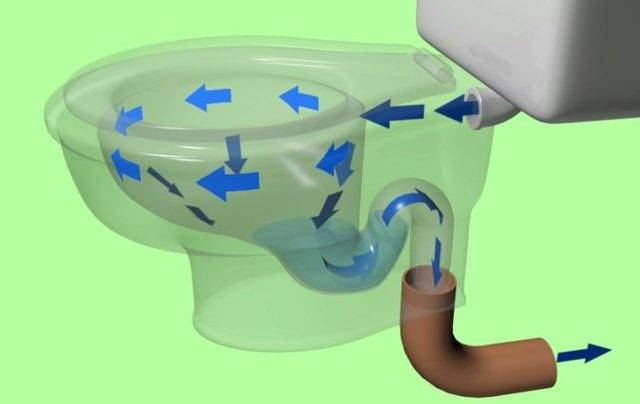
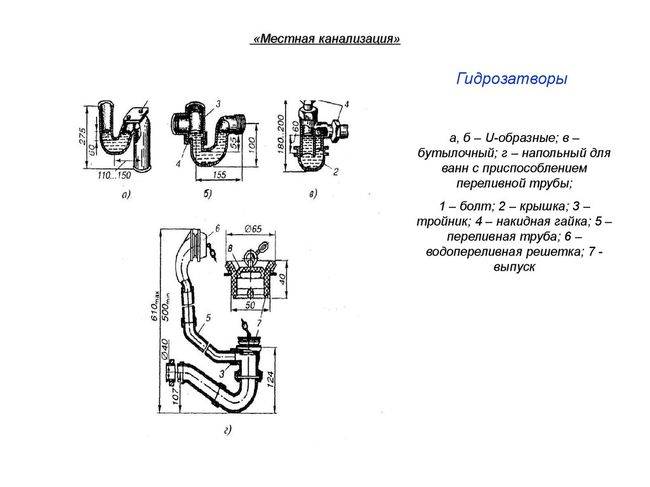
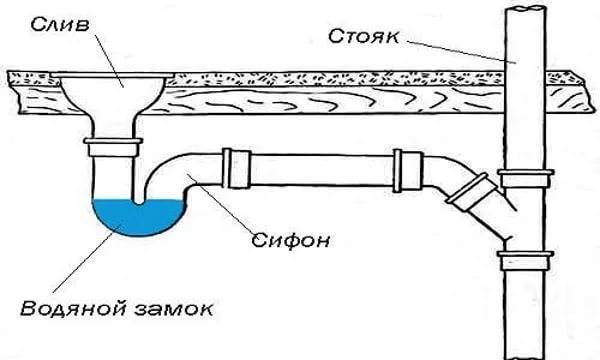
Inside the housing there is a special membrane that prevents the reverse movement of water and sewer gases. That is, the membrane performs the functions that a water plug performs in a conventional shutter.
If a conventional shutter ceases to perform its functions during a long period of inactivity due to the drying of water, then the dry version will function normally under these conditions.
Advantages of the option
Option advantage:
- the device does not need water for normal operation;
- the model can be installed even in unheated rooms, as there is no threat of destruction due to freezing water. This option is suitable, for example, for a summer cottage, which is not used in the cold season;
- dry siphons are compact and convenient;
- breaking a dry shutter is much more difficult than a water one;
- exclude the reverse flow of dirty water, which may occur during the formation of a blockage;
- the shutter can be installed both vertically and horizontally;
- water does not stagnate in the shutter, in which harmful bacterial flora can develop;
- has excellent sound insulation;
- has a long service life.
Types
Dry shutters are available in several versions, each of them has its own characteristics. Here are the most common options:
- Membrane. This is the simplest and most common option. The shutter functions due to the spring membrane, which opens if water enters from the drain hole, but remains closed until the water is not used.
- Float. This option can be called transitional between dry and water seal. The device is equipped with a float valve. When liquid enters, the float floats so as not to interfere with the liquid leaving. And after the water leaves, the float falls into place, sealing the lumen of the sewer pipe.
- Pendulum. The valve in such a gate has a single attachment point. When water enters the drain, the pendulum deflects, opening the passage. Then, under the influence of gravitational forces, the valve returns to its place.
- With molecular memory. This is a high-tech option, such shutters are quite expensive. Thanks to new technologies, the membrane elements reliably seal the pipe lumen after the flow of water to the drain stops.
So, there are different options for water seals for sewers. The choice of option is carried out depending on the type of sanitary element, as well as operating conditions. The installation of water seals is a prerequisite for the assembly of an internal sewerage system. If they are absent or if they are installed incorrectly, an unpleasant smell of sewerage will certainly appear in the apartment.
Features of the choice of water seal
To select a device that is fully consistent with plumbing, it is necessary to take into account a number of factors, including:
- assembled device dimensions;
- siphon type;
- the material from which the pipes and fasteners are made;
- number of drains or additional connections;
- protection against blockages;
- inlet and outlet diameter;
- the presence or absence of overflow.
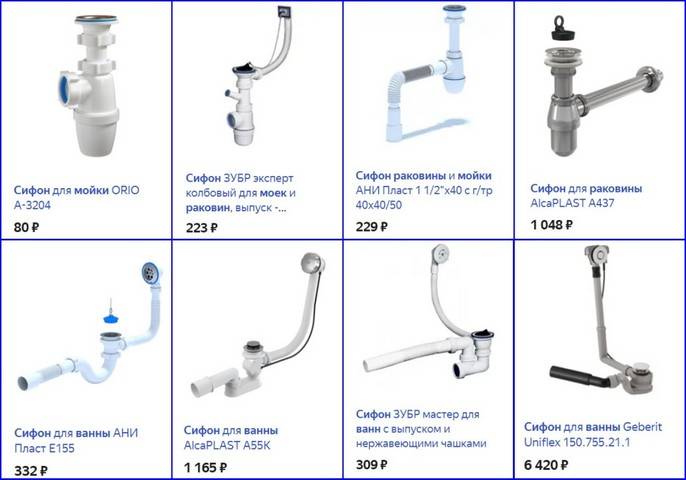
Suppose, for washing in the kitchen, the most suitable option is a bottle model that traps food particles. You can also use a knee device, but then all the waste will flow into the sewer pipe, and over time there is a risk of blockage.
Both for sinks and for bathtubs, models with overflow are considered more effective, preventing flooding of the premises. The recommended material is polypropylene, but for finishing the exterior it is better to buy models with chrome parts.
If the project is to install a sink or washbasin with two sinks, a device with two drain points will come in handy. The principle of its operation is the same, the difference is only in the design.
Before buying, be sure to measure the size of the space where the installation will be made. It happens that the siphon simply does not fit in the allotted place (this is especially true for the tight gap between the bathroom and the floor). If you choose the right water seal, there will be much less problems with its installation and repair.
Two main methods are used to construct a water seal.
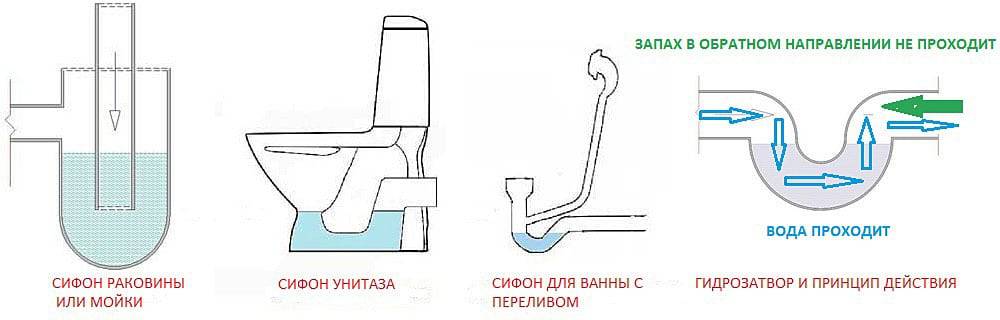
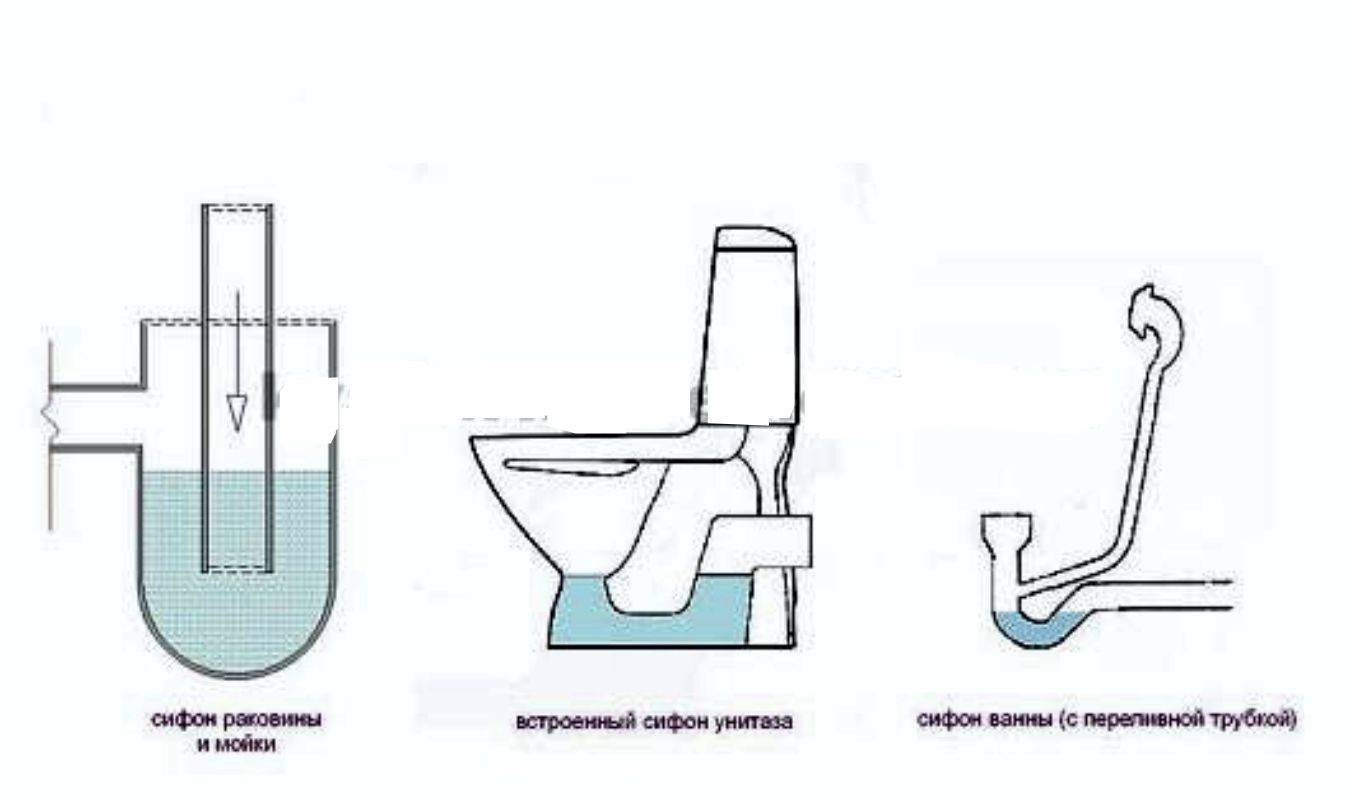
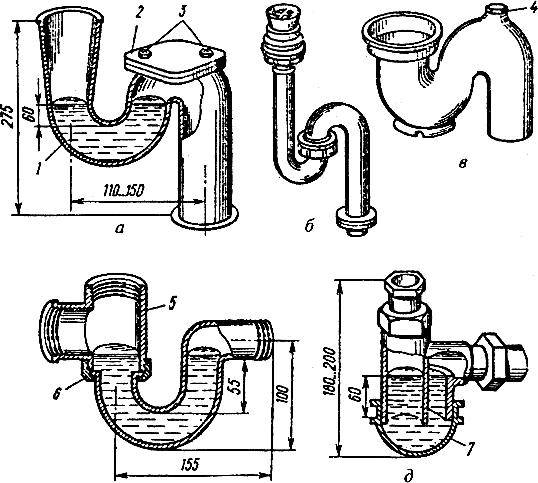
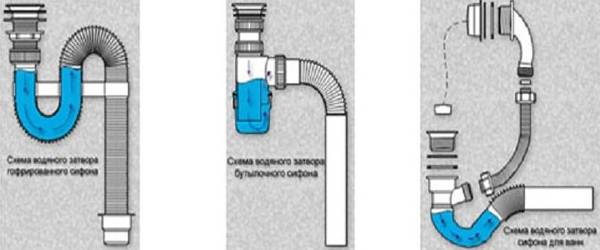
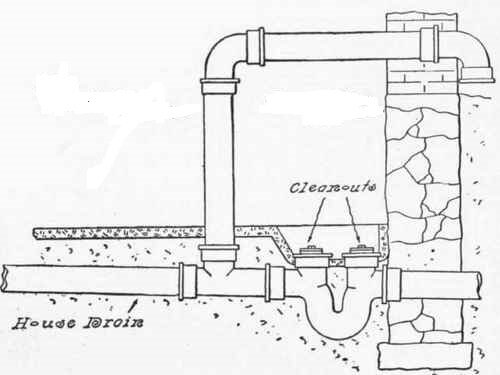
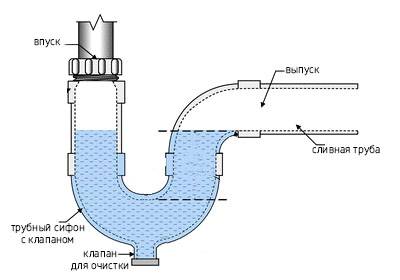
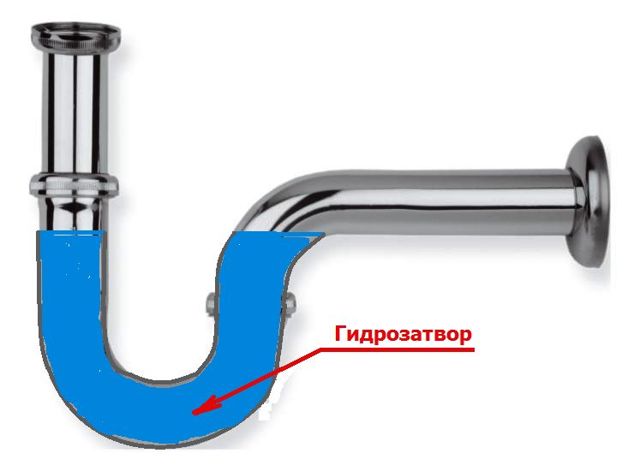
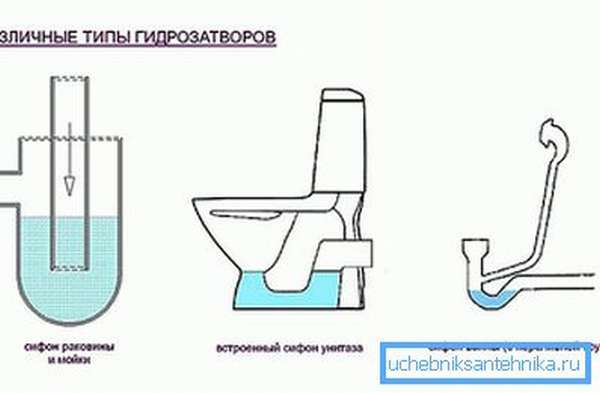
In the first case, the pipeline is bent or a separate element is installed, giving it a U-shape - here the water that collects in the lower part of the elbow serves as a water seal.In another way, the drain pipe of plumbing fixtures is lowered into a deep glass with a side branch - in this case, the water seal is a water column collected in the lower part of the glass body.
When draining water from plumbing fixtures, the water plug is always updated - thus, there is no long-term stagnation of water in the water seal, leading to the appearance of moldy odors.
When choosing a suitable model, the following considerations are additionally guided:
- In no case should a corrugated water seal be installed in the kitchen, despite the convenience of connection - dirt will always accumulate on its walls, preventing drainage. This will lead to the need for frequent sewer cleaning, spending money on the purchase of various chemicals or a plumbing cable for cleaning work, the price of which far exceeds the difference in cost between cheap corrugation and an ordinary siphon.
- Before buying siphons for a bath, you should be especially careful - not every model is suitable for installation under a bowl according to its vertical dimensions. Therefore, you should first measure the distance from the drain to the floor, and then select the desired modification. This also applies to the choice of shower siphons, if they are not included in the package.
- When the water seal often breaks in the system (a situation can occur in an apartment or private house if the sewer riser is clogged from above), a kitchen siphon with a built-in vacuum valve is purchased.
Rice. 12 Siphons for showers and drains - prices
How to install
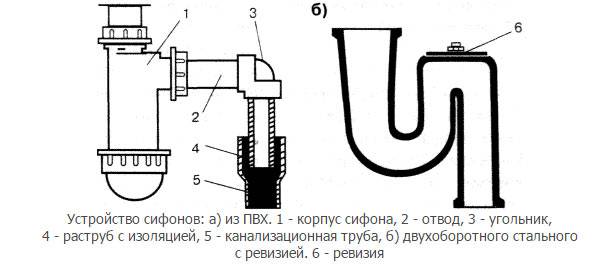
For any siphon purchased in a distribution network, there is an instruction manual that details the procedure for assembling it according to the drawn diagram, so a detailed description of the process of connecting various parts does not make sense. Installing a standard siphon (Fig. 13) in the bath consists of the following steps:
On the floor, according to the instructions, connect the elements of the U-shaped sump, screw in the revision cover and the pipe, which is attached to the bottom of the bath.
- Next, a gasket is placed in the drain hole of the bath, the assembled unit is substituted from below and screwed with a screw inserted into a metal cup with holes on the other side. In this case, do not apply too much force when rotating in order to avoid stripping the thread.
- A branch pipe with a cup and a rubber gasket is inserted from the outside into the overflow hole at the top of the bath, screwed on the other side with a screw through a metal round grill.
- Next, the outlet pipes of the overflow bowl and the lower siphon assembly are connected with a double-sided corrugation, for this, cone-shaped rings are placed on its ends and the corrugation is screwed with union nuts, pressing the wide edge of the gaskets.
- A corrugation with a cone-shaped ring is inserted into the outlet of the siphon assembly and pressed with a union nut. The second end of the corrugation is led into the sewer pipe.
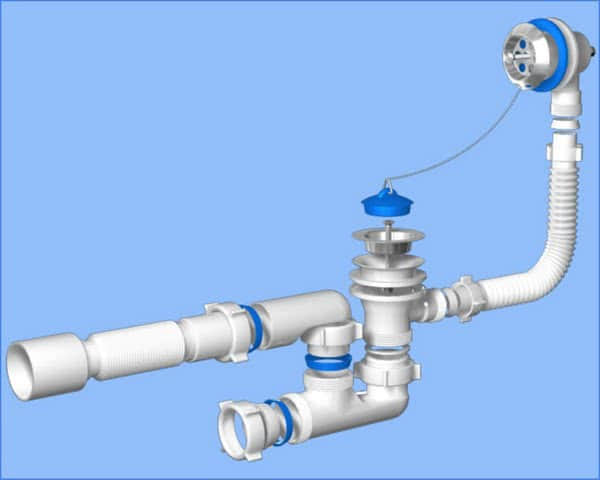 Rice. 13 Siphon under the bath - assembly diagram
Closures in the sewer system are the main way to get rid of unpleasant odors from pipes. For their device, various types of siphons are sold in the distribution network.Each product is intended for use in a certain type of plumbing fixtures, so the consumer only needs to purchase the item for its intended purpose, assemble and install it according to the attached instructions.
Varieties
There are only three main types of water seals:
- Knees.
- Bottle.
- Dry.
knee water seals
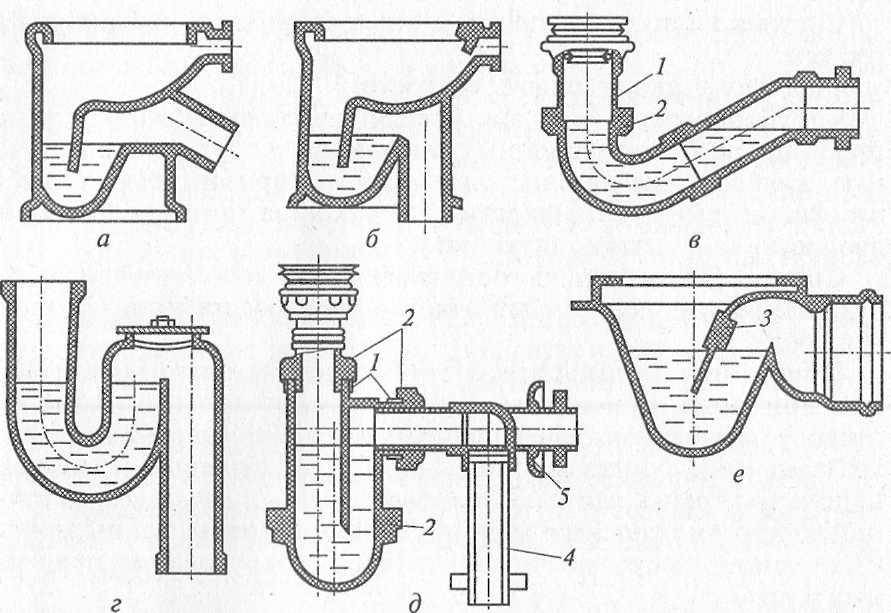
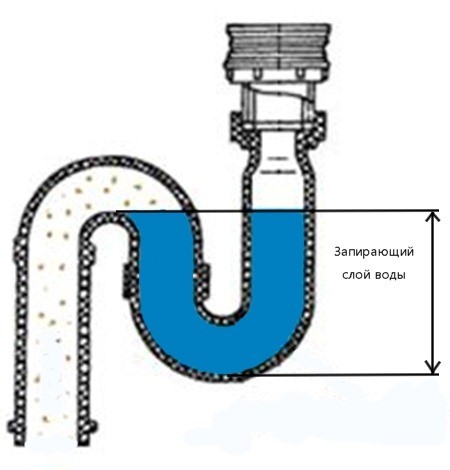
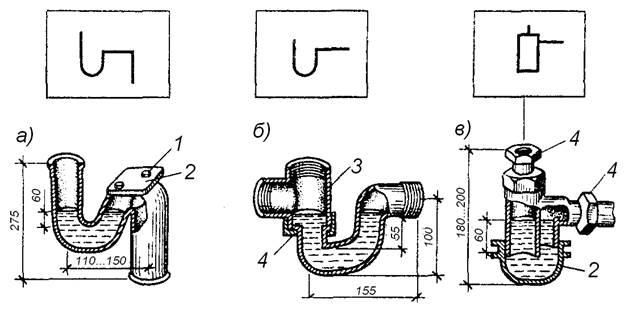
A knee water seal is the simplest device in design, consisting of two U-shaped knees connected in the form of the letter S.
The role of the container for the barrier liquid is played by the half to which the drain pipe of the plumbing fixture is connected.
At the end of the flow of water, liquid remains in it.
The point of inflection of the first knee should be 5–6 centimeters lower than the bend of the second. Then the lock will be secure.
If the drain hole is too low, and the water seal of the two elbows does not fit under the plumbing fixture, then one elbow can be used. Its bend should be such that the remaining water fills the knee completely.
The device is simple and reliable. It can be made of cast iron, polypropylene, in rare cases, bronze.
Its main advantage is that it can withstand a sufficiently large pressure in the system, and its throughput is determined only by the inner diameter of the pipe.
Therefore, knee water seals are used when connecting bathtubs and toilets, in which they are part of the design, in toilets produced recently, there can be two such locks.
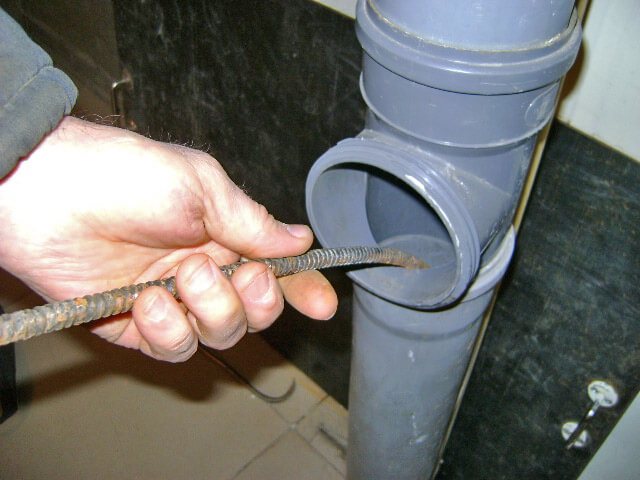
Their disadvantage is the impossibility of disassembly. To eliminate very stubborn blockages, it is necessary to use a special tool - a plumbing cable or disassemble the line.
A variety of knee water seals are devices with an additional outlet in the housing, to which, for example, a bathroom overflow pipe or a washing machine drain hose is connected. They are usually made from polypropylene.
Bottle seals
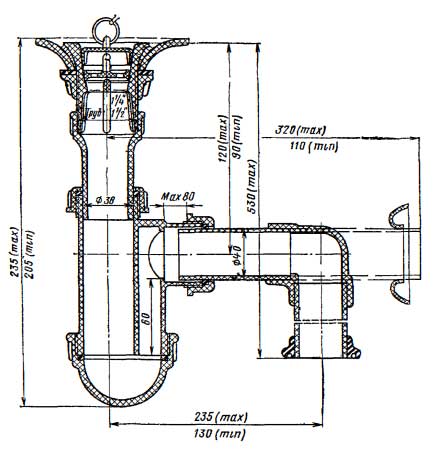
This type of water seal plays two roles - a locking device and a sump. The outlet pipe from the drain hole is located inside the tank, which has its own outlet connected to the sewer system.
The lower edge of the drain pipe must be below the level of the outlet, which ensures a secure lock.
Most often, such hydraulic seals are made of polypropylene, and their design is collapsible. It consists of a drain pipe with a protective grid and a settling tank.
The drain pipe is connected to the sump tank by simply passing it into the sump hole and deforming the sealing gasket when tightening the nut on the body.
Such a connection is not strong enough, it cannot withstand a large pressure of water, so bottle water seals are not used to connect bathtubs and toilets.
The settling tank, in addition to the outlet, has a threaded bottom cover, which allows cleaning from the accumulated sediment.
Bottle seals are easy to install, but should only be connected to the drains of sinks and other small-capacity plumbing fixtures. They must be periodically cleaned of sediment; the elimination of blockages in them does not require skilled labor.
ladders
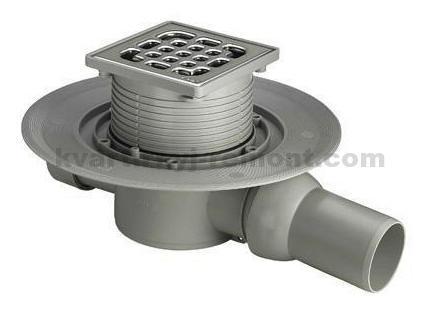
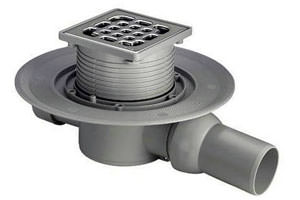 A variety of bottle water seals are the so-called ladders - drain holes in the floor.
They are arranged if the outlet to the prefabricated line can only be made horizontal, along the ceiling.
The drains are most often made of metal and non-separable, and the sump tank is cleaned after the drain grate is removed.
Dry seals
Dry water seals are fundamentally different devices, the prefix "hydro" in their name is used simply by analogy, in accordance with the location under the sanitary ware. The principle of their work is based on the so-called nipple system.
It is a polypropylene pipe with threads on both ends. Inside it is a flexible membrane that really looks like a nipple. It passes water in only one direction, immediately closing as soon as the flow of fluid stops.
The device is quite interesting, but, like any "European thing", it is very capricious in operation. If you use the sink to wash dishes, it will not last very long.
The principle of operation of the water seal
Wherever the sewer network is located the hydraulic lock, its purpose remains the same:
- block water hammer to reduce the load on sewer devices and pipes;
- prevent the penetration of unpleasant specific odors into the living quarters.
If the water seal (or siphon) is chosen correctly, a favorable atmosphere reigns in the house, and the sewer network goes without repair for a long time.
The designs of different types of water seals are different, but all of them in one way or another are pipes with bends of a certain shape, sometimes equipped with additional dead-end or dynamic devices.
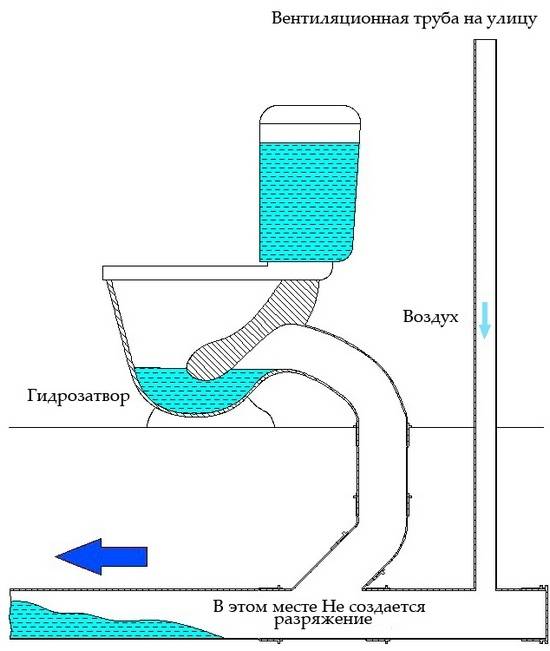
One of the most important conditions for the functioning of a water seal is the constant presence of water in its cavity, which plays the role of a barrier against the penetration of gases and unpleasant odors.
The water screen is permanently in the siphon. If you do not use the device (kitchen sink or toilet) for a long time, the water will evaporate, and over time, an unpleasant sewer smell will appear in the bathroom or kitchen.
The same will happen when you flush for the first time after a long absence. But with constant use, the volume of water in the water seal is constantly updated, which prevents stagnation, respectively, and the appearance of an unpleasant "aroma".
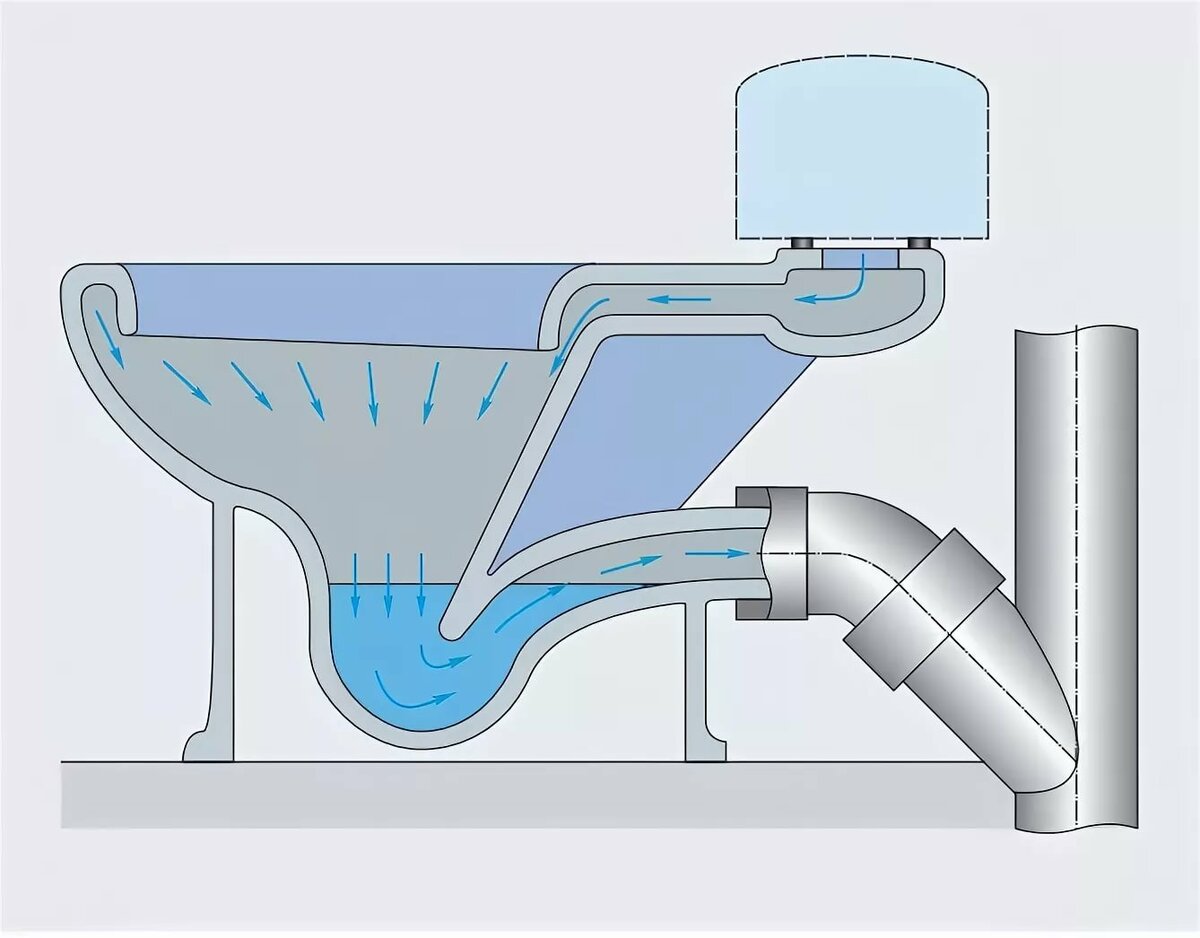
The design features of hydraulic seals are directly related to their purpose. For example, toilet bowls are characterized by the following design: the drain is straight, and the exit leading to the sewer pipe is at an angle
All sewer devices are interconnected. For example, the correct organization of the fan riser prevents the gate from breaking - a phenomenon when water does not linger in the water seal, but immediately goes into the pipe. In this case, the plumbing device loses its protective barrier, and unpleasant odors come out - directly into the apartment.
Image gallery
Photo from
Water seal in the sewer connection
Arrangement of an exit to an external branch
Design features of the water seal
Water seal device for a group of devices
Pipe elbow with water seal
Easy to clean device
Installing a siphon on a shower tray
Installation of a revision on a water seal
Self-installation of a water seal
You can call a professional craftsman or install a water seal with your own hands. You do not need special skills and abilities. If you need to replace, then first you have to dismantle the old device. To do this, you will need to turn off the water supply to an apartment or house, substitute a container under a dismantled siphon, or put a floor rag under it. Next, the fixing screws are unscrewed, the siphon is removed, and the pipe outlet is plugged with a rag.

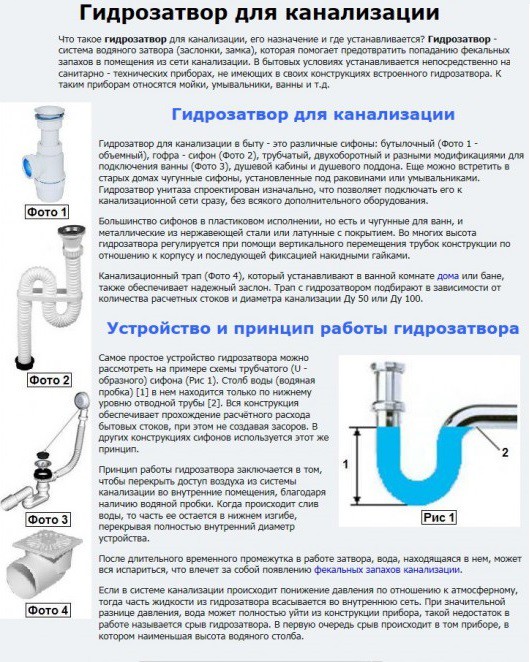
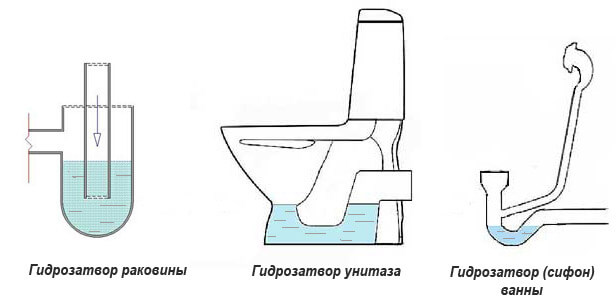
In order to install a new shutter, you must perform the following sequence of actions:
- install a grate that protects the drain from getting large debris and dirt;
- install the nozzle using a long screw attaching it to the grate;
- put a nut and cone gasket on it;
- attach the siphon and adjust it in height;
- fix the pipe in the sewer hole;
- check the reliability of fastening and joints: for this, they let water through for some time and observe if there are any leaks or drops of water.
Siphon designs may differ slightly, but the main points on how to make a water seal are the same for everyone.
How to choose
Siphons are selected to provide water seals according to the material and for specific plumbing. The most common option is plastic. They are easy to install, they are sold at a low price. Siphons made of chrome-plated metals and cast iron are also used, but the conditions for their installation and maintenance are more complicated than for plastic ones.
Consider which plumbing fixture will protect the water seal.Drainage from the kitchen sink is best passed through a bottle-type device - in this place the drain pipes become clogged more often, and it is easier to eliminate pollution in this type of siphon. The sinks are provided with an overflow protection, so a knee lock is suitable for them.
If it is planned to use two sinks in parallel, then you need to install a device with two drains with one siphon.
The selection of a shutter for a sewer for a bath depends on the height at which the bowl is located above the floor. The siphon is chosen so that it fits in this space. Bent and corrugated closures work well in bathrooms. In a similar way, protective devices are chosen for other plumbing and for a bath.
If there is a danger of a shutter failure, then it is better to insure its work vacuum valve installation.
Blockage Prevention
Of course, it is easier to prevent too frequent clogging of pipes than to constantly clean them. To do this, you must constantly follow simple rules:
- always put a grate on the drain so that large particles do not fall into the pipe;
- after washing a large amount of dishes, pour hot water into the pipe for a minute;
- do not pour waste fat into the sink - it is better to do it in the toilet;
- water after washing the floors is also better to drain into the toilet;
- every six months, try to clean the pipes with a plunger or disassemble the siphon and remove excess debris from it.
These methods will at least increase the life of the siphon and save you from having to constantly clean it.
Dry seals
The most pressing issue for a bath with a drain into the sewer is not so much the choice of the design of the ladder as the laying of the line itself.Any ready-made version of the ladder from the store, including the “dry” one, contains a water seal with a water column of 30 mm or more, so that with regular use of the bath, there will be no problems with the drying of the water plug. And those who know that the bath will not be in use for a long time can simply drown out the drain.
For those who want to forget and not remember the dried-up siphon, there are so-called dry ladders.
There are two types of dry water trap.
float type
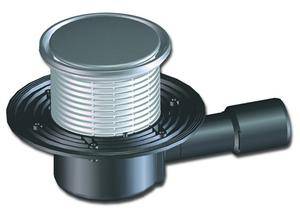 It is best to consider a specific example, for example, the Austrian HL 310 NPr.
Vertical drain. The upper element is cut to the desired size from 12 to 70 mm and embedded in the screed.
The polyethylene housing is designed for wastewater temperatures up to 85 degrees. The installation procedure for different cases is described in the passport.
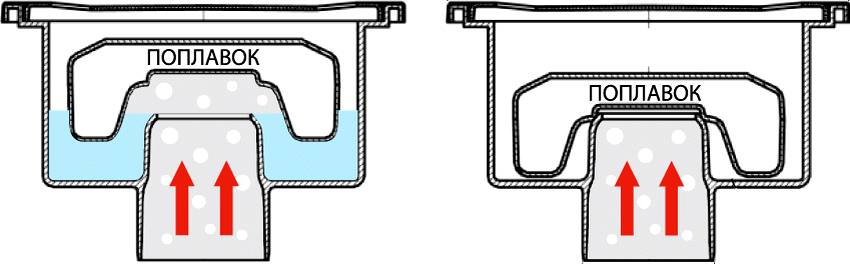
The float, in case of drying water, simply falls and closes the pipe. The height of the valve water column is 50 mm (complies with Austrian city regulations).
The principle of operation is clearly visible in the picture.
In the working position, the water raises and holds the float at the same level and the system works as one of the options for a water seal. If the bath is not used for a long time, then the water from the shutter evaporates, and the float closes the drain hole before the water has completely evaporated.
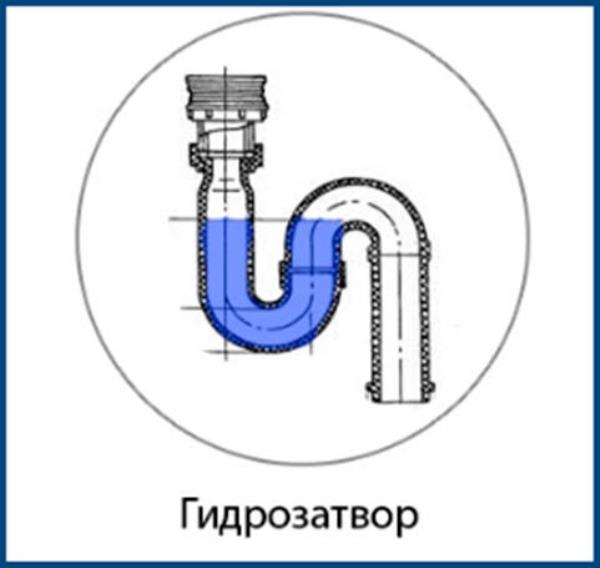
Craftsmen came up with an option that can work no worse than a factory one. The main difference from this scheme is that such a float in the form of an inverted glass is fixed so that its bottom is higher than the drain hole by more than the diameter of the drain pipe. And the hole itself closes a light ball with a diameter larger than the drain one - it acts as a float.
pendulum type
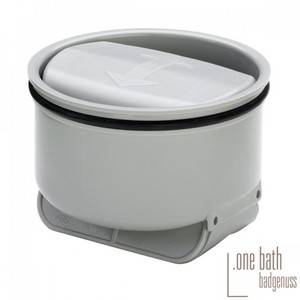 In the photo, a specific example is a dry seal for drains 100 mm in the neck - Viega 583255.
Below, at the shutter, two curtains are visible, suspended at an angle to the vertical - this is the pendulum shutter. The curtains are closed due to their own weight, and the water opens them when draining. The height of the water column of the water seal is 32 mm - it is quite enough for a country bath. In Germany itself, which is declared as a manufacturing country, when designing a sewerage system in city houses, it is assumed that plumbing fixtures in apartments have a water seal height of 50-60 mm, but not 32!
If the force of gravity that closes the curtains is replaced by the force of a spring, then different versions of the spring-type dry shutters will be obtained, with more opportunities.
Of course, all of the listed valves contain some kind of siphon.
There is another type of dry shutters, for which sometimes too abstruse names are invented, such as the cellular memory of the material. Usually they are a stocking made of flattened rubber, which begins to pass water under a little pressure. It is unlikely that this is of interest for a country bath.
Skillful owners, even with very limited funds, can easily reproduce, and, possibly, improve any type of water seal.